The Prime Minister, Shri Narendra Modi visited the ISRO Telemetry Tracking and Command Network (ISTRAC) in Bengaluru after his arrival from Greece and addressed Team ISRO on the success of Chandrayaan-3. The Prime Minister met and interacted with ISRO scientists involved in the Chandrayaan-3 mission where he was also briefed about the findings and progress in the Chandrayaan-3 Mission.
Addressing the scientists, the Prime Minister expressed great delight in being present at the ISRO Telemetry Tracking and Command Network (ISTRAC) in Bengaluru and said that such an occasion is extremely rare when the body and mind get filled with such happiness. Referring to the few special moments in everyone’s lives when impatience starts to dominate, the Prime Minister noted that he experienced the exact same emotions during his tour to South Africa and Greece and said that his mind was focussed on the Chandrayaan 3 Mission at all times. Observing the inconvenience caused to the scientists at ISRO due to his impromptu plans to visit the ISTRAC, a visibly emotional Prime Minister said that he was eager to visit and salute the scientists for their diligence, dedication, courage, devotion and passion.
The Prime Minister said that this is not a simple success. He said this achievement heralds India’s scientific power in infinite space. An elated Prime Minister exclaimed, “India is on the Moon, We have our national pride placed on the Moon”. Highlighting this unprecedented achievement, the Prime Minister said “This is today’s India that is fearless and relentless. This is an India that thinks new and in a novel way, the one that goes to the dark zone and spreads light in the world. This India will provide solutions to the big problems of the world in the 21st century.”
The Prime Minister said that the moment of the touchdown has become immortal in the consciousness of the nation. “The moment of touchdown is one of the most inspiring moments of this century. Every Indian took it as his or her own victory ”, he said. The Prime Minister credited the scientists for this grand success.
The Prime Minister, describing the photographs of the strong footings of the Moon lander said, “Our ‘Moon Lander’ has firmly set its foot on the Moon like ‘Angad… On the one side is the valor of Vikram then there is bravery of Pragyan on the other”. He said these are pictures of the never seen parts of the moon and this has been done by India. “Entire world recognizes India’s scientific spirit, technology and temperament,” said Shri Modi.
“The success of Chandrayaan 3 is not just India’s alone but it belongs to all of humanity”, the Prime Minister remarked and underlined that the explorations of the mission will open new doors of possibilities for moon missions of every country. He stated that the mission would not only unravel the secrets of the moon but also contribute to overcoming the challenges on Earth. The Prime Minister once again congratulated every scientist, technician, engineer and all members associated with Chandrayaan 3 Mission.
The Prime Minister announced, “The point where the moon lander of Chandrayaan-3 landed will now be known as ‘Shiv Shakti’”. “In Shiv, there is resolution for the welfare of humanity and Shakti gives us strength to fulfil those resolutions. This Shiv Shakti Point of the moon also gives a sense of connection with Himalaya to Kanyakumari”, he added.
Emphasizing the welfare core of the pursuit of science, the Prime Minister said that these pious resolutions need the blessings of Shakti and that Shakti is our Nari Shakti. In the success of Chandrayaan-3 lunar mission, our women scientists, the country’s Nari Shakti have played a big role, he emphasized. Shri Modi remarked. “Shiv Shakti Point of the Moon will bear witness to this scientific and philosophical thinking of India”, he added.
The Prime Minister stated that the point where Chandrayaan 2 left its footprints will now be called ‘Tiranga’. This point, the Prime Minister said, will serve as an inspiration for every effort that India makes and remind us that failure is not the end. “Success is a guarantee where there is strong will power”, he said.
Emphasizing that India has become only the 4th nation to have a successful touchdown on the surface of the Moon, the Prime Minister said that the feat becomes more immense when we consider the humble beginnings of India’s space program. He recalled the times when India was considered a third-world country and did not have the required technology and support. Today, the Prime Minister said, India has become the 5th largest economy in the world and it is now among the first-world countries be it trees or technology. “In the journey from ‘third row’ to ‘first row’, institutions like our ‘ISRO’ have played a huge role”, the Prime Minister exclaimed as he highlighted its contributions and said that they have taken Make In India to the Moon today.
The Prime Minister took the occasion to convey the hard work of ISRO to the countrymen. “From Southern India to the South of the Moon, this was not an easy journey,” the Prime Minister said and informed that ISRO even created an artificial moon in its research facility. The Prime Minister credited the zeal for innovation and science among the youth of India to the successes of such space missions. “Successes of Mangalyaan and Chandrayaan and preparation for Gaganyaan have given a new attitude to the young generation of the country. Your big achievement is awakening a generation of Indians and energizing that”, Shri Modi said. Today, the name of Chandrayaan is resonating among children of India. Every child is seeing his or her future in the scientists, he said.
The Prime Minister declared that 23rd August, the day of the soft landing of Chandrayaan 3 on the Moon will be commemorated as ‘National Space Day’. He said that National Space Day will celebrate the spirit of Science, Technology and Innovation, and inspire us for an eternity.
The Prime Minister noted that the capabilities of the space sector are not limited to launching satellites and space explorations, and its strength can be seen in Ease of Living and Ease of Governance. He recalled the workshop that was organized for the Joint Secretary level officers in the central government with ISRO during the initial years of his Prime Ministership. He mentioned the tremendous progress made to link the space applications with Governance. He mentioned the role of Space technology in Swachh Bharat Abhiyan; education, communication and health services to far flung areas; tele-medicine and tele-education. He also talked about the role of the NAVIC system and support during natural calamities. “Space technology is also the basis of our PM Gatishakti National Master Plan. This is helping a lot in the planning, execution and monitoring of projects. This scope of space application, which is increasing with time, is also increasing opportunities for our youth”, the Prime Minister added.
The Prime Minister requested ISRO to organize national hackathons on ‘Space Technology in Governance’ in collaboration with various departments of center and state governments. “I am confident that this National Hackathon will make our governance more effective and provide modern solutions to the countrymen”, he said.
The Prime Minister also gave a task to the young generation of the country. He said “I want the new generation to come forward to scientifically prove the astronomical formulas in the scriptures of India, to study them anew. It is also important for our heritage and also important for science. In a way, this is a double responsibility for the students of schools, colleges and universities today. The treasure of scientific knowledge that India has, has been buried, hidden during the long period of slavery. In this Azadi ka Amrit Kaal, we have to explore this treasure too, do research on it and also tell the world about it.”
The Prime Minister referred to the estimates of the experts that India’s space industry will reach 16 billion dollars from 8 billion dollars in the next few years. While the government is working relentlessly for space sector reforms, the youth of the country is also making efforts as, during the last 4 years, the number of space-related startups has gone up from 4 to about 150. The Prime Minister also urged students across the country to take part in a huge quiz competition on Chandrayaan mission organized by MyGov from 1st September.
Emphasizing the importance of taking the lead in science and technology in this period of the 21st century, the Prime Minister said that India has become the youngest talent factory in the world. “From the depths of the ocean to the heights of the sky, to the depths of space, there’s a lot for the young generations to do”, the Prime Minister said as he highlighted opportunities ranging from ‘Deep Earth’ to ‘DeepSea’, and the next generation computer to genetic engineering. “New opportunities are constantly opening up for you in India”, he added.
The Prime Minister underlined that guidance for future generations is a necessity and it is them who will further the important missions of today. He said that scientists are their role models and their research and years of hard work have proved that anything can be accomplished if you set your mind to it. Concluding the address, the Prime Minister said that the people of the country have faith in the scientists, and when the blessings of the people are bestowed, India will become a global leader in science and technology with the dedication shown towards the country. “Our same spirit of innovation will make the dream of a developed India come true in 2047”, Shri Modi said.
This morning, I was in Bengaluru. I arrived very early in the morning and decided to meet the scientists who have brought such great achievements to the country. So, I went there early in the morning. However, the way people celebrated the success of Chandrayaan, holding the Tricolour in their hands even before sunrise, was incredibly inspiring. And now the sun is scorching equally in this intense heat which can even pierce the skin. It’s fortunate for me too to be a part of the celebration and share in the joy of Chandrayaan’s success in this intense heat with you who have come here. I congratulate all of you for this, and for me, it’s also a privilege to be a part of this celebration. I congratulate all of you for this.
Today, when I arrived at ISRO in the morning, I had the privilege of releasing the images captured by Chandrayaan for the first time. Perhaps, you might have seen those images on TV as well by now. Those beautiful images were a significant scientific success in itself. Traditionally, it’s a global tradition to name such points which are part of such successful campaigns. After much deliberation, I felt that the point where Chandrayaan-3 has successfully landed should be given a name, and that name is ‘Shivshakti’. When we talk about Lord Shiva, it signifies auspiciousness, and when we talk about power, it signifies the strength of the women of my country. When we talk about Lord Shiva, the Himalayas come to mind, and when we talk about Shakti (power), Kanyakumari comes to mind. Therefore, that point has been named ‘Shivshakti’ to capture the essence of this sentiment from the Himalayas to Kanyakumari. In fact, this name was brought to my notice during Chandrayaan-2 in 2019. However, my mind wasn’t ready. Deep down in my mind, I had resolved that Chandrayaan-2 Point would only get a name after we truly succeed in our journey. And when Chandrayaan-3 succeeded, the point of Chandrayaan-2 also got its name, and that point has been named ‘Tiranga’ (the Indian Tricolour flag). The Tricolour gives the strength to overcome all challenges and the Tricolour provides the inspiration to manifest every dream. Hence, as Chandrayaan-2 faced failure and Chandrayaan-3 achieved success, the Tricolour turned into inspiration. This is why the Chandrayaan-2 point will now be known as Tiranga. Another significant aspect that I mentioned this morning is that August 23 is a milestone in India’s scientific journey of development. Therefore, every year, India will celebrate August 23 as National Space Day.
Friends,
I was in South Africa for the BRICS Summit in the past few days. This time, along with members of the BRICS Summit, the entire Africa was also invited there. During the BRICS Summit, I observed that there was hardly anyone in the world who did not mention Chandrayaan, or had not conveyed their congratulations. The congratulations I received there, I instantly shared them with all the scientists. And I’m also sharing all the congratulations from across the world with you.
Friends,
Everyone wanted to know about Chandrayaan’s journey, its timeless accomplishment, and the impact of New India, new dreams, new resolutions, and successive achievements, one after another. The world is sensing the emergence of a new influence, based on the capabilities of our Indian Tricolour, our successes and achievements. Today, the world is not only experiencing this influence but also acknowledging and respecting it.
Friends,
After the BRICS Summit, I went to Greece. It had been 40 years since any Indian Prime Minister had visited Greece. I am fortunate that many tasks that are left undone are destined to be done by me. India was accorded respect for its capabilities in Greece as well. Greece perceives that it can become a gateway to Europe due to the friendship between India and Greece and the friendship between India and Greece will serve as a significant means to strengthen the relationships between India and the European Union.
Friends,
We also have some responsibilities in the days to come. Scientists have done their part. Whether it’s satellites or Chandrayaan’s journey, it has a significant impact on the lives of ordinary people. Therefore, we need to work so that the interest of the youth of my country in science and technology develops further. We are not just people who get stuck with celebrations, enthusiasm, and energy. When we achieve success, we are prepared to take strong steps forward for new advancements. Hence, we should explore how space science can work, how satellite capabilities can be used and how this journey can be useful for good governance, for last-mile delivery, for improvements in the lives of ordinary people. And therefore, I am sounding out all the departments of the government to use space science, space technology and the capabilities of satellites for improvement in delivery, quick response, transparency and perfection. We need to explore all these aspects within our respective departments. I also wish to organize hackathons for the country’s youth in the coming days. In recent days, the country’s students have provided excellent ideas by working non-stop for 30-40 hours during various hackathons, creating an environment of innovation. I want to initiate a series of such hackathons very soon. This will allow the young minds, the young talents of the country, to use space science, satellites, and technology for finding solutions to the challenges faced by ordinary people. We will work in that direction.
Alongside this, we also need to attract the new generation towards science. The 21st century is technology-driven, and the country that progresses ahead in the world will be the one with prowess in science and technology. Therefore, the demand of the time is that by 2047, as we strive to make our country a developed India, we must advance further on the path of science and technology with greater strength. We need to prepare our new generation right from childhood with a scientific temperament. Hence, the significant success we have achieved, the enthusiasm and energy we have, need to be channelled into strength. To channelize this strength, a quiz competition will begin on MyGov from September 1. Through this, our youth will engage with small questions and answers, and gradually develop an interest. Our new education policy has made ample provisions for science and technology. Our new education policy is such that gives significant emphasis to this, and the quiz competition will help our students develop interest in science and technology. Today, I would like to tell the youth of the country, to the students of my country, and to every school, to participate actively in this quiz competition which is centred round Chandrayaan. Millions and millions of youth in the country should become a part of it, and we should take it forward. I believe this will yield significant results.
Today, I want to draw your attention to one more thing. Despite the world’s increasing curiosity, attraction, and belief in India, there are still occasions when it should experience these aspects first hand. There will be an immediate opportunity before us, especially for the people of Delhi, and that is the G20 Summit. In a way, the world’s significant decision-making leadership will be on the soil of Delhi, in the land of India. While the entire India is the host, the guests are coming to Delhi.
The hosting of the G20 Summit is a responsibility of the entire country, but the greater responsibility lies with my brothers and sisters of Delhi, the citizens of Delhi. Therefore, we need to show the world that Delhi can handle this responsibility without any glitches. The privilege of raising the flag of our country’s honour, dignity, and prestige is in the hands of the people of Delhi. There is bound to be some inconvenience when a significant number of guests come. Even when some 5-7 guests visit us, we accommodate them in the main sofa even though we have to sit on smaller chairs. We have the tradition of ‘Atithi Devo Bhava’ i.e., treating guests as gods. The more respect, honour, and welcome we extend to the leaders of the world, the more will they enhance our own pride, our dignity, and our reputation. Therefore, there will be numerous activities taking place here from September 5th to September 15th. Therefore, I apologize in advance to the people of Delhi for the inconvenience which will be caused to them in the days to come. I request the citizens of Delhi to be patient with the inconveniences that may arise during these upcoming days. I urge them to understand that these guests are everyone’s guests, and we might experience some discomfort, changes in traffic arrangements, and restrictions on movement. But some things are necessary. And as we know if there is a wedding in the family, even if a small cut happens while trimming nails, people say, “Take care, it’s a special occasion, nothing bad should happen.” Therefore, this is a significant opportunity, and just as in a family, all these guests are ours. With the collective efforts of all of us, I believe that our G20 Summit will be spectacular, vibrant, and the entire Delhi will be immersed in colours. My fellow citizens of Delhi will showcase this through their endeavours, and I have full confidence in this.
My dear brothers and sisters, my family members,
In just a few days, the festival of Raksha Bandhan is approaching. Sisters tie a rakhi to their brothers. And we have all grown up saying, “Chanda Mama”. From childhood, we are taught about Chanda Mama, and from childhood, we are taught that earth is our mother. The earth is our “mother” and the moon is “mama”. It means that our Mother Earth is the sister of Chanda Mama. Our Mother Earth is going to celebrate the festival of Raksha Bandhan with Chanda Mama this time. And so, let’s celebrate this Raksha Bandhan festival in a splendid way, with brotherhood, unity, and a loving atmosphere, so that in the G20 Summit too, this brotherhood, this unity, this love, our culture, and our traditions introduce the world to this essence. I believe that the upcoming festivals will be grand, and in September, our achievements will once again introduce India in various ways on the world stage. Just as the scientists have raised our flag high with the success of Chandrayaan, we, the citizens of Delhi, will strengthen that flag with our splendid hosting of the G20 Summit. I have full confidence in this. I extend my warm wishes to all of you who have gathered here in this bright sunshine to collectively celebrate the achievements of our scientists, to wave our Tricolour with pride, and I offer my heartfelt congratulations. Let’s chant together –
Bharat Mata ki – Jai!
Bharat Mata ki – Jai!
Bharat Mata ki – Jai!
Thanks a lot!
DISCLAIMER: This is the approximate translation of PM’s speech. Original speech was delivered in Hindi.
ISRO has announced a five-day free online course on remote sensing and GIS, being conducted by IIRS for government officials, policy-makers, and research scholars. Read on for more details to apply.
The Indian Space Research Organisation (ISRO) has invited applications for a free online course called RS and GIS Applications in Atmospheric and Oceanic Hazards. The five-day course has been organised by the Indian Institute of Remote Sensing (IIRS) under ISRO.
The course has been designed for all stakeholders that need to be aware of natural and man-made disasters — such as tsunamis, cyclones, floods, storm surges, extreme rainfall, and dust storm. It will provide participants with an overview of utilising remote sensing and GIS data to avert them.
The curriculum is suitable for central and state government officials, policymakers, professionals and specialists from universities, educational institutes, operational and research institutes, and research scholars. Things to know
The course is free. The course can be completed in five days. Course study materials, such as lecture slides and video-recorded lectures, will be made available through e-class. There is a limited number of seats available. Registration will be done on a first come first serve basis. A certificate will be given to the participants who have 70 percent attendance in the course. How to apply
Applications will be submitted online. To participate in this programme, the interested organisations, universities, departments, and institutes have to identify a coordinator at their end. The identified coordinator will have to register his/her institute as a nodal centre on the IIRS website. The course can then be taken by registered participants through the e-class platform of IIRS-ISRO. Important dates
The course will begin on 27 February 2023 and end on 3 March 2023.
The Indian Space Research Organisation (ISRO) has successfully deployed the latest batch of 36 satellites for satellite operator OneWeb, aboard its heavyweight configuration Geosynchronous Satellite Launch Vehicle (GSLV)-Mk.III rocket. The launch marked the first commercial mission that used ISRO’s GSLV, also known as the Launch Vehicle Mark III (LVM3).
The collaboration is a result of ISRO’s commercial arm NewSpace India Limited’s two service contracts, signed with One Web for launching low Earth orbit (LEO) broadband communication satellites. ISRO said that as part of the contract, 36 satellites will be placed into orbit by one LVM3, from Satish Dhawan Space Centre in Sriharikota in Andhra Pradesh.
The mission marked the second launch of the year for OneWeb, backed by Bharti Enterprises, after the conflict in Ukraine disrupted the UK operator’s plan for completing its satellite launches this year. Prior to the Ukraine-Russia war, OneWeb was using Russia’s central space agency Roscosmos’ commercial launch services through its Soyuz rockets.
However, amid geopolitical sanctions imposed on Russia by nations including the UK, erstwhile Roscosmos head Dmitry Rogozin said that the OneWeb satellites would not be released back to the company — unless the UK government ceded to the nation’s demand of removing the sanctions.
The Indian Space Research Organisation (ISRO) has successfully deployed the latest batch of 36 satellites for satellite operator OneWeb, aboard its heavyweight configuration Geosynchronous Satellite Launch Vehicle (GSLV)-Mk.III rocket. The launch marked the first commercial mission that used ISRO’s GSLV, also known as the Launch Vehicle Mark III (LVM3).
The collaboration is a result of ISRO’s commercial arm NewSpace India Limited’s two service contracts, signed with One Web for launching low Earth orbit (LEO) broadband communication satellites. ISRO said that as part of the contract, 36 satellites will be placed into orbit by one LVM3, from Satish Dhawan Space Centre in Sriharikota in Andhra Pradesh.
The mission marked the second launch of the year for OneWeb, backed by Bharti Enterprises, after the conflict in Ukraine disrupted the UK operator’s plan for completing its satellite launches this year. Prior to the Ukraine-Russia war, OneWeb was using Russia’s central space agency Roscosmos’ commercial launch services through its Soyuz rockets.
However, amid geopolitical sanctions imposed on Russia by nations including the UK, erstwhile Roscosmos head Dmitry Rogozin said that the OneWeb satellites would not be released back to the company — unless the UK government ceded to the nation’s demand of removing the sanctions.
Recently the Union Cabinet approved Rs 10,000 crore for India’s 1st Human spaceflight programme, Gaganyaan, to be launched by 2022. It will include two unmanned flights and one human space flight. India’s first human spaceflight will carry 3 astronauts to a low earth orbit of 300 to 400 kilometres on board GSLV Mark III vehicle, for at least 7 days. ISRO is also launching test flights with humanoids to conduct micro-gravity experiments. If successful, India would be the 4th country to send manned mission after Russia, USA, and China.
COMPONENTS OF GAGANYAAN
1. Rocket
The rocket will take the crew to the low-earth orbit (300-400 km)
2. Crew Module
A crew module carrying three Indians will be attached with a service module. The crew members will be selected by the IAF and ISR. The crew will perform micro-gravity and other scientific experiments for a week.
It is an emergency accident avoidance measure designed to quickly get astronauts and their spacecraft away from the launch vehicle if a malfunction occurs during the initial stage of the launch.
5. Environmental Control & Life Support System (ECLSS)
It will maintain steady cabin pressure and air composition, remove carbon dioxide and other harmful gases and control temperature and humidity o manage parameters like fire detection and suppression.
As far as we currently know, there is a single expanding blob of spacetime speckled with trillions of galaxies – that’s our Universe. If there are others, we have no compelling evidence for their existence.
That said, theories of cosmology, quantum physics, and the very philosophy of science have a few problems that could be solved if our blob of ‘everything’ wasn’t, well, everything.
That doesn’t mean other universes must exist. But what if they do?
What is a universe?
It should be a simple question to answer. But different areas of science will have subtly different takes on what a universe even is.
Cosmologists might say it describes the total mass of stuff (and the space in between) that has been slowly expanding from a highly concentrated volume over the past 13.77 billion years, becoming increasingly disordered with age.
It now stretches 93 billion light years from edge to edge, at least based on all of the visible (and invisible) stuff we can detect in some way. Beyond that limit, there are either things we can’t see, an infinite expanse of nothingness, or – in the unlikely scenario that all of space bends back around on itself – a round-trip back to the start across a hyperspherical universe.
If we’re talking quantum physics, though, a universe might refer to all fields and their particles, and their combined influences over one another. As a general rule, a universe (like ours, at least) is a closed system, meaning it can’t suddenly lose or gain a significant sum of energy.
Philosophically speaking, a universe might be a discrete set of fundamental laws that governs the behavior of everything we observe. A universe would be defined by its own rules that set its unique speed for light, tell particles how to push or pull, or space how it should expand.
What is a multiverse in cosmology?
A century of astronomical observations has told us a lot about the age, size, and evolution of galaxies, stars, matter and the four dimensions we sum up as spacetime.
We can theoretically squeeze all of the matter of the Universe down to a point where the concentration of energy reduces atoms to a soup of simpler particles and forces combine until we can’t tell them apart. Any smaller than that? Big shrugs.
If we go with what’s known as a cyclic model of cosmology, the parent universe preceded ours in some way. It might even be a lot like this one, only running in reverse compared with ours, shrinking over time into a concentrated point only to bounce back out for some reason. Played out for eternity, we might imagine the respective universes bounce back and forth in an endless yo-yo effect of growing and collapsing.
Or, if we go with what’s known as a conformal cyclic model, universes expand over trillions upon trillions of years until their cold, point-like particles are so spread out, for all mathematical purposes everything looks and acts like a brand new universe.
If you don’t like those, there’s a chance our Universe is a white hole – the hypothetical back end of a black hole from another universe. Which, logically, just might mean the black holes in our Universe could all be parents, pinching off new universes like cosmic amoebae.
What is a multiverse in quantum physics?
Early last century, physicists found theories that described matter as tiny objects only told half of the story. The other half was that matter behaved as if it also had characteristics of a wave.
Exactly what this dual nature of reality means is still a matter of debate, but from a mathematical perspective, that wave describes the rise and fall of a game of chance. Probability, you see, is built into the very machinery that makes up the gears of a universe like ours.
Of course, this isn’t our daily experience as vast collections of atoms. When we send a bucket of molecules called a rocket to the Moon as it zooms past 300,000 kilometres away, we’re not rolling dice. Classical old physics is as reliable as tomorrow’s sunrise.
But the closer we zoom in on a region of space or time, the more we need to take into account the possible range of measurements we might find.
This randomness isn’t the result of things we don’t know – it’s because the Universe itself is yet to make up its mind. There’s nothing in quantum mechanics explaining this transition either, leaving us to imagine what it all means. https://www.youtube.com/embed/dzKWfw68M5U?ab_channel=PBSSpaceTime
In his 1957 doctoral dissertation, American physicist Hugh Everett suggested the range of possibilities are all as real as one another, representing actual realities – separate universes, if you like – just like the one we’re all familiar with.
What makes any one universe in this many worlds interpretation distinct is how each wave correlates with a specific measurement taken of other waves, a phenomenon we call entanglement.
What ‘we’ means, and why ‘we’ experience one entangled set over waves over another, isn’t clear, and in some ways presents an even bigger problem to solve.
What is a multiverse in philosophy?
One of science’s most fundamental starting assumptions is that in spite of what your mother tells you, you’re not special. Nor is any other human, or our planet, or – by extension – our Universe.
While rare events occur from time to time, we don’t answer The Big Questions with ‘it just happened that way’.
So why does our Universe seem to have just the right tug-of-war of forces that allow not just particles to appear, but to congeal for long enough periods into atoms that can undergo complex chemistry to produce thinking minds like ours?
Philosophically speaking, the anthropic principle (or principles, since there are many different ways to spin the idea) suggests we might have it backwards. Without these conditions, no minds would have arisen to consider the amazing turn of events.
If just a single universe ‘just happened that way’ early one spring morning, it’d be one big coincidence. Too big really.
But if there were infinite universes, with infinite combinations of forces pushing and pulling, some would inevitably give rise to minds that just might ask ‘are we part of a multiverse?’
Will we ever discover other universes?
Given the very definition of a universe relies on some kind of physical fence keeping influencing factors apart, it’s hard to imagine ways we might ever observe the existence of a sibling for our universe. If we did, we might as well see it as an extension of our own Universe anyway.
That said, there could be some cheats that could give us a glimpse.
Any experiment to find one would have to rely on that ‘fence’ having some holes in it that allow particles or energy to leak across, either into ours, or away from it. Or, in the case of universes existing in our past, monumental events that left enough of a scar that not even a rebirth could erase.
For now, we still have no good reason to think our blob of everything is anything but unique. Given we’re still learning how our own Universe works, the current gaps in physics could yet be plugged without any need to imagine a reality other than ours.
In countless other versions of this article scattered throughout the multiverse, however, the question of whether we are alone just might have a different answer.
MEPAP(MULTIPURPOSE ELECTRICITY PRODUCER INTEGRATED WITH AIR PURIFIER)
WHAT MADE ME TO DO THIS PROJECT
I was from a lower middle class family. We suffered many months without electricity and our area is prone to traffic so our area is filled with smoke and dust. Many were suffering from several respiratory disorders due to this dust and smoke. These made me to think of inventing a low cost electricity generator
The growing demand for electrical energy and increasing air pollution around the globe is the main factor that driven my research.
More than 80 percent of our energy today comes from burning fossil fuels, which is both harmful to our environment and unsustainable as well. My invention will help to solve the energy crisis by improving the efficiency of electromagnetic energy-harvesting systems, vibration energy-harvesting systems , wind energy-harvesting systems, thermal energy harvesting system and air cleanser all in a single project.
Due to increase in the carbon dioxide level and other harmful gases specially which are contributing in increase in pollution and global warming, our automobile industries are one of the easy and clear target therefore many researches has been undertaken in this field . Globally, it is estimated that about 1/3 of the total energy is utilized while remaining is rejected as waste heat. The maximum efficiency of an engine is around 25% which means that 75 % of the energy left is wasted in the form of heat from parasitic losses and friction which causes 30% waste in the engine coolant and 40% in the form of gases in exhaust.
The given figure shows the energy distribution in an Internal Combustion Engine.
MEPAP’S AIR PURIFIER
FEATURES AND WORKING
MEPAP AIR CLEANSER IS AN AIR PURIFIER WHICH PURIFIES AIR FROM THE SOURCE (VEHICLES AND FACTORIES EXHAUST) WHERE IT IS PRODUCED.
IT IS MADE TO REDUCE THE AIR POLLUTION
The compact purifier is an apt solution for the increasing pollution. The Active Oxidization Cell with its self-cleaning abilities keeps the purification process on, while the 360º air flow guards us from harmful impurities by distributing healthy air.
Active shield
The purification process eliminates sub-micron respirable particles and infection carrying microbes in the air.
Active Carbon Filter
The most advanced technology filters out bad odor, toxic gases and other harmful gases including VOCs (Volatile Organic Compounds) from the air you breathe in. The carbon filters have excellent absorbent qualities to soothe respiratory discomforts by eliminating irritants in the air.
ICC (Improved Catalytic Converter): Catalytic converters, having expensive metals namely platinum-palladium and rhodium as the catalysts, are fitted into automobiles for reducing emission of poisonous gases. As the exhaust passes through the catalytic converter, unburnt hydrocarbons are converted into carbon dioxide and water, and carbon monoxide and nitric oxide are changed to carbon dioxide and nitrogen gas, respectively. To overcome from cost and reducing the rare metal usage the project made the drive to develop an alternate source of oxidation catalyst for oxidation reaction and thus reduces the NOx and HC emissions. The substrate selected in this project is wash coat technology employed by using the silicon dioxide and alumina with silica. The catalytic converter is constructed with inner/outer shell construction supported with cones and flanges. The initial emission readings are conducted in the experimental engine. This catalytic converter reduces the harmful pollutant more efficiently and at a lower cost than the conventional catalytic converter.
Honeycomb Active Carbon Filter
The carbon filters have excellent absorbent qualities to eliminate repulsive smell, toxic gases and other odor, leaving behind fresh and pure air to breathe.
HEPA (High Efficiency Particulate Air Filter) Type Filter
The HEPA type filter removes airborne pollutants and eliminates ultra-fine particles like bacteria, pollen, and mould, which cannot be done by other air purifiers.
Anion Generator
The technology ensures that the air you breathe has no positive ions, leaving you rest assured of living in a no impurities zone. Negative ions produced by purifier bind themselves with airborne pollutants and removes them from the air thereby creating a fresh and cleaner environment
Air pollution sensors
Air pollution sensors are devices that detect and monitor the presence of air pollution in the surrounding area. They can be used for both indoor and outdoor environments. These sensors can be built at home, or bought from certain manufactures. Although there are various types of air pollution sensors, and some are specialized in certain aspects, the majority focuses on five components: ozone, particulate matter, carbonmonoxide, sulfur dioxide, and nitrous oxide.
FUTURE PLAN FOR AIR PURIFIER PART
Carbon Separator and Collector: Carbon dioxide is considered a major reason for global warming. The element jeopardizes people’s health, threatens national security, and endangers basic human needs. Yet, it also holds great promise as a fuel of the future.
The carbon dioxide splitter, which consists of copper and tin.
The splitter has an atomic layer of tin in order to trap the energy that would be lost if copper is utilized as an electrode. It also has a thin membrane between the cathode and anode to improve the reaction.
The splitter can open windows to solving the problem of storing energy from renewable sources by turning it straight into liquid fuel.
The process of splitting is efficient and carbon-neutral. It is already a well-known method of producing fuel without increasing the level of carbon dioxide in the atmosphere. CO2 is split into oxygen and carbon monoxide.
Carbon monoxide can be incorporated with hydrogen to create synthetic carbon-based fuel. CO2 is taken out of the atmosphere without being put back in, which produces clean fuel.
MEPAP ELECTRICITY GENERATOR GENERATES ELECTRICITY WITH THE HELP OF VIBRATRION(Piezoelectric Materials) AND ELECTROMAGNETIC RADIATION(with the help of MetaMaterials) ELECTROMAGNETIC induction [inductive coupling(power density is proportional to d, q, 1/d^3)] and wind energy( from purifier where mini turbine is connected with dynamo) AND ALSO THERMOELECTRIC ENERGY (power density=25µW/cm^2).
ELECTRICITY from VIBRATRION
MEPAP ELECTRICITY GENERATOR could produce enough electricity from random, ambient vibrations to power a wristwatch, pacemaker, wireless sensor , phones etc..,
MEP are highly efficient at providing renewable electrical power from arbitrary, non-periodic vibrations. This type of vibration is a byproduct of traffic driving on bridges, machinery operating in factories and humans moving their limbs.
In two of the sub generators present in PFIG (Parametric Frequency Increased Generators), the energy conversion is performed through electromagnetic induction, in which a coil is subjected to a varying magnetic field. This is a process similar to how large-scale generators in big power plants operate. It also uses piezoelectric material, which is a type of material that produces charge when it is stressed. This version has applications in infrastructure health monitoring. The generators could one day power bridge sensors that would warn inspectors of cracks or corrosion before human eyes could discern problems.
Power Density= 4 µW/cm^2
MECHANISM AND APPLICATIONS:
It contains a resonator which is used to amplify the vibration source, and a transducer device which changes the energy from the vibrations into electrical energy. The transducer consists of a magnet and coil of a piezoelectric crystal.
A number of crystals can emit an electric current when compressed or they can change shape when an electric charge is employed. This piezoelectric effect is used in ultrasound and sonar devices, as well as energy harvesting.
Piezoelectric generators utilize thin casings or beams made of piezoelectric crystals as a transducer mechanism. When a crystal is placed under strain by the kinetic energy of the vibration, a small quantity of current is produced because of the piezoelectric effect. These mechanisms are generally straightforward with few moving parts, and they have a very long service life, making them the most prevalent technique of harvesting the energy from vibrations. It is fabricated by MEMS process.
This device uses a freely rotating, unconventional brass rotor with an implanted magnet, and multiple PZT beams with a magnet on each beam.
As the magnet on the rotor draws near one of the beams, the magnets repel each other and deflects the beam, pulling the beam in a process that is described as frequency up-conversion. The gradual rate of a rotating wrist is changed into a higher frequency oscillation. This device is more efficient than a standard electromagnetic harvester, as such as those used in self-powered watches.
Another application, which is in the early stages of development, desires to use the vibrations generated during aircraft flight to power the electronics on the plane that currently depend on on batteries. Such a system would produce a reliable energy source, and reduce maintenance, since batteries would not need to be replaced and piezoelectric systems have a long service life. This system uses a resonator, which permits the airflow to produce a high amplitude steady tone. This is the same principle that is used in many wind instruments by converting the airflow furnished by the musician into a loud steady tone. This tone is used as the vibration that is transformed from kinetic to electric energy by the piezoelectric generator
ELECTRICITY from ELECTROMAGNETIC RADIATION:
Electromagnetic energy harvesting based on the “full absorption concept.” This involves the use of metamaterials that can be tailored to produce media that neither reflects nor transmits any power—enabling full absorption of incident waves at a specific range of frequencies and polarizations since the inception of collecting and harvesting electromagnetic energy, classical dipole patch antennas have been used. “Now, my technology introduces ‘metasurfaces’ that are much better energy collectors than classical antennas. microstrip patch antennas areused because of their low profile, light weight, and planar structure for RF harvesting.
Metasurfaces are formed by etching the surface of a material with an elegant pattern of periodic shapes. The particular dimensions of these patterns and their proximity to each other can be tuned to provide “near-unity” energy absorption. This energy is then channeled to a load through a conducting path that connects the metasurface to a Electromagnetic energy collector.
We can also channel the absorbed energy into a load, rather than having the energy dissipate in the material as was done in previous works. Other key applications include “wireless power transfer—directly adaptable to power remote devices such as RFID devices and tags or even remote devices in general.
The technology can also be extended to the infrared and visible spectra
Power Density= 25µW/cm^2.
ELECTRICITY from ELECTROMAGNETIC RADIATION(RF):
Wi-Fi signals are made of radio waves. Receiving antennas can wirelessly harvest electromagnetic radiation in the Wi-Fi (2.4 GHz and 5.9 GHz), global satellite positioning (1.58 GHz and 1.22 GHz), the cellular communications fourth-generation (4G) (1.7 GHz and 1.9 GHz), and Bluetooth (2.4 GHz) bands and convert the energy from these electromagnetic waves to alternating current (AC). The AC electricity is then sent to the rectifier, which converts it to direct current (DC) electricity.
Using a rectifier made from a molybdenum disulfide (MoS2) layer that is only 3 atoms thick. At this thickness, the MoS2 behaves differently than the bulk material — the atoms rearrange themselves when exposed to certain chemicals. This means the material can behave like a switch, changing from a semiconductor to metallic structure. The MoS2 creates what’s called a Schottky diode, a junction of semiconductor and metal. The diode described in their paper can convert signals at higher frequencies because the structure reduces the extra energy stored by certain materials used in electronics, known as parasitic capacitance. The researchers’ design reduces parasitic capacitance by an order of magnitude compared to current flexible rectifiers, meaning they can capture the previously elusive high-frequency Wi-Fi band radio waves.
ENERGY FROM TERAHERTZ(will implement in future.):
Terahertz waves are electromagnetic radiation with a frequency somewhere between microwaves and infrared light. Also known as “T-rays,” they are produced by almost anything that registers a temperature, including our own bodies and the inanimate objects around us.
Terahertz waves are pervasive in our daily lives, and if harnessed, their concentrated power could potentially serve as an alternate energy source. However, to date there has been no practical way to capture and convert them into any usable form.
MEPAP device would be able to convert terahertz waves into a direct current in future, a form of electricity that powers many household electronics.
This design (referred from MIT ) takes advantage of the quantum mechanical, or atomic behavior of the carbon material graphene. They found that by combining graphene with another material, in this case, boron nitride, the electrons in graphene should skew their motion toward a common direction. Any incoming terahertz waves should “shuttle” graphene’s electrons, like so many tiny air traffic controllers, to flow through the material in a single direction, as a direct current.
Rectifiers, devices that are designed to convert electromagnetic waves from their oscillating (alternating) current to direct current.
Most rectifiers are designed to convert low-frequency waves such as radio waves, using an electrical circuit with diodes to generate an electric field that can steer radio waves through the device as a DC current.
Solar Energy:
Photovoltaic (PV) solar panels use the sun’s power to create a flow of electricity. This is the most widely adopted method of harvesting solar energy today. These panels, which range in size from a few square centimeters to a few square meters, are constructed from many PV cells arranged in an intricate matrix. Intuitively, the larger the surface area available for sunlight to penetrate the PV cells, the more solar energy that gets harvested.
Each PV solar cell is generally made up of a compound semiconductor wafer structure, which can either be a monocrystalline or polycrystalline structure. The structure’s two thin semiconductor wafers, one P-type and one N-type, are each grown separately. The two wafers are placed on top of each other, and the natural reaction that occurs between the two semiconductor types creates a depletion zone that reaches an equilibrium point, without generating any electricity. Due to the PV cell, when light photons pass through and connect with the semiconductor wafers, their interaction releases enough energy to create an equilibrium disruption in the depletion region. That action subsequently creates a brief flow of electricity. However, because of the constant presence of light, this interaction occurs continuously and can produce massive amounts of electrical energy.
The power produced by a single photon interaction replicates across the entire surface of the PV cell. It’s compounded into a whole panel of solar cells. This minor interaction in the depletion zone can be repeated and multiplied, resulting in a significant amount of electricity. PV solar arrays, however, produce DC power. To be integrated with modern power transmission technology, such as the outlets in your home, this DC energy must be converted to AC power using an inverter. There are a variety of proprietary iterations of this fundamental technology that seek to optimize the efficiency of each PV cell on a molecular level, the assembly of the panel, and the panel’s ability to be integrated into a larger solar array.
Thin-film solar cell, type of device that is designed to convert light energy into electrical energy (through the photovoltaic effect) and is composed of micron-thick photon-absorbing material layers deposited over a flexible substrate.
Cadmium telluride thin-films have a peak recorded efficiency of more than 22.1 percent (the percentage of photons hitting the surface of the cell that are transformed into an electric current). By 2014 cadmium telluride thin-film technologies had the smallest carbon footprint and quickest payback time of any thin-film solar cell technology on the market. This is the reason why I used Cadmium telluride thin-film in MEPAP.
Power Density= 1000µW/cm^2
Energy Harvesting from a Vehicle’s Exhaust System Using Thermoelectric Generator Module(TEG):
The efficiency in an internal combustion engine ranges from 25% to 35%. About 50% – 85% of the overall energy loss in a combustion engine is heat, which is either cooled away by the vehicle’s radiator or blown out with the exhaust gases. The other losses take place in bearings and gear boxes. This energy is never put into use again and therefore is called “waste heat”. Even if a small fraction of the waste heat could be turned into useful energy again, it would be a step to the right direction of improving fuel economy.
TEG in MEPAP is a solid stated device which works on the principle of ‘Seebeck effect’.
They are found in solar energy systems like solar panels, solar hot water system, biomass power applications, energy power plants and solar pond systems .Installing a TEG with MEPAP is easy and very beneficial as it has some advantages like small in size, it has no vibrations, makes less or no noise while operating, it generally requires less or no maintenance. And major advantage is that it is using free thermal energy and converting into useful electrical energy. A thermoelectric module consists of many thermo elements connected in electrical channel in series to increase the operating voltage and to increase the thermal conductivity they are connected in parallel. According to a research the conversion of this waste heat into electricity results to an increase of fuel efficiency about 20% . A TEG in MEPAP works on the principle of a Seebeck effect. Two metallic strips, made of different metals and joined at the ends to form a loop. If the junctions are kept at different temperatures then there is an electric current in the loop and the emf developed is called the SEEBECK emf or thermo emf and the current can be used to power a load.
The TEG in MEPAP structure is sandwiched with the thermoelectric material which is then sandwiched by the heat exchanger plates at their ends respectively. The two heat exchangers remains at different temperatures, one at high temperature and the other at lower temperature and called the hot side and cold side. A thermally insulated layer is present between metal heat exchanger and material of a TEG in MEPAP. The p type and n type materials are connected by the metal electrically. A TEG in MEPAP consists of a two sides, one is cold and other is hot side. The hotter side derives the electrons in n type leg towards the cold side which pass through the metallic connection and then passes into the p type leg, hence develops current. Larger the temperature difference between cold side and hot side, larger value of emf will produce.
TEG Power Generation Calculation:
The equation involved in calculation of the performance of a TEG
Z = α2/ kR
Z is a figure of merit of thermoelectric material, R is the electric resistivity
k is a thermal conductivity and
α is a Seebeck coefficient which is
α = ∆V / ∆T,
THERMOELECTRIC METALS:
Thermoelectric materials are used in automobiles, power plants, space satellite, etc. Thermoelectric materials can be characterized according to the structure and composition. They can be classified as – chalcogenide, clathrates, skutterudites, half-heusler, oxides and silicides. The most common thermoelectric materials are the alloys of chalcogenide. The calcogenide materials are popular for their use with (Bi2Te3) and (PbTe).Thermoelectric materials made with Bi2Te3, Se and Sb for temperature use are economical. PbTe has better thermo electric properties at temperature range 500-600 ⁰C and has been used by NASA as a radioactive thermo electric generator (RTG’s) . The stability of a TE material is very important as it should not oxidize within the operating temperature when exposed in air .But nowadays; automobile industries are focusing on bismuth telluride for constructing a TEG.
High charge mobility and small band gaps are the properties of two heavy elements Bi and Te and Bulk alloys of PbTe have a zT value of 0.7 at 467 ⁰C. When SrTe and PbTe are doped with Na, zT value was 2.2 at 642 ⁰C .Skutterudites (MX3) have a lower thermal conductivity due to its complex crystal structure has large voids. CoSb3 based skutterudites are versatile in accepting various actinides, lanthanides, alkalis and alkaline earth metals to be used in void filling and thermal conductivity of skutterudites lowers as the size decreases .Compounds of half heuslers are intermetallic compounds which are thermally stable, having high thermal conductivity and corresponding seebeck coefficient. The lattice thermal conductivity of these compounds reduces having nano structures due to phonon scattering. SiGe alloys are used for high temperature applications because of having very low degradation up to 1000 ⁰C. When compared to their bulk alloys, nanostructured SiGe alloys have higher zT value. Bulk Si0.8 Ge0.2 has zT value of 1 and 0.6 for n type and p type respectively. There is an improvement in zT value when nanocomposite thermoelectric materials are used.
HARVESTING WIND ENERGY(HEW Module):
The present invention relates to a combination air purifier and wind generator. The combination air purifier and wind generator includes a wind-receiving unit installed on a central shaft for driving an electric generator mounted in housing, and an air purifier. The wind-receiving unit includes a governor fixed to an upper end of the central shaft, a spherical blower installed in the middle of the central shaft, and planar magnetic rotary plates installed at a lower end of the central shaft for receiving both artificial and natural winds. Lower magnets are attached to the top of the housing while upper magnets having the same polarity as the lower magnets are attached to the bottoms of the magnetic rotary plates to face the lower magnets. The air purifier includes two air inlets; one air outlet; a copper net, a silver net and a hard charcoal/zeolite net disposed within the air purifier for purifying air introduced there into; and a blower interposed between the silver net and the hard charcoal/zeolite net.
Even though the intensity of the wind increases, the shaft of the generator is prevented from being accelerated beyond a predetermined speed so that any damage to the generator can be avoided and its life can be prolonged, and which includes a multi-stage wind-receiving unit for causing the shaft to be easily rotated even with the gentle natural wind and the artificial wind from the blower so as to enhance the electricity generation.
HEW Module consist of electric generator installed in a box-type housing, a central shaft protruding beyond the top of the box-type housing and having a lower end with a gear coupled thereto for engaging with a gear of the electric generator and transmitting a rotational force, and a wind-receiving unit coupled to the central shaft. The wind-receiving unit includes a governor fixed to an upper end of the central shaft, a spherical blower disposed below the governor, and planar magnetic rotary plates disposed below the blower for receiving both artificial and natural winds. The governor includes a plurality of cylinders of which one ends are fixed to the central shaft, a plurality of wind cups of which one ends are slidably installed within the respective cylinders, and springs connected with the inner ends of the wind cups for elastically supporting them. Lower magnets are attached to the top of the box-type housing, and upper magnets having the same polarity as the lower magnets are disposed on the bottoms of the respective magnetic rotary plates to face down toward the lower magnets.
FIG. 1 is a sectional view of a combination air purifier and wind generator according to the present invention.
FIG. 2 is a section view taken along line A—A of FIG. 1.
BRIEF DESCRIPTION OF DRAWINGS:
Hereinafter, a preferred embodiment of a combination air purifier and wind generator according to the present invention will be described in detail with reference to the accompanying drawings.
FIGS. 1 and 2 are sectional views of a combination air purifier and magnet-type wind generator according to the present invention. Reference numeral 1 designates a box-type housing, 2 designates a wind-receiving unit, 3 designates an air purifier, and 10 designates an electric generator.
Each of the electric generators 10 is a conventional model for converting mechanical energy into electrical energy. A shaft of the electric generator 10 is coupled with a gear 11.
The electric generator 10 is installed within the box-type housing 1 made of steel frame and plate, or the like. The gear 11 of the electric generator 10 is engaged with and rotated together with a gear 12 coupled with a lower end of a central shaft 13 which penetrates through the center of a top surface of the box-type housing 1 and is positioned in the box-type housing 1. Thus, the gear 11 connected to components for generating electricity, such as a coil and a magnet that are not shown in the figures, within the electric generator 10 converts the mechanical energy into the electrical energy.
The wind-receiving unit 2 installed on the central shaft 13 includes three wind-resistant bodies: a governor 7 fixed to an upper end of the central shaft 13, a spherical blower 6 disposed below the governor, and planar magnetic rotary plates 5 disposed below the blower 6 for receiving both artificial and natural winds.
The governor 7 fixed to the upper end of the central shaft 13 is a horizontal centrifugal rotary body and includes a plurality of cylinders 73 of which one ends are fixed to the central shaft 13, a plurality of wind cups 72 of which one ends are slidably installed within the respective cylinders 73, and springs 75 connected with the inner ends of the wind cups 72 and inner walls 74 of the cylinders 73 for elastically supporting them.
The blower 6 installed in the middle of the central shaft 13 takes the shape of a sphere defined by a plurality of grouped winglets and can obtain a rotational force even with gentle winds generated in all directions. Further, since the blower 6 is disposed in the middle of the central shaft, it can serve to provide a starting force to the central shaft 13 upon existence of the gentle wind while keeping the balance of the central shaft 13, thereby preventing the central shaft 13 from stopping.
Each of the planar magnetic rotary plates 5 installed at a lower portion of the central shaft 13 is made in the form of a rectangular bucket as shown in FIG. 2. Upper magnets 4′ are attached to the bottoms of the respective magnetic rotary plates. Repulsive forces are produced between the upper magnets 4′ and lower permanent magnets 4 (20,000 gauss or higher) that have the same polarity as the upper magnets and are attached to the top of the box-type housing 1, and thus, a levitation phenomenon occurs therebetween. Accordingly, weights of all the components installed on the central shaft 13 become zero, so that the magnetic rotary plates can be easily rotated even with the gentle wind by means of a rotational action resulting from the repulsive forces between the magnets having the same polarity. Consequently, the rotational ability of the magnetic rotary plates can be improved even under any windy conditions. Particularly, the magnetic rotary plates are constructed to be forcibly rotated with the artificial wind discharged from a blower 36 of the air purifier 3 to be described later, even in the gentle natural wind or windless state.
Moreover, as shown in FIG. 2, the wind cups 72 of the governor 7 and the magnetic rotary plates 5 are staggered so that the wind sequentially and consecutively encounters the wind cups 72 and the magnetic rotary plates 5. Thus, a continuous rotational force is transmitted to the central shaft 13.
The air purifier 3 is fixedly installed on a side of the top of the box-type housing 1 and is Y-shaped by including two air inlets 31, 31′ and one air outlet 32. One of the air inlets 31 is horizontally in line with the air outlet 32 while the other air inlet 31′ is formed to incline upward, so that a wind can be generated due to a change in ambient airflow resulting from drawn air streams and a discharged air stream. Further, a copper net 33, a silver net 34 and a hard charcoal/zeolite net 35 for purifying the polluted air are disposed to be spaced apart from one another at predetermined intervals within the air purifier so that the polluted air is caused to pass through them and to be purified. The blower 36 is interposed between the silver net 34 and the hard charcoal/zeolite net 35 so that the air is forced to be drawn and discharged. Mosquito nets 37, 37′ can be installed at the air inlets 31, 31′ to prevent insects from entering the air purifier.
Reference numeral 8, which has not yet been explained, designates a bearing for ensuring smooth rotation of the central shaft 13.
Next, the operation of the combination air purifier and wind generator according to the present invention will be described.
When the box-type housing 1 of the combination air purifier and wind generator is installed at a desired location such as the interior of a room or a roadside, a no-load state suitable for rotation of the central shaft 13 is achieved by means of the repulsive forces between the upper magnets 4′ in the magnetic rotary plates 5 and the lower magnets 4 attached to the box-type housing 1. Thus, even though a very gentle wind encounters the blower 6, the wind cups 72 of the governor 7 and the magnet rotary plates 5, the central shaft 13 immediately begins to be rotated and is further accelerated by the action of the repulsive forces between the lower and upper magnets 4, 4′. Accordingly, the desired electricity can be easily obtained through the electric generators 10.
In order to reduce loads and cause the rotational speed of the central shaft 13 to reach a normal rotational speed in a short time upon initial rotation of the central shaft 13, the wind cups 72 of the governor 7 are maintained in a state where they are pulled toward the central shaft 13 by the springs 75. The wind cups 72 are kept in the initial starting state without any change in their state so as to facilitate the rotation of the central shaft 13 until rated electricity is provided through normal electricity generation.
The initial rotation of the central shaft is facilitated even with the gentle wind by means of the repulsive forces between the lower and upper magnets 4, 4′, the inward positioned state of the wind cups 72, and the spherical blower 6. Further, the magnetic repulsive forces and the inward positioned state of the wind cups 72 continuously assist the central shaft 13, which has begun to be rotated, to cause its rotation speed to reach the rotational speed at which the desired rated electricity can be generated.
Meanwhile, if the intensity of the wind is increased in a state where the rotational speed of each electric generator 10 reaches a normal rotational speed, the rotational speed of the central shaft 13 is also increased and thus the electric generator may be burdened with an overload.
In order to protect the electric generator 10 against the overload, if the central shaft 13 is rotated with a rotational force larger than a predetermined rotational force, the wind cups 72 of the governor 7 are urged outward from the center of the central shaft 13 by centrifugal forces to reduce its rotational force. On the contrary, if the rotational force of the central shaft 13 begins to be reduced, the wind cups 72 are pulled toward the central shaft by means of the restoring forces of the springs 75 so as to reduce the centrifugal forces. Therefore, it is possible to always maintain the normal rotational speed of the central shaft 13.
Meanwhile, in the very gentle natural wind state or the windless state, the blower 36 of the air purifier 3 is operated using either electric power, which has been generated by the electric generators 10 and then stored, or separate electric power. With the operation of the blower 36, the ambient polluted air is caused to be introduced into the air inlets 31, 31′. This causes a change in airflow thereabouts which in turn generates a wind. The introduced polluted air is purified by passing through the copper net 33, the silver net 34 and the hard charcoal/zeolite net 35, which are disposed within the air purifier. The purified air is discharged and then causes the magnetic rotary plates 5 to be rotated as shown in FIG. 2. As the magnetic rotary plates 5 are rotated, the blower 6 and the governor 7 installed above the magnetic rotary plates are rotated together therewith to increase the rotational force. Finally, the central shaft 13 operates the electric generators 10 so that the electricity is generated.
STORAGE SYSTEMS:
The hybrid energy-storage system(HESS) contains two supercapacitors of different sizes and a switching circuit. An adaptive-learning switching algorithm controls the switching circuit. This algorithm predicts the available source energy and the period that the sensor node will remain in the high-energy area. The algorithm dynamically switches between the supercapacitors according to available ambient RF, Vibration, Solar, EM and Thermal energy. Extensive simulation and experiments evaluated the proposed method. The proposed system showed 40% and 80% efficiency over single supercapacitor system in terms of the amount of harvested energy and sensor coverage.
In a HESS typically one storage (ES1) is dedicated to cover “high power” demand, transients and fast load fluctuations and therefore is characterized by a fast response time, high efficiency and high cycle lifetime. The other storage (ES2) will be the “high energy” storage with a low self-discharge rate and lower energy specific installation costs .
Main advantages of a HESS are:
Reduction of total investment costs compared to a single storage system (due to a decoupling of energy and power, ES2 only has to cover average power demand)
Increase of total system efficiency (due to operation of ES2 at optimized, high efficiency operating points and reduction of dynamic losses of ES2)
Increase of storage and system lifetime (optimized operation and reduction of dynamic stress of ES2)
Energy storage coupling architecture in HESS used in MEPAP:
The coupling architecture in MEPAP consists of two DC/DC-converters. Here the parallel converter topology is very common. The additional DC/DC-converter associated with the “high-power” storage is in charge of the voltage regulation of the DC-bus. It helps to operate the “high-power” storage in a broader voltage band, and hereby the available storage capacity is better utilized.
Frequency decoupling used in MEPAP is well suited for real-time applications. It is accomplished by a simple low-pass filter or by advanced filter concepts based on wavelet or Fourier transform. The low frequency component supplies the set-point value of the power controller of ES2, the high frequency component is covered by ES1.
DESIGNS
PIEZOELECTRIC TRANSDUCER
ELECTRICITY from ELECTROMAGNETIC RADIATION
Metasurfaces
MoS2 layer
RF CIRCUITS
Photovoltaic (PV) solar panel:
Thermoelectric Generator Module(TEG)
STORAGE SYSTEMS
RESEARCH TEST AND IMPACTS
RESEARCH TEST ON PIEZOELECTRIC MATERIAL AND ENERGY FROM VIBRATION:
RESEARCH TEST ON ENERGY HARVESTING FROM EM RADIATION,METAMATERIALS AND RECTENNA:
Output power Usually, the outcome of a WPH system is DC power, which is characterized by load voltage VDD and current IDD. Measuring open-load voltage demonstrates the performance of WPH in general since VDD and IDD depend on load impedance. If the load is a sensor, VDD is more important than IDD while in applications like electrolysis or LED, current is the dominant parameter
Comparison of power-harvesting antenna:
Comparison of voltage multiplier:
R as:
Pr= PtGtGr (λ/4πR)2
where Gt and Gr are antenna gains, and λ is the wavelength of the transmitted signal. The received signal strength, diminishes with the square of the distance, requires special sensitivity considerations in the circuit design. Moreover, FCC regulations limit the maximum transmission power in specific frequency bands. For example, in the 900 MHz band, this maximum threshold is 4 W. Even at this highest setting, the received power at a moderate distance of 20 m is attenuated down to only 10 μW.
(a) The concept of a Huygens’ metasurface [38]. (b) A loaded strip-loop unit cell. (c) A reflection less refracting bi-anisotropic metasurface tested using a quasi-optical system at 20 GHz. (d) Full-wave simulation of reflection less refraction for normal incidence to 71.8 degrees.
(a) A collimating Huygens’ metasurface lens. A ‘spider’ unit cell has been used. (b) Beam collimation in the E-plane at 35.2 GHz. Top view of the metasurface metallization pattern. (c) Concept of a cavity excited metasurface to synthesize arbitrary antenna patterns. (d) Synthesized one parameter Taylor’s distribution with side lobes <-20Db. Sketch of metamaterial converter for the generation of flying doughnut pulses. The metasurface consists of azimuthally oriented dipole resonators arranged in concentric rings. The inset at the bottom left of the figure shows a false color image of a flying doughnut pulse, experimentally generated by a plasmonic metasurface (fabricated by focused-ion-beam milling.
Schematics of TPV (a) and STPV (b) systems. Metasurface emitters are heated with the heat source (TPV) or with solar irradiance in STPV using broadband absorbers and the emission is used to power PV cells.
Waveform-dependent absorber which uses a diode bridge and RC circuit to selectively respond to the envelope of the incoming signal rather than simply its frequency.
Generic representation of a nonreciprocal metasurface, with bias field F0. (b) Magnetless transistor-loaded ring metamaterial particle, mimicking electron spin precession in ferrites, with current J0 operating as the biasing field. (c) Reflective Faraday ring metasurface based on the particle in (b). (Left) Perspective view of the metasurface structure. (Right) Faraday rotation angle versus frequency obtained theoretically from the equivalent magnetic Polder tensor (dashed and solid curves) and experimentally from the prototype shown in the insets (dots) .
(a) Calculated dispersion diagram of a coaxial cable loaded with circular metallic inclusions. (b) calculated effective index of refraction of a parallel-plate glide-symmetric structures .
RESEARCH TEST ON PHOTOVOLTAIC CELL AND SOLAR ENERGY
FF is determined by the relation Vmpp /Voc .
RESEARCH TEST FROM EXHAUST ENERGY(TEG MODULE)
Speed of the vehicle is the most important factor for the power generated by a TEG. For better Performance of TEG, speed of vehicle should be greater. As the exhaust temperature is higher, more energy is available for the conversion into electrical energy. There is increase in optimal length and reduction in optimal width based on dynamic optimization simulations when the Temperature of the exhaust increases.
The efficiency and power of a TEG remarkably depends on the temperature. Given figure shows the temperature of inlet and outlet when the engine is operated between 2500 rpm to 3400 rpm. As the engine speed increases, the temperature difference between the surfaces of TEM increases rapidly, hence the output power also increases.
It was found that there is a possibility of generating 1.4 kW of electricity form the heat recovery system in the exhaust of the car if the power produced by the engine is 150 kW and also found that it is possible to produce electricity of 5.9 MW by a waste heat energy recovery system of 500 MW of gas turbine power plant.
Another experiment has been performed for checking the power output of TEG by changing the speed of vehicle. The speed of the vehicle were 48.3, 80.6 and 112.7 km/hr and the result was the output power increased as speed of vehicle increases correspondingly mass flow rate of exhaust and inlet temperature increased as per the speed. At the speed of 80 km/hr, the power output with 72 mm * 4 mm TEM was 75 W.
Fig1. Variation in temperature due to variation in speed.
Fig2. Variation in power production.
TEG Power Generation Calculation:
The equation involved in calculation of the performance of a TEG is
Z = α2 / kR,
Z is a figure of merit of thermoelectric material, R is the electric resistivity
k is a thermal conductivity and
α is a Seebeck coefficient which is
α = ΔV / ΔT,
T ͞ is the average temperature of cold and hot plate of a TEM and when multiplied by Z it makes it Dimensionless.
ZT ͞ = α2 T ͞ /KR
And
T ͞ = (TH +TC ) / 2
As per the second law of thermodynamics,
ῃ = TH – TC / 2
The maximum efficiency of conversion of a TEG can be found using
The output efficiency of a TEG mainly depends on two variables: the temperature and MFR of exhaust. Maximum power output and corresponding heat transfer can be obtained by maximizing the
MFR ratio. As the size of a TEG increases, the output power also increases.
The awesome spectacle of a black hole ripping a star to shreds can be seen in this striking new visualization from the Deutsches Elektronen-Synchrotron (DESY), a particle accelerator lab in Hamburg, Germany.
Such events are known as stellar tidal disruptors, and they are fairly rare, occurring just once every 10,000 years in a typical galaxy, according to NASA. Stars are typically flung toward a ravenous black hole after interacting gravitationally with another star or massive object, only to become stretched and devoured should they come too close to the black hole’s maw in a process called spaghettification.
Gravitational tidal forces, similar to the ones that cause the moon to raise tides on Earth, are responsible for most of the destruction. At first, the star’s outer atmospheric layers will get pulled toward the black hole, spinning around its edge like water going down a drain and forming what’s known as an accretion disk, as the video depicts.
Surprisingly, the black hole only consumes about 1% of a star’s mass, according to NASA. The majority will actually get catapulted back out into space in the form of enormous jets of energy and matter that shoot from the black hole’s central region.
These jets can sometimes light up the cosmos, allowing astronomers on Earth to catch glimpses of distant black holes, which are otherwise mostly invisible. Tiny, ghostly particles called neutrinos will also be flung from the black hole, occasionally giving researchers insights into processes occurring during the consumption event.
Some of the star’s material does fall past the event horizon, the point after which nothing, including light, can escape. The visualization shows some of the strange optical effects that the event horizon produces, such as bending light so much that regions at the back of the accretion disk can be seen from its front.
Witnessing how swiftly the black hole dismembers and dispatches the star is an excellent reminder that no one should want to get anywhere near such a powerful object any time soon.
Astrophysics is a branch of space science that applies the laws of physics and chemistry to explain the birth, life and death of stars, planets, galaxies, nebulae and other objects in the universe. It has two sibling sciences, astronomy and cosmology, and the lines between them blur.
In the most rigid sense: Astronomy measures positions, luminosities, motions and other characteristics Astrophysics creates physical theories of small to medium-size structures in the universe Cosmology does this for the largest structures, and the universe as a whole.
In practice, the three professions form a tight-knit family. Ask for the position of a nebula or what kind of light it emits, and the astronomer might answer first. Ask what the nebula is made of and how it formed and the astrophysicist will pipe up. Ask how the data fit with the formation of the universe, and the cosmologist would probably jump in. But watch out — for any of these questions, two or three may start talking at once! Goals of astrophysics Astrophysicists seek to understand the universe and our place in it. At NASA, the goals of astrophysics are “to discover how the universe works, explore how it began and evolved, and search for life on planets around other stars,” according NASA’s website.
NASA states that those goals produce three broad questions:
How does the universe work?
How did we get here?
Are we alone?
It began with Newton
While astronomy is one of the oldest sciences, theoretical astrophysics began with Isaac Newton. Prior to Newton, astronomers described the motions of heavenly bodies using complex mathematical models without a physical basis. Newton showed that a single theory simultaneously explains the orbits of moons and planets in space and the trajectory of a cannonball on Earth. This added to the body of evidence for the (then) startling conclusion that the heavens and Earth are subject to the same physical laws.
Perhaps what most completely separated Newton’s model from previous ones is that it is predictive as well as descriptive. Based on aberrations in the orbit of Uranus, astronomers predicted the position of a new planet, which was then observed and named Neptune. Being predictive as well as descriptive is the sign of a mature science, and astrophysics is in this category.
Milestones in astrophysics
Because the only way we interact with distant objects is by observing the radiation they emit, much of astrophysics has to do with deducing theories that explain the mechanisms that produce this radiation, and provide ideas for how to extract the most information from it. The first ideas about the nature of stars emerged in the mid-19th century from the blossoming science of spectral analysis, which means observing the specific frequencies of light that particular substances absorb and emit when heated. Spectral analysis remains essential to the triumvirate of space sciences, both guiding and testing new theories.
Early spectroscopy provided the first evidence that stars contain substances also present on Earth. Spectroscopy revealed that some nebulae are purely gaseous, while some contain stars. This later helped cement the idea that some nebulae were not nebulae at all — they were other galaxies!
In the early 1920s, Cecilia Payne discovered, using spectroscopy, that stars are predominantly hydrogen (at least until their old age). The spectra of stars also allowed astrophysicists to determine the speed at which they move toward or away from Earth. Just like the sound a vehicle emits is different moving toward us or away from us, because of the Doppler shift, the spectra of stars will change in the same way. In the 1930s, by combining the Doppler shift and Einstein’s theory of general relativity, Edwin Hubble provided solid evidence that the universe is expanding. This is also predicted by Einstein’s theory, and together form the basis of the Big Bang Theory.
Also in the mid-19th century, the physicists Lord Kelvin (William Thomson) and Gustav Von Helmholtz speculated that gravitational collapse could power the sun, but eventually realized that energy produced this way would only last 100,000 years. Fifty years later, Einstein’s famous E=mc2 equation gave astrophysicists the first clue to what the true source of energy might be (although it turns out that gravitational collapse does play an important role). As nuclear physics, quantum mechanics and particle physics grew in the first half of the 20th century, it became possible to formulate theories for how nuclear fusion could power stars. These theories describe how stars form, live and die, and successfully explain the observed distribution of types of stars, their spectra, luminosities, ages and other features.
Astrophysics is the physics of stars and other distant bodies in the universe, but it also hits close to home. According to the Big Bang Theory, the first stars were almost entirely hydrogen. The nuclear fusion process that energizes them smashes together hydrogen atoms to form the heavier element helium. In 1957, the husband-and-wife astronomer team of Geoffrey and Margaret Burbidge, along with physicists William Alfred Fowler and Fred Hoyle, showed how, as stars age, they produce heavier and heavier elements, which they pass on to later generations of stars in ever-greater quantities. It is only in the final stages of the lives of more recent stars that the elements making up the Earth, such as iron (32.1 percent), oxygen (30.1 percent), silicon (15.1 percent), are produced. Another of these elements is carbon, which together with oxygen, make up the bulk of the mass of all living things, including us. Thus, astrophysics tells us that, while we are not all stars, we are all stardust.
Astrophysics as a career
Advertisement
Becoming an astrophysicist requires years of observation, training and work. But you can start becoming involved in a small way even in elementary and high school, by joining astronomy clubs, attending local astronomy events, taking free online courses in astronomy and astrophysics, and keeping up with news in the field on a website such as Space.com.
In college, students should aim to (eventually) complete a doctorate in astrophysics, and then take on a post-doctoral position in astrophysics. Astrophysicists can work for the government, university labs and, occasionally, private organizations.
Take math and science classes all through high school. Make sure to take a wide variety of science classes. Astronomy and astrophysics often blend elements of biology, chemistry and other sciences to better understand phenomena in the universe. Also keep an eye out for any summer jobs or internships in math or science. Even volunteer work can help bolster your resume.
Pursue a math- or science-related bachelor’s degree. While a bachelor in astrophysics is the ideal, there are many other paths to that field. You can do undergraduate study in computer science, for example, which is important to help you analyze data. It’s best to speak to your high school guidance counselor or local university to find out what degree programs will help you.
Take on research opportunities. Many universities have labs in which students participate in discoveries — and sometimes even get published. Agencies such as NASA also offer internships from time to time.
Finish a doctorate in astrophysics. A Ph.D. is a long haul, but the U.S. Bureau of Labor Statistics points out that most astrophysicists do have a doctoral degree. Make sure to include courses in astronomy, computer science, mathematics, physics and statistics to have a wide base of knowledge.
Natalie Hinkel, a planetary astrophysicist who was then at Arizona State University, gave a lengthy interview with Lifehacker in 2015 that provided a glimpse into the rewards and challenges of being a junior astrophysics researcher. She described the long number of years she has put into doing her research, the frequent job switches, her work hours and what it’s like to be a woman in a competitive field. She also had an interesting insight about what she actually did day to day. Very little of her time is spent at the telescope.
“I spend the vast majority of my time programming. Most people assume that astronomers spend all of their time at telescopes, but that’s only a very small fraction of the job, if at all. I do some observations, but in the past few years I’ve only been observing twice for a total of about two weeks,” Hinkel told Lifehacker.
“Once you get the data, you have to reduce it (i.e. take out the bad parts and process it for real information), usually combine it with other data in order to see the whole picture, and then write a paper about your findings. Since each observation run typically yields data from multiple stars, you don’t need to spend all of your time at the telescope to have enough work.”
Liquid water may still flow on Mars, but that doesn’t mean it’s easy to spot. The search for water on the Red Planet has taken more than 15 years to turn up definitive signs that liquid flows on the surface today. In the past, however, rivers and oceans may have covered the land. Where did all of the liquid water go? Why? How much of it still remains?
Observations of the Red Planet indicate that rivers and oceans may have been prominent features in its early history. Billions of years ago, Mars was a warm and wet world that could have supported microbial life in some regions. But the planet is smaller than Earth, with less gravity and a thinner atmosphere. Over time, as liquid water evaporated, more and more of it escaped into space, allowing less to fall back to the surface of the planet.
Where is the water today?
Liquid water appears to flow from some steep, relatively warm slopes on the Martian surface. Features known as recurring slope lineae (RSL) were first identified in 2011in images taken by the High Resolution Imaging Science Experiment (HiRISE) camera aboard the Mars Reconnaissance Orbiter (MRO). The dark streaks, which appear seasonally, were confirmed to be signs of salty water running on the surface of the planet.
“If this is correct, then RSL on Mars may represent the surface expression of a far more significant ongoing drainage system on steep slopes in the mid-latitudes,” a research team member told Space.com in 2012.
“The detection of hydrated salts on these slopes means that water plays a vital role in the formation of these streaks,” the study’s lead author, Lujendra Ojha, of the Georgia Institute of Technology in Atlanta, said in a statement. Vast deposits of water appear to be trapped within the ice caps at the north and south poles of the planet. Each summer, as temperatures increase, the caps shrink slightly as their contents skip straight from solid to gas form, but in the winter, cooler temperatures cause them to grow to latitudes as low as 45 degrees, or halfway to the equator. The caps are an average of 2 miles (3 kilometers) thick and, if completely melted, could cover the Martian surface with about 18 feet (5.6 meters) of water.
Frozen water also lies beneath the surface. Scientists discovered a slab of ice as large as California and Texas combined in the region between the equator and north pole of the Red Planet. The presence of subsurface water has long been suspected but required the appearance of strange layered craters to confirm. Other regions of the planet may contain frozen water, as well. Some high-latitude regions seem to boast patterned ground-shapes that may have formed as permafrost in the soil freezes and thaws over time.
The European Space Agency’s Mars Express spacecraft captured images of sheets of ice in the cooler, shadowed bottoms of craters, which suggests that liquid water can pool under appropriate conditions. Other craters identified by NASA’s Mars Reconnaissance Orbiter show similar pooling.
Evidence for water on Mars first came to light in 2000, with the appearance of gullies that suggested a liquid origin. Their formation has been hotly debated over the ensuing years.
But not everyone thinks that Mars contains water today. New research reveals that RSL may actually have formed by granular flows formed by the movement of sand and dust.
“We’ve thought of RSL as possible liquid water flows, but the slopes are more like what we expect for dry sand,” lead author Colin Dundas said in a statement. “This new understanding of RLS supports other evidence that shows that Mars today is very dry.”
That idea may have been washed away by the recent discovery of a possible subsurface lake near the Martian South Pole.
An underground lake?
Researchers made a big splash when they announced that Mars might be hiding a lake beneath its southern pole. The European Mars Express spacecraft used its Mars Advanced Radar for Subsurface and Ionosphere Sounding (MARSIS) to detect the proposed water. Ground-penetrating radar sent radar pulses to the surface, then timed how long it took for them to be reflected. The properties of the subsurface layers affect how long it takes for the beams to return.
MARSIS’ investigation revealed that the Martian south pole is composed of multiple layers of ice and dust to a depth of about nearly 1 mile (1.5 kilometers) spread over a 124-mile-wide (200 km) region.
“This subsurface anomaly on Mars has radar properties matching water or water-rich sediments,” Roberto Orosei, principal investigator of the MARSIS experiment and lead author of the new research, said in a statement.
MARSIS also revealed the presence of a subsurface lake among the pockets. According to the radar echoes, the lake is no more than 12.5 miles (20 km) across, buried nearly a mile beneath the surface. The scientists aren’t certain of the lake’s depth, but they have confirmed that it is at least 3 feet (1 meter) deep. According to the researchers, the lake must have salt to keep from freezing.
“This is just one small study area; it is an exciting prospect to think there could be more of these underground pockets of water elsewhere, yet to be discovered,” Orosei said.
Not all researchers are as certain about the presence of liquid water.
“I think it’s a very, very persuasive argument, but it’s not a conclusive or definitive argument,” Steve Clifford, a Mars researcher at the Planetary Science Institute in Arizona, told Space.com. “There’s always the possibility that conditions that we haven’t foreseen exist at the base of the cap and are responsible for this bright reflection.”
More than three decades ago, Clifford proposed that Mars could harbor liquid water beneath its polar caps in the same way that Earth does. On Earth, lakes beneath the Antarctic and Greenland ice sheets are created when heat from within the planets melt the glaciers in patches. Clifford told Space.com that a similar scenario could happen beneath the Martian polar ice caps.
“The bright spot seen in the MARSIS data is an unusual feature and extremely intriguing,” Jim Green, NASA’s chief scientist, said in a statement. “It definitely warrants further study. Additional lines of evidence should be pursued to test the interpretation.”
“We hope to use other instruments to study it further in the future,” Green said.
Liquid gold
Water may seem like a very common element to those of us stuck on Earth, but it has great value. In addition to understanding how Mars may have changed and developed over time, scientists hope that finding water will help them to find something even more valuable — life, either past or present.
Only Earth is known to host life, and life on our planet requires water. Though life could conceivably evolve without relying on this precious liquid, scientists can only work with what they know. Thus they hope that locating water on celestial bodies such as Mars will lead to finding evidence for life.
With this in mind, NASA developed a strategy for exploring the Red Planet that takes as its mantra “follow the water.” Recent orbiters, landers, and rovers sent to Mars were designed to search for water, rather than life, in the hopes of finding environments where life could have thrived.
That has changed, however, with the flood of evidence these robots have returned. Curiosity determined that Mars could indeed have supported microbial life in the ancient past, and the next NASA rover — a car-size robot-based heavily on Curiosity’s basic design — will blast off in 2020 to look for evidence of past Red Planet life.
The elliptical galaxy M87 is the home of several trillion stars, a supermassive black hole and a family of roughly 15,000 globular star clusters. For comparison, our Milky Way galaxy contains only a few hundred billion stars and about 150 globular clusters. The monstrous M87 is the dominant member of the neighboring Virgo cluster of galaxies, which contains some 2,000 galaxies. Discovered in 1781 by Charles Messier, this galaxy is located 54 million light-years away from Earth in the constellation Virgo. It has an apparent magnitude of 9.6 and can be observed using a small telescope most easily in May. This Hubble image of M87 is a composite of individual observations in visible and infrared light. Its most striking features are the blue jet near the center and the myriad of star-like globular clusters scattered throughout the image. The jet is a black-hole-powered stream of material that is being ejected from M87’s core. As gaseous material from the center of the galaxy accretes onto the black hole, the energy released produces a stream of subatomic particles that are accelerated to velocities near the speed of light. At the center of the Virgo cluster, M87 may have accumulated some of its many globular clusters by gravitationally pulling them from nearby dwarf galaxies that seem to be devoid of such clusters today. For more information about Hubble’s observations of M87, see: http://hubblesite.org/news_release/news/2008-30 http://hubblesite.org/news_release/news/2000-20 http://hubblesite.org/news_release/news/2013-32
• Dr Vikram Sarabhai – Indian National Committee for Space Research (INCOSPAR)
• INCOSPAR renamed as ISRO (Indian Space Research organization).
• Department of Space.
• Vision of ISRO – Harness space technology for national development, pursuing space science research and planetary exploration.
Achievements
• Aryabhata – India’s first satellite .
• Rohini – first satellite to be placed into orbit – Indian-made launch vehicle SLV-3.
• Chandrayaan -1 – unmanned lunar orbiter, success. • Mars orbiter Mission (MOM) India first nation to succeed on maiden attempt to Mars. ISRO – Fourth space agency in the world First space agency in Asia.
• Astro-Sat
launched on September 28, 2015, by PSLV-C30 Space observatory First dedicated Indian astronomy mission to studying celestial sources in X-ray, optical and UV spectral bands simultaneously.
• ISRO launched 104 satellites – single rocket (PSLV-C37).
• IRNSS/ NAVIC To meet the user requirements of the positioning, navigation and timing services based on the indigenous system Navigation details in the Indian Ocean regions.
• Upcoming mission – Gaganyaan : Indias manned space mission
Strap yourself in, we are going on a trip in our favorite rocket ship, steering through the clouds like little Einsteins. Climb aboard and get ready to explore, the Red Planet- Mars. From hostile deserts, to lonely islands and the highest mountains, wherever there is space to expand into, humans do so.
Hence it is hardly surprising that we are all ready to set foot into Mars and create the first permanent colony outside of Earth maybe even terraform another planet and turn it into a second blue home.
If you don’t know who is Elon Musk, then you better start googling his name and get to know him. Not only is he the billionaire founder of Tesla Motors, this a.k.a. Iron man superhero Tony Stark has ambitious plans to send humans to Mars by 2025.
If this is a trip then like any other, there is a need for a checklist with list of items to be taken to Mars and items we can conveniently leave back on Earth. Let’s get started fellow Martians.
A MARS COLONY CHECKLIST :
PORTABLE OXYGEN GENERATOR- You need to breathe. In case of emergency, a standby kit to generate oxygen is required. But considering humans, we might need a mask too because air is our favourite natural element to pollute.
PORTABLE SOLAR POWER KIT- Low battery and no charger sounds as scary as the trip itself. Whatever electronics you are bringing, as long as there is no electricity, forget about your entertainment. You don’t want to die of boredom.
PORTABLE WATER FILTER- We know there is frozen water on the planet. But we dont know if ita drinkable. All the ice deserves a drink, so bring a filter and soda-making machine if excess luggage permits (check with your airline)
PLANT SEEDS- Once you run out of your snacks you should look into farming. Be prepared, bring some seeds and check some tutorials on gardening (preferably in space).
LONELINESS- Self isolation might be needed to avoid radioactive exposure, well looks like the year 2020 is indeed a good practice for it. Also aren’t we all lonely from inside (No? just me? Okay…. *crawls back into my hole*)
NUCLEAR REACTORS- For creating a safe atmosphere and not the nuclear weapons that Nations own for “defense purposes” Let those weapons stay on Earth along with the people who threaten to use them because there isn’t much spice in their lives.
MULTIMILLION DOLLAR SPACESHIP – So large that it could fit the 150 Million homeless around the world, people who have been disappointed by the Politicians and their promises.
A HIGH TOLERENCE – A tolerance level higher than what we have to everything on social media and to the lifestyle of new generations.
MAA KE HAAT KA KHANA – A nice Tupperware tiffin box with food made by your Moms because, The M.O.M on Mars doesn’t cook or do ALL your work. (M.O.M –Mars Orbiter Mission also called Mangalyaan)
Lastly a desire to get away from it all. Elon Musk is not crazy, but a visionary, a modern adventurer who dares to dream. NASA is behind him by committing to send the first batch of astronauts on his mission. More than 200,000 people have signed up for the one-way ticket to Mars including Leonardo DiCaprio. Musk hopes to send 1 million people to the Red Planet and a ticket is estimated to cost around USD200,000 for each passenger (Hefty I know, but you get to travel with Leo as your travel buddy, hopefully this space- SHIP doesn’t sink).
Well as scary and uncertain as everything sounds it all comes down to one very important factor, Does Mars have Wi-Fi?
Sometimes rewind the moments related to country pride has quite satisfactory. In the post, I am recalling the ISRO’s historical moment of 2016 … 20 satellites in one go.
Isro scripted history on Wednesday by launching 20 satellites, including those from the US, Germany, Canada and Indonesia, from its Satish Dhawan Space Centre in Andhra Pradesh’s Sriharikota in one go.
The Indian Space Research Organisation used its flagship rocket Polar Satellite Launch Vehicle (PSLV) C34 — standing 44.4 metre tall and weighing 320 tonne — for the lift-off that was lauded by Prime Minister Narendra Modiji.
Credit : Third Party Reference
“Our space programme has time and again shown the transformative potential of science & technology in people’s lives,” he posted after the rocket tore into the morning skies at 9.26 am with a growl breaking free of the earth’s gravitational pull.
“Over the years we developed expertise & capability to help other nations in their space initiatives. This is the skill of our scientists.”
The 20 satellites weighed 1,288kg. The rocket’s main cargo is India’s 725.5kg Cartosat-2 series satellite for earth observation. This satellite is similar to the earlier Cartosat-2, 2A and 2B.
The other 19 satellites weighing around 560 kg are from the US, Canada, Germany and Indonesia as well as one satellite each from Chennai’s Sathyabama University and College of Engineering, Pune. The whole launch mission was over in around 26 minutes.
Isro chairperson AS Kiran Kumar congratulated his team on the successful launch ‘in record time’ and said “PSLV C-34 has done its job”.
“We have the current generation of earth observation satellite of Cartosat 2 series,” ISRO said, and added the space agency had done a “wonderful job”.
The images sent by Cartosat satellite will be useful for cartographic, urban, rural, coastal land use, water distribution and other applications.
The 110kg SkySat Gen2-1 belonging to Terra Bella, a Google company, is a small earth-imaging satellite capable of capturing sub-metre resolution imagery and high definition video, Isro said.
The Planet Labs Dove Satellites are also earth-imaging satellites. A total of 12 Dove satellites each weighing 4.7kg are carried in this mission inside three QuadPack dispensers, the space agency said.
Credit : Third Party Reference
The PSLV rocket also carriedf 85kg M3MSat from Canada. The technology-demonstration mission was jointly funded and managed by Defence Research and Development Canada and the Canadian Space Agency.
The other foreign satellites on board were: 120 kg LAPSN-A3 of Indonesia, the 130 kg BIROS, from German Aerospace Centre, and the 25.5 kg GHGSat-D, Canada.
The 1.5 kg Sathyabamasat from Sathyabama University will collect data on green house gases while the 1kg Swayam satellite from College of Engineering, Pune will provide point-to-point messaging services to the HAM radio community.
In 2008, the Isro had launched 10 satellites with the PSLV rocket. Till date India has launched 57 foreign satellites successfully.


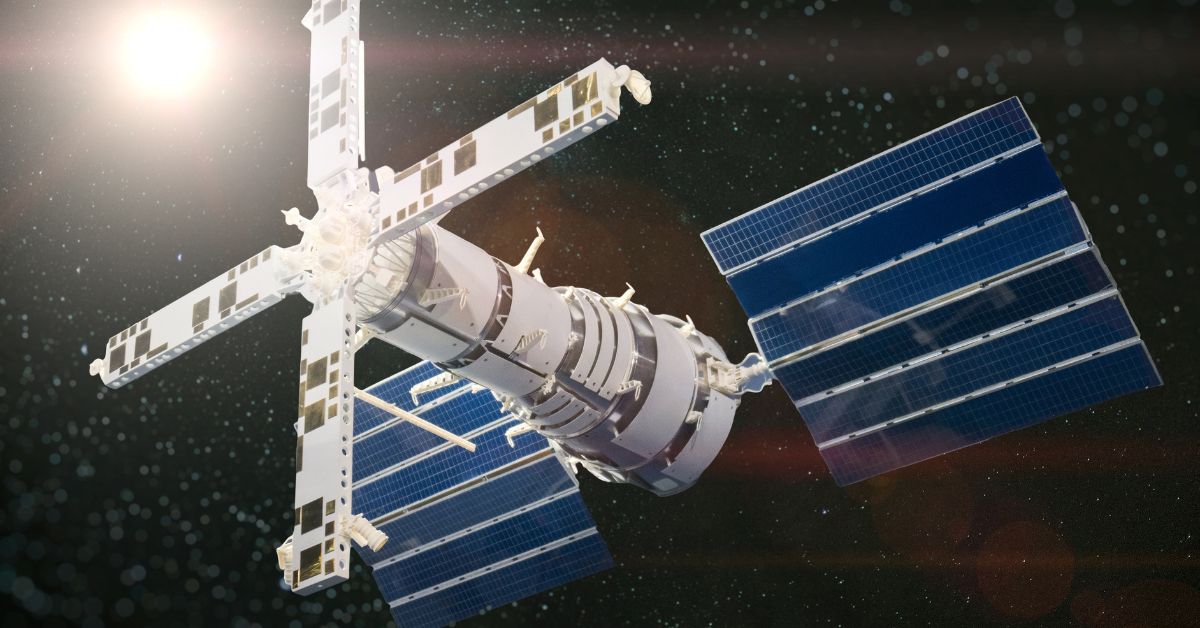

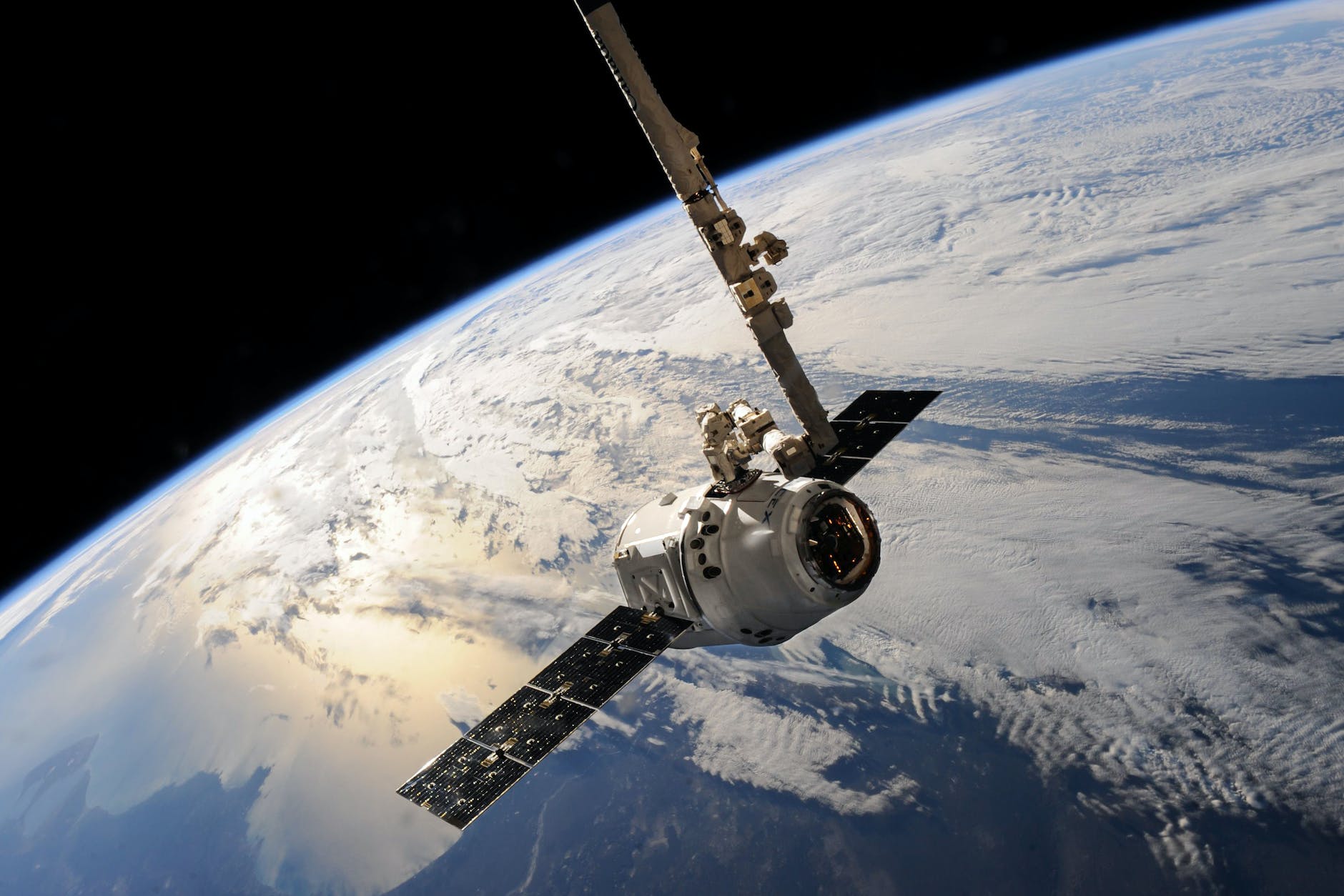
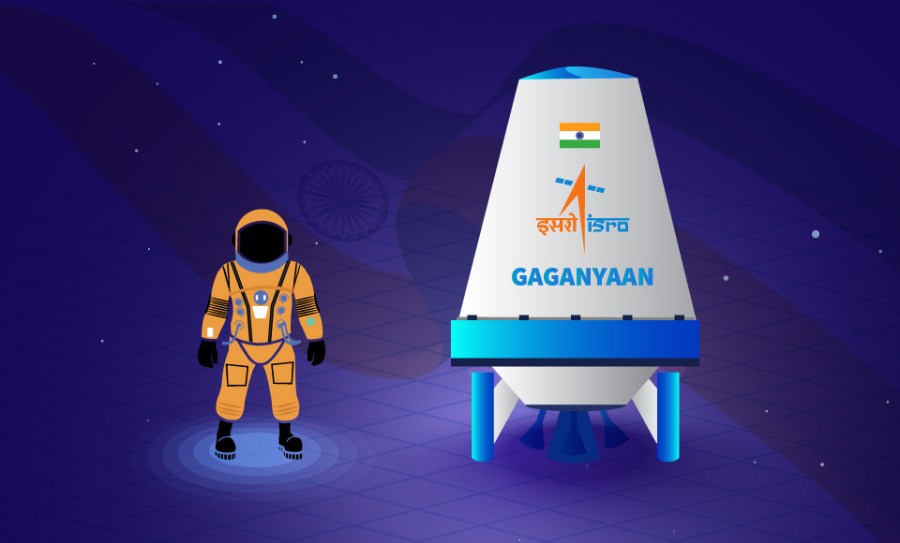
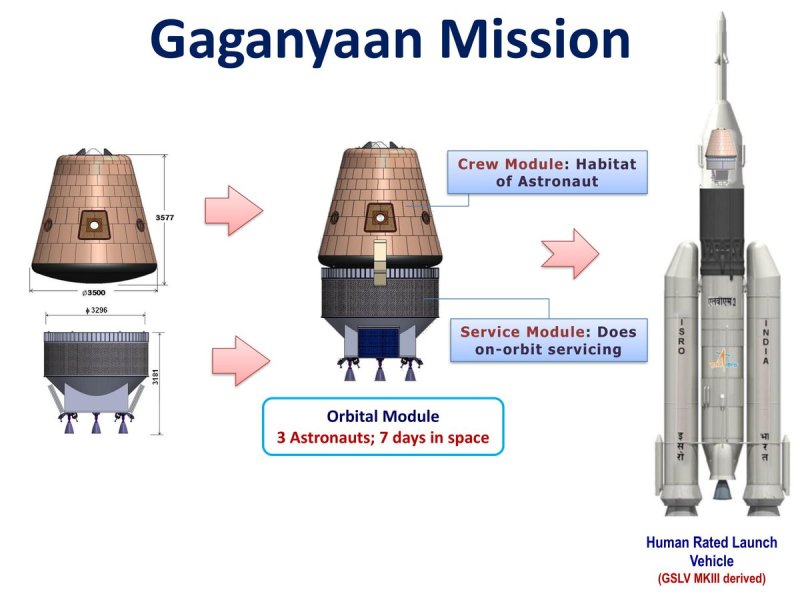
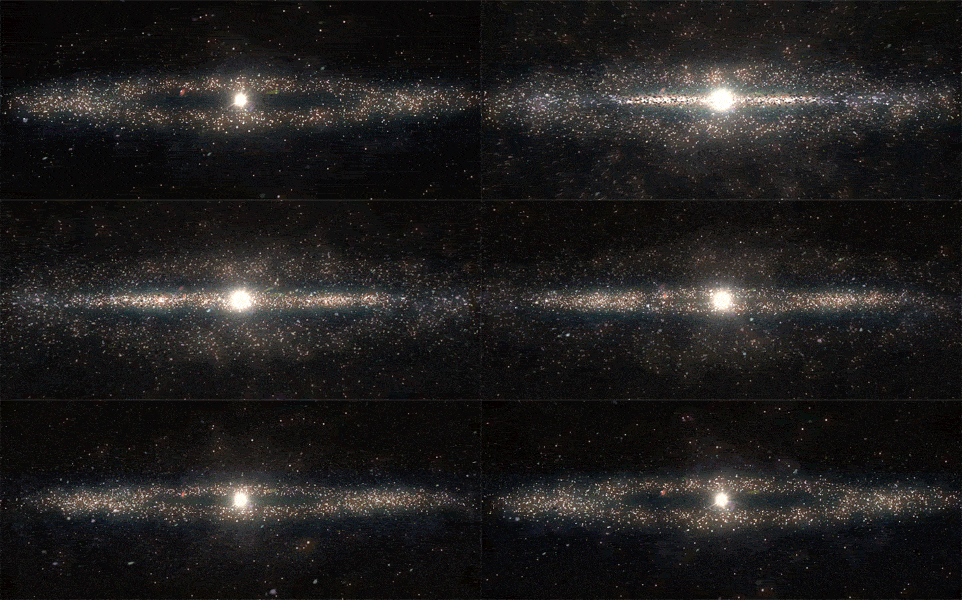
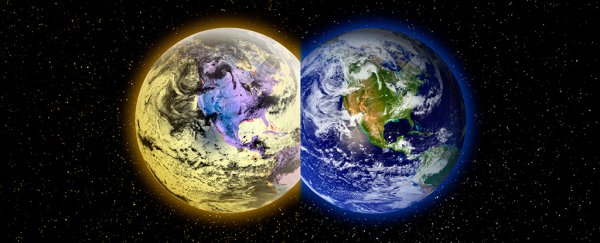
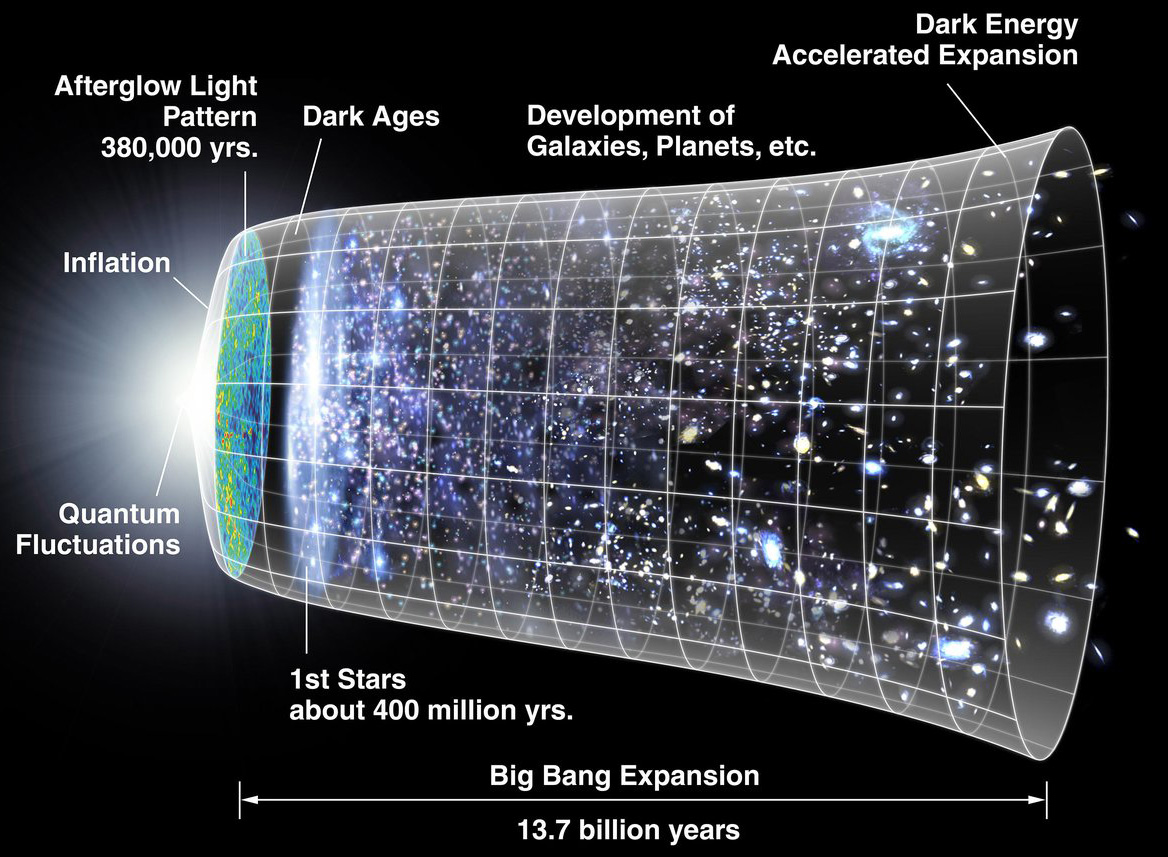 (
(


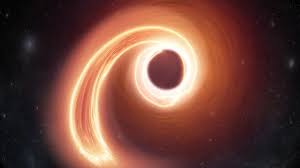
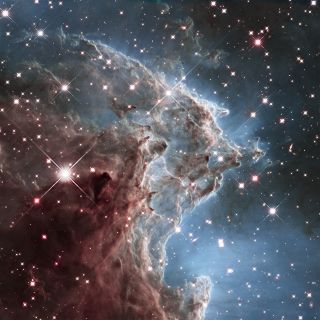
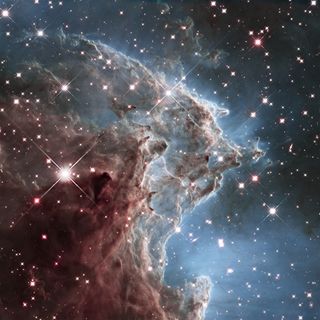


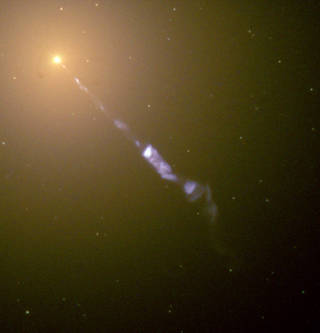


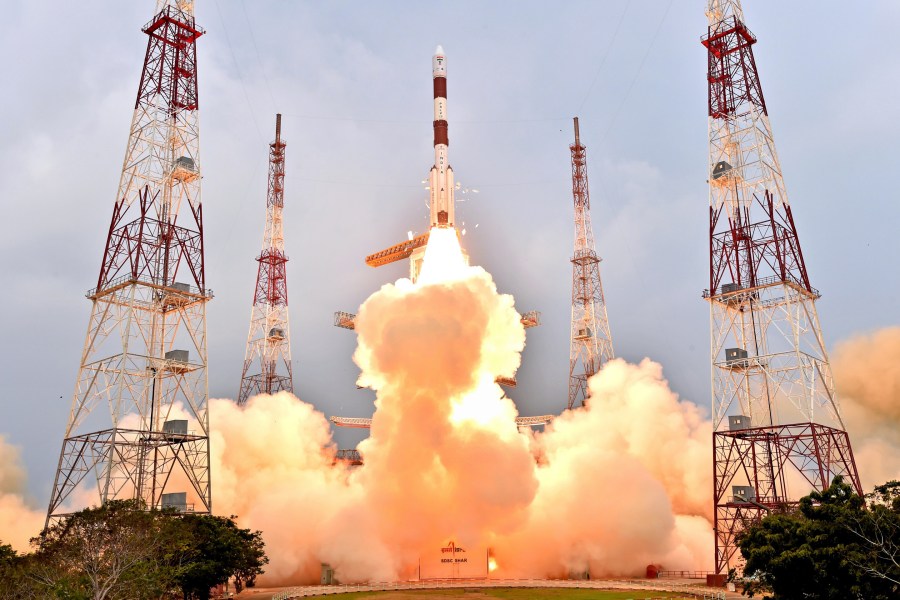
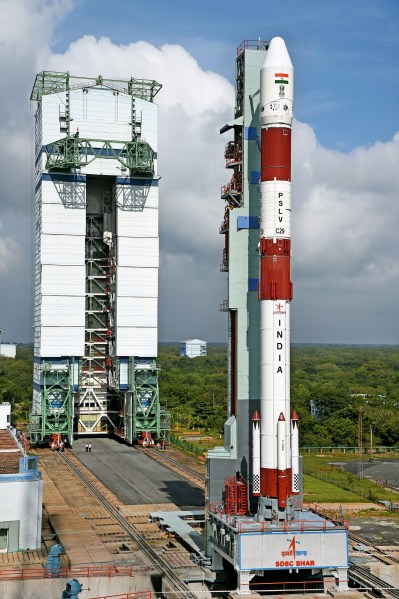
 Eduindex
You must be logged in to post a comment.