Literature broadly is any collection of written work, but it is also used more narrowly for writings specifically considered to be an art form, especially prose fiction, drama, and poetry. In recent centuries, the definition has expanded to include oral literature, much of which has been transcribed.
Our speech sounds can produce a wide variety of speech sounds. However , each language makes use of only a selected group of sounds .These selected sounds are organized in different ways in different languages .This selection and organization of speech sounds in an individual language is called Phonology .
PHONEMES
Every language has a definite number of distinctive sound units .These sound units constitute the phonemes of that language .They are the most basic and smallest elements in the expression system of a language .A phoneme may be defined as the minimal ,distinctive sound unit of a language .By minimal we mean that it cannot be sub-divide ; by distinctive we mean that , when one phoneme is substituted by another it produces a meaning change .Thus the phoneme is the smallest unit of sound that forms the basis of distinction between words in a language .The two words , for example , bat and cat are distinguished and differentiated by the initial phonemes of these two words , /b/ and /k/ .
When /p/ is substituted by /b/ in the word pit it becomes bit . With substitution , a different word with a different meaning is formed . Thus /p/ and /b/ are contrastive in English and hence they are two phonemes in English. Phonemic symbols are enclosed with in slant lines ; phonetic symbols within square brackets indicate the precise phonetic qualities of sounds represented by the symbols . It is also to be noted that phonemes refers to sounds and never to spellings .
The English RP has a system of forty four phonemes .Hindi has forty six phonemes and Malayalam has fifty two .All these languages have their own language specific phonemes .As phonemes are contrastive units of sound in the sound system of a particular language , they have validity only in that language.
Gender inequality is the social process by which Mens, LGBTQ community and womens are not treated equally.
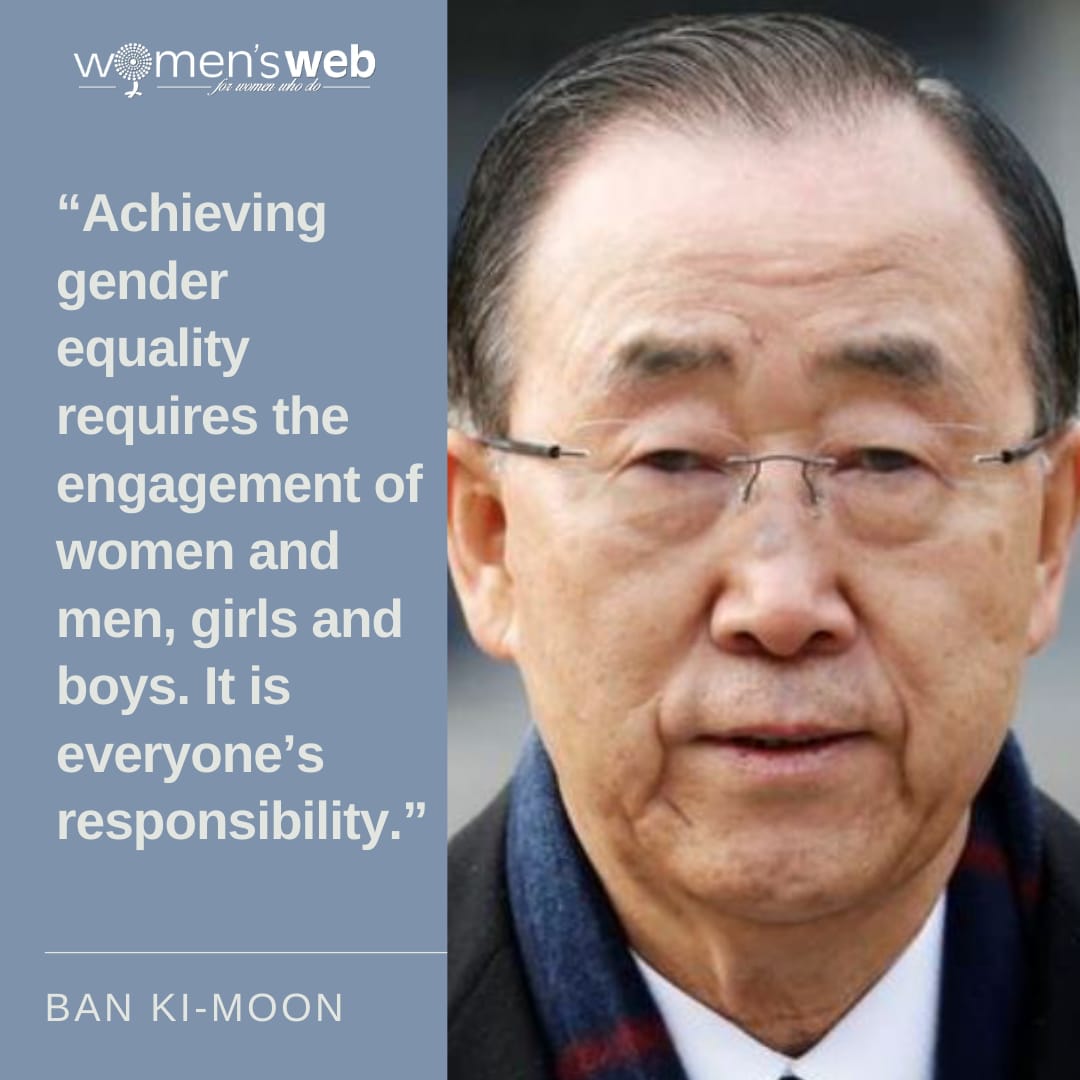
Gender equality is a human fight not a female fight.
Due to patriarchy many girls are hold back from striving for their dreams, receiving a quality education, medical facilities and overall awareness for their well being.
Everyday girls and boys see gender inequality in their homes, community, in textbooks, in media and among the adult.
Society assume an unequal responsibility for household work with mothers bearing the brunt of caregiving.
In schools, many girls receive less support than boys to pursue the studies they choose.
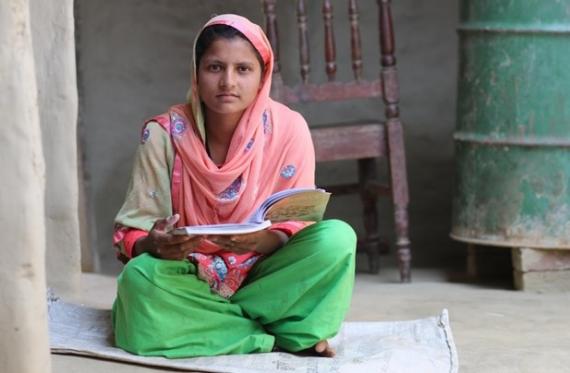
Rashida khatun says I realised the harm I would be causing myself if I agreed to get married. She in is enrolled in UNICEF supported program that provides out of school girls with basic numeracy, literacy and life skills.
Whenever we talk about gender inequality we always seems to focus on women but have anyone ever thought that what it’s like for men or LGBTQ community.
Gender equality, historically has been predominantly a women’s movement for women but I think the impact of gender inequality and how its affecting man hasn’t really been addressed.
– Emma Watson
Generally we see in our families that boys told to pursue maths in higher studies and girls were told to pursue Biology so that the male became engineer for female can be a doctor.
Whenever a boy wants to be a cook, singer, dancer he is being discouraged by society or his parent by saying that these are for girls.
It’s a perception in our patriarchal society that boys do not cry that the crime is only for girls.
Mens are stronger than women and they will never bow in front of anyone
That’s why mens will never admit their faults because they are meant to be dominant in this patriarchal society.
When a girl wanted to be an officer then she is being discouraged by the family by saying that this is the job for Boys.
The perception of our societies that the household works are made for womens .
If people see a girl with short hair, the peoples in society tends to point at her and think of her as a freak.
If a girl is not interested in cooking but she still has to do it and she is pressurized by the family and Society by saying that you have to go to someone’s home and you have to do it because it is made for you.
Let’s talk about LGBTQ community. It is is the second of three issues focused on social inequalities.
LGBTQ community faces gender inequality in their everyday life.
They face inequalities in employment, education, health, survival and political empowerment.
It is not the only way by which they faces social inequalities.
Lgbtq people faces housing discrimination and workplace discrimination.
They faces basic human right such as – marriage and family adoption.
They have been discarded from their homes at their birth. The only reason of this is that they are not a male or female.
Peoples doesn’t behave properly with them.
Is this what we called Gender Equality??
We blame society for gender inequalities and for everything but why we forget that society is because of us. we are the part of society and to change this society we have to change our own mentality.
“Evening time” is the end of the day, And at this time we try to relax our body and mind, and every individual has a different way of relaxing oneself. Every person has a different way of greeting others. The Internet and mobile phones change our life completely. In the past few months, we have spent most of our time with friends and families more, but Today we use mobile phones all day and night. In other words, Today we can not live without a mobile phone; not only that, since social media has come, every person likes chatting in social media instead of talking to each other.
It’s impossible to even imagine how our life would be if there were no various tasty snacks. Most of us get back home, or complete our work by evening and relax with a cup of tea or coffee with something to munch on. The time where you have the deepest conversation or maybe end up overthinking. Snack is loved by people of all ages because it brings us a good taste, good mood and helps us heal from harms. Good food always brings good mood.
We face hard times! I am an optimistic and happy-go-lucky student of Class VIII who has firm faith in the good life, but my parents want me to stay ahead of everybody in this competitive world. There was a time when coming back after school meant joy to me. Four- thirty in the afternoon was good food, and seven in the evening meant time for studies. There was the beautiful period from four- thirty to seven in the evening when it was either cricket or football for me! How times have changed!
Ever since I reached high school, tuitions have been encroaching on my life like a desert encroaches upon a green pasture to destroy it. Well, it is not that tuitions are not important. Nor can I complain of a lack of dedication in my tuition teachers, but what I fail to comprehend is my parents’ obsession to ensure that this giant python called tuitions should develop a crush for me (pun intended!).
If I tell my dad that I am being made to take tuitions when I am quite comfortable with the subject, he gives a mature smile which betrays his being intrigued at my attempts to reason. He is perhaps under the impression that evolution is yet to catch with me. The final result is that he ensures that I meekly visit the concerned tutorial. up Thus my first tuition begins at 5 o’clock. From then to 6.30, I cram the concepts of organic and inorganic Chemistry. I leave this coaching sharp at 6.35 pm to reach another tutorial located 2 kilometres away before 7 pm. There begins my struggle with Shakespeare. It is not that I do not enjoy Shakespeare, but I do not have much stamina left by the time I reach the English tuition.
Image Source – google
My parents fail to recognise that the best part of a student’s waking hours is spent in school. And after that if I am sent to continuous tuition classes, when do I study myself? Moreover, we are taught to play for good health. If a boy does his schooling from ten to four and then does his tuitions from five to nine, when does he play to maintain good health? Yes, one may definitely expect destiny to play with my health. Thus, till 9 pm I struggle to stay awake in my English tuition and then I complete my projects, courtesy the Internet, for an hour after I reach home at about nine-thirty in the night!
I have dinner at ten-thirty which is when I also surf the television channels to locate some interesting entertainment. When I finally go to sleep at about eleven, I browse through some interesting book. My teachers always stress that reading builds character. I agree! But I can’t read for long! Although my school begins at ten am although I have Geography tuitions from 7.30 am to 9.00 am. Ah! So much for the sweet happiness of childhood!
Paulo Coelho wrote many best-selling books most of which are popular all around the world. And translated in various languages. One of his masterpieces is Alchemist. All of his works are related to self-help and motivational genres.
Book: Veronica Decides To Die
Veronica is a young woman who commits suicide due to being full of emptiness in her life. While she waiting for death after taking a lot of sleeping pills she fainted and found herself in an asylum alive. But Doctor said that she has only a few days to live due to a heart condition caused by the overdose. Her presence there affects all of the mental hospital’s patients, especially Zedka, who has clinical depression; Mari, who has panic attacks; and Eduard, who has schizophrenia, and with whom Veronika falls in love. At least she wants to live or not is the key base of this novel.
Why you should read this book:
This one is not a boring plot, book content moves slow still does not let you drop the idea to read it. And this contains good vocabulary which is worth recommending to every reader. If you ever tried or at least thought once to end your life read this one it will make you believe in Miracle.
Book Quotes:
People never learn anything by being told, they have to find out for themselves.
You are someone who is different, but who wants to be the same as everyone else.
You have two choices, to control your mind or to let your mind control you.
Note: This book is also adapted as a film by Emily Young in 2009.
Book: The Spy
Mata Hari, the beautiful woman, the dancer, the courtesan, and the spy. She was the center of attraction wherever she goes… As a dancer she delighted her audiences, as a courtesan, she bewitched the richest and powerful men of the era. But is she really a spy?
Why you should read this one:
This book is based on real events. Mata Hari is a real person who is accused of espionage and executed.
On the back cover, it says, “Fiction.” But, I would rather love to say it’s a historical work.
When a man sleeps with many women, do we care to say any terms? So, I can’t criticize Mata Hari for being a courtesan.
In this work, I can visualize how men treated women as an object during those time. They gave preference for outer appearance. They wanted their wife to be loyal. But, those rules aren’t for them. And those things made my heart shrunk.
Book Quotes:
I decided to be who I always dreamed of. And the price of a dream is always high.
When we don’t know where life is taking us, we are never lost.
At this moment, I look back at my life and realize that memory is a river, one that always runs backward.
Recommendations:
I don’t recommend both of these books to children especially if you are younger than sixteen. One book contains intimate scenes and another one contains sexual harassment scenes. Thus I would like to recommend these to elder readers who are more than sixteen.
The Victorian era witnessed great strides been taken in the fields of transport and communications. There was a remarkable improvement in the social life of England during the 19th century. With the introduction of steamships, railways, penny post, telegram and cables the entire society underwent a dramatic change. Life I was never the same again. The slow pace of the stage coach disappeared and the age of speed arrived.
RAILWAYS THE MOST IMPORTANT MEANS OF TRANSPORT:
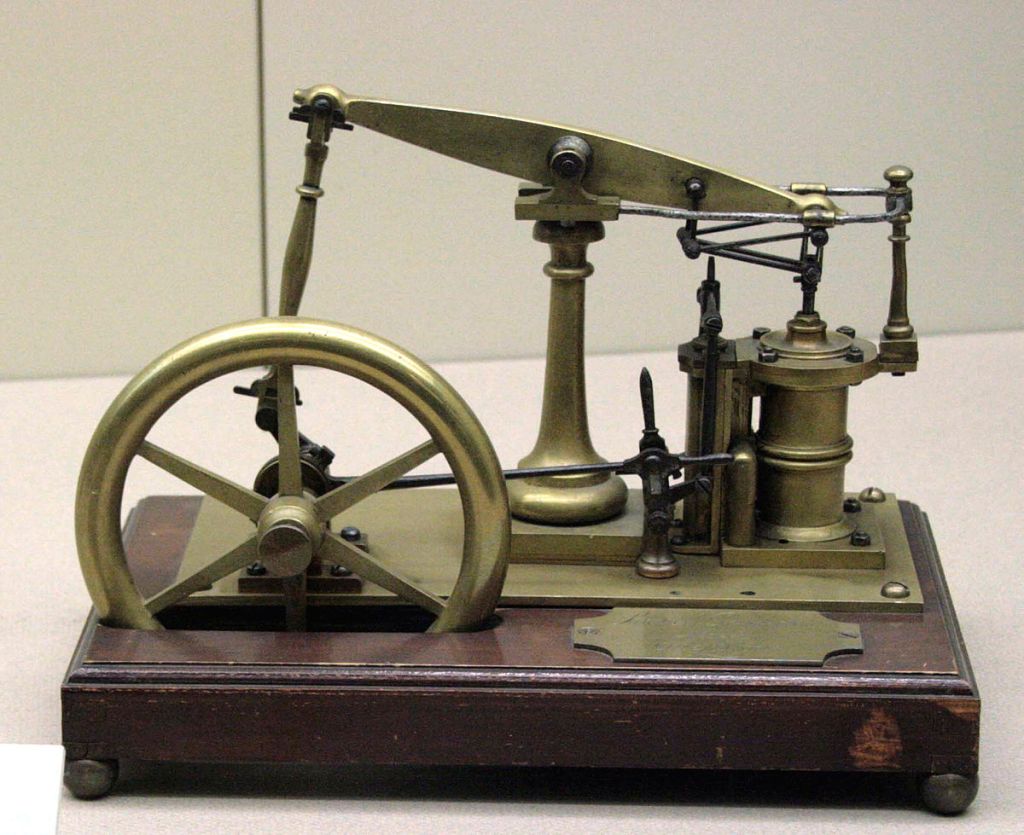
The most important means of transport in the Victorian period was the railway. It was the outcome of experience conducted to find the best method of moving coal from mines to places where it was required. As Trevelyan puts it “the railways were England’s gift to the world”. The first efficient steam engine was made by James watt in 1769 this engines which was stationary were used at first to pump water out of mines or to operate the power loom in factories it was only later that these engines were used in vehicles the year 1819 is an important one in the history of steamship because the Atlantic ocean was cross for the first time by a ship fitted with steam engines “The Savannah”. The story of the railways is even more exciting. It brought about a complete revolution in the way of life and in the landscape of the country. Richard Trevithick what’s up pioneer of locomotives in 1804 steam carriage transporter carload of passengers for the first time. George Stephenson produced an engine which was used chiefly to carry coal. The first two railways lines in the world were built one between Stockton and Darlington and another between Liverpool and Manchester.
POPULARITY OF THE BICYCLE:
The popularity of railways founded the death knell of roads and canals. The public mail coach and the heavy family coach disappeared from the roads. They continue to exist on by roads connecting me railway station and the towns. The roads regain their importance only when the motor vehicles came into use. One thing that help the roads to regain their long lost importance was the fashionable use of the bicycle. The common use of the motor car and motor bicycle was yet to come when Queen Victoria died in 1901.
PENNY POST:
Many innovations were made in the area of communications in the 19th century. An outstanding development in the means of communication was the establishment of the penny post in 1840. It was the result of unselfish and tireless efforts of Sir Rowland Hill who was originally a teacher by profession.Post had been a government Monopoly in England’s in strain of James I. There was a tax on letters but it was very difficult to impose its deadly sins private travellers smuggled letters. The introduction of the penny post sending letters was a costly affair and something which the poor could not afford. Rowland Hill’s proposed hello rate of postage would increase the revenue of the state by increasing the volume of male, all postage rate should be the same without regard to distance and all mail should be prepaid for which he suggested a device which was known as the postage stamp. He he faced a lot of opposition in suggesting the postage stamp, from the indifference statement and uninformed civil service. Carlyle (a great writer of that time) in one of his letters to his mother expressed anxiety that the art of letter writing will become worsen. The letter writing system was very helpful to many and that was the first time for the poor, in the history of mankind to communicate with their loved ones from whom they were separated. It was a success.
ELECTRIC TELEGRAPH:
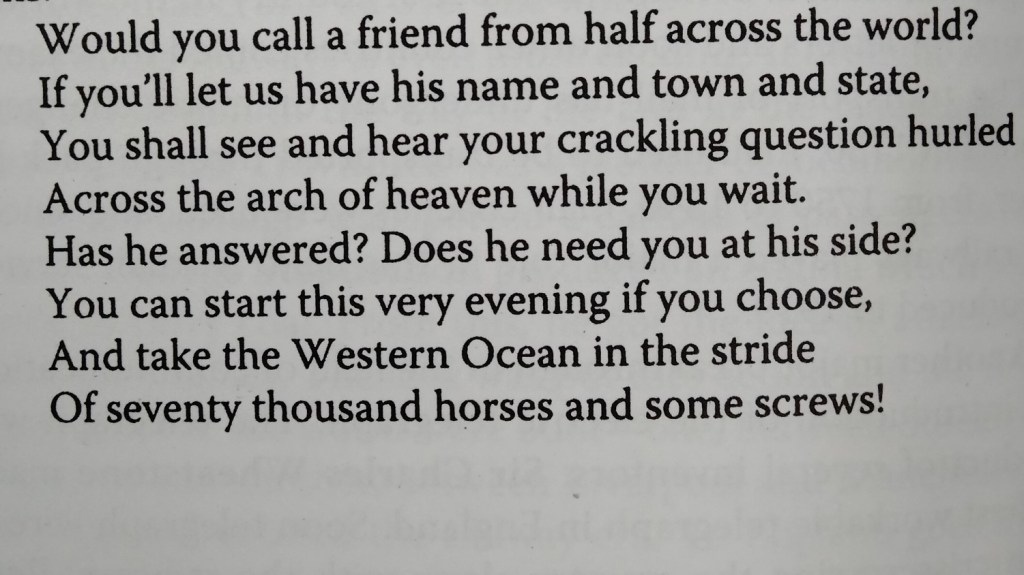
The same decade of penny post also witnessed the introduction of electric graph which was based on the invention of Samuel Morse. After the many difficulties Samuel Morse was able to build his first telegraph line in the United States from Baltimore to Washington in 1843. The next year he sent his first message “What hath God wrought”. Later after the spreading of telegraph lines, the inventor Samuel Moses was rewarded by many governments of Europe. The first telegraph company was formed in 1846 had 17 offices in London by 1854. the first successful cable was laid in 1866 and in 1870’s Stearns and Edison developed method of sending more than one messages over the wire at a time.
TELEPHONE:
The telephone was the most popular and easiest means of communication. It was invented by Alexander Graham bell and naturalized American. In 1856 with an apparatus embodying the results of office studies in the transmission of sound by electricity and this invention with modification and constitutes the modern telephone. After two years when Graham bell visited England he demonstrator is invention before Queen Victoria. Only per the support given by her, the first telephone exchange was opened in England in 1879 with 7 or 8 subscribers. Many telephone companies were organised in Great Britain in the cause of the next few years. The uses of telephone communication began to be appreciated the government gradually took over the service. It is today one of the easiest means of communications.
Ok, i will narrate my experience you can decide whether it was paranormal or not. Sorry some of you may find it lengthy. I am a big believer of paranormal, and may be this is the reason that i have had a couple of paranormal experiences.
Who Knocks?’ ‘I who was beautiful Beyond all dreams to restore, I from the roots of the dark thorn am hither And knock on the door.’
Lines from Walter De La Mare’s The Ghost haunt my memory as I take a walk back to the past. People usually refer to the past as dead and buried. Is it really so?
It was a cold night in Deogarh, Jharkhand. I was in Class V then. We were supposed to go to a party at a friend’s house about one-and-a-half kilometres away. My mother was working in the local school. Mum and Dad were supposed to reach the house of Barry Uncle, our host while I was to be accompanied by our caretaker, Ramu.
It was a moonlit night. Deogarh is surrounded by lovely hills and trees. The silhouette of trees in the moonlight is one combination I love. Ramu had an upset stomach after eating thirty-seven pakoras the day before. So I was going alone but I did not feel lonely. The moon was travelling with me. I could see it moving across the branches as I walked. The gentle laughter of a lady suddenly pierced the charming silence of the night air.
Image Source- google.
A girl in bright red appeared suddenly, ‘Why do you keep looking up to your left while you walk?
I was looking at the moon,’ I answered, rather embarrassed at having my romance with the moon noticed.
The girl asked, You are going to the party, right?”
“How do you know?
“It is a small place. People know each other. I will give you company.”
“So kind of you.
So we talked, laughed and joked for the next twenty minutes. 1 noticed her carefully. Red blouse, red and white skirt, light make up, bright red shoes. A small red bag. The lipstick was a bit too bright. She had amazing grace in the way she walked. Her lively but gentle laughter had the freshness of a mountain spring. We were discussing hobbies. She said she liked collecting old photographs. Why old?’ I asked.
She looked at me queerly and answered, ‘Old photographs have lots of hidden and forgotten stories.
“All right, I said.
Barry Uncle’s house was decorated beautifully. Music and lights welcomed us. Suddenly, the girl stopped smiling. She turned around. ‘What is wrong?’ I asked her.
I prefer the moonlight. I will not go in,’ she said and started walking away.
At least take this jacket,’ I offered her. She was my height and I knew about chivalry. She gave me a mysterious smile, wore the jacket, and walked into the darkness.
In the party, I grooved to the music for some time. I needed to have a wash. While moving towards the washroom, I suddenly came across a photograph of Barry Uncle with the stranger I had just met. “That’s my niece, Mary. She died two years ago in a tragic accident,’ Barry Uncle said, with a note of sadness in his voice. She is buried in the graveyard behind St Michael’s Church,’ he added.
This is indeed an experience that I would not dare to forget……………….
We have always come across the word “Fantasy”, which is different for every person in this universe. For a poet, it is a place where they can get lost and live in those unending stories which don’t have any obstacles. Whereas for some philosophers, fantasy would be something which makes them realize as a beautiful place to live, and for saints, it would be a place where they can encounter God and live a peaceful life.
Sometimes, Fantasy is when a dreamer dreams about their dreams. However, this is a controversial topic as for some fantasy is just a mere illusion of Thoughts.
Although, Fantasy is where unexplored ideas pop up and due to fantasy many great personalities have contributed their best parts to the world of notions.
However, the feeling of Fantasy gives us satisfaction to tackle the real world and provides us a sense of delight in accomplishing our dreams.
“These mortal wizards are the explorers of their wonderland, where they traipse, fondle, gaze over their mystical thoughts.”
The substantiality of our existence is revealed through our reality and our delusion of unrealistic thoughts. Those fictitious stories sprinting through our nerves and then vigorously to our hearts make us feel like the fairies of the fantasy land.
We mortal beings are so devoid within ourselves but are fulfilled with the phantasm which exists within our heads forever. It is like the unrealistic elements of those magical fables which make us feel accomplished and satisfy our existence.
Our existence relates to those oblivious thoughts which are every time inside us, inside our minds. Maybe this virtual world is filled with infinite fictional stories which are yet to be discovered. These never-ending illusioned stories flickering might be part of those parallel universes which is still a mystery.
It is the conundrum of my abundant conviction. We are the wizards of our concocted minds, which are still drifting around these mystifying islands. The mortals have a different notion.
The shattered humans are astray from their delusion and ponder about their fictional characters drifting in those summer haze forests, valleys which are still a blur of memories in this mortal world.
They are emancipated with those clasped thoughts between the virtual land and the magic land. Perhaps, these fantasies are the mirage of our parallel universe, maybe it’s just the artistry of thoughts popping up out of the crafted minds.
In those fantasies lies the stripped and naked pain or grief of those humans who are escaping from the harsh reality. The mortal beings are fragmented into deep emotions, sparkling in those never-ending illusions.
These artists dilute themselves in those fantasizing moments to get lost, lost from the truth. These tales are smoldering with the reality of their aura, possibly their identity lies somewhere deep under the ocean of those unreal dragons, or the mermaids which is still make oneself a bliss whenever he/she is living on those islands.
Being frail or fragile is the reason for he/her to be the daredevil in their cloud of thoughts. It’s very outlandish but it is the reality of oneself hiding through their existence.
“Perhaps it’s an eerie or a bewilderment of one’s self.”
With the rapid development of science and technology, science fiction has became popular in the modern times. The essence of fiction is the presentation of conflict in the human drama. Science fiction deals with conflict that arises out of the impact of scientific discoveries on the future life of humanity.
The writer of science fiction must be well-versed in the modern scientific knowledge to enable him to create a credible science story. Through in science fiction the element of fantasy dominates, the science fiction writers do not commit errors regarding scientific discoveries, facts and possibilities.
Types of science fiction:
There are two types of science fiction.
The first type is based on known facts of science leading to the development of new possiblities as in Arthur C. Clarke’s ‘The Sands of Mars’ which deals with the conditions encountered by the explorers on Mars.
The second type is science fantasy which is very popular today. It introduces any kind of assumptions, realistic or imaginary, which are necessary for the story. The strongest element in science fiction is imagination which often goes beyond credibility or rational understanding as in Bradbury’s ‘Martian Chronicles’.
Modern science fiction combines elements of scientific facts with fantasy. Most common themes in modern science fiction are the following:
Space Travel, journey to other worlds and encounter with extra-terrestrial beings.
Travelling in time past or future.
Biological and psychological changes brought about by the appreciation of science in human beings and other species of life.
Extraordinary powers acquired by man through the use of technology or abnormal mental powers possessed by some persons.
Science fiction began to acquire importance in the latter part of the 19th century with the fictional writings of Jules Verne and H.G Wells. Some of the stories of Edgar Allen Poe and Mary Shelley’s novel ‘Frankenstein’ had anticipated the coming of science fiction. However, it was Jules Verne’s novels such as ‘Journey to the Centre of the Earth’ and ‘Around the World in Eighty Days’ that set the trend. Science fiction achieved greater popularity with the writings of H.G Wells who wrote such classics as ‘The War of the Worlds’ and ‘The Time Machine’.
Modern science fiction presents most of the important technological achievements of the age — radar, rockets, medicines and robots, electronic brain, space vehicle, satellites, medicines and drugs with fantastic effects etc. Such materials are used with great imagination to create an exotic and weird effect.
The most outstanding science fiction writers since the sixties have been Isaac Asimov and Arthur C. Clarke. Asimov was a prolific writer of science fiction. His novels of the Foundation Saga and the series of ‘Robot’ novels have become classics. Two other outstanding novels of Asimov are ‘Extra-Terrastrials’ and ‘The Gods Themselves’.
The science fiction presents not only a fantastic world of wonders but, also a world more or less scientifically accurate. Most science fiction writings conform to the general principles of novel writing. They stimulate our imagination, satisfy our curiosity and lift us to a world of intense make-believe.
“Love will find a way through paths, where wolves fear to pray”, as beautifully quoted by Lord Byron. Indeed “Love”, is one of the purest elements in the whole universe, which makes our world more beautiful.
Why do we love? Is it important to love others? Should we love ourselves? There are endless unexplored questions that make us think about it. For a poet, love is like seeing those dazzling stars at night, for a painter, love is beauty gifted by nature, for a philosopher it is something beyond existence. But one common thought which provokes in every human is that love makes us unite, it gives us harmony and a sense of comfort towards each other.
Love is illusioned in our minds, in our hearts, but yet it is fading somewhere from the world of humans. Somewhere, we humans have forgotten how to love each other.
We are living in a generation where humans are rebellious and have detached from the emotional state of being. In the Contemporary world, people have forgotten about love and its profoundness. Whether it is self-love, to love others, Humans are having a neglecting behavior when it comes to love and gratitude.
This era is an era of remorse! An era where we are afraid of each other. Humans are toxic to each other. Where people don’t care for each other.
Gone are the days when the world was a beautiful place with all the precious jewels of mother nature. Now our world is a place filled with hatred, jealousy, evilness towards each other. Humans are in a motive to devastate each other for their desires and to let down other humans.
The love is no more the love that was there in the 18th century when Romeo loved Juliet had an eternal for each other. This was the time when love was the most prominent role for all humans to perform. Humans are the most threatening creature on our earth which is not only depleting love but also depleting humankind.
Love is no more than the love we had!
We have lost all our ethics and norms and living a misleading life. Often, we are living a life that has become a misfortune. We are living beings with shallow hearts. We have created a world where faith and trust no longer exist, and if it all is found we are burdened with societal pressure that we fall apart from our convictions.
Love is considered feeble, rather is one of the most vigorous things in the universe.
But as we say there is always hope for all. Love never dies and so we are alive till love exists. It all depends upon us and our convictions that how we perceive it.
In the end, to conclude we can say that why to deplete such a beautiful thing from the world. Let’s make a world more alluring than it is. Let’s make the world a paradise by loving and caring for each other.
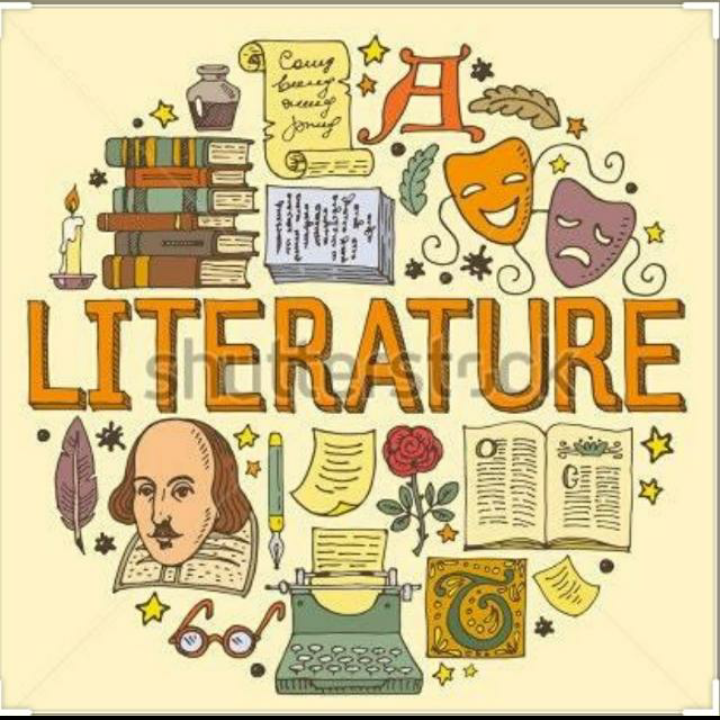
Literature is one of the fine arts like music and painting. It is fundamentally, an Expression of life through the medium of language. Literature is composed of books that are of great human interest due to their subject matter and mode of presentation.
In Literature, form and the pleasure that form gives are of great importance. The writer is provoked by an urge for self-expression. Literature reflects an interest in the world of reality as well as imagination and our love of form and order. Matthew Arnold one of the prominent writers defined literature as a criticism of life.
We can find four distinct elements in all good Literature which are:
The intellectual element
The emotional element
The element of imagination and fancy
The element of composition and style or (The technical element)
Literary productions can be classified into five categories from the point of view of their subjects or themes:
Literature of purely personal experience.
Literature dealing with the common questions of life, death, Destiny, and God.
Literature dealing with the social world order and its activities.
Literature dealing with nature and man’s relationship with the external world.
Literature deals with Literature and Art’s themselves.
How Literature came into existence:
The study of Literature begins with the reading of books which gradually leads to a familiarity with authors. Every great book has something fresh and original to say and it says this freshly and originally. As Plato says the foundation of all good and lasting work is entire sincerity to oneself and to the truth of things one perceives in life. The purpose of studying literature may be pleasure or acquirement of knowledge and insight or both. In any case, the Readers business is to enter into the spirit of the work and to penetrate the vital forces of the author’s personality.
Features of Literature:
Another important aspect of Literature is style. Literature uses language in various molds. The great writer modifies the language to his purposes and molds it according to his peculiarities. Thus the style of the author is the product of his personality; it is also a record of his artistic, spiritual and intellectual growth. A proper study of Literature involves the study of its history, the biography of the author, and the ethos of the ages and society in which it is produced. Thus Literature becomes a supplement to the study of history. While history tells us about the externals of a people’s civilization, Literature gives us an insight into their mental, spiritual and moral condition.
Literature helps us to know more about the life of the people and the period of the time. It gives us an enormous study of the works and the mentality of the author and the author reflects the visions of the people. Thus, it expresses the emotional aspects which are locked inside the person and it provokes agony in the paper. However, Literature is a fine art that provides inner knowledge and enlightens people all over the world in different languages.
Either Stable burning in various states accrued the air pollution in Delhi and created a gas chamber around NCR ; SC came upon a committee to observe scenario , Or 4 industries inflicting stream pollution were shut down by Maharashtra pollution board . Everybody has responsive to environmental problems as higher than . The key solution for resilience to environmental issues are provided by government in various legislations , enactments and provisions on environment laws .
In republic of India environmental law is concern with the policy and law for protection of the environment . It aims for achieving carbon free economy through taking measures for reducing climate change. All the acts under this laws are safeguards in ensuring effective management of the environment and its multiple ecosystems . It provides for preventing environmental damage .
Natural resources in the earth were unscathed from millions of years. It were remain pure until the industrialized started . After the industrialization this resources have been exploited in Spain of 100 years only . From 19th century, the environment (air , water and land ) is directly exploited by rapidly growing population at alarming-rates.
environment includes water, air and land and the inter-relationship which exists among and between water, air and land, and human beings, other living creatures, plants, microorganisms and property , as mentioned in section 2 of environmental protection Act of 1986 . Environment is a wide sphere , it consists of social, economically , political , religious dimensions .
Addressed area of environmental laws in India :
1. Quality of water : For the prevention and control of water pollution and to maintain or restore wholesomeness of water in the country the water act of 1974 was enacted. It further provides for the establishment of Boards ( CPCB and SPCB ) for the prevention and control of water pollution with a view to carry out the aforesaid purposes. This act prohibits the discharge of pollutants into water bodies beyond a given standard, it also lays down fine and penalties for non-compliance.
2. Reduction of air pollution and maintaining air quality : The Air (Prevention and Control of Pollution) Act, 1981 (the “Air Act”) is an act to provide for the prevention , protection and abatement of air pollution .It provides for establishment of Boards at the Central and State levels with a view to carrying out the aforesaid purposes.
3. Hazardous Waste management : legislations that directly or indirectly deal with hazardous waste management are the Factories Act, 1948, the Public Liability Insurance Act, 1991, the National Environment Tribunal Act, 1995 and rules and notifications under the Environmental Act.
4. Containment cleanup, damage mitigation : preventing future damage to the environment is undeniably the primary objective of environmental law, mitigating and reducing existing damage is also important. This area most often deals with issues like toxic leaks and oil spills. The central objective of this branch of environmental law is deciding liability, planning an appropriate response, and also determining the best process of investigation and monitoring in the overall clean up process. This area also concerns itself with the study and assessment of risk in the long term, to better mitigate any future accidents and risks.
5. Sustainability of resources : United Nations has put great emphasis on ensuring the sustainability of resources. For this vision , it has advocated the formation of various legal principles and legislation. In this regards concept of environmental impact assessment introduced .
Noble legislations and enactments on environment law in India :
Laws on Forest and wild life protection: • The Indian Forest Act, 1927 ; The Wildlife Protection Act, 1972; The Forest (Conservation) Act, 1980 ; The Environment (Protection) Act, 1986; The National Green Tribunal Act, 2010.
Laws on Water pollution : • The Water (Prevention and Control of Pollution) Act, 1974.
Laws on air pollution : • The Air (Prevention and Control of Pollution) Act, 1981 (the “Air Act”)
Laws on hazardous waste management : • Biomedical Waste (Management and Handling) Rules, 1998 ; Municipal Solid Wastes (Management and Handling) Rules, 2000 ; Batteries (Management & Handling) Rules, 2001 ; Hazardous Wastes (Management, Handling and Transboundary) Rules, 2008 ; E – Waste (Management and Handling) Rules, 2011 . Laws on wetlands
•Ramsar convention (1971) : This convention was initiated to push for greater conservation and sustainable use of wetlands ; Wetlands (Conservation and Management) Rules, 2017. Constitutional provisions on environment laws
• Part IVA (Art 51A-Fundamental Duties) of the constitution casts a duty on every citizen of India to protect and improve the natural environment including forests, lakes, rivers and wildlife, and to have compassion for living creatures.
• the Constitution of India under Part IV (Art 48A-Directive Principles of State Policies) stipulates that the State shall endeavour to protect and improve the environment and to safeguard the forests and wildlife of the country.
environment makes human life possible, and our cultural environment helps define who we are. It is therefore essential that our population and economic growth are environmentally sustainable.
“The secrecy behind that pacifism among language is due to the beautiful alteration of those alphabets which allowed themselves to dwell into those anonymous letters and accepted those outlandish cultures!”
Yes, definitely! It’s the mere alphabets that give consent to the translator who translates them into a different language and give them a new beginning as something which often becomes phenomenal.
It’s always not prominent that the one who thinks great and writes great texts and even the audience who extols it, will be the legendry texts of all time. Certain times, we as a reader forget that those minute things which make a text more fabricated are due to those editors, translators who make a text complete.
Profoundly the question which hikes up is: Do these translators get any recognition for their work? Do they have any popularity like the writers or they are just considered a person who steals a writer’s copyright?
If we talk why translating is a bad job? we will get a plethora of reasons behind not being a translator. But taking the example from the fictional world of literature, translating is somewhat recognized. One of the outs of context but yet one of my favorites is the translated book – After Dark by Haruki Murakami. One of the best Japanese books translated into English which does not make it less beautiful than the original one.
It’s just not only one translated text, but many texts like this play a major role that tackles the problems in language barriers.
Translation and Language in the world of Literature:
Merely when we focus on the job of translation:
“A translator is an artist who paints those structure, language, and sentence in such a form that it decodes the message to the other sectors of society for whom language built a bridge”.
The notion of translation was encrypted by different critics and poets according to their ages, to which they belonged too. As looking into the 16th century, during the flourishing dazzling age of romanticism, where many poetries were paraphrased and translated. Translation of classics was the only matter of importance in the 18th century. But as in the 1970s, the main focus was on innovation and novelty.
The concept and theories applied in the romantic age were somewhat experimentative, as theories of translations given by John Dryden, Pope, and then by Alexander Fraser Tytler was so much popular in the literary world.
The main hitch that occurred in the field of translation was when it was surrounded by allegations of plagiarism and many writers made certain rules and boundaries or rather principles upon the translations. Translation theories were largely formed around Bible translations in the sixteenth century. Etienne Dolet is credited with the first formulation of a theory of translations.
Certain critics like Dryden, – one of the earliest English translation theorists, classifies translation into three types:
1. Metaphrase – word for word, line for line rendering,
2. Paraphrase – wherein translating sense is given more importance
3. Imitation – were sense matters in translation.
E.g.: Horace’s Ars Poetica tars by Ben Jonson – metaphrase
Virgil’s Aeneid tars by Waller – paraphrase
Pindar’s two odes by Abraham Cowley – imitation
In 1789, George Campbell suggests three criteria for good translation:
There should be just a representation of the original.
The spirit and manner of the original should be conveyed through consistency with the language of the translation.
The translation should have the quality of original performance to appear natural and easy.
In 1790 Alexander Taylor in The Principles of Translation set up three different principles
The translation should give a complete transcript of the idea of the original work
The style and manner of writing should be of the same character as that of the original.
The translation should have all the cases of the original composition.
Translation maintains the authenticity:
The translation is the right job to do and it maintains the authenticity of the author and it works and keeps the work original.
As Aristotle rightly said that imitation is not a mere, it’s a photostat copy of life or the world, but it is a recreated ideal copy of the world. Similarly, a translation is also crafted in such a way that it does not take the cultural rights of the original work.
Yes, as a reader we cannot deny the fact that a translator copies the whole idea of the author and displays the work, but one should always remember that translation is not an easy task as it needs huge determination to learn the mindset, structure, and form of the writer’s mind and have to work accordingly so that the readers don’t repulse upon the translator and it should not hurt the sentiments of the readers of the authors. As translation according to me breaks the bridge created by the prejudicated norms in favor of language.
Literature and Translation are counterparts of each other:
As we know a language has the power to bring war, riots, and bloodshed among the 2 communities, whereas literature is binding the difference and helping to bring harmony among the language in such a way that the translation will help them to cover the gap. By taking the foreseen principles of these writers a translation can portray us in a better way and be fruitful to our literature.
“The best form of mourning a writer is to read their body of work” — and include the act of translation.
As rightly said by, Fahmida Riaz that what my interpretation is about the translator is the one who goes through the soul of the author reads it, interprets it, notions all those ideas according to the writer, and then translates it.
“Translation is mere not a copy, rather a piece of art which beautifully presents the bio of the author, the story and the translator”!
Time is nothing but the count of the life. It is measured in Hours, minutes and seconds. It is very important to manage the time as it is very precious and cannot come back once it is lost. It is also very important to utilize the time properly.
Managing the time is very important. Many of the people don’t know how to manage the time. Let us now know some of the time management techniques and how to use them.
•Make schedules:-
Making schedules is one of the best methods to manage the time. All you have to do is, think of the things what you have to do on a particular day and allot some particular time for each activity. Complete particular activity in the allotted time. When the work takes too much time, then leave it aside and go for another work. Whenever all the work is finished, go for the work which is unanswered in the beginning and complete it. This is how schedules helps for time management and makes the proper use of the time.
•Don’t spend much time on one thing:-
Spending much time on a particular thing disturbe the individual and disturbs the concentration. So, to focus on the work, an individual must go for some another work whenever they get bored on a particular work. So, it helps to focus on the work and for not wasting the time.
Time management is the process of planning and controlling how much time to spend on specific activities. BENEFITS OF TIME MANAGEMENT :
The ability to manage your time effectively is important. Good time management leads to improved EFFICIENCY and productivity, less stress, and more success in life. Here are some benefits of managing time effectively:
STRESS RELIEF : Making and following a task schedule reduces anxiety. As you check off items on your ” to- do” list, you can see that you are avoid feeling stressed out with worry about whether you’re getting things done.
2.MORE TIME : Good time management gives you extra time to spend in your daily life. People who can time- manage effectively enjoy having more time to spend on hobbies or other personal pursuits.
MORE OPPORTUNITIES: Managing time well leads to more opportunities and less time wasted on trivial activities. Good time management skills are key qualities that employes look for. The ability to prioritize and schedule work is extremely desirable for any organisation.
4.ABILITY TO REALIZE GOALS : Individuals who practice good time management are able to better achieve goals and objectives, and do so in a shorter length of time.
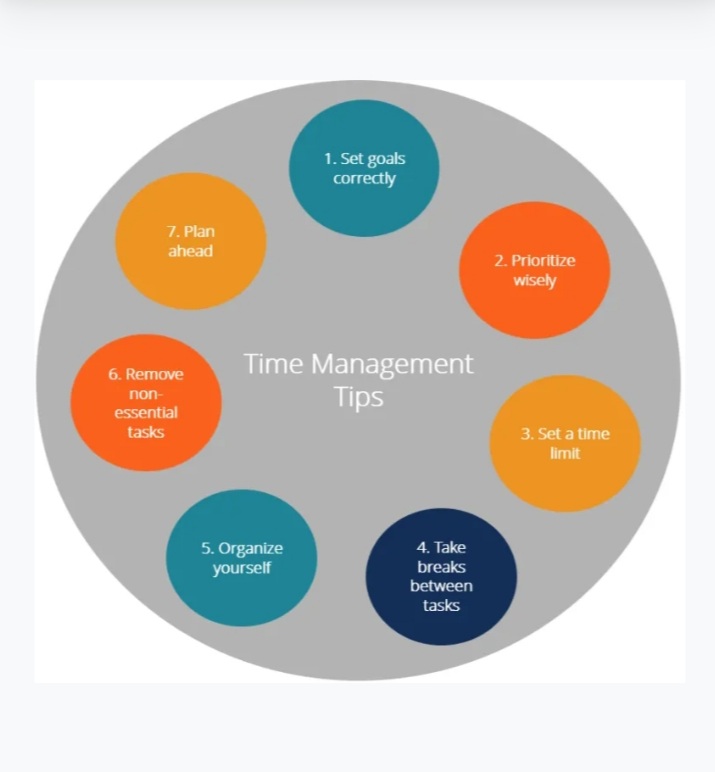
LIST OF TIPS FOR EFFECTIVE TIME MANAGEMENT:
1.SET GOALS CORRECTLY: Set goals that are achievable and measurable. Use the SMART method when setting goals. In essence, make sure the goals you set are specific, Measurable, Attainable, Relevant, and Timely.
2.PRIORITIZE WISELY : Prioritize tasks based on importance and urgency. For example, look at your daily tasks and determine which are :
Important and urgent : Do these tasks right away.
Important but not urgent : Decide when to do these tasks.
Urgent but not important: Delegate these tasks if possible.
Not urgent and not important : set these aside to do later.
3.SET A TIME LIMIT TO COMPLETE A TASK : Setting time constraints for completing tasks helps you be more focused and efficient. Making the small extra effort to decide on how much time you need to allot for each task can also help you recognise potential problems before theyv arise. That way you can make plans for dealing with them.
4.TAKE A BREAK BETWEEN TASKS: When doing alot of tasks without a break, it is harder to stay focused and motivated. Allow some downtime between tasks to clear your head and refresh yourself. Consider grabbing a brief nap, going for a short walk, or meditating.
5.ORGANISE YOURSELF : Utilise your calendar for more long term time management. Write down the deadlines for projects, or for tasks that are part of completing the overall project. Think about which days might be best to dedicate to specific tasks. For example, you might need to plan a meeting to discuss cash flow on a day when you know the company CFO is available.
6.REMOVE NON- ESSENTIAL TASKS : It is important to remove excess activities or tasks. Determine what is significant and what deserves your time. Removing non- essential tasks frees up more of your time to be spent on genuinely important things
IMPLICATIONS OF POOR TIME MANAGEMENT :
Let us consider the consequences of poor time management ;
PLAN AHEAD : Make sure you start everyday with a clear idea of what you need to do- what needs to get done THAT DAY. consider making it a habit to, at the end of each workday, go ahead and write out your ” to- do” list for the next workday. That way you can hit the ground running the next morning.
POOR WORKFLOW : The inability to plan ahead and stick to goals means poor efficiency. For example, if there are several important tasks to complete, an effective plan would be to complete related tasks together or sequentially. That translates to reduced efficiency and lower productivity.
WASTED TIME : Poor time management results in wasted time. For example, by talking to friends on social media while doing an assignment, you are distracting yourself and wasting time.
3.LOSS OF CONTROL : By not knowing what the next task is, you suffer from loss of control of your life. That can contribute to higher stress levels and anxiety.
4.POOR QUALITY OF WORK : Poor time management typically makes the quality of your work suffer. For example, having to rush to complete tasks at the last minute usually compromises quality
5.POOT REPUTATION : If clients or your employer cannot rely on you to complete tasks in a timely manner, their expectations and perceptions of you rely adversely affected. If a client cannot rely on you to get something done on time, they will likely take their business elsewhere.
“As long as I have life, as long as blood flows through this arm of mine, I shall not leave the cause of freedom…I am only a woman, only a poet. But as a woman, I give to you the weapons of faith and courage and the shield of fortitude. And as a poet, I fling out the banner of song and sound, the bugle call to battle. How shall I kindle the flame which shall waken you men from slavery…”
Introduction
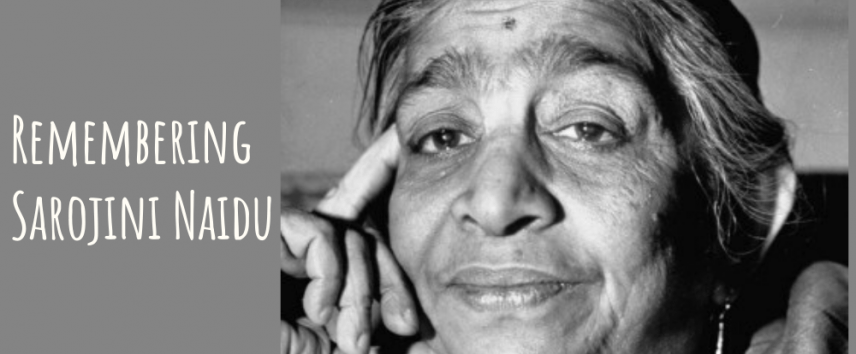
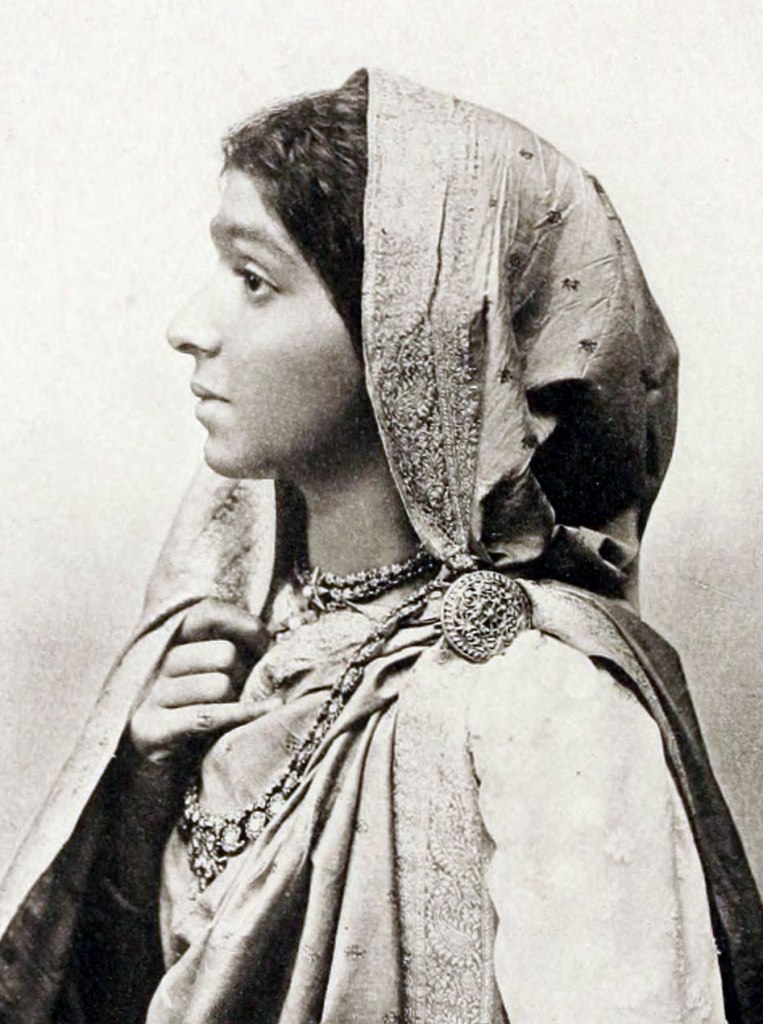
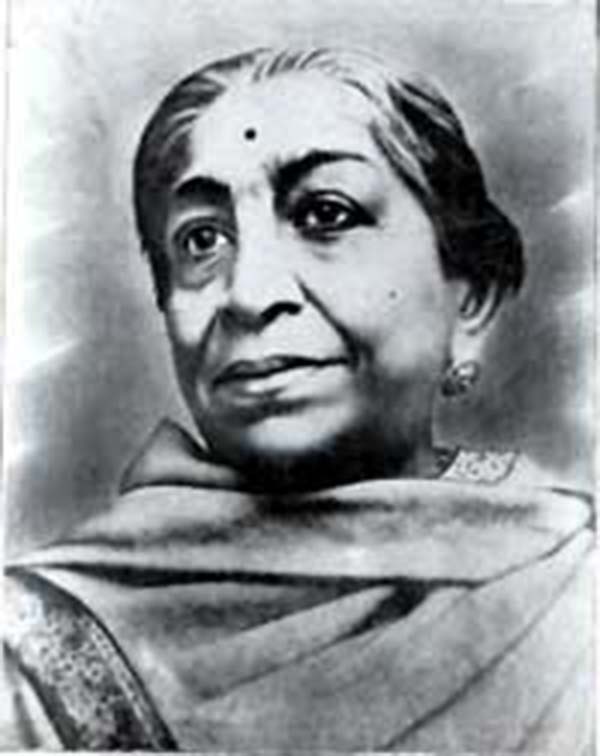
She was an Indian political activist and poet. A proponent of civil rights, women’s emancipation, and anti-imperialistic ideas, she was an important figure in India’s struggle for independence from colonial rule. Naidu’s work as a poetess earned her the sobriquet ‘the Nightingale of India’, or ‘Bharat Kokila’ by Mahatma Gandhi because of colour, imagery and lyrical quality of her poetry.
Birth and death
Born in a Bengali family in Hyderabad, Naidu was educated in Madras, London and Cambridge. Following her time in England, where she worked as a suffragist, she was drawn to Indian National Congress’ movement for India’s independence from British rule. She became a part of the Indian nationalist movement and became a follower of Mahatma Gandhi and his idea of swaraj. She was appointed as the President of the Indian National Congress in 1925 and later became the Governor of the United Provinces in 1947, becoming the first woman to hold the office of Governor in the Dominion of India.
Naidu’s poetry includes both children’s poems and others written on more serious themes including patriotism, romance, and tragedy. Published in 1912, “In the Bazaars of Hyderabad” remains one of her most popular poems. She married Govindarajulu Naidu, a general physician, and had five children with him. She died of a cardiac arrest on 2 March 1949.
Work
“Tell me no more of thy love, papeeha, Wouldst thou recall to my heart, papeeha, Dreams of delight that are gone, When swift to my side came the feet of my lover…”
– A Love Song From The North by Sarojini Naidu
1905: The Golden Threshold, published in the United Kingdom. 1912: The Bird of Time: Songs of Life, Death & the Spring, published in London. 1917: The Broken Wing: Songs of Love, Death and the Spring, including “The Gift of India” (first read in public in 1915) . 1919: Muhammad Jinnah: An Ambassador of Unity. 1943: The Sceptred Flute: Songs of India, Allahabad: Kitabistan, posthumously published. 1961: The Feather of the Dawn, posthumously published, edited by her daughter, Padmaja Naidu. 1971:The Indian Weavers.
After India attained independence, she became the first woman Governor of an Indian state, Uttar Pradesh. She served as governor till she passed away in March 1949, when she was working late in office.
As a Feminist
“Sarojini Naidu inspired the Indian Renaissance Movement and had a mission to improve the life of Indian woman.”
Bappaditya Bandopadhyay
Sarojini Naidu played an important role in women’s rights struggle in India. She helped in shaping Women’s Indian Association in 1917 with Annie Besant and others. The Association sought equal rights including the right to vote and represent. She presented the need to include more women in the Congress and in the freedom struggle. During 1918, British and Indian feminists including Naidu set up a magazine called “Stri Dharma” to present international news from a feminist perspective.
Being a part of a mixed economy , where politics tend to exploit the peace between different religions and so on …….. .
“India was the motherland of our race, and Sanskrit the mother of Europe’s languages: she was the mother of our philosophy; mother, through the Arabs, of much of our mathematics; mother, through the Buddha, of the ideals embodied in Christianity; mother, through the village community, of self-government and democracy. Mother India is in many ways the mother of us all.”
Will Durant, American historian
And now you want to know why I am being so dramatic over such things . Well , if you want to know than start reading the editorial .
Introduction
Indians say it is important to respect all religions, but major religious groups see little in common and want to live separately
More than 70 years after India became free from colonial rule, Indians generally feel their country has lived up to one of its post-independence ideals: a society where followers of many religions can live and practice freely.
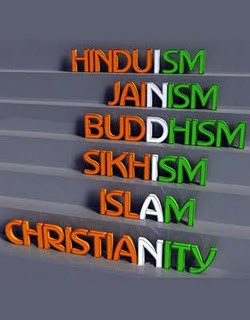
Religion has historically influenced Indian society on a political, cultural and economic level. There is a sense of pride associated with the country’s rich religious history as the traditions of Hinduism, Buddhism, Sikhism and Jainism all emerged out of India. Moreover, while a majority of people in India identify as Hindu (79.8%), the medley of religions that exist within the country continually impact contemporary society.
Census
The 2011 Indian census indicated that 79.8% of Indians identified as Hindu, 14.2% identified as Muslim and 2.3% identified as Christian. A further 1.7% of the population identified as Sikh, 0.7% identified as Buddhist and 0.37% identified as Jain. Due to the massive population size of India, religious minorities still represent a significant number of people. For example, although only 0.37% of India may identify with Jainism, that still equates to over 4 million people. While not all religions in India can be discussed in detail, the following provides an overview of the major religions in the country as well as sizable religions that originated in India.
Social beliefs
“India has two million gods and worships them all. In religion all other countries are paupers; India is the only millionaire.”
Mark Twain
Karma, Acceptance and Personal Choice . Many Indians tend to have a sense of acceptance towards one’s life position or a belief that, due to actions in one’s past life, good or bad personal circumstances are deserved. This attitude partly stems from religious ideas such as ‘karma’ (the idea that one’s actions will affect their current or future life) and ‘samsara’ (the cycle of rebirth).
The interplay of these social, cultural and religious factors allows people to be accepting of life events and trajectories. However, this is not to be interpreted as Indians being unwilling to take responsibility for life circumstances. Many often contemplate how their actions may impact their future and make decisions accordingly. Some of India’s youth are challenging a fatalistic perspective by asserting their free will to choose their vocation, spouse and other life factors. Indeed, as social mobility becomes more common, there is a growing belief that one can change their circumstances.
It’s Role
Religion plays a major role in the Indian way of life. Rituals, worship, and other religious activities are very prominent in an individual’s daily life; it is also a principal organizer of social life. The degree of religiosity varies amongst individuals; in recent decades, religious orthodoxy and observances have become less common in Indian society, particularly amongst young urban-dwellers. As of the politics , they play with religion , people’s belief and with their trust .




















 Eduindex
You must be logged in to post a comment.