Doping – How is it Affecting Sports?

“Science has learned recently that contempt and indignation are addictive mental states. I mean physically and chemically addictive. Literally! People who are self-righteous a lot are apparently doping themselves rhythmically with auto-secreted surges of dopamine, endorphins and enkephalins. Didn’t you ever ask yourself why indignation feels so good?”

~ David Brin

Introduction

Doping in sport is a widespread problem not just among elite athletes, but even more so in recreational sports. In scientific literature, major emphasis is placed on doping detection, whereas detrimental effects of doping agents on athletes’ health are seldom discussed. Human growth hormone also increases muscle mass, although the majority of that is an increase in extracellular fluid and not the functional muscle mass.

The term doping is widely used by organizations that regulate sporting competitions. The use of drugs to enhance performance is considered unethical, and therefore prohibited, by most international sports organizations, including the International Olympic Committee.

History

According to the World Anti-Doping Agency (WADA), the term “doping” probably comes from the Dutch word “dop,” an alcoholic beverage made of grape skins that was used by Zulu warriors to make them stronger in battle.

Ancient Greek athletes used special diets and stimulating potions to improve performance, and 19th century endurance athletes indulged in strychnine, caffeine, cocaine and alcohol.

The American specialist in doping, Max M. Novich, wrote: “Trainers of the old school who supplied treatments which had cocaine as their base declared with assurance that a rider tired by a six-day race would get his second breath after absorbing these mixtures.”[8] John Hoberman, a professor at the University of Texas in Austin, Texas, said six-day races were “de facto experiments investigating the physiology of stress as well as the substances that might alleviate exhaustion.”

Effects of doping in sports

It builds muscle but causes abnormal growth, heart disease, diabetes, thyroid problems, hypertension, blood cancers and arthritis. Other adverse effects include joint pain, muscle weakness, visual disturbances, enlarged heart and diabetes.

Other side effects include:

  • Heart palpitations.Heart rhythm abnormalities.
  • Weight loss.
  • Tremors.
  • Mild high blood pressure (hypertension)
  • Hallucinations.
  • Stroke.
  • Heart attack and other circulatory problems.
  • Constipation.Skin rash or dermatitis.
  • Diarrhea.
  • Dizziness.
  • Drowsiness.
  • Dry mouth.
  • Headache.
  • Insomnia.

UFC ( Ultimate Fighting Championship ).

In December 2013, the UFC began a campaign to drug test their entire roster randomly all year-round. Random testing, however, became problematic for the promotion as it began to affect revenue, as fighters who had tested positive would need to be taken out of fights, which adversely affected fight cards, and therefore pay-per-view sales.

According to Steven Marrocco of MMAjunkie.com, about 31% of UFC fighters subjected to random testing since the program first started have failed due to using performance-enhancing drugs. That is approximately five failed tests for every sixteen random screenings.

From July 2015, the UFC has advocated to all commissions that every fighter be tested in competition for every card. Lorenzo Feritta, who at the time was one of the presidents of the UFC, said, “We want 100 percent of the fighters tested the night they compete”. Also, in addition to the drug testing protocols in place for competitors on fight night, the UFC conducts additional testing for main event fighters or any fighters that are due to compete in championship matches.
Link

CHILDHOOD – BEST DAYS

I don’t know when I lost my childhood
I think I lost my childhood
When I started focusing on my studies,
Maybe I lost it
When I start overthinking about tomorrow
Maybe when I get jealous of my cousin
Maybe I lost it when my parents compare me with others
May be when I started doing something to please my parents
Maybe when I feel guilty for saying something
Maybe when I came to know that everything that I learnt in my childhood is just a bookish line
And no one takes that seriously in real life
Not even my parents
Maybe then I lost my childhood

We have to learn from our childhood
●To be happy for no reason
●To always be curious
●To fight tirelessly for something

I think Childhood was the best memories of everyone.

My childhood was also very memorable to me.
I used to play till 7pm without any thought of my homework or my parents.
At that time my father was in Indian army that’s why he couldn’t live with us.I was living with my mom and grandma
Thus whenever I come from school I have to go to market for food supplies or everything that is needed for home.And that’s why I am always onMy angry mood because my friends were playing when I had to go to market
And as a child I also wanted to play.
Thus whenever I return to the market I started playing with my friends till 7 pm.
My grandma is always waiting for me to come back after playing.
My grandma loves me so much.I usually sleep with my grandma and she always sang a song for me, tells bad time stories.She loves to irritate me..
She was my best friend at that time.I think I was closer to my grandma even more than my mom.
My grandma and I were just like friends.
Whenever grandma borrows some money from me then I always get it back with some intrest.

Whenever I went to my maternal grandmother’s home I enjoyed a lot there.My uncle always takes me to a resturant for my favorite foods.He took me to a fair.And in my grandfathers shop I played a lot.I used to irritate every customer but my grandfather never scolds me for that.
In the evening grandmother took me to the tour of village and I enjoyed it a lot.
Best thing is that I was known by my mothers name there.And I am proud of them.

My Childhood was definitely the best memory for me.
There was no tension for homework, assignment, exams career, future
We just enjoy our lives but now everything is the opposite.

We always complete some tasks.Always always always…..
In the morning we wake up and keep doing our work whether we enjoy it or not.As it is our duty and we have to do it because we get paid for it or to get a job we have to study hard.

Some have dreams to achieve it thus they also enjoy their everywork that brings them closer to their dreams
But some don’t have, they are just doing things because their parents want them to do or they want to earn money for their livelihood.

But what do you think about it?Are they enjoying their lives?
Of course not.

So according to my best things for happiness is stop questioning yourself and be proud of yourself for enjoying your life

●You have a roof over your head.

●You ate today.

●You have clean water.

●You have a good heart.

●You wish for others.

●You are breathing.

●Atleast one person care for you.

●You have clean clothes.

Be grateful for the little things…

Sometimes we stress over things that we don’t have and not thankful for the things we already do have.

  • Subjects to be incorporated in the school curriculum
    Education is more than a black board and ahead of the school text books. Woefully education has just been dumped and limited to the curriculum followed in schools which comprises of science, mathematics, social science and languages. These five subjects cannot solely provide the skills required for the career of every individual in the long run. Although the above subjects frame a basic foundation for the students, education is beyond this small circle. It should facilitate quality learning all through the life which should be enduring. Education should be concentrated on a wide range of fields and provide platforms to […]
  • IIT-MADRAS, AVISHKAR HYPERLOOP TEAM QUALIFIES FOR EUROPEAN HYPERLOOP WEEK
    A group of students with team named “AVISHKAR” from IIT Madras have been working tremendously towards the technology behind the future of transportation, HYPERLOOP. The team comprises of forty students from various department of IIT, madras. They have been working on this new prototype hyperloop project since last November. BUT, WHAT IS HYPERLOOP? Basically, hyperloop is a high speed mass transportation system. A hyperloop is a super speed ground-level transportation system in which people could travel in a hovering pod inside a vacuum tube at speeds as high as 760 mph (1220 km/h). While talking about the product, Neel said, “Hyperloop […]
  • 360 Wander Writer
    Welcome to the Festive world The Carnival of Venice This Carnival of Venice is described as one of the best carnivals in the world. It is centered around the Piazza San Marco. The events are held in every towns and cities of Venice. This event also contains boat parades along with the Grand Canal. Its main specialty is about their elaborate masks and a mask parade is done in the Piazza San Marco. It comprises of a special Carnival for Children in the Cannaregio district of Venice. It is kind of annual festival held every year in the city of […]

SAVING LIVES OR SAVING THE ECONOMY ?

A strong economy is the source of national strength .

In an economy , the production & consumption of goods & services are used to fulfill the needs of those living & operating within. In short an economy is an area of the production , distribution & trade , as well as consumption of goods & services by agents & these agents are not someone other but are we only. These agents are individuals , businesses , organizations, or government.

Till here we can conclude that people makes up an economy.

Now lets jump on the topic which is saving lives or saving economy . In this situation of pandemic i.e., COVID 19 , lakhs of people have lost their lives , their livelihood , their families . For controlling this situation , which can be controlled only by not coming in contact with an affected person & by maintaining social distancing & self consciousness , government has laid many rules & one such rule is ” lockdown” . Never before we have heard of this word of this word but in past 2 years each one pf us has experienced it . It is a situation where every one is restricted to move out of their houses , factories were shut , many people last their jobs , because of which employment rate decreased , those who have lost their jobs migrated to their villages, All & all we can say that lockdown had the most drastic effect on the economy . lockdown is one among the reason for falling of the economy.

But lockdown was not applied to do so , rather it was meant to protect people , so that we could break the chain of Corona virus . Because of this rule of lockdown , people avoided gathering & because of this lockdown only we are able to defeat & break the chain of COVID 19 . Government took this step though knowing that this will have negative impact on the economy but we all know that it is ‘we’ who makes up an economy , & if we are safe the economy will improve for sure . Because for production you need people , for consumption you need people, for trade you need people , & for distribution you need people. So if people are safe economy is safe .

So this pandemic taught us the importance of lives , we all should thank the all mighty & our health workers for saving many lives & according to me saving lives is more important than saving economy but this doesn’t mean ignoring economy & economic development . Saving lives with holding economy & adopting every measure to save it , will leads to development of both , because both the factors are directly proportional to each other & fall in one will leads to fall in other. Hence saving lives will improve economy because at the end we all know people makes up an economy.

Memories – The unforgettable demons

Memories are reminders of what you have lost. They remind you of a good time in a bad way. They are out there challenging you to face them, to remember them and to be devastated by them. They hurt you sometimes and sometimes they don’t. You can’t control them. Nobody can. They break your heart, they hurt you in a way nobody does and probably nobody can and you don’t even know it. They remind you of what you can’t have anymore. They make you suffer. They remind you of what happened. Or they silently accuse you of what you did to lose it all. They cover you in so much guilt that you can never get out of it. They hurt you in more ways than you can imagine. They attract you with the hope of remembering everything in a beautiful way. Instead they set you up for hurt, for betrayal, for lies. Lies you didn’t know were not true. And you fall into their trap, thinking there is still hope for something good.

Photo by KoolShooters on Pexels.com

They make you addicted to them in such a way that you can’t stay away from them ever. They bind you with such a strong rope of expectations that maybe someday you can have it all back, even if it is all in your head. For a long time or maybe forever, they haunt you, they never leave your back, never let you go off them. You are forever bound to them whether you know it or not, whether you like it or not. You always come looking back for them, for more good times, for happy moments, even if you suffer even more. They make you believe that maybe you can live with the idea of what could have happened.

Memories are the unforgettable demons living in our minds. They don’t go away. They eat you alive and let your mind rot. They are like the uninvited guest in your house. They live rent free in your mind and create chaos to remind you of everything. They clog your mind with the thoughts of the past and that hinders your thinking for the future. They don’t let you live in the moment, in the present. Memories force you to regret your bad deeds when all you want is to let them go. When you try to move on from something, memories come back rushing and fill your mind. Don’t let them overpower you. Don’t let them control your thoughts. Control yourself from walking straight into their trap hole. They will suck you right into the past and will hold on to you for eternity. You don’t hold onto memories instead the memories hold onto you. You want to let go but they have such a strong hold on you that you can’t find the strength to run away from them.

They will always and forever be with you no matter what. But this is not in a good way. They will never let you out of that hole you fell in. Sometimes they will not let you live in the present or think about your future, without having to deal with your past. Just don’t let them ruin you. Try to take control of yourself as much as you can.

Female emancipation!

Feminism

Women’s empowerment can be defined to promoting women’s sense of self-worth, their ability to determine their own choices, and their right to influence social change for themselves and others.

‘There should be gender equality’ —a familiar line uttered repeatedly by many self-claimed modern era intellectuals .I think I will use the term that ‘men and women are complementary to each other’. Neither can survive without the other. Nature has created women and men in such a way that mankind will only survive if both genders coexist. Thus, the genders complement each other. I think this definition makes more sense .My argument is that gender equality means equal respect and equal remuneration in the same performance in their exclusive domain.

               Not all girls are made of sugar               and spice and all things nice.            There are girls made of dark lace         and witchcraft and a little bit of vice.          There are daughters made claw-first        and story-mad, tiger roar and wolf-bad.     There are women made of terrible tempests    and savage storms and the untamed unwanted.   These are damsels made of flawless fearlessness made of more bravery than knights have ever seen.These are princesses made of valour and poison alike and they are here to hold court as your queens.                             -Nikita gill
  • Why should the men’s championship get more sponsorship than women’s, and why should the winner be paid more? Why is it that men cricketers get paid more, receive more appreciation and more respect than their women counterparts? Why is Sachin Tendulkar treated as the God of cricket but Mithali Raj simply a good Indian woman cricketer? Why do male hockey players get more money and respect than women players?
  • The bottom line is, and I repeat myself here, nature has made men and women differently. They compliment each other but can’t be equal physically and cannot compete with each other in every area. But gender equality can be achieved if we can extend the same respect, offer the same pay scale and the same status to champions of both genders in their domain. Personally, I respect Sachin Tendulkar and Mithali Raj equally. I do watch women cricket matches with the same enthusiasm as I watch men’s cricket. Are you ready to do that? If yes, then you are encouraging gender equality. Else, you are going down a darker path, with no respect and no equality.
  • Also, being called “beautiful” is nice, don’t get me wrong. But hearing the words, “You’re brilliant” means so much more. Because beauty won’t get me a college diploma. Curves won’t get me a secure job and a sufficient salary. Being pretty won’t get me respect.
  • Beauty doesn’t encompass the person you are. All women have natural beauty, but beauty can only take you so far. When I am most insecure, I don’t want confirmations of my physical appearance. I want confirmation that my work, mind and strength are recognized. We grow up thinking beauty and male validation was the ultimate goal. Now, as a young woman, my greatest goal is to be successful in my career. I strive for knowledge, not perfect hair. I want respect, not a skinny waist. Being educated and opinionated will get you so much farther than just a pretty face. “Screw beautiful. I’m brilliant. If you really want to appease me, compliment my brain.”

” I WOULD RATHER STRUGGLE EVERYDAY OF MY LIFE THAN TO EVER GIVE A MAN THE POWER TO SAY ‘ YOU WOULDN’T HAVE THAT IF IT WASN’T FOR ME’ “

Search

Search

How Can Fiction Be Written? Featuring Barbie!

“Imagination and Fiction make up more than three quarters of our life.”

  • Simone Weil

Today’s article discusses an essential factor when it comes to writing fiction I.e how to write it? Barbie aka Barbara Milicent Roberts is our chief guest for today’s discussion.

“Hello Barbie! Warm Welcome Aboard. We are so glad to have you here with us.”

“Thank you for inviting me. I’m pleased to be a part of this discussion as well.”

“So, would you like to tell us the ways of writing fiction? (That for which you are here)”

“Definitely! Fiction is an interesting genre when you come to look at it. It also, comes with a wide range of interesting sub – genres which have been discussed in the earlier article. It can be written insensibly by taking almost any entity that you prefer or make one for yourself by amalgamating two or more entities. There are mostly no constraints in fiction and that is why, writing or working upon this genre doesn’t actually seem a hard task. Yes! I agree that imagining certain factors is a hard task, but we mustn’t overlook the fact that almost everything comes with its own set of hard work! Here, however I am not considering contemporary fiction or that which pertains to reality. I shall be emphasizing on how fiction (fantasy and other related genres) can be written.

Now, let us learn how exactly to write fiction through a step by step approach.

Brainstorm Over The Fictitious Topic You Intend To Choose!

Brainstorming is a process that requires time. So, first and foremost, the thing to be done, is to sit down on your favourite couch and ponder over the best fictitious topic that would definitely seem great if sketched on paper. However, don’t forget to get yourself in the reader’s shoes as stated in our earlier articles. Consider what your readers would love and write in accordance to that.

Think Of The Characters You Wish To Involve!

This is a quintessential factor that makes a story interesting. The characters make a story. However, framing of characters also depends on the sub – genre you choose. If you choose contemporary fiction, then you would definitely make use of real life characters. In such cases, you could ignore this second step and only consider the first. This step is for people who wish to work with the fantasy sub – genre because framing fictitious characters requires certain amount of deep thought processes.

In Case Of Writer’s Block, Approach The Outside World!

  Certain people experience writer’s block while writing fiction because they seem to fall short of ideas. In such cases, it is advisable to approach the outside world as inspiration to your thought processes. Some incident will definitely inspire you to write about it.

Create Strong Characters!

Make sure that the fictitious characters you create are strong enough so that the readers love them. Like, a certain character should show strong traits in personality and not physical strength 😉 Make the characters take risks throughout the story and later help them succeed. This will also deliver a good message and inspire people to take risks! Thus, all that we mean here is, that try creating characters that would also impart a message to the readers. Also, mostly it is advisable to create Round characters. Round characters are those whose traits or personalities throughout the story aren’t easily decipherable. These characters would arouse the interest factor and enhance your write up.

Create Unique Characters!

By this we mean, that when you choose to create fictitious characters, make sure that you don’t use the same repeated mythological supernatural entities revolving around mermaids, aliens and robots. These are widely known and won’t make your story that interesting. You could always create a new character for yourself by amalgamating existent entities, as stated in the earlier article.

Read Other Fiction Books For Ideas!

This is the basic step that would definitely help you to frame your own story easily. Read more and more fiction books by widely renowned authors for amazing techniques of writing a fiction book easily.

Try Fictionalizing Your Daily Life!

This means, fictionalizing your daily chores and duties in an imaginative and creative way. For instance, you are working in the kitchen and see a ladle, now you could create your own fictitious character named Mr. Ladle who could speak throughout the story. He could also be an antagonist or maybe even a protagonist if you decide to create an animated fictitious story.

Be Alert And Aware Of Your Surroundings For Inspiration!

This is extremely important because developing a fictitious story requires complete imagination. So, you need to be alert when you come across such objects which could make your story interesting. After all, if you aren’t alert then that inspiration wouldn’t be accessible to you and would pass you directly, without you acknowledging it. So, remain alert and vigilant.

“These were such essential points to be noted. We heartily thank you for your precious time! Hoping to have you again to speak on such interesting topics in the near future!”


“Please don’t mention it. I’m touched by this honourable gesture of being a chief guest on such an important discussion. Looking forward to yet another invite in the future for sure!”

Thank You So Much Barbie!

Book Review of The Kite Runner – A book by Khaled Hosseini

Talking about the author, Khaled Hosseini was born in Kabul, Afghanistan. Hosseini is currently a Goodwill Envoy for the United Nations High Commissioner for Refugees (UNHCR). Here is a book review of The Kite Runner which was published in the year 2003.

The unforgettable and heartbreaking story of the improbable friendship between a wealthy boy and the son of his father’s servant, The Kite Runner is a beautifully crafted novel set in a country about to be destroyed. It is about the power of reading, the price of betrayal, and the possibility of salvation; and an exploration of the power of parents over children: their love, their sacrifices, their lies.

A sweeping tale of family, love, and friendship advised in opposition to the devastating backdrop of the records of Afghanistan during the last thirty years, The Kite Runner is an uncommon and effective novel that has to turn out to be a beloved, one-of-a-type classic.

The book gave a good cry to so many people with the brilliant writing and the emotions it holds. There was from praising all around the world.

An astonishing, powerful book.
Diane Sawyer

This powerful first novel, by an Afghan physician now living in California, tells a story of fierce cruelty and fierce yet redeeming love…In The Kite Runner, Khaled Hosseini gives us a vivid and engaging story that reminds us how long his people have been struggling to triumph over the forces of violence – forces that continue to threaten them even today.
—The New York Times Book Review

Like Gone with the Wind, this extraordinary first novel locates the personal struggles of everyday people in the terrible sweep of history.
—People 

Poignant…The Kite Runner offers a moving portrait of modern Afghanistan, from its pre-Russian-invasion glory days through the terrible reign of the Taliban.
—Entertainment Weekly (Grade: A)

A marvelous first novel… an incredible story of the culture. It’s an old-fashioned kind of novel that really sweeps you away.
—San Francisco Chronicle

A powerful book…no frills, no nonsense, just hard, spare prose…an intimate account of family and friendship, betrayal and salvation that requires no atlas or translation to engage and enlighten us. Parts of The Kite Runner are raw and excruciating to read, yet the book in its entirety is lovingly written.
—The Washington Post Book World 

The Kite Runner, Hosseini’s first novel, is more than just good writing. It is also a wonderfully conjured story that offers a glimpse into an Afghanistan most Americans have never seen, and depicts a side of humanity rarely revealed.
—The Philadelphia Inquirer

A gripping and moving story of betrayal and redemption, The Kite Runner moved me at the same time it tells the story of Amir and Hassan, closest friends, as well as brothers. The two boys lived in Kabul, the capital of Afghanistan, and that year they tried harder than ever to win the local kite fighting tournament, a popular Afghan pastime, and this is Amir’s only hope of winning his father’s race.

But as dragons fight in the sky, war comes to Afghanistan and the country becomes an extremely dangerous place.

People are frequently compelled to make huge sacrifices in conflict, and the young Amir himself commits a betrayal, directed at his best friend Hassan, that will plague him for the rest of his life. Amir and his father are forced to flee Afghanistan for America, and The Kite Runner becomes the story of Amir’s redemption quest – righting the wrongs he committed as a boy in Afghanistan.

The novel is fast-paced and never dull, and it brought me to a weird, interesting, yet oddly familiar world – the world of Afghan life. Not only is the story itself brilliantly constructed, but the book also explores the very art of storytelling.

Hosseini’s writing strikes a great balance between being clear and yet powerful, and not only is the story itself brilliantly constructed, but the book also explores the very art of storytelling.

The best aspect of the kite runner, in my opinion, is its sense of fate and justice, of good triumphing over evil in the end, despite all odds. Without giving anything away about the plot, Amir returns to Afghanistan and makes a new series of sacrifices in order to put things right.

The book’s closing chapter is possibly my favorite, and I’ve found it moving even after revisiting it.

The message underlying the finale could be perceived differently by different readers, but I believe it offers a glimmer of hope for the characters’ futures, as well as perhaps for war-torn Afghanistan.

This beautiful, moving novel deals with complex adult issues about religion, prejudice, forgiveness, and the nature of “goodness.”

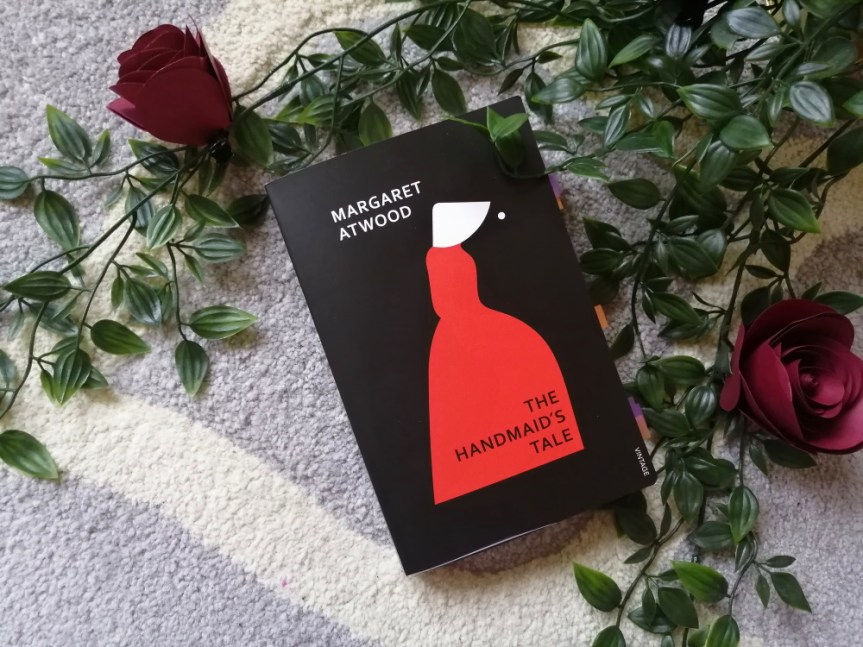
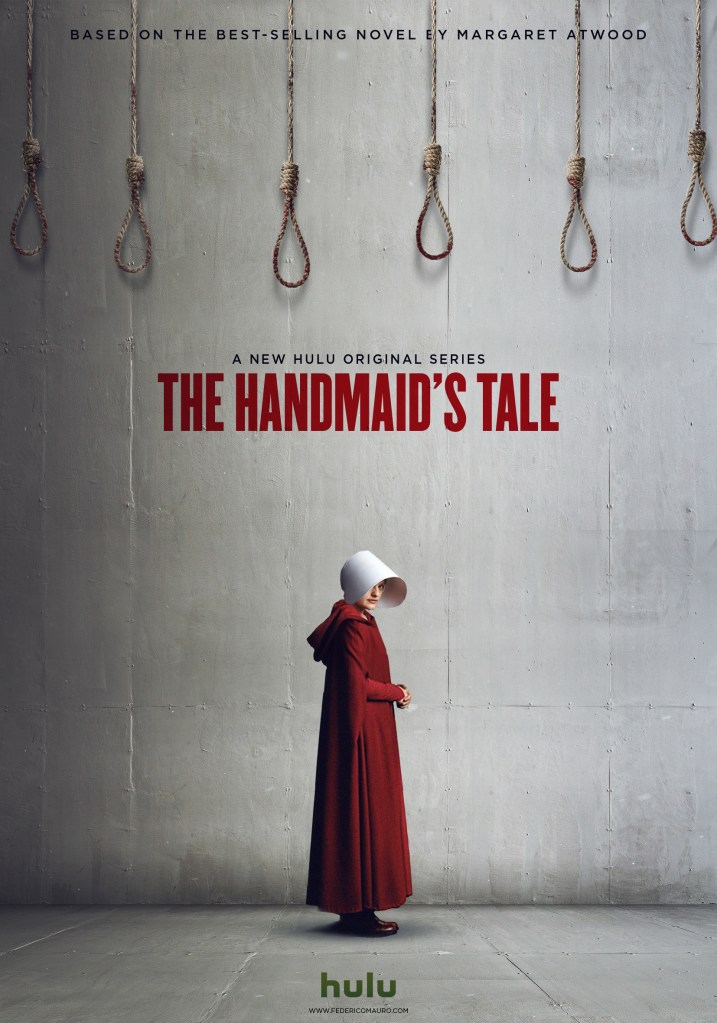
The Handmaid’s Tale – A Terrifying dystopian Novel

As readers, we travel through many stories and live in those unrealistic worlds that make us feel more realistic the way it is written, some stories imprint in readers’ minds, and some of these imprints in a writer’s mind. However “Handmaid’s Tale” is a novel that is a tormented dystopian story and a novel that kept the readers in an Appalling state throughout the story.

The Gileadean Era: A Foundation intended for the destruction of Humans.

This particular Novel is a dystopian novel that begins with the creation of the “Republic of Gilead” which is formed by a political group namely, the Sons of Jacob which tries to suppress the people of the USA by a strict but environment which is not less than a hell.

The Handmaid’s Tale is a perfect example of How hell would look like if it’s situated on earth. The Gilead Regime is a perfect example of how humans can be hazardous to each other and how they can create a place of agony by being inhuman towards each other and take all rights from the people who are less powerful than them.

This novel is not just about Marxist Feminism,  it is not even feminism, it is a  novel which talks about suppressing humans who are fragile and powerless and taking away the Right to Speak and Right to express themselves, but this novel is also about how religion is misused against the humans and haunt them in the name of Almighty.

“My Name isn’t Offred. I have another name, which nobody uses now because it’s forbidden. I tell myself it doesn’t matter, your name is like your telephone number useful only to others, but what I tell myself is wrong, it does matter. I kept the knowledge of this name like something hidden, some treasure I’ll come back to dig up, one day.”

– The Handmaid’s Tale

A very Important quote highlighting the crux of the novel in these lines is beautifully written by the author who explains to us about the protagonist of the story: June Osborne who was forcibly turned into Offred who was a mere Handmaid of a commander.

This quote draws us the image that how a person loses their identity when their name is taken away from them. It is the very weird fact that we as a human never use our word, but when someone takes our names from us ultimately, we even lose our identity and our real self-fades away with the spark of our name.

The very same situation happened with June and other women whose names were taken away from them and in return, they were made as Handmaids or we can say a sexual pleasure for their following commanders.

As mentioned in the “Historical Notes” of the novel where Dr. Piexoto explains to the readers that this novel is a transcript of a tape recording which portrays us that the whole novel is written with the perception of an imaginary Character named Offred/June.

Gilead has proved that even advanced technology fails in front of religion. This is a very controversial line that even can hurt people’s sentiments. Gilead abused the people by giving them physical, mental and emotional torcher and treated them as an object for satisfying their pleasure.

A Dystopian story that breaks all norms of society –

If you dig into the story, then “The Handmaid’s Tale” is a dystopian novel that is not one element centric novel, but a novel that has divergent themes and elements. The Protagonist of the story, Offred tells the novel with her viewpoint as a form of a tale where she talks about her sufferings in a form of nostalgia and this novel keeps the reader in curiosity through the suspense drawn in the novel. the story has a nostalgia within a nostalgia. Offred living in a hell called “The Republic of Gilead” makes her a fragile woman cause of the injustice she and other women goes through. The sufferings made her a different person as such she came to a state where she was accustomed to be living like a handmaid and for her freedom was never a word to be dreamt of.

She explains to us how not only women but people who belong to other genders were treated like slaves by the patriarchal society. The author shows us that the patriarch society crossed all the boundaries to break down humanity from the regime and The commander’s wives, the aunts, Martha’s, all were like puppets under this awful patriarch world.

When Humankind is lost, it’s the end of Humanity!

There are many segments of the novel which describe to us the real picture of  Gilead and how people in this place are humans but are apathetic towards each other. Gilead is a place where things like emotions, respect, pity don’t exist rather is invisible in this hell-like place.

These handmaids are not allowed to do anything of their own choice as such; going out alone, shopping, watching movies, reading magazines, roaming around the streets, and even having their real names are forbidden in this place. Offred reminiscent of her went days when she was an editor, wife, and a mother and lived a bustling life but in peace. Her freedom is taken away and her bustling life is turned into a life that is just a nightmare for every day.

However now she just has to be fruitful to bear fruits and complete the Procreation ceremony, which is a holy custom for the Gilead community but is merely a form of rape that all handmaids go through. “The Rachel and Leah center “also unofficially known as the “Red Centre” is a cell for those handmaids who disobeyed the law and are followed through the punishment which is a form of clearing mistakes of the young handmaids by making them perfect in the eyes of almighty to bear the seeds planted by the commanders according to the aunts.

In Gilead everything was uncanny, love was substituted with lust, Humans were like slaves, those genders who were not under the category of male and female were sent to “The Colonies” which was not less than a concentration camp that ultimately brings death towards them.

Yet offered never lost hope and always protected herself from the devastation and chose many paths to get over from this hell. Later in the story, we see that his beloved “Nick” who was assumed to be the part of “The eyes” helped him to get out of the regime but in the end, they failed to do so.

We can conclude that; this sci-fi dystopian novel was terrifying at all levels which can devastate human minds. It shows that a sinister human can reach any level of madness and destroy each other by being greedy and sinful.

“You see, Humans are always egoist and sometimes they destroy themselves in search of satisfying themselves with worldly pleasures.”

Kamala Das: The Woman Who Broke Barriers

In an era where women were enclosed within the walls of customs and traditions, Kamala Das rose ferociously against the world. From expressing her relation struggles to her sexual desires Kamala Das is a writer who laid out her life in literature despite the criticisms she received for it.

Born in Punnayurkulam Kerala in 1934 Kamala Das was introduced to literature from a young age thanks to her parent’s literary background. However, Kamala spent her early years in Calcutta. She was married quite early, at 15, to a bank officer who was fairly older than her but encouraged her passion for writing. Kamala Das wrote in two languages, Malayalam (her native tongue) and English, and has expressed the criticisms she received for this in her poem, An Introduction;

Why not leave

Me alone, critics, friends, visiting cousins,

Every one of you? Why not let me speak in

Any language I like?

The language I speak

Becomes mine, its distortions, its queernesses,

All mine, mine alone. It is half English, half

Indian, funny perhaps, but it is honest,

It is human as I am human, don’t

You see?

Her most famous works include her poetry collections included in Summer in Calcutta (1965), The Descendants (1967), and The Old Playhouse, and Other Poems (1973). Her novel and short-stories such as “A Doll for the Child Prostitute” (1977) and her other Malayalam works were some of her most significant works. However, her most criticised work was her own autobiography My Story (1976) that invited harsh criticisms for her open and intimate sexual confessions.

The poet-author apart from her confessional poetry also sketched out the experiences of being a woman in India. The strong patriarchal opinions and her strong feministic yearnings make Kamala a woman who followed her own principles.

Apart from the negative lime-light Kamala’s literary art is one that speaks volume. Her poems are often filled with rich and intense imagery emotions with the verse outlined creatively to convey Kamala’s feelings and bring the experience of her abyss to her readers.

In her poem, Summer in Calcutta the beginning verse goes;

What is this drink but

The April sun, squeezed

Like an orange in

My glass? I sip the

Fire, I drink and drink

Again, I am drunk

The main idea of the poem is that Kamala Das is drunk on the summer vibes of Calcutta. She describes the April sun as an orange juice that is making her feel happy, satisfied and worry-free. She loves the heat of the sun and forgets all her pains of the past momentarily. One may assume Kamala to be drunk on alcohol while sitting in the sun although this cannot be true as Kamala re-iterates again and again that it is the sun that makes her drunk. The whole scene in the poem describes the transient happiness and pleasure that Kamala receives by being under the sun and away from her marital life.

In another poem, My Grandmother’s House, Kamala describes the sense of security she felt in her grandma’s house when she was young. She also explains how apart from being a haven how the house comforted her and made her felt proud for who she was. Her present life is so full of devastations that she now longs to go back to her past.

Kamala maybe majorly known for her explicit use of sexual imagery but her art always spoke for her, portrayed her emotions honestly and made her a woman who stood strong with her convictions.

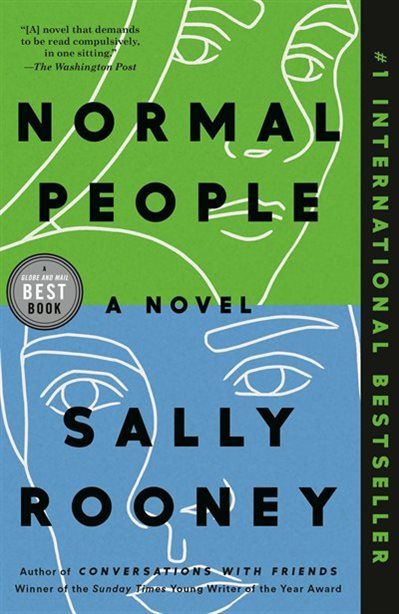
Normal People or not so Normal People.

“Life offers up these moments of joy despite everything,”

Sally Rooney, Normal People.

About the book:

Author: Sally Rooney

Published on: 28th August 2018

Publisher: Faber and Faber

Genre: Literary fiction.

My rating: 3.5/5

The Plot:

The story follows the lives of two teenagers, each unique in their own way and personality. We have Marianne, who is very private, lonely, proud and studious and always looking for a good conversation, you can sometimes also call her pretentious and then there’s Connell, the popular football star who is well-liked by everyone. Their lives are intertwined in many ways, with them attending the school and Connell’s mother working at her house, they see each other every day and the only conversation they have are pleasantries. However, something shifts and a connection forms, one that both are determined to keep secret.
After school, Marianne and Connell are studying at Trinity College in Dublin. Marianne has a whole new social circle to explore, while Connell has gone into his shell. However, as their college life begins they come together and together on a path of self-destruction each acting as a black hole, taking each other with them. With new opportunities coming their way, each having to choose an option.

Review:

This book received too much hype among the GenZ and Millennial groups, a lot of people were either recommending it or posting stories on various social media about it. Nowadays a lot of us, rely a lot on social media, and the things that we’ve seen too many times, we regard the same as the gold standard. So I went into this book, with so much enthusiasm and expectation, however, after reading it, the book did not live up to the amount of hype for me. However, this book paints a very realistic depiction of what teenagers are and how we think and that the only thing we cared about is how society perceives us, and judges us for who or what we are doing and how awkward and flawed we are! The book also addresses issues about the anxiety of moving to a new place, and the idea of not fitting in makes us feel. The thing about Sally Rooney’s writing is that she does not use quotation marks, which takes a while to get accustomed to. The thing about Sally Rooney’s this novel, makes me feel like all the fan-fiction I have read, however, that doesn’t mean I didn’t like this book, I honestly did and but would I re-read it again? Maybe.

Trigger Warning: sexual assault; domestic abuse; drug use; casual racism (called out); depression; anxiety; suicide and suicidal ideation.

“Life is the thing you bring with you inside your own head.” 

Sally Rooney, Normal People.

About the author:

Sally Rooney is an Irish author and screenwriter, with her debut novel, ‘Conversations with Friends‘ which was published in 2017. It was nominated for various prizes like Folio Prize, International Dylan Thomas Prize and many others. Her debut novel won the 2017 Sunday Times/Peters Fraser & Dunlop Young Writer of the Year Award. ‘Normal People‘ was also nominated for various prizes and an adaptation of the same novel was premiered in the year 2020. Her upcoming work,’ Beautiful World, Where Are You‘, is set to be published in September of this year (2021).

The Origin of Buddhism .

We are what we think. All that we are arises with our thoughts. With our thoughts, we make the world.
Peace comes from within. Do not seek it without.

Lord Buddha

Introduction.

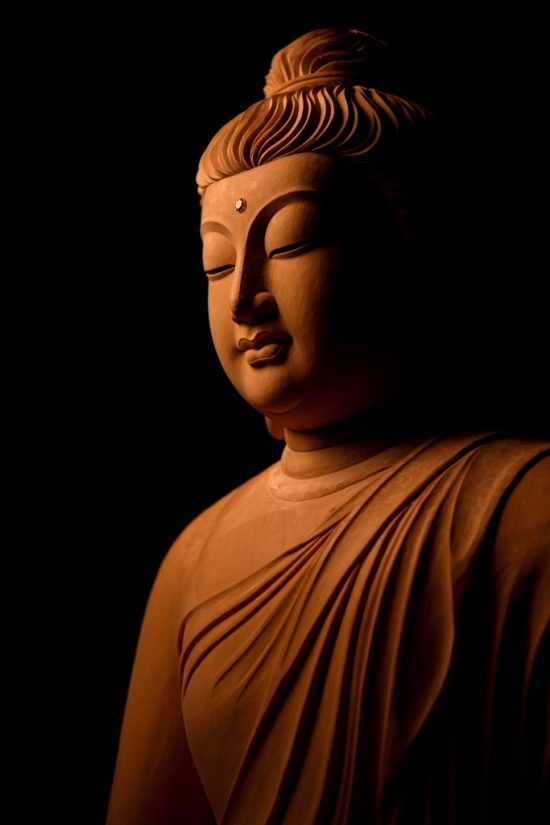
He was a spiritual personality . An ancient teacher and enlightened many . A founder of world religion Buddhism . He was popularly known as Gautama Buddha (also known as Siddhattha Gotama or Siddhārtha Gautama or Buddha Shakyamuni ) .

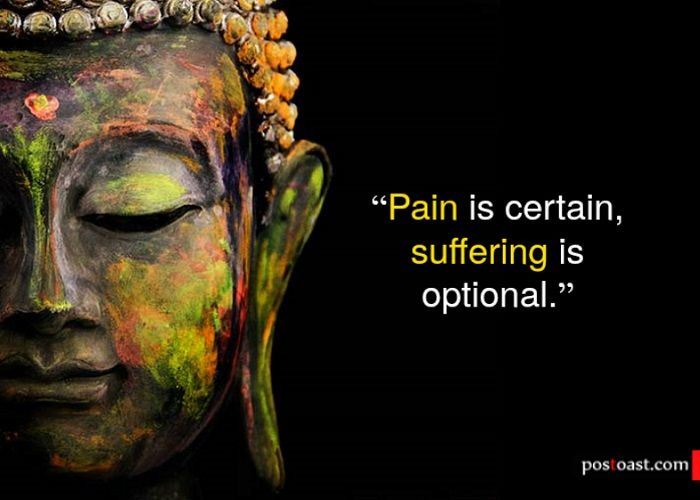
The Enlightened One who rediscovered an ancient path to release clinging and craving and escape the cycle of birth and rebirth. He taught for around 45 years and built a large following, both monastic and lay. His teaching is based on his insight into the arising of duḥkha (the unsatisfactoriness of clinging to impermanent states and things) and the ending of duhkha—the state called Nibbāna or Nirvana (extinguishing of the three fires).

Buddhism

Buddhism, one of the major religions and philosophical systems of southern and eastern Asia and of the world. Buddha is one of the many epithets of a teacher who lived in northern India sometime between the 6th and the 4th century before the Common Era.

The title buddha was used by a number of religious groups in ancient India and had a range of meanings, but it came to be associated most strongly with the tradition of Buddhism and to mean an enlightened being, one who has awakened from the sleep of ignorance and achieved freedom from suffering.

According to the various traditions of Buddhism, there have been buddhas in the past and there will be buddhas in the future. Some forms of Buddhism hold that there is only one buddha for each historical age; others hold that all beings will eventually become buddhas because they possess the buddha nature (tathagatagarbha).

According to Buddhist doctrine, the universe is the product of karma, the law of the cause and effect of actions, according to which virtuous actions create pleasure in the future and nonvirtuous actions create pain.

Your work is to discover your world and then with all your heart give yourself to it.

Lord Buddha

History

Gautama Buddha ( born c. 6th–4th century BCE, Lumbini, near Kapilavastu, Shakya republic, Kosala kingdom [now in Nepal]—died, Kusinara, Malla republic, Magadha kingdom [now Kasia, India]).

Buddha is one of the many epithets of a teacher who lived in northern India sometime between the 6th and the 4th century before the Common Era.

Learnings from Gautama Buddha.

1. “Three things cannot be hidden: the sun, the moon and the truth.”

2. “You will not be punished for your anger; you will be punished by your anger.”

3. “You can search throughout the entire universe for someone who is more deserving of your love and affection than you are yourself, and that person is not to be found anywhere. You, yourself, as much as anybody in the entire universe, deserve your love and affection.”

4. “We are shaped by our thoughts; we become what we think. When the mind is pure, joy follows like a shadow that never leaves.”

5. “Believe nothing, no matter where you read it, or who said it, no matter if I have said it, unless it agrees with your own reason and your own common sense.”

Link

Education System Suffering during pandemic

Online education in this pandemic

The Covid created lockdown damaged very badly to education system. schools were closing down and online learning is not everywhere working.

There are some statics

  • Estimated 1.5 million schools across India closed down due to the pandemic A switch to large-scale digital education is not possible now.
  • according to a 2019 government survey.Only 24 per cent house-holds have access to the internet,
  • In rural India, the numbers are far lower, with only 4 per cent households having access The education ministry’s budget for digital e-learning was slashed to Rs 469 crore in 2020-21—the year Covid struck—from Rs 604 crore the previous year

According to world bank :

before the COVID-19 pandemic, world was living in a educational crisis . 258 million children and youth of primary and secondary school age were out of school. quality of education also was very low , meant many who were in school learned too little. The COVID-19 pandemic threatens to make education outcomes even worse. The pandemic has already had profound impacts on education by closing schools almost everywhere in the planet, in the largest simultaneous shock to all education systems in our lifetimes. The damage will become even more severe as the health emergency translates into a deep global recession.

Deepesh Bisht is a first-year student of BAMS in Doon Institute Of Medical Science . He is 18-year-old hasn’t set foot on campus even once since he took admission in 2020 sept . He has taken a virtual tour of the college and has been taking lessons through his laptop and mobile phone. Deepesh isn’t alone in this. That’s how the batch of 2020-the Covid-19 generation-has been experiencing institutional education in a world disrupted by an unprecedented pandemic. Because of this, 47 per cent students have decided against migrating to another city for higher education, revealed a study titled the ‘Big Qs Student Survey’. 50% respondents have also abandoned plans to pursue higher education abroad.

states like Delhi are still confined to homes, spending long hours online, leading to concerns over physical health and stress triggered due to the prolonged use of electronic devices.Even in the national capital, when government schools started online classes during the lockdown, the attendance hovered between “25 and 30 per cent”. students in Assam and several other states have gradually returned to schools and colleges . The education ecosystem of India, already weighed down by myriad issues such as school dropouts, learning deficiencies, teacher absenteeism, gender disparity and lack of infrastructure, now faces yet another big challenge-the widening digital divide.

Hence , this pandemic made our education system digital . This digital education is giving benefit to a part of society only . Poor students were fading away from education. This will create a huge disparity in our society.

The Impact Of Haruki Murakami On The World Of Literature

Fish dropping from the sky and human-animal hybrids are only a few of the “common” happenings in Haruki Murakami’s stories. The famous Japanese author has millions of admirers across the globe, with his best-selling novels translated into over 50 languages.

Haruki Murakami’s widespread fame signals the twenty-first century’s progress to a much more interconnected society, one where origin has no bearing on impact and everyone is a descendant of the diverse communities that happened to come before. Murakami’s huge reach stems in large part from the scope of his own preferences and capabilities. He not only has made many western readers acquainted with some of the East’s modern written achievements, but he’s also translated several  works of English authors like Raymond Carver, F. Scott Fitzgerald, and J.D. Salinger to Japanese, giving Japanese readers exposure to some of  these works for the very first time.

Murakami is heavily inspired by Western writers, finding inspiration in authors ranging from Franz Kafka to Kurt Vonnegut. He now admires the novelists Kazuo Ishiguro and Cormac McCarthy. He became particularly captivated to American culture as a young child, devouring any relics he would discover, whether jazz albums, dollar store paperback books, or Hollywood films.

Murakami’s life has been influenced by jazz music. Several of his novels, like Norwegian Wood (from the same Beatles song) as well as Tsukuru Tazaki, depend heavily on the music of Franz Liszt. 

When it pertains to Haruki Murakami, there seems to be an odd synchronicity between his supporters and his detractors. Everybody thinks that he’s often humorous, especially in his dialogue. His protagonists, who are frequently drawn into detective storylines without the need for a “FOR HIRE” notice in their windows, and who doesn’t love a detective? 

Cats, mundane kitchen activities, dingy barrooms, pop and/or classical theme tunes are always be present in the books, set against a surreal, Manichaean danger zone into which the modest yet progressively resilient protagonist must descend in quest as to what he’s missing, most likely to find something else instead. The hero may also stay a bit of time at the bottom of a well or in another dark and solitary place.

His thoughts and emotions will be torn between yearning for an otherworldly, spiritual lady (typically the one who has vanished) and desire towards a feisty, sensual, down-to-earth woman (who may at first just seem more like his sidekick on the journey but may just turn out to be just what he needed all along).  

Murakami has been writing many versions on similar themes for almost 40 years, and he admits about his tendency of reusing certain types of ideas in several interviews. Some people consider his repeats to be a detriment to him. But what divides his detractors is whether they will accommodate his logical leaps and propensity to build dreamworlds which defy consistency and appear to live irrespective of any writer-imposed constraints.

Although the Kyoto-born novelist might not be the first Japanese author to achieve international recognition, Murakami has dramatically changed the perception of Japanese literature throughout the globe, resulting in a high demand for Japanese books to be translated. 

Color psychology

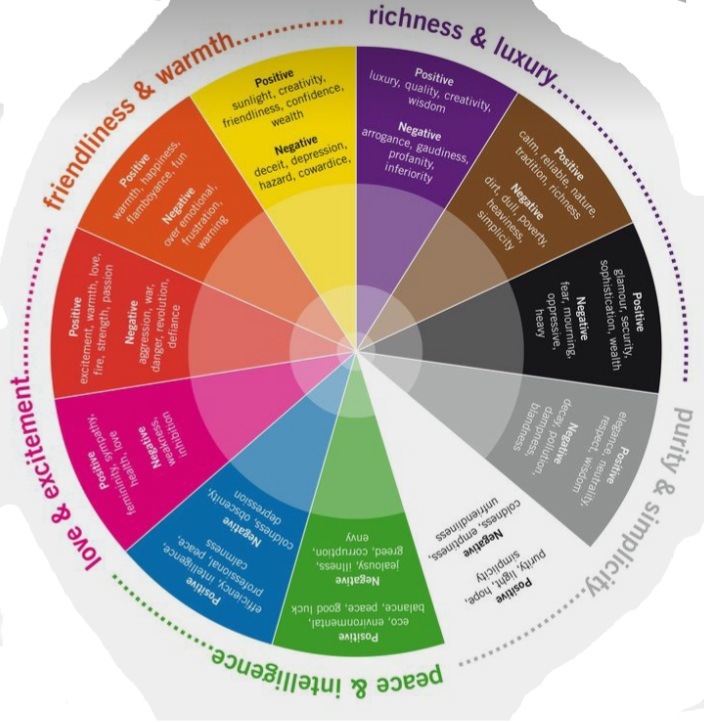
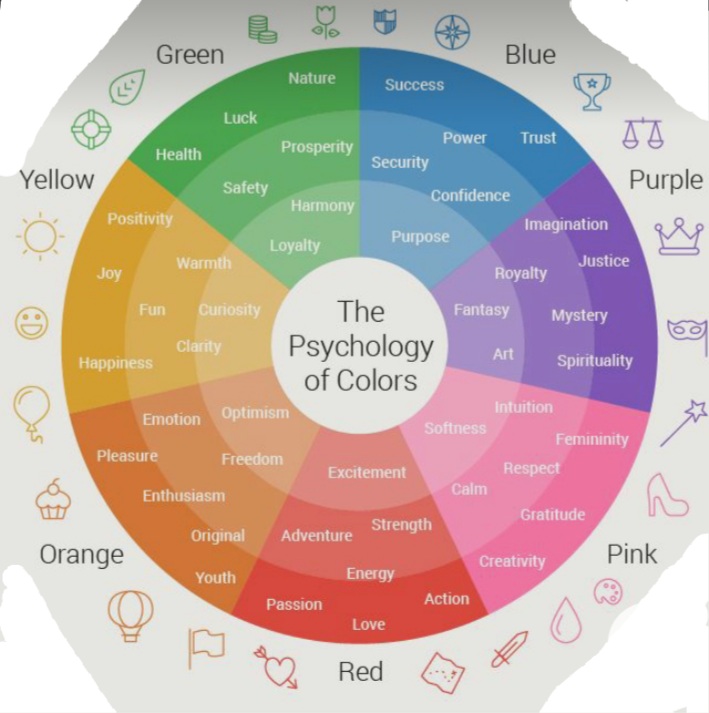
Color is a communicator. It has a language all its own that we utilize, and culturally participate with, on a daily basis. Color can inspire moods from outside in interior designers and decorators know this. To initiate color choices, color professionals.Mere color,unspoiled by meaning,and unallied with definite form, can speak to the soul in a thousand different ways.

It is used effectively color theory is one of the most powerful tools a designer can wield. Colors are a form of non verbal communication that can speak volumes in a fraction of second. They can instantly set a mood,convey an emotion,invoke a physiological reaction or inspire people to take action.when we harness the right color emotion to help tell a client’s story it can have a powerful effect. Below is a list of PMS colors and their associated moods.

Red :

Evokes strong emotions like passion or intensity, encourages appetite,symbolizes love and danger, Eyes look to red first, it draws attemtion,creates movement and exctiment, Too much red however,feels hostile. Use to stimulate quick decision making, shows to increase respiration rate ,raise blood pressure and enhance metabolism.

Yellow :

A spontaneous yet unstable color, associated with joy, intellect , energy, happiness, and food. Use to attract attention. When overused it can have a disturbing effects, studies have shown that babies cry more in yellow rooms. Cherrful, warm and symbolizes energy and increases metabolism. Yellow also causes the brain to seretonin, giving one a feeling of optismism . That is all well are good but if used wrongly on a brands graphics and especially on a website, and can strain eyes and cause eye fatigue.

Blue :

Number one color preferred by males. Symbolizes trust, loyality, wisdom, confidence, intelligence, faith, truth. Use to promote cleaniness, stability and hi tech products. Shown to supress ones appetite and stimulate productivity.

Orange :

Highly accepted among the younger generation. Associated with tascination, creativity, determination, attraction, encouragement and stimualtion. Effective in promoting food products by stimulating, appetite. Increases oxygen to the brain amd stimulates mental activity.

Green :

The color of nature that involves a healing power. Symbolizes grown relaxation, harmony, freshness and fertility. Use to promote saftey and tranqullity. Stimulates harmony in the brain promoting balance between body and mind.

White :

A depiction of faith and purity. Associated with safety and cleanliness. Use to suggest simplicity and sterlitity in products. Acts as a clean state and helps to promote creativity.

Purple :

The color of royality. Associated with luxury, ambition, wisdom, dignity, independence, creativity and magic. Use when marketing toys to children. Surveys taken have shown that 3/4 of childen prefer that color purple.

Black :

A mysterious yet authoritative color, associated with elegance, formality, fear, death and evil. Use behind bright colors to make them pop. Know to create a slimming effect when worn.

Gray :

Gray is the perfect neutral to work with in a graphics environments and has less reflection than white. Evokes a sense of professionalism and calm. Seen a sleek and high-end and gives one a sense of stability. Too much evokes a feeling of aging, depression and loss.

Pink :

A calming and warm color that evokes love and romance. Pink is a clean and feminine color. Recently however, there has been a backlash against is overuse in product packaging, giving rise to the term ” pink- washed”.

Color Harmony :

Color is similar to musical notes in many ways, and there are certain combinations of colors that are pleasing when put together, approximately called color chords or color Harmonies.

Complementary :

Colors that are opposite of each other on the color wheel are called complementary colors. The high contrast between complementary colors when seen together causes them to stand out more and has a very vibrant look, but can be tricky to use in large doses without being too intense.

Split- Complementary:

Split – complementary is a variation on complementary. It uses one color and the two adjacement colors to its complement to bring the same strong contrast as complementary color combinations,but with less tension.

Analogous :

Using colors next to each other on the color wheel tend to give designs a feeling of unity and serenity. Because these colors are similar in hue, having constrating values is important when using analogous combinations to keep colors distinct from each other.

Triadic :

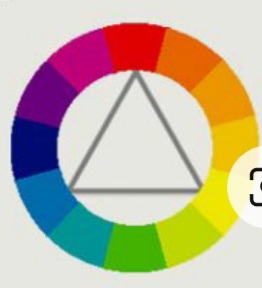
Triadic combinations are made with three colors located equal distance from each other on the color wheel, such as red, yellow, and blue making a triangular pattern. This harmony has a tendency to be vibrant despite satuartion, and is often more impacting when one color is used more than the others.

Language is Man-made, not “Human Made”!

This is a very simple title, yet a major loophole that our society is facing for many decades. This is not about giving rights to a specific gender but the suppressions which a language creates in the backdrop of society and makes it a center of concern. Never thought language can create such discrimination against two genders.

In colloquial context we see that every day we speak our language and communicate flawlessly yet we never recognized the ocean of problem which a language brings every day.

Profoundly, the title itself gives us the best example as to how we use the word “Manmade”, linguistically whenever a thing is made by a human it is denoted as manmade. But the question here arrives is that why don’t we spell it as human-made?

There are many endless words where the wordings are based on one gender-biased, for say: countrymen, mankind, etc and mostly these words denote men and women were often neglected or ignored since the formation of words.

“Language has always been a media through which many cultures and communities bounded and created a sense of harmony with each other”.

Whereas we can notice that Gender Discrimination has always been a core of fear since civilization. It has become one of the cliché topics when it comes to feminism and cause of this people are ignorant as they assume that the world is changed and there is no more discrimination in today’s society.

Taking back to the advent of the problem we can observe that many writers, critics have battled to always protect the women community as they are always considered the “weaker section of the society”. We can’t deny this fact but, inevitably, they are still subjected when it comes to literature and language.

  1. How Women are Neglected by Language  as Language reflects Patriarchal world:

She says, “Women can either read and choose to stay trapped in their bodies by a language that does not allow them to express themselves, or they can use the body as a way to communicate.”

Helene Cixous (in; “The Laugh of Medusa” )

This very quote is taken from the famous article written by a critic, writer, and feminist; Helene Cixous who has explained how a woman had gone through repression in history and how literature and language had given an upper hand to the men in society to suppress women.

In “The Laugh of Medusa”, she explains how women should find their voice and the Language is the symbol of how a person portrays themselves. “Writing is for you, you are for you, your body’s yours, take it”. This line highlights that it’s high time that women should raise their head and minds and be themselves by being flawlessly independent and break the walls which portray women as fragile and frail.

The author claims that there is a very close relationship between women’s bodies and their writings and both have been repressed by men for centuries. Literature, in particular, explains to us how women as a writer were hard for the audience to accept them due to cultural prejudices laid against them since ages.

Writers like Virginia Woolf show us the patriarchal world through one of her works namely “Room of one’s own” through the lens of all the women present in the world and the problems they go through.

“A Woman must have money and a room of her own if she is to write fiction”. This quote is quite relatable for the women of contemporary society, but this was a major issue which women of the 18th and 19th centuries were facing, to be independent they always needed acceptance to flourish in their fields and for that, they always needed acceptance which was a great hurdle in their lives. For their personal growth, they were bounded to be under 4 walls and do all sorts of wifely duties which gave the society that women are doing dutiful jibs under their husbands present.

But unfortunately, those women were never accepted who was unique and out of the box because society was not people’s perspective, rather it was the male perspective.

Even in “Room of one’s own”, Woolf mentions Judith Shakespeare ( was considered as Shakespeare’s real sister), her character portrays us the devastation a woman goes through while struggling for getting justice.

It also portrays us that many decades of literature didn’t accept women’s works as they were not considered as talented and rather, they were judged based on patriarchal society.

  •  Females were Disowned yet contributed best Literature:

As when we look into 18th century British literature, we can see that several female writers have given an immeasurable piece of works which is still remarkable to date.

It would be a disgrace if we forget to mention  Jane Austen, the Bronte sisters, Virginia Woolf, who were the pillars of 18th-century literature. Whether it is a broody romantic novel of wuthering heights or it is jane Eyre, every writer has spilled their hearts and provided the real situation of women in the era.

Some great writers are unforgettable like J.K Rowling who made us believe in fantasy and made childhood more fascinating by giving us Harry Potter which always provides us nostalgia going back to those days.

Unfortunately, these writers have always struggled to prove their identity to the world, that these immense writers like J.K.Rowling, Emily Bronte, had to change their names to get worldwide recognition. Even in the postmodern age, the situation didn’t change and the process of women hiding their originality, their names was like a custom they followed for ages.

But these female writers never let their readers down and always provided the best piece of art even having so many hurdles in their life.

It’s a long way to go, but still, the situation is better as women are gaining recognition and fame in society, the world, and literature through their masterpieces of works.