Introduction to SEO

Introduction to SEO

Search Engine Optimization, more commonly referred to as SEO, is one of the most crucial aspects of marketing. As such, if you’re working to market your blog or your business, you need to know what SEO means and what the rules and ways of SEO success are. While a successful SEO strategy isn’t an exact science, and its practice has been challenged on many fronts throughout the years, knowing the basics is still important to an effective marketing campaign.


What is SEO?

SEO refers to the process of making a website more visible on a search engine’s results page. To clarify, a great SEO strategy will put a company’s website at the top of the list on a Google search page, therefore increasing the likelihood that people will visit the site. Search engines strive to provide the most relevant results for a person conducting a search, so that when a person runs an internet search for “cupcakes,” the first thing to appear isn’t a cookie shop, but a bakery that specializes in cupcakes as well as a definition of the dessert. In other words, SEO helps to make a search relevant to the user and can be critical in driving traffic to your site.


Search engines work by searching the Internet to find text that meets certain criteria. This text is known as keywords and refers to the most important theme(s) of the website, company, or product. Scouring the online world to find keywords are why, as in the example above, a search for “cupcakes” yields a result of multiple pages about cupcakes, not cookies. Other important things that a search engine uses to rank a website include titles, headings, and links that make up the content of a website’s pages. Search engines also employ search engine indexing to find, digest, and store the content of a website. A search engine index refers to the set of data that’s used to base a final search result on.

The Importance of Keyword Research

Another important part of an SEO introduction is understanding the significance of keywords. We explained above that keywords are the specific words or set of words that best describe the theme or overall concept of an idea, website, business, or product. Keywords are the words that people use when conducting a search, and should be words that are included in the content of your webpage. Choosing the right keywords can help to drive traffic to your site, attract potential customers, and greatly improve your SEO ranking.

When deciding what keywords you should include in your text, you should consider things such as the relevancy of the keyword(s) to your website and company, as well as the competitors that are using the same keyword(s) (you can check this by running a quick Google search of chosen keywords yourself, and seeing what sites appear at the top of the list). To discover the value of your keywords, you can buy a sample campaign from Google AdWords, which will allow you to test the traffic generated by your chosen keywords. If all three things are in check—the keywords are relevant to your website, competitors are experiencing success with similar keywords, and a sample campaign yields high traffic—you should feel confident in moving forward with the keywords.

SEO Tools and Services

Although an SEO introduction is a fantastic place to start, as your marketing initiatives develop, you might want to think about acquiring additional SEO products and services. These resources are frequently made available by the search engines themselves, including Google’s Google Analytics, Google Webmaster Tools, Google AdWords Keywords Tool, Google Alerts, Google Trends, DoubleClick Ad Planner, Google Page Speed, Google Site Map, and others.


In addition to the tools offered by Google, you may also investigate additional internet tools or even employ a business that specializes in SEO marketing to build and optimize your website.

Nykaa Success Story

About Nykaa

Nykaa is a brand based in India that specializes in multi-beauty and personal care products. It had originally been set up as a sole e-commerce medium until it later began building up various retail outlets in many other urban cities across India.

Nykaa Founders

A graduate with MBA from IIM Ahmedabad, Falguni Nayar begins to work at Kotak Mahindra in investment banking after her graduation. She became the Managing director at Kotak in 2005. She worked for Kotak Mahindra for about 18 years, during which she decided to move beyond the banking sector and experience in other sectors. She recognized the unexplored potentiality of the online beauty sector. 


Nykaa was started in 2012 by Falguni Nayar and is headquartered in Mumbai. She entered the market to remove the irregularities in the beauty industry. Despite high demand, the industry was not up to the mark. Her expertise in Investment banking has made her value the sustainability of the business.


Despite being a capital-intensive industry, she decided to raise and accommodate funds accordingly. The company has pioneered in providing a one place shopping experience for all domestic brands, international brands, luxury & prestige brands, premium brands, niche, and cult brands.

Business Model of Nykaa


Its business model revolves mainly around inventory management as the company purchases the products directly from brands or distributors and then provides them to the customers on its platform. 


Thinking about how it is different from marketplace models like that of Amazon or Flipkart?

Well in the latter, products are listed by third-party sellers for the customers to make a purchase, which is not the case of Nykaa. This helps Nykaa to secure its customers from any fraudulent sellers and maintain the authenticity of the platform. 

Apart from this, exclusive collaborations with big brands in beauty and fashion, the creation of private labels across categories, and having a physical presence have all helped it stand out in a competitive e-commerce industry where buyers are generally vendor-sceptic and looking for the best deal.


Furthermore, the company’s offline stores are present in 3 formats – On Trend, Luxe, and Kiosks. On Trend & Luxe deals with trending and fashionable brand products. While Kiosk is specifically for featuring premium and luxury brands including Dior, MAC, Huda Beauty, Estee Lauder, and many more prestigious brands.


Apart from Amazon and Flipkart, purple.com is a direct competitor of Nykaa. Purple is one of the companies present in the online retailer business in the same segment. 

Further, in order to interact with beauty enthusiasts, the company formed an online platform – Nykaa Network. This helps them connect better with the customers and provide them with a unique experience.  

Nykaa’s Marketing Strategy

The main element is to promote brands and products via multiple channels, websites, and blog pages. It pitches the products digitally to reach customers in all regions of the country. To directly reach the right audience, the company also collaborated with Femina to conduct Femina Miss India over the last few years.


Another key to its success is its ability to create relevant, engaging, and relatable content for its audience. The focus is to connect with beauty enthusiasts through their YouTube and Instagram handles. The company’s ability to establish itself as a legitimate voice in beauty and, increasingly, fashion talks through social media platforms.

How is Nykaa operating now?

This India-based startup originally began as the sole e-commerce platform. Since then, the company is continuously expanding its operations.


It started with the online operations but then diversified into offline stores as well. Currently, the company has 76 brick-and-mortar stores. Earlier, it was only operating in the women’s segment. But in 2019, it entered into the men’s segment by launching Nykaa Men. As of now, the company has 300+ brands in its catalogue under the women, men, and kidswear sections.

Conclusion

The company is planning to expand further in the offline mode through its brick-and-mortar stores. It is planning to open 180+ stores by 2024. This will help the company to boost its sales and revenue. Apart from this, the company is launching an IPO soon, which could take its valuation to 4 billion dollars. It will be the first company in the online beauty marketplace to launch an IPO. Besides, the company is also planning to achieve profitability before going public. 

We could say that Nykaa has become the amazon of the beauty industry. This platform has been instrumental in dispelling the misconception that e-commerce and beauty retail does not work well in India. Due to a continuous rise in sales and the profitability of the company, its plan to launch the IPO has been preponed.


One can say Nykaa has become into the Amazon of the cosmetics sector. Because of this platform, the myth that e-commerce and beauty retail don’t function well in India has been decisively disproven. The company’s plan to start the IPO has been postponed due to an ongoing increase in sales and profitability.

BCG Matrix.

Boston Consulting Group (BCG) Matrix is a four celled matrix (a 2 * 2 matrix) developed by BCG, USA. It is the most renowned corporate portfolio analysis tool. It provides a graphic representation for an organization to examine different businesses in it’s portfolio on the basis of their related market share and industry growth rates. It is a two dimensional analysis on management of SBU’s (Strategic Business Units). In other words, it is a comparative analysis of business potential and the evaluation of environment.

According to this matrix, business could be classified as high or low according to their industry growth rate and relative market share.

Relative Market Share = SBU Sales this year leading competitors sales this year.

Market Growth Rate = Industry sales this year – Industry Sales last year.

The analysis requires that both measures be calculated for each SBU. The dimension of business strength, relative market share, will measure comparative advantage indicated by market dominance. The key theory underlying this is existence of an experience curve and that market share is achieved due to overall cost leadership.

BCG matrix has four cells, with the horizontal axis representing relative market share and the vertical axis denoting market growth rate. The mid-point of relative market share is set at 1.0. if all the SBU’s are in same industry, the average growth rate of the industry is used. While, if all the SBU’s are located in different industries, then the mid-point is set at the growth rate for the economy.

Resources are allocated to the business units according to their situation on the grid. The four cells of this matrix have been called as stars, cash cows, question marks and dogs. Each of these cells represents a particular type of business.

Stars- Stars represent business units having large market share in a fast growing industry. They may generate cash but because of fast growing market, stars require huge investments to maintain their lead. Net cash flow is usually modest. SBU’s located in this cell are attractive as they are located in a robust industry and these business units are highly competitive in the industry. If successful, a star will become a cash cow when the industry matures.

Cash Cows- Cash Cows represents business units having a large market share in a mature, slow growing industry. Cash cows require little investment and generate cash that can be utilized for investment in other business units. These SBU’s are the corporation’s key source of cash, and are specifically the core business. They are the base of an organization. These businesses usually follow stability strategies. When cash cows loose their appeal and move towards deterioration, then a retrenchment policy may be pursued.

Question Marks- Question marks represent business units having low relative market share and located in a high growth industry. They require huge amount of cash to maintain or gain market share. They require attention to determine if the venture can be viable. Question marks are generally new goods and services which have a good commercial prospective. There is no specific strategy which can be adopted. If the firm thinks it has dominant market share, then it can adopt expansion strategy, else retrenchment strategy can be adopted. Most businesses start as question marks as the company tries to enter a high growth market in which there is already a market-share. If ignored, then question marks may become dogs, while if huge investment is made, then they have potential of becoming stars.

Dogs- Dogs represent businesses having weak market shares in low-growth markets. They neither generate cash nor require huge amount of cash. Due to low market share, these business units face cost disadvantages. Generally retrenchment strategies are adopted because these firms can gain market share only at the expense of competitor’s/rival firms. These business firms have weak market share because of high costs, poor quality, ineffective marketing, etc. Unless a dog has some other strategic aim, it should be liquidated if there is fewer prospects for it to gain market share. Number of dogs should be avoided and minimized in an organization.

YouTube Marketing and its benefits.

YouTube marketing is a strategy that involves creating videos and uploading them on YouTube to promote a brand or a product and gain more exposure. It helps companies boost traffic, increase their customer base, and reach new audiences.

Since YouTube’s 22.8 billion visits a month make it the second most visited site in the world after Google, it’s able to bring many benefits to businesses nowadays. The platform isn’t just a famous entertaining channel but a powerful marketing tool, and companies can develop YouTube channels for advertising. YouTube channels help get more views from new geographic, promote a product or a company, build a large customer base, and increase a brand’s sales volume. YouTube is also a famous educational platform. Companies can achieve greater exposure, which expands their customer base. By making detailed tutorials, live streams, guides, and lessons, brands can rank higher on Google. 

The platform can serve as one of the most effective marketing channels. Optimizing keywords in titles and creating tutorials, commentary, product reviews, Q&A, and video listicles allow businesses to achieve higher exposure and reach new audiences. Brands can’t predict who and when will access their videos. If the content contains the necessary keywords in the title and description, all people who look for information might stumble upon a certain video, stay on the channel, and buy the product it advertises. Besides, adding watermarks and company logos to videos enables businesses to improve brand awareness.

Benefits of YouTube marketing :

Heavy Traffic

YouTube is growing exponentially, with more than 5 billion videos consumed every single day. This is much more traffic than any other platform out there. Even if one don’t create many videos for own business, one can still easily reach an audience by advertising one’s content on other people’s videos. There is so much traffic on YouTube that it is  guaranteed to find potential customers as long as you cater to their needs. 

Higher Visibility on Google

By utilizing YouTube marketing, businesses are also increasing the online authority of their business. The more authoritative they are on Google, the higher their page will rank on the Google search engine result page. 

Higher Conversion Rates

If a picture speaks a thousand words, a video makes up for a million words. Moreover, videos can evoke emotion more than any other form of content. They take your messages from static text to dynamic and engaging, and bring your business to life. They also help to build trust and authority among people in a unique way. This entertaining and engaging form of content has the power to increase your conversion rate by 80 percent.

Multiple Video Types Another crucial advantage of YouTube marketing is the different types of videos you can create to showcase your brand online. The most common types of videos on YouTube are explainer videos, sales videos, social media videos, presentation videos

Role of Branding and Marketing in a Company

Role of Branding and Marketing in a Company


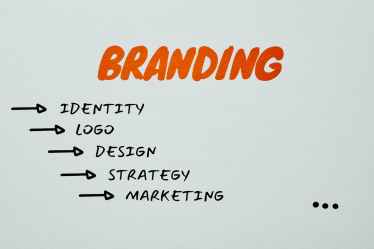
We have always heard two words in the business field- Branding and Marketing. Marketing is a tool and strategy which help to promote your company and its product and services. It helps to connect with the customers so that they can buy the goods and services sold by the company. On the other hand, branding is the process of creating a strong and good perception of the company with the help of the logo, design, theme, and goals of the company. It helps to make you special and different from other companies. 

Difference between the Branding and Marketing 

Marketing is used to promote your product or service and branding is used to actively shape your brand name and who you are. You need a strategy for both. Marketing helps to engage the customers while branding helps to sustain them for years. Marketing helps to increase the sale of products and services while branding tries to keep the company loyal and responsible towards the customers. If the company has a good brand name, then it helps to increase the marketing too. Marketing strategies keep on changing based on the current scenario but the brand remains the same.


How they are effective for the development of the company?

Marketing and branding help the company to grow. If your company has a good brand name then it helps to attract the audience toward your company based on your loyalty and response towards the customers. Changes are very important to go on with the current trend and maintain a good position in the market. It is required to do something different which is not done by other companies so that your company can grab customers’ attention and keep your brand in the prior list of customers. 


If you want to start a new business based on your current good brand name it will help them grow the new business fast due to the existence of the old one. You just need to create marketing strategies that help to extend your business. Marketing help to get your brand in front of the right people. Good marketing strategies keep you different from the competition.

Try to make a good brand which should be the priority of every company. A good brand help to increase the marketing of the company also.

Branding and its Components.

The Branding is a marketing process wherein the firm tries to create a unique image of the product in the minds of the customer and establish a differentiated presence in the market with the intent to retain the customer loyalty.

A brand is the name, symbol, icon, image or the combination of these which is intended to identify the goods and services of a particular seller or group of sellers and to differentiate them from those of the competitors. 

The branding is a comprehensive term and includes the following:

Brand Name: The brand name consists of a word, letter or the combination of words that are vocalized or can be pronounced easily. The brand name gives a unique identity to the goods and services of a particular seller and can be easily differentiated from the other brands available in the market. Such as Tata Salt, Usha Fans, Nike shoes, etc.

Brand Mark: A brand mark is the part of the brand that appears in the form of a symbol, logo, design, shape or distinctive coloring which can be recognized only through the site and cannot be pronounced. The brand mark increases the recognition of the brand. Such as, a symbol of Swoosh of Nike, Amul Girl of Amul Butter, Maharaja of Air India, etc.

Trade Mark: When the brand name and the brand mark are given the legalized protection such that no other firm can use it for its product then it becomes a trademark. Thus, the trademark is the protection given to the seller to use the brand name and the brand mark and prohibiting others from using it.

Trade Name: The trade name is frequently used as a synonym for either the brand name or a brand mark, but actually it is the name of the business, preferably the name of the organization itself. Most often, the trade name is used as a brand name, but it serves two purposes, give the identity of both the manufacturer as well as the product. Such as Godrej and Tata are both the trade names and are also the brand names for most of their products.

Patents: The Patents are the legal protection given to the new inventions pioneered by any business. Any firm can get its inventions such as new process, new product or the new machine patented so that an exclusive right to use it is obtained solely by the inventor. The patent confers the right to the inventor to use the new technology while prohibits the unauthorized persons for a fixed number of years from making the commercial use of the technological invention.

Copyright: The copyright is applicable in the case of books, dramatic, musical and artistic work and carries the similar meaning as that of the patents. The copyright provides protection to the work of an author so that no other person can copy it.

Future of digital marketing


Future of digital marketing 

Marketing is changed nowadays by digital marketing. In 2020 when covid came all things are going online. In 2020 we came to know the online world very closely because before that everything is in an offline system. Everyone enjoys doing things online. They talk online, they shop online, and they find it easy to do and yes it is less time-consuming. Many of us switch offline to the online world because it helps us in different ways and it is less time-consuming. You can relax at home and do your work, you can start it from your comfort etc. 

The process of digital media marketing is making the companies surge with demands and supply the products to their customers.

Digitization

Everything is becoming digitised and it will be more improved and advanced in the coming days. If people choose to connect with the internet then digital marketing companies and agencies will make their way to get better results. 

Increase demand

The upcoming years are going to see the customers getting excited and prosperous for online things. Then the competition will be more tough compared to now. People will search for more products and services. This will make companies have additional hard work to do for their online products which can be available to the customers with great speed without any hassle.

Network

The network is the main thing behind all these. With more and more networks coming up there will be no problem with networks. The network will be stronger than ever before then things will be quick, easy and effective. When network access will be at high speed then digital marketing will be the only way to reach customers.

Voice search

Earlier most people preferred to go to the market and buy their products or if someone buys any product on an E-commerce website then they will be above 25-30 years old but today small children and teenagers also buy from an e-commerce website and they love to do so. They opt for service via the voice search method. Digital marketing companies need to focus on long-tail keywords and have deep knowledge of the target audience.

Interactive content

Digital marketing companies need very good content for their websites because they have to make their customers not only visit their websites but to purchase products from their website. They make sure to not only make customers purchase products, but they also give them vouchers and rewards, online quizzes, taking surveys, interaction via polls and many more. Digital marketers had to do very hard work not only to create content but to do their web design. They also have to take care of their audience for the content they have given for matching their needs.

Conclusion 

All things are changing very fast in the world. MNCs are now becoming more aware of the trends that people follow and they do their surveys and analysis to know even better what they need to do for improvement. This world has become now digitised in every manner. We have many good students in digital marketing companies or digital marketers who are trained by professionals that are working on live projects with leading MNCs.

How to spot a pyramid scheme.

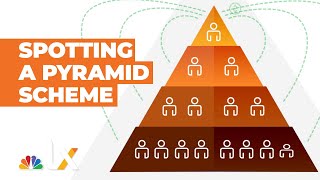
A pyramid scheme is a fraudulent system of making money based on recruiting an ever-increasing number of “investors.”  The initial promoters recruit investors, who in turn recruit more investors, and so on. The scheme is called a “pyramid” because at each level, the number of investors increases. The small group of initial promoters at the top require a large base of later investors to support the scheme by providing profits to the earlier investors.

Let’s assume the following: Founder Mike sits alone at the top of the heap, represented by the number “one.” Assume Mike recruits 10 second-tier people to the level directly below him, where each newbie must issue him a cash payment for the privilege of joining. Not only do those buy-in fees funnel directly into Mike’s pocket, but each of the 10 new members must then recruit 10 tier-three members of their own (totaling 100), who must pay fees to the tier-two recruiters, who must send a percentage of their takes back up to Mike. According to the hard-sell pitches made at recruitment events, those bold enough to take the pyramid plunge will theoretically receive substantial cash from the recruits below them. But in practice, the prospective member pools tend to dry up over time. And by the time a pyramid scheme invariably shuts down, the top-level operatives walk away with loads of cash, while the majority of lower-level members leave empty-handed. It should be noted that because pyramid schemes heavily rely on fees from new recruits, the vast majority do not involve the sale of actual products or services with any intrinsic value.

Unfortunately, these types of scams sometimes prey on people who need income quickly. For example, if you lost your job and are having a hard time finding a new job, you might be more willing to look into an opportunity that offers a fast return. But avoid the temptation to overlook the feeling that something is too good to be true. Instead, take a moment to calm yourself so you can make a legitimate plan after losing your job. Go over your budget—or create one for the first time—so you can manage your money in the best way possible while you try to increase your income.

How to Spot a Pyramid Scheme

Pyramid schemes and MLM sound a bit alike, don’t they? Here are some signs of a pyramid scheme, provided by the US Securities and Exchange Commission, to help you understand whether you’re considering a scam or a legitimate MLM opportunity:

  • You’re not selling something real. Legitimate MLMs sell tangible goods—many times there’s a ready-made market for them.
  • Get-rich-quick promises. If you’re being offered overnight success, get-rich-quick guarantees, or passive income promises, it’s probably too good to be true. People who make money with legitimate MLMs put a lot of time and effort into their businesses.
  • The company can’t prove it generates retail income. If the business can’t show you financial statements that demonstrate income from the sale of product, it could be generating all its income from recruiting people into the pyramid.
  • Strange or unnecessarily complex commission processes. Legitimate MLMs have easy-to-understand, product-based commissions.

The Bottom Line

Pyramid schemes are illegal in many countries. The model of profiting by using the network effect often traps individuals into recruiting their acquaintances, which can feel slimy for everyone involved and can ultimately strain relationships. Some people may shoot their shot each time and invest in multiple schemes losing money each time. Victims of pyramid schemes are often embrassed into silence and keep blaming themselves for not being tenacious enough to earn the promised returns, when in truth it’s the system that is faulty. Get rich quick schmes never work and will allways have some strings attached to it that can put people into legal trouble. Vigilance and knowledge about where your money goes are important factors that people must know, preventing them from falling pray for traps like the pyramid scheme.

sources – https://www.investopedia.com/insights/what-is-a-pyramid-scheme/ https://www.credit.com/blog/what-is-a-pyramid-scheme/

New era of socially responsible toys

Buy Wooden Shape & Number House: Educational Puzzle Set Toy – Shumee

A child’s play is not simply a reproduction of what he has experienced, but a creative reworking of the impressions he has acquired.

~Lev Vygotsky

As rightly quoted by Soviet psychologist Lev Vygotsky a child not only reproduces what he has experienced but also shows the impressions they have formed through their actions. That time has passed when people believed that a child cannot understand the things happening around them. Due to this misconception, very less effort was taken to make shape their concept formation in a socially responsible manner.

As a result of the research conducted around the world people have reached to a conclusion that childhood is the period when a major portion of the concept formation takes place. This realization has developed a demand for toys which could contribute towards a positive outlook development. Realizing this rising demand several brands have shifted towards developing socially responsible toys.

Let us look into some examples:

Barbie dolls

Mattel Inc., the company producing Barbie dolls, has released a wide range of inclusive dolls which are different from conventional dolls. The company has introduced dolls of three sizes slim, broad and original. It has also released dolls in wheel chair as well as with artificial limb. The company has also tried to make it more inclusive by providing dolls in different skin tones, hair types and eye color. Apart from this, they have also introduced Moschino Barbie which caters towards boys, thereby breaking the stereotype that dolls are not meant for boys.

Lego

The company which sells building blocks have decided to make their products gender neutral after realizing the need for gender equality. It has also promised to shift from plastic packaging to other alternatives. The company’s initiative to produce sustainable bricks will also contribute towards reduction of carbon footprint of one of the biggest toy manufacturers.

Mega bloks Green Town Line

It is a set of carbon neutral construction toys for preschoolers. Mega Bloks bought carbon offsets from the Darkwood Forests conservation project in Canada to get this label. The manufacturers have specified that the toys are made from a minimum of 56% plant-based materials rather than plastic.

Hasbro

Hasbro is a company dealing with wide variety of toys and they adopt a whole lot of activities towards sustainability. Its major initiative is to replace plastic packaging with environmentally friendly materials. It also provides provisions for recycling the toys by collecting the toys and creating new toys from them. It also checks for the environment assessment of their suppliers.

Colors of the world- skin tone crayons

This is a pack of crayons which provides twenty-four shades. What makes it different from other crayons is that it has 24 skin colours from extra light to deepest. It helps to develop a sense of inclusion and generate a non-discriminatory mindset among the children. It helps children to realize that it is normal to have all shades of skin and not strive for achieving the so called “ideal” skin shade.

Similarly, several companies have initiated different measures to make their toys inclusive and climate conscious. The indigenous toys of our country could also be an alternative in this new era.

Being grownups, it is our duty to promote ethical products and thereby assist in positive concept formation of our upcoming generation.

Let us make use of the available resources and pave way for a compassionate, inclusive and climate conscious generation.

CAN COMMERCE GO GREEN?

https://www.google.com/url?sa=i&url=https%3A%2F%2Fwww.itweb.co.za%2Fcontent%2Fj5alr7QaXJO7pYQk&psig=AOvVaw2iREPnrEK5Dq-jaHMsCtiy&ust=1650781846280000&source=images&cd=vfe&ved=0CAwQjRxqFwoTCLDxoeXHqfcCFQAAAAAdAAAAABAI
Source: Google

The color green is often associated with sustainability and environment protection. Similarly, when we refer to commerce, we often associate it with exploitation of environment. But with change in time commerce has also realized the need for going green.

Recognizing the urge of the hour commerce has also developed a whole lot of initiatives. Recently, several branches of commerce have evolved with the idea of going green. These require the co operation of entire community as it involves an overall shift in the practices.

Let us look into some of these areas:

Green consumerism

Green consumerism deals with the process in which consumers demand products and services that have undergone an eco-friendly production process or one that involves recycling and safeguarding the planets’ resources. The green consumer is an opinion leader and a careful shopper who seeks information on products. Including information from advertising about the green aspects of products. If you want to be a green consumer start with small initiatives like avoid demanding plastic carry bags, start using paraben free products, etc. There Is a direct environmental impact of green behaviors. The growing environmental hazards, associated with the ever-growing consumption of such poisonous produces, have been creating several health-related problems, giving way to greater concerns over the consumption of these products among the people.

Green governance

The inculcation of green initiatives with corporate governance is termed as green governance. In India the provisions of Information technology act have led to the growth of green governance. The act promotes usage of digital documents and provides legal validity for digital signature. It has also laid down provisions for regulating hard copy of documents. Similarly, several initiatives are adopted around the world in the field of corporate governance to promote green initiatives.

Green marketing

Green marketing is the marketing of products that are presumed to be environmentally safe. It incorporates a broad range of activities, including product modification, changes to the production process, sustainable packaging, as well as modifying advertising. It not only refocuses, adjust or enhance existing marketing thinking and practices but also provides a substantially different perspective. In a broader sense, eco marketing belong to the group of approaches which seek to address the lack of fit between marketing as it is currently practiced and the ecological and social realities of the wider marketing environment. 

Green finance

Green financing is emerging as on equivalent to socially responsible investing Eco-investing or green investing, is a form of socially responsible investing where investments are made in companies that support or provide environmentally friendly products and practices. These companies encourage new technologies that support the transition from carbon dependence to more sustainable alternatives. Green finance is “any structured financial activity that has been created to ensure a better environmental outcome.” Green financing could be promoted through changes In  countries regulatory frameworks, harmonizing public financial incentives, increases in green financing from different sectors, alignment of public sector financing decision-making with the environmental dimension of the Sustainable Development Goals, increases in investment In clean and green technologies, financing for sustainable natural resource-based green economies and climate smart blue economy, increase use of green bonds, and soon.

Along with the shift in global thoughts, commerce and its allied activities have also moved towards green alternatives. Recognizing the need for climate resilient initiatives we all should assist the businesses in adopting the above initiatives.

Rather than putting the blame on a particular industry or sector, let us all join our hands in making our earth greener. Ultimately it’s the implementation of these initiatives that matter the most.

Writing for the Web

Writing a copy for a company’s website can be quite different from other copies. Not only do you need to communicate your message clearly to the readers, but you also need to do it most quickly and interestingly as possible. Here are some points to keep in mind when writing for the web:

Get the Reader to Stay:

Web visitors are usually looking for some information and decide if your website is useful swiftly. We can say people scan, rather than read web pages. The visitor needs to get the message of the copy at a glance. How do we get our message across so quickly?

  • Make use of headings that clearly communicate what the whole website and each of its sections are about.
  • The sub-headlines should summarize the key points
  • Improve readability using bullet points
  • Give an informative caption for the images used

If the web visitors scan the web page and find the information they need, they will stay on the website instead of closing it and opening another.

Most Important Information Comes First:

Writing for scanners also means you need to put the most valuable information at the front of the website. Writing an essay or article would require you to include an introduction and a conclusion before and after the main content. But when writing for the web, present the main point first, and then provide additional information. This makes it possible for readers to leave the website at any point while still having an idea about the main point of the page.

Use Familiar Words:

When writing a copy for the web, use familiar words which are easy to understand for readers. Readers are looking for these familiar words, also called “carewords”, and if they do not spot them quickly, they can leave the page. Avoid being too fanciful or scientific with your word choices. Visitors are more likely to look for the word “cheap” than something more complicated like “cost-efficient” when trying to buy a product.

Keep it Short and Simple:

Use short paragraphs and simple sentences in your web copy. Paragraphs should contain a maximum of four sentences and sentences should have twelve words on average. Do not use jargon. Wordy, complicated text can turn off your visitors. Readers simply do not have the time to go through lengthy paragraphs and decipher complex phrases. Avoid the passive tense when writing and address the web visitors directly, use “you” to refer to them.

Maintain Visual Appeal:

When writing for the web, you have to make sure that your copy goes well with the visual design of the page. This means that the copy matches with the theme of the website. Choose the font types and colours carefully. Play around with highlights, italics and bold text. Include lots of photos and videos. Most importantly, maintain spacing and reduce noise. Adding white space improves readability and increases perceived trust.

Expect People to Arrive Anywhere on your Website:

Unlike a book in which people usually start reading from page 1 and then move through the book, visitors can arrive on any of the pages of your website. This means that they should be able to understand where they are, what the site is about and what it does from any web page they open. Each page of the website should be easy to scan and should have a call to action telling people where to go next. Other than the navigation bar, include buttons or links to guide people to the next step or next page.

Copywriting Tips to Keep in Mind

An eye-catching copy is guaranteed to pull in customers for your brand or product. But possessing good creative writing skills is not just enough to create interesting copies. Here are a few useful tips to keep in mind when writing a copy:

Don’t Miss Out on Research:

Before you start your work, do not forget to read and find out as much as possible about the product, brand and target audience. Have a clear idea regarding the objectives of the company and the benefits they are offering the consumers. Who is your target audience and how would this product or service solve their problems? Gather information about the target audience demographics – their age, job title, income range and other general information. Create a profile of a typical user persona and use it to guide you in copywriting.

Bring in your Unique Style and Tone:

You want your copy to grab the attention of the audience and potential consumers. For this, your copy needs to have its distinct tone and style. Prior research on the audience and company also helps you decide on the tone of your copy. Brand personalities would have to be taken into account when writing the copy. This means the copy of a high-class premium brand like Titan would need to maintain the classy, refined style while brands like Zomato adopt a friendlier, humorous approach.

Focus on your UVP:

One of the most important things to highlight when advertising a product or service is its Unique Value Proposition (UVP) To get ahead of your competitors, you need to communicate to your audience exactly what sets you apart. This is the brand’s UVP. It should be included in the copy, explaining to the audience why they should choose your brand.

Keep it Concise and Short:

While including everything needed in the copy, make sure that it doesn’t get too wordy or lengthy. You need to get the message across as quickly as possible, so making it longer would only make your customers impatient and eventually lose interest. Having a short attention span also means you have to use simple, uncomplicated words which people would find easy to understand. Including unfamiliar words and jargon would simply irritate the readers. Too many adjectives and imperatives should also be avoided. Filling your copy with a lot of meaningless adjectives which would also require the audience to take extra effort to understand the meaning is not recommended.

Prove your Claims:

Providing proof for your claims with significant data can be useful in building credibility and trust in the brand. People tend to believe a familiar person or even a celebrity when they talk about how useful a product has been for them. These proofs could be presented in the form of customer testimonials, facts and statistics, case studies and success stories. But avoid making the testimonials appear too sweet and sugar-coated. Also, give specific numbers when presenting data and statistics.

The 5 Different Types of Copywriting You Can See Today

In the marketing and advertising sector, the text that forms a part of an Ad is known as its copy. Copywriting is the process of writing this text. Copywriting may be found on paid Ads, brochures and even on Website pages. The primary objective is what differentiates copywriting from content writing or content marketing. While the goal of content marketing could range from education to entertainment, and awareness, copywriting is mainly focused on making sales, getting people to talk about the brand, and taking the desired actions. The copy should communicate the features, price and values of the product in the quickest way possible.

Here are the different forms of copywriting an aspiring copywriter could get into:

Brand Copywriting

Also called creative copywriting, brand copywriting deals with creating copies that distinguish a brand or company. It is aimed at getting people to recognize a brand with their unique copy, developing strong emotional attachments. Brand copywriters create copy for commercials, posters and jingles for brands. Some popular examples include Nike’s tagline – “Just Do It”, and popular jingles like “I’m lovin’ it” by McDonald’s. It aids in developing brand recognition and brand memory rather than just competing with other brands.

SEO Copywriting

In this age of 24/7 internet and eCommerce, SEO (Search Engine Optimization) is a must-have element. SEO copywriting is all about creating copies that help you get ranked highly on search engines. The copy should be attractive, offering value to readers while also mixing in essential keywords and phrases. A healthy amount of keywords ensure that your blog or web page is visible quickly on search engines, driving traffic to your work. Blog posts, copies of web pages (home page, landing page, etc), articles and product descriptions are forms of SEO copywriting.

Social Media Copywriting

This form of copywriting deals with creating attractive posts for brands on social media. A brand can have profiles on various social media platforms like Facebook, Twitter, Instagram, TikTok and LinkedIn. A social media copywriter attempts to engage its customers through its content on these pages. The aim is to make the brand memorable. The copy would have to suit the style and tone of the social media platform it is posted in. This means that a copy would look different on Facebook and Instagram. It helps reach out to potential consumers and get them to visit your store.

Starbucks on Instagram

Technical Copywriting:

As the name mentions, technical copywriting is all about creating copies that explain information related to your brand or product. The copy goes in-depth in providing useful insight to customers regarding topics like user manuals and product descriptions. This helps in building trust in the brand. Contrary to other forms of copywriting, technical copywriting tends to be more detailed and longer, usually seen in blog posts, user guides and white papers. The tricky part of it is getting the copy to be insightful while also making it simple and easy to understand. You need to have some technical experience and good explanation skills while also using simple language without jargon.

Public Relations Copywriting:

PR copywriters write copies that get your brand noticed by news reporters and journalists, so that they can spread it across various media. This type of copywriting is useful once a brand is established and you want people to remember the brand. Instead of sharing how good your brand is yourself, you get others to talk about your brand. This is generally considered to be unbiased and credible by the viewers because it would be verified and reported by a third party. Press releases and statements of brands and companies you see on television channels and social media are PR copywriting. It can be used to improve a brand’s reputation or as damage control, after something had occurred that could affect the brand’s image negatively.

Porter’s Five Forces Model

Porter’s 5 Forces Model is a business model and a tool which helps in identifying main competitive forces of an industry or a sector. The 5 Forces Model is mainly used to create a corporate strategy which will help a company to enhance its long- term profitability.

Understanding Porter’s Five Forces Model

The 5 Forces Model was created by Harvard Business School’s Professor Michael E. Porter and was published in his book “Competitive Strategy: Techniques for Analyzing Industries and Competitors” in 1980. The model was created to explain why various industries are able to maintain varying level of profitability. Porter’s 5 Forces helps in analyzing the industry of the company so that a company can adjust their corporate strategy, boost their profitability and beat their competition.

What are the five forces of the Porter’s Model?

  • Competition in the industry
  • Potential of new entrants into the industry
  • Power of Suppliers
  • Power of Customers
  • Threat of substitute products

Competition in the Industry

For most industry, the level of competition in the industry determines the positioning of the product in the market. The intense the competition in the market, the more the company has to focus on innovation, marketing, price, etc. of the product. When the competition is less, a company has more authority to charge higher prices and establish the terms of deals in order to increase sales and profits.

Potential of New Entrants into the Industry

A company’s positioning is also affected by the new entrants in the market.  This in turn puts pressure on prices, costs, and the rate of investment needed to sustain a business within the industry. The less the time, money and effort it takes for a competitor to enter the market, more is the threat for a company to lose its market share. On the contrary, if there are strong barriers to entry in the industry, companies more secure about their market share.

Power of Suppliers

Power of suppliers in a market means how easily suppliers can increase the cost of the inputs. The suppliers’ power in the market is determined by the factors like number of suppliers in the market, uniqueness of the inputs they provide, cost of switching a supplier for a company. If the number of suppliers in an industry is less, a company would depend more on its current supplier, thus giving more power to supplier in terms of cost of inputs and other advantages in trade. However, if the suppliers are more in the market, then company has the advantage of switching the supplier in case the supplier increases the price or if a company finds a cheap supplier, thus keeping their input costs low and increasing their profitability.

Power of Customers

Customers are more powerful in an industry when there are less number of customers in an industry and more number of suppliers. Because the client base for a company is smaller and more strong, each customer has greater negotiating leverage to get better rates and deals. A company with a large number of smaller, independent consumers will find it easier to raise prices and increase profits.

Threat of Substitute Products

A substitute is a product or service that can be easily replaced with another by consumers. In economics, products are often substitutes if the demand for one product increases when the price of the other goes up. When there are no close substitutes in the market, a company can take advantage of charging higher prices. However, if there is availability of close substitutes, customers will switch to substitutes in case of increase of the prices of the products of a company.

Understanding Porter’s Five Forces and how they apply to a particular industry can help a company change its business plan to make better use of its resources and generate more profits for its shareholders.

Converting Rural Haats into Mini Agriculture Produce Marketing Committee (APMCs)

 Physical infrastructure/ facilities under Mahatma Gandhi National Rural Employment Guarantee Scheme (MGNREGS) have been developed in 1351 village haats and is under development in 1632 number of village haats.

As on 31.03.2020, there are 6845 numbers of Agriculture Produce Marketing Committee (APMC) markets in the country. In order to provide better farmer – market linkages and fair prices to farmers, in addition to regulated markets, there are other markets also like non-regulated wholesale markets, farmer – consumer markets, purchase centers and private wholesale markets. In addition, Government is promoting to declare warehouses and cold storages as deemed market yards to improve the farmer – market linkages.

Further, Government of India had launched reform linked National Agriculture Market (e-NAM) scheme, a virtual platform integrating physical wholesale mandis/ markets of different States/ Union Territories (UTs) to facilitate online trading of agriculture and horticulture commodities to enable farmers to realize better remunerative prices for their produce. All these contribute towards better marketing efficiency and also better prices to farmers.  

So far, based on earlier targets and as per the proposals received from States/ Union Territories (UTs), 1000 mandis of 18 States and 3 UTs have been integrated with e-NAM platform. As on 9th February, 2022, more than 1.72 crore farmers & 2.16 lakh traders have been registered on e-NAM platform. Further agricultural produce trade with a value of Rs. 1.74 lakh crore have so far been recorded on e-NAM platform.