Child Marriage in India: The Problem and The Cure

Child Marriage in India

Introduction

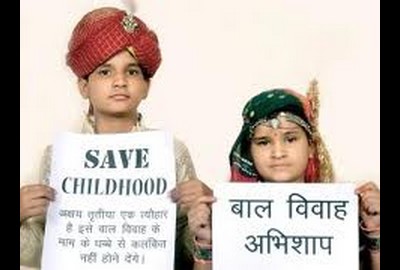
Our country India has always been known to the world for its diverse cultural enrichments. But, the legacies from our past beliefs also bore with it some evil practices to the society that we are still dealing with. And one of those practices is the child marriage. The seeds of the problem are still buried so deep in the society and the mind of its people, that it stands alone as a huge socio-cultural challenge till today.

Historic Background

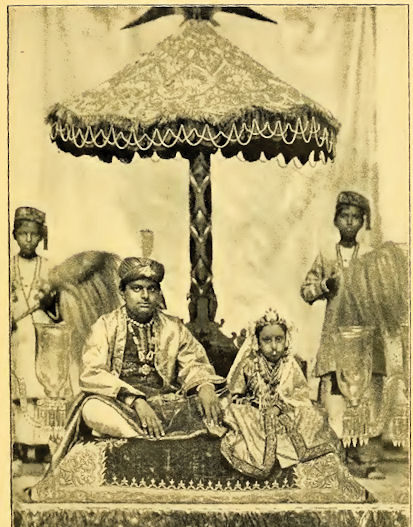
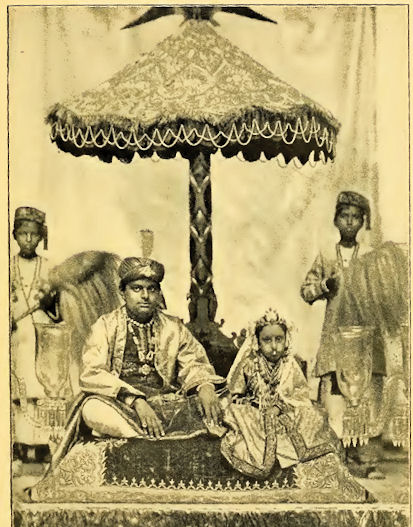
The Vedic history of India dated back to from 200 BC to 700 AD, scribes the marriage as a freedom of choosing desired partner for both men and women. But, with the formation of Government and political modification due to multiple invasions in Medieval India, the women lost their rights to education and choosing their partner and rather were subjected to obey rules and the code of behaviour. Though, age at which the girl was to be married differed and it was rare for girls younger than 12 to be married in antiquity however it became increasingly common for girls as young as six or eight to be married as young brides or “Valika Vadhu”. The parents decided on the marriages of their children at a very early age although the daughter stayed with her parents until she attained the age of puberty. Reaching to which she was bid off to her in-laws through ‘Gehna’ ceremony, in Rajasthan. While in Bengal, this practice was known as ‘Koulinya Pratha’ where a girl child was often married off to an old ‘Kulin Brahmin’ which later on led her to be ‘Sati’ after his husband’s death.

Laws against Child Marriage

The Child Marriage problem in India was first addressed during the British Era. The Child Marriage Restraint act was established in 1929 and come to force in 1930, which defined the minimum ages of marriage for men and women as 18 and 14 years respectively. However, after India’s independence, the minimum age of marriage for women was increased to 15 years. In 1978, the ages of both men and women were revised again to 21 and 18 years. In 2006, the Prohibition of Child Marriage Act came in force, though it was Inapplicable to the Muslim community. Recently in December 2021, Union Cabinet approved to raise the minimum age of marriage for women to 21 years.
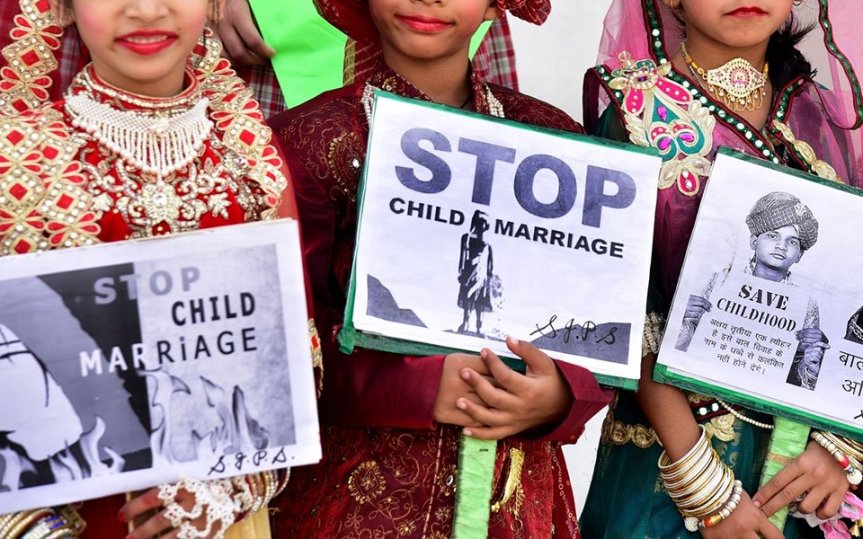
The plea is getting stronger.

The Situation in Current Times and the Consequences

Though there are active laws against Child Marriage, but this practice is still ghostly being performed in various parts of India. According to a survey by UNICEF in 1998, the Child Marriage rate in India is 47%, while by UN reports it to be 30% in 2005. Jharkhand has been found to hold the highest rate while Kerala possess the lowest rate in India. Rural Child Marriage cases were found 3 times higher than Urban ares in India in 2009. The consequences of the evil practice, leave many young women shattered for their entire life. Child Marriages have reported a large number of non-consensual marital rapes, physical abuse and domestic violence, low rates of women literary, deaths during childbirth and post natal problems of both underage mothers and newborns.

Our Take: Fighting for a Social Cause

In this modern Era, India is emerging fast as an United country, with largely powered new age youths. And the present generation can give a tremendous change from the society. The situation is already getting better with more to children and giving equal opportunity to both in order to eradicate the practice completely citizens showing their responsibility male and female children. Bachao,Beti Padhao” movement The Government’s “Beti has stirred up the thoughts of young Indian people With many small initiatives, in every state, for a better future. the idea of going along with everyone with equal opportunities are being accepted by Indian parents for marrying their sons and daughters age. The priorities are being given to qualify for a good education and career build up at a matured before getting married.
The youths’ take is most important.

Conclusion

The citizens are the pillars of society and the future lies on the hand responsibility to work together to effort gets counted when we should try our best to improve of every citizen. It is our make our society even better and free from any evil practices. Every work together for a larger cause. more for a better India. The progress so far is appreciable and we

Raising Legal Age of Marriage in India

In order to formulate policies for a better equality in gender, the Union Cabinet of India proposed to raise the age of marriage of both men and women. This proposal seemed to be a progressive step. As a result on December 15, the Union Cabinet made the decision to raise the legal marriage age of women to 21 years from 18 years and for men it is 21 years. Thus, making the marriageable age of both men and women equal.

The government is asked to establish and implement the minimum marriage age for women and child marriage is strictly forbidden under Article 16 of the Indian Constitution. The minimum age for marriage is mainly prescribed by the law so as to avert abuse of children and prohibit child marriage. Marriage is dealt by different religions according to their own standards. In Hinduism, under the Hindu Marriage Act, 1955, the minimum age of women is 18 years and men is 21 years for marriage. In the Muslim religion, a minor’s marriage is considered valid if he/she has attained puberty. The minimum marriage age for men and women is also specified as 21 and 18 years under the Prohibition of Child Marriage Act, 2006 and The Special Marriage Act, 1954.

It was decided by the Narendra Modi government to reappraise the marriage age of women for a great number of reasons with gender parity being one among them. Marriage at an early age often leads to instances of early pregnancies which may further effect the level of nutrition in both children and mothers. Thus, effecting the overall mental and physical health. It was also taken into consideration that if the voting age and consensual age to enter into a contract is same for both men and women, then the marriage age should also be made equal. Such changes in the age is believed to bring perceptional changes in the developing society. Such provision would also facilitate women empowerment specially encouraging them to enroll for higher education.

There might be some negative aspects to the law but these are just possibilities. As mentioned by the activists of women’s rights that the laws can be misused by the parents in order to punish the daughters who would have married either by eloping or against their will or domestic abuse. The authority of the parents would consequently increase over the young adults.

However, the law has a long way ahead. The law would ensure objective equality. There should be increased awareness among the women like the young girls should be counseled on pregnancies at an early age and network to enhance their health should be provided. The main focus should on creating awareness in relation to reproductive health and sexual rights of the women and it should be made sure that the girls are not drop out of colleges or school. The issues of equity should be addressed by the government and the unfortunate or disadvantaged women should be encouraged to complete their higher education, good job placement and opportunities should also be provided along with career counselling. It can be observed that the government is making great efforts to prevent any sort of discrimination towards women and trying to maintain equality between genders in every aspect.

THE BIGGER THE AGE DIFFERENCE, THE SHORTER THE MARRIAGE

There are numerous factors which can affect a relationship. Some of them are income levels, age difference or commitment etc. With the help of different researches and studies, it was concluded that age difference can also emerge as one of the factors for divorce and for creating odds in an relationship. Studies have concluded that, the greater the age difference between couples, the greater is the chance of ending a marriage and having divorce. Different studies were conducted for understanding the situation of marriage in different age intervals . According to different studies, couples having one or less than one year age difference have only 3% chances of getting divorced. If there is a difference of 5 years then the risk increases to 18%. And if the age difference is 10 years then the risk factor is 39%. This rate keeps on increasing with the increasing age gap. Couples who have less age gap have lesser chances of getting divorced and ending the marriage than those with someone who is very young or old as compared to the other. Individuals who are close in age belong to the same generation and have similar mindsets and outlook towards society and life. This provides a strong foundation to the relationship. These people have similar cultural references and taste, life experiences and will be achieving milestones in the same time. According to different findings, the chances of ending a marriage is highly reduced if marriage is done with the person having same age.

SMALL GAPS : Researchers have found that the couples having small age gaps have less chances of getting divorced. That’s not to say those marriages will not end in divorce. They certainly could. But the age difference would not be the reason for the divorce.

LARGE GAPS :The problem arises when the age difference is higher and the bigger the gap there is between people’s age, the more likely they are to end in divorce.

Changes happen slowly. The marriage may feel to be successful in the starting but the feeling change with time if there are unsuitable conditions. And in case of large age difference, it is seen that the people of more age feel to be more satisfied than the younger one and this eventually pushes the couple to divorce. People find themselves in different places and phases of and in life. If one thinks about his career or good health while the other will be focusing on retirement or declining health due to old ages. Despite the age differences and perspectives, people also have similar feelings and must have felt the happiness but in the similar way there will be numerous differences also. While examining or understanding any relationship it is necessary to understand both the partners. Relative ages of spouses affect if the husbands will leave their wives or the wives leave the husband and mostly it is found that the older spouses are left by the younger. Hence, spouses start to look less appealing and the thinking styles differs more and more as he or she ages, and it is absolute age that is driving divorce.

WHAT MAY BE THE REASONS BEHIND INCREASING NUMBER OF DIVORCES ?

The society went through number of shifts in attitude and behavior over the past 80 years and with all these shifts and transitions, the definitions, meanings, lifestyle etc. of people and the life events have also changes. There is change in the beliefs of the people and the meaning of marriage is also redefined and beliefs relating to marriage have also changed significantly. Marriage requires lifelong commitment and is dependent on an individuals fulfillment and satisfaction. With all these shifting’s, the stigma related with divorce has also been eliminated.

With the help of qualitative and quantitative studies it had been seen that there are number of reasons for divorce and some of the major reasons for divorce are lack of commitment, infidelity, and conflict/ arguing. And the most common final straw is domestic violence, infidelity and substance use. In recent decades, there is an increase in number of divorces. The increasing number of divorce is related to various social aspects.

  1. LACK OF PROPER COMMUNICATIONS : Communication is very important when we’re interacting with someone and bad communication can have many impacts on a marriage. It is important to clarify each other’s meanings and concerns, otherwise, it will lead into suspicion, mistrust and arguments and many times it can affect the marriage severely. Arguments in any relationship is not a bad thing and can have healthy results but they can have bad impacts due to lack of communication.
  2. LACK OF COMMITMENT : According to various studies, the major reason behind divorces is the lack of commitment. The commitment gradually erodes until there was not enough commitment for sustaining the relationship and also due to negative events such as infidelity.
  3. ABUSE : When there is abuse in a marriage or in a family then divorce is the best ending and result possible. In some cases it is the husband. While there are some spouses who are able to end and overcome abuse and sometimes with the help of involvement of in laws and elders, the issues can be solved. But everything depends on the attitude and mindset of the person in relationship.
  4. INFIDELITY : Infidelity is considered as a critical turning point in a destroying a relationship and majority of couples end their relationship if they are cheated and due to infidelity. In some cases it is also seen that couples overcome this challenge and find strength to stay together.
  5. ADDICTIONS : Addictions can be in many forms. It can be in the form of alcohol, gambling etc. In many cases it was found that the addicted partner can recover from it and the marriage can be continued but if there is no change and recovery from addictions then it is best for the spouse and children to separate and see if progress is possible. Depending on the circumstance, it can be decided what to do and when to do.
  6. WOMEN’S INDEPENDENCE : Women have become more independent over these years and they are no more dependent on anyone and are no more mere housewives. Women have now become financially, socially, physically and mentally independent and this affects the old aged mentality of many people who believed that women have only one function to play that is nurturing the family. Besides so much advancements, there are many people who have still been hesitant to see women’s progress. And there men who cannot see the progress of women. There are ego clashes which cause dissatisfaction in marriage and lead to divorce.

ARRANGED MARRIAGES

BY: VAIBHAVI MENON

Arranged marriage is a type of marital union where the bride and groom are primarily selected by individuals other than the couple themselves, particularly by family members such as the parents. In some cultures a professional matchmaker may be used to find a spouse for a young person. Arranged marriages have historically been prominent in many cultures. The practice remains common in many regions, notably South Asia, though in many other parts of the world, the practice has declined substantially during the 19th and 20th centuries. Forced marriages, practiced in some families, are condemned by the United Nations, and is not an arranged marriage. The specific sub-category of forced child marriage is especially condemned. In other cultures people mostly choose their own partner.

Arranged marriages were very common throughout the world until the 18th century. Typically, marriages were arranged by parents, grandparents or other relatives. Some historical exceptions are known, such as courtship and betrothal rituals during the Renaissance period of Italy and Gandharva Vivah in the Vedic period of India. In China, arranged marriages sometimes called blind marriages were the norm before the mid-20th century. A marriage was a negotiation and decision between parents and other older members of two families. The boy and girl were typically told to get married, without a right to demur, even if they had never met each other until the wedding day. Arranged marriages were the norm in Russia before the early 20th century, most of which were endogamous. Until the first half of the 20th century, arranged marriages were common in migrant families in the United States. They were sometimes called “picture-bride marriages” among Japanese-American immigrants because the bride and groom knew each other only through the exchange of photographs before the day of their marriage. These marriages among immigrants were typically arranged by parents, or relatives from the country of their origin. As immigrants settled in and melded into a new culture, arranged marriages shifted first to quasi-arranged marriages where parents or friends made introductions and the couple met before the marriage; over time, the marriages among the descendants of these immigrants shifted to autonomous marriages driven by individual’s choice, dating and courtship preferences, along with an increase in interracial marriages. Similar historical dynamics are claimed in other parts of the world. Arranged marriages have declined in prosperous countries with social mobility and increasing individualism; nevertheless, arranged marriages are still seen in countries of Europe and North America, among royal families, aristocrats and minority religious groups such as in placement marriage among Fundamentalist Mormon groups of the United States. In most other parts of the world, arranged marriages continue to varying degrees and increasingly in quasi-arranged form, along with autonomous marriages.

A woman who refuses to go through with an arranged marriage, tries to leave an arranged marriage via divorce or is suspected of any kind of immoral behaviour, may be considered to have dishonored her entire family. This being the case, her male relatives may be ridiculed or harassed and any of her siblings may find it impossible to enter into a marriage. In these cases, killing the woman is a way for the family to enforce the institution of arranged marriages. Unlike cases of domestic violence, honor killings are often done publicly for all to see and there are frequently family members involved in the act.

Types Of Marriages In India

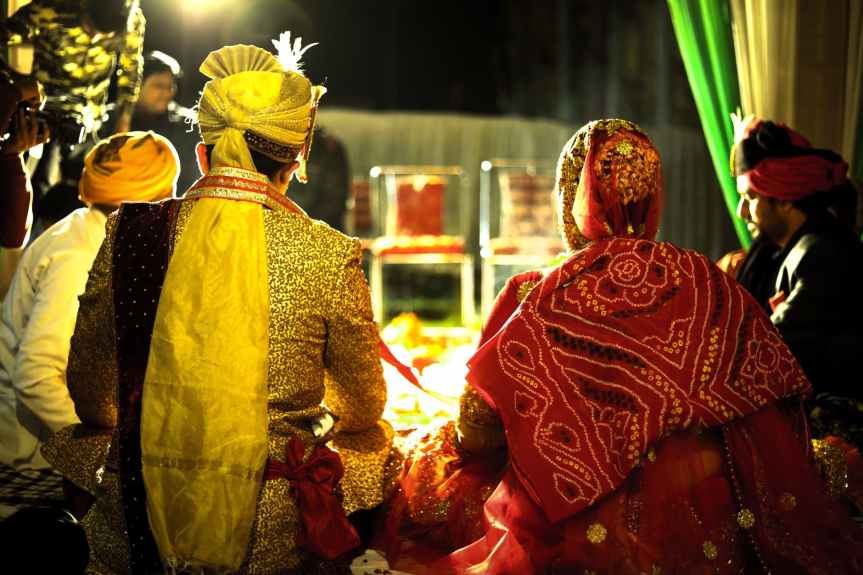
Marriage ceremonies in India are especially spectacular because of the colour, festivity, traditions, and cuisine. People from all over the world travel to see Indian weddings. The vast variety of Indian wedding rites is what makes them so unique. The rituals followed in the northern portion of India differ from those followed in the southern part of India; the east and west have various types of weddings. In India, there are several sorts of weddings, and it is this diversity that we will focus on in this essay.

History Of Marriages In India

If we are going to talk about the many forms of weddings in India, we must first look at the history of marriages in India. India is a country that has traditionally emphasized arranged weddings, a tradition that is now practised in every Indian group, regardless of religion, caste, or status. Previously, two families agreed on the match, and couples were generally married in their youth so that they could adjust better. Mohandas Karamchand Gandhi married Kasturba Gandhi when he was 13 years old, and they were married for 62 years.

The practise of child marriage did not exist in ancient India, but it began later when there were invasions and patriarchy began to rear its ugly head. In reality, in India, rulers organised Swayamvars for their daughters so that they may marry from among the best, ostensibly giving a woman the option. Although author Chitra Banerjee Divakaruni makes it clear in her book The Palace of Illusions that Draupadi was in love with Karna and would have garlanded him if she had the choice, she was forced to tell him that he was not a Kshatriya and could not participate in the Swayamvar because she had to serve her destiny, which was with the Pandavas.

How Many Types Of Marriages Are There In India?

It is difficult to specify the whole range of marriage ceremonies in India. Because there is so much variety within the scope of Hindu marriage. Needless to mention, several sorts of marriage rituals exist in India. Despite the fact that they are all Hindu weddings, a Bengali wedding is not the same as a South Indian or a Maharashtrian wedding. Although the faith is the same and the mantras spoken are identical, the ceremonies, time of wedding, and dress are all extremely different. If we are talking about sorts of weddings in India, we can state that there are nine forms of marriages in our nation.

  1. Hindu Marriage

The Hindu marriage ceremony adheres to Vedic customs, including the three primary rituals of Kanyadaan, Panigrahana, and Saptapadi. The first involves the father giving the bride away, the second has the bride and groom linking hands in front of the fire, and the third involves completing seven circuits around the fire. However, not all rites are observed at every Hindu wedding. Different groups in Kerala and Tamil Nadu, for example, do not have a technique of lighting a fire, and their weddings often begin early in the morning and end by midday. Some rites, such as turmeric ceremony, take place in the morning in Bengal, while the major wedding ceremony takes place in the evening, according to the auspicious hour stated in the Almanac.

North India has the most elaborate wedding rites, which begin with the sagai (engagement) and can last for days when garlands are exchanged, a havan is performed, and the woman is forced to wear the Mangal Sutra. The application of vermillion is more important in East India, and the Lakshmi Narayan Puja is very important in Maharashtra.

All Hindu marriages are registered under the Hindu Marriage Act, 1955 or the Special Marriage Act, 1954.

2. Christian Marriage

Christian weddings are performed in a church by a minister or a priest under the Indian Christian Marriage Act of 1872. The beauty of Christian marriage in India is that a bride frequently chooses to wear the clothing of her culture rather than a gown. So, in Christian marriages in India, the bride wears traditional dress such as sarees, mekhlas, and traditional sarongs, while the groom often wears traditional attire with his best men. Among the types of marriages in India it is a Christian marriage that is a happy amalgam of Indian and Western cultures. The tradition of the feast, the toast and the bouquet are all followed sprinkled with indigenous traditions.

3. Sikh Marriage

Sikh weddings were formerly recorded under the Hindu Marriage Act, but are now registered under the Punjab Sikh Anand Karaj Marriage Act 2018. The Sikh wedding ceremony is basic. It is held in the Gurudwara. Before that, a ceremony called milni is held in which the bride’s and groom’s family meet. The bride and groom then take pheras around Guru Granth Sahib after reciting four short stanzas from their religious texts (Holy Scripture). The bride and groom dress up in extravagant traditional costume, and delicious food is served throughout the ceremonies.

4. Muslim Marriage

A Muslim marriage is governed by the Muslim Personal Law (Shariat) Application Act of 1937. In India, Muslim marriages adhere to Islamic customs. The bride and groom may choose to wear traditional Indian clothes, however the religious ceremony is typically carefully adhered to Islamic standards. The Maulavi performs the wedding ceremony known as the Nikah. Kanydan is also present during a Muslim wedding, followed by the reading of the Koran, the groom’s proposal, and the bride’s acceptance. Biriyani is a traditional wedding dish among Indian Muslims.

5. Parsi Marriage

The Parsi Marriage and Divorce Act of 1936 governs the legalisation and registration of Parsi marriages. Some of the traditions included in a Parsi marriage include the exchanging of silver coins between the bride’s and groom’s family. Following this ritual, the woman assumes the husband’s name. Three days before the wedding, the festivities continue, and on the fourth day, a wedding procession arrives to the bride’s residence, where the marriage is solemnised.

Following the wedding, the couple must eat from the same plate to symbolize their unity.

6. Buddhist Marriage

A Buddhist marriage is most likely the simplest kind of marriage in India. The Special Marriage Act of 1954 governs Buddhist marriages. There are no rigidly prescribed rites or elaborate ceremonies to be observed. True to its religious precepts, a Buddhist marriage stresses spirituality and the fulfilment of vows. A monk or Rinpoche generally performs the engagement solo. On the wedding day, the bride and groom, along with their respective families, attend the temple before the wedding ceremony, which is held in a different location.

A Buddhist wedding is a modest gathering to which only a few close friends and family are invited.

7. Jain Marriage

Buddhists and Jain can register their marriages under the Hindu Marriage Act of 1955 or the Special Marriage Act of 1954. These are two sorts of marriage acts that individuals of many religions might employ. Jain marriages have numerous rites that are comparable to Hindu nuptials, such as pheras and kanyavaran, but they also include a variety of Pujas and aarti.

The most significant tradition is that after the wedding, the bride and groom travel to a Jain Temple with their family members and feed the destitute there.

8. Court Marriage

Inter-caste and inter-faith marriages are a common occurrence in India. Many people who wish to skip religious rites choose judicial marriage under the Special Marriage Act of 1954. A 30-day notice is provided to the registrar, along with the bride and groom’s residence and birth information. Then, on the appointed day, they must appear at the registrar’s office with three witnesses to sign the legal paperwork and read the vows.

9. Mixed marriages

Many brides and grooms follow the rites of both faiths to solemnise their weddings in the case of inter-faith marriages. These marriages are governed by the Special Marriage Act of 1954, although it is customary to have a church wedding in the morning followed by a havan in the evening.

In a country with as diverse customs as India, mind-boggling rituals and traditional rites are unavoidable. However, there are primarily nine sorts of weddings that are widely solemnised in modern India, about which we just reported extensively.

Evils of Dowry

Women for sale?

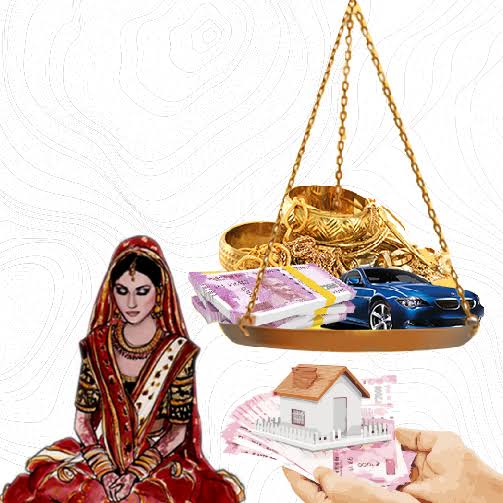
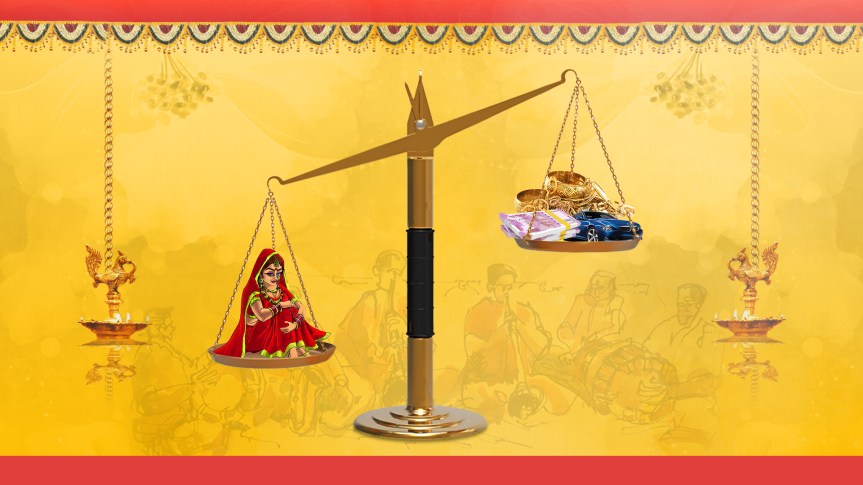
Dowry system is a great evil that afflicts India. Even after seventy three years of independence and freedom, the evil and menace of dowry system prevails and the parents of a bride are forced to give money, jewellery, costly articles etc in dowry to the bridegroom and his family. It has become very difficult to find a suitable match for a girl without payment of huge dowry. The parents of well educated and highly placed boys demand large amount of dowry both in cash and in kind. Brides are burned alive, tortured, harassed and abused to bring more and more money. In many cases a girl commits suicide to escape this devil of dowry.

Dowry is a crime against women and humanity and severe punishment should be meted out to all those who indulge in it. It is an extreme example of greed, selfishness, degeneration and social sin. It is an old, dead, useless and rotten system that should be done away with in one go. It reduces the status of women and girls to that of commodities which can be easily bought and sold. It is a great curse especially for poor parents. They have to borrow, beg or indulge in corrupt practices to have huge amount of money to arrange dowry for their daughters. That is why people feel sad, unhappy, miserable and unfortunate at the birth of a baby girl. That is why many baby girls are killed before or soon after their birth.

Such a social evil on such a vast scale is to be found nowhere else. It is a matter of great national shame and social decadence in this age. This immoral and vile custom has turned us all into an object of ridicule in the eyes of all other civilised nations of the world. People use double speak and double standards. They often condemn dowry in public in no uncertain terms but in practice and private life they demand dowry, arrange marriages purely on the basis of dowry. In ancient days it might have been relevant to some extent as the girls did not inherit property or were confined to the hearth and home. Therefore, to compensate this loss, a girl was given several gifts in cash and kinds by her parents, relatives and well wishers in dowry. These gifts ensured a sort of security to the newly married girls. New women have equal rights. Now giving and receiving dowry has no relevance, no meaning and sense.

Now, it is a cognizable offence under the Dowry Prohibition Act under which if any person who gives or takes dowry is punishable with imprisonment which may extend to six months, or with fine which may extend to five thousand rupees, or with both. Now, apart from the parents and relatives of the bride, the police and the registered social organisations can also lodge a complaint against the party demanding dowry. Moreover, there is no time limit for lodging such complaints. But laws are not enough. They are being violated blatantly and with impunity. There are over seventeen dowry deaths every day in the country and yet very few offenders are caught and punished. Besides these legislative measures, we need other meaningful and effective social measures. All out efforts need to be made to generate an effective public opinion against the evil. More and more heads of panchayats, priests, social groups, women organisations, leaders, elders etc should be involved in the agitation against dowry. The movement should be taken to villages and far flung areas of the country. Social boycott of those indulging in the evil custom can work as an effective deterrent. Group and mass marriages can also be a very useful in this respect. More and more girls should be made to enter schools. They should be trained to stand on their feet. They should be made aware of their social, family and conjugal rights and privileges. They should never feel weak, helpless, inferior or incapable. They should revolt and expose such antisocial elements who demand dowry. They should refuse to marry when dowry is demanded or given. They should wage a relentless war against all sorts of discriminations and unjust male domination.

Three new deaths in a row in Kerala; all three tortured for dowry. Link below:-

https://www.google.com/amp/s/indianexpress.com/article/india/kerala/the-horrors-of-kerala-dowry-deaths-7387077/lite/

The concept of Arranged Marriage

Arranged marriage is a sort of marriage in which the bride and groom are chosen mostly by people other than the couple, especially family members such as parents. A professional matchmaker may be used to find a spouse for a young person in some cultures.

Photo by Secret Garden on Pexels.com

Going for an arranged marriage may seem a little out of date in this day and age of online dating and love affairs that lead to marriage. Surprisingly, this concept has been a part of our culture for centuries and continues to have a significant impact on our society.

Many people choose arranged marriages for a variety of reasons, and according to the findings of a few studies, arranged marriages have the lowest divorce rate in the world.

In an arranged marriage, you hardly know your spouse and must take your time to learn more about them. You enter the partnership with low expectations, and both spouses monitor and alter things in order to make the marriage work.

In truth, you accept the individual for who he or she is and do not have the right to complain that you dated someone else before marrying and that he or she changed after the wedding.

When it comes to arranged marriages, you may be spoiled for choice. You may find the perfect companion online while sitting in the comfort of your own home with your parents, thanks to matrimonial applications and services.

It is not required for your interfering relatives or neighbors to bring you ‘rishta’ and connect you with the family of a potential groom or bride.

You don’t simply marry your partner; you marry his or her entire family, as they say. Your parents are concerned about your prospective spouse’s cultural background, educational qualifications, social standing, and ability to adjust to a new family, all of which contribute to a smoother married life. You have no choice but to accept everything in a love marriage.

Photo by Vinu00edcius Vieira ft on Pexels.com

The concept of an arranged marriage is evolving along with society. Before making a decision, couples want to meet numerous times and discuss their expectations from marriage. Not only that, but even families are fine with a protracted courtship period if it allows the bride and groom to get to know each other better.

Parents, without a doubt, have greater experience with what comes after marriage and know what is best for their children. They have a deeper understanding of you, your needs, and the nuances of your connection.

Whether it’s love or arranged marriage, you must take a leap of faith and hope for a happy married life at the end of the day. Marriage is a gamble, and there is no way to know if it will work out.

What important is that no one should be pushed to make this decision and that they should only tie the knot when they are ready.

DOWRY

“Oh no it’s a girl child” started because of practices like dowry. When parents find out that they have to pay a huge fee in return for their daughter, no one would be happy at the birth of a girl child. We also have the society showing pity to parents of the girl child and saying things like:

“Oh you have a daughter in your family, you must have to pay a lot.”

“Thank God I am blessed with sons; money shall come my way”

Practices like dowry are what made female foeticide come to life. They check the gender of the child and undergo an abortion if it is a girl child.

Did you know that 20 women die every day due to the harassment of dowry?

You may think that practices like dowry only exists in the rural areas, but it also exists in the metropolitan cities. Well-educated families with both the men and the women working also believe in paying dowry.

Let’s talk about the concept of modern-day dowry. People no longer ask for dowry directly. They just expect “gifts.” These “gifts” make the bride’s side of the family go broke. The bride’s family spends so much money on the “gifts” and the marriage that a lot of the time they have to take a loan.

Do you think it is fair that the earnings and savings of parents are going to the groom’s family? I am sure a lot of us have heard sentences like “we need to save gold for the girl’s marriage”. Sentences like these are so normalised because the girl’s family has no option but to save money because the groom’s family needs “gifts”.

Tell me one reason why they deserve all the earnings of the girl’s family?

In old times the practice of dowry started because girls would not earn. So, parents would give the groom’s family dowry in return for taking care of their daughter’s expenses and living. But, even if the wives did not have a job they would still cook, clean, do the chores and support the groom’s family.

Now in modern society, when women do earn on their own what are we still giving the dowry for?

We as a society need to stop the practice of dowry because:

It financially drains the bride’s family: these so-called “gifts” which come as cars, gold, furniture, properties, money costs a lot and financially drains the family.

It makes the men more superior: if we pay the groom so much just because he is a man, the society is going to keep celebrating the birth of a boy child and look down upon the birth of the female child because it will cost them a lot.

It stops the women from growing: so many women are not able to study because the parents cannot afford dowry and education. Girls often sacrifice their dreams because their parents want to pay money to an unknown family.

Now, here me out. If all the bride’s family stop paying dowry or gifts to the groom’s family what will happen?

The girl won’t get married. Right?

Well, there are many countries where they don’t have to pay dowry to get married.

Shocking isn’t it?

Secondly, we all have to stop our so-called obsession with marriages. When a girl child is born why is marriage the only destination. The woman should be first encouraged to be independent on her own, have her own house, be successful without a man.

So can we all as a society stop these useless practices where we pay the groom’s family for no reason? Instead, can we start fulfilling the dreams of our daughters? The practice of dowry will only stop if all of us come together and say no to it.

Marriage – A woman’s perspective

Is marriage considered a new beginning?

What exactly marriage is?

Marriage, often called matrimony or wedlock is a sacred union usually between a man and a woman regulated by all laws and customs. It is true we all need a true companion to live our lives with. No matter how independent and financially stable one becomes, nothing can replace a partner in life be it a man or a woman.

We are all well aware that a woman’s life takes a drastic turn when she gets married. Women are born with an adjusting and caring nature. She is suppose to leave her house and get adjusted in a new surrounding and serve her in laws there. That is what our culture says and we shouldn’t question. But nowhere does our culture says to torture her to the extreme, though tolerance runs in her blood. Why can’t we simply make her life beautiful at the new place? Nowadays, women work. Not all in laws permit this. Even if they do, she is to do all her house chores and then leave the house and return as soon as possible and again do the house chores. Why can’t men lend a hand? There are no gender roles assigned. Both can share their chores so that life gets a little easy.

Husband and wife sharing house chores for a better lifestyle

Women do have dreams of a married life

When a woman gets married, all she prays is to be happy thereafter. She dreams a beautiful life. If she is a working woman, she’ll surely wish to continue to it. Marriage should never be an obstacle. With all the sacrifices, a little she wishes is to be happy. Marriage means union. When the two unite, they must live together and grow together. A supportive husband is all she need. A woman after marriage faces a lot of issues. From sacrifices to challenges, she has to bear it all.

Sacrifices

A woman leaves her house and family where with whom she had lived till then. One fine day she is to move out and serve another family then on. She may also have to resign her job and leave her studies mid way. She may not be able to follow her passion and hobbies in her new place. She loses almost everything which made her happy. Is it not right for her to wish for happiness at least?

Challenges

A married woman has to face a lot of challenges in life. She has to run a family, surely not an easy task. One wrong decision by her may break down the family into bits and pieces. A newly wed bride may have to face severe dowry tortures. That is another big challenge in a woman’s life.

Do watch outA 24 year old girl harassed to death for dowry. https://indianexpress.com/article/india/woman-found-dead-at-in-laws-house-dowry-harassment-suspected-7369770/

Expectations

A woman expects just happiness. A supportive husband and the in laws who loves and cares as their own daughter. What better position could she ever get? She strives to achieve that post from the very first day. That’s what she craves. Just happiness and acceptance.

To conclude, this was all a woman’s perspective of marriage. Men too no doubt face a lot of challenges after marriage. To feed a family by custom becomes a man’s responsibility and till date, it does not differ. It is a tough job indeed. But what a woman percieves and expects out of a marriage should be brought to light. Talking for a woman nowadays is unnecessarily and rebelliously termed as feminism, when it is actually not.

FEAR OF MARRIAGE

In Indian culture, marriage is very important to raise a generation.It is believed that the only goal of girls is to be married to someone .Girls only know one thing that they have to go to someones home after getting married thought to be a good wife, good daughter in law.
Just want their daughter to be good in their homes so that they should feel proud of them.Generally girls learn household work just only because one day they have to go to someones home as a wife and they have to do all those who work there

I think this thing is very wrong here if they have to learn household work then they have to learn for themselves then it is good. The first thinking of Gender inequality comes here in woman’s mind that the parents always forced them to do all these things just because they were female,. Why don’t they teach boys to do all those things?

It is changed in todays world but somewhere it is also the same as before.If boys just serve their own meal then a large argument starts in homes that why does their son serve their own meal. They have two sisters already.It is their job to serve everyone.

Just because of male dominance or patriarchal society. Women are not allowed to do what they like. Women are not allowed for studies just because parents think that if they study their expectations increases and parents faces many difficulties to discover a guy who is good for her.If women wants to go out of town for further studies they are not allowed just because of families in security or societal pressure at what if their daughters get attracted towards someone but why this is only for women? Men are always allowed to do what they want whether it’s a choice whether it’s the studies or whatever they want.It is all just due to thinking of everybody that girls have to do everything or they have to sacrifice their dreams, hobbies, likes and dislike just because they are female they have to go to someones home as a wife after marriage.

Just take an example – mom woke up early in the morning and from that time till late night they are busy in household work and It become daily routine because of this they forget how to enjoy their life.They sacrifice their dreams, hobbies, life for family. They don’t do anything for themselves because there has a lot of guilt attached with taking care of themselves, doing things for themselves. And we don’t even thinks about it. If we ask anyone Does your Mom eat something? Not only children her family members don’t know whether she take her meal or not.Just because we don’t notice this. why don’t we notice? It is just because of what we see from childhood.

In our culture, parents choose a guy for their daughters.How can two strangers live their whole life without knowing each other?

WEDDING MEANS LOVE, LAUGHTER AND HAPPILY EVER AFTER….

How can a normal marriage be?

All the proposal come through someone or other who tells the man’s family about lady or vice versa, then the man’s family would contact girl’s family or vice versa and then they ask for time and day to meet. Then match making occurs and then parents or family decide that both men and lady are made for each other.

Right???

Or what happens when this doesn’t work?

Women went through matrimonial hell. To meet random strangers and matchmakers, face a lot of judgements and criticism that leads to clinical depression and anxiety for them. They have to go through lots of rejection for just human beings.

How can anyone be judged by skin colour, body structure, body weight, height, & education?

And after all these women aren’t allowed to reject someone.If a guy is chosen by her family than women have to marry whether she wanted or not.

Everyone says women also have the right to choose their life partner, they are allowed to do what they want to do in their life. But in reality, just opposite is happening because we obey what parents want because this is what we see from our childhood.

It is not about matrimonial / marriage. It is about the Rights, wishes, likes and dislikes of a Woman who is been suppressed by either family or society. Just because of thinking…

Marriage is a very beautiful journey in everyone’s life. Just because of something we hate it or women thought that after marriage their life is going to hell. some women take it as a Golden cage or some take it as a most beautiful dream .so it depends upon how they think about it

THE CURIOUS CASE OF MARITAL RAPES IN INDIA

Marital rape is the act of indulging in sexual intercourse without proper consent of the partner. People often mistake marital rape as an act of domestic violence or sexual abuse, although a lack of consent is enough in itself.  The right for sexual intercourse within the marriage was considered as a naturally consigned right of the spouse, historically. Many countries around the world have rightly classified non-consensual sexual intercourse as “rape”, yet countries including India regard this intimate assault a perfectly legal crime.

Section 375 of the Indian Penal Code propounds rape as all forms of sexual assault involving non-consensual intercourse with a woman. Yet the Exception 2 to Section 375 absolves the unwilling sexual intercourse between a husband and a wife over fifteen years of age from Section 375’s definition of “rape”. Thus the atrocities and abuses within the sacredness and sacrosanctity of marriage are legalized by the government under this section. This is a clear case of discrimination against female victims by the Indian criminal laws, just because they have been raped by their own husbands.

According to the National Family Health Survey (NFHS) reports, an average Indian woman is 17 times more likely to be subjected to sexual violence from her own husband than others. Such heinous acts go unreported due to the ineffectiveness of the existing laws. Though India is striving hard to empower its female population, it fails to ensure their safety even in the very basic social structure like family. The patriarchal social structure of India is the fundamental reason for the mortifying status of women in Indian society and the persisting ineffectiveness of laws protecting them.

NGOs for the empowerment of women and Constitutional experts are of the opinion that the Exception 2 to Section 375 is a clear violation of Article 14 and Article 21 and insists that its high time India criminalize marital rape and frame new laws for protecting women from intramarital violence. The equality and liberty rights assured for all citizens in Article 14  and Article 21 of the constitution are denied in exception 2 to section 375. Even the UN General Committee has recommended the Indian government to criminalize marital rape back in 2013. A large part of the British influenced Indian laws which need timely amendments remains untouched for the past 73 years since independence. No Indian government has, however, so far shown an active interest in remedying this problem. As a result, many of such primitive practices still exist in our society. 

Mutual understanding key to sustaining a marriage

The key to sustaining a marriage is mutual understanding, cooperation and adjustment. For a marriage to succeed, both the husband and wife must be committed to its success. It will not develop on its own accord, but through the concerted effort of the couple.As husband and wife, we should learn to compromise and share, make sacrifices for each other, and always show concern for each other’s needs. We should also hold on to noble values like patience and forbearance. If all these happen, then you could say marriage is like a heaven.

Many relationships have broken up and many marriages have been torn apart, not because they don’t love each other, but because they don’t understand each other.Understanding means being more aware, sensitive and intuitive with the people we love. But understanding isn’t knowledge alone. Knowledge doesn’t always lead to understanding and without understanding, you won’t be able to love someone indefinitely.Understanding is knowing and being able to relate — it’s being able to comprehend the logic behind someone’s actions. It’s more than “getting” someone though.

A marriage based on love and respect doesn’t just happen. Both spouses have to do their part.Talking with your spouse is one of the best ways to keep your marriage healthy and successful. Be honest about what you’re feeling, but be kind and respectful when you communicate. Part of good communication is being a good listener and taking the time to understand what it is your spouse wants and needs from you. Keep the lines of communication open by talking often, and not just about things like bills and the kids. Share your thoughts and feelings.Appreciate each other, your relationship, your family, and your lives together. Show gratitude when your partner cooks dinner, helps the kids with their homework, or does the grocery shopping. It may help to take a few minutes each evening to tell each other at least one thing you appreciated that day.With work and family responsibilities, it can be easy to lose the romance factor. Plan special dates, either to go out or just stay at home. If you have children, send them on a play date while you relax, talk, and enjoy each other’s company.Alone time is just as important as couple time. Everyone needs time to recharge, think, and enjoy personal interests. That time is often lost when you’re married, especially if you have kids. Go out with friends, take a class, or do volunteer work, whatever you find enriching. When you’re back together with your spouse, you’ll appreciate each other even more.Everyone makes mistakes. Your spouse may hurt your feelings or do something that upsets you, and that may make you angry, even furious. But it’s important to deal with your feelings, let them go, and move on. don’t keep bringing up the past.

Remember to remain committed to your spouse, your family, and the life that you have built together. Support each other emotionally and in everyday ways. You, your spouse, and your relationship may grow and change with time, but these ideas can help your marriage stay successful over the years.

The painful reality is love is just not enough. I work ever day at better understanding the people whom I love. The willingness to understand is very important. It is not always easy, but healthy love is strengthened by the willingness to understand. “Love without understanding will wilt like flowers without water”.

So,please live a happy marriage life ,understand your partner problems ,issues and worries .Because without doing this you don’t have a successful marriage .

THANK U

Live In Relationship!…

In our society, two strangers can sleep together on first-night post marriage. But two loved ones who each other for years can’t live together.
Nowadays in both kinds of marriages, whether love or arranged, people struggle to stay together. In an arranged marriage, two complete strangers are supposed to live together. Every person has his different and unique nature and when two people with exactly opposite nature are tied together, clashes become obvious and they couldn’t take it further. While in case of love marriages, they don’t face this problem as they already know each other well. But meeting a person daily for a few hours and living with a person are two completely different things. We can’t assure that two individuals who loved ones can live happily under one roof. There are so many factors such as compatibility, tolerance, mutual interest and much more which we need to consider before choosing a partner for life. So in such case, live in a relationship could be the solution.
When two persons live together, see each other for 24 hours, there’ll be the behavioural change for sure. Each individual will get to know the strong and weak points of the other. How he/she will behave in simple situations or any tough situations, how the person manages anger and so many insights we can get when we live with a person. We’ve made intimacy before marriage a big taboo? A person has no age to commit a crime but two adults, with mutual consent, can’t come close.

It will definitely help you to make a wise decision to avoid getting hurt in the future. If it goes well, then you can move ahead happily without a second thought and if not, you will always have a plan B. As a human, each one of us has different opinions and different mindsets. So we need to analyse it very much keenly as it is one of the biggest decisions of your life. It is always better to look before you leap!…

Hindu marriage act 1955

Marriage is a socially permitted voluntary, stable and exclusive union between a male and female. In Hindu Religion, Marriage is treated as holy bond between two souls. It is not just union for this life but also for coming life as well. Marriage is treated as one of the essential ‘Sanskaras’. It is essential for every Hindu to marry.

A Hindu Marriage may be solemnized in accordance with the customary rites and ceremonies of either party to the marriage. There are some conditions through which Hindu marriage can be solemnized –
1) A Hindu marriage duly can be solemnized with customary rites and ceremonies of either party.
2) If the ceremony includes saptapadi the marriage become complete and it binds both parties immediately after seventh step is complete.
These ceremonies vary according to custom.
For e.g. – In Nair caste Kerala, the bridegroom and bride wear a pair of cloth given by bridegroom side which is an important customary element.
Tying of a thread around brides’ neck by bridegroom is another important custom in Hindus.

Section 8 of HMA 1955 defines proof of a Hindu Marriage are as follows-
 The state government is authorized to make rules for the registration of marriage.
 Such rules can be related to register their marriage to registrar as may be prescribed.
 It basically depends on state government to make registration of marriage compulsory in state or not. If any such direction of registration is passed by state gout then it is necessary to register their marriage otherwise it shall be punishable with fine which may extend to 25 rupees.
 Section 8(4) provides that register must be maintained by registrar and open for inspection and can be available as evidence in reasonable time.
Recently, SC has directed the centre and state gout to make necessary amendments in regard to compulsory registration of marriages by a nodal officer of their area. This compulsory registration of marriage would provide proof to the wives who failed to provide documentary proof of marriages in maintenance of suit.

Section 9 of HMA 1955 gives the explanation of Restitution of Conjugal Rights i.e. when either husband or wife evacuate of each other, the aggrieved party may apply to restitution of conjugal rights by petition to the court. And if the court believes to the truth of statement, then court can order decree of Restitution of conjugal rights. The decree of restitution of conjugal rights will be issued under order XXI rule of 32 of C.P.C.

Hindu Marriage joins two individuals together in a bond of living together. It is a union between two spouses which is completed with proper rituals and ceremonies. But it is observed under every form of marriage women’s are given lower status then men. The instances are women were kindnapped, sold in form of gifts etc. In Previous time, Marriage is considered even after the death of husband and remarriage of widows are not allowed. But with change in time the concept of divorce came up. After so much modernization still divorced was too radical for the Indian society. But with recent culture, online date or love marriage was recognized. Now, people love to do online dating on various matrimonial sites like Jewansathi.com and choose their life partner.