
“ATITHI DEVO BHAVA” – Part 2.

Some points prepared by the Ministry of Tourism & Government of India, Part – 2:

The Seven Point of Atithi Devo Bhavah Programme:

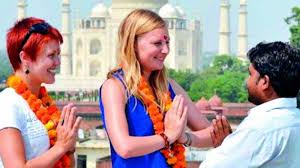
Atithi Devo Bhavah is a programme of hospitality and training. Sensitization- sensitize various sections of the tourism industry about how each of them has to contribute for the growth of the tourism industry and how they will benefit from the programme .

Training and Induction- explaining to them the needs and expectations of the tourist, how they should respond and behave in order to satisfy the needs and expectations of the tourist.

Motivation- must be generated to participate in this programme through various measures e.g. Awards for the best worker in the segment. An enthused worker can do wonders. Certification to ensure standards at various stages.

Feedback- Feedback must be obtained from tourists about the service they have received and the experience they have had, in order to improve the training programme on a continuous basis.

General Awareness- The mass media communication campaign must be undertaken to create general among the public about the necessity and the benefits of the Atithi Devo Bhavah Programme.

Ownership-The Atithi Devo Bhavah programme is a movement which will urge all segments of the Indian society to adopt, and look upon it as their own.
The Charter of the Programme:

Hygiene and Cleanliness: Hygiene and Cleanliness shall cover the areas of product, for example, vehicles like taxies, hotel rooms, restaurants, shops, etc., personal hygiene and cleanliness of the person providing the service and cleanliness of the monuments / places of tourist interest.

Conduct and Behaviour: The person concerned, for e.g. the taxi driver / hotel employee shall behave in a courteous and polite manner towards tourists.

Integrity and Honesty: The person providing service to the foreign tourists should display honesty and integrity.

Safety and Security: The safety and security of the tourists shall be ensured.

PR Road Shows : Besides training, PR Road shows are also undertaken with the tourism trade in order to generate active participation and create an ownership of the Atithi Devo Bhavah programme. Right now the contact programmes are being conducted in several cities.

Mass Media Communication : Communication in newspapers, TV, cinema and outdoors is also carried out to create general awareness about the Atithi Devo Bhavah programme and to communicate to key stakeholders as to how it is in their own interest that foreign tourists be treated well so that they will go back happily carrying fond memories.

Courtesy : Ministry of Tourism Government of India 2004, webmaster@incredibleindia.org

Image Source -google.

ECO TOURISM “

Eco tourism means responsible travel to natural areas conserving the environment and improving the well being of local people.

The Ecotourism Society of India is dedicated to the promotion of sustainable development in tourism and to develop responsible practices in and among the tourism fraternity. It works towards continuous identification of new ecotourism destinations, strengthening ecotourism and making India a preferred ecotourism destination. Its objectives are : –

Make strategy for ensuring long-term (perpetual) sustenance of the environment. Work with empowered bodies to establish carrying capacity and sustainable tourism practices which include conservation of nature and wildlife, and allow ENS local communities to benefit from tourism. To balance tourists and visitors’ numbers and ensure good tourism practices that would allow nature to re-generate itself. To work with government bodies to develop policies and code of conduct for promotion of sustainable tourism, and help implement the same. To work towards certification of tourism service providers. To act as watchdog for excessive consumption of natural resources and any negative impact in the tourism sector. To support research in tourism environment related areas.

Work with service providers to enhance quality of their product and eco-friendly services. Encourage use of appropriate local practices, materials, art, craft, architecture, food. Encourage minimal conspicuous consumption and prevent excessive consumption of energy. Encourage energy saving practices, water harvesting, use of solar and other natural energy sources. Encourage good waste management practices especially non-biodegradable materials. Encourage low pollution-generating practices to minimize carbon footprint. Organise training and other activities to create awareness on ecotourism, sustainable and responsible tourism. To collaborate with like-minded bodies and implement ecotourism objectives all over the world.
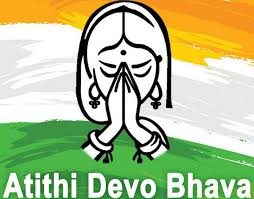
“ATITHI DEVO BHAVA” – Part 1.

Land of all Seasons:

India is the current tourism hot spot. The other epithets used while referring to the nation include ‘Destination of the Millennium’ and ‘Land of All Seasons’. Spanning an area of 3,287,263 square kilometers, India is a vast country and includes dry desert areas, evergreen forests, snowy Himalayas, a long coast, and fertile plains.The natural beauty and cultural diversity of the place echoes a rich tradition. India flaunts with equal grandeur bays and beaches, deserts and mountains, enigmatic green valleys and backwaters. There exists in India a comfortable juxtaposition of contrasts- the existence of bustling haats and swanky malls, emergence of nuclear families but a reluctance to let go on the joint family system, a rush to embrace modernity yet a firm resolve to preserve traditions; destination for both ayurveda and modern medical tourism; bustling communities and indigenous tribes.

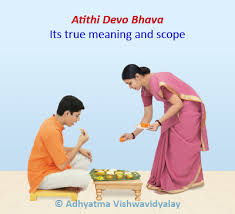
India has a rich heritage and culture of warm hospitality. In India it is believed that honouring guests equals to honouring God. A guest is welcomed into our home and hearth with cheerful gratitude. The Sanskrit adage ‘atithi devo bhava’ dictates the respect granted to guests in India. This wonderful tradition of our country has become the unique selling point of the modern tourism industry. Ministry of Tourism, Government of India has pioneered an initiative that will help tap into the full potential of tourism in India. Ministry of Tourism, Government of India has introduced “Atithi Devo Bhavah Program”- a nation wide campaign that aims at sensitizing key stakeholders towards tourists, through a process of training and orientation. The endeavour is to boost tourism in India, which in turn would act as a catalyst for India’s economic growth.

The ‘Incredible India’ Campaign has been launched to create awareness about the effects of tourism and sensitizing people about preservation of our rich heritage and culture, cleanliness and warm hospitality. It also re-instills a sense of responsibility towards tourists and reinforces the confidence of foreign tourists towards India as a preferred holiday destination.

Some points prepared by the Ministry of Tourism, Government of India, Part -1:

‘Guest Is God – Atithi Devo Bhavah’

Image Source -google.

As the old saying goes, “Treat others as you would like to be treated yourself.” That is the essence of Atithi Devo Bhavah campaign. And for that to happen, we need to change our attitude towards tourists. Some of us have lost touch with the hospitality that we were famous for. Let us bring that warmth back. Let us truly embrace the spirit of Atithi Devo Bhavah.

WHY ATITHI DEVO BHAVAH? : Last year we had 3.3 million visitors, but when you consider that Singapore gets 7 million a year, Thailand 9.6 million a year and Malaysia 11.5 million, it is a small number. There is no reason why we can’t aim to increase our numbers by 100%. And that too would be just a beginning. However to do this we need to change our attitude towards those who visit us. Often tourists are mistreated, cheated and rudely dealt with. It is simple logic: if someone in a house is rude to you, as a guest, you don’t encourage your friends and relations to go there. This is perhaps the reason why, in spite of an incredible wealth of tourist spots, cultural attractions, natural wonders and destinations for the soul, India still isn’t amongst the top 15 tourist destinations of the world. The time has definitely come to get together to change this.

INSPIRATION BEHIND ATITHI DEVO BHAVAH ? : Respect has always been an integral part of the Indian soul. From time immemorial we have always respected our teachers, our elders, our parents and our guests. Perhaps this is why a great Indian Emperor once observed-‘In Hindustan our manner is very respectful and our hearts are always open’. In many ways, at that time India was the ultimate destination for the enlightened travellers. Now, thousands of years later, we can when bring that golden age back again. This inspired us to go back to those years, when Indian hospitality set the standard for the world. And we found the keystone of what we want to do ,

Or guest is blessed, Our visitor is God. That was how we arrived at our mission called ‘Atithi Devo Bhavah’.

To be continued………………

Do You Know This Indian Professional ‘GOLFER’?

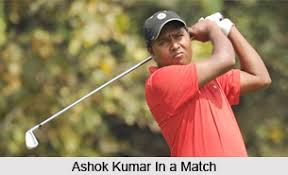
Ashok Kumar.

Rags- to- Riches story of Ashok kumar, who is a Professional Golfer of India.

Ashok Kumar, one of the country’s leading golfers who rose from the ranks of a caddie, remembers his very humble beginnings very distinctly. “The reason I am here in this swanky restaurant of the Oberoi, sipping coffee with you is because of golf. It has brought me name, fame and money and all that I could possibly ask for in life. Without golf, I am a zero ,” said the 27-year-old golfer with rare candour in a chat with Kalyan Ashok, a sports journalist working with Sportstar, one of India’s leading sports weeklies.

India’s No.3 golfer may not exactly be rolling in luxury at the moment, but he definitely leads a comfortable life-a far cry from the days when he used to sleep in a stable. “It’s destiny that brought me to this stage in life and I can’t sav that I deserve it, but it’s God’s gift to me through golf, sald Ashok. Not the one to forget his past, Ashok Kumar keeps reminding himself how he came up in life.

His story is stranger than fiction. Ashok was born into a poor family in Bihar that struggled to make both ends meet. (He has four brothers and two sisters.) In 1988, his parents sent him away with his elder brother to Delhi and he worked as an errand boy at the Jaipur Polo Club.

“I used to work in the day assisting my brother and sleep in the stable at night. The club also had the Air Force golf course and I wandered on to it one day and watched the players and caddies. I thought of becoming a caddie, but I was too young then. I did not get the job, but the club hired me a few years later,” recalls Ashok. It was then that he took to golf. He started practising in the club when no one was around. However, he was caught playing one day and was suspended from his job, as caddies were not allowed to practise golf.

“I was back to square one. Then I went away to help a lorry owner who was transporting sand. I remember the days when I had to pay five rupees to hire a blanket during winter and sleep in Connaught Place,” Ashok said wistfully.

Six months later, when things cooled down, he moved back to the Air Force golt course and became a caddie to Amit Luthra, who was India’s top golfer and an Asian Games gold medallist. “Luthra saab spoke to the club authorities and got me in,” Ashok said with gratitude writ large on his face.

Ashok learnt a lot from Luthra and one day he challenged his mentor to a play-of “I don’t know what got into my head and I told him that I will beat him, to which Luthraji said that if I did that he would waive a month’s caddie fee. We played on the road, but I lost,” Ashok smiled.

Luthra, however, was very impressed with the young man’s talent and got him enrolled at the Delhi Golf Club, which allowed caddies to play. Seizing this opportunity with both hands, Ashok went on to improve his game by leaps and bounds and in 1995, DGC selected him to play in the All India Junior tournament in Kolkata.

Image Source – google.

“I didn’t know where Kolkata was. I thought it was outside the country! I travelled in an unreserved compartment, spending most of the time sitting in the bathroom or just outside as there was no place elsewhere.” In Kolkata, he finished third and in the next two years he became the Junior Champion of the country. In 2000, he moved to the amateur ranks and two years later he became a pro, finishing his first season as India’s No.5 golf player. Riding a wave of success, Ashok held the No.1 spot in 2006 and 2008 and currently (2010) he is ranked No.3.

The moment he cherishes the most as a player is not the time when he won his first major title but when he finished 18th in the Hero Honda-DLF Tournament in 2002. It fetched him a cheque of Rs. 1 lakh. “I never looked back after that,”Ashok remarked.

In the early part of 2010, Ashok’s golfing career got a boost when the Bangalore- based business and software company, Kaseya India, run by golf enthusiast, Mr. Girish Krishnamurthy, decided to sponsor him. “I am a simple guy and with Kaseya around to take care of other things, I can concentrate better on my game now,” Ashok says with determination as well as gratitude. It is his ardent wish that all golf links in the country should support caddies, as he feels that many of them have a lot of inherent talent simply waiting to be tapped.

Ashok has modelled his game on his golfing idol, Tiger Woods. Incidentally, he had met Tiger when he was a caddie to Arjun Atwal in Bangkok a decade ago. “He hugged me when he was introduced by Atwal as a top amateur from India. I asked him for his advice, to which the legendary golfer simply said-‘don’t think of beating others, they should think of beating you,” Ashok’s eyes sparkled when he recalled his meeting with Tiger.

He faithfully follows that advice from the maestro and hopes to play with him one day. “For the moment, I eat, drink and sleep golf. There’s no distraction in my life. I relax with some music and watch CDs of Tiger Woods,” Ashok concluded.

An Adventure in a ‘FOREST’.

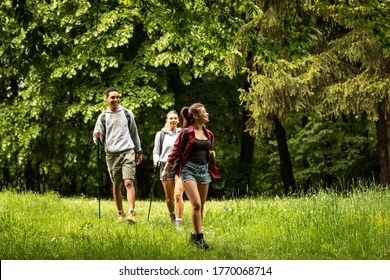
My father’s ancestral village of Rampur, on the left bank of the Ganga at the Himalayan foothills, has a long stretch of forest which has not been afflicted by deforestation yet. Without exception, my vacations here have always been very exciting.

One cold December, my kid brother went missing. My father was at his wit’s end trying to get someone to accompany him to the forest.The village elders were divided in their opinion on the course of action. My mother was too shocked to speak. He was last seen playing near the trees at the end of the field in front of our house. Then some local boys saw him disappearing further into the area which had denser growth. It had been more than an hour since he had vanished. Nobody could have imagined such audacity from an eight year old who had been strictly instructed not to go beyond the field.

Ten of us left for the forest at three in the afternoon. My mother was most unwilling to let me go. While I managed to convince my mother, some elders were not too happy with my presence, but nothing discouraged my optimistic father. As we kept walking into the denser zones of the forest, ominous visions began to cloud our imagination. Calling out my brother’s name loudly had been futile.

The silence of the forest was punctuated by the shrill notes of various insects and distant growls. The approaching darkness was waking them up. Though we had both fire and torches along with guns, the village elders were becoming sceptical about proceeding further without more help. My father, though nervous by this time, refused to give up.

We had reached a small stream. Suddenly one of the elders asked us to stand still. The approaching dusk forced us to follow his example, and we witnessed a herd of elephants crossing the stream. The leader, to our horror, suddenly stopped and raised his trunk in the air, trying to locate us, I presumed! My father was sweating. Mahato, the shooter, was getting his gun into position almost without any obvious movement. For a moment I thought the leader of the herd was staring at me, but thankfully, they moved on and we heaved a sigh of relief.

Suddenly the shrill cry of a child pierced our ears along with the growl of some wild beast. Fearing the obvious fatal end, we rushed towards that direction. In about seven minutes, we reached an open area to find Ratan standing at a distance of barely five feet from a tigress. Handsomely built, the sinewy and powerful beast seemed to be more interested in sniffing my brother. My brother was speechless and was not even aware of our presence behind him. Before Mahato could get ready, the tigress, aware of and disturbed by our presence, snarled and disappeared into the deep forest.

My father rushed towards Ratan, who fainted at his mere touch. The tigress, perhaps a mother, had spared my brother. I hope, we men too, spare the tigresses.

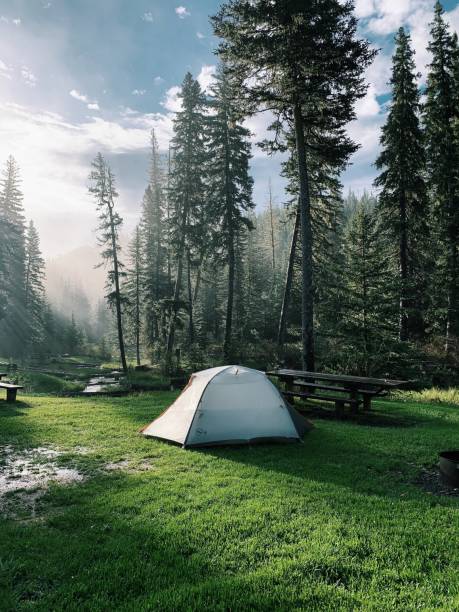
So, this is my Adventurous experience in forest. Because you know what , Forests are essential for life on Earth. Three hundred million people worldwide live in forests and 1.6 billion depend directly on them for their livelihoods. Forests also provide habitat for a vast array of plants and animals, many of which are still undiscovered. They inspire wonder and provide places for recreation. They supply the oxygen we need to survive. They provide the timber for products we use every day.

Photo taken in Rockerville, United States

Forest conservation act:
Forests are an important resource that nature can bestow upon mankind. Therefore, it is the duty of every citizen to preserve the ecosystems of forests. But due to rapid deforestation, the cycle of nature is itself being disrupted. Therefore, the need to bring about a law to ensure the preservation of forest was needed.

One of the first legal drafts to protect forest tracts was the Indian Forest Act, 1865 replaced by a 1927 version of the same act. However, it was more geared towards protecting the commercial interests of the British Empire in India.

The act gave authority to the British to restrict tribal activities by levying taxes on timber and forest services. In other words, it mainly regulated the cutting of timber and flow of raw materials rather than protecting forests.

Upon independence, the President of India enforced the Forest (Conservation) Ordinance in 1980 which was later repealed by virtue of Section 5 of the Forest (Conservation) Act, 1980. Under the 1980 Act, the restriction was made on the use of the forests for non-forest purposes.

How I Spend An Evening?

“Evening time” is the end of the day, And at this time we try to relax our body and mind, and every individual has a different way of relaxing oneself. Every person has a different way of greeting others. The Internet and mobile phones change our life completely. In the past few months, we have spent most of our time with friends and families more, but Today we use mobile phones all day and night. In other words, Today we can not live without a mobile phone; not only that, since social media has come, every person likes chatting in social media instead of talking to each other.

It’s impossible to even imagine how our life would be if there were no various tasty snacks. Most of us get back home, or complete our work by evening and relax with a cup of tea or coffee with something to munch on. The time where you have the deepest conversation or maybe end up overthinking. Snack is loved by people of all ages because it brings us a good taste, good mood and helps us heal from harms. Good food always brings good mood.

We face hard times! I am an optimistic and happy-go-lucky student of Class VIII who has firm faith in the good life, but my parents want me to stay ahead of everybody in this competitive world. There was a time when coming back after school meant joy to me. Four- thirty in the afternoon was good food, and seven in the evening meant time for studies. There was the beautiful period from four- thirty to seven in the evening when it was either cricket or football for me! How times have changed!

Ever since I reached high school, tuitions have been encroaching on my life like a desert encroaches upon a green pasture to destroy it. Well, it is not that tuitions are not important. Nor can I complain of a lack of dedication in my tuition teachers, but what I fail to comprehend is my parents’ obsession to ensure that this giant python called tuitions should develop a crush for me (pun intended!).

If I tell my dad that I am being made to take tuitions when I am quite comfortable with the subject, he gives a mature smile which betrays his being intrigued at my attempts to reason. He is perhaps under the impression that evolution is yet to catch with me. The final result is that he ensures that I meekly visit the concerned tutorial. up Thus my first tuition begins at 5 o’clock. From then to 6.30, I cram the concepts of organic and inorganic Chemistry. I leave this coaching sharp at 6.35 pm to reach another tutorial located 2 kilometres away before 7 pm. There begins my struggle with Shakespeare. It is not that I do not enjoy Shakespeare, but I do not have much stamina left by the time I reach the English tuition.

Image Source – google

My parents fail to recognise that the best part of a student’s waking hours is spent in school. And after that if I am sent to continuous tuition classes, when do I study myself? Moreover, we are taught to play for good health. If a boy does his schooling from ten to four and then does his tuitions from five to nine, when does he play to maintain good health? Yes, one may definitely expect destiny to play with my health. Thus, till 9 pm I struggle to stay awake in my English tuition and then I complete my projects, courtesy the Internet, for an hour after I reach home at about nine-thirty in the night!

I have dinner at ten-thirty which is when I also surf the television channels to locate some interesting entertainment. When I finally go to sleep at about eleven, I browse through some interesting book. My teachers always stress that reading builds character. I agree! But I can’t read for long! Although my school begins at ten am although I have Geography tuitions from 7.30 am to 9.00 am. Ah! So much for the sweet happiness of childhood!

A Memorable Spooky Experience.

Image Source- google.

Ok, i will narrate my experience you can decide whether it was paranormal or not. Sorry some of you may find it lengthy. I am a big believer of paranormal, and may be this is the reason that i have had a couple of paranormal experiences.

Who Knocks?’ ‘I who was beautiful Beyond all dreams to restore, I from the roots of the dark thorn am hither And knock on the door.’

Lines from Walter De La Mare’s The Ghost haunt my memory as I take a walk back to the past. People usually refer to the past as dead and buried. Is it really so?

It was a cold night in Deogarh, Jharkhand. I was in Class V then. We were supposed to go to a party at a friend’s house about one-and-a-half kilometres away. My mother was working in the local school. Mum and Dad were supposed to reach the house of Barry Uncle, our host while I was to be accompanied by our caretaker, Ramu.

It was a moonlit night. Deogarh is surrounded by lovely hills and trees. The silhouette of trees in the moonlight is one combination I love. Ramu had an upset stomach after eating thirty-seven pakoras the day before. So I was going alone but I did not feel lonely. The moon was travelling with me. I could see it moving across the branches as I walked. The gentle laughter of a lady suddenly pierced the charming silence of the night air.

Image Source- google.

A girl in bright red appeared suddenly, ‘Why do you keep looking up to your left while you walk?

I was looking at the moon,’ I answered, rather embarrassed at having my romance with the moon noticed.

The girl asked, You are going to the party, right?”

“How do you know?

“It is a small place. People know each other. I will give you company.”

“So kind of you.

So we talked, laughed and joked for the next twenty minutes. 1 noticed her carefully. Red blouse, red and white skirt, light make up, bright red shoes. A small red bag. The lipstick was a bit too bright. She had amazing grace in the way she walked. Her lively but gentle laughter had the freshness of a mountain spring. We were discussing hobbies. She said she liked collecting old photographs. Why old?’ I asked.

She looked at me queerly and answered, ‘Old photographs have lots of hidden and forgotten stories.

“All right, I said.

Barry Uncle’s house was decorated beautifully. Music and lights welcomed us. Suddenly, the girl stopped smiling. She turned around. ‘What is wrong?’ I asked her.

I prefer the moonlight. I will not go in,’ she said and started walking away.

At least take this jacket,’ I offered her. She was my height and I knew about chivalry. She gave me a mysterious smile, wore the jacket, and walked into the darkness.

In the party, I grooved to the music for some time. I needed to have a wash. While moving towards the washroom, I suddenly came across a photograph of Barry Uncle with the stranger I had just met. “That’s my niece, Mary. She died two years ago in a tragic accident,’ Barry Uncle said, with a note of sadness in his voice. She is buried in the graveyard behind St Michael’s Church,’ he added.

This is indeed an experience that I would not dare to forget……………….

Do You Remember This Leader?

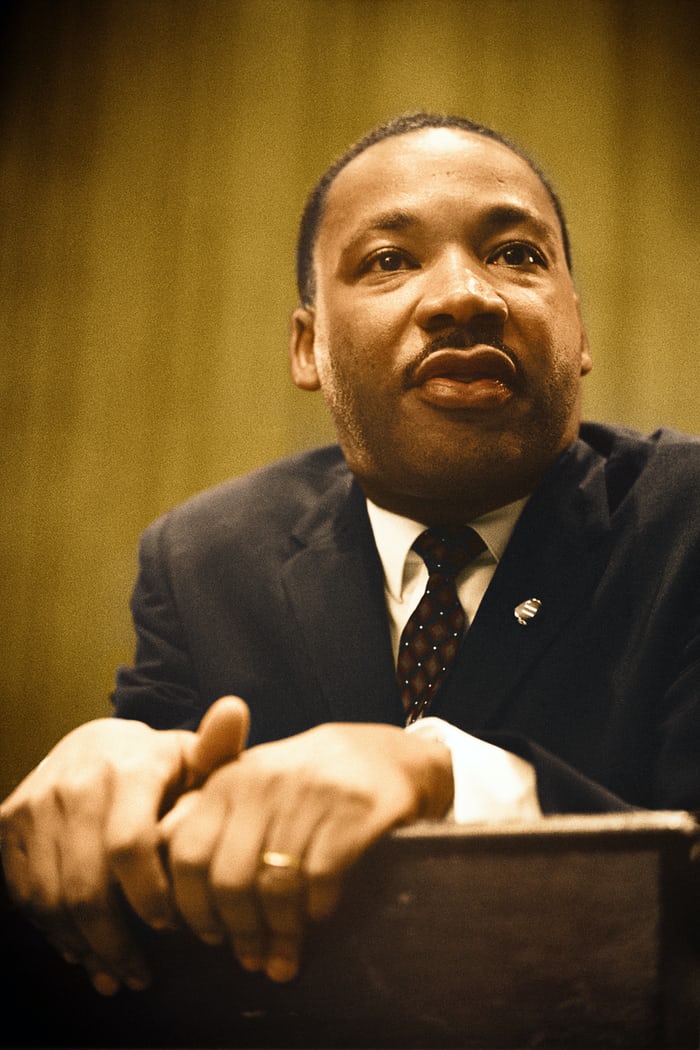
MARTIN LUTHER KING JR.

Also Known As:- MLK Jr. Michael Luther King, Jr.

Born: January 15, 1929 Atlanta Georgia

Died: April 4, 1968 Memphis Tennessee

Awards And Honors: Grammy Award (1970) Nobel Prize (1964)Notable Works: “I Have A Dream”

Occupation – Baptist, minister,activist

Known for – Civil rights movement, Peace movement

Awards – Nobel Peace Prize (1964)
Presidential Medal of Freedom (posthumously, 1977)
Congressional Gold Medal (posthumously, 2004)

About his Life:

There are people who are able to defeat the ravages of the eternal enemy-time and continue to live on in the minds of men, There are a select few who challenge the limitations of a system that fails to deliver justice. Men like Martin Luther King Jr are soldiers of God who do not care for the consequences when it comes to fighting for the truth. King was born on 15 January 1929, at Atlanta and died on 4 April 1968, at Memphis. Not a very long life, but what he achieved during this time is enviable. Few men reach such dazzling heights of spiritual success even in several lives.

King was a US civil rights leader. The son and grandson of Baptist teachers, King was deeply influenced by the idea of non-violence while in college. The influence of Mahatma Gandhi was obvious. Ordained a Baptist minister himself in 1954, he became pastor of a church in Montgomery. University. He was elected to head the Montgomery Improvement Association whose boycott efforts eventually ended the city’s policies of racial discrimination on public transportation. 1955, he received a doctorate from Boston University. He was elected to head the Montgomery improvement association whose boycott efforts eventually ended the city’s policies of racial discrimination on public transportation.

History:

In 1957, he formed the Southern Christian Leadership Conference and began lecturing nationwide, urging active non-violence to achieve civil rights for African Americans. In 1960, he was back in Atlanta to become co-pastor of Ebenezer Baptist Church with his father.

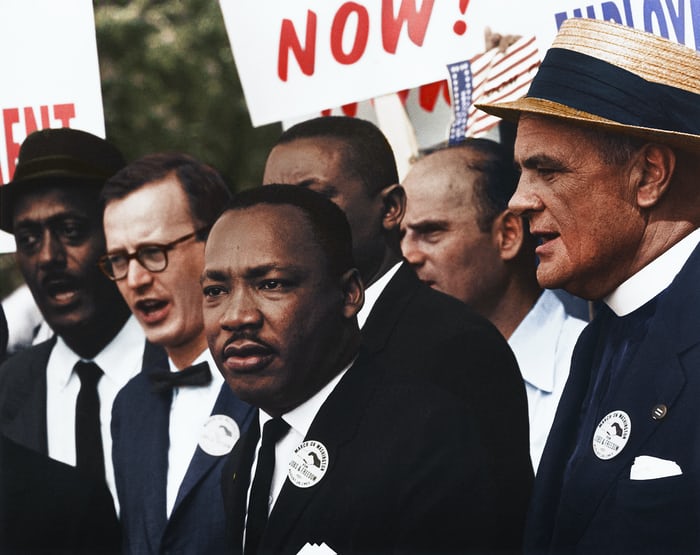
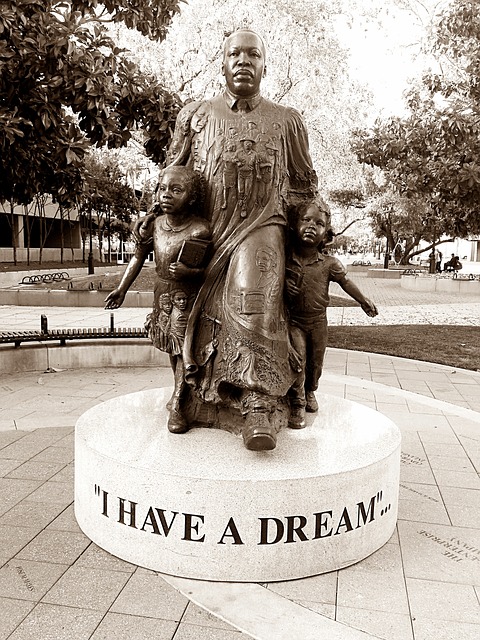
He was arrested and jailed for protesting segregation at a lunch counter. The case drew national attention and none other than the then presidential candidate, John F Kennedy, had to intercede to obtain his release. In 1963 King helped organise the March on Washington, an assembly of more than 200,000 protestors, at which he made his famous ‘I have a dream’ speech. This powerful and moving speech celebrates humanity as one big family where being human is more important than being black or white. The march influenced the passage of the Civil Rights Act of 1964. King was awarded the 1964 Nobel Prize for Peace.

In 1965, he was criticised from within the civil-rights movement for yielding to state troopers at a march in Selma and for failing in the effort to change Chicago’s housing segregation policies. Thereafter, he broadened his advocacy, addressing the plight of the poor of all races and opposing the Vietnam War. In 1968, he went to Memphis to support a strike by sanitation workers. There, on April 4, he was assassinated by James Earl Ray. A U.S. national holiday is celebrated in King’s honour on the third Monday of January in the USA. King, like Gandhi, was a gentle yet powerful prophet of a non- violent revolution who sacrificed his life for his principles. King lives through his work and words in the hearts of millions, and his untiring zeal to achieve justice motivates individuals to keep trying. The kind of following King has today undoubtedly makes us feel, ‘when one is willing, the Gods join in’. (Aeschylus).

MK day:After years of campaigning by activists, members of Congress and Coretta Scott King, among others, in 1983 President Ronald Reagan signed a bill creating a U.S. federal holiday in honor of King.Observed on the third Monday of January, Martin Luther King Day was first celebrated in 1986.

Assassination of Martin Luther King:

The events in Selma deepened a growing rift between Martin Luther King, Jr. and young radicals who repudiated his nonviolent methods and commitment to working within the established political framework.

As more militant Black leaders such as Stokely Carmichael rose to prominence, King broadened the scope of his activism to address issues such as the Vietnam War and poverty among Americans of all races. In 1967, King and the SCLC embarked on an ambitious program known as the Poor People’s Campaign, which was to include a massive march on the capital.

On the evening of April 4, 1968, Martin Luther King was assassinated. He was fatally shot while standing on the balcony of a motel in Memphis, where King had traveled to support a sanitation workers’ strike. In the wake of his death, a wave of riots swept major cities across the country, while President Johnson declared a national day of mourning.

James Earl Ray, an escaped convict and known racist, pleaded guilty to the murder and was sentenced to 99 years in prison. He later recanted his confession and gained some unlikely advocates, including members of the King family, before his death in 1998.

Martin Luther king Jr. Quotes:

“The ultimate measure of a man is not where he stands in moments of comfort and convenience, but where he stands at times of challenge and controversy.”

“Freedom is never voluntarily given by the oppressor; it must be demanded by the oppressed.”

“The time is always right to do what is right.”

“True peace is not merely the absence of tension; it is the presence of justice.”

“Our lives begin to end the day we become silent about things that matter.”

“Free at last, Free at last, Thank God almighty we are free at last.”

“Faith is taking the first step even when you don’t see the whole staircase.”

“In the end, we will remember not the words of our enemies, but the silence of our friends.”

“I believe that unarmed truth and unconditional love will have the final word in reality. This is why right, temporarily defeated, is stronger than evil triumphant.”

“I have decided to stick with love. Hate is too great a burden to bear.”

“Be a bush if you can’t be a tree. If you can’t be a highway, just be a trail. If you can’t be a sun, be a star. For it isn’t by size that you win or fail. Be the best of whatever you are.”

Psychological facts that you don’t know?

What are some psychological facts that people don’t know?

Research shows we are more interested in learning about psychological facts that we can use to improve our understanding of our surroundings or can relate to our every day experience. So learning an intriguing psychological fact that I can’t connect to my life, can’t understand easily or explain to my friends is something I consider less important. So here go the facts that are no way something out of the universe and people don’t know. They are rather facts that we all know but we just need to be told once again to be amused!!!

1-you dream TOO MUCH about becoming something, you may lose the motivation. This is because dreaming too much makes the destination all too familiar and achievable.

2:If girls like you, they like you even when you see them staring.

3Talking with someone for a long time increases your chances of falling in love with him.

4If the friendship lasts more than 7 years, it has a high probability of lasting a lifetime.

5Our fashion and dressing understanding is directly related to our brain. Our confidence increases when we wear nice clothes.

6.People who eat a lot of vows are more honest and loyal with their friends.

7.According to many research, children born in the month of May are heavier in weight than children born in other months.

8.Money can give happiness to a person but only to a certain extent. Studies show that when our income increases to a certain point, we feel happier. After that point money does not matter that much.

9.Research shows that we are more satisfied when we spend money on experiences (such as travel, movies, sports, etc.) rather than buying property. Spending money on experiences makes us feel more sociable and stress-free.

10.You can only remember 3-4 things at a time.

.Being alone for a long time or smoking 15 cigarettes a day, both are equally dangerous.

.When you start missing a loved one, your mind suddenly starts to become depressed.

.People who react rapidly to Stupid questions or situations are more intelligent by nature.

.Online dating companies and online shopping companies use the same type of psychological pattern.Humans think the same when choosing objects and partners.

.People who get angry very fast are under deep stress at that time and they need love and belonging immediately.

.People who talk to themselves are smart by nature.People with sharp intelligence and high IQ levels are more likely to sleep late at night.

.When people talk in groups, 80% decide that they are complaining about someone’s evil or complaint.
.Our mind feels any kind of rejections (non-acceptance) as physical pain.
.According to an American study, about two serial killers are born in November more than any other month.
.People seem more attractive when they speak with full confidence and truth.


.When people want to leave a discussion or conversation, they repeatedly move their feet back and forth, or start moving their legs around.
.When you like someone wholeheartedly, it is almost impossible to lie in front of him.
.When we sleep too much, we start sleeping more.
.When we constantly think negative things, our body starts feeling like sick.
.We keep ourselves happy by keeping ourselves busy with work. The reason is because when we are busy, our brain prevents us from thinking about the negative things in our lives.


.The addiction of eating chocolate and shopping online is also dangerous than smoking, drugs and sex addiction.
.Restaurants use red, orange and yellow colors in their branding because these colors make us feel hungry.
.People who are adept at lying are also adept at detecting the lies of others.
.Our brain does not consider those works which are too long to be completed. Our brain gives priority to the works whose time limit is above the head.
.Most people speak the truth when talking late at night because being tired, the brain does not think much and respond honestly.
.We feel relaxed and refreshed when someone hugs. When someone hugs you for more than 20 seconds, we start trusting that person more.

.To laugh at a joke our brain has to work in five different parts.

.Marrying your best friend reduces the risk of divorce by up to 70% and increases the likelihood that this marriage will last a lifetime.

.When people who speak more than one language change their language from one language to another, their gestures also change with it.

When we see something as our right, then it is more likely that we buy it.Women whose friends have more number of men are more cool and in good mood.

.If you repeatedly talk about your goals, it reduces the chances of that goal being successful.This is because you lose motivation…….Sometimes we are more happy thinking about something than doing something………People who spontaneously criticize or criticize others lack self-respect.

.As soon as people get power or power in their hands, they start ignoring other people.

.Strengths teach any human being not to care about others.

.Our brain turns a boring job into a fun job in a moment. If we really want to do that work.

.About 68% of people suffer from Phantom Vibration Syndrome. In this we feel vibrating our phone while the phone is not actually vibrating.

.The person who keeps everyone happy is usually lonely and unhappy in himself.

.You cannot remember how your dream started after trying so much.Our mind cannot see unknown faces in dreams. We have directly or indirectly experienced all the faces seen in our dreams.

.When we are happy we get less sleep.Holding the hand of a loved one can reduce our stress and make us feel more calm and happy.If a person sleeps a lot, he may feel sad and lonely.

.The kind of music we listen to, the world starts to look the same to us.

.When we do not have full confidence in anything we say, we start defending it.

.A person who pretends not to care usually cares the most.Our brain always tries to find problems because it is designed to solve them. This is the main reason why we have to face problems again and again.It is very difficult to keep your mind or mind stable or calm in one place. Our mind wanders 30% of the time.

.People who have good ability to understand humor or satire. They are also adept at reading people’s minds.It has been observed that people quickly believe a rumor more than a true incident.

.Being optimistic about the future can reduce the likelihood of future anxiety and illness.

.The length of our tongue is directly related to our sexual curiosity or sexual curiosity.

.Negative Thinking can also be the result of a zene from your parents.

.The way people treat restaurant employees reveals a lot about their personality and character

.Men are not more funny than women. Men only make more jokes, they don’t care whether someone likes jokes or not.

.Our brains prefer information written in short and interesting ways instead of long boring articles. This is why articles like Top-10 Lists, Amazing Facts quickly go viral. This post is an example of this.
.70% of the time our brain keeps trying to create a good environment with the help of nostalgia.

.Some people fall in love in just 4 minutes. This thing has been proved psychologically.
.When people say that ‘you have changed’, they mean that you no longer do the work that you need. The rest has not changed anything else in you.
.People who laugh more have more ability to bear the pain.
.We can never make our mind 100% careless. Some part of the mind is always alert to itself.

.Love is an example of chemical reactions taking place in the brain.
.Comedians and satirists are more sad and lonely than ordinary people.
.We can easily express the things or events that make us uncomfortable, by writing them to speak.
.We can cry more easily at night than during daytime.
.People with high IQ levels have difficulty falling in love with someone.


.Many studies have shown that on average women cannot keep any secret talk for more than 47 hours and 15 minutes.
.We feel calm, relaxed, and happy by listening to loud tunes and fast music.
.If you make your favorite song your alarm then you start disliking it.


.Researchers found that Phobia (fear of a particular thing or condition) can be genetic. Phobia and fear may transfer from your parents to you.
.These interesting psychological facts are not necessarily true, different people may behave differently in different situations. Psychology is a complex thing and it changes with every human mind.

Do You Remember This Legend?

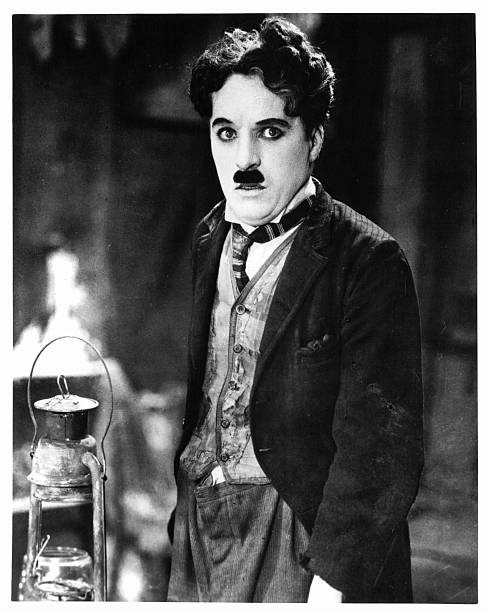
‘Charlie Chaplin’ – ( Journey from rags to riches.)

(

Born – Charles Spencer Chaplin, 16 April 1889, Walworth, London, England.

Died – 25 December 1977 (aged 88), Manoir de Ban, Riviera-Pays-d’Enhaut District, Vaud, Switzerland.

Resting place – Corsier-sur-Vevey, Riviera-Pays-d’Enhaut District, Vaud, Switzerland.

Occupation – Actor, comedian, director, composer, screenwriter, producer, editor.

Years active – 1899–1976

Parent(s) – Charles Chaplin Sr.Hannah Chaplin (née Hill)

Awards – Academy Award (1973): Music (Original Dramatic Score) ,Honorary Award of the Academy of Motion Picture Arts and Sciences (1972), Special Award of the Academy of Motion Picture Arts and Sciences (1929).

Works written – My trip abroad, A Comedian Sees the World, My Autobiography etc.

About Charlie:

Chaplin, one of the most financially successful stars of early Hollywood, was introduced to the stage when he was five. The son of London music hall entertainers, young Chaplin was watching a show starring his mother when her voice cracked. He was quickly shuffled onto the stage to finish the act. Chaplin and his older half-brother, Sydney, roamed London, where they danced on the streets and collected pennies in a hat. They eventually went to an orphanage and joined the Eight Lancashire Lads, a children’s dance troupe. Charlie Chaplin is considered a phenomenon in the world of acting. He is worshipped, studied, and imitated by millions of wannabe stars who want to ape his comic timing.

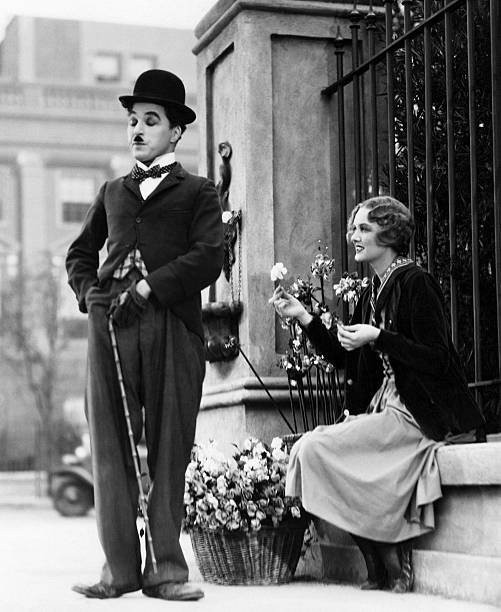
LOS ANGELES – 1931: Actors Charlie Chaplin as The Tramp and Virginia Cherrill as a blind flower seller in the film ‘City Lights’. (Photo by Donaldson Collection/Getty Images) /Getty Images)

His Life:

Charlie Chaplin had to struggle as a child. He was the son of poverty- stricken music-hall entertainers. Chaplin’s father, Charles Chaplin Sr was an alcoholic and had little contact with his son. His father died of alcoholism when Charlie was twelve. A larynx condition ended the singing career of Chaplin’s mother. After Chaplin’s mother (who went by the stage name Lilly Harley) was admitted to the Cane Hill Asylum, her son was left in the workhouse at Lambeth in South London. Charlie and his half-brother, Sydney, forged a close relationship in order to survive. They gravitated to the music hall while still very young and both of them were talented. Themes in Charlie’s films in later years would revisit the scenes of his childhood deprivation and poverty in Lambeth. A lot of his humour was rooted in pain.

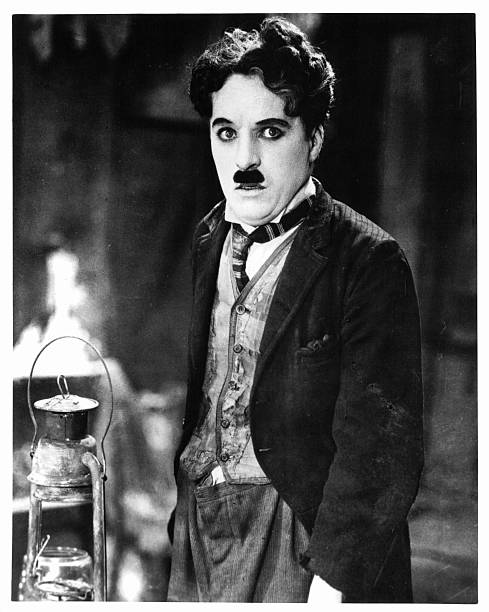
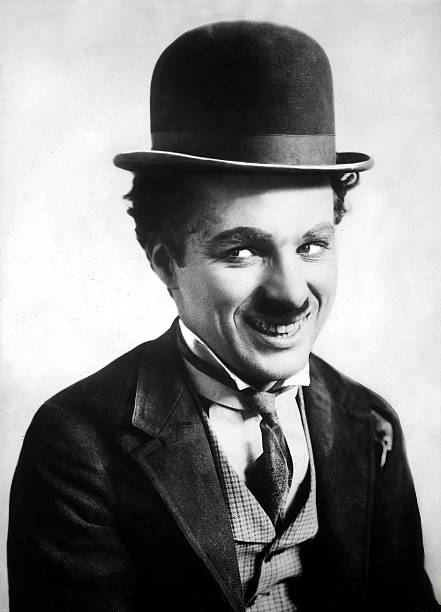
On tour in New York (1913), Charlie caught the who signed him to a film contract. Unfortunately, Chaplin had considerable initial difficulty adjusting to the demands of film acting, and his performance suffered for it, but destiny gave Charlie eye of Mark Sennet another chance and there was no looking back. Chaplin’s earliest films were made for Mark Sennet’s ‘Keystone Studios’, where he developed his ‘tramp’ character and very quickly learned the art and craft of film making. Chaplin developed the costume baggy pants, derby hat, oversized shoes, and cane-that was to become the hallmark of his famous “little tramp’ character. He was soon directing his own films, and he produced, directed, and starred in such classics as The Gold Rush (1925), City Lights (1931), Modern Times (1936), The Great Dictator (1940), Monsieur Verdoux (1947) and Limelight (1952).

Chaplin never spoke more than cursorily about his film making methods, claiming that such a thing would be tantamount to a magician spoiling his own illusion. In fact, until he began making spoken dialogue films with The Great Dictator, Chaplin never shot from a completed script. The method he developed was to start from a vague premise-for example ‘Charlie enters a health club’ or ‘Charlie enters a restaurant’. Then he had sets constructed, and worked with his stock company to improvise gags around them. This is creativity at its best. Charlie Chaplin’s unique film-making techniques became known only after his death, when his rare surviving cut sequences were carefully examined in the 1983 British documentary Unknown Chaplin.

5 Things You May Not Know About Charlie Chaplin:

1.Chaplin made his stage debut as a tot – Both of Chaplin’s parents were music hall entertainers in London. In his autobiography, he described how, at age 5, his mother’s voice suddenly failed in front of a crowd of rowdy soldiers. The stage manager—or possibly his father or one of his mother’s lovers—then ushered him onstage as a replacement. Chaplin first sang a popular song called “Jack Jones,” prompting the audience to shower him with coins. He purportedly drew big laughs by announcing that he would pick up the money before continuing. More laughter ensued when he began imitating his laryngitis-addled mother. A few years later, Chaplin made his professional debut as a member of a juvenile clog-dance troupe. He followed that up with a couple of theater roles, toured with vaudeville acts and did one disastrous night of stand-up comedy in which he was booed off the stage.

2. Chaplin partly grew up in an orphanage – As the health of Chaplin’s mother deteriorated, so too did the family’s finances. It got so bad that in 1896 Chaplin and his older half-brother were sent to a public boarding school for “orphans and destitute children.” Chaplin spent about 18 months there, the longest period of continuous schooling he would ever receive. He learned to read and write, but apparently suffered quite a few indignities, including a severe caning and the shaving of his head during a bout with ringworm. Shortly thereafter, his mother was committed to a mental institution. His father, meanwhile, played very little role in his upbringing and ended up dying of alcoholism at age 37.

Charles Chaplin in a scene from the film ‘The Gold Rush’, 1925. (Photo by United Artists/Getty Images)

3 Chaplin loathed his first film – During Chaplin’s second vaudeville tour of the United States in 1913, Keystone Studios hired him away for $150 a week. He made his first film appearance early the following year, playing an out-of-work swindler in “Making a Living.” Wearing a handlebar moustache, top hat and monocle, he got in a few funny gags, particularly while fighting the story’s hero, a journalist who at one point interviews a man trapped under a car instead of helping him. Overall, though, Chaplin was appalled by his performance. “I was stiff,” he later said. “I took all the surprise out of the scenes by anticipating the next motion.” He also accused the director of cutting his best material out of jealousy.

4. Chaplin played thr same character in all but a few movies – Prior to his second film, Chaplin dressed up one day in baggy pants, a tight coat, big shoes, a small bowler hat and a bamboo cane. He added a small fake moustache and is said to have strutted around while his co-actors were playing pinochle. Having witnessed the scene, the head of Keystone allegedly “giggled until his body began to shake.” “Chaplin,” he exclaimed, “you do exactly what you’re doing now in your next picture. Remember to do it in that get-up.” This so-called Little Tramp character immediately took off in popularity, spawning so many imitators and marketing schemes that the press labeled it “Chaplinitis,” and would become Chaplin’s onscreen persona for the next two-and-a-half decades. In 1914 alone, he appeared in dozens of short films as the Little Tramp, most of which he directed himself.

5 .Chaplin quickly became a millionaire – For $1,250 a week, plus a $10,000 bonus, Chaplin moved in December 1914 to Essanay Studios, which touted him as “the greatest comedian in the world.” He then signed with the Mutual Film Corporation for $670,000 a year, after which he agreed to make eight comedies for First National for over $1 million. Finally, in 1919, he founded his own studio with fellow Hollywood icons Douglas Fairbanks, Mary Pickford and D.W. Griffith. “I went into the business for money, and the art grew out of it,” Chaplin once said. “If people are disillusioned by that remark, I can’t help it. It’s the truth.”

Some believe in ‘KARMA’, some doesn’t.

If karma works, why are so many corrupt people successful? Why do good people have to struggle?

Karma, as a concept, was the idea of cause and effect translated through multiple lives, not just through one.

That by living a good life now and being kind and happy, you will create a positive start for whatever meets you after you pass away.In this sense, Karma isn’t something we will feel any effects of now and is something we will only come to see once we meet our next life.However, even if we do take out that concept the idea is still one of Cause and Effect.Good deeds cause good things, and bad deeds cause bad things, but it never said that we had any control as to what things we gain from what deeds.

When talking about Karma we assume that it is all one big ball of yarn.Different colored strings are so intertwined in this ball that it looks like a rainbow colored sphere where everything is connected.However, the truth may be a little different.

What if Karma did not work like we assume it does?

What if you cannot just treat others nicely and make more money because those two are not connected?

What if you actually had to pull on the money string to get money karma?

And what if, by doing well on the ‘treating others’ string you simply get others to treat you better too?

But then again, maybe that would not be Karma anymore but a very straight-forward matter of cause-and-effect. Most of us do not like this explanation because it means we cannot be as comfortable as we have been. We like the idea of being able to pull on a string that comes easiest to us to uplift our entire lives, for some things just do not come that easy to us. But maybe that is where we have been wrong in what we think Karma is all about. Maybe the successful, but corrupt people, just knew what strings to pull to get to success and have that area of life in order while the rest is crumbling around them. And maybe we do not know how to pull the strings of success so we struggle in a world of niceties and laziness.

Honestly, I do not know how Karma works or if it does. I am probably wrong about it all. Maybe we all are. Karma might just be an idea we tell ourselves to feel more justified in being nice and treating others kindly, but maybe it matters not one bit.

‘Who knows?’

The thing is that it clearly does not work as simply as we make it out to work, for we do see contradictory examples everywhere. But if we take the idea of the ball of yarn, I believe we get a lot closer to how Karma may truly work.

For if you work on your finances every day, if you are charitable and treat others at your job well while still fostering the belief that money will find its way to you, chances stand much better you do create more money for yourself. Psychology supports this concept through things such as the Confirmation Bias, Self-Fulfilling Prophecies and Selective Attention. You will likely find more opportunities and therefore more successes in this area if you do more good deeds here, which is the whole point. If you pull on the green string you will get greener results, but you may not get green results by pulling on the red string. You cannot just do good to get good things returned to you in a completely separate area of life.

Successful people, as corrupt as they may Be, often at least have something they know about success.

Some cheat their way through, others lie their way through, and others hide the truth or weasel their way through with other people, but as long as they find a way that means there has to be something they know we do not. And while we go through life being honest, nice and hard-working there is clearly something that is not leading to more success. That does not mean you have to stop being honest, nice or hard-working, but rather that it may be time to learn about success and money instead of relying on Karma to do it all for you. It’s easy to say that we could just be as corrupt as they are and then we’d be rich and famous too, but I believe it is a little more complicated than that, for there are already quite a few corrupt but unsuccessful people out and about.

Corruption is not the string that will lead to success either.

It’s easy to point the finger towards others but maybe we have to ask ourselves what the things were we did and did not do. Maybe we got the Karma, but maybe it was just by getting something we did not want to get. If you have your health, if you have people that care for you, if you have a roof over your head and clean water, then you already have more than most, which may mean your Karma is quite positive.

Whether or not I am right with my assumptions does not really matter. If I am not and Karma is supposed to work in a way where pulling one string leads to random, but positive, results, then maybe there is just something wrong with the system or maybe you did not yet pull hard enough. Either way, even then learning about success and money and taking actions that lead to results you want to have may just be more reliable way to go.

For if Karma does not exist at least this way will give you more opportunities to create the life you want to create.

I, for one, will take the route that gives me the most likely chance to create the life I want, and if that means doing extra work then so be it!

What about you?

Property Rights

What Are Property Rights?

Property rights define the theoretical and legal ownership of resources and how they can be used. These resources can be both tangible or intangible and can be owned by individuals, businesses, and governments. In many countries, including the United States, individuals generally exercise private property rights or the rights of private persons to accumulate, hold, delegate, rent, or sell their property. In economics property rights form the basis for all market exchange, and the allocation of property rights in a society affects the efficiency of resource use.

Understanding Property Rights

Property is secured by laws that are clearly defined and enforced by the state. These laws define ownership and any associated benefits that come with holding the property. The term property is very expansive, though the legal protection for certain kinds of property varies between jurisdictions.Property is generally owned by individuals or a small group of people. The rights of property ownership can be extended by using patents and copyrights to protect:

  • Scarce physical resources such as houses, cars, books, and cellphones
  • Non-human creatures like dogs, cats, horses or birds
  • Intellectual property such as inventions, ideas, or words

Other types of property, such as communal or government property, are legally owned by well-defined groups. These are typically deemed public property. Ownership is enforced by individuals in positions of political or cultural power. Property rights give the owner or right holder the ability to do with the property what they choose. That includes holding on to it, selling or renting it out for profit, or transferring it to another party.

Acquiring Rights to a Property

Individuals in a private property rights regime acquire and transfer in mutually agreed-upon transfers, or else through homesteading. Mutual transfers include rents, sales, voluntary sharing, inheritances, gambling, and charity. Homesteading is the unique case; an individual may acquire a previously unowned resource by mixing his labor with the resource over a period of time. Examples of homesteading acts include plowing a field, carving stone, and domesticating a wild animal. In areas where property rights don’t exist, the ownership and use of resources are allocated by force, normally by the government. That means these resources are allocated by political ends rather than economic ones. Such governments determine who may interact with, can be excluded from, or may benefit from the use of the property.

Private Property Rights

Private property rights are one of the pillars of capitalist economies, as well as many legal systems, and moral philosophies. Within a private property rights regime, individuals need the ability to exclude others from the uses and benefits of their property. All privately owned resources are rivalrous, meaning only a single user may possess the title and legal claim to the property. Private property owners also have the exclusive right to use and benefit from the services or products. Private property owners may exchange the resource on a voluntary basis.

Private Property Rights and Market Prices

Every market price in a voluntary, capitalist society originates through transfers of private property. Each transaction takes place between one property owner and someone interested in acquiring the property. The value at which the property exchanges depends on how valuable it is to each party. Suppose an investor purchases $1,000 in shares of stock in Apple. In this case, Apple values owning the $1,000 more than the stock. The investor has the opposite preference, and values ownership of Apple stock more than $1,000.

‘Summer vacation’-Before Pandemic VS During Pandemic.

Summer vacations are the best time in a year for every student. It offers every student an opportunity to explore new stuff. It also offers a chance of taking a break from the daily routine and shift to new hobbies such as gardening, painting, singing, and dancing while having fun with friends. All of us spend summer vacation doing what we love the most. Some people like to play at home simple, while others prefer stepping out to explore new things.

How I spent my summer Vacation, before Pandemic?

One reason why we have a long summer holiday is that the weather is just too hot to study or play or do anything comfortably. Many of my school friends run away with their families to the cool comfort of the hills. Those who stay back in the city get up late, hang around with friends, sleep an hour or two in the afternoons, and watch TV or play video games in the evenings. To me this amounts to doing almost nothing. During my last summer holidays, however, I did do something!

Of course, in the first three days of my month-long break it was great to wake up at six in the morning, take a look at my watch, and go back to sleep. I woke up at six-thirty, and that extra half- hour was pure heaven. But from the fourth day onwards, there was something else on my agenda-a three-week table-tennis coaching camp for school students. It was being conducted for three hours in the morning, five days a week, in a local club. The head coach, in his playing days, had represented India. Here was an opportunity I did not want to miss at any cost. After all, I too want to play for my country some day.

Since the camp started at 8 am, I was back to getting up at six. At the camp I learnt some new ways to serve, and some new strokes like the jab. I improved my ability to handle spin. I quickened my reflexes. I also learnt how to quickly find out an opponent’s weaknesses, and attack him there. Returning home and bathing with lots and lots of water was quite a treat. In the afternoons, I studied and slept. In the evenings there was a great family reunion with all of us sitting together to watch TV. When school was on, there just wasn’t enough time for this. Before I knew it, my summer vacation was over, and I was itching to display my new-found table tennis skills in our Indoor Games Hall in school!

How I spent my summer vacation, during Pandemic?

Given the COVID-19 pandemic, summer vacations may look different this year. Thus, there are some additional considerations to assess when taking time off. Here are some tips for lawyers considering vacationing during the summer months.

The New Normal: Consider Travel Restrictions and Self-Quarantines
Before planning any trips out of state, it can be helpful to consider whether your law firm has policies on local and international travel. Many law firms have travel restrictions or other parameters restricting an attorney’s return to an office after travel. If traveling out of state, depending on the destination since some states are considered “hotspots,” you may have to observe self-quarantining requirements before returning to the office.

If a planned vacation is to a hotspot area or an area with increased levels of infection, it can be helpful to consider beforehand whether you have the capability to work from home if you cannot return to the office for 14 days after travel. Many attorneys also are confirming whether their existing plans to visit other states still make sense at this time. For example, some states are requiring people to quarantine upon arrival. Other popular vacation destinations may pose an increased risk to vacationers who were otherwise practicing social distancing and other steps to reduce risks at home. Thus, the vacationing attorney may consider where the original plan can be revised or altered to reduce ongoing risk of getting sick or of being unable to return to the office in a timely way.

Plan Ahead:-
Given that the COVID-19 pandemic has drastically changed how many of us work, it is important to consider the ramifications of the new normal and the impact of the vacationing attorney on others. As such, the vacationing attorney can plan ahead to ensure that everyone is given latitude to adjust their schedules to accommodate potential additional work or issues that may require attention.

health is prior to enjoyment so ‘Stay Home, Stay Safe’.

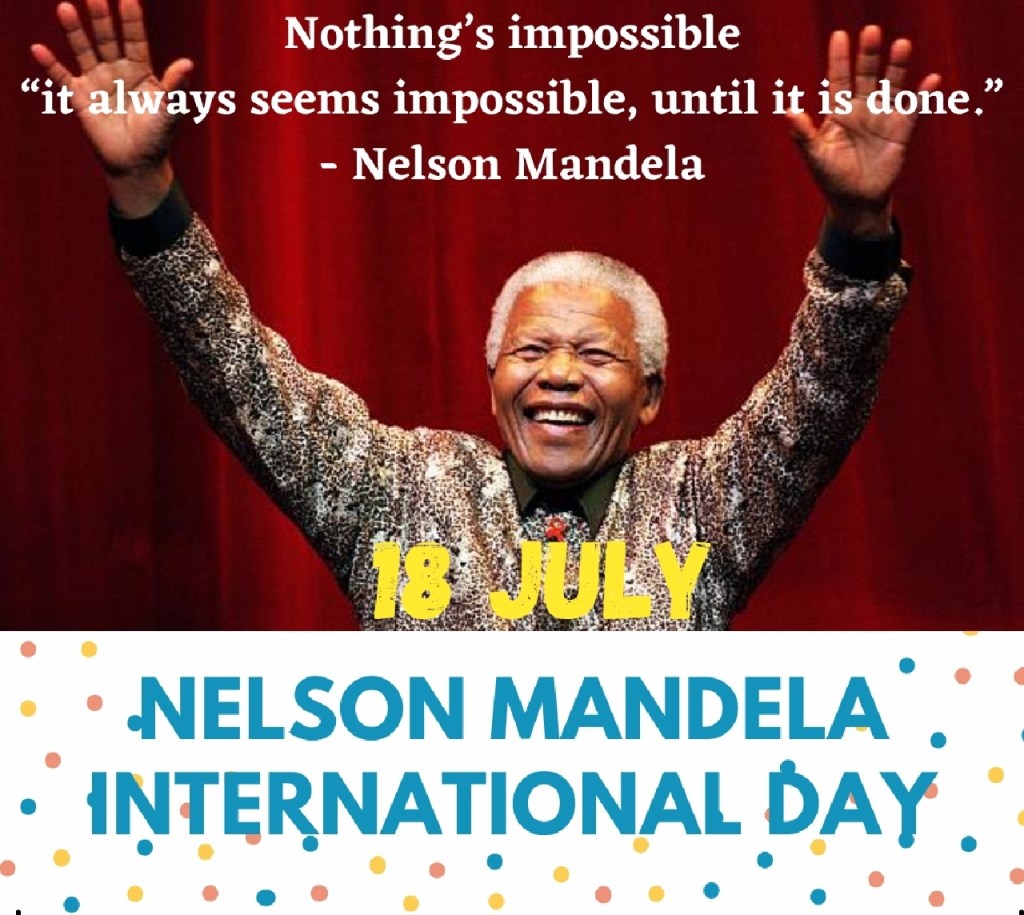
Long live ‘NELSON MANDELA’

Nelson Mandela was born on 18 July 1918, at Umtata, Cape of Good Hope in South Africa. He is an iconic figure in today’s world when it comes to fighting for one’s rights as a human being. The son of a Xhosa Chief, Mandela studied law at the University of Witwatersrand, and in 1944 joined the African National Congress (ANC), After the Sharpeville massacre (1960), he was disillusioned to the extent that he gave up his non-violent stance and became one of those who helped found the Spear of the Nation, the ANC’s military wing. Arrested in 1962, he was sentenced to life imprisonment. The South African Court convicted him on charges of sabotage as well as other crimes committed while he led the movement against apartheid.

How is Nelson Mandela International Day celebrated?

Mandela provides service to others and always wants to create a better world for everyone. So, on this day if people find injustice in the neighbourhood, city, or state they do everything to alleviate the problem. Work in soup kitchens, marched with protesters, volunteer in local organisations, and work to help bring about civil liberties for everyone. Inspire change, and make every day a celebration of Mandela Day. People work for others and want to improve the lives of people around them. They will do this by volunteering or taking part in protests.

“After climbing a great hill, one only finds that there are many more hills to climb.”

This day provides a global call for people to recognise their ability and have a positive effect on others around them. People also inspire others about the values that Mandela shared like democracy, freedom, diversity, reconciliation, and respect. To promote Nelson Mandela Day, many people and organisations around the world take part in several activities. These activities are volunteering, sport, art, education, music, and culture. This day also celebrates a campaign known as “46664”, in reference to Nelson Mandela’s Robben Island prison number. The campaign was originally launched to raise awareness about HIV/AIDS. In 1995 and 1999 Children’s Fund and the Nelson Mandela Foundation were established.

“I learned that courage was not the absence of fear, but the triumph over it. The brave man is not he who does not feel afraid, but he who conquers that fear.”

His Movements And Struggles:

In accordance with the conviction, Mandela served twenty-seven years in prison. While in jail, Mandela’s reputation grew and he became widely known as the most significant black leader in South Africa. The conditions that he had to go through as a prisoner were appalling. He performed hard labour in a lime quarry. Prisoners were segregated on the basis of race, and the black prisoners received the fewest rations. Political prisoners were kept separate from ordinary criminals and received fewer privileges. Mandela himself describes how as a D-group prisoner, the lowest classification, he was allowed one visitor and one letter every six months. Letters, when they came, were often delayed for long periods and made unreadable by the prison censors. It calls for nerves of steel for a man imprisoned for life to get a degree of Bachelor in Law from the University of London through correspondence.

In February 1985, President PW Botha offered Mandela conditional release in return for renouncing armed struggle. Mandela spurned the offer, releasing a statement through his daughter Zindzi saying, ‘What freedom am I being offered while the organisation of people remains banned? Only free men can negotiate. A prisoner cannot enter into contracts.’

Throughout Mandela’s imprisonment, local and international pressure mounted on the South African Government to release him. In 1989, South Africa reached a crossroads when Botha suffered a stroke and was replaced as President by Frederik Willem de Klerk. De Klerk announced Mandela’s release in February 1990. His release from jail was broadcast live all over the world.

South Africa’s first multi-racial elections, in which full enfranchisement was granted, were held in April 1994. The ANC won 62 per cent of the votes in the election. Mandela became the first black President. As President from May 1994 to June 1999, Mandela presided over the transition from minority rule and apartheid, winning international respect for his advocacy of national and international reconciliation.

It is not surprising that Mahatma Gandhi should have inspired Mandela in his war against apartheid. The most universally respected figure of post-colonial Africa, Mandela was awarded the Nobel Peace Prize in 1993 along with De Klerk for their efforts to end apartheid and bring about the transition to non-racial democracy. Mandela remains an inspiring figure for any man in any corner of the world who becomes conscious of his rights and is willing to fight for the same.

Major problems faced in India.

Every country in the world have some other the problems, like that India also have some problems. In this blog, we are going to discuss, some major problems in India like the , education system, unemployment, poverty, basic sanitation, and pollution.

EDUCATION SYSTEM

Every education system will have both theoretical and practical knowledge. Both theoretical and practical knowledge are important. In India’s education system consist of 90 percent theoretical knowledge and 10 percent practical knowledge. Every student needs practical and skilled knowledge, because they are the one who help student to live in the real world. Every sector whether it is agriculture or IT needs skilled workers not theoretical workers. Students in India often study to score marks not knowledge.

UNEMPLOYMENT

According to a survey, 6.9 percent of people in India are unemployed. Nowadays, unemployment become common among youngsters. Unemployment is the state at which person who is able to work but fails to get one. Why there is unemployment in India? The unemployment rate is high in India because there are more job seekers than the job requirement. Due to covid-19 pandemic many people lost there jobs because of the national wide lock down and shut down of some companies. There is high competition for every job in India because of the high population. India stands at 86th position in unemployment in the world. The government of India must take the necessary steps to eradicate unemployment. This is very serious problem in the society.

POVERTY

Poverty is another major problem for a country. As of now, 13.7 percent of people in India live below the poverty line. People who earn less than 1060 rupees in rural and 1286 rupees per month in urban comes under the poverty line. 80 percent of the poor people live in villages only. 43 percent of the people belongs to Scheduled Caste(SC) and Scheduled Tribes(ST). The maximum people living below the poverty line are found in Bihar, Madhya pradesh, Uttar pradesh and rajasthan only. People under the poverty line declined from 37 percent in to 13.7 percent in 2021. Experts suggest that it will decline by 5 percent in 2025.

POLLUTION

Pollution is the serious problem for all countries in the world. As of now, India stands 5th position in world’s most polluted countries. Delhi is the most polluted city in India, Breathing air in Dehli is like breathing 35 cigarettes at a time. There are many types of pollution such as water pollution, air pollution, land pollution and noise pollution. sewage water is main reason for water pollution in India. Ganga and yamuna are the most polluted rivers in India. Vehicle horns and construction sounds are main reason for noise pollution. Government needs to take care of these following problems.


BASIC SANITATION

Sanitation is another big problem in India. According to a survey, more than 700 million people don’t have the access to toilets at there home. In slums people don’t have a toilet at all. Many rural schools don’t have toilet facilities because of that parents don’t send there daughter to school. We should be thankful government because under the Swach Bharat Abhiyan government built 12 million toilets for the people.

That’s all from my side. I hope you like it.