

Good nutrition can help your body perform better and recover faster after each workout.
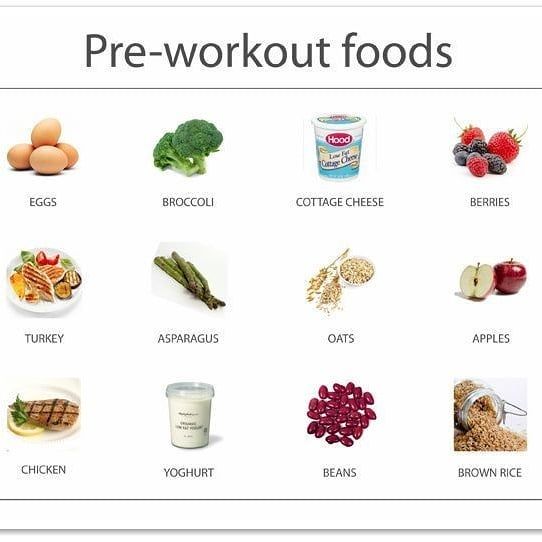
Optimal nutrient intake prior to exercise will not only help you maximize your performance but also minimize muscle damage. Fueling your body with the right nutrients prior to exercise will give you the energy and strength you need to perform better.Each macronutrient has a specific role before a workout. However, the ratio in which you need to consume them varies by the individual and type of exercise
Below is a brief look at the role of each macronutrient.
Carbs
Your muscles use the glucose from carbs for fuel.
Glycogen is the way the body processes and stores glucose, mainly in the liver and muscles.
For short- and high-intensity exercise, your glycogen stores are your muscles’ main source of energy (3Trusted Source).
But for longer exercises, the degree to which carbs are used depends on several factors. These include the intensity, type of training and your overall diet (3Trusted Source).
Your muscles’ glycogen stores are limited. As these stores become depleted, your output and intensity diminish (4Trusted Source, 5Trusted Source, 6).
Studies have consistently shown that carbs can increase glycogen stores and utilization while boosting carb oxidation during exercise (6, 7Trusted Source, 8Trusted Source).
Carb loading, which involves consuming a high-carb diet for 1–7 days, is a well-known method to maximize glycogen stores (7Trusted Source, 8Trusted Source).
Protein
Many studies have documented the potential of pre-workout protein consumption to improve athletic performance.
Eating protein (alone or with carbs) prior to exercise has been shown to increase muscle protein synthesis (9Trusted Source, 10Trusted Source, 11Trusted Source).
One study showed a positive anabolic response after participants consumed 20 grams of whey protein before exercise (9Trusted Source).
Other benefits of eating protein before exercise include:
- A better anabolic response, or muscle growth (11Trusted Source, 12Trusted Source)
- Improved muscle recovery (12Trusted Source)
- Increased strength and lean body mass (13Trusted Source)
- Increased muscle performance (11Trusted Source, 12Trusted Source, 13Trusted Source)
Fat
While glycogen is used for short- and high-intensity bouts of exercise, fat is the source of fuel for longer and moderate-to-low-intensity exercise (14Trusted Source).
Some studies have investigated the effects of fat intake on athletic performance. However, these studies looked at high-fat diets over a long period, rather than prior to exercise (15Trusted Source, 16Trusted Source).
For example, one study showed how a four-week diet consisting of 40% fat increased endurance running times in healthy, trained runners (15Trusted Source).
TIMING
To maximize the results of your training, try to eat a complete meal containing carbs, protein and fat 2–3 hours before you exercise.However, in some cases, you may not be able to get in a full meal 2–3 hours before working out.In that case, then you can still eat a decent pre-workout meal. However, keep in mind that the sooner you eat before your workout, the smaller and simpler the meal should be.If you eat 45–60 minutes prior to your workout, choose foods that are simple to digest and contain mainly carbs and some protein.This will help prevent any stomach discomfort during exercis
 Eduindex
You must be logged in to post a comment.