NCC

Introduction

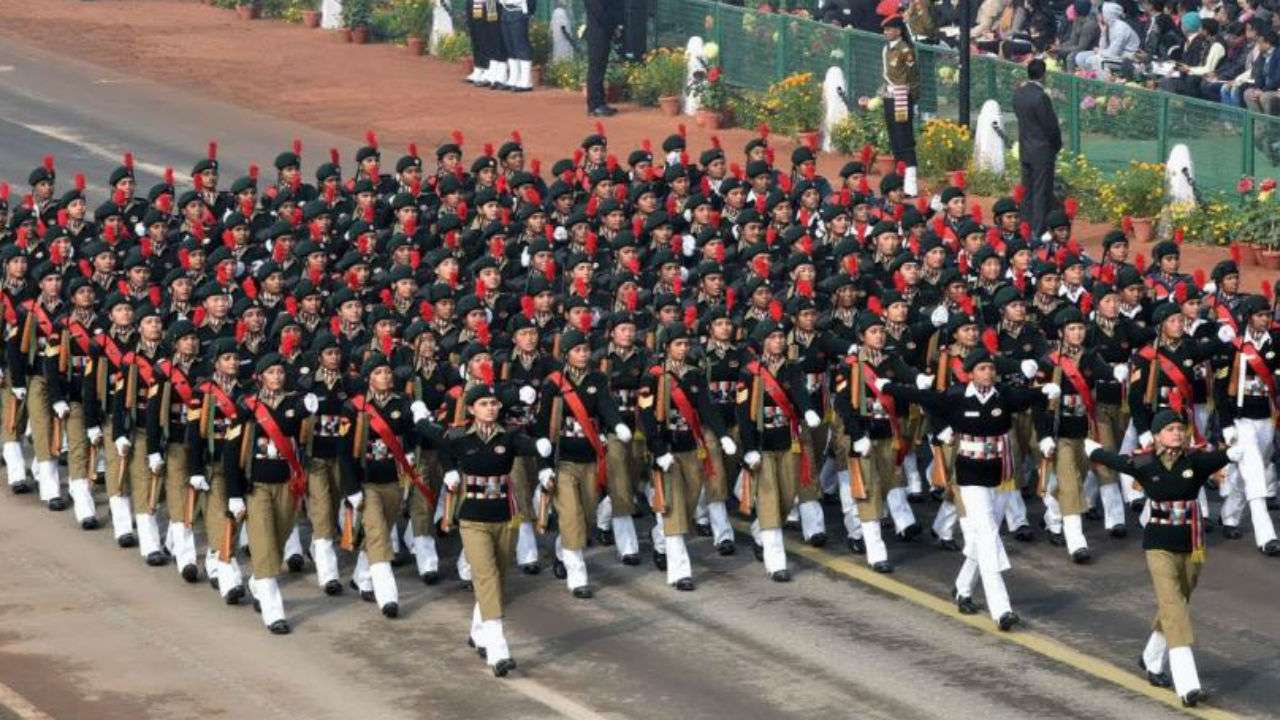
The National Cadet Corps is the youth wing of the Indian Armed Forces with its headquarters in New Delhi, India. It is open to school and college students on voluntary basis as a Tri-Services Organization, comprising the Army, the Navy and the Air Wing, engaged in grooming the youth of the country into disciplined and patriotic citizens.

The soldier youth foundation in India is a voluntary organization which recruits cadets from high schools, higher secondary, colleges and universities all over India. The Cadets are given basic military training in small arms and drill. The officers and cadets have no liability for active military service once they complete their course.

Origin

In 1949, the Girls Division was raised in order to give equal opportunities to school and college going girls. The NCC was given an inter-service image in 1950 when the Air Wing was added, followed by the Naval Wing in 1952. In the same year, the NCC curriculum was extended to include community development/social service activities as a part of the NCC syllabus at the behest of Late Pandit Jawaharlal Nehru who took keen interest in the growth of the NCC. Following the 1962 Sino-Indian War, to meet the requirement of the Nation, the NCC training was made compulsory in 1963. In 1968, the Corps was again made voluntary.

Aim and Motto

The discussion for motto of NCC was started in 11th central advisory meeting (CAC) held on 11 August 1978. At that time there were many mottos in mind like “Duty and Discipline”; “Duty, Unity and Discipline”; “Duty and Unity”; “Unity and Discipline”. Later, at the 12th CAC meeting on 12 Oct 1980 they selected and declared “Unity and Discipline” as motto for the NCC. In living up to its motto, the NCC strives to be and is one of the greatest cohesive forces of the nation, bringing together the youth hailing from different parts of the country and molding them into united and disciplined citizens of the nation.

Skill development

The benefits of joining NCC include receiving basic military training. It develops the students’ interest in three forces – Air force, Army, and Navy. NCC is the first platform that provides opportunities to the cadets to check their efficiency to join the mainstream Indian Defence Services.

The cadets are imparted training in the use of arms, along with communication skills and personality development skills, he said. The NCC helps to develop leadership qualities in students. NCC cadets Indrajith and Yashaswi have been selected for Republic Day parade in New Delhi. The NCC helps to instil confidence.

NCC is an effective organization designed to mould the youth at their most impressionable age with the aims of developing qualities of character, courage, comradeship, discipline, leadership, secular outlook, spirit of adventure and sportsmanship and the ideals of selfless service among the youth to make them useful .

Learning

Discipline, basic arms training, team ethics, following orders, various kinds of physical activities, sports, tours to remote areas, etc. are some of the things you experience and learn in NCC. These lessons are invaluable and make the journey of learning beautiful.

Link
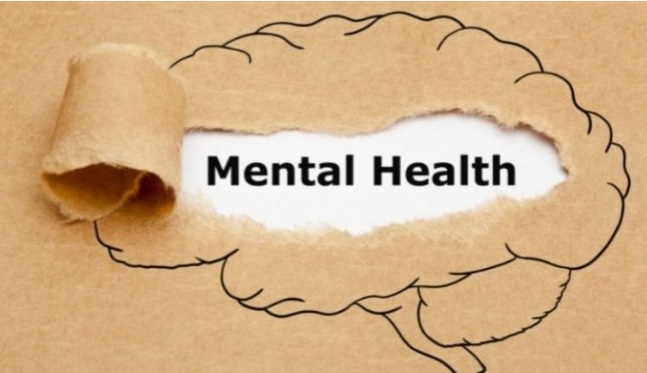
Mental Health

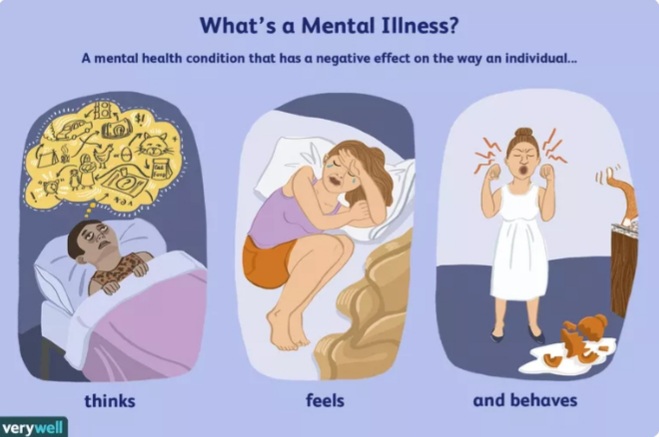
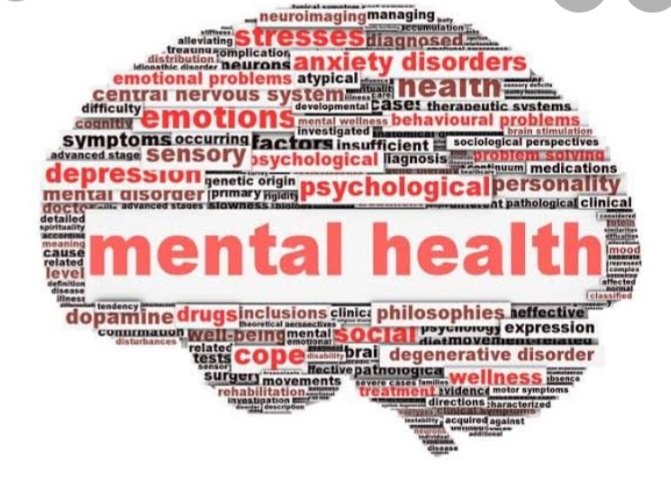
We human beings often tend to pay less attention to our mental health than our physical one, but we all should understand its heavy importance and admit the fact that they can be equally or even more dangerous than the physical issues so one should take immediate help of doctor or councilor in case some abnormalities or issues arises.

Importance of mental health :

Mental and physical health are equally important components of overall health. Mental illness, especially depression, increases the risk for many types of physical health problems, particularly long lasting conditions like stroke, type 2 diabetes and heart disease. Similarly, the presence of chronic conditions can increase the risk for mental illness.

Some mental illnesses :

Mental illnesses are among the most common health conditions in the united states.

* More than 50% will be diagnosed with a mental illness or disorder at some point in their lifetime.

* 1 in 5 children,either currently or at some point during their life, have had a seriously debilitating mental illness.

Causes of mental illness :

There is no single cause for mental illness. A number of factors can contribute to risk for mental illness, such as

* Early adverse life experiences such as trauma or a history of abuse.

* Experiences related to other ongoing medical condition, such as cancer or diabetes

* Biological factors, such as genes or chemical imbalances in the brain.

* use of alcohol or recreational drugs.

Types of mental illness :

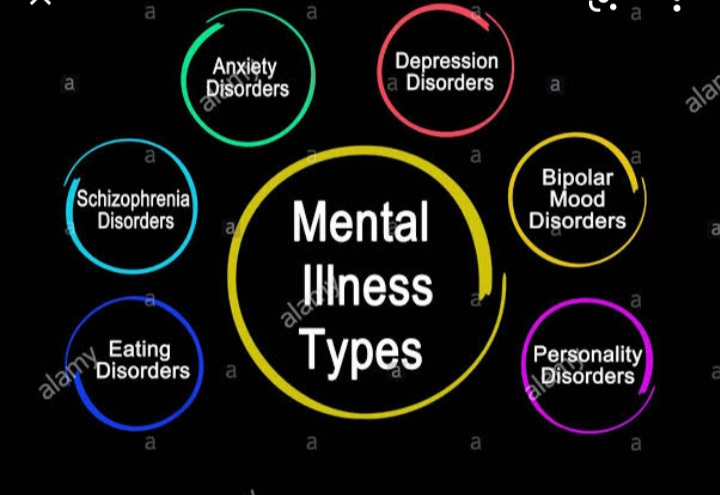
People can experience different types of mental illnesses or disorder and they can often occur at the same time.Mental illness can occur over a short period of time or be episodic. This means that the mental illness comes and goes with discrete beginnings and ends. Mental illness can also ongoing or long term.

There are more than 200 classified types of mental illness. Some of the main types of mental illness and disorders are listed below; however; this list is not exhaustive.

Anxiety Disorders :

People with anxiety disorders respond to certain objects or situations with fear and dread or terror. Anxiety disorders include generalized anxiety disorder, social anxiety, panic disorders and phobias.

Hyperactivity Disorder :

It is one of the most common childhood mental disorders. It can continue through adolescence and adulthood. People diagnosed with ADHD may have trouble paying attention, controlling impulsive behaviors or be overly active.

Disruptive Behavioral Disorders :

It involves a pattern of disruptive behaviors in children that last for atleast 6 months can cause problems in school, at home and in social sitauations.Behavioral symptoms can also continue into adulthood.

Depression and other mood disorders :

While bad moods are common and usually pass in a short period, people suffering from mood disorders live with more constant and severe symptoms. People living with this mental illness find that their mood impacts both mental and psychological well- being, nearly evry day and often for much of the day.

Eating Disorders :

Eating disorders involve obsessive and sometimes distressing thoughts and behaviors including

* Reduction of food intake

* overeating

* Feelings of depression or distress

* concern about weight, body shape, poor self image

Personality Disorders :

People with personality disorders have extreme and inflexible personality traits that cause problems in work, school or social realtionships. Personality disorders include antisocial personality disorder and borederline personality disorder

Substance use Disorders :

Substance use disorders occur when frequent or repeated use of alochol and or drugs causes significant impairment, such as health problems, disability, and failure to meet major responsibilities at work, school, or home. Substance use problems can be fatal to the user or others. Exsmples include drunk driving fatalities and drug overdoses.

In this busy world our brain gets a lot stressed and its very important that we should take due care of it, some of the practices which will help us to do better with our mental health are:

  1. Yoga plays a great role in keeping our mind calm and also helps us to focus and concentrate on things. It also helps us deal with tough situations and gives us the strength to stay away from negativity.
  2. Exercising regularly is a key to healthy body and we all know that a healthy body and a healthy mind goes hand in hand, so we must ensure that we exercise daily to keep ourselves fit.
  3. The environment that we stay in also the company with which we spend time also plays a major role we should be extremely aware while selecting our company and in case we are not able to adjust we should walk away.
  4. Food is the fuel and is of immense importance we should ensure that we are not nutrient deficient also we should ensure that we intake enough amount of water daily.

Depression

Depression and anxiety are very common problem these days starting from teenager to elderly adults anyone and everyone can face this at any point in life and they equally affect us as any physical disease does, many people don’t take mental health seriously but it is outmost necessary to do so. Here are a few simple daily habits which will help you to deal with depression:

  1. Stay away from negative thoughts, and always try to focus on the filled part of the glass and try not to worry about the empty.
  2. Practice meditation regularly it helps to calm one’s mind and helps in relaxing the brain.
  3. Try to stay out from field where you feel irritated and also do try ignoring unnecessary mess.
  4. Physical exercising is a must for a healthy mind as it keeps the body fit and also helps keeping negativity away.
  5. The physical environment where one spends time and the company of people with which one spend time also plays a key role in determining the and dealing with depression issues.
  6. One must also take care of the diet, consuming fresh fruits and vegetables are highly recommended and one must take care that proper diet is consumed.

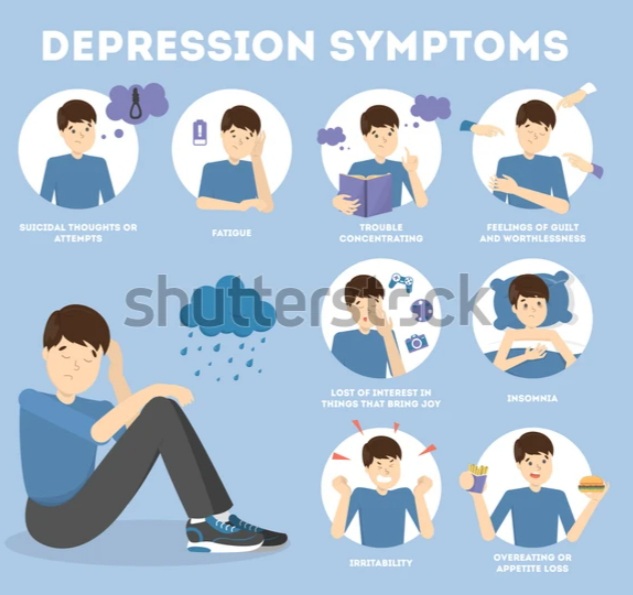
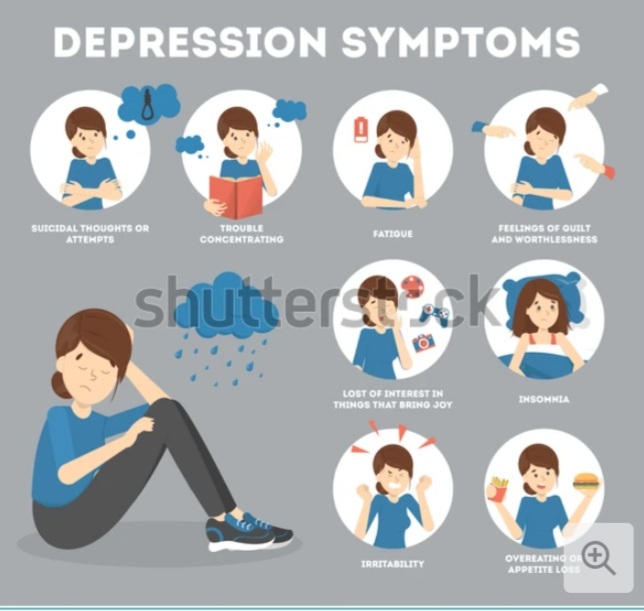
Depression symptoms :

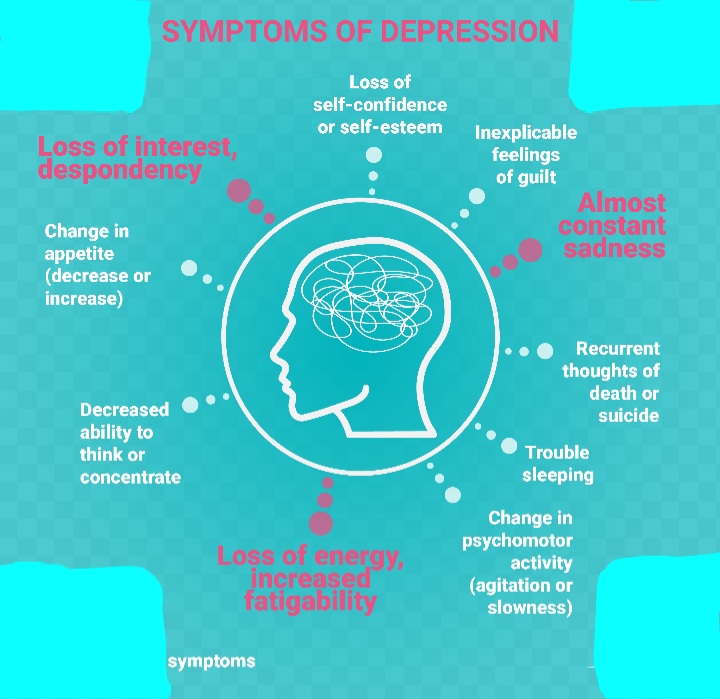
Depression can be more than a constant state of sadness or feeling ” blue”. Major depression cane cause a variety of symptoms. Some affect your mood, and others afect your body. Symptoms may also be onging or come and go. The symptoms of depression can be experienced differently among men, women and children differently.

Men may experience symptoms related to their:

* Mood, such as anger, aggressive, irritability, anxiousness, restlessness.

* Emotional well- being such as feeling empty, sad, hopeless.

* Behavior, such as loss of interest, no longer finding pleasure in favorite activites feeling tired easily , thiughts of suicide, drinking- execessively , using drugs, engaging in high- risk activities.

* sexual interest, such as reduced sexual desire, lack of sexual performance

* cognitive abilities , such as inability to concentrate, difficulty completeing tasks, delayed responses during- conversations.

* sleep patterns, such as insomina, restless slepp, excessive sleepiness, not sleeping through the night.

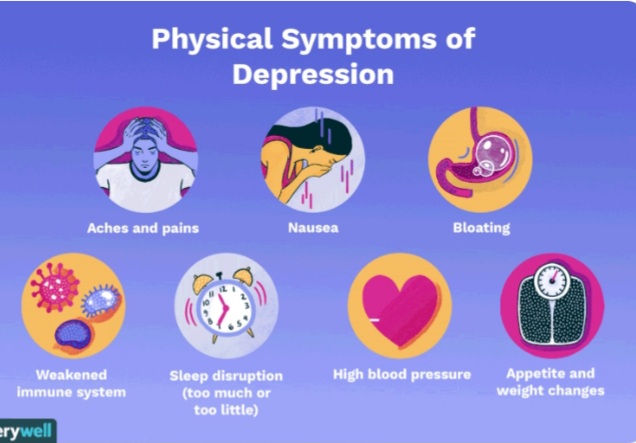
* physical well- being, such as fatigue, pains, headache, digestive problems.

Women may experience symptoms related to their:

* mood, such as irritability

* emotional well- being, such as feeling sad or empty, anxious or hopless.

* congnitive abilities,such asthinking or talking more slowly

* behavior, such as loss of interest in activities, withdrawing from social engagements, thoughts of suicide

* sleep patterns, such as difficultu sleeping through the night, waling early, sleeping too much.

* physical well- being, such as decreases energy, greater fatigue, changes in appetite, weight changes, aches,pain, headaches, increased cramps.

Children may dxperiences symptoms related to their :

* mood such as irritability, anger, mood swings, crying.

* emotional well- being, such as feelings of incompetence or despair, crying, intense sadness

* behavior, such as gettkng into trouble at school or refusing to go to school, avoiding friends or siblings thoughts of death or suicide.

* cognitive abilities, such as difficulty concentrating, decline in school performance, changes in grades.

* sleep patterns, such as difficulty sleeping or sleeping too much

*physical well- being, such as loss of energy digestive problems, changes in appetite, weight loss or gain.

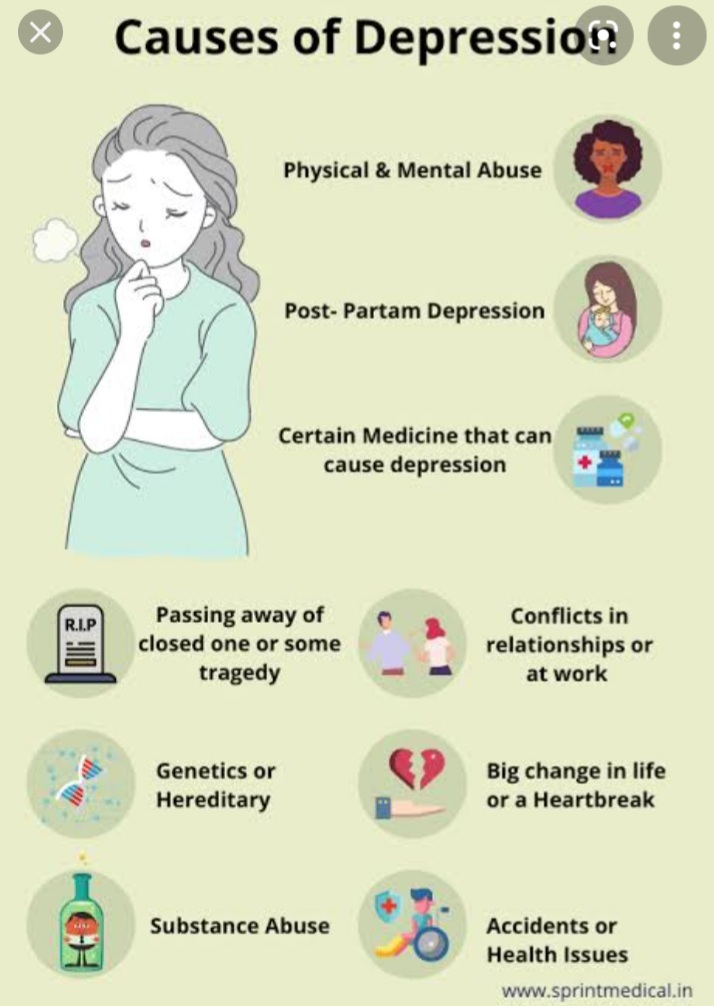
Depression causes :

There are several possible causes of depression. They can range from biological to circumstantial.

Common causes include ;

* Family history :

You’re at a higher risk for developing depression if you hace a family history of depression or another mood disorder.

* Early childhood trauma :

Some events affect the way your body reacts to fear and stressful situations

* Brain structure :

There’s a greater risk for depression if her frontal lobe of your brain is less active.

* Medical conditions :

Certain conditions may put you at higher risk, such as chronic illness, insomia, chroinc pain or attention- deficit hyperactivity disorder

* Drug use :

A history of drug or alcohol misuse can affect your risk.

Many factors can influence feelings of depression, as well as who develops the condition . The causes of depression are often tied to other elements of your health. Depression can be linked with to other health problems, your healthcare provider may also conduct a physical examination and order blood work.

Types of depression :

Depression can be broken into categories depending on the severity of symptoms. Some people experience mild and temporary episodes, whike other experience severs and ongoing depressive episodes.

There are two main types. Major depressive disorder and persistent depressive disorder .

Major depressive disorder :

Major depressive disorder is the more severe form of depression. It’s characterized by persistant feelings of sadness, hoplessness and worthlessness that dont’t go away on their own.

Persistent depressive disorder :

Persistent depressive disorder ( pDD) used to be called dysthymia. It is a milder, but chronic, form of depression.

It’s common for people with PDD to

* lose interest in normal daily activites.

* feel hopless

* lack productivity

* haveclow self- esteem

Depression can be treated successfully, but it’s important to stick your treatment plan.

Treatment for depression :

Living with depression can be difficult, but treatment can help improve your quality of life. Talk to your health care provider about possible options. You may successfully manage symptoms with one form of treatment ,or may find that a combinations of treatment works best.

Animals

Since the time Earth developed the quality of sustaining life, life has always gone under the process of evolution. Life started from single celled organisms and developed stage by stage. One organism extinct to develop into its better developed species or even at times it happens that some animals get erased from the surface of the earth due to extreme environmental condition.

EXTINCT ANIMALS: Species of animals which existed in the surface of the earth once upon a time but has no current existence, this may have been a result of extreme environmental condition or some other condition for existence. For example, we have dinosaurs, Dodo.

ENDANGERED ANIMALS: The species of animals which have only a few animals left on the surface of the earth and are in the mouth of being extinct are known as endangered, currently this is a result of poaching i.e., unethical killing of wild animals with purpose or change in the climate due to pollution and other factors. For example, we have the Royal Bengal Tiger.

We cannot do anything for the species which are extinct but we can definitely take steps and save our endangered species. Poaching laws should be made stricter and it should be taken care that people follow them.

Different types of animals :

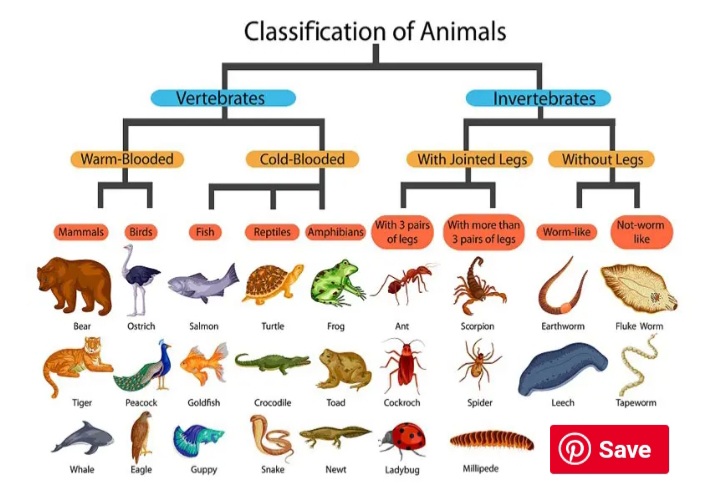
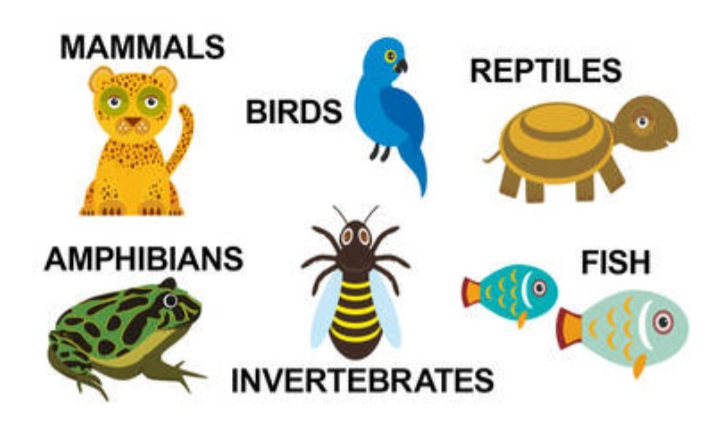
Scientists sort the different types of animals in the world into categories based on certain characteristics. Animals are generally grouped into six types of aninals. The system for animal classifications is called taxonomy.

The Animal Kingdom :

All animals belong to a biological kingdom called kingdom Animalia. This kingdom is then broken down into over 30 groups. About 75% of all species on earth are aninals. Animals are then broken down into two types : vertebrates and invertebrates.

* Animals with a backbone are vertebrates.

* vertebrates belong to the phylum called phylum chordata.

* vertebrates are classified into five classes. They are amphibians, birds, fish,mammals, and reptiles.

* Animals without a backbone are invertebrates.

* Most invertebrates are in the phylum Arthropoda.

1. Amphibians :

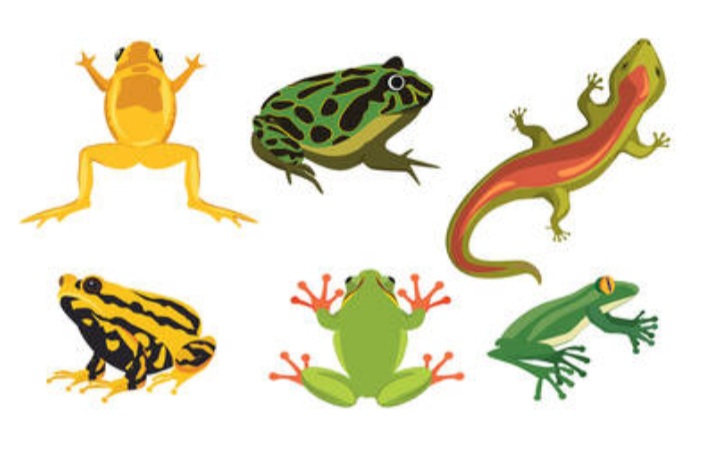
All amphibians are vertebrates, and they need moist environment or water to survive.

* They are cold- blooded.

* They absorb water and breathe through their thin skin

* They have at least one special king gland used for defense.

* Most follow the life cycle of egg-larva- adult.

* examples : frog , newts, salamanders, toads.

2. Birds

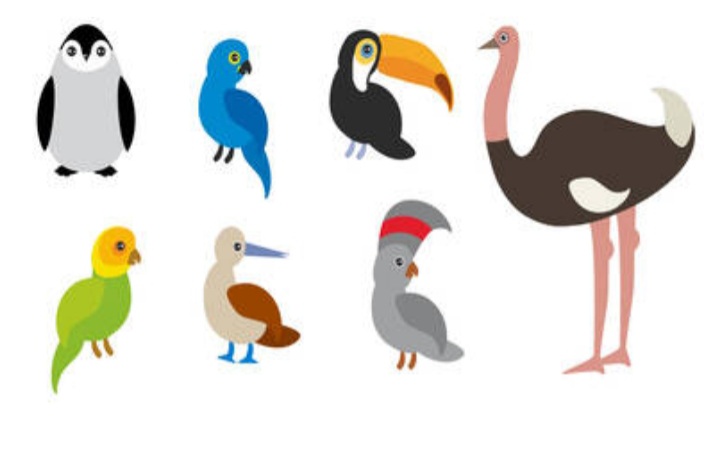
Birds are a type of warm- blooded vertebrate that are adapted to fly.

* Not all birds can fly, but they do all have wings.

* Birds have beaks that help them catch and swallow food.

* The digestive system of a bird allows it to eat whenever it can and digest that food later.

* Birds lay egg to reproduce.

* They are endothermic, mening they maintain their own constant body temperature.

* They are bipedal, which means they have two legs.

* They have hollow bones and their bodies are covered in feathers.

* Birds belong to the class called Aves.

* Examples : albatrosses, chickens, hummin birds, falcons, falmingoes, ostriches, owls, parrot, penguins, pigeons.

3. Fish :

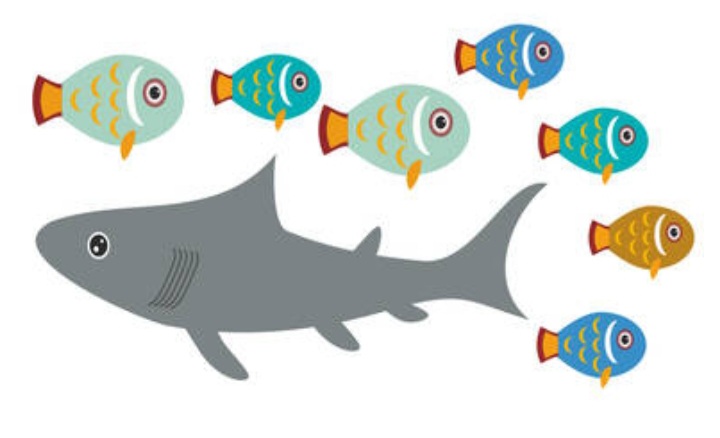
Fish are also vertebrates, and they are considered the oldest-known vertebrates.

* They are ectothermic, or cold- blooded, which means they rely on their surroundings to regulate their body temperature.

* Fish have funs.

* Most, but not all, fish have bodies covered in scales and breathe through gills.

* Fish live under water.

* Examples : eels, hangfish, lampreys, minnows, rays, salmon, seahorses, sharks.

4. Mammals :

Mammals are another type of vertebrate that belongs to the class Mammalia.

* young mammals get nourishment from milk produced by their mothers.

* Most mammals have hair.

* Their jaw is hinged directly to their skull unlike all other vertebrates.

* Almost aĺl mammals give birth to live bsbies.

* They are endothermic, or warm- blooded.

* Examples : there are over 5500 living species of mammals all over the world. Aardvarks, bats, elephants, hamsters, human, rabbits, rhinoceroses, whales.

5. Reptiles :

Reptiles are thought to be the first vertebrates to live completely on land. But, not all reptiles live only on land today.

* They are cold- blodded, or ectothermic

* They lay eggs to reproduce.

* They have four legs or descended from animals with four legs.

* They breathe through lungs

* Their bodies are covered in scales or scutes.

* Examples : crocodiles, geckos, lizards, sea turtles, snakes, tortoises.

Invertebrates :

Approximately 95% of all animals are invertebrates. Invertebrates do not have a backbone. There are different types of invertebrates, but they all share a few characteristics.

• They are made up of many cells that work together, or multicellular.

• Most, but not all have tissues, cells that work together in a more complex way.

• Most, but not all, can move.

• There are over 35 phyla of invertebrates.

• They generally have soft babies.

Types of Invertebrates :

There are eight phyla of invertebrayes that are alive today.

* Annelida – have a segmented body and primitive brain

* Arthropoda – have jointed appendages and an exoskeleton.

* Cnidaria – have tissues and an incomplete digestive system

* echinodermata – have some type of spiny structure on their bodies

* Mollusca – generally have sofy bodies and a hard exoskeleton.

* Nematoda – unsegmented with worm- shaped bodies

* platyhelminthes – have soft, ribbon- like worms with no respiratory system.

* porifera – multicellular organisms living in water with no organs or tissues.

Examples : anemone( cnidaria) , clams ( mollusca), coral,

RATAN TATA – INDIA’S REAL RATN

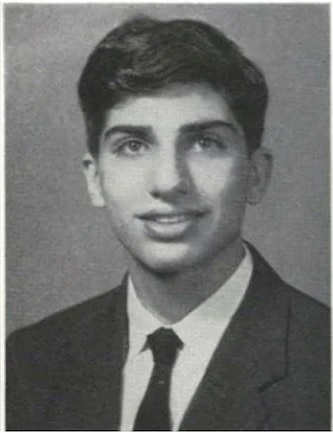
Ratan Naval Tata- an epitome of benevolence, nobility & perspicaciousness. He is the country’s true treasure. He was born to Naval Tata and Sooni Tata. Naval Tata was the adopted son of Ratanji Tata, the younger son of Jamsetji Tata, founding father of the Tata group.

Ratan Tata received his early education at Campion School, Mumbai. Later, he enrolled at The Cathedral & John Connan School, Mumbai & at the Bishop Cotton School, Shimla. he graduated from New York’s Riverdale Country School in 1955 & holds an architecture degree from Cornell University, USA. He is also a Harvard Business School graduate.

During his tenure as Chairman of the Tata Group (1991-2012), Revenues soared over 40 times & profits increased by 50 times. The company’s revenue grew from $5.7 billion in 1991 to an astounding $103 billion in 2016. His efforts propelled India’s ascension to the forefront of global trade. His acquisition of renowned and fabled foreign companies made Tata more global.

 Tetley, the UK’s largest tea brand; a 25% stake in VSNL; NatSteel, Singapore’s single largest steel producer; South Korea’s Daewoo Motors; New York’s iconic – The Pierre hotel; Boston’s Ritz-Carlton hotel; San Francisco’s Campton Hotel; and Ford’s Jaguar and Land Rover are just a few of his cardinal acquisitions.

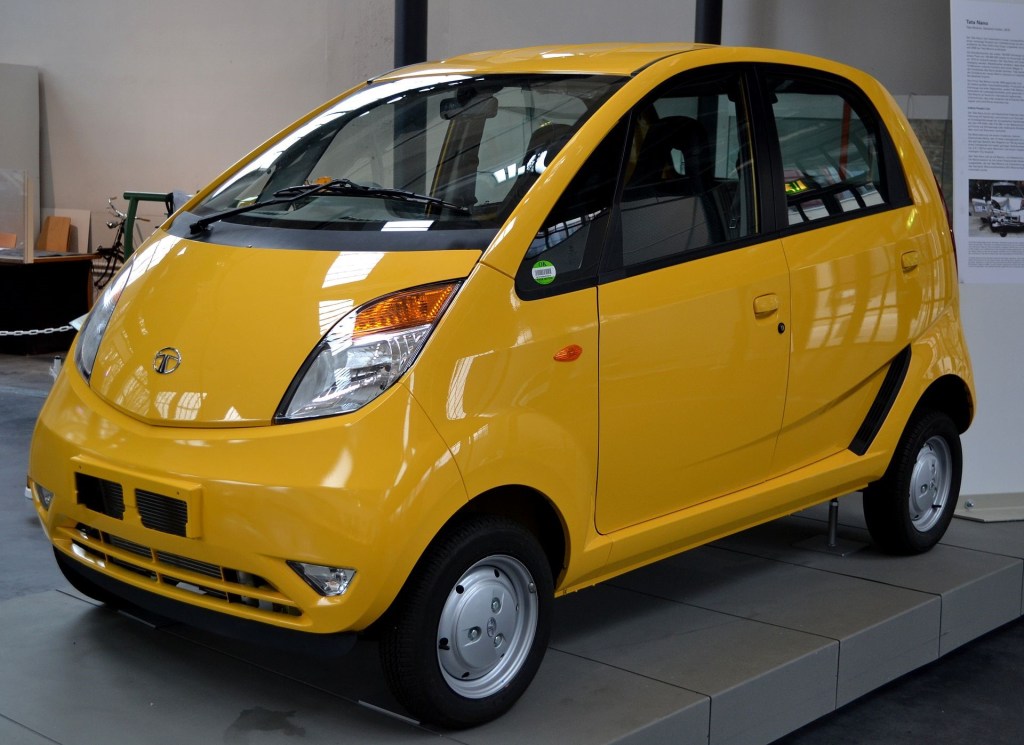
TATA NANO- Ratan Tata’s Dream Project

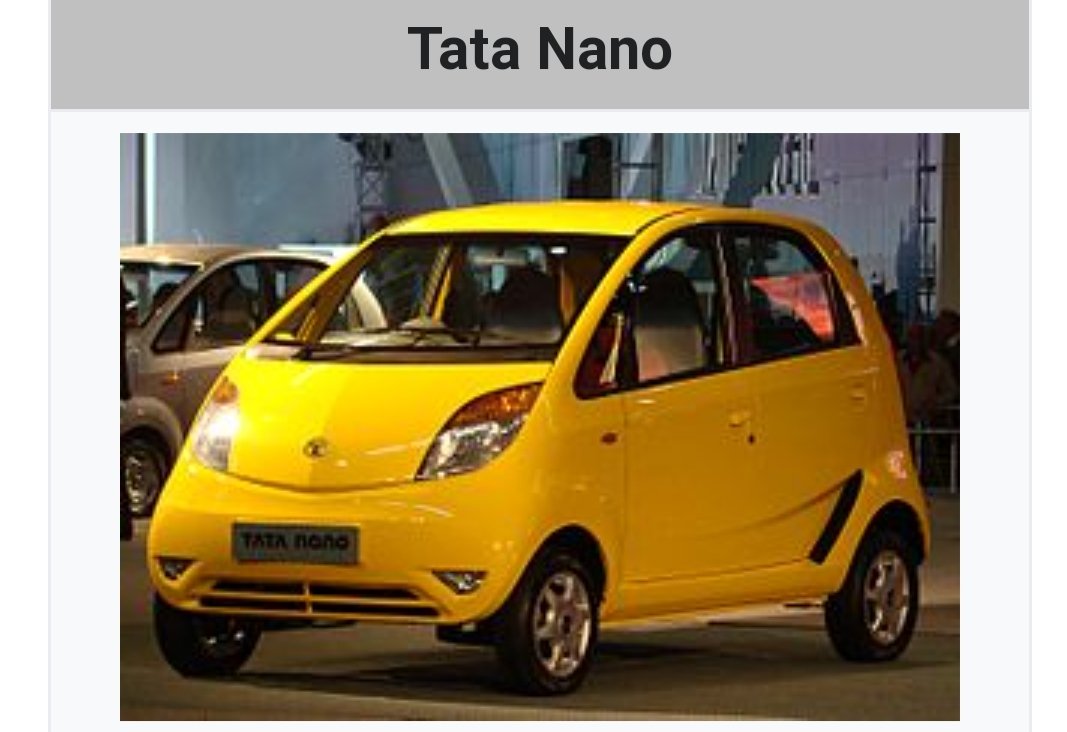
Nano cleped as the “World’s Cheapest Car” has a backstory worth knowing. The idea of an ‘economical and safe transport’ was devised in Sir Ratan Tata’s mind when he saw a family of 4 on a scooter, riding away in the rain on the treacherous road. It made him worried, not just about their safety but for many other families just like them.

“The fact of unsafe travel was bothering me,” said Ratan Tata, Chairman Emeritus, Tata Sons and Chairman, Tata Trusts.

 “What really motivated me, and sparked a desire to produce such a vehicle, was constantly seeing Indian families riding on scooters, four or five on a scooter, maybe the child sandwiched between the mother and father, riding to wherever they were going, often on slippery roads in the dark.” He further quoted.

His initial idea wasn’t a Car, it was to make scooters safer. “That mutated into four wheels, no windows, no doors, just a basic dune buggy. I finally decided it should be a car.” stated Tata.

Nano was more than just a car, it represented a promise. He promised the people an “economical and safer” mode of transportation, quoting a price of 1,00,000 Rupees. Even though ‘The People’s Car’ had a bumpy ride in the market and is now discontinued, Sir Ratan Tata’s gesture will live on in the hearts of all Indians.

PHILANTHROPY- THE TATA WAY

Ratan Tata has done a lot of humanitarian work, following in the footsteps of Jamshedji Tata, the Century’s Greatest Philanthropist. But it was his grandmother, Navajbai Tata’s, generosity that truly inspired him and has lingered with him to this day. “She had homes for the poor all over the country…she operated in that way not to gain visibility for herself, but she was a very Kind-hearted & passionate in terms of doing away with misery,” Tata said, talking about his grandmother.

To help India battle the baneful & virulent COVID-19, he donated 1500 crores. “The COVID 19 crisis is one of the toughest challenges we will face as a race. The Tata Trusts and the Tata group companies have in the past risen to the needs of the nation. At this moment, the need of the hour is greater than any other time.” In an Instagram post, he stated.

Tata Education and Development Trust – a philanthropic affiliate of India’s Tata Group – a $25 million endowment, that allows Cornell to provide financial aid to undergraduate students from India.

The Tata Trust also teamed up with khan academy, a Non-Profit-Organization, to provide free online education to all Indians.

Tata group donated a 551 bedded COVID-19 Hospital, built from scratch utilizing prefabricated shipping containers.

Tata Steel’s 1000 school project, awarded the “Most Impactful CSR Project, 2018″, Aimed at improving the quality of education in Government schools as well as strengthening the governance against child labour & increasing access to schools.

Tata’s contribution to building India is unmatchable & prodigious.

Religion in India

Being a part of a mixed economy , where politics tend to exploit the peace between different religions and so on …….. .

“India was the motherland of our race, and Sanskrit the mother of Europe’s languages: she was the mother of our philosophy; mother, through the Arabs, of much of our mathematics; mother, through the Buddha, of the ideals embodied in Christianity; mother, through the village community, of self-government and democracy. Mother India is in many ways the mother of us all.”

Will Durant, American historian

And now you want to know why I am being so dramatic over such things . Well , if you want to know than start reading the editorial .

Introduction

Indians say it is important to respect all religions, but major religious groups see little in common and want to live separately

More than 70 years after India became free from colonial rule, Indians generally feel their country has lived up to one of its post-independence ideals: a society where followers of many religions can live and practice freely.

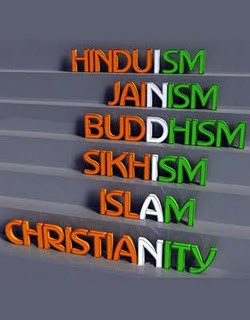
Religion has historically influenced Indian society on a political, cultural and economic level. There is a sense of pride associated with the country’s rich religious history as the traditions of Hinduism, Buddhism, Sikhism and Jainism all emerged out of India. Moreover, while a majority of people in India identify as Hindu (79.8%), the medley of religions that exist within the country continually impact contemporary society.

Census

The 2011 Indian census indicated that 79.8% of Indians identified as Hindu, 14.2% identified as Muslim and 2.3% identified as Christian. A further 1.7% of the population identified as Sikh, 0.7% identified as Buddhist and 0.37% identified as Jain. Due to the massive population size of India, religious minorities still represent a significant number of people. For example, although only 0.37% of India may identify with Jainism, that still equates to over 4 million people. While not all religions in India can be discussed in detail, the following provides an overview of the major religions in the country as well as sizable religions that originated in India.

Social beliefs

“India has two million gods and worships them all. In religion all other countries are paupers; India is the only millionaire.”

Mark Twain

Karma, Acceptance and Personal Choice . Many Indians tend to have a sense of acceptance towards one’s life position or a belief that, due to actions in one’s past life, good or bad personal circumstances are deserved. This attitude partly stems from religious ideas such as ‘karma’ (the idea that one’s actions will affect their current or future life) and ‘samsara’ (the cycle of rebirth).

The interplay of these social, cultural and religious factors allows people to be accepting of life events and trajectories. However, this is not to be interpreted as Indians being unwilling to take responsibility for life circumstances. Many often contemplate how their actions may impact their future and make decisions accordingly. Some of India’s youth are challenging a fatalistic perspective by asserting their free will to choose their vocation, spouse and other life factors. Indeed, as social mobility becomes more common, there is a growing belief that one can change their circumstances.

It’s Role

Religion plays a major role in the Indian way of life. Rituals, worship, and other religious activities are very prominent in an individual’s daily life; it is also a principal organizer of social life. The degree of religiosity varies amongst individuals; in recent decades, religious orthodoxy and observances have become less common in Indian society, particularly amongst young urban-dwellers. As of the politics , they play with religion , people’s belief and with their trust .

Link :

Do you know about Maritime laws in india ? Let’s see some marine offenses

Definition of maritime laws :

In its counterparts as public law , it widely known as “the law of sea “. It also called Admiralty law. the process of carrying goods through sea, rules concerning protection and maintenance of ships at sea, registration and damage to ships, marine insurance etc. , is covered under maritime laws .

As india is surrounded by water from the three sides , it created nature condition for Marin trade after the water territorial trade started.

Legislations prior to Independence : maritime laws in India were governed under the British government. There are some of the regulations which deal with various aspects of maritime in India.

  • Coasting Vessels Act, 1838
  • Indian Registration of Ships Act, 1841,
  • Admiralty Offences (Colonial) Act, 1849
  • Inland Steam Vessels Act, 1917
  • Indian Ports Act, 1908
  • Control of Shipping Act, 1947

Legislations after independence : after the  independence sea laws mostly governed under article 297 of the constitution. And there are different lex on waters, continental shelf, EEZ and other maritime zones.

Some of the acts are there , for maritimes affairs . This are

  • The Merchant Shipping Act, 1958
  • The Admiralty (Jurisdiction and Settlement of Maritime Claims) Act, 2017. 
  • Article 297 of the constitution

Marines crimes , are frequent offenses which  have been committing in sea . There are some marine offences mentioned below –

  • Maritime Piracy
  • Smuggling Exotic plants and animals
  • Unauthorized entry
  • Illegal Carrying of Weapons and artillery
  • Maritime Drug trafficking
  • Maritime Human Trafficking
  • Discharging in Ocean Waters
  • Sailing or fishing in unauthorized areas–
  • Tax evasion

Maritime piracy is an illegal act of violence, detention or destruction against a ship , on person or property, for private purposes, by the crew or passengers of a private ship . Piracy also includes inciting and intentionally facilitating such acts of violence, and voluntarily participating in the operation of a pirate ship . Pushiment for piracy is prescribed in anti maritime piracy bill 2019 , that is (i) life imprisonment ; or (ii) death , if the act of piracy is caused or seek to cause death.

Smuggling Exotic plants and animals : For a ship without authorization, its illegal to do Smuggling of exotic plants and animals for wildlife smuggling. This is because wildlife smuggling involves the isolation of plants and animals. When they arrived at the destination, they may not be able to adapt to the new place. Animals may also cause vulnerable diseases in people. And it may also leads to the serious illness or death of animals . To smuggle Endangered Species of Wild Fauna and Flora , is crime in maritime law.

Unauthorized entry : the ship must seek permission from government of that nation , For entry in a nation’s marine boundary . Sailing on that nation’s waters without a permission is a maritime crime and punishable in all countries. And a person who illegally and secretly boards and hides in to the ship, without the consent of ship owner and master, to travel into international waters to reach some other country without any monitory payment and legal documents , is known as stowaway.

Illegal Carrying of Weapons and Artillery : to carry weapons and artillery, throughout the water territory of any country , which is not legally bonded , is a martime offence .Goods which are sensitive in nature can be transported by specific ships only . Bringing in weapons on a ship, is not authorized , it is a punishable offense.

Maritime Drug trafficking : maritime drug trafficking means transportation of illegal drugs produced in this region to global consumer markets through using ships . To sell drug, is illegal in itself and trafficking of it become more severe offence .

Maritime Human Trafficking : maritime Human Trafficking involves the use of force, fraud, or coercion to obtain some type of labor or commercial sex act , through exporting victim in other country vie ships .

Discharging in Ocean Waters : it refers to the sewage discharge done by the vessels and ships in the water territory of any nation . Marine pollution is a serious issue and almost all countries have strict policies against ships discharging sewage or oil into their coastal waters.

Sailing or fishing in unauthorized areas : it’s an offence to do sailing in an areas of water territory where the sailing or fishing is not allowed .

Tax evasion : ship owners trying to evade taxes through false documentation or incorrect representation of cargo material have been increasing rapidly, posing a threat to maritime security. It’s a white collar crime.

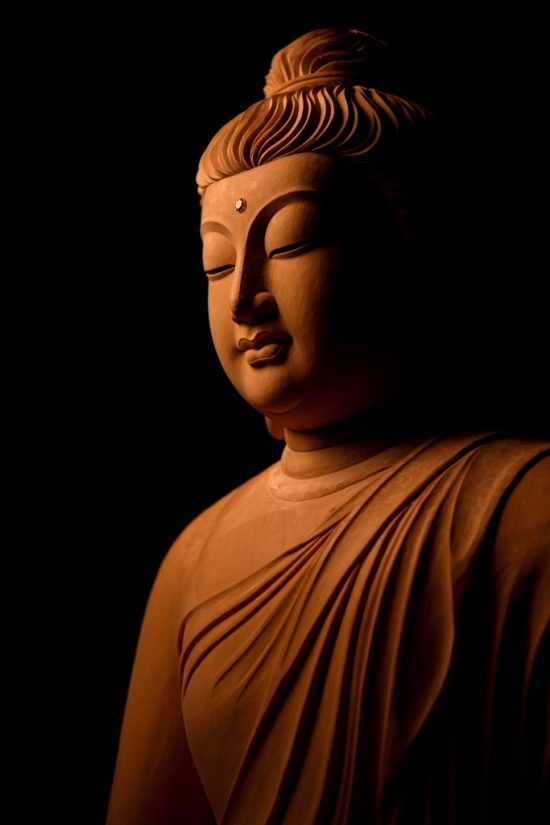
The Origin of Buddhism .

We are what we think. All that we are arises with our thoughts. With our thoughts, we make the world.
Peace comes from within. Do not seek it without.

Lord Buddha

Introduction.

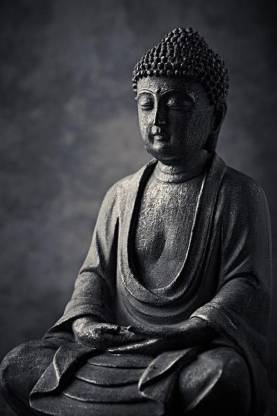
He was a spiritual personality . An ancient teacher and enlightened many . A founder of world religion Buddhism . He was popularly known as Gautama Buddha (also known as Siddhattha Gotama or Siddhārtha Gautama or Buddha Shakyamuni ) .

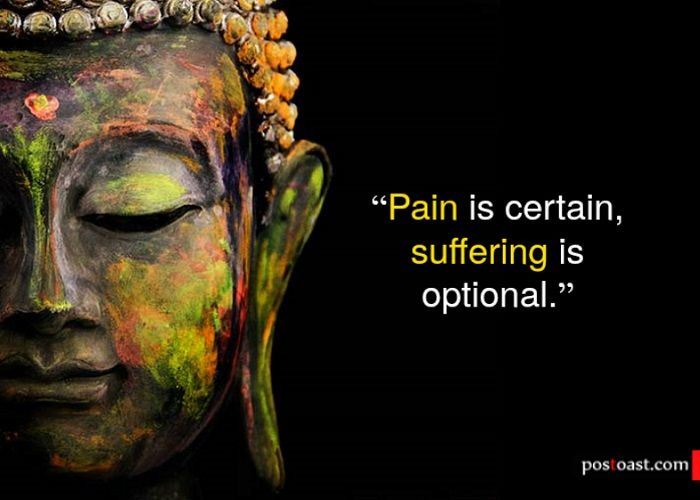
The Enlightened One who rediscovered an ancient path to release clinging and craving and escape the cycle of birth and rebirth. He taught for around 45 years and built a large following, both monastic and lay. His teaching is based on his insight into the arising of duḥkha (the unsatisfactoriness of clinging to impermanent states and things) and the ending of duhkha—the state called Nibbāna or Nirvana (extinguishing of the three fires).

Buddhism

Buddhism, one of the major religions and philosophical systems of southern and eastern Asia and of the world. Buddha is one of the many epithets of a teacher who lived in northern India sometime between the 6th and the 4th century before the Common Era.

The title buddha was used by a number of religious groups in ancient India and had a range of meanings, but it came to be associated most strongly with the tradition of Buddhism and to mean an enlightened being, one who has awakened from the sleep of ignorance and achieved freedom from suffering.

According to the various traditions of Buddhism, there have been buddhas in the past and there will be buddhas in the future. Some forms of Buddhism hold that there is only one buddha for each historical age; others hold that all beings will eventually become buddhas because they possess the buddha nature (tathagatagarbha).

According to Buddhist doctrine, the universe is the product of karma, the law of the cause and effect of actions, according to which virtuous actions create pleasure in the future and nonvirtuous actions create pain.

Your work is to discover your world and then with all your heart give yourself to it.

Lord Buddha

History

Gautama Buddha ( born c. 6th–4th century BCE, Lumbini, near Kapilavastu, Shakya republic, Kosala kingdom [now in Nepal]—died, Kusinara, Malla republic, Magadha kingdom [now Kasia, India]).

Buddha is one of the many epithets of a teacher who lived in northern India sometime between the 6th and the 4th century before the Common Era.

Learnings from Gautama Buddha.

1. “Three things cannot be hidden: the sun, the moon and the truth.”

2. “You will not be punished for your anger; you will be punished by your anger.”

3. “You can search throughout the entire universe for someone who is more deserving of your love and affection than you are yourself, and that person is not to be found anywhere. You, yourself, as much as anybody in the entire universe, deserve your love and affection.”

4. “We are shaped by our thoughts; we become what we think. When the mind is pure, joy follows like a shadow that never leaves.”

5. “Believe nothing, no matter where you read it, or who said it, no matter if I have said it, unless it agrees with your own reason and your own common sense.”

Link

Ratan tata

Ratan Naval Tata is an Indian industrialist, philanthropist, and a former chairman of Tata Sons. He was also chairman of Tata Group, from 1990 to 2012, and again, as interim chairman, from October 2016 through February 2017, and his most profits are donated to charitable trusts

He was born in 1937 on 28th of december(83 yrs) and his parents were Naval Tata and sooni tata his education was completed in hardvard business school in 1975.and he has a brother named noel tata. And the awards he got received are padma vibhushan, padma bhushan, CNN-IBN Indian of the year in business.

And ratan tata was fond of cars he adores cars Ratan naval Tata is highly fond of cars. He has a wonderful collection of high-end cars including Ferrari California, Cadillac XLR, Land Rover Freelander, Chrysler Sebring, Honda Civic, Mercedes Benz S-Class, Maserati Quattroporte, Mercedes Benz 500 SL, Jaguar F-Type, Jaguar XF-R, and some others.

Nano cars are the dearest project for ratan Tata in 2009, he promised to make a car that would cost only 1 lakh rupee. For middle class family it is useful. He kept the best efforts to keep up his promises to the society.

Ratan tata didn’t get married because he fell in love and due to some reasons they got separated and she got married to another person.