Reading Habit

One of the many goals which we want to achieve in life, developing a reading habit should be one. It may seem tough at first but with time and practice, everyone can achieve it. While some have mastered it, others might be struggling to be consistent with it. Many of us have tried reading at some point of time and failed to keep at it consistently. This may happen for a number of reasons but none of them mean that we can’t start with it again and give it a try. One of the most common ways in which people start reading is starting with a list of “Good books to start reading with”. The internet is flooded with such lists and many people have shared their suggestions. A book which has some literary value, is easy and engaging is a great choice to start with.

According to many bloggers and writers the following list of books can help someone who has been trying to start reading for a long time. 

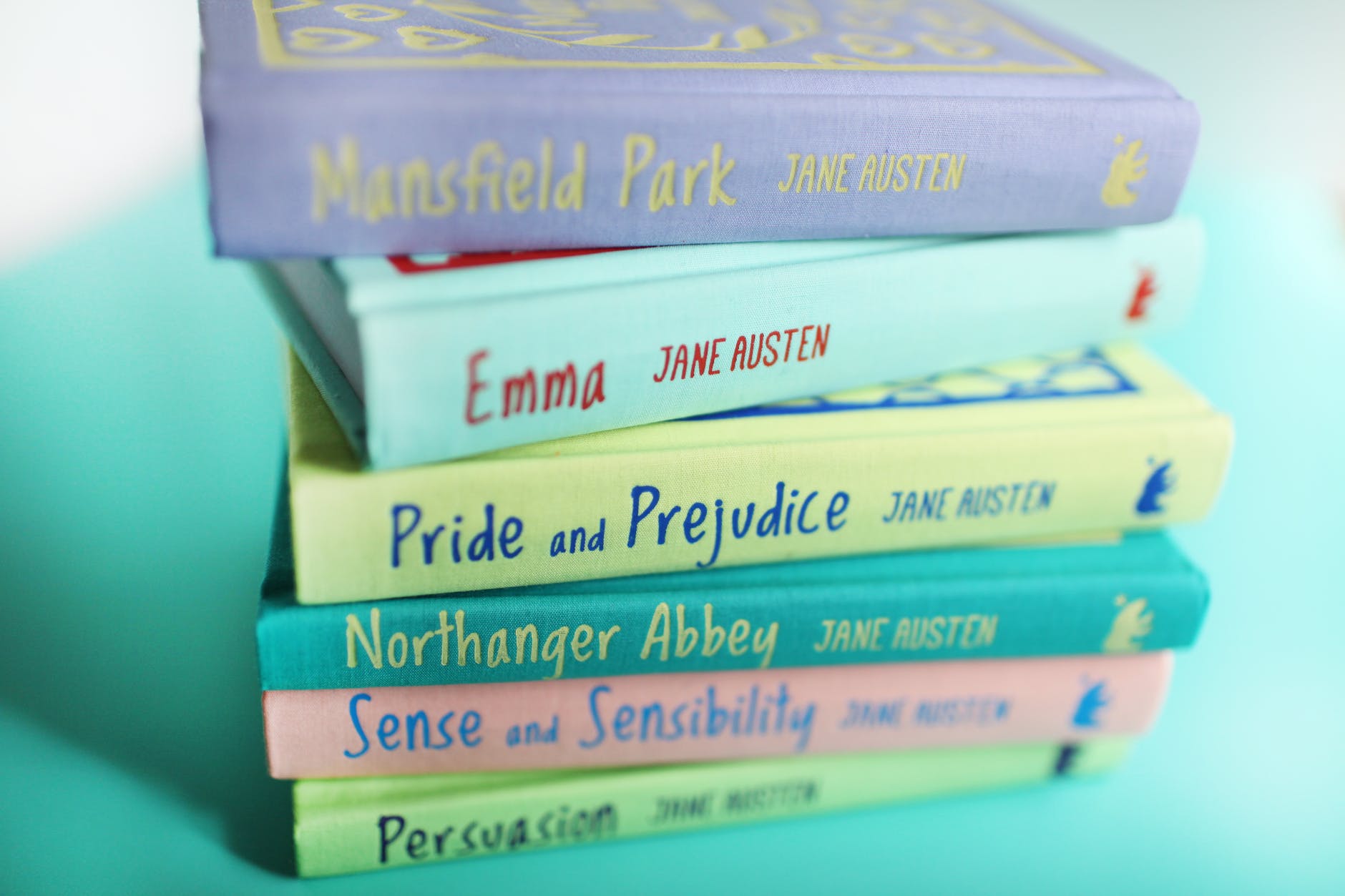
Photo by Leah Kelley on Pexels.com
  • The Kite Runner by Khaled Hosseini
  • Train to Pakistan by Khushwant Singh
  • The Diary of a Young Girl by Anne Frank
  • The Harry Potter Series by J.K Rowling
  • Becoming by Michelle Obama
  • The Alchemist by Paulo Coelho
Photo by cottonbro on Pexels.com

While it may work for some, others may not find it helpful. One of the common things which we fail to notice is the fact that most of us can’t bring ourselves to sit down with a book. This may be due to lack of time. In the middle of a busy day we fail to make time for reading. External factors like a proper surrounding can also be the reason for us getting distracted and impatient. So for people who can relate with these, a few suggestions can work.

Firstly, set a separate time for reading. Look at your schedule and take out a time which may be ideal for starting a new activity. Setting aside a specific time of the day for reading will help you focus more and be attentive.

Second, create a good reading atmosphere. Clean your surroundings and declutter everything around you. Attention depends a lot on external factors and an unkept background can often make you inattentive and disturbed.

Third, make a reading list. Write down all the books which you want to read next and keep ticking them off once you’re done. This will be like a to-do list and will motivate you to read. You can also take up reading challenges like ‘Ten books in a year’ or ‘One book a month’. Remember to start small and go one step at a time.

Fourth, start reading with a friend. Select a book and make plans to discuss with your friend once you complete it. You can also start talking about it among yourselves and discuss about what may happen next. This will definitely make you finish the book and also speed up your pace.

Fifth, be consistent. Make it a point to read every day. Even a small 15 minute would do. Once you skip a day it will become a habit and you’ll start repeating it. The same goes for the opposite. Once reading everyday becomes a habit you have developed the habit of reading quite well. So happy reading!

Importance of Reading Books

“There is more treasure in books than in all the pirate’s loot on Treasure Island.” – Walt Disney

Reading exposes us to new things, new ways, new understanding, new information, new ways to handle situations and new ways to solve them. It develops positive thinking and gives you a better perspective of life. It also enhances your knowledge, improves our concentration and makes us more confident. The importance of reading books is that it is giving you time to take a break from all your troubles. Once you get back to the real world, all those problems are much easier to tackle as your mind has been refreshed. Hence, it is important to develop the habit of reading not only for the sake of knowledge but also for personal growth and development.

Reading books makes us more knowledgeable and also enhances our memory power. With all our knowledge, vocabulary and grammar skills gained from reading, our confidence gets a huge boost and it helps us grow in all aspects of our life whether personal or professional. Reading can help us grow and give a new perspective about life. The benefits of reading books is that reading involves plots and character personalities, as well as events and human emotions. It also means remembering all these details to enable you to get through the book. Hence reading benefits the brain by forcing it to increase its ability to remember and improving our memory. Reading books is also vital for learning new languages as it helps non- native speakers alleviate, gain exposure and fluency in the language. Reading also improves our concentration because while we are read, we focus only on what is there in our book and nothing else. Hence it increases our attention span and improves our reasoning and logical skills. There’s a reading genre for every person on the planet, and whether our tastes lie in classical literature, poetry, fashion magazines, biographies, religious texts, young adult books, self-help guides, street lit, or romance novels, there’s something out there to capture our curiosity and imagination. Books enable us to have a glimpse into cultures, traditions, arts, history, geography, health, psychology, several other subjects , aspects of life and reading good books can influence us positively and guide us towards the right direction in life.

Reading habits develop vivid imagination, knowledge and vocabulary. It exposes us to the world of imagination as it gives us different ideas and understanding. As our imagination improves, so does our creativity and our ability to relate to things in new ways. As we read more and more, we are exposed to new things and new ideas. Our creativity and our way of inter-relating things improve. This leads to creative thinking. It also helps relieve stress as a good, engaging book will distract us and keep us in the present moment, letting tensions drain away and allowing us to relax. It is important to read a good book at least for a few minutes each day to stretch the brain muscles for healthy functioning. Hence, it is very important to develop good reading habits.

“Stop Worrying and Start Living” – Dale Carnegie – Book review

Dale Carnegie’s how to stop worrying and start living so the first big idea is ask yourself what’s the worst thing that can happen I remember the first year in college constantly worrying about my grades what was I getting to do if I got a B+ rather than an a well surely my life would be over and that i would never amount to anything in life like that was seriously the thought process browsing my 17 year old head now fast-forward five years.

How to Stop Worrying & Start Living
Carnegie tells a story of this guy in World War 2 who’s stuck in a submarine and basically knows that he’ll be dying in the next few hours and he sits there thinking about all the stuff he used to worry about at home and how absurd it was and makes a promise to never waste his life again like that if he survives now that might be hard to resonate with so let me give you a more contemporary example people are having their heads chopped off every single day every single day the only reason it’s not you is because you are born in a certain place. They weren’t that’s it now going back to my friend I told him look here’s what I want you to do every day you will start your morning by watching somebody’s head being chopped off and then you’ll go about the rest of the day.
He started freaking out about how he can’t do that and how he doesn’t like blood and whatever now here’s the thing. I know that’s really crass and morbid but I don’t care if you don’t worry about stuff great you don’t have to watch anything but if you’re worried about stupid all the time you have a disease so you either treat yourself or you never ask about how you can stop worrying again ever. Here’s what I will guarantee you if you start your day by watching someone else have their head chopped off nothing and I mean absolutely nothing could possibly happen to you for the rest of the day that you could get pissed off about and not feel like a complete retard yes when you’ve seen someone’s head chopped off you will have a weird feeling inside you as soon as you start to complain about how you deserve to be paid more at your job or what you’re going to do now since you bought a B+ rather than an A or how your washer is broken you’ll realize that.

automatic weapon bullet camouflage close up
Photo by Pixabay on Pexels.com

If the guy had been given the chance to live and wear that same dirty shirt for the rest of his life without ever being able to wash it he would have been the happiest man alive realize the absurdity of it all the third big idea staying busy now I don’t mean the average busy person actually those are the people that worry the foremost the guy who works 12-hour days then comes home and watches Fox all night worrying about whether some guy can marry another guy or about all the foreigners who will come and take his job you know because he’s the only one entitled to that job I’m not talking about that kind of busy here’s how I like to stay busy read a book that I like go to the gym with my girlfriend play around on the piano and compose cook amazing food work on a project. I’m passionate about now here’s what happens when you do that your brain can’t think of two things at one time it just doesn’t have that capability you can try right now if you want you can’t think of your broken washing machine and at the same time think of how much you love playing soccer it’s not how your brain works so the best way to get rid of the negative thoughts in your head is to actually start putting positive thoughts in there get busy with what you love and your brain simply won’t even have the power to stress . Finally, a question that really resonated with me here’s what you’re going to do in your life you’re going to work and worry your entire life so you can gather a bunch of stuff like your house and all the stupid.

woman working girl sitting
Photo by Alexander Dummer on Pexels.com

If you’re lucky after 50 years of all that worry and stress all of your stuff could be worth 1,000,000 dollars here’s the question would you sell your legs for a million dollars let me ask you this would you sell your legs for a billion dollars I wouldn’t and you probably wouldn’t either would you sell your arms for another billion dollars no there you go you have already got something that you simply value at two billion dollars actually hopefully more but you do not need to be all Zen you could be a greedy capitalist like me and understand this now here’s what you’re going to do you’re going to ignore and not utilize something worth two billion dollars because you’re too busy worrying and stressing about the things that might amount to 1 million dollars at the end of your life oh and you’ll be considered really lucky if that happens by the way all right.

cheerful barista in apron and hat with portafilter
Photo by Ketut Subiyanto on Pexels.com

So, I don’t know if you’re seeing how crazy that is but that’s kind of like having a huge mansion a personal jet every single car you ever wished for and not using and enjoying those things because you’re too worried about at some point having the ability to shop for a Corolla that’s crazy and sad you have already got everything that you value at billions and billions of dollars so stop ignoring wasting and treating it like for hours and days so you can worry and bitch about how your phone bill went up from a hundred dollars to a hundred and twenty.

You can buy this amazing book from here ( click here )

15 Books Bill Gates recommend – Must Read!!!

An average person reads 1.5 books per year while your average top CEO reads over 50 books per year they do this so they can maintain a competitive edge in the game and find new ideas that could improve both their lifestyles and companies this  time we’re taking a look at the books multi billionaire Bill Gates thinks  everyone should read because they had such an incredible impact on his own journey.

Here is list of all 15 books that must be read by you to get a better life style:

1, Where good Ideas come from :- Steven Johnson

 Click here to view the book


2, Life is what you make it :- Peter Buffet

click here buy the book


3, Tap dancing to work :- Carol Loomis

Tap Dancing to Work: Warren Buffett on Practically Everything, 1966-2013click here to buy the book


4, Moonwalking with Einstein :- Joshua Foer

Moonwalking with Einstein: The Art and Science of Remembering Everything click here to buy the book


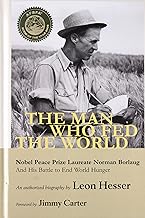
5, The Man Who Fed the World :- Leon Hesser

The Man Who Fed the World

Click here to buy the book


6, “The Sixth Extinction” by Elizabeth Kolbert

The Sixth Extinction: An Unnatural History click here to buy the book


7, Making the Modern World :- Vaclav Smil

Making the Modern World: Materials and Dematerialization click here to buy the book


8, The Rosie Project :- Graeme Simsion

The Rosie Project (The Rosie Project Series)

click here to buy the book


9, Business Adventures: Twelve Classic Tales from the World of Wall Street :- John Brooks

Business Adventures

click here to buy the book


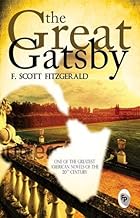
10, The Great Gatsby :- F. Scott Fitzgerald

The Great Gatsby

click here to buy the book


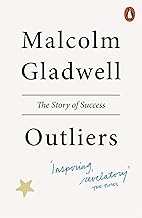
11, Outliers :- Malcolm Gladwell

Outliers: The Story of Success click here to buy the book


12, How to Lie With Statistics :- Darrell Huff

How To Lie With Statistics click here to buy the book


13, The Box :-  Marc Levinson

The Box – How the Shipping Container Made the World Smaller and the World Economy Bigger

click here to buy the book


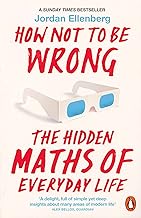
14, How Not to Be Wrong :- Jordan Ellenberg

How Not to be Wrong: The Hidden Maths of Everyday Life

click here to buy the book


15, Sapiens: A Brief History of Humankind :- Yuval Noah Harari

Sapiens: A Brief History of Humankind

click here to buy the book


Drive My Car: A Short Story

In this short story collection, all of the seven men are immensely curious and on the basis of their curiosity, each story moves forward. In the first short story, ‘Drive My Car’ the protagonist is a veteran actor who lost his wife to advanced uterian cancer. Kafuku, the curious widower has been living his days seeking for answers for his dead wife’s infidelity. He has been in love with her for twenty long years to the extent where he knowingly ignored the four affairs his wife had been in, after they both lost their three days old child at the hospital. He finds solace in the company of the female driver whom he hires, even though he had always been doubtful of women drivers. He loses his beautiful wife but he can’t lose the thought of she making love with her colleague. He ends up meeting her last partner, after her death. Kafuku befriends him in order to find a fatal flaw which he would use against him as a way to punish him for sleeping with his wife. Only he couldn’t. He couldn’t punish the other man. He lets the other man go. But, curiosity doesn’t leave Kafuku.

Haruki Murakami is one of the most popular bestseller authors across the globe. All of his works are his masterpieces, his words keep the readers hooked to the story until the very last. He got immense popularity with his novel, The Norwegian Wood, a gem of a book. He is not only a bestseller in his native place but also a bestseller all around the world. He has done an excellent work with his novel, Men Without Women. He has completely hypnotized the readers with his magic words and beautiful minute details. The book has seven tales of seven different characters, bound together only on one point – the lack of one woman in their lives. All the protagonists are male, and their lives are halved and they are left lonely without women.

The entire plot of the short story revolves around curiosity. Murakami, through his narration, brought out the nature of every character present in the story. You definitely should read the story, to understand the depths of human mind. Their are many intricacies in human mind, and Murakami miraculously excels every single time with his extraordinary words, and a sense of getting deep inside the reader’s thoughts. He brings out the rhythms to the heart’s music, and plays it, according to his convenience. We read, what he writes for us, in a way that our desires get fulfilled. It is extremely hard to put down any work of Haruki Murakami, before finishing. But, the most beautiful part of reading Murakami’s works are, you can read them as many times you want, but every time you open the page to the same old story, trust me, the words would speak differently to you.

In my opinion, the universe would become a sad but happy place, if you read the short story, ‘Drive My Car.’ It is one of a kind, which provides you with a sense of calm, yet holds your attention until the very last, and even then, you would wish the story to continue, you would wish to know more about the characters, and you stay oddly unsatisfied yet satisfied with the story.

How can one develop reading habits?

The basic reasons why reading is important is that it helps in the growth of of emotional, mental and psychological aspects of a human behaviour. Every book you read would give you an opportunity to learn new ideas and implement them in your day to day life. Reading not only makes you intelligent but also smarter. For an author, writing a book takes a hell lot of efforts and dedication. He passes through several pains to come up with a single book. As readers we gain years of experiences by reading them. Reading improves our focus and concentration. Many of us spent our time surfing through the internet, watching videos and reading unnecessary memes. This is the reason people are losing focus. Thus, reading is an effective way to gain focus back. It helps in the discovery of yourself. When you read a book, you connect to various experiences and emotions. This not only makes you engrossed into the books but also guides you to to act in particular ways when you face such situations in life.

Reading also leads to the improvement of your emotional health. While reading a book you encounter many emotions such as happiness, anger, sorrow, surprise etc. But at the end, we always wish our hero to win. Your memory is also enhanced as you come across many words which you need to remember. U tend to become more creative and self motivated.

There are many reasons to be listed that why one should read books on a daily basis. Now, here are the ways to develop reading habits:

  • The foremost step to start developing reading habits is to stop looking it as a chore. Start reading few pages everyday and steadily increase the number as you begin to enjoy the story. It will take time to be able read 500 pages at a stretch.
  • Choose your genre of books such as fiction, non-fiction, fantasy or biography. It is better to know your taste of reading first rather than getting them halfway done and leaving.
  • Start small. Reading short stories can be a a very good start for the budding readers.
  • It is not necessary to complete a book till the end if you are not not finding it interesting. You may better leave it if you think that the book is not worth of your time.
  • Don’t start reading a book having tough language. Obviously, you can take help of a dictionary but better start with those books which have simple vocabulary. Gradually you can move on to to reading such books.
  • Paper is no more exciting. You can read from Amazon’s Kindle having millions of books of various genre.
  • Read the books on a daily basis. Do not pressurise yourself if you don’t feel like reading a book for long hours. Start with reading 20-30 minutes daily and then gradually increase over time.
  • Try to read before going to bed. This would not only improve your mental health but also would provide you a sound sleep.
  • Read at quiet places where there are no disturbances at all.
  • You can also keep a short diary with you to make notes for further references.

Not Everything we Find Online is True! (and ways to be more aware)

Access to the internet has become cheaper than ever, whether you use a computer, phone or a tablet. The fact that many young people are spending more and more time online is inevitable. It has both positive and negative consequences.

The advantages of internet is well known to everyone. It helps us stay connected to the world, our friends and family. It provides us with information, loads of it. Young people can use the internet for research for their homework and schoolwork. But this advantage itself can sometimes, become disadvantage to the users. Internet is loaded with information and it is the duty of every individual using internet to handle those information with more awareness. Also, being on internet may lead to addiction to games, social media etc. so, it is imperative that not only information is needed to be handled with sensibility but the internet itself needs the same amount of cognizance.

We like attention as human beings and internet is a platform that provides us the space to talk. So, sometimes we talk out loud without being well informed. I myself have done this in arguments, when I run out of facts, I resort to conjectures. But that’s not the correct way. Don’t believe everything you read on the internet. Infact, it is a good practice probably to not believe anything you read or see anywhere. It is good to be a little skeptical. People may call you cynical but this is the first step towards being well informed. Never just make conclusions by reading from a single source. Broaden your knowledge about a subject, dig a little deeper. Read the counter argument, in case of an argument.

Here are five simple ways to help yourself become more aware:

1. Click the links of source on the article. – this is the most easy step and few people take the time out for this. News articles/ blogs usually contain links to other web pages for more information. Click on them and try to read the whole article yourself. You’ll find that sometimes, the blog article is not the fact but the writer’s opinion/experience. In case you don’t have much time, skim through the article or read it later. Save it.

2. Understand the difference between opinion and fact. – facts and opinions are two different things. Many of the writers write their own interpretation of a topic. This is their opinion, you do not need to make it yours. Trolls write insults as if they are facts. Make sure you understand the difference and don’t make assumptions by yourself without considering different perspectives.

3. Ask a lot of questions. – After a few questions, most internet nonsense falls apart. This way you can reason various things written on the internet and see if they have a firm background or not or are they just false claims!

4. Don’t be a worker bee and follow: form your own opinions. It is important for a person to have an opinion. Do your research, read news, analyse various perspectives and then make an informed decision.

5. Question your beliefs: Abraham Lincoln, once said, “I do not think much of a man who is not wiser today than he was yesterday.” Never set your beliefs firm. Accept denial and talk to people who disagree your belief in order to understand their point of view. Internet is the most powerful tool for information in the human history. Seek its use in the right direction!

These ways doesn’t mean that you’ll always get the right information. But, this is a good start. A little skepticism is healthy and constructive, for it makes the reader, an informed reader. There is nothing wrong in accepting when you don‘t know something. Spending time on internet may be bad or misinforming but it also has many advantages. The internet is an incredible tool and benefit of internet outweighs the disadvantages. However, it is imperative that we should be careful and practice proactive reading than reactive.

How to promote interactive reading in classroom

Reading is an active process in which readers construct meanings of words. Good readers use contextual knowledge and experience to make connections with the text. They make predictions about what is going to happen next in the text, so when they read they have the motivation to find out whether they are right or wrong.

Every reader uses his/her experience or background knowledge to a text. If a teacher is able to bring out the students’ background knowledge first in the classroom, students will be able to understand the reading better. The teacher needs to provide it somehow. Teacher needs to provide activities that help students use his/her experience driven concept and information (data driven from the text) together.

Three Basic Steps to Teaching Reading

1. Pre-reading goals

i. To build or activate students’ knowledge about a topic.

ii. Assist in language preparation, give new vocabulary.

iii. To build interest – look at pictures, titles, captions etc.

2. Reading goals

i. To help students understand content

ii. To help them understand different patterns and structures, as well as main ideas and details in the text.

3. Post-reading goals

i. To discuss the content and make sure students understand what they have read and can summarise what they have read (both oral or written).

ii. In next class, work on vocabulary and grammar.

iii. Integrate the content of the reading with their knowledge of the topic, by increasing the experience through discussion or writing.

Choosing Texts

• Is the level suitable?

• Is the topic appropriate to your students – interest, culturally sensitive etc.

• How long is it ? Should be intriguing, a little challenging but something they can succeed at.

• where will they read it- class/outside or both ?

• How much grammar and technical terms is there?

• Are there pictures? Graphs ? Maps?

• Different formats should be there – poetry/prose, fiction/non-fiction.

INTERACTIVE READING ACTIVITIES

READ, TELL, LISTEN, TELL

Give a short story or paragraph to each student. They read the story individually to themselves. Now, in pairs, they tell each other their story in their own words and then listen carefully to the partner’s story. They do not read their partner’s story. Now two pairs sit together, so there are 4 students. Now students tell their PARTNER’S STORY. The partner can listen to make sure it’s correct, and correct if necessary. In whole class, ask which story they liked and if they want they can tell that story reading classes.

READING WITH HALF THE WORDS

Provide each student with a text. Ask them to fold the page in half and read one half of the page that is visible without looking at the other half. After as much speculation as possible, they can read the whole story and see if the story matched with what they thought.

STORY STRIPS

Make groups of 4 students. Give them a story cut up into strips and ask them to assemble it. Then read the story while they listen and check theirs. You may give them the text for checking further and comprehension.

These are few basic steps to teaching reading in a class with no or limited resources. The best resource is the teacher itself.

HAPPY READING!

Keep your soul diligently

We’ve all seen those memes on Facebook and other places where the letters of each word are scrambled, but the first and last letters are kept unchanged. Sometimes these memes are accompanied by statements such as, “Only intelligent people are able to understand this message.” Actually, most adept readers are able to read them; as we learned to read, our brains developed shortcuts that recognize words even when the internal parts of the words have been changed.

But, by the same token, sometimes we mistake one word for another. The slip-up can be amusing, such as confusing “immorality” and “immortality.” Usually a second glance fixes the misreading. But this morning in my Bible reading, I faced a misreading that indicates just how overwhelming our current virus crisis has become.

I was reading Deuteronomy chapter four. I got to verse nine, which says, “Only take care, and keep your soul diligently, lest you forget the things that your eyes have seen, and lest they depart from your hearts all the days of your life. Make them known to your children and to your children’s children.” This is a trustworthy saying. But when my eyes first scanned the verse, my brain changed the beginning to, “Only take care, and keep your social distancing.”

Of course a second glance fixed the misreading. I suppose the words “take care” only added to the tendency to expect s…l d……..y to be “social distancing.” But my mildly amusing experience only shows how overwhelming this virus crisis has become, that I even expect the holy Word of God to command social distancing.

My experiences with the virus crisis are like those of most people. As an introvert, I don’t mind keeping my distance from other people. Three times a week I take a two-mile walk through the neighborhood. I do what I was taught as a child: I walk on the left-hand side of the road, facing the traffic. But now, with social distancing, if someone is coming toward me on the same side of the road, I cross to the other side to avoid that person. I’ve always wanted to do that. Now, not is it not rude to cross the road to avoid people—it’s recommended.

I’m very much blessed to have three jobs that all paid me my regular salary while I worked from home. Every week I write a sermon, and every Saturday I email it to the members of the congregation. Our church musician presents a concert of church music on Facebook every Sunday. We mail in our offerings, and my check comes in the mail. My history class was changed from classroom to online. Some students dropped out, and a couple have fallen behind on the work, but several are faithfully taking their quizzes (open book, since we don’t have the classroom discussion before the quiz) and—I expect—writing their essays that are due next week. But my full time job at the library raised the biggest concerns. How can a library function when the doors are locked and the workers are told to stay home?

The first week the library was closed, we were told that it was like snow days—we would stay home and be paid. The second week, they began encouraging us to do tasks at home that were somehow job related. Since I am an archivist, I began sorting and arranging the family pictures I brought from my father’s house several years ago. After they were arranged, I even started putting them on Facebook and tagging family members. I also explored the family genealogy. More than half the people who visit our research room in the library are doing genealogy—some in great depth, others just getting started. I’ve always been able to guide people to resources, but now I have much more experience in genealogical research and will be more helpful.

By the third week, we had a process of reporting how we were spending our time “on the clock.” But after that, the library decided that 75% of our hours had to be of direct benefit to the library system; the other 25% could be for learning and wellness activities. Some library branches began experimenting with curb-side services. Four branches are providing free meals to neighborhood children who usually get fed at school. My department remains locked up; but we are taking turns being in the building to answer the phone and help patrons.

Last week, with the phone-answering system in place, I was invited to return to my desk and continue processing archival materials. I must wear a mask everywhere in the building except at my desk; I must wash my hands frequently and wipe down surfaces often. This procedure might last for the rest of the summer.

Since it is losing some money—parking and meeting room fees, and overdue fines—the library director decided that he would reduce or eliminate some positions temporarily to save the library money. All positions will be restored when the crisis is over. People in eliminated positions retain their health insurance and other benefits but must apply for unemployment. Those who are reduced will—if the state government allows—work only part-time and receive unemployment money for the hours lost. I have been placed in the second category.

I do not feel comfortable with the likelihood that I will be receiving unemployment compensation for ten weeks or so. It’s not that I don’t need the money. It’s that every person thrown into the unemployment system is added to the financial burden that taxpayers like me and my children will be reimbursing for years to come. I disagree with the library’s decision to lower its costs by putting its workers temporarily into unemployment. In fact, I cannot help but view this as a cynical political ploy to deepen the crisis (and the feeling of crisis) at the expense of the current administration.

We will all get through this together. Stress and anxiety are high right now. (I spend little time on social media precisely because I rapidly tire of all the talk of virus and quarantine. It makes me shaky and queasy.) Meanwhile it’s important for each of us to take care, and keep our social distancing… I mean, keep our souls diligently. J.