Communication Skills in Social Work: An In-Depth Exploration

Daily writing prompt
Do you spend more time thinking about the future or the past? Why?

by Kavita Dehalwar

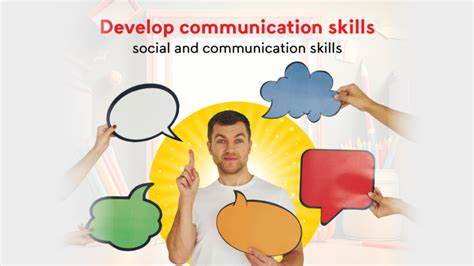
Communication skills are pivotal in the field of social work, as they enable practitioners to effectively engage with clients, collaborate with colleagues, and advocate for change. Social workers must navigate complex situations involving diverse individuals and communities, making the mastery of communication a cornerstone of professional competence.

1. Types of Communication Skills in Social Work

A. Verbal Communication

Verbal communication involves spoken words and is essential for interviewing clients, conducting assessments, and sharing information. Key aspects include:

  • Clarity and Simplicity: Using language that clients can easily understand.
  • Empathy: Showing understanding and compassion through tone and word choice.
  • Active Listening: Engaging with clients by giving verbal feedback, such as paraphrasing or summarizing their concerns.

B. Nonverbal Communication

Nonverbal cues, such as body language, facial expressions, and gestures, often convey more than words. Social workers should:

  • Maintain open and approachable body language.
  • Use eye contact appropriately, respecting cultural sensitivities.
  • Be mindful of physical proximity to create a comfortable environment.

C. Written Communication

Writing is critical for case notes, reports, and correspondence with agencies. Effective written communication requires:

  • Precision: Ensuring accuracy in documentation.
  • Professionalism: Adhering to formal standards and avoiding colloquial language.
  • Confidentiality: Protecting client information in all written records.

D. Digital Communication

With the increasing use of technology, social workers must be adept at digital communication. This includes:

  • Email and Messaging: Using professional etiquette in digital correspondence.
  • Virtual Meetings: Employing video conferencing tools effectively.
  • Social Media: Engaging responsibly and ethically online.

2. Key Communication Techniques

A. Active Listening

Active listening involves fully concentrating on the speaker, understanding their message, and responding thoughtfully. Techniques include:

  • Reflecting emotions to show empathy.
  • Avoiding interruptions or premature judgments.
  • Asking open-ended questions to encourage elaboration.

B. Empathy and Validation

Demonstrating empathy helps build trust and rapport. Validation involves acknowledging clients’ feelings and experiences, making them feel heard and understood.

C. Cultural Competence

Social workers often work with diverse populations, necessitating an awareness of cultural differences in communication styles. This includes:

  • Learning about clients’ cultural backgrounds.
  • Avoiding assumptions or stereotypes.
  • Being respectful of linguistic preferences and needs, such as using interpreters when necessary.

D. Conflict Resolution

Social workers frequently mediate disputes. Effective conflict resolution requires:

  • Clear articulation of the issues at hand.
  • Remaining neutral and unbiased.
  • Facilitating dialogue that promotes mutual understanding.

E. Advocacy Communication

Advocating for clients involves persuasive and impactful communication. Social workers must present arguments convincingly to policymakers, organizations, and other stakeholders.


3. Challenges in Communication

Social workers may encounter barriers that hinder effective communication:

  • Language Differences: Overcoming language barriers requires creativity, such as employing interpreters or translation tools.
  • Emotional Distress: Clients in crisis may struggle to articulate their feelings, necessitating a calm and patient approach.
  • Nonverbal Misinterpretation: Cultural variations in nonverbal communication can lead to misunderstandings.
  • Technology Access: Digital communication may be inaccessible to some clients, requiring alternative methods.

4. Improving Communication Skills

A. Training and Education

Regular training on communication techniques can enhance a social worker’s ability to engage with clients effectively.

B. Self-Reflection

Reflecting on personal biases and communication patterns can help identify areas for improvement.

C. Feedback and Supervision

Seeking feedback from supervisors and peers provides valuable insights into one’s communication strengths and weaknesses.

D. Adaptability

Tailoring communication styles to suit individual clients ensures messages are received and understood.


5. Ethical Considerations in Communication

Social workers must adhere to ethical standards in all communication, which include:

  • Confidentiality: Ensuring privacy and discretion in all interactions.
  • Informed Consent: Clearly explaining services and obtaining consent.
  • Professional Boundaries: Avoiding inappropriate or overly personal communication.

6. The Role of Communication in Social Work Practice

Effective communication is integral to various aspects of social work:

  • Building Trust: Open communication fosters trust between clients and social workers.
  • Problem-Solving: Clear articulation of problems and solutions helps clients navigate challenges.
  • Advocacy and Awareness: Social workers use communication to advocate for social justice and inform the public about pressing social issues.

Conclusion

Mastering communication skills is essential for social workers to fulfill their roles effectively. From empathetic listening to clear advocacy, the ability to communicate well impacts the outcomes of social work interventions significantly. Ongoing development in this area ensures that social workers can continue to empower individuals and communities in meaningful ways.

References

Dinham, A. (2006). A review of practice of teaching and learning of communication skills in social work education in England. Social work education25(8), 838-850.

Forrester, D., Kershaw, S., Moss, H., & Hughes, L. (2008). Communication skills in child protection: How do social workers talk to parents?. Child & Family Social Work13(1), 41-51.

Koprowska, J. (2007). Communication skills in social work. In Social work: A companion to learning (pp. 123-133). SAGE Publications Ltd.

Lefevre, M., Tanner, K., & Luckock, B. (2008). Developing social work students’ communication skills with children and young people: A model for the qualifying level curriculum. Child & Family Social Work13(2), 166-176.

Ogbanga, M. M. (2024). Communication Skills in Social Work. EduPedia Publications Pvt Ltd.

Ogbanga, M. M., & Bukie, B. F. (2024). Traditional Institutions and Conflict Resolution in Nigeria: A Social Work Analysis.

Ogbanga, M. M. (2024). Oil, Gender and Unemployment: Social Issues in the Niger. Eduindex.

Richards, S., Ruch, G., & Trevithick, P. (2005). Communication skills training for practice: the ethical dilemma for social work education. Social work education24(4), 409-422.

Trevithick, P. (2005). Social work skills. Berkshire: Open University Press.

What Are The Five Love Language?

You might be showing affection to your partner on a daily basis, but do you take a moment to ensure that you’re conveying it in the manner that your spouse prefers to accept it? Whenever two couples have differing love languages, even love can be lost in translation.

Words of affirmation, quality time, receiving presents, acts of service, and physical contact are the five love languages, or means of expressing and receiving love. Not everybody expresses love in the same manner, and not everyone likes to accept love in the same way.

Gary Chapman, Ph.D., created the notion of love languages in his book The 5 Love Languages: The Secret to Lasting Love, in which he explains these five distinct methods of conveying love, categories he condensed from his expertise in marriage therapy and linguistics.

Here’s a rundown of each one of Chapman’s five love languages:

Words of affirmation

Those who use words of affirmation as a love language appreciate verbal expressions of affection, such as constant “I love yous,” praises, expressions of gratitude, vocal support, and often constant digital contact such as messages and social media involvement. These individuals value written and verbal expressions of love the most. They feel understood and valued when they hear these words.

Quality time

Those who have quality time as their love language feel the most appreciated when their spouse genuinely wants to spend more time with them and is always willing to hang out. They are especially fond of it when active listening, eye contact, and complete presence are stressed as relationship characteristics. 

This love language is all about providing your entire focus to that one particular person, without any of the distractions of television, phone displays, or any other outside interference. Individuals have a great desire to constantly spend some time with their loved one, holding deep talks or participating in leisure pastimes.

Acts of services

If acts of service are your love language, you appreciate it whenever your spouse goes out of their way to make your life simpler. It’s little gestures like getting you food when you’re ill, preparing your morning coffee, or going to pick up your laundry after a hard day at work.

This is the love language of those who think that gestures speak louder than words. People on this list, unlike those who want to hear how much they are cared for, desire to be shown how they’re being cherished. Such people value doing minor and large duties to make their life simpler or perhaps more pleasant.

Gifts

Gifts are a simple love language: you feel appreciated when others offer you “visual expressions of affection,” as Chapman puts it. It’s not so much about the monetary worth as it is about the emotional significance behind the gift. Those with this personality appreciate as well as acknowledge the gift-giving process: the thorough contemplation, the intentional selection of the gift to symbolize the connection, and the emotional rewards of getting the gift.

Individuals whose language of love involves getting presents like obtaining something both tangible and meaningful. The idea is to offer thoughtful gifts that are significant to them and represent their beliefs, rather than yours.

Physical touch

Physical touch as a love language makes a person feel cherished when they receive physical indications of love such as kissing, holding hands, snuggling on the sofa, and intimacy. For persons who use this love language, physical closeness and touch may be extremely encouraging and serve as a powerful emotional bond.

When they are hugged, kissed, or snuggled, those who convey their thanks in this language feel valued. They enjoy the sensations of warmth and protection that come from physical contact.

We all show and experience love in various ways. As a result, recognising such differences may have a significant influence on our relationships. Indeed, it is one of the easiest methods to strengthen your relationships.

ANGER

Anger is an emotion which is a little more dangerous than the rest of them. Anger can be triggered due to financial problems, family problems, being surrounded by people you dislike, personal issues, etc. No one likes being angry nor do we like being surrounded by people who have a bad temper.

Everyone releases anger differently. Some like to shout at people, some like to break things, some tend to self-harm. Well, these methods do help release the anger, but they aren’t healthy ways of dealing with a situation.
Let’s have a look at how anger affects our relationships.
Some people take their anger out on the family. Sometimes when parents do not have control over things at their work, they come home and try to control the lives of their families.
Many parents often fight regularly at home and make the environment of the house hard to live in. Did you know that children who grow up in an abusive environment are usually too sensitive or completely numb? These children also show a sign of aggression or anger. They also suffer from anxiety and depression.
Some people also tend to substance abuse when they are angry. Using drugs, alcohol, tobacco, in large quantities. Some of these substances also cause more anger. Substance abuse is bad for a person’s mental, or physical health. It is also bad for the people around them.
Anger makes us do things we regret. It messes our relationships with people around us because we say things that we don’t mean to and do things we don’t want to.
I am not asking you to never take your anger out. Anger is an emotion that needs to be taken out. Taking anger out does not have to be destructive. We need to find constructive or healthy ways to take out our anger.
We are angry for a reason. So, the first step to calm the anger is to ask ourselves why we are angry. Once we find out why we are angry we can start working on it. Anger is our brain’s way of telling us to find a solution to an issue.
So, if it is a person that makes you angry, you might want to break ties with them.
If you feel angry with a job, maybe it is time to quit the job.

If we don’t listen to what our anger wants. Chances are the anger will keep sticking around until we make significant changes in our life. So, next time before you lash your anger out make sure to ask yourself what got you angry.
Some other healthy ways of dealing with anger are by doing physical activity like playing sports or working out. This will allow you to be constructive with it. In my boarding days when I would get angry, I would play squash. I would imagine the ball as my problem and hit the racket with full force. To tell you the truth it did help and make me feel good.

This way our anger is coming out in constructive ways. We need to learn to channel our anger to improve our lives instead of destroying it.

Parents

Growing up, our relationship with our parents is less complex. They are the first best friends that we have. We talk to them about everything, and they listen to us. We look up to them and want to be like them when we grow up.

 But after growing up, we realize our parents are not perfect. They make mistakes too. Well, that is not a bad thing because nobody is perfect. A lot of us then stay angry at our parents for being normal humans. We blame them for everything without realizing that they have a life of their own. Yes, we are their children, and they love us. But that does not mean they should stop living their lives. Our parents provide us with necessities, and they work hard to do it. They sacrifice their dreams to fulfill ours. But a lot of us do not give them the respect or the credit that we should. 

Growing up, parents would appreciate us for every small achievement. Now they don’t say much. We can sense they are happy but have trouble expressing it. We need to understand that it is hard for parents to express their feelings of love towards us once we grow up. It is mainly because their parents were not so expressive towards them.

Here are a few ways that can help fix your relationship with your parents:

If parents have trouble expressing their love, we can express it to them instead. If we can tell our friends, we love them on a daily basis. So, why not do the same with the people raising us?

Communication is the key to fix all relationships. We all get a gap in our relationship with our parents. That gap can only be erased by communicating with them.

Keeping the generation gap aside. We often get distant from our parents because they don’t approve of a few things. But, for that we need to understand where they are coming from. They are trying to accept our generation, but there will still be a few things they will not approve of. Instead of hating on them for it, we need to start understanding them.

We need to understand that they care for us. We sometimes tend to disagree with our parents but agree with our friends if they say the same thing. We need to understand that our parents care more about us than our friends ever would.

We all need to build a deeper relationship with our parents. We need to ask them about their day and tell them about ours. If they accept us with our flaws, we need to do the same with them. I know my parents don’t agree on a few things with me. Which is fine. It doesn’t have to come in the way of our relationship. We all have our ups and downs. Our relationship with our parents will only work when we are willing to make it work.

We say parents don’t understand us.

But do we understand them?

STAGES OF A RELATIONSHIP:

Attraction :

Every couple experiences this phase. In this stage, you only focus on the good things and similarities between each other. You spend a lot of time together and imagine that you both are made for each other. You avoid fights, and it seems that fights will never happen.

Reality :

You start finding flaws in your partner. It doesn’t mean that you don’t love your partner, but things are not as beautiful as initially. You start fighting and doubting if you are really in love. The spark in the relationship seems declining.

Photo by RODNAE Productions on Pexels.com

Anger and stupidity :

You start getting angry because of little things. You know that fights can ruin your relationship, but at the end of the day, you fight anyway. And in this higher stage of a relationship, you think of stupidity like breaking up and leaving each other by blaming each other for no reason.

Acceptance :

You know you both are totally different persons, you both have other qualities and flaws, but you both accept each other. You realize that things can’t be run in a fantasy world for a lifetime there comes a time when you have to act with maturity.

Commitment :

With time you get to know each other completely. Your involvement in each other ripes up and brings a thought in your heart that you only need that particular person in your life. You fall in love with that person forever. And this is the most natural and honest thing in any relationship.

THANKS FOR READING.PLEASE SHARE YOUR REVIEWS.

WWW.INSTAGRAM.COM/THETORTUREDSTORIES

Breaking The Cycle Of Generational Trauma

We do not simply just inherit our parents’ skin complexion, eye colour, or height. We can also acquire our parents’ stories, narratives, and perspectives on life. There is a piece of them that lives on in us, whether we are conscious of it or not. While carrying on our family’s tradition is a good thing to do, there may be unaddressed tension and trauma to sift through and tidy up.

WHAT IS GENERATIONAL TRAUMA?

Generational trauma is exactly what the name implies: trauma that is passed down from one generation to the next. It can be subtle, hidden, and ambiguous, emerging via nuances and unwittingly taught or suggested throughout someone’s life from infancy onward. 

Families with a record of unresolved trauma, depression, anxiety, and addiction can pass on ineffective coping techniques and suspicious views of life to subsequent generations. In this way, one might perpetuate the same behaviours and attitudes of previous generations, even if they’re healthy.

While generational trauma can impact anybody, individuals who have suffered major kinds of abuse, abandonment, torture, discrimination, and racial inequalities are at the greatest risk. Generational trauma has been studied in relation to Holocaust survivors, the Khmer Rouge atrocities in Cambodia, the Rwandan genocide, the relocation of American Indians, and the slavery of African Americans, among other things. While the evidence on how trauma manifests itself is varied, several studies have found increased rates of anxiety, sadness, and PTSD among trauma survivors and their offspring.

Trauma can cause poverty, poor parenting, decreased bonding, psychological distress, and insecure living conditions, all of which have a significant influence on children ’s development.

WAYS IN WHICH GENERATIONAL TRAUMA CAN AFFECT FAMILIES

  1. Emotions could become a point of conflict across generations – Regardless of how the trauma is coped with, elder generations within a family set the tone for how traumatic events must be (and frequently are) dealt with. Unfortunately, the trauma is passed down through generations since those who needed assistance never received it. In some situations, the traumatised family member may even pass on bad feelings to others in the family.
  1. Trauma can have an impact on the parent-child relationship – Individuals who have not gotten assistance and support for their trauma may establish unhealthy connections with their kid or grandchild. Emotional, psychological, or verbal abuse can all be signs of an unhealthy relationship. Abuse can be sexual or physical in severe situations.
  1. Unaddressed mental issues could cause relationship conflict – It is well known that older people do not believe in seeking the assistance of mental health specialists. Members of the family suffering from mental health issues (depression, anxiety, psychotic symptoms, etc.) genuinely require assistance because untreated psychiatric symptoms can lead to more trauma and emotional instability within one’s family.
  1. Younger generations may become “satisfied” with the way things are – If avoiding and denying ,and even embracing, the trauma becomes “normal” for the family, future generations will adopt this manner of “survival” and imitate the behaviours. People who avoid, downplay, or suppress family trauma exacerbate the situation for younger family members. We learn a lot about how to cope with stressful experiences.

HOW TO HEAL FROM GENERATIONAL TRAUMA

Many people do not realize their dysfunctional behavior because they are simply applying what they have learnt in the best way they know how to.  The key to change is awareness. There can be no change unless you acknowledge that something is wrong in your family unit.

  1. The first step is to recognise the patterns. Some are much more visible than others, such as domestic violence, abuse, anxiety, and gender norms. 
  1. The second stage is to become more conscious of what causes you to fall into these established patterns. Is it shouting, contempt, feeling undervalued, physical violence, or witnessing others bully? The list could go on and on. 
  1. The third stage is to become conscious of how you respond to triggers once you are aware of them. Do you shut down, get furious, get aggressive, or yell?
  1. The fourth stage is to understand how to create constraints in such behaviors. Creating a trigger word or phrase that will assist you detect when you are following a pattern. Creating a support network in order to be held accountable. 
  1. Giving yourself love and time to heal is the fifth stage. These are behaviors which have been ingrained in us for a long time. Generational trauma doesn’t really heal in a day or a week. It takes some time.

In order to enhance these processes, enlisting the assistance of a professional is a wonderful choice. Sometimes when the trauma you experienced is so deeply ingrained in you that you need additional assistance.