The Rashomon Effect

Ever heard multiple sides to a story from eye witnesses and had a tough time deciding which one is true or which to believe? Such a conundrum is brought about by subjective views, observer bias, perspective and memory of the observer. All these parameters can be summed into a single word known as The Rashomon. The Rashomon effect refers to an instance when the same event is described in significantly different (often contradictory) ways by different people who were involved.

This phenomenon first came to be observed in a book called “in a grove “by Japanese author, Reyonosuke Akutagawa written in the early 1920’s. This was later adapted and made into a movie, by Japanese filmmaker Akira Kurosawa, who directed the 1950 film Rashomon, giving the effect its name. The plot revolves around which four different people provide contradictory accounts of a samurai’s murder, despite all having witnessed the crime. Each witness tale is varied from another, yet so very plausible, that a definite conclusion cannot be drawn, embroiling all of them.

The film explored the issues of the unreliability when depending on witness testimony explores a situation using a similar literary device, wherein the story is told through the viewpoints of different characters who supply conflicting stories. Whether the people’s competing explanations are different because of the fallacy of memory or because of self-serving interests varies. This film became revolutionary with how one understands the human mind, justice and the truth. It since then has become a cultural metaphor and is synonymous with happenings of everyday events as it’s not a sci-fi or an abnormal event, but a very natural course of nature that seems very striking .

Conditions and characteristics.

Not every story will have The Rashomon effect. It mostly occurs when there is no gripping and final evidence but a lot of eyewitnesses and when there is a pressure to achieve closure and coercion to find the truth. In both the movie and the book, no side of a person’s view is given more emphasis and all are shown in an equal scale, each testimony bearing its own truth and plausibility. The script and story writing does tell the audience how to feel or what to believe. The audience had to decide that for themselves making it engaging and deceiving at the same time. Such a premise has conflict as a driving. Conflict in a story drives a plot forward, reveals character, and engages an audience. The Rashomon Effect is based on contradicting reports of the same event and search for the truth through these reports can be a driving force of conflict for a story. The use of an unreliable narrator is another feature, opposed to the presentation from a more objective point of view. This allowed audiences to see the characters as they were and value neutral. To top it off, an ambiguous ending after such a mind boggling series of events, looks like the right justice to this type of storytelling. Our realization that none of the witnesses are reliable leaves us with more questions than answers. While most films at the time had a clear ending, the ending of Rashomon has no clear resolution. This unconventional decision left audiences baffled.  It can be frustrating to some as it subverts from its unorthodox counterparts but , it is not ambiguous for the sake of mystery or confusion, but rather to reiterate themes and larger concepts like the intricacy of the human brain.

Conclusion

Research studies have found that when people form a memory, a visual experience is often influenced by external cues, internal prejudice and past experiences. While a few are completely individualistic, most are universal. An example of this is egocentrism, i.e., having a positive view on their actions but disregard to the other person . it is a subconscious act , most of the times, and these psychological phenomenon means that the rashomon effect can  pop up anywhere.

The Rashomon effect finally boils down to the minutiae and can range from studies of anthropology and biology to the general public analyzing a historic world event. In conclusion this broke a psychobiological barrier of having the right answer to every crisis and rather shifted the focus to versions of the same event that can tell us about the time, place and people involved, how to go about different mind-sets, backgrounds and biases. It emphasized on the fact that sometimes, the objective truth cannot always be obtained and that it is normal to have an obscure, vague ending, which should be embraced and valued in certain circumstances.

Operant conditioning by B.F Skinner

B.F Skinner is considered one of the most influential psychologist of this era. He studied human aspects and behaviourism of the day to day life that most of us fail to observe and put it into theory .His discovery are used till date to treat, diagnose and find solution to psychological problems. B. F. Skinner was an American psychologist best-known for his influence on behaviourism.

Early life

Burrhus Frederic Skinner was born and raised in the small town of Susquehanna, Pennsylvania. His father was a lawyer and his mother a homemaker. During high school, Skinner started to develop an interest in scientific reasoning from his extensive study of the works of Francis Bacon. After earning his undergraduate degree he decided to become a writer, a period of his life that he would later refer to as the “dark year. He wrote short newspaper articles and receiving some encouragement and mentorship from the famed poet Robert Frost. While working as a clerk at a bookstore, Skinner happened upon the works of Pavlov and Watson, which became a turning point in his life and career. Inspired by these works, Skinner decided to abandon his career as a novelist and entered the psychology graduate program at Harvard University.

He Best Known for Operant conditioning, Schedules of Reinforcement, Skinner Box Cumulative Recorder, Radical Behaviourism. Among his many discoveries, inventions, and accomplishments were the creation of the operant conditioning chamber (aka the Skinner Box), his research on schedules of reinforcement, the introduction of response rates as a dependent variable in research, and the creation of the cumulative recorder to track these response rates. Skinner’s operant conditioning process, an operant referred to any behaviour that acts on the environment and leads to consequences. He contrasted operant behaviours (the actions under our control) with respondent behaviours, which he described as anything that occurs reflexively or automatically such as jerking your finger back when you accidentally touch a hot pan.

Operant conditioning and experiments

Skinner identified reinforcement as any event that strengthens the behaviour it follows. The two types of reinforcement he identified were positive reinforcement (favorable outcomes such as reward or praise) and negative reinforcement (the removal of unfavourable outcomes).Punishment can also play a role in the operant conditioning process.

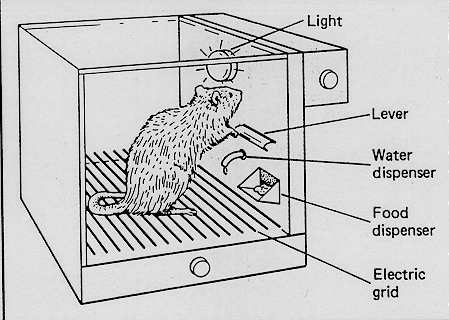
Skinner distinguishes between two types of behaviour respondent and operant. Respondent behaviour is directly under the control of a stimulus. Operant behaviour appears to be spontaneous rather than a response to specific stimulus .Stimulus that may influence operant behaviour is called discriminative stimulus the word operant derived from the fact that operant behaviour of the rates and the environment to produce some effect. Thus, the telephone rings going to where it is and receiving our operant acts that lead to a telephonic conversation. To demonstrate operant conditioning in the laboratory, a rat is placed in a box called the skinner box that is deprived of food for some specified period and so was assumed to be motivated by hunger drive inside the Skinner box there is a protruding bar with the food dish beneath that small light bulb above the bar can be lit at the experimenters discretion. Left alone in the box, the rat move absolutely restlessly and by chance occasionally presses the bar. The rate at which it first pushes the bar defines the preconditioned of operant level of bar pressing after establishing the opponent level the experimental attaches the food dispenser so that every time the rat presses the bar, a palette of food falls into the dish. The rat eats and soon presses the bar again. The food reinforces by pressing and the rate of pressing increases dramatically. If the food dispenser is disconnected and pressing the bad no longer no longer delivers would the rate of bar pressing will diminish .Experimenter can set up a discrimination by presenting food if the bar is pressed while the light is on and not giving these reinforcement if the response is made in the dark. Selective reinforcement leads to the rats pressing the bar only in the presence of light operant conditioning refers to the increase in the probability of response in a particular stimulus environment by following the response with reinforcement. Usually reinforcement is something that can satisfy a basic drive like food to satisfy your hunger. Operant behaviour is consequences that lead to change in voluntary behaviour person.

Operant conditioning is not just something that takes place in experimental settings while training lab animals. It also plays a powerful role in everyday learning. Reinforcement and punishment take place in natural settings all the time, as well as in more structured settings such as classrooms or therapy sessions. Examples in real life include-     Homework Completion-A student tends to complete his/her homework daily; because he/she knows that he/she will be rewarded with a candy (action) or praise (behaviour). Incentives and Bonus-Workers are often offered with the incentives and bonus in return of completing their targets in time or for regular attendance. It makes the workers to perform better, so that, they can continuously get those incentives and bonus.

The Future of Artificial Intelligence

Credit: CFI

Introduction

AI research follows two distinct, and to some extent competing, methods, the symbolic (or “top-down”) approach, and the connectionist (or “bottom-up”) approach. The top-down approach seeks to replicate intelligence by analyzing cognition independent of the biological structure of the brain, in terms of the processing of symbols—whence the symbolic label. The bottom-up approach, on the other hand, involves creating artificial neural networks in imitation of the brain’s structure—whence the connectionist label.

What is Artificial Intelligence?

Artificial intelligence (AI), is the ability of a digital computer or computer-controlled robot to perform tasks commonly associated with intelligent beings. The term is frequently applied to the project of developing systems endowed with the intellectual processes characteristic of humans, such as the ability to reason, discover meaning, generalize, or learn from past experience. Since the development of the digital computer in the 1940s, it has been demonstrated that computers can be programmed to carry out very complex tasks—as, for example, discovering proofs for mathematical theorems or playing chess—with great proficiency.

How does AI Work?

Less than a decade after breaking the Nazi encryption machine Enigma and helping the Allied Forces win World War II, mathematician Alan Turing changed history a second time with a simple question: “Can machines think?” Turing’s paper “Computing Machinery and Intelligence” (1950), and its subsequent Turing Test, established the fundamental goal and vision of artificial intelligence. At its core, AI is the branch of computer science that aims to answer Turing’s question in the affirmative. It is the endeavor to replicate or simulate human intelligence in machines. The expansive goal of artificial intelligence has given rise to many questions and debates. So much so, that no singular definition of the field is universally accepted.  

Types of Artificial Intelligence

Reactive Machines

A reactive machine follows the most basic of AI principles and, as its name implies, is capable of only using its intelligence to perceive and react to the world in front of it. A reactive machine cannot store a memory and as a result cannot rely on past experiences to inform decision making in real-time.

Limited Memory

Limited memory artificial intelligence has the ability to store previous data and predictions when gathering information and weighing potential decisions — essentially looking into the past for clues on what may come next. Limited memory artificial intelligence is more complex and presents greater possibilities than reactive machines.

Self-awareness

Once Theory of Mind can be established in artificial intelligence, sometime well into the future, the final step will be for AI to become self-aware. This kind of artificial intelligence possesses human-level consciousness and understands its own existence in the world, as well as the presence and emotional state of others. 

Evolution of AI

IFM is just one of countless AI innovators in a field that’s hotter than ever and getting more so all the time. Here’s a good indicator: Of the 9,100 patients received by IBM inventors in 2018, 1,600 (or nearly 18 percent) were AI-related. Here’s another: Tesla founder and tech titan Elon Musk recently donated $10 million to fund ongoing research at the non-profit research company OpenAI — a mere drop in the proverbial bucket if his $1 billion co-pledge in 2015 is any indication. And in 2017, Russian President Vladimir Putin told school children that “Whoever becomes the leader in this sphere [AI] will become the ruler of the world.” He then tossed his head back and laughed maniacally.

Future of AI

Some sectors are at the start of their AI journey, others are veteran travelers. Both have a long way to go. Regardless, the impact artificial intelligence is having on our present day lives is hard to ignore:

  • Transportation: Although it could take a decade or more to perfect them, autonomous cars will one day ferry us from place to place.
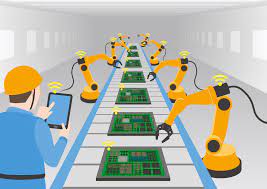
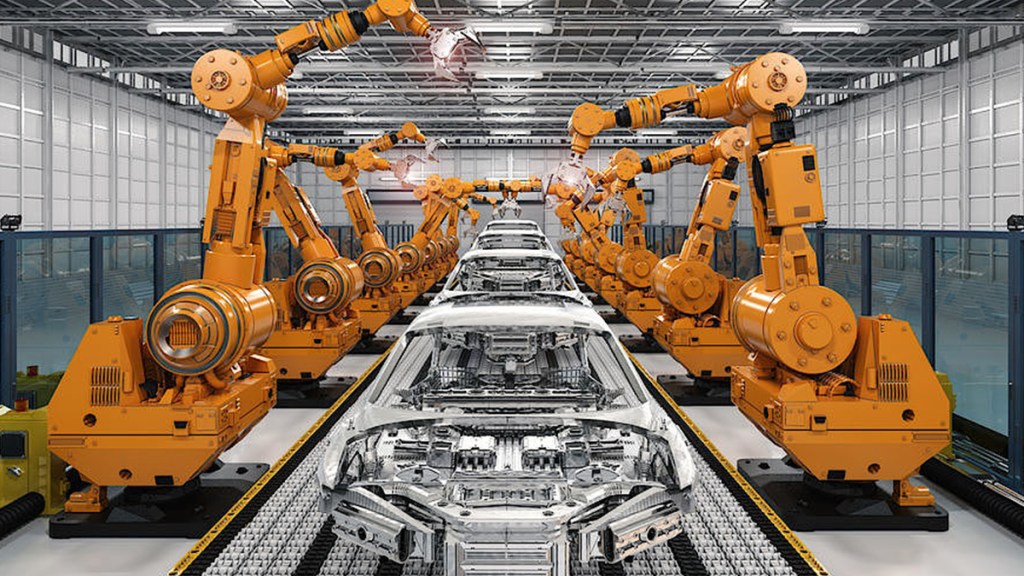
  • Manufacturing: AI powered robots work alongside humans to perform a limited range of tasks like assembly and stacking, and predictive analysis sensors keep equipment running smoothly.
  • Healthcare: In the comparatively AI-nascent field of healthcare, diseases are more quickly and accurately diagnosed, drug discovery is sped up and streamlined, virtual nursing assistants monitor patients and big data analysis helps to create a more personalized patient experience.
  • Education: Textbooks are digitized with the help of AI, early-stage virtual tutors assist human instructors and facial analysis gauges the emotions of students to help determine who’s struggling or bored and better tailor the experience to their individual needs.

Conclusion

Artificial intelligence is impacting the future of virtually every industry and every human being. Artificial intelligence has acted as the main driver of emerging technologies like big data, robotics and IoT, and it will continue to act as a technological innovator for the foreseeable future. AI is projected to have a lasting impact on just about every industry imaginable. We’re already seeing artificial intelligence in our smart devices, cars, healthcare system and favorite apps, and we’ll continue to see its influence permeate deeper into many other industries for the foreseeable future.

References

The Future of Cryptocurrency

Credit: EconomicTimes

Introduction

Cryptocurrencies are digital or virtual currencies underpinned by cryptographic systems. They enable secure online payments without the use of third-party intermediaries. “Crypto” refers to the various encryption algorithms and cryptographic techniques that safeguard these entries, such as elliptical curve encryption, public-private key pairs, and hashing functions. Cryptocurrencies can be mined or purchased from cryptocurrency exchanges. Not all eCommerce sites allow purchases using cryptocurrencies. In fact, cryptocurrencies, even popular ones like Bitcoin, are hardly used for retail transactions.

What is Cryptocurrency?

A cryptocurrency is a digital or virtual currency that is secured by cryptography, which makes it nearly impossible to counterfeit or double-spend. Many cryptocurrencies are decentralized networks based on blockchain technology—a distributed ledger enforced by a disparate network of computers. A defining feature of cryptocurrencies is that they are generally not issued by any central authority, rendering them theoretically immune to government interference or manipulation.

Blockchain Technology

Central to the appeal and functionality of Bitcoin and other cryptocurrencies is blockchain technology. As its name indicates, a blockchain is essentially a set of connected blocks or an online ledger. Each block contains a set of transactions that have been independently verified by each member of the network. Every new block generated must be verified by each node before being confirmed, making it almost impossible to forge transaction histories. The contents of the online ledger must be agreed upon by the entire network of an individual node, or computer maintaining a copy of the ledger.

Types of Cryptocurrency

Bitcoin is the most popular and valuable cryptocurrency. An anonymous person called Satoshi Nakamoto invented it and introduced it to the world via a white paper in 2008. There are thousands of cryptocurrencies present in the market today. Each cryptocurrency claims to have a different function and specification. For example, Ethereum’s ether markets itself as gas for the underlying smart contract platform. Ripple’s XRP is used by banks to facilitate transfers between different geographies. Bitcoin, which was made available to the public in 2009, remains the most widely traded and covered cryptocurrency. As of November 2021, there were over 18.8 million bitcoins in circulation with a total market cap of around $1.2 trillion. Only 21 million bitcoins will ever exist.

Is Cryptocurrency Legal?

Fiat currencies derive their authority as mediums of the transaction from the government or monetary authorities. For example, each dollar bill is backstopped by the Federal Reserve. But cryptocurrencies are not backed by any public or private entities. Therefore, it has been difficult to make a case for their legal status in different financial jurisdictions throughout the world. It doesn’t help matters that cryptocurrencies have largely functioned outside most existing financial infrastructure. The legal status of cryptocurrencies has implications for their use in daily transactions and trading. In June 2019, the Financial Action Task Force (FATF) recommended that wire transfers of cryptocurrencies should be subject to the requirements of its Travel Rule, which requires AML compliance. As of December 2021, El Salvador was the only country in the world to allow Bitcoin as legal tender for monetary transactions. In the rest of the world, cryptocurrency regulation varies by jurisdiction.

Future of Cryptocurrency

A cryptocurrency that aspires to become part of the mainstream financial system may have to satisfy widely divergent criteria. It would need to be mathematically complex (to avoid fraud and hacker attacks) but easy for consumers to understand; decentralized but with adequate consumer safeguards and protection; and preserve user anonymity without being a conduit for tax evasion, money laundering, and other nefarious activities. Since these are formidable criteria to satisfy, is it possible that the most popular cryptocurrency in a few years could have attributes that fall in between heavily-regulated fiat currencies and today’s cryptocurrencies?

Conclusion

The emergence of Bitcoin has sparked a debate about its future and that of other cryptocurrencies. Despite Bitcoin’s recent issues, its success since its 2009 launch has inspired the creation of alternative cryptocurrencies such as Ethereum, Litecoin, and Ripple. A cryptocurrency that aspires to become part of the mainstream financial system would have to satisfy very divergent criteria. While that possibility looks remote, there is little doubt that Bitcoin’s success or failure in dealing with the challenges it faces may determine the fortunes of other cryptocurrencies in the years ahead.

References

The Roots of STEM Talent of India

Credit: Dreamstime

Introduction

The Information Technology sector in India has built its reputation by providing cost-effective solutions and providing employment to millions of people in the process. However, the full-time research workforce in India was estimated to be just 2,00,000 in 2015 by UNESCO. Are we, as a nation, adequately promoting careers in Science, Technology, Engineering, and Mathematics (STEM) subjects, and are we even able to generate enough talent for our own demand? Are we losing some of our best minds to other countries because of a lack of support and opportunities?

What is STEM?

STEM, in full science, technology, engineering, and mathematics, field, and curriculum centered on education in the disciplines of science, technology, engineering, and mathematics (STEM). The STEM acronym was introduced in 2001 by scientific administrators at the U.S. National Science Foundation (NSF). The organization previously used the acronym SMET when referring to the career fields in those disciplines or a curriculum that integrated knowledge and skills from those fields. In 2001, however, American biologist Judith Ramaley, then assistant director of education and human resources at NSF, rearranged the words to form the STEM acronym.

Women in STEM

Under-representation of women and gender pay gaps are well-recognized global challenges in STEM sectors. While Indian Technology firms can still boast of a relatively better female-to-male ratio, according to UNESCO estimates, only 14 percent of the researchers in India are women. Even engineering colleges have skewed gender ratio in favor of male students, and according to a Kelly Global Workforce Insights (KGWI) survey, 81 percent of the women in STEM fields in India have perceived a gender bias during performance evaluation.  The annual ‘Girls in Tech’ MasterCard research indicates that while interest in STEM careers is increasing gradually, women are still less likely than men to pursue a STEM career and less likely to remain in the field for their entire career owing to male dominance in the fields. 

STEM Sector in India

The focus on building the scientific prowess of the masses, and bet on specialized educational institutions to do the same, institutions like the Indian Institute of Technology (IIT), Indian Institute of Science (IISc), and All India Institute of Medical Science (AIIMS) was founded and promoted to develop the country’s scientific and technical manpower, and in the process help the society and economy prosper. However, with time, these institutes have largely been reduced to stepping stones for a well-paying career. Especially in the last two decades, the relentless quest of students, and their parents, to ensure admission to such premier institutes has given rise to an astronomical coaching classes industry as well. A particular blow to STEM education came when the All India Council for Technical Education (AICTE) liberally allowed the setting up of engineering institutes across the country a few years ago. The move was undertaken in anticipation of a huge demand for engineering studies. However, this not only eroded the value conferred on an engineering degree but also compromised the quality of education and training provided on a fundamental level.

Making STEM a Priority

The first step towards fixing what’s broken is the identification and acknowledgment of the present challenges and understanding the context in which they arise. In other words, the government and the private education sector must make a genuine attempt at understanding their shortcomings, and reflect on why so few Indian institutes are recognized for quality STEM education and training. Establishing global partnerships with countries that have built sophisticated STEM expertise is critical to paving the way for knowledge exchange and skill development. While American and European universities are known for their focus on STEM education, countries in the networks of BRICS and ASEAN could also prove to be beneficial partners. This also needs to be backed by healthy funding to develop independent institutes that focus on research, pure sciences, and other derivatives of STEM subjects. The Indeed survey showed that job seekers in the age group of 21-25 were 12 percent more inclined towards jobs in STEM sectors than in others. Inculcating innovation and creativity in young minds and encouraging them to pursue dedicated courses right from the moment they stepped into the formal education system is essential. However, in the present system, STEM studies might simply be added as an additional layer to the existing curriculum and would increase pressure on students and teachers alike.

References

How Automation is Changing Workplace Everywhere?

Credit: Prospects

Introduction

There was a time when the term “automation” was synonymous with advanced manufacturing plants full of robotics. While replacing human labor with machine labor is a prime example of workplace automation, it’s far from the only example. Automation is present in modern businesses of all sizes – including subtle features in common software applications, and more obvious implementations like self-driving vehicles or autonomous robots. There is much debate about where workplace automation will lead the economy, but observers tend to agree that the trend is gaining momentum. Every business process is on the table for automation, especially as technology becomes more sophisticated. 

What is Workplace Automation?

Here’s a common misconception that automation involves towering robotics, but it can be as simple as a set of tools housed within common business software programs. At its core, automation is about implementing a system to complete repetitive and easily replicated tasks without the need for human labor. “Automation takes a lot of forms,” said Fred Townes, chief product officer at READY Education. “For small businesses, the most important thing is [repetition]. When you find something you do more than once that adds value … you want to look into automation.”

Machine Learning as the Driver for Automation

Machine learning and artificial intelligence enable new forms of “smart” automation. As the software learns, the more adaptable it becomes. These technologies open the door for the automation of higher-order tasks in addition to the basic, repetitive tasks. “I think there’s a lot of focus at the moment on these tasks that humans don’t want to do,” Sharma said. “But what’s going to happen in the future is … automation will not just be about automating those tasks humans are doing today, but it will be about realizing potential opportunities.”

Example of Common Workplace Automation

1. Email marketing

Many small business owners already use at least one form of automation: email marketing. Companies like Zoho and Constant Contact offer software that allows users to tailor the parameters of their email marketing campaign to their liking and then set it to run automatically. 

2. Customer service

Customer service departments are also getting an automation makeover with the introduction of tools like chatbots and automated text message marketing solutions.

3. Human resources

Given the predictable and repetitive nature of HR duties – like payroll and timesheets – digitization can transform the efficiency of a department.

Conclusion

Economic insecurity displaced workers feel is very real, but automation is not the enemy. Instead, Wallace hopes to educate people about leveraging this powerful technology to create their own incomes – essentially establishing a society of entrepreneurs and small companies. “If we can establish a way to make sure we all have enough food, clothing, and shelter to survive … and allow people to repurpose their gifts, unique abilities, and enable them to proliferate that and sell it as a good or a service, then we’re adding income,” Wallace said. “We can create an opportunity to generate income for next to nothing, so why not teach people to leverage the tech that disrupted the marketplace in the first place to embrace it and use it for something more in line with who they are, as an expression of their unique abilities?”

References

Why does the World Need to Decarbonize Transport?

Credit: ITF

Introduction

Moving people and goods accounts for one-quarter of global energy use, and the demand for energy from this sector is continuing to grow. This is due mainly to the increasing number and size of vehicles on our roads: more than 1.42 billion are currently in use, with an expected two billion by 2040. Road vehicles, most still powered by fossil fuels, account for nearly 75 per cent of total transport-related greenhouse gas emissions. Emissions from aviation and shipping are also projected to sail upwards between now and 2050. Flying contributes 12 per cent of the world’s total carbon dioxide emissions, while the marine sector, if it were a country, would be ranked between Germany and Japan as the sixth-largest source.

Why to Decarbonize the Transport?

Climate change cannot be stopped without decarbonizing transport. Transport emits around 23% of the energy-related CO2 that feeds global warming. Without immediate action, its share could reach 40% by 2030. Transport emissions have grown faster than those of any other sector over the past 50 years. Demand for transport will continue to grow massively in the coming decades. As a result CO2 emissions from transport activity will not fall, but could increase by 60% by 2050. And because transport relies on oil for 92% of its energy, it is particularly hard to decarbonize. 

Ambition of the Initiative

The Decarbonising Transport initiative helps governments and industry to translate climate ambitions into actions. Specifically, it:

  • Builds a catalogue of effective CO2 mitigation measures: the Transport Climate Action Directory.
  • Provides targeted analytical assistance for countries and partners to identify climate actions that work.
  • Gathers and shares evidence for best practices that will accelerate the transition to carbon-neutral mobility.
  • Shapes the climate change debate by building a global policy dialogue and by bringing the transport perspective to the broader climate change discussions.

Stream of the Initiative

 The Decarbonising Transport initiative is organised in five work streams:

  • Tracking progress: The initiative evaluates how current mitigation measures contribute to reaching objectives for reducing transport CO2.
  • In-depth sectoral studies: The initiative identifies effective policies for decarbonizing urban passenger transport, road freight transport, maritime transport, aviation and inter-urban transport.
  • Focus studies: The initiative analyses specific decarbonization issues and feeds the results into other work streams.
  • National pathways: The initiative assesses available policy levers for decarbonizing transport from a country perspective. Projects may also examine regional or sub-national levels.
  • Policy Dialogue: The initiative organizes global dialogue on transport and climate change through high-level roundtables, policy briefings and technical workshops. It acts as a conduit for transport sector input to climate change negotiations.

Conclusion

The Decarbonizing Transport initiative was launched in 2016 with core funding from the ITF’s Corporate Partnership Board (CPB). Other funding partners currently include the governments of France, Korea, Ireland and the Netherlands, the World Bank, the European Commission, the Climate Works Foundation, the Fédération Internationale de l’Automobile (FIA), the FIA Foundation, the International Road Transport Union (IRU) and the Swedish Shipowners’ Association. In recognition of the work of its Decarbonizing Transport initiative, the UN Climate Change Secretariat (UNFCCC) has named the International Transport Forum a focal point for transport under its Marrakech Partnership. In this role, the ITF acts as a conduit for the exchange of information between the transport sector and the UNFCCC, as well as providing inputs to the UNFCCC process.

References

Civil Aviation urges various ministries to promote use of drones.

 Ministry of Civil Aviation has requested several Ministries including Ministry of Home Affairs (MHA) to encourage various entities under their administrative control to promote use of drones.

Drones offer tremendous benefits to almost all sectors of the economy like -agriculture, medicine delivery, mining, infrastructure, surveillance, emergency response, transportation, geo-spatial mapping, defence and law enforcement etc. An illustrative list of drone applications under different Ministries is attached herewith as Annexure- I.

As per Drone Rules, 2021, operation of drones in zones marked red and yellow on the drone airspace map zones requires permission from the Central Government and the Air Traffic Control (ATC) authority respectively. No permission is required to operate a drone in a green zone which is where most of the drone operations currently happen.

Annexure -I

Illustrative list of drone applications under different Union Ministries

S No

Ministry

Illustrative drone applications

  1.  

Agriculture & Farmers

Welfare

  1. Crop and soil health monitoring
  2. Irrigation estimation and scheduling
  3. Requirement and efficacy assessment of fertilizer and pesticide spraying
  4. Anti-locust operations
  5. Crop output estimates
  6. River and canal erosion; restoration tracking
  7. Insurance claim surveys
  1.  

Health & Family Welfare

  1. Delivery of medicines, equipment and other
  2. supplies
  3. Pathology tests – sample collection from remote or epidemic/ pandemic affected areas
  1.  

Panchayati Raj

  1. Land records and property rights (SVAMITVA Scheme)
  1.  

Defence

  1. Surveillance
  2. Combat          
  3. Communication in remote areas
  4. Swarm drone solutions
  5. Counter drone solutions
  1.  

Home Affairs

Surveillance, situational analysis, public

announcements and evidence gathering for:

  1. Security of sensitive installations
  2. Raids and counter-terror operations
  3. Crowd management
  4. Crime control
  5. VVIP security
  6. Disaster management; search and rescue; transportation of food, medicines and essentials
  7. Traffic management
  1.  

Housing and Urban Affairs

  1. Urban planning and management
  2. Construction planning and monitoring
  3. Incident reporting
  4. Prevention of encroachment and land-use alteration
  1.  

Transportation: Road Transport and Highways; Railways; Ports, Shipping and Waterways

  1. Surveillance
  2. Incident response
  3. Inspection and maintenance
  4. Project monitoring
  5. Disaster management
  1.  

Mining

  1. Monitoring and Inspection
  2. Automatic surveying and mapping
  3. Stockpile assessment and management
  4. Haulage road optimisation
  1.  

Power

  1. Real-time surveillance of assets and transmission lines
  2. Theft prevention and incident response
  3. Visual inspection and maintenance
  4. Construction plannlng and management
  1.  

Petroleum and Natural

Gas

  1. Real-time surveillance of assets and pipelines
  2. Theft prevention and incident response
  3. Visual inspection and maintenance
  4. Construction planning and management
  1.  

Environment, Forests

and Climate Change

  1. Monitoring of forests and wildlife
  2. Afforestation through seed-balls, irrigation and real-time monitoring
  3. Anti-poaching actions
  4. Pollution assessment and evidence-gathering
  1.  

Information and Broadcasting

  1. High quality videography of events and
  2. difficult-to-reach-places at a fraction of the cost and approvals required
  3. Low altitude shooting without noise and-dust  pollution and risk of accidents
  4. Complete replacement of costly helicopter- based videography


Note:

  1. The above list is illustrative and not exhaustive. New applications may evolve with time, usage and further innovations.
  2. The above list has been prepared in consultation with academia, drone startups and industry bodies.

This information was given by the Minister of State in the Ministry Of Civil Aviation (Gen. (Dr) V. K.Singh (Retd) in a written reply to a question in Lok Sabha today.

***

All about James Webb Space Telescope

History

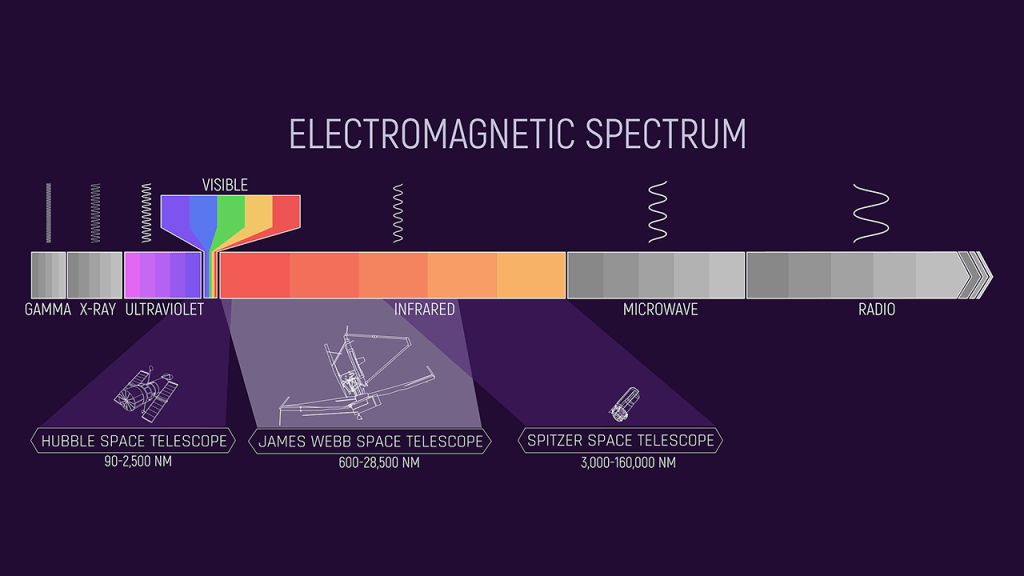
The success of Hubble Space Telescope after its repair mission in 1993 motivated the organizations to make a larger infrared light telescope that could see the past better. Hubble telescope system’s temperature interfered with the infrared radiation it received from the outer space. A new innovative next generation telescope was needed which was faster , better and cheaper. In 2003, NASA’s initial contract for James Webb Space Telescope(JWST) was $824.8 million collaborating with European Space Agency (ESA) , Canadian Space Agency(CSA). in 2005 after major redesign and re-planning , the mission cost reached a hefty amount of $4.5 billion. The telescope has a history of major cost overruns and delays due to backlashes from people and lack of funds.

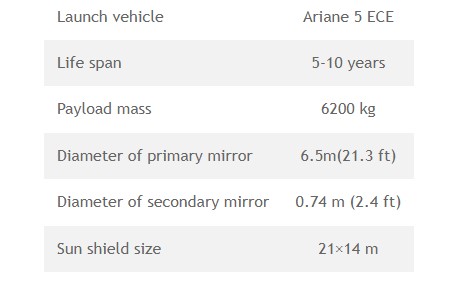
Nevertheless, JWST launched on December 25, 2021 in Ariane 5 rocket from NASA Goddard Space Flight Centre, French Guiana. this orbiting infrared observatory will complement and extend the discoveries of the Hubble space telescope.

The telescope will cover a wavelength of 0.6 – 28.5 microns for the light falling from red till mid infrared wave spectrum .

Location

JWST will not orbit earth but will be move in a orbit of second Lagrange point(L2 point) which is about 1.5 million km away from the earth. The L2 point is sufficiently near to the earth allowing proper signal communication and the sun shield will prevent any infrared radiation coming from the Sun.

Sun-shield protection

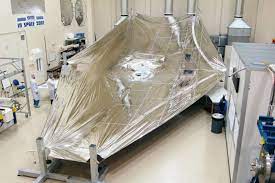
For it to make observation in the infrared spectrum , it must be kept under 50K (−223.2 °C) otherwise the infrared radiation from its system , the earth , moon and sun will interfere with the data. It uses a large 5 layered tennis court sized sun-shield to block that radiation and maintains its surface temperature. the single layer is as thin as a human hair and made with polyamide films . the membranes are coated with aluminium from both sides and a silicon doped layer facing the sun. the shield can be folded 12 times to fit in the Ariane rocket .

The Honeycomb mirrors

The primary optical mirror is beryllium reflector with area 25.4 m2 . gold is used to coat all the 18 mirror segments because it is a highly reflective material for infrared wavelength. The honeycomb pattern utilizes the best use of space available and are also deployable .

Mission goals

  1. Search for galaxies formed after the big bang . It can look 13.5 billion years into the past , about 400 million years after the big bang.
  2. How galaxies evolve.
  3. Observe the formation of stars.
  4. Measure physical and chemical properties of the planetary systems including the Solar System.

This mission will take the Space Science to the next level, thanks to our Scientists……

Kalpana Chawla Centre for Research in Space Science & Technology at Chandigarh University

 Raksha Mantri Shri Rajnath Singh inaugurated Kalpana Chawla Centre for Research in Space Science & Technology (KCCRSST) at Chandigarh University on January 03, 2022. He also launched a Scholarship Scheme, worth Rs 10 crore, for the wards of Defence Personnel of the three Services.

In his address, Shri Rajnath Singh described the establishment of the Research Centre as an important step towards strengthening the space sector of the country by stressing that it is only through these efforts that India can become a leader in future technologies. He likened the KCCRSST with ‘pride of India’ Kalpana Chawla, hoping that this research facility would touch new heights of success, similar to the remarkable achievements of the late India-born astronaut who brought universal recognition to her country of origin.

“In the 21st century, the future of India can be secured only when you have a gleam in your eyes to reach the stars and planets. More Indians like Aryabhatta, Vikram Sarabhai, Satish Dhawan and Kalpana Chawla will emerge from amongst you all if you eye different planets and constellations,” the Raksha Mantri told the students present on the occasion.

Underlining the importance of the space sector in today’s times, Shri Rajnath Singh said, it is deeply connected with mapping, imaging and connectivity facilities, speedy transportation, weather forecast, disaster management as well as border security, adding that it played a crucial role in keeping the world connected during the COVID-19 pandemic, from testing to data-transfer & analyses. The Government understands the potential of the space sector, he added, recalling the four major pillars of reforms in the sector envisioned by Prime Minister Shri Narendra Modi. These pillars are: freedom of innovation to the private sector; role of the government as an enabler; preparing the youth for the future and viewing the space sector as a resource for progress. He hoped that the actions identified in the pillars will take the space sector to newer heights and give new direction to the country’s progress.

The Raksha Mantri called for an active and long-term public-private partnership to take the education & science sectors to a global level and make India a knowledge economy.“Today, the private sector is exposed to a large number of opportunities in the space sector. Whether it is defence or space, we are fully welcoming the private sector,” he said, reiterating the Government’s commitment of strengthening the private sector for the holistic development of the Nation.

Listing out some of the measures aimed at tapping the potential of the private sector, Shri Rajnath Singh said, the Government is sharing technology & expertise and opening its various facilities for the industry. He stated that transfer of matured technologies is under consideration. On the setting up of Indian National Space Promotion and Authorisation Centre (IN-SPACe), he said, the independent agency will act as a single window for matters related to the space sector.

The Raksha Mantri added that the Government is laying special emphasis on promoting the use of space-based applications through every sector. Use of geo-tagging for roads and other infrastructure in villages, monitoring of development works in remote areas through satellite imagery, and identifying problems related to crops and fields for farmers is helping the government in many ways, he added.

Shri Rajnath Singh called for working towards development of futuristic technologies such as Artificial Intelligence, Internet of Things, Big-Data and Block-chain for the overall development of the Nation. He stressed that progress in space technology will develop scientific temper in the youth of the country and India will move forward in frontier technologies.

The Raksha Mantri lauded the Chandigarh University for setting records of success in research & innovation in the last few years. He described the achievements of the University as a symbol of the increasing participation of the private sector in the field of education. He also commended Indian Space Research Organisation (ISRO) for being one of the world’s top space agencies since decades through its hard work and vision.

Remembering late India-born astronaut Kalpana Chawla, Shri Rajnath Singh described her as a symbol of women empowerment, who took a flight beyond imagination. He urged the people to maintain her zeal & enthusiasm and motivate their daughters to go ahead & touch unimaginable heights, echoing the Government’s vision of increased participation of women in all sectors.

Established with the objective of training students in space science, satellite development and meet future challenges in space research, the state-of-the-art KCCRSSTwould be the Ground Control Station for the Chandigarh University’s Student Satellite (CUSat), an in-house developed nano-satellite being designed by the students of the university and a Geo-Spatial Centre for research, besides other projects.

The CUSat will be among the 75 student-built satellites to be launched into space on the eve of the 75thIndependence Day in 2022. The Chandigarh University has joined the list of 13 institutes like Indian Institute of Technology (IIT) Kanpur, IIT Bombay and became the first university in North India to design and develop its own satellite. For the project, 75 students of the University have been working on the Chandigarh University Student Satellite Project under the guidance of eminent Indian scientists.

With the launch of CUSat, Punjab will become the first border state in India to have its own satellite in space. The launch of the university’s nanosatellite – CUSat will prove to be an important step for the country, as it will collect data related to border intrusion detection, agriculture, weather forecasting, natural disaster forecasting, which will be helpful in research and study of various problems in these areas. In addition, the GCS will help develop satellite research facilities and launch satellites in countries that do not have developed satellite technology.

Chancellor of Chandigarh University Shri S Satnam Singh Sandhu, scientists, faculty and students were present at the inauguration of the KCCRSST.

******

Peer Pressure

More Harm Than Good
Peer pressure is the direct influence on people by peers, or an individual who gets encouraged to follow their peers by changing their attitude, values or behaviour just for the sake of acceptance. The section of society which is most vulnerable to the effects of peer pressure is teenagers. The fact of peer pressure is that when your peers start trying to get you do things which you otherwise wouldn’t do. For instance, in our society we have people who pressurise us to do things we don’t want to do, hence causing us to not being able to think for ourselves. If you neglect being able to think for yourself and let others do that job then it could have a good outcome for them, but for your well being and for you as a person it can turn out to be a disaster.

Ill effects and Impact

Peer pressure can harm the group by making it too uniform. When all the members think and act alike, the group does not have access to alternative opinions creating a barrier in solving problems.

Peer pressure is a rite of passage that all of us go through but its impact varies from person to person. Some are able to brush it off without any issues while it negatively impacts others. Peer pressure affects the lives of teenagers in a number of ways. It can take a self-confident child and make him or her someone who is not sure about themselves and has a low self esteem. It affects their academic skills too because despite being capable of performing well, they choose not to because in the eyes of their peers, it would seem uncool. In an effort to fit in with their peer group, they place more emphasis on being social rather than working on their academics.

Adolescence and Peer Pressure

The desire to be accepted by their peer group is one of the strongest motivating forces during adolescence. The reason that negative peer pressure happens, especially during adolescence, is because humans are social beings and ‘WE’ want to belong. We do what we believe others want us to do for the sake of acceptance and to ‘fit in’. Extreme peer pressure may lead you to follow what your peers feel right, thereby, you end up losing your own identity.

Conclusion
It honestly depends on the people you surround yourself with. Peer pressure is influenced from a members peers. So it is up to you who you hang around with. It is only a bad thing if you make it one.

International Day Of Yoga

2021 Theme: Yoga for well-being
The Day will be marked at a time when COVID-19 pandemic continues to upend lives and livelihoods of people globally.

Beyond its immediate impact on physical health, the COVID-19 pandemic has also exacerbated psychological suffering and mental health problems, including depression and anxiety, as pandemic-related restrictions continue in various forms in many countries. This has highlighted the urgent need to address the mental health dimension of the pandemic, in addition to the physical health aspects.

The message of Yoga in promoting both the physical and mental well-being of humanity has never been more relevant. A growing trend of people around the world embracing Yoga to stay healthy and rejuvenated and to fight social isolation and depression has been witnessed during the pandemic. Yoga is also playing a significant role in the psycho-social care and rehabilitation of COVID-19 patients in quarantine and isolation. It is particularly helpful in allaying their fears and anxiety.

Recognizing this important role of Yoga, this year’s commemoration of the International Day of Yoga focuses on “Yoga for well-being” – how the practice of Yoga can promote the holistic health of every individual.

The United Nations offers yoga resources to its personnel and others on the COVID-19 portal’s section on Wellness.

The World Health Organization mentions yoga as a means to improve health in its Global action plan on physical activity 2018–2030: more active people for a healthier world.

UNICEF says kids can practice many yoga poses without any risk and get the same benefits that adults do. These benefits include increased flexibility and fitness, mindfulness and relaxation.

2021 virtual event
The Permanent Mission of India to the United Nations invites you to an online celebration of the 7th annual International Yoga Day on 21 June 2021, from 8:30 to 10:00 am EST, broadcast live on UN WebTV.

The event opened with messages from the President of the United Nations General Assembly and the Deputy Secretary-General of the United Nations, which was followed by demonstrations of Yoga exercises (asanas) to improve physical, mental, emotional and spiritual health and an interactive panel discussion on “Yoga for well-being.”

What is Yoga and why do we celebrate it?
Yoga is an ancient physical, mental and spiritual practice that originated in India. The word ‘yoga’ derives from Sanskrit and means to join or to unite, symbolizing the union of body and consciousness.

Today it is practiced in various forms around the world and continues to grow in popularity.

Recognizing its universal appeal, on 11 December 2014, the United Nations proclaimed 21 June as the International Day of Yoga by resolution 69/131.

The International Day of Yoga aims to raise awareness worldwide of the many benefits of practicing yoga.

The draft resolution establishing the International Day of Yoga was proposed by India and endorsed by a record 175 member states. The proposal was first introduced by Prime Minister Narendra Modi in his address during the opening of the 69th session of the General Assembly, in which he said: “Yoga is an invaluable gift from our ancient tradition. Yoga embodies unity of mind and body, thought and action … a holistic approach [that] is valuable to our health and our well-being. Yoga is not just about exercise; it is a way to discover the sense of oneness with yourself, the world and the nature.”

The resolution notes “the importance of individuals and populations making healthier choices and following lifestyle patterns that foster good health.” In this regard, the World Health Organization has also urged its member states to help their citizens reduce physical inactivity, which is among the top ten leading causes of death worldwide, and a key risk factor for non-communicable diseases, such as cardiovascular diseases, cancer and diabetes.

But yoga is more than a physical activity. In the words of one of its most famous practitioners, the late B. K. S. Iyengar, “Yoga cultivates the ways of maintaining a balanced attitude in day-to-day life and endows skill in the performance of one’s actions.”

REFERENCE : UNITED NATONS

Plastic Waste Management

Introduction

Plastic waste management is a collective term for various approaches and strategies used to recycle plastic materials that would otherwise be dumped into landfills, or bodies of water, or otherwise contaminate the environment. The idea behind this type of waste management is to utilize those discarded materials to manufacture new plastic products without the need to actually generate additional plastic materials. Doing so can help lower production costs as well as protect the environment.

Many different types of industries participate in some type of plastic waste management process. Some are specifically geared toward collecting plastic items for recycling. For example, many supermarkets encourage customers to contribute unwanted plastic bags into a recycling container located near the front of the store. The collected bags are then forwarded to recycling centres where the material is processed for use in the production of new products made from the recycled plastic.

Businesses that produce plastic products also engage in the task of plastic waste management. This often focuses on finding ways to recycle or reuse excess plastic that is discarded as units of different goods are produced. These plastic remnants can often be collected and ran through an internal recycling process to create additional products for sale. Not only does this approach prevent the disposal of the used materials into a landfill, it also allows the company to lower the actual cost associated with manufacturing each unit of its product line.

In some cases, businesses outsource the process of plastic waste management. Contracting with a waste management company makes it possible for unwanted plastic items to be collected and removed from the premises without expending additional company resources. Municipalities sometimes work with a waste management disposal company in creating plastic recycling programs that allow households to conveniently dispose of plastic milk jugs, broken plastic toys, and other plastic items without placing them into the trash. Depending on the nature of the arrangement with the plastic waste management company, the municipality may actually earn a small amount from the arrangement, creating another stream of revenue for the city or town that can be used to fund services offered to residents.

Any type of plastic waste management must be conducted in compliance with regulations set by local, state, and federal governments. This includes using recycling methods that are considered to be environmentally friendly, and that are not likely to create health risks for individuals living and working in the community. Since regulations regarding recycling vary somewhat from one jurisdiction to another, it is important to determine what is and is not allowed before establishing any type of ongoing program to deal with plastic waste.

References : infobloom

Climate Change

Climate change is a long-term shift in global or regional climate patterns. Often climate change refers specifically to the rise in global temperatures from the mid-20th century to present.

Climate is sometimes mistaken for weather. But climate is different from weather because it is measured over a long period of time, whereas weather can change from day to day, or from year to year. The climate of an area includes seasonal temperature and rainfall averages, and wind patterns. Different places have different climates. A desert, for example, is referred to as an arid climate because little water falls, as rain or snow, during the year. Other types of climate include tropical climates, which are hot and humid, and temperate climates, which have warm summers and cooler winters.

Climate change is the long-term alteration of temperature and typical weather patterns in a place. Climate change could refer to a particular location or the planet as a whole. Climate change may cause weather patterns to be less predictable. These unexpected weather patterns can make it difficult to maintain and grow crops in regions that rely on farming because expected temperature and rainfall levels can no longer be relied on. Climate change has also been connected with other damaging weather events such as more frequent and more intense hurricanes, floods, downpours, and winter storms.

In polar regions, the warming global temperatures associated with climate change have meant ice sheets and glaciers are melting at an accelerated rate from season to season. This contributes to sea levels rising in different regions of the planet. Together with expanding ocean waters due to rising temperatures, the resulting rise in sea level has begun to damage coastlines as a result of increased flooding and erosion.

The cause of current climate change is largely human activity, like burning fossil fuels, like natural gas, oil, and coal. Burning these materials releases what are called greenhouse gases into Earth’ atmosphere. There, these gases trap heat from the sun’s rays inside the atmosphere causing Earth’s average temperature to rise. This rise in the planet’s temperature is called global warming. The warming of the planet impacts local and regional climates. Throughout Earth’s history, climate has continually changed. When occurring naturally, this is a slow process that has taken place over hundreds and thousands of years. The human influenced climate change that is happening now is occurring at a much faster rate.

Climate change is impacting human lives and health in a variety of ways. It threatens the essential ingredients of good health – clean air, safe drinking water, nutritious food supply, and safe shelter – and has the potential to undermine decades of progress in global health. Between 2030 and 2050, climate change is expected to cause approximately 250 000 additional deaths per year, from malnutrition, malaria, diarrhoea and heat stress alone. The direct damage costs to health is estimated to be between USD 2-4 billion per year by 2030. Areas with weak health infrastructure – mostly in developing countries – will be the least able to cope without assistance to prepare and respond. WHO supports countries in building climate-resilient health systems and tracking national progress in protecting health from climate change. Reducing emissions of greenhouse gases through better transport, food and energy-use choices results in improved health, particularly through reduced air pollution. The Paris Agreement on climate change is therefore potentially the strongest health agreement of this century. WHO supports countries in assessing the health gains that would result from the implementation of the existing Nationally Determined Contributions to the Paris Agreement, and the potential for larger gains from more ambitious climate action.

REFERENCES : WHO, National Geographic Society

Gadgets that will make your life easier!

This is an image of gadgets that will make your life easier!


With rapid industrialisation and innovation making its way through centuries. People living through them benefit widely due to employment opportunities and hi-tech gadgets being produced. We cannot imagine our lives today without our phones and it is rendered useless without a good internet connection. With the continuation of experiments and innovations, the boundaries of possibilities are being pushed and new gadgets arrive in the market that vow to make our lives easier. 

We will be looking at such gadgets in the list below. Make sure to check them out!

1.Wireless earphones or earbuds

Nothing is more frustrating than grappling with tangled earphone wire when you need to listen to some music. Many tech giants have come with affordable solutions to this problem in the form of wireless earphones and earbuds. Yes, there are affordable options to choose from. You can also choose from a range of manufacturers to buy your wireless earphones as its a product competed for production by many popular brands. 

Click here to find some affordable wireless earbuds.

2. Powerbank

With a portable powerbank in hand, you no longer need to worry about losing all the charge in your phone. Or your wireless pods if you own a pair. However, you will have to remember to charge the power bank to use it for its intended purpose. Apon charging it, your powerbank can sustain long enough to power your mobile phones over long journeys. 

3. Streaming sticks

Streaming sticks are the modern solution for streaming video content on your television or computer using a Wifi or 4G internet connection. It comes with a remote as well to toggle through streaming services on your electronic devices. It works as an amazing alternative over set-top-boxes and cable TV connections. 

Google Chromecast or Amazon FireTV can be viable options to look for while purchasing a streaming stick.

4. Go Pro

GoPros are tinier versions of a traditional camera that allows you to capture photos and videos while you are on the run. GoPro is basically a US based brand that has widely become synonymous with compact and portable cameras. These compact cameras from GoPro are expensive. But if you don’t mind spending extra for a YouTube video or to simply capture a worthwhile experience, you can give this a go!

5. Selfie stick

Works every time when you lack a tall friend in your group. This selfie stick can be a portable extension for your arm while taking selfies. Or groupfies!

6. Fitness tracker

The rest of the world might not be interested in knowing the steps you covered. But you would want to keep tabs on it. Fitbit wrist bands can do the job by notifying you about the number of steps you have covered. There are more complex alternatives such as smartwatch that come with GPS connectivity and waterproofing as well. 

7. E- Reader

E-Readers don’t have the traditional glare you receive from your smartphones and computers. Thus, taking it easy on your eyes while you read your favorite book on one of them. You also have thousands of reading options to choose from on a single device. 

8. A lost-stuff finder

Here comes a hi-tech gadget that will help you find your important stuff. It’s a small chip-like structure that you can place inside your wallet or clip it to your keys. When you lose track of your items, you can trigger a sound on the chip from your smartphone to find your lost items. 

9. VR viewer

Get the experience of a virtual reality from Samsung gear VR or Google daydream view that can be operated from your smartphones. Because why not. There are tons of 360 degree videos and VR contents out there for you to witness. 

10. Wireless Charging pad

If your smartphone supports wireless charging, getting a wireless charging pad will be worth it. It will definitely make your life easier by not having to look for adaptors or cables anymore. It also looks cool!

So these are some of the tech-gadgets mentioned that can make your life

easier. 


References


Alex Fitzpatrick, the 20 tech accessories everyone should have, time.com