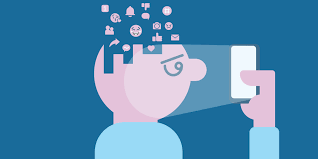
The Social Media

Social networking sites- these three words bring a very large world together on a single platform and in a simple and easy way. If we see the positive side, there are a number of benefits of social networking. How can we forget that how social media helped Malala Yusufzai become the youngest nominee for the noble peace prize. It were these sites only which made it possible not only for her but for 1000s of girls like her to have higher education. The social media has been playing a crucial role in making today’s teens aware about the events around globe by just one click. Social media has proven to be the fastest medium to update ourselves with daily world events. Social media updates every single second bringing the entire world together every second. Although globalisation has to be given its due credit for bringing the world closer economically and further culturally but it is social media platforms that have made it possible for a person in India to watch a French show at the comfort of their home and without any extra cost. With these social networking sites not only now people could talk, interact, respond to someone in the opposite corner of the world but can also be there without actually being there.

Social networking sites have provided a platform for protesting in some rather unusual but effective ways, from BLACKLIVESMATTER to METOO to BRINGBACKOURGIRLS and many more social media have been proved to be the best way of protesting for the right and just cause. As social media does not connect people from just one city or country but all over the world the movements on social media have a greater impact and helps in bringing greater good in the society. Back in 2013 people from different parts of India were able to raise funds from different campaigns on Facebook, Twitter for Uttrakhand flood victims. In 2014 John Bunnel, a US based sheriff was able to mobilize 5000 youngster for a basic life support training campaign only through Facebook campaign. Our Prime Minister Mr. Narendra Modi has been able to reach to a million people of our country on a personal level through his social media and special programme MANN KI BAAT. These sites made a 14 year old boy Ahammad Mohammed in America fight against the injustice he felt in his school for wearing a handmade watch. It was twitter and facebook only that brought on him the focus of the then President of USA Barack Obama and then later earned him a scholarship too.

There is no doubt that in today’s modern era whether it is a motion of physics or politics of civics we can get all the useful links by just a single click. In no means we can deny that internet has changed everything for good and it is social media that has made it so flexible. It only depends on us, how we take it, as a head or as a tail. Social networking is an ever changing fad which in every field from communication to examination has become our supporting tool. Today no one can even imagine a life without these social networking sites. From dusk to dawn, from entertainment to welfare, our lives now run on these media platform platforms. And as harmful as it’s over usage is as beneficial is its appropriate use.

the-social-media

What Is Social Media?

The term social media refers to a computer-based technology that facilitates the sharing of ideas, thoughts, and information through virtual networks and communities. Social media is internet-based and gives users quick electronic communication of content, such as personal information, documents, videos, and photos. Users engage with social media via a computer, tablet, or smartphone via web-based software or applications. While social media is ubiquitous in America and Europe, Asian countries like Indonesia lead the list of social media usage. More than 4.9 billion people use social media, as of March 2022.

When used properly, social media can be a valuable addition to a department’s communications strategy. Because many employees have expressed an interest in developing and maintaining a social media presence in personal and professional capacities, the Office of University Communications and Marketing has crafted the following introduction to social media. Please read this overview prior to developing your social media presence.


What is social media?
Social media is an internet-based form of communication. Social media platforms allow users to have conversations, share information and create web content. There are many forms of social media, including blogs, micro-blogs, wikis, social networking sites, photo-sharing sites, instant messaging, video-sharing sites, podcasts, widgets, virtual worlds, and more.

What are the benefits of using social media?
Billions of people around the world use social media to share information and make connections. On a personal level, social media allows you to communicate with friends and family, learn new things, develop your interests, and be entertained. On a professional level, you can use social media to broaden your knowledge in a particular field and build your professional network by connecting with other professionals in your industry. At the company level, social media allows you to have a conversation with your audience, gain customer feedback, and elevate your brand.

Should I create social media accounts for my department?
Only university employees who are authorized by their departments may use social networking to conduct university business. Make sure that your department does not already have a social media account on the sites you plan to use. If an account has already been created, do not create another one. Instead, contact the current account manager if you wish to add content.

What social media sites should my department be on?
With so many new social media sites launching each year, deciding which one is right for your department can be overwhelming. It is important to be aware of emerging social media sites, and understand how they could fit into your communications strategy. However, not all social media sites will be conducive to your department’s brand or marketing goals.

Before you launch an official account on a new social media site for your department, try it on a personal level. Create an account for yourself, and then use it. Study how other individuals and companies use the site. What type of content is posted on the site? Which posts are the most popular on the site? How often are users and companies posting?

Then, think about how your department would fit in. Just because you can be on a social media site, doesn’t necessarily mean you should be. Spreading yourself across too many social media sites could dilute your social strategy, preventing you from using any of them effectively. Instead, focus on the social media sites that allow you to share your content with the appropriate audience.

What social media sites does the University of South Florida use?
While there are many types of social media sites available for use, the University of South Florida has established an official university presence on seven sites: Facebook, Instagram, LinkedIn, Snapchat, TikTok, Twitter, and YouTube. These university social media accounts are all maintained by the Office of University Communications and Marketing.

KEY TAKEAWAYS

  • Social media is a computer-based technology that facilitates the sharing of ideas, thoughts, and information through the building of virtual networks and communities.
  • There are more than 4.5 billion social media users around the world.
  • The largest social media networks include Facebook, Instagram, Twitter, YouTube, and TikTok.
  • Social media typically features user-generated content and personalized profiles.
  • By 2023, the number of social media users in the United States is forecast to increase to approximately 257 million.

Understanding Social Media

Social media originated as a way to interact with friends and family but was later adopted by businesses that wanted to take advantage of a popular new communication method to reach out to customers. The power of social media is the ability to connect and share information with anyone on Earth, or with many people simultaneously.

There are more than 3.8 billion social media users around the world. Social media is an ever-changing and ever-evolving field, with new apps such as TikTok and Clubhouse coming out seemingly every year, joining the ranks of established social networks like Facebook, YouTube, Twitter, and Instagram. By 2023, the number of social media users in the United States is forecast to increase to approximately 257 million.

According to the Pew Research Center, social media users tend to be younger. Nearly 90% of people between the ages of 18 and 29 used at least one form of social media. Further, these users tend to be better educated and relatively wealthy, or earning over $75,000 per year.

Types of Social Media

Social media may take the form of a variety of tech-enabled activities. These activities include photo sharing, blogging, social gaming, social networks, video sharing, business networks, virtual worlds, reviews, and much more. Even governments and politicians utilize social media to engage with constituents and voters.

For individuals, social media is used to keep in touch with friends and extended family. Some people will use various social media applications to network career opportunities, find people across the globe with like-minded interests, and share their thoughts, feelings, insights, and emotions. Those who engage in these activities are part of a virtual social network.

For businesses, social media is an indispensable tool. Companies use the platform to find and engage with customers, drive sales through advertising and promotion, gauge consumer trends, and offer customer service or support.

Social media’s role in helping businesses is significant. It facilitates communication with customers, enabling the melding of social interactions on e-commerce sites. Its ability to collect information helps focus on marketing efforts and market research. It helps in promoting products and services, as it enables the distribution of targeted, timely, and exclusive sales and coupons to would-be customers. Further, social media can help in building customer relationships through loyalty programs linked to social media.

145 minutes

The average daily social media usage of internet users worldwide.5

Benefits of Social Media

Social media has changed the way we all interact with each other online. It gives us the ability to discover what’s happening in the world in real-time, to connect with each other and stay in touch with long-distance friends, and in order to have access to endless amounts of information at our fingertips. In many senses, social media has helped many individuals find common ground with others online, making the world seem more approachable.

According to a survey by Pew Research Center, the use of social media is correlated with having more friends and more diverse personal networks, especially within emerging economies. For many teenagers, friendships can start virtually, with 57% of teens meeting a friend online.

Businesses are also using social media marketing to target their consumers right on their phones and computers, building a following in order to build a loyal fan base, and create a culture behind their own brand. Some companies, such as Denny’s, have created entire personas on Twitter in order to market to younger consumers using their own language and personas.

Examples of Social Media

While social media has its positive side, many point to the platform and call out negative features, likening its overuse to an addiction. Some contest it contributes to inattentiveness, stress, and jealousy. The National Center for Biotechnology Information links heavy social media use to depression.  Social media may also be a conduit for misleading information and falsehoods.

The 2016 American presidential election has well-documented accounts of the impact of the ability to spread false information through the platform. Such a phenomenon leverages the power of social media, allowing anyone to reach an audience of millions with content that lacks oversight or fact-checking.

Facebook is the largest social media platform in the world, with a clear advantage over other social media, though it has similar audiences to others like Twitter and Instagram. The figures for the most popular social media websites as of January 2021 are as follows:

  1. Facebook (2.74 billion users)
  2. YouTube (2.29 billion users)
  3. WhatsApp (2 billion users)
  4. Facebook Messenger (1.3 billion users)
  5. Instagram (1.22 billion users)
  6. Whatsapp (1.21 billion users)
  7. TikTok (689 million users)
  8. QQ (617 million users)
  9. Douyin (600 million users)
  10. Sino Weibo (511 million users)

What Are the Top 10 Social Media Apps?

The top 10 social media apps are Facebook, YouTube, WhatsApp, Facebook Messenger, Instagram, Whatsapp, TikTok, QQ, Douyin, and Sino Weibo.

What Is the Use of Social Media?

Social media allows individuals to keep in touch with friends and extended family. Some people will use various social media applications to network and find career opportunities, connect with people across the globe with like-minded interests, and share their own thoughts, feelings, and insights online.

What Are the 6 Types of Social Media?

The six types of social media, though this can be broken down in many ways, include social networking, bookmarking, social news, media sharing, microblogging, and online forum sites.

What Is the Most Popular Social Media?

The most popular social media site is Facebook.

What Is Social Media Marketing?

Social media marketing is the use of social networks in order to market a company’s products, such as through Facebook or Instagram ads, using influencers, or otherwise building a presence online to engage with customers.

The Bottom Line

Social media has taken the world by storm, capturing more than 3.8 billion users worldwide and counting. Whether or not each platform resonates with you personally, there are endless ways for businesses to market to their consumers and target them to ultimately make a purchase. Allowing us to stay connected with friends, find information easily, and add our own personalities to the online world, social networks are here to stay.


Instagram Business And Its Secrets

World is a five letter word holding entire adventures within it. Instagram is just another world and it is flourishing as one of the top social media platforms. A gallery of smiles, luxurious outings, good moments and pretentious good moments of a million of people, the application also serves as the stage for every artist and talent in the hidden alleys by provided them the boost to come out and display their capabilities and business potential.
The application, often criticized for its contribution to building up toxic body images, beauty standards, luxurious fantasies, toxic egoism, teen inferiority complex and social media addiction is undoubtedly filled with positivity if one tries to find it in the right places.

How did instagram became a brewing pot of new businesses?

During first few months of the covid outbreak, the shopping industry had suffered a huge loss. Offline shopping was out of reach and non essential items were barred from delivery. The online applications served the needs of the people and therefore, in the absence of any other option, online platforms became the only choice for the consumers.
However, this later became a more permanent and prevalent trend with the gradual relaxation on the non essential items. With the huge choices of options available for the people, going out was not being missed. Low prices, new items, discounts and quick delivery made it convenient for almost every household to manage their expenses.

When all of it was happening, somewhere in each home, social media platforms became the major source of social interaction. Online classes,webinars,video calls, vent posts, counseling, support, emotion and mental health management campaigns were on their peak (and still are). The main shift which occurred was rooted to one main cause. If social interaction, counseling could be carried out on social media, then why not shopping?!
Instagram business owners are well aware of how diverse and creative the instagram is as a potential business platform. The creative minds used the time to present an entire online bazaar for the users with the most unique, well designed and fresh items.
According to a research conducted by Statistica,14% of the people had to say that their choice of product was only available online which made them choose online over offline.

Instagram is an application which is often used by the people to derive inspiration and ideas . People follow celebrities and influencers for their styles, writers for their writings, artists for their art, designers for their unique designs, stationary addicts for their journal decoration, interior decorators for their work and the list goes on. Instagram runs on visually rich, aesthetic, luxurious, attractive and satisfying images. Every shopping site runs on this visual satisfaction but however, the trend has been going on in instagram not long after its launch.

How Can A Business Establish Itself On Instagram?

•Whenever anyone scrolls through google to search for instagram business tactics, VISUALLY AESTHETIC IMAGES, pops up on the lists without fail. The more creative your post is, the more audience you get. Instagram is all about the glitters and what makes the businesses successful is that, they turn the glitters into gold. Catchy quotes, glimpse of your products, interesting information on it and right editing can make wonders the business owner.
If the person is aware of how much demand his product can receive on the platform, he will be presenting it in best way possible.
For example: If a person wants to start with a customized clothing business, he has to be aware of the trending styles and material. Satin dresses, for example, are doing rounds all over instagram


Interaction is another key. Unlike typical online shopping websites where the product is all which matters, instagram users have a keen interest on knowing more about a business owner. Especially if the business is a unique handmade business of any sort . The more reels and posts you make displaying the process of making products, packaging or even having causal conversations by going live, increases your chances of gaining a bigger audience. Interacting with people in the comment section and sending direct messages to new followers, asking them to check out your page are some other good options.

#Hashtags. The right hashtags help you to reach your targeted audience on instagram.


Consistency Is The Key to the business growth. It applies to everything we do in life afterall. Online businesses have grown so large in numbers that the competition is unimaginable. If you have the good product, someone has a better product of the same kind. If you have great ideas, someone has greater ideas and consistent actions to make it known to the people. But, how will you survive in this race? Its simple. Its consistency. Know your ideas and work on it everyday. If you have no new collection, interact with your audience or just share a picture of your work space. Consistency on your balance of ideas and actions make success a reality . Dedicating time to your business everyday assists you largely in the growth of your online business.

Instagram is often perceived with a cynical perspective due to sharp difference in reality and the visuals which are presented on the platform. Most of the people undoubtedly try to be the perfectionist in order to sell their ideas or themselves in exchange of likes, followers and views. However, everything can be utilized if a positive approach is adopted towards it. Same goes for instagram.

Good Vibes Only

Source: svgfiles.us

Vibes are natural. They can be so easily faked by certain overly positive phrases similar to the title, that it becomes more difficult for us to experience sadness as just another part of our lives. Sadness is a valid emotional state. Let no post, quote or smiling person tell you it’s not

You see, juices too have the tag ‘Natural’ written in front of the tetra packets with a huge list of ingredients at the back. Good vibes is sold in somewhat a similar manner. ‘Good vibes only’ written in the front with tons of unsolved situations, sadness, depression, melancholy hiding behind.

But their Intentions are good,right?

Yes, just like the beauty brands which have good and pure intentions. Just like beauty brands want you to feel good and look good by using THEIR products, THEIR way and THEIR standards. Just like the whispering about how you should look to be perceived as glamourous behind the simple phrases like ‘Look good, feel good, be you’.
‘Good vibes only’ is a phrase which has become overly common on social media platforms. ‘Good Vibes’ are possible but ‘Only’ is less of a motivational advice and more of a ‘This is how you should feel’. On careful observation you will find it to be a sweet manipulation. And we buy it! So they sell it.
Just like we change ourselves little by little by falling for this fake goodness, we also remain unaware of the term called ‘mental health’. Even the well known writers were not born with good vibes pouring from them. It was their sadness, hurdles, frustrations,teenage,failures and gloomy days which had built them up.

Self Help Books promote good vibes too. What about them?

They promote good vibes while also putting forward the lesson that it cannot be achieved in a day. The writers often give a piece of their own past lifestyles while explaining the change in them or by mentioning the journey of some other renowned personality’s life. In the books it is often directly or indirectly mentioned how failures and hurdles help you understand the difference between wants and needs. Pleasure and purpose. Wrong and right. To be or to do.
The self help books are like a manual to an improved life. Sometimes our obsession to be positive makes us buy tons of self help books. But honestly, you need one, two or maximum three authors to know HOW to be positive. Such books are rather a process put forward which can help us be positive rather than a huge command asking us to BE POSTIVE straightaway.

So, we should be sad?

We should enjoy that emotion equally. In my previous article I had mentioned how you should accept your emotions. Its okay to feel how you feel. Its okay to have mental disorders. Its okay to be cynical. Its okay to be pessimist.
Feedback is necessary to improve yourselves. You get judged once, you ignore it and you may ignore it even after few more judgements regarding the same aspect of yours. But when many people will point that same aspect of yours again and again, you will know that there is indeed something wrong about it. That is how you understand where you need to improve. That is when you may start self introspection. Asking for feedback or getting unwanted feedbacks is not a pleasant experience. It never is. So what? You will cut them of? You will perceive them as someone who is jealous of you? Someone who eludes bad vibes?

In such a case you need to understand that your ‘good vibes’ is being fueled by ego. Surround yourself with people who do judge you. Sometimes you effortlessly get surrounded by such people. Sometimes, that is what even true friends do. They point it out on your face. We do need a second person’s perspective of us to know ourselves better.

Inferiority complex, depression, anxiety, panic attacks cannot be shut by putting a poster of ‘Good vibes only’ on your face. It will make you burst like an atom bomb.

Body Positivity

Body positivity is a real good campaign but imagine, a person who is sitting and chomping on food the entire day goes around singing slogans of body positivity and shouting at anyone who advices him to live a healthier lifestyle. That is how these posts effect us.
Accept yourself the way you are. True. Indeed. But improve yourself if there is truly a necessity. Be a better version of yourself. In the above example about the food chomper, the concept of ‘Body Is A Temple’ is a rather suitable advice.

Good vibes and Empathy

Good vibes is sympathy. When someone is sharing their story and if you put motivational speech in their head, they will either feel worse or leave you with your dearest vibes. Empathy is rather assuring them that its okay to feel the way they feel. Empathy is helping them to accept their situation,emotions,thoughts and present condition while sharing your own story to them. Everyone has a story. It’s the negative which makes the positive

Good Vibes and Happiness are same, right?

You mean, is mental peace and happiness same? Yes, they are. Being at peace with yourself takes years. It is a very difficult process. We are not saints. Once you are at peace with yourself, you will feel content. Self contention.
Happiness is not smiling and going here and there to tell everyone that ‘ Hey, I am positive. Feel my Vibes’. Happiness is enjoyment. It can be in public or private. Loud or quiet. A party or a book. A diamond or just a cup of tea. It depends. Happiness is based on your perspective. When you are content with yourself, you do elude positive vibes. You do not even need to wear a ‘Good Vibes Only’ t-shirt to communicate it to others.
Good vibes are not wrong. They are never wrong. But it is not achieved by hiding your pains, ignoring them or just imprisoning them behind your teeth while you put a big smile on your face

History of twitter

Twitter is an American social networking and microblogging service. Twitter users interact with small messages called, “tweets”. Currently twitter has more than 330 million monthly active users. It is in the league of big social media platforms like Facebook, Instagram etc. It was created by Jack Dorsey, Noah Glass, Biz Stone and Even Williams in March. In this article I will take you through the journey of creation and rise of twitter.

Initial history

In 2006, Jack was an undergraduate student at New York University. He came up with an idea of an SMS service to communicate with small group. He shared his idea with board members of a podcasting members Odeo. Williams was also part of board members. He later ascribed the idea to Noah. They decided to name this project twttr as domain twitter.com was already in use. Later they bought the domain name and changed the name of service to twitter. Twitter spun off its own company in 2007.

Work on the project started on March 21, 2006 and full version was publicly in july 2006.

The first breakthrough moment for twitter came in 2007 through South by Southwest Interactive conference. During the event, twitter engagement increased from 20000 tweets par day to 60000. They placed two 60 inch plasma screens in the conference hallways. These screens were used to stream twitter messages.

This conference helped twitter in rapid initial growth. Almost 400k tweets were being posted on twitter per quarter in 2007. This increased to 100 million tweet per quarter in 2008. By 2010, company recorded over 70000 registered applications. In march 2021 it became third highest ranking social site. Prominent events like football world cup, NBA finals etc. helped twitter in growing quickly. When Michael Jackson died on 25th June 2009, twitter severs crashed as users were tweeting at the rate 100k tweets per hour.

Emergence of “New Twitter”

After gaining popularity, twitter started revamping it’s service. Initial changes included the ability to see pictures and videos without leaving twitter by clicking on link given in individual tweets of various sites like YouTube.

On 5 April 2011 , twitter released a new home page but due to some glitch it was relaunched on 20th April 2011. On 8th December 2011, twitter added a new feature to its website named “FLY”. In addition to home tab, the connect and discover were also introduced. On 21 March 2012, twitter celebrated its birthday and also announced that they have 140 million active users.

In 2012 twitter expanded at a fast rate. They opened an office in Detroit to work with automobile brands. In june 2012, logo of twitter was modified to bird symbol. Throughout next couple of years twitter acquired several companies like Vine, Crashlytics, Trendrr etc.

In 2014, twitter underwent a redesign which significantly changes its interface. Some of major changes included profile picture and biography in a column left to the timeline, and a full-width header image. Twitter acquired many different type of companies onwards 2014 like Namo Media ( a native advertising company) in 2014, Mitro( a password-security startup) on 31st july 2014, Niche(an advertising network) on February 2015 etc.

Twitter took an significant step in 2020 and started marking tweets which contain misleading information.

Twitter kept expanding its business and was announced to be the 10th most downloaded mobile app in 2019.

Facebook – an overview

Facebook- A Breakthrough in Digital Media:

Communication and Networking drive the world and make it a better place to live in. Gmail was a solid platform for official communications between colleagues and clients. Friendster , Myspace were the platforms for communicating with peer networks and the outer world.  These sites were used by many people across the world. But people felt a need for a global social network with unique features and ease of accessibility. 

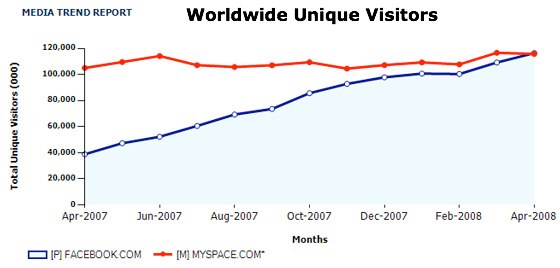
Facebook was launched in the year 2004 and it created a buzz amidst the people. Initially it was introduced as a platform for students to connect with their friends and share images. Then slowly the platform was made available for everyone across the globe. By the year 2008 it surpassed the number of users of Myspace. The user experience , UI and UX design were the prominent reasons for the success The launch of Facebook was undoubtedly a breakthrough in Digital Media. 

Fig 1: shows the growth in numbers of facebook users over the years

Today, the active number of monthly users in Facebook are around 2.3 Billion. India has the most number of facebook users.Every teenager and youth would most probably have an account on facebook. According to statistics, the number of people between the age 20-30 years accounts for the major percentage in the usage of Facebook. As consumers we all would have doubts regarding the way this pioneer platform works. Let’s understand the same in the upcoming paragraphs. 

Facebook – Backend Story:

The Facebook site was developed with PHP and later on they developed a compiler named Hiphop which will transfer the PHP code to C++ code.This was mainly done for improving the code efficiency. It was developed by engineers of Facebook. As expected the compiler was 5.5 times faster than the conventional PHP engines.

As the number of users increases over the years , the data to be processed increases at an enormous rate. For example if a user searches for his friend with a particular name , there would be multiple users under the name. So to reduce the efforts of the user facebook has to filter out them based on criterias like location , school, place of work etc. It is a difficult task to be processed as the amount of data involved in it is huge. Facebook uses open source software named Hadoop for processing the information. 

Initially facebook had features of users sharing images with their friends. It also had an option of tagging people while sharing pictures. This option helped users to get connected to their old friends , friends of their friends. Facebook uses Haystack to store all these images uploaded. Haystack has a separate server and storage system for storing the images uploaded. The image uploaded by the user is uploaded to the server with a separate index and stored in the storage space.

Facebook Algorithm:

The news feed of Facebook initially showed the posts , updates and stories shared by the friends or connections of the user. Due to the rapid growth in the number of users , it started to provide options for brand advertising and marketing.Gradually they started advertising for brand values which made the news feed flooded by irrelevant advertisements to the user. This led to the reduction in the number of users  substantially. Users in exasperation started to switch from facebook to other social media platforms. Emerging social media platforms like snapchat , telegram started to capture the market at an expeditious phase.

Then facebook came up with algorithms which put out the newsfeed in such a way that it is relevant to the user’s interest and likes. Users were given the chance to remove the ads which do not captivate them. Facebook Algorithms studied the behavior very closely.  It observed the user interaction according to the post content , time spent on the post , likes and shares of the post. Based on these observations , the newsfeed of each user was curated. Apart from this facebook conducted user surveys where various questions were asked to perceive the user behaviour better. Personal choices were given preference to please the users. 

Facebook algorithms run neural network models and filter the post which will not catch the individual’s attention. Then they began to give a score to every post in the filtered category. The posts were shown on the individual’s newsfeed according to its score in order of highest to the lowest. By this way the users got a feel that their time on facebook is utilised in the right course.

Facebook stellar marketing :

On the flip side , Facebook has to maintain the reach they have promised to the business pages which pay them. Hence the algorithms were designed in such a way that the user analytics is useful for both sides. Thus it will turn out to be a win-win situation. It helped brands to understand the time map of user engagement according to the geography and days of the week. When the post timings of brands aligned with the time map suggested reaches were promising.

Video contents were more promising when compared to images and articles. But video contents which are long and elaborate were not played fully as the people lose interest in the midst of the video. Hence Facebook suggested brands to do simple , attractive and short videos to attract consumers. Live videos of launching and product showcasing were recommended to small business owners. People were excited to know that they were a part of the product introduction of their favourite brands which made them feel a step closer with the brands of their choice.

Fig 2: shows the most promising techniques used by facebook for helping brands reach its customers

Freshness of the post played a vital role in the score of the post. In case a brand announces an offer for the first week of the month and the content is shown to the user in the second week due to the algorithm prioritization then it would be of no use to both sides. Hence the algorithm took the recency of the post as a crucial element for providing scores to the post. 

Facebook also had groups to promote small business. These groups recommended brands that are of good quality. A Recent online study proved that Facebook provides the best Return of Investment for the marketers. This is mainly because of the continuous changes in the Facebook algorithms , integration of Instagram promotion to Facebook, Facebook groups etc. 

References:

Afghanistan-Taliban Crisis for Social Media giants

The Taliban’s fast takeover of Afghanistan postures a unused challenge for huge US tech companies on dealing with substance made by a bunch considered to be fear mongers by a few world governments.

Social media monster Facebook affirmed on Monday that it assigns the Taliban a fear based oppressor bunch and bans it and substance supporting it from its platforms. But Taliban individuals have allegedly kept on utilize Facebook’s end-to-end scrambled informing benefit WhatsApp to communicate straightforwardly with Afghanis in spite of the company forbidding it beneath rules against unsafe associations.

A Facebook representative said the company was closely observing the circumstance within the nation which WhatsApp would take activity on any accounts found to be connected with endorsed associations in Afghanistan, which might incorporate account removal. On Twitter, Taliban representatives with hundreds of thousands of supporters have tweeted overhauls amid the country’s takeover. Asked around the Taliban’s utilize of the stage, the company pointed to its approaches against rough associations and derisive conduct but did not reply Reuters questions almost how it makes its classifications. Twitter’s rules say it does not permit bunches who advance fear mongering or savagery against civilians.

The Taliban’s return has raised fears it’ll split down on opportunity of discourse and human rights, especially women’s rights, which the nation may ended up a sanctuary once once more for worldwide terrorism. Taliban authorities have issued articulations saying they need tranquil worldwide relations and have guaranteed to secure Afghans. Major social media firms this year made high-profile choices on dealing with sitting world pioneers and bunches in power. These incorporate disputable pieces of previous US President Donald Trump for affecting savagery around the January 6 Capitol revolt and bans on Myanmar’s military in the midst of a upset within the country. Facebook, which was long scrutinized for coming up short to combat abhor discourse in Myanmar, said the overthrow raised dangers of offline hurt and its history of human rights infringement contributed to the boycott on the administering military or Tatmadaw.

The companies, which have come beneath fire from worldwide officials and controllers for their outsized political and financial impact, frequently depend on state assignments or official worldwide acknowledgments to decide who is permitted on their sites. These too offer assistance decide who can be confirmed, permitted official state accounts or may get uncommon treatment for rule-breaking discourse due to newsworthiness or open intrigued loopholes. However, the contrasts among the tech companies’ positions propose the approach isn’t uniform. Alphabet’s YouTube, inquired whether it contains a boycott or limitations on the Taliban, declined to comment but said the video-sharing benefit depends on governments to characterize “Outside Fear based oppressor Organizations” (FTO) to direct the site’s requirement of its rules against savage criminal bunches

YouTube pointed to the US State Department’s list of FTO’s of which the Taliban isn’t a part. The US instep classifies the Taliban as a “Extraordinarily Assigned Worldwide Fear monger,” which solidifies the US resources of those boycotted and bars Americans from working with them. Complicating things encourage, in spite of the fact that most nations appear small sign they will perceive the gather carefully, the Taliban’s position on the world arrange may however move as they cement control. “The Taliban is to some degree an acknowledged player at an worldwide relations level,” said Mohammed Sinan Siyech, a analyst on security in South Asia and doctoral candidate at the College of Edinburgh, indicating to talks China and the Joined together States have held with the group. “If that acknowledgment comes in, at that point for a company like Twitter or Facebook to create a subjective decision that this gather is awful and we’ll not have them postures complications.

Twitter Testing to Flag ‘Misleading’ Content

Twitter on Tuesday declared a modern highlight to permit clients to hail substance that may contain deception, a flay that has as it were developed amid the pandemic. “We’re testing a highlight for you to report Tweets that appear deluding – as you see them,” the social arrange said from its security and security account.

Starting Tuesday, a button would be obvious to a few clients from the Joined together States, South Korea, and Australia to select “it’s deluding” after clicking “report tweet.” Users can at that point be more particular, hailing the deceiving tweet as possibly containing deception around “wellbeing,” “legislative issues” and “other.”

“We’re surveying on the off chance that typically an viable approach so we’re beginning little,” the San Francisco-based company said. “We may not take activity on and cannot react to each report within the experiment, but your input will offer assistance us recognize patterns so that we will move forward the speed and scale of our broader deception work.” Twitter, like Facebook and YouTube, frequently comes.

But the stage does not have the assets of its Silicon Valley neighbors, and so regularly depends on exploratory strategies that are less costly than selecting armed forces of moderators. Such endeavors have inclined up as Twitter toughened its deception rules amid the COVID-19 widespread and amid the US presidential decision between Donald Trump and Joe Biden.

For case, Twitter started blocking clients in Walk who have been cautioned five times almost spreading wrong data almost vaccines. And the organize started hailing tweets from Trump with a pennant caution of their deluding substance amid his 2020 re-election campaign, some time recently the then-president was at long last prohibited from the site for posting actuations to viciousness and messages undermining the race results. Moderators are eventually dependable for deciding which substance really damages Twitter’s terms of utilize, but the arrange has said it trusts to inevitably utilize a framework that depends on both human and mechanized ana

IS SOCIAL MEDIA POLARIZING SOCIETY?

PROLOGUE

Today, society isn’t just the buyer of data however the maker too. Practically 1.49 billion individuals sign into Facebook day by day. All things considered, around 6,000 tweets are tweeted on Twitter each second. From the hour of its commencement, more than 40 billion photos have been posted on Instagram. Web-based media should turn into an extension between far off individuals, yet it has become a divider between close individuals.

Tragically, counterfeit news has become an industry today and is common all over. Its development, thus, prompts a developing doubt in the traditional press. Counterfeit news has contributed drastically to the reverberation chamber wonder. “Reverberation chamber” alludes to a circumstance where explicit thoughts, convictions, or information focuses are solidified through reiteration of a shut framework that doesn’t permit elective or contending thoughts or ideas.

A PEEP INTO ASCH CONFORMITY EXPERIMENTS

Incredible social analyst Solomon Asch had led a progression of mental trials called the Asch Conformity Experiments during the 1950s. These trials expected to comprehend the degree to which an individual’s perspectives are affected by a gathering. Through the series of investigations, Asch, amazingly, tracked down that an individual was able to try and offer an off-base response just to adjust to the larger part see. The respondents furnished wrong responses for various reasons. Some of them were hesitant to be derided or considered as exceptional. Others dreaded judgment or shame. Some of them likewise accepted that the gathering should be preferred educated over them, so they ought to go with their viewpoint. Method for correspondence and commitment have fostered a great deal since the 1950s, yet the human intuition to fit in stays as before. This clarifies the effect of phony news on the web, which adds to a spellbound society.

HOW IS SOCIAL MEDIA POLARIZES SOCIETY?

Clients in a social framework bond more with ones who are like them in assessment than with ones who are divergent. This is called client homophily. An investigation did by Aalto University on expanding polarization via online media found that elements like client homophily and algorithmic sifting lead to upholding and supporting conviction frameworks. This frequently guarantees that we don’t open our psyches to assorted feelings. Individuals look for educated and reliable thoughts through channels just from individuals they trust. They even search for news that affirms their perspective to mollify themselves. This outcomes in individuals developing inflexible assessments of issues and not the appropriate range to the issues. For instance, Twitter regularly prompts individuals to follow individuals holding a comparative perspective.

Most web-based media destinations are more than able to play abettors. The provisions of receptiveness, lack of definition, and anonymity that were intended to invigorate underestimated networks are currently giving trawlers the qualification to discourteous remarks. This additionally makes space for mean expectations to develop. Also, there has been a developing pattern of deception principally because of predispositions or human mistakes. A steadily developing society of phony records is likewise noticeable. It is fundamentally accomplished for pushing a political plan or annoying individuals. These days there is disinformation also. Disinformation alludes to counterfeit news made deliberately.

OTHER FACTORS OF POLARIZATION

In the early occasions, the print machine was viewed as inconvenience by the Ottomans. The speed at which books were printed and conveyed led to doubt. The principal Greek printing house set up in 1627 distributed a booklet focusing on Jews. Books were just a medium, actually like web-based media is today. Forbidding books and accusing web-based media are the outcomes of comparable wrong rationale. On the off chance that web-based media had an inclination towards evil, stories couldn’t ever have discovered a method of articulation. Web-based media likewise houses numerous accounts of lost kids being discovered, canines being embraced, cash being raised for different causes, and comparative great deeds and human cases.

As indicated by the BI-2018 review, the quantity of people with admittance to TV has is 835 million. Cell phone entrance has developed to around 300 million. The quantity of every day dynamic clients on WhatsApp and Facebook are 200 million and 194 million, individually. The details plainly feature that online media in India is as yet a specialty marvel. Web-based media stages are multilingual, multicultural, and are comprehensive. These stages permit equivalent freedoms for all, independent of class, belief, race, religion, sex, age, or monetary assets. Consequently faulting web-based media for each online wrongdoing doesn’t appear to be persuading.

TOWARDS THE END

Online media is catching society in thin, uneven, and ordinarily counterfeit perspectives. This is disturbing. There isn’t anything amiss with being stubborn. In any case, being inflexible in suppositions is without a doubt wrong. There are consistently different sides to a similar coin. It isn’t care for online media has unfriendly impacts as it were. Online media has a few efficacies also. It interfaces far off individuals and works with the fast scattering of data.

While web-based media faces the worldwide difficulties of data barrage, which is verifiable and counterfeit, it likewise empowers underestimated networks to get to their privileges and voice their viewpoints. So it relies upon the client how he chooses to utilize online media as an instrument or as a weapon. Ideally, individuals will figure out how to be more liable for what they offer, and web-based media stages will recover their tragically missing trust.

Digital Detox in 10 Steps

Digital Detoxification is a practice to limit the use of technology.  Digital Detox helps us to enhance the quality of our lives. It is a way to stop the constant urge to use social media. 

Do we really need Digital detox?

Our lives are filled with technology. According to a study we give about 2.5 hours daily on social media. But some take it too further than this.

Here is the list to check if you need a Digital Detox.

Do you:

  • Use social media late night instead of sleeping;
  • Get stressed, anxious, and irritated without social media;
  • Think about social media even after using cell phone;
  • Check likes, shares, comments constantly.

If yes, then you need Digital Detox.

Benefits of Digital Detox 

1. Keep your life balanced. 

According to Ayurveda a balanced mind, body, and life is key to all round health. 

2. Sleep benefits

The health of a person can be judged by his sleeping pattern. If you have irregular sleep and insomnia then your body might have some underlying problems. Using digital detox helps you sleep peacefully.

3. Time for Family and friends

Time spent with family and friends boost your Psychological health. Digital detox helps you to focus on your life. This gives you emotional wellbeing.

4. Embracing reality

The contemporary world is virtually oriented. People spend time getting perfect selfies, try to maintain a hectic online presence, and feel insecure about themselves. Same cycle again and again. 

Digital detox will give you inspiration, boost your creativity, and give you true values of life.

5. Look younger

A study shows that people who spend more time on screen age faster than others. Looking at the screen gives your skin wrinkles and lines. Digital detox helps you look fresh and young.

Check out this infographics for quick ways to detox:

How to Digital Detox

Here are 10 useful tips that you can do to Detox digitally:

1. Keep away from your cell phone for a minimum of 5 hours. You can increase as you like.

2. Keep away from distractions such as Netflix, gaming, other digital products.

3. Read a book during disconnection. Write a journal about how you feel during this time. You will be amazed that in a month your health has progressed.

4. Go out. Embrace nature. Do some activity that connects you to nature such as gardening, walking on beaches, swimming, or cycling in the morning. 

5. Play with your pets. This is the best time to bond with your pets.

6. Do volunteering. Give your hand to a person in need. Everything that goes around comes around.

7. Spend time with your family. 

8. Declutter your house.

9. Use cell phones ONLY when necessary. If you really need your cell phone, you may use it. Make sure you don’t exceed your time limit.

10. Practice your hobby and master it. Remove negative self with Digital Detox. 

Do these 10 simple Digital Detox techniques every week. You will be surprised with the productivity and efficiency you see in your life and work.

Here are 5 famous motivational quotes to inspire you while you Digitally Detox.

The body achieves what the mind believes.

Be patient with yourself. Nothing in nature blooms all year.

Your life only gets better when you do. Work on yourself and the rest will follow.

Nurturing yourself is not selfish—it’s essential to your survival and your well–being.

It is health that is real wealth and not pieces of gold and silver.

How Facebook become Powerful & Giant Company

 Hi everybody, We all know Facebook as the giant, powerful company that it is today but very few of us know that when Facebook actually came out in the market it was neither the first social media product in the market nor was it the best social media website in the market. In fact, when Facebook came out, there was already another social media website that had about 1 million users. And it was already one of the most visited websites on the Internet. But somehow, within the next four years Facebook made history by overtaking this huge company and went onto become one of the most powerful companies on the planet. 

And the reason why this happened has got some very very important business learnings for each one of us because more often than not, we all must have had a brilliant idea but then after doing a little bit of research, we tend to realize that there is already a giant company as our competitors doing the exact same thing as we planned to do. And that could be demotivating. But guys, what if I told you that instead, you should be super happy to build a business if there is already a giant competition in the market. And the fact that it will actually provide you a golden opportunity to build a business. The question is- How is it even possible and how can you go on to build a business to compete with a billion dollar company. The answer to this question lies in a story that dates back to 2004.

 This is when a social media website called Myspace had arrived on the Internet. It was just like the modern day Facebook which allowed people to form connections and helped them find new friends on the Internet. And within just one year Myspace became a sensation in the making with more than 1 million users signing up within the first month itself. And by the end of the year, Myspace had 5 million users. This is when in 2005, it got purchased by a gigantic media company called News Corp for $580 milllion. Because somehow, News Corp was one of those few organisations that actually realized the potential of social media ads, back in 2005. And the day this purchase happened it marked the beginning of the capitalistic Internet era. During this time, Facebook was just a college student website which was open to only Ivy League students in the US. But on the other side, from 2005 to 2008 Myspace became the most visited social networking site in the world. And in 2006, it even surpassed Google to becoming the most visited website in the world. 

But something happened in the next 4 years because of which the same Myspace had 115 million users while on the other side Facebook, the college community website had more than 1 billion users. The question is What exactly happened and how did two companies inspite of being in the exact same space, doing the exact same thing have such a vast difference in their success. The first reason is based on the fundamental concept of social network and human psychology which is known as the triadic closure property. And this is something that was suggested by a german sociologists named Georg Simmel in 1908. In simple words what it means is if there are three people: Shyam, Baburao and Raju If Raju knows Babu and Babu knows Shyam then automatically, Raju will form a connection with Shyam and Raju will be more inclined to trust Shyam. So, basically, if A knows B, and B knows C then A is more inclined to form a connection with C eventually leading to speed of trust. And you must have observed this while you used Facebook or Instagram, that is when you get a request from a person who has 200 mutual friends you easily tend to accept their request. 

At the same time if you get a request from a person whom you possibly know but has got zero mutual friends there’s a little bit of skepticism that pops in. This is how the triadic closure property plays out. In case of Myspace and Facebook, the major drawback with Myspace was that it did not allow users to use their real names as their usernames and because of this, although you could meet new people on the Internet through similar interests you couldn’t really tell who exactly are you chatting with. So, this kinda turned into a fine mix of privacy and creepiness. But on the other hand Facebook insisted on getting people to use their real names as their usernames. Why? Because as legend has it, Facebook was meant to stalk girls and if you didn’t know the names of those girls stalking wouldn’t be user-friendly right? Will do anything for girls Just kidding guys! It was meant to be that way because Mark Zuckerberg believed in helping people build authentic connections through digital technology. 

And regardless of the truth behind this statement the strategy of using real names turned out to be Facebook’s X factor because of which apart from connecting with people in their own respective social circle users actually started to expand their network to form second and third connections. And this is where the mutual friend feature came in handy and because of this, the networks on Facebook became far more deep rooted and helped people expand their connections beyond their social circle. And this is the reason why in 2006, when Facebook opened itself to the general public people flocked to create a Facebook account inspite of having a Myspace account already. Now, this begs the question If this was just this simple feature of using real usernames that distinguished Facebook from Myspace then why didn’t Myspace incorporate that feature and kill Facebook altogether? In fact, this is what Facebook did with Snapchat right? By introducing Instagram stories. In fact, the Myspace team even had the backing of a large corporation like News Corp, right? Then why couldn’t they incorporate this feature? Well, as it turns out, this is exactly why they couldn’t incorporate the feature in their website. Because News corp turned Myspace into a proper corporate organisation which had to follow protocols and procedures And more than the ideas and the execution, the focus went to register quarterly profits, yearly profits and all the other corporate procedures. 

In fact, even if the Myspace team came out with a brilliant idea. It first used to get scrutinized by the lawyers, then by so-called experts and then a series of meetings used to be held and then a series of emails to be sent and it just kept going back and forth. And in the process, things got so slow that the ideas just got lost into bureaucracy and even something as simple as adding a feature also took forever to be executed. While on the other side, Facebook was being run by a bunch of college students who could add, change, modify and delete features overnight. And make major modifications to the website without any formalities. And unfortunately finally when Myspace incorporated the option of real usernames it was already 2008 and Facebook had already surged way ahead.

 So, to put that straight, while Myspace became a rigid organisation that was focused on procedures and protocols. And was constantly debating about who is right and who is not. Facebook was obsessively focused on what is right and executed ideas with agility. And this became the second reason for the fall of Myspace and the rise of Facebook. And the story didn’t end here the rigid corporate structure of Myspace also lead to another huge setback that literally became the golden recipe for Facebook to surge way ahead of Myspace. And this recipe also became a game changer for Amazon, Google and Apple. And this was the idea of third party integration wherein Facebook practically tranformed from a product to becoming a platform. 

On 24th of May 2007, Facebook launched the Facebook platform to provide a framework for software developers to create applications that could interact with core features of Facebook. For example, Spotify could use Facebook API to allow users to share music directly within the Spotify application itself. Candy Crush used Facebook for instant login and I’m sure most of you must have used it. And thirdly, Nike run club used Facebook API to enable its users to share their achievements of their run with their friends by posting directly to the Facebook’s news feed. So, this way Facebook allowed developers and gave them the freedom to use their technology and build products and services of their own.

 Whereas on the other hand, Myspace was set to be a notoriously closed system and Myspace even used to block contents from potential competitors. And for some reason it also ended up blocking Photobucket which was at that time the most popular photo sharing website. And this is the third reason why Facebook became an incredible platform not just for consumers and advertisers but also for developers. And by the way, this concept of going from a product to a platform is also the reason for the unprecedented success of Apple because back then even Steve Jobs was skeptical about allowing third party developers. But when Apple started providing its platform to developers the iconic App Store was born and that changed Apple forever. 

Even Android did the same with Play Store. But If you look at Nokia Nokia acted like Myspace and made it very difficult for developers to operate because the symbianOS was too rigid for third party apps to be built upon. And fast forward to 2006, Amazon launched its own version of third party integration by allowing third party sellers to use this technology to sell their products. And guess what? In 2020 alone, Amazon generated $80.46 billion dollars in third-party seller services revenue which is more than the revenue generated by its own sellers. This was the insane revenue stream that Myspace passed on and turned Facebook into the billion dollar company that it is today.

Now, let’s talk about the 3 important lessons from this case study. Lesson number one, Every entrepreneur and a leader needs to realize that the fundamental purpose of an organisational structure is not just to help you make strategic decisions but to enable you to make those strategic decisions before its too late. And the day you realize that these protocols are making the execution of ideas tedious you need to kill those protocols straightaway or else those very same protocols will end up killing your organisation. 

Lesson 2, regardless of how marvelous your technology is if you’re building a business to consumer product human centred design must always be taken into consideration because if you see, in this case, it was the simple feature of mutual friends that actually got Facebook the same amount of popularity as Myspace. Because knowingly or unknowingly it abided by the triadic closure property. 

And last and most importantly, even if you’re not the first mover in the industry it’s completely fine guys. In fact, it is great because regardless of how big a company is if they are venturing into a new space, they will make mistakes. And if you carefully learn from those mistakes you can save yourself a lot of time, a lot of money and a lot of efforts. And more importantly, merely by learning from those mistakes you will have the opportunity to race ahead of the game Because afterall, wisdom is that attribute that often separates a few legendary entrepreneurs from the many good ones.

How Facebook become Powerful & Giant Company

 Hi everybody, We all know Facebook as the giant, powerful company that it is today but very few of us know that when Facebook actually came out in the market it was neither the first social media product in the market nor was it the best social media website in the market. In fact, when Facebook came out, there was already another social media website that had about 1 million users. And it was already one of the most visited websites on the Internet. But somehow, within the next four years Facebook made history by overtaking this huge company and went onto become one of the most powerful companies on the planet. 

And the reason why this happened has got some very very important business learnings for each one of us because more often than not, we all must have had a brilliant idea but then after doing a little bit of research, we tend to realize that there is already a giant company as our competitors doing the exact same thing as we planned to do. And that could be demotivating. But guys, what if I told you that instead, you should be super happy to build a business if there is already a giant competition in the market. And the fact that it will actually provide you a golden opportunity to build a business. The question is- How is it even possible and how can you go on to build a business to compete with a billion dollar company. The answer to this question lies in a story that dates back to 2004.

 This is when a social media website called Myspace had arrived on the Internet. It was just like the modern day Facebook which allowed people to form connections and helped them find new friends on the Internet. And within just one year Myspace became a sensation in the making with more than 1 million users signing up within the first month itself. And by the end of the year, Myspace had 5 million users. This is when in 2005, it got purchased by a gigantic media company called News Corp for $580 milllion. Because somehow, News Corp was one of those few organisations that actually realized the potential of social media ads, back in 2005. And the day this purchase happened it marked the beginning of the capitalistic Internet era. During this time, Facebook was just a college student website which was open to only Ivy League students in the US. But on the other side, from 2005 to 2008 Myspace became the most visited social networking site in the world. And in 2006, it even surpassed Google to becoming the most visited website in the world. 

But something happened in the next 4 years because of which the same Myspace had 115 million users while on the other side Facebook, the college community website had more than 1 billion users. The question is What exactly happened and how did two companies inspite of being in the exact same space, doing the exact same thing have such a vast difference in their success. The first reason is based on the fundamental concept of social network and human psychology which is known as the triadic closure property. And this is something that was suggested by a german sociologists named Georg Simmel in 1908. In simple words what it means is if there are three people: Shyam, Baburao and Raju If Raju knows Babu and Babu knows Shyam then automatically, Raju will form a connection with Shyam and Raju will be more inclined to trust Shyam. So, basically, if A knows B, and B knows C then A is more inclined to form a connection with C eventually leading to speed of trust. And you must have observed this while you used Facebook or Instagram, that is when you get a request from a person who has 200 mutual friends you easily tend to accept their request. 

At the same time if you get a request from a person whom you possibly know but has got zero mutual friends there’s a little bit of skepticism that pops in. This is how the triadic closure property plays out. In case of Myspace and Facebook, the major drawback with Myspace was that it did not allow users to use their real names as their usernames and because of this, although you could meet new people on the Internet through similar interests you couldn’t really tell who exactly are you chatting with. So, this kinda turned into a fine mix of privacy and creepiness. But on the other hand Facebook insisted on getting people to use their real names as their usernames. Why? Because as legend has it, Facebook was meant to stalk girls and if you didn’t know the names of those girls stalking wouldn’t be user-friendly right? Will do anything for girls Just kidding guys! It was meant to be that way because Mark Zuckerberg believed in helping people build authentic connections through digital technology. 

And regardless of the truth behind this statement the strategy of using real names turned out to be Facebook’s X factor because of which apart from connecting with people in their own respective social circle users actually started to expand their network to form second and third connections. And this is where the mutual friend feature came in handy and because of this, the networks on Facebook became far more deep rooted and helped people expand their connections beyond their social circle. And this is the reason why in 2006, when Facebook opened itself to the general public people flocked to create a Facebook account inspite of having a Myspace account already. Now, this begs the question If this was just this simple feature of using real usernames that distinguished Facebook from Myspace then why didn’t Myspace incorporate that feature and kill Facebook altogether? In fact, this is what Facebook did with Snapchat right? By introducing Instagram stories. In fact, the Myspace team even had the backing of a large corporation like News Corp, right? Then why couldn’t they incorporate this feature? Well, as it turns out, this is exactly why they couldn’t incorporate the feature in their website. Because News corp turned Myspace into a proper corporate organisation which had to follow protocols and procedures And more than the ideas and the execution, the focus went to register quarterly profits, yearly profits and all the other corporate procedures. 

In fact, even if the Myspace team came out with a brilliant idea. It first used to get scrutinized by the lawyers, then by so-called experts and then a series of meetings used to be held and then a series of emails to be sent and it just kept going back and forth. And in the process, things got so slow that the ideas just got lost into bureaucracy and even something as simple as adding a feature also took forever to be executed. While on the other side, Facebook was being run by a bunch of college students who could add, change, modify and delete features overnight. And make major modifications to the website without any formalities. And unfortunately finally when Myspace incorporated the option of real usernames it was already 2008 and Facebook had already surged way ahead.

 So, to put that straight, while Myspace became a rigid organisation that was focused on procedures and protocols. And was constantly debating about who is right and who is not. Facebook was obsessively focused on what is right and executed ideas with agility. And this became the second reason for the fall of Myspace and the rise of Facebook. And the story didn’t end here the rigid corporate structure of Myspace also lead to another huge setback that literally became the golden recipe for Facebook to surge way ahead of Myspace. And this recipe also became a game changer for Amazon, Google and Apple. And this was the idea of third party integration wherein Facebook practically tranformed from a product to becoming a platform. 

On 24th of May 2007, Facebook launched the Facebook platform to provide a framework for software developers to create applications that could interact with core features of Facebook. For example, Spotify could use Facebook API to allow users to share music directly within the Spotify application itself. Candy Crush used Facebook for instant login and I’m sure most of you must have used it. And thirdly, Nike run club used Facebook API to enable its users to share their achievements of their run with their friends by posting directly to the Facebook’s news feed. So, this way Facebook allowed developers and gave them the freedom to use their technology and build products and services of their own.

 Whereas on the other hand, Myspace was set to be a notoriously closed system and Myspace even used to block contents from potential competitors. And for some reason it also ended up blocking Photobucket which was at that time the most popular photo sharing website. And this is the third reason why Facebook became an incredible platform not just for consumers and advertisers but also for developers. And by the way, this concept of going from a product to a platform is also the reason for the unprecedented success of Apple because back then even Steve Jobs was skeptical about allowing third party developers. But when Apple started providing its platform to developers the iconic App Store was born and that changed Apple forever. 

Even Android did the same with Play Store. But If you look at Nokia Nokia acted like Myspace and made it very difficult for developers to operate because the symbianOS was too rigid for third party apps to be built upon. And fast forward to 2006, Amazon launched its own version of third party integration by allowing third party sellers to use this technology to sell their products. And guess what? In 2020 alone, Amazon generated $80.46 billion dollars in third-party seller services revenue which is more than the revenue generated by its own sellers. This was the insane revenue stream that Myspace passed on and turned Facebook into the billion dollar company that it is today.

Now, let’s talk about the 3 important lessons from this case study. Lesson number one, Every entrepreneur and a leader needs to realize that the fundamental purpose of an organisational structure is not just to help you make strategic decisions but to enable you to make those strategic decisions before its too late. And the day you realize that these protocols are making the execution of ideas tedious you need to kill those protocols straightaway or else those very same protocols will end up killing your organisation. 

Lesson 2, regardless of how marvelous your technology is if you’re building a business to consumer product human centred design must always be taken into consideration because if you see, in this case, it was the simple feature of mutual friends that actually got Facebook the same amount of popularity as Myspace. Because knowingly or unknowingly it abided by the triadic closure property. 

And last and most importantly, even if you’re not the first mover in the industry it’s completely fine guys. In fact, it is great because regardless of how big a company is if they are venturing into a new space, they will make mistakes. And if you carefully learn from those mistakes you can save yourself a lot of time, a lot of money and a lot of efforts. And more importantly, merely by learning from those mistakes you will have the opportunity to race ahead of the game Because afterall, wisdom is that attribute that often separates a few legendary entrepreneurs from the many good ones.

How Facebook become Powerful & Giant Company

 Hi everybody, We all know Facebook as the giant, powerful company that it is today but very few of us know that when Facebook actually came out in the market it was neither the first social media product in the market nor was it the best social media website in the market. In fact, when Facebook came out, there was already another social media website that had about 1 million users. And it was already one of the most visited websites on the Internet. But somehow, within the next four years Facebook made history by overtaking this huge company and went onto become one of the most powerful companies on the planet. 

And the reason why this happened has got some very very important business learnings for each one of us because more often than not, we all must have had a brilliant idea but then after doing a little bit of research, we tend to realize that there is already a giant company as our competitors doing the exact same thing as we planned to do. And that could be demotivating. But guys, what if I told you that instead, you should be super happy to build a business if there is already a giant competition in the market. And the fact that it will actually provide you a golden opportunity to build a business. The question is- How is it even possible and how can you go on to build a business to compete with a billion dollar company. The answer to this question lies in a story that dates back to 2004.

 This is when a social media website called Myspace had arrived on the Internet. It was just like the modern day Facebook which allowed people to form connections and helped them find new friends on the Internet. And within just one year Myspace became a sensation in the making with more than 1 million users signing up within the first month itself. And by the end of the year, Myspace had 5 million users. This is when in 2005, it got purchased by a gigantic media company called News Corp for $580 milllion. Because somehow, News Corp was one of those few organisations that actually realized the potential of social media ads, back in 2005. And the day this purchase happened it marked the beginning of the capitalistic Internet era. During this time, Facebook was just a college student website which was open to only Ivy League students in the US. But on the other side, from 2005 to 2008 Myspace became the most visited social networking site in the world. And in 2006, it even surpassed Google to becoming the most visited website in the world. 

But something happened in the next 4 years because of which the same Myspace had 115 million users while on the other side Facebook, the college community website had more than 1 billion users. The question is What exactly happened and how did two companies inspite of being in the exact same space, doing the exact same thing have such a vast difference in their success. The first reason is based on the fundamental concept of social network and human psychology which is known as the triadic closure property. And this is something that was suggested by a german sociologists named Georg Simmel in 1908. In simple words what it means is if there are three people: Shyam, Baburao and Raju If Raju knows Babu and Babu knows Shyam then automatically, Raju will form a connection with Shyam and Raju will be more inclined to trust Shyam. So, basically, if A knows B, and B knows C then A is more inclined to form a connection with C eventually leading to speed of trust. And you must have observed this while you used Facebook or Instagram, that is when you get a request from a person who has 200 mutual friends you easily tend to accept their request. 

At the same time if you get a request from a person whom you possibly know but has got zero mutual friends there’s a little bit of skepticism that pops in. This is how the triadic closure property plays out. In case of Myspace and Facebook, the major drawback with Myspace was that it did not allow users to use their real names as their usernames and because of this, although you could meet new people on the Internet through similar interests you couldn’t really tell who exactly are you chatting with. So, this kinda turned into a fine mix of privacy and creepiness. But on the other hand Facebook insisted on getting people to use their real names as their usernames. Why? Because as legend has it, Facebook was meant to stalk girls and if you didn’t know the names of those girls stalking wouldn’t be user-friendly right? Will do anything for girls Just kidding guys! It was meant to be that way because Mark Zuckerberg believed in helping people build authentic connections through digital technology. 

And regardless of the truth behind this statement the strategy of using real names turned out to be Facebook’s X factor because of which apart from connecting with people in their own respective social circle users actually started to expand their network to form second and third connections. And this is where the mutual friend feature came in handy and because of this, the networks on Facebook became far more deep rooted and helped people expand their connections beyond their social circle. And this is the reason why in 2006, when Facebook opened itself to the general public people flocked to create a Facebook account inspite of having a Myspace account already. Now, this begs the question If this was just this simple feature of using real usernames that distinguished Facebook from Myspace then why didn’t Myspace incorporate that feature and kill Facebook altogether? In fact, this is what Facebook did with Snapchat right? By introducing Instagram stories. In fact, the Myspace team even had the backing of a large corporation like News Corp, right? Then why couldn’t they incorporate this feature? Well, as it turns out, this is exactly why they couldn’t incorporate the feature in their website. Because News corp turned Myspace into a proper corporate organisation which had to follow protocols and procedures And more than the ideas and the execution, the focus went to register quarterly profits, yearly profits and all the other corporate procedures. 

In fact, even if the Myspace team came out with a brilliant idea. It first used to get scrutinized by the lawyers, then by so-called experts and then a series of meetings used to be held and then a series of emails to be sent and it just kept going back and forth. And in the process, things got so slow that the ideas just got lost into bureaucracy and even something as simple as adding a feature also took forever to be executed. While on the other side, Facebook was being run by a bunch of college students who could add, change, modify and delete features overnight. And make major modifications to the website without any formalities. And unfortunately finally when Myspace incorporated the option of real usernames it was already 2008 and Facebook had already surged way ahead.

 So, to put that straight, while Myspace became a rigid organisation that was focused on procedures and protocols. And was constantly debating about who is right and who is not. Facebook was obsessively focused on what is right and executed ideas with agility. And this became the second reason for the fall of Myspace and the rise of Facebook. And the story didn’t end here the rigid corporate structure of Myspace also lead to another huge setback that literally became the golden recipe for Facebook to surge way ahead of Myspace. And this recipe also became a game changer for Amazon, Google and Apple. And this was the idea of third party integration wherein Facebook practically tranformed from a product to becoming a platform. 

On 24th of May 2007, Facebook launched the Facebook platform to provide a framework for software developers to create applications that could interact with core features of Facebook. For example, Spotify could use Facebook API to allow users to share music directly within the Spotify application itself. Candy Crush used Facebook for instant login and I’m sure most of you must have used it. And thirdly, Nike run club used Facebook API to enable its users to share their achievements of their run with their friends by posting directly to the Facebook’s news feed. So, this way Facebook allowed developers and gave them the freedom to use their technology and build products and services of their own.

 Whereas on the other hand, Myspace was set to be a notoriously closed system and Myspace even used to block contents from potential competitors. And for some reason it also ended up blocking Photobucket which was at that time the most popular photo sharing website. And this is the third reason why Facebook became an incredible platform not just for consumers and advertisers but also for developers. And by the way, this concept of going from a product to a platform is also the reason for the unprecedented success of Apple because back then even Steve Jobs was skeptical about allowing third party developers. But when Apple started providing its platform to developers the iconic App Store was born and that changed Apple forever. 

Even Android did the same with Play Store. But If you look at Nokia Nokia acted like Myspace and made it very difficult for developers to operate because the symbianOS was too rigid for third party apps to be built upon. And fast forward to 2006, Amazon launched its own version of third party integration by allowing third party sellers to use this technology to sell their products. And guess what? In 2020 alone, Amazon generated $80.46 billion dollars in third-party seller services revenue which is more than the revenue generated by its own sellers. This was the insane revenue stream that Myspace passed on and turned Facebook into the billion dollar company that it is today.

Now, let’s talk about the 3 important lessons from this case study. Lesson number one, Every entrepreneur and a leader needs to realize that the fundamental purpose of an organisational structure is not just to help you make strategic decisions but to enable you to make those strategic decisions before its too late. And the day you realize that these protocols are making the execution of ideas tedious you need to kill those protocols straightaway or else those very same protocols will end up killing your organisation. 

Lesson 2, regardless of how marvelous your technology is if you’re building a business to consumer product human centred design must always be taken into consideration because if you see, in this case, it was the simple feature of mutual friends that actually got Facebook the same amount of popularity as Myspace. Because knowingly or unknowingly it abided by the triadic closure property. 

And last and most importantly, even if you’re not the first mover in the industry it’s completely fine guys. In fact, it is great because regardless of how big a company is if they are venturing into a new space, they will make mistakes. And if you carefully learn from those mistakes you can save yourself a lot of time, a lot of money and a lot of efforts. And more importantly, merely by learning from those mistakes you will have the opportunity to race ahead of the game Because afterall, wisdom is that attribute that often separates a few legendary entrepreneurs from the many good ones.

Is social media good or bad ?

Social media has exponentially increased the resources for mental health information and support. Research shows that people who get support from peers (those struggling with the same problems) have better health outcomes, whether they have a physical condition like diabetes or a psychological one like depression.


is social media a bad thing? With the amount of access teens have to social media the, “harmful consequences include health problems emotional problems, including suicide, internet addiction, including video game addiction; risky Internet use; and social/functional impairment.

Advantages of social media

The business benefits of effective social media use include:

  • Brand awareness – Compelling and relevant content will grab the attention of potential customers and increase brand visibility.
  • Brand reputation – You can respond instantly to industry developments and be seen as ‘thought leader’ or expert in your field. This can improve how your business is seen by your audience. See public relations (PR). 
  • Cost effective – It can be much cheaper than traditional advertising and promotional activities. The costs of maintaining a social media presence are minimal. If you choose to invest in paid advertising, you can spend as much or as little as your budget allows.
  • Website traffic – Social content can boost traffic to your website. This can lead to increased online conversions such as sales and leads.
  • Evaluation – It is easy to measure how much website traffic you receive from social media. You can set up tracking to determine how many sales are generated by paid social advertising.
  • Customer interaction – You can deliver improved customer service and respond effectively to feedback. Positive feedback is public and can be persuasive to other potential customers. Negative feedback highlights areas where you can improve.
  • Target audience – Customers can find you through the social media platforms they use most. You can choose to maintain a presence on particular platforms that are in line with your target audience. For example, if you are targeting young people you could reach them through Snapchat. If you are seeking business customers, LinkedIn may be the best channel. See social media platforms.
  • Brand loyalty – You can build relationships with your customers through social media. This can help increase loyalty and advocacy.

Disadvantages of social media

Some of the downsides of using social media include:

  • Resources – You will need to commit resources to managing your social media presence, responding to feedback and producing new content. This can include hiring and training staff, investing in paid advertising and paying for the costs of creating video or image content.
  • Evaluation – While it is easy to quantify the return-on-investment in terms of online sales generated by social media advertising – there are some less tangible benefits. It can be hard to measure and place a monetary value on the brand awareness and reputation that social media can bring. It’s difficult to know how social media effects sales in-store.
  • Ineffective use – Social media can be used ineffectively. For example, using social media to push for sales without engaging with customers, or failing to respond to negative feedback – may damage your reputation.