Investment in Indian Space Start-Ups increased to $ 124.7 Million in 2023

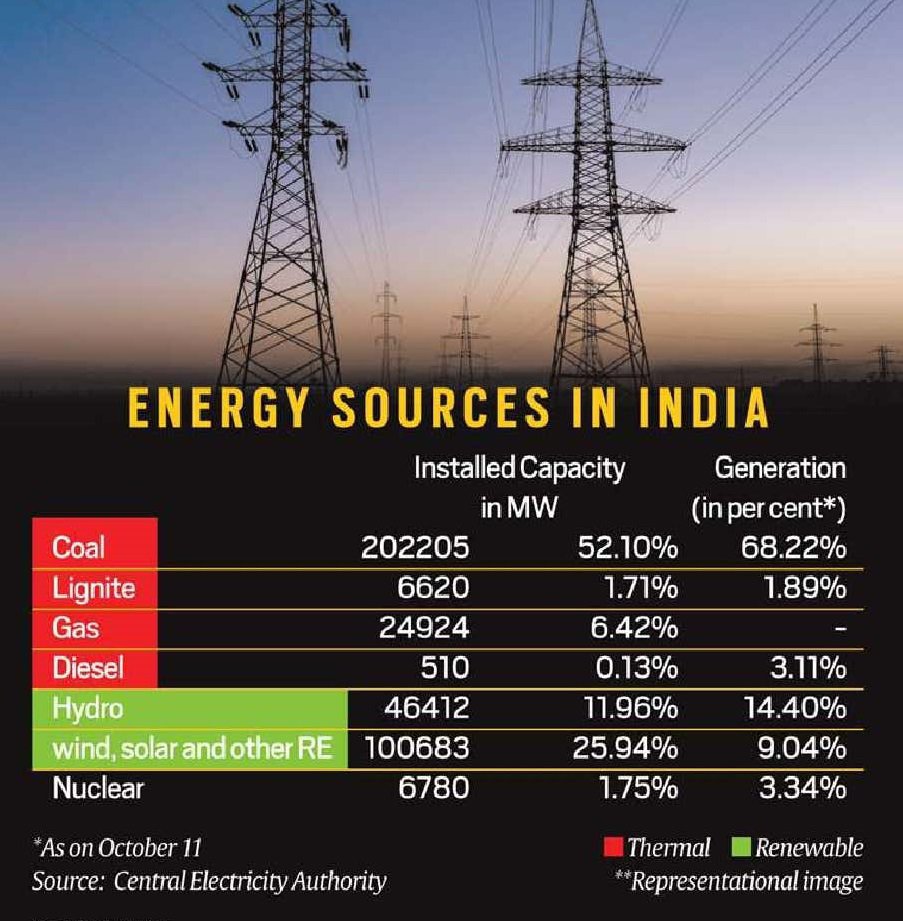
 The Government has initiated steps to increase the nuclear power capacity from 7480 MW to 22480 MW by 2031-32, Union Minister Dr Jitendra Singh said today.

The annual electricity generation from nuclear power plants has increased from 35334 Million Units (including infirm) in 2013-14 to 46982 Million Units (including infirm) in 2022-23. The installed nuclear power capacity in 2013-14 has also increased from 4780 MW to 7480 MW at present, he said.

The Union Minister of State (Independent Charge) Science & Technology; MoS PMO, Personnel, Public Grievances, Pensions, Atomic Energy and Space, gave this information in separate written replies in the Lok Sabha.

Dr Jitendra Singh said, the electricity generation from nuclear power plants in the current year 2023-24 (up to November 2023) is about 32017 Million Units against the aspirational MoU target of 52340 Million Units for the year.

At present 23 nuclear power reactors are installed, he said. The total electricity generated from nuclear power plants during the last ten years (2013-14 to 2022-23) was about 411 BUs averting release of about 353 Million Tons of CO2 equivalent to the environment.

Dr Jitendra Singh said, construction and commission of ten reactors totalling 8000 MW is underway in the states of Gujarat, Rajasthan, Tamil Nadu, Haryana, Karnataka and Madhya Pradesh. In addition, pre-project activities in respect of ten reactors accorded sanction by the Government has been initiated. These are scheduled for progressive completion by 2031-32. The Government has accorded in-principle approval to set up 6 x 1208 MW nuclear power plant in cooperation with the USA at Kovvada in Srikakulam district in the state of Andhra Pradesh, he said.

Dr Jitendra Singh said, nuclear power generation in the country continued to demonstrate excellent safety in the last 10 years. Performance landmarks like completion of 50 years of operation of TAPS 1&2 (presently oldest reactors in the world), setting of world record in continuous operation by KGS-1 of 962 days were achieved in the last 10 years.

Dr Jitendra Singh said, Nuclear Power Corporation of India Limited (NPCIL) has taken steps to ensure completion of plant shutdown of operating reactors as per schedule and early start of generation from new units and also avoiding of any unplanned shutdown to meet the target. PFBR is undergoing integrated commissioning. Bharatiya Nabhikiya Vidyut Nigam Limited (BHAVINI) has set milestones against set timeline to reach the target.

Dr Jitendra Singh said, close coordination is maintained with the State Governments during all phases of the construction and subsequent operations of the Nuclear Power Plants.

Dr Jitendra Singh said, Nuclear Power is a clean and environment friendly base load source of electricity generation, which is available 24X7. It has huge potential and can provide the country long term energy security in a sustainable manner. Expansion of nuclear power capacity will help in the country’s energy transition for meeting the goal of a net zero economy by 2070.  

   ****

Space Start-Ups have gone up, from just 1 in 2014 to 189 in 2023 as per DPIIT

 The number of Space Start-Ups have gone up, from just 1 in 2014 to 189 in 2023 as per DPIIT Start-Up India Portal, Union Minister Dr Jitendra Singh said today. The investment in Indian Space Start-Ups has increased to $ 124.7 Million in 2023, he added.

The Union Minister of State (Independent Charge) Science & Technology; MoS PMO, Personnel, Public Grievances, Pensions, Atomic Energy and Space, said this in a written reply in the Lok Sabha today.

Dr Jitendra Singh said, the current size of the Indian Space Economy is estimated around $8.4 billion (around 2-3% of global space economy) and it is expected that with the implementation of the Indian Space Policy 2023, $44 billion Indian space economy can be achieved by the year 2033. The role of the private sector will be prime to achieve the expected economy figure. It is expected that private sector will take up independently end to end solution in satellite manufacturing, launch vehicle manufacturing, provide satellite services, and manufacture ground systems.

In a separate reply, Dr Jitendra Singh said, presently, FDI in space sector is allowed under Government route for satellite establishment and operations. In order to promote Foreign Direct Investment (FDI) in Space Sector, the Department of Space in consultation with DPIIT is in the process of reviewing the FDI policy guidelines of space sector, he said.

Dr Jitendra Singh said, some Non-Government Entities (NGEs) launched their own satellites. Many other Space Industries and Start-Ups are also building their own Satellites & constellations. These satellites shall contribute to applications in agriculture, disaster management, environmental monitoring, etc.

Dr Jitendra Singh said, while one NGE launched their sub-orbital launch vehicle, a private launchpad and mission control centre has been established within the ISRO campus for the first time by an NGE. Sub-orbital launch by that NGE is scheduled shortly. The government has announced the Indian Space Policy 2023, which enables end-to-end participation of NGEs in all domain of space activities.

Dr Jitendra Singh enumerated the following other developments and impact in the space sector:

  • Private companies are exploring satellite-based communication solutions.  Private players are increasingly participating in space-based applications and services.
  • Satellite integration and testing facilities are coming up in private sector.
  • The local manufacturing of the satellite subsystems and Ground systems are being taken up by private sector.
  • Indian private space companies are increasingly entering into collaborations and partnerships with international space organizations and companies.

Dr Jitendra Singh said, efforts that are being taken in reaching out to the academic community as well as young startups through handholding, ecosystem support and funding in the country’s backward areas are as follows:

  1. A national committee for adoption of space technology education in India is formed by IN-SPACe, with an aim to facilitate and promote the integration of space technology education across academic institutions in India, fostering awareness, skill development and research.
  2. List of retired ISRO subject experts is published on IN-SPACe Digital Platform (IDP). NGEs can approach these mentors directly for expert advice etc.
  3. Periodically invite willingness from the technocrats having experience in space sector as mentors and connect them to NGEs.
  4. To encourage Students/Academic Institutions to carry out space activities, a committee has been constituted which will evaluate their proposal and provide necessary guidance.
  5. In order to develop quality manpower in the space sector, IN-SPACe is periodically organising skill development short term courses in association with ISRO along with Seed Fund Scheme.

Dr Jitendra Singh said, various schemes to encourage and hand hold private sector also announced and implemented by IN-SPACe, i.e., Seed Fund Scheme, Pricing Support Policy, Mentorship support, Design Lab for NGEs, Skill Development in Space Sector, ISRO facility utilization support, Technology Transfer to NGEs.

IN-SPACe has signed around 45 MoUs with NGEs to provide necessary support for realization of space systems and applications envisaged by such NGEs, which is expected to increase the industry participation in manufacturing of launch vehicles and satellites, he said.

Dr Jitendra Singh said, there are several industry associations in the country related to space sector, the Indian Space Association (ISpA) being one among them. The activities being carried out by such industry associations does not come under the purview of government, he said.  

  ****

Shortage in Indias Power Supply.

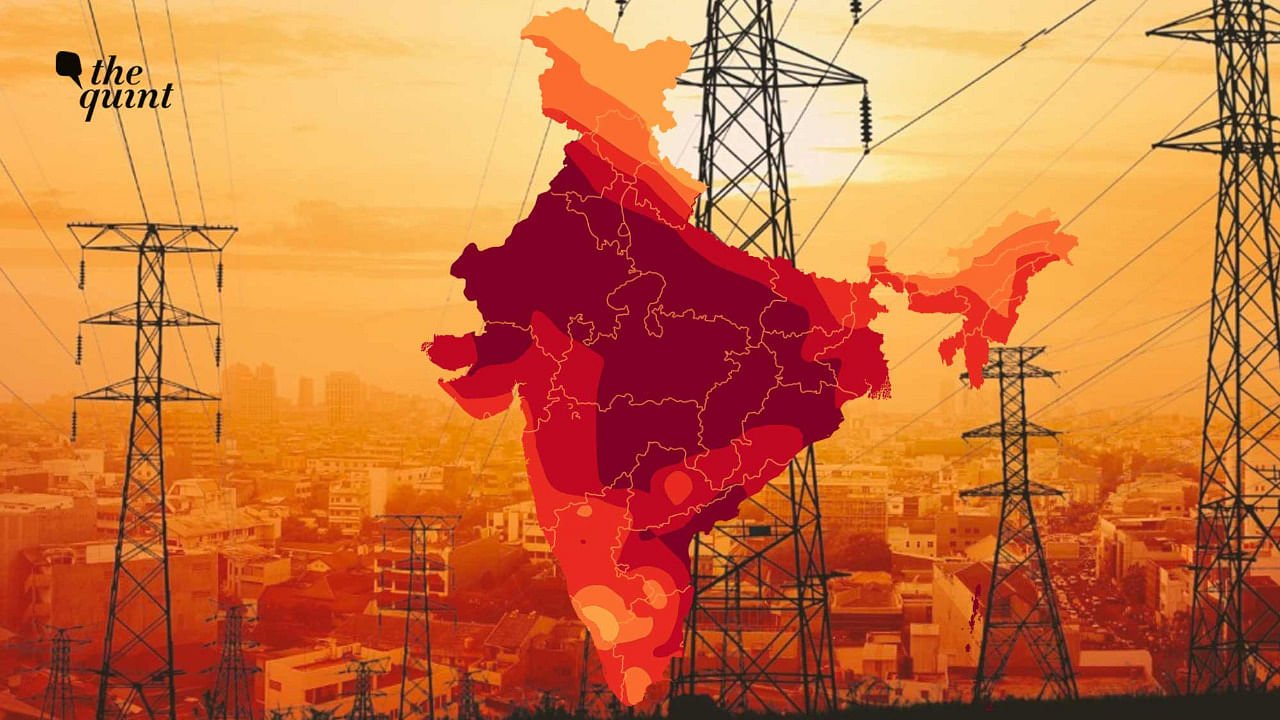
India has the fourth largest coal deposit in the world. It is the second largest fossil fuel producer after China and is home to Coal India, the world’s largest coal mining mine, which accounts for 80% of domestic production. Already allocated coal block mining capacity exceeds expected demand in 2030 by approximately 15% to 20%.


So why are India’s power plants facing coal shortages each year, leading to widespread power outages, exposing parts of the country to darkness and endangering industry?
There are several factors. India has a long time policy of minimizing coal imports. In February 2020, Coal Minister Pralhad Joshi announced that the country would stop importing steam coal from 2023 to 2024.
Mr Joshi said the Ministry of Coal will work with the Ministry of Railways and the Ministry of Shipping to allow Coal India, prisoners and commercial miners to discharge more coal from their supply by 2030. And the coal supply at power plants is running out at an alarming rate. The Department of Energy is currently blaming the decline in coal imports due to the current crisis. In 2018-19, 21.4 million tonnes of coal were imported for mixing, down to 23.8 million tonnes in 2019-20 and 8.3 million tonnes in 2021-22.


Power plant coal inventories have fallen by about 13% since April, reaching pre-summer lows. And for the first time since 2015, Coal India will import fuels used by state-owned and private power companies. The Ministry of Energy said almost all states showed that multiple state bids for coal imports would cause confusion and that the decision was made after calling for centralized procurement by Coal India.
Imported coal costs five times as much as domestic mining, so the center is being pushed back by the state.
Recently, the government has also pressured utilities to increase imports to mix with local coal. Last year, after a two-year break, three tranches of coal auctions were held and nine blocks were successfully awarded.

In September 2021, the Ministry of Coal issued a strict warning to owners of confined coal blocks, stating that their mines should increase production or face restrictions on coal supply by the CIL.
The ministry has discovered that these mines are producing below target.

Of the 43 coal mines outsourced to private companies in the energy, steel and metals sectors, none have met their annual production targets.
On May 6, Coal India announced that it would provide the private sector with 20 closed and abandoned underground coal mines and reopen and operate its revenue sharing model.

According to journalist Shreya Jai the current power supply chain does not seem ready to handle periods of high growth and state discos cannot pay gencos, but the power supply chain starts with state discos and needs repairs. Railroads, on the other hand, are struggling to align the thermal power industry’s demands for faster coal supply with those from other industries. Rakes must be prepared to meet the growing demand for almost all other bulk commodities, from cement and steel to sand and edible grains. By strengthening the value chain of the electric power sector, it is possible to resolve the coal supply-demand mismatch in the long run.

Korean wave in India.

The  Korean wave has certainly seen a significant  rise in India during the pandemic, and K-Drama and K-Pop are seeing massive demand from fans and new followers as well. In response to the growing popularity of the Korean wave in the country, many  online and offline events are held to show people  what they are consuming online. And these extend not only  to K-Drama and K-Pop, but also  to food, beauty and culture in general.
Korean singer PSY’s 2012 viral hit “Gangnam Style” may have started the Korean wave in India, but it certainly wasn’t the origin. The existence of K-POP in India dates back to the late 90’s when in Northeastern part  in Manipur Bollywood films were not allowed to watch because law imposed by the Separatist group Revolutionary Peoples Front to make Manipur independent.Not so much offered, the locals turned to Korean content and it got it’s popularity from their on.

Increasing demand for Korean content is fueling competition between India’s Amazon Prime Video and Netflix. Amazon Prime Video is the first company to launch Parasite and Minari in the country. Hotstar, MX Player, Viki and Viu are also involved in the Korean wave effect. Discovery + launched the “Star vs Food” series featuring the Korea Tourism Organization (KTO) and K-POP idols to introduce Korean food to India. Some prominent dramas are: Crash Landing on You, Squid Games, Descendants of the Sun and many more more , the reason of these Korean content popularity is that as an audiance, Indian’s  find Korean content relatable to them.

According to Hyun Woo, Kross Komix co-founder, president and CEO Thomas Kim predicts that South Korea’s webtoon, or digital comics, will be the next big thing.Kross Komics is India’s only webtoon platform  launched in December 2019. In just about 1.5 years of operation, the app has been downloaded more than 4.5 million times, about half of which are women. “With the numerous webtoons in the romance / romantic comedy category and the world’s best-selling stories, this new format of content has become a very interesting alternative to the dramas and movies”.

“In 2020, the blockade caused by Covid-19 is said to be one of the reason to the popularity and acceptance of Korean culture in India through dramas available on multiple video streaming platforms and the different Korean music band whose craze is extraordinary. South Korea’s food exports hit a record high,  boosted by social media posts from Asian celebrities and the popularity of the movie like “Parasite” and drama like”Crash Landing on You”. The widespread  of k-pop, k-movies, and k-drama has evolved into a  fan culture, especially among the  urban youth of the country. Following k-pop music and movies, K-Food and cooking have undergone a major makeover to reach the larger Indian market. K-cuisine is all the rage, especially on social media, in the form of food challenges like Mukbang, “said Hwang Il-young, director of the Korean Culture Center India .

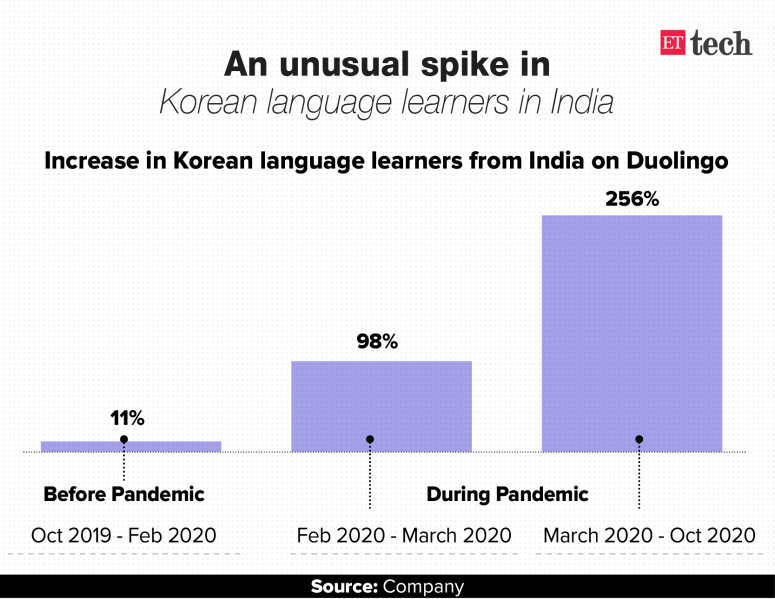
The Korean wave,  the growing global popularity of  Korean culture, swept India a few years ago, but  exploded during a pandemic. Supported by the OTT platform, which has a large investment in Korean programs, the number of people who started watching K-Drama and listening to K-Pop has skyrocketed. Recently, the language learning app Duolingo surveyed 1,013 people in 10  cities in India and found that Korean is  the fastest growing language in India. It was the 7th most popular language for Indians in 2020, but it has risen to the 5th in 2021 and will  continue to rise. Duolingo’s 2021 audio report attributed this primarily to the release of Squid Game in 2021.

Start-up to success: OYO

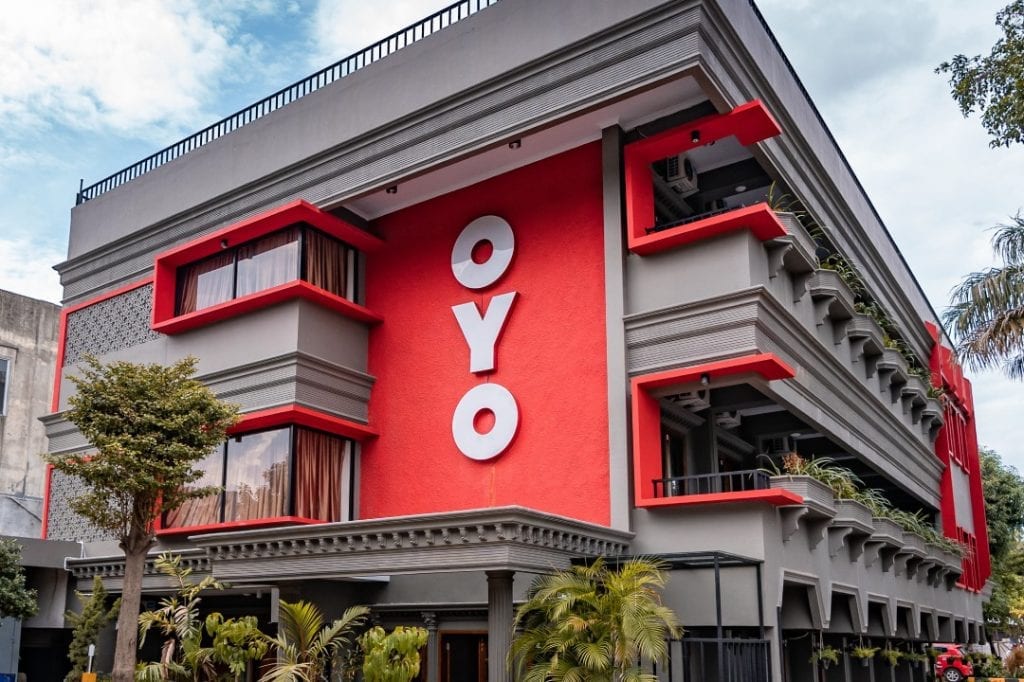
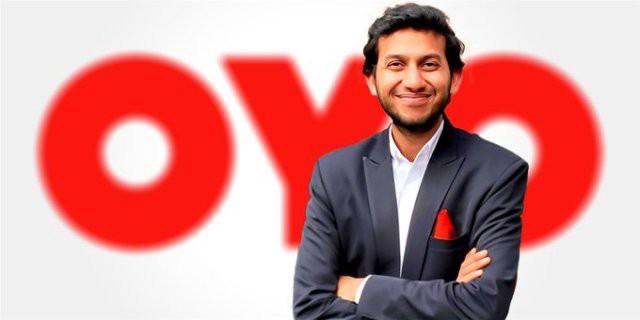
OYO Hotels and Homes is one of the first choices that comes to our mind when we think of affordable and comfortable accommodation while on a vacation. The success of OYO as a hospitability empire has been enormous, and it has been growing ever since the inception of the company in 2013 by Ritesh Agarwal.

OYO stands for ‘On Your Own’. And OYO has been a leading venture in the avenue of budget-friendly rooms along with offering commendable hospitability services. The company has been adding ways to improve its quality and services for the consumers over the years.

The origin of OYO

Ritesh Agarwal aspired to be a coder, and left for Kota in 2009. However he later realised that coding was not for him. Meanwhile he wrote and published his book ‘Indian Engineering Colleges: A Complete Encyclopaedia of Top 100 Engineering Colleges’, which turned out to be a hit. He was then selected for Asian Science Camp held at Tat Institute of Fundamental Research, Mumbai. Later he was among 20 students under 20 who received Thiel Fellowship with a sum of $100.000 for two years. Thus providing him with the resources to drop out of college to start something of his own.

Since Ritesh Agrawal travelled a lot and stayed in different hotels, he realised the poor condition of the hospitality sector, and was motivated to start Oravel Stays in 2011, which was later relaunched as OYO Hotels and Homes in 2013. He envisioned OYO as the all-encompassing accommodation system where people could enjoy all the best facilities of hospitality sector in a budget.

Eventually OYO spread all over India, generating revenue of 51 lacs in 2013-14 and 2.4 Crores in 2014-15. OYO also bagged investment from big shot companies like Lightspeed India, Sequoia, Softback and most recently Microsoft in 2021.

The Struggles of OYO

OYO did not become a success overnight. It had to endure its fair share of struggles and setbacks on its way to success. OYO was surrounded with allegations of cheating and fraud. In 2019, a Bengaluru hotelier accused OYO for not paying his dues. However, OYO rejected such claims.

Other instances includes the death of a national level shooter in an OYO hotel due to electrocution, and an OYO employee raping a women, and a few more. In all these cases OYO clarified its stand and coped with authorities to help with the investigations.  

Other then such instances of setbacks, OYO also had to deal with the obstacles of COVID-19. Like all businesses, the hospitality sector was also hit severely with the pandemic. The hospitality sector revenue generation was down by 50-60% in 2020, as a result the OYO employees had to go through a pay cut of 25%.

Success of OYO

After dealing with its fair share of struggles and shortcomings, OYO has established itself as the World’s third largest and fastest growing hotel chains and home and living spaces. After 8 years of business OYO operates in 800 cities in more than 80 countries. It has 23,000 hotels under, 850,000 rooms and 46,000 vacation homes worldwide.  

In 2019, OYO generated a revenue of $951 million, and is believed to revive itself from the effects of pandemic in the coming years. Ritesh Agarwal was declared the youngest CEO at 17, he was also declared the world’s youngest self-made Billionaire after Kylie Jenner in 2020. And he has a number of other titles to his name such as Forbes 30 under 30 and much more.

                      Nonetheless, the biggest takeaway is that, a teenager with an entrepreneurial mindset manifested his dreams into reality and made it big to a billion dollar industry. Ritesh Agarwal has an inspiring story that can surely encourage other young minds.

Koo App – An Indian Alternative to Twitter

Koo , an Indian alternative of twitter is gaining a lot of attention from the netizens as the government ministers & ministries are switching to the app.

Koo’s rise comes as Twitter is currently engaged in a standoff with the Indian government over the blocking and unblocking of accounts linked to the farmer protests. The Koo a made-in-India app is now seen as a prospective competitor to Twitter in the backdrop of the government’s disagreement with Twitter.

Union minister Piyush Goyal, who is quite active on Twitter,announced on Tuesday that he has also opened an account on Koo. Electronics and IT minister Ravi Shankar Prasad has already joined the platform and has a verified handle. Several government departments, including the ministry of Electronics and IT , India Post have verified handles on this platform. Former cricketer Anil Kumble & Sadhguru are among the personalities who have joined the Koo.

Koo is a microblogging app just like Twitter where you can post opinions publicly & follow others. The character limit for a ‘Koo post’ is 400 while it’s 280 on twitter.Users can share audio, video & can create the post polls just like twitter.Users also have option of linking their Facebook , LinkedIn , Youtube & Twitter feed to their Koo profile. It is available as a website and on ios and Google Play Store.

Koo , a Swadeshi app was launched in March 2020. It had also won the Aatmanirbhar App Innovation Challenge along with other Indian apps like Zoho and Chingari. The Koo app was created by Bombinate Technologies Private Limited which is a Bangalore-based private company incorporated in 2015. Aparameya Radhakrishna and Mayank Bidawatka are the co-founders.

Prime Minister Narendra Modi had, in one of his Mann Ki Baat encouraged Indians to use the app.

The app is available in several languages, including Hindi, Telugu, Kannada, Bengali, Tamil, Malayalam, Gujarati, Marathi, Punjabi, Odiya and Assamese.

The Koo website notes that only 10 per cent of India speaks English and “almost 1 billion people in India don’t know English.Instead they speak one of India’s 100s of languages.” The website adds that the “majority of the internet has been in English. Koo is an attempt to make the voice of these Indians heard. They can now participate on the internet in their mother tongue by listening to the views of some of the sharpest Indian minds and also speak their mind by sharing their thoughts.”

Start-up India to Kick Start Entrepreneurship

Why Startup India ?

In a very innovative move, the government has acknowledged the shift in economies by the startups and has launched ‘Startup India, Standup India’ to promote and motivate not only the entrepreneurs to venture out, but also the venture capitalists who have been the primary funding source for these ventures. With Startup India, there is an effort to make the legal, funding, taxation processes simpler for the entrepreneurs.

Are you eligible to avail benefits under the initiative ?

Government has been keen to promote the right talent for a better future, and thus carefully framed the rules under Startup India schemes, which states that the startups that are eligible under the initiative are as follows:

  • The operational years should be less than 5 years
  • Turnover should be less than 25 crore
  • Potential and Commercial business plan
  • Innovative Idea or development plan

And the same would be approved and certified by the DIPP via the inter-ministerial board before they can avail the benefits of startup India, which are

  • Tax exemption for the first 3 years
  • 80% reduction in patent registration for your business idea
  • 2500crores of initial funds with the overall FoF being 10,000 crores
  • Dedicated website and mobile app
  • Self-Certification

In order to inculcate the spirit on entrepreneurship in India, the Government of India launched ‘Start-up India’ initiative on January 16, 2016. If successful, this initiative indeed would be a watershed in ushering the era of economic prosperity in India. The objective of this initiative is not just to create jobs for the youth but create an army of job creators through entrepreneurship. The major elements in this initiative are as under –

  • Government will set up a corpus fund of INR100 billion that will fund the private venture capitals registered with Security and Exchange Board of India (SEBI) which in turn would fund the start-ups in sectors such as manufacturing, agriculture, education and health.
  • In order to enable the start-ups to register within a day, government will launch a mobile app and portal on April 1, 2016. This app and portal will serve as a single point of contact for clearances, approvals and registrations, and for companies to apply for schemes under the Start-up India Action Plan.
  • Start-ups will self-certify themselves on for compliance on nine labour and environmental laws. For three years, there would be no labour inspection. This would reduce the regulatory burden.
  • Central Government shall bear the cost of patents, trademarks and designs for a start-up, with an 80% rebate to encourage the creation and protection of its intellectual property.
  • If the start-up doesn’t distribute the dividend, it will be exempted from income tax for the first three years. Capital gains invested in venture capitals would also be exempted from capital gains tax.
  • A start-up India hub will be set up which will assist start-ups in obtaining financing, and organise mentorship programs to encourage knowledge exchange. It will function as a single point of contact on hub and spoke model with participation of  central and state governments, Indian and foreign venture capital funds, angel networks, banks, incubators, legal partners, consultants, universities and research and development institutions.
  • For government procurement programmes, central and state government and PSUs will exempt start-ups in the manufacturing sector from the criteria of “prior experience/ turnover” as long as they have their own manufacturing facility in India, and have the requisite capabilities and are able to fulfil the project requirements.
  • Start-ups would be able to wind up their business on a fast track within 90 days of making the application.
  • A credit guarantee mechanism will help start-ups raise debt funding through the formal banking system through National Credit Guarantee Trust Company (NCGTC)/SIDBI, which has an annual corpus of INR 5.0 billion for the next four years.

The start-up India programme is different from erstwhile programmes in its very basic approach and objective. While the objective erstwhile programmes was to create employment opportunities for the youth of the country in different sectors, start-up India aspires to channel the energy of the youth in entrepreneurship which will create jobs. Thus the start-up initiative aspires to make the Indian youth not a job seeker but a job creator. If start-up India succeeds in what is expected from it, it would be a game changer for Indian economy.

However, the road for change is not very easy and there are many challenges. First of all, the basic objective of the start-up India initiative is to inculcate the spirit of entrepreneurship in common man. Like any other plan, this scheme also requires large scale people participation along with the supportive business policies. Historically, India was good at announcing the plans but poor at implementation level. If start-up India initiative fails at implementation level, it will have same fate as the erstwhile programmes.

Secondly, experts have criticised the income tax rebate for three years as it is very hard for a start-up to become profitable in three years. Thirdly, in order to get funding, unit had to avail a certificate from the Department of Industrial Policy and Promotion (DIPP) for innovation which is just an additional hurdle in receiving fund. Setting up of the corpus find of INR100 billion is also criticised as it will fund the private venture capitalists with tax payers’ money.

Nevertheless, Start-Up India is indeed new in its approach and its failure would be a severe loss to the country. Still a lot of work is required on the front of ease of doing business. If a person is made to run from pillar to post to get a government approval, it is unconceivable for a common man to engage in manufacturing activity. A suitable business environment, disappearance of red tape, proper infrastructure is crucial to involve the common man in start-up business.  Authorities should make sure that spirit of entrepreneurship generate by this programme is not faded with time.