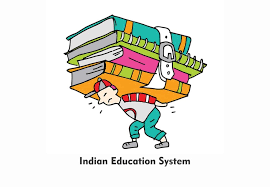
In India, it is increasingly felt that education system is highly examination oriented. Exams and tests are held at regular intervals. Success in the exams is at index of once intelligence. Exams do cause a lot of stress rather it can be said that a student’s academic future simply depends on the marks scored by him. His admission in reputed college depends solely upon his performance in examination.
As a result, students finds studies stressful, monotonous and exasperating. Unachievable targets set by the parents and perceptors, unbearable peer pressure, cut throat competitions makes one question the usefulness of the examination system. In my sense, it is all futile. We cannot deny the fact that it is resulting into spate of suicides, absenteeism and even the percentage of dropouts has increased.
Exams should be cancelled and replaced by less stressful and more fruitful forms of assessments for several reasons including:
1) They do not define one’s skills and capabilities: Thomas Edison once said: “Tomorrow is my exam but I don’t care, a single paper can’t decide my future” and we all know what Edison achieved is his life, other successful people followed such a path and if they cared much about exams, they surely would not have achieved what they did.
2) They do not differentiate between students: Exams do not depend on someone’s preparation only, they are also dependent on their physical and mental health, and their social situation; you most luckily would not get a second chance if you developed a diarrhea during exam, such a factor would decide whether you’re among best or worst students no matter how intelligent you are, and how much you prepared for the exam. So you see how unfair the whole system is!
3) Cheating: The broken educational system values more grades than learning and that what obliged students to try any means –sometimes illegal ones- to pass to the next level, history is full of people who try every trick to cheat at exam time, modern technology also has made it much easier for students to pass their tests with less efforts and students’ last issue nowadays is knowledge.
4) Stress: Exams take a toll on a student’s body and mind through the forms of stress and anxiety and you might end up in a mental institution. Because of exams, a medical student was caught eating pages from one of their recommended texts since he failed to absorb information from taking his lectures too literally.
It is also felt that examinations don’t prepare students for life. They simply enable the students to become reasonably well informed, fact churning individuals. There should be a system of consistent evaluation throughout the year and, the examinee should not be tested only for facts and information acquired by him but should be tested for life skills. So, the examination system should be abolished instead of examinations being conducted at the end of the academic session.
How many times have we opened our books to study, only to discover that even sitting for hours, we are still unable to grasp the material? Because of our sub-conscious mentality, we sometimes attend class yet don’t understand anything. We are physically there in class, but not psychologically.
Here are some study suggestions to help you get the most out of your time:
1.Select a study location that has reliable Internet access.
When studying, you will most likely need to refer to online lectures and notes. As a result, you’ll need a study location where your Internet connection won’t be disrupted. Internet access will be especially vital for things like class study sessions.
2.Make a schedule for studying.
In order to succeed in an online course, you must stick to a rigid timetable. You must keep up with the course material on your own time even if you are not expected to attend courses or lectures at specific times. As a result, self-discipline is critical. Make a weekly schedule for logging into the class and studying the information.
3. Be disciplined.
It can be hard to stick to a schedule for an online course. However, be strict with yourself about adhering to your schedule. Self-discipline is vital to your success in an online course.
It can be difficult to focus on your online course if you have a social media account open in another tab on your computer. When you’re doing classwork, avoid browsing the Internet, checking your email, and other distractions.
4.Actively learn
When the neurons in your brain are active, you can learn. You must engage your intellect in order to learn properly. Write notes in your own words, recollect knowledge, and speak about what you know about a subject without referring to notes.
5.Staying Motivate
To achieve your goals, employ motivational techniques. You may study while listening to music you enjoy, or imagine yourself finishing the assignment in an hour and taking a well-deserved vacation.
6.Any materials should be printed.
The internet or your computer can be a source of distraction at times. When you’re studying, it’s a good idea to switch your laptop off. You should also print out course materials such as the curriculum and timetable.
7.Test yourself
Even if you don’t have access to practice tests, you can still test yourself by writing down everything you remember after each new chapter or frequently asking yourself questions about what you’re learning.
Education plays an important role in the development of an individual and making him a knowledgeable citizen. It is the education that makes an individual self-reliant, helps to suppress the social evils and contribute towards the development of the society and nation as a whole. Education helps in unravelling the mystery of nature. It enables us to understand and improve the working of our society. It creates conditions for a better life. Education brings out the capabilities to fight injustice happening in society. Every individual has the right to education.
Indian Education is one of the largest and complex education systems in the world along with China. India is committed to providing basic education to its citizens, the framework of which is defined in the National Policy of Education. Elementary education is now compulsory in India. At the time of Independence, only 14% of India’s population was literate. Now after so many decades since Independence, the number of literates has increased by fivefold.
History of Education System
The history of Indian education system comes from the times of Ramayana and Mahabharata. The historic Indian education system is also called the Gurukula system. There were gurus then who are now known as teachers and shishyas who are called students now. The gurus and the shishyas lived together under one roof in Gurukula until the completion of their education. The shishyas were expected to help the guru in all the daily chores as part of their learning. The children belonging to higher strata of the society were taught all the subjects from Sanskrit to Holy Scriptures and mathematics to metaphysics by the gurus. The Gurukulas during those times focused on the practical aspects of life. The students were taught in the open classroom in the surrounding area of nature. This early system of education in India continued for many years until the modern education system came into the picture in the nineteenth century.
In the early 19th century, during the British period, the modern education system was brought into our country by Lord Thomas Babington Macaulay. The basic strength of this modernized education system was the examinations and a well-defined curriculum, which gave importance to subjects like science and mathematics and subjects like philosophy, metaphysics were given a back seat. The brick and mortar classrooms replaced the open classrooms in the Gurukulas. The essence of the guru shishya bond was taken over by a more formal relationship between the teacher and the student. To understand the progress of any student, examinations were conducted at frequent intervals. The focus of the education system shifted from learning to memorizing of the concepts to score good marks in the examinations.
Problems of Indian Education System
Over a period of time, it has been observed that there are many loopholes in the system of education in India. Instead of understanding the concepts, students started cramming and memorizing the lessons. Knowledge is given a backseat and scoring in high rankings takes importance. The modern parents have tuned their mindsets accordingly and their goal is to ensure that their children score good marks instead of acquiring knowledge right from the primary level.
Private schools and colleges have been rapidly increasing in the country but the results produced by them are far beyond satisfactory. It has also been observed that the quality of teachers deteriorated with the passing of time. Our examination system is responsible for the wide skill gap. India is producing lakhs of engineers and professionals every year but only a fraction of this number is actually getting employed. This is because the Indian examination system focuses more on scoring good percentages rather than the actual continuous comprehensive evaluation.
Research and development, which should be the cornerstone of our system, are given the least importance. The private schools and colleges focus on the admission of more students and are least interested in the quality of their education. This is the major reason why the faculties and the teachers lack skills and specialization. This is quite evident from the fact that a single professor is assigned to teach multiple subjects.
How Can We Improve the Indian Education System?
First and most importantly we should improve the grading system. Rote learning should be discouraged completely. Teachers and faculties should focus more on the analytical skills of the students and grade them accordingly. There should be more focus on comprehensive evaluation instead of scoring only good marks. Workshops must be organized for teachers on a regular basis to keep them updated about the latest developments in the sector of education. At the same time, the curriculum should be reframed according to the present needs of education in India.
The payroll structure of the teachers and the faculties especially in the government institutions should be improved. This step will help in motivating the teachers to develop their skills and they will take a keen interest in grooming or shaping up a student’s life and career. The government and other entities who are associated with the education sector, need to understand the importance of quality of education. Education should be a holistic process that must focus on the overall development of the physical, emotional, social and cognitive skills of a child. It needs to be a slow and cyclic process and must take place gradually to help the child develop into an autonomous, independent and knowledgeable individual.
Conclusion
An educated individual is an individual who should be able to contribute towards the betterment of the economic and social development of the society as well as the country. The true goal of education must exceed awarding the degrees and certificates to the students. Education is not a tool to earn livelihood but it is a way to liberate the mind and soul of an individual.
When the world has witnessed one of the most infectious diseases spreading around the globe that affects not only the physical health but also the mental health of people. It was really difficult for any educational institutions, schools, or a college to manage classes physically, But 21st-century technology made it easier and helped institutions with their breathtaking software to conduct online classes and tests.
Prior to the COVID-19 pandemic, there were people who used to study on E-platforms, but not often, there were people who didn’t go to school and studied at home. Technology made a click away to explore and learn anything a student wanted to. Now one can carry their textbooks in their pocket, one can meet up anyone face to face on a software, just a click away and one can do learn anything from the internet. After school closed as a result of the pandemic, about 1.8 billion students from 186 different countries, their education was affected, but again technology did not want the student’s life to be ruined by the physical closure of schools.
Future of Online Education
As per some scholars and economists, it’s highly believed that the overall market for online learning can be up to US $350 Billion in 2025 or more. Parents and students now don’t have to spend extra charges for classrooms, Electricity, or for any other activities that the school asks the students to pay. Parents who used to worry about their kids in school about their bullying, consuming drugs or any other harmful activities now are totally diminished. Now parents can witness their kid’s education during their online classes. Students now can easily study as well as can upgrade their extra skills through e-learning. Many students nowadays do internships, do extra courses, learn new things as well as the technology. Now a 8 year old student knows how to operate a mobile phone or a PC. Some believe that in future online education would be easily available and students don’t have to pay more for their education. “I believe that the integration of information technology in education will be further accelerated and that online education will eventually become an integral component of school education,“ says Wang Tao, Vice President of Tencent Cloud and Vice President of Tencent Education.
As Online education can also put the students in a bad or harmful influence, there are people who don’t want the online education as a major medium of learning.
Reasons why online education can be a harmful influence for the students?
Nowadays, most of the school or college students don’t study and cheat on their online exams or tests. It can be a really bad impact on their future and can be the core reason for the lack of their knowledge.
The daily and often use of electronic devices can make a person sick and hits their mental health in a really bad way.
Students are well aware of the technology and now are highly active on social media networks and making online friends. One can be good, but there are high number of chances to meet a fraud one. Those frauds assault the kids and ask them to do things which a kid didn’t want to.
Nowadays students as well as the adults store their personal information on their electronic devices and one don’t know that there are people on the internet named as hackers, who often used to steal the random people information from their cloud and upload them in the Dark web. There is a high number of chances of a kid or high school student could be one of the victims of online frauds and assault.
Reasons why online education can be a good influence for the students?
Firstly, the online education can be done in massive numbers at a time, which in physical classes were not possible. A student can know a number of different answers to a same question which is really helpful for a kid to understand that how an answer could be framed for a question.
Question answers from textbooks were limited, but in online education one can know more about a question through exploring it on the internet.
Technology is our future generation and learning about it since childhood could be an advantage for a student in their future.
In a traditional way of learning, one has to stick by a particular teacher and had to adapt their teaching style, but in online education a student can get through a number of teachers and can stick with the one they liked the most.
Disadvantages of Online education
Schools, Colleges are one of the best moments one could live in and online education can totally dismiss it. The other activities in schools like Upgrading leadership qualities through school/college competitions, Outdoor games for physical health of a student, and more things which a student learns through offline education are not possible through online education. The major and the core problem is, not every student or kid have mobile phones or PC and the access to the internet. They all were dependent on government schools, offline classes and free books from the school for their education. Poor family conditions, Bad environment, Poor Electronic facilities could be reason in the future for a student who might lose their interest in their education through E-Learning.
In the end, the conclusion of learning through online education has more disadvantages than their benefits.
Cell phones are extremely helpful. They assist us to contact with individuals. We can get different data about different things by means of web. Yet, are cellphones that vital in an understudy life that he/she can take that to class ? The appropriate response is no a result of the accompanying reasons:
1.Interruption/Distraction
While Cell telephones are in your grasp the entire day, warnings will continually go off. You’re compelled to looked without figuring it out. Understudies get diverted all for the duration of the day without seeing they are. The entirety of the data from their instructors go in one ear out of the other, and fail to remember all that they were educated. Many time understudies will have games on their telephones and consider passing a level and attempt and have a go at deduction they will complete it and afterward work, however without seeing when they finish a level the class is going to be done and you have no work done.
2.Grades Falling
At the point when children are on their telephones for the majority of their days, they don’t take care of job and grades drop drastically. At the point when you take a gander at your telephone it typically requires around 5 minutes to zero in again on whatever they were doing previously. Data isn’t being put away in your cerebrum so work isn’t possible.
3.Can make understudies get vexed
With the pace of Cyberbullying going up numerous children will get singled out over web-based media and keep taking a gander at various things for the duration of the day and get vexed and not have the option to focus on their work. Likewise, say you and a companion or a beau/Girlfriend get in a contention, you will be more stressed over that than your school work.
4.Schoolwork
On the off chance that children are continually on their telephones at school, what makes you believe they’re not going to do exactly the same thing at home. In case they’re occupied for the duration of the day and not managing job in school, schoolwork is less inclined to complete at home. Grades continually drop as a result of understudies accomplishing school work, however significantly more due to schoolwork. On the off chance that Cell telephones weren’t permitted in school, understudies may basically have the option to complete their work in school and could decrease schoolwork.
5.Break course
Ordinarily when an understudy doesn’t get something or simply doesn’t have any desire to do it, they’ll go to their telephone as opposed to requesting help or clarification. By this point understudies don’t think often about their work. So they simply forget about it.
6.Insolence
At the point when an instructor is talking and showing something new to understudies, and many are on there telephones while few are attempting to learn, these children on the telephone are diverting the other. Indeed, even without sound being on, in case you’re playing a game or watching a video on quiet, more often than not another person can get an impression and not quit thinking back. This is slighting your instructor who is removing time from their day to show you and help you while you’re on your telephone.
7.Cheating
Kids are standing out enough to be noticed, so with regards to stepping through an exam they have no clue about what the appropriate responses are such countless understudies will cheat and not learn anything. In the event that an understudy is bamboozling they’re not picking up anything and by and by getting into a school turns out to be much harder.
8.Public activity
I accept an understudies public activity is vital. It encourages children to interface with individuals for when they have some work further down the road. Understudies being secured in their telephones the entire day, they don’t understand there is a genuine world out there. Social connection isn’t simply messaging, it’s going out and verbally conversing with somebody. Commonly, without a genuine public activity it can likewise cause sorrow, it can make somebody think they have no companions and nobody likes them, however truly this is on the grounds that they’re generally on their telephones as opposed to going out and really attempting to interface with somebody.
Education is taught in a classroom environment in schools all over the world. Students are conditioned from ages to this traditional form of teaching. With the onset of the Covid-19 pandemic throughout the world, the entire scenario has been changed. Although the decision of online classes was shocking to everyone, students were a bit happy as they don’t want to go to their schools and on the other hand, they were sad, as they will miss their friends. With the emergence of online classes, parents were forced to get mobile phones or other gadgets for their children even if they didn’t wish that from their hearts. Children went on cloud nine as they were given a separate pc or mobile in which they could play, chat, enter social media, etc. Nobody knows what they do with their smartphones. Even if the parent questions the children, they had a witty answer that they are listening to classes or doing their assignments. No matter how strict their parents are or how hard they try to spy, the children started breaking all these by using the term ‘privacy’. Let us see how this situation affects a child’s mental and physical state.
MENTAL HEALTH
As we know, students are more likely to get distracted even by small things. In that state, they have to sit inside their homes and listen to the monotonous classes online. The classroom environment can never be brought to home as they have to share space with the family members. In this case, they tend to lose concentration very often as everyone in the house is engaged with some tasks. This brings no difference however hard they try to focus rather makes the student stressed out.
Kids start their social life only from school. They start to mingle with others only from that time. This important phase of life is missed out by them and they grow in a reserved manner. It becomes difficult for them to gel with society and others as they were homebound all these days. Again, this brings in mental stress for the introverts. However, Extroverts will cope with the situation better than introverts.
Studies from experts also reveal that kids are prone to develop anxiety and depression from being confined in a single place. They come across many things that are irrelevant to their age in social media and begin to watch unnecessary bad things out of curiosity. This stimulates the child’s mental state to do the wrong. Moreover, they increased the video games playtime and got addicted to games such as PUBG and free fire which also affects the mental stability directly.
PHYSICAL HEALTH
Apart from affecting mental well-being, online classes also affect physical health. Using mobile phones and PCs for a long time affects the eyesight and give rise to headache as well as fatigue. The rays from the gadgets cause eye pain and irritation. Children use the mobiles even after class time as they cannot go out and play with others. They use this technology as time pass. As a result, they lack physical activities like outdoor games. If they go to school, they had a separate hour for playtime during which they run and play on the ground. Also, when they return home from school, they enjoy playing games and cycling with their friends in the surroundings. This increases stamina and makes the physical body strong.
Learning is not only about gaining knowledge but also about physical, mental, social, and emotional well-being. So, the emergence of online classes has created unwanted stress and irritation in budding lives. All these are not realized by the children as they lack enough maturity. Escaping from exams and other troublesome things, students continue to prefer online classes to get some lame advantages without knowing that they cannot escape from life exams. This would be realized one day or the other by everyone and that day they would regret the ‘lifeless life’ they led without spending time in the outside world.
Human values are necessity in today’s society and business world. Human values are the features that guide people to take into account the human element when one interacts with other human. They have many positive characters that create bonds of humanity between people and thus have value for all human beings. They are strong positive feelings for the human essence of the other. These human values have the effect of bonding, comforting, reassuring and procuring serenity. Human values are the basis for any practical life within society. They build space for a drive, a movement towards one another, which leads to peace. In simple term, human values are described as universal and are shared by all human beings, whatever their religion, their nationality, their culture, and their personal history. By nature, they persuade consideration for others. These are described below:
Co-operation
It is the procedure to work jointly to attain some goal, but many scholars visualize co-operation as a luxury and not an important human value. It is unquestionably one of the most vital assets one can have when working through a problem. Having the opinions and voice of another person will not only draw out a discussion of the topic, but also lead person to good solution. Co-operation has been under-appreciated for years in its importance and should be held in high regard.
Caring
This human value is viewed as exhibiting kindness and concern for others, the true importance of this value comes from the work or practice of looking after those unable to care for themselves. Caring for others both physically and spiritually is an extremely important value to have; people will always rely on someone else for help at one point or another, but we often fail to realize how much of a difference caring for another person can make.
Honesty
Honesty is also vital human values. Presently, adopting an honest approach can often feel intimidating and impossible, but people fail to realize is that it is not the act of simply telling the truth that makes someone honest rather the quality of person who is being honest. An honest person is often straight, upright, sincere and fair and being an honest person brings more reward to the soul than the damage a lie could do.
Love, Respect & Faith
The presence of love in human life, the love they have for their families, friends, our faith and for themselves is important source of energy to lead smooth life. Respect is a feeling of deep esteem for someone or something elicited by their abilities, qualities, or achievements. Faith is complete trust or confidence in someone or something.
Beauty
Beauty is something that has really been spoiled by human society. The way we think about something that is beautiful is judged on a purely physical response, but the true meaning of beauty is being in balance and harmony with nature. Many researchers would argue that beauty is not a human value and, although beauty is a subjective experience, when they analyze what a subject of beauty is, it becomes anything that resonates with personal meaning, not just emotion. The prominence of this Human Value is clear when people think about the things that bring meaning into their life such as family and friends, these things become beautiful in a greater sense.
Wisdom
Wisdom is also significant human value in many ways; under-appreciated in its importance, in its value in our lives and in its true meaning. Wisdom is also very often confused with words like knowledge or intelligence but the word wisdom is defined as the quality of having experience and good judgment and the resulting soundness of that action or decision.
Role of family and society in teaching values
Moral values such as truthfulness, happiness, peace, justice are inculcated in children’s thoughts, feelings and actions and they function as ideals and standards that govern their actions in their life. The value system practiced in the family becomes automatic to the young family members if they are taught moral values thoroughly. The family has a great responsibility to pass on to the children many truths and values, and competencies to accomplish their place in life, whatever the society, whatever the culture or times. The family, forms the child’s viewpoint towards people and society, and helps in mental development in the child and supports his desires and values. Delightful and joyful atmosphere in the family will develop the love, affection, tolerance, and generosity. A child learns his behaviour by demonstrating what he sees around him.
Role of educational institutions
Value education is important to help everyone in improving the value system that he/she holds and puts it to use. Once, one has understood his/ her values in life he/she can examine and control the various choices he/she makes in his/ her life. Many reports signify that the aim of educational institutions should not only be to teach education alone but should also be to inculcate values and improving skills of children and teens. In school, children are affiliates of a small society that exerts a great influence on their moral development. Teachers serve as role model to students in school. They play a major role in inculcating their ethical behaviour.
Some people always wanted to move different countries for their education and to upgrade their lifestyle. If you are one of them and have always had a mind to study abroad then here is the top 8 places to study with the most affordable price.
8. Taiwan
Taiwan in Asia is a one of the cheapest country to study abroad. The universities of the country offer more than 120 Courses which are taught in English. One of the top universities like National Taiwan University ranked top 20 Universities in ASIA and 66th in the world. The fees for undergraduate programs can cost US $ 3350 and can go till US $ 4050. The cost of living is quite cheaper than other countries and it is US $ 2900.
Paris, the capital of the country was named the best place for student and ranked 1st in a row. The cost of living may get expensive, but the school and tuition fees are way less than other countries. The fees are same for Local as well as for international students. A year back it was US $200 for a bachelor degree, and US $300 for the master program. If you think that your french should be fluent or you must know how to speak french to study in that country, then it’s not, One can easily study opting English while studying In France.
India, One of the most affordable and the best country to study in Asia. The country is well known for its culture, Tourism, and the best education around the world. English is often used in High level education and in universities. The tuition fee varies with the different courses and universities in the country. The maximum it can be US $7900 and less in a year. The living is affordable and one can live luxuriously just with US $4700 a year.
One of the best country for education with cheapest the cost of the student’s living and tuition fees. The capital city, Kuala Lumpur was ranked 1st by QS 2016 and named as the best and affordable city for the student’s living and education. The living can cost as high as 4000 US $ and the tuition fee varies for different courses, but maximum it can be US $ 4200 a year. They also have the International University’s branch for offering international degrees to the students.
One of the most beautiful country around the world, Spain is one of the Cheapest for education as well as for living of students. It can cost 7400 US $ per semester for tuition fees and less and more, varies from different courses and a university. The cost of living is quite higher than the fees if one lives in the city, it can cost US $ 8000 per year.
Sweden was always set as a priority to study by a student. The country with one of the safest environment for the students and as well as for citizens. One who wants to enjoy his/her education while living in a beautiful environment and having a sustainable able, Sweden can provide all those facilities to a student. The tuition fee cost US $ 5000 per semester, which also varies with different courses and universities. The living cost can be up to US $ 8000 per year.
If one can speak Polish and are prepared to give entrance exams for the courses in polish, then the tuition fee can costs US $ 0 to a student. There are many English based courses which can cost US $5000 per year and also varies with different courses and universities. The country’s capital was Ranked Under top 20 cities by QS for affordability.
Number 1 in the list of best education all over the world with affordable costs. Germany is targeted by the students for their education the way of living. It has the reputed universities, International Branches and the best atmosphere for the education of the children. One can have a sustainable and balanced life for their education and living. The universities also help to build the extra skills for their children with 100% of its working in real life. The cost of living can be higher in the way of one’s living which is US $ 10,000 per year. The tuition fees vary from different courses and universities. It costs around US & 12,000 a year and one also can get scholarships as per their skills. One should set Germany as in their top of the priority list for their Education with affordable prices.
Above All the country’s was listed as per their cheaper costs of living and education. There are countries like US, UK, CANADA and many others who offer the best education in the world, but their costs were higher than above all the above listed Countries.
If you are a student and in search for some best internships in India (Paid & unpaid), then here’s the list of the same. From big MNCs to Government, Indian students have a lot of Internship opportunity. Especially, undergraduate students in India lookout for Summer internships.
Companies like Microsoft, Google, Cadbury, Facebook, Intel, Siemens provides the best learnings. NITI Aayog, AICTE, Lok Sabha and some other Govt departments also call for Internship training.
1.AICTE Internship:
The All India Council for Technical Education (AICTE), invites applications from young and bright candidates for the appointment of part-time paid Interns. The All India Council for Technical Education is the statutory body and a national-level council for technical education, under the Department of Higher Education, Ministry of Human Resource Development.
2. NITI Aayog Internship Scheme:
NITI Aayog, Government of India invites students pursuing Under Graduate/Graduate/Post Graduate degrees or who are enrolled as Research Scholars in recognised Universities/Institutions to apply for internships. Eligibility: Under Graduate/Graduate/Post Graduate degrees or who are enrolled as Research Scholars in recognised Universities/Institutions.
Duration: The internship period shall be at least six weeks but not exceeding three months. Stipend: No stipend shall be paid for this internship.
3. Google Summer Internship:
As a Software Engineering Intern, you will work on our core products and services as well as those who support critical functions of our engineering operations. Depending on your background and experience, you will be working in one of the following areas: Product and Systems Development and Engineering Productivity.
Eligibility: Currently pursuing a BS, MS or PhD degree in Computer Science or related technical field. Experience in software development in one or more general-purpose programming languages. Ability to speak and write in English fluently and idiomatically.
Internship for 2021 is closed, but interested one can search for the same in July- Aug every year.
4. UNESCO Internship for Graduate Students:
UNESCO invites applications for internships in the following areas: Natural Sciences Sector, Culture Sector, Communication and Information.
Eligibility: Completed university studies (bachelor’s degree or equivalent) at a university or equivalent institution prior to commencing the assignment; Enrolled in a graduate programme (second university degree or Master’s degree or equivalent, or higher), at the time of application; or Have graduated with a university degree (first or second degree as defined above), and must start the internship within one-year of graduation.
Duration of contract: From 1 to 6 months
Stipend: UNESCO does not remunerate interns.
5. United Nations Internship Opportunity:
United Nations, New Delhi invites applications for Internships (Public Information) for the year 2020. This internship is located in the United Nations Information Centre in New Delhi, India. UN interns work full-time, five days per week (35 hours) under the supervision of a staff member in the department or office to which they are assigned.
Eligibility: Requirements: (a) be enrolled in a graduate school programme (second university degree or equivalent, or higher); (b) be enrolled in the final academic year of a first university degree programme (minimum Bachelor’s level or equivalent); or (c) have graduated with a university degree (as defined above)
Stipend: The internship is UNPAID.
6. Internship at Paytm:
Paytm are always looking for innovative interns who have a strong passion for understanding people, their needs, their problems and their aspirations. The internship offers you an opportunity to work on various digital products and services such as Wallet, Payments Bank, Movies & Entertainment, Travel, Insurance, Shopping, Chat and many more.
Duration: 8 weeks – 16 weeks
7. Asian Development Bank:
The Internship Program is a project-oriented learning opportunity for graduate students to gain experience through research assignments based on ADB’s current operational needs.
Eligibility: Master’s- or PhD-level program at a school in one of the ADB member nations, both prior to and after the internship assignment;
The application period for the 2020 Internship Program: 1st batch: 1 August to 30 September 2020 and On board: January 2021 onwards 2nd batch: 1 December 2020 to 31 January 2021 and On board: June 2021 onwards.
8. Amazon Internship (Software Development Engineer):
The SDE Intern experience is unique at Amazon. You get to rub shoulders with outstanding software engineers and researchers with industry-leading technical abilities, solving challenging engineering problems that affect millions of Amazon customers.
Eligibility: Programming experience with at least one modern language such as Java, C++, or C# including object-oriented design. Self-driven, quick starters, passionate problem solvers with a curious mind who loves solving very complex, very challenging real-world problems.
9. Internships- Greenpeace India:
Greenpeace India provides opportunities for students from top educational institutions to undertake an internship at their offices in Delhi, Mumbai, Bangalore or Patna.
Eligibility: The applicant should be in his/her 2rd year of study (or higher)
Duration: Interns need to commit minimum 45 days and maximum 3 months.
10. Intel Graduate Intern:
Intel, Bangalore is looking candidates for Internship Opportunity. Intel Corporation is an American multinational corporation and technology company headquartered in Santa Clara, California, in Silicon Valley.
Eligibility: Candidate should be in B.E or Masters in Electronics or Computer Science and well versed with standard Software Methodologies like software design, implementation.
Other than these mentioned companies, many more like P&G, Cisco, WWF, WII offers a great opportunity for engineering and management students. On the other hand, Lok Sabha India also invites interns every year. Whereas looking into this pandemic, many internships companies offers Online/ virtual or work from home internships to students in India.
Parliamentary system is a democratic form of government in which the party with the greatest representation in parliament (legislature) forms the govt., its leader becoming prime minister or chancellor. Presidential form of govt. is a democratic and republican govt. in which a head of govt. leads an executive branch. The head of govt. is in almost cases also the head of the state, which is called the President. India follows a parliamentary form of govt. modelled on Britain’s.
Features
Features of Presidential system are that the executive can veto acts by the legislature, the President has a fixed tenure and cannot be removed by a vote of no confidence in legislature. The President has the power to pardon or commute judicial sentences awarded to criminals and the President is elected directly by the people or by the people or by an electoral college whereas features of parliamentary system are- close relationship b/w the legislature and the executive, executive is responsible to the legislature, there are two executive i.e. real executive and titular executive, bicameral legislature, no fixed tenure, leadership of Prime Minister.
Merits
Merits of Presidential system are- seperation of powers, expert govt., stability and less influence of the party system.
Merits of Parliamentary system are- better coordination b/w executive and legislature, prevents authoritarianism, responsible govt., represents diverse groups, flexibility in the system.
Demerits
Demerits of Presidential system are- less responsible executive, deadlocks b/w executive and legislature, rigid govt., spoils system as the system gives the President sweeping powers of patronage.
Demerits of Parliamentary system are- no seperation of powers, unqualified legislators, instability, failure to take prompt decision because there is no fixed tenure, party politics is more.
Conclusion
The Presidential system is better for one because of its seperation of powers, the role of judiciary and the govt. accountability to its people. We should ensure a system of govt. whose leaders can focus on governance rather than on staying in power. The present parliamentary system has been tried and tested for nearly 70 years. It can be reformed thoroughly to remove the challenges thrown up by it. Also, there is a need to reform the electoral processes to make democracy more robust.
Descriptive writing is a tool to make the audience imagine the event or place through your words. Below is a fictional description of visit to a café, mentioning details observed at the place:
A Visit to ” The Blue Café “
It was a regular Sunday afternoon but the discount coupons of The Blue Café on the occasion of their fresh opening, made it special. The café was only at a walking distance from home. The decoration on the entrance of that single-storey building turned out to be a strategy to attract people in the marketplace. Wonder how expensive it would have been to get a shelter on the main road of the city! There used to be a sweet shop before, which the owner sold for being unprofitable. Now it has been reconstructed to cater the demands of a wide range of consumers by offering a variety of food at one place. The café is making way for a large customer base since day one by bringing out luxurious offers for residents nearby.
Sunday was obviously attracting more customers. The guard at the entrance was well dressed and welcoming. The air conditioned hall and sitting arrangements were the most satisfactory. There was plenty of space to dine even on a busy day. The blue lights reflecting from the green walls had a soothing effect on the mind. They were neither too flashy nor too dark. The walls were holding fun and interesting posters compelling visitors to click several photos after lunch.
The tables were made of glass having beautifully prepared menu cards on them which offered a variety of dishes native to different places. The prices were on the peak but the discount coupons had our back for now. The service was fast enough since they had a good number of employees at work. Their uniforms had it written- ‘a day here gives a memory forever’. The kitchen was visible to an extent from the washbasin area. It was well equipped with modern cooking machines arranged in an order; leaving ample space to work. Proper sanitation facilities were provided for the customers which is a key point at public places. The management was really good and the food was delicious. There were free chocolate candies at the table for first hundred customers. The café was new and so was the crockery design. It was majorly a family dine-out at night and attracted young generations the most, during the day. The music at the background was pleasant and refreshing. The place is best suited for the working population since it calms down the mind, helps release stress and energises the body with its tasty food. The seats are arranged in a manner that no other gets disturbed.
Besides the blue lights, the name of the café also matches to the special dish called ‘Blue Bucket’ which is available only during the day at a high rate and unfortunately, the discount coupons doesn’t work on that. As the manager briefed, it is a dish having a basket of fruit salad, a cup of blue-berry ice cream and a special Thali. The veggies offered in the Thali are costly which is why this dish is unaffordable for many. Youngsters come here in groups just to have a taste of the famous Blue Bucket. Surely it is not a dish a single person can finish.
The place is really cherishing, especially for the youngsters. It is operative from nine to three during the day and seven to eleven at night. The café building adores the street with beautiful green lights hung upon the adjoining trees at night.
Linguistics is the systematic study of language. Its focus is on language, in general , not on any individual language. The word linguistics is derived from Latin lingua meaning tongue and istics meaning knowledge or science. It studies language as a universal and recognizable part of human behavior . It investigates how the language is constructed, how it varies through space , how it is used, and how it is related to other languages. Hence the linguist studies the origin , organization ,nature and development of language descriptively ,historically , comparatively and explicitly and formulates general rules related to language . The linguist is one who studies language objectively , observing it scientifically , recording facts about language objectively , observing it scientifically , recording facts about language and deriving general principles for them. First study the language and second it tries to describe the language apply those theory in language .
The facts about language that interest a linguist are its sounds ,forms of words and the arrangement of words to form meaningful utterances. There are various approaches to the study of linguistics : historical, descriptive and comparative.
HISTORICAL LINGUISTICS :-
It studies the facts about a language for the purpose of describing the development of the language for a period of time. It traces language change and the causes and results of such changes that occurred from time to time.
DESCRIPTIVE LINGUISTICS:-
It deals with the description and analysis of the ways in which a language operates and is used by a given set of speakers at a given time. it is based on a structural approach to language.
COMPARATIVE LINGUISTICS:-
It is concerned with comparing two or more languages .It traces the evolution of language and by comparing one with another , establishes the relationship between them .
Linguistics may be considered as science . Like any other branch of science it has a well – defined subject matter called language. It makes use of methods like observation , recording and analysis of the various phenomena related to the study of language.
COVID-19 has challenged the physical health as well as the mental health of people. The children and the elderly are the ones most affected. The pandemic has brought a lot of changes in the lives of almost every individual. From working on your desk to working from the comfort of your, everything has flipped. Everybody’s life has been impacted by the sudden arrival of the pandemic. Working from home, which was initially feeling comfortable has now become bored and irritating. Even the students have lost interest in their online classes.
Earlier children had the access to playgrounds to play with their friends, which has now been limited to the boundaries of their homes because of the coronavirus, due to which the screen time of children has increased. Playing outdoors kept them physically fit and mentally healthy. The children are becoming irritated and moody being inside their home for such a long time. To keep up their mood, the children have to resort to mobiles and laptops; to play games, watch videos and shows. This has increased their screen time, which has further led to other issues.
Constantly using gadgets and glaring on the screen affects eyesight. Which can lead to blurry vision, and in severe cases can even lead to partial or complete blindness. The screen radiates blue light, which also hampers sleep.
Schools, universities, and colleges are places where the students not just study, but also interact with their peers and dwell together. They don’t just grow here intellectually but also culturally and morally through various activities taking place; contributing to their holistic development.
Be it, school-going children or college students, all have to be on their phones and laptops for their online classes because of the inability to resume on-campus learning due to COVID-19. Initially, online classes seemed interesting as it was a change in the conventional education process. But lately, students have become bored and have lost interest in their studies, as it has become a monotony now.
Students’ sleep cycle has been impacted a lot. The overuse of phones has impacted their quality of sleep and resulted in either too little sleep or too much sleep. The students from the underprivileged areas are unable to attend their classes properly due to bad network quality. This is stressing them out and taking a great toll on their mental health.
Students are overly stressed about whether they would be able to graduate on time or not as many institutions postponed their exams. This is a concern for the timely completion of their degrees, which decides their further step; be it getting into a university for their higher studies or getting into a job.
Stress and anxiety have become a problem in students, which is a reason for their distraction and reduced concentration level. Online classes are also causing social isolation, which is also triggering stress in the students. Lack of communication is causing them distress. Procrastination has become another issue among the students, which is resulting in lower grades.
The students are facing various issues. However, the educator’s and parent’s support can lower the negative impact due to the pandemic through proper communication and guidance.
Medicaps university is one of the most prominent institution located in Indore, Madhya Pradesh. It was evolved in july 2000. And since then it has been providing quality education in every field.
It has been ranked high in top engineering colleges of Madhya Pradesh. It is an autonomous college. Apart from it had a large campus having gymnasium , canteen , computer lab , a bank , hostel , transport facility , auditorium and temple.
Anyone seeking for good college can join this. It also offers great placements. This year in 2021 also companies like tata consultancy services came in campus. The highest placement was 14 lakh in computer science branch. Good campus placement is there in the college.
The courses which is offered by university are in engineering field : btech in all major branches and also in fire technology ,mtech in all major branches.
It also offers courses in management and commerce like BBA,MBA,Bcom. Also specialisation courses like bba in digital marketing is available.
In field of computer also there are courses available like BCA,MCA.
In science stream courses like Bsc, Msc and Bpharmacy are available.
There are specific blocks for each and every disciple. Also largest centeral library is present in university. You can sit and read any book of your choice and also issue 6 books on your card. The fees structure of university is quite affordable. Students need to wear Icard in the campus and university blazers during winter. The dress code for girls is salwar suit and for boys shirt and pant. No jeans and tshirts are allowed in university.
The result is declared in cgpa basis. And you need to earn credits for clearing semesters. The minimum credits are different for different branch.
Good time-management is critical for students pursuing their undergraduate degrees. When you consider the number of tasks that students need to face on a day-to-day basis, knowing how to manage time and maintain balance between study and personal activities is indeed crucial.
As a student, you know how important it is to have a hobby and to know how to spend your leisure time properly. Being able to unwind and refresh can really help you become a better student. Some hobbies even let you pick up new skills and train the mind, all while allowing you to have fun.
There are some great hobbies to get into. When you have a limited amount of free time to use, these next several hobbies are definitely worth trying.
1. Sports
Sports and exercising in general are great for the body and the mind. The routine exercises you do help you stay sharp and enhance your stamina; these two benefits are crucial for students who spend the majority of their time dealing with assignments and keeping up with course materials.
You don’t have to get into a particularly complex sport to enjoy these benefits. Simple things like taking a 30-minute run in the morning or spending the afternoon enjoying a nice walk are often more than enough to calm the mind down.
Routine exercises also let you maintain a healthier and more balanced life in general. You can sleep better at night, which means the body will regenerate at its optimum rate. Don’t be surprised to find yourself full of energy after a week or two of regular exercise.
2. Gaming
Gaming is another hobby that is easy to get into. You don’t need a particularly powerful computer to enjoy some AAA titles these days; plus, there are many game consoles for affordable prices nowadays. On top of that, we now have web-based games and mobile gaming titles just a few taps away.
One thing to note about taking up gaming as a hobby is how it can also turn into a source of income. MMORPG titles can lead to serious esports events, while online casino games let you win real cash prizes on the spot. The experience can be very rewarding when approached correctly.
3. Reading
I know reading seems like the last hobby you want to get into as a student. After all, you already have thick books and lots of course material to get through. However, there is something soothing about switching from non-fiction books to some of the best fiction titles on the market.
As with the previous two ideas, reading is an easy hobby to get into. You can simply pick up a book that you want to read, find a quiet place or a comfy coffee shop somewhere, and let your mind roam free with every word you read.
There is also the Amazon Kindle and thousands of digital books you can now bring with you anywhere. Kindle makes reading a lot easier and more affordable. The device itself may seem costly, but you spend less on digital books and you can save a lot in the long run.
4. Community Service
Giving back to the community is another fantastic hobby to try. It is certainly a fun thing to do when you consider the smiles you see in return for your help. Helping others is a great way to help yourself and you will feel so much better — and more centered — after each community activity.
There are a lot of activities to try too. You can find shelters to help, collect donations, run your own charity event with friends and get involved in other community development programs. Some universities and courses will also take these activities into account when reviewing your performance as a student.
5. Traveling
Traveling may not seem like an easy hobby to get into, especially when you are already busy with school assignments. That said, you don’t have to spend a lot of time (or money) to enjoy the best travel experience possible.
Taking a road trip with friends to a nearby destination, doing an urban exploration of your city, or simply going on a culinary adventure and sampling new restaurants are all simple ways to have that joy of traveling.
6. Content Creation
Have you noticed how some of the best YouTubers and Instagrammers are young students? Content creation is turning into a hobby that many enjoy, and it can be the perfect hobby for you too. Using your smartphone camera, you can share your perspective on different topics and bring value to the audience.
Content creation is a relatively new hobby, but it is a hobby that could also lead to many great opportunities in the future. Build a strong audience base and you too can make money from creating the best content on social media and video sharing platforms.
The key here is making your content personal. Don’t try to copy someone else’s way of conveying messages. Your point of view and your personal way of delivery are what the audience really enjoy. You can even integrate the other hobbies we covered in this article into the content you produce. How cool is that?
Any of these six hobbies are not just relaxing, but very beneficial in different ways. Find one that suits you best and allocate time for doing the fun things you enjoy so much. You will be a better student in the end.





























 Eduindex
You must be logged in to post a comment.