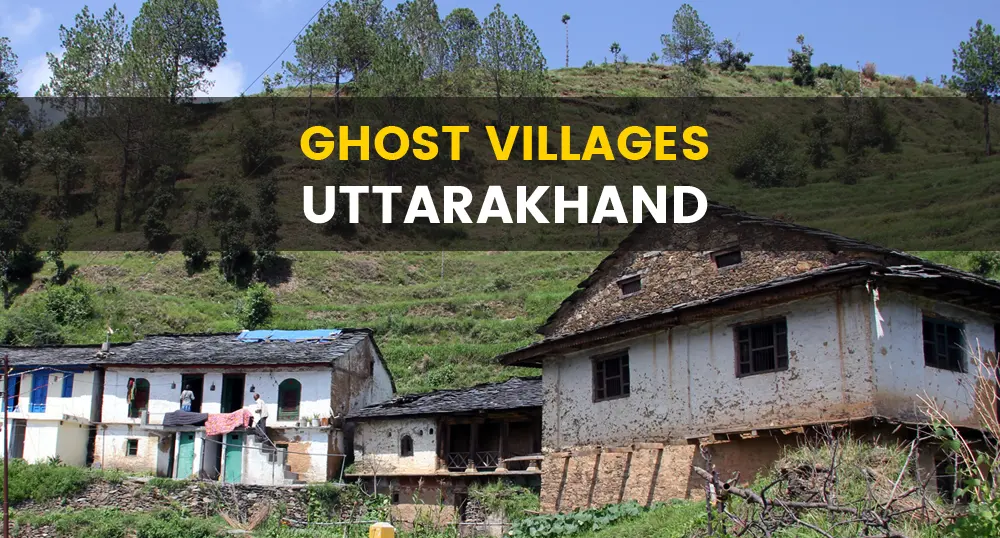
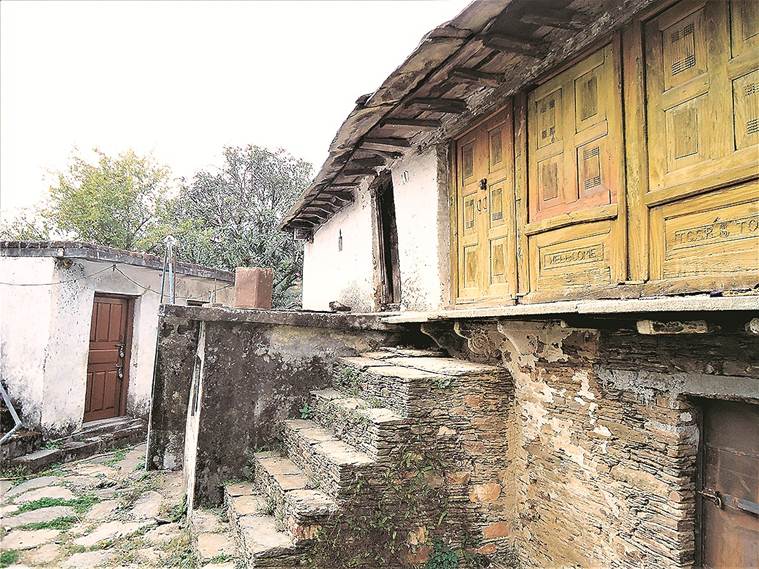
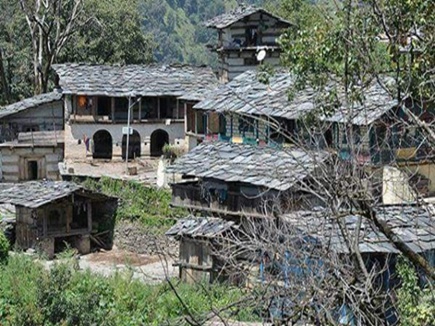
Migration from the hill areas of Uttarakhand is a concerned issue. Many people especially from far-flung rural areas migrate to nearest towns or cities within or outside the state in search of employment and better educational and health facilities. The continuous migration from some villages have resulted in the absolute desertion of those villages with no inhabiting population left behind. These un-inhabited villages are being termed as Ghost Villages.
As per 2011 Census, there are 1048 villages with zero population and another 44 villages have population less than 10 persons.
Browse the list of ghost villages in Uttarakhand by each districts. Pauri district in Garhwal region and Almora district in Kumaon region contain the most number of ghost villages in Uttarakhand.
The film, inspired by Devi’s own life, tells the story of an elderly couple’s love. PITHORAGARH: Hira Devi, 80, is an unlikely film heroine from one of Uttarakhand’s ghost villages, Gadtir, which has several empty houses because of migration. Hira Devi, 80, is an unlikely film heroine from one of Uttarakhand’s ghost villages, Gadtir, which has several empty houses because of migration. The octogenarian, who is illiterate and has lived in the mountain village most of her life, recently got a chance to star in ‘Pyre’, a film inspired by a story similar to her own, which will have its world premiere on Tuesday (Nov 19) at the 28th Tallinn Black Nights International Film Festival in Estonia.
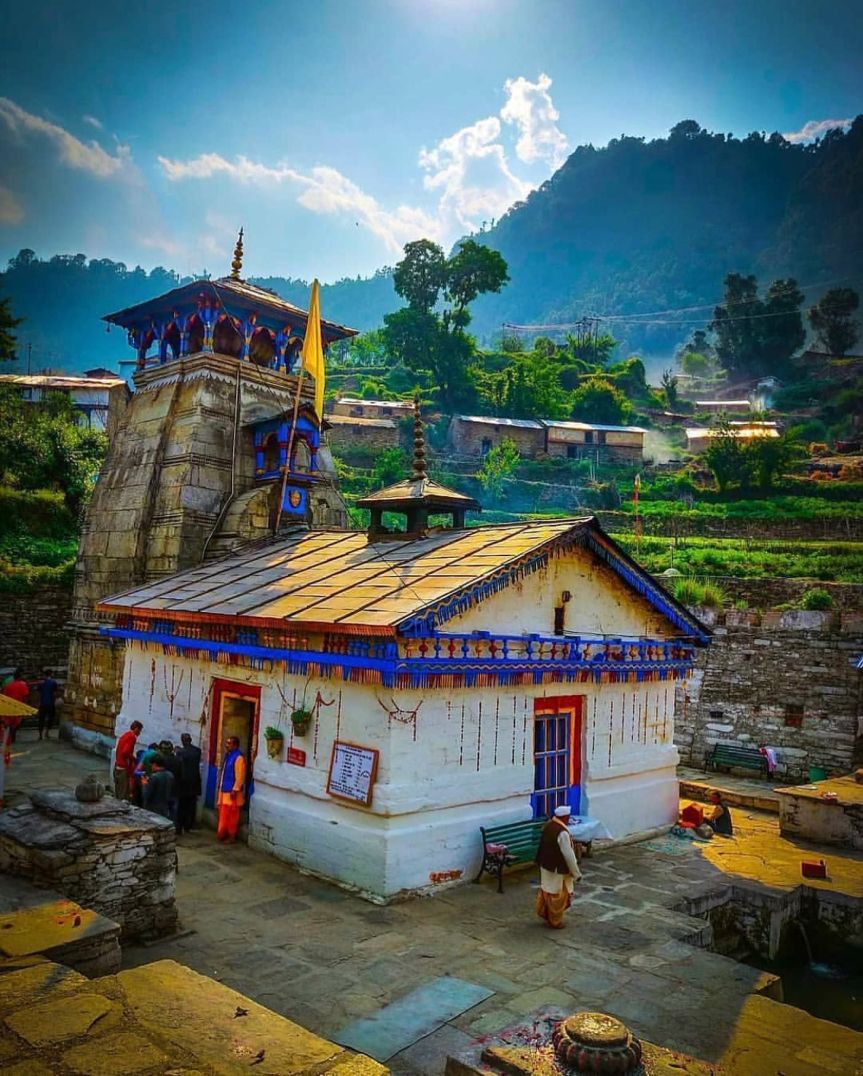
Trijuginarayan Temple is a Hindu temple located in the village of Trijuginarayan in the Rudraprayag district, Uttarakhand, India. The ancient temple is dedicated to Lord Vishnu. Its a popular Hindu pilgrimage site because it is attributed to the legend that this is the place where the marriage of Lord Shiva and Goddess Parvati took place and which Lord Vishnu witnessed here. The hallmark of this temple is the eternal fire that burns in front of the temple. It is believed that the fire is burning from the time of Lord Shiva and Goddess Parvati marriage. Therefore, this temple is also known as Akhand Dhuni Temple. The temple courtyard is also the source of water that fills the three nearby sacred bathing ponds (Kund).
It is believed by many historian that Trijuginarayan Temple have been built by Adi Shankaracharya. Adi Shankaracharya is said to have built many temples in Uttarakhand. The shrine has a silver two-foot statue of Vishnu, accompanied by Consort (the goddess of wealth Lakshmi and the goddess of music and learning) Saraswati.The Trijuginarayan Temple is located at an altitude of 1,980 meters (6,500 feet), about 5 km from Sonprayag, the meeting junction of the Mandakini and Songanga rivers. During the three months of winter, the area is covered with snow. Apples and drupes are cultivated in this area for agricultural purposes.
According to Hindu Dharma, the goddess Parvati was the daughter of Himavat or Himavat-personification of the Himalayas. She was the reincarnation of Shiva’s first wife, Sati-who lost her life when her father offended Shiva. Parvati first tried to allure Shiva with her beauty, but failed. In the end, she suffered severe penance in Gaurikund, five kilometers from Trijuginarayan, and won Shiva. Pilgrim visitors to the Trijuginaryan Temple also visit the Gauri Kund Temple dedicated to Parvati, which is also the base camp for trekking to the Kedarnath Temple. According to mythology, Shiva proposed to Parvati in Guptakashi before getting married in the small village of Trijuginarayan . Triwajinarayan is believed to be the capital of Himavat. It was the place where Shiva and Pearlvati married in heaven during Satya Yuga, and was witnessed in front of the eternally burning sacred fire in front of the temple of Havana Kund or Agni Kund. It is said Vishnu appeared at the wedding ceremony of Lord Shiva and Goddess Parvati as a brother of Parvati. Meanwhile, the Lord Brahma served as the priest of marriage which was witnessed by all the wise men of the time. The exact location of the wedding is indicated by a stone called Brahma Sila in front of the temple. The splendor of this place is also recorded in Stala Purana, a scripture unique to the Pilgrimage Center. According to the scripture , pilgrims visiting this temple consider the burning ashes of fire to be holy and carry it with them. The ashes from this fire are also believed to promote the bliss of the couple. There were no witnesses to the incident before the wedding, but it is believed that the gods taken bath from the four kunds: Rudra Kund, Vishnu Kund, and Brahma Kund. The stream of the three Kunds, according to legend, comes from Saraswati Kund, which is derived from the navel of Vishnu. Therefore, these Kund waters are considered a remedy for infertility.
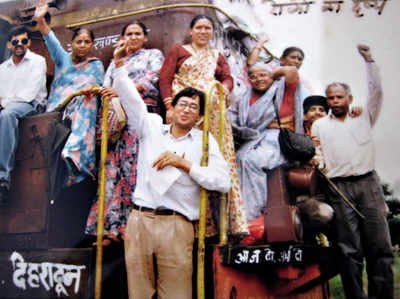
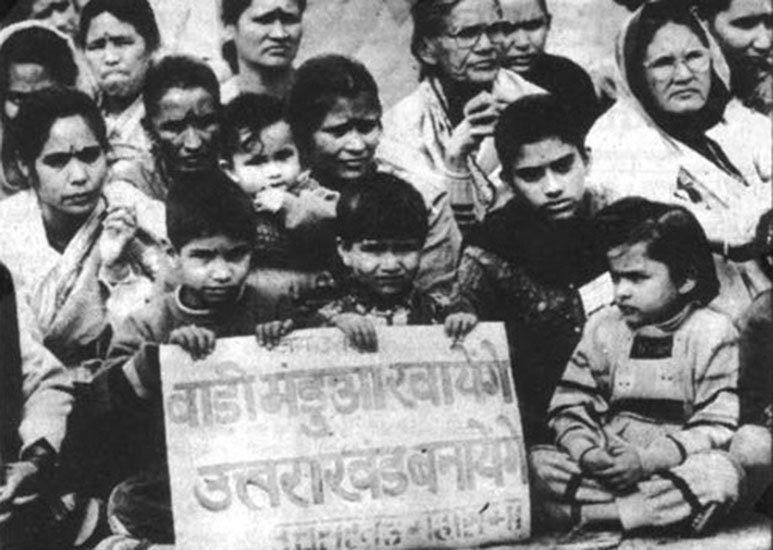
Uttarakhand became a state on November 9, 2000. The establishment of Uttarakhand was achieved after a lot of hard work and sacrifice. The voice for Uttarakhand to become a state was first raised in a special session of the Indian National Congress in Srinagar, May 5-6, 1938. In 1994, after a series of events, demand gradually increased for another state eventually which took the form of a mass movement, leading to the formation of India’s 27th state by 2000.
In March 1994, Uttar Pradesh Chief Minister Mulayam Singh Yadav recommended the Mandal Commission to secure 27% of government positions and places in schools and universities for socially and economically weaker classes,which was later on carried on. The Hill region OBC population was very small at 2.5% and reserving OBC seats meant that all government seats would go to the plains of Uttar Pradesh. This led to intensified protests against the nation.
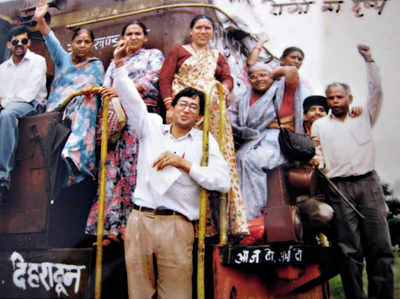
In 1994, the students throughout the region participated in separate state and group movements for reservations. The Uttarakhand movement was further intensified locally by the anti-Uttarakhand statement by then-Chief Minister of Uttar Pradesh, Mulayam Singh Yadav. Uttarakhand leaders continued to support their call for another state until their death. State officials went on strike for three months, and the Uttarakhand movement was exacerbated by the blockade and confrontation with police. Uttarakhand activists in Mussoorie and Khatima were shot dead by police. On October 2, 1994, in Delhi, the capital of the country, a large-scale demonstration and protest was held in support of the state under the support of Samyukta Morcha. Uttarakhand activists marched to Delhi to participate in the struggle. Activists who participated in peaceful demonstrations near Ranpur Tiraha Junction in Muzaffarnagar were tortured and shot dead openly without warning. Police officers were also charged with obscene behavior and rape with female activists. Satya Pokhriyal was a leader who led all people out of misery and other Andolankari helped others and showed courage. Several people were killed and many were injured. These incidents has fueled the Uttarakhand movement. The next day, October 3, the destruction of gunfights across the region and protests over multiple deaths broke up.
Credit- Himalaya Buzz
On October 7, 1994, a female activists died after police brutally attacked her in Dehradun while she protested against the shooting at Rampur Tiraha and many activists attacked the police station in return. A curfew was imposed in Dehradun on October 15, and one activists was also killed on the same day. On October 27, 1994, then Indian Minister of Home Affairs Rajesh Pilot met with state activists. Meanwhile, a brutal police attack in Srinagar’s Sriyantra Tapu killed several activists while they were protesting.
On August 15, 1996, then Prime Minister H.D. Deve Gowda announced at the Red Fort of Delhi the forming of a new state Uttarakhand.
In 1998, the BJP-led coalition government at the centre sent the “Uttarakhand Bill” through the President of India to the Uttar Pradesh state government . The Uttar Pradesh State Assembly passed , the Uttarakhand bill with 26 amendments and sent back to the central government. On July 27, 2000, the central government submitted the 2000 Uttar Pradesh Reorganization Bill to the Parliament of India. Lok Sabha passed the bill on August 1, 2000, and Rajya Sabha passed the bill on August 10, 2000. The Uttar Pradesh Reorganization Act was approved by then President of India, K.R. Narayana on August 28, 2000 and on November 9, 2000, the new state of Uttaranchal was established as the 27th state of India, now known as Uttarakhand.
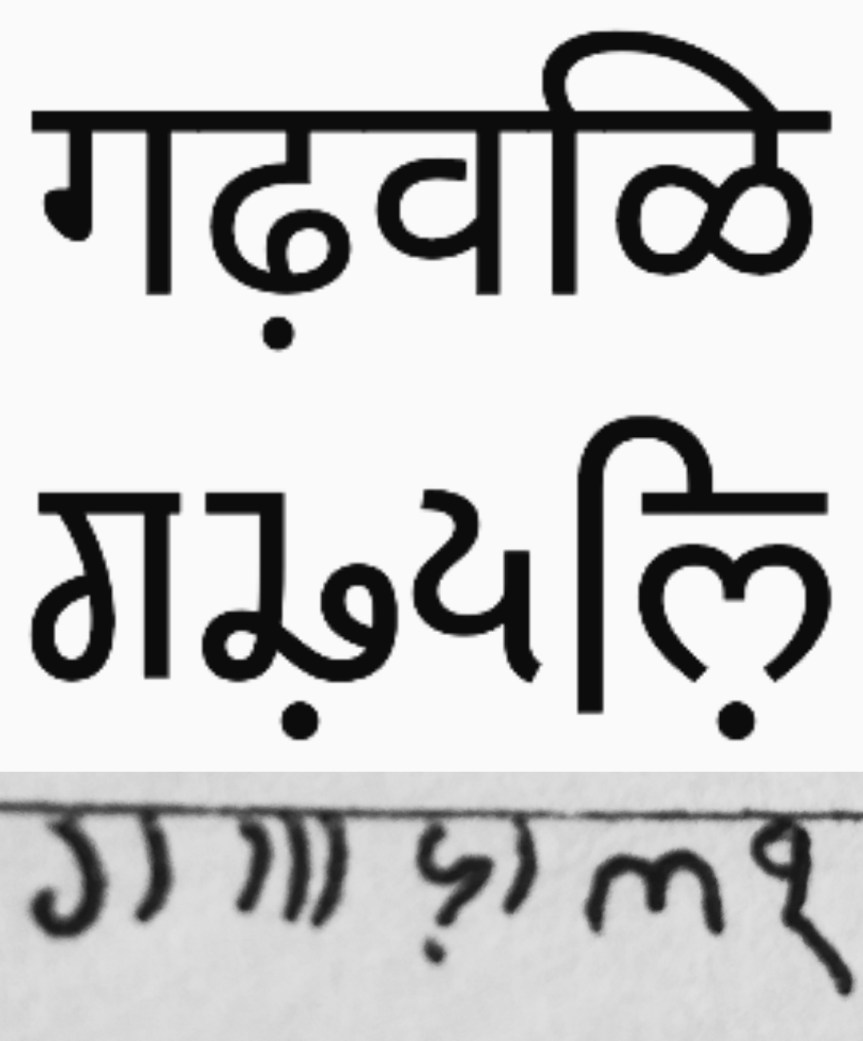
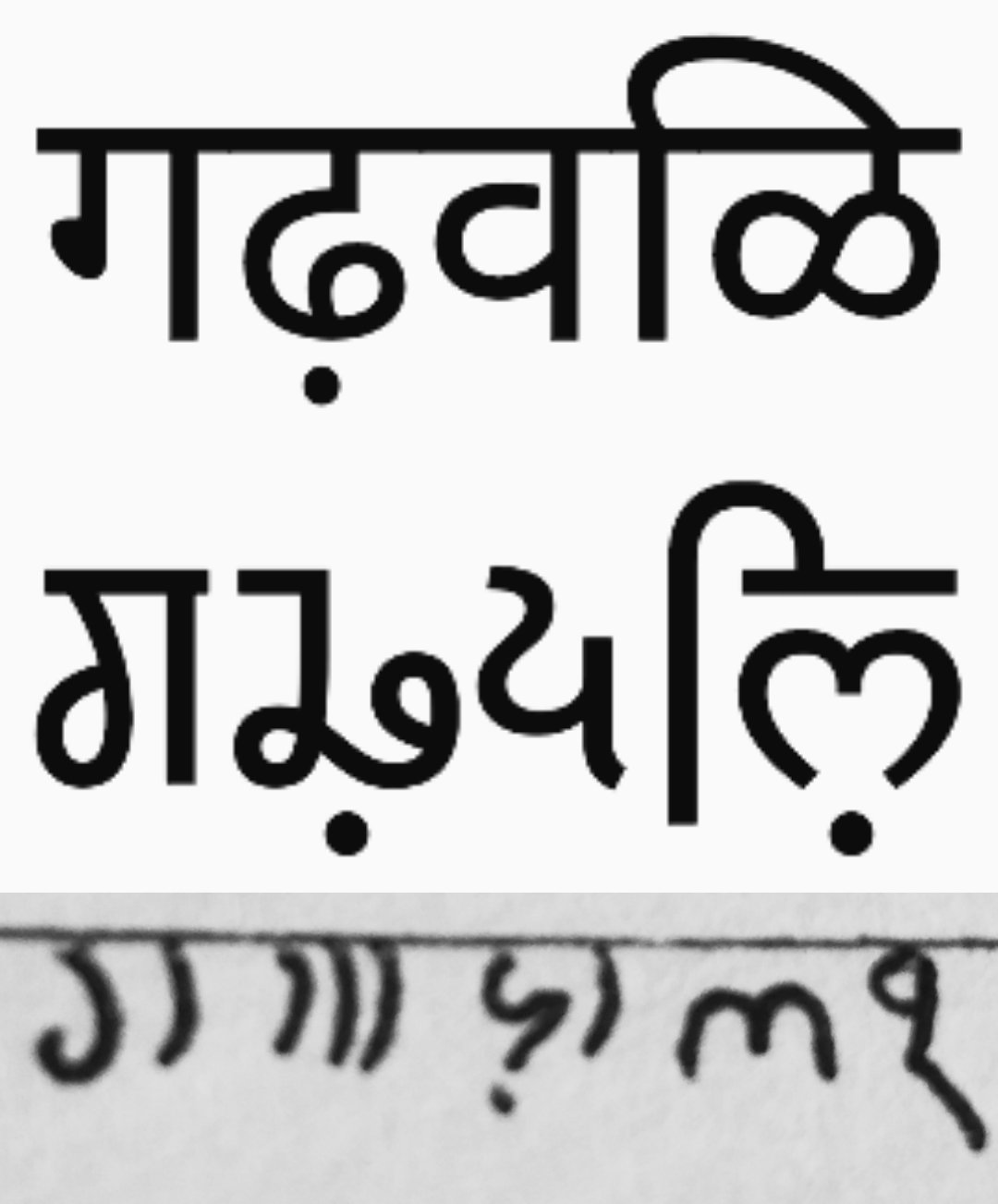
Garhwali is the Indo-Aryan language of the Central Pahari Region which is mainly spoken by more than 2.5 million people in the Garhwal region of Uttarakhand, northern India, in the Himalayas of India, Uttarakhand. Garhwali is also spoken by Garhwali people living in other parts of India, such as Himachal Pradesh, Delhi, Hariyana, Punjab and Uttar Pradesh. According to various estimates, at least 3.5 million Garhwali migrants live in Delhi and other cities.
HISTORY During the Middle Indo-Aryan era, there were various languages called Prakrit. Of which, Khas Prakrit language is believed to be the source of Garhwali language.The earliest forms of Garhwali can be traced back to the 10th century and can be found in temple stones, including numismatics, royal seals, copper plate inscriptions, royal orders and grants. An example is the inscription of King Jagatpal’s Temple Grant in Dev Prayag in 1335 AD. Most Garhwali literature survives in vernacular form and is transmitted verbally. But since the 18th century, Garhwali has developed a literary tradition.
LITERETURE & WRITERS Among the famous Garhwali writers in hiastory of literature are Sudarsan Shah, Kumdanand Bahguna, Hari Dutt Sharma (Nautiyal), Hari Krishna Daurga Dutti Rudra, Urvi Dutt Shastri ,Mahidhar Dangwal, etc. , Satyasaran Raturi, Atma Ram Gairola, Devendra Dutt Raturi, Suradutt Saklani and more. Among historians are Mola Ram, Miya Prem Singh, Hari Dutt Shastri, Hari Krishna Raturi and Vijaya Ram Raturi. Garhwali literature is thriving despite the ignorance of the government. Today, newspapers like Uttarakhand Khabarsar and Rant Raibaar are published entirely in Garhwali. Magazines such as Baduli, Hilaans, Chitti-patri and Dhaad have contributed to the development of GarhwaliGarhwali language.
Some Notable works of Gharwali writers: •)Abodh Bandhu Bahuguna – (1927–2004) Garhwali writer. Some nitable writings include Gaad, Myateki Ganga, and Bhumyal. •)Bachan Singh Negi – “Garhwali translation of Mahabharata and Ramayana”. •)Lalit Mohan Thapalyal – “Achhryun ku taal” •)Leeladhar Jagudi – (1944) Writer and novelist. PadmaShri •)Lokesh Nawani – “Phanchi” •)Madan Mohan Duklaan – “Aandi-jaandi saans” •)Chandramohan Raturi – “Phyunli” •)Chinmay Sayar – “Aunar” •)Dr. Narendra Gauniyal – “Dheet” •)Durga Prasad Ghildiyal – “Bwari”, “Mwari” and “Gaari” •)Gireesh Juyal ‘Kutaj’ – “Khigtaat”.
Struggle of Official RecogItion: Since the establishment of Uttarakhand in 2000, the state governments have made slow progress in promoting and developing the regional language of Uttarakhand. Like other languages in Uttarakhand, Garhwali, the most widely spoken language, is not officially recognized. In 2010, Hindi became the official language and Sanskrit became the second official language of Uttarakhand. In 2014, after making Garhwali the official language of Uttarakhand and demanding that it be taught at schools and universities for many years, the Uttarakhand State Government established Kumaoni and Garhwali departments at Kumaoni and Garhwali universities, respectively, to study the regional languages. At the national level, Garhwali is always required to be included in the 8th schedule of the Indian Constitution in order to be one of India’s schedule languages. In July 2010, Parliamentary member Satpal Maharaj of Pauli Garhwal submitted a legislative bill to Lok Sabha to include the languages of Garhwali and Kumaoni in the eighth schedule of the Constitution. Like most private citizen bills, the bill has not been discussed in Parliament and has since expired.
“WHERE SHIVA EXISTS IN EVERY STONE , IS UTTRAKHAND “
And this statement gives the justification of why Uttarakhand is know as “the land of gods “. Uttarakhand was formed on 9th November 2000 as the 27th State of India, when it was carved out of northern Uttar Pradesh. Located at the foothills of the Himalayan mountain ranges, it is largely a hilly State, having international boundaries with China (Tibet) in the north and Nepal in the east. On its north-west lies Himachal Pradesh, while on the south is Uttar Pradesh. It is rich in natural resources especially water and forests with many glaciers, rivers, dense forests and snow-clad mountain peaks. Char-dhams, the four most sacred and revered Hindu temples of Badrinath, Kedarnath, Gangotri and Yamunotri are nestled in the mighty mountains.
LET ME GIVE YOU A BRIEF ABOUT THE MAJOR TEMPLES FOR WHICH UTTARAKHAND IS FAMOUS FOR :
PANCH BADRI ( 5 BADRI )
a. BARDINATH : Badrinath is the northern Dham of the four sacred Dhams called Char Dham. Though the Badrinath temple is believed to date to the Vedic period, the current structure was built in the 8th century AD by Adi Shankaracharya. The other three dhams are Rameswaram in the south, Dwarka in the west and Jagannath Puri in the east; all of these four temples are dedicated to god Vishnu. Adi Shankara’s basic intention was to unite the country under the banner of Hinduism. The temple, which had been subjected to damage due to snow avalanches and landslides, several times in the past, was last restored in the 19th century. Badrinath is also part of Chota Char Dham, four sacred temples in Uttarakhand. The others include the Shiva temple of Kedarnath and the sources of the holy rivers Ganges and Yamuna.
b. AADI BADRI : In ancient times, when approach to the main shrine of Badrinath was closed due to weather conditions, pilgrims worshipped Vishnu at this temple. Adi Badri, also known as Helisera according to revenue records, is a tiny temple complex enclosed within a space of 14 meters (46 ft.) X 30 meters (98 ft.). The height of the temples vary from 2–6 meters (6.6–19.7 ft.).
c. BHAVISHAY BADRI: According to the legend of Bhavishya Badri (literally “Badri of the future”), when evil transcends the world, the mountains of Nara and Narayana would block up the route to Badrinath and the sacred shrine would become inaccessible. The present world will be destroyed and a new one established. Then, Badrinath will appear at the Bhavishya Badri temple and be worshipped here, instead of the Badrinath shrine.
d. DHAYAN BADRI : The legend of Dhyan Badri (meditating Badri) is linked to the Urvashi, son of King Puranjaya of the Pandavas lineage who meditated in the Urgam region and established the temple for Vishnu. The image of Vishnu is four-armed, made of black stone and in a meditative posture.
e. YOGADHYAN BADRI : Yogadhyan Badri, also called Yoga Badri, is located at Pandukeshwar at the elevation of 1,829 meters , close to Govind Ghat and is as ancient as the main Badrinath shrine . Legend has it that King Pandu, father of the five Pandavas – heroes of the Hindu epic Mahabharata, meditated here to god Vishnu to cleanse him of the sin of killing of two mating deer, who were ascetics in their previous lives. The Pandavas were also born here and Pandu died and attained salvation here. Pandu is believed to have installed the bronze image of Vishnu in the Yogadhyan Badri shrine. The image is in a meditative posture and thus the image is called Yoga-Dhyan (meditative) Badri. The idol is life size and has been carved from Shaligram stone. According to legend, the Pandavas, after defeating and killing their cousins Kauravas in the Mahabharata war, came here to repent.
2. PANCH KEDAR ( 5 KEDAR )
A folk legend about Panch Kedar relates to the Pandavas, the heroes of the Hindu epic Mahabharata. The Pandavas defeated and slayed their cousins — the Kauravas in the epic Kurukshetra war. They wished to atone for the sins of committing fratricide and Brahmanahatya (killing of Brahmins — the priest class) during the war. Thus, they handed over the reins of their kingdom to their kin and left in search of lord Shiva and to seek his blessings. First, they went to the holy city of Varanasi (Kashi), believed to be Shiva’s favorite city and known for its Shiva temple. But, Shiva wanted to avoid them as he was deeply incensed by the death and dishonesty at the Kurukshetra war and was, therefore, insensitive to Pandavas’ prayers. Therefore, he assumed the form of a bull (Nandi) and hid in the Garhwal region.
Not finding Shiva in Varanasi, the Pandavas went to Garhwal Himalayas. Bhima, the second of the five Pandava brothers, then standing astride two mountains started to look for Shiva. He saw a bull grazing near Guptakashi (“hidden Kashi” — the name derived from the hiding act of Shiva). Bhima immediately recognized the bull to be Shiva. Bhima caught hold of the bull by its tail and hind legs. But the bull-formed Shiva disappeared into the ground to later reappear in parts, with the hump raising in Kedarnath, the arms appearing in Tungnath, the face showing up at Rudranath, the nabhi (navel) and stomach surfacing in Madhyamaheshwar and the hair appearing in Kalpeshwar. The Pandavas pleased with this reappearance in five different forms, built temples at the five places for venerating and worshipping Shiva.
3. PANCH PRAYAG( FIVE PRAYAG )
VISHNU PRAYAG : The Alaknanda River, which originates from Satopanth glacier is joined by the Dhauli Ganga River near Joshimath . Alaknanda flows in front of the Badrinath temple, one of the most revered Hindu shrines. Dhauli Ganga originates from the Niti Pass, after traveling a distance of 25 km (15.5 mi) from its source to the Vishnu Prayag
2. NAND PRAYAG :Nand Prayag is the second Prayag in the cascade sequence of the confluences where the Nandakini River joins the main Alaknanda River. According to one tale, a noble King Nanda performed Yagnya (fire-sacrifice) and sought blessings of God. Hence, the confluence is named after him.
3. KARNA PRAYAG : KARN Prayag is the location where Alaknanda River is joined by the Pindar River that originates from the Pindar glacier, below the Nanda Devi Mountain range. The epic Mahabharata legend narrates that Karna did penance here and earned the protective gear of Kavacha (armour) and Kundala (ear rings) from his father, the Sun god, which gave him indestructible powers. The name of the confluence is thus derived from the name of Karna.
4. RUDRA PRAYAG : At Rudra Prayag the Alaknanda meets the Mandakini River. The confluence is named after god Shiva, who is also known as Rudra. According to a widely narrated legend, Shiva performed the Tandava here, Tandava is a vigorous dance that is the source of the cycle of creation, preservation and dissolution. Shiva also played his favourite musical instrument the Rudra veena here. By playing the Veena, he enticed god Vishnu to his presence and converted him to water.
5. DEV PRAYAG : Dev Prayag is the confluence of the two holy rivers, the Bhagirathi – the chief stream of the Ganges and the Alaknanda. It is the first prayag on the way to Badrinath. Beyond this confluence, the river is known as Ganges. The holiness of this place is considered equal to the famous Triveni sangam confluence at Allahabad where the Ganges, Yamuna and Saraswati rivers merge.
A part from temples , there are many other famous place to pay a visit for . some of them are , Dehradun , Nainital , Mussoorie , Rishikesh, Haridwar , Almora , Kausani , Pithoragarh , Chopta , Ranikhet , valley of flowers , etc. One in his life time should make a visit to this state , to see nature from you soul , from your eyes . It is a heaven on earth .
Kedarnath is one of the most significant holy places in the Hindu Religion. Above the sea level beside the river Mandakini Kedarnath is located at an altitude of 3583mt near the Chorabari Glacier in Uttarakhand.
Kedarnath is counted in one of the 12 Jyotirlingas in India and has its importance from the time of the epic Mahabharat. Kedarnath is one of the major sites in Indian’s Chota Char Dham pilgrimage in northern Himalayas of Uttarakhand.
It not only holds the significant role in Hindu Religion, but it is also connected to the mythologies too. To know more keep on reading.
FACT 1- THE CREATION
Ancestors says that when Nar and Narayana the two avatars of Lord Vishnu present a sever act of austerity in the Badrikashraya of Bharat Khand, which led them to worship the Shiva lingam which appeared out of the earth ravishingly. Nar and Narayana then requested the Lord Shiva to live in here forever so that people who wish to worship Lord Shiva won’t be bind their self in hardship in the life anymore.
FACT 2- LEGENDS OF CREATION
In the way back in the time of Mahabharat, when the five sons of Pandu, Padavas went to seek blessing from Lord Shiva to get free from the sin of killing their cousin brother Kauravas. Lord Shiva impersonate himself as hump buffalo and kept hidden in Kashi. The Pandavas finally managed to determine the Lord Shiva who was hiding below the ground and Lord Shiva got impressed by them.
FACT 3- THE PROTECTION
The interesting fact about Kedarnath is with in very short distance Bhairav Nath Mandir is located which is guardian of Kedarnathji. During closing time of the Kedarnath, the Bhairav Nath guards the temple. There it is ceremonial to visit is before and after the closing of Kedarnath.
FACT 4- ABOUT
The Kedarnath temple is around 1000 years old temple. Himalayas around it is a heavenly treat for those who visit the temple. During the year 2013 Uttarakhand was hit by flood in which the whole town got destroyed but the temple was harmed less. A giant rock behind the temple helped it to protect from the flood, as this led to the diversion of flood coming toward the temple.
FACT 5- INSIDE THE TEMPLE
Kedarnath temple head priest is of Veerashaiva community also known as Raval. Although the rituals and puja are not done by the Raval, but they carry out the instruction to the priest perform the puja.
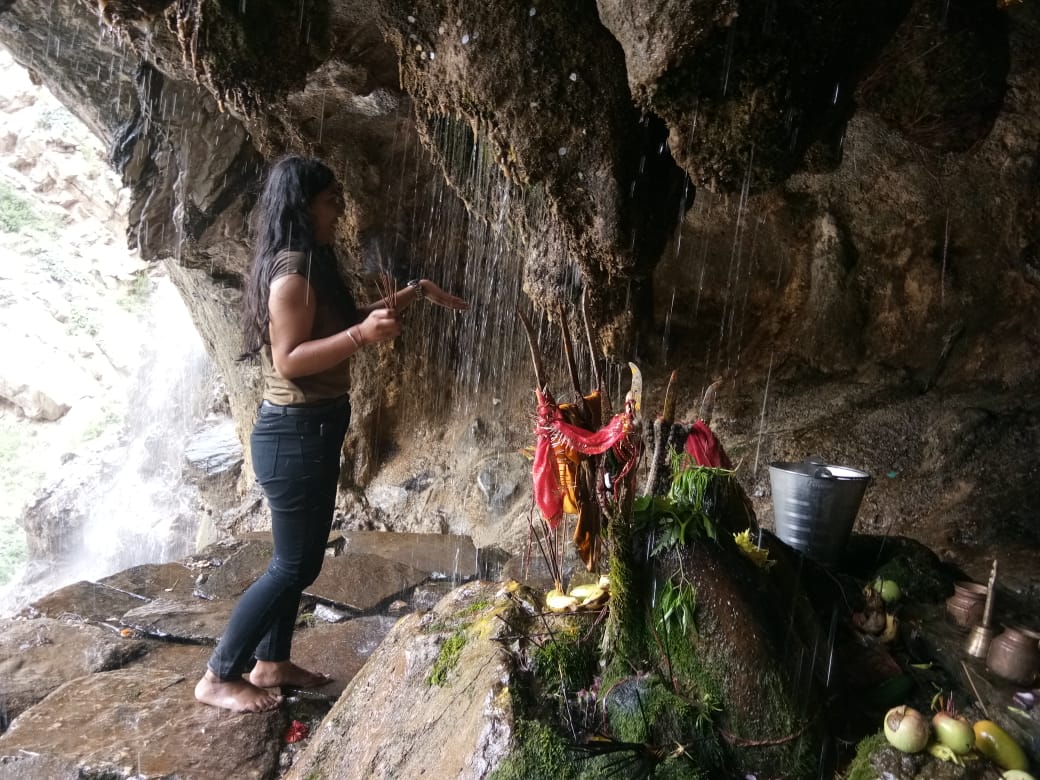
Me at Timmersain Mahadev , replica of Amarnath cave.
Uttarakhand , also known as “DEV BHUMI” or “the land of gods” is famous for its temples famous all around the world . yesterday only I visited a place which is attracting tourists a lot these days , that place is TIMMERSAIN MAHADEV CAVETimmersain Mahadev is a cave of lord Shiva which is situated in Niti village of Chamoli district of Uttarakhand. Cave is famous as the replica of Amarnath shrine of Jammu and Kashmir. Because of it’s a natural Shivaling of snow, this place is getting popularity day by day. On the lines of Baba Amarnath Yatra, pilgrims are now travelling to Timmersain Mahadev in the Niti Valley of Chamoli district in Uttarakhand.
Tourism Minister, Shri Satpal Maharaj said “A Shivaling is present inside the caves in Timmersain, which is located about a km before the last village in the Niti Valley of Joshimath block. The Shivaling is always anointed with the water dripping from the hills. While melting, the ice takes the shape of the Shivaling every year which is known as Barfani Baba or Timmersain Mahadev. Baba Barfani sits as a self-proclaimed Shivaling in Timmersain. Every year a Shivaling of more than 10 feet is formed here in winters. It is believed that Lord Shiva stayed at this place during Kailash Yatra. Therefore, this place is famous by the name of Sausa Mahadev. The devotees can now visit the restricted area of Niti Valley without any permission, and they can easily visit Timmersain Mahadev.
A part from the temple , there is this beautiful valley that is “NITI VALLEY “Niti is a small village located in the Niti valley of Joshimath. Niti is the last village and outpost in Indo-Tibetan border in Chamoli district. At an height of 3600 meters, Niti is situated near southern Tibetan border. The Niti Pass located at 5800 meters connects India with Tibet. During winters, Niti village and valley is covered with heavy snow. The villagers of Niti still follow the traditional methods of lifestyle in the mountains.
You will be amazed to know that Niti village inhabitants move to lower Himalayas in the valley & resides I the alternative village because there is heavy snowfall & no one can live at that place for 6 months from November to April. After these 6 months Niti Village is again filled with inhabitants.
There are some other villages near Niti such as Gamshali, Bampa, Kailashpur, Malari, Kosha , Raini , Timmersain Mahadev, & Tapovan. The disaster which shivered the whole valley of Tapovan & Raini village on 8th of February , come in the way to Timmersain Mahadev cave .
Government of Uttarakhand is trying to get permission to open this valley for tourist & make this a famous tourist place . This place will help Uttarakhand gain employment & tourists at a very high range as Jammu & Kashmir is getting . This is my initiative to make you all know about this place , & my personal advice to you all is , you must come & visit this holy place & see Mahadev in the form of slow Shivaling.
Uttarakhhand (also called as Uttaranchal) is an state in northern part of india.It is also called ‘Devbhumi’ or Land of Gods. Uttarakhand is known for its beauty, rivers, Himalayas , culture and many other things .it is blessed with some amazing tourist places. let us go through those places one by one.
Dehradun
it is the Capital of Uttarakhand and one of the best places to visit in the state .This beautiful place is surrounded by hills of Mussoorie.. Dehradun is also known as ‘School capital of India’ due to number of schools there are in Dehradun.it lies between ganga and Yamuna river. There are lots of places to visit in Dehradun such as Clement house, Robber’s cave, Tapkeshwar temple, Forest research Institute campus and many other. The best time to visit Dehradun is said to be between March to June.
2. Mussoorie
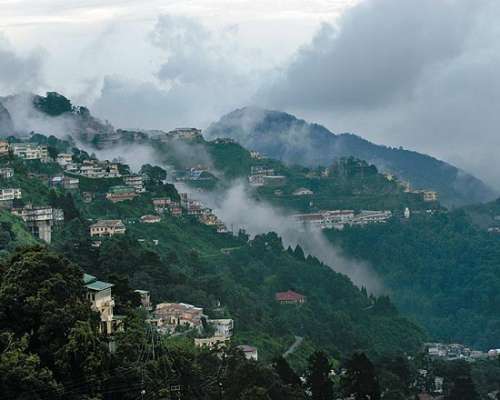
Mussourie is one of the best and famous places to visit in our country. it is also called as queen of hills.It is a hill station, which is 35 kilometers away from Dehradun.it is in the foothills of Garhwali Himalayan range.it is not only famous for its beauty but also for its education and Business .There are many places to visit in Mussoorie, such as the lush green hills, view of Shivalik hills, colonial houses, the Kempty falls, sir George Everest house and many more. Best time to visit Mussoorie is between April to June.
Nainital
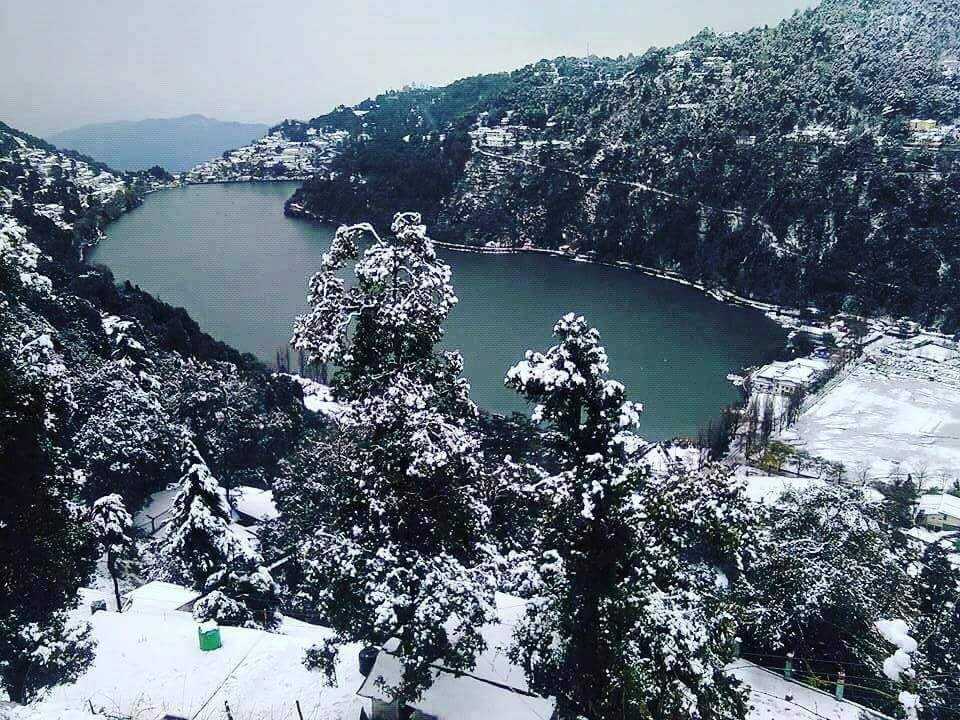
Nainital is also called as lake city of India.it is among the most visited hill stations of North India.it is located in the Kumaoun foothills of the outer Himalayas.it is at a distance of 285 Km from the capital of state, Dehradun.it is situated 1938 meters above the sea-level. the eye catching thing in Nainital is Naini lake.it not only attracts other state’s people but also foreign tourists. Naintal is an ideal winter destination.The other places to visit in Nainital are:-Govind ballabh pant marg ,Nainital zoo, Cheena peak, Naina Devi temple, Tiffin Top and many other exciting places.
4. Rishikesh
Also known as yoga capital of world, Rishikesh is one of the best spiritual places in Uttarakhand it is known for its ancient temples.it is also known as gateway to the Garhwal Himalayas. it is 45 km away from dehradun.it is a pilgrimage town. many tourist come in Rishikesh for its peace and spiritualty.it is located in the foothills of Shivalik range on the banks of the river ganga in northern india. Rshikesh is not only a great pilgrimage place but also a great adventure place where we can enjoy water rafting, kayaking, rock climbing, bungee jumping and many other things. some famous places to visit in Rishikesh are:- Lakshman Jhula, Neelkanth Mahadev temple, Ram jhula, Triveni ghat, Parmarth niketanand and many other.
Haridwar
Haridwar is an ancient city and a pilgrimage place in Uttarakhand state.The city is situated on the right bank of the ganga river. at the foothills of shivalik range. In Haridwar, many important religious workship and events are done. Some famous places to visit in Haridwar are:- Har ki pauri, Ganga arti, Shantikunj, Chandi devi temple, Chilla range and many other places.
Delhi, UP, Uttarakhand and Himachal to Receive Heavy Rainfall Next Five Days.
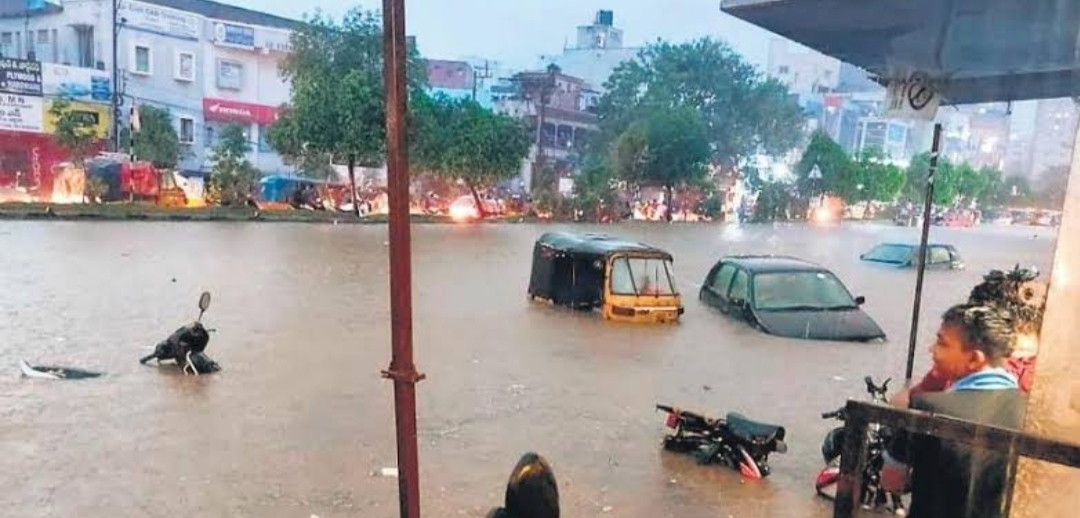
The India Meteorological Department (IMD) has predicted heavy to very heavy rainfall at some places of North India, including Delhi, Uttar Pradesh, Himachal Pradesh, Uttarakhand, during the next 5 days.
The department has also issued an orange alert in Rajasthan and Jammu and Kashmir. It also issued a yellow alert in Himachal Pradesh and Uttarakhand, which are facing heavy losses due to cloudburst. The Metrological department issued a red alert for Madhya Maharashtra and Goa.
The prediction are taken at a time when monsoon has entered in most of the states of the country.
Following are the meaning of the color of the alert issued by authorities::
Green Alert: It means there is no danger as there is no chance of rain.
Yellow Alert: This alert means that there will be rainfall and weather will remain unclear
Orange Alert: This means that there is a full possibility of rainfall and thunderstorms. So one should not go out unless it is absolutely necessary.
Red Alert: Red Alert means warning of dangerous weather. Through this alert, people are warned against going out of their homes.
The moisture-laden winds are advancing from the Bay of Bengal towards all parts of the country due to changes in conditions that promote the advancement of these winds.
Uttarakhand fondly known as the Abode of God due to its rich cultural and religious history which is still stored in many temples sprawled across the state is also the origin of river Ganga and Yamuna , two of the most sacred rivers of India. The shrine of Baba Amarnath and Kedarnath in the state makes it a famous destination for pilgrims from all over the world not to mention the large number of tourists it attracts every year due to the picturesque scenery which the state offers . Despite such rich heritage of the state, in the last two decades it has faced a major issue where out of 16.739 villages in the state, 1702 villages were declared “Ghost villages” as they have no inhabitants. Whereas about 405 villages have less than 10 people as its residents( The data is based on the Census of 2011). The question is that why the area which was separated from Uttar Pradesh to form a separate state of UTTARAKHAND so that the people here may have better growth opportunities, has seen such a drastic decline in population over the last decade. Is there really some ghost as the title “ghost village” suggests that has occupied the place of the human beings? What is the reason that despite such a large number of tourists and pilgrims visiting the state every year, the villages here which act as a treasure chest preserving the culture, the heritage and the history of the place, are empty? This blog will answer all these questions.
Why are the villages devoid of any human habitant?
People from the villages have migrated to other states and other cities of Uttarakhand such as Rishikesh , Haridwar , Dehradun etc. in search of employment with an aim to have better lives. Initially, it was just the youngsters who would migrate to other places for earning but eventually as the time passed and the villages remained remote, elders also started to shift simultaneously as the cities offer better healthcare facilities. Imagine the emotional turmoil which people go through when they have to leave their homeland, their birthplace just to feed themselves.
The reasons for migration
The villages in Uttarakhand are least developed with many villages still having a narrow risky trek which connects them to the main road. Electricity till a decade ago was foreign to these places. Authorities pay absolutely no attention in catering to the needs of the people living there. Though the state is blessed with two of the most sacred rivers, yet the residents specially in the villages have to struggle even for water. Urbanisation in the hills brought with it such affects that many villages which were blessed with the streams full of water almost the entire year many decades back are now witnessing dried streams and barren land . Though the famous tourist places of the state, such as Almora, Nainital, Rishikesh, Haridwar, the capital city Dehradun etc. are provided with the facilities which ensures the safety and well being of humans, villages are still untouched.
Safety is another big issue which the residents have to face. The villages which are located amidst the dense jungles of the Himalayas are home to many wild animals many of which are man eaters. Even if the animal is not a man eater, wild animals such as wild boar , wild pig destroys the crops leaving no source of living for the people.
Since the entire state is situated in the mountains, the paths there are steep which leaves scope only for terrace farming and does not allows the growth of many crops. The crops which are grown are either destroyed by wild animals or by the famous mountain rains with very little left to fill the stomach with. Owing to these reasons, people have gradually stopped farming. Also, the extremely effective implementation of welfare schemes like the Mahatma Gandhi National Rural Employment Guarantee Act (MGNREGA) which allows the people working as laborers under the MGNREGA projects give them enough amount for sustenance and the enforcement of the food Security Act gives them enough ration to survive with . The reasons mentioned under this bullet point can be considered as the reasons for the decline of farming which was the sustenance profession of the state since years and validates the moving of people in search of better life opportunities.
Also, the people in the villages feel that City life is a heaven with all sorts of opportunities something which is rarely visible to them in the naturistic villages. Litle did they realize , that the reason for a large number of tourists coming to the state every year is their want to escape from the monstrous daily problems of the city life. How ironic it is , that geography has created such a vast opinion between two sets of human beings each one thinking that the other set resides in heaven! Well, this is how life is full of oxymorons and ironies!
Is the presence of ghost villages good for the state?
The answer is a big NO. Experts say that migration leads to abandonment of villages which causes degradation of land, makes villages unlivable, and further fuels migration. In fact, the migration to cities has been in such great numbers that Uttarakhand has recorded the highest increase in the share of urban population in any of the Himalayan states of the country while its rural decadal growth rate is the lowest. The inter state migration which was at its peek during the early 2000s when the state was newly formed was transformed into an intra-state migration after the devastating floods which destroyed Uttarakhand in 2013. The consequences being that the cities are overpopulated as they had no proper arrangements made to accommodate such a large number with the standards of living deteriorating for everyone. Whereas the villages have lost their mark.
The empty village homes are now covered with the wild shrubs and has increased the area of exploration to the wild animals such as tigers and leopards many of which are man eaters. The increase encroachment of animalsin the human settlements may prove fatal to the villages which are still lively though in less numbers.
Owing to the nationwide lockdown in 2020, many of the migrants have come back home to resettle in their roots and are now trying farming which is more difficult now owing to the covering of the farming areas by the wild shrubs which are difficult to remove. The resettling phase will again be a difficult one as these villages are still the same with no better facilities.
Environmentalist Anil Joshi, who in 2015 undertook a 20-day march across Uttarakhand as part of the Gaon Bachao Andolan (“save village movement”) to address the issue of migration from villages says ” we should ask the government why there is still a need to migrate”. His words hits a deep chord forcing us to think, why is it this difficult to fulfill the basic needs of the simple villagers so that they can stay close to their roots saving our culture and our future.
On 7 February 2021 Uttarakhand’s Chamoli district experienced a disaster in the form of an avalanche when a small portion of the Nanda Devi glacier broke off. The sudden deluge caused considerable damage to NTPC’s Tapovan-Vishnugad hydel project and the Rishi Ganga Hydel Project. At least 72 people were confirmed to have been killed in the disaster. But this is not a new phenomenon and every year there are many reports of sudden deluge all across the Himalayan region.
The Himalayas has maintained the climate of the Indian subcontinent. Himalayas act as a barrier by diverting the monsoons to pour the rain in the fertile northern pains rather than to drift away to further north. Similarly, the mountain range also blocks the cold northern winds to reach the Indian subcontinent. The Himalayas all the way from Afghanistan to Myanmar with 110 peaks over 24,000 feet. They are also very rich in biodiversity and are the source of numerous perennial rivers and water bodies. Rivers like Indus, Ganges, and Brahmaputra that originate in the Himalayas are the lifelines of millions of people in the subcontinent.
But in recent years, the Himalayan region has seen a drastic transformation with increasing population and deforestation. The Himalayas are still a very young mountain range and this means the region is not as stable as older mountain ranges. This is also the reason for the high number of earthquakes. There are many exploitative projects and resource extractions initiatives have are going throughout the region. The increasing influx of tourists in the Ladakh region which is increasing the pressure in the already sensitive region or the limestone extraction near Mussoorie which has transformed the surrounding lush mountain region barren and unstable are just some of the instances. The cities located in the periphery of the Himalayas have started are also facing the same degradation problems in the plain region. Due to ever-increasing population growth, the size of cities is also increasing and this means overflowing garbage and drains. Unplanned growth of new settlements and uncontrolled tourism has only exacerbated this issue.
There is a need for safeguards on a national level that would help in preserving the fragile ecology of this region. First, it needs to be ensured that there is sustainable urbanization in the mountain habitats by town planning and adoption of architectural norms. Due to the sensitivity in this region, it is imperative that we have to control the growth of new settlements in the region and the existing settlements should be developed with all the basic urban facilities. Solid waste management is another area that needs to be the focus. Plastic bags use should be banned in all the towns and villages in the Himalayan region. Some states like Himachal Pradesh and Sikkim have enforced this rule but there are still many other states that have not fully implemented this rule. Pilgrimage is an important part of the tourism sector in the Himalayan region. Sustainable pilgrimage needs to be promoted and the inflow of pilgrims has to be determined according to the ecological capacity of that site. Roads are an essential node for the connectivity and development of a region but the construction of the roads and highways needs to take into account the sensitivity and fragility of the region as well. Environmental impact assessment should be compulsory before the construction of roads. Finally, environmental awareness needs to be propagated so that every individual can be empathetic and mindful of the dangers of environmental degradation. A coordinated effort will be essential between local cultures, local people, unions, and state governments to make this happen.
Forced migration can be described as mass movement of people of a particular area out of threat to their lives and livelihoods. People unwilling to leave their home towns and countries are forced to migrate to nearby, or sometimes far away, cities, towns and countries to have access to better facilities.
In context to Uttarakhand, forced migration or distressed migration has arisen as one of the major issues in recent times. In particular, male-specific outmigration has become a trend in the hills. The people have been migrating not just to seek better employment but also to have access to better healthcare and educational facilities. The educated ones are the first to leave as they get good opportunities in the cities and settle there forever. However, the elderly population is not yet ready to leave their home land because of the affection and attachment to the place.
More than 5 lakh people have migrated from Uttarakhand within the last 10 years. According to 2011 census, a total of 1,18,961 people from 6,338 village panchayats have migrated out of Uttarakhand permanently, while 3,83,726 people have migrated in search of work and prefer to visit their native places in the hills frequently. Out of 16,500 villages in Uttarakhand, 734 have become ghost villages. Also, there are 664 villages with negligible population and 3,900 other villages in the state that have a population of 50 or less.
The state of Uttarakhand was formed in the year 2000 after separation from Uttar Pradesh to ensure development in the hilly region. Though the purpose doesn’t seem to be served yet. Well structured roads and good health facilities continue as the basic requirements of the people. The lack of educational facilities is also among the majors reasons of migration.
Moreover, the decreased fertility of soil is a major concern for the locals affecting the agricultural productivity. Since it is an ecologically fragile state prone to natural disasters with half of the population’s workforce on farm, scope for other employment opportunities reduces.
Changing time brings along changes in basic needs which might not be fulfilled by the traditional methods and style of Uttarakhand. It proves to be a major cause of the shift. People now prefer to settle in the cities permanently in order to enjoy the relaxing life and lucrative opportunities offered there as compared to their home towns in the hills where the daily routine is tough and hectic and a decent livelihood has become a challenge.
The Uttarakhand government has decided to convert waste generated in the state to electricity under an initiative titled ‘Waste to Energy’. The government is ready with the draft and the chief minister would hold a meeting regarding it soon. The hill state is said to produce about 900-tonnes of waste everyday. Out of which half is organic in nature while 17 per cent falls in a recyclable category followed by 21 per cent biomedical waste and 11 per cent of inert nature. The above amount of waste is speculated to generate 5 megawatts of electricity and the scheme also aims to solve the problem of unavailability of land fills to dispose of waste across the state. Earlier, in January this year, Dehradun city featured as almost 11 times more polluted than prescribed standards of World Health Organization standards and worse than Kanpur according to a Greenpeace report. That is why Last month, UEPPCB approved the state fuel policy to reduce air pollution in the coming years including ban on the use of petroleum coke as fuel in a few years, which has a large-scale impact on air pollution. Petroleum coke also known as petcoke is a final solid by-product that derives from the oil refining process and is very rich in carbon. Given its high carbon content, it contributes more pollution, greenhouse gases. According to a meeting that was held in second week of June the government has set a deadline to ban the use of petroleum coke and furnace oil as fuel in the state which is March 2024.
Osian village in Jodhpur district in Rajasthan is a delight for those who love historical architecture and the fact that you get to see all of it in an oasis in the Thar Desert makes it a double whammy. The 8th to 11th century temples there make this village a must-visit destination.
Tarkarli, Maharashtra
Frankly, almost any beach on the Konkan coast could have qualified for this spot. Tarkarli, in Sindhudurg district in Maharashtra, with its pristine waters, long and narrow beaches with Shuru trees in the background, managed to earn some extra points. It’s one of the most peaceful and non-commercialized beaches in India.
Gavi, Kerala
We usually associate trekking with mountains and hills. But this is one wildlife trek you wouldn’t want to miss. Located in Pathanamthitta district in Kerala, on the highway connecting Kollam and Madurai, Gavi is part of the Periyar Tiger Reserve. It is said that the only two gopher trees in India can be found in Gavi.
Kasar Devi/Crank’s Ridge, Uttarakhand
If you’re interested in the hippie-way of life but are tired of the huge number of tourists in Himachal Pradesh, you need to make it a point to visit Kasar Devi village near Almora in Uttarakhand. Crank’s Ridge, or Hippie Hill as the locals call it, on the way to Kasar Devi temple is also a historical place for hippies. Legends like Allen Ginsberg, Bob Dylan and Cat Stevens are some of the few people who visited this place during the peak of the Hippie movement in the sixties.
Lonar Crater, Maharashtra
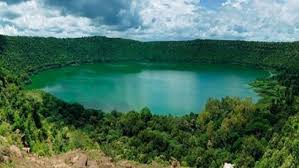
Located in Buldana district in Maharashtra, the Lonar Crater Lake was formed around 570,000 years ago due to a meteor impact. Owing to its high concentration of carbonate salts it’s categorized as a saline soda lake. So, it’s a soda lake formed by a crater.
Krem Mawmluh & Krem Ri Blai, Meghalaya
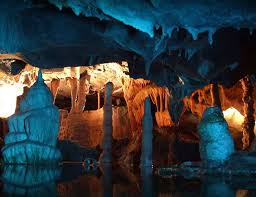
Cave exploration hasn’t taken off in a big way in India, which is really surprising considering there are so many options to do so in this country. Krem Mawmluh and Krem Ri Blai, in Mehgalaya, are natural horizontal and vertical caves respectively. Make it a point to visit them at least once in your life.
Ziro, Arunachal Pradesh
Ziro is a town in the Lower Subansiri district in Arunachal Pradesh and it has been hosting the Ziro Festival of Music for the past three years. But here’s the thing – the quaint little town is so attractive, that even without a crowd pulling event, it would find a spot on this list.
Wayanad, Kerala
This piece of trivia goes out especially to those trying to escape the city life for a while – Wayanad district is only 3.79% urbanized. Yep, lots of greenery here. Ancient history geeks can also trip out on the Edakkal caves where they can see actual pictorial writings from the Neolithic period.
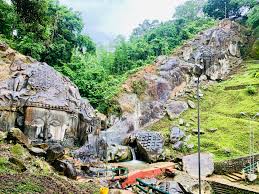
Unakoti, Tripura
The stone carvings in Unakoti in Tripura are one of the most detailed ones in India and yet, this place is rarely visited. As per Hindu mythology, when Lord Shiva was going to Kashi along with one crore gods and goddesses, he made a night halt at this location. He asked all of them to wake up before sun rise. It is said that in the morning, except Shiva himself, no one else woke up on time. So Shiva set out for Kashi on his own cursing the others to become stone images. Perfect for both spirituality and history enthusiasts, this is truly one of the most underrated places in the country.













 Eduindex
You must be logged in to post a comment.