World Bank Group and the Consumer Technology Association's Global Women's HealthTech Awards

 NIRAMAI Health AnalytixPvt. Ltd. and InnAccel Technologies Pvt. Ltd., two start-ups supported by DBT-BIRAC), have received the World Bank Group and the Consumer Technology Association’s Global Women’s Health Tech Awards, which recognises innovative startups that leverage tech to improve women’s health and safety in emerging markets.

NIRAMAI Health AnalytixPvt. Ltd, a recipient of BIRAC’s Women in Entrepreneurial ResearchAward 2019, was selected for its novel software-based medical device that detects early-stage breast cancer in a simple and private way on women of all age groups and breast densities, addressing a critical unmet need in cancer screening. The solution developed is a low cost, accurate, automated, portable, contactless, radiation-free, and painless cancer screening tool with no known side effects. The core innovation is a machine learning and AI-based Computer Diagnostic Engine called Thermalytix that uses artificial intelligence algorithms to interpret thermal images and generates a quantitative report for breast health and likely abnormalities. So far, over 45,000 women have been screened through the startup’stie-ups with over 30 hospitals and diagnostic centres across India. The product can help 2 Billion women in the world to regularly screen for cancer and can potentially save 90,000 lives every year in India alone.

InnAccel Technologies Pvt Ltd., a recipient of DBT and BMGF’sGrand Challenges Exploration-India 2019, was adjudged a winner of the Global Women’s Health Tech Awards for Fetal Lite, a next-generation, AI-powered fetal heart rate (FHR) monitor based on fetal ECG signal extraction technology for mothers in labour or post 37 weeks of gestation. Fetal Lite has next-gen ECG signal processing and is more accurate, reliable, and easier to use thanthe conventional Doppler-based devices while being comfortable for the mother. Fetal Lite is European CE Certified and has completed 2 clinical trials of 60+ patients with excellent results and completed the demo in 30+ Hospitals. The device can be used for both active and remote monitoring in the in-hospital and in-home settings. So far, the device has helped doctors to monitor 5000 cases, including in tribal areas, and has the potential to save 1.2 million lives per year across the world.

“We are pleased to receive this recognition from World Bank. It’s a validation of the applicability of our Indian innovationto the world,” said Geeta Manjunath, Founder,NIRAMAI.”The support from BIRAC has been crucial for our journey of idea to benefitting the patients with European regulatory approval. It is not just funding but mentoring and handholding that has helped us mitigate risks,” said Nitesh Jangir, Co-founder, InnAccel.

“I am delighted to hear about this global recognition to two of the startups supported by the Department. As a funding agency, these success stories are a validation about the impact we have created by nurturing a vibrant startup ecosystem for solving the pressing challenges being faced by humanity,” said Dr Rajesh Gokhale, Secretary, DBT

As per a statement by the World Bank, this year, the Awards attracted over 70 companies from 35 countries, which submitted their innovative products and services under three categories: reproductive health and pregnancy, general women’s and adolescent health, and women safety and security.

About Department of Biotechnology:

The Department of Biotechnology (DBT), established in 1986, is an Indian Government department under the Ministry of Science and Technology. DBT is responsible for administrating development and commercialisation in modern biology and biotechnology in India. The Department has made significant achievements in the growth and application of biotechnology in the broad areas of agriculture, health care, animal sciences, environment, and industry. The proven technologies at the laboratory level have been scaled up and demonstrated in the field. For more information, visit, http://dbtindia.gov.in/

About BIRAC:

Biotechnology Industry Research Assistance Council (BIRAC) is a not-for-profit Section 8, Schedule B, Public Sector Enterprise, set up by the Department of Biotechnology (DBT), Government of India as an Interface Agency to strengthen and empower the emerging Biotech enterprise to undertake strategic research and innovation, addressing nationally relevant product development needs. For more information, visit, https://birac.nic.in/


Breast Cancer

Breast cancer is the most frequent invasive cancer in women, and after lung cancer, it is the second largest cause of cancer death in women.

Breast cancer can start in a variety of places in the breast. Lobules, ducts, and connective tissue are the three primary components of a breast. The glands that generate milk are known as lobules.

The ducts are tubes that transport milk from the breast to the nipple. Everything is held together by connective tissue, which is made up of fibrous and fatty tissue. Breast cancer usually starts in the ducts or lobules.

Breast cancer can spread to other parts of the body via blood and lymph vessels. Breast cancer is said to have metastasized when it spreads to other regions of the body.

Photo by Xenia Shtreter on Pexels.com

Since 1989, advances in breast cancer detection and treatment have drastically improved survival rates. There are more than 3.1 million breast cancer survivors in the United States, according to the American Cancer Society (ACS). A woman’s likelihood of dying from breast cancer is about 1 in 38. (2.6 percent ).

According to the American Cancer Society, 268,600 women will be diagnosed with invasive breast disease in 2019 and 62,930 persons will be diagnosed with noninvasive cancer.

Breast cancer will kill 41,760 women in the United States this year, according to the American Cancer Society. Breast cancer fatality rates have been declining since 1989, thanks to breakthroughs in treatment.

The need of screening and being aware of the symptoms are both significant methods to reduce the risk. Breast cancer can afflict men in rare cases, but this article will focus on breast cancer in women. Here’s where you can learn more about breast cancer in men.

SYMTOMS OF BREAST CANCER

The initial signs of breast cancer are usually a thicker tissue area in the breast, a lump in the breast, or a lump in the armpit.

1)Other signs and symptoms include:

2)Armpit or breast soreness that doesn’t go away with the monthly cycle

3)Pitting or redness of the breast skin, resembling the surface of an orange

4)A rash on one of the nipples or around it

5)A nipple discharge, potentially including blood

6)A nipple that is sunken or inverted

7)A change in the breast’s size or shape

8)The skin on your face is peeling, flaking, or scaling.

The size of the tumour and whether it has spread to lymph nodes or other regions of the body are used to classify cancer.

Breast cancer can be staged in a variety of ways. From stage 0 through 4, with subdivided categories at each numbered level, is one way.

The four basic stages are described here, while the precise substage of a cancer may be determined by other tumor characteristics, such as the presence of the HER2 receptor.

CAUSES OF BREAST CANCER

Fat, connective tissue, and thousands of lobules make up a woman’s breast after puberty. Breastfeeding milk is produced by these small glands. Milk travels to the nipple through tiny tubes called ducts.

Cancer produces uncontrollable cell proliferation. They do not die at the expected time in their lives.

Because the tumour consumes nutrition and energy, it deprives the cells around it, resulting in cancer.

Breast cancer is most commonly found in the inner lining of milk ducts or the lobules that provide milk to them. It can then spread to other areas of the body.

Photo by SHVETS production on Pexels.com

THERE ARE TWO TYPES OF BREAST CANCER

Ductal carcinoma is the most prevalent type of cancer that starts in the milk duct.
Lobular carcinoma is a type of cancer that begins in the lobules.


When cancer cells burst out from inside the lobules or ducts and invade adjacent tissue, it is called invasive breast cancer. This makes it more likely for cancer to spread to other places of the body.

Noninvasive breast cancer occurs when the cancer has not migrated beyond its original location. However, these cells can proceed to aggressive breast cancer in some cases.

It is impossible to avoid breast cancer. Certain lifestyle choices, on the other hand, can greatly reduce the risk of breast cancer and other cancers.

These are some of them:

limiting your alcohol consumption

following a nutritious diet rich in fresh fruits and vegetables

obtaining enough physical activity

keeping a healthy BMI (body mass index) (BMI)

Breastfeeding and the use of hormone replacement therapy (HRT) after menopause should both be considered because they can increase the risk.

For women who are at a high risk of breast cancer, preventive surgery is also an option.

The Breast Cancer Healthline app connects users to an online breast cancer community where they may interact with others and receive advice and support through group discussions.

Myths and Taboos around Menstruation

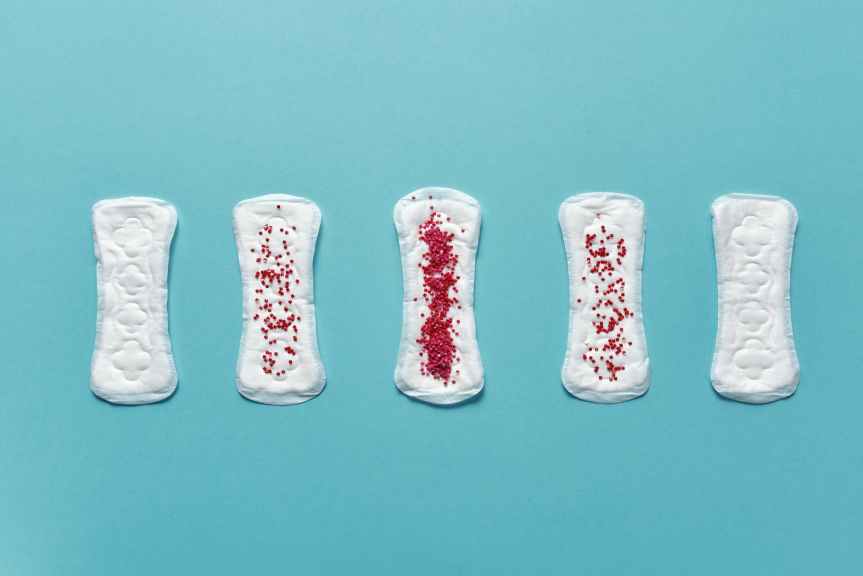
Menstruation has always been surrounded by taboos and myths that exclude women from many aspects of socio-cultural life. Not entering the temples and kitchens during menstruation is a major restriction for rural girls and women from orthodox families. They are believed to be unhygienic, inpure and unclean and hence their touch is considered to be contaminating.

“A menstruating woman is impure, she cannot enter holy places”

“Don’t enter the kitchen, don’t cook or touch the food, it will go sour”

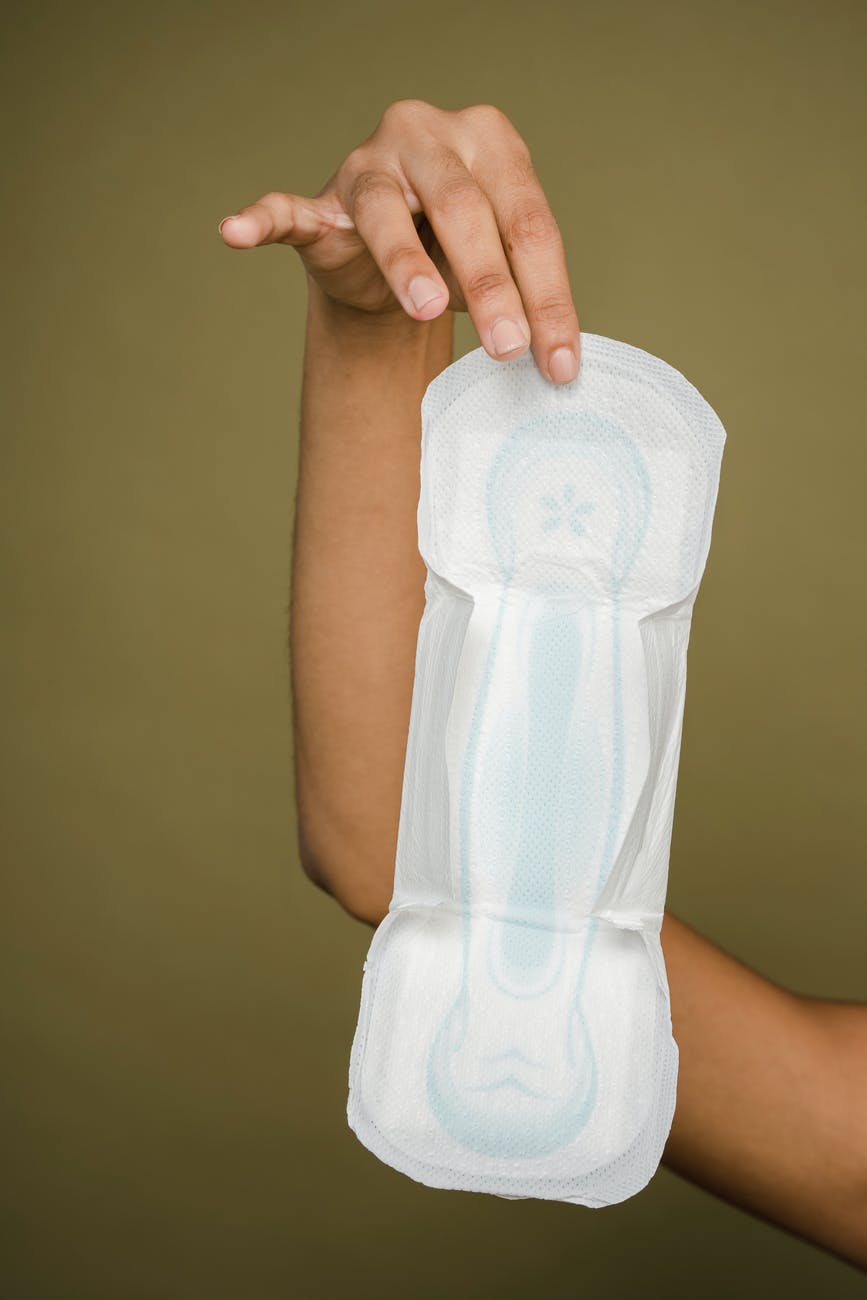
Such taboos about menstruation present in many societies impact on girls’ and women’s emotional state, mentality and lifestyle and most importantly, health. About 23% of girls in India, mostly from less economically developed areas drop out of school when they begin menstruating. The monthly menstruation period also creates obstacles for female laborers. The gender – unfriendly work environment, infrastructure and the lack of adequate menstrual protection alternatives and clean, safe and private sanitation facilities for female workers undermine the right of privacy. Over 77% of menstruating girls and women in India use old cloth, which is often reused. This increases susceptibility to infection, putting them at the risk of being stigmatized.

The first and foremost strategy in this regard is raising the awareness among the adolescent girls related to menstrual health and hygiene. The need of the hour is to disseminate the same knowledge and normalize this concept among the male community, since most women shy away from discussing about it due to lack of support from their male partners and other family members. Provision of sanitary napkins and adequate facilities for sanitation and washing should be made available with the gender perspective.

We need to rise above all odds and link physical infrastructure and sanitation projects to health education and reproductive health programs and address the issue in more holistic ways because

Menstruation is a very normal biological phenomenon, and society should understand that women have the power of procreation just because of this virtue. TALK ABOUT IT!

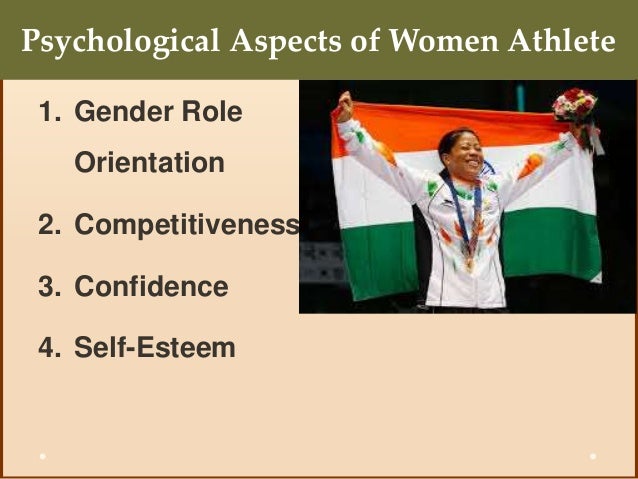
PSYCHOLOGICAL ASPECTS OF WOMEN ATHLETE

Lesson 6 women and sports

Over the past several decades , the role of women has changed drastically .However , gender beliefs and stereotypes still do exist across the world especially in sports . Most of the people in our society consider that sports are not meant for females but only for males .Social tradition , customs and cultures have great influence upon the psychology of women . In a male dominating society , males are expected to be aggressive , independent , dominating , robust and confident , whereas females are expected as well as considered to be emotional , sensitive , cooperative , sympathetic , loyal , etc. It is a well – known fact that participation of women in sports is increasing year after year .With this enhancement in female participation in sports , there is also renewed interest in the psychological characteristics of the female athletes and the effects of athletics on women . The various psychological traits of women athletes are stated below .

  1. Gender Role Orientation : It is an established fact that there has been an increase in the level of women’s participation in the types of sports that have been traditionally limited to only males , e.g., wrestling , weightlifting , kick boxing , body building , etc . However , many sports have been still considered inappropriate for women . For a long time it was considered that women should not take part in athletics because of the potentially harmful masculinising effects of sports .
  2. Competitiveness : It is evident that in the field of sports , both men and women are competitive in their own fields . In fact , women are more goal oriented and perform magnificently in artistic activities such as gymnastics . However , a number of research studies indicate that females who take part in sports are more competitive in comparison to the females who do not participate in sports .
  3. Confidence : As mentioned earlier , due to social pressures , women tend to have less confidence than men . Participation in sports , competitive environment , awards and recognitions increase confidence levels of sportspersons . However , a significant difference may exist between sportswomen and non- sportswomen .
  4. Self-esteem : Most of the research studies indicate that training plays a vital role in performance . Self -esteem improves with good performance . In the field of sports , intensive training helps in enhancing self-esteem . Research studies also show that those people who engage in sports have high self-esteem in comparison to non-participants .
  5. Aggression : Aggression is a forceful , goal- directed action that maybe verbal or physical . Participation in sports has many positive aspects which usually involve aggressive behavior . Various studies of aggression show that athletes who participate in contact sports , i.e., football players , judos or wrestlers are more aggressive than the athletes who participate in less contact sports . However , females who participate in contact sports show more aggression in comparison to females who do not participate in sports at all.

LET’S TALK ABOUT PCOS

Any person may suffer from some sort of health issue. Especially, in today’s time where people are living a hectic, stressed, and unbalanced lifestyle. Hormonal disorders have also become common. Some issues cure with time, while some take a lifelong deal. In India, 1 in 5 women suffers from PCOS.

What is PCOS?

PCOS or polycystic ovarian syndrome is a hormonal disorder. The female body produces estrogen, progesterone, and androgen. These hormones are responsible for regulating ovulation. Though androgen is said to be the male hormone, it is also produced by the female body; just the amount is low comparatively. When the body produces higher amounts of androgen than the normal amount (because of increased insulin level), it results in PCOS.

The ovaries produce eggs each month, if the egg gets fertilized it gets itself embedded in the uterus, otherwise, the uterus lining (consisting of blood, tissues, and nutrients forming a cushioning for the embryo to grow) breaks and flow through the vagina. And this is called a period. But when the eggs are interfered with by the higher amounts of androgen, the eggs in place of maturing start to develop cysts. These eggs then instead of releasing, like in a normal period, start to build up cysts on the ovaries. This causes irregular ovulation each month and hence irregular or missed periods.

Problems of Polycystic Ovarian Syndrome (PCOS)

  • Usually, PCOS is only thought to be related to difficulty in conceiving. But it has other issues too which are often not talked about as fertility remains the prior concern as infertility is considered something that could create a problem for marriage. However, is it not necessary that female suffering from PCOS is infertile. And the issue of infertility (if there) is treatable (for most of the cases) through proper medication, exercise, and a healthy lifestyle.
  • As the male hormone ‘androgen’ level increases, it results in excessive body hair (as can be seen in males), called hirsutism. However, this symptom is not necessarily shown in every female suffering PCOS.
  • Male pattern hair loss or thinning of hair.
  • Acne outburst 
  • Obesity is another issue in PCOS. People tend to get obese with PCOS but it can be controlled through a healthy diet and lifestyle. However, this symptom is not necessarily shown in every female suffering PCOS.
  • As the insulin levels are increased there is a higher risk of developing diabetes, hypertension (high blood pressure), and even heart diseases.
  • Insomnia and sleep apnea (paused breathing for a short period while asleep).

Irregular periods are the most common sign of PCOS. It can be diagnosed by gynecologists through different check-ups like weight, hair growth, acne, darkened skin may even prescribe a pelvic ultrasound and blood tests.

Treatment

PCOS is not curable but treatable. Proper diet, exercise, and a healthy lifestyle can help in manage PCOS. Taking consistent medication as prescribed by the medical experts helps in regulating the menstrual cycle. The doctors often prescribe for birth control pills to control the hormone levels as they are rich in hormones. This regulates the menstrual cycle as well as controls excessive hair growth and acne. The treatment varies from 6 months to 1 year.

Food rich in omega 3 fatty acids, magnesium, zinc, vitamin D, vitamin B12 is important to manage PCOS. Leafy greens are best to be consumed as it provides the body with required nutrients without adding to obesity.

Exercise and yoga are as necessary as diet and medicines. The doctors often suggest practicing certain yoga asanas that help the womb heal.

Following a healthy routine with good food and proper sleep is important. Sleep plays a vital role in helping the body absorb the nutrients in food and medicines better.

It is strictly advised to consult a doctor if any of the above-mentioned symptoms show up.

And never take any medicines without consulting the doctor.