DARE TO BE YOURSELF

Everywhere we turn in life, there are expectations placed upon us. From birth, there are ways we are expected to behave, milestones we should achieve, choices we should make.

Who makes these expectations? Other people – virtually everyone we interact with has expectations on what we should do or be.

For the most part, this is all well and good. We are expected to uphold the law and be civilized members of society. If we are invited to an event, it goes unsaid that we are expected to arrive on time.

But what about the more grey areas of life? What about when we don’t want to do something other people want us to do, but feel pressured to do it?

Here are some things we should bear in mind whenever we encounter such situations:

First off, we should recognize that sometimes, expectations are just a figment of our oversensitive and insecure imaginations. The other person may not expect you to do the thing you think he expects you to do (sorry, that was a mouthful). Instead, he may just be offering it as a suggestion or as a piece of advice. It is always good to keep an open mind so that we hear them out, but we should also remember that people don’t give advice based on what’s best for YOU. They give advice based on what THEY would do in your shoes. (At least, this goes for most people.) It may not sound like a big difference, but it is. If you follow their advice and come to regret it later, you’ll only have yourself to blame. Because you did not understand that you and him are different, and what works for him may not necessarily work for you.

Second, if you are sure that it is clearly an expectation, then you must ask yourself: Why do you not want to meet this expectation? To answer this question, it is necessary to do some self-reflection. I am not saying that this feeling of not wanting to meet this expectation is wrong – on the contrary, I think it is an important step to take towards improving one’s self-awareness. Doing so will prevent situations like the one in the preceding paragraph, where you blindly follow advice given by others.

Most probably, you will find that you do not want to meet someone else’s expectation because your interests clash with his. Maybe you feel expected to babysit your nephews on a precious weekend when all you wanted to do was have some me-time after an arduous workweek, simply because your brother’s out of town. To agree or disagree? Or maybe you’re invited to attend the wedding of someone you don’t know very well. To go or not to go?

So assuming you’ve done the first and second steps above, and you’ve concluded that your not wanting to meet this expectation is due to a valid reason on your part (what is valid is up to you. YOU decide. Not others). But you still lack the courage to say no.  The need to be liked is very strong in us humans, because we are social creatures. You see apes scratching each others’ backs and grooming each others’ fur? That’s what we are. If you don’t scratch my back and groom my fur, I’ll make you an outcast. That’s how our social fabric works.

To be able to say ‘No’ is not actually a question of having sufficient courage. It, like many other things, can come down to a simple logic test:

First, picture the expectation in your mind and the person who is making the expectation. If you gave in to this expectation, would that make you happy? I don’t think so, otherwise you wouldn’t be considering saying no.

So, if we assume you will be unhappy to give in to this expectation, then we should ask ourselves this question next: Will this person who is expecting us to do this thing still have this expectation, if he knew that we were unhappy to do it?

If the above scenario is true, then I’m sorry to say that this person has no understanding of who you really are, and does not care to know who you really are. All this person cares about is that he gets his way, and your happiness be damned. These are strong words, but the harsh truth is that human nature can be very ugly indeed. And if this is true about this person, we must consider and think real hard about why we are letting such a person determine what we should or should not do.

A person who truly cares about you will understand that you are not him. Therefore, his values are not your values. And it is not his right to impose his values over yours. Sure, he may be slightly disappointed that you may not feel or think the same way that he does, but he recognizes that that is precisely what makes you who you are – what makes you a unique and special person in your own right. And he respects that. If you can find such people in your life, hold onto them, for such empathetic people are truly rare.

There are some people who will read everything I’ve said above and conclude that I am simply trying to justify being selfish. These people completely miss the point because they fail to see that there is infinitely more value in something that is done spontaneously, freely and sincerely than something done out of resentful obligation. They may be proud to have done many things for the sake of others – to wear them as a badge of selflessness, perhaps. But the truth of it is that they valued their own face more than being true to themselves. In the end, they wanted to be liked not for who they were, but simply to be liked. And that is a real tragedy, that people are so willing to sell their own personalities and beliefs for the unattainable allure of universal adoration.

I must emphasize in my conclusion that all of this works both ways. Just as we must remember to stay true to ourselves whenever we are faced with external pressures, we must also remember not to become a source of pressure and expectations upon the people around us. When we are thinking only of ourselves, it is easy to fall into this line of thinking where you expect other people to simply conform to whatever you want them to be. So just as we must recognize this ugly trait in the people around us, we must also be vigilant to prevent any manifestation of it in ourselves. In other words, the Golden Rule applies.

If you skipped all the way to the end, or skimmed everything and forgot most of it, here’s the gist: Don’t become someone you’re not. Don’t blindly do what others want you to do. Recognize your self-worth and your rights and your freedom. Dare to be yourself.

“Be who you are and say what you feel, because those who mind don’t matter, and those who matter don’t mind.”
― Bernard M. Baruch


TELEVISION AS AN INTELLIGENT BOX: A PERSPECTIVE

This life is a gift, and those who embrace it live it the most. It is astounding how much we can do with this gift, and as we evolve, we combine our thoughts and dexterity to create a remarkable device, machines which change the way we live. Such is this device- the intelligent box, which is one of our most fabulous creations. Who thought in the previous century that a human being would be able to see another one while sitting at home when the other is sitting at a far corner of the world? A parent sends his child to school to provide education. However, a school to has its limits. Theory outweighs practicality in many ways in schools but with channels such as Discovery, National Geographic and the History Channels, watching TV can be as educational as going to school.

Most people are limited in the amount of travel they can do. So, they can learn about different people and places as TV opens up the world, whether through watching documentaries or drama series with multicultural characters or simply watching travel channels. It is the power and reach of the intelligent box. TV provides food channels through which people can learn how to cook cuisines that many cannot teach. In this day and age, people do not have the time to meet and interact. A TV brings information closer to us and becomes a great medium to discuss matters of common interest. For instance, a father can talk about politics or sports to his son even if he gets one hour to spend with him. It is an irony of life that the rich run miles to reduce their fat. There are yoga classes on TV, aerobics and other fitness programs for the rich. The power of the world comes to us, and we do not have to run for it. One of many ironies is that people are so much occupied in the mundane treadmill of life that they seldom get opportunities to smile and laugh. As a result, health deteriorates. Since laughter is the best medicine as it has been found to increase circulation, lower blood pressure and do much more; watching a good comedy on TV can be a great way to find something to laugh about.

People can watch contests like Indian Idol and can support their favourite contestants. Shows like DID and other singing competition induce an urge to learn these arts. These are platforms for excellent talents to showcase their skills and also a launchpad for the people who are skilled to build this platform for others. If TV is not an intelligent box, it is not an idiot box.

WORK AND WORSHIP

Work is paramount.

God helps those who help themselves. Whatever we humans have achieved is a credit to out labour, i.e. work. We owe our success to our endeavours. Work is the root of all progress. It is believed that there is no alternative to hard work yet, with changing times, it has altered into smart work. Man has walked on the moon, devised weapons of mass destruction, created breakthroughs in all conceivable fields of study through his work. Indeed, when a man worships work, fruits of tenacity are reaped. To reach the level of worship, one must whole-heartedly be sincere and persevere.

Even in Bhagwad Gita, it is clearly stated that ‘Karma is Paramount’. Lord Krishna imparted a lesson in Arjun that, ‘Action is the duty and reward is not your concern’. The thread of karma weaves our destiny. It is not just Gita, every other religion has somewhere, or the other mentioned ‘Karma’. We have been endowed with the gift of free will. Hence, we must transform this feature into efforts to attain our goals in life.

Work is also what makes us feel lively. Without it, our lives would be mundane, dull and uninteresting. We have, over generations, developed directions in our lives by way of forming cultures and civilisations. We have been able to do this by worshipping work.

An idle mind is the devil’s workshop, and a concentrative mind coupled with smart, hard work leads to higher wisdom. We need to put efforts even to eat our food.

We study and worship work at school. Over multiple years of our hard work, we develop our respective personalities and forge our identity in this world. So, let us work and worship it for a bright future.

Mind ‘s working cannot be figured out easily!!!!

How our mind works, we can’t be too sure. But according to study mind is working just like heart. It means that how hurt is pumping up and down regularly like it Brain also controlling all the parts of our body. But interestingly Brain is also makes it separate from other parts, an unbelievable fact is that after a human death then also for few hours it is alive and try to communicate with other parts. But due to no communication it silently makes it close down completely.

Mood swings of a lady

It also makes us feel happy or sad. And brain is only that thing due to which we are superior to other creatures in this planet. Science is made just from the observation of our Brain. And for it doesn’t matter that if we know about it earlier or not. Through the high logical thinking analysis, we can understand the things easily. Not only this, we can also make super things through the brain. For example Space Ship,Rockets,and many more things.Those who control their mind and study on a topic,they are called Scientist. They are also one of among us. So the real thing is that if we can control over Brain and make it use to in a study, we can also find amazing things about that. And it’s really cool.

But we should also Know that if we can’t control our brain, then it can also harm us. So we should concentrate on our study also aware of good and bad outcomes of it. Thanks for reading my article ….

Kalaguru Bishnu Prasad Rabha, Cultural Doyen of Assam: Tributes on Death Anniversary as ‘Bishnu Rabha Divash’

On 20 June 1969, a great human being, patriot also an artist, actor, painter, music composer, poet and writer of Assam left for heavenly abode, who is popularly known as Kalaguru Bishnu Prasad Rabha. He passed away at the age of 60 years at Tezpur, Assam, the Date (20 June) presently celebrated in Assam as ‘Bishnu Rabha Divash (meaning day)’.  Kalaguru (meaning master of the arts) was born on 31 January 1909 in ST family in Dhaka (now in Bangladesh), then Bengal Presidency of British India.

Bishnu Rabha’s schooling started at Tezpur Government High School, Assam and later on he went to Calcutta now Kolkata for perusing higher education. He was a great patriot and from young age, he was in freedom movement and was influenced by leftist ideology so ardent supporter of the Communist Party of India. However, when Germany attacked Soviet Union during Second World War, the leaders of Indian communists decided to support the British Government which antagonised a section of the communist leaders and subsequently they formed the Revolutionary Communist Party of India (RCPI) in 1945 where he joined.    

     Anyway Kalaguru was a genius in creative activities. His work Bano Kobang depicts the life of various indigenous Assamese communities. His other works inter alia are Missing Coneng, Sonpahi, Axomiya Kristir Hamuh Abhakh, and Atit Axom. Bishnu Rabha was a great poet also and composed many songs which are known as ‘Rabha Sangeet’. He had given music to most of his songs. He was a visionary, and through music, dance, acting, writing, etc., he endeavoured to realize his dream of a greater, prosperous Assamese society with every ethnic group as equal partners. He acted in a mobile theatre group of that time named ‘Ban Theatre’. He directed an Assamese film ‘Siraj’, where he also composed the music. Further, he acted in the movie ‘Era Baator Xur’. It is pertinent to mention that he was awarded the title ‘Kalaguru’ by Sarvapalli Radhakrishnan at Varanasi for his enthralling ‘dance of Lord Shiva’. Bishnu Rabha worked towards popularizing Vaishnavism initiated by Srimanata Sankardev (Saint and scholar) in Assam in 15th century. He painted portraits of both Sankardev and Madhavdev with water colours, awesome creation. He was a great human being also and always had feelings for the underprivileged and poor echelons of the society.  He donated about 2500 bighas (1 bigha is approximately equal to 0.40 acres) of land received from the British Government to the peasants. His slogan was “Haal Jaar Maati Taar” means “those who cultivate, should own the land”.

He has passed away although on 20 June 1969 but he will be in the heart of millions for his genius activities.

The Following websites have been consulted while writing the paper:

  1. https://en.wikipedia.org/wiki/Bishnu_Prasad_Rabha
  2. http://onlinesivasagar.com/music/bishnu-rabha.html
  3. http://www.researchgate.net/publication/315476566_Bishnuprasad_Rabha_as_Cultural_Icon_of_Assam_The_Process_of_Meaning_Making
  4. https://web.archive.org/web/20070928043723/http://www.assamtribune.com

The origin of life-RNA WORLD?????

The origin of life depends on the singe question – How did early cells could have arisen?
Modern cells consist at a minimum of plasma membrane enclosing water in which numerous chemicals are dissolved and sub cellular structures float. It was thus believed that the first self-replicating entity was much simpler than even the most primitive modern living cells. Before there was life, and yes, Earth was a different place: completely hot and anoxic, with an atmosphere which was completely rich in gases such as hydrogen, methane, carbon dioxide, nitrogen, and ammonia. Earth’s surface was like a pre biotic soup in which chemicals reacted with one another, randomly “testing” the usefulness of the reaction and the stability of the resulting molecules. Some reactions released energy and would eventually become the basis of modern cellular metabolism. Other reactions which occurred created molecules that could function as catalysts, some aggregated with other molecules to form the predecessors of modern cell structures, and others were able to replicate and act as units of hereditary information.
Proteins have two major roles in modern cells – structural and objective.
Catalytic proteins are called enzymes, in cells. Thus enzymes act as the workhorses of the cell. DNA stores hereditary information and can be replicated to pass the information on to the next generation. RNA is involved in converting the information stored in DNA into proteins. Proteins can do cellular work, but their synthesis is dependent on their proteins and RNA, and information stored in DNA. DNA can’t do cellular work. It’s only work is to store genetic information and it is involved in its own replication process which is a process that requires proteins. RNA is synthesized using DNA as the template and proteins as the catalysts for the reaction.
Based on these considerations, it seemed to evolutionary biologists that at some time in the evolution of life there must have been a single molecule that could do both cellular work and replicate itself. A possible solution to the nature of this molecule was suggested in 1981 when Thomas Cech discovered an RNA molecule in the protest Tetrahymena that could cut out an internal section of itself and slice the remaining sections back together. Since then, other catalytic RNA molecules have been discovered, including an RNA found in ribosomes that is responsible for forming peptide bonds – the bonds that hold together amino acids, the building blocks of proteins. Catalytic RNA molecules are now called ribozymes.
The discovery of ribozymes suggested the possibility that RNA at some time had the ability to catalyze its own replication, using itself as the template. In 1986, a term was coined – RNA WORLD to describe a precellular stage in the evolution of life in which RNA was capable of storing, copying, and expressing genetic information. Also it catalyzes other cellular chemical reactions. This important evolutionary step is easier to imagine than other events in the origin cellular life forms because it is well known that lipids, major structural components of the membranes of modern organisms, form liposomes which are bounded by a lipid layer.

Changing landuse pattern in haryana

Land is perfectly finite and scarce in relation to the ever-increasing human wants and needs. Judicious and rational utilization of land, hence land use management, faces the challenge to adjust its use by increasing the proportion of particular use over other uses or certain area can be put to multiple uses. There is variability in the land use pattern in different areas. Both physical factors such as topography, climate, soil types, as well as human factors such as population, density, technological capability and cultural and traditions play an important role in deciding the land use pattern of the areas. And as humans are evolving, progressing and our needs are increasing, and economic activities change with time, land use changes over time and space. Studying the changing land use pattern also helps to know the social, cultural and economic development of the area as well as the people. We can also know about the past condition of land and what the future condition will be. 

Irrigation is an important aspect of agriculture. Water is essential for agriculture, and food is essential for humans. Hence, in this study we also tried to see the association between irrigation and different types of crops and number of crops. It is done to see whether irrigation supports only some specific types of crop or all the crops. Also, the association between number of crops and irrigation tells us whether there is the practice of monocropping (where one or a few crops are grown in greater proportion) or practice of growing different types of crops in the area. 

Food is essential for survival; hence we are taking the state of Haryana for the trend analysis as it is one of the important states in terms of producing food. Haryana State came into existence simultaneously with green revolution i.e. 1966-67. After the formation Haryana emerge as leading State in field of agriculture production. The agricultural economy of Haryana is dominated by food grains. Haryana has emerged as one of the major food grains producing States in the country. Consisting only 2.3 per cent of country’s total area, Haryana has been contributing significantly to the food basket of the country. In 2012-13 country’s 120.78 million hectares area was under food grains production from it, 4.40 million hectares area under food grain production in Haryana; it is 3.64 percent of total country area under production of food grains. Haryana which covers only three percent of food grain area produced 16.23 million tons of food grain in 2012-13and this constitutes 6.31 percent of total food grain production; almost double share compares to area and greater than many large states. It is a matter of interest to know at what extent the land use pattern has been changing, what kind of changes in pattern the land has undergone over a span of 15 years.

When will the transport sector stop polluting?

Transport sector is one of the major polluters of the pollution caused by fossil fuel. Petroleum is the most consumed fossil fuel by the transport sector. IC engines which burn this fuel have ruled the automobile sector for decades. But a welcoming decision is being taken by many nations around the world as they are planning to phase out petrol,diesel and hybrid cars in coming decades.

But, Who can replace them?

They are planning to replace them with electric vehicles which run on battery and motor. Unlike IC engine based vehicles, EVs don’t emit any greenhouse gases as they run on electricity. But they will continue to contribute to pollution until power stations that provide electricity get rid of fossil fuel. It should be noted that fossil fuel contributes to more than 70% of total energy supply that is met by power stations. So technically EVs are burning fossil fuel indirectly. But the good thing about  EV is, it stops the urban pollution caused by transportation thus giving more breathable air to the people in urban locations.  

Green source of energy

Switching the power stations to greener energy is capital intensive. Because, the availability of green energies such as sun and wind are intermittent in nature. So an energy storage system is required to meet the demand for a 24*7 operation. The energy system which usually uses expensive battery technology is  making renewable energy less preferable for operations. Luckily, with current advancements in battery storage technology, the price is expected to fall in the coming years.

Change in lifestyle

Unlike IC engine based vehicles, EVs are suffering from range anxiety and charging time issues. In the EV industry the fuel capacity is calculated in terms of distance covered per charge which is  usually 1/3 of the total fuel capacity of IC engine based vehicles. In addition, the time taken to fill the fuel tank of an Internal Combustion engine vehicle is negligible when compared to time taken to charge the battery of an Electric Vehicle. Hence, people have to learn to adapt to the new type of transport system the EVs would create. 

Co-operation of the three

The cooperation between government, corporate and people is necessary for adoption of a pollution free transport system. The government has to frame a policy that would enhance the adoption of a pollution free transport system while it should also provide financial assistance by giving subsidies to support people and producers. The existing automobile giants should switch to the manufacturing of EVs soon. The people may be subjected to adoption of restrictions caused by electric vehicles.

Pradhanmantri Garib Kalyan Rojgar Yojana- A step towards employability of migrants

                                   Madhya Pradesh Migrant Workers Employment Updates; Pradhan Mantri ...

The Prime Minister on 20th June launched a rural public works scheme-Garib Kalyan Rojgar Yojana- to make migrant workers employable. One of the severely hit people are these migrant workers who were stranded without any jobs. They started to head back towards their hometown as they did not have any permanent place to live where they used to work. The central government has communicated with 116 district administrations to plan about formal employment engagement of a segment of these migrant workers. These districts will explore various sectors like hospitality, manufacturing, service and travel sectors to provide a formal employment engagement to these workers.

Highlights of this scheme:

  1. To address the vulnerable condition of migrant workers, this scheme will deploy 50,000 crores from among the outlays for 25 existing schemes for welfare.

  2. Under this scheme, 3,00,000 migrant workers will be trained and placed as apprentices in rural industries and other district level formal job clusters.

  3. Of the 3,00,000 migrant workers, 1,50,000 will be offered short-term skills and the other 1,50,000 will receive a certificate through a programme- Recognition of Prior Learning.

  4. The scheme will offer informal works immediately for 125 days, while 3,00,000 people will get formal work through this scheme.

  5. Under apprenticeship, an industry can employ an apprentice for three years at a stipend which is on par with minimum wages of semi-skilled workers.

This scheme is like one arrow and two shots. There are two benefits of this scheme

  1. This will train migrant workers in the formal job sector, which increases their employability.

  2. Since it is an apprentice programme, the industries will not have to worry about their permanent wages as they have to pay stipend for a short period. Also some amount of stipend will be reimbursed by the government which will be done under the Pradhan Mantri Kaushal Vikas Yojana and the Apprenticeship Scheme.

States chosen for implementation of this scheme:

Uttar Pradesh, Bihar, Rajasthan, Madhya Pradesh, Jharkhand and Odisha are the states where this scheme will be implemented. Across these states, 116 districts have been selected by the government to implement this scheme. These districts have estimated to cover about 2/3 of the migrant workers


Galwan and it’s past

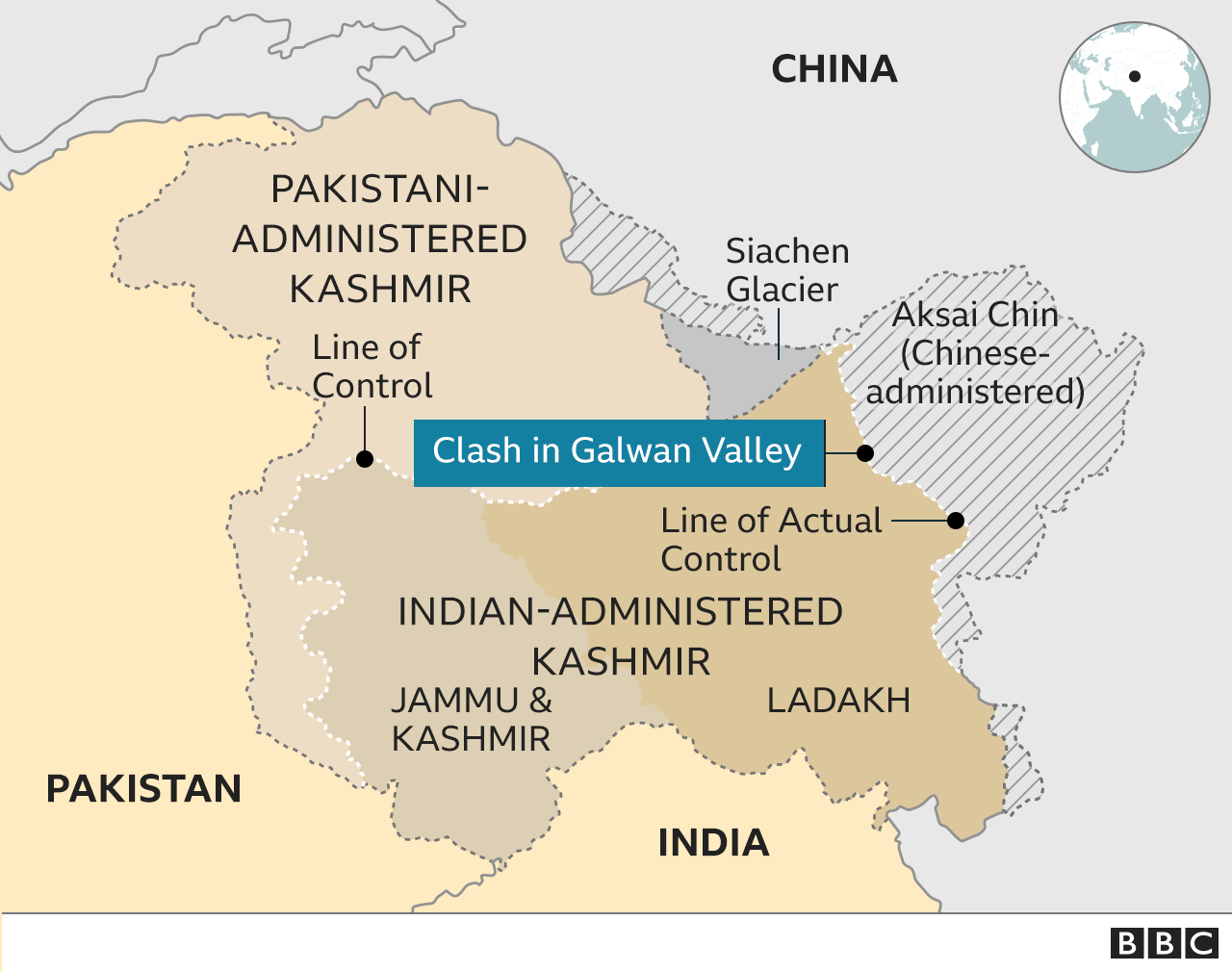
It is a devastating year where we have lost all our hopes of living a normal life.Things are turning into a nightmare where we cannot breath normally, we cannot step out of our house without covering our face, where we cannot talk or meet our friends like the way we used to do before. What has happened? Our life has changed upside down, we are living our in the boundaries of problems covered with dirt, virus, pollution. Now our world has completely turned itself into a virtual world consisting of dark and disturbing news. One such news which we came across recently was about the 20 soldiers who were martyred at the Galwan Valley(Ladakh), and we all know what happened, what made the soldiers to fight against the Chinese and why did they sacrificed their lives, but are you aware about the facts of the Galwan Valley, why did it become the battle ground of the Indian Army and Chinese Troops?

Why was it named as Galwan?

Galwan valley lies along the western sector of the Line of Actual Control (LAC), and close to Aksai Chin, am Indian territory under Beijing’s control.

Galwan Valley: Ten Indian soldiers reportedly released by China ...
BBC.com

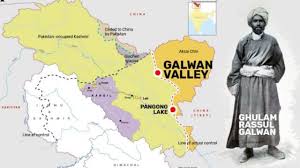
The valley has a hidden story behind it’s name. Digging deep into the story, you will find out that this valley belonged to Rasuul Galwan, who was a local explorer. The story starts where the Galwan was trekking with the Britishers in 1895, and while crossing the bridge the weather turned stormy and it got difficult for them to move forward but Rasuul came as a savior and saved the Britishers from the stormy weather. Britishers wanted to reward him, in return Rasuul asked them to name the valley after his name, Galwan.

kashmirobserver.net
Backstory of Ladakh's Galwan Valley and the legend of Rassul ...
Kasmirobserver.net

All of this is said to be written in the book “Servant Of Sahibs” written by Ghulam Rasuul Galwan itself, journeying his adventures in his book. The foreword of the book is written by British explorer and a leading figure in The Great Game between the British and Russia. Asking further about the story of Galwan, Mohammad Amin Galwan (Galwan’s grandson) says that the valley belongs to them since 200 years, but it has turned into a battleground for the Indian Army. He also adds that the Indian government should resolve their issues peacefully so that no war takes place.

Check the the video below for more facts about the valley.

What The Health

Director’s Name- Kip Andersen, Keegan Kuhn

Released Date- 7 March 2017 

What the health is a documentary directed by Kip Andersen in 2017. This documentary tries to uncover the secret to the major health issues like obesity, cancer and diabetes in America. While having positive intentions the documentary falls short when it comes to facts and placing its arguments. Various nutrition scientists disagree with the ‘facts’ mentioned in the documentary. Upon watching the documentary one might feel that the documentary highly favors veganism and in a way forces us to adopt the vegan lifestyle.

Veganism is a lifestyle where one cuts out all the animal related products from his diet. From meat to poultry to even dairy products. It’s a strict plant based diet which grew into popularity in 2016. While there is nothing wrong with a plant only based diet the documentary uses manipulation and exaggeration to sort of force veganism on its viewers.

The documentary claims with absolute confidence that eggs are as bad for us as smoking is. Which according to almost every study done on eggs ever is not true. Eggs are an amazing source of nutrients and are in no way even close to being as harmful as smoking cigarettes. The documentary also says that eating processed meat increases the chances of cancer and diabetes whereas many studies done all over the world by nutrition scientists say that meat is a great source of protein and is no way connected to cancer. The same is said about milk in the documentary- “milk causes cancer”. Milk is a great source of protein and calcium and according to recent studies no dairy product is remotely connected to any kind of cancer.

Although consuming processed meat is not the best eating habit as any kind of processed food has some risks to it but in no study does it say that eating processed meat is on par with smoking cigarettes. Cigarettes in the film are used as a measuring unit to explain the risk of consuming non vegan items. Cigarettes contain tobacco which has a direct link to cancer. no non vegan food comes remotely close to that.

The health research data we have access to today is not as definitive and as precise as we would want it to be. As no tests of a big enough magnitude can be done on two different groups of human beings forcing eating habits on them and recording the results. So all the data we have can never be precise. We can tell which food might risk what disease but we can never be 100% accurate about it. Despite the massive effort that went into the making of this documentary, very little to no science is behind it and if fact checked, it’s not worth watching. The documentary is very biased and only appreciates a vegan diet. Although vegan diet is not unhealthy, it’s certainly not the only way to be in the healthiest shape. Non vegan food has important nutrition values as well and if eaten with proper attention to nutrition count, it is equally beneficial. 

SCIENTIFIC MANAGEMENT

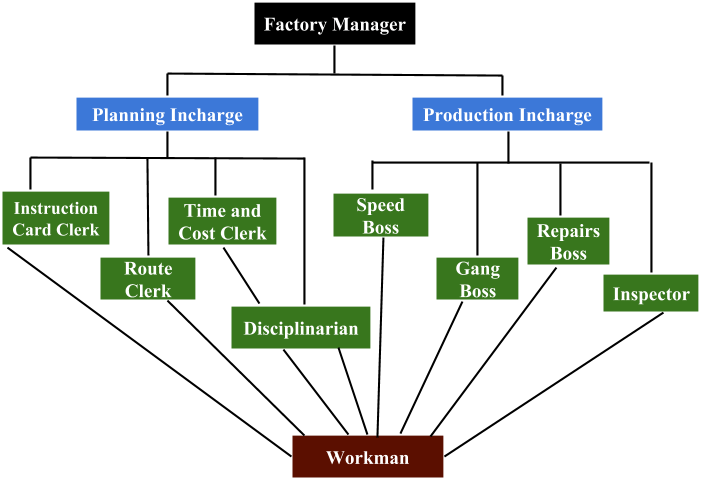
The origin of scientific management dates back to the year 1832 when Charles Babbage discussed the principles of scientific management in his book “The economy of manufactures”. In real sense, scientific management owes its origin to Frederick Winslow Taylor, who is commonly regarded as the father of scientific management.

MEANING OF SCIENTIFIC MANAGEMENT

Scientific management may be regarded as a set of scientific techniques that are supposed to increase the efficiency of an enterprise. Under scientific management, the selection of men, machines, materials is made by a scientific approach. Here, all the organizational activities are performed by rationality and proper discipline, this scientific management is a logical approach towards the solution of management and it assumes that the methods of scientific inquiry, analysis and experimentation can be applied to the activities of managers. It means approaching the problems of management in the manner and spirit of scientific research using tools such as definition, analysis, experiments, etc. It is ‘Scientific Management’ as opposed to ‘Traditional Management’ based on the rule of thumb, trial, error. As said by Peter F. Drucker The cost of scientific management is the organized study of work, the analysis of work into its simplest elements and the systematic management of the worker’s performance of each element”.

We can summarise scientific management as:

  1. Scientific study and analysis of work.
  2. Scientific selection and training of employees.
  3. Standardization of raw material, equipment, and working conditions.
  4. Reasonable remuneration to employees.
  5. Scientific management is an economical method that makes the best possible use by integration and coordination of available resources.

MAIN CHARACTERISTICS OF SCIENTIFIC MANAGEMENT

1. A definite plan: To achieve predetermined definite objectives, management needs a definite plan, and the plan should be goal-oriented.

2. A definite objective: In scientific management, every organization has to establish the basic objectives and efforts are to be made by applying physical and human resources to achieve these predetermined objectives.

3. A set of rules: To make scientific management more effective, a set of rules are framed and these sets of rules are tested and verified as regards their effectiveness in the real business situations by a group of persons.

4. Economy: The main aim of scientific management is to achieve the economy of time, money, and labor, and the technique of economy is used for producing maximum at a minimum cost.

5. Scientific analysis and experiment: Before starting any work, the utility, effectiveness, and suitability of plans are to be tested and analyzed, and thus by scientific analysis and experiment, we can choose the best course of action.

6. Increase in efficiency: The techniques of scientific management help in increasing the efficiency of workers and new techniques and improved tools are used for increasing efficiency.

7. Time study: Time study is concerned with labor productivity and according to it, an estimate is made of the amount of work required to be done to perform a job.

8. Cooperation: In the present competitive situation, efforts should be made to establish a cordial relation between labor and capital. Cooperation is essential for efficient management and group efforts for group benefit can be the active cooperation of each individual. 

Accused is Entitled to be Heard in a Revision Petition

It is good to see that the Supreme Court just recently on June 18, 2020 in a latest, landmark and laudable judgment titled Subhash Sahebrao Deshmukh vs Satish Atmaram Talekar And Others in Criminal Appeal No. 2183 of 2011 has reiterated yet once again that an accused person has the right to be heard before a court hearing a revision petition against the order of dismissal of complaint filed against him. It would also not be fair to not give an accused an opportunity to be heard as it would also be contrary to the famous legal maxim and latin phrase ‘Audi alteram partem’ which means “listen to the other side” or “let the other side be heard as well”. Very rightly so!

                                    To start with, this noteworthy judgment authored by Justice Navin Sinha for himself and Justice Indira Banerjee sets the ball rolling by first and foremost pointing in para 1 that, “The petitioner, an accused in the complaint case, is aggrieved by the refusal of the High Court to interfere with the order of the Additional Sessions Judge, setting aside the order of the Special Metropolitan Magistrate, dismissing the complaint under Section 203 of the Code of Criminal Procedure (hereinafter referred to as “the CrPC”).”

                                            While elaborating in detail, it is then postulated in para 2 that, “Learned counsel for the appellant submits that respondent no. 1 filed a complaint under Section 156(3) Cr.P.C. alleging offences under Sections 420, 467, 468, 120-B, 114 and 34 of the Indian Penal Code. The Magistrate called for a report from the police. The police, after investigation submitted report that the allegations were false. Notice was issued to the complainant, who then filed a protest petition seeking an order of cognizance and issuance of process. The Magistrate, after hearing the respondent and not being satisfied dismissed the complaint. Aggrieved, the complainant preferred a criminal revision before the Additional Sessions Judge in which the appellant was impleaded as a party respondent. No notice was issued to the appellant. The revision application was allowed and the matter remanded to the Magistrate. Relying upon Sections 399 and 401(2) Cr.P.C, it was submitted that no order to the prejudice of the appellant could have been passed without hearing him after dismissal of the complaint. The Additional Sessions Judge erred in passing the remand order in exercise of revisional jurisdictional placing reliance on Section 398 Cr.P.C. to direct further investigation by the Magistrate. The High Court further erred in holding that no opportunity of hearing was required under Section 398 Cr.P.C. if the direction for further inquiry was being passed after dismissal of the complaint as opposed to a discharge. Effectively, the complaint case was therefore restored to the prejudice of the appellant. Reliance was placed on Manharibhai Muljibhai Kakadia and another vs. Shaileshbhai Mohanbhai Patel and others, 2012 (10) SCC 517.”

                                                      As it turned out, the Bench then observes in para 3 that, “Learned counsel for respondent no. 1 submitted that the dismissal of the application under Section 156(3) Cr.P.C. at the pre-cognizance stage does not vest any right in the accused to be heard at the stage of remand in revision for further inquiry. Merely because the Magistrate may have called for a police report, it does not tantamount to taking cognizance. There has been no dismissal of the complaint under Section 203 Cr.P.C., entitling the appellant to be heard in the revisional jurisdiction.”

                                      Needless to say, after hearing both the sides, the Bench then holds in para 4 that, “We have considered the submissions on behalf of the parties. The complaint filed by respondent no. 1 before the Magistrate under Section 156(3) Cr.P.C. alleged that by cheating and forging his signatures on blank papers, he had been shown as the sole proprietor of M/s Shivam Wines, when in fact he was a partner and his resignation from the partnership had also been forged. Consequentially, in the recovery suit filed by the Bank leading to the grant of recovery certificate, his private property came to be auctioned.”  

                                             To put things in perspective, the Bench then states eloquently and elegantly in para 5 that, “The Magistrate, under Section 156(3) Cr.P.C. directed the police to register a criminal case, investigate and submit police report in 90 days. The police after investigation submitted a report dated 05.04.2006 under Section 173(2) that the accusations were false. The Magistrate did not consider it necessary to proceed under Section 173(8) and issued notice to the complainant as to why the final report by the police be not accepted. The respondent filed a protest petition which was registered as a complaint case. The Magistrate, after hearing the respondent, and not being satisfied, dismissed the complaint under Section 203 Cr.P.C. on 13.07.2006. It was therefore not a rejection of an application under Section 156(3) Cr.P.C.as was sought to be urged on behalf of the respondent.  The Additional Sessions Judge, in a revision preferred by the respondent against the dismissal of his complaint, set aside the dismissal order on 08.10.2007, effectively restoring the complaint case arising out of a protest petition and directed further inquiry by the Magistrate. The High Court declined to interfere with the order.”

                                            Be it noted, it is then aptly envisaged in para 6 that, “In B. Chandrika vs. Santhosh, (2014) 13 SCC 699, this Court observed as follows:

“5. The power of the Magistrate to take cognizance of an offence on a complaint or a protest petition on the same or similar allegations even after accepting the final report, cannot be disputed. It is settled law that when a complaint is filed and sent to police under Section 156(3) for investigation and then a protest petition is filed, the Magistrate after accepting the final report of the police under Section 173 and discharging the accused persons has the power to deal with the protest petition. However, the protest petition has to satisfy the ingredients of complaint before the Magistrate takes cognizance under Section 190(1)(a) CrPC.”” There can be no denying or disputing it!

                                          Most significantly, it is then very rightly and remarkably held by the Apex Court Bench in para 7 without mincing any words that, “The restoration of the complaint by the Additional Sessions Judge was undoubtedly to the prejudice of the appellant. The right of the appellant to be heard at this stage need not detain us any further in view of Manharibhai (supra) observing as follows:

“53…… We hold, as it must be, that in a revision petition preferred by the complainant before the High Court or the Sessions Judge challenging an order of the Magistrate dismissing the complaint under Section 203 of the Code at the stage under Section 200 or after following the process contemplated under Section 202 of the Code, the accused or a person who is suspected to have committed the crime is entitled to hearing by the Revisional Court. In other words, where the complaint has been dismissed by the Magistrate under Section 203 of the Code, upon challenge to the legality of the said order being laid by the complainant in a revision petition before the High Court or the Sessions Judge, the persons who are arraigned as accused in the complaint have a right to be heard in such revision petition. This is a plain requirement of Section 401(2) of the Code. If the Revisional Court overturns the order of the Magistrate dismissing the complaint and the complaint is restored to the file of the Magistrate and it is sent back for fresh consideration, the persons who are alleged in the complaint to have committed the crime have, however, no right to participate in the proceedings nor are they entitled to any hearing of any sort whatsoever by the Magistrate until the consideration of the matter by the Magistrate for issuance of process. We answer the question accordingly. The judgments of the High Courts to the contrary are overruled.””

                                             Before parting, the Apex Court Bench then finally held in para 8 that, “The impugned orders dated 6.03.2009 and 08.10.2007 are held to be unsustainable in their present form. They are therefore set aside. The matter is remanded to the Additional Sessions Judge, Greater Mumbai to hear the revision application afresh after notice to the appellant also and then pass a fresh reasoned and speaking order to his satisfaction. The appeal is allowed.” Very rightly so! It goes without saying that this has to be complied with in totality!

                                               To sum up, the Apex Court Bench has yet once again very rightly reiterated the clear legal position on this. The accused person is certainly entitled to be heard in a revision petition against the order of dismissal of protest petition. It cannot be disputed that the accused person certainly cannot be somehow or the other condemned unheard! Very rightly so!

Sanjeev Sirohi, Advocate,

s/o Col BPS Sirohi,

A 82, Defence Enclave,

Sardhana Road, Kankerkhera,

Meerut – 250001, Uttar Pradesh

SOLAR ECLIPSE, 21st June 2020

The Earth will witness an annular solar eclipse on Sunday, 21 June and the people in India will be able to catch this annual celestial event in action. It is not a regular one as it falls on the summer solstice, i.e. the longest day and the shortest night of the year.

What is solar eclipse?

A solar eclipse occurs when the moon passes between the sun and the earth. When this happens, the moon blocks the light of the sun from reaching the earth. The shadow of the moon is then cast on the earth.

There are three types of solar eclipses:

First, there is a total solar eclipse — which is only visible from a small area on earth. For the phenomenon to occur, the sun, moon and earth must be in a direct line.

Second is the partial solar eclipse when the sun, moon and earth are not exactly lined up.

The solar eclipse of 21 June, however, is an annular eclipse and is the third type. This happens when the moon is farthest from the earth, according to NASA blog. Since the moon is farther away from the earth, it seems smaller and does not block the entire view of the sun. The moon is in front of the sun and looks like a dark disk on top of an even larger disk which appears like a ring of fire.

The eclipse will be annular in some parts of the country, where sky gazers will get an opportunity to observe the “ring of fire” during the phenomenon. However, for most parts of the country, the eclipse will be partial.

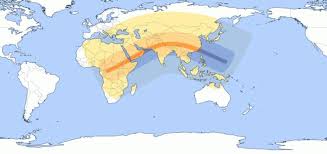
On June 21, the annular eclipse will first start for the people of Congo in Africa and progress through South Sudan, Ethiopia, Yemen, Oman, Saudi Arabia, the Indian Ocean and Pakistan, before entering India over Rajasthan. It will then move on to Tibet, China, Taiwan, before ending at the middle of the Pacific Ocean.

This will be the last eclipse to be seen from India for the next 28 months as the next eclipse will be seen in India on October 25, 2022.

In India, the solar eclipse of June 21 with begin at 9:15 am and will end at 3:03 pm. The sun will be seen as a ‘Ring Of Fire’ to the skygazers which is a rare event. The partial eclipse will begin at 9:15 am and it will reach its peak at 12:10 pm. The full eclipse will end at 2:02 pm and the phenomenon will end at 3:04 pm.

Some interesting facts

  1. In a year, there can be as many as five solar eclipses.
  2. A total solar eclipse is a rare sight and happens only once in every 18 months. For a total solar eclipse, the sun has to be blocked at least 90 percent by the moon.
  3. The longest duration of a total solar eclipse is 7.5 minutes
  4. The total solar eclipse cannot be seen from the North and South Poles

“Not all scars are visible”- Mental health

You might consider yourself to be physically healthful but do you possess a healthy state of mind? How frequently do you consider mental pressure, anxiety or an ill mood? We all must be conscious of the point that a healthy mind as well as a healthy body, both are a part of what makes us whole. Consequently, looking after mental health is as fundamental as caring for the physical health.

A healthy mind encompasses the ability of individuals that allows him or her to withstand the stressful and troublesome situations of life, work productively and contribute their presence in the community. But multiple times people are not competent to look after what they think intense in their minds. That is when the mental disorder begins. A consequence of which they might suffer from depression, anxiety, autism, schizophrenia, obsessive-compulsive disorder, dementia and many more. These disturbances makes them feel sad and makes their mood low. They may face severe mood fluctuations of highs and lows and make them unable to cope with even simple life problems. They may face problems while concentrating and have reduced ability to think keeping them confused all day long.

Accordingly, factors that may affect mental health are:

  • Abuse: This may be physical, sexual, oral or psychological.
  • Physical indisposition: This includes diseases, injuries or other physical disabilities.
  • Social connections: Includes any separation, divorce, family loss etc.
  • Difficult characters: people who exhibit irrelevant behaviour, extreme lying, violence, inappropriate actions.

Have you ever heard about the terminology D.O.S.E?

If not, then this might surprise you as holding a healthy mind starts right here. D.O.S.E exists for Dopamine, Oxytocin, Serotonin and Endorphins. Dopamine among the four is the fundamental chemical that emanate positive emotions in the body. Let’s understand how these chemicals function:

Dopamine: This is something that we can consider as ‘The Happiness Drug’. This motivates us towards our goal that we aspire to accomplish in our existences. Without Dopamine one never would have had the enthusiasm to achieve what they strive for, and the essential happiness We may also refer it to the slight joy that we feel in out day to day life.

How to retain a Healthy Mind?

Now as we know that a healthy mind prepares a happy mind, we also need to comprehend how to do so. A healthy mind is what helps us throughout our entire being therefore the following could be done for our mental health:

  • Being active: Exercising will support the physical as well as mental health.
  • Talk to yourself: Make time and efforts into bridging relations with yourself, keep telling yourself that You are worth enough.
  • Keep learning: Keeping the mind healthy; learning new skills, languages, sports, information etc. has proved constructive.
  • Quit the addiction: Healthy mind is related to a healthy body, any alcoholic or drug addiction would impede the situation.

An unhealthy mind is considered the worst place to be. This state of mind would make you either win or vanish. Make some time for your mind. Care for it and it would take care of you.