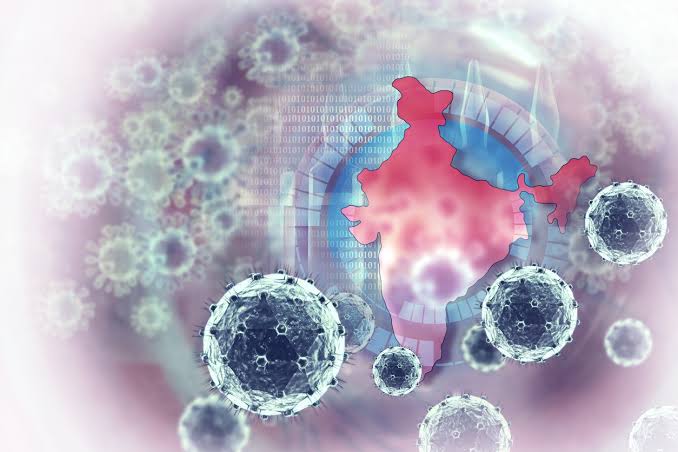
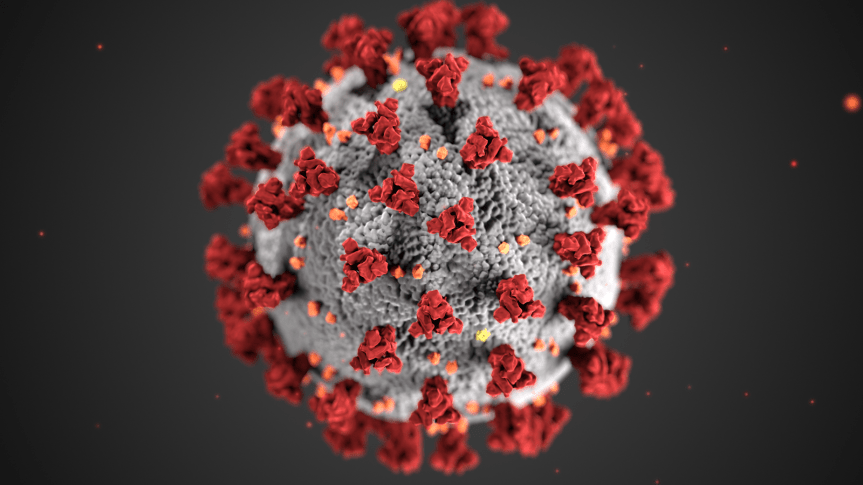
In India, the cases of COVID 19 crosses 5 million till now. This is not a good news for all of us. In Maharashtra only 5,000 cases are reported yesterday. It means that this virus is now spreading very vigrousoly. It ‘s a bad sign for our country. We really need to stop it , otherwise this virus can be cmed into fourth phase, which will really destructive for us.
The state and central both government are trying hard to stop the spreading of this virus. But it’s really not working. The whole Unlocking Phase creates this hazardous condition for all of us. But there is not any choice for government other than this. Everyone is now living in a very dangerous environment. And any silly mistake is now dangerous for all of us.
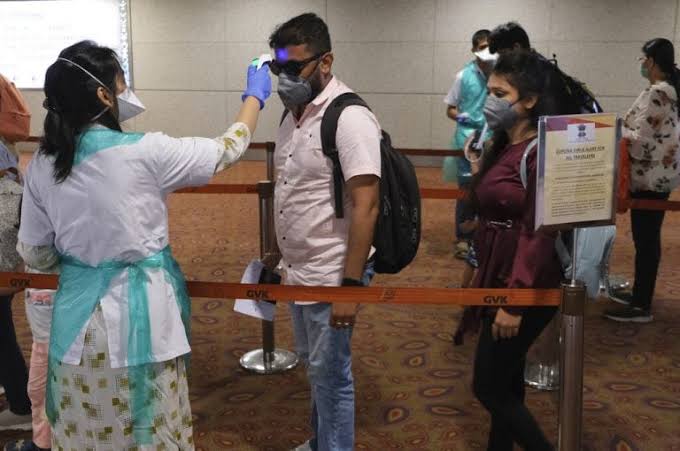
There is no need need to be panic right now andthe need is to wear mask outside the home and maintain the social distance. And the most important wash or sanitize your hands at 2 hour interval regularly. And try to be in discipline . A single mistake can make you a patient of this pandemic virus. And we should pray for making the vaccine of this virus as soon as possible….
In a country like India where already 1 in 5 Indians suffer from depression, this coronavirus pandemic is pushing our country into a mental health crisis.
According to WHO estimates, around 8,00,000 people commit suicide every year in the world. India alone accounts for approximately 30 percent of the world’s deaths resulting from suicide. In 2013, suicide claimed the lives of more than a quarter of a million Indians. That’s five times greater than all global deaths due to war and natural disasters combined.
According to the reports published by World Health Organisation (WHO) in 2018, India is the most depressed country in the world followed by China and USA with highest suicide rate in the South East Asia and by the end of 2020 about 20% of Indian population will suffer from mental illness.
In a large population of approximately 130 crore about 6.5% of Indians suffer from mental illness and because of the stigma attached to it only 10 – 20% of the people with mental illness seek help in India and the rest are forced to suffer in silence.
In a country where mental health budget is 0.05% of total health budget, 21 people die of every 1,00,000 people and 2,83,500 deaths due to suicide take place every year. We have highest number of teenage suicide rates globally. According to data compiled by NCRB every hour one student commit suicide in India, with about 28 such suicides reported daily. Nearly 10,159 students died by suicide in 2018 increasing from 9905 in 2017.
Suicide is one of India’s biggest silent killers and this pandemic is making situation worse for our country. According to an article by Economic Times published on May 5, 2020 about 300 people died due to suicide. 80 of them killed themselves due to loneliness and fear of being tested positive for the virus.
Devastation caused by this pandemic not only include death due to the virus but also loss of jobs, loss of homes, loss of business, pay cuts and the biggest recession of economy.
It is very obvious that this virus isn’t going to leave us soon and social distancing will continue to be a norm in most parts of the world for a long period of time which will place people at greater risk because many won’t find anyone to share their feelings with and many will not be able to take their medications.
The suicides taking place in our country is a wake up call for us to end stigmas attached to mental illness in our country and to take immediate actions to save our loved ones from this epidemic. This pandemic will hit those suffering from mental illness a little harder and we should make sure that they receive support from family members, friends, community, mental health professionals because they are in much need of all this.
One thing we should get straight is that each one of us goes through some mental problems at some point in our life and having a mental problem is not a sin so we should try our best to lift up each other during that phase of life so that they don’t feel alone during this tough time.
Have you ever set out with the goal of actually sticking to a new behavior … only to find yourself not doing it at all one week later?
I know I have.
Why is it so hard to form good habits? Why is it so difficult to make consistent change? How can we have the best intentions to become better, and yet still see so little progress?
And most importantly, is there anything we can do about it?
Your Life Goals are Not Your Habits
Your audacious life goals are fabulous. We’re proud of you for having them. But it’s possible that those goals are designed to distract you from the thing that’s really frightening you—the shift in daily habits that would mean a re–invention of how you see yourself.
We all have hopes and dreams.
And most of the time, we have at least a general sense of what those goals are: the way we want our bodies to look and the good health we want to enjoy, the respect we want to receive from our peers and the important work we want to create, the relationships we want with our family and friends and the love we want to share.
Overall, this is a good thing. It’s nice to know what you want and having goals gives you a sense of direction and purpose. However, there is one way that your hopes and dreams actually sabotage you from becoming better: your desires can easily lure you into biting off more than you can chew.
You know exactly what I mean…
You get inspired by The Biggest Loser, head to the gym, bust your butt to the point of exhaustion, and take the next three months off to recover.
.
You’re motivated by your friend’s stories of traveling to new countries, so you start to plan your own around–the–world trip, only to end up overwhelmed by all the details and stay at home.
Too often, we let our motivations and desires drive us into a frenzy as we try to solve our entire problem at once instead of starting a small, new routine..
So how do we balance our desire to make life–changing transformations with the need to build small, sustainable habits?.
Dream Big, But Start Small
If you’re serious about making real change — in other words, if you’re serious about doing things better than you are now — then you have to start small.
Imagine the typical habits, good or bad: Brushing your teeth. Putting your seatbelt on. Biting your nails.
These actions are small enough that you don’t even think about them. You simply do them automatically. They are tiny actions that become consistent patterns.
Wouldn’t it make sense that if we wanted to form new habits, the best way to start would be to make tiny changes that our brain could quickly learn and automatically repeat?
What if you started thinking of your life goals, not as big, audacious things that you can only achieve when the time is right or when you have better resources or when you finally catch your big break … but instead as tiny, daily behaviors that are repeated until success becomes inevitable?
What if losing 50 pounds wasn’t dependent on a researcher discovering the perfect diet or you finding a superhuman dose of willpower, but hinged on a series of tiny habits that you could always control? Habits like walking for 20 minutes per day, drinking 8 glasses of water per day, eating two meals instead of three.
I think the following quote, sums this idea up nicely.
If you plant the right seed in the right spot, it will grow without further coaxing.
I believe this is the best metaphor for creating habits.
The “right seed” is the tiny behavior that you choose. The “right spot” is the sequencing — what it comes after. The “coaxing” part is amping up motivation, which I think has nothing to do with creating habits. In fact, focusing on motivation as the key to habits is exactly wrong.
Let me be more explicit: If you pick the right small behavior and sequence it right, then you won’t have to motivate yourself to have it grow. It will just happen naturally, like a good seed planted in a good spot.
How great is that?
The typical approach is to dive into the deep end as soon as you get a dose of motivation, only to fail quickly and wish you had more willpower as your new habit drowns. The new approach is to wade into the shallow water, slowly going deeper until you reach the point where you can swim whether you’re motivated or not.
Focus on Lifestyle, Not Life–Changing
Too often we get obsessed with making life–changing transformations..
Running a marathon would be life–changing, running 3 days per week is a new type of lifestyle.
Squatting 100 more pounds would be life–changing, squatting 3 days per week is a new type of lifestyle.
Do you see the difference?
Life goals are good to have because they provide direction, but they can also trick you into taking on more than you can handle. Daily habits , tiny routines that are repeatable are what make big dreams a reality.
In a world where humanity is slowly degrading, certain life skills need to be imbibed and nurtured into us humans. As life these days are full of twists and turns and numerous hurdles one needs to take smart decisions in the right direction. Life skills can teach one to deal with stressful situations and can abstain one’s self from making hasty decisions.
Life skills will help us deal with the challenges of our ubiquitous life, it will aid us in decision making and will also help us in controlling our mind in inflexible times. One can discipline themselves with the implementation of certain life skills in everyday life. Being a good human and inculcating virtuous values is a long process but not a tough task.
According to UNICEF life skills should be inculcated amongst children from a young age be it empathy, problem solving or even critical thinking, this would help the children in taking the right decisions and thinking in the right way when they glow older especially in work places. Certain life skills will refrain oneself from taking illogical settlements. Life skills can be anything from a simple decision of wearing a helmet on your two wheeler to a decision refraining yourself from using the computer for long hours.
These days the word humanity is heard very frequently be it social media, news articles or just a usual family conversation but when it comes to practising humanity we are definitely greatly lagging behind and we can see that from unbelievable cases happening in and around the world which have shook us all and touched our hearts, questioning our sensibility as human beings.
Just like IQ that is Intelligence quotient, EQ is also important is also equally important and stands for emotional quotient (emotional intelligence), especially in a world where we are more prone to mental illnesses like depression and anxiety disorders. EQ is a great way to measure your emotional intelligence, be it decision making, critical thinking, communication and interpersonal skills or even self-awareness, to improve one’s EQ one has to improve and work on their life skills. The value which emotional intelligence hold is equally as important as the value given to IQ.
Certain life skills are crucial to holistic development and are essential, they are-
Decision Making and Problem Solving.
Interpersonal skills and Communication
Self Awareness and Empathy
Critical thinking and Creative thinking
Equanimity(self-control) and Assertiveness
These life skills when inculcated in our daily life can help us overcome so many obstacles. They inculcate certain values in us such as goal setting, courage, leadership, persistence, flexibility, confidence and sportsmanship.
Many schools have life skills as a compulsory subject to be taught to the students in their curriculum through interesting and engaging activities. Be it sports or fun activities, which would help them in their journey in the future. I feel it should be included in all school curriculums and should be taught in middle school(childhood) as it is needed for the adoption of certain vital skills such as decision making, cooperation and empathy.
To induce positive development and good ethics within one’s self, self-work on life skills is needed, especially in a time where life is becoming tedious and can take unexpected turns one needs to look into one’s self care.
Unemployment has become a very serious issue in India because of the growing population and demand for jobs. Moreover, if we neglect this problem then it will have an adverse impact on the whole economy and will become the reason for the doom of the nation. Whenever there is high degree of employment rate the production improves thereby increasing the standard of living.
High unemployment rate in a country leads to social and economic problems in the community as a whole. Economic problems result in less production of goods and services, less distribution of income, fall in GDP rate etc. Individuals cannot meet their financial obligations on time and getting high stress which leads to problems like ill-health, premature death, suicides etc. High unemployment causes less consumption of goods and services and less tax payments results in higher government borrowing requirements. A large portion of the population is engaged in the agricultural sector and the sector only provides employment in harvest or plantation time. Apart from this, increase in poverty, an increase in crime rate, exploitation of labor, political instability, mental health, and loss of skills adversely impact our economy. The other factors include population growth, slow economic growth, seasonal occupation, slow growth of the economic sector, and fall in the cottage industry. In addition, the biggest reason of unemployment in India is its vast population which demands a large number of jobs every year which the government and authorities are unable to provide. As a result, all this will eventually lead to the demise of the nation. The various types of unemployment include disguised unemployment, seasonal unemployment, open unemployment, technological unemployment, structural unemployment, cyclic unemployment, educated unemployment, underemployment, frictional unemployment, chronic unemployment, and casual unemployment.
Causes for unemployment include advancement in technology ( as the technology keeps advancing , companies look for employees having the latest technical skills) , recession ( financial crisis in one country can affect the other countries economy due to globalization) , changes in the global markets ( the economy of a country is adversely affected when its exports are down the line due to changes in global markets, and increase in price which leads to massive loss in terms of production and companies are unable to pay on time hence increasing the rate of unemployment) , job dissatisfaction by many employees ( when employers pay less attention to the performance of employee, it leads to lack of interest and desire to work and unemployment becomes inevitable, as employees deliberately loose their jobs)
Unemployment has now become such a dangerous economic. Social and political problem that it has endangered the security of the country. The law and order situation in the country has also been affected. Hence, the government has to take measures to curb the problem.The government has taken necessary steps to solve this significant issue. Several policies have been made to reduce the unemployment problem in the economy. The Government is planning to expand capital projects like new roads, constructions of new hospitals and major infrastructural projects which can become a platform in creation for more jobs and increases income generation to the economy. Also several initiatives have been launched such as IRDP (Integrated Rural Development Programme), NRY (Nehru Rozgar Yojana), Drought Prone area program, PMGSY (Pradhan Mantri Gram Sadak Yojana), Employment Guarantee Scheme etc. Moreover, the government is spending on irrigation, farms, and roads, etc. Steps to reduce unemployment include population control, more small- medium enterprises, good education system and improvement in agriculture. Necessary steps are to be taken by the government in increasing the productivity for the overall development of the country and reducing the unemployment problem in the economy .
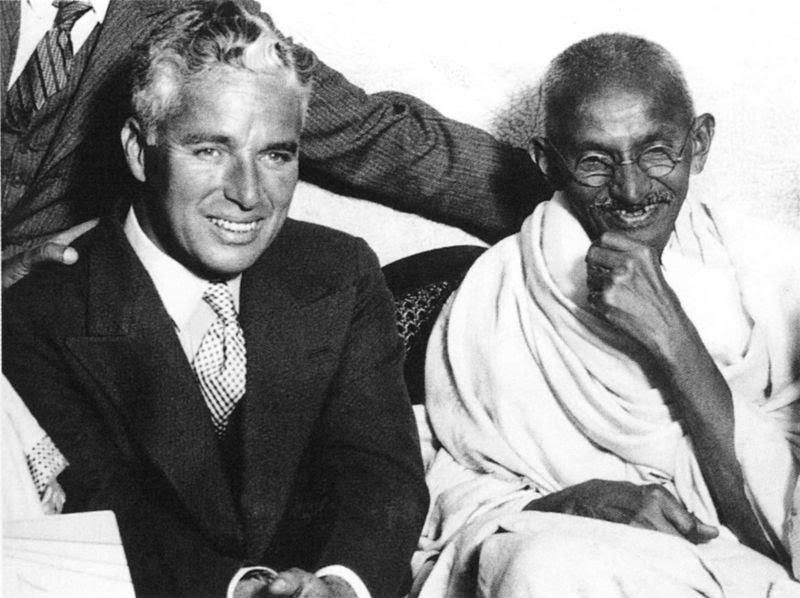
Popularly known as the English comedy King. His parents Hannah and Charles Sr. we’re both hall actors though they just had a penny of income. Chaplin didn’t have decent relations with his father and that’s why he and his half- brother Sydney had to face poverty in childhood. People usually had a misconception about his eye color, they were blue but they looked like Brown due to black and white screen.
Charles Spencer Chaplin
Born on 16 April 1889{England} – and died on 25 December 1977{Switzerland}). He was a perfectionist and a multi-tasker (composer, actor, director, screenwriter, producer, and editor). In 1898 Hannah was sent to an asylum and during this tenure, Chaplin and Sydney were sent to live with their father whom they barely knew. He was an alcoholic and later died due to liver disease. Chaplin had his mother’s encouragement which always pointed out that Chaplin always had a spark and talent. When he was 13 he withdrew education while he was a part of the dance troupe. He later turned his career from a dancer to a comedic performer and drama. He got recognition in the theater after he acted in “Inebriate Swell”. A contract was finalized with Mutual amounting $670,000 a year ($15.7 million today), which Robinson says made Chaplin – at 26 of age and was one of the highest-paid actors. This huge amount of salary was everywhere in the press and on news headlines. John R. Freuler, the studio president, illustrated: “We can afford to pay Mr. Chaplin this large sum annually because the public wants Chaplin and will pay for him.” Later in life, Chaplin referred to his Mutual years as the happiest period of his career. Chaplin passed away in 1977 at the age of eighty-eight years old.
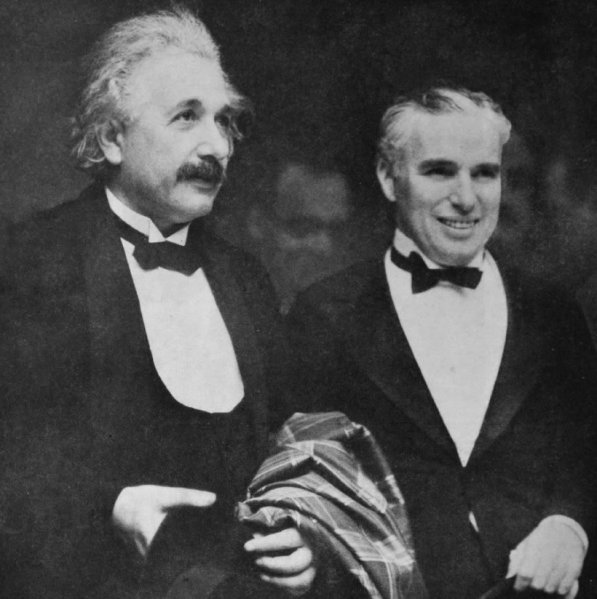
Charlie with Einstein.
“An American Obsession”– British media once attacked him as he didn’t participate in the First World War. Though he upheld himself fighting for Britain, he wasn’t summoned by either country. The most appreciated character of Tramp was everywhere including the costume parties.
Less known facts.
He was banned from the US because of his alleged Communist politics.
The Academy of Motion Picture Arts and Sciences honored the 82-year-old Chaplin with an honorary Oscar. He attended the ceremony and obtained an energetic standing ovation. When he finally spoke, he said, “Thank you for the honor of inviting me here. You’re all wonderful, sweet people.” He returned to the US after 20 years.
After Chaplin died, some thieves asked his widow Oona Chaplin for ransom. Even after his death, he created controversy. The thieves demanded $600,000 to return the body. Oona tapped the phone lines, which led authorities to the two men, Roman Wardas and Gantscho Ganev.
He married thrice. He had an interest in teenagers. When Chaplin was 54 years old he married for the last time with 18-year-old Oona O’Neill and gave birth to 8 kids.
He was the first actor to appear in Time Magazine and at that time he was paid much more than the President of the US.
He was so dedicated to his work and got so much applause. Also, he received a 12-minute standing ovation in the Oscars of 1972 which is historic.
Television and media, the one source for early all people to tune to whether they need entertainment, news or anything else. It is a portal which connects us to others within the world. It is also a place from where we form most of our opinions. In the wake of the Black Lives Matter movement, many are wondering not just in US but throughout the world as to why this chain of thoughts not grip us sooner. Why is it that most of the people were oblivious to the abuse of power police use throughout the world? One of the main reasons for this are cop shows and movies. Its usually because as individuals not many of us have much actual experience with the police. We form our opinions through the junk that is fed to us by the television.
It can be noted by anyone that most tv shows and movies far too readily show the cops as trustworthy and infallible, all the while undermining real life claims of systemic racism and abuse of power. There are many reasons for this, ranging from the money hungry producers simply chasing after TRP to negligence from the writers and directors about not showing realism within the shows. However one of the main reasons for this is that no matter whether it is a movie or a TV show cops are not only consulter during the making of such shows but are also aware that their portrayals impact public perception and thus have a vested interest in making sure that the portrayal stays positive. A 2015 study showed that viewers of crime dramas are more likely to believe that police are very often successful at lowering crime, use force only when necessary and misconduct never results in false arrests. Now part of it is due to the viewers human nature, everyone wants to believe that the people who enforce laws do so effectively and fairly so that we as citizen don’t have to take the burden. The shows and movies like Law and order or Singham and Dabangg show the cops using force only when they necessarily have to. They make it seem that bending the rules set in place to govern their misbehaving is the only way to keep the general populace safe. This is the power of such shows they make us believe that the only way the police can truly be effective is if they broke the rules that society created to protect us from the police. And the way they show mainstream cops bending the rules is by plain torturing a suspect who may have committed the crime. And showing that if the suspect hadn’t committed the crime it would serve as a deterrent from committing one in the first place. By that logic a parent should pre-beat their children to make sure that they do not stray to a bad path, but that is not the case. One has to realize that the cop shows are the only profession-based show where they show wanton unwarranted abuse of power as a good thing. However, beating a suspect in real life makes a person confess to a crime they didn’t commit. Which means an innocent was locked away while the real guilty party walks free. Beating a suspect to solve crimes has the same effect that washing a computer to remove a virus would have, sure the virus is gone but so is the computer.
What we do further is upon us but as Trevor Philips once said “The media and the government would have us believe that torture is some necessary thing. We need it to get information, to assert ourselves…… Torture’s for the torturer or for the guy giving orders to the torturer. You torture for the good times – we should all admit that. It’s useless as a means of getting information.”
There are various types of interactions between microorganisms and other living organisms. These interactions are natural, constant and also play a significant role in maintaining the ecological balance and stability of the biogeochemical cycle of the nature. Mostly, the food products we consume are obtained from plants and animals and also these foods are rich in variety of microorganisms which may or may not be pathogenic to humans. Growth of microorganisms in food depends on various different parameters which can be broadly classified as INTRINSIC and EXTRINSIC factors. INTRINSIC FACTORS – These are the factors that are present in the food substance in which the microorganism is growing, or it may be said as the internal factors of that particular food substrate. Various intrinsic factors are-
Hydrogen Ion Concentration – All the microorganisms have minimal, maximal, or optimal pH for their growth and survival. Thus, the growth of microorganisms in food is affected by the pH of the food material. Foods may be classified as low pH or high pH foods. Most fruits, fermented foods come under high acid foods whereas most vegetables, meat, fish and milk are low acid foods. pH range of different microorganisms are : • Molds – 1.5-9.0 • Yeasts – 2.0-8.5 • Gram-positive bacteria – 4.0-8.5 • Gram-negative bacteria – 4.5-9.0
Water activity or moisture content – Water activity can be defined as the measure of availability of water present in any substance which can be used for biological functions and it also gives an idea of free water present in any food product. Water is an excellent requirement for microorganism for their growth. It has been observed and noted that the water activity of fresh food substances is 0.99. Also bacteria require more water activity i.e. free water in any food substrate for their growth than molds and yeasts. If specifically studied, it will be observed that gram-negative bacteria have relatively higher water requirements than gram-positive bacteria. Free water in any food substance is an essential requirement for the growth of microorganisms. Water activity of any food can be reduced by various absorption techniques to reduce the affect of spoilage by microorganisms.
Redox Potential – Redox potential can be defined as the reducing and oxidizing power of food and it also greatly influences the growth of microorganisms in food. The concentration of oxygen present in any food sample determines the type of microorganism that will grow in it. Like, aerobic microbes require the oxygen whereas anaerobic microbes can also grow in lack of oxygen. So, it can be said aerobes grow at positive O-R potential whereas anaerobes grow at negative O-R potential.
Composition of nutrients – Food composition is also an another intrinsic factor which influences the growth of microorganisms in food. There are 5 major nutrients group which are counted i.e. carbohydrates, proteins, lipids, vitamins and minerals, amount of each varies with the type of food and so the type and growth of microorganisms. Bacteria require the most nutrient requirement than yeasts and molds. Microorganisms utilize large complex nutrient molecules and convert them into smaller molecules. For e.g. there are some proteolytic bacteria which acts on proteins and hydrolyze it. Also some microbes convert lipids into glycerol with the help of an enzyme lipase. Some microorganisms which require vitamins for their growth are called as fastidious microorganisms.
Inhibitory substances – There are a number of inhibitory substances that are present in foods by their origin which naturally prevent the growth of microorganisms in them. For e.g. some plants contain essential oils possessing antimicrobial properties. Milk also contains several antimicrobials like lactoferrin, conglutinin, etc.
Biological structures – The natural structure of some foods have the remarkable excellence in controlling the entry as well as the growth of microorganisms in or on them. It can be noted as the natural covering of some foods which prevents the entry of microbes. So, the inner parts of the healthy tissues are sterile and possess very less microbial count. For e.g. skin of egg, rind on fruits, etc.
Music is a fundamental attribute of the human species. Virtually all cultures, from the most primitive to the most advanced, make music. It’s been true through history, and it’s true throughout an individual’s lifespan. In tune or not, we humans sing and hum; in time or not, we clap and sway; in step or not, we dance and bounce.
The human brain and nervous system are hard-wired to distinguish music from noise and to respond to rhythm and repetition, tones and tunes. Is this a biologic accident, or does it serve a purpose? It’s not possible to say. Still, a varied group of studies suggests that music may enhance human health and performance.
Music and the brain
Like any sound, music arrives at the ear in the form of sound waves. The external ear collects sound waves, and the ear canal funnels them to the eardrum. As the waves strike the eardrum, they cause it to vibrate. The vibrations are relayed along the chain of tiny bones in the middle ear until they reach the third bone, the stapes, which connects to the cochlea.
The cochlea is a busy little world of its own. It is filled with fluid that surrounds some 10,000 to 15,000 tiny hair cells, or cilia. Vibrations of the stapes send fluid waves through the spiral-shaped cochlea. The fluid waves produce swaying movements of the hair cells. In turn, these cells release chemical neurotransmitters that activate the auditory nerve, sending miniature electric currents to the auditory cortex in the temporal lobe of the brain.
From there, things get even more complicated. Studies using MRI and positron emission tomography (PET) scans suggest that nerve networks in different parts of the brain bear primary responsibility for decoding and interpreting various properties of music. For example, a small area in the right temporal lobe is essential to perceive pitch, which forms the basis of melody (patterns of pitch over time), chords (several pitches that sound at the same time), and harmony (two or more melodies at the same time). Another nearby center is responsible for decoding timbre, the quality that allows the brain to distinguish between different instruments that are playing the same note. A different part of the brain, the cerebellum, processes rhythm, and the frontal lobes interpret the emotional content of music. And music that’s powerful enough to be “spine-tingling” can light up the brain’s “reward center,” much like pleasurable stimuli ranging from alcohol to chocolate.
Although every healthy human brain can perform all the complex tasks needed to perceive music, musicians’ brains are, so to speak, more finely attuned to these tasks. At the other end of the spectrum, patients with brain damage may display remarkable defects in musicality; the noted neurologist and writer Dr. Oliver Sacks discusses many fascinating varieties of amusia in his book Musicophilia.
The neurobiology of music is a highly specialized field. But music also has major effects on many aspects of health, ranging from memory and mood to cardiovascular function and athletic performance.
Music and the mind
The most highly publicized mental influence of music is the “Mozart effect.” Struck by the observation that many musicians have unusual mathematical ability, researchers at the University of California, Irvine, investigated how listening to music affects cognitive function in general, and spatial-temporal reasoning in particular. In their first study, they administered standard IQ test questions to three groups of college students, comparing those who had spent 10 minutes listening to a Mozart piano sonata with a group that had been listening to a relaxation tape and one that had been waiting in silence. Mozart was the winner, consistently boosting test scores. Next, the investigators checked to see if the effect was specific to classical music or if any form of music would enhance mental performance. They compared Mozart’s music with repetitive music by Philip Glass; again, Mozart seemed to help, improving spatial reasoning as measured by complex paper cutting and folding tasks and short-term memory as measured by a 16-item test.
How might music enhance cognitive performance? It’s not clear, but the researchers speculated that listening to music helps organize the firing of nerve cells in the right half of the cerebral cortex, the part of the brain responsible for higher functions. According to this construct, music — or at least some forms of music — acts as an “exercise” that warms up selected brain cells, allowing them to process information more efficiently. It’s an interesting theory, but before you rush out to stock up on recordings of Mozart’s music, you should know that even in the original research, the “Mozart effect” was modest (8 to 9 IQ points) and temporary (15 minutes). And in reviewing 16 studies of Mozart’s music and human cognitive function, a Harvard psychologist concluded that the effect was even smaller, amounting to no more than 2.1 IQ points. It’s a sour note, but it’s hardly a requiem for the theory that music may boost cognitive function. In fact, the divergent results should serve as a prelude to additional research. And even if listening to music turns out to have little long-term effect on cognition, a 2010 review reported that learning to play an instrument may enhance the brain’s ability to master tasks involving language skills, memory, and attention.
I was in a shock when I saw one of the teacher asking kids to mute themselves in an online class due to their willingness to answer. While me being a graduate in a year feeling tense to answer a known question to my faculty. How could I overcome my fear?Knowing nothing makes me feel comfortable rather than knowing something which causes me to fear about the rest half. Being a kid has more advantage rather than being a grownup.
I am just letting out my random thoughts to this question because I don’t know the answer. I am trying my way best to let my fear out. Why can’t I respond or even give a reply to a askout? I know I am overthinking the things and making my fear replicate everytime. How can I make my fear a reciprocal? Bringing all the courage in me and loosing it at the moment of requisite. All the courage goes in vain when my teacher picks a random student to answer. I didn’t know where did I left the courage that I had, when I spoke in my farewell. The courage I get back when I think of my past is temporary. Living in present by gathering the courage that I had in past to face the consequences in the future.
The fear you fear is just an illusion. The real existence of fear is a lie. The thoughts we have are just thoughts. The life we live is a dream. We rather live in thoughts and leave the present life. We should come out of the thinking life and live in present life. The thoughts make us feel about the non-existent temporary feelings. Come out of fake world and live a normal life. Everything is a feeling and the feel is temporary and it changes from time to time and make us play with it and make us mad. We are just players in the real world and play according to the coach who makes us feel about the temporary things in our thoughts. Our thoughts kill us daily.
Trying to motivate me by motivating readers by writing some stuff. Letting myself out by writing some stuff because I can’t speak it to anyone else. You might wonder that I am letting my things out to some random readers. But that might not affect me since being a unknown person to the readers. I know that I should get some motivation from my trustees but I don’t know why am I choosing the other way instead. I don’t have fear of being judged my mates because they are my mates and they don’t judge and if they do it then it can’t hurt me. I want to be confident and courageous and speak what I feel and should express the way I feel inside. The way I speak to my mates should become the way that I speak to else. I must be brave enough to speak the fact that I can’t do or I don’t know the answer. Accepting the fact of denial is the greatest contribution that one gives to him/herself.
Be brave to accept the unknown and have courage to speak the known. It’s our life and what the heck do we care of judging us. We are here to live our lives not to satisfy others. If we can’t express ourselves the way we feel about ourselves then it’s worthless to feel bad inside and destroy ourselves as a consequence of it. Be yourself both inside and outside.
Little things help in bigger choices in life. Small steps help us grow as human beings. Similarly smart choices made in present become our saviour in the long run. Saving up is a noble thing and it can be one of the wisest things that you can do for yourself.
However, due to the excessive hectic schedules of this generation, it gets really problematic to keep a proper track of things nowadays. Nonetheless, at some point or the other we all start thinking of saving our money and start planning so that they can be used in the future for proper reasons. However, it gets really difficult sometimes for some of us to decide which the good things to save up for and why. A simple yet informative list can be maintained to keep a track of the important things.
There are various long-term and short- term happenings that you need to save up for from an initial stage of your life. If you are one of those people who need a little guidance on deciding the good things to save up for, you have come to the right place! Have a quick look at the list!
1. Health issues/Medication
We should never forget to take care of our health. However, when it comes to making a list of the good things to save up for, health issues come first. Therefore, saving up for future medication can be one of the wisest things to do as a teenager/adult. Another important aspect is that they are never predictable. It causes critical situations which require prompt action and backup from your part. Health expenditure is increasing day by day. When the real problem arises, supposedly in the future, it will be nearly impossible to afford treatment without a solid backup that would be coming from the savings we make today. It might seem like an over protective/exaggerated idea right now, but trust me, you will thank yourself in the future for saving a sufficient amount for health check-up. Even if not for major operations, you will need it minor regular check-ups once in a while. Regular health check-ups can save you up to hundreds and thousands for the future. Taking little steps for self care and a healthy lifestyle never goes in vain. Also, health issues followed by a required treatment with sufficient medication do not come with a prior notice. They always appear like our uninvited “guests”, hence it is for the best to be prepared for such disasters beforehand.
2. Self-dependence
Self-dependence is both a long-term and a short-term goal in terms of being inepent in literally anything and everything in your life. It is an umbrella term that reflects several things at once. Depending on no one but yourself requires a stable financial and psychological stability. It should be on top of the priority list of the good things to save up for. The first and foremost thing that anybody needs to become a self-dependent individual is money. Without money there is nothing one can do on their own according to their own wish. Asking for money in different occasions from different people can be really harassing for many. Hence, the wisest thing to do right now, in our generation, is to start saving up for our future endeavours. No one knows what the future holds for them. In case of emergencies, or in general, what we save now will eventually become the saviour of ourselves in the future!
3. Vacations
It might seem quite illogical right now but trust me, while dealing a hectic life with hundreds of different appointments here and there, all you will need then is a refreshing vacation to somewhere very far from your daily routined monotonous life! Be it family vacations, a trip with your friends or a usual couples vacation, you will need money. The more you save today, the easier it will be for you to afford to have precious luxurious tours in the future. Several recent studies have also come up showing how taking a vacation in the middle of an excessively hectic schedule can enhance the quality of our life in a magical way. Even doctors and psychiatrists recommend to go for small to large trips to their patients in order to help them become more stable and happier in their lives. In those situations of crises, no one wants to deal with monetary problems for it may cause further psychological issues, for serious patients.in other words, saving up can save lives in the long run.
4. Your future ‘home’
Arranging a place of their own is an essential and prime object in many people’s bucket lists. If you are one of those who have a dream of renovating their own apartments, you might need to save up from now onwards. Many people find it difficult to arrange a place to stay on their own despite of having good jobs with sufficient salaries. In these cases if there is a certain amount of money, no matter how much it is, that has been saved by that person from their past, it will be helpful more than you can even imagine. Arranging your own living space right from buying it, decorating it in an impressive way and then making regular renovations in order to keep it intact takes a financial and economic stability that can be easier with the savings.
5. Transportation
It is one of the most important things when it comes to making a list of the good things to save up for to help yourself lead a balanced life. It is way more important than what it apparently seems to be like. It can be seen both as a short-term and a long-term goal that needs quite a bit of financial savings from your part. Be it paying your regular taxi/bus/auto fares or planning abroad trips in future, everything requires financial stability which gets way more difficult without a proper saving planning from your side. On top of that, if you have a dream of owning your own car someday, you need to start saving up for it from an early age in your life. Having your own car means having your freedom of transportation. You do not have to wait for public transportations if you own a car by yourself. It requires a lot of planning and helping strategies. Although there various loans that are available in the market today, you doing your bit of saving money will always end up helping you in making your not-so-fancy and fancy choices.
6. Essential appliances
Who does not want a comfortable life? Who does not want a pampered life that only they can gift to themselves? Specifically, In today’s world, it is needless to say how much of a difference appliances make in our life on a daily basis. We are in a digital age and most of it depends on electronic gadgets and supplies. A TV or a fridge, a washing machine or an air conditioner makes a huge difference in the standard of living of human beings. No matter how simply you intend to live, at the end of the day some comfort is needed to make you feel safe, secured and pampered, to some extent. Mobile phones, tablets, laptops are also essential parts of everyone’s life in this digital age. We can not even think of a life these days without sufficient and well maintained gadgets in our life. Material needs require money. It is best to start saving up little by little every day so that it does not become a burden for us in the future. With each passing day the expenditures of the appliances are increasing in the market. It is getting more and more difficult to afford even the most basic of the appliances for the usual middle class popularity, which is also the majority of our society. Saving up a little, step by step, can be really helpful in the long run when it comes to leading a comfortable life both emotionally and physically.
7. Societal support
Our society is our extended home. It is the major thing that provides us with a sense of belongingness. It is an important thing that plays a major role in our life, mostly without us realising it. It might not seem as a necessary goal apparently, but it does have a huge part to play. This is a long- term goal that might apparently seem to be a vague one. However, a close analysis of the basic facts including the type of society we live in, regular supports that we need to do, contributions we make in order to make our society a better place for the benefit of its individuals is needed. We get all kinds of support, security and safety from some part or the other of the society. And all of us have some moral and ethical responsibilities to revert to our society. Be it donating to the local clubs during the festivals they celebrate, or donating food/clothes/appliances and other goods to the ones who need it, all of it requires a financial stability on your part. It does not necessarily have to be NGO works and it also does not mean charitable works, but it is basically the various little to really big things that we can help with in order to make the place we live in, a better one. Enhancing security of your apartment, or celebrating Christmas or donating to the poor, everything can get easier if you have a little saving from your part. In most cases, most of the support you give gets covered from your savings only and no external financial is required anymore. Therefore, it should be kept in mind as a viable option while you make plans as to what the good things are that you need to save up for.
8. Emergency fund
Emergency cases do not come up with a prior notice and they are mostly unpredictable. Another fact is that it does not have a fixed range up to how much it you may have to invest to sort it out. Also, it can be anything. There are high chances of things like maybe your car breaking or your laptop demanding for a servicing, or maybe your family members get sick where you need to contribute or maybe there is a funeral for you to attend, it will always be easier if you have an emergency fund. Making an emergency fund is really necessary since nothing is as unpredictable as our life is. We need to adapt ourselves with the new changes that come up in our life. So, if you have an emergency fund to back you up in crucial times, life will be a lot easier than other people. An emergency fund also ensures you do not have to panic about getting out of cash/short of cash since it will always be there to help you out in those critical situations. That is the reason it is called an emergency fund. In other words, emergency cases can arise any time, in any form, requiring absolutely anything from your side. Medical, social and economic emergencies end up creating crucial conditions in our life and a little bit of planning and savings can help us a lot, way more than we can even imagine.
Keeping in mind the hectic lifestyle we tend to have these days, and circumstantially so, it is of extreme importance to maintain a balanced life which requires a chalked out plan to go forward. An essential part of it is the understanding the importance of the good things to save up for. Those who fail to understand how important it is, often find it difficult to deal with especially in the crucial situations of their life. Considering how unpredictable and sudden our lives are, it is really important to maintain a proper list and act according to it. The things that have been mentioned here can help you have a smooth life ahead if followed properly.
How many hours per day do you think? I never thought about that. So let me get this straight. You’re thinking all the time, and yet, you never realize how much time you spend thinking. That sounds like an addiction to me. I know, because I’m addicted to thinking too.
I am constantly overthinking things, whether it be focusing on irrelevant details, over complicating problems, psyching myself out, or getting overwhelmed by too many thoughts. It’s something I know a lot of people deal with, seemingly more in this generation than most, and it’s an interesting phenomenon. I can’t say exactly why I tend to overthink things (keep in mind I’m not a psychologist), but if I had to guess, I would say that it ties into the high expectations created by society and myself to be perfect, resulting in an unrealistic perfectionist attitude when approaching problems. I constantly have to remind myself that I’m focusing on the wrong parts of a problem and wasting time considering things that have little to no difference in my life in some futile search to be perfect. This problem of overthinking is most noticeable when I attempt to create art. Whether it be writing, drawing, making music, or even doodling, I always hit the brick wall of perfectionism.
Overthinking can be one of the most frustrating, debilitating habits one can develop. Besides putting you through undue amounts of stress, overthinking can put your life on hold by preventing you from succeeding at work, damaging your relationships, and keeping you from chasing your dreams. It can throw your sleep patterns out of whack, cause you to stress-eat, and hold you back from appreciating your life for the gift that it is.
Much of the time, when we are overthinking, we are engaging in a destructive thought process that leads to unfavorable outcomes.
The “critical inner voice” in our heads that hones in on the negative aspects of a situation. This “voice” is like a sadistic coach that feeds us a ceaseless stream of criticism and undermines our goals. It’s that thought that pops up when we are about to go on a job interview: ‘You’ll never get this. You’re going to embarrass yourself. Just look how nervous you are.” It’s the dialogue that plays in your head analyzing your relationship: “Why is she so distant today? I must have said something stupid. She’s losing interest. She probably likes someone else.
So, why do we nurture this internal enemy that feeds us such negative commentary and dreadful advice? The truth is, we are all divided. All of us are split between our real self and our “anti-self.” While our real self is life-affirming, goal-directed and represents our true values and desires, our anti-self is like an internal enemy that is self-denying and self-critical, paranoid and suspicious, both toward ourselves and toward others. Our real self is built from positive life experiences, healthy developmental events and characteristics we witnessed in our parents and early caretakers. Our anti-self is shaped from our negative experiences, harmful events and attitudes we were exposed to early in life.
Why do we live in our minds when we can just be living our life?
It’s all about perspective and mindset. While we’ve been contemplating situations that haven’t even come to fruition , or worrying about where we’ll be in five years, we could be celebrating the present and all the things going right in life. Take a moment to breathe and think about all the great things in your world, and the things that make you happy: family, friends, children, relationships, vacation….football. The list is endless, but it takes a conscious shift in mindset to realize that what is bringing you down can weigh you down mentally, physically, and emotionally, too if you let it.
If you’re a classic over thinker, you analyze everything that happens in your life. You mull over every decision until you’re exhausted. You even brood about your tendency to brood. People who overthink tend to score high in the neurotic department. Neuroticism is one of the five big personality traits, along with openness, conscientiousness, extraversion and agreeableness. It’s linked to anxiety, fear, moodiness, worry, envy and frustration.
A lot of world-famous problem-solvers and artists were indeed worriers and over thinkers
There are a lot of incredibly creative scientists and artists on that list. If you have a tendency to worry about things to the point of being neurotic, there is a good chance you are a creative genius yourself.
Cheerful, happy-go-lucky people by definition do not brood about problems and so must be at a disadvantage when problem-solving compared to a more neurotic person. It is easy to observe that many geniuses seem to have a brooding, unhappy tendency that hints they are fairly high on the neuroticism spectrum. For example, think of the life stories of Isaac Newton, Charles Darwin, Vincent Van Gogh, etc. Perhaps the link between creativity and neuroticism was summed up most succinctly of all by John Lennon when he said: ‘Genius is pain.’
The overthinking hypothesis also explains the positives of neuroticism. The creativity of Isaac Newton and other neurotics may simply be the result of their tendency to dwell on problems far longer than average people.
Lord Krishna, one of the most mischievous god, the most loving, charming and mesmerizing. He was born in Mathura’s jail in his maternal uncle Kans’s palace. In order to save Lord Krishna’s life, their father took him to gokul at Nand and yashoda’s house. Krishna grew up in the Gokul. There he killed many demons sent by his uncle kans to kill him. He had so many friends, he spent his childhood enjoying with his friends, stealing maakhan (butter) from gopi’s (who takes care of herd of cows) and taking cattles to the gaze at Goverdhan Parvat (hill). Lord Krishna was favourite of each and every person of gokul and his favourite was Shri Radha who was the daughter of Vrashbhan .
Krishna had to left gokul with his family when he was around 3 years old and get settled in Vrindavan because their parent were scared by the attack of demons. Vrindavan is also known as “vrajdham” or “vrajbhoomi” where krishna spent most of time of his childhood.
At the age of 13, krishna along with his brother Balram went to Mathura to kill kans and never came back to Vrindavan ever. That was the most crucial moment for every citizen of Vrindavan when krishna left them. Krishna killed kans and set his parents free from the jail and made his maternal grandfather the king of Mathura. After some time, krishna established a new city called ”Dwarika” and settled there.
Lord Krishna had 16108 wives among which Rukmini was the chief queen of Dwarika. Krishna saved 16100 womens from the demon narakasur and killed him who wanted to marry all those womens and at last to save those women from society harassment he married all of them and promised to protect them. Krishna become charioteer of arjuna in the battle of Mahabharata and blessed him with the knowledge of Gita.
Krishna was called with different names by different people which led to several name of krishna such as mohan, gopala, kanha, kanhiya, madhav, vaasudev, shyam, ranchhod etc. Krishna was the incarnate of lord vishnu who took birth on the earth to free this earth from demons, to end the evil and teach love to the people.
Last Sunday morning my father entered from balcony for lifting up his call he was looking annoyed after attending the call, when I enquired what was the reason he told me that he was dreaming and this telephone woke him up from the dream and brought him back to the reality.
As he told he was dreaming about his lost childhood…….
On a lazy Sunday morning, sitting in balcony, sipping hot tea and enjoying rain is an unparalleled experience. Vivid memories of past passes through the mind like sequence of a movie. People from hinterlands of the country migrate in search of job and choose to stay in busy cities like Mumbai always bear a nostalgic feeling about their “lost villages”. Rain always help memories to take shape and take back us to the “good old days”.
During Late 60s and 70s, each Kerala village use to have one or two primary schools and one high school.Study after seventh standard involve some extra walking through paddy fields or palm groves along with rocky areas. To reach nearest High school, some students used to take bus for a short distance. My village was blessed with a high school with reasonable educational facilities and excellent set of teachers.
Education starts from home, enjoying walk through paddy fields crossing a canal and then the most difficult balancing act of crossing a narrow path way over slippery rock and flowing water during monsoon. After reaching school there will be a foot ball session till the school bell rang. Playground used to be uneven and filled with stones and hard rock pieces. Some areas were slippery and hard. These challenging conditions never affect the zeal of players. Injuries were order of the day due to hard condition of ground as well as aggressive nature of few individual players.
Way back home after school was also equally interesting. People discuss about the day’s events and express their views. Some interactions used to end up in fight between two groups. Walking back home in heavy rain used to be a normal affair during monsoon. Summer evening used to be hot and sticky. People used to prefer shady routes to reach home.
On Sundays and school holiday we used to go to the nearest forest for grazing cows. The forest was not dense, but it used to be the source for fresh grass for cattle and timber for households. Women folk used to go to the forest during early hours of the day and collects logs. They used to pack their days collection and carry by head and exit the forest area before the forest guards become active.
Villages in Kerala were always blessed with its natural water bodies and amazing greenery. Area close to Sahya mountains receive heavy rain from June to October. Due to this the nature used to be fresh and clean during most part of the year but hot and humid during the summer. From February to mid of May, weather used to be very hot and humid during the day. Summer is the time of heat and humidity as well as the temple festivals. Evening Summer rain used to give respite from scorching heat often. Smell of the soil after the first rain fall was a refreshing experience.
April and may were mid-summer vacation days for schools. Day start with busy playing session in harvested paddy fields along with friends and an hour-long bath and swimming session in village pond by noon. After noon was the time for relishing summer delicacies such as mangos and jackfruits. Visiting temple on special days to witness annual temple fest was in the card on few days of the month. During this period, porticoes of temple used to witness various temple art forms like ‘Kalmezhuthu Pattu’ (Color full Rangoli display of portraits of goddess on floor and a musical concert), Chendamelam (a drum concert). Some temples used to organize Kathakali during late evening. Annual festival used to prolong from twelve to fifteen day for each temple with final day as “Vela” or “Uthsavam’. A procession of elephants along with plots depicting men dressed in various Hindu gods and legendary heroes used to be a common mix in these processions. The tallest among the tuskers will carry the deity on its back with ceremonial outfits and other elephants will position either side during the procession. The culmination of the fortnight long festival will be marked with heavy fireworks which will tremble the whole village.
The ringing phone caught my attention and I was brought back to reality. As expected that my boss’ s call. Working from Home gives him a privilege to call me even on holiday morning when I was trying to go back to my golden days in my lost village.
India has the third largesr HIV epidemic in the world. In 2017, HIV prevalence among adults of age 15-49 was estimated 0.2%. The figure is small compared to most other middle income countries but becoz of India’s huge population this is equal to 2.1 million people who are suffering from HIV.
So, it is important for us to know about AIDS, what it is, how it affects us, what are the causes and how do we prevent from it.
WHAT IS AIDS
HIV (Human immunodeficiency virus) is a virus that attacks cells that help the body fight infects, making a person more vulnerable to other infection and disease. It is spread by contact with certain body fluids of a person with HIV, most commonly during unprotected sex (sex without a condom or HIV medicine to prevent or treat HIV), or through sharing injection drug equipment.
AIDS is the last stage of HIV infection that occurs when the body’s immune system is badly damaged because of the virus.
HOW IT CAUSES AND SPREADS
HIV is caused by a virus. It can spread through sexual contact or blood or from mother to child during pregnancy, child birth or breastfeeding.
HIV destroys CD4 T-cells. WBCs that play a large role in helping your body fight against disease so the fewer CD4 T-cells you have, the weaker your immune system becomes. So AIDS is diagnosed when then CD4 T-cell count falls below 200 or you have AIDS defining complication such as serious infection on cancer.
To become infected with HIV, infected blood, semen or vaginal secretion must enter your body. This can happen in several ways:
By having sex- Infection caused by vaginal, anal or oral sex with infected partner. Virus can enter the body through mouth sores or small tears that develop in rectum or vagina during sexual activity.
By sharing needles- Sharing contaminated needles and syringes also causes HIV and other diseases like hepatitis.
From blood transfusion- Virus also transmitted by transfusion of contaminated blood.
During pregnancy or delivery or through breast feeding- Infected mothers can pass their HIV to babies.
So as we know that prevention is better than cure, so here are some steps through which we can protect ourselves from HIV-AIDS.
PREVENTIVE MEASURES FROM HIV-AIDS
Get tested for HIV- Talk to your partner and get tested for HIV before sex.
Choose less risky sexual behaviour- HI us mainly spread by anal or vaginal sex if we don’t use a condom or don’t take medicine to treat or prevent HIV.
Use condom every time when you have sex-. Also read about how to use it correctly.
Limit your number of sexual partner- The more partner you have the more chances of infection are there.
Don’t share objects which may leads to transmission of blood- Don’t share objects like needle, shaving blade etc. If you are injecting drug, never share your equipment with other.
So, take these steps and save yourself from HIV/AIDS.







 Eduindex
You must be logged in to post a comment.