US says foreign students whose classes move online cannot stay, Indian students to be second-worst affected..

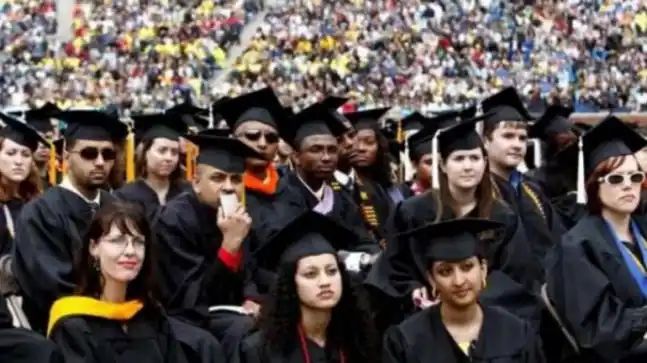
The United States said Monday it would not allow foreign students to remain in the country if all of their classes are moved online in the fall because of the coronavirus crisis.

“Nonimmigrant F-1 and M-1 students attending schools operating entirely online may not take a full online course load and remain in the United States,” US Immigration and Custom Enforcement said in a statement.

“Active students currently in the United States enrolled in such programs must depart the country or take other measures, such as transferring to a school with in-person instruction to remain in lawful status,” ICE said.

“If not, they may face immigration consequences including, but not limited to, the initiation of removal proceedings.”

ICE said the State Department “will not issue visas to students enrolled in schools and/or programs that are fully online for the fall semester nor will US Customs and Border Protection permit these students to enter the United States.”

F-1 students pursue academic coursework and M-1 students pursue “vocational coursework,” according to ICE.

Most US colleges and universities have not yet announced their plans for the fall semester.

A number of schools are looking at a hybrid model of in-person and online instruction but some, including Harvard University, have said all classes will be conducted online.

Harvard said 40 percent of undergraduates would be allowed to return to campus but their instruction would be online.

There were more than one million international students in the United States for the 2018-19 academic year, according to the Institute of International Education (IIE).

That accounted for 5.5 percent of the total US higher education population, the IIE said, and international students contributed $44.7 billion to the US economy in 2018.

The largest number of international students came from China, followed by India, South Korea, Saudi Arabia and Canada.
200% increase in cyber incidents in last two months, says top PMO official…

There has been a 200 per cent rise in cyber incidents in India in the last couple of months but there is no evidence that the cases increased due to the tensions between India and China, Chief Information Security Officer in the Prime Minister’s Office Gulshan Rai said on Monday.

‘There have been larger cases of phishing, service issues and ransomware which have gone up. These cases have gone up not merely because of heightened tensions, these cases have gone up from January and February-end because of the culture of working from home,’ he said.

During an interactive session organised by payments company EPS here, Rai also said that offices typically have necessary security measures taken in, and urged people to be more careful about what they download and stick to verified applications itself.

‘It is certainly true that during the last couple of months, the cyber incidents (like) hacking systems have gone up significantly. Somebody may say more than 200 per cent (increase), that’s the figure which is available,’ he said.

‘… there is no evidence as of now that the attacks have gone up due to the tensions between the two countries (India and China),’ he added.

He was responding to a query by a reporter that after the violent faceoff between India and China, there were a lot of reports that cyber attacks would increase on India’s infrastructure and banking services.

Rai said there are dedicated agencies which are monitoring the situation and preventing the attacks.

Ties between India and China have hit a new low following the violent clashes in the Galwan Valley in Ladakh, which left 20 Indian army personnel dead. India has also banned 59 Chinese apps citing security concerns.

To a question on reliance on Chinese products, he said China is a world leader in manufacturing and everyone buys from the country knowing that they are vulnerable.

This is where Prime Minister Narendra Modi’s call for self-reliance is crucial, Rai said, adding that other countries, including America and European nations, are also looking at ways of reducing dependence on China.

‘I think in a couple of years, there will be a lot of shifting towards an Aatma Nirbhar programme. America, Europe as well, everyone is charged up. We need to take steps to check on the misuse or the misfunctioning of the Chinese systems and there are ways and means to do that,’ he said.

In order to reduce incidents of fraud in banking, Rai suggested a method where the receiver of funds from online transfers is not able to withdraw the money for an hour.

He said there is a need to overhaul cyber security architecture at banks because of the rapid changes in technologies, even though a significant amount of ground has been covered in the past.

In cases of critical infrastructure like refineries and power plants, Rai said it is a blessing in disguise that much of such facilities in India are not connected to the wider internet but eventually efficiency needs will force them to get connected and there will be a need for better security at such facilities.

The incident at the atomic power station at Tamil Nadu’s Kudankulam in 2019 was blown out of proportion by the media, he said, adding that systems connected to the internet and the plant operations were totally segregated there.

‘The attack happened on the MIS system in the office, where the hackers have been able to reach and get the files and post it on the dark net. Our control system was safe and they are not connected on the internet,’ he said.

‘We won’t let China take reins’: US pledges military support to India in conflict with China…

Washington, DC: The United States will continue to stand strong in the ongoing conflict between India and China, said a top White House official on Monday. He further claimed that no one in China’s periphery is safe from Chinese aggression.

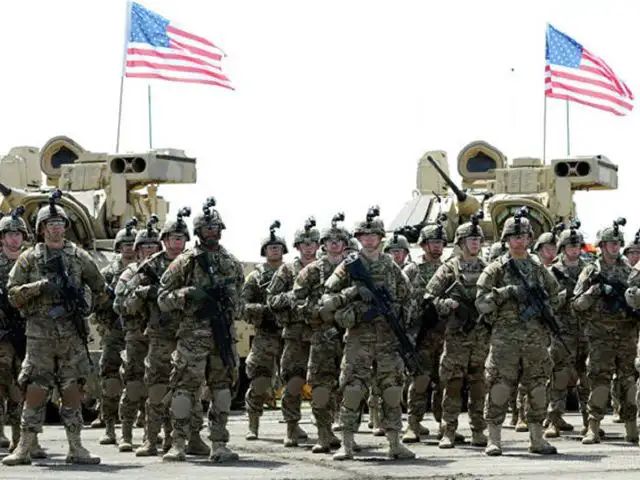
When asked about the US Navy deploying two aircraft carriers in the South China Sea amid the ongoing tensions, White House Chief of Staff Mark Meadows said, “The message is clear. We’re not going to stand by and let China or anyone else take the reins in terms of being the most powerful, dominant force, whether it’s in that region or over here.”

“Our military might stands strong and will continue to stand strong, whether it’s in relationship to a conflict between India and China or anywhere else,” he added.

Meadows went on to add that the US’ mission is to make sure the world knows that it still has the preeminent fighting force in the world.

Meanwhile, India and China continue to remain locked in a stand-off in areas like Pangong Tso, Galwan Valley and Gogra Hot Springs in Ladakh. The tensions have heightened between the two countries after their respective army personnel clashed in Galwan Valley resulting in the death of 20 Indian troops.

China begins withdrawing troops from Ladakh

Yesterday, the Chinese military began withdrawing troops from the Galwan Valley and Gogra Hot Spring after National Security Advisor Ajit Doval and Chinese Foreign Minister Wang Yi held lengthy discussions a day earlier.

However, Ladakh standoff is not the only dispute that China is currently engaged in. It has conflicts in both the East China Sea and the South China Sea. Beijing has heavily increased the military presence in many of the islands and reefs it controls in the region.

China claims almost all of the South China Sea. Vietnam, the Philippines, Malaysia, Brunei and Taiwan have counter claims over the area. It should be noted that both the East and South China sea are stated to be rich in minerals, oil and other natural resources and are vital to global trade.

Afghanistan President thanks PM Modi for extending COVID-19 related assistance

Afghanistan President Ashraf Ghani thanked Prime Minister Narendra Modi for extending COVID-19 related assistance and for hosting SAARC leaders’ meeting for coordinated efforts in the region.

The Afghan President said this today during the virtual meeting which was called by him to discuss host of issues including building a regional and global consensus on peace talks with Taliban.

The meeting was also attended by representatives from 20 other Countries and international organisations including the United Nations.

During the meeting, issues concerning Afghan peace and reconciliation process and support of the regional partners for an independent, unified, democratic and sovereign Afghanistan were discussed.

India, one of the largest development partners of Afghanistan, with commitment of more than 3 billion US dollars , reiterated the importance of an inclusive, Afghan–led, Afghan–owned and Afghan – controlled peace and reconciliation process.

Diplomacy has gone strongly digital, says Foreign Secretary Harsh Vardhan Shringla

Foreign Secretary Harsh Vardhan Shringla has said that India has been  proactive in assessing and dealing with the challenges caused by COVID-19.

In his virtual address to the Institute of Chartered Accountants of India on implementing the vision of Atma Nirbhar Bharat, Mr Shringla said that saving lives has been our foremost priority. He said, while the case load in the country continues to be high, India  has fared comparatively better than many other countries with a low death rate and high recovery rate. He said, we have also substantially ramped up our capacities in the healthcare sector in the past few months.

He said,  to  deal with the economic challenges posed by the pandemic and bring the  economy of the country back on track, the Prime Minister has enunciated a forward-looking economic approach under the rubric of Aatmanirbhar Bharat Abhiyaan. The stimulus package of nearly  20 Lakh Crore rupees launched  under the Abhiyaan aims to both reinvigorate the economy and provide a social safety net to our vulnerable sections. Mr Shringla said, Industry associations such as the ICAI are a critical part of our economic diplomacy and outreach. 

BJP new election campaign idea!

With its initial reception of advanced innovations and absence of asset requirements, BJP is the main ideological group heading into the Bihar get together races without agonizing a lot over contacting the electorate in the midst of the coronavirus alarm. So incredible has been BJP’s initial flood that a grip of resistance groups drove by RJD have contradicted its virtual meetings refering to the requirement for a level-playing field. The interest of the gatherings is probably not going to be acknowledged by the Election Commission as this is an experimental method of battling.

On the other hand, gatherings can spare themselves the expense of transportation and sorting out enormous physical meetings by receiving advancements like Zoom. Reports additionally show that BJP has moved to make a tremendous Whatsapp bunch framework down to the corner level to enhance its informing. It is even conceivable that this political race could see the BJP upstage boss clergyman Nitish Kumar and JD(U) with Nitish unfit to use his interface with voters through ground rallies.

BJP will likewise cheer up at the thunderings inside the restriction camp. Tejashwi Yadav has lost agreeableness among RJD’s partners and Congress seems, by all accounts, to be gauging the chance of testing political openings made by Lalu Prasad Yadav’s shroud. BJP’s definitive desire has been to shake off the partner stuff in Bihar, as it could in Maharashtra. While BJP has reaffirmed Nitish’s supremacy, nothing is changeless in governmental issues and it is altogether inside the domain of plausibility that innovation could rush the following huge disturbance in Bihar legislative issues.

GoI, World Bank ink 750 million US dollar agreement for MSME Emergency Response Programme

The Government and the World Bank have signed a 750 million US dollar agreement for the MSME Emergency Response Programme. It aims at  supporting  increased flow of finance to micro, small, and medium enterprises (MSMEs) which are severely impacted by the COVID-19 crisis. 

The World Bank’s MSME Emergency Response Programme will address the immediate liquidity and credit needs of some 1.5 million viable MSMEs to help them withstand the impact of the current shock and protect millions of jobs. The Ministry of Finance in a statement said, this is the first step among a broader set of reforms that are needed to propel the MSME sector over time.

Over one crore COVID-19 tests performed in India since pandemic outbreak

India has achieved a remarkable feat  by performing more than one crore COVID-19 tests since the outbreak of Corona pandemic in the country. Starting from less than 100 tests per day, a multiple-fold increase in a few months was made possible by dedicated teams of various stakeholders including research institutions, medical colleges, testing laboratories, Ministries, airlines and postal services. During the last 24 hours, more than 3 lakh 46 thousand COVID samples have been tested in the country.

To effectively deal with Coronavirus, the Government adopted the test-track-treat strategy for early detection and containment of the pandemic. Government promoted the indigenous manufacturers for developing equipment and materials required for COVID-19 testing to become self-reliant. In January this year, India had only one testing laboratory for COVID-19 at National Institute of Virology, Pune. Today, more than 11 hundred government and private laboratories chains are testing Corona virus samples across the country. ICMR is continuously ramping up its facilities by approving new laboratories, RT-PCR kits, True Nat Test, CBNAAT Test for COVID-19 testing. ICMR has also recommended the use of rapid antigen test kits for diagnosis of COVID-19 in containment zones in combination with the RT-PCR test. India is also producing high-quality, low-cost testing swabs which resulted in the production of millions of swabs in record time and at a fraction of the cost of the imported ones.

Former US National Security Advisor says Indo-US relationship will witness new peaks in 21st century

Former US National Security Advisor (NSA) John Bolton has said that China’s behaviour in Eastern Ladakh along the LAC worries the United States of America and every citizen in China’s periphery. In an interview with DD India , Mr. Bolton said that China is known to engage in a range of unacceptable behaviour.

Speaking over a host of other issues , former US NSA Mr. Bolton said, Indo-US relationship will witness new peaks in the 21st century. He also asserted that Indian Prime Minister Narendra Modi is immensely popular among Indian Americans.

Final-year exams in universities to be held by September-end, says UGC

Union Home Ministry has  permitted conduct of examinations by Universities and Institutions.

In a letter to the Union Higher Education Secretary it said that the final Term Examinations are to be compulsorily conducted as per the UGC Guidelines on Examinations and Academic Calendar for the Universities and as per the Standard Operating Procedure  approved by the Union Ministry of Health and  Family Welfare.

Door to door health survey in COVID-19 containment zones completed in Delhi

The Delhi government has completed the door-to door health survey in the city’s COVID-19 containment zones, covering around 3.68 lakh people. Over 1.66 lakh antigen tests have been conducted in 445 COVID-19 containment zones.

On the 29th of last month, the Union Home Ministry had said that the door-to-door survey would be done in containment zones on priority basis by 6th July.

Let’s treat social distancing as saadhnaa!

Among the numerous holy people who have showed up in Tamil Nadu, Ramalinga Swamigal, prevalently known as Arut Prakasa Vallalar, stands apart as an otherworldly pioneer with a distinction. He established an all inclusive religion, where no human is segregated on the ground of position, shading, or statement of faith, where God is seen as Jyoti, the brilliant light. His way of thinking, called Suddha Sanmargam, way of immaculateness, truth and flawlessness, depends on all inclusive fellowship, where harmony, generosity and congruity win. He held up specific standards and qualities which he explained in his melody, ‘Thiru Arutpa’. He supported three straightforward ways for an existence of complete satisfaction: pasithiru, thanithiru and vizhithiru – remain hungry, keep up separate and stay alert.

Remain hungry: It doesn’t mean going without food, which is the imperative wellspring of vitality. It implies that one ought to stay away from food every so often and in this manner offer rest to the stomach related framework. The Krishna sanctuary at Guruvayur watches ‘Ekadasi celebration’ consistently when fans keep away from ordinary food. Great wellbeing is controlled by the nature of food that is satvik in its immaculateness, sustenance and equalization. On the off chance that the amount is more, it would prompt inactivity and the journey for information would lessen. Starving for some time would reduce the inclination for sense satisfaction.

Vallalar who is additionally a recognized doctor, specified the sort of food one ought to embrace and the sort of food one should dispose of. Obviously, moderate dietary patterns and solid food would make great obstruction power in the human framework, boosting its insusceptibility.

Look after separation: To stay alone doesn’t mean being completely disconnected from the world; it just methods keeping a good ways from the world. Indian holy people and sages constantly depended on lone spots like woods and wildernesses since they discovered tremendous incentive in social removing. The demonstration of removing oneself from different contacts and being ‘one’s own Self’ accept significance and desperation in the present basic circumstance.

We are so fascinated in different human exercises that we deny ourselves many ‘delights’ like being separated from everyone else, reflecting upon ourselves and mulling over. Our brain has an inclination consistently to turn towards the outer world; subsequently social removing is a chance to divert the psyche to our own source. It is a chance to go further into the truth of our own Self, liberated from the antagonistic impact of the world.

Stay conscious: When an individual gets up from bed in the first part of the day, he thinks he has woken up. As a matter of fact, he has woken up just to the domain of his body and brain. He has woken up just to familiarity with the pictures of the world. He truly awakens just when he comes out of the complexities of his body, psyche and mind and understands his actual nature.

At the point when a horrendous ailment like the novel coronavirus strikes mankind, it ought to be an event to contemplate over the emptiness of life and the purposelessness of material qualities. Events like this should provoke the person to consider over the inquiry, ‘what is genuine?’ This is the time he ought to tune in to the call of the Lord of Death, Yama Dharma Raja: “Emerge, Awake and arrive at the way appeared by the holy people. ” (Uttisthata Jagrata, Kathopanishad 1-iii-14). Maybe, Arut Prakasa Vallalar’s lessons have never been as legitimately pertinent to humankind as they are currently.

Over four lakh 24 thousand people recovered from Coronavirus so far in the country

The Union Government has said, a total of four lakh 24 thousand 433 people affected by Coronavirus have recovered in the country so far.

In the past 24 hours, 15 thousand 350 people recovered from COVID-19 and with this, the recovery rate reached 60.86 per cent.

The Health and Family Welfare Ministry yesterday said, a total of 24 thousand 248 new cases of COVID-19 were reported in the country during the last 24 hours taking the total number of cases to six lakh 97 thousand 413.

In a single day, 425 deaths were reported taking the nationwide toll to 19 thousand 693. Presently, the total number of active Corona cases in the country is two lakh 53 thousand 287.

India and China agree on complete disengagement of troops along the LAC and de-escalation

National Security Advisory Ajit Doval and Chinese Foreign Minister Wang Yi discussed border issues in a telephone conversation last Sunday. The two Special Representatives of India and China on the Boundary Question had a frank and in-depth exchange of views on the recent developments in the Western Sector of the India-China border areas.

The External Affairs Ministry said that the two Special Representatives agreed that both the sides should take guidance from the consensus of the leaders that maintenance of peace and tranquility in the India-China border areas was essential for the further development of bilateral relations. They also said that the two sides should not allow differences to become disputes.

Therefore, they agreed that it was necessary to ensure at the earliest complete disengagement of the troops along the LAC and de-escalation from India-China border areas for full restoration of peace and tranquility.

In this regard, they further agreed that both sides should complete the ongoing disengagement process along the LAC expeditiously. The two sides should also ensure a phased and stepwise de-escalation in the India-China border areas. They re-affirmed that both sides should strictly respect and observe the line of actual control and should not take any unilateral action to alter the status quo and work together to avoid any incident in the future that could disturb peace and tranquility in border areas. It was also agreed that the two Special Representatives will continue their conversations to ensure full and enduring restoration of peace and tranquility in the India-China border areas in accordance with the bilateral agreements and protocols.

How India’s massive Election System works?

The world’s biggest democracy just had an election. The world’s biggest democratic election It’s a marathon election A mammoth undertaking It’s the world’s biggest exercise in democracy In India, voters picked its central government for the next five years. An eighth of the world’s population was eligible to vote in this election. In the year, 2019, there are 900 million eligible voters in India making this the largest Democratic exercise in the history of humanity.

A vote for reform: Election Commission collaborating with IIT-M on ...

In one of the largest and most populous countries in the world, that isn’t an easy task. India has to reach voters in coastal cities in the south, in the rural regions of the west, and jungles to the east and everywhere in between. And what’s more, they want every Indian citizen to be within 2 km of a voting station. That’s only about 25 city blocks no matter where you are in the country. It’s an incredibly ambitious goal and yet, somehow they’re able to do it. This is the biggest election in the world and I wanted to know how does it work. Every election a team of state officials and security forces, get on a ship within the east of India to require off towards this island. They travel about 100 km to get here, all to securely deliver these Electronic Voting Machines or EVMS, the instrument that logs India’s votes, the heart of this elaborate election process.

Election Commission's crackdown on poll-related monetary ...

India has 2.3 million voting machines for its 900 million voters. So, getting these machines on the brink of every voter may be a big logistical undertaking. That’s why India doesn’t have one polling day , instead, it’s closer to an election month with multiple phases that last weeks. This process takes more than 11 million election officials and security forces, who move from polling station to polling station to polling station from densely populated cities to the rural areas where the majority of Indians live. Once on the island with the EVMs, officials pile on to bike carts and head towards the polling station. Once they arrive, they start setting everything up for the vote.

On Election Day, voters line up, cast their vote, and get their fingers inked to prevent double voting. This is where the process ends for the voters, but for the election officials this is just the beginning. Driving a boat out to a remote island is just one of many ways that officials reach every voter. India’s vast and diverse terrain requires transportation methods of all kinds, like in the jungles of this northern state where elephants transport voting machines to reach a remote town or in the Himalayas where officials hike for hours to bring EVMS for election day. Helicopters, trains, they even use camels. But what makes India’s elections so impressive is not just how they reach everyone in such an enormous country, that’s just half the battle. It’s also the ways they try to include voters of all backgrounds into the process, a challenge that has been a part of India’s elections since the very beginning. India has 22 official languages and hundreds of dialects and when India became an independent nation, less than a quarter of the population could read and write.

Why EC Owes an Answer to the Country Over 'Phantom Votes' | NewsClick

The newly formed Election Commission of India created a range of symbols to correspond to each political party, like an elephant, a lotus, a hand or even an alarm clock so that from the beginning all people regardless of literacy level and language could vote with confidence. Since 1947, the literacy rate has increased significantly, but it’s still only 75 percent, so these symbols are still useful to many when casting a vote. But this is a massive sprawling operation and over the years it’s run into some pretty serious problems like allegations of election rigging and problems with a practice called booth capture, where gangs actually take over polling stations and tamper with the elections. It’s partly because of these problems that the Commission introduced these voting machines in the 1990s.

It also increased security around the elections. These efforts to include all voters and protect elections seem to be working. In 2019, India saw the highest voter turnout yet and for the firsttime women voted just as much as men. India’s elections are only getting bigger and more complicated. India has one among the fastest growing populations within the world. and in 2020, young people will make up more than a third of the country. This is the most important election within the world that takes many officials fanning out across a huge country to assist many millions vote.

Election Commission rejects Opposition demand to tweak VVPAT ...