The need of “cool” parents

A parenting is considered to be good when the children feel free to share anything with their parents. In the teenage, what a child want is his or her parent’s support and guidance. They want their parents to think like them, to talk like them, they want their parents to understand their view of the world.

Today most of the parents try to be friendly with their children from the very first day . They share everything with their children so that the children never feel afraid to share anything with them. This makes the child understand that no matter what happens his or her parent is always there as the support system.

But still, there are many adolescents who are afraid to share anything with their parents. It is not that they don’t want to it is because they don’t have the courage to do that. They fear that may be their parents would shout at them and not understand their situation. This causes a very serious mental health condition.

Parents need to change themselves as per their children’s world . They should have to be frank with them as well as strict too. Extra strictness destroys the parent – children relationship. It is seen that a teenage girl or a boy even finds it difficult to discuss the pubertal changes with their parents. A good guidance can only come from a parent but if they do not make their children comfortable with them so how can a child share or discuss anything with their parents.

Parents should understand that doing good at studies and coming first is not the only thing to do in a child’s life. They can be interested in many other things. It is the duty of every parent to encourage their children in whichever field they find interest in. It is seen that many students take up medical, engineering,or law just because their parents had told them. May be they had interest in other things but because of their parent’s pressure they were unable to deny it.

When a child enters his teenage both mother and father should become the friend of his or her. The girl or the boy should feel secure in the arms of their parents that they can share their problems, their studies, plans about careers and even about having a relationship. But it is seen many children suffer through this problem of not being able to discuss anything with their parents. And this day by day triggers the anger of the child and thus a distance is created between the parents and the children.

Because of these distances it is seen that a boy or a girl does something wrong and not being able to tell their parents about this commite suicide. May be they feared that their parents won’t understand them as like always and would scold them beat them and this fear made them took such serious life- threating or life-ending step.

So, it is very important for a parent to be like a friend or to be more precise, a best friend with their children from the very beginning so that if anything happens whether good or bad they will be the first to get informed; so that their child can feel free to discuss or share anything with their parents.

A good parenting is seen when a father and a mother supports the child like the same way they show strictness. A good parenting is seen when a father and a mother becomes the most trusted partner of their child unlike anyone else.

MY PERSONAL ACHIEVEMENTS IN THE HISTORIC LOCKDOWN’ 2020.

I want to share few of my personal achievements of the historic lockdown 2020.

Lock down opened a new phase of life which was quite unknown, unexplored, untouched and unexpected. Hectic life schedules had made us workaholic, ignorant about our precious health, our family, and kept us on toes for the perfection in the execution of work. Work pressure, meeting of goals and excessive commitments’ negotiation had been squeezing all vital forces of life

I boast to take it differently.

I use to kickstart my day by few brisk walks on my terrace, do little yoga which I had left long back, eat more vegetables than eat my whole life, keep a strong clean ambience in my personal surrounding and consciously try to keep myself in the physical distancing from all external exposure to the world. Besides following the mandatory health and hygiene routine and social distancing call of awakened India, I have tried to accommodate my daily routine progress on the ladder steps of three life sized practice, i.e.: REJUVENATION, RENOVATION, AND REMUNERATION by dedicated work style.

Work from home format of engagement has gifted me a longer hour of work to understand even the minutest details of work besides grooming my essential faculties for smart management skill and training. I work to my soul’s content exploring many new ideas, thoughts and parallelly learning many tools and techniques for personal and professional advancement. Office at home was although a new experience, nevertheless weakened the enthusiasm of effective presentation and efficient execution. This can be branded as REMUNERATION.

Being a principal in a school, I had had poor time to listen multiple grievances of my parents’ community. My world was confined and a wave of dissatisfaction used to hover all the time. WFH helps me to associate with my humble parents’ community and their demands, quite easily, individually, and attentively on phone calls. This provides me space and time to cope up with the ballooning resentment among them. This not only provides me the work satisfaction but inspires me to join in greater mission of the future to change the shape of our educational machinery. This can be realized as RENOVATION.

Last but not the least the lock down has cemented my relationship with my pride possession, my beloved family, my school team members, my friends, relatives, and known ones. It has galvanised my faith on my personal, social and worldly behaviour which was long time dry in the absence of proper care and nourishment.  It actually proclaims me the importance of human relationship and gave me a life lesson of human life value. Today, I love my dignified carrier and all my faculties who supports me to run the life’s vital shows. This can be appreciated as REJUVENATION.

For many the pandemic is stubborn and depressing, lockdown is strangling but to all smart and knowledge driven workers, this is a big opportunity to identify their potentials, update their skills and renovate their rusted work culture. This has bestowed us a completely new vision to understand humanity in more enlightened horizon.

So, utilise every moment of your staying home with positive thoughts and productive workings. Life is ready to serve you with all great resources at every moment. Stop complaining and start living, enjoying every significant moment of it. Learn to smile and never to give up.

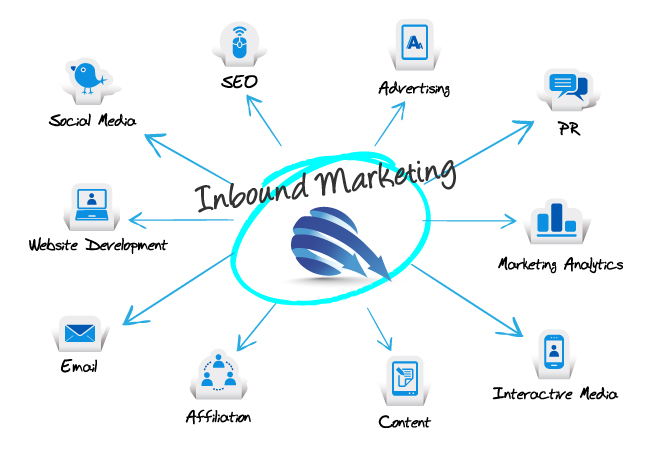
Inbound Marketing

Inbound marketing refers to process of helping potential customers to find our company. Inbound marketing happens even before any customer makes a purchase. Several types of inbound marketing are SEO marketing, content marketing, blogs, etc. The contents provided by inbound marketing is educational and entertaining too. Inbound marketing only consists of organic leads. Inbound marketing has the potential to connect us with people who are genuinely interested in what we say.

Inbound marketing can solve various problems and issues, such as:

  1. Increasing brand awareness- A right content and a right message in place can make our website and our products appear online at the topmost search result. This will increase people’s knowledge on our brand.
  2. Improving brand preferences- One can increase brand preference ie, make our brand come into their mind when they want to purchase commodities by educating and interacting with potential customers.
  3. Generate more leads- Inbound marketing has very little to invest and can reap benefits for a greater period of time. It will attract organic searches and leads.
  4. Drive traffic into the website- Inbound marketing can ensure that our website is being searched for and clicked-through more often.
  5. Communicating to target audience- Inbound marketing will help in identifying prospective customers who require our product or service and can help in generating leads and awareness.

Certain features of inbound marketing are as follows:

  1. Focusses on creativity- Inbound marketing ensures that we think a lot on creating a good marketing strategy or campaign for attracting target audience. Blog posts, social media marketing, email campaigns, re-targeting are certain methods where there is customer attraction gathered.
  2. Encourages email marketing- Inbound marketing also eencourages people to perform email marketing. It is a great form of re-targeting strategy if the emails are sent at the right time and to the right audience.
  3. It concentrates on SEO- Inbound marketing greatly focusses on search engine optimization. Using relevant key phrases and terms, using headline with keywords are some of the ways in which one can ensure that their products are looked at or their website is visited.
  4. Increases customer retention- Content marketing and email marketing help in retaining customers as the constant reminders sent to them will make them be more attracted towards our brand and this will also encourage a good amount of engagement via consuming the product or availing the service.
  5. Offers higher ROI- Properly executed inbound marketing is observed to bring about higher returns on investments as it leads to higher sales or leads. It is observed that correctly executed inbound marketing are ten times more effective than traditional marketing.
  6. Merges sales and marketing- Sales and marketing can work together to provide highly-targeted contents which would directly solves issues which any customers have. It will help in knowing exactly what the product or their company lack and will strive to make improvements.
  7. Blog-readers- Inbound marketing attracts the attention of blog readers to earn higher returns and to share the knowledge of the particular product or service available. Blog-readers play an essential role in describing the usefulness of any product or service and it ensures higher attractiveness towards the product or service which ultimately make customers buy it or avail it.
https://medium.com/@hakbar2707/8-inbound-marketing-features-every-marketer-should-know-c2659b8942f4

https://www.30degreesnorth.com/blog/4-problems-solved-by-inbound-marketing

https://blog.incisive-edge.com/blog/how-inbound-marketing-solves-problems

Administrative Law


Definitions:-

According to the definition of Sir Ivon Jennings” Administrative Law can be defined as a law relating to administration. It determines the organization, powers and duties of administrative authorities.” According to Britanica,

Administrative law, the legal framework within which public administration is carried out. It derives from the need to create and develop a system of public administration under law, a concept that may be compared with the much older notion of justice under law. Since administration involves the exercise of power by the executive arm of government , administrative law is of constitutional and political, as well as juridical in nature.

Austin has defined administrative law as one which determines the ends and modes to which the sovereign power shall be exercised. According to him sovereign power should be either exercised directly by the monarch or entrusted to subordinate political agents holding a position of trust.

Holland regards Administrative law as “one of the six divisions of public law”.

Bernard Schawartz has defined it to be the law applicable to those administrative agencies which possess adjudicatory authority of a delegated legislation.

The three main stages led to the expansion of the meaning of the term Administrative law-
1. Laissez Faire

2. Dogma of Collectivism

3. Social-Welfare State


Indian context:

The moving of a state from the laissez faire to welfare state.

Administration has been in the forefront in indian history.Akbar and Ashoka’s court provide classic examples of the same.Later on the British administration was adapted and embibed in India.After independence, After independence, India adopted to become a welfare state, which henceforth increased the state activities. As the activities and powers of the Government and administrative authorities increased so did the need for ‘Rule of Law’ and ‘Judicial Review of State actions’.

Henceforth, if rules, regulations and orders passed by the administrative authorities were found to be beyond the authorities legislative powers then such orders, rules and regulations.

Stop Spending So Much Time In Your Head

YOU CAN’T GIVE UP!

I know something about you without knowing you. I bet you spend A LOT of time in your head.

You know, thinking, worrying, stressing, freaking out — call it whatever you want. I call it a preoccupied mind. And with what?

99% of your thoughts are useless. William James put it best:

“A great many people think they are thinking when they are merely rearranging their prejudices.”

All my life I’ve been obsessed with practical things. Practical philosophy, practical knowledge, practical books, practical work, and practical advice.

That idea comes from Pragmatism, a philosophical tradition that started in the 19th century in America. Charles Sanders Peirce, who was a Harvard professor, is considered as the “father of Pragmatism.”

But it was William James, a trained physician turned philosopher, who really defined the philosophy.

About thoughts, worry, and stress, William James says:

“The greatest weapon against stress is our ability to choose one thought over another.”

Pragmatism believes that a mind is a tool. Your mind should work for you, not against you. People who don’t master their mind, don’t believe it’s possible.

They say: “I can’t help but thinking these things.”

Well, you can with enough practice. It’s a skill.

In other words: You have the ability to decide what you think. Or, you can choose NOT to think.

And that is one of the most important and most practical things you can learn in life. Before I learned that skill, I would spend hours and hours inside my head.

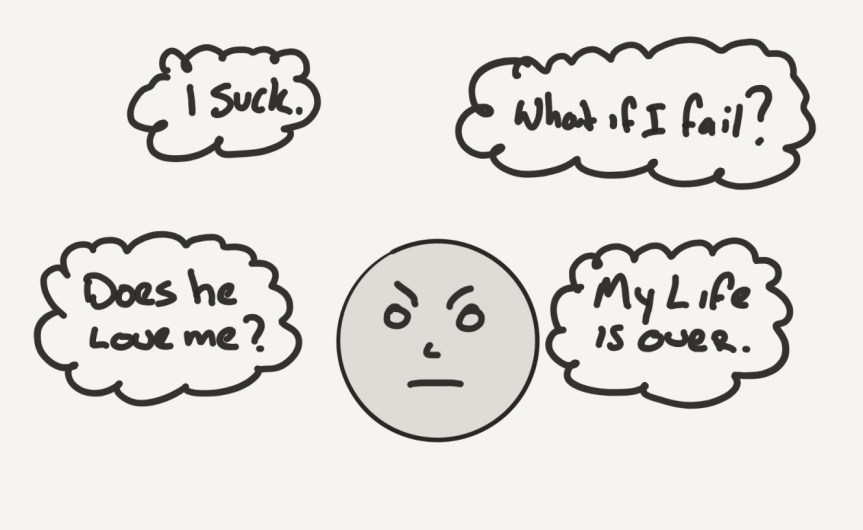
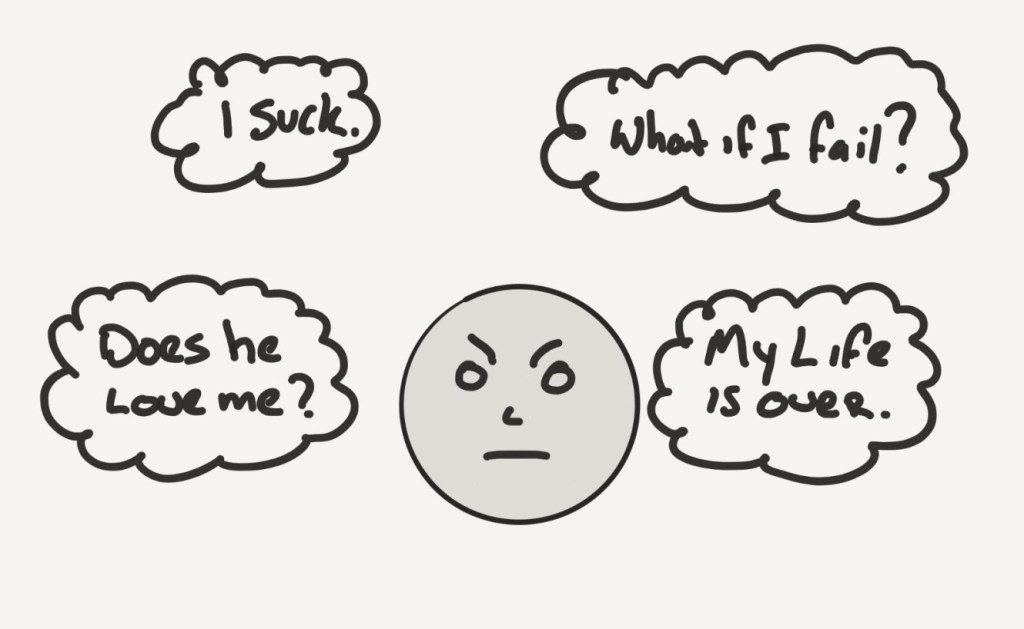
Just think about how much you think.

  • “I wonder what my boss thinks?”
  • “What happens if I screw up and lose my job?”
  • “Does she love me?”
  • “I think he doesn’t care about me.”
  • “I just keep failing.”
  • “Why does my life suck?”
  • “Why is my life awesome, and other people’s lives are not?”
  • “What if I get cancer?”
  • “I don’t care about my job. Is there something wrong with me?”
  • “I can’t finish anything. What’s wrong with me?”

And the list goes on. That is all REAL shit. That’s stuff people tell me when I ask them what they worry about.

Do you know what those thoughts do to you? Guilt, anger, suffering.

I just have one question for you: What’s the practical use of your thoughts?

Yes? I’m waiting. Still no answer? Exactly.

Thoughts have no use. 99% of them that is.

Which thoughts are useful?

  1. Thinking about how you can solve problems. A problem is just an unanswered question. Put your brain to use and think about how you can solve problems. There are a lot of those on this earth.
  2. Understanding knowledge. That means this: Try to internalize knowledge and think about how you can use that knowledge to improve your life, career, work, relationships, etc.

That’s it. You can ignore every other thought.

If you’re constantly thinking, it’s because you haven’t’ trained your mind yet. You HAVE to get out of your head.

If not, you go mental. Everyone will. No exception.

Also, you’re probably thinking so much that you’re missing out on life. Did you notice the sunshine this morning when you woke up? Or the raindrops? Did you notice the smell of your coffee? Did you feel the texture of your cereals?

If your answer is no, you definitely need to get out of your head. Stop thinking and start feeling.

Now, you might think: “How do I train myself to stop thinking useless thoughts?”

Awareness.

That’s where it starts. Every time you start drifting off, become aware of it. Just observe your brain. Step outside yourself and just observe the crazy shit you’re thinking about.

Don’t judge. Don’t think you’re stupid. If you do that, you’re thinking again.

No, what you want to do is say this to yourself: “Ah that’s a cute thought. Now, let’s get back to reality.”

“If you can change your mind, you can change your life.”
― William James

Are you back to reality? Do you feel your eyes reading the letters on your screen? Do you feel your phone in your hand? Are you thinking about how you’re going to apply this information to your life?

Great. You’re USING your mind, and it’s not the other way around. Now, keep using that brain of yours.

Because I’ll tell you this: It’s the most powerful tool on earth.

Thanks for reading!

INTERNATIONAL WIDOWS DAY: A timeline of lives of Widows in India.

Today, June 23, is a very important day for one of the most neglected sections of our society, and they are none other than the widows. International Widows Day was firstly established by The Loomba Foundation to increase awareness about the tyrannies faced by widows all across the world. June 23 was especially adopted by the Loomba Foundation because it was on this day in 1954 the mother of foundation’s owner became a widow. Later on in 2010, this date was officially adopted by United Nations to focus on issues of widowhood.

Widowhood in India: A brief History.

During ancient times, after the death of a man, their wives were expected to live an execrable and damnable life. Widows were made to wear only white clothes, shave their heads and had limited options for having food of their choice. Untouchability and ostracism of widows were at peak. At some places widows were forced to undergo the Sati practice in which widows had to sacrifice themselves by sitting atop their deceased husband’s funeral pyre. These practices came from the patriarchal idea that if a husband’s life is over, his wife’s life is also over.

Ban of Sati Practice: Prominent Social Reformer Raja Rammohan Roy led the movement against the evil practice of Sati in India and finally on December 4, 1829, Bengal Sati Regulation was passed by Lord William Bentinck.

Widow Remarriage: A significant change!

Indian Social Reformer Ishwar Chandra Vidyasagar from Bengal was one of the major leaders who advocated in favour of remarriage of widows in India. He received support from several dignitaries of that time including Rani Rashmoni of Kolkata to many other government officials in East India Company.

Finally, Hindu Widows’ Remarriage Act, 1856, was drafted by Lord Dalhousie and passed by Lord Canning for remarriage of Hindu Widows in all jurisdictions of India under East India Company.

Did the lives of widows change after the progressive law?

The simple answer to the question above is “no”. Although things have improved in well-read and educated families where widows don’t have to go through the same amount of brutality as before, however things have not changed for millions of widows in India.

Abandonment: A newer problem!

Widows, even in 21st century have to face massive amount of torture from confinement to lack of care in many Indian families who have a patriarchal and out-dated approach.

Most women in India are not financially independent and are dependent on their husbands for daily needs. And thus, when the husband passes away widows become financially vulnerable. Children of the widows do not take the responsibility of their well-being and abandon them. With no options left, widows take shelter in old age homes or take the path of spiritual life and settle in ashrams of holy cities like Varanasi and Vrindavan. There are also some NGOs and private bodies in these holy cities who take care about the wellbeing of the widows including their medical and food expenses. Widows are also encouraged to engage themselves in some relatively easy jobs like stitching and sewing by these NGOs to have financial stability.

There are more than 50 million widows in India and its high time that we as a society and government must step up to protect their rights and make a discrimination free environment for them.

Mental health and the social stigma around it

The Tabooed Ailment

Have you ever felt really happy? So happy that, it becomes impossible to imagine what normal feels like? Well, we all have such rare moments from which we can’t get back. A state of euphoric bliss experienced more in our childhood that depletes as we age. Do you know? Whenever you feel that joy, our body releases: dopamine that causes pleasure-seeking behavior, endorphin that reduces pain, Anandamide (derived from the Sanskrit word ‘Ananda’ meaning bliss) that maintains ecstasy and about a 100 more neurochemicals.

Happiness is wonderful! I know. Except, the dark side is – the same happens when one feels self-deflatingly depressed. One can’t get back to normal. One feels helpless; crushed; drained-out; anxious; and nihilistic. Such a person needs medicine, not philosophy.

I often find people using the word – ‘depressed’ casually whenever they feel dull, drunk, dumped, or drowsy. If you feel anything like that then you are just bummed out, ordinary- rather, a little extra-ordinary. These are all passive states of mind. Mental Illness is a negatively active state of mind. Symptoms of depression can have a wide range from trouble sleeping and eating, to persistent anxiety and sadness, recurring episodes of hopelessness, overeating, fatigue, a sudden switch from sadness to calmness, desperately pretending to be happy, taking risks, tying up loose ends, changing wills, and finally- death.

I once asked my brother about his friend who was diagnosed as clinically depressed, he recalled her sentences quite vividly – “It felt like I am living through the blank pages of my fate. Wish I had a way to erase it!”, she said. The most important thing that our society must be sensitive to is the fact that the cause of the behavior of a mentally ill person is rooted within him. Therefore, changing situations around him will not change anything significant.

Suicide is the leading cause of death in India among 15-29 years. This is not a mere statistic, but a statement to the world – “In our country, people kill themselves more than they get killed by others”, and we have the time to blame politicians. Yes, I know, we all want to do something about it, and that’s the extent of our concern. Here’s what I propose – How about being a little sensitive with people around? 1 in 7 people are mentally ill in our country. Well, it may not be your friend, but it might be you. Recognise mental health as an actual issue, instead of tossing it under the carpet, just because you are not ready to accept it. Don’t call someone lazy or unmotivated, they’re fighting their own battles that they can’t share. So, be kind to everyone, including yourself.

sanitation in rural area

A government survey shows that 93% of rural households in India have access to a toilet and 96% of those having a toilet use them. However, critics point out contradictions between these data and micro-level assessments in different parts of India.

Water is a basic necessity, and an important resource for sustaining life. The decline in water quality endangers the health of humans as well as the ecosystem. Clean drinking water, hygiene, and sanitation play an important part in maintaining health. 

Contaminated water causes many water-borne infections like diarrhoea, and also serves as a carrier for vectors such as mosquitoes spreading epidemics. Open defecation means no sanitation. It fouls the environment, and spreads diseases. According to WHO-UNICEF report (2010), India has the highest rate of open defecation. Access to safe drinking water and good sanitation are vital for family well-being. It results in control of enteric diseases, and boosts child health. A healthy child has better learning and retaining ability. Girls avoid going to school where there are no proper sanitation measures.

Sanitation makes a positive contribution in family literacy. According to a UNICEF study, for every 10 per cent increase in female literacy, a country’s economy can grow by 0.3 per cent. Thus, sanitation contributes to social and economic development of the society. Improved sanitation also helps the environment. 

Clean drinking water and good sanitation would not prevent infections without practicing good hygiene. A simple habit of washing hands goes a long way towards preventing diseases. The stored water supply may also serve as a source of infection in the absence of hygiene. 

In India, rapid urbanisation and the increasing population has placed a major strain on the existing infrastructure. It has affected the capacity of the government to provide clean drinking water, and effective sanitation measures. Though the government has tried to overcome this problem through urban development programmes like Clean India Campaign, the total costs required for successful operations continue to mar their efforts. Hence, the contributions of corporations, and other organisations is a welcome change.   

These Six Questions Will Improve Your Decisions

BUT WE CAN KNOW!

To improve your decisions, you want to look at your process for making a decision. Most people assume that good decision making is a matter of picking a course of action that leads to the desired outcome.

That’s a misconception. Decision making refers to your cognitive process. It’s about how you end up with your decision, not what the decision leads to. 

Good decision making can lead to bad outcomes. The opposite is also true. Bad decision making doesn’t mean you always get bad results. For every decision, there are external factors that influence your outcomes.

So how can we improve our decisions? By focusing on the process, not the outcome. The best method for improving your decision making process is to ask yourself critical questions. It’s not enough to ask obvious questions like, “What are my alternatives? What has worked for others? What are the consequences?”

While it’s good to ask yourself those questions, it will not change your decision making process. Those questions only look at what you already know. 

I found a list of six thought-provoking questions in Annie Duke’s book, Thinking In Bets. Notice what the theme is.

  • Why might my belief not be true? 
  • What other evidence might be out there bearing on my belief? 
  • Are there similar areas I can look toward to gauge whether similar beliefs to mine are true? 
  • What sources of information could I have missed or minimized on the way to reaching my belief? 
  • What are the reasons someone else could have a different belief, what’s their support, and why might they be right instead of me? 
  • What other perspectives are there as to why things turned out the way they did?

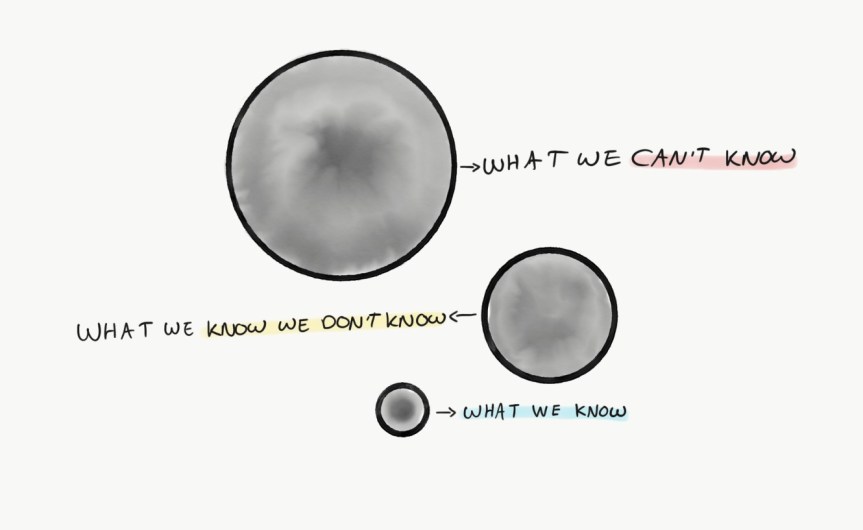
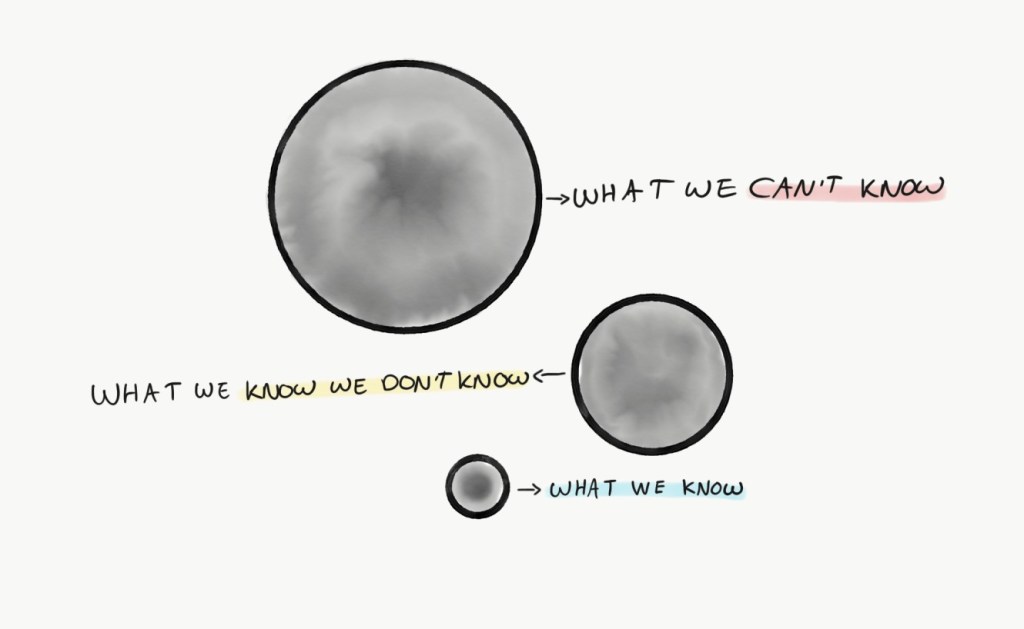
Think About What You Can’t Know

The reason I like these questions from Annie Duke is because they force you to think about what you can’t know. In my experience, that’s what drastically improves your decisions. 

We all know the feeling of talking to an experienced person who shares some insights with us, and we go, “Aha! I didn’t realize that.” That’s what you want. Duke writes the following in Thinking In Bets:

”Just by asking ourselves these questions, we are taking a big step toward calibration. But there is only so much we can do to answer these questions on our own. We only get exposed to the information we have been exposed to, only live the experiences we have experienced, only think of the hypotheses that we can conceive of.”

This is the reason I often turn to my friends, mentors, communities, books, courses, and podcasts for insights that come outside of myself. I want to learn about things I can’t know.

It’s impossible to know and see everything. We haven’t had the experiences of other people. Most of us keep making the same decisions because we never get an outside point of view. We don’t make an effort to improve our decisions.

Open To Beliefs—Not Gullible 

To improve your decisions, ask yourself questions that challenge your existing beliefs. I highly recommend saving those six questions in your note-taking app. I’ve done it and when I face a decision, I often go through these questions and my other notes on decision making.

As you become open to other beliefs and perspectives, keep in mind that other people also don’t have all the answers. Adopt the mindset of a skeptic. Be open to other beliefs, but don’t believe everything instantly. 

Keep looking for evidence and other perspectives. When you have collected enough information, make your decisions. Sometimes people assume you have to listen to everything “experts” have to say. This will only make us gullible. If there’s one thing that harms our decisions, it’s that.

We should always make our own decisions after going through a process. We should avoid making rash decisions based on the opinions of others.

Common Decision Making Pitfalls

Here’s what you should watch for when you’re making decisions (no matter how big or small):

  • Analysis paralysis—This is very common. At some point you get stuck in the process and you can’t make a decision. You go over the process over and over again. This is a big risk. You can NEVER have 100% of the information you need. It also helps that your decisions are not about the outcomes. Don’t let your fear of making the “right” decision paralyze you. There’s no right or wrong outcome. Just outcomes. Deal with it later.
  • Extinction by instinct—The opposite of the above. It’s the belief that instincts are a useful tool in decision making. This leads to rash decisions.
  • Information overload—This is when you ask too many people for their opinion or insights. Stick to trustworthy sources and keep them at a minimum. More information is not better. Reliable information is.

I’m not a fan of complicated theoretical decision-making frameworks to improve your decisions. Those types of formal frameworks might work for large institutions, but for you and me, it’s just not useful. Who makes time to read an 800-page textbook on statistical decision theory? And if you do study it, you probably can’t remember all of that theory. Instead, work with what you have.

When you face a problem, simply look at your options, collect some information, think about what you can’t know (the six questions at the top), evaluate everything, and pull the trigger. Done. Then, move on to the next one.

Social media is for us, social media isn’t us.

Our world has added so much to it. Changes are occurring now and then having thousands of factors contributing. Changes are a part of nature which no one can deny to accept. Changes can either be for the benefit of thousands or to destroy millions. Perception and a positive attitude are what make you chose between how you adapt to the changes. Among all the factors that have given the world a chance to change, social media has played a vital role. Social media has changed the world and the lifestyle of the people living in it.

Social media was initially introduced to the world to get in touch with their close ones. It came up as a platform to showcase your talent to the world. We live in a world where everyone couldn’t know the well-being of the world every time. Media and social media became a source of information for us. These points describe that social media was brought into practice with a positive motive to change the world. But have we appropriately used social media?

Everyone nowadays is so busy being fake on social media that they have completely forgotten our world is beyond that. The toxicity of social media has made people pretend to be someone else to fit in the so-called society standard. Social media has made people forget themselves and the people around them. People are so busy making friends online that they barely meet their real-life friends. They are busy talking to people on text, calls, and video calls that they are losing the courage to face people in real. They are so busy clicking photos for social media that they have forgotten that enjoying the moment is more precious than clicking pictures.

Why can’t we take a break from all this toxicity? Why can’t we spend our life without social media? Why can’t we use social media as a positive and encouraging platform? The answer is because we don’t want to. We have become an addict. (not only consuming drugs and alcohol regularly can be an addiction) And the only way to detox addiction is to have control over it.

How can you detox addiction to social media? (these are some of my ways to do so)

  1. Decide for how long do you want to take a break.
  2. When you’re on it, deactivate all the social media handles (at least keep yourself away from your phone)
  3. Discover what activities you enjoy and indulge yourself in those.
  4. Spend some quality time with your friends and family.
  5. If possible, go on a vacation.
  6. Spend some quality time with yourself. It will help you discover your inner self.

What is the importance of detoxing social media?

  1. It breaks the social comparison cycle.
  2. It will protect your privacy.
  3. Your mood will automatically get better.
  4. You will be able to reconnect to the real world.
  5. Once again, you will start living in the moment instead of capturing it for social media.
  6. You will get some quality time for your friends, family, and yourself.

Social media has so much to contribute to us. Social media should be everything that someone needs for refreshment and development. But, it should always be a part of our life, not our life.

IMPACT OF THE CORONAVIRUS PANDEMIC

The COVID-19 pandemic has brought fast-moving and unpredictable factors, some of which were not equipped to tackle current disaster plans and teams. Incident response strategies unique to this crisis have been successfully established by many businesses and are now looking ahead.

In this article we will be focusing on the hospitality industry which has been affected.

Novel Coronavirus has already begun to impact the hotel industry and cost about Rs. 620 crore to the Indian hospitality industry, which is a big sum in itself in the initial days of the lockdown. Various large hotel chains and small resort chains have begun with losses of over 130 to 150 crores, while the alternative provider of accommodation facilities has suffered losses of over 420-470 crore, which is enormous and bad for the Indian market when the stock is already crashing.

All companies around the world have ordered their workers to work from home. Work from home has been an unusual phenomenon or a revolution in the working community, but it works the way the employer expects. The duty of going forward at work is on the hands of both the employer and the worker. Business culture, leadership , employee experience and interactions in the digital workplace are now being put to the test. The way that many businesses operate changed overnight. Travel limitations, however, have gutted the opportunity to perform certain activities.

Since the situation we are in the government, the lockdown was forced to be lifted in order to save the economy and SOPs (Standard Operating Procedures) were offered to industries 

To have a stable environment. Hotels only hire the necessary workers required for daily operations, while the majority operate from home. Employees can be seen wearing PPE (Personal Protective Equipment) kits that help keep the customers and staff safe from this deadly virus.

Novel Coronavirus has already begun to impact the hotel industry and cost about Rs. 620 crore to the Indian hospitality industry, which is a big sum in itself in the initial days of the lockdown. Various large hotel chains and small resort chains have begun with losses of over 130 to 150 crores, while the alternative provider of accommodation facilities has suffered losses of over 420-470 crore, which is enormous and bad for the Indian market when the stock is already crashing.

All companies around the world have ordered their workers to work from home. Work from home has been an unusual phenomenon or a revolution in the working community, but it works the way the employer expects. The duty of going forward at work is on the hands of both the employer and the worker. Business culture, leadership , employee experience and interactions in the digital workplace are now being put to the test. The way that many businesses operate changed overnight. Travel limitations, however, have gutted the opportunity to perform certain activities.

Since the situation we are in the government, the lockdown was forced to be lifted in order to save the economy and SOPs (Standard Operating Procedures) were offered to industries 

To have a stable environment. Hotels only hire the necessary workers required for daily operations, while the majority operate from home. Employees can be seen wearing PPE (Personal Protective Equipment) kits that help keep the customers and staff safe from this deadly virus.

Social media is for us, social media isn’t us.

Our world has added so much to it. Changes are occurring now and then having thousands of factors contributing. Changes are a part of nature which no one can deny to accept. Changes can either be for the benefit of thousands or to destroy millions. Perception and a positive attitude are what make you chose between how you adapt to the changes. Among all the factors that have given the world a chance to change, social media has played a vital role. Social media has changed the world and the lifestyle of the people living in it.

Photo by Kaboompics .com on Pexels.com

Social media was initially introduced to the world to get in touch with their close ones. It came up as a platform to showcase your talent to the world. We live in a world where everyone couldn’t know the well-being of the world every time. Media and social media became a source of information for us. These points describe that social media was brought into practice with a positive motive to change the world. But have we appropriately used social media?
Everyone nowadays is so busy being fake on social media that they have completely forgotten our world is beyond that. The toxicity of social media has made people pretend to be someone else to fit in the so-called society standard. Social media has made people forget themselves and the people around them. People are so busy making friends online that they barely meet their real-life friends. They are busy talking to people on text, calls, and video calls that they are losing the courage to face people in real. They are so busy clicking photos for social media that they have forgotten that enjoying the moment is more precious than clicking pictures.
Why can’t we take a break from all this toxicity? Why can’t we spend our life without social media? Why can’t we use social media as a positive and encouraging platform? The answer is because we don’t want to. We have become an addict. (not only consuming drugs and alcohol regularly can be an addiction) And the only way to detox addiction is to have control over it.
How can you detox addiction to social media? (these are some of my ways to do so)

  1. Decide for how long do you want to take a break.
    2.When you’re on it, deactivate all the social media handles (at least keep yourself away from your phone)
    3.Discover what activities you enjoy and indulge yourself in those.
    4.Spend some quality time with your friends and family.
    5.If possible, go on a vacation.
    6.Spend some quality time with yourself. It will help you discover your inner self.
    What is the importance of detoxing social media?1.It breaks the social comparison cycle.2.It will protect your privacy.
  2. 3.Your mood will automatically get better.
    4.You will be able to reconnect to the real world.
    5.Once again, you will start living in the moment instead of capturing it for social media.
    6.You will get some quality time for your friends, family, and yourself.
    Social media has so much to contribute to us. Social media should be everything that someone needs for refreshment and development. But, it should always be a part of our life, not our life.

Social media is for us, social media isn’t us.

Our world has added so much to it. Changes are occurring now and then having thousands of factors contributing. Changes are a part of nature which no one can deny to accept. Changes can either be for the benefit of thousands or to destroy millions. Perception and a positive attitude are what make you chose between how you adapt to the changes. Among all the factors that have given the world a chance to change, social media has played a vital role. Social media has changed the world and the lifestyle of the people living in it.

Photo by picjumbo.com on Pexels.com

Social media was initially introduced to the world to get in touch with their close ones. It came up as a platform to showcase your talent to the world. We live in a world where everyone couldn’t know the well-being of the world every time. Media and social media became a source of information for us. These points describe that social media was brought into practice with a positive motive to change the world. But have we appropriately used social media?
Everyone nowadays is so busy being fake on social media that they have completely forgotten our world is beyond that. The toxicity of social media has made people pretend to be someone else to fit in the so-called society standard. Social media has made people forget themselves and the people around them. People are so busy making friends online that they barely meet their real-life friends. They are busy talking to people on text, calls, and video calls that they are losing the courage to face people in real. They are so busy clicking photos for social media that they have forgotten that enjoying the moment is more precious than clicking pictures.
Why can’t we take a break from all this toxicity? Why can’t we spend our life without social media? Why can’t we use social media as a positive and encouraging platform? The answer is because we don’t want to. We have become an addict. (not only consuming drugs and alcohol regularly can be an addiction) And the only way to detox addiction is to have control over it.
How can you detox addiction to social media? (these are some of my ways to do so)

  1. Decide for how long do you want to take a break.
  2. When you’re on it, deactivate all the social media handles (at least keep yourself away from your phone)
  3. Discover what activities you enjoy and indulge yourself in those.
  4. Spend some quality time with your friends and family.
  5. If possible, go on a vacation.
  6. Spend some quality time with yourself. It will help you discover your inner self.What is the importance of detoxing social media?1. It breaks the social comparison cycle.
  7. 2. It will protect your privacy.
    3. Your mood will automatically get better.
    4. You will be able to reconnect to the real world.
    5. Once again, you will start living in the moment instead of capturing it for social media.
    6. You will get some quality time for your friends, family, and yourself. Social media has so much to contribute to us. Social media should be everything that someone needs for refreshment and development. But, it should always be a part of our life, not our life.

RAIN

          “Clouds come floating into my life, no longer to carry rain or usher storm, but to add color to my sunset sky.”
                                
                                  – Rabindranath Tagore

The monsoon is also called the rainy season , it is the time of year when most of a region’s average annual rainfall occurs. Generally, the season lasts at least a month.

Monsoon or rainy season, lasting from June to September. The season is dominated by the humid southwest summer monsoon, which slowly sweeps across the country beginning in late May or early June. Monsoon rains begin to recede from North India at the beginning of October.

Rainy Season has very pleasant weather with cool breeze and rain showers. … Dark clouds and lightning are very common during the rainy season. Rainy season helps farmers by providing rainwater needed for good cultivation of crops.

All plants and trees become green and greenery makes the environment more beautiful.

It refreshes everyone by making the climate cool and delightsome and brings in a sigh of relief from the scorching heat. Rainy day gives us relief from the usually hot and humid climate and slow cool breeze, smell of fresh wet earth and moist air.

➡️ Tips to be healthy in rainy season:

• Normal rains are the most enjoyable thing in the rainy season .

• We should protect ourself from diseases that spread in the monsoon.

• We should Keep our surroundings clean.

➡️ Food/ snaks enjoyed in monsoon :

• Bhutta (Corn)
• Pakoras
• Samosa
• Masala Chai
• Kachoris
• Spring roll
• Momos
• Jalebi

                     “Celebrate the rain; it only means that the sun shall shine bigger and brighter than ever.”
                
                                             — Unknown

Is coffee healthy ?

According to a report published last year at the Harvard School of Public Health it stated that drinking coffee in moderation “can be part of a healthy lifestyle”.

Coffee is one of the world’s most popular beverages due to its high levels of antioxidants and beneficial nutrients, it also seems to be quite healthy.
Studies show that coffee drinkers have a much lower risk of several serious diseases.

Benefits of drinking coffee –

1. Boosts energy –
Coffee can help people feel less tired and increase energy levels since it contains a stimulant called caffeine. The caffeine is absorbed into the bloodstream from there, it travels to the brain where it blocks the inhibitory neurotransmitter adenosine. This is instrumental in improving energy levels and lifting up the mood.

2. Aids in burning fat –
Caffeine boosts metabolism significantly by 3 to 11%. This in turn helps in burning the excess fat in the body.

3. Contains essential nutrients –
Many of the nutrients in coffee beans make their way into the finished brewed coffee.

A single cup of coffee contains –
Riboflavin (vitamin B2): 11% of the Reference Daily Intake (RDI).
Pantothenic acid (vitamin B5): 6% of the RDI.
Manganese and potassium: 3% of the RDI.
Magnesium and niacin (vitamin B3): 2% of the RDI.

4. Lowers the risk of Diabetes-
Type 2 diabetes is a major health problem, currently affecting millions of people worldwide.
It’s characterized by elevated blood sugar levels caused by insulin resistance or a reduced ability to secrete insulin.
For some reason, coffee drinkers have a significantly reduced risk of type 2 diabetes. Studies observe that people who drink the most coffee have a 23–50% lower risk of getting this disease. One study showed a reduction as high as 67%

5. Reduces the chances of dementia –
Alzheimer’s disease is the most common neurodegenerative disease and the leading cause of dementia worldwide.
This condition usually affects people over 65, and there is no known cure. However, there are several things you can do to prevent the disease from occurring in the first place. This includes the usual suspects like eating healthy and exercising, but drinking coffee may be incredibly effective as well. Several studies show that coffee drinkers have up to a 65% lower risk of Alzheimer’s disease