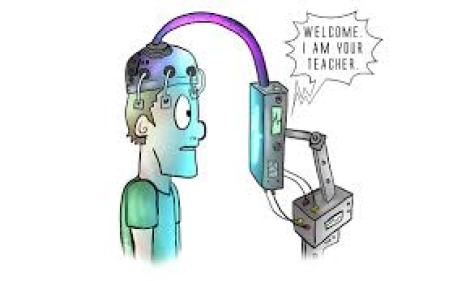
Being in the imagination or live in the realistic world .

Being born in money or torn away by poverty is the world where we live

The Hallucination

Are the money makers living their life without fear ?

Can a poorer get to live more life than its fated ?

Will you ignore the one who hurt you immensely ?

Or like a coward , can you run from the truth ?

If yes , than pray to god for providing you such an imaginary world . Don’t take it seriously but you really need to wake up .

The Truth
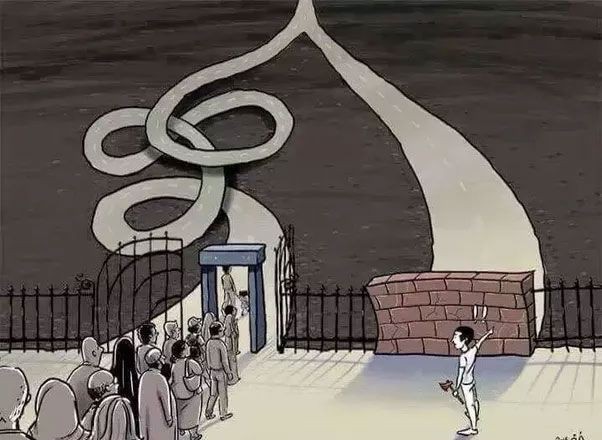
The life that we are living is not a game to play . We need be realistic while taking decisions in our life . I don’t want to sound like an arrogant person . But we need to think before taking any decision because it may or may not harm our future . In our life we only focus on materialistic things and grow accustom to them . Which leads to the situation where we become selfish and fiercely jealous to one’s personality .

We judge them regarding to their status , money , power , clothes and their physique . Ding ding …. It’s time for the truth we become impetuous .
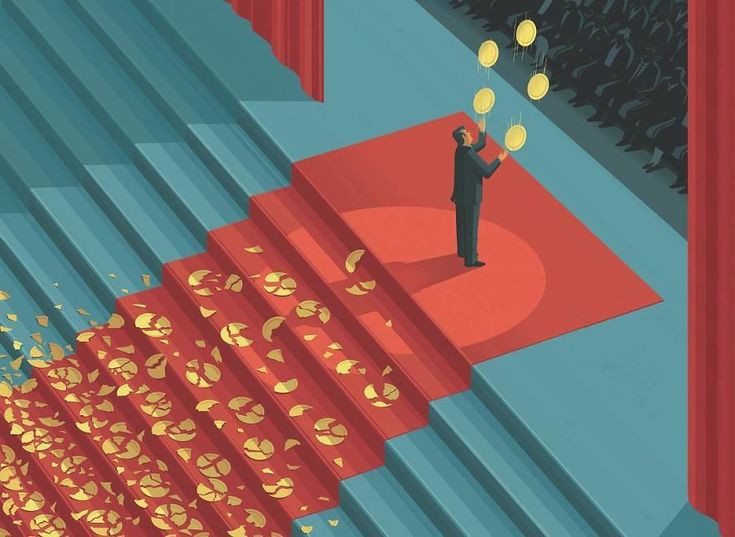
So what we learn from OJO -MOJO . 1. Like OJO that donot study and fail in your class. OR 2. MOJO that learn workhard and get award from the school . I choose options 1 (hehe don’t get any ideas I am a hardworker so I will choose my handsome MOJO not an overconfident OJO )


The REALITY

Not against the world of imagination just a believer of reality .
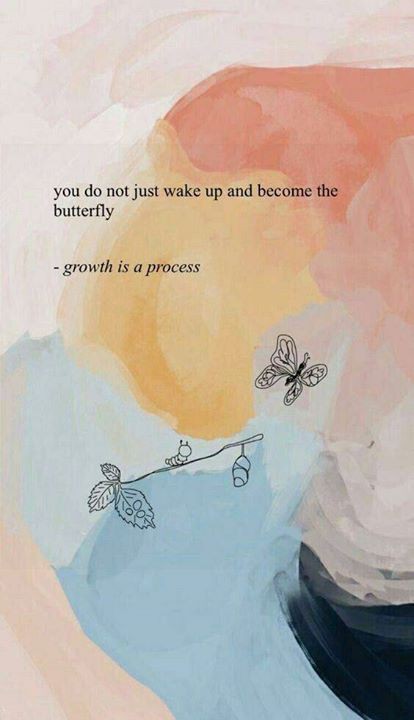
Life is not easy I agree with you but can we make it easy , Is the question only you can answer .

For me , we can only when we are focusing on our work rather than its result . I am not repulsive about getting a promotion on my first day on the work . But I am excited about learning new things and improve my capabilities . That how we need to react . I didn’t get the idea of getting a luxurious jet when I didn’t even have a penny to spend on my health . Well if you can just don’t forget to take me as well ( Huh.. greedy me ) .

I do imagine my life being in the island with some hot people around me ( its a wild imagination) . Well I can’t change that . But what I can change is the accept the reality ( like sitting in my PJ’s , eating popcorn and drooling over Michele Morrone yeah I am fan of 365 days ) .

Conclusion

Life is a series of natural and spontaneous changes. Don’t resist them; that only creates sorrow. Let reality be reality. Let things flow naturally forward in whatever way they like.

Lao Tzu

things that are written in the blog is my perspective of life . i am not taunting anyone . 
its your life you can live according to your rules .

and yes pictures that i used in the blogs are from pintrest .

enjoy your reading .


International widows Day and their CONDITION in india

International widows day and their condition in India

Widow. The word consumes itself”.

23rd June observed “International widows day” by United Nation in light of creating awareness about the situation and maltreatment of windows in the world.

The theme of this year’s International widow Day is “ invisible women, Invisible Problems”.

Women who lose their husband due to any cause are known to be a widow. According to United Nation, There are more than 258 million widows around the world, suffering from daily needs. They tolerate major issues like poverty, violence, health-related problem and war/conflicts effects.

“ Human Rights are for everyone and not contingent on marital status. For many widows, losing rights, income, and possibly their children. On International Widows Day, let’s commit to providing widows with access to legal and social protection”.

-Antonio Guterres

  • India and widow condition

History and background

Raja ram Mohan Roy worked hard to abolished the sati pratha in India.

In the past, In the sati pratha is a ritual where the wife of a dead husband, had to sit on her pyre and burn alive.

British abolish sati pratha on 4 December 1829.

Still today, the mentality remains the same.

They were forced to shaved their head and prohibit to wear colourful clothes.

They were even called “Husband Eater”.

They were not allowed to enjoy any festival.

They were kept separately as to punish her, and were tortured by society by calling “ Bad Luck “ to be seen in the morning.

To sum all, widows were tortured and abused for centuries and centuries

India emerged as a welfare sate, and implement major scheme of widows in the country .

They come under the Ministry of women and child development.

  • The major schemes and Acts of government of India are as under –
  • Indira Gandhi National widow pension schemes (IGNWPS) :-

Under IGNWPS pension scheme for widows as well as Pension scheme for the Elderly below poverty line .

IGNWPS was launched in 1995 as a part of the National Social Assistance Programme.

A widow in age group of 40 to 65 years whose family falls under Below poverty line is eligible under this scheme.  

She is initiated to receive Rs 200/- per month and Rs 400 per month by the state government.

  • Home for widows:-

A Home for widows has been set up in Vrindavan, UP with a capacity of 1000 inmates to provide widows with a safe and secure place of stay, health services, nutritious food, legal and counselling services.

  • The Widow Remarriage Act of 1856:-

According to this legislation, a Hindu widow had to give up any rights to property , or maintenance from her dead husband’s property, if she married again.

  • The current Inheritance Laws For Widows :-
  •  The Hindu Succession 1956 applies to Hindus. Skikhs, jains and Buddhist for intestate succession / inheritance.
  • The Indian Succession Act , 1925, particularly Sections 50 to 56, apply to Parsis for intestate succession.
  • The Indian succession Act , 1925 , particularly Section 31 to 49, apply to Christians and news for intestate succession.
  • The law of succession governing Muslims, for intestate succession, is the Muslim Personal Law Application Act, 1937.

Even though there are many schemes and acts for widows in India. But the condition of widows on a grassroots level is devastated. More than half of the windows don’t even know their rights and government  scheme.

We have to take steps to aware them at the grassroots level.

Online Education

“The function of education is to teach one to think intensively and to think critically. Intelligence plus character – that is the goal of true education”

Martin Luther King

Online education has become a major part of everyone’s life. It has been a major part since covid-19 pandemic. Many countries have adapted it from early years. They insist on online instead of offline education. They think online concepts can be cleared with the help of technology like 3-d images etc. It is found much more comforting and safe as one has to sit home and study. Online studying in India has taken the place of offline studies.

Advantages

Online learning offers teachers an efficient way to deliver lessons to students. Online learning has a number of tools such as videos, PDFs, podcasts, and teachers can use all these tools as part of their lesson plans. By extending the lesson plan beyond traditional textbooks to include online resources, teachers are able to become more efficient educators. Another advantage of online education is that it allows students to attend classes from any location of their choice. It also allows schools to reach out to a more extensive network of students, instead of being restricted by geographical boundaries. Additionally, online lectures can be recorded, archived, and shared for future reference. This allows students to access the learning material at a time of their comfort.

Disadvantages

With online learning, there is a greater chance for students to be easily distracted by social media or other sites. Teachers need to keep their online classes crisp, engaging, and interactive to help students stay focused on the lesson. Online learning can also lead to an increase in the number of people who have access to the internet. In smaller cities and towns, a consistent internet connection with decent speed is a problem. Without a consistent connection for students or teachers, there can be a lack of continuity in learning for the child. This is detrimental to the education process as it can lead to a loss of confidence in the teacher’s ability to teach.

Myths and facts about puberty.

Parents have a tendency to feel a sense of dread when confronted by the onset of puberty. That dread seems particularly acute among fathers with growing daughters, presumably because they lack a frame of reference and because puberty in girls remains a borderline taboo subject (for a host of cultural reasons we don’t need to get into here). Where mystery abides, so too does mythology. And there are a lot of myths about the way in which girls go through puberty, many of them stigmatizing and bizarre. As it turns out, puberty is simply a child development process. There is nothing special about it. The weird emotional baggage that comes with it? You can put that down.

As puberty begins for a girl, it’s important that her parents look past the myths. Because more than anything they stand in the way of what can be a tumultuous time for young women, who will need their parents’ guidance. Yes, both of their parents.Many parents conflate a girl’s menarche, of first menses, with the onset of puberty. As if, up until that point nothing has really been happening. But the fact is that puberty is a long process and has likely been occurring for years prior to the first awkward ask for menstrual pads and pain relievers.The fact is that puberty can start anytime after a girl is 8 years old. The earliest signs of puberty may include breast growth and body odor. A typically developing girl will generally start producing the hormones that promote hair growth in the armpits and groin around 14, with the first period arriving about a year later.

There has been plenty of casual observation in the last decade or so that puberty seems to be happening sooner. Many parents simply shrug off the knowledge as more of a factual curiosity than a condition that could have long-term effects on a child’s health. But early puberty can set a child up for serious issues in the future.Essentially, early puberty works to accelerate maturity. But not just physical maturity. It’s also been linked with an increase in social problems like early drug use and sexual activity resulting in teen pregnancy. Studies have also suggested links to health problems including depression and some reproductive cancers.

Puberty is happening so early that some doctors and endocrinologists have suggested moving the “standard” onset of puberty to as early as 6 or 7-years-old. And there are a host of reasons why puberty could be occurring in girls so young.On recent study found that poverty is linked to early puberty. The research suggests that an impoverished mothers health can send signals to a developing fetus to develop more rapidly in order to reach reproductive age sooner after birth. And some research suggests that diet can also play a role. One longitudinal study found that girls who were obese were more likely to start puberty early.

There’s an idea that young men going through puberty are really stinky. And that’s actually true. But girls don’t get a pass on puberty stink. Their biology creates the same conditions that cause boys to smell too.The stink occurs as kids begin to sweat more due to hormonal changes. But it’s not the run of the mill forehead sweat causing the issue, it’s the oily sweat that secreted by what are known as sebaceous glands that produce oils. These oils are a particular favorite for bacteria who congregate in the dank spaces and create the odor. Importantly, these bacteria do not care if they are on a boy or a girl. The are equal opportunity stinkers.

Talking to girls about puberty can be completely nerve-wracking for dads whose experience growing up through puberty feels markedly different than what they are witnessing. But by treating the subject as taboo, Dads are inadvertently adding a layer of shame to a process that should be free of shame.

Sure, reading that won’t necessarily make it easier for dads to talk to daughters about puberty, but perhaps it can act as motivation. The important part for Dads is to stay as chill and matter-of-fact about the process of puberty as possible. That means answering questions honestly and talking about body parts without using euphemisms. It also means admitting when your ignorant about an issue and not asking her about her period in front of her friends

How music changes your mood?.

Music stimulates the part of the brain that produces the dopamine hormone. This hormone affects emotional behavior and mood. The influence of music is both behavioral and neural. That is, this means that music not only affects the mood but also affects what we cannot control ourselves.Music is not only able to affect your mood — listening to particularly happy or sad music can even change the way we perceive the world, according to researchers from the University of Groningen.

Music and mood are closely interrelated — listening to a sad or happy song on the radio can make you feel more sad or happy. However, such mood changes not only affect how you feel, they also change your perception. For example, people will recognize happy faces if they are feeling happy themselves.

A new study by researcher Jacob Jolij and student Maaike Meurs of the Psychology Department of the University of Groningen shows that music has an even more dramatic effect on perception: even if there is nothing to see, people sometimes still see happy faces when they are listening to happy music and sad faces when they are listening to sad music.

Research has found that when a subject listens to music that gives them the chills, it triggers a release of dopamine to the brain. And if you don’t know, dopamine is a kind of naturally occurring happy chemical we receive as part of a reward system. Now here’s the really interesting part: Dopamine is not only released during peak musical moments but also when we anticipate those moments. It’s like our brain is rewarding us for knowing a really great chorus is just about to hit!

Hearing a song from our adolescence brings back a flood of feelings and memories. By why do those songs have such a strong hold on our emotional core? Our brains develop rapidly between ages 12 and 22 (there’s a reason they call it our “formative” years), so when we make a connection to a song during that time, it’s a strong neurological connection. The massive rush of hormones associated with our pubescent years tells our brains that everything is super important, and that includes whatever music we’re listening to at the time. That’s why when we hear a true throwback to our high school days, it’s a powerful thing.

The impact of positive thinking has been a subject of focus for psychologists and self-help gurus for ages now, but what about positive listening? Is there such a thing as intentionally listening to positive-sounding music to boost your mood? We already know music that gives us the chills helps to release dopamine, but a separate study found that people who intentionally listened to upbeat music improved their moods and happiness in just two weeks. When a separate group was instructed to listen to different music that wasn’t deemed positive sounding, they didn’t experience the same mood-boosting effect. So the next time you’re blue, maybe put on a song that will make you smile.

world test championship

Cricket enthusiasts have always been familiar with the game being played at apex levels only in the limited overs format. But now since the past two years, where the tournament for tests had begun, it gave the whole new meaning to the test cricket which is considered to be the purest form of cricket. “The Ashes”, a very prominent and popular test series among fans which has a very significant history for itself marked the beginning of the ICC WTC in August 2019. This marked the beginning of the long tournament for the next two years from 2019 to the finals in June 2021. World’s best 9 teams qualified to compete with each other in this ICC tournament having to play 3 home and 3 away test series for the next two years.

All these said and done, now was the time for the ultimate test, the finals of ICC World Test Championship. Through the course of two years, best of the best teams were tested on friendly and ferocious conditions in home and away terrains of the game. This lengthy tournament kept cricketing fans waited for the last two years to arrive at the site of this day, June 18 2021 the finals of ICC WTC. Irrespective of what teams they like, irrespective of all the positions on the points table of WTC, everybody was equally excited for this massive final, ultimately they all wished to see who’s dream of winning this ICC WTC trophy would fulfill in the debut season of the tournament. The final was played by the top 2 teams of the the world- INDIA and NEW ZEALAND.

The Ageas Bowl in Southampton was relatively a nerve wrecking experience for fans as well as the teams themselves. The venue being a not so familiar terrain to both the teams already had now become unpredictable for its weather and continuous shower on the day 1 of the WTC final. Indeed not a great way to start the final of such an event! New Zealand had never played in this venue before, on the other hand India had played on this venue twice and had no winning experience on both the occasions. The final was given an extra day in the full intention to avoid a tie and to declare a winner for the tournament, which indeed got fruitful as the game continued for the 6th day after the continuous rain on 2 occasions of the 5 day test match. Having had to play on unfamiliar conditions, batting units from both teams were not having an easy time and indeed it was up to the bowlers to control the test match and bring victory to their side.

Fans were devastated from day 1, for all the rain, the weather conditions and predictions that were being made. But, all’s well that ends well, fans could finally cherish the final as it was a clear sky on day 6 and concluded with the Kiwis winning the title of the ICC WTC! They totally deserved every bit of it, Kane Williamson the captain of the winning side now finally had an ICC trophy and a victory to cherish after the unfortunate defeat at the 2019 World Cup.

ANALYSIS OF GAMBLING LAWS IN INDIA

Public Gambling Act of 1867:

As once Ambrose Bierce said “The gambling known as business looks with austere disfavor upon the business known as gambling.” Does mean that Gambling is for entertainment, not for profit. But this generation is pulling all the strings to make it popular and make it legal. But gambling ensures that it is one of the best way for earning more and becoming rich in less time because of probability over possibility. India with a billion plus population does seems to enjoy gambling in most of the entertainment fields  like Cricket being the most popular game in India. Betting on Games even though the fact remains that it is prohibited. Even though it does not stop gamblers from betting. Indian laws for gambling are out-dating and lacking the clarity for current generation. You will often find Online Casinos with a wide variety of different games for players to play. The most popular ways for gambling would be blackjack , poker and roulette. Live dealer are also gaining the popularity among this generation for example Online gambling sites for PC games. For example http://www.gg.bet , http://www.lott.bet , http://www.csgoempire.com etc,. These sites attract the teenagers/adults to their websites because people are drowned in online games and want to earn more and show off to their friends.

The Public gambling act is a central law. The Section 3 states that there is a penalty for running or being in charge of a Public Gambling House. The fine for breaking this law is ₹200 or imprisonment of up to 3 months. Although this act prohibits from visiting a gambling house , a fine of ₹100 or imprisonment of up to 1 month. According to Section 4 whoever found in any such house or place playing or gaming with cards, dice, counters etc., or is found there for purpose of gaming playing for any money , stake , property shall be liable for fine according to the Indian Penal Code (45 of 1860).

Information Technology Act, 2000:

In short the act says that the website hosts and the ISP (Internet Service Provider) are instructed to block access to certain types of content or website. For the most of the part it is based on National security. Things that are based on blasphemous , pornographic , illegal etc., Section 2 item B anything to relating or encouraging money laundering or gambling.

Payment and Settlement Act, 2007:

This act was signed on 20th December 2007 by President Patil, although it went into effect on 12th August 2008. This act gives authority to RBI to have access and regulate all forms of electronic payments. The act states that no one is authorized to operate Payment system, No person other than the RBI shall operate except for the accordance with an authorization issued by the RBI under the provisions of this act.

The Types of Gambling :

Betting : Betting can either be legal or illegal , it just depends on what the betting is placed on. For example if the betting is placed on a game of chance then it is illegal. There are exceptions to the rule that make betting legal. And if the betting is placed on game of skill then it is legal. For example – Dream11 , because Dream11 involves game of skill. Game of skills basically means that people use their analytical talent and prediction on who will win so it makes it legal in India.

Although Dream11 is not legal in all states in India, it is legal in the following states:

Assam , Odisha and Telangana.

Casino : Goa and Sikkim are the only states and Dadra and Nagar Haveli and Daman and Diu  are the only Union territories where casinos are legalized. The fact is that Goa is the only place where live gambling is legal and the first casino opened there in 1999.

Bingo : Bingo can either be considered as a lottery or gambling , it depends under which condition it is taken. It is considered as a lottery if it falls under the lottery law and which allows state governments to organize them under special conditions. And it is considered as gambling when it is a game of chance and thus it will be prohibited.

Lotteries are regulated in Sikkim locally and in Punjab it Is only legal while playing it online, while Madhya Pradesh has completely banned it.

Gambling Regulations in India : The Public Gambling Act was introduced in India as whole but India is a vast country with different cultures and religions. So some states and union territories have different rules and regulations on gambling. This also means that different areas have different view on gambling. Some states like Orissa and Assam have banned gambling totally because of high population of Hindu and Muslims in the areas. Whereas states like Goa and union territory like Daman and Diu have legalized land-based gambling operators with license.

Rajasthan: In the state of Rajasthan both offering to gambling and playing inside a gambling place is an offence. Although many underground gambling places are active in Jaipur even though it is illegal.

Tamil Nadu: In the state of Tamil Nadu , it is one of the few states in India where almost all forms of gambling are prohibited with the exception of Horse riding.

Orissa and Assam: In the states of Orissa and Assam gambling in any sort is completely illegal except for the horse riding in assam. Although Any of those states doesn’t permit staking of money for betting and gambling.

Gujarat and Maharashtra: In the states of Gujarat and Maharashtra casino is illegal in both the states while betting on horse riding and lottery is legal.

Conclusion: In this article I have researched the very essence to provide the reader’s with the knowledge of gambling laws in India and the existence of illegal gambling, Online gambling and legalized gambling in India. Overall India has been through a lot when we talk about gambling and it is still under constant discussions. Well let’s face this that people as players want to chase their dream and want to earn a lot in a less period of time and become millionaires. As of the fact that casinos are already available in a lot of places in India.

Child Custody laws in India

Child custody laws in India

The Best Security blanket a child can have is parents who respect each other”


Marriage is a legally and socially sanctioned relationship, usually between a man and a woman, governed by laws, norms, conventions, beliefs, and attitudes that define the spouses’ rights and responsibilities as well as the status of their children.
When a marriage falls apart or ends in divorce, the children born out of the union are the ones who suffer the most, despite the fact that the parents have the legal right to custody of their children.
The Guardian and Wards Act of 1890 in Indian law gives the court complete authority to choose a child’s guardian. In layman’s terms, it’s known as “Legal Custody.”
The custody of a child after a divorce and the end of a marriage in India is classified as follows:
1.Sole Custody: When a child is cared for by only one parent.

2. Joint Custody :-When both parents are liable and responsible for the child, this is known as joint custody.


3.Third-Party Custody :- It occurs when neither the father nor the mother agrees to hand over custody of their kid to the court.
Then there’s the problem of deciding what to do. Who will assume responsibility for the child’s upbringing? The child’s custody may be given to Grandparents or someone other than the parents (child).The Standard State of Affairs in Indian Society, when throughout divorce cases, they battle over the money for maintenance, i.e. money to be paid by the stable and earning partner to the other.
The method of gaining custody of a kid in order to avoid having to pay child support to the other partner. They are caring for the youngster as a result of this. If the child is of legal age (over 18), they have the right to choose their guardian, and even if the child is a juvenile, the court may request that the youngster express their opinions.


What factors does the court consider when deciding who should be the child’s custodian?


1.The Custodial Parents’ Financial Stability.


2.Custodial parents’ physical and mental well-being.


3.Comfort of the child with his or her custodial parents.


4.Custodial parents’ intention (Wrong or false intention that may harm the child).


5.The judge has complete authority and authority to choose what is best for the child’s future. Additionally, the child has the option of selecting.

Custody of child shall be handed over to such a person who fosters him with care, love and affection” – Honorable Justice Vinod Prasad.

SALE OF IMMOVABLE PROPERTY —

This sale of immovable property is nothing but the transfer of ownership in exchange for a price paid or promised or partly paid or partly promised.it deals with the rights and duties of buyer and seller. in this sale of immovable property there are three requirements of laws that transfer of property by sale must take place with the help of validly executed sale deed ,by the transferor in writting is properly attested and registered.

In the case of tangible immovable property for example if we take the value which is morethan 100 rupees then this transfer can be made by only registered instrument. in the same example suppose if we take the value which is less than 100 rupees then this transfer may be either registered instrument or by the delivery of the property. this delivery of tangible immovable property takes place when when the seller places the buyer.

There are some essential elements for the sale of immovable property:

PARTIES: In this element there must be atleast 2 parties involved.which is the person who transfers his property is known as the transferor. and the person to whom the property is transfered is known as the transferee.

SUBJECT MATTER OF THE SALE: immovable property includes the benefits arrising out of land and the things attached to the earth except for standing timber, growing crops and grass.

PRICE OR CONSIDERATION: the price paid and the price promised to stand on equal footing as regards of the transaction of a sale there is nothing illegal, or contracy to public policy if the parties agree that the payment of the consideration shall be postponed in certain events.

REGISTRATION: the execution and registration of the sale deed, the ownership and all the intrests in the property pass to the transferee, yet that would be on terms and conditions embodied in the dead indicating the intention of the parties.

CONVEYANCE: there are 2 types in this conveyance. they are delivery of possession and the registration of the sale deed.

A.Delivery of possesion: this delivery of tangible property takes place when the sellers puts the buyer or such person as the buyer directs in the possession of the property.

B.Registration of sale deed: where the property is intangible immovable property of any valuation, it will require registration for completion of sale.

16 personality types

HOMO SEPIANS are the species dominating the world. This species makes its own standards and breaks them too. They call themselves smartest on earth. They create the most chaos and try to resolve them too. The species that is functioning efficiently because of its mental capabilities like learning new things, to comprehend information, to use it and mostly the so-called self-awareness.
Let’s get into self-awareness. Debbie ford says “the ability to take an honest look at your life without attachment to it being right or wrong”. Simply, to know or to be able to judge your state without being influenced by anything makes you self-aware. Once you are self-aware you understand your needs, values, habits, or we can say you understand your complete personality.
Once you know yourself you want to define yourself. The term which defines your uniqueness. It’s The personality description. There is one famous personality test called “The Myers-Briggs Test” which classifies the world into 16 personality types. This is created by Myers and Briggs who were inspired by Jung’s theory of psychological types. The test includes some awareness questions including likes, dislikes, strengths, weakness, preferences etc.
The 16 personality types include:

  1. ISTJ- The inspector
  2. ISTP- The crafter
  3. ISFJ- The protector
  4. ISFP- The artist
  5. INFJ- The advocate
  6. INFP- The mediator
  7. INTJ- The architect
  8. INTP- The Thinker
  9. ESTP- The persuader
  10. ESTJ- The Director
  11. ESFP- The performer
  12. ESFJ- The caregiver
  13. ENFP- The champion
  14. ENFJ- The giver
  15. ENTP- The debater
  16. ENTJ- The commander
    The first letter in all of these abbreviations include the letter I or E. The letter I indicates introversion and E indicates extroversion. A person is classified as extrovert or introvert based on how they interact and respond with the surrounding world. Extroverts mostly enjoy social interaction, feel energized after spending time with other people. Introverts like to stay thought-oriented, enjoy deep and meaningful social interaction.
    Second letter of the abbreviation include S or N. S stands for sensing and N stands for intuition. This explains how a person gather information from the world. People who are considered to be sensing, tend to derive information from their experiences, from what they see and what all the facts say about. On the other hand, people who are intuitive like to imagine the future, think about possibilities and learn from theories.
    Third letter is either T or F. T stands for thinking and F stands for feeling. These mainly signifies about how personalities take decision based on the information they have. Person of Feeling category prefer people and emotions over material things. Person of thinking category tends to rely on the facts collected and wants to emphasis on thinking about them.
    The last letter may have J or P. this is mainly how people like to deal with the outer world. J stands for judging, where these kinds of people prefer firm decision and a perfect plan. P stands for perceiving and these people are more flexible and adaptable. They are open to everything.
    Any of the above personality is not superior or inferior than the other. And these classification does not give any information about the mental health. But this can provide some insights about yourself and it will increase your self awareness.

Outrigger technology in construction

OUTRIGGER TECHNOLOGY

Outriggers are rigid horizontal structures designed to improve building overturning stiffness and strength by connecting the building core or spine to distant columns. Outriggers have been used in tall, narrow buildings for nearly half a century, but the design principle has been used for millennia.The oldest “outriggers” are horizontal beams connecting the main canoe-shaped hulls of Polynesian ocean going boats to outer stabilizing floats or “amas”.

Features of Outrigger Structural System:

Outrigger system is adopted for buildings that are subjected to large overturning moments compared to shear and lateral deflections.

Outrigger in structures reduces the overall drift and core wind moments.The outrigger system reduces the overall building acceleration due to high winds and improves occupant comfort.

Outrigger systems function by tying together two structural systems – typically a core system and a fringe system – to yield whole-building structural behaviors that are far better than those of the component systems. They do this by creating a positive interaction between the 2 tied systems. The beneficial effect is most pronounced where the responses of the component systems under lateral loads are most disparate. Outrigger system performance is suffering from outrigger locations through the peak of a building, the amount of levels of outriggers provided, their plan locations, the presence of belt trusses to engage adjacent perimeter columns versus stand alone mega columns, outrigger truss depths, and therefore the primary structural materials used.

The main types of outrigger structural systems are:

1. Conventional outrigger system

2. Offset outrigger system

3. Virtual outrigger system

Benefits of an Outrigger

SystemDeformation

ReductionIn a building with a central core braced frame or shear walls, an outrigger system engages perimeter columns to efficiently reduce building deformations from overturning moments and the resulting lateral displacements at upper floors. A tall building structure which incorporates an outrigger system can experience a reduction in core overturning moment up to 40% compared to a free cantilever, as well as a significant reduction in drift depending on the relative rigidities of the core and the outrigger system.

Efficiency

For systems with belt trusses that engage all perimeter columns, columns already sized for gravity load may be ca-capable of resisting outrigger forces with minimal changes in size or reinforcement, as diff erent load factors apply to design combinations with and without lateral loads. In the event that additional overall fl exural stiffness is required, the greater lever arm at outrigger columns makes additional material more effective than in the core. Outriggers may also permit optimization of the overall building system using techniques such as the unit load method to identify the best locations for additional material.

Foundation Forces

A separate but related advantage is force reduction at core foundations. Outrigger systems help to effectively distribute overturning loads on foundations. Even where a foundation mat is extended over the full tower footprint, a core-only lateral system applying large local forces from overturning can generate such large mat shear and fl exural demands, as well as net tension in piles or loss of bearing, that the design becomes uneconomical or impractical. Reducing core overturning and involving perimeter column axial

Thank you!

Mutual Funds 1O1- Advantages

Mutual Funds collect small sums of money from a large number of investors. This becomes a large pool of money which is invested into the market and the returns generated are distributed among the investors proportionately.

There are many advantages of investing in Mutual Funds:  

  • Professional Management: Investing directly in Equity is very risky for those who are not experts and lack the ability to track the market regularly.  Mutual Funds are managed by professionals with adequate  qualifications and experience.
  • In house research is undertaken to aid the fund manager. 
  • Top management involvement to guide the investment policy and the fund house philosophy.
  • Competitive performance resulting in constant improvement of portfolio and NAVs are disclosed at record timings.  
  • Diversification: Diversification is nothing but investing your money across different types of investments. An investor with a limited amount of funds might be able to invest in only one or two stocks/bonds. However, Mutual Funds invest in a no. of companies across a broad cross-section of industries and sectors. This diversification reduces the risk because it is unlikely that all the stocks decline at the same time. So Unit holders of a mutual fund achieve this diversification with very less money that an investor cannot do on its own.  
  • Low Cost: Mutual Funds invest huge amounts of money on a regular basis. Therefore they pay very less % of the amount such as brokerage, depository and other types of charges as compared to the individual investors. So mutual funds provide a cost efficient way to invest in the financial market. 
  • Transparency: Mutual Funds have to publish their NAV on a daily basis and they have to periodically share the portfolio investments with the investors. They offer transparency to investors and have to publish their results semi-annually. Any important change in the scheme has to be duly informed to investors. 
  • Attractive Returns: Mutual Funds give very attractive returns in the long or medium term because fund managers invest in stocks after considering the fundamentals, future plans of companies with the help of trained research teams. They use every possible technique to save the investors’ money such as Hedging. So it’s a very good investment avenue used in the financial planning process. 
  • Well Regulated: All the mutual funds have to be mandatorily registered with SEBI. SEBI Mutual Fund Regulations 1996, as amended till date, governs the mutual fund operations and investments. The regulatory system aims to ensure the protection of interest of investors. The fund investments have to be as per the scheme’s objectives and there has to be complete transparency about funds investment and performance. NAV of the fund has to be published daily and scheme’s performance periodically. SID (Society for Information Display) & SAI contains all relevant and important information pertaining to scheme and fund and serves as an important investment document for the investor. Thus mutual funds are a well regulated investment vehicle in India. 
  • Choice of Options: In India, Mutual Funds offer different types of schemes to suit the varying needs of investors. Investors have different goals and objectives, which may range from retirement planning to investing for a vacation. Investor’s needs may include capital appreciation, liquidity, regular income etc. Because of several types of schemes launched by mutual funds catering to different investment requirements, investors have numerous options to choose from the wide range of schemes such as growth plan, regular income plans or Equity oriented plan, Gilt Funds. They also have the choice available in their method of investment. They can invest lump sum money or they can opt for periodic investment in the form of monthly installments through Systematic Investment Plan (SIP). Similarly they can opt for single withdrawal of entire funds when needed or monthly Systematic Withdrawal Plan (SWP). 
  • Liquidity: Open ended mutual funds are very liquid investment avenues because investors. Open-ended schemes are all the time open for subscription and redemption with the fund house itself. Investors can enter and exit from the scheme at any time at the prevailing NAV. Closed ended schemes offer limited liquidity to investors. Investors can buy the units only during NFO (new fund offer) and can exit at the maturity of the scheme when the mutual fund redeems the units at the prevailing NAV. However, all the closed ended schemes have to be necessarily listed on the stock exchanges in India. This provides a secondary market exit route to the investors of closed ended schemes. Though the schemes are listed but practically trading volumes in mutual fund units are negligible and therefore closed ended schemes don’t offer liquidity to investors. 
  • Convenience: Mutual funds provide a very easy and convenient way of investment as well as withdrawal of funds as compared to other investment avenues like Real estate, Debt instruments etc. Investors can invest in any manner either through distributors in the physical form or can buy units online whatever is convenient to them. Units can be held in physical or demat form. 

Mutual Fund is an investment avenue which gives the small investors an option to participate in the capital market with their small funds and limited knowledge of the volatile market.  

why is it hard to say no?


“We need to learn the slow ‘yes’ and the quick ‘no’”, stated Warren Buffett, the CEO of Berkshire Hathaway. Another quote by Tony Blair, Former prime minister of the United Kingdom states “The art of leadership is saying no, not saying yes. It is very easy to say yes” But for many people, it is not easy to say no.but, what makes it so hard to say that monosyllabic word?
Human interactions are quite reliant on reciprocity, which makes us feel that not obliging socially will threaten our bonds with people. Amongst our struggles to fit in with our peers and keep them happy, some worry that saying “no” might make those same peers reflect them. Other than that, the fear of saying no also urges to avoid any conflicts or confrontations or making someone upset or hurt their feelings.
Dara Blaine, a career counsellor in Los Angeles states that “some people are conditioned to think that if they say no, they will not move forward in life, which is absolutely false.” She continued to say that “it’s when people learn to say no that their careers really take off”.
Study also shows that women often find it difficult to say no compared to men, mainly because of the reasons of not wanting to piss them off(mostly men), or wanting to protect the ego of the other person. While not saying ‘no’ when a person really wants to, it may help avoid immediate discomfort of confrontation, but in the long term causes resentment, emotional stress and sometimes even depression.
Why is it important to say NO?
It is important to say no as when you say no, you prioritise your own feelings and needs over others.
Saying no is a sign of respect as saying yes can later cause resentment against a person and can ruin a relationship. So, when you say no, it indicates respect for yourself and for the other person.
Experts encourage people to take control of their own lives and assert boundaries by learning to say no. When a person says no, it really reflects that the person is in the drivers seat of their own life…it gives a sense of empowerment.

The sky-rocketing university cut-offs

The Problem:

97%, 98%, 99% in fact, 100%! These are not Dettol’s bacteria killing percentages, to tell the truth, these are the sky rocketing cut-off figures that are required for admission into the prestigious Delhi University. Although, the cut-offs have been escalating steadily over the prior years, this year, Lady Shri Ram college (LSR) has broken all the previous records by setting 100% cut off for three programs for admission. As a matter of fact, all other DU colleges also have 99% and higher cut offs. The university has refused to bring the bar any lower, even in the dim of this Global Pandemic. The primary motive behind these cut-off figures is that around 5,500 registered candidates for admission to the university have a ‘best-of-four-subjects’ percentage of 100%. I agree that, one of the main reasons for this is the fact that, the number of applicants are more than the available seats. This year alone, 3.5 lakh students have applied and competed for a mere 70,000 seats that are available. The percentage of students scoring above 95 has also increased this year. This results in a vigorous competition. However, 100% cut-off seems highly unreasonable, because certain boards, specially ICSE, do not give full marks in certain subjects. Where does it leave the rest of them, then? Shouldn’t a national university be inclusive of the issues and predicaments of all the students across the country?  In these unprecedented times, these cut-offs seem quite unreasonable and unreal.

Better Methods Of Filtering:

One obvious way to lessen this problem, is by increasing the number of colleges, by opening another campus. However, it is not the silver bullet to the soaring number of applicants appearing every year. It is disappointing to see brilliant students to lose their chance at this respectable institution just by a few marks. Such esteemed universities need a better method of filtering for admission of candidates. For starters, they could shift the weight of admission criteria from marks alone to the overall performance of the candidate. Many a times, marks don’t justify the potential of a student. In fact, most of the top percentile students, hardly have any other achievements under their belt. In my view, a comprehensive all-round performance of a child must be encouraged along with a reasonable cut-off for admission filtering. This will improve the quality of the students and the overall performance of the University. Apart from that, students must not hold DU as their ultimatum. They must be encouraged to try out different alternatives. We as a society, must collectively play a role in encouraging and motivating students in their pursuits and not bringing them down for not getting admissions in certain ‘reputed’ colleges.

Learn to Apologize

Photo by Brett Jordan on Pexels.com

Apologize when u do a mistake.Sounds cliche right?

But it has a deep meaning and significance.

There are two possibilities either you have done something for which you should genuinely apologize and second is you have not done anything wrong but still being accused.

Let’s discuss the former ,

If and when a mistake is committed by you be it intentionally or unintentionally,apologize for it.

It may so happen that your actions/words didn’t directly culminate to a mistake but have adverse indirect effects.So ,by keeping your heart out of ego ,empathizing with the victim , just apologize.

Your mistake might not feel big to you but could be grave or fatal for the other party.

You might have caused deep cuts by your words,causing injury to their soul.

Irrespective of your awareness of the grief,apologize.

It will not just Help them move on but also help yourself from avoiding any further regret. A man Can live poorly But living with guilt It’s some thing no one can afford.

So for the sake of your own selfishness at least,learn to apologize.

It is not easy to become brave and accept your mistakes.But it is wise and appropriated.Bowing down doesn’t make you weaker,it only helps you grow as a person.Self introspection grows stronger and your quest to success begins.Identifying and realising your mistake is an indication of self awareness and diluted self ego.

So next time you cause hurt,mental or physical intention or unintentional 

Apologize.

Now the question is when you know you have not done wrong and the other party is falsely accusing you.After self introspection you come to know that you aren’t at fault,no facts support you are wrong and the other party is falsely framing you for selfish purposes.

Do this,

First of all realise that this person is not your friend if s-he does something like this.Cut off this toxic person.

Do not apologize when you aren’t wrong.Take your stand. You aren’t nothing to bow down when you are right.Stand up for what you believe.

Provide facts or statements of your right.Convince those who care about your arguments.Those who do not care won’t care even if you are right.

Give counterarguments .Do not sit down helplessly.If the person is important to you then try to explain yourself if not once then thrice.If s-he doesn’t trust you regardless,leave.

Trust is an important tenet of any relationship-friendship.If you cannot trust you ,you should not keep them.

You need to achieve a balance between right and wrong.

A wrong means for a right future is not always justified.

So today’s mantra-

Organize yourself,your thoughts and never bow down your ideals to someone who doesn’t value you or your thoughts.

Care for yourself just like you would care for others.

When wrong,do not shy away from apologizing.