Plant parenting

Every time we go out and connect with nature we feel calm and relaxed. Now imagine how great we will feel bringing small parts of nature to our home or workplace.  

Plant parenting is getting a plant and taking care of it like a child.  

If you are looking to add some colour to your house, plants are the best way to do that. Don’t just decorate your house with fake plants, get the real ones instead. They add liveliness and colour to the place.

 Plants also contribute to our environment, they take in the carbon dioxide and provide us with oxygen. Did you know houseplants can remove up to 85% of toxins from the air in just 24 hours? Cool isn’t it.

So buying plants can help reduce the toxins from your house and keeps the air purified.

Planting also makes us more responsible because we need to water them daily. Some people look after plants like it’s their job and, they don’t connect with it. Taking care and nourishing plants is very therapeutic if done correctly with peace and concentration. It is our time to connect with nature and watch it grow into something great.  

Plants also reduce our stress and boosts our mood. They create a soothing environment that creates a positive aura in our house or workplace. They also relieve anxiety and improve our mental health. Plants have a subliminal effect that lift our spirits and bring us happiness.

If you are looking for a hobby, gardening or taking care of houseplants is the perfect thing to do. People who garden are very calm and patient because plants take a long time to grow, and they require a lot of work. But, seeing a plant all grown and healthy is a reward to yourself.  

Even taking full care of one-two plants is a great way to start. Then when you succeed at it you can add more plants to your collection. You can either get seeds and watch the plant grow from the start or go to your local nursery and get halfway grown plants.

Here are a few beginners planting tips:

Read about the plant you are getting: Every plant is different. Each plant has its requirements; some need more light some don’t. If you are someone who lives in hot, humid weather, get a plant the similar weather to survive. Knowing about your plant is important or else they don’t survive that long.

Do not overwater your plants: a lot of people don’t read the water requirements of a plant and tend to overwater it which is wrong and can lead to the death of the plant. Roots growing in waterlogged soil cannot absorb the oxygen, and won’t be able to provide nutrients to the plant. Only water your plants if you think the soil is dry this way you will not end up overwatering them.

Make sure the pot has holes: this is important so the excess water can drain out. If the water is collected on the base, the roots may get fungus or bacteria.

Fertilizer: Other than water and light plants also require fertilizers. They are the food of the plant. If you are someone with a lot of plants. You can get a universal fertilizer liquid that works well for all plants and you can mix it with water as per the plant requirement.

Clean the leaves of your plants: If you think the leaves of your plants have dirt on them, water them or take a damp cloth to wipe the dirt off, this allows them to photosynthesize easily.

Water your plants in the morning or the evening: watering during these times will allow the plant to retain the water. If you water them in the afternoon, the water will be evaporated by the sun.

Remember that it is okay if some plants don’t live so long it is a cycle of life. But, if you take full care of them and keep reading more about plants chances are you will get better at it and enjoy your time with them.


Influence of Western Cuisine on Indians

Burgers, fries, pizza, turkey, hot dogs, wraps, sandwiches, pasta and shakes. Yum, right? While dreaming of delicious food, our mind often wanders to the foods offered by Western cuisine. We cannot deny the irresistible appeal of Western food even though we have pretty good choices of hot and spicy veggies and curry on our Indian menu.

The fast-food chains such as McDonald’s, Burger King, KFC, etc., influenced by western food, are rampant across every part of the world. Western cuisine is gaining rapid popularity everywhere to provide for guests from different nationalities because of tourism.

Do you even remember the last time you ate with your hands? Spoons, forks and chopsticks have invaded our traditional way of consuming food. When we eat with our hands, we become more conscious of the taste, flavours and aroma, leading us to relish and enjoy our food more. Right from the way of eating to what we eat, everything has changed due to westernization.

The staple diet of western people revolves around meat. They have bread as a supplement or an appetizer. They tend to eat fried foods over others and include artificially developed products and processed ingredients. They prefer minimal spices in their food too. But we Indians, on the other hand, love the mix of spices such as cloves, cinnamon, cardamom, saffron and many more. Our staple diet is rice and vegetables. We have unlimited and wide varieties of options to choose from for breakfast, lunch and dinner. We are more inclined towards fresh and homemade food.

We have established that Indian cuisine has aromas, spices and all the tasty whatnots. But still, we prefer Western cuisine. There are many reasons behind it. One chief deduction is that we have always had an inferiority complex that made us hold the Western culture in high regard. In doing so, we began to imitate their lifestyle to become equals to them. The other equally significant reason is that globalization has caused Western foods to crawl into Indian kitchens.

There are two sides to a coin. Sure they look appetizing, taste phenomenal and takes little to cook, making it a convenient choice. What more can we ask for, right? Anyhow, did we ever stop to wonder whether these types of food are suitable for us? They may tickle our taste buds at the moment, but they leave a profound mark on our long-term health.

Western food increases the risks of high blood pressure, diabetes and heart attack. Due to the lack of variety, it focuses higher on sugar and fats. It causes a threat to our biological system, leading to a rise in diabetes patients in our country.

The abundance of fat in fried foods is the main culprit provoking unhealthy weight gain and digestive troubles. Forget about maintaining your thin waistline and toned abs if you are not ready to give up chicken nuggets and salty dips. But, sacrificing them and switching to roasted and baked foods would prevent the adverse effects later in your life.

Despite the ease of preparation, Western dietary habits are disastrous to our health. If we do not establish a stop system to shut down the onset of the growing fast food industry, obesity and lifestyle risk factors will become more prevalent in India.

An Unnamed Relation

As we know that every person is related to each other in some way or the other. Whether it is a relationship of friendship, parents, siblings, and many more.

But there are some relations which have no name. Yet,they connected,they communicated.

He may remains anonymous throughout his life. But still they exist forever and become so important. When we are in any nameless relationship.They live every moment  with  wholeheartedly, but at the same time there is also the fear of losing . Our heart is in dilemma of the scariest thing of distance whether this diversion would erase all beautiful memories or will they be alive in the core of their hearts.

No one knows their limits in this relationship. We just keep on flowing like a stream of water. This is all life and fate so we have to breathe, belief, hold on and let go off the things with their own pace just to see what happens next.

Even though relationship is unnamed and we don’t know what we are for each other? But we still inside know the name of this unnamed relationship and know what she is for you and you are for her.

In India we call such a relationship as-

‘Rab ne banadi Jodi’ meaning ‘The God made bond’.

YOGA AND WELLNESS

Human body is the most exceptional body in the universe. The lengths we go to stay healthy are immeasurable. The ongoing pandemic has helped put things in perspective too. All the people who were averse to exercising or had bad eating habits have now begun to understand the importance of a healthy body.

During the lock-down many people started their fitness journeys. Some did the modern exercises while others resorted to the old art of practicing Yoga. Yoga has been around since the Rigveda. Yoga is Sanskrit for “union” and thus is a union of our body, our mind and our soul. It binds us physically, mentally and spiritually. Before the popularity of gyms and dietitians, people preferred yoga to stay fit. Although people prefer to train under a professional but there are a majority of people who still practice yoga to awaken their senses. Doing yoga provides people with a sense of calmness that is required to face the daily challenges of life. Every asana has a benefit that helps the human body to grow and nourish. Sukhasana helps in reducing anxiety, stress and mental tiredness, Nukasana and Vakrasana reduce belly fat, Bhujangasana is very beneficial for people dealing with the problem of arthritis of the lower back and can also help in relieving menstrual problems, etc, and the list goes on. Practicing yoga daily not only helps you grow physically but also serves as a blessing on the internal organs. It has been scientifically proven that yoga helps prevent the occurrence of any kind of heart disease thus keeping the heart healthy for a long time. Research also shows that doing yoga has a significant positive impact on the mental health. The peace it brings helps in fighting evils of stress, anxiety and depression. Thus, a 30 minutes yoga session has more benefits than an hour or two at the gym.

Aside from the asanas, there is one other aspect to yoga and that is MEDITATION. Meditation means “Dhyana”. Dhyana is considered as a penultimate stage of yoga. While yoga asanas focus more on physical movement, meditation is inclined towards calming down the mind and focusing on oneself. It provides us with a means to become self aware and reflect on things we do. Some other benefits of meditation involve increase in attention span, controls the pain, improves emotional health and last but not the least helps in getting a good night sleep. Ten minutes of meditation session daily could do wonders for the human mind as well as the body.

With the passage of time people have evolved from doing yoga at their homes to hiring professionals for guidance. Now-a-days there are a number of yoga schools, meditation centers, and other special camps who hire professional yogis to help people inculcate yoga into their lifestyle. Yoga has become the “new thing” and people are following it religiously. However, it does not matter how people are introduced to yoga, what matters is that they are aware of its health benefits and are keen on adopting healthy lifestyle choices. We all know the old saying “Healthy mind lives in a healthy body”, thus it is time for us to start making better choices starting with 20 minutes of Yoga every day.

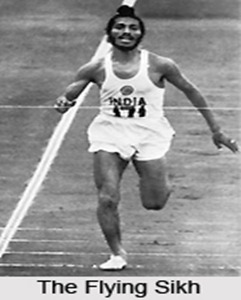
Milkha Singh – The Flying Sikh


‘The Flying Sikh’- yes, we all know him by this name and he is the great Indian track and field sprinter MILKHA SINGH. He was born in a Sikh family of Rathore Rajput origin, on 20th November ,1929 at Govind Pura in Panjab, British India. Govind Pura is 10 km from Muzaffargarh city in Panjab Province which is now belongs to Muzaffargarh District in Pakistan.
He was one of 15 siblings, 8 of whom dies before the Partition of India. There was an irony in his life, during the Partition of India his parents, a brother and 2 sisters were killed in the violence that ensued. After that he moved to Delhi, India, in 1947. He lived with his married sister’s family for few days.In that time, he was briefly imprisoned at Tihar Jail for travelling train without ticket. Then his sister sold some jewelries for releasing him. After that he spent sometimes at a refugee camp in Purana Qila and a resettlement colony in Shahdara, both in Delhi.
Singh’s life was totally different then, he was becoming a dacoit but his brother persuaded him to attempt recruitment to the Indian Army and this changed his life. He successfully gained entrance on his 4rth attempt, in 1951, and while stationed at the Electrical Mechanical Engineering Centre in Secunderabad he was introduced to athletics.
As a child Singh had run 10km distance to and from school and selected by the Army for special training in athletics after finishing sixth in a compulsory cross-country run for new recruits and it was the beginning of his “run of the better life”. He said “I came from a remote village, I didn’t know what running was, or the Olympics”.
When shing was in the Army he realized his abilities as a sprinter. After winning the national trials in 200-metre and 400-metre sprints he was eliminated in the preliminary heats at the 1956 Olympic Games in Melbourne. In 1958, he won both the 200-metre and 400-metre races in Asian Games. After that in this year he created a record in history of game, he captured the 400-metre gold at the Commonwealth Games, it was India’s 1st athletics gold. In 1960 Olympic Games in Rome, he narrowly lost the bronze medal in the 400-metre. In 1962, in Asian Games he retained his 400-metre gold and also took another gold as part of India’s 4×400-metre relay team. In 1964, in Tokyo Games as part of the national 4×400 team that failed to advance past preliminary heats. In 1964 he won silver in Calcutta National Games (400-metre). In 1959 he was awarded by Padma Shri which is the 4rth highest civilian honor.
Milkha Singh was persuaded by Jawaharlal Nehru to sit aside his memories of the Partition era to race successfully in 1960 against Abdul Khaliq in Pakistan.
During the felicitation ceremony, Pakistan’s president Gen Ayub Khan said to Milkha Singh, ‘Milkha, you came to Pakistan and did not run. you actually flew in Pakistan. Pakistan bestows upon you the title of the ‘Flying Sikh ‘.
In 1955 Singh met Nirmal Saini who was a former captain of the Indian Women’s volleyball team in Ceylon and in 1962 the get married and had three daughters and a son. In 1999, they adopted the Havildar Bikram Singh’s seven years old son after his death in Battle of Tiger Hill.
Singh and his daughter, Sonia Sanwalka, co-wrote Singh’s autobiography, “THE RACE OF MY LIFE”. It was published in 2013. In 2013 Bhaag Milkha Bhaag film was made inspired by his autobiography. This film won National Film Award and 5 awards at the International Indian Film Academy Awards in 2014.
In 2017, Singh’s wax statue created by sculptors of Madame Tussauds in London which was unveiled at Chandigarh.
But all good chapters have an end. here has also a pathetic end. In this COVID situation he was attacked by COVID-19 virus and passed away on 18th June of 2021. It’s true that he is no more among us physically but he will be live among us mentally.

Windows 11 and What holds for microsoft in 2021 and beyond

Microsoft will hold the Windows event dubbed as ‘what’s next of windows’ on Thursday, June 24. After the alleged leak of Windows 11 developer build on the internet, it begs the question, what is Microsoft going to reveal on June 24? Because if rumors are true, Microsoft will officially announce Windows 11 to be the successor of windows.

WHAT ABOUT WINDOWS 10?

Many were surprised after hearing about the news of a Windows event. Apparently, in 2015 one of the Microsoft senior spokespeople told that Windows 10 would be the last version of windows. Many assumed that Microsoft will continuously update windows as a service. But this doesn’t seem to be true anymore. It’s hard to believe but windows 10 is almost 7 years old now. Windows 10 has seen major overhauls and many major updates throughout its lifespan. But this has been proven as a double-edged sword for Microsoft since its launch in 2015. Microsoft has also updated the end of support date for Windows 10 to June 2015 which confirms that Windows 10 is not the last version of Windows after all. After Microsoft disbanded its in-house testing team in favor of the Windows 10 update service where users participate in the testing phase (Windows insider program). This new method of update delivery has been problematic and many users’ Windows PCs were marred with bugs and broken functionalities. It seems that updating Windows operating system is not as easy as Android, Mac OS, or iOS. The legacy platforms and enterprise business that Microsoft has to support have always kept Windows progress at a snail’s pace. Microsoft cannot radically change the interface or remove its functionalities as many legacy software still relies on those functionalities. The leak version has the start button in the middle of the taskbar and it looks more like the Mac OS taskbar now. Thankfully it can also be changed back to the left corner like the previous versions. There is also a separate search button and new icons and it looks like that Windows is leaving behind the flat design language.

WHAT TO EXPECT FROM WINDOWS 11?

The leaked build of Windows is not drastically different from the current version of Windows 10 but many experts believe that the leaked version is most probably the UX team build and there will be a lot more than Microsoft will unveil in the event. The leak was indirectly acknowledged by Microsoft and indicated that ‘This is just the start. There is a possibility that the Windows 11 or Windows Sun Valley or whatever they will call it, will be an incremental update and Windows 10 users could update free of charge. But we cannot be sure as of yet until the official event.

Satya Nadella and Panos Panay will be present at the event to unveil Windows 11 features and capabilities on Thursday. The Microsoft store could also get an overhaul and there is also a good probability of support for ARM processors and the support for upcoming Intel’s new Big little architecture. There will be an overhaul in the the system sounds and UI and new animations. All these are still speculations and we will have to wait will the official announcement by Microsoft themselves.

INDUSTRIAL SICKNESS

Industrial sickness refers to the situation wherein an industrial firm performs poorly, incurs losses for several years and often defaults in its debt repayment obligations. The problem of industrial sickness has grown significantly over the years in India and a large number of industrial units were affected by it.

There are various causes of industrial sickness. Firstly, an internal cause can be faults at the planning and construction stage. Faulty decisions like setting up the firm in the wrong location i.e. a location which lacks infrastructure facilities or lacks market availability cause problems in the long run. Unplanned production, unbalanced capital structure etc. are all faulty decision which makes a firm sick.

Defective plant and machinery is another reason for industrial sickness. It has been observed that small scale sector do not seek professional technical guidance in choosing machinery. At times technology adopted is outdated and inappropriate. Production with this sort of technology is bound to be inferior and likely to suffer cost and price disadvantage.
An external cause of industrial sickness is demand and credit restrain. During the times of recession, there is a steep decline of demand in the market. This causes losses to individual units especially the products with high prices like automobiles. If such situation persists for long durations, then industrial units are prone to turn sick.
The most important internal cause of industrial sickness is management problems. Management can make or break a firm. Incorrect managerial decisions pertaining to the fields of finance, production, marketing etc. can ruin a business. Absence of quality control systems, lack of inventory, inadequate maintenance are some examples of mismanagement.
Entrepreneurial incompetence is yet another reason for industrial sickness. Many entrepreneurs in the small scale sector do not have basic knowledge of business, manufacturing, costing, accounts etc. Units set up by them often turn sick.
Industrial sickness can have serious consequences. It is a set back for employment opportunities. When a firm turns sick, it can actually go out of business. Closure of an industrial firm renders its workers unemployment. This situation can be more serious if a big firm with a large number of employees gets shut down. Unemployment brings a lot of complications with itself. This can cause industrial unrest. Closure of a big firm also causes labour unrest which can result in industrial strikes which threatens the peace of industrial environment.
Industrial sickness also leads to wastage of resources. When a sick firm is shut down, resources invested in that unit are wasted. In case of large firms this problem is more serious as a lot of investment is made in its plants and machinery. In fact other industries which are linked to a sick firm through backward or forward linkages, also incur some losses.
Closure of large sick units also effects investors and entrepreneurs and creates a psychology of despair. The prices of share fall down and affect the entire stock market. Even banks and financial institutions which have granted loans to these units suffer losses. Locking up funds in the sick units negatively affects the future lending programmes of banks and financial institutions. Industrial sickness also results in loss of revenue of government. Since industrial sickness has such a wide range of impact, it is considered as a social problem in India.

Where did she go?

On June 3rd, 2011 the world recorded one of the most mysterious disappearances of the 20-year-old
Lauren Spierer following a night of drinking and alleged drug use at Kilroy’s Sports Bar. The only child
of her parents, Charlene and Robert Spirier is presumably dead and the case remains a mystery.
EARLY LIFE: Lauren was born on 17th January 1991 to an accountant, Robert Spirier and Charlene Spierer, a housewife. In Scarsdale, New York in the lower Westchester County. She graduated from Edgemont High School in 2009 and enrolled in Indiana University. Spierer studied textile merchandising and was highly active in the Jewish community in Indiana.
The 20-year-old met her boyfriend Jesse Wolf and her friend Jay Rosenbaum and many others years
earlier at Camp Towanda, a summer camp in Honesdale, Pennsylvania who later comprised her
friend circle.
THE NIGHT LAUREN DISAPPEARED: Rob and Charlene had no qualms about bidding their daughter
Goodbye as they dropped her at Indiana for her freshman year. They considered it safe. But what they learned later during investigations was heart-jarring. Bloomington like other colleges has its dark sides. Many students complain of rampant alcohol abuse and a thriving drug scene of
which Lauren was a part.
She had been arrested for public intoxication nine months before her disappearance and later on
police found a small amount of cocaine in her room in 2011 after she had disappeared.
“It was a little bit of shock,” Charlene remarked about her daughter’s participation in the party scene.
On the night of 2nd June Lauren was outlined to have a wild night with Corey Rossman, Rosenbaum’s
neighbor.
Seth Parker who was into Bloomington’s drug scene around that time said Corey told him later that
Lauren and himself were partying and ‘pre-gaming’ at another apartment before heading to Kilroy’s
at 1:46 a.m. according to surveillance footage.
“They’re only about 30 minutes, but during that time, she leaves her shoes and her cellphone
in the bar”, says former FBI agent Officer Brad Garrett. “I think this gives you some indication about
how out of it she may be at this point.”
Lauren and Corey left Kilroy’s and headed towards Smallwood Plaza Apartments, where her
residence is located at 2:30 a.m. Zack Oakes, one of the four students they ran into in the hallway,
notices the former’s level of intoxication and inquired if she was okay.
“They don’t like the way Rossman is handling Lauren. And Rossman supposedly says
something smart to him and this guy decides to deck him.” Officer Garrett said. “Rossman goes
down.”
After they left Smallwood, the pair made their way to Rossman’s apartment at 2:48 a.m. Surveillance
cameras mounted on a nearby alley showed her exit the alley at 2:51 a.m. where the girl’s keys and
purse were found. After some time Corey tosses her over his shoulder in a fireman’s carry.
Once in Rossman’s apartment, he fell sick and went to bed according to his old roommate. The latter
then took Spierer next door, to the apartment of another friend, Jason Rosenbaum.

Jay sees what bad shape Lauren is in and says, ‘Lauren lay down on the couch. Go to sleep. Go
home in the morning.’ And she won’t do it, Garrett said. She says,’ I want to keep going, I want to
go.’ Jay walks her to the door and he sees her walk up 11th street.”
Reportedly he was the last person to see her alive.
INVESTIGATION: In August 2011, police conducted a nine-day search of the Sycamore Ridge Landfill
in Pimento for clues in the disappearance. Hundreds of volunteers also joined Lauren’s parents and authorities in a massive search that covered abandoned quarries, dense forests, and, in a last-ditch the effort, a local landfill. But they found nothing.
The HLN show, Real Life Nightmare, detailed the Lauren Spierer case in an hourlong episode called
“Night of No Return.” Spierer’s case has been covered in multiple podcasts, including Crime Junkie,
True Crime Garage, Going West: True Crime, True Crime All The Time Unsolved, Trace Evidence, and
Not Another True Crime Podcast.
In April 2015, the Bloomington Police tried investigating a possible link between Spierer’s disappearance and the murder of another IU student, Hannah Wilson, who went missing on April 24, 2015, after visiting Kilroy’s. Wilson was last seen getting into a taxi in front of the bar and driving
away. Her body was found the next morning in Brown County. A local man named Daniel Messel was
arrested for the murder after his cell phone was discovered near the body. In July 2015, Dietl concluded that the two cases are unrelated and any similarities between the two cases were purely coincidental.
Five years later the missing posters were all but gone around the Bloomington campus. But Rob and
Charlene has not given up and quietly, the case is very much alive as Officer Garrett and the team
of private investigators have turned up new witnesses, leads, and theories.
THEORIES: 1) “When something happens to someone, it’s usually from their circle”, says the officer
Brad. Hence, he started with those close to Lauren.
• Jesse Wolfe helped with the searches initially but later his parents took him away which
Robert thought was odd. No witnesses reported seeing Wolfe out that night and he claims
that he was occupied watching NBA finals and went to ned around 2:30 a.m. according to his
roommate.
• The police took a DNA sample from Corey Rossman and he denied further involvement. He
also claimed to have lost his memory after being slugged in Lauren’s apartment building.
Now living in New York, he declined repeated requests to talk, though his attorney says that
Rossman continues to cooperate which the police.
2) Stranger Abduction- The police have also acknowledged they have not ruled out the
possibility of an abduction by a stranger. Spierer’s parents have previously stated that they do
not believe her disappearance was a random abduction.
3)In 2017, Brown County prosecutor, Ted Adams, reported he believed Daniel Messel could
be related to Spierer’s disappearance. In 2016, Messel was convicted of killing Hannah Wilson.

  • Wilson had only been reported missing for one day when her body was found in a
    desolate field; she had been bludgeoned to death. Messel’s cell phone was discovered at her
    feet. Messel has never been charged in connection with Spierer’s case.
    Ten-year elapses since Spierer’s death Robert and Charlene Spierer, still “emotionally raw,” in the words of Charlene, continue visiting Bloomington, to keep up the search. Given the case’s high
    profile, it is unlikely police will officially move the file into the cold-case drawer anytime soon. For now, at least, “leads are coming in from several different places,” says Robert Spirier. “It’s one continuous series of leads and information that, at one point, might fall into place.

Citations:

1. The 5 Most Mysterious Unsolved Disappearances of All Time| Time https://time.com/5532711/mysterious-unsolved-disappearances/

2. Disappearance of Lauren Spierer- Wikipedia https://www.google.com/url?sa=t&source=web&rct=j&url=https://en.m.wikipedia.org/wiki/Disappearance_of_Lauren_Spierer&ved=2ahUKEwi_06z02q3xAhWxmOYKHcBmCGEQFjAAegQIBRAC&usg=AOvVaw17N3WaONWqyYIXtt1c9fzq

3. 5 Years After She Vanished, New Hope in Lauren Spierer Case-ABC News https://www.google.com/url?sa=t&source=web&rct=j&url=https://abcnews.go.com/amp/US/lauren-spierer-case-years-vanished-hope/story%3Fid%3D40084230&ved=2ahUKEwjVn_qs263xAhWL7XMBHZj8CFQQFjABegQIFRAC&usg=AOvVaw2-Z5Bs8YEWPs0NSpw4yeWd&ampcf=1

4. The Lauren Spierer Mystery, Unraveled- Indianapolis Monthly https://www.google.com/url?sa=t&source=web&rct=j&url=https://www.indianapolismonthly.com/news-and-opinion/crime/the-lauren-spierer-mystery-unraveled&ved=2ahUKEwijrpzK263xAhX7IbcAHRDODzEQFjAAegQIBRAC&usg=AOvVaw3rf3qK1HJmbbROajY0zbMW

Human Rights

Human Rights and evolution

What are Human rights:-

Human rights are the basic rights and freedoms that belong to every person in the world, from birth until death.

Human rights are independent of where you belong to, what you believe or how you want to live your life.

The Universal Declaration of human rights which proclaimed to inalienable rights of all people was established by the UN General Assembly in the year 1948.

These basic rights are based on shared values like dignity fairness equality respect and independence.

   universal Declaration of Human Rights

The cruelty and havoc of the second world war gave rise to concern of protection of basic human right and international priority.

The united nation was founded in 1945, the UN allowed more than 50 member states to contribute to the Universal Declaration of Human Rights adopted in 1948.

This was the first time, a globe level initiative to protect the fundamental rights and freedoms of every individual in the world.

The values of human rights are defined and protected by law.

In Britain, our Human Rights are protected by the Human Rights Act 1998.

Evolution of Human Rights

Human Rights has been evolving from the beginning of their formation.  Development and Evolution take place according to time. There are Three Generation of Human Rights :-                    

Civil- political, socio-economic and collective- development.

  • The First Generation of Human Rights

First-generation rights deal with “ civil – political “  rights, which demands liberty and participation in political life.

They are negative and individualistic , and called “ blue rights”

They include :-

Right to life

Right to equality before the law

Freedom of speech

Freedom of religion

Property right

The right to a fair trial

Voting rights

Article 3 to 21 of the Human Rights give globe status of these rights in international law.

  • Second Generation of Human Rights

Second generation of human rights deal with “socio-economic” human rights that demands equal conditions and treatment.

It is based On the principles if social justice and public obligation.

They are “positive “ in nature, and called “ Red right”.

They include :-

Right to employment

Right to food

Right to live in favourable conditions

Right to housing and health care

Right to social security

Article 22 to 28 of the universal Declaration define socio-economic rights.

  • The Third Generation of Human Rights

The third generation deals with “ collective – development” rights of  people and groups held against their respective States aligns with the final tenet of “ fraternity”.

The rights in this category can not be exerted individually but only by groups or collectives of people.

They are referred to as “green rights”.

They include :-

Group and collective rights

Right to healthy environment

Right to natural resources

Right to participation in cultural heritage

Right to self determination

Article 29 and 30 of the universal Declaration defines Third generation rights.

  • Fourth generation of human rights

Many political scientist  claim of fourth generation of human rights that includes the rights that left in the third generation of Human Rights.

It specially deals with technical and digital rights.

10 Things In Life Everybody Should Know

Just like how we require a driving license test to be cleared in-order to drive any vehicle on the road, there are certain life lessons which are tested since the very beginning of our lives. There are a certain few things in life which does not require any examination to be given, but at the same time, assesses us in the same way as any other examination. Few of those life lessons are as follows:

  1. Nobody will get out of this life alive- One should acknowledge the fact that life is finite and that everybody is here for a short life span. The very fact that life is temporary will help us acknowledge that we should live our lives to the best each day.
  2. Life is unpredictable, but one can have a plan- Life is very unpredictable, there can be many unforseen circumstances unfolding us in our journey of life. But, a simple plan can ensure us to face the obstacles better and though a plan is not sure about the outcome, it will lessen our fear and obstacles in such a way that we will be able to face anything.
  3. Great Friendships enhance the quality of life- We come across many people in our lives. Some of them stay with us throughout our lives. Always ensure to invest in a few friends, they will be worth it, they bring in the best out of you. But always do remember that quality of friends is more important than quantity.
  4. Always expect and accept setbacks- Setbacks and uncompleted goals or tasks are sure be to there with us. It is on us to move on from it and if those setbacks sets apart our direction or goal, accept it, as it might give us surprises which we would never have imagined.
  5. Do not be materialistic- We might earn a lot of money when we are into any business or profession. But always keep in mind not to be materialistic. Managing with the amount of money we have is the most effective way and the lesser the money we have, we’ll be more effective in spending it.
  6. Always invest on our health- Health is Wealth! Maintaining our body is very important in the long run. Always ensure to pick a good new exercise each day as it will keep our body and mind fit throughout. Always cling on to the new good habits learnt.
  7. Self-discipline is important- Self-discipline is very important to achieve all of our desires. Self-discipline can sometimes be defined as doing what we do not want to do in-order to acheive the thing or result which we wanted to do. Self-discipline will ensure balance among work life, social life and personal life.
  8. Make provision for future- The very fact that life is unpredictable will make us always think about having an emergency fund. Save a certain amount of money for any sort of future emergencies, start off small and then keep increasing your savings.
  9. Mean what you say- Always say what you mean and mean what you say. It brings about clarity in our mind and our spoken words. It will bring about confidence in yourself and the people around you will be confident with you too.
  10. No Procrastination- The habit of postponing things on a later date should never be learnt. What is to be done, one should be determined to do it. Procrastination makes tasks harder.

So, these are some of the ways in which one can lead to an easy life and will be able to lead a meaningful life.

Chokher Bali: Liberty of Free Thinking

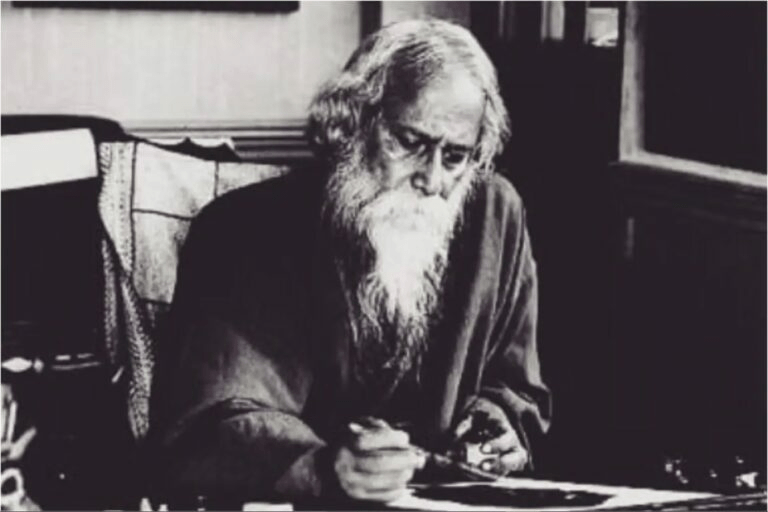
Rabindranath Tagore’s Chokher Bali portrays a society in a way that is realistic and on point. Tagore is considered to be one of the greatest writers in modern Indian Literature.

The poet, the composer, short story writer, playwright, essayist, and artist, has achieved proficiency in almost all forms of literature.

On his 160th birth anniversary, we are going to look back on one of his stories “Chokher Bali” to understand how he portrayed the condition of people and the societal set up at that time. He showcased issues that are even relevant till now.

Stories by Rabindranath Tagore includes Choker Bali

Chokher Bali: Synopsis

Choker Bali, a story set in the aesthetics of Kolkata depicts the pain of widows, the societal setup which ignores the needs of women and considers widows as bad omen and keeps them away from happiness.

Through this, he also highlighted the issues of women’s education, child marriage and shows how psychologically confused a person can be because of the pressure by society.

The story revolves around 4 characters Binodini, Ashalata, Mahendra, and Behari.

Radhika Apte as Binodini in Stories by Rabindranath Tagore(2015)

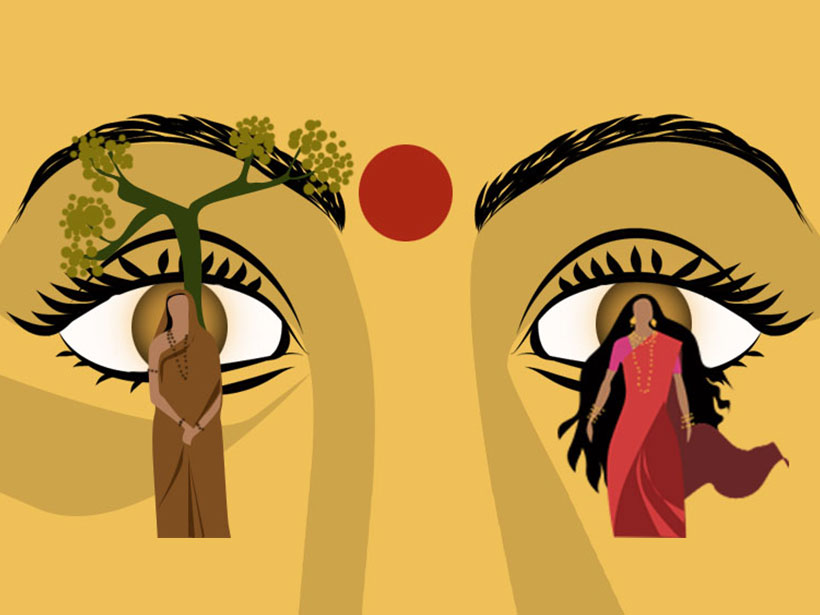
Binodini, an educated woman who witnessed the death of her husband at a very young age. She was forced to live her life as a widow for the rest of her life. She was first rejected by Mahendra and he then marries a beautiful but uneducated woman, Ashalata. Binodini’s life became as colourless as her saree.

But when she met Behari, he was Mahendra’s friend a feeling of attraction came to them for each other, but they did not confess. Binodini came to know how happy Ashalata and Mahendra are together, this came with a feeling of envy in her empty heart.

Conflicted thoughts in her brain made her think that Ashalta is living a life that Binodini deserves. These thoughts gave her purpose in her empty life, now she wants Mahendra to realize the mistake he has done to reject Binodini. She uses Mahin’s mother Rajlaxshmi’s dislike of Asha to manipulate her way into their lives. The feeling of envy for Ashalata and Mahin dominated the feeling of attraction towards Behari.

“Clouds come floating into my life, no longer to carry rain or usher storm, but add color to my sunset sky”.

Mahindra represented the part of a superficial male-dominated society, which ignores the needs of others. He loved Ashalata very much but after he comes across Binodini, his interest shifted. He started taking her for granted.

On the other hand, Ashalata uneducated but an innocent soul, she was unaware of Bindoni’s intentions and she considers Binodini her friend. She worships her husband and was helpless as she must always depend on the man in her life, first her uncle and then her husband. Due to this dependence, we can witness the patriarch of society and the vulnerability of women because of the lack of education.

Binodini and Ashalata: Victim of Patriarch

Stories by Rabindranath Tagore

Tagore draws parallels between the educated and the uneducated through Asha and Binodini. Binodini is likewise left without any financial provision but is left with education which allows and helps her with the liberty of free-thinking.

She represents a new female subjectivity whose western education transforms her into a woman with her own heart and mind. One who isn’t bound with traditional customs. Binodini to an extent had that sense of differentiating between right and wrong.

Tagore structured the story in such a way that all the decisions by Binodini seem rational and all her desires appear to be natural. Society has restricted her to live in a specific way and she’s liberated to mould her life in accordance with her needs and desires.

Chokher Bali: An attempt to educate people about the needs of women.

A century after Chokher Bali, education is still a struggle for many women to access easily throughout the world. Tagore’s novel is unconventionally presenting a viewpoint that is ahead of the conservative times of 19th and 20th century India.

Through the story of Binodini, Tagore questions most of the societal norms. He condemns all kinds of taboos that are being fed to humans from the start of life. 

Tagore, a man from a privileged background, his understanding of the emotions of Indian women and his empathetic attitude towards them is sensational.

Chokher Bali has been adapted several times in films, television. Most notable examples: Chokher Bali by Rituparno Ghosh in 2003, and the television series Stories by Rabindranath Tagore in 2015 directed by Anurag Basu.

Stories by Rabindranath Tagore

Chokher Bali, a work of art presented by Tagore beautifully puts a light on issues related to women, which he witnessed in the 19th century. These social evils are so difficult to get rid of as those issues are even relevant till now. Chokher Bali perfectly encapsulates how gender plays a large role in a person’s treatment by society.

Tagore made us understand that education moulds a person to be independent of societal pressure. Education can emancipate a woman to be liberated enough. Enough to get rid of the patriarchal structure which oppresses them from birth.

a truth on how women are treated

Overview
Have you ever thought of what do women go through every single day? It’s not about what you see them going through it’s about things that she can never express. It’s about seeing it yourself and accepting them. It is about recognizing them, considering them, and appreciating them. Men do a lot to their part, but neither man can take women’s position nor women can take men’s position. Both have a separate role to play. In the ancient times, women were not even considered to be the part of the society, they were just seen as a caretaker of the households and nothing else. They have discriminated then also and now also in some backward areas and somewhere in the cities too. Poor Women were always seen with a thought that they will never be able to do something other than household and that’s why she doesn’t even get an opportunity to do anything. They are not appreciated for the work they are doing daily, finding it to be their day-to-day responsibility. Instead, they are treated like she is meant to do it. This does not happen everywhere but, happens in most places.
She is sometimes seen as a machine, and when she is seen taking a rest or taking time for herself she is questioned that, have you completed all the work?
What problems do they face due to this?
It is human nature that when you don’t get an appreciation for the work you have done and the efforts you have put in to successfully complete it, you feel disheartened or not doing it again. Similarly, it happens with women. As, they work so hard to keep his family, friends happy and satisfied with so much effort and she doesn’t even get acknowledged or appreciated for it. Then she starts feeling lonely and unwilling to take up more things. She feels as if she has a daily basis job to do where there are no incentives and recommendations. She starts feeling underconfident, anxious and becomes the victim of depression. It makes them feel that they could not be a good house maker. And, this happens with each and every woman at a certain point in time.
The solution to this problem
Start acknowledging their efforts. Appreciate each and everything whether it is small or big. You can also be a part of her efforts to provide her more support and to tell her that you are there to help her every time single time. This way it will help you to bond and the work she is doing alone and taking more time will be reduced.

ORGANIC FARMING

                           ok
” With wrong farming methods, we turn fertile land into desert. Unless we go back to organic farming and save the soil, there is no future” Today more and more people across the globe are accepting and practicing organic farming. What is Organic farming exactly? Well Organic farming is a agriculture method which is done without using any chemicals like fertilizers and pesticides, it was introduced in the world in 20th century. As we know that by 20th century our world became more advanced in technology and started using chemicals in agriculture to increase the production rate. But as the time went by people realized that these chemicals were actually degrading the quality of soil and the food crops. Also, people were tired of eating food which was full of chemicals, they were not getting any nutrients from the food. Hence, the idea of Organic Farming originated in the west which was accepted by people across the globe with open arms. The basic idea of Organic Farming was to provide food products with maximum nutritious value and minimum dangerous ingredients.
Big Misconception about Organic Farming : There is a big misconception that organic foods are relatively expensive. The truth is they are actually cheaper because they don’t require the application of expensive pesticides, insecticides, and weedicides. In fact, you can get organic foods direct from the source at really reasonable prices.
BENEFITS OF ORGANIC FARMING:-
1. To Accrue the Benefits of Nutrients                                                                                      Foods from organic farms are loaded with nutrients such as vitamins, enzymes, minerals and other micro-nutrients compared to those from conventional farms. This is because organic farms are managed and nourished using sustainable practices.                                                                                                                         
2. Natural and Better Taste                                                                                                         Those that have tasted organically farmed foods would attest to the fact that they have a natural and better taste. The natural and superior taste stems from the well balanced and nourished soil. Organic farmers always prioritize quality over quantity.
3. Direct Support to Farmers                                                                                                     Purchasing food items from organic farmers is a surefire investment in a cost-effective future. Conventional farming methods have enjoyed great subsidies and tax cuts from most governments over the past years. This has led to the proliferation of commercially produced foods that have increased dangerous diseases like cancer.
Four Principles of Organic Farming                                                                                                                                                                                                                                                                                    1. Principle of Health                                                                                                              Organic agriculture must contribute to the health and well being of soil, plants, animals, humans and the earth. It is the sustenance of mental, physical, ecological and social well being. For instance, it provides pollution and chemical-free, nutritious food items for humans.                                                                                                               
2. Principle of Fairness                                                                                                      Fairness is evident in maintaining equity and justice of the shared planet both among humans and other living beings. Organic farming provides good quality of life and helps in reducing poverty. Natural resources must be judiciously used and preserved for future generations.                                                                                                        
3. Principle of Ecological Balance                                                                                             Organic farming must be modeled on living ecological systems. Organic farming methods must fit the ecological balances and cycles in nature.
4. Principle of Care                                                                                                                     Organic agriculture should be practiced in a careful and responsible manner to benefit the present and future generations and the environment. As opposed to modern and conventional agricultural methods, organic farming does not depend on synthetic chemicals. It utilizes natural, biological methods to build up soil fertility such as microbial activity boosting plant nutrition. Secondly, multiple cropping practiced in organic farming boosts biodiversity which enhances productivity and resilience and contributes to a healthy farming system.


5 Things No One Will Tell You About Your First Job

1. Money doesn’t always matter. You will need almost a year before you get used to a lifestyle you can afford, hang in there things will get better. First jobs should be about experience and learning anyway. On the way your paycheck will rise in accordance with your work.

2. First impressions. Its true, first impressions matter but if you mess things up, it would not be the end of the world. You are new. You need time and it will be alright. People will come around eventually as they see what a nice and hardworking person you are.

3. Hard Work. No matter what field you work in, no matter how supportive people you have got around you, you have to work for yourself and it is not going to be easy. There are 100s of people out there who would want to be in your place but you need to try harder and maintain your position.

4. Do Not Assume. Ask if you are confused, do not shoot in the dark and do not beat around the bushes. There is no shame in asking for help and you are here to learn anyway. Assuming things and then messing it up is not what you want to do on your first job, so it is better to consult someone or make sure what you have been asked to do and then go ahead.

5. It is okay to not be okay. Not everyday is going to be glamorous as the job brochure may say. Not everyone is going to like you and you won’t be able to please everybody. Take out time for your own sake, for the sake of your mental health. You won’t come out of the office every single day and be satisfied with your work. Some time things will run smoothly and some times it might get rough. A break might not fix everything but it will atleast give you the energy to face things again.

Hang in there. You will do great, it might take time but you will eventually catch up. And in the end it will all be worth it.

Feminism In History

Sita Devi, Malala Yousafzai, Arunachalam Muruganantham, Justin Trudeau, Jim Parsons – they have one thing in common – Feminism.

Equality is like gravity. We need it to stand on this earth as men and women, and the misogyny that is in every culture is not a true part of the human condition.

Joss Whedon

A whole lot of us choose not to be called feminists due to the envelope of wrong teachings of ancient patriarchy. Despite standing for nothing but inclusivity and equality, it is seen as a gimmick to assert the dominance of women over men, something that it is just “anti-men.” This is the root cause of the negative connotations attached to feminism. Years of wrong, limited portrayals in the media have stereotyped a feminist as the one uncouth woman who drinks, smokes carelessly, abuses shamelessly, does not understand the need to get married, hates pink, and loathes men. That is definitely not what feminism specifically stands for.

lindgrensmith.com

The movement has made a ton of heads turn and as it forged ahead, feminism reached the level of cultural relevance that it hadn’t been subjected to in years. Now, a major item of cultural discourse, it has definitely led to the ‘clear as mud’ conversations as quite a lot of the population was unaware of the basic terminology of feminism.

One can’t give a single definition to the word ‘feminism’, but in short, it signifies putting a full stop to gender discrimination and focusing on gender equality. There’ve been different types of feminism that’ve come into the picture. Instead of describing them separately, feminism was divided into different phases based on the timeline called the “waves of feminism.” You might think that this history is a straightforward arc. The reality is that there are many sub-movements building on (and standing against ) each other. That being said, the wave metaphor serves as a good starting point. It doesn’t tell the whole story, but it helps outline it.

The First-wave feminism of the early 1900s had a fairly simple goal: have society recognize that women are humans too, not property. However, it only focused on the privileges and freedom of white women primarily.

The Second-wave feminism of the 1960s, built on first-wave feminism challenged women’s roles in the society. Traditional gender and family roles were questioned and the theory of Queer population was more in discussion. Women were now given access to male-dominated spaces, promoting equality. The system was questioned of being inherently patriarchal and that only an overhaul could liberate women.

While first and second-wave feminism had largely neglected racial disparities within gender, the Third wave brought attention to it. The term ‘intersectionalism’ was brought into the picture – how different kinds of oppression – like those based on gender and race – intersect with each other.

Social media has lobbed the movement into the technological age. The fourth wave emphasizes on inclusivity and trans rights are a big part of the conversation, too.

Half-knowledged people say that the misogyny faced by women today is idealized by Sita who faced similar things in her life too. The despotism tolerated by Sita has set a baseline for torment in our culture for the women to follow today. However, this is untrue. The truth had just lost its translation. She had her own fight against the patriarchal world but she rose above her status to show free will and courage to stand up against injustice. In the end, she stopped looking for any saviour and reclaimed her honour and defied what she thought was wrong.

Feminism does not associate itself only with equality of women. It addresses the issues of caste, race, disabilities, and more. By the same token, it works to liberate men from the toxicity of society. It serves as a means to uplift marginalized people who were denied equality historically. Hence, trying to shun it by using the concept of ‘equalism’ would be like overlooking the centuries of trauma and injustice. Its aim now is fighting kyriarchy ( a social system or set of connecting social systems built around domination, oppression, and submission) as well.

It’s the perception of feminism that needs a change. The only bad guy here is the structural oppression which affects every person – man or woman, in some way. A man tied in the shackles of patriarchy needs a voice too and that’s the perk of feminism. It is time to stop looking at it in the wrong light as it would only drive you away from the reality of intersectional problems.