Learning lessons of management from business books is not the only option to gain knowledge about business but we can gain similar knowledge by exploring our Indian street markets where we encounter a wide variety of businesses and street vendors. We can learn something new point from every interaction on streets.
WHY INDIAN UNORGANIZED SECTOR GOT THAT MUCH POPULARITY IN MAKING ECONOMY?
The street markets (or) small businesses comes under unorganized or non-corporated sector. This sector has loin share in national income, manufacturing activities, employment, forex earnings etc.. Only unorganized sector itself comprises 92 percent of Indian workforce.
Street vendors every day thrive through many difficulties. The environment where they operate is dynamic and constantly changing. They used to adopt different strategies to sell their limited sources to the customers. Most of the small businesses or street vendors do not have permanent shops. Street vendors should set up shops every day and close them by evening.
For Example: When we come across a street markets, we can observe the prices of commodities cheaper when compared to the marts. This is because, they do not have to pay rent or electricity bills or fees to the government and there will be a large number of shops which sell the same goods. If some trader charge high on a particular commodity then people would move to the other shop where they can get same commodity under low price or where the buyer can bargain and bring the price down.
The above stated example shows us the scenario of the street markets and make us to understand the hectic competetive situation of the vendors.
THE TECHNIQUES THAT WE CAN LEARN FROM THE STREET VENDORS ARE:
1) Most of the street vendors “work with limited resources” . They doesn’t any office setup to sell their products. They only look about how to sell their products using less resources.
2) Street vendors used to be customer centric: Yes, most of the street vendors truly apply the fact that ” customer is the king”. They take the initiative step to interact with the customers instead of waiting for the customers. Not only that most of the street vendors like to set up their shop where they can get the potential customers to sell their products.
3) Discipline and Consistency: Street vendors used to be focused to wards their work. They have to wake up early in the morning in order to get the stocks for that day and will return to their stay after every one has gone. They should maintain the same routine through out the year. This shows that discipline and consistency are the virtues that should be possessed by every entrepreneur in order to see profits in their business.
4) Symbiotic co-existence with customers : Street vendors possess a good collaborative skills with their competitors also. Though they sit next to each other and sell the same products also they used to help each other. This is one of the best thing that we can learn from vendors.
5)Adaptive nature: Street vendors used adapt different strategies to sell their goods as per the demand. At the same time they used to manage their business by changing the products to sell according to the season and demand.
CONCLUSTION:
Finally, when we start understanding the street markets or small businesses they teach us the other side of the coin. The one, who really want to get succeed as an entrepreneur (or) who want to learn tactics of the business then try to visit your local market places where you can learn many new principles that you can’t even get from your academics to execute your business wisely.
” THE KEY TO LEARN SOMETHING NEW IS TO OBSERVE THE THINGS AROUND YOU “
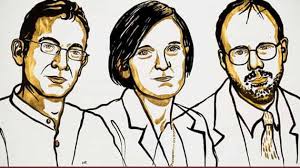
The 2019 Nobel Prize in Economic Sciences was awarded to Abhijit Banerjee and Esther Duflo, who currently work at the Massachusetts Institute of Technology, and Michael Kremer of Harvard University. The Prize committee noted that these economists “introduced a new approach to obtaining reliable answers about the best ways to fight global poverty.” The new Nobel laureates are considered to be instrumental in using randomised controlled trials to test the effectiveness of various policy interventions to alleviate poverty.
So what is randomised control trial?
A randomised controlled trial is an experiment that is designed to isolate the influence that a certain intervention or variable has on an outcome or event. A social science researcher who wants to find the effect that employing more teachers in schools has on children’s learning outcomes, for instance, can conduct a randomised controlled trial to find the answer. The use of randomised controlled trials as a research tool was largely limited to fields such as biomedical sciences where the effectiveness of various drugs was gauged using this technique. Mr. Banerjee, Ms. Duflo and Mr. Kremer, however, applied RCT to the field of economics beginning in the 1990s. Mr. Kremer first used the technique to study the impact that free meals and books had on learning in Kenyan schools. Mr. Banerjee and Ms. Duflo later conducted similar experiments in India.
Why is randomised controlled trial so popular?
At any point in time, there are multiple factors that work in tandem to influence various social events. RCTs allow economists and other social science researchers to isolate the individual impact that a certain factor alone has on the overall event. For instance, to measure the impact that hiring more teachers can have on children’s learning, researchers must control for the effect that other factors such as intelligence, nutrition, climate, economic and social status etc., which may also influence learning outcomes to various degrees, have on the final event.Randomised controlled trials promise to overcome this problem through the use of randomly picked samples. Using these random samples researchers can then conduct experiments by carefully varying appropriate variables to find out the impact of these individual variables on the final event.
What are some criticisms of randomised controlled trials?
A popular critic of randomised controlled trials is economist Angus Deaton, who won the economics Nobel Prize in 2015. Mr. Deaton has contended in his works, including a paper titled “Understanding and misunderstanding randomised control trials” that simply choosing samples for an RCT experiment in a random manner does not really make these samples identical in their many characteristics.
While two randomly chosen samples might turn out to be similar in some cases, he argued, there are greater chances that most samples are not really similar to each other. Other economists have also contended that randomised controlled trials are more suited for research in the physical sciences where it may be easier to carry out controlled experiments. They argue that social science research, including research in the field of development economics, may be inherently unsuited for such controlled research since it may be humanly impossible to control for multiple factors that may influence social events.
In the recent years, distance teaching and learning has become a major part of our lives. Now a days, since the outbreak of COVID-19 we all are doing work from home not taking even a days’ leave thinking that it would not waste our time no matter whatever is going around us. We are all somehow bound to do the same be it for our schools, colleges or official works. But the question arising here is that are we seriously up to something doing this?, Are we mentally getting affected through all this in any way?, Do our mind feels saturated at times? Yes, It surely does. Maybe online teachings and online learning or be it work from home allows us to work at our own pace, learn the things according to us, be in a comfort zone but in many ways the machines are captivating our minds and transforming us into ‘Robots’.
What physical learning taught us is something which online teachings can never teach us. The way we used to interact with our teachers, with our friends, developing a different bond with people around us has now been restricted to just a screen and a room. Sitting in a room with a laptop for hours, working endlessly since morning till late night, having the whole routine ruined is something people now are getting used to. These all things have created a different environment around, which is making us to adapt more of the virtual things rather than seeing the real outcomes. We are living in a world where we have more of the assumptions than the factual information because we are now physically restricted to go out and explore them ourselves. We have a virtual thought flow in and around us.
Online education is usually more affordable. Online education further happens to be comparatively cheaper in comparison to the conventional learning. Under traditional education or training programs we are required to pay for the other facilities provided by the institution but for online training and learning we only need to pay the fees.
Although I agree to the point that online classes and work from home has increased our convenience and flexibility towards certain things, good for women who can now take out some time from their household works and learn different skills by just being at home, but in many ways have made us isolated from the social life where we physically interact to people and made us to live a stressful life. Not only mentally but it has also affected us physically. Sitting for hours and idly staring at the screen has affected our eye sight, no exercises in a day leading to obesity and much more. We are now much more reliant on technology where we are actually ignoring the practice based learning. Work from home has created new opportunities for many people across the globe who were earlier not being able to do any work due to personal reasons. It is helpful up to some extent but not reliable as it prevents us from learning basic skills otherwise possible physically.
Elie Wiesel’s Night is a personal account of the Holocaust. It narrates the experiences of a schoolboy in the camps of Auschwitz and Buchenwald. It is a poignant account of the cruelties imposed on man by man.
Elie Wiesel was a schoolboy who was born in Sighet and spent his life with his family. In 1944, he was taken to Auschwitz and then to Buchenwald. Immediately separated from his mother and sister, he is left with his father to work in the camp. The rest of the book recalls his experiences in the camp until he was released a year later. The book voices out the grief and despair of the inmates of the camp. The author successfully manages to express himself and provide a disturbing account of the Holocaust.
Eliezer Wiesel was a Holocaust Survivor who later became a writer, professor and an activist. He was born on September 30 in the year of 1928. He authored several book that bear witness to the experiences of concentration camps. He was honoured with the Nobel Prize for Peace in the year 1986. He dedicated his whole life for Jewish causes and human rights causes. He died in the year 2016.
“Then came the march past the victims. The two men were no longer alive. Their tongues were hanging out, swollen and bluish. But the third rope was still moving: the child, too light, was still breathing… And so he remained for more than half an hour, lingering between life and death, writhing before our eyes. And we were forced to look at him at close range. He was still alive when I passed him. His tongue was still red, his eyes not yet extinguished.
Behind me, I heard the same man asking: “For God’s sake, where is God?” And from within me, I heard a voice answer: “Where He is? This is where–hanging here from this gallows…”
That night, the soup tasted of corpses.”
Forced out of silence by experiences such as these, the author manages to create an enduring account of what an inmate went through in the camp. Though the book is short and the writing sparse, it makes the reader relive the suffering experienced by the people in the camp. It makes the reader empathize with the author and feel his disgust at humanity after reading the book.
Never shall I forget that smoke. Never shall I forget the small faces of the children whose bodies I saw transformed into smoke under a silent sky. Never shall I forget those flames that consumed my faith forever. Never shall I forget the nocturnal silence that deprived me for all eternity of the desire to live. Never shall I forget those moments that murdered my God and my soul and turned dreams to ashes. Never shall I forget those things, even were I condemned to live as long as God Himself. Never.
The pain that is contained in the words alone is sufficient to make one ponder about the absurdity and meaninglessness of inflicting pain upon fellow humans in the name of race, caste, or gender.
“If only I could get rid of this dead weight … Immediately I felt ashamed of myself, ashamed forever.”
“Here there are no fathers, no brothers, no friends”, a Kapo tells him. “Everyone lives and dies for himself alone.”
The book captures, with precision, the emotions of the human mind in the face of extreme suffering. Events such as doctors pulling out gold crown tooth, people who enjoyed watching people fight for a loaf of bread, a father abandoned by his son make one question about Faith and God just like the author.
“One day when I was able to get up, I decided to look at myself in the mirror on the opposite wall. I had not seen myself since the ghetto. From the depths of the mirror, a corpse was contemplating me. The look in his eyes as he gazed at me has never left me.”
After reading the last lines of this book, the reader’s mind is sure to be purged of trivialities and filled with a deep sense of empathy.
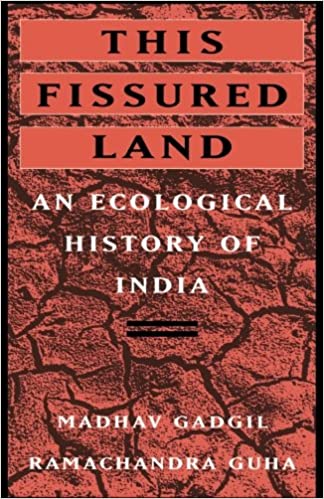
This Fissured Land is a book that provides an ecological interpretation of Indian history and a fresh theory of resource use. It is a book about the interaction between human and nature. Written by eminent scholars like Madhav Gadgil, an Indian Ecologist, and Ramachandra Guha, an Indian Historian, the book offers fresh insights and a different perspective on the history of India and environmental issues. The book is a compilation of the lifetime works of Madhav Gadgil and Ramachandra Guha.
Madhav Gadgil is an Indian ecologist and the founder of the Centre for Ecological Sciences, Indian Institute of Science. He is know for heading the Western Ghats Ecology Experts Panel (WGEEP) of 2010, also known as Gadgil Commission. He was awarded with the Padma Shri in 1981 and the Padma Bhushan in 2006. Ramachandra Guha is an Indian Historian and a columnist. His notable works include India After Gandhi and Gandhi: The Years That Changed the World. He has been awarded with several accolades for his achievements in the field of history.
This book This Fissured Land looks at Indian history through an ecological lens and provides a proper account of environmental history. It studies the interaction between humans and nature and natural resources and the consequences of these interactions. It introduces us to an environmental dimension of history.
The book studies the conditions under which humans excercised prudence or profligacy in their use of nature. It classifies human habits under the categories of prudence and profligacy. The book also offers a new sociological framework for the analysis of resource use. It presents the theory of ‘modes of resource use’.
The theory of ‘modes of resource use’ classifies human societies based on their interaction with nature and natural resources. Understanding the shortcomings of Marx’s mode of production when trying to classify societies based on resource use and ecological context, the authors introduce the concept of modes of resource use. Their major criticisms of Marx’s mode of production are that it ignores natural contexts within which field and factory exist, places less importance on political structures and struggles, its lack of applicability outside Europe, and its little value when interpreting religious, ideological and cultural values of various societies and differences in them.
This concept of ‘modes of resource use’ includes natural resources in its domain of production. This concept is developed so that finding the characteristics of different modes, and estimates the environmental impact of different modes, and estimates the effects of these modes on the ecosystem and availability of natural resources become easier. When it comes to relation of productions, this concept inquires the types of property, control and management and forms of allocation and distribution. All these factors influence and guide the human societies and the periods of history in utilisation of natural resources. Regarding productive forces, it investigates the different technologies of resource exploitation, conversion and transportation that are typical of these human societies. This concept does not consider the socialist and capitalist societies as there are more similarities between them than differences in the ecological context. According to modes of resource use, human societies are classified into four historical modes. These are gathering(including shifting cultivation), nomadic pastoralism, settled cultivation or agriculture, and industrial mode of society. Each historical mode of society has a set of unique characteristics with respect to the aspects of technology, economy, social organization and ideology.
After introducing this concept of ‘modes of resource use’, the next section of the book focusses on the ecological history of India. It studies historical events from an environmental perspectives and offers its opinion regard the practices followed in the past by Indians. The theory of ‘modes of resource use’ is applied to Indian history prior to British rule. It explains the origins and the practice of caste system and religions from an ecological context. The next part part of the book analyses the impact after the advent of the British. It focusses on the use and abuse of forests under colonial rule. It is a history of Indian forest using the perspectives of the authors. It points the flaws in our current mode of resource use and provides the basis for creating a sustainable mode of resource use.
The month of June is observed as the Pride Month to honor the Stonewall Uprising of 1969 in Manhattan which marked a monumental turning point in the LGBTQ history of America. But today, it has grown much more than that and celebrates the richness and diversity of the LGBTQ community with parades, festivals and several other events. The pride march is a call for unity and togetherness in the community. With the 2021 pride month coming to an end, let’s take a look at what each day of the month celebrates.
Credits: Google Images
1. Gay Pride
June 1st celebrates Gay pride. It refers to people who are emotionally and sexually attracted to others of their own gender. Also commonly used to denote men or man aligned person who are attracted to other man-aligned people.
2. Lesbian Pride
June 2nd celebrates Lesbian Pride. It refers to women or woman-aligned person who are emotionally and sexually attracted to other women or women-aligned people.
3. Bisexual Pride
June 3rd celebrates Bisexual Pride. It refers to people who are emotionally and sexually attracted to two or more genders.
4. Polysexual Pride
June 4th celebrates Polysexual Pride. It refers to someone who is attracted to many or multiple genders but not all.
5. Pansexual Pride
June 5th celebrates Pansexual Pride. It refers to someone who is attracted to different kinds of people regardless of their gender identity. They are attracted to all genders.
6. Omnisexual Pride
June 6th celebrates Omnisexual Pride. It refers to someone who is attracted to all genders. But unlike Pansexuality, they are not gender-blind and recognise the other’s gender. Gender plays a role in one’s attraction.
7. Queer Pride
June 7th celebrates Queer pride. It refers to an identity and is regarded as an umbrella term for sexual and gender minorities, and people who fall outside of the cultural norms around sexuality and gender identity.
8. Demisexual Pride
June 8th celebrates Demisexual Pride. It refers to a sexual orientation which falls under the asexual spectrum. It is defined as someone who does not feel sexual attraction until they form a deep emotional bond with someone.
9. Greysexual Pride
June 9th celebrates Greysexual pride. It refers to a sexual orientation that falls under the asexual spectrum. It refers those who relate to asexuality, yet feel that there are parts of their experience that aren’t fully described by the word asexual.
10. Asexual Pride
June 10th celebrates Asexual Pride. It refers to a sexual orientation which is defined by the lack of sexual attraction. Asexual experiences may also include: not wanting to have sex, not being interested in sex, not experiencing a sex drive/libido, or being repulsed by sex.
11. Polyamory Pride
June 11th celebrates Polyamorous pride. It is the capability or desire to be in a relationship with more than one person at once. Polyamorous can be used both as a description of a relationship with more than two people and as description of people who desire such relationships. Polyamorous relationships can be romantic, sexual, or both.
12. Intersex Pride
June 12th celebrates Intersex pride. Intersex is a term for those born with physical sex characteristics that cannot be traditionally classified as male or female. Variations may appear in a person’s chromosomes, natural hormones, genitalia, gonads, secondary sex characteristics, or some combination of these things.
13. Trans Women Pride
June 13th celebrates Trans Women pride. It refers to a woman who was assigned male at birth. Trans women may experience gender dysphoria and may transition. This process includes hormone replacement therapy and sometimes sex reassignment surgery.
14. Trans Men pride
June 14th celebrates Trans Men pride. It refers to a man who was assigned female at birth. Trans men may experience gender dysphoria and may transition. This process includes hormone replacement therapy and sometimes sex reassignment surgery.
15. Agender Pride
June 15th celebrates Agender pride. It is complete genderlessness, or the lack of gender. It is a non-binary identity in which one is not male, female, or any other gender. They may identify as most strongly as just a person, rather then as any given gender.
16. Genderfluid Pride
June 16th celebrates Genderfluid pride. Genderfluid refers to someone whose gender identity changes over time. A genderfluid person can identify as any gender, or combination of genders at any given time. Their gender can change at random or it may vary in response to different circumstances. One’s gender can change over the course of hours, days, weeks, months, or years.
17. Bigender Pride
June 17th celebrates Bigender pride. Bigender is a non-binary gender identity in which someone has two distinct gender identities. They could feel both genders at the same time or be fluid between them, in which case they may also identify as genderfluid. Bigender people can experience any two genders, including binary and non-binary genders.
18. Trigender Pride
June 18th celebrates Trigender Pride. Trigender is a form of multigender in which someone has three distinct gender identities. These three gender identities can be any genders, either binary or non-binary, so long as it is exactly three. Trigender people may experience these genders simultaneously or fluidly.
19. Pangender Pride
June 19th celebrates Pangender Pride. Pangender is a form of multigender in which someone experiences all genders. It is a non-binary gender which refers to a vast and diverse amount of genders in the same individual that can extend infinitely.
20. Genderqueer Pride
June 20th celebrates Genderqueer Pride. Genderqueer is a term for people who feel that they have a queer or non-normative experience with gender, either through their gender identity, their gender presentation, or other experiences of gender.
21. Demigirl Pride
June 21st celebrates Demigirl pride. It refers to a non-binary gender in which one is partially, but not fully, a girl or woman. They may or may not identify as another gender in addition to being partially a girl. The other part of one’s gender can be any gender or combination of genders, including a lack of gender.
22. Demiboy Pride
June 22nd celebrates Demiboy Pride. It refers to a non-binary gender in which one is partially, but not fully, a boy or man. They may or may not identify as another gender in addition to being partially a boy. The other part of one’s gender can be any gender or combination of genders, including a lack of gender.
23. Androgyne Pride
June 23rd celebrates Androgynous Pride. Androgyne is an identity under the non-binary umbrella. It is described as being simultaneously male and female or in between male and female, or as being simultaneously masculine and feminine or in between masculine and feminine.
24. Intergender Pride
June 24th celebrates Intergender pride. Intergender is a gender for intersex people only, referring to any gender identity that is fundamentally tied to one’s intersex identity. It denotes that being intersex has an important affect on one’s gender identity. It commonly involves a gender that is in between male and female or a gender that is partially male and/or female, but it does not necessarily have to.
25. Nonbinary Pride
June 25th celebrates Nonbinary Pride. It refers to someone whose gender does not fall strictly within the category of the binary genders. Non-binary can be a gender identity on its own, or it can be used as an umbrella term for anyone whose gender is something other than male or female.
26. Questioning Pride
June 26th celebrates Questioning pride. Questioning is the process of exploring, learning, or experimenting with what one’s gender, sexual orientation, romantic orientation, or another part of one’s identity is.
27. Homoromantic Pride
June 27th celebrates Homoromantic Pride. Homoromantic refers to the romantic attraction to the same gender or genders similar to one’s own. A homomantic person may or may not be sexually attracted to the same/similar gender(s).
28. Biromantic Pride
June 28th celebrates Biromantic Pride. It is a romantic orientation in which someone is romantically attracted to two or more genders.
29. Panromantic Pride
June 29th celebrates Panromantic Pride. Panromantic is the romantic attraction to people regardless of gender, and as a result, one is attracted to all genders.
30. Aromantic Pride
June 30th celebrates Aromantic Pride. It refers to a romantic orientation defined by a lack of romantic attraction.
[2:29 PM, 6/30/2021] Priyanshi: Stagnation or improvement
We are living in a world where problems and solutions both exist. It’s the human tendency to always look for pleasure and hence nobody chooses the problems which are existing in the world. People always try to look out for a solution but now here the questions arise that whether we want a short-term solution or a long-term solution, whether we believe in stagnation or improvement. Let’s understand the concept by taking an example. If someone asks you that what would you prefer, a world with present humanity, intelligence, and all other things or the world that will be there after 100 years. Whose humanity would you like to prefer? The current one or the one after 100 years. Think the answer to this in your head and now let’s move on. Accepting the current world with whatever it has will come under stagnation and accepting the world that will be there after 100 years will lead to some improvements or we can say that at least there will be chances of improvement. Let’s understand this concept a little more briefly. We are not saying that the world that will be there after 100 years will be perfect but the thing that we need to understand here is that there will be more propensity for us to improve. For example, if we would have stopped 100 years before ,then can you imagine how the world would have looked like now. Let’s imagine, still, there would have been Sati Pratha, no rules would have come against the dowry system, child marriage, still, there would have been no normalising of the LGBTQ community. But why all these things didn’t happen because we believe in moving on and keep changing ourselves, fight for the discrimination and we didn’t believe in stagnation. And now here comes the need to know that why still we want to keep altering because still many issues are existing in the world which we don’t even know about, they need to be resolved. If we accept the world that is right now how will the issues get resolved. In-country like India still normalisation of the LGBTQ community doesn’t exist completely. This work which is in progress needs to keep going so that we can achieve the results that these struggling people deserve. So, we don’t prefer a perfect world but a world where chances of improvement always exist, where chances of self-growth always exist. If your mind ever tries to accept things as they are without looking at the propensity of improvement. Just let your mind remind of these examples and start working on them. Just let your mind be conscious of the after-effects of stagnation because we need to at least try to give a world to our future generation where the issues that exist right now don’t exist at their time. So that our future generation can focus on the improvements that their world will be having. Let’s give a chance to us , let’s give a chance to self- growth and let’s try to make this world a better place for us as well as our future generation.
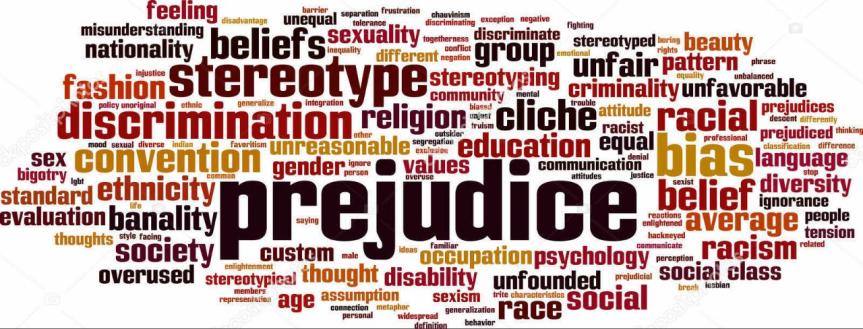
Prejudices refers to a set attitudes towards a particular group of people. They usually refer to negative attitudes. Attitude is a state of mind or set of views with an evaluative feature. Prejudices are often based on stereotypes about the specific group. Stereotypes refers to fixed ideas regarding the characterstics of a specific group. Usually, stereotypes consist of undesirable characteristics about the target group. All members of the group are assumed to possess these characteristics which is often not true in reality. Prejudice is often accompanied by dislike or hatred towards members of the group. Prejudice can be seen in behaviour through discrimination. Discrimination makes a distinction between the two groups by favouring one group over other. Sometimes prejudice can lead to excessive hatred and discrimination which may even lead to mass killing of innocent people. An example of this is the holocaust of Jews by Nazi Germany. Discrimination can controlled by law but attitudes and minds sets of people cannot. Just like any other attitude, prejudices are also learned through observation, association, exposure to information or through culture. The family, groups, personal experiences, media also play a role in learning of prejudices. In some cases it has been observed that a strong social identity towards one’s own group may cause group bias and lead to negative attitudes towards other groups and lead to prejudice. Another reason for prejudice is scapegoating. It is a group based way of expressing frustration towards the weaker group and it leads to negative attitudes. Here the stronger group places the blame for its problems on the weaker group. The weaker group is too weak to defend itself. https://www.bbc.co.uk/bitesize/guides/zcb42hv/revision/3#:~:text=One%20bad%20experience%20with%20a,and%20can%20lead%20to%20prejudice Sometimes people continue to hold stereotypes because they believe that after all, there may be some truth in what people say. These sorts of beliefs are rather difficult to change as they originate in response to other stronger beliefs. Stereotypes are also learned in the similar manner as attitudes. Stereotypes are usually formed by hearing different things about the particular group. A single bad experience with the member of a group may lead to the assumption that all members of that group behave that way. https://blogs.hope.edu/getting-race-right/our-context-where-we-are/the-history-we-inhaled/what-are-the-causes-of-stereotypes/ Stereotypes provide grounds for prejudices which lead to discrimination. This however, is not always true. Sometimes prejudices may develop without stereotypes or may not lead to discrimination. Similarly, discrimination may be seen without prejudice. But even so, these three are often considered to be connected. Prejudices are attitudes and are not very easy to change if once formed. In order to control it, strategies should focus on minimising the opportunities for learning prejudices or changing such attitudes at an earlier stage. Narrow social identity based on the in-group should not be emphasised and people should be encouraged to seek out truth rather than blindly believing in what they hear. These goals can be achieved through education and information. By correcting the stereotypes that are formed on false grounds. Emphasis should be given to individual identities rather than group identities. This can weaken strong in-group bias. Increasing the contact between the two groups can remove misunderstandings, mistrust and can lead to communication which may lead to discovery of positive characteristics.
In the field of games and sports, people donot acknowledge women’s sports to be at par with men’s sports .Right from the beginning of Olympic Games, the role of women in sports and games has been neglected. However, from the last decade of previous century , there is an increasing interest of women in sports both as participants and spectators. The provision of sports facilities to both women and men in sports shows a new trend. More people, than in the past, now want to see women on the playfields. However , few discriminations still persist in terms of salaries, cash awards, television time, etc. Indeed a lot of efforts have been taken vis-a`-vis women participation in sports and even greater steps are yet to be taken.
SPORTS PARTICIPATON OF WOMEN IN INDIA
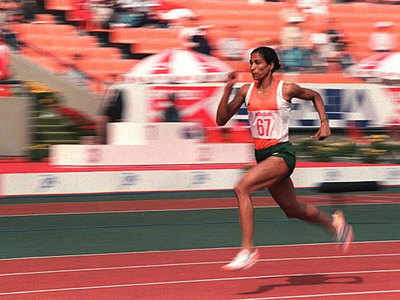
Here, we will discuss in detail women’s participations in the field of sports .As a matter of fact, women’s participation in sports has a long history . In ancient Olympics , women were not allowed to even watch sports competitions . Even in the first modern Olympic games which were held in 1896 in Athens , there was no participation of women .In fact , women started participating in the modern Olympic Games from 1900 onwards . They participated only in two sports events . In this Olympics , only twenty – two women participated . In 1904 Olympic Game , only six women participated in three events . With the passage of time , the number of women participants in Olympics increased and exactly after 100 years i.e., in 2000 Sydney Olympics , the number of women participants increased up to 4,096 . In this Olympics , a total of 10,500 sportspersons from 199 countries took part and out of which 38.2 per cent were women. This number of women participants was a record during that time . In 2008 Olympic Games , which were held in Beijing , a total of 10,700 sportspersons from 205 countries took part and out of which 4,637 were women whose percentage was 42.4 , whereas only 23 women of India participated in theLondon Olympics . In 2012 London Olympic Games , 10,960 sportsperson from 205 countries participated , out of which 4,862 were women whose percentage was more than ever before . For the first time women boxing was included in the Olympic program . In 2008 Olympics , 26 female sportsperson participated from India . Only four Indian women participated in the Olympics held in 1952 in athletics . Karnam Malleshwari became the first Indian Women to secure a bronze medal in weightlifting in Sydney Olympic Games in 2000 . In 2012 London Olympic Games , Sania Nehwal and MC Mary Kom added feather in the cap of India by securing one bronze medal each . Though PT Usha could not win any medal in the 1984 Olympic in 400 m hurdle race , yet her performance was remarkable and extraordinary . In fact , there is a long list of Indian woman sportsperson who have won various positions in the World Cups , Common Wealth Games, Asian Games ,SAF Games , etc.
Kolkata was initially the capital of the British Raj, which means that several structures constructed by them during the pre-Independence era still stand strong along with other iconic ones in the city. From rajbari and museums to churches places, our City of Joy boasts of many beautiful heritage sites that you must check them out.
Now kolkata (calcutta) is capital of India’s West Bengal state. Kolkata is also known for architecture, art gallery, cultural festival.
1. Victoria Memorial :-
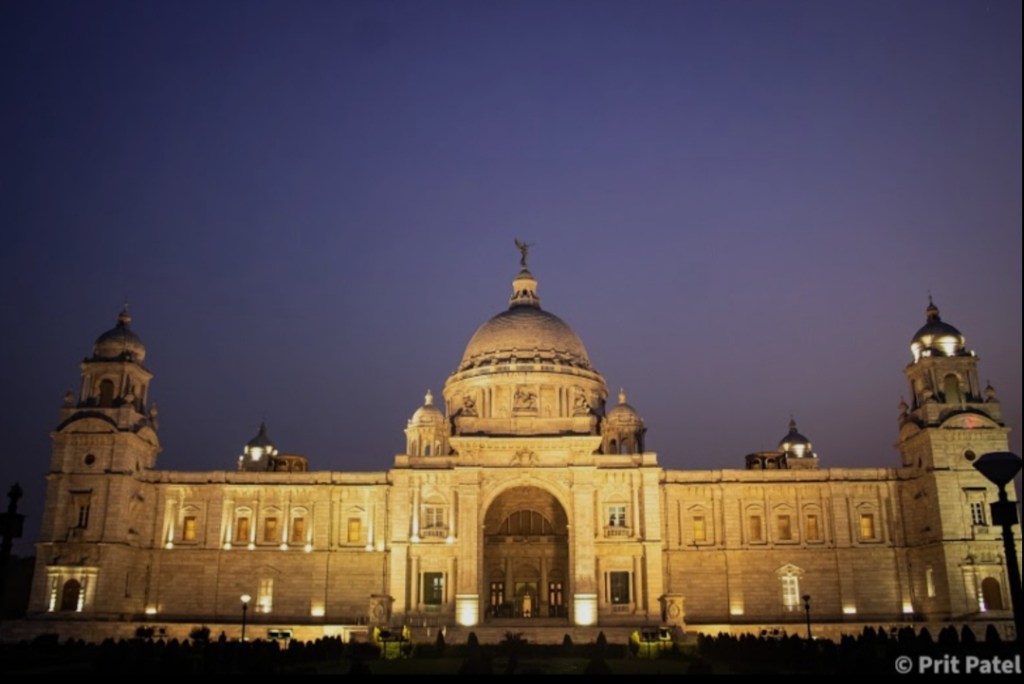
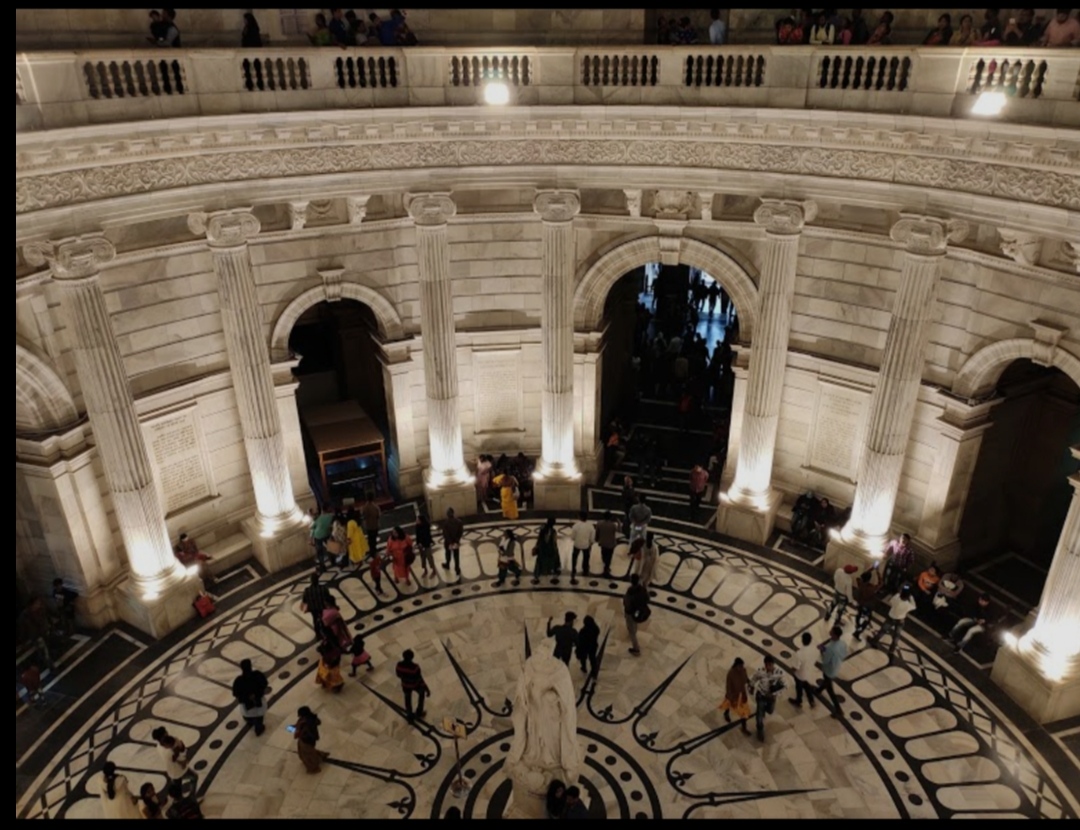
The Victoria Memorial is possibly the most awesome reminder of the Raj to be found in India. It is one of the famous and beautiful monuments of Kolkata.It was built between 1906 and 1921 to commemorate Queen Victoria’s 25-year reign in India. After the Sepoy Mutiny of 1857, the British government gathered the reins of control of the country directly, and in 1876 the British parliament made Victoria the Empress of India. Her reign ended with her death in 1901.
Victoria Memorial
2. Maidan :-
Maydan is a massive green place trails, Riverside, picnic spot including some sports venu. The Maidan (literally, open field), also referred to as the Brigade Parade Ground,is the largest urban park in Kolkata in the Indian state of West Bengal.The Maidan is dotted with statues and architectural works, the most notable being the Victoria Memorial. For the greenery and refreshment this place known as ‘Lungs of Calcutta’. The property of the Indian Army, the Maidan hosts the army’s Eastern zone high command in Fort William.
Maidan, kolkata
3. Nandan :-
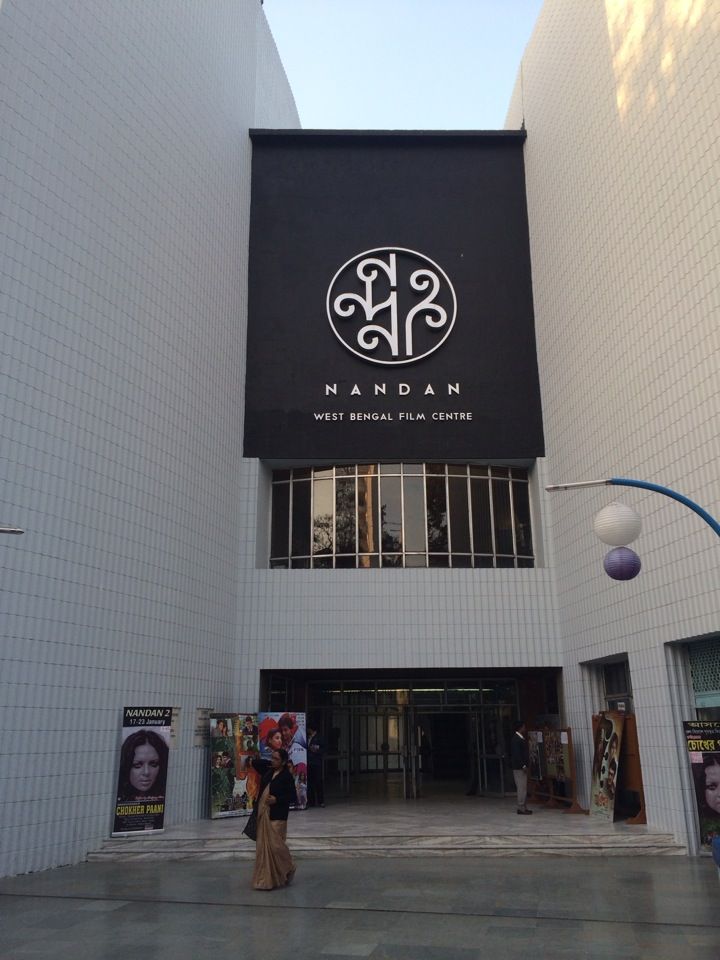
Nandan is one of the main venues of the Kolkata International Film Festival, hosting it till 2010. It is a government-sponsored film and cultural centre in Kolkata, India. The primary aim of the cultural hub is to encourage and facilitate cinematic awareness in society. While in 2011 the opening and closing ceremonies was shifted to Netaji Indoor Stadium, Nandan remains the main centre for the festival.The foundation stone of Nandan was laid by former Chief Minister of West Bengal Jyoti Basu in 1980[3] and it was inaugurated by film-maker Satyajit Ray on 2 September, 1985. Most favorite place of film lovers all around Kolkata.
Nandan, Kolkata
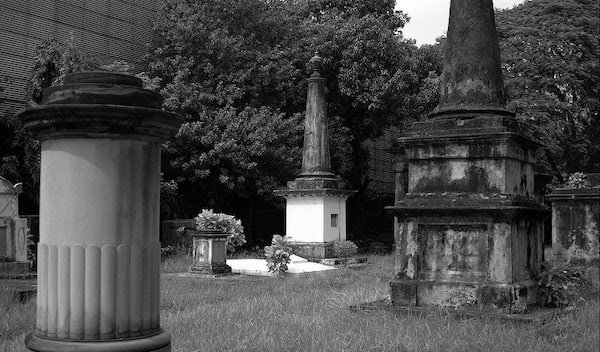
4. South Park-street Cemetery :-
The Park Street Cemetery was one of the earliest non-church cemeteries in the world, and probably the largest Christian cemetery outside Europe and America in the 19th century. Opened in 1767 on what was previously a marshy area, the cemetery was in use until about 1830 and is now a heritage site, protected by the Archaeological Survey of India (ASI). The tombs are an admixture of the Gothic with a rich flavour of the Indo-Saracenic style. Of the latter, mention may be made of a unique and composite brick structure built in the ‘panchyatana’ manner, with a central dome flanked by miniature replicas of Orissan ‘rekha deul’ on four sides. Coupled with this peculiarity, the black basalt carvings on the frontal façade indicate a distinct respect for the Hindu faith.
South Park-street Cemetery, Kolkata
5. Dakshineshwar Kali Temple :-
The Dakshineswar Kali Temple was founded around the middle of the 19th century by Rani Rashmoni.Rani Rashmoni was a Mahishya by caste and was well known for her philanthropic activities. This temple is a Hindu navaratna temple located at Dakshineswar. Situated on the eastern bank of the Hooghly River, the presiding deity of the temple is Bhavatarini, a form of Parashakti Adya Kali, otherwise known as Adishakti Kalika.This temple is one of the most visited temple in Kolkata.
Dakshineshwar Kali Temple
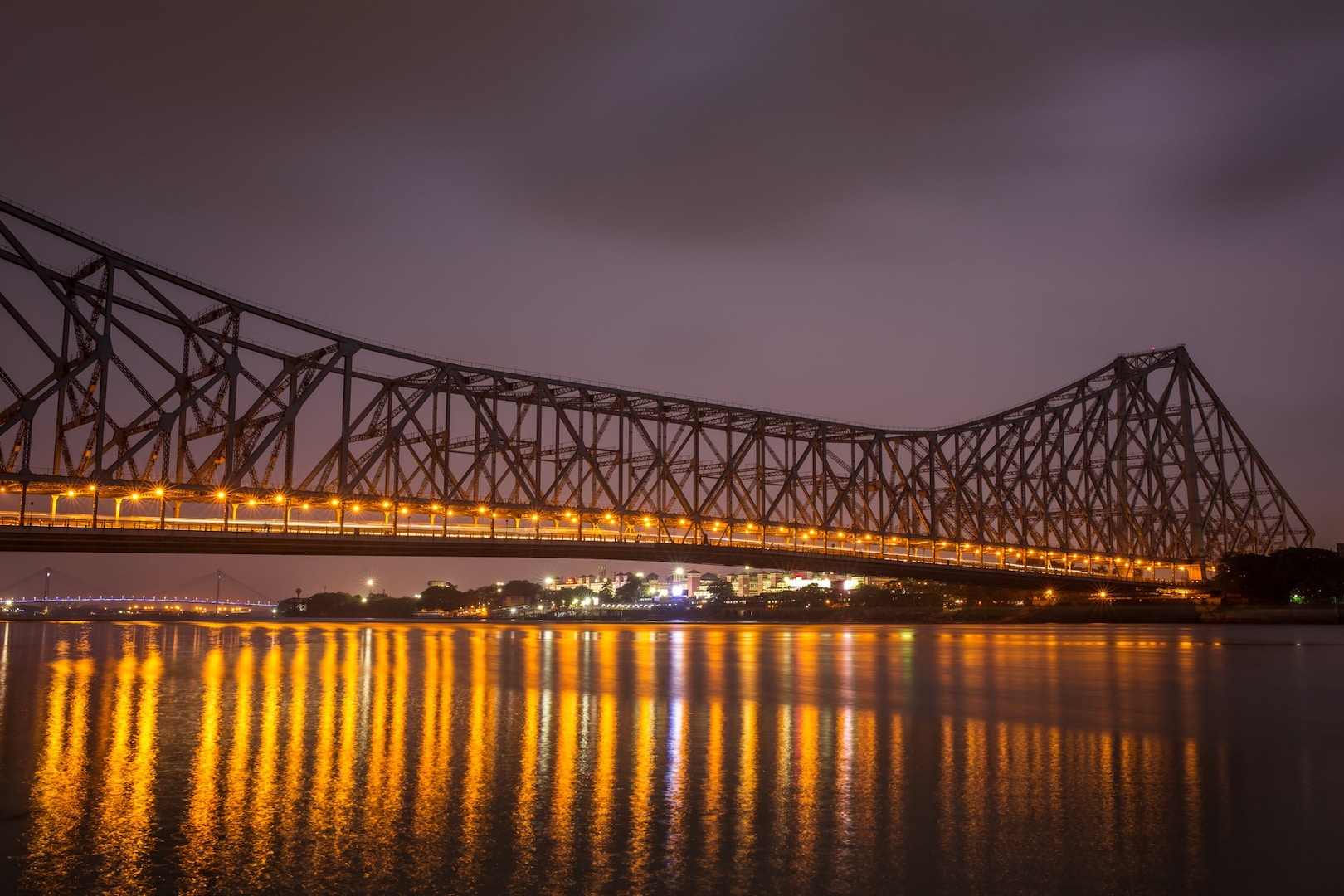
6. Howrah Bridge :-
The Howrah Bridge is one of four on the Hooghly River and is a famous symbol of Kolkata and West Bengal.The Bridge is a balanced cantilever bridge over the Hooghly River in West Bengal, India. Commissioned in 1943,the bridge was originally named the New Howrah Bridge, because it replaced a pontoon bridge at the same location linking the two cities of Howrah and Kolkata (Calcutta). The night lightning of Howrah bridge is mesmerizing.
Howrah Bridge
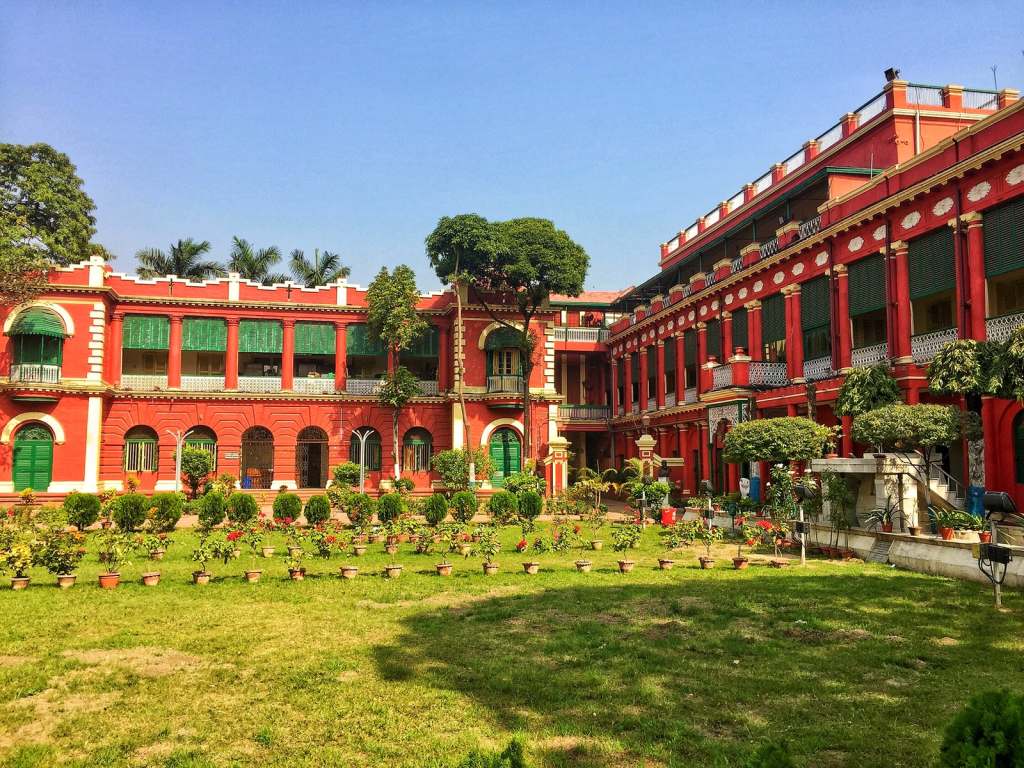
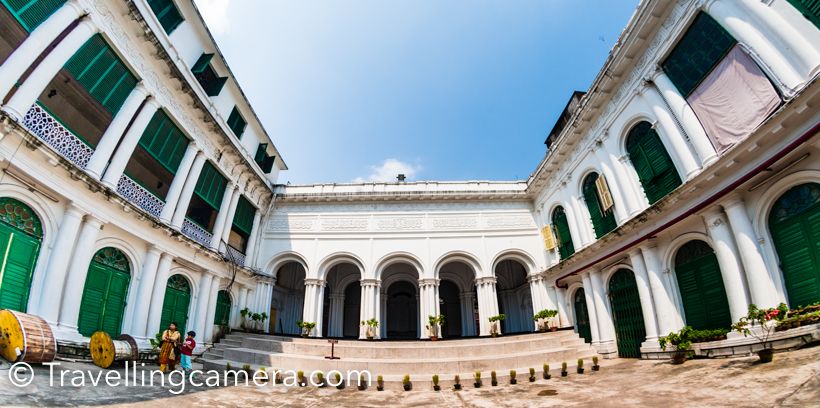
7. Thakur Bari :-
Jorasanko Thakur Bari or House of the Thakurs (anglicised to Tagore) in Jorasanko, North Kolkata, West Bengal, India, is the ancestral home of the Tagore family. It is the place where Rabindranath Tagore was born and spent most of his childhood. It was built in the 18th century on the land donated by the famous Sett family of burrabazar to ‘Prince’ Dwarkanath Tagore (Rabindranath Tagore’s grandfather).The house has been restored to reflect the way the household looked when the Tagore family lived in it and currently serves as the Tagore museum for Kolkata.
Jorasanko Thakur Bari
8. Prinsep Ghat :-
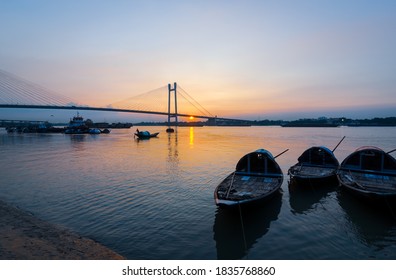
Prinsep Ghat was located between the Water Gate and the St George’s Gate of the Fort William, the monument to Prinsep is rich in Greek and Gothic inlays. It was restored by the state’s public works department in November 2001 and has since been well-maintained.The Palladian porch in the memory of the eminent Anglo-Indian scholar and antiquary James Prinsep was designed by W. Fitzgerald and constructed in 1843.Prinsep Ghat is one of the oldest recreational spots of Kolkata.[4] People visit it in the evenings on weekends to go boating on the river, stroll along the bank and purchase food from stalls there.One of the songs in the Bollywood film Parineeta was shot here on the ghats.
Prinsep Ghat
9. Rabindra Sarobar :-
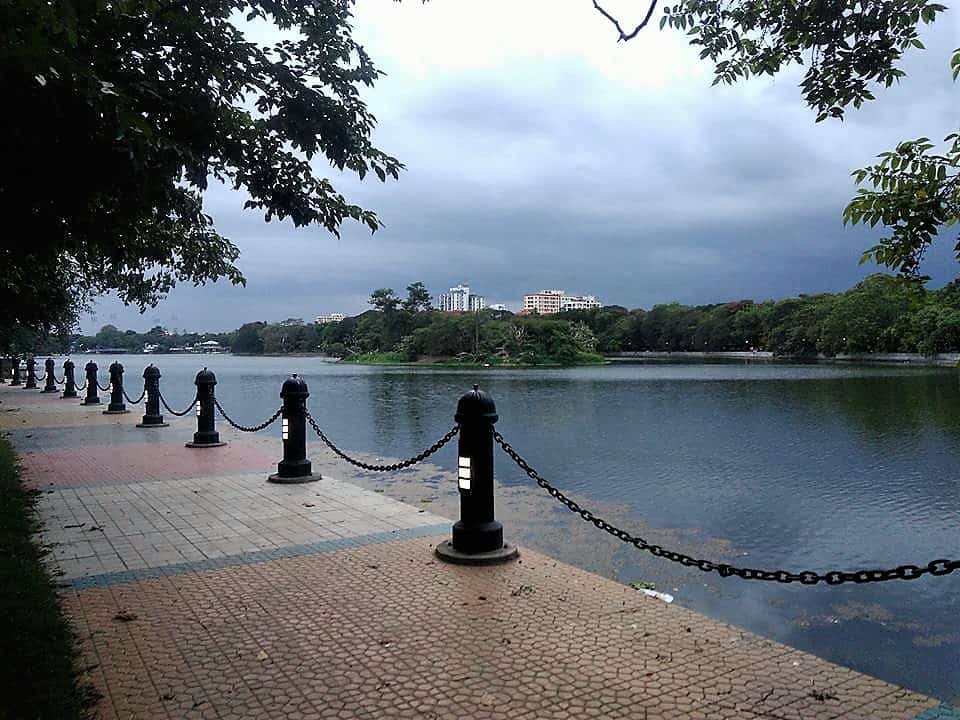
Rabindra Sarobar also known as Dhakuria Lake is an artificial lake in South Kolkata in the Indian state of West Bengal.The lake and the surrounding green cover occupy an area of 192 acres. The water body is of 73 acres while the green cover has an area of 119 acres. It has a unique bio diversity and attracts 107 species of birds, which includes 69 resident birds, 14 local migrants, 23 long distant migrants and one summer visitor. The green cover has 11,000 trees of which 7.500 are over 75 years old. Sometimes there was a opportunity of rowing in this lake for visitors. Many bangali films shooted in this place.
Rabindra Sarobar
After visiting all those place you will definitely agree with that – ‘Kolkata , The City Of Joy’.
Each and every move of my inhale and exhale, you are!
The day runs like osain boult when I’m WITH HER.Every time my thought of leaving her kills me, god I wish I would always be with her till my last breathe. My eye fails to see the revolution of the world, when I’m WITH HER.
The biggest asset I earned throughout my life is she, who never leave me like how I’m being left by others. Your heart says be honest to atleast yourself even if it didn’t work on others but I say I want only her to see my purest soul.
Everyday my good morning starts with her and my good night ends by her. Each and every smiles and emotions influenced by her. Every dream which I dreamt is with her. Everytime when I kiss my pillow assuming her. Everybody,I’m seeing will end with the search of her.Every word I’m speaking or spilling out of my mouth is filled with her.
Even everybody in the world left me, I don’t care I just let itself go only thing is I want her as my all.Each and everytime before and after blinking that 0.1 sec your picture plays in my mind and you runs through out me in my body like blood. I’m proud to say you’re my atom who builds me when I’m down.
Finally I’m with her.
WITH HER, I find my success. WITH HER, I find my mom. WITH HER, I find the world. WITH HER, even I find myself. The day, the night, the right, the wrong, the best, the worst, the laugh, the tears, the sun, the moon, the love, the life everything is WITH HER.
IN EVERYONE’S LIFE THERE’S A PERSON WHO WILL BE MOST AFFECTED WHEN ANYTHING HAPPENS TO THEM, IN MY LIFE THAT’S YOU AND I’LL BE THE MOST AFFECTED PERSON IF ANYTHING HAPPENS TO YOU.
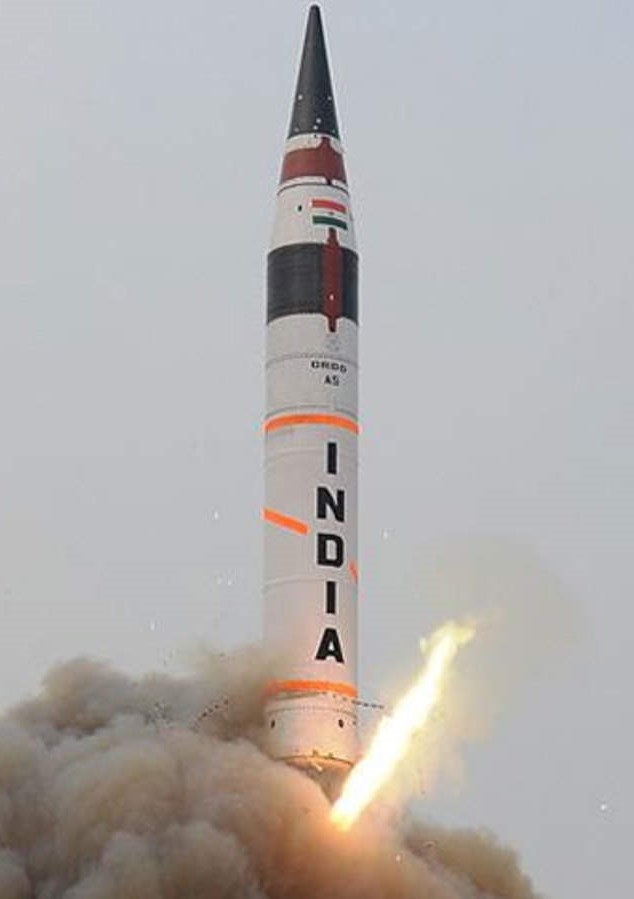
The name Agni(meaning fire) was given after one of the 5 elements in nature(Agni, Vayu, Prithvi, Akash, Jala). Agni missiles are medium to intercontinental-range ballistic missiles, developed under the Integrated Guided Missile Development Programme, INDIA. The family of missiles consists of AGNI I, AGNI II, AGNI III, AGNI IV, AGNI V, AGNI P, AGNI VI. And here is a brief description of each one of them.
India night-tests Agni-I missile
Agni I:
Agni I is an intermediate-range ballistic missile, it is 14.8 m long, with a diameter of 1.3 meters, and weighs 22,000 kgs. With a maximum payload of 1,000 kgs, the missile could extend its range up to 1,200 km of distance. Agni I is used by the SCF of the Indian Army. It is made of all-carbon composite materials to protect the payload during its re-entry stage. It is designed to be launched from Transporter-Erector-Launcher (TEL) vehicles, either by road or rail-mobile through transportation. The development of this missile began in 1999, and was first tested in January 2002 from a TEL vehicle at the Interim Test Range on Wheelers’ Island of India’s eastern coast. This missile has relatively high accuracy, simplicity, and due to its combination of an inertial guidance system with a terminal phase radar correlation targeting system on its warhead.
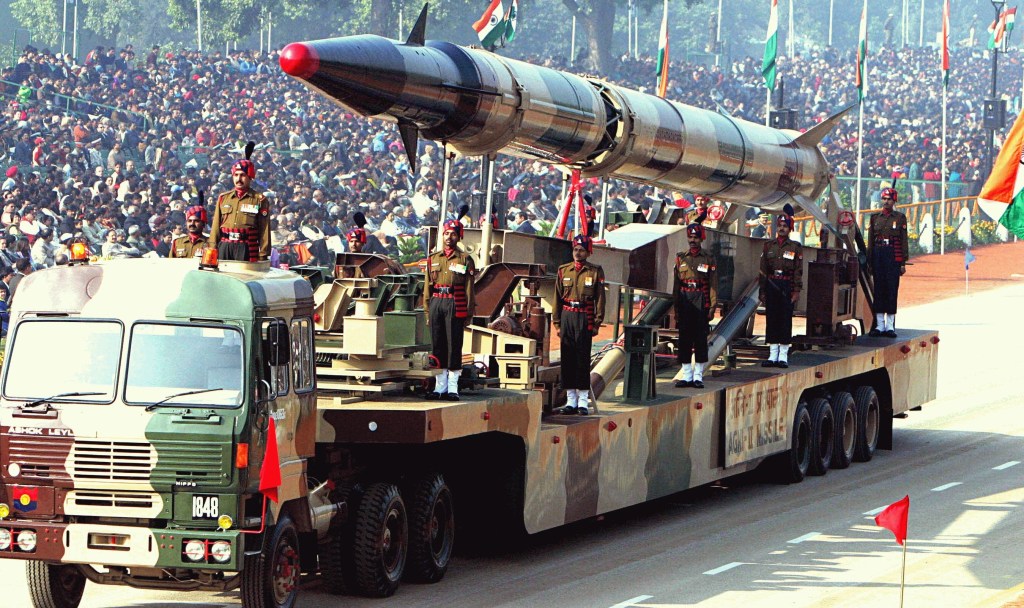
Agni II missile
Agni II:
Agni II is a medium-range, two-and-half-stage solid propellent ballistic missile, and is 20 m long, with a diameter of 1 m, and weighs around 26,000 kg. With a payload of 820-2,000 kgs, the missile could extend its range from 2,000 to 3,500 km. Agni II was first tested on 11th April 1999 at the Wheelers’ Island of the Odisha coast using IC-4 launch pad, over the range 2,000 to 2,200 km. The Agni II uses a combination of inertial navigation and GPS in its guidance module as well as dual-frequency radar correlation for terminal guidance. The 20-meter-long, two-stage ballistic missile has a strike range of 2,000 km to 3,000 km during the night trail of a nuclear-capable intermediate-range ballistic missile on 16th Nov 2019.
Agni-3 ballistic missile successfully launched by Indias Strategic Forces Command (SFC) from Wheeler Island, off the coast of Odisha on September 21, 2012.
Agni III:
Agni III is an intermediate-range, two-stage solid propellent ballistic missile, it is shorter (17 m and wider and 2 m in diameter) compared to other missiles (Agni I and Agni II), and weighs up to 44,000 kg. With a payload of 2,500 kg, Agni III could extend its range from 2,000 to 3,000 km. It is made using advanced carbon composite materials, while the second-stage booster is made of iron-based steel alloy. Agni-III was first tested on 9th July 2006 from Wheeler Island on the coast of the eastern state of Odisha, by Rail-mobile, possible road-based TEL( Transporter-Erector-Launcher). It was again tested on 12th April 2007 successfully, again from Wheeler Island. The third successive trail-test was fired on 7th May 2008 from Wheelers island, which had a range of 3,500 km,taking a warhead of 1.5 tonnes. It is the most accurate strategic ballistic missile which increases the “kill efficiency” of the weapon. It was reported that with a low payload Agni III and hit a target of over 3,500 km.
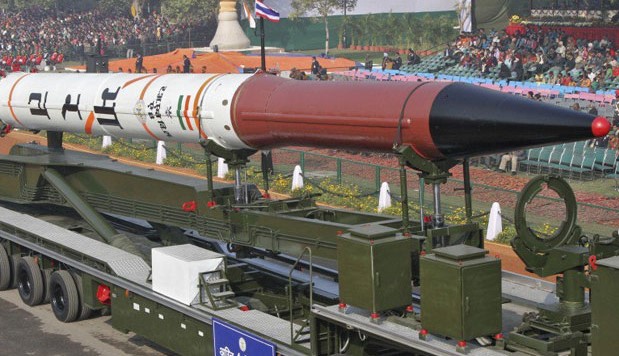
Agni IV missile
Agni IV:
Agni IV is an intermediate-range, two-stage nuclear-capable ballistic missile, it is 20 m long, with a diameter of 1 m, and weighs up to 17,000 kg. It was previously called as Agni II prime. Agni IV was first tested on 15th November 2011 and on 19 September 2012 from Wheeler Island(Abdul Kalam Island) off the coast of the eastern state of Orissa. It could reach the target up to the range of 3,500–4,000 km with a payload of 800–1,000 kg. On 20th January 2014, that is during its third test, the missile was lifted off from the launcher and after reaching an altitude of over 800 km, and impacted near the target in the Indian ocean with a remarkable accuracy carrying a payload of 900 kg. Agni IV is equipped with state-of-the-art technologies, that include indigenously developed ring laser gyro and composite rocket motor.
Agni V missile
Agni V:
Agni V is an intercontinental-range, three-stage solid-fuel ballistic missile, it is 17 m long, with a diameter of 2 m, and weighs up to 50,000 kg, developed by the Defense Research and Development Organisation of India. It could reach a target of more than 5,500 km. It was first test-fired on 19th April 2012, from Abdul Kalam Island formerly known as Wheelers Island off the coast of Odisha. It is a canister launch missile system and ensures that it has the requisite operational flexibility and can be swiftly transported and fired from anywhere. The second test launch of Agni-V was completed on 15th September 2013 and the canisterized version was launched in January 2015.
Agni P missile
Agni P:
Agni prime is a medium-range, two-stage solid-fueled ballistic missile, it is half of the weight of Agni III, developed by the Defense Research and Development Organisation, India. Both the first and second stage of the missile was made of composite materials. It could extend its range up to 1,000-2,000 km. As per DRDO, Agni-Prime is a new generation advanced variant of the Agni family, launched on 28th June 2021. “Being a canister-launched missile, Agni-P will give the armed forces the requisite operational flexibility to swiftly transport and fire it from anywhere they want. The test at 10:55 met all mission objectives with a high level of accuracy,” says DRDO. This missile has followed the Textbook trajectory with a great level of accuracy.
Agni VI under development
Agni VI:
Agni VI will be a four-stage intercontinental ballistic missile, currently in the hardware development phase and expected to have a Multiple Independently targetable Reentry Vehicle(MIRV) as well as a Maneuverable Reentry Vehicle(MaRV). It is expected as the latest and most advanced version among the Agni Missiles.
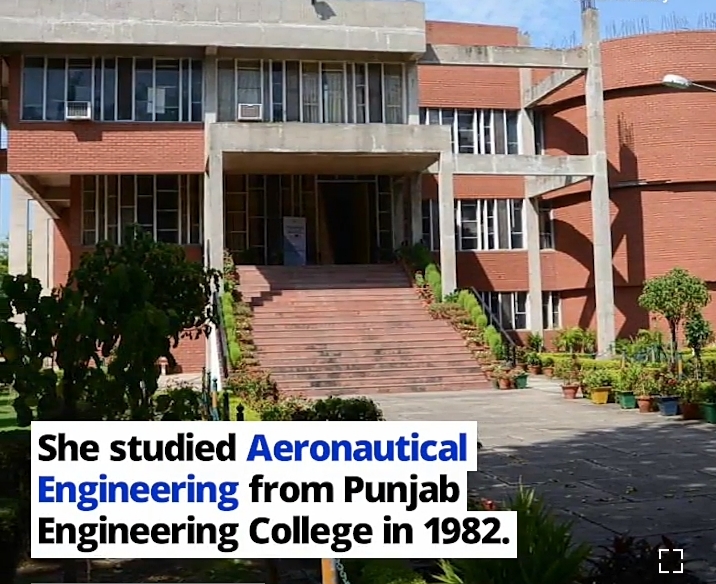
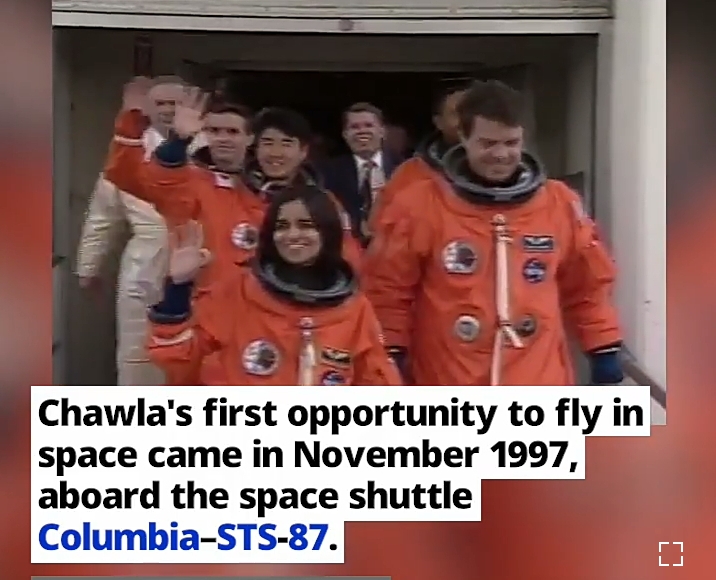
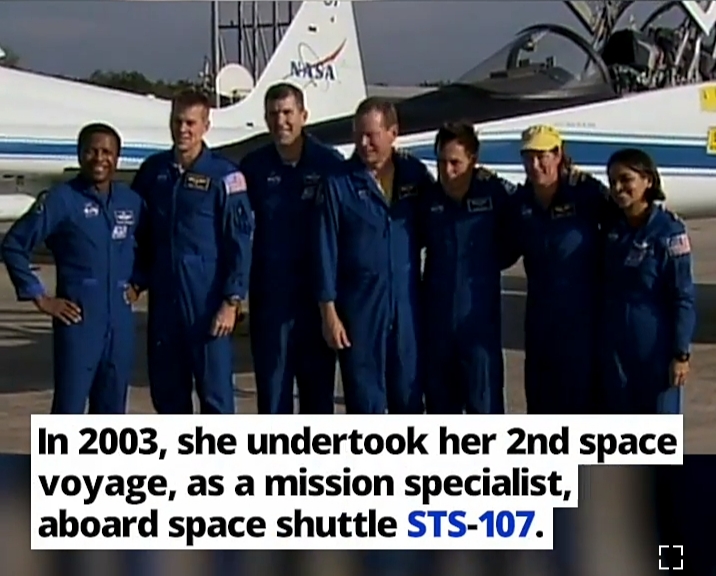
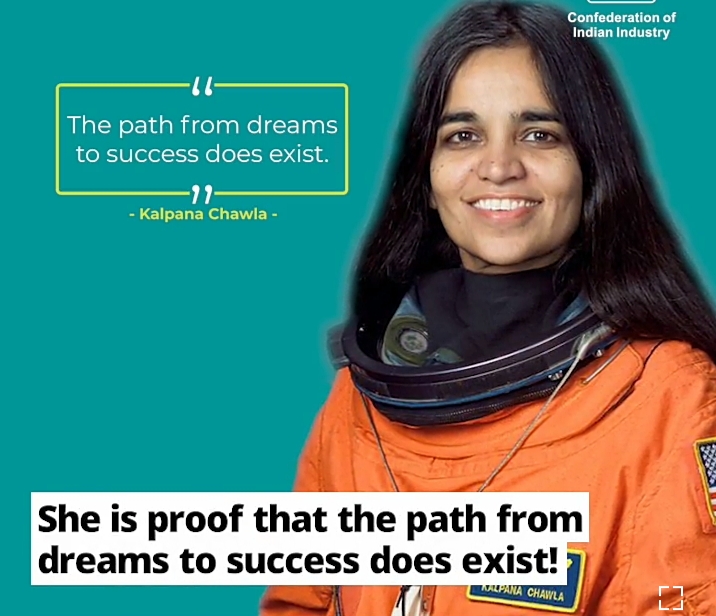
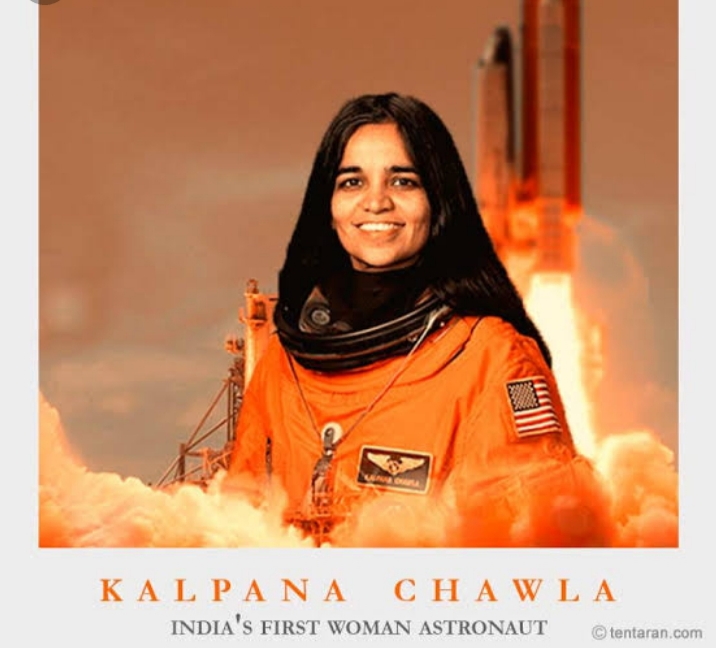
Kalpana Chawla was an American astronaut and engineer, who was the first woman of Indian origin to go to space. She first flew on Space Shuttle Columbia in 1997 as a mission specialist and primary robotic arm operator. Her second flight was on STS-107, the final flight of Space Shuttle Columbia in 2003.
Born: March 17, 1962, in Karnal, India
Died: 1 February 2003, Texas, United States
Space missions: STS-107, STS-87
Spouse: Jean-Pierre Harrison (m. 1983–2003)
Education: University of Colorado Boulder (1988), University of Texas at Arlington (1982–1984).
Awards: Congressional Space Medal of Honor, NASA Space Flight Medal.
First Opportunity to fly
Second Opportunity to fly
On February 1, 2003, as the world waited for the return of the Space Shuttle Columbia flight STS-107, it disintegrated over Texas during its re-entry into the earth’s atmosphere. The disaster killed a seven-member crew including Kalpana Chawla, the first Indian woman to have been to space.
Seventeen years later, her father, Banarasi Lal Chawla, says that Kalpana had one dream only – that no child, especially girls, should ever be deprived of education.
KALPANA’S DREAM
About pursuing a dream, Kalpana said that the path from dreams to success does exist. One needs to have the vision to find it, and the courage to get onto it. Yes, success is possible. Her life is an example of that.
DEATH
Chawla died on 1 February 2003, in the Space Shuttle Columbia disaster, along with the other six crew members, when the Columbia disintegrated over Texas during re-entry into the Earth’s atmosphere, shortly before it was scheduled to conclude its 28th mission, STS-107.
National Doctor’s Day is a holiday honouring doctors. This day was designated as a special day to honour Dr. Bidhan Chandra Roy, a famous physician and West Bengal’s second prime minister. Doctor is the term, and the work they accomplish is on the level of a deity. People have realised the necessity of physicians as a result of the Pandemic. The tough circumstances surrounding COVID-19 have reminded us once again of the everyday efforts and sacrifices made by physicians and healthcare workers all across the world. Doctor’s Day is observed on various days across the world to honour this great profession. This year is committed once again to all of the doctors and healthcare workers who are risking their lives in these hard times, whether in primary or secondary care settings, or in dedicated COVID care facilities.
Tough Education
Being a doctor isn’t easy. A child has to set his/her mind in the way that doing hard work and practice is the only way towards success. Many students wish to pursue a career as a doctor. Doctors have a prominent social and professional life, allowing them to help a large number of people while also earning a good living. If you want to be a doctor, you should start planning and preparing for it as soon as possible after high school. If you’ve decided to pursue a career as a doctor, be aware that the road ahead will not be simple. To become a doctor, you must begin working diligently at an early age and make the necessary sacrifices for several years. A genuine concern in the well and happiness of others, as well as a desire to serve others, are two essential traits for a doctor.Physics, Chemistry, and Biology are required courses in secondary school or at the plus two level.
You must have completed 17 years but not be older than 25 years while applying for the MBBS programme through the general category.The bachelor’s degree in medicine (MBBS) is the first step toward becoming a doctor. This is your ticket to a medical profession. This is generally a five-and-a-half-year programme that culminates in a year of mandatory internship.
Those interested in pursuing a degree in MBBS, BDS, or Veterinary Science must take the NEET test. The Central Board of Secondary Education in India holds a single entrance examination every year to admit students to various medical institutions across the country. The colleges you can attend are determined by your NEET test score. There are particular courses available throughout your degree if you want to specialise in subjects like Ayurveda, Homeopathy, or Unani. The admission tests for JIPMER, AIIMS, Armed Force Medical College, Lady Hardinge Medical College, and Jawaharlal Nehru Medical College are held separately. Students who want to attend these universities must take these special examinations conducted by the colleges and do not have to go through the NEET process. JIPMER is one of India’s most prominent medical schools.
This is the Education one has to take to become a doctor.
Problems occurred during Covid-19 service
In the fight against COVID-19, doctors and healthcare professionals who are reacting to a worldwide health catastrophe have become unintentional targets. Several incidents of such violence against them have been reported in India during this epidemic period. Doctors have been spit on, abused, and driven away, according to reports. Due to a scarcity of personal protective equipment, this is the case (PPE). Doctors blame the rise in violence against healthcare professionals on a combination of misinformation and fear, which has been exacerbated by the pandemic. Patients are unable to obtain healthcare due to transportation stoppage, fear of law enforcement, and dissatisfaction as a result of quarantine or containment zone limitations, all of which have worsened the situation. During their work, up to 75% of doctors are subjected to violence. The reasons for violence against healthcare workers may vary from fear, anxiety, panic, misinformation and mistrust. Government hospitals in India are inundated in such a public health crisis with lack of adequate facilities, equipment and infrastructure. People are panicked about catching COVID-19 from medical workers or being stigmatised for having contracted it themselves. The situation is being made more difficult as health units and professionals in some government hospitals highlight shortage of PPE but receive hostile response from hostile hospital administration.
Overcome these Problems.
A better and timely communication with the aggrieved patients and their family members is the key to avoid violence and untoward incidents. Due to shortage of time and to maintain social distancing norms, often the verbal and direct communication between doctors and patients is lacking during this pandemic. The hospitals should designate some social workers and counsellors to coordinate with them on a regular basis to allay any fears.
The widespread news coverage about COVID-19 has heightened anxiety and fear among the Indian public. Social media platforms can play a positive role in the current pandemic collaborating with Government agencies to educate the public about the diagnosis, spread, containment and prevention strategies against transmission. The uptake of ‘Aarogya Setu’—Indian government’s contact tracing application can be promoted by smart phone technology companies and web providers to minimise the spread of COvid-19. This will help to safely reduce lockdown measures.
Violence against doctors is underreported in India, perhaps because the doctors fear for their personal safety and harassment from the public, administration and law enforcement system. Recently, doctors and government institutions have started to take steps to protect themselves against violence. Marshalls have been posted at large central government hospitals in Delhi in their accident and emergency department. At places, doctors have had to evaluate patients from a distance to avoid assault.
The Indian government has recently issued an ordinance that makes violence against healthcare workers a non-bailable offence, punishable by up to 7 years imprisonment. The Ordinance seeks to protect doctors, nurses, and paramedic and community health workers from harassment or physical injury. It has been welcomed by all quarters to rein in violence and punish the wrongdoers.
Telehealth has been a game changer and one of the good outcomes of the COVID-19 outbreak. Patients will have less face-to-face interaction with doctors as a result of telehealth, which may minimise physical attack on doctors to some level. The prospect of telemedicine services being recorded may compel patients and their carers to act correctly.
Time has to identify effective ways and means to improve and strengthen public health education and practice, says Dr. Ravi Agrawal. Establishment of better primary healthcare facilities such as Delhi’s Mohalla (community) and Mumbai’s Swasth (health) clinics is one of the right ways forward to access local healthcare. Doctors and healthcare workers need to be supported in carrying out their fight against global health crises such as COVID-19 pandemic.
At last I would like to say “Doctors are humans not Gods so stop blaming them.”
My mom told me a story about how everyone has their own story
A Young Man and his father were travelling by train and they seem to be very happy. A young man in his twenties was seeing out from the train’s window and suddenly he is shouted father, see the sun it looks like a circle Then his father smiled at him.
young men again shouted – father, look at the trees as they are going behind. father again smiled at the young man. A couple sitting nearby looked at the young man’s childish comment with pity.
Suddenly the young men exclaimed again.. father, look at the clouds and sun! they are all running with us. The couple observed the young man’s behaviour for a long time they couldn’t resist and said to the old man “why don’t you take your son to a good doctor?” The old man smiled at his son and said “we did and we are just coming from the hospital”
The couple saw them with strange expression. The Old man said again “My son was blind from birth and he just got his vision today”
Every person in the world has a story. Don’t judge people before you truly know them. The Truth might surprise you.























 Eduindex
You must be logged in to post a comment.