Snacking healthy

 We often consider snacks “bad” because a lot of the time people only snack on unhealthy food. But, did you know snacks are as important as any other meals? Snacks if consumed correctly are a great source of energy and nutrients

So, here are a few tips on how to snack healthy:

Avoid eating straight out of a bag: We tend to lose track of how much we eat when we eat directly from the bag. So it is advisable to pour it in a plate or a bowl so you don’t end up overeating.

We eat what we see: When we are hungry we tend to eat the first thing we see. If you go in your kitchen and the first thing you see on the kitchen counter is a bag of chips, chances are you might eat it. Remove all the unhealthy snacks from your sight and instead keep fruits or nuts on the counter. So every time you are hungry you reach out for healthier alternatives.

Planning ahead of time: Plan all the snacks you will be making a week ahead. So, the next time you go grocery shopping you will remember to get the ingredients needed. This will allow your brain to be prepared for making the snacks knowing you purchased all ingredients for it.

Meal prep:  Preparing healthy snacks might seem like a lot of work. We might give up and open a bag of chips instead.

 That’s when meal prep comes to the rescue. We can meal prep by already cutting the fruits or veggies in the morning and place them in small glass containers. This would also make fruits look more appetising and chances are we might eat them. We can also use the fruits and veggies in making smoothies or eating them with our favourite dips. We can also prepare dips like hummus in advance to eat with our veggies.

Spice things up: We normally don’t prefer eating healthy snacks because we don’t think it tastes as good as junk food. So, we need to spice things up a little. Here are some healthy snacks ideas that you can enjoy:

  • Making smoothies of your choice. Smoothies are filled with nutrients and they taste amazing. Add in your favourite fruits in your smoothies and you can always try mixing new things in it to spice things up.
  • Adding pumpkin, sunflower, hemp seeds to your oatmeal or your peanut butter can add extra nutrition to your snacks. You can also add them to your smoothies.
  • Add dips in it. If you are someone who doesn’t like eating fruits alone, you can always dip them in something you like. You can dip your fruits in nut butter or eat your carrots, celery, cucumber, and cherry tomatoes with tzatziki. You can also dip your raw veggies in hummus.
  • Fresh juices. Another thing you can do is prepare fresh juices in the morning. You can have them with your snacks later during the day.
  • Eating raw nuts. Nuts have a lot of health benefits. If you don’t like eating raw nuts you can always add them to your smoothie or you can eat them roasted.
  • Greek yogurt and berries. Greek yogurt is high in protein and berries are a great source of anti-oxidants.

There are a bunch of other healthy snack recipes which are fun and tasty to eat. Eating healthy snacks will fill your craving and give your body the nutrients it needs.

history of Psychology

Increasing community awareness of the value of psychology skills — Psych  Learning Curve

Psychology is a field in science that studies the mind. It is often identified as one of the newest fields in science but dates back much further.

Aristotle, (384BC – 322BC) a Greek philosopher, discovered the five senses – sight, hearing, touch, taste and smell. With these senses one feels pleasure or pain. He also stated that of all the living beings, only humans have the ability to think, and theorised the connection between mind and body, and mind and reason.

Hippocrates and Galen, both Greek physicians, pointed out that humans can be recognised by their behaviour.

The field developed little through passing centuries, and Johann Weyer (1515 – 88) laid out facts that the mental illnesses which were attributed to witchcraft came from natural causes. During the 18th century, philosophers gained new knowlege through anatomy of the brain and the nervous system. Immanuel Kant, a German philosopher, classified the mind into knowing, feeling and willing, which are parts of thinking process.

In the 19th century many psychological laboratories were built across Europe, which helps to analyse a person’s behaviour and their mental well-being. The old idea that mental disturbance was the result of the person’s environmental forces acting on the mind was disproved.

Corona virus as an epidemic. What are your predictions? Also point out the positive and negative impacts of the same keeping in view the importance of Indian culture.

Coronaviruses are a group of related viruses that causes diseases in mammals and birds. In humans, coronaviruses causerespiratory tract infections that can be mild, such as some cases of the common cold (among other possible causes, predominantly rhinoviruses), and others that can lethal, such as SARS, MERS and COVID-19. Symptoms in other species vary: in chickens, they cause an upper respiratory tract disease, while in cows and pigs they cause diarrhea. There are yet to be vaccines or antiviral drugs to prevent or treat human coronavirus infections. 

Coronaviruses constitute the subfamily Orthocoronavirinae. They are enveloped viruses with a positive-sense single-stranded RNA genome and a nucleocapsid of helical symmetry. The name coronavirus is derived from the Latin corona meaning crown or halo, which refers to the characteristic appearance reminiscent of a crown or a solar corona around the virions when viewedunder two-dimensional transmission electron microscopy, due to the surface covering in club-shaped protein spikes. 

Difference between epidemic and pandemic

An epidemic is an outbreak of a disease that spreads quickly and affects many individuals at the same time. An outbreak occurs when there is a sudden increase in the number of cases of a disease. It generally describes an increase that was not anticipated. An outbreak can occur in a community, geographical area or several countries. Epidemic is often usedbroadly time describe any problem that has grown out of control. During an epidemic, the disease is actively spreading. 

A pandemic is a type of epidemic that relates to geographic spread and describes a disease that affects an entire country or the whole world. Declaring a pandemic allows national and global public health agencies to respond to the situation at a higher degree. 

COVID-19 as a pandemic

COVID-19 is declared a pandemic because of the speed at which it has spread globally. The World Health Organizationdeclares it to be a controllable pandemic and continues to provide advice on precautionary practices and ways to stop the spread of the disease. 

How is COVID-19 diagnosed? 

Diagnosis may be difficult with only a physical exam because mild cases of COVID-19 may appear similar to the flu or a bad cold. A laboratory test can confirm the diagnosis. 

How is COVID-19 treated? 

As of now there is no specific treatment for the virus. People who become sick from it should be treated with supportive measures: those that relieve symptoms. For severe cases, there may be additional options for treatment, including research drugs and therapeutics. 

What are the symptoms of COVID-19? 

COVID-19 symptoms include cough, fever, shortness of breath, fatigue and respiratory issues etc… 

What is the incubation period for COVID-19? 

It appears that symptoms are showing up in people within fourteen days of exposure to the virus. 

How is COVID-19 spread? 

Recent information indicates it may be passed from person to person. Community spread is being seen, also. Community spread means people have been infected with the virus in a particular area, including some people who are not sure how or where they become infected. 

Origin of coronavirus

COVID-19 appeared in Wuhan, a city in China, in December 2019. Although health officials are still tracing the exact source of this new corona virus, early hypothesis thought it may be linked to a seafood market in Wuhan, China. Some people who visited the market developed viral pneumonia caused by the new corona virus. A study came out on Jan 25,2020 states that the individual with the first reported case became ill on December 1,2019 and had no link to the seafood market. Investigations are ongoing as tto how this virus originated and spread. 

Precautions against Corona virus

We should wash our hands frequently and thoroughly for at least twenty seconds. Use alcohol-based hand sanitizer if soap and water aren’t available. Also we should cover coughs and sneezes with a tissue. Avoid touching eyes, nose or mouth with unwashed hands. Stay home when you are sick. Clean and disinfect surfaces and objects people frequently touch. 

Effect of Corona virus on the world

Corona virus has recently affected   the world in an unexpected manner. A large number of people have already died and many more have been infected. It has badly affected the life of people in different countries all over the world especially across Europe. Rather than affecting the health of the people corona virus also have a great impact on the world economy. Markets have fallen leaving many people unemployed. Outputs have been decreased. Falling oil and stock prices is also a great crisis. 

Corona virus: Indian scenario (especially Delhi) and the various govt. measures

Over 6000 people have died globally since the outbreak of the novel coronavirus. More than 162000 have been infected. What started in China, soon spread across France, the US, Spain, Italy, South Korea and now India. India so far, has officially reported more than 110 cases and three deaths, according to the Ministry of Health. More cases are emerging every day even as states continue issuing advisories on social distancing. Delhi is one of the prone areas due to the large population in such a small area. 

The government has put stringent measures to curb the spread of the virus. Schools, colleges, theatres, offices, gyms etc.. have been closed in many states especially Kerala and Delhi. Thermal screenings are being held at airports and railway and bus stations. People coming from other places are being kept for self isolation in their houses. Isolation camps are being opened in various places. Awareness is being spread through various advertising methods. Shops are closed and various campaigns are held to make people more aware. Public meetings, weddings, religious programs etc.. are also being suspended. 

Corona virus and Indian culture and tradition

Indian culture and tradition have already taught us what we need to avoid catching deadly corona virus. We should follow our Indian values of washing our hands before everything, before eating a meal, before doing anything. We should stop shaking hands and use the Indian food of greeting namasthe, as it cuts down the chances of virus transmission. Also various traditions Indian medicines like turmeric, neem, honey etc.. can keep us immune against corona virus. 

Conclusion

Corona virus has already affected the complete world. It also keeps spreading at an alarming rate. So it necessary for us to keep calm and united to fight against this pandemic. We should take all the precautions to fight it. We should follow government instructions. Eat well and stay healthy. Let’s join our hands together in the global fight against this great epidemic that the world is currently facing.


IJR Journal – Peer Reviewed and Google Scholar Indexed Journal

IJR, a Journal of Multidisciplinary Educational Research focuses on critical and creative research. This journal seeks to promote original research and cultivate fruitful dialogues between previous and innovative thoughts.


Scope:

International Journal of Research (IJR) promotes original academic research in Humanities, Culture, Comparative Education, Social Sciences, Rural Development, Engineering and Technology, Sciences, Art, Commerce and Management. Providing an insight, to transform lives is the motto. One can utilize the opportunities and face challenges of this changing world.


Objectives:

General

The million development goal laid its emphasis on “people centered approach” to recognize human and social capital for sustainable development. These include economic strategies and many other emerging trends. Get published in IJR

  • Goal is to create sustainable improvement in the quality of life among the common people.
  • Stake holder oriented programs, to facilitate increase in per capita income of individual facilities
  • To empower people in the areas of health, economy, polity and education.

Specific

  • To publish original empirical research and theoretical studies on adult education, lifelong learning, extension, and economic relations studies.
  • To generate interest in civil society movements, studies on democracy, problems of marginalized sections, cross border terrorism, violation of human rights, ecology, environment and issues in governance at the regional and national level.

The object is simple and that is to provide a forum for scholarly dialogue on a broad range of topics significant to our times and cultures.

Send papers for publication to ijr@ijrjournal.com 

LEGEND OF THE BERMUDA TRIANGLE

The Bermuda Triangle is an imaginary area in the Atlantic Ocean bordered by Miami, Bermuda, and Puerto Rico where scores of ships and aeroplanes have vanished. Some of these incidents are shrouded in mystery, such as one in which the pilots of a squadron of US Navy bombers became disoriented while flying over the area; the planes were never discovered. Other boats and planes appear to have departed from the area in fair weather, without even transmitting distress signals. However, despite the fact that a plethora of fantastic theories have been suggested on the Bermuda Triangle, none of them establish that strange disappearances occur more frequently there than in other well-traveled areas of the ocean. In reality, individuals navigate the region without issue every day.

THE BEGINNING-The Bermuda Triangle, sometimes known as the Devil’s Triangle, covers approximately 500,000 square miles of ocean near the southeastern coast of Florida. When Christopher Columbus sailed through the area on his first voyage to the New World, he reported seeing a gigantic flame of fire fall into the water one night and a weird light arise in the distance a few weeks later. He also wrote of inconsistent compass readings, maybe because the Bermuda Triangle was one of the few sites on Planet where true north and magnetic north lined up at the time.William Shakespeare’s play “The Tempest,” which some academics believe was inspired by a real-life Bermuda disaster, may have added to the area’s mystique. Nonetheless, until the twentieth century, accounts of mysterious disappearances did not fully attract the public’s attention. The sinking of the USS Cyclops, a 542-foot-long Navy cargo ship carrying over 300 soldiers and 10,000 tonnes of manganese ore, occurred in March 1918, somewhere between Barbados and the Chesapeake Bay. Despite being able to do so, the Cyclops never sent out an SOS distress signal, and an exhaustive search turned up no wreckage. “Only God and the sea know what happened to the mighty ship,” later stated US President Woodrow Wilson. Two of the Cyclops’ sister ships vanished without a trace along nearly the same route in 1941.

PLANE VANISHED-A pattern purportedly began to emerge in which watercraft navigating the Bermuda Triangle either vanished or were discovered abandoned. Then, in December 1945, five Navy bombers carrying 14 personnel took out from an airport in Fort Lauderdale, Florida, to practise bombing missions over local shoals. However, because his compasses appeared to be malfunctioning, the mission’s leader, known as Flight 19, became seriously lost. All five planes flew aimlessly until they ran out of fuel and had to land at sea. On the same day, a rescue plane and its 13-man crew vanished. After a large weeks-long search yielded no results, the official Navy report stated that it was “as if they had gone to Mars.”

THEORIES AND COUNTER THEORIES– By the time author Vincent Gaddis invented the moniker “Bermuda Triangle” in a 1964 magazine article, more inexplicable mishaps had occurred in the area, including three passenger flights that crashed despite sending “all is good” communications. Charles Berlitz, whose grandfather founded the Berlitz language schools, fueled the legend even further with a sensational bestseller on the subject in 1974. Since then, scores of other paranormal writers have blamed the triangle’s supposed lethality on everything from aliens, Atlantis, and sea monsters to time warps and reverse gravity fields, while more scientifically minded theorists have pointed to magnetic anomalies, waterspouts, or massive eruptions of methane gas from the ocean floor. However, there is unlikely to be a single theory that solves the mystery. Trying to find a same cause for every Bermuda Triangle disappearance, as one sceptic put it, is no more plausible than trying to find a common cause for every vehicle accident in Arizona. Furthermore, while hurricanes, reefs, and the Gulf Stream can make navigation difficult, Lloyd’s of London, the world’s largest maritime insurance company, does not consider the Bermuda Triangle to be particularly dangerous. Neither does the United States Coast Guard, which claims that “after a review of many aircraft and vessel losses in the area over the years, nothing has been revealed that would indicate that casualties were the product of anything other than physical causes.” There have never been any unusual factors discovered.”

Anime

Anime refers to the animation work produced in Japan. Over the years, anime industry has grown significantly and anime has made it’s way all across the globe. With fans all around the world, anime is one of the greatest achievements of Japan.
Anime uses traditional style of animation. It is basically like a flipbook animation where each frame is drawn by hand. Even after the rise of computer generated animation, the anime industry still sticks to the traditional method of animation. Although CGI is used for special effects but the vast majority of animation is done traditionally. Because of this, anime has a distinct animation style, it somehow looks different, far more detailed and feels like an artwork.
The stories they animate are generally taken from the Japanese comics called ‘manga’. Usually a manga is released first after which it is adapted as an anime but this is not always the case. Some anime are original i.e. without any manga source material while others are released prior to their respective mangas.
Anime originally has Japanese audio. It can be watched with subtitles. Anime is often dubbed in different countries in the language they prefer, mostly it dubbed in English.
Another great feature of anime is the variety of genres and content it offers. Since anime is an animation, most people confuse it as ‘children’s cartoon’ or a ‘kids show’ but this is a very wrong belief as it undermines the content that anime offers. It is true that anime has content for children too but it’s not entirely that. It offers content for teens, young adults and adults. In fact the mainstream anime is targeted for an older audience. Taking about the genres, it has a lot to offer. Action, adventure, thriller, fantasy, sci-fi, romance, slice of life and what not. Each single genera offers a ton of different animes to watch.
The music in the anime is also very appealing. The opening an ending songs are usually taken from the j-rock or j-pop bands. The soundtracks used in the episodes can generate hype real quick and makes the overall experience fun.
Anime is a great source of entertainment and can teach valuable life lessons as well. One can learn a lot about the Japanese culture through anime. Here are some of the greatest anime out there which are worth checking out:
• Death Note:
Genre: mystery, thriller, supernatural
The story revolves around a boy named Light who finds a book which has the ability to kill the person whose name is written in it. Using that book he starts killing criminals to build a better world. This is however considered as serial killing and the investigators with the assistance of a detective named L try to apprehend the culprit.
This anime is a delight for thrill seekers and mystry lovers. It questions what true justice is and presents different perspectives of it.
•Naruto series:
Genre: adventure, fantasy
The series tells the story of an orphaned ninja named Naruto who has a demon sealed inside him. He seeks acknowledgement from his peers and dreams of becoming the leader of his village.
This anime is a classic and teaches many life lessons the most important being never giving up.
• Your Name
Genre: romance, fantasy, drama
This movie revolves around two teenagers who share a magical connection of switching bodies. Things get complicated when they decide to meet in person.
This anime has a breath-taking animation and has a very different take on love.

CHILD ABUSE

Nowadays, we always hear about child abuse and there are many children being abused every year. There are many different from of abuse and many people do not realize them. They included, physical emotional, neglect and sexual abuse. Child abuse is when someone, whether through action or failing to act, causes injury, death, emotional harm, or risk of serious harm to a child.
A problem that is only beginning to come into light in India rape, sexual abuse, and sexual harassment are worldwide issues of gender violence. There is very little research done in this area in India and only a few books have been written.
Every year more than 3 million reports of child abuse are made in the United States. It’s a terrible epidemic that we at Childhelp are dedicated to put an end to. To do this, we need to first increase awareness of the issue itself.

First of all, let’s go to the physical abuse. Physical abuse of a child is when a parent or caregiver causes any non-accidental physical injury to a child. There are many signs of physical abuse.
Physical abuse includes striking, kicking, burning, biting, hair pulling, choking, throwing, shoving, whipping or any other action that injures a child. Even if the caregiver didn’t mean to cause injury, when the child is injured it is abuse. Physical discipline from a parent that does not injure or impair a child is not considered abuse; however non-violent alternatives are always available.
Physical abuse can result in:
●Bruises, blisters, burns, cuts and scratches
●Internal injuries, brain damage
●Broken bones, sprains, dislocated joints
●Emotional and psychological harm
●Lifelong injury, death.

Next, we proceed to the sexual abuse. Sexual abuse occurs when an adult uses a child for sexual purposes or involves a child in sexual acts. It also includes when a child who is older or more powerful uses another child for sexual gratification or excitement.

After that, we go to emotional abuse. When a parent or caregiver harms a child’s mental and social development, or causes severe emotional harm, it is considered emotional abuse. While a single incident may be abuse, most often emotional abuse is a pattern of behavior that causes damage over time.Child emotional abuse can be refereed to as a pattern of behavioral that impairs a child emotional development or sense of self worth. This may include constant criticism, threats or rejection as well as withholding love, support, or guidance. Emotional maltreatment is rarely manifested in physical signs. A few physical indicators of emotional maltreatment are speech disorders, lag in physical development and failure-to-thrive syndrome. The behavioral characteristics of emotional maltreatment are habit disorders, conduct disorders neurotic trait psycho-neurotic reaction behavior extremes (passive, aggressive, rigid reserved, demanding stubborn), and lag in emotional and intellectual, and attempted suicide. Four important causes emotional abuse are poverty, deficient parental control and non cordial relations within family, maltreatment faced by parents in their child hood or inter generational transmission of child maltreatment, and alcoholism of parents. A significant proportion of abusing parents were themselves abused as children
Signs of emotional abuse in parent or caregiver:
●Routinely ignores, criticizes, yells at or blames child
●Plays favorites with one sibling over another
●Poor anger management or emotional self-regulation
●Stormy relationships with other adults, disrespect for authority
●History of violence or abuse
●Untreated mental illness, alcoholism or substance abuse.

Last but not least, we proceed to neglect. Neglect is defined as a type of maltreatment that refers to the failure to provide the needed age. Neglect can be in physical and educational. Physical neglect included not providing food or clothes, appropriate medical care and not proper weather protection such as protection from rain and heat from sun. While educational neglect included failure to provide appropriate schooling or special educational needs and not allowing excessive truancies.
In sum, rape and sexual abuse of children in India is a large problem without an easy solution. Though the issue persists worldwide, India’s culture which traditionally keeps women below men, makes talk of private matters such as such unallowable, and a corrupt and weak legal system when it comes to rape makes the problems even larger. However, the situation could be improved by appropriately educating children and adults on sexual abuse, and educating police and strengthening laws. Further women’s empowerment may lead to healthy changes as well.
While child abuse and neglect is a significant public health problem, it is also a preventable one. In order to protect children from this situation, it is necessary to develop preventive programs, to raise awareness of their families-teachers-community and to make legal arrangements.
As the conclusion, prevent is better than cure. Child abuse leads to many bad effects not only for children that are being abused but also the person who abuse the children. We should prevent it from getting worse as the children today will be a leader for tomorrow.

Machine learning technology.

Machine learning is associate application of computer science (AI) that has systems the flexibility to mechanically learn and improve from expertise while not being expressly programmed.

Machine learning focuses on the event of pc programs that may access information and use it to be told for themselves.

Some Machine Learning strategies,

  • supervised machine learning algorithms
  • unattended machine learning algorithms
  • Semi-supervised machine learning algorithms
  • Reinforcement machine learning algorithms
    Supervised machine learning algorithms:
    ✓ It will apply what has been learned within the past to new information. examples:To predict future events.
    ✓ The system is ready to produce targets for any new input when comfortable coaching.
    Unsupervised machine learning algorithms:
    ✓ It used once the knowledge accustomed train is neither classified.

✓ The system doesn’t discern the correct output, however it explores the info and may draw inferences from datasets to explain hidden structures.

Semi-supervised machine learning algorithms:
✓ It fall somewhere in between supervised and unattended learning, since they use each labeled and unlabeled information for coaching.

✓ Usually, semi-supervised learning is chosen once the noninheritable labeled information needs sure-handed and relevant resources so as to coach it .

Reinforcement machine learning algorithms:
✓ it’s a learning methodology that interacts with its atmosphere by manufacturing actions and discovers errors.

✓This methodology permits machines and code agents to mechanically verify the behavior at intervals a particular context so as to maximise its performance.

Machine learning allows analysis of large quantities of knowledge. whereas it usually delivers quicker, a lot of correct ends up in order to spot profitable opportunities or dangerous risks, it should additionally need overtime and resources to coach it properly. Combining machine learning with AI and psychological feature technologies will create it even simpler in process giant volumes of data.

An Insight on Kashmir

From its snowy mountains to its calm lakes, from pashminas to its delightful apples Kashmir has captivated each and every one with its breathtaking beauty. Indeed, its beauty is unearthly rather it’s the glimpse of that heaven on the seventh sky. But to me, it’s like that extremely beautiful, innocent girl whom every eye desires, from whom all know how to take but none knows how to give. To me, Kashmir is that lovely yet helpless girl who has been captured and exploited over and over again by her cold-blooded admirers. In the end, she gets rewarded with compliments for her beauty but her pain is left uncared for.

In 1947, India achieved its Independence from the British after 200 years of their colonial rule. But the independence didn’t come easy because with it came partition. The subcontinent split into two, an Islamic Pakistan and a secular but predominantly Hindu India. While the subcontinent was in the throes of the birthing of the nations, Kashmir, a princely state was confused. Being a Hindu king with a Muslim majority state Hari Singh was not able to decide. Should he accede to one of the new nations or stay sovereign. With no decision from Maharaja, impatient Pakistan launched the operation Gulmarg through which it occupied a part of Jammu and Kashmir which today is known as Azad Kashmir in Pakistan or PoJK as called by India. As a consequence of this Kashmir acceded to India in October 1947 on the conditions of having autonomy and a promise of a plebiscite in the coming years. Fast forward, the autonomy is gone and plebiscite is yet to happen.

Kashmir is one of the most disputed places on earth. For 70 years it’s been at the centre of three wars fought between two massive armies. The land of Kashmir has come a long way travelling the paths of struggle brimming with a long history of constant militancy.

Pakistan argues that being a Muslim majority territory Kashmir rightfully belongs to them while India insists that Kashmir was handed over to them by the Hindu monarch so they double downed and added Kashmir to their constitution. But in this Indo-Pak rivalry what really at stake is the voice of Kashmiris who are caught in a vicious cycle of violence. The territorial dispute has only gifted the legacy of a constant struggle for peace to the Kashmiri people. Many live their entire lives through this conflict, born and died under a curfew.

The heart of Kashmir can be contained with two perceptions; the alleged rivalries of religious identities. One of the most tragic happenings in the history of Kashmir was the 1990 Exodus of Kashmiri Pandits. Thousands of Kashmiri Pandits became victims of communal violence and were forced to leave their homeland. According to Kashmiri Pandit Sangharsh Samiti, more than 70,000 families fled between 1990 and 1992. The flight continued till 2000. The KPSS has placed the number of Kashmir Pandits killed by militants from 1990 to 2011 at 399. Many of the Kashmiri Pandits have been living in the refugee camps of Jammu to date. The nature of the exodus has remained controversial. The Kashmiri Muslim view of the exodus is that the then governor Jagmohan encouraged Kashmiri Pandits to depart the Valley and thus gave a communal colour to what was until then a non-religious Kashmiri cause. However, the Kashmiri Pandits believe that The Kashmiri Muslims with whom they had lived amicably for centuries drove them out of their homes with vengeance. The truth, many commentators have concluded may lie somewhere in the middle. But the question you need to ask yourself is, does this tragic happening of the past justifies the human rights violations of the many Kashmiris by the Indian State till now. You can’t use the Kashmiri Pandit exodus to overshadow the collective Kashmiri struggle for identity and self-determination. The abuses range from mass killings, enforced disappearances, torture, rape and sexual abuse to political repression and suppression of freedom of speech. Thousands of Kashmiri civilians and suspected insurgents have been killed by the Indian security forces in custody, extrajudicial killings, fake encounters and enforced disappearances.

In an incident of July 18, 2020, three Kashmiri youth who were alleged to be militants were killed in an encounter. A recent investigation revealed that an Indian army captain along with two others staged the encounter of the three boys who were actually labourers to receive a reward of around $30,000. These human rights violations are said to be carried out by Indian forces under total impunity. Indian authorities use the Armed Forces Special Power Act (AFSPA) to avoid holding its security forces responsible for the deaths of civilians. Pellet guns- a weapon meant to be deployed for crowd control have been responsible for blinding, killing and traumatizing people in Kashmir.

Kashmiri women are amongst the worst sufferers of sexual abuse in the World. Due to the impact of conflict and uncertainty in the territory, many people suffer from various psychological problems and post-traumatic disorders. Kashmiri women are reportedly said to be highly prone to suicidal tendencies. The incident of Kunan-Poshpora in the Kupwara district is a descriptive account of the horrors inflicted by the armed forces on Kashmiri women. The victims still await justice. Amidst these abuses, access to justice is unlikely in Kashmir. The way justice is denied systematically and how the corporate media of India fails to cover these incidents is a critical crackdown on the democracy of Kashmir.

This is the main concern, people still engage with the institutions only to realize that the establishment, on most events, can’t provide them justice, not because they cannot but because they do not want to.

With this Kashmir remains an open-air prison, leaving people with no control over their lives. While some say Kashmir should go to India and others say Kashmir belongs to Pakistan, Kashmiris seek a democratic right to be recognized. 

The story of Kashmir has numerous narratives to it. One is of the 18-year-old boy who turns to militancy as a result of humiliation and oppression, another is of a mother who isn’t even aware if her son is dead or alive, of a wife whose husband’s disappearance leaves her as a half-widow, of a Kashmiri Pandit who hasn’t returned to his home since 30 years, of a stone pelter who believes that he isn’t throwing stones at soldiers but at the occupation of Kashmir and then comes the narrative of the arm-chair activists from India and Pakistan sitting in their comfortable sofas with their high-speed 4G internet giving opinions about something which hasn’t affected them at all.

In a world full of revenge and malice, humanity seeks forgiveness. More than a territorial dispute, Kashmir is a dispute of right and wrong, freedom and human rights. Between this tussle of right and wrong, paradise has been lost. 

Since all conflicts come from the notion of right and wrong and which is a variable notion it’s always possible for one to have an opinion and still have compassion for someone who has a different opinion. There are always different perspectives about right and wrong but at the end of the day, everyone wants one simple thing, to love and to be loved.

human resorce management

Human resource management (HRM or HR) is the strategic approach to the effective and efficient management of people in a company or organization such that they help their business gain a competitive advantage. It is designed to maximize employee performance in service of an employer’s strategic objectives.[1][need quotation to verify] Human resource management is primarily concerned with the management of people within organizations, focusing on policies and systems.[2] HR departments are responsible for overseeing employee-benefits design, employee recruitmenttraining and developmentperformance appraisal, and reward management, such as managing pay and Employee benefits benefit systems.[3] HR also concerns itself with organizational change and industrial relations, or the balancing of organizational practices with requirements arising from collective bargaining and governmental laws.[4][need quotation to verify]

The overall purpose of human resources (HR) is to ensure that the organization is able to achieve success through people.[5] HR professionals manage the human capital of an organization and focus on implementing policies and processes. They can specialize in finding, recruiting, training, and developing employees, as well as maintaining employee relations or benefits. Training and development professionals ensure that employees are trained and have continuous development. This is done through training programs, performance evaluations, and reward programs. Employee relations deals with the concerns of employees when policies are broken, such as cases involving harassment or discrimination. Managing employee benefits includes developing compensation structures, parental leave programs, discounts, and other benefits for employees. On the other side of the field are HR generalists or business partners. These HR professionals could work in all areas or be labour relations representatives working with unionized employees.

HR is a product of the human relations movement of the early 20th Century, when researchers began documenting ways of creating business value through the strategic management of the workforce.[6] It was initially dominated by transactional work, such as payroll and benefits administration, but due to globalization, company consolidation, technological advances, and further research, HR as of 2015 focuses on strategic initiatives like mergers and acquisitionstalent managementsuccession planningindustrial and labor relations, and diversity and inclusion. In the current global work environment, most companies focus on lowering employee turnover and on retaining the talent and knowledge held by their workforce.[citation needed] New hiring not only entails a high cost but also increases the risk of a new employee not being able to adequately replace the position of the previous employee. HR departments strive to offer benefits that will appeal to workers, thus reducing the risk of losing employee commitment and psychological ownership.

Internet of things

The technology called internet of things, a tech section with a zany name, can be a much fascinating thing for technophiles. Because this booming sector has a lot of opportunities for growth both economically and technologically, equally for the country and the individual.
What’s Internet of things? The answer is simple. What’s internet, the global system of interconnected computers. In the similar way internet of things is also a network of interconnected physical objects -a.k.a. things, that are implanted with sensors, software and other technologies which will help them to connect and exchange data with each other. And the term was coined by Kevin Ashton, a British technology pioneer in 1999.
The prime role is of the sensor. They are embedded in all physical devices like refrigerator, an air conditioner, a barcode, or a car as well. These sensors continuously vent data about the working states of the device. All this data is dumped in a common platform provided by the IOT which also provides a common language for devices to communicate with each other. The data collected is sent to IOT security and this platform integrates the collected data and performs the analytics and extracts a valuable information about the device. This information is shared between all other connected devices. For example, the sensor in your AC collects the data about the performance of the device, emits it which is collected by IOT and from which a result about the devices is extracted. This result is shared to your smartphone which is connected with the AC and you can easily access information about your device`s state.
Arrival of cheap computer chips and omnipresence of wireless network made the conversion of anything into an IOT possible, from a pill to an aeroplane. Now anything that can have a sensor introduced can become an IOT device. The automated switches of lights, a self-driving car, a smartwatch or fitness bands are all IOT devices. ATMs are one of the old IOT device. But a conventional smartphone or a PC is not an IOT. Because a device which you would not expect to have internet connection and can communicate with the network independently is included in this category.

The industry of IOT will contribute a lot to the economic growth. McKinsey report says that 127 new IOT devices connect to the internet every second and it may produce an economic value of $11 trillion by 2025. A research organization called Zion states that $53 billion growth will be shown by the smart house automation market. The number of IOT connected devices will grow to 50 billion by 2030 as estimation.
India also shows a significant growth in IOT sectors. India’s investment in IOT sector is projected to reach $15 billion by 2021 from $5 billion on 2019 and this estimation is given by zinnov report. The companies like TCS, Infosys, HCL tech, LTI, Wipro, Tech Mahindra, Mindtree and may other are involving into the IOT sector. There are 154 industrial suppliers of IOT in India. And initiatives like smart manufacturing and smart cities will make India one of the best IOT ecosystem in the world.
The IOT sector has more opportunities and high salary compared to IT sector because it’s a new field and there are less skilled professionals. Median salary of an IOT professional is 15.2 LPA and that of IT professional is 8.65 LPA. According to talent supply index, 304% increase in the demand for IOT professional between 2014 and 2017 is observed. IOT India salary study of 2017 mentions that salary of IOT professionals is 76% higher than that of IT professionals.
Despite of all the comfort and benefits of the IOT there are some serious concerns about the security of the consumer data and botnet attack. There will also be a problem of device management at the individual level and also lack of user knowledge impacts the system. There are also concerns about the impacts on nature from this technology. But how much growth will this self-aware device technology will attain is a matter of time.

47th G7 Summit

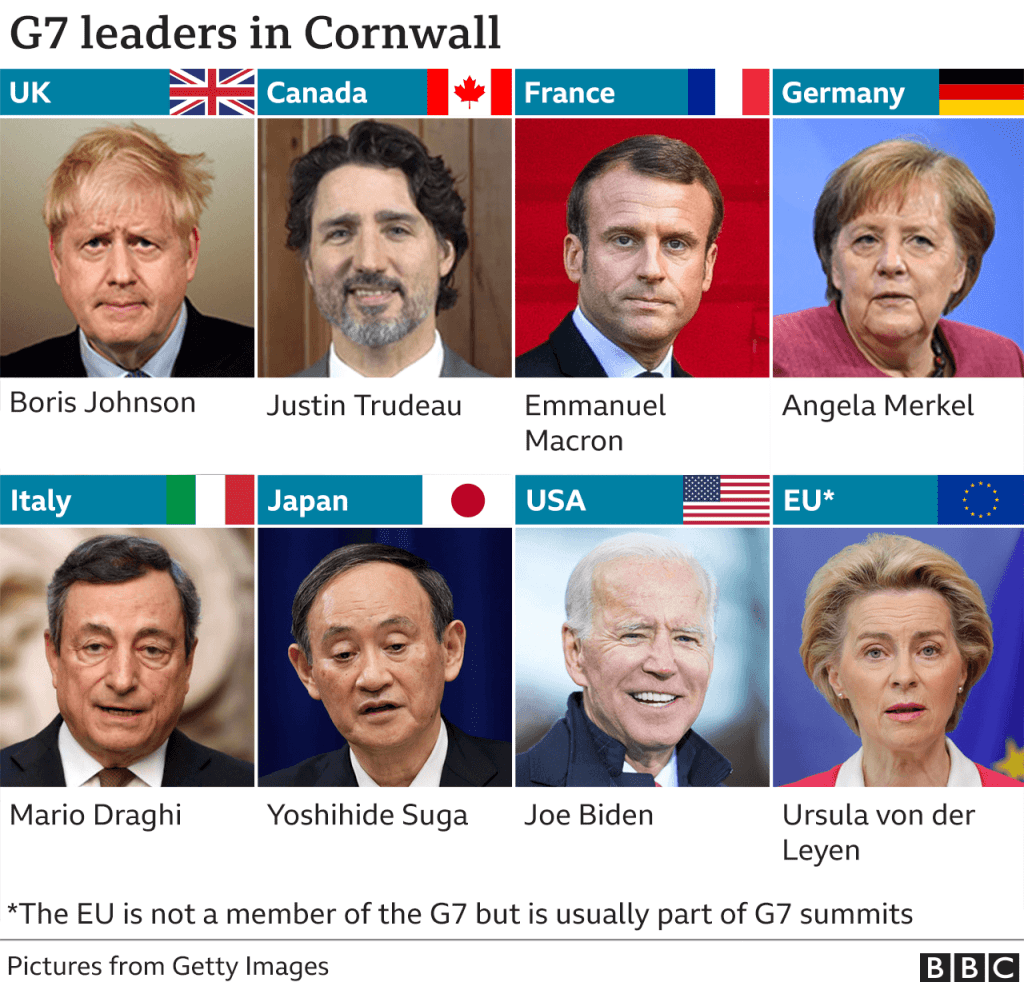
This year marked the 47th year of the G7 summit, which was held in Cornwall, United Kingdom. Earlier the 46th edition of the G7 summit was cancelled due to the Covid-19 pandemic. Group of Seven or G7 is the group of seven major advanced nations. It is an inter-governmental political group. It was formed on 25 March 1973 under the Library group. This year it was held between the 11th to 13th of June 2021.

Member countries of the G7 include the United States of America (USA), United Kingdom (UK), Canada, France, Germany, Italy, Japan, and the European Union (EU). The European Union is not majorly a part of the Group of Seven, but it is a welcome participant in all the meetings and decision making since 1981. These nations were represented by either their Prime Minister or President or Chancellor. The United States was represented by its President Joe Biden, alongside France’s President Emmanuel Macron. Canada, Italy, Japan was represented by their Prime Minister Justin Trudeau, Mario Draghi and Yoshihide Suga, respectively. Whereas Germany on the other hand was represented by its Chancellor Angela Merkel. European Union was represented by its President Ursula von der Leyen, who has been representing it since the start of the 38th edition of the G7 summit.

This year’s G7 summit also had its guest nation in the form of Australia, India, South Korea, and South Africa. Australia was represented by its Prime Minister Scott Morrison, India by Prime Minister Narendra Modi, South Korea by President Moon Jae-In and South Africa by President Cyril Ramaphosa. Antonio Guterres, Secretary-General of the United Nations also attended the Summit.

The agenda of this 3-day summit included the ongoing Covid-19 Pandemic and climate change. Various other agendas include the international coordination on economic policies, digital currencies, and the peace for Taiwan Strait. Japanese Prime Minister also stated Japan’s determination to host the Tokyo Olympic and Paralympic games.

China, on the other hand, reacted negatively to this summit. China accused the group of “meddling, lies, and false accusations”. China also denounced the group’s support for the violent Hong Kong protest and Uyghur militants in the Xinjiang region. A Chinese spokesperson from the embassy in London also stated its reaction to the Taiwan Strait saying, “The days when global decisions were dictated by a small group of countries are long gone.”

Profit or loss prior to incorporation for a corporate

When a running business is taken over from a date prior to its incorporation/commencement, the profit earned up to the date of incorporation/commencement (incorporation, in case of private company; and commencement, in case of public company) is known as ‘Pre-incorporation profit’.

The same is to be treated as capital profit since these are profits which have been earned before the company came into existence. In short, the profit earned after the date of purchase of business is called ‘Post-incorporation or Post-acquisition profit’ and the profit earned before the date of purchase of business is termed as ‘Pre-incorporation profit’.

Thus, any profit/loss made before the incorporation is known as “Profit (Loss) Prior to Incorporation” which is treated as a capital profit and the same cannot be distributed as business profit. Hence, it cannot be distributed by way of dividend.

The same is to be transferred to Capital Reserve or may be adjusted against Goodwill. “Loss prior to incorporation” is treated as a capital loss and, hence, the same is shown under the head “Miscellaneous Expenditure” in the assets side of the Balance Sheet.

A Profit and Loss Account is prepared at the end of the year and thereafter the profits (or losses) between the two periods are allocated:

(i) From the date of purchase to the date of incorporation or pre-incorporation period;

(ii) From the date of incorporation to the closing of the accounting year or post-incorporation period.

How systemic poverty is poisoning children

The Citarum River is the longest and largest river in West Java, Indonesia.Today it is known as the most polluted river in the world. When a group of journalists went to find out how this happened, the textile industry was found to be the culprit. The river water was severely polluted because the textile factories were mindlessly releasing their waste without any treatment. The amount of lead found in the water could permanently decrease the IQ of young children. Yet the same water was used to cook, clean and even water the paddy fields. This is what we call systemic poverty.

Let’s talk about india. India’s solid waste management system has two main factors causing the corruption & tipping fees and truck fee.Because of both these factors the people involved in this system do not want it to change. In fact they want the opposite. More garbage means more money for them.There is no incentive for change and betterment.From both these stories, what I want to highlight is that our system is poorly designed and is just a  tool for people to profit off of .

Individual action is important but it’s also limited. I often see Greta Thunberg receive a lot of flak for protesting so much. But these people have  failed to notice how she has started the biggest grassroots movement in climate history. Big companies are forced to change their ways and their unethical ways are exposed. Of course they are  changing not because they are concerned about the planet but because they are concerned about the customers,but that is okay. We need systemic change and that is of utmost importance. We must hold our representatives accountable for these changes and not let them gaslight us into thinking that this garbage catastrophe is only taking place due to citizens. 

The reason why citarum is the biggest example of systemic poverty is that despite major brands like H&M , Zara being responsible for the destruction , none of them are facing any charges. The innocent children are.

mental health for students

Mental health awareness is an important issue for all educators, who are often the first line of defense for their students. Education professionals have recognized the impact that a student’s mental health has on learning and achievement, and they realize that there’s a great deal that can be done to help students with mental health issues. As a high school teacher with more than 23 years of experience, I welcome the fact that mental health awareness is finally becoming an important part of a school’s function and curriculum.

Seeing the Signs in My Student

A few years ago, a student in my senior class changed drastically in a short period of time. I noticed that Melina no longer did her homework, and she didn’t even try on her essays. Previously meticulous in her appearance, Melina would come to school disheveled, wearing the same clothes. When I tried to speak to her, she was uncharacteristically distant and withdrawn. Because I had some training in mental health awareness, I knew Melina was in some sort of trouble.

Luckily, my school had social workers on staff who could speak to Melina and assess her issues. They discovered that Melina was depressed and suicidal, and she needed an immediate psychiatric intervention. Melina was hospitalized for a period of time, but she was able to return to my classroom a few months later. With the help of medication and therapy, she managed to graduate with her class.

Understanding the Impact

The National Alliance on Mental Illness estimates that one in five people live with some sort of mental disorder or disease. Despite the fact that the average age of early signs of mental illness is 14, most individuals don’t seek help until adulthood. Underlining the seriousness is the fact that 60 percent of high school students with mental illness don’t graduate.

New York mental health experts recognized that earlier intervention could result in more positive outcomes for these students. Beginning in July 2018, New York will be the first state in the nation to require mental health education for all students. The overall mission of New York’s School Mental Health (SMH) program is to promote healthy social, emotional, and behavioral development of students, and “break down barriers to learning so the general well-being of students, families, and school staff can be enhanced in collaboration with other comprehensive student support and services.”

The SMH program supports the emotional health and academic growth of all students with the following:

  • Integrating comprehensive services and support throughout every grade level
  • Assessing mental health needs through universal, selective, and targeted interventions
  • Providing access to behavioral and mental health services and programs
  • Leveraging higher-level personnel, such as those working with the Department of Education, for necessary support and services
  • Building collaborative relationships between the school and students’ families and communities

Spreading Awareness Across the Nation

Until mental health education is a mandatory aspect of all schools, teachers and administrators can work to promote awareness with their students. Key elements to shine a light on include the concept of self-care and responsibility for one’s own mental health and wellness, with an emphasis on the fact that mental health is an integral part of health, and the concept of recovery from mental illness.

Teachers and students should be provided with ways to recognize signs of developing mental health problems, and there should be opportunities around the awareness and management of mental health crises, including the risk of suicide or self-harm. Further, instruction should address the relationship between mental health, substance abuse, and other negative coping behaviors, as well as the negative impact of stigma and cultural attitudes toward mental illness.

Further reading: Social-Emotional Learning

Because teens spend most of their day at school, it just makes sense to have mental health awareness and education become part of the curriculum. When we empower students with knowledge, and encourage dialogue, students will be able to get the help they need.