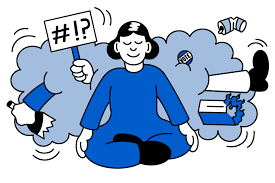
Things to do when you are feeling low

Do you have one of those days where you don’t feel like getting out of bed? Where you feel like everything is going against you and you feel sad or unaccomplished.

Well good for you, you are not alone.

We all have days where we don’t know what to do. Where we feel lost and unsatisfied. We want to change the way we feel but, there is no motivation to do so

Feeling low is quite normal. It is our brain’s way of telling us to take a break. Now there are two things people do when they feel low.

The first thing is they push themselves to work and forget about their emotions.

The second one is they let their emotions sit in, take a break and, then move forward with a fresh perspective.

Which approach sounds better? The second one right.

So, here are a few things to do when you are feeling low,

The first thing to do is acknowledge your emotions. Cry if you are feeling sad. A lot of people think that crying isn’t good or it shows that you are not strong enough. But, that’s not true. Crying is as normal as laughing when you find something funny.

Did you know that crying makes you feel better?

Crying releases endorphins, these feel-good emotions help you feel better.

Now that you have let your emotions out, give yourself a break so your body can recharge.

Have your favourite meal. You deserve that after going through so much. Forget about the calories and go grab a pizza if that will make you feel better.

Go outside and connect with nature. I am not asking you to go on a vacation. But even going outside to the park near your place can help. Being surrounded by nature will instantly make you feel calm. Nature has a calming effect on human beings. Even lying down under the night sky will help you feel calm and make you realise, how small of a part you are in this universe.

Do not go on social media. It is not the best idea to go on social media, where all you see is people having fun while your life is a mess. We tend to forget that people on social media also have bad days like us but they don’t show that online.

Talk to your trusted ones. Keeping things on your mind can be draining. So, talk to your friends, or family. If you are not comfortable sharing things with them, then you can always talk to your therapists or some trusted friends online. Talking things out and sharing your negative emotions with your trusted ones is profoundly healing.

Do an activity you enjoy. It can be as simple as painting, reading, or singing. You don’t have to be good at it. Do it to enjoy yourselves and to have fun.

We get so involved in our lives that we often don’t get time to do such things. So doing an activity you love would be very therapeutic.

Now that you are done with the break and are ready to go on with your life. Remember to take things slow.

One step at a time. Set small targets for yourself. Give your brain enough time to pick up with the pace.

Doing these activities will help your brain recover and give you a fresh perspective on life. It is always okay to not be okay and, to let our emotions take over. It is okay to take a break and rest for a day or two. Even successful people have bad days. So, don’t be so hard on yourselves for feeling low instead, give yourself time to rejuvenate.

How To Achieve Your Word Count Goal?

“The best word shakers were the ones who understood the true power of words. They were the ones who could climb the highest.”

  • Markus Zusak

A word count is the calculation of the total number of words required in an essay, article or maybe a story. Articles for instance, are assigned a word count of 1000 words. However, many a times, the word count isn’t mentioned. In such cases, its relevance diminishes since you have been provided the freedom to write as much as you please.

But, if you ask me, it is beneficial to set up a word count before starting to enter the world of authors! If you are a novice in the writing process and find the concept of length of your write-ups bemusing, then a word count comes in handy! Just as the deadline in any task makes us work effectively under pressure, the word count in writing makes us acquainted to the process, thereby improving our ability to write! After all, everything has a beginning!

Here, in this article, I will be guiding you towards achieving your word count goal effectively through a step by step approach.

  • Sanity Matters!

The First step is to eliminate any type of stress or laziness when setting up your writing atmosphere. Have a clear mind when writing, because a healthy mind blossoms more creative ideas than the one which isn’t.

  • Move To Pleasant Surroundings!

The Second step is moving to pleasant surroundings where writing seems a fun task. If the chirping birdies in the garden inspire you, then just reach out to them at the earliest possible convenience!

  • Get Your Medium Out!

The Third step is getting any medium of writing, be it a notebook and pen or a laptop out of that cupboard and decide to write. It is however, advisable to choose a laptop for the process, since Microsoft word helps keep track of your word count on the bottom left corner of the page. This makes it easier for you to begin.

  • Set Up Your Word Count!

The Fourth step is setting your word count. Make an apposite choice of the count depending on your strength to write!

  • Choose A Good Topic!

The Fifth step is pondering over the topic you would choose. Select a topic that would provide you a wide range of information to write on. This would automatically increase your word count.

  • A Random Topic is Hunky – Dory

The Sixth step is selecting a random topic of your choice and jotting down some words on it. In short, start with a short essay on any topic concerned while not forgetting to set up a word count of course!

  • Resolve The Word Count Increase!

The Seventh step is resolving to increase your word count day by day. Make it a habit to set your goal and implement it almost every time.

  • Write Regularly!

The Eighth step is vowing to write daily. When you decide to write regularly, your speed of typing or writing has a hike thus, making it easier for you to increase your count.

Go For Writing Prompts!

The Ninth step is resorting to writing prompts. Write anything, on almost any insensible issue as long as it helps you to develop your love for writing and increase your writing speed.

Approach Your Writing Coach For Assistance!

The Tenth step is optional. If you still encounter difficulties in setting your word count, then some help or guidance is always welcome. You may visit your nearest writing coach for the same!

Thus, I would conclude stating that your word count is deeply impacted by your attitude towards writing and your love for it. Make sure to remain dedicated towards your writing goals and resolve to develop its addiction! Yes! I know, it is a hyperbolic term to be used, but that’s actually the idea towards developing effective writing skills. If not addiction, then at least try allotting some time of the day for relevant, random topics that brush through your mind! If, while performing the daily chores, a bizarre topic is lurking in your head and just can’t wait to get itself out on the paper, then don’t procrastinate! Instantly, resolve to complete your significant tasks and get your laptop outta that cupboard. Don’t suppress your thoughts to the extent that they completely vanish from your head and you no longer remain with anything to write on. In short, writing needs to be a daily task, if gaining excellence in it, has been your deep rooted dream.

Also, choose correct and influential words as you develop experience in the writing field. Start making your write-ups mature enough. Don’t stick to the same insensible topics as you chose as a beginner. Increase your level of communication through write-ups thus, making them interesting. Start choosing relevant topics and not random ones. Make your write-ups golden so that it would lure more and more readers!

P.S. Don’t overdo or stress yourself for writing a piece regularly. Do it in sound mental and physical conditions.

Thank You For Reading!

Family TIME

Family time offers many benefits, including building confidence, creating a stronger emotional bond between family members, improving communication skills, better performance in school and reduced behavioral issues, as well as providing an opportunity to make memories built on fun, laughter and togetherness. Children whose parents spend time with them and take an interest in their education tend to do better in school and complete higher levels of education than those whose parents spent their time at home pursuing their own hobbies, according to a study published on familyfacts.org. Providing essential guidance through studying and assisting with homework, as well as incorporating educational games, can provide children a positive influence, lead to emotional well-being and help them strive for higher levels of educational success as they grow.
Spending time partaking in everyday family leisure activities has been associated with greater emotional bonding within families. Both “core” leisure activities, such as playing a board game, watching television, gardening or playing outdoors and “balance” activities, which require a greater investment of planning, time and money, such as a family vacation or trip to an amusement park or sporting event, can have a big impact on the overall health of a family, according to research published by the National Council on Family Relations. Simply making it a habit to display interest in the well-being of your family members can lead to a willingness to share problems and build mutual respect between parents and children.

Avoid Procrastination

Procrastination is a challenge we have all faced at one point or another. For as long as humans have been around, we have been struggling with delaying, avoiding, and procrastinating on issues that matter to us. During our more productive moments, when we temporarily figure out how to stop procrastinating, we feel satisfied and accomplished. No matter how well-organized and committed you are, chances are that you have found yourself frittering away hours on trivial pursuits (watching TV, updating your Facebook status, shopping online) when you should have been spending that time on work or school-related projects.Whether you’re putting off finishing a project for work, avoiding homework assignments, or ignoring household chores, procrastination can have a major impact on your job, If you’re procrastinating because you find a task unpleasant, try to focus on the “long game.” Research shows that impulsive people are more likely to procrastinate because they are focused on short-term gain. Combat this by identifying the long-term benefits of completing the task. For instance, could it affect your annual performance review or end-of-year bonus?Another way to make a task more enjoyable is to identify the unpleasant consequences of avoiding it. For instance, what will happen if you don’t complete the work? How might it affect your personal, team or organizational goals?our grades, and your life.

Donation- A compulsory thing

India is a huge country in which a lot of peoples live. Some peoples are not able to get food, get educated, survive by ownselves. So donation is made to help to them. Donations are given without return consideration. This lack of return consideration means that, in common law, an agreement to make a donation is an “imperfect contract void for want of consideration.” Only when the donation is actually made does it acquire legal status as a transfer or property.

In politics, the law of some countries may prohibit or restrict the extent to which politicians may accept gifts or donations of large sums of money, especially from business or lobby groups (see campaign finance). Donations of money or property to qualifying charitable organizations are also usually tax deductible. Because this reduces the state’s tax income, calls have been raised that the state (and the public in general) should pay more attention towards ensuring that charities actually use this ‘tax money’ in suitable ways.

It is possible to donate in the name of a third party, making a gift in honor or in memory of someone or something. Gifts in honor or memory of a third party are made for various reasons, such as holiday gifts, wedding gifts, in memory of somebody who has died, in memory of pets or in the name of groups or associations no longer existing. Memorial gifts are sometimes requested by their survivors usually directing donations to a charitable organization for which the deceased was a donor or volunteer, or for a cause befitting the deceased’s priorities in life or manner of death. Memorial donations are also sometimes given by people if they are unable to attend the ceremony.

Adline Castelino: A diva Who made India Proud

Adline Castelino, who earlier won the LIVA Miss Diva Universe 2020 title, received praise for her well-rounded response in the question-answer round. Castelino, born and raised in Kuwait moved to India when she was only 15, to make a living and become a financially independent woman. Adline Quadros Castelino is born to Manglorean Catholic parents hailing from Karnataka. 

The 22-year-old is a public figure and influencer, she supports causes and creates awareness about polycystic ovary syndrome (PCOS) as well as working to end the stigma around COVID-19.

In an interview with Pinkvilla, Adline said, “There was a big drive that I need to be in Mumbai and be a financially independent woman. I was like every other 15 years-old who didn’t know much about things and I believed there is something for me in Mumbai. I was shy sometimes. I used to think that with the marks on my body, I am not good enough to represent India.”

Adline is here to steal hearts in a high slit shimmery gown

The 69th edition of the Miss Universe contest was held on Sunday night at the Seminole Hard Rock Hotel & Casino in Hollywood. It was a scaled-down affair in the wake of the coronavirus pandemic. Andrea Meza of Mexico has been crowned Miss Universe for the year 2020, beating contestants from 74 other countries, including Miss India Adline Castelino, who came in fourth at the beauty pageant.

During the pageant, she was asked: “Should countries lockdown due to COVID-19 despite the strain on their economies, or should they open their borders and risk a potential increase in infection rates?”

To this, Adline responded, “Good evening universe. Well, coming from India and witnessing what India is experiencing right now, I have realized something very important that nothing is more important than the health of your loved ones. And you have to draw a balance between economy and health. And that can only be done when the government works with the people hand in hand and produces something that will work with the economy. Thank you.”

A day before the finale, she had penned down a heartfelt note on her journey through a video clip posted on social media. She had written: “If I could pen down this feeling without getting overwhelmed about how I felt as I stood there witnessing people around the world cheering, flags waving high and even if I missed seeing , I felt like I was home. I thought of you India and what we are going through. The love that people give you when they are hurting themselves is the purest form of love one can experience. I’m grateful to you that at a young age I have experienced that and if I could only show you what I saw that day! I saw hope, a hope that will be ours soon.”

The gorgeous saree was designed by Hyderabad-based designer, Shravan Kumar.

The 22-year-old diva won accolades and hearts by wearing a saree for the National Costume round. The gorgeous saree was designed by Hyderabad-based designer, Shravan Kumar. She explained the significance of the saree in an Instagram post.In an interview, talking about her dreams and being proud to represent India at Miss Universe platform, Adline Quadros Castelino said, “As a young girl growing up in Kuwait with no exposure, I would always look up to Miss Universe with so much awe but never imagined a girl like me who had a speech defect and had marks on her body could ever represent her country on such a prestigious platform.”

This was India’s highest Placement in Miss Universe after Lara Dutta won the title of Miss Universe 2000. Castelino broke the 20-year drought of India’s non placement in the Top 5 of Miss Universe, which was previously achieved by Celina Jaitley,  who was the 4th runner-up in 2001.

tHE nEW wAY OF gROWING Business- Social Media Marketing

The Internet has made the world a global village. You can not only interact and engage with people nationally but also internationally. This has not only expanded the scope of personal interaction but also business engagement.

What is social media marketing?

Let’s get to know what social media marketing means by breaking up the term into two parts, ‘social media and ‘marketing’.

Social media is a collective term for an interactive online platform for the creation of social relations with people, communicating information and ideas. Social media lets you socialize virtually with the convenience of ‘anytime anywhere’.

Marketing on the other hand means, the activities taken up by companies to promote their products and services by bringing it to the notice of the potential customers and clients by advertising it through different platforms, be it print, broadcast, digital, or any other. So, the term social media marketing collectively means the use of social media platforms by companies to grow their audience base for their products and services by reaching out the potential customers through advertisements posted on social media. it can contain text, images, videos, or any other elements that can increase audience engagement.

Today, there are so many social media applications available, that can be easily accessed through the internet. This has made it so much easier and faster to connect with people around the world. Facebook, Instagram, Twitter, Linked In, Snapchat, and YouTube are some of the most commonly used social media apps.

Algorithms

Social media has an algorithm that it works according to. The algorithm decides which posts the users would see as they refresh their feed. The algorithm aims at recommending posts to the users so that they keep scrolling and can see more ads.

You might have noticed the moment you search for some product on a search engine or through an app to buy, the next moment you scroll through your social media you would get advertisements of more such products or more products from that shopping app.

Even the companies and brands have their page on social media. The more people engage in and see their posts, the more it gets recommended to other people as the algorithm identifies it as something people would like to see. This algorithm is prominent in the case of YouTube.

The analytics of such social media platforms lets you see the number of impressions the post has, the number of views, comments, and even the shares made. It also lets you see the graph of day-to-day, weekly, monthly and even yearly views gained. This acts as a great help in analyzing how the particular type of content is being accepted by the audience so that you can make changes in the way of your presentation of advertisements or posts accordingly for a better audience base.

Usage of appropriate hashtags also contributes to spreading the reach. Hashtags that can be well associated with your brand or the product contribute a lot to the performance of the content. 

Moreover, it is very crucial to do market research before posting up your content on social media for the product or brand, as to know what people like and accordingly design your content to meet the taste and preference of the people for greater success.

CHILD LABOUR

INTRODUCTION
The best phase of human life is childhood. It is the most innocent phase of our life. In this stage human foundations are laid for successful adult life. In this phase we spend the most cosy, carefree and tension free lifestyle. We pass our time by playing, and leading a tensionless fun life. But there are many children who spend their life supporting themselves instead of spending it in a carefree and fun-loving manner because for them learning and playing are scared and tormented. They are controlled & tortured by others.

They want to get out from this dark world but they are forced to stay in this world. This is the true story of the child labour. Child labour is term that we all heard about in news or in movies.

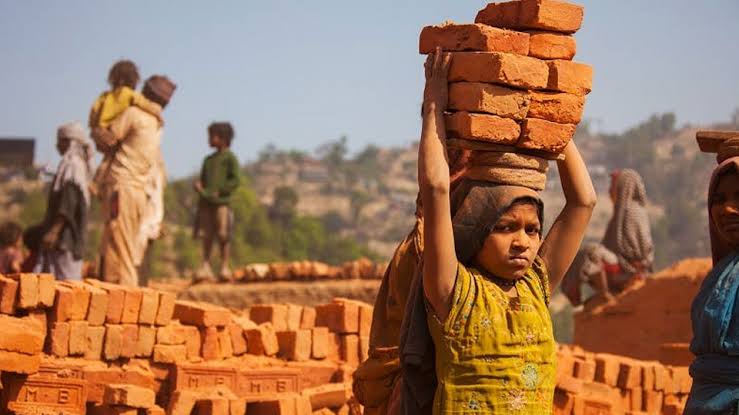
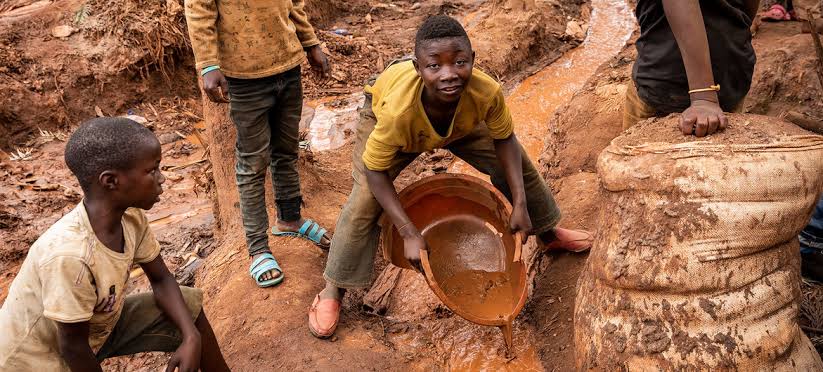
Child labour is a crime. In some underprivileged families who are suffering from poverty, children are forced to work from a very early age to support themselves economically because they expect their kids to take responsibilities of working and provide food for them.
Industries and individuals take the advantage of their poverty and employ children to put them to work at very low payables.

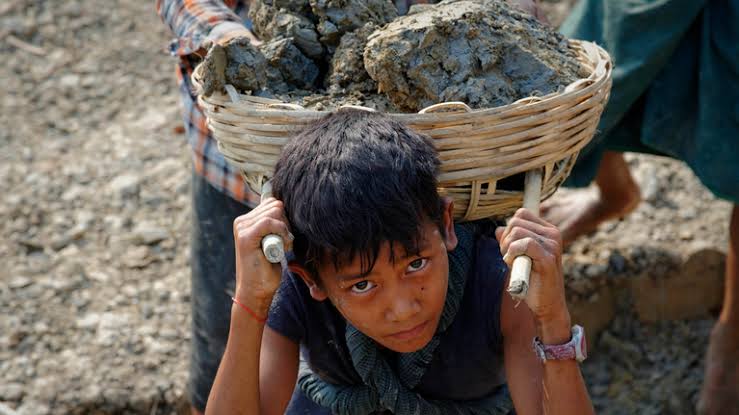
They are forced to work for long hours in dangerous factories. Sometimes they are forced to carry heavy loads that weigh even more than their body weight.

Then comes some individuals’ who hire children in their house for domestic help. They are so rude that when the children make a single mistake they beat them and torture them physically.

Those children do not get proper food to eat or clothes to wear. Sometimes they are made to starve and given worn-out clothes to wear. This is the story of many children who are suffering in this cruel world.
The average age for a child to be appropriate to work is considered 15 years or more, below this age limit won’t be allowed to indulge in any work forcefully.
Child labour takes away the kid’s opportunity of having a normal childhood a proper education and physical and mental wellbeing in some countries. It is illegal, but still now it is practiced in many countries.

CAUSES OF CHILD LABOUR
The main reasons for the ever-growing child labour are poverty and lack of education.
The parents think that their children are money-making machines. To earn more money by getting sympathy from other people they carry infants on the street begging.
Then when they grow up, they take them and eventually sell them to employers.This is a sickness that is rampant across the length and breadth of India
But other than poverty and lack of education, many other reasons are also responsible for child labour.
Firstly, it is common in those countries where unemployment is more than poverty. When the families are unable to earn enough money to support their lifestyle they put the children to work so they can have enough money to survive.
At the same place if the adults
are unemployed. The younger ones have to go to work. When people are illiterate then it is very common that they will send their children to work. This is because being uneducated all they care about is short term results due to which they send children to work even if the earning is less to survive their present . This destroys the future of children. They also remain uneducated and later after growing up when they start their own family they repeat the same thing as their parents did i.e., sending their children to work at an early age.

WORST CONDITION FACED BY CHILD LABOUR

India is in the second-highest number of child labour after Africa.
The worst employment bfir children is bonded child labour which is also known as slavery for lifetime.
Indian Parliament passed an act on the bonded labour system in 1976 but in spite of this act people still keep on practicing this system. It is estimated that almost 10millions children are victims of the bonded child labour. They work as domestic servants in India. Apart from India, almost 55 millions of children are hired across the world for bonded child labour.
The children are sold to money lenders as a payment of the money borrowed by their parents which they failed to return.
Children living in streets, instead of going to school, work in streets as a beggar, or selling flowers. This also is an example of child labour of different category. They are made to stay without eating food for many days so that people feel sad for them and give some.
Nowadays child labour couples who abuses child has become one of the greatest maladies across the world.
Every year the number of child abuse increases especially in the case of the girl child.This usually happens when someone abuses a girl at home, then to hide this fact her family sell her to an employer or money lenders as domestic help or the girl gets married to a man older than her age.

ERADICATION OF CHILD LABOUR
To eradicate child labour we should formulate some efficient solutions which will save our children. The future of other countries dealing with these social issues will also get enhanced. With the help of this one can create several unions that work to prevent child labour solely. It would help the children to indulge in this work and punish those who make them do it.
Stakeholders must take responsibility
Increased access to education
Provide support for children
Improve economic growth
Engage with the Sustainable Development Goals

@track2traininginstitute @track2trainingseminar @edunewsnetwork @hariyaliinsitute

What government said for reopening schools!

The central government said that it is dangerous to open schools in this situation. All medical associations proved that third wave will come back within 3 weeks.

Recent news

It is a good decision of government of India because a bit of carelessness can be dangerous for the health of children.

20th june,2021

source: NDTV News

Indian contract act

The term contract is defined as an agreement two or more parties which has a binding nature, in essence, the agreement with legal enforceability is said to be a contract. It creates and defines the duties and obligations of the parties involved.

Agreement = Offer + Acceptance of offer Contract = Agreement + enforceability by law
Contract- An agreement between two or more parties which is enforceable
by law, is known as Contract.


That is if any two parties or more than two parties want to do something together
or exchange something for that purpose of they are entering into any agreement
which is enforceable by law, it is known as Contract.
A promise enforceable by law.

Essential Elements of contract

Agreement : The primary element that creates a contract between parties is an agreement, which is a result of offer and acceptance, that forms consideration for the parties concerned.

Free Consent: Consent of the parties is another important aspect of a contract, which means the parties entering into the contract, must agree upon the same thing in the same sense. The consent of the parties is said to be free when it is not influenced by corecieon undue influence, fraud, misrepresentation and mistake.

Competency: Competency refers to the capacity of the parties to enter into the contract, i.e. he/she has reached the age of maturity, he/she must be of sound mind, and he/she is not disqualified from contracting, as per the law like the alien enemy, foreign sovereigns, etc.

Consideration: It implies the price agreed to be paid for the promisor’s obligation by the promisee. It must be adequate and lawful.

Lawful object: The object for which the contract is created must be lawful, or else it is declared as void.

Not expressly declared as void: The law should not expressly declare the contract as void, such as contract in restraint of marriage, trade or legal proceedings.

Why third Sunday of June is celebrated as Father’s Day

The celebration of paternal bond is observed on third Sunday of June and this year it is on 20 June, 2021

The celebration of this lovely, warm paternal bond is quite popular all over the world, though the dates of observance might differ in some countries. However, India follows the American date which is the third Sunday of June. For Catholic European countries like Portugal, Spain, Croatia, Italy, Father’s Day is celebrated on March 19 which is St. Joseph’s Day. Australia observes it on the first Sunday of September; Norway, Sweden and Finland follow the second Sunday in November. Russia celebrates on February 23.

The aim of the day to express appreciation and acknowledge the role of the father figure in children’s lives, and society as a whole. UNICEF too, had harped on the critical role the fathers play in early childhood learning.


What is the reason of celebration only in third Sunday of June ?


Father’s Day originated in the United States. It was on 19 June, 1910, the first Father’s Day celebration took place.
Sonora Dodd, the daughter of American Civil War veteran William Jackson Smart had requested the Spokane Ministerial Alliance observe 5 June which was her father’s birthday, to honor fatherhood. Her father had raised six children, as a single parent. Her deep sense of gratitude, love propelled her to make this request.
She was also inspired by Anna Jarvis’ endeavor to bring about Mother’s Day, and proposed the Father’s Day idea.
Finally, the Church agreed upon the third Sunday of June to commemorate. Following which, much later in 1966, President Lyndon B Johnson announced the third Sunday of June as Father’s Day as he signed a presidential proclamation.
Almost 62 years later from 1910, Father’s Day was declared as a national holiday by Richard Nixon who was the then President of the US (1972).
There is also information that states Father’s Day was observed on 5 July, 1908, in West Virginia after a mining accident in Monongah, USA, to honour the fathers who lost their lives in the disaster.
Since then, Father’s Day has been celebrated with great enthusiasm and joy. Father’s Day celebration emphasizes the paternal bond, the role of father figure in children’s lives, families, and society at large.

Are You Sick Of Politics Too? An in-depth view at the Politically Triggered Anxiety and Electoral Stress that’s hitting Indians

With an age old stigma tailing down it’s path, we Indians generally don’t give as much consideration to our mental health for various reasons as compared to those in the West. In any case, there is a possibility that you heft around some stress about the political course of the country.

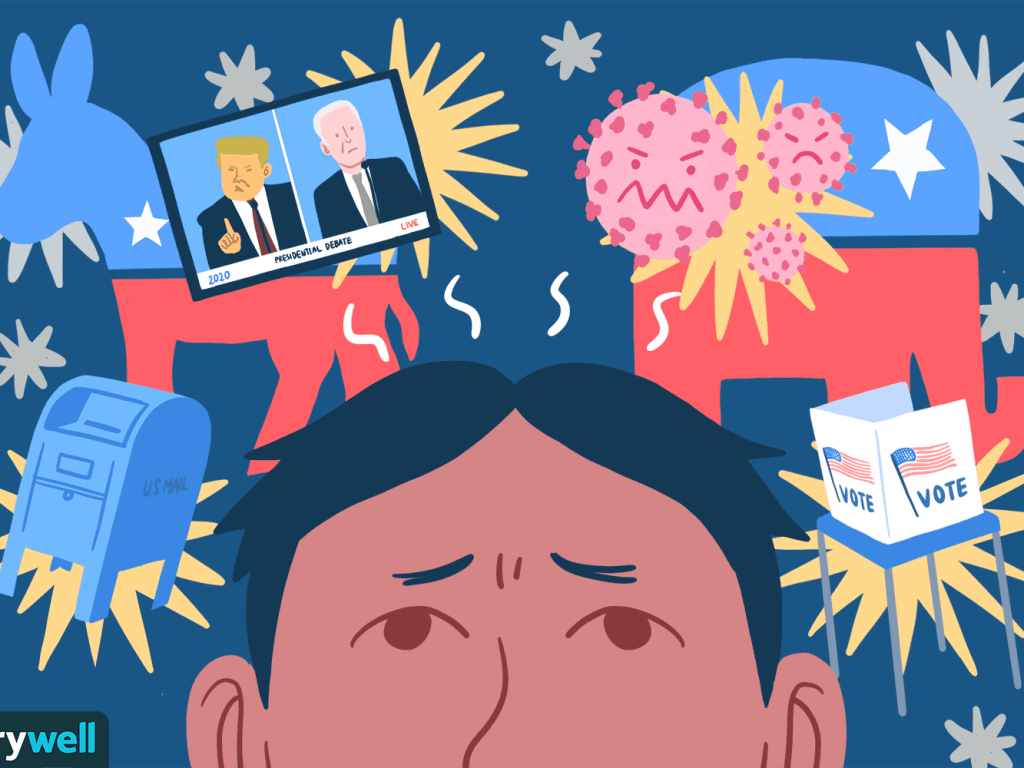
The world’s largest democracy voted for five assembly elections recently. With 180 million of India’s 1.3 billion people eligible to cast their votes , a larger strata of its overgrowing population heads out to exercise their biggest power in hands to chose from among various political parties jostling for their accession to throne. Some of you may find your anxiety levels all over the place during the election season. Welcome to the world of Politically Triggered Anxiety and Electoral Stress Disorder that’s hitting the Indians hard and fast.

Profoundly polarized worlds of politics will in general raise the feelings of anxiety of those who fall to be most vulnerable and threatened to it. Yet, on a more larger scale, it could likewise affect anyone who’s owns a cell phone in this news on the go age we all live in..

Election Stress Disorder grabbed global media attention during the run-up to the 2016 US Presidential elections . The American Psychological Association revealed in October 2016 that 57% of Americans admitted that the political environment of the nation is “very” or “fairly huge” source of stress in their lives. The high levels of anxiousness was seen linked to a huge partisan campaign between then Democratic Party candidate Hilary Clinton and her rival Republican Party candidate Donald Trump .In April 2016, the survey led by Washington Post-ABC News uncovered that 69% of Americans felt anxious over the apprehension of Donald Trump being elected the President of the United States. Believe it or not, election-related anxiety is real. No matter where you head to-from social networking sites to heated debates on news channels–there is no escaping from highly charged political discussions. This can be particularly torturing if your political philosophy is at crossroads with those close to you. For many individuals, politics isn’t just about who is overseeing the country yet rather a significant piece of their idealogy. Uncertainty is frequently stressful, and some people are better at dealing with uncertainty than others. Experiencing a pit-like nauseous feeling in the gut, every time there’s political discussions and even the slightest exposure to election talk and media coverage, you could be experiencing election-related anxiety. We Indians too already have enough on our plates with our very own Made in India brand of divisive desi politics and polarization bringing in a lot of stress all of which are only heightens as we trudge closer to the elections every now and then.


Here lies another Indian-ish things — we have a tendency to be the first in everything. The first to discover ‘zero to the first to discover the cure for leprosy, and now the ESD. We have known about it for years now but just didn’t claimed it like the West. In 1997, Jaipur-based psychiatrist Dr Shiv Gautam led a team of three doctors who did a study in Rajasthan and published a paper titled ‘Election – A Stressful Life Event’, analysing near about 54 patients who sought counselling after developing mental health troubles following local panchayat elections in Rajasthan back then, concluding that the elections were stressful not only for the candidates and their campaigners but also the State Election Commission. The researchers followed this up with another study in 2009 and the result was very similar.

There has been an increase of stress and anxiety in economically backward sections. Economically crippled strata of India have been targeted in phases — irrespective of their political beliefs. . The constant uneasiness and uncertainty blanketing the life of a common householder develops into stress and subsequently into anxiety, leading to physiological complications.


According to the Lancet Report, India recorded one of the highest suicide rates among youth globally. A research published in the Asian Journal of Psychiatry, 37.7% of university students in India suffered from ‘moderate’ depression, 13.1% suffered from ‘severe’ depression, and 2.4 % were suffering from ‘extremely severe’ depression, citing the uncertainty of employment and the fluctuating job market as the prime causes.

Mental health professionals pose blame of the barrage of stress-inducing social media brought to Indians , over the advent of social media. News is on every screen and there is an urgency to consume and pass it over it immediately; no time to take in the reality of the news and then react to it because everyone wants to be the first political think tank on social media which is evident on the amount of political, communal and religious propaganda in the media. The fact remains that low levels of digital and media literacy among the general population has been marked as the biggest contributor to the widespread fake news and rapid onset mob-violence scenario, as the recent violent protests over Whatsapp forwards have demonstrated.

As a coping strategy to deal with the anxiety caused by politics, Maryland based therapist and a victim to this stress himself, Dr. Steven Stosny , advises those affected by the election and its aftermath, “to reach out, connect, affiliate and show compassion for those similarly affected. Hold other people’s perspectives alongside your own. Weigh evidence, see nuance, plan for the future and replace blame, denial, and avoidance with the appreciation of complexity.” “Stand up for what you believe. Write letters, demonstrate, lobby — remembering that you’ll be most effective (and feel better) when focused on the change you want to see rather than merely reacting to what you don’t like. For optimal psychological health, take the moral high ground and resist the urge to react to a jerk like a jerk,” Stonsy says.

WOMEN EMPOWERMENT

WOMEN EMPOWERMENT
Let me say that too often adolescent girls face intersecting disadvantages because of their age, gender, ethnic background, sexual identity, religion affiliation, income, disability among other compounded factors. We have seen pictures, evoked images of girls in different situations that live with disadvantage, even without crisis. The perception and reality of vulnerability arising out of these multiple intersectionalities really creates that context of discrimination and differentiated impact of crisis.

During conflict or humanitarian situations, natural disasters or climate change, these factors exacerbate and disproportionately and differentially affect young women and girls due to neglect of their human rights and the intersecting forms gender-inequality and discrimination that they endure. So this is how we shine the light on this particular situation of girls in emergencies. As was mentioned, it is often forgotten that women and girls are not only helpless victims, they are sources of power, power to cope, power to prevent, power to reduce risk, power for resilience and transformation and to build back better after crisis. That is the power that we want to invoke and tap into.

We must be outraged about the disadvantages that girls still experience. But here has been some progress. Humanitarian actors and governments are much more aware today about addressing crises and resilience building with a gender lens and with a girls lens. But, we still have miles to go.

Imagine that to date, women and children account for more than 75 per cent of the refugees and displaced persons at risk from war, famine, persecution and natural disasters.
Every 10 minutes, somewhere in the world, an adolescent girl dies because of violence.
Up to one-third of adolescent girls report their first sexual experience as being forced and they are victims of sexual violence. Currently at least 133 million girls and women have experienced female genital mutilation.
Imagine, that more than 700 million women alive today were married below the age of 18 – and more than one in three (some 250 million) were married before 15. And we saw that in crisis, all of this is worse.
Child marriage is four times higher among Syrian refugees than before the crisis. Evidence shows that 2,400 interviewed married refugee Syrian women in Lebanon, aged 20 to 24 years old, 47 per cent were child brides.
The 2030 Agenda for Sustainable Development provided us with 17 development goals, but also SDG 5, which is about “Achieving gender equality and empowering all women and girls”, in all circumstances, including in crisis and humanitarian situations. This is a big win and a commitment of the international community and we must all work to see that it is realized, most of all in crisis situations.

The 2030 Agenda has pledged to leave no one behind. This means that in our development efforts, girls must be a priority. The world should ensure girls are granted all the opportunities they deserve as they mature into adulthood. I would also like to mention something that has not been touched upon, which also plays out in crisis. The whole culture of ‘boy preference’ and ‘girl aversion’ has to be changed, where an equal valuing of girls is something that we must inculcate in all contexts.

Enabling girls to avoid child marriage and unwanted pregnancy, protect them against HIV transmission, and acquiring the education and skills they need to realize their potential, is a key priority toward 2030 and also a priority in crisis. Sometimes we forget that these are essential elements to be taken forward in crisis situations.

Gender equality and empowering all women and girls is something that we seek to advance and if we fail to address girls’ differentiated needs and aspirations too, a generation will be lost and with it, our hope for sustainable development, prosperity, peace and security.

It is therefore critical to EmPOWER Girls: Before, during and after emergencies

One thing all emergencies have in common is that they create a new set of circumstances, which girls have to learn to navigate, but we, as adults around them, have to be in the forefront of prioritizing their needs and helping them navigate:

From one day to the next they may face the loss of their homes, friends and family members. They may suddenly be living in a shelter or have no shelter at all. They may not have access to basic services and amenities or be sure where their next meal is coming from. They may be fleeing the only place they have ever called home.

Furthermore, from the 1991 cyclone in Bangladesh in which 90 per cent of the 140,000 people who lost their lives were women; to the 276 Chibok schoolgirls were abducted by Boko Haram militants in Nigeria in 2014, to the women representing the single-highest adversely affected group by the earthquake in Nepal, we know that resilience building and recovery have a girl’s face. Not only they because they are the most in need of urgent help and in higher risk of violence in the aftermath of the crisis situations, but also because of the critical role young women and girls play in preventing, preparing for, and recovering from natural and human made hazards.

So how do we reach these girls? How can we protect them? How can we inspire them? And how can we ensure they are not left behind?

From today’s presentations we learned that resilience building and planning cannot be sustainable if we do not involve girls’ voices in the planning itself. We cannot be successful unless girls are empowered to actively participate in the solutions; girl-driven solutions. Let them decide how best to address their most urgent and future needs. Let their voices be heard.

Not only can girls inspire innovative and creative solutions, but they can guide and contribute to future policies, research, programming and media campaigns.

During this year’s 16 Days of Activism, we will be working with UNICEF and we will be launching U-Report’s Ending Violence Against Girls Information Centre, which will connect young users directly to the information and tools they want, to be advocates for change in their own communities.

We also need to create safe spaces in which these girls can feel empowered. UN Women has the Safe Cities Programme. UN Women’s Safe Haven centres, for example, provide a space to women and girls to express themselves without fear of judgment and harm.

Empowering girls must also form the core of any protection and humanitarian service provision and resilience building. That is why UN Women is combining what we call the LEAP that is Leadership, Empowerment, Access and Protection, which is about gender-responsive humanitarian response. And our LEAPS strategy, which is about empowering young women–their leadership and economic empowerment. So, we have three flagship programmes to support women and girls in the context of humanitarian crisis.

While education is key to the future of adolescent girls, in conflict and humanitarian zones girls are 90 per cent more likely to be out of school when compared to girls in other, conflict-humanitarian free, countries.

We know that an extra year of primary school for girls increases their eventual wages by 10 to 20 per cent, and that an extra year of secondary school increases them by 15 to 25 per cent.

Universal secondary education would cut child mortality in half. In Sub-Saharan Africa, maternal mortality could fall by 70 per cent.

We know also that when a girl sees herself as a leader or a mentor, it creates a positive force for change in her life.

As we end this morning’s commemoration, I have the pleasure of introducing the #FreedomForGirls film, which is currently available on Google’s homepage in over 50 countries. I invite everyone to share this powerful and inspiring film far and wide, to use the #FreedomForGirls hashtag to tell us what freedom really means to you, and to think about creative solutions for empowering girls in crisis settings, so that we can create a better future for us all.

Dear young people, leaders and champions,

In good times and in crisis—but specially in crisis and emergencies, all stakeholders and actors have a duty to care to make humanitarian response and resilience building work for, include and empower girls and young women.

On this International day of the Girl which zooms in on their rights before, during and after emergencies and crisis, let us take the following pledge:

Together we will protect girls’ human rights in all circumstances;

Together we will foster girls’ capabilities in every field at all times;

Together we will make girl’s voices heard in decision making;

Together we will promote and harness girl’s leadership;

Together we will unleash girls’ power in all its dimensions;

Together we will ensure that girls’ full potential is realized, generation after generation.

Aggression

Aggression and violence are amongst the numerous issues our society is facing. Both of these terms are related and yet different from each other. Violence refers to behaviour which is forceful towards someone or something and may cause harm. Aggression refers to the behaviour towards someone or something which is intended to cause harm. The key difference between the two terms lies in the intent in which an act is done.
Aggression therefore is a more serious problem. It ranges from small actions like using harsh words, unnecessary criticism, having hostile feelings etc. to larger and more concerning actions like ragging, bullying, child abuse, murder etc. In some cases the act of aggression may be done to obtain something while in some other cases the aggressor does not wish to obtain anything from the victim. The former case is termed as instrumental aggression while the later is called hostile aggression.
There are several causes of aggressive behaviours. Some psychologists argue that aggression is an inborn tendency in humans just like it is in animals. It is a sort of defence mechanism. It gets triggered by physiological mechanisms. There are several factors that cause this arousal.
Childhood experiences also shape the tendency of aggression in individuals. It has been observed that those children who were brought up in a hostile environment like parents using physical punishment often tend to grow as aggressive individuals. It is not very clear why this happens though. Some say that children imitate their parents behaviours, others say that it is the anger and resentment they bottle up during childhood which comes out in the form of aggression.
Aggression is often caused by frustration. Frustration is marked by a sense of helplessness when we’re unable to achieve something. Aggression is in fact an expression of frustration. People in frustrated situations often show more aggression than others. This sort of aggression is often projected towards a weaker person who is less likely to retaliate. An example of this is bullying. However, it is not necessary that frustrated person is always aggressive. It largely depends on a person’s personality. Some people are inherently short tempered and show more aggression than others.
People mostly learn aggression by observing others displaying it. Some researchers say that exposing children to aggression shown on television or media causes them to learn aggressive behaviours. Sometimes people show aggression when unnecessarily provoked.

Aggression serves as a root cause for various social issues out there and therefore it needs to be curbed down. The most important step in ding so is preventing children to learn aggression. Aggressive behaviour of any form should be unappreciated amongst children. Using punishment as a tool for discipline should not be done. Portraying aggression as a heroic behaviour must be stopped as it make children model that behaviour. Television and media should be regulated for children. Another way is to reduce frustration. Having equality and justice is a key in doing so. Encouraging people to talk about their problems of frustration can significantly reduce the occurrence of aggression. Lastly, having a positive attitude toward peace and non violence should be taught to children.

Sales of goods act 1930

According to Sec 4(1) of sale of goods act, “A contract of sale of goods
is a contract whereby the seller transfers or agrees to transfer the
property in goods to the buyer for a price”.

Agreement to Sale
The sale of Goods Act defines it as, “where the transfer of the property in the
goods is to take place at a future time or subject to some condition thereafter to be
fulfilled, the contract is called an agreement to sell.”

Unpaid Seller
According to the sales of goods act, 1830 the seller of goods is deemed to be an
unpaid seller when. The whole of the price is not paid or rendered.The bill of exchange or other negotiable instrument has been received as
conditional payment and the condition on which it has was received has not
been fulfilled by reason of the dishonour of the instrument.

Examples
X sold certain goods to Y for Rs. 50,000. Y paid Rs. 40,000 but fails to pay the
balance. X is an unpaid seller.
P sold some goods to R for Rs. 60,000 and received a cheque for a full price. On
presentment the cheque was dishonoured by the bank. P is an unpaid seller.

Difference between Sale & Agreement to sale
When in a contract of sale, the exchange
of goods for money Consideration takes
place immediately, it is known as sale.

In sale, title of goods is transferred to the
buyer with the transfer of goods.
When in a contract of sale the parties to
contract agree to exchange the goods for
a price at a future specified date is known
as Agreement to sale.