Social media plays a very important role in shaping our mind, personality.
And talking about mental health, yes social media effects our mental health sometimes in positive and some times in negative ways. It all depend upon what you wish to see in social media.
It you follow negative people like the people who are always showing off and bragging about everything then they might effect you negatively so we should stay away from such people. We should be very careful in choosing what to follow and we should always keep a filter and grasp only positive things. Every one is different and if certain pages or account trigger you unfollow them or you can even mute them.
And in tern you should fill that void with positive content like following business pages they post very positive content which help you to grow mentally.
We should take of our mental health First then comes everything else. so if you wish to take a break from social media you can at any moment. frankly speaking nobody cares whether you are their or not they won’t even notice.so stop having FOMO and do it.
Indian culture is one of the most ancient cultures present in the world. The country is quite diverse and is home to several communities, each of whom has their own culture and traditions. It is this combination of various amazing cultures that make India one of a kind. The Indian cultural diversity is what makes India unique and beautiful.
The vast differences in the customs, traditional beliefs and rituals can be witnessed across every state of India. The festivals, the art forms, and to an extent, even the dressing style of the people are quite different in Northern India when compared to those in Southern India. While most of the Indian women wear the saree, the style of draping the saree varies in different parts of India. This difference can be seen, not only among different states but also among the various communities within the same state. The people differ considerably in the social habits. They differ in their dresses, customs, food habits and manners. Different kinds of festivals are observed in different parts of the country by different categories of people. The people of India speak different languages. There are in India separate group of people with their own language. Each of these people’s has its own literature. More than 200 different languages are used in India. The principal languages of India are Sanskrit, Hindi, Bengali, Oriya, Assamese, Gujarati, Marathi, Sindhi, Urdu, Punjabi, Tamil, Telegu, Malayalam, Kashmiri and Kannada.
Thinking of oneness: A Nightmare
A century ago millions of people saw the dream of a free India, a country where all the people of so much diversity inlanguage, religion, social status, community and tradition would live in peace and harmony this dream came true in 1947 when our country got its independence. A part of our ancestors dream was respect and protection of diversity which was written into the Constitution. The leaders wanted a constitution for all Indians which guaranteed their rights and protect them.
India is home for more than 1.3 billion people and if there is some level of discrimination towards a particular section of the society then the integrity of India may face many challenges.Time and again, history has shown that if the ruling group i.e. government is partial towards a certain group then the unity of people comes under great danger. The Act is in complete violation of Article 14 (Right to Equality) as our constitution specifically prohibits any kind of discrimination on the basis of religion. When this republic was being built by our founding fathers, this factor was considered to be one of the major pillars of the country. Conflicts between people can be created by political parties. Political leaders fight elections on the lines of cast, community and religions, they may divide the people on communal basis to use them as their vote banks. These tendencies are very harmful and unhealthy for any society. Riots may take place between different sections of our country which will eventually lead to bloodbath and destruction of our motherland. Situations like these are nothing but a nightmare!
For the past few years, scientists have been studying a dust cloud near the centre of our Milky Way Galaxy. If there is a God out there, it seems that he decided to get creative – this dust cloud , named Sagittarius B2, smells of rum and tastes like raspberries… This gas cloud consists largely of ethyl formate. This large cloud is said to contain a billion , billion, billion liters of the stuff, which would be great , if it wasn’t rendered undrinkable by pesky particles like propyl cyanide. The creation and distribution of these more complex molecules is still a mystery to scientists.
Pollution is not just an undesirable outcome that causes environmental deterioration in India; it is also a major roadblock to growth and development in the country. It would have a negative effect on economic growth if it is not addressed properly and managed.
This resulted in a major shift in people’s attitudes and political will. Significant advances in clean energy technologies have opened the path for commercial possibilities arising from the ‘green economy transformation.’ Clean technology will be in high demand. Countries that adequately upskill and establish industry sectors to manufacture it stand to benefit greatly. They may earn profit from clean technology exports and earn access to global markets.
While India already is trying to make tremendous progress in the field of sustainability, there seems to be an imperative need to involve our country’s youth in order to fulfil our sustainable development goals.
Sustainability became one of the most defining terms of the twenty-first century, and for valid reason: the contemporary world is now struggling with the consequences of unrestricted consumption and production tendencies. Simply stated, even as our population grows and technology advances at a breakneck pace, our quality of life is progressively deteriorating. India, which is on the verge of a new age of growth, is at an important crossroads in terms of its approach to sustainability. While our nation has some of the lowest per-capita emissions in the world, we are the third-largest emitter globally. The two most significant hurdles to our approach to sustainability are our population and the swift pace of our economic progress.
India, though, has made significant progress as an aspiring change-maker in addressing climate change and developing development plans which are in line with the Sustainable Development Goals, that were implemented in September 2015 and encapsulate the social, environmental, and social dimensions of sustainability, as well as the abolition of all forms of poverty.
To that aim, attempts have been made to include all stakeholders – public and private – in the development of successful guidelines, implementation methods, and best practises. For example, in February 2018, a nationwide seminar on capacity building was organised with the objective of localising the SDGs. In December 2018, the NITI Aayog released the SDG India Index — Baseline Report 2018 to monitor the progress the states and union territories have made on the strategies and initiatives launched by the central government.
The country was also a significant participant in formulating the Paris Agreement and has implemented a variety of energy-efficiency initiatives. Sustainability is also an important aspect of Indian culture, thought, and beliefs. Rural areas, which accounted for about 70% of the nation’s population in 2011, maintain a modest and inexpensive way of living. According to Greendex, an international study on sustainable living which analyses how individuals respond to environmental issues in their housing, transportation, food, and products choices, India ranks first among 18 countries, including China and the United States.
India has also had one of the most effective programmes in terms of eliminating single-use plastic and promoting the Swachh Bharat campaign, an initiative launched by the central government. This has aided in increasing awareness beginning in primary school, with children asking their parents about their right to cleanliness.
That being said, as the economy develops and grows, there is a noticeable change in socio-economic patterns. The nation still has to confront several significant environmental challenges, particularly in terms of building sustainable communities.
Being one of the world’s youngest countries — 42% of India’s population is between the ages of 15 and 35, and this estimate is expected to rise to 55% in the coming 30 years — the youth in our country should be encouraged to develop environmentally friendly economic solutions.
Massive blast tears through the food processing factory and has killed 52 people through flames.
Rup Ganj, Bangladesh;5:00 pm:
A massive blast that teared up on Bangladesh killed 52 people by flames and 50 other injured. The fire broke put on the industrial town, east of capital Dhaka, on 9th Thursday, afternoon.
It was burning for about 24 hours, as per reports. Police said that,the fire broke out at the Shezan juice factory in Rupganj at about 5:00 pm on thursday.
“Once the fire is under control ,we will conduct a search and rescue operation inside the factory. then we can conform any further causalities if any “, said the fire person Debashish Bardhan.
Initially fire broke out at the first floor due to plastics and chemicals and then spread wild. Eighteen firefighting units were struggling to douse the fire at the factory building of Hashem Foods Limited. Many workers were missing, later found out 44 identities of missing workers. It was also told that the building did not have proper fire safety measures.
Apart from this in 2012, a garment factory was set on fire on the outer parts of Dhaka. In 2010, a house illegally storing chemicals killed at least 123 people. Also in 2019, a 400 year area of Dhaka with apartment, warehouse and shops left 67 people dead.
Begum Hazrat Mahal’s name was Muhammedi khanum, born in Faziabad, Awadh, India. She was sold by her parents, and became a courtesan by profession.
She entered the royal harem as a khawasin after having been sold to Royal agents, where she was promoted to a pari, and was known as Mahak Pari. She became a Begum after being accepted as a royal concubine of the King of Awadh, the last Tajdaar-e-Awadh, Wajid Ali Shah; became his junior wife and the title ‘Hazrat Mahal’ was bestowed on her after the birth of their son, Birjis Qadr.
In 1856, the British annexed Awadh, and Wajid Ali Shah was exiled to Calcutta. She was eventually to take charge of the affairs of the state of Awadh despite her divorce from the Nawab.
Begum Hazrat Mahal (1820 – 7 April 1879), also known as the Begum of Awadh, was the second wife of Nawab of Awadh Wajid Ali Shah, and the regent of Awadh in 1857-1858. She is known for the leading role she had in the rebellion against the British East India Company during the Indian Rebellion of 1857.
After her husband had been exiled to Calcutta and the Indian Rebellion broke out, she made her son, Prince Birjis Qadr, the Wali (ruler) of Awadh, with herself as regent during his minority. However, she was forced to abandon this role after a short reign. She finally found asylum in Nepal onto Hallaur, she died in 1879 Nepal. Her role in the rebellion has given her a heroine status.
Indian Rebellion of 1857
During the Indian Rebellion of 1857, Begum Hazrat Mahal’s band of supporters rebelled against the forces of the British under the leadership of Raja Jalal Singh; they seized control of Lucknow, and she took power as the guardian of her minor son, Prince Birjis Qadr, whom she had declared as the ruler (Wali) of Awadh.[3] As regent, she automatically came to have a leadership role in the rebellion against the British.
One of the principal complaints of Begum Hazrat Mahal was that the East India Company had casually demolished Temples and mosques just to make way for roads. In a proclamation issued during the final days of the revolt, she mocked the British claim to allow freedom of worship:
To eat pigs and drink wine, to bite greased cartridges and to mix pig’s fat with sweetmeats, to destroy Hindu and Mussalman temples on the pretense of making roads, to build churches, to send clergymen into the streets to preach the Christian religion, to institute English schools, and pay people a monthly stipend for learning the English sciences, while the places of worship of Hindus and Mussalmans are to this day entirely neglected; with all this, how can people believe that religion will not be interfered with?
Hazrat Mahal worked in association with Nana Saheb, but later joined the Maulavi of Faizabad in the attack on Shahjahanpur.
When the forces under the command of the British re-captured Lucknow and most of Oudh, she was forced to retreat.
Later life
Ultimately, she had to retreat to Nepal, where she was initially refused asylum by the Rana prime minister Jang Bahadur, but was later allowed to stay.
She died there in 1879 and was buried in a nameless grave in the grounds of Kathmandu’s Jama Masjid.
After her death, on the occasion of the jubilee of Queen Victoria (1887), the British Government pardoned Birjis Qadr and he was allowed to return home.
Health is a state of complete physical, mental and social well being and not merely the absence of disease or infirmity.
This is the definition given by WHO.
Health
Mental
Physical
Social
Concepts of health.
There are four main concepts of health, let us discuss each one of it below in detail.
Biomedical concept
So, if you are free from disease, then we can say you are healthy one. This is known as Biomedical concept of health and this theory is based on the germ theory of the disease.
But the development of the mankind says that only biomedical health is inadequate and we can’t say he/she is healthy.
Ecological concept
As the biomedical concept of health is inadequate the ecologist came out with the ecological concept of health.
They viewed the dynamic equilibirium between the mankind and the environment, from this if the mankind is balanced with the environment, we can say he/she is healthy.
Psychological concept
This concept say’s that the health is influenced by social, psychological, cultural, economic and political factors of the people. So, for calculating the health one should consider all above things.
Holistic concept
It involves all the above strength of social, economic, politic and environment.
This concept clearly explains that every sector plays an important role to calculate the healthiness of the individual.
Harassment is any verbal or physical badgering based on sex, religion, or race. Harassing may include offensive jokes, slurs, name calling, physical assaults or threats, insults, offensive pictures, and other behavior. Ninety percent of workplace harassment is never officially reported. Workplace harassment has many forms. The most basic types of harassment are verbal and psychological.
There is a proper way to respond and effectively deal with that. This is definately something that a affects a lot of womens and sometimes we don’t say anything or don’t do anything. That’s not the best response you should do something you have the power to stand up for yourself.
Address the person directly one on one. Avoiding it or ignoring the person should never be an option. If someone does something you don’t like you should definately something to that person and let them know you don’t like that behavior. You can tell all this to your supervisor or HR. Talk to someone who can make a difference.
Write it down. Be more specific about place, date, time, or witnesses. When you report it to some person, also write down what the person said. If you are not the only employee to experience harassment, ask other people at work to also write down. Keep the record at safe place.
Don’t ignore it. Don’t ignore the feeling that your are being bullied. Learn about what is bullying behaviour.
Get witnesses. Talk to your coworkers, who may have witnessed your harassment.
Talk to your friends and family. Tell them about the abuse. Talking with family can give you much needed support, and helps you to file complain against the action, if needed.You’ve tried everything, but the bullying still won’t let up? It’s probably time to report the abuse to someone outside of your work.
If you know someone who is being harassed, encourages him or her to take these steps and support them. Standing against harassment is everyone’s responsibility. Keep calm.
Becoming By Michelle Obama book written by Michelle Obama and published in the year on November 13 2018 and this book remains us that skin doesn’t matter color doesn’t matter accent doesn’t matter and what matters most is who we can have and what impact we create in this world I am talking about Vishal Obama’s book becoming now this is also a documentary Netflix about becoming a documentary and the book a completely different book is a memo its own story, however, the documentary focuses on young women and girls.
This book is a personal experience it’s about the experience that has shaped the about journey from childhood to teenage adults it’s about how she found her voice how she met Obama her role as a mother and the time she accepted White House it’s not a political book but you might find some political thinkers.
The book is divided into three parts the first part of the book is becoming me the second part is becoming us and the third part is becoming more and in each part of the book writing style is refined and straight forward it is a philosophical touch it will give you a feel that you are talking to close friend about her life story she keeps the reader engaged and throughout the book you will get to know more about her determination her vulnerability her moments of doubt and confidence for becoming reminds us that everything in your life is temporary Obama’s lived in the White House over 8 years and then they had to leave it reminds us that believe it reminds us that nothing is permanent again it reminds us the idea of self-confidence Michelle Advisors how you can develop your self-confidence and it’s all about your mindset it all about your belief in yourself in this book she talks about her journey of self-confidence and situations where she had to develop confidence so quickly and like on the spot it reminds us a lot many things that you will get to know once you’ve read the book this book is a must-read for everyone especially for women as I feel every woman can relate to her the story in some way or the other stories cheerful it has encountered by some dark heart touching heart-melting moments.
She described in such an honest way boldly and with confidence from this book, you will learn that becoming is not about achieving something in life and that and it’s about never giving up an idea that there is more growing more grooming that needs to be done. There are so many quotes in this book that make me think twice just tried an example to hear the audiobook. an amazing experience to hear her story from her voice just try it I hope this review was helpful.
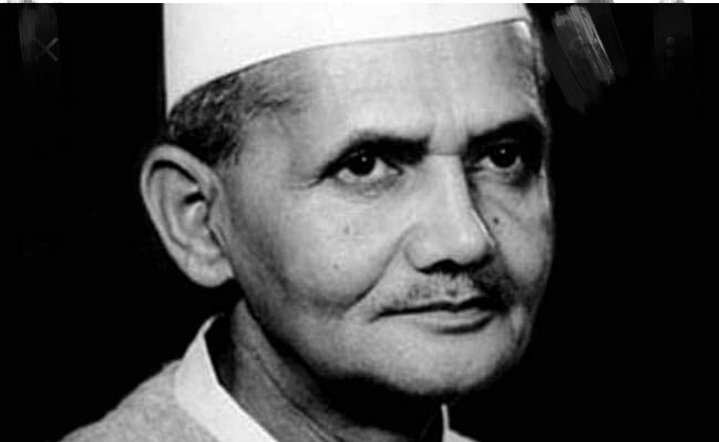
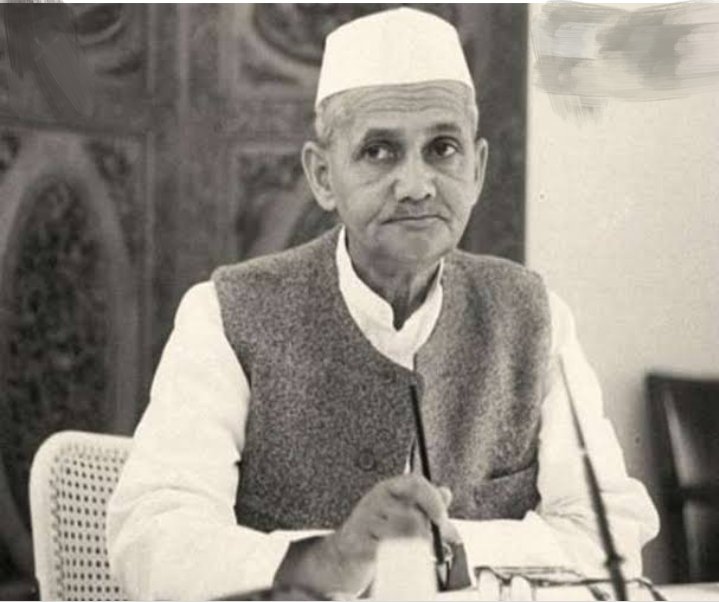
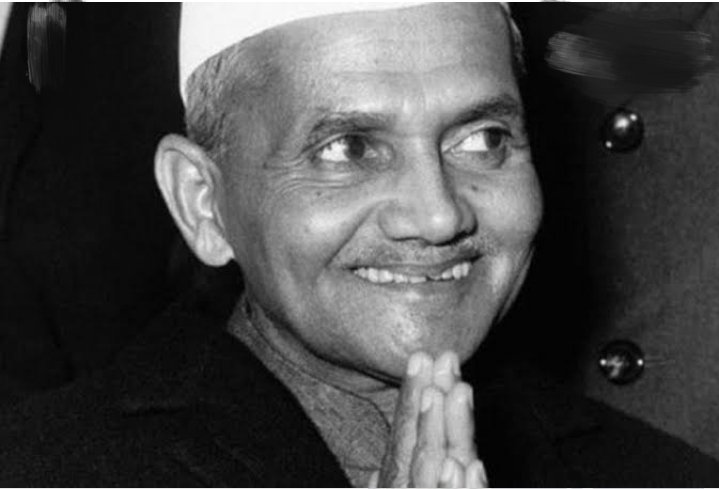
Shri Lal Bahadur Shastri was born on October 2, 1904 at Mughalsarai, a small railway town seven miles from Varanasi in Uttar Pradesh. His father was a school teacher who died when Lal Bahadur Shastri was only a year and half old. His mother, still in her twenties, took her three children to her father’s house and settled down there. Shastriji did his initial schooling from a small town. He had a happy enough childhood despite the poverty that dogged him.
He was sent to live with an uncle in Varanasi so that he could go to high school. Nanhe, as he was called at home, walked many miles to school without shoes, even when the streets burned in the summer’s heat.
As he grew up, Lal Bahadur Shastri became more and more interested in the country’s struggle for freedom from foreign yoke. He was greatly impressed by Mahatma Gandhi’s denunciation of Indian Princes for their support of British rule in India. Lal Bahadur Sashtri was only eleven at the time, but the process that was end day to catapult him to the national stage had already begun in his mind.
Lal Bahadur Shastri was sixteen when Gandhiji called upon his countrymen to join the Non-Cooperation Movement. He decided at once to give up his studies in response to the Mahatma’s call. The decision shattered his mother’s hopes. The family could not dissuade him from what they thought was a disastrous course of action. But Lal Bahadur had made up his mind. All those who were close to him knew that he would never change his mind once it was made up, for behind his soft exterior was the firmness of a rock.
He joined the Kashi VidyaPeeth in Varanasi, one of the many national institutions set up in defiance of the British rule. ‘Shastri’ was the bachelor’s degree awarded to him by the Vidya Peeth but has stuck in the minds of the people as part of his name.
In 1927, he got married. His wife, Lalita Devi, came from Mirzapur, near his home town. The wedding was traditional in all senses but one. A spinning wheel and a few yards of handspun cloth was all the dowry. The bridegroom would accept nothing more.
He was minister in the Union Cabinet from 1951 to 1956 when he resigned taking responsibility for the railway accident and later from 1957-1964.
He was India’s second Prime Minister (1964-66). During Shastri’s brief Prime Ministership, the country faced two major challenges.While India was still recovering from the economic implications of the war with China (1962), failed monsoons, droughtand serious food crisis presented a grave challenge. The country also faced a war with Pakistan in 1965.
Shastri’s famous slogan ‘Jai Jawan Jai Kisan’, symbolised the country’s resolve to face both these challenges
Shastri’s Prime Ministership came to an abrupt end on 10th January 1966, when he suddenly expired in Tashkent, then in USSR and currently the capital of Uzbekistan. He was there to discuss and sign an agreement (Tashkent Agreement) with Muhammad Ayub Khan, the then President of Pakistan, to end the war.
He signed an agreement with then Ceylon (now Sri Lanka) on persons of Indian origin there, in 1964 — an endorsement of the importance of neighbourhood.
He was the first person to be posthumously awarded the Bharat Ratna (1966).
India is ranked third in the world in terms of building large dams, of the over 5,200 large dams built so far, about 1,100 large dams have already reached 50 years of age and some are older than 120 years.
Minor and medium dam shelf-life is lower than large dams for example Krishna Raja Sagar dam built in 1931 is 90 years old and Mettur dam built in 1934 is 87 years old.
Implications of ageing dams:
In a paper ‘supply-side hydrology last gasp’ Rohan D’Souza writes the siltation rate of Bhakra dam is 130.86 % so at this rate it will function for merely 47 years as against the original estimate of 88 years.
When when the dams ages the soil replaces water, the supply of water decreases and this in turn leads to reduction in the cropped area as less water is received and which increases dependency on on the rain which is erratic in nature and groundwater is overexploited, the crop yield increases and farmers income thereby decreases.
By 2050 this will pose difficulties such as scarcity of water to feed the ever increasing population.
The flawed siltation rates reinforce the argument that designed flood cushions within several reservoirs across many river basins may have already depleted substantially due to which floods become more frequent downstream of dams. For example the flooding of Bharuch in 2020, Kerala in 2018 and Chennai 2015 a few examples attributed to downstream releases from reservoirs.
Way forward:
The way forward in the situation can be the building of medium or minor irrigation based small storage structures, identifying mechanisms to recharge aquifers and store water underground.
Hence, India will eventually feel difficulty in finding sufficient water in the 21st century to feed the rising population by 2050, grow abundant crops, create sustainable cities, or ensure growth. Therefore all stakeholders must come together to address this situation urgently.
How could it be possible that when the time gets worse we often ignore the vulnerable?
Nikhil Meshram
We are living in the world , where no one can intrude . A life , where you can’t touch the one you want . A life, where one has to stay away from his own . A life , where no one can go in one’s home . Yes , it’s a life we are living ‘ A life of a LOG’ .
Coronavirus , I believe it’s not a new word in your dictionary . This eleven letter word creating a massive destruction all over the world . I know you are well aware but the real question is , are you following the protocols properly?
Firstly let’s get some knowledge about coronavirus.
The origin .
The recent outbreak began in Wuhan, a city in the Hubei province of China. Reports of the first COVID-19 cases started in December 2019.
Coronaviruses are common in certain species of animals, such as cattle and camels. Although the transmission of coronaviruses from animals to humans is rareTrusted Source, this new strain likely came from bats, though one study suggests pangolins may be the origin.
However, it remains unclear exactly how the virus first spread to humans.
Some reports trace the earliest cases back to a seafood and animal market in Wuhan. It may have been from here that SARS-CoV-2 started to spread to humans.
Coronaviruses are a group of viruses that can cause disease in both animals and humans. The severe acute respiratory syndrome (SARS) virus strain known as SARS-CoV is an example of a coronavirus. SARS spread rapidly in 2002–2003.
The new strain of coronavirus is called severe acute respiratory syndrome coronavirus 2 (SARS-CoV-2). The virus causes coronavirus disease 19 (COVID-19).
Around 80%Trusted Source of people with COVID-19 recover without specialist treatment. These people may experience mild, flu-like symptoms. However, 1 in 6 peopleTrusted Source may experience severe symptoms, such as trouble breathing.
The new coronavirus has spread rapidly in many parts of the world. On March 11, 2020, the World Health Organization (WHO)Trusted Source declared COVID-19 a pandemic. A pandemic occurs when a disease that people are not immune to spreads across large regions.
It’s okay take a deep breath . Yes, it’s a lot to take in but we all know how china played with the whole world .
The protocols.
Wear masks ,
Wash hands ,
Use sanitizers ,
Social distancing , etc,.
Is it important to follow protocols ?
You say NO , I say ‘if you want to die you can easily ignore the protocols ’ . Well I don’t want to die , I have my whole 20s , 30s and so on…… .
According to the survey, people have been moving around freely, meeting different social groups and attending gatherings, going to malls and markets. This indicates that a pandemic fatigue has set in after after a year of restrictions on movement, social distancing and strict mask wearing norms.
Well , if you are saying this is what following protocols is than I am happy to stay home rather than chilling around like a monkey . Like really , a monkey also has a common sense that when to do chilling and when to fight for himself . What we are doing is putting masks in our pocket to showcase the world that I have one . Haha it’s kinda funny .
We long to return to normal, but **normal led to this**. To avert the future pandemics we know are coming, we MUST grapple with all the ways normal failed us. We have to build something better. I hope this piece, in showing what went wrong, helps.
Cancer has a major impact on society across the world. Cancer statistics describe what happens in large groups of people and provide a picture in time of the burden of cancer on society. Cancer has become one of the leading causes of death worldwide. Each year so many people die of cancer either because they could not survive the chemotherapy treatments given to them or due to lack of money they could not afford the treatment. The most common Cancers(listed according to estimated new cases in 2020) are Breast cancer, Non- Hodgkin Lymphoma, Kidney and Renal Pelvis cancer, Endometrial cancer, Leukemia, Pancreatic cancer, Thyroid cancer, Liver cancer.
Prostate, lung and colorectal cancers account for an estimated 43% of all cancers diagnosed in men. For Women, the three most common cancers are Breast, lung, colorectal and they account for an estimated 50%.
WHAT IS CANCER?
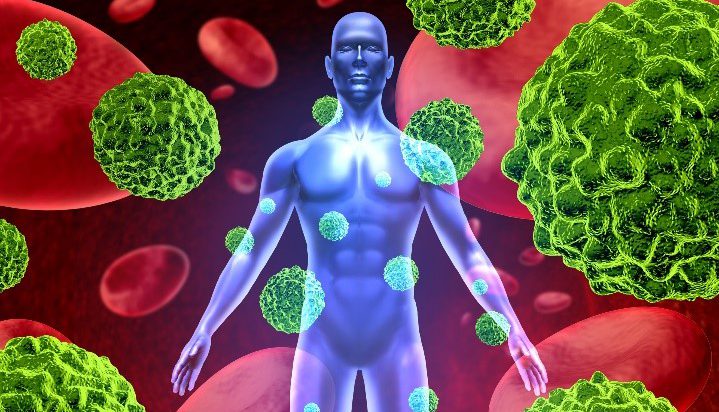
Cancer is a group of diseases involving abnormal cell growth with the potential to invade or spread to other parts of the body. Benign tumors do not spread to all parts of the body whereas Malignant tumors spread to the different parts and grow where ever they get accumulated. Cancerous cells have the ability to infiltrate and destroy normal body tissues.
SYMPTOMS
Signs and symptoms caused by cancer vary depending upon the part of body getting infected. Some of the general signs and symptoms associated with the same are:-
fatigue
lump or area of thickening that can be felt under the skin.
weight changes, including unintended loss or gain.
skin changes, such as yellowing, darkening or redness of skin, sores that won’t heal or changes to existing moles.
changes in bowel or bladder habits.
persistent cough or trouble breathing.
difficulty in swallowing.
hoarseness
persistent indigestion or discomfort after eating.
persistent muscle or joint pain.
persistent fever/night sweats/bleeding.
CAUSES OF CANCER
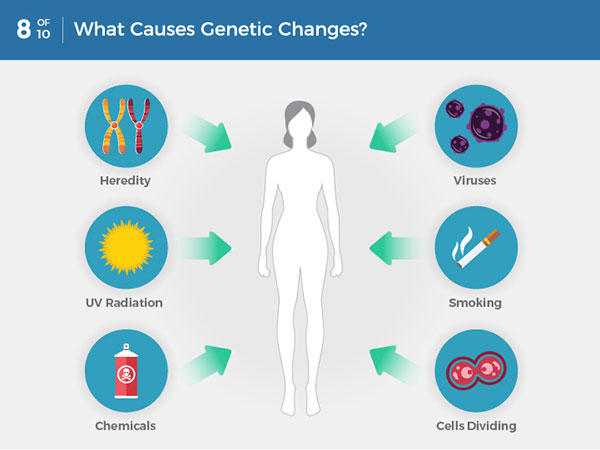
Factors causing cancer include certain infections, exposure to ionizing radiations, mutations in genes and environmental pollutants. Cancer is caused by changes(mutations) to the DNA within the cells(in majority of cases). The DNA inside a cell is packaged into a large number of individual genes, each of which contains a set of instructions telling the cell what functions to perform as well as how to grow and divide. A gene mutation can instruct a healthy cell to:-
allow rapid growth– a gene mutation can tell a cell to grow and divide more rapidly. This creates many new cells that all have that same mutation.
fail to stop uncontrolled cell growth– normal cells know when to stop growing but cancerous cells lose the control(tumor suppressor genes) that tell them when to stop growing. A mutation in tumor suppressor gene allows cancer cells to continue growing and accumulating.
make mistakes when repairing DNA errors– DNA repair genes look for errors in a cell’s DNA and make corrections. A mutation in DNA repair gene means that other errors aren’t corrected.
PREVENTION
Stop smoking.
Avoid excessive sun exposure- harmful UV rays from the sun can increase the risk of skin cancer.
Eat a healthy diet.
Exercise most days of a week.
Maintain a healthy weight- being overweight or obese may increase the risk of cancer.
Astrophysics is a branch of space science that applies the laws of physics and chemistry to explain the birth, life and death of stars, planets, galaxies, nebulae and other objects in the universe. It has two sibling sciences, astronomy and cosmology, and the lines between them blur.
In the most rigid sense: Astronomy measures positions, luminosities, motions and other characteristics Astrophysics creates physical theories of small to medium-size structures in the universe Cosmology does this for the largest structures, and the universe as a whole.
In practice, the three professions form a tight-knit family. Ask for the position of a nebula or what kind of light it emits, and the astronomer might answer first. Ask what the nebula is made of and how it formed and the astrophysicist will pipe up. Ask how the data fit with the formation of the universe, and the cosmologist would probably jump in. But watch out — for any of these questions, two or three may start talking at once! Goals of astrophysics Astrophysicists seek to understand the universe and our place in it. At NASA, the goals of astrophysics are “to discover how the universe works, explore how it began and evolved, and search for life on planets around other stars,” according NASA’s website.
NASA states that those goals produce three broad questions:
How does the universe work?
How did we get here?
Are we alone?
It began with Newton
While astronomy is one of the oldest sciences, theoretical astrophysics began with Isaac Newton. Prior to Newton, astronomers described the motions of heavenly bodies using complex mathematical models without a physical basis. Newton showed that a single theory simultaneously explains the orbits of moons and planets in space and the trajectory of a cannonball on Earth. This added to the body of evidence for the (then) startling conclusion that the heavens and Earth are subject to the same physical laws.
Perhaps what most completely separated Newton’s model from previous ones is that it is predictive as well as descriptive. Based on aberrations in the orbit of Uranus, astronomers predicted the position of a new planet, which was then observed and named Neptune. Being predictive as well as descriptive is the sign of a mature science, and astrophysics is in this category.
Milestones in astrophysics
Because the only way we interact with distant objects is by observing the radiation they emit, much of astrophysics has to do with deducing theories that explain the mechanisms that produce this radiation, and provide ideas for how to extract the most information from it. The first ideas about the nature of stars emerged in the mid-19th century from the blossoming science of spectral analysis, which means observing the specific frequencies of light that particular substances absorb and emit when heated. Spectral analysis remains essential to the triumvirate of space sciences, both guiding and testing new theories.
Early spectroscopy provided the first evidence that stars contain substances also present on Earth. Spectroscopy revealed that some nebulae are purely gaseous, while some contain stars. This later helped cement the idea that some nebulae were not nebulae at all — they were other galaxies!
In the early 1920s, Cecilia Payne discovered, using spectroscopy, that stars are predominantly hydrogen (at least until their old age). The spectra of stars also allowed astrophysicists to determine the speed at which they move toward or away from Earth. Just like the sound a vehicle emits is different moving toward us or away from us, because of the Doppler shift, the spectra of stars will change in the same way. In the 1930s, by combining the Doppler shift and Einstein’s theory of general relativity, Edwin Hubble provided solid evidence that the universe is expanding. This is also predicted by Einstein’s theory, and together form the basis of the Big Bang Theory.
Also in the mid-19th century, the physicists Lord Kelvin (William Thomson) and Gustav Von Helmholtz speculated that gravitational collapse could power the sun, but eventually realized that energy produced this way would only last 100,000 years. Fifty years later, Einstein’s famous E=mc2 equation gave astrophysicists the first clue to what the true source of energy might be (although it turns out that gravitational collapse does play an important role). As nuclear physics, quantum mechanics and particle physics grew in the first half of the 20th century, it became possible to formulate theories for how nuclear fusion could power stars. These theories describe how stars form, live and die, and successfully explain the observed distribution of types of stars, their spectra, luminosities, ages and other features.
Astrophysics is the physics of stars and other distant bodies in the universe, but it also hits close to home. According to the Big Bang Theory, the first stars were almost entirely hydrogen. The nuclear fusion process that energizes them smashes together hydrogen atoms to form the heavier element helium. In 1957, the husband-and-wife astronomer team of Geoffrey and Margaret Burbidge, along with physicists William Alfred Fowler and Fred Hoyle, showed how, as stars age, they produce heavier and heavier elements, which they pass on to later generations of stars in ever-greater quantities. It is only in the final stages of the lives of more recent stars that the elements making up the Earth, such as iron (32.1 percent), oxygen (30.1 percent), silicon (15.1 percent), are produced. Another of these elements is carbon, which together with oxygen, make up the bulk of the mass of all living things, including us. Thus, astrophysics tells us that, while we are not all stars, we are all stardust.
Astrophysics as a career
Advertisement
Becoming an astrophysicist requires years of observation, training and work. But you can start becoming involved in a small way even in elementary and high school, by joining astronomy clubs, attending local astronomy events, taking free online courses in astronomy and astrophysics, and keeping up with news in the field on a website such as Space.com.
In college, students should aim to (eventually) complete a doctorate in astrophysics, and then take on a post-doctoral position in astrophysics. Astrophysicists can work for the government, university labs and, occasionally, private organizations.
Take math and science classes all through high school. Make sure to take a wide variety of science classes. Astronomy and astrophysics often blend elements of biology, chemistry and other sciences to better understand phenomena in the universe. Also keep an eye out for any summer jobs or internships in math or science. Even volunteer work can help bolster your resume.
Pursue a math- or science-related bachelor’s degree. While a bachelor in astrophysics is the ideal, there are many other paths to that field. You can do undergraduate study in computer science, for example, which is important to help you analyze data. It’s best to speak to your high school guidance counselor or local university to find out what degree programs will help you.
Take on research opportunities. Many universities have labs in which students participate in discoveries — and sometimes even get published. Agencies such as NASA also offer internships from time to time.
Finish a doctorate in astrophysics. A Ph.D. is a long haul, but the U.S. Bureau of Labor Statistics points out that most astrophysicists do have a doctoral degree. Make sure to include courses in astronomy, computer science, mathematics, physics and statistics to have a wide base of knowledge.
Natalie Hinkel, a planetary astrophysicist who was then at Arizona State University, gave a lengthy interview with Lifehacker in 2015 that provided a glimpse into the rewards and challenges of being a junior astrophysics researcher. She described the long number of years she has put into doing her research, the frequent job switches, her work hours and what it’s like to be a woman in a competitive field. She also had an interesting insight about what she actually did day to day. Very little of her time is spent at the telescope.
“I spend the vast majority of my time programming. Most people assume that astronomers spend all of their time at telescopes, but that’s only a very small fraction of the job, if at all. I do some observations, but in the past few years I’ve only been observing twice for a total of about two weeks,” Hinkel told Lifehacker.
“Once you get the data, you have to reduce it (i.e. take out the bad parts and process it for real information), usually combine it with other data in order to see the whole picture, and then write a paper about your findings. Since each observation run typically yields data from multiple stars, you don’t need to spend all of your time at the telescope to have enough work.”
Device for harnessing terahertz radiation might help power some portable electronics.
Terahertz waves are electromagnetic radiation with a frequency somewhere between microwaves and infrared light. Also known as “T-rays,” they are produced by almost anything that registers a temperature, including our own bodies and the inanimate objects around us.
Terahertz waves are pervasive in our daily lives, and if harnessed, their concentrated power could potentially serve as an alternate energy source. However, to date there has been no practical way to capture and convert them into any usable form.
Now physicists at MIT have come up with a blueprint for a device they believe would be able to convert terahertz waves into a direct current, a form of electricity that powers many household electronics.
Their design takes advantage of the quantum mechanical, or atomic behavior of the carbon material graphene. They found that by combining graphene with another material, in this case, boron nitride, the electrons in graphene should skew their motion toward a common direction. Any incoming terahertz waves should “shuttle” graphene’s electrons, like so many tiny air traffic controllers, to flow through the material in a single direction, as a direct current.
The researchers have published their results today in the journal Science Advances, and are working with experimentalists to turn their design into a physical device.
“We are surrounded by electromagnetic waves,” says lead author Hiroki Isobe, a postdoc in MIT’s Materials Research Laboratory. “If we can convert that energy into an energy source we can use for daily life, that would help to address the energy challenges we are facing right now.”
Isobe’s co-authors are Liang Fu, the Lawrence C. and Sarah W. Biedenharn Career Development Associate Professor of Physics at MIT; and Su-yang Xu, a former MIT postdoc who is now an assistant professor chemistry at Harvard University.
Breaking graphene’s symmetry
Over the last decade, scientists have looked for ways to harvest and convert ambient energy into usable electrical energy. They have done so mainly through rectifiers, devices that are designed to convert electromagnetic waves from their oscillating (alternating) current to direct current.
Most rectifiers are designed to convert low-frequency waves such as radio waves, using an electrical circuit with diodes to generate an electric field that can steer radio waves through the device as a DC current. These rectifiers only work up to a certain frequency, and have not been able to accommodate the terahertz range.
A few experimental technologies that have been able to convert terahertz waves into DC current do so only at ultracold temperatures — setups that would be difficult to implement in practical applications.
Instead of turning electromagnetic waves into a DC current by applying an external electric field in a device, Isobe wondered whether, at a quantum mechanical level, a material’s own electrons could be induced to flow in one direction, in order to steer incoming terahertz waves into a DC current.
Such a material would have to be very clean, or free of impurities, in order for the electrons in the material to flow through without scattering off irregularities in the material. Graphene, he found, was the ideal starting material.
To direct graphene’s electrons to flow in one direction, he would have to break the material’s inherent symmetry, or what physicists call “inversion.” Normally, graphene’s electrons feel an equal force between them, meaning that any incoming energy would scatter the electrons in all directions, symmetrically. Isobe looked for ways to break graphene’s inversion and induce an asymmetric flow of electrons in response to incoming energy.
Looking through the literature, he found that others had experimented with graphene by placing it atop a layer of boron nitride, a similar honeycomb lattice made of two types of atoms — boron and nitrogen. They found that in this arrangement, the forces between graphene’s electrons were knocked out of balance: Electrons closer to boron felt a certain force while electrons closer to nitrogen experienced a different pull. The overall effect was what physicists call “skew scattering,” in which clouds of electrons skew their motion in one direction.
Isobe developed a systematic theoretical study of all the ways electrons in graphene might scatter in combination with an underlying substrate such as boron nitride, and how this electron scattering would affect any incoming electromagnetic waves, particularly in the terahertz frequency range.
He found that electrons were driven by incoming terahertz waves to skew in one direction, and this skew motion generates a DC current, if graphene were relatively pure. If too many impurities did exist in graphene, they would act as obstacles in the path of electron clouds, causing these clouds to scatter in all directions, rather than moving as one.
“With many impurities, this skewed motion just ends up oscillating, and any incoming terahertz energy is lost through this oscillation,” Isobe explains. “So we want a clean sample to effectively get a skewed motion.”
One direction
They also found that the stronger the incoming terahertz energy, the more of that energy a device can convert to DC current. This means that any device that converts T-rays should also include a way to concentrate those waves before they enter the device.
With all this in mind, the researchers drew up a blueprint for a terahertz rectifier that consists of a small square of graphene that sits atop a layer of boron nitride and is sandwiched within an antenna that would collect and concentrate ambient terahertz radiation, boosting its signal enough to convert it into a DC current.
“This would work very much like a solar cell, except for a different frequency range, to passively collect and convert ambient energy,” Fu says.
The team has filed a patent for the new “high-frequency rectification” design, and the researchers are working with experimental physicists at MIT to develop a physical device based on their design, which should be able to work at room temperature, versus the ultracold temperatures required for previous terahertz rectifiers and detectors.
“If a device works at room temperature, we can use it for many portable applications,” Isobe says.
He envisions that, in the near future, terahertz rectifiers may be used, for instance, to wirelessly power implants in a patient’s body, without requiring surgery to change an implant’s batteries.
“We are taking a quantum material with some asymmetry at the atomic scale, that can now be utilized, which opens up a lot of possibilities,” Fu says.
This research was funded in part by the U.S. Army Research Laboratory and the U.S. Army Research Office through the Institute for Soldier Nanotechnologies (ISN).


















 Eduindex
You must be logged in to post a comment.