As per psychologists, the corona virus pandemic has hit us very hard and triggered a sort of loneliness epidemic.
LONELINESS:
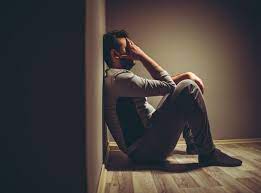
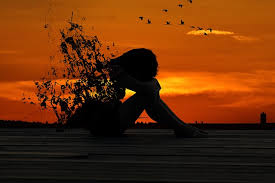
Loneliness is described as social pain. It is an universal emotion and can be complex and unique to every individual. It is described as a state of solitude or being alone. According to experts, loneliness is not necessarily about being alone. Instead, if you feel alone and isolated, then that is how loneliness plays into your state of mind.
Experts believe that its not about quantity of social interaction that combats loneliness, but it’s the QUALITY
Rates of anxiety and depression are high among young people. Stress , anxiety, depression and loneliness are interconnected and can fuel up each other. In this era, people really want to be social. That’s how our system is build but its harder in this pandemic.
STUDY OF LONELINESS:
New Harvest research suggest that the isolation feeling hits the hardest on older teens and young adults. In a recent study conducted by researchers at Making Caring Common 36 % of approximately 950 Americans are found prey to loneliness. And the most risking part is that 61% of those are aged between 18 to 25. “I was surprised at the degree of loneliness among young people “, quoted Richard Weissbourd, a psychologist and senior lecture at Harvard Graduate School Of Education. He added, “If every person who’s in pretty good shape can make a commitment to reaching out to one person they are concerned might be lonely once a week, that would be a good thing”.
RISKS ASSOCIATED WITH LONELINESS:
The main risk associated with loneliness is DEPRESSION AND SUICIDE. Apart from these there are high risks of Alcoholism and drug use. Cardiovascular disease and stroke. Decreased memory and learning. Poor decision-making.
LONELINESS CAN BE CONTAGIOUS:
Study suggests that loneliness can be contagious. In a 10-year study, researchers examined how loneliness spreads in social networks. The results indicated that people close to someone experiencing loneliness were 52% more likely to become lonely as well.
OVERCOME LONELINESS:
Loneliness can be overcome but it needs continuous effort from the person suffering from it. First recognize that loneliness is sign and something needs to be change. Understand the effects of loneliness and try to study about it. Seek help from people who you truly believe and can share the issue without any hesitation.
Connection is really important to your emotional health, and it’s really important to your physical health as well. Stay connected and overcome loneliness.
We are what we think. All that we are arises with our thoughts. With our thoughts, we make the world. Peace comes from within. Do not seek it without.
Lord Buddha
Introduction.
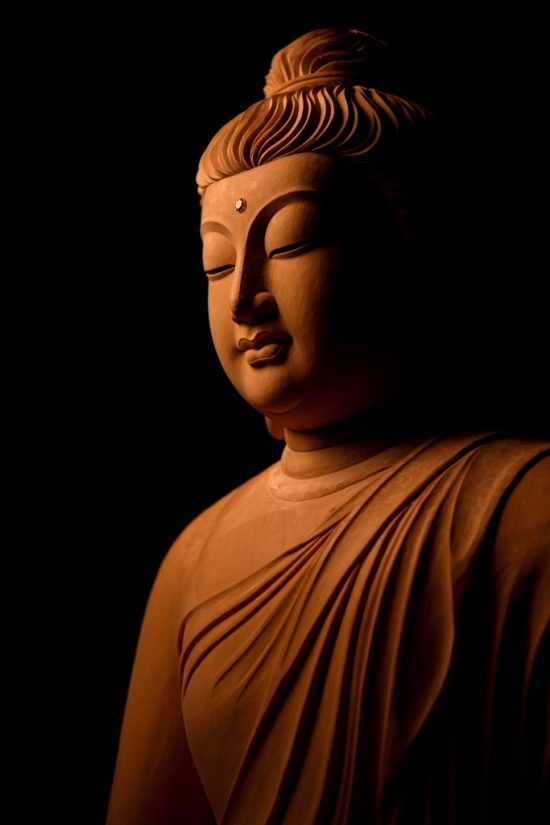
He was a spiritual personality . An ancient teacher and enlightened many . A founder of world religion Buddhism . He was popularly known as Gautama Buddha (also known as Siddhattha Gotama or Siddhārtha Gautama or Buddha Shakyamuni ) .
The Enlightened One who rediscovered an ancient path to release clinging and craving and escape the cycle of birth and rebirth. He taught for around 45 years and built a large following, both monastic and lay. His teaching is based on his insight into the arising of duḥkha (the unsatisfactoriness of clinging to impermanent states and things) and the ending of duhkha—the state called Nibbāna or Nirvana (extinguishing of the three fires).
Buddhism
Buddhism, one of the major religions and philosophical systems of southern and eastern Asia and of the world. Buddha is one of the many epithets of a teacher who lived in northern India sometime between the 6th and the 4th century before the Common Era.
The title buddha was used by a number of religious groups in ancient India and had a range of meanings, but it came to be associated most strongly with the tradition of Buddhism and to mean an enlightened being, one who has awakened from the sleep of ignorance and achieved freedom from suffering.
According to the various traditions of Buddhism, there have been buddhas in the past and there will be buddhas in the future. Some forms of Buddhism hold that there is only one buddha for each historical age; others hold that all beings will eventually become buddhas because they possess the buddha nature (tathagatagarbha).
According to Buddhist doctrine, the universe is the product of karma, the law of the cause and effect of actions, according to which virtuous actions create pleasure in the future and nonvirtuous actions create pain.
Your work is to discover your world and then with all your heart give yourself to it.
Lord Buddha
History
Gautama Buddha ( born c. 6th–4th century BCE, Lumbini, near Kapilavastu, Shakya republic, Kosala kingdom [now in Nepal]—died, Kusinara, Malla republic, Magadha kingdom [now Kasia, India]).
Buddha is one of the many epithets of a teacher who lived in northern India sometime between the 6th and the 4th century before the Common Era.
Learnings from Gautama Buddha.
1. “Three things cannot be hidden: the sun, the moon and the truth.”
2. “You will not be punished for your anger; you will be punished by your anger.”
3. “You can search throughout the entire universe for someone who is more deserving of your love and affection than you are yourself, and that person is not to be found anywhere. You, yourself, as much as anybody in the entire universe, deserve your love and affection.”
4. “We are shaped by our thoughts; we become what we think. When the mind is pure, joy follows like a shadow that never leaves.”
5. “Believe nothing, no matter where you read it, or who said it, no matter if I have said it, unless it agrees with your own reason and your own common sense.”
Financial education is something that everyone should know about it .Everybody should know about how to handle their expenses ,how to plan their future, how to start their start-ups .So here is 10 books that helps you in many ways and you should read this book before start your earning or startups. I hope you all find these books as interested as I liked them. Here is the list of 10 books:-
Rich Dad Poor Dad (1997) Author:-ROBERT T KIYOSAKI Genre:-Financial Investment , non-fiction Description:-Robert T Kiyosaki is an American author and business man .he is the founder of Rich Global LLC and the Rich Dad company. he wrote rich dad poor dad which is one of the best selling book of New York times .It has sold over 32 million copy . He wrote in book how people denied to accepting the truth and how the fear and greed control them through out their life. He also talks about financial strategies . It’s one of the best book on financial education.
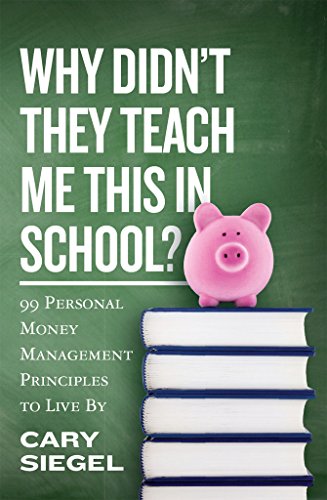
2.Why Didn’t They Teach Me This in School? (2017) Author:-Cary Siegel Genre:- Financial education ,Business Description:-Cary Siegel is a MBA graduate from a university of Chicago. After Graduating from one of the top business school. He started his carrier in sales and marketing and lead several companies in sales and marketing. He shared his experience and finance lesson that he learned through out of his life. Why didn’t They Teach Me This in School? covered numerous topics like budgeting, spending, credit cards, investing, mortgages, insurances and much more which you will never learn in your school.
3. The Automatic Millionaire (2003)
Author:- David Bach Genre:- financial Investment, self-help Description:-David Bach is an American author, Motivational speaker ,entrepreneur and founder of Finish rich.com. He wrote many books on finance such as Finish Rich series and Automatic Millionaire series. The Automatic Millionaire is about how can you become financially stable without taking so much risk or if you are frugal then you must read this book. “The first person who deserves your money is yourself” by DAVID BACH
4. The One-Page Financial Plan (2015) Author:- Carl Richards Genre:- Financial Investment and education Description:- Carl Richards is a certified Financial planner and the author of The Behavior gap and appearing weekly on New York times since 2010. The one page financial plan is all about how can you do budgeting and make savings to be fun. Set your future goals but change your strategies according to the situation.
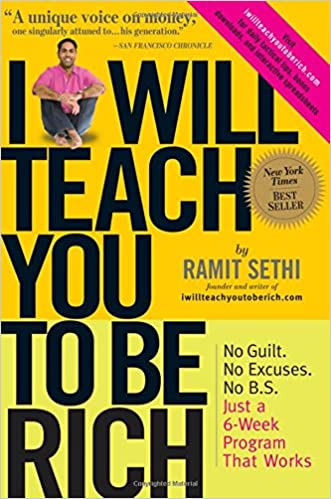
5. I Will Teach You to Be Rich (2009) Author:- Ramit Sethi Genre:-Financial education and Investment Description:-Ramit Sethi is an American personal finance advisor and entrepreneur. he is the best selling author of New York times in 2004. i Will teach you to be rich talks about how people blame others about their financial problems, smartly spending your earning and start investing from today as it will help you in future.
6. Your Money or Your Life (1992) Author:-Joseph R. Dominguez, Monique Tilford, and Vicki Robin Genre:- Financial education and Investment Description:- Author talks about the minimize spending ,excessive investing and save for Emergencies .
7. Think and Grow Rich (originally published:-1937) Author:- Napoleon Hill Genre:- Non-Fiction, Self-help, Financial education Description:-Oliver Napoleon Hill was an American author who wrote so many self-help books. Think and Grow rich is one of them and it’s one of the best self-help book of all times. Hill talks about the belief in yourself ,becoming a stubborn and never your change your decision once you decided and accompany those who are mastermind on your field.
8. The Millionaire Next Door ( originally published:-1996) Author:-Thomas J. Stanley, William D. Danko Genre:- Non-fiction Description:- Thomas J. Stanley was an American author and business theorist . He wrote The millionaire next door which was the New York times best sellers. The millionaire next door covered about the healthy spending and avoid silly mistakes that mostly people do to handle their financial expenses. It’s one of the most practical book that I had ever read till now
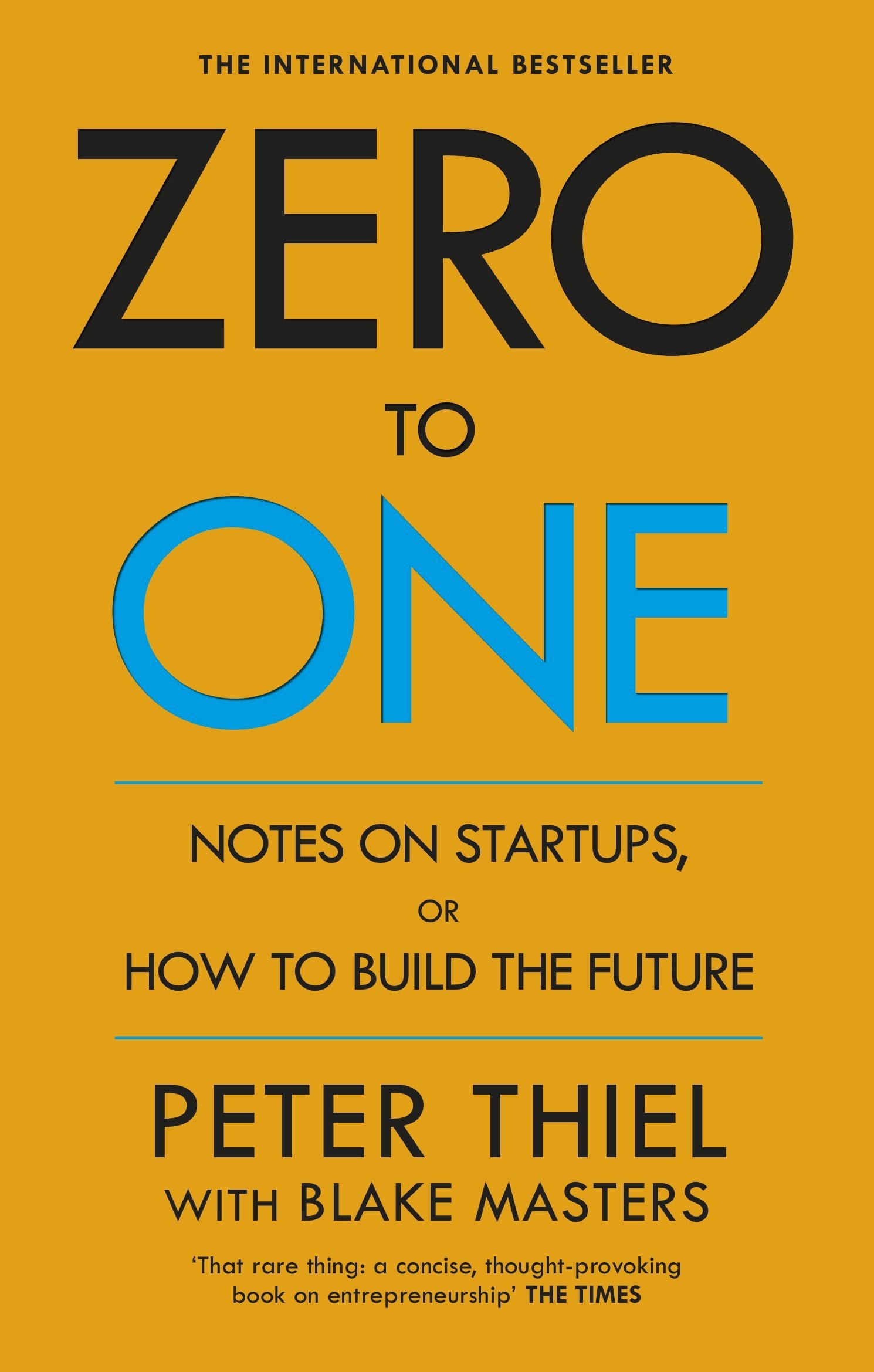
9. Zero to One (2014) Author:-Blake Masters and Peter Thiel Genre:- Business, Politics and Government Description:-Peter Theil is German-American billionaire entrepreneur and venture capitalized. he is the co-founder of PayPal ,Palantir technologies .he was the first outside investor in Facebook .he was ranked four on the Forbes Midas list 2004. peter write about how he thinks about his business and how an you shape the future of the world in the process.
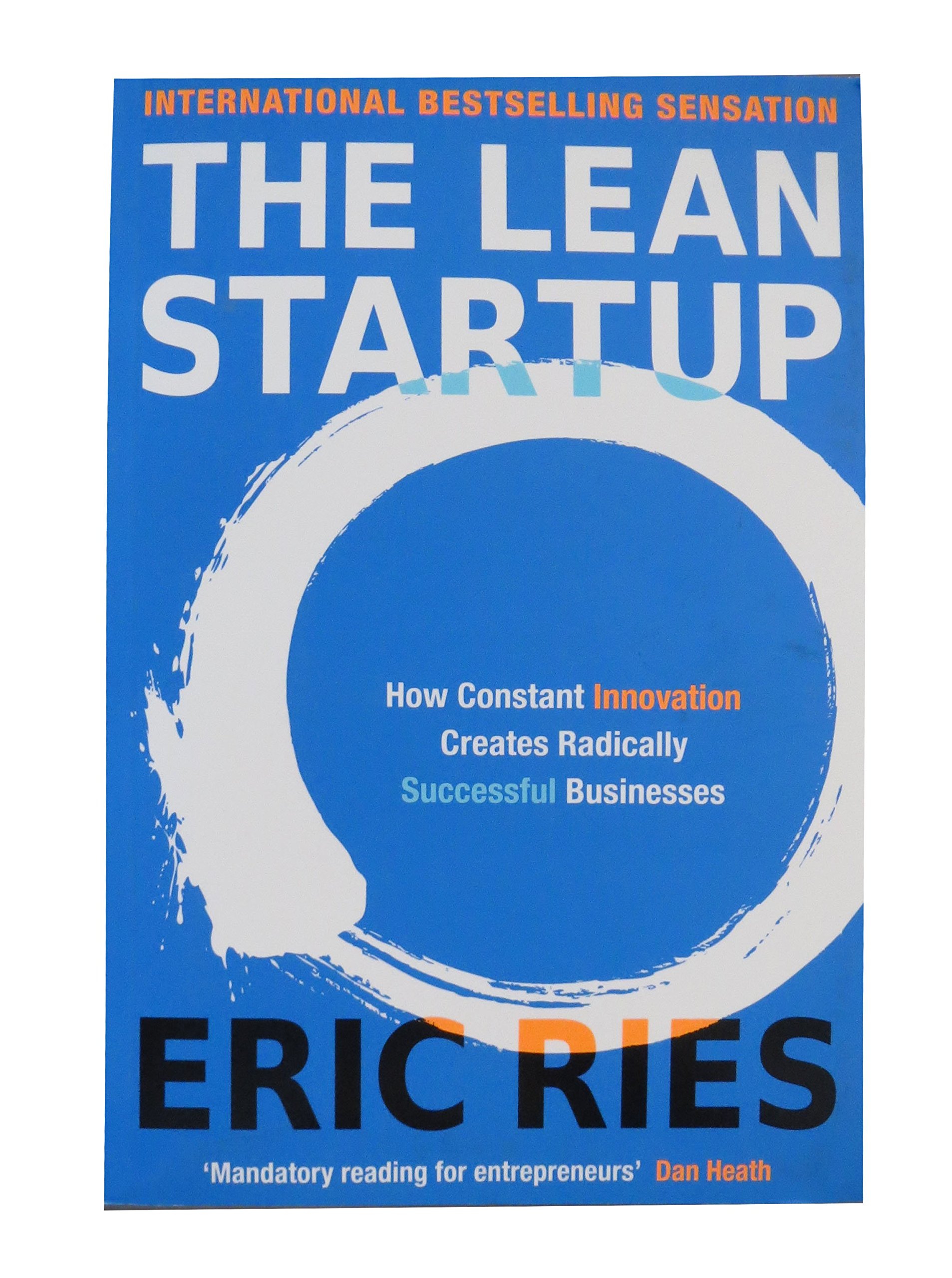
10. The Lean Startup(2011) Author:-Eric Ries Genre:-Self-help book Description:- Eric Ries is an American entrepreneur, blogger and author of The Lean Startup. the lean startup talk about the customer needs and quickly learn about it, changing the strategies according the customer needs and previous result. Eric Ries divide the book in three section:- 1. vision 2.steer 3.Accerlate
I hope you liked the article .Thank you for giving your precious time to read this article if you like the article pls tell us and comment your feedbacks . Have a Good day and Happy Reading.
•Importunity raised for a Separate Constitution:-Mahatma Gandhi in 1922, lay down the desire for Swaraj and quoted that India’s political destiny should be defined by the Indians themselves, and it would be a deposition of India’s self-expression. The failure of the Statutory Commission and the Round table Conference led to the imposition of the Government of India Act,1935. The demand for a Constitution made by the people of India without any interference was first argued by the National Congress 1935.
•Cripps Mission:- However, the demand was continuously countered by the British government. Henceforth World War II took place, the external conditions caused them to realize the necessity of figuring out the Indian Constitutional crisis. In 1940, the Coalition Government in England provided Indians to frame a new Constitution for autonomous India. In March 1942 Sir Stafford Cripps, a member of the Cabinet, with a draft statute on the proposals of the British Government, provided an agreement to the two prominent political parties ( i.e. Congress and the Muslim league) that:-
(1) The Constitution of India to be drafted by an elected Constituent Assembly of the natives.
(2) The Constitution should convey India a Dominion significance.
(3) There should be one Indian Union constituting all provinces and Indian states but,
(4) If any province or state refuses to endorse the Constitution would be free to maintain its Constitutional status.
But the two parties failed to approve and advised to divide India based on communal lines and to make an independent Muslim state. After the refusal of the Cripps proposal, the Quit India movement was launched by Congress.
•Cabinet Delegation:- The Cabinet delegation refused the claim for a separate Constituent Assembly and a separate state for Muslims. Various attempts to calm the two parties were made comprising Simla Conference but nothing helped the Cabinet Delegation too failed in making the two parties enter to an agreement.
•HMG’s statement of 3 June 1947:- The British Government sentLordMount battento India as the Governor-General, in place of Lord Wavell.Lord Mount batten brought the Congress and the Muslim league into a factual agreement that the two provinces of the Punjab and Bengal would be split to form Hindu and Muslim preponderance regions within these provinces, the plan is known as ‘The Mount batten’s Plan’.
•The Indian Independence Act, 1947:– On the 26th of July, 1947 the Governor-General declared the setting up of a separate Constituent Assembly for Pakistan. The Indian Independence Act of 1947, introduced in Parliament on 4th July 1947, received Royal assent on 18th July 1947 and came into force from the date. The act provided that from 15th August 1947 there would be two independent Dominions, to be known as India and Pakistan.
•Constituent Assembly of India:- As a sovereign, the Constituent Assembly for the dominion of India was first set up on 14th August 1947. The essentials of the scheme were:-
(1) The provinces were to elect 292 members while the Indian states were allocated 93 seats.
(2) The seats were distributed among the three main communities Muslims, Sikhs, and General in each province.
(3) Members of each Community in the provincial legislation assembly select their representatives by a single transferable vote.
•Drafting Committee:- The salient features of the proposed Constitution summarized by various committees of the Assembly such as the Union Constitutional committee, the Union Powers Committee, Committee on Fundamental Rights, and after the report of the Committee, the Assembly appointed a Drafting Committee on 29 August 1947. Dr. B.R. Ambedkar was the chairman of the Drafting Committee.
There is no need to tell anyone who is an Indian citizen that how a major and key role the Indian Railways plays in their life. From many decades, Indian Railways is working tirelessly day in and day out to provide its duties for a whopping more than 135 crore population. Indian Railways is considered as the cheapest means of transport in India. The fare of journey is kept low so as to provide rail facilities to even the small income families. Indian Railways has become an integral part of our society. But over the time it is felt that modernisation of Indian Railways is quite important with the changing world. Now rail coaches and railway stations are redeveloped as per the modern standards. One such station is the newly redeveloped Gandhinagar Capital Railway Station.
Gandhinagar Capital is a major station of Gujarat and is located in the city Gandhinagar. Its station code is GNC. It is managed by the Western Railway Zone of Indian Railways. It is located on 2 lines namely :- Ahmedabad-Delhi mainline and Khodiyar-Kalol section. It is the main station of capital of Gujarat that is Gandhinagar.
REDEVELOPMENT AT GANDHINAGAR CAPITAL RAILWAY STATION:-
The foundation for its redevelopment was laid by Honourable PM of India Shri Narendra Modi in the year 2017 at an estimated cost of Rs. 250 crores.
The stations has 3 platforms and 4 tracks. Each platform is equipped with all the basic facilities such as drinking water, food stalls and toilets for both men and women.
Model of GNC station showing design of platforms
A 5-star hotel is built inside the station premises to provide all the luxurious and modern facilities to the passengers and honourable guests. This hotel has 300 rooms for staying.
Building of 5-star hotel during its construction
As per the Western Railways, the parking area is designed to accommodate 1000 cars, 200 two-vehicles and 100 auto rickshaws.
The stations building is equipped with 3 lifts and 2 escalators which will be quite useful for senior citizens and divyangs.
There are two different subways to control the heavy traffic of passengers as one subway will serve as entrance and other will serve as exit.
The aerial view of Gandhinagar Capital Railway Station
The hotel building is 77 metres tall. It also has a restaurant and a shopping mall.
The station building is designed to provide tight security for both station and passengers. There are tunnels made to link platforms with each other. The outer boundary wall of the building will be long and tall so as to prevent any person from outside to enter in the station premises without ticket. CCTV cameras are installed at all major points for security purpose. Railway Police Force (RPF) is given the responsibility to safeguard the station.
The station will be declared as a “Green Building” means it will emit zero carbon emission in its day to day processes. 100% electricity for performing various tasks will be generated using the solar panels installed on the roof of the station building.
Model of GNC Railway Station after Redevelopment
As per the Indian Railways Station Development Corporation (IRSDC) which is the nodal agency working on the redevelopment of the station, almost 100% work is completed and station is ready for serving the passengers of Indian Railways. It is reported that PM Narendra Modi will be the honourable guest at the inaugural ceremony of the magnificent Gandhinagar Capital Railway Station.
Links :-
(1/2) The ongoing Gandhinagar Railway Station Development Project involves re-development of existing Gandhinagar Capital Station (GNC) building through passenger amenities and modern facilities. pic.twitter.com/DBpRLZgUl2
Water takes an indispensable role in our daily being like it is an integral part for our living and prominent for every human body and also for several other purposes. It is a universal need but is it available universally to all through out the world with parity. Despite its importance for life, fresh water is an extremely rare resource on earth. The available surface fresh water is not equally distributed throughout the world and not easily accessible to humans. 69% of earths fresh water is locked in the form of ice in glaciers and 30% is under the surface as ground water. And nearly just 1% is readily available for human use. So one of the significant ways that we can implement to get rid of the water crisis is nationalizing the water resources to make that 1% of fresh water available on earth to be accessed by everyone and attainable in all places without any bias. Nationalizing water sources mean the control over handling all water resources like dams, rivers, lakes, pipes etc. by the nation or state. Proponents of the project claim the answer to India’s water problem is to conserve the abundant monsoon water bounty, store it in reservoirs, and deliver the water using rivers interlinking project to areas and over times when water becomes scarce.
Merits
This will aid the nation to a great extent and also help in the eradication of floods and droughts – which are the two extremes. Floods happen when there is an overflow of water that submerges the lands. Conversely droughts happen when there is lack of water resources and It takes decades to develop fully and very difficult to predict. This portrays the devastation state of how the water resources are erratic and unevenly distributed over the world and causes calamities. It would be pertinent to mention about the Tamil Nadu and Karnataka issue over the water resources since many years. The sharing of waters of the Kaveri river has been the source of a serious conflict and has been the bone of content between the two states. And the curtains were brought down only after years. These conflicts over water resources are common through out the world. For instance Ethiopia and Egypt have fought long over Nile water resources . The Nile is an important waterway that supplies 85% of Egypt however the Nile’s water originates in Ethiopia and they plan to dam part of the river in order to generate electricity , Egypt will be adversely impacted. Even in the United States where freshwater resources are relatively abundant different populations fight over the use of fresh water.
It becomes apparent that when a river originates in a particular area, the other regions need to be dependent of them and conflict between states arise and it becomes very challenging. So linking of rivers would certainly make us get out of such situations and could curtail civil wars. Some fertile lands are turning out into barren lands due to the lack of water facility in many regions. Because of the unequal distribution of water human population are some times deprived of safe drinking water and pushed to a state of consuming contaminated water which carry risks of infectious diseases. Lack of access to clean drinking water leads to more than 3 million death every year. So the linking of the rivers will work for the betterment of situation and can assure safe drinking water to all. Despite drinking, the fresh water is also an important need in economic activities such as agriculture, and other cultivation. There are states in India where water is very scarce and also with adequate/ plentiful water resources. So when the linking of rivers happen everyone would be equally distributed with water.
Demerits
The allocation of water may be a problem. Every region has its own demand and needs of more and more water supply. It will be challenging for the center to divert water resources from one state towards the other. In some regions there will be accidental flow of industrial wastes into the river, if the rivers are linked, the polluted water will spread all over the country. It requires lakhs of acres of lands to build dams and connect the rivers, the construction may get complicated and years to get completed. Leakage of pipeline is another issue that goes unchecked in many places. To nationalize water resources every state has to agree for the proposal. As it is a large scale project, well planed architecture is needed to connect all the rivers. It should consist experts in the technology of water resource management and have authority over the water resources of the entire nation. When the control over resources goes under the central authorities , the states would become vulnerable to lose their power. Just by nationalizing the water resources the crisis of water deficiency could not be solved. People need to become aware of the deficiency and prevent wastage of water and save water efficiently. The governments as well can frame water conservation methods and allocate funds to implement them respectively.
The earth,our homeland,is a dynamic planet.The earth’s surface has lofty mountains,high plateaus, large plains and deep valleys etc.The earth’s surface is constantly undergoing changes inside and outside.Have you ever wondered what lies in the interior of the earth?what is the earth made up of?Let us learn about this in detail.
The structure of the earth may be compared to that of an apple.On the bais of the study of earthquake waves the spherical earth is found to be three concentric layers. They are: 1. The crust, 2. The mantle and 3.The core
1. The crust
The crust is the outermost layer of the earth.Its thickness varies from 5 to 30km.It is about 35km on the continental masses and only 5 km on the ocean floors.Despite greater thickness,the continental crust is less dense than the Oceanic crust because it is made of both light and dense rock types.The oceanic crust is composed mostly of dense rocks such as basalt.The crust comprises two of distinct parts.The upper part consists of granite rocks and forms the continents.It has the main mineral constituents of silica and alumina.So it is referred to as sial.It has an average density of 2.7g/cm³.The lower part is a continuous zone of denser basaltic rocks forming the ocean floors.Comprising mainly of silica and magnisium.It is therefore called Sima.It has an average density of 3.0g/cm³.The sial and the sima together from the earth’s crust.Since the sial is lighter than the sima,the continents can be said to be ‘floating’ on a sea of denser sima.
Structure of the Earth
2. The Mantle
The next layer beneath the crust is called the mantle.It is separated from the crust by a boundary called Mohorovicic discountinuity.The mantle is about 2,900 km thick.It is divided into two parts.(i) The upper mantle with a density of 3.4 – 4.4g/cm³ extents down to 700 km.(ii) The lower mantle having a density of 4.4 – 5.5g/cm³ extends from 700 to 2,900 km.
3. The Core
The innermost layer of the earth is called the core.It is also known as barysphere.It is separated from the mantle by a boundary called Weichart-Gutenberg discontinuity.The core is also divided into two parts.
(i) The outer core , which is rich in iron,is in liquid state.It extends between 2,900 – 5,150 km. (ii) The inner core, composed of Nickel and Ferrous (Nife),is solid in state.The central core has very high temperature and pressure.It extends from 5,150 km to 6,370 km.The average density of core is 13.0g/cm³
The Earth Movements
The lithosphere is broken into a number of plates known as the lithosphere plates.Each plate, oceanic or continental moves independently over the asthenosphere.The movement of the tectonic movements.The energy required to move these plates is produced by the internal heat of the earth.These plates move in different directions at different speed.
Lithosphere plates
At places ,these plates move away from each other creating wide rifts on the earth’s surface.At some plates,these plates come closer and collide.When an Oceanic plate collides with a continental plate,the denser oceanic plate is forced below the continental plate.As a result of the pressure from above the rocks heats up and melts.The molten rocks rise again forming volcanic mountains along the continental edge.Alternatively,a trench may be formed between two plates In some cases when two continental plates converage, neither plate can be forced under the other.Instead,folds may be created.Great mountain ranges like the Himalayas have been formed in this way. The movement of these plates causes changes on the surface of the earth.The earth movements are divided on the basis of the forces which cause them.The forces which act in the interior of the earth are called as Endogenic forces and the forces that work on the surface of the earth are called as Exogenic forces. Endogenic forces produce sudden movements and Exogenic forces produce sudden movements and Exogenic forces produce slow movements.Endogenic movements produce earthquakes and volcanoes that cause mass destruction over the surface of the earth.
Earthquake
A sudden movement of a portion of the earth’s crust which produces a shaking or trembling is known as an earthquake.The point where these vibrations originate is called the focus of the earthquake.
Earthquake
The point of the earth’s surface directly above the focus is called the epicentre of the earthquake.From the focus,the earthquake vibrations travel in different directions in the form of Seismic waves. The earthquake waves are recorded by an instrument known as Seismograph.The magnitude of an earthquake is measured by the Richter scale.The numbers on this scale range from 0 to 9.
Causes of Earthquake
The chief cause of earthquake is the sudden slipping of the portion of the earth’s crust along fractures or faults.The movement of the molten rocks underneath the rocks apart.The sudden shifting of landmass causes upheavals in the crust of the earth sending vibrations or waves into the surrounding portions of the earth.Sometimes the surface of the earth itself cracks.
Effects of Earthquake
Earthquake may cause changes in the earth’s surface.Vibrations often set landslides in mountainous regions.A greater danger in an earthquake is the falling of buildings.Most of the houses which collapsed were made of mud and bricks and proved to be death traps.Underground water system is naturally disturbed by such movements.Fire is another great danger.
There are three types of earthquake waves:
P waves or longitudinal waves S waves or transverse waves L waves or surface waves
An earthquake which originates below or near the sea causes great disturbance in the water.The floods and waves cause great loss of life, sometimes more than the earthquake itself.Tsunami, a Japanese term,is the name given to the huge waves caused in the sea by an earthquake.Tsunamis are quite common along the coasts of Japan and other regions in the Pacific Ocean.
Distribution of Earthquake
Distribution of Earthquakes
The world’s distribution of earthquakes coincide very closely with that of volcanoes.Regoins of greatest sesimicity are circum-pacific areas,with the epicenters and the most frequent occurrences along the Pacific Ring of Fire.It is said that about 68% of earthquakes occur in this belt.Remaining 31%of earthquakes take place in the Mediterranean-Himalayan belt including Asia Minor,the Himalayas and parts of norh-West China.The remaining percent of earthquakes occur in Northern Africa and Rift valley areas of the Red sea and Dead sea.In India,the Himalayan region and the Ganga-Brahmaputra valley are prone to earthquakes.A number earthquakes have been experienced in this region.Some of them were very severe and caused extensive damage,e.g., the earthquake if Uttar Kashi in 1991 and Chamoli in 1999.The Deccan Plateau,which was supposed to be comparatively free from the dangers of the earthquakes,has experienced two severe earthquakes in the past,the Koyna(Maharashtra) earthquake in 1967 and the Latur earthquake in 1993.
Volcanoes
A volcano is vent or an opening in the earth’s crust through which hot magma erupts from deep below the surface.The opening is usually circular in form.volcanic eruptions may also take place through a long crack or fissure through which steam and other materials flow out. The molten rock material within the earth, together with gases, is called magma.after it rises to the surface,it is called as lava.
Volcano
In course of time,lava and other materials flow out of a volcano accumulate around the opening and form a conial hill or a mountain vent is an opening or mouth of a volcano.The top of this cone is usually marked by a funnel-shaped depression,which is called a crater.If the crater of a volcano is of great size and is shaped like a basin,it is called a caldera.Calderas are caused by violent explosions which blow away entire tops of great cones.
Causes of volcanic Activity
The temperature increases as the depth increases at the rate of 1°C for every 32 metres.There is also great pressure.At a depth of about 15 km the pressure is about 5 tonnes per cm² of rock.Under these circumstances,the interior of the earth is in a semi-molten state called magma.The magma,under great pressure has the capacity to dissolve great pressure has the capacity to dissolve great volume of gas;some gases are also combustible.This makes volcanic Material burst forth through the weak spots in the earth’s crust.
Types of volcano
Volcanoes are classified according to their periodicity of eruptions and state of activity such as 1. Active volcano 2. Dormant vaolcano 3. Extinct volcano
Active volcano
Valcanoes that erupt frequently are called active volcanoes.Most of the active volcanoes lie in the Pacific Ring of Fire belt which lies along the Pacific coast.There are about 600 active volcanoes in the world,such as Mt.Stromboli in Mediterranean sea,st.Helens in USA,pinatubo in philipines.Mauna Loa in Hawaii is the world’s biggest active volcano.
Dormant volcano
These volcanoes have shown no sign of activity for many years but they may become active at any time.These are called sleeping volcanoes.Vesuvius mountain of Italy,Mt Fujiyama of Japan,Mt.Krakatoa of Indonesia are famous examples of this types.
Extinct volcano
A Volcano has not erupted in past 1000 years is often listed as Extinct Volcanoes.The top of extinct Volcanic mountains have been eroded.Mt Popa of Myanmar and Mt.Kilimajaro and Mt.Kenya of Africa are examples of extinct volcanoes.
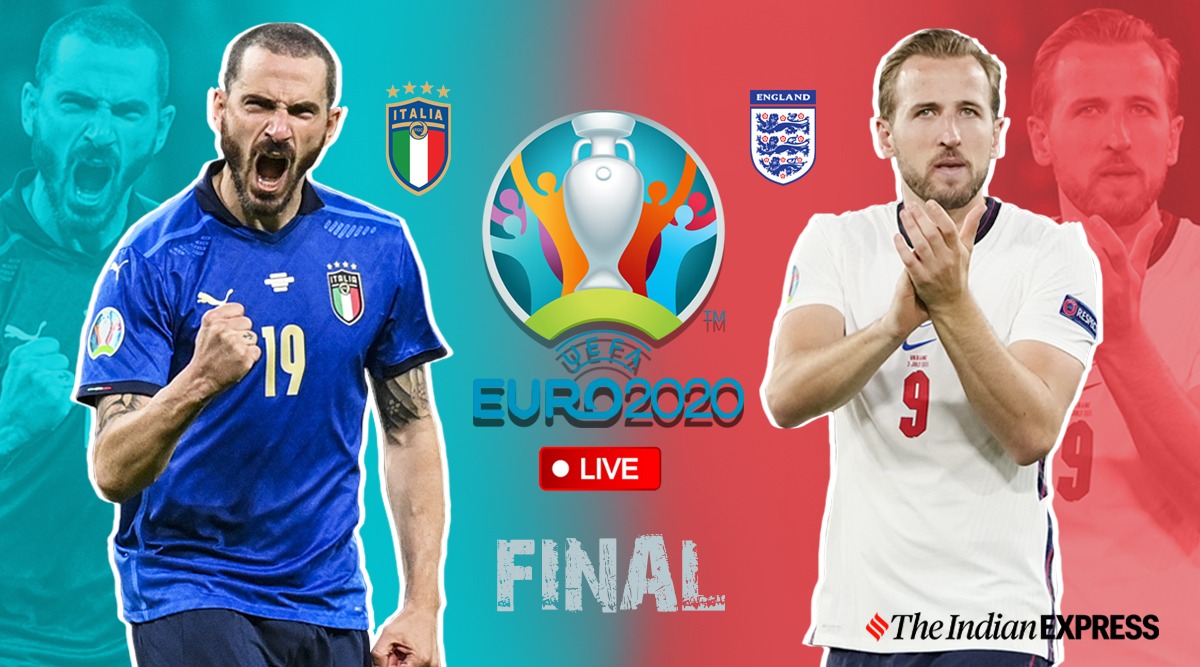
Italy defeated England 3-2 in the penalty shootout denying the home team its first title after a gap of 55 years.
Italy continued their 34-match winning streak as it defeated England in the final of Uefa European Championship (Euro 2020) that went into a penalty shootout after a 1-1 scoreline after extra time at the Wembley Stadium in London on Monday. England missed three penalties in the shootout as Italy defeated England 3-2 in the Euro 2020 final. The loss for the home team meant their search for a second major title after their 1966 World Cup, 55 years ago, and first European title continues.
Italy players celebrate after winning the Euro 2020 final against England via penalty shootout, at Wembley Stadium, London
Crime that involves a computer and a network, where the computer may have been a target or may have been used to commission the crime. It may threaten a person or nation’s security and financial health. Cybercrime crossing national borders and involving a crime committed by at least one nation-state is referred to as cyber warfare. Most, but not all, cybercrime is completed by profit-driven cybercriminals or hackers. Individuals or groups can commit cybercrime. Some cybercriminals are well-organized, employ advanced strategies, and have a high level of technical expertise. Others are newcomers to hacking. These could be either political or personal in nature. Examples: Identity theft, human and drug trafficking, hacking, etc.
In the beginning of 1970s, crimes over telephones were committed. The first person to be convicted of cybercrime was Ian Murphy, also known as Captain Zap, in 1981. He hacked the American telephone company to manipulate their internal clock, so that users could make free calls at peak times. The first cyber criminal in India, Amit Tiwari had been on the watch list since 2003 until he was finally caught in 2011.
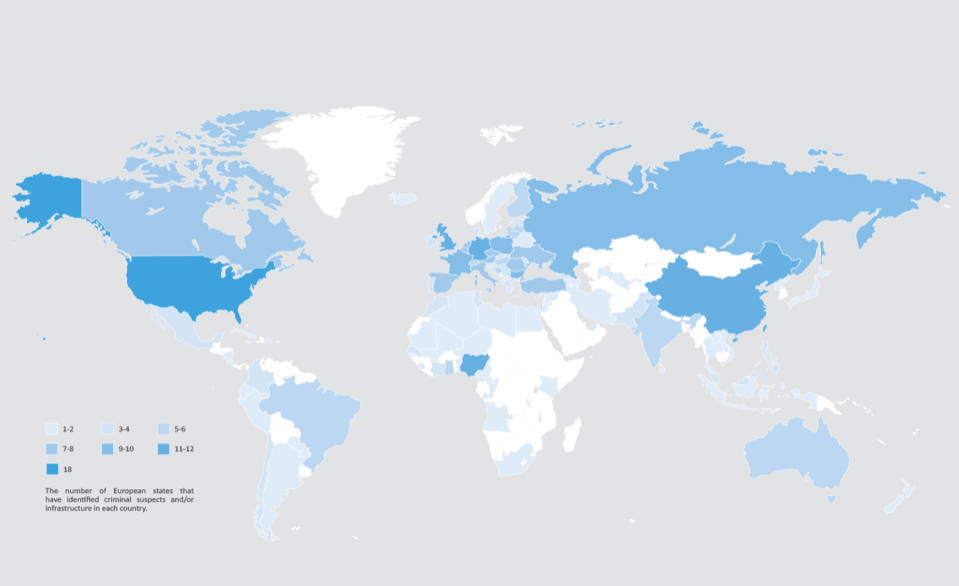
The country with the highest rate of cyber crime is USA (23.9%) followed by China (9.63%) .
CATEGORIES OF CYBERCRIME
The attack is directed towards a computer, such as a data breach on a corporate network.
A computer is used as a weapon in an attack, such as a denial of service (DoS) attack.
A computer is a tool used in the commission of a crime, such as digital identity theft, which leads to the theft of funds from a bank account.
TYPES OF CYBERCRIME
Financial Fraud: Dishonest misinterpretation of a fact intended to let another do or refrain from doing something that causes loss. Example: Fake e-mails
Online Harassment /Cyber Bullying/ Internet Trolls: Misusing personal information or passing derogatory comments at specific individuals of a race, gender, colour, etc.
Hacking: hacking is unauthorised access into a computer system and/or network.Because of the public coverage, government websites are a popular target for hackers. Hackers appreciate the media attention. The motivation for hacking is greed, power, publicity, revenge, adventure and the desire to access restricted information. Shutting down or misusing websites or computer networks.
Defamation: It involves any person with intent to lower down the dignity of the person by hacking his mail account and sending some mails with using vulgar language to unknown persons mail account.
Cyber Terrorism: Politically motivated use of computers and IT to cause serious disruption and fear in society. Terrorist attacks on the Internet is by distributed denial of service attacks, hate websites and hate E-mails, attacks on service network etc.
Child Pornography: In this cyber crime defaulters create, distribute, or access materials that sexually exploit underage children.
Virus Dissemination: Malicious malware that infects other programmes. Examples: Web Jacking, email bombing, Virus, Worms, Trojan Horse, Web Jacking etc.
Computer Vandalism: Cyber vandalism is the act of damaging or destroying data rather than stealing or misusing it. This is a type of programme that attaches itself to a file and then circulates it.
Cybercrime activity throughout 2015-2016
PREVENTION
It is best not to give out personal information to strangers via e-mail, chat, or other social networking sites.
Avoid transmitting any photograph to strangers through the internet, as incidences of photograph misuse or modification are on the rise.
All netizens should use up-to-date anti-virus software to protect themselves from virus attacks.
To avoid fraud, a person should never send credit card or debit card details to an un-secure website.
Using strong passwords for different account can help in prevention.
Managing social media settings as we have different private social media setting so that no one can see our private information.
Using a full time internet and overall security software.
The 2020 UEFA European Football Championship, commonly referred to as UEFA Euro 2020, or simply Euro 2020, was the 16th UEFA European Championship, the quadrennial international men’s football championship of Europe organised by the Union of European Football Associations (UEFA).
The tournament, held in 11 cities in 11 UEFA countries, was originally scheduled from 12 June to 12 July 2020, but was postponed due to the COVID-19 pandemic in Europe and rescheduled for 11 June to 11 July 2021. It retained the name UEFA Euro 2020. Portugal were the defending champions, having won the 2016 competition in France, but were eliminated in the round of 16 by Belgium. The video assistant referee (VAR) system was introduced at the European Championship in this tournament.
UEFA President Michel Platini said in 2012 that the tournament was to be hosted in several nations as a “romantic” one-off event to celebrate the 60th “birthday” of the European Championship competition. Having the largest capacity of any of the stadiums entered for the competition, Wembley Stadium in London hosted the semi-finals and final for the second time, having done so before at the 1996 tournament in the stadium’s former incarnation. The Stadio Olimpico in Rome was chosen to host the opening match, between Turkey and Italy. Originally to be played at 13 venues, two hosts were later removed: Brussels in December 2017 due to the abandonment of building the Eurostadium, and Dublin in April 2021 as there was no guarantee that spectators could attend. Spain also changed their host city from Bilbao to Seville to allow for spectators at matches.
POSTPONEMENT OF THE TOURNAMENT DUE TO COVID-19
In early 2020, the COVID-19 pandemic in Europe triggered concerns regarding its potential impact on players, staff and visitors to the twelve host cities of the tournament. At the UEFA Congress in early March, UEFA president Aleksander Čeferin said the organisation was confident that the situation could be dealt with, while general secretary Theodore Theodoridis stated that UEFA was maintaining contact with the World Health Organization and national governments regarding the coronavirus. The impact on football grew later that month, as numerous domestic and UEFA competition matches began taking place behind closed doors. By 13 March 2020, upcoming UEFA competition fixtures were postponed, while major European leagues were suspended, including the Bundesliga, La Liga, Ligue 1, Premier League and Serie A.
UEFA held a videoconference on 17 March 2020 with representatives of its 55 member associations, along with a FIFPro representative and the boards of the European Club Association and European Leagues, to discuss the response to the outbreak for domestic and European competitions, including Euro 2020. At the meeting, UEFA announced that the tournament would be postponed to the following year, proposing that it take place from 11 June to 11 July 2021. The postponement allowed for pressure to be reduced on the public services in affected countries, while also providing space in the calendar for domestic European leagues that had been suspended to complete their seasons. On the following day, the Bureau of the FIFA Council approved the date change in the FIFA International Match Calendar. As a result, the expanded FIFA Club World Cup, due to take place in June and July 2021, was postponed. On 23 April 2020, UEFA confirmed that the tournament would still be known as UEFA Euro 2020.
CHANGES IN RULES OF THE TOURNAMENT
On 31 March 2021, the UEFA Executive Committee approved the use of a maximum of five substitutions in matches at the tournament (with a sixth allowed in extra time). However, each team are only given three opportunities to make substitutions, with a fourth opportunity allowed in extra time, excluding substitutions made at half-time, before the start of extra time and at half-time in extra time. The use of five substitutes has been permitted by IFAB during the COVID-19 pandemic due to the resulting fixture congestion, which has created a greater burden on players.
At the start of April 2021, UEFA also said they were considering allowing tournament squads to be expanded from the usual 23 players, following calls from national team managers in case of a possible COVID outbreak in a team, as well as to reduce player fatigue caused by the fixture congestion of the prior season. On 27 April, it was reported that the UEFA National Team Competitions Committee had approved the expansion of squads to 26 players, subject to confirmation by the UEFA Executive Committee. On 4 May 2021, the executive committee confirmed the use of 26-player squads. However, teams still may only name a maximum of 23 players on the match sheet for each tournament fixture (of which 12 are substitutes), in line with the Laws of the Game. These 23 must include three goalkeepers. It was also announced that after each team’s first match, goalkeepers may still be replaced due to physical incapacity, even if the other goalkeepers from the squad are still available. Water breaks were permitted so that players could drink from their own personal bottles. Cooling breaks, first seen at the 2014 FIFA World Cup were also permitted for games played in higher temperatures.
FINAL OF EURO 2020
The final of Euro 2020 was played between Italy and England on 11 July 2021. England took the lead with a Luke Shaw strike in the 2nd minute, the quickest ever goal in an Euro final. Leonardo Bonucci scored the equaliser for Italy in the 67th minute. The score remained 1-1 at the end of 90 minutes as well as after Extra-Time. Italy won 3-2 on penalties.
AWARDS WON BY PLAYERS
Cristiano Ronaldo-Golden Boot Award with 5 goals and 1 assist in 4 matches
Gianluigi Donnarumma-Player of the tournament(Golden Ball)
12 July is the day to Honors transcendentalist Henry David Thoreau.Born on 12 July Thoreau was an advocate of living a simple life .He belives that “As you simplify your life,the law of the universe will be simpler.”He was an environmentalist , poet and transcendentalist .He was the man of simplicity who believes “less is more”.
National simplicity day was created to help people to enjoy their life.As simple the word sound ,as complex is when you practice it. livinga simple life,you will find the most beautiful thing in the world.
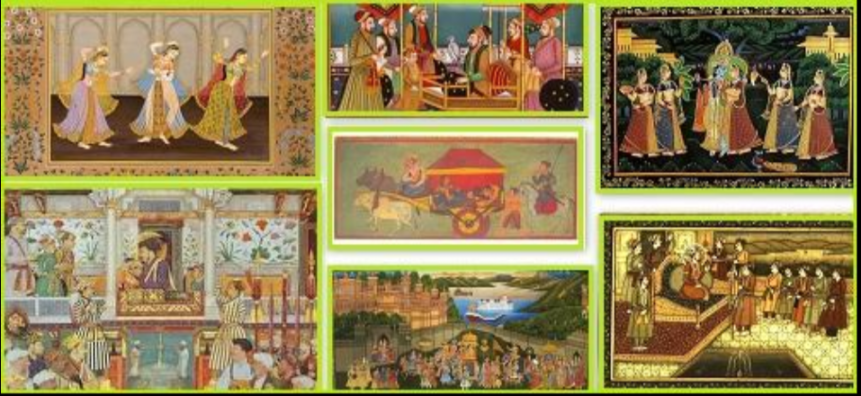
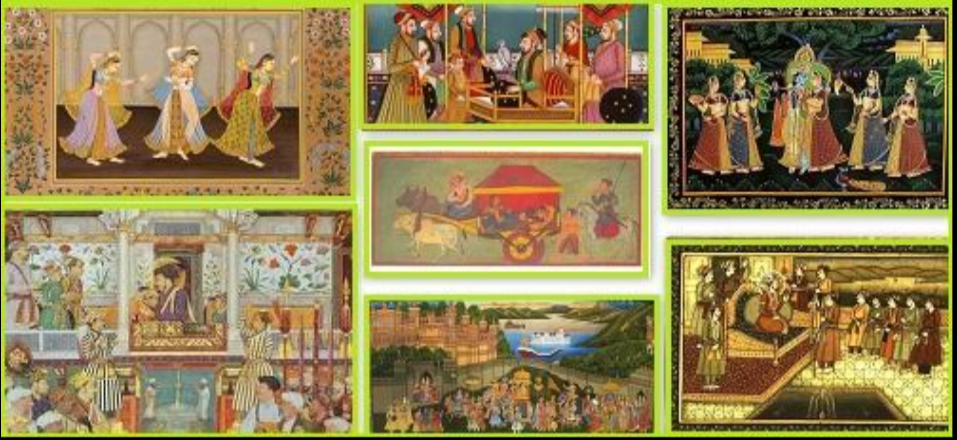
Miniature Art refers to paintings, sculptures, engravings etc. That have small dimensions. Though they are small, they are well detailed. The origin of miniature paintings dates back to the prehistoric times and is profoundly influenced by Indian literature. A miniature painting is generally less than 25 square inches or 100 square centimetres. The subjects in the painting are one -sixth of their actual sizes. Miniature paintings were generally done on materials like cloth, paper, leaves etc. which are quite perishable. These paintings are handmade and very delicate. Miniature paintings are considered as an ancient art in India and there were many schools for the same, including those of the Rajput’s, Deccan’s and the Mughals. These paintings give an insight into the life of the royals and the common man, the beauty of their womenfolk and the inspirations and devotions of the artists themselves. These paintings are often associated with the Ragas i.e. the melodies of Indian classical music. Rajasthani School of Miniature Paintings: This school developed around the areas of Rajasthan, Bundelkhand and Punjab regions. The Rajasthani paintings were greatly influenced by Tulsidas and Kabir. The main theme observed in the illustrations of this school is love in all of its form. Main emphasis is given on the love between human soul and god. This might have been influenced by the Bhakti cult which originated in those days. Paintings are left to the imagination and emotion of the viewers for interpretation. Features: Compositions are clear and simple. All figures are in same dimensions. The figure of a woman are duplicated for other women. This is painted as a symbol of femininity. Colours are used harmoniously and are bright with each colour having it’s own specific meaning. The medium mostly used was water colour in tempera hand made paper. The colour scheme is flat and paintings are two dimentional. Some of the famous Rajasthani miniature paintings: ‘Radha Bani Thani’by Nihal Chand ‘Maru Ragini’ by Sahibdin ‘Chaugan Players’ by Dana
Mughal School of Miniature Painting: With the advent of Mughal, the Indian miniature paintings shifted to the portraits and richness of colour effects with the unique Persian flavour. During this period, the art specialises in Court and Palace scenes. Themes from Indian epics such as Ramayana, Mahabharata, Bhagvata Purana etc. Are also included. The Indian Miniature painting was at it’s prime time during the period of Mughal Emperor Shah Jahan because he was a great patron of miniature painting. But after his regime, paintings lost their charm and started to decline in the 18th century. Features: Mughal paintings denoted the habits of the ruling class. Portraiture was done. Figures were drawn in profile or quarter profile. A decorative border called hasiah was also used. Calligraphy was also done in the paintings. The paintings were male dominated. Portraits of women were drawn from imagination. The medium generally used was water colour in tempera handmade paper. Some of the famous Mughal Miniature Paintings: ‘Kabir and Raidas’ by Ustad Faquirullah Khan ‘Falcon on a Bird Rest’ by Ustad Mansoor ‘Babur Crossing River Sone’ by Jagannath
Anyone with a blog wants readers to stay rather than move on to another. It’s not being selfish but after someone has read one post, you’d definitely want them to read another, right? After all, isn’t it one of the tenets of SEO to make people stay longer on your blog if it has to have a fighting chance at the rankings game?
The question now is: how exactly do you entice them to read a few more of your blog posts?
First off, you don’t know exactly what brought a reader to your site. Well, you sort of do, if you have Google Analytics and all that. But that’s beside the point. It wouldn’t be productive for you to stare at GA the entire day hoping that it will tell you that yes, someone has been perusing your blog.
The point being driven at here is that you have to offer more on your blog. It’s not enough that you get traffic from search engines and other sites; you also have to add some extras that will entice visitors to stay longer.
How exactly do you do that?
The Tactics of Persuading Users to Stay
Bloggers have employed a variety of tactics to persuade readers to stay. For one, they load the sidebar with widgets for Popular Posts, for example. Of course, it would be in the interest of your readers to know which other posts on your blog are gaining traction. Maybe those pieces are of interest to them as well. As a result, you’ve got one surefire way of making readers stay.
Now, what if you want to highlight Featured Posts, for example? Let’s say that your blog has been around for a number of years and in that span, it has produced some great content that received quite the number of shares, likes, +1s, comments on so on. Wouldn’t that be the kind of post you want featured? Unless your reader was looking for that topic specifically, there’s little chance that they might uncover that gem if you don’t bring it to their attention.
Thankfully, it’s quite possible to add a Featured Posts slider for Blogger. And if you don’t know how to make one yourself, this is exactly what this post is for. Here’s an awesome Featured Posts slider widget that you can use on your blog.
featuredNum – add the number of posts to display in the slider
listbyLabel – if you want to display posts by category / label, such as the tag fashion, it will be written as listbyLabel: “fashion”
feathumbSize – the size or dimension of the image in pixels
interval – time taken to change the slides position in milliseconds
autoplay – replace true with false if you don’t want the slides to change automatically.
3. Once you are done with the settings, click the ‘Save’ button.
Now, this code is for a slider widget which means that instead of just a random list of Featured Posts, you get to display them with images (if they have one) and you can include effects too. You can also control how many slides should be shown because it just wouldn’t be prudent to feature your entire oeuvre, right?
Plus, being a slider widget, it adds a nice little visual to your site. And we all know how visuals are important in enticing people to stay, don’t we?
Sound is a symptom of life. The existence of life is felt and perceived through the presence of sound. But loud and shrill sound creates a cacophony instead of a symphony. Of late, sound pollution has reached an alarming stage in human life. It is chasing us in almost every step of life. In schools, colleges, offices, and even in hospitals we often hear an explosion of deafening sound. The quietness of our life has totally vanished. Even within our homes sound has been chasing us. Many are the causes of this problem of sound pollution. Microphones blare out day in and day out. Film songs are played on cassette recorders at top volume even from wayside betel shops! There are the aggressive bullying horns of automobiles. During social and religious festivals, crackers are burst indiscriminately and, as a result, the lives of the children and the aged persons as well as the examinees become miserable. Shouting of slogans also contributes to sound pollution. One can even hear slogans shouting in a closed rooms or silent places like hospitals! Th extent of sound pollution has already crossed the normal limits of human endurance. We must pass strict laws to take effective steps against the misuse of microphones. People must be made aware of the danger of sound pollution. It is dangerous for patient suffering from heart diseases. In many cases it is also responsible for deafness and psychologist imbalance. Of late, judicial bodies are taking steps to control the sound pollution. However, everyone must cultivate the virtues of quietness in domestic as well as in public life.
The Indian judicial system has bestowed a great deal of authority on the citizens of the country to guard their basic rights. Regrettably, not everyone is aware of their rights and power. As an Indian citizen, it is critical that you are knowledgeable with the country’s laws and rights that not only protect people’s interests but also make our lives easier. Below providing 10 rights and liabilities that everyone should be aware of:-
1.If your cylinder bursts, you are entitled to a 40-lakh insurance payout.
According to the legislation, all registered LPG users are entitled to a Rs 40 lakh insurance policy in the event of death or property damage caused by cylinder explosions. This is a blanket for the whole family. But however, this is partly true as reported, the insurance coverage is not Rs 40 lakh. The court decides the amount according to the victim’s age, salary and other conditions. To claim this compensation, customers must file a FIR with the nearest police station and send it to the gasoline business in question.
2. Motor Vehicle Act 1988
Sections 185 and 202 of the Motor Vehicle Act of 1988 provide that if your 100ml blood contains more than 30mg of alcohol while driving, the police can arrest you without a warrant.
3. Women can only be arrested by female cops.
Only female officers have the authority to arrest women, and they must remain at the police station the whole time. If only male cops have arrived for the arrest, women have the right not to attend to the station. Male police officers should obtain a formal authorization from the magistrate to escort the lady in the event of a serious offence.
4. Section 46 of Criminal Procedure Code- Before sundown, women should be detained.
Women must be detained before sundown, no lady can’t be arrested earlier than 6 A.M. and after 6 P.M.
5. In hotels, you can ask for water and use the restroom for free under the Indian Sarais Act of 1887.
A person is permitted by law to request free water from any hotel. Even if you are not a client, you can use a hotel’s toilet for free even if it’s a 5 star hotel.
6. Domestic Violence Act of 2005:
In today’s time live-in relationships are so common because of which this law becomes extremely important to know about. Under this act, It is not illegal for a young boy and a young girl to live together in a “live-in relationship.” Even the baby from this connection is a legal son or daughter who has full ownership of his or her father’s possessions.
7. Maternity profit act of 1961
No company can fire a pregnant woman under the Maternity Profit Act of 1961. It might result in a maximum sentence of three years in jail.
If the company (government or private) employs more than ten people, the pregnant woman is entitled to 84 days of paid maternity leave.
8. Section 129 of motor vehicle act
Part 129 of the Indian Motor Automobile Act states that two-wheeler users must wear a helmet. Part 128 of the Motor Vehicle Act sets a maximum of two riders per motorcycle. This regulation also states that if a traffic cop takes something from a car or motorcycle, it is illegal. You have entire authority to file a legal proceeding against the officer.
9. The Most Retail Value Act of 2014
It states that a storekeeper cannot charge more than the written value of a product, but a shopper has the option to pay less than the stated value of a commodity.
10. Part -13 of the Hindu Marriage Act, 1955
It states that any husband or wife may file for divorce in a court of law on the grounds of adultery (a physical relationship outside of marriage), impotency, leaving home without notice, changing Hindu faith and adopting a different faith, madness, incurable illness, and no information about the husband or wife.



















 Eduindex


You must be logged in to post a comment.