Nationalization of Banks

Despite the provisions, control and regulations of the Reserve Bank of India (RBI) , banks in India except the State Bank of India (SBI), remain owned and operated by private persons. By the 1960s, the banking industry had become an important tool to facilitate the development of the Indian economy. At the same time, it had emerged as a large employer, and a debate had ensued about the nationalization of the banking industry. The then Prime Minister of India, Indira Gandhi, expressed the intention of the Government of India in the annual conference of the All India Congress Meeting in a paper entitled Stray thoughts on Bank Nationalization.

The decision came at the end of a troubled decade. India was buffeted by economic as well as political shocks. There were two wars—with China in 1962 and Pakistan in 1965—that put immense pressure on public finances. Two successive years of drought had not only led to food shortages, but also compromised national security because of the dependence on American food shipments to keep hunger at bay. Fiscal retrenchment through a three-year plan holiday had hurt aggregate demand as public investment was cut.

Thereafter, the Government of India issued the Banking Companies (Acquisition and Transfer of Undertakings) Ordinance, 1969 and nationalized the 14 largest commercial banks with effect from the midnight of 19 July 1969. These 14 banks included: Allahabad Bank (now Indian Bank), Bank of Baroda, Bank of India, Bank of Maharashtra, Central Bank of India, Canara Bank, Dena Bank (now Bank of Baroda), Indian Bank, Indian Overseas Bank, Punjab National Bank, Syndicate Bank (now Canara Bank), UCO Bank, Union Bank of India United Bank of India (now Punjab National Bank). These banks contained 85 percent of bank deposits in the country. Within two weeks of the issue of the ordinance, the Parliament passed the Banking Companies (Acquisition and Transfer of Undertaking) Bill, and it received presidential approval on 9 August 1969.

As a result of this nationalization, it led to an impressive growth of financial intermediation. The share of bank deposits to GDP rose from 13% (1969) to 38% (1991), the gross saving rate rose from 12.8% (1969) to 21.7% (1991). Gross Domestic Savings almost doubled as a percentage of national income in the 1970s. The reach of the banking system also increased and banks were no longer confined to the metropolitans and reached remote areas of the country, thus promoting rapid growth in agriculture, small scale industries and development of these remote and backward areas. The nationalization furthered India’s growth process, particularly during the Green revolution.

There were also some harmful effects of the nationalization. The primary purpose for which the nationalization was done i.e. extending bank facilities to rural areas was also unfulfilled and many areas of the country including Uttar Pradesh, Chhattisgarh and the North Eastern part remain unbanked. It failed to eradicate poverty and scaling down of wealth inequalities. Financial inclusion was only increased post the implementation of the Jan Dhan Yojana. Moreover, multiple public sector banks also suffered due to political interference. Banking was no longer done on professional and ethical grounds. It resulted in lower efficiency and poor profitability. The performance of these banks on the basis of branch expansion and number of deposits never surpassed the numbers shown by private banks.

Bank nationalization was the beginning of a broader political economy strategy in the 1970s- a decade where economic growth barely outpaced population growth. This nationalization did succeed in certain areas such as financial deepening cause of the rapid spread of branches but eventually, it did more harm than good. As of 2021, there are a total of 12 nationalized banks in India.

WORLD MALARIA DAY

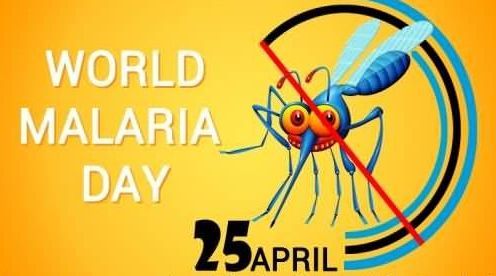
World Malaria Day(WMD) is an international observance commemorated every year on 25 April and recognizes global efforts to control malaria. Globally, 3.3 billion people in 106 countries are at a risk of malaria. In 2012, malaria caused an estimated 627,000 deaths, mostly among African children, Asia, Latin America, and to lesser extent the Middle East and parts of Europe are also affected. World Malaria Day sprang out of the efforts taking place across the African continent to commemorate Africa Malaria Day. World Malaria Day is one of the 11 official global public health campaigns currently marked by the World Health Organization(WHO).

According to the most recent World Malaria Report, the global tally of malaria reached 429,000 malaria deaths and 212 million new cases in 2015. The rate of new malaria cases fell by 21 percent globally between 2010 and 2015, and malaria death rates fell by 29 percent in the same period. World Malaria Day was established in May,2007 by the 60th session of the World Health Assembly, WHO’s decision-making body. The day was established to provide “education and understanding malaria”, and spread information on “year-long intensified implementation of national malaria-control strategies, including community-based activities for malaria prevention and treatment in endemic areas”. Prior to the establishment of World Malaria Day, Africa Malaria Day was held on April 25. Africa Malaria Day began in 2001, one year after the historic Abuja Declaration was signed by 44 malaria-endemic countries.

WHAT IS MALARIA?

Malaria is a disease caused by a parasite. The parasite is spread to humans through the bites of infected mosquitoes. People who have malaria usually feel very sick with a high fever and shaking chills. While the disease is uncommon in temperate climates, malaria is still common in tropical and subtropical countries. To reduce malaria infections, World Health programs distribute preventive drugs and insecticide-treated bed nets to protect people from mosquito bites.

CAUSES:-

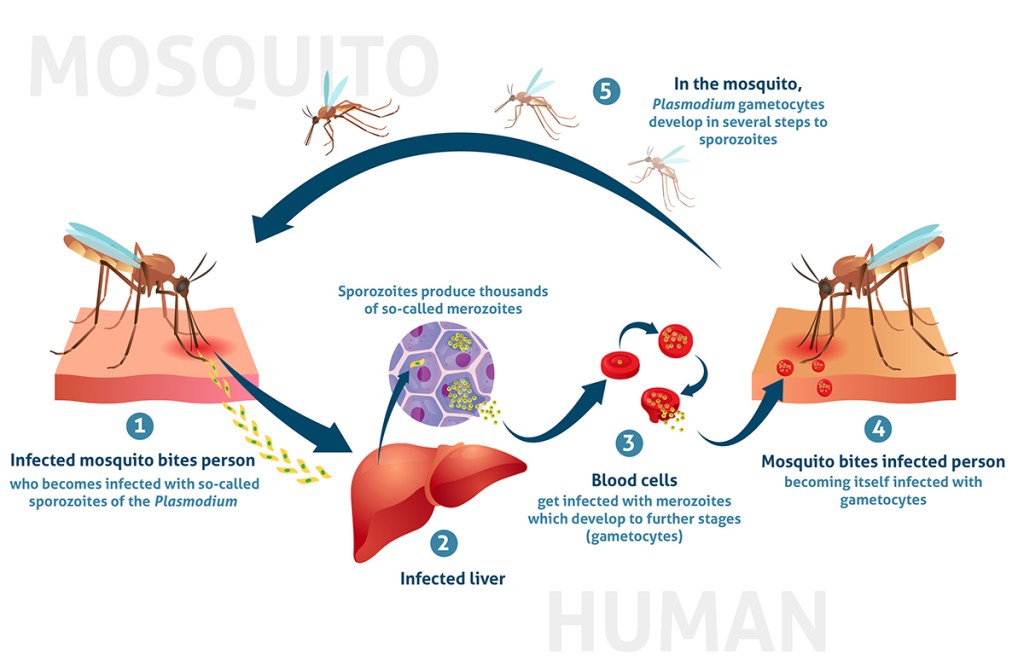
Malaria is caused by a single-celled parasite of the genus plasmodium. The parasite is transmitted to humans most commonly through mosquito bites. Mosquito transmission cycle:-

  1. Uninfected mosquito- a mosquito becomes infected by feeding on a person who has malaria.
  2. Transmission of parasite- if this mosquito bites in the future, it can transmit the malaria parasites to the person.
  3. In the liver- once the parasite enters the body, they travel to the liver where some types of them can lie dormant for as long as a year.
  4. Into the bloodstream- when the parasites mature, they leave the liver and infect the red blood cells. This is when people typically develop malaria symptoms.
  5. Onto the next person- if an uninfected mosquito bites someone at this point of time, it will become infected and pass on to the next person it bites.

COMPLICATIONS:-

Malaria can be fatal especially when caused by the plasmodium species common in Africa. Malaria deaths are usually related to one or more serious complications including:-

  • cerebral malaria– if parasite-filled blood cells block small blood vessels to brain, swelling of brain or brain damage may occur.
  • breathing problems– accumulated fluid in lungs (pulmonary edema) can make it difficult to breathe.
  • organ failure– malaria can damage the kidneys or liver or cause the spleen to rupture.
  • Anemia- malaria may result in not having enough red blood cells for an adequate supply of oxygen to body’s tissues.
  • low blood sugar.

HOW DO YOU PRESENT YOURSELF…

Presentation is very important and crucial part in everyone’s life, because at some point everyone should go through this presentation. Basically, we do think that presenting ourselves is an easy thing, Yes indeed it is , but if you follow some tips then you can present yourself in an extraordinary way and style. Here in this article we’ll be sharing some important tips to be noted and remembered for a wonderful presentation. Let’s look at them one by one.

5P’s of Presentation: The five p’s of presentation are planning, preparation, consistency, practice and performance.

TIPS FOR A GOOD AND HEALTHY PRESENTATION:

1.The first thing to be kept in your mind is you should prepare for the presentation, if it is informed to you beforehand.

2.It’s better to practice or make a trail performance before you give your original presentation.

3.Do not byheart everything that you wanted to convey in your presentation, but just remember the main points that you want to highlight or speak about, and so you can proceed your talk based on the main points.

4.Try to learn the correct pronunciation of the words that you find hard , vocabulary is important for an effective talk.

5.If you are presenting through some PPT presentation or something like that, you need to speak out the points relating to the slides.

6.Be confident in talking, if you get nervous before the gathering, it won’t look good, so try to practice before a mirror or before your close friends if you have the stage fear.

DO’S DURING PRESENTATION:

1.Firstly introduce yourself .You should talk confidently whatever you feel like talking, instead of uttering the words in a confused way.

2.You need to maintain proper pitch in your speech,  it leads to effective presentation.

3.Next, your body language. It includes, your hand gestures, facial expressions, body posture, eye contact, touch and use of space. If all the above were maintained in an orderly manner it gives the interest to the audience.

4.Your flow should be balanced, because you should neither speak like an express train nor be like a tortoise, so balance should be maintained.

5.Connect with the audience, keep your eye contact and keep a smile on your face, use your voice effectively.

6.Keep your speech simple, and tell some stories in between to create interest among the audience.

7.Keep yourself relaxed, breathe and convey with full confidence.

DO NOT’S DURING PRESENTATION:

1.You should never doubt in your talk, feel free and speak what’s in your mind.

2.Do not cover yourself like folding your hands or keeping hands tight etc., it delivers that you’re not confident enough and it shows your nervous feel.

3.Do not look at the script and keep on reading if you have a script with you, because you should keep eye contact with the gathering.

4.If you are showing some slides, do not reading the whole sentences from the slides as it is.

5. Do not try to make it fast and cut short your works, like if it’s and hour presentation do not end it within 30 minutes.

6.Don’t end your talk by simply summarizing what you have talked about.

7. If place is given, try to move and talk, instead of standing at the same place like an idol.

8.While using your gestures, do not move them very frequently but move accordingly.


*ALWAYS TRY TO GIVE YOUR BEST IN YOUR PRESENTATION AND SO NO NEED TO CONSIDER THE REST OF THE THINGS…

*KEEP A SMILE ON YOUR FACE,BREATHE AND CONVEY HEARTHFULLY…

Art and Architecture of Tamilnadu

The Sangam Tamils had their own system of music,dance and drama(Pann,Aadal and Koothu).The Panar and Viraliyar were proffesional musicians and dancers.String instruments (Yaazh) wind instruments (kuzhal) and drums(Muzhauu) were used in such performances.Festivals and worship were also associated with dance and music(Kuravai,Veriyaattu).The pallava inscription at kudumianmalai refers to a great musician Rudracharya.

The Devaram and Divya Prabandam were set to Ragas.The puranic themes were enacted in the form of Koothu or gaathas.The Devadasis or temple servants were excellent dancers.

In the field of architecture the Sangam age did not produce enduring structures with the advent of the Pallavas a new style in art and architecture appeared in Tamilnadu.At first Mandapams were excavated out of rocks with excellent sculptural representations(Mahisasura mandapam,Varaha mandapam).Then single rocks were converted into ratha like temples(monolithic rathas at mahabalipuram).They built structural temples by filling up stone slabs(Shore temple,kailasanathar temple and vaikuntha perumal temple).These temples were noted for their Vimanas.The imperial cholas developed this style further.Elaborate campuses,protective walls,pillared halls,huge towers and multi shrines marked the chola temple architecture.The Tanjore Brihadeeswaram,Gangai Kinda cholapuram and Darasuram are outstanding specimens of chola architecture.All these temples have excellent sculptural representations.The Sittannavasal caves , kailasanathar temple and Brihadeeswarar temple have the best specimens of paintings.The chola bronze images of Nataraja,Siva,Vishnu and other dieties have earned global acclaim.

The Tamil had developed their own system of mathematics time calculation, astronomy and medical systems.

The Sangam literature refers to “Enn” kanakku Nazhigai ,Yamam kaatham and kol.They also refer to seasons as Elavenil,Elaiudir etc.References to native medicines like Elathi,Tirikadukam,Siru pancha Mulam etc reveal Tamil’s versatile achievements.Kaniyans were both astronomers and astrologers.The Tamil Siddhas produced excellent treaties on Siddha system of medicine and these treaties elaborate diagnosis, treatment by herbs and chemicals and also provide pharmacological details.

Is the Modi government really spying on journalists and opposition leaders through Pegasus?

300 high-profile Indians out of a list of 50,000 people worldwide have been subjected to targeted hacking and tapping of their phones using the ‘Pegasus spyware’. On the target list was Congress’ Rahul Gandhi, Political analyst Prashant Kishore, Mamata Banerjee’s nephew Abhishek Banerjee, former Election Commissioner Ashok Lavasa (that ruled that PM Modi had violated the MCC during the 2019 election commission). Also, there were 40 Journalists from various Media houses including Rohini Singh, Swati Chaturvedi (that criticize the ruling govt), Supreme Court Judge, and opposition leaders.

The French media Forbidden stories and Amnesty International shared the leaked list with ‘The Wire’ in India and 15 other news organizations across the world including The Guardian, The Washington Post, Le Monde, Suddeutsche Zeitung as part of the Pegasus project.

But what really is Pegasus? How does it operate? Who uses the software? And why has it earned the reputation of being behind the most sophisticated spyware attacks? According to The Citizen Lab, in this way, Pegasus can be used to gather a vast amount of victim information: “Passwords, contact lists, calendar events, text messages, and live voice calls from popular mobile messaging apps.” According to this report, “Pegasus could even listen to encrypted audio streams and read encrypted messages”. NSO does not openly name who buys its software. But its website does say that its products are used and bought exclusively “by government intelligence and law enforcement agencies to fight crime and terror”. 

“Pegasus is modular malware. After scanning the target’s device, it installs the necessary modules to read the user’s messages and mail, listen to calls, capture screenshots, log pressed keys, exfiltrate browser history, contacts, and so on, and so forth. Basically, it can spy on every aspect of the target’s life,” cybersecurity company Kaspersky noted. Pegasus infections can also be achieved via so-called “zero-click” attacks that do not require any interaction from the phone’s owner. It means that your phone could still be hacked even if you’re careful not to click on those malicious links. Most of these attacks exploit vulnerabilities in an operating system that the phone’s manufacturer may not yet know about and so has not been able to fix. An example of such an attack was revealed by WhatsApp in May 2019 when the spyware targeted a vulnerability in its VoIP stack. Simply by placing a WhatsApp call to a target device, Pegasus could be installed on the phone, irrespective of whether the target answered the call or not.

In November 2019, Lok Sabha MP from the DMK, Dayanidhi Maran, asked on the floor of the House if the government taps WhatsApp calls and messages and whether the government uses Pegasus for this purpose. A written response provided by then Minister of State for Home Affairs, Kishan Reddy, did not directly address queries about tapping or Pegasus. “Section 69 of the Information Technology Act, 2000 empowers the Central Government or a State Government to intercept, monitor or decrypt…any information generated…or stored in any computer resource,” the response said, adding that it was for reasons including sovereignty and security of the country. “Section 5 of the Indian Telegraph Act, 1885 empowers lawful interception of messages on the occurrence of public emergency or in the interest of public safety,” the response added.

The response also listed the 10 agencies that can intercept messages under the law and a Standard Operating Procedure (SOP). Such agencies allowed to intercept messages include the Intelligence Bureau, Enforcement Directorate, Cabinet Secretariat (RAW), and Commissioner of Police, Delhi.

The Government of India responded that they are not spying on anyone illegally and they have got nothing to do with Pegasus. The response further said that “there is no blanket permission to any agency for interception or monitoring or decryption and that permission from competent authority is required, as per the due process of law and rules, in each case”. While, on the other hand, NSO claims that only governments can buy its software, private parties cannot buy the software.

This clearly points finger towards the Government and the names of those under surveillance have a definite pattern that threatens power.

15 Books Everyone Should Read At Least Once In Their Lives

1.To Kill a Mockingbird, by Harper Lee

2. 1984, by George Orwell

3.The Lord of the Rings, by J.R.R. Tolkien

4.Pride and Prejudice, by Jane Austen

5.The Book Thief, by Markus Zusak

6.The Hobbit, by J.R.R. Tolkien

7.Fahrenheit 451, by Ray Bradbury

8.Jane Eyre, by Charlotte Bronte

9.Animal Farm, by George Orwell

10. Gone with the Wind, by Margaret Mitchell

11.The Catcher in the Rye, by J.D. Salinger

12.The Grapes of Wrath, by John Steinbeck

13.The Kite Runner, by Khaled Hosseini

14.A Tale of Two Cities, by Charles Dickens

15.Romeo and Juliet, by William Shakespeare

Memory Unit:

Memory units are the storage areas in a computer. The team “Memory” usually refers to the main Memory of the computer, whereas, the word “storage” is used for the Memory that exits on disks, CDs, floppies or taps. The main Memory is usually called a physical Memory which refers to the ‘chip’ (Integrated circuit) capable of holding data and instructions.

There are different types of Memory. They are Randam Access Memory(RAM), Read Only Memory(ROM), Programmable Read-Only Memory(PROM), Erasable Programmable Read-Only Memory(EPROM), Electrically Erasable Programmable Read-Only Memory(EEPROM).

🌟Random Access Memory – RAM🌟

RAM is the most common type of Memory found in the modern computers. This is really the main store and is the place where the program gets stored. When the CPU runs a program, it fetches the program instructions from the RAM and carries them out. If the CPU needs to store the result of the calculations it can store them in RAM. When we switch of the computer, whatever is stored in the RAM gets erased. It is a volatile form of memory.

🌟Read Only Memory – ROM🌟

In ROM, the information is burned( pre- recorded) into the ROM chip at manufacturing time. Once data has been written into the ROM chip, it cannot be erased. But you can read it. When we switch of the computer, the contents of the ROM are not erased but remains store permanently. ROM is non-volatile Memory. ROM stored critical programs such as the programme that boots the computer.

🌟Programmable Read Only Memory – PROM🌟

PROM is a Memory on which data can be written only once. A variation of the PROM chip is that it is not burnt at the manufacturing time but can be programmed using PROM programmer are a PROM burner. PROM is also nan volatile Memory.

🌟Erasable Programmable Read-Only Memory – EPROM🌟

In EPROM ,the information can be erased and program using a special PROM-programmer. EPROM is non volatile Memory. A EPROM differs from a PROM in that a PROM can be written to only once and cannot be erased. But an ultra volatile light is used to erase the contents of the EPROM.

🌟Electrically Erasable Programmable Read-Only Memory – EEPROM🌟

EEPROM is a recently developed type of Memory. This is equalent to EPROM, but does not required ultraviolet light to erase its content. It can be erased by exposing it to an electrical charge. It is also non -volatile in nature. EEPROM is not as fast as RAM are the type of the ROM. A flash memory is a special type of EPROM that can be erased and reprogrammed.

The main Memory must store many data items and have some way of ŕretrinving them when they are needed. The Memory can be compared to the boxes at a post office. Each box- holder as a box with a unique number which is called is address. This address serves to identify the box. The Memory as a number of location in its store. Each location in a Memory as a unique number called its Memory address. This serves to identify it for storage and retrieval.

IMPORTANCE OF TREES

Everything is, in some way important in life. The trees that we usually pass by without giving much thought are an example. In our day-to-day life, we come across several trees. Some are long, some short, some may be bent. Some may have dried leaves or some may be home to different species of birds. Their importance is not realized and not much attention is given to them.

But they too are absolutely helpful when it comes to our survival. Sadly, a lot of trees have been struck down in the recent past for the construction of buildings and other developments.

Let us look at the importance and impact of trees in our life and realize how losing them may affect us.

  1. Greenery-  They provide a green environment for us. Many trees also have beautiful flowers growing on them, that form a serene environment around the place they are planted. Since many people use flowers to offer to Gods or use them during decorations, trees act as a helping hand.
  2. Home to birds- Many species of birds exist. Small and medium to large birds alike use trees as a shelter. It is home to many small, usually-not-noticed families!
  3. Balance in the ecosystem –   A balance in the ecosystem is maintained by the presence of trees. Since the world is technology-driven, pollution and diseases related to it are a common sight. Trees absorb the pollution and noxious gases emitted by vehicles and help us out from those diseases.
  4. Oxygen provider-   It is a well-known fact that trees take in carbon dioxide and release oxygen, which is a basis of survival for most of the creatures residing on earth.
  5. Important insects and microorganisms – Insects and microorganisms can be really important. Studies have shown that bacteria present on trees can act as fertilizers for them and increase their longevity of life.
  6. Prevention of soil erosion-  Soil erosions can prove to be disastrous. Trees help to prevent it because the roots are deep and hold the soil together. Also, the soil is important for the survival of many microorganisms that live deep in it, and hence trees are also helpful for them and in turn a better ecosystem.
  7. Food for animals and humans alike-  In big forests such as the Sunderbans or the Amazons, a lot of herbivores live. They feed on the leaves of these trees and this ensures their survival. What magical position trees hold not just in human habitations, but also deep woods!
  8. Medicinal and Herbal Purposes – Medicinal uses of trees are in continuance since time immemorial. A lot of trees, for example, the neem tree provide multiple benefits for the human body. They are either used directly or used in cosmetics and medicines.
  9. Ah, those juicy fruits!- Remember throwing stones at trees, waiting for the mango to fall so that we could have a taste of it? The fact that trees provide us with many fruits, juicy and tasty needs no elucidation as every one of us must have enjoyed the delicious taste at least once in our life.

In a nutshell, trees are important and they need to be preserved if we want to continue living a healthy and hearty lifestyle.

THE SCIENCE FICTION

With the rapid development of science and technology, science fiction has became popular in the modern times. The essence of fiction is the presentation of conflict in the human drama. Science fiction deals with conflict that arises out of the impact of scientific discoveries on the future life of humanity.

The writer of science fiction must be well-versed in the modern scientific knowledge to enable him to create a credible science story. Through in science fiction the element of fantasy dominates, the science fiction writers do not commit errors regarding scientific discoveries, facts and possibilities.

Types of science fiction:

There are two types of science fiction.

  • The first type is based on known facts of science leading to the development of new possiblities as in Arthur C. Clarke’s ‘The Sands of Mars’ which deals with the conditions encountered by the explorers on Mars.
  • The second type is science fantasy which is very popular today. It introduces any kind of assumptions, realistic or imaginary, which are necessary for the story. The strongest element in science fiction is imagination which often goes beyond credibility or rational understanding as in Bradbury’s ‘Martian Chronicles’.

Modern science fiction combines elements of scientific facts with fantasy. Most common themes in modern science fiction are the following:

  1. Space Travel, journey to other worlds and encounter with extra-terrestrial beings.
  2. Travelling in time past or future.
  3. Biological and psychological changes brought about by the appreciation of science in human beings and other species of life.
  4. Extraordinary powers acquired by man through the use of technology or abnormal mental powers possessed by some persons.

Science fiction began to acquire importance in the latter part of the 19th century with the fictional writings of Jules Verne and H.G Wells. Some of the stories of Edgar Allen Poe and Mary Shelley’s novel ‘Frankenstein’ had anticipated the coming of science fiction. However, it was Jules Verne’s novels such as ‘Journey to the Centre of the Earth’ and ‘Around the World in Eighty Days’ that set the trend. Science fiction achieved greater popularity with the writings of H.G Wells who wrote such classics as ‘The War of the Worlds’ and ‘The Time Machine’.

Modern science fiction presents most of the important technological achievements of the age — radar, rockets, medicines and robots, electronic brain, space vehicle, satellites, medicines and drugs with fantastic effects etc. Such materials are used with great imagination to create an exotic and weird effect.

The most outstanding science fiction writers since the sixties have been Isaac Asimov and Arthur C. Clarke. Asimov was a prolific writer of science fiction. His novels of the Foundation Saga and the series of ‘Robot’ novels have become classics. Two other outstanding novels of Asimov are ‘Extra-Terrastrials’ and ‘The Gods Themselves’.

The science fiction presents not only a fantastic world of wonders but, also a world more or less scientifically accurate. Most science fiction writings conform to the general principles of novel writing. They stimulate our imagination, satisfy our curiosity and lift us to a world of intense make-believe.

BOOKISH TERMS https://eduindex.org/2021/07/17/bookish-terms/

BOOK REVIEW: 1984 BY GEORGE ORWELL https://eduindex.org/2021/07/18/book-review-1984-by-george-orwell/

Who is the Dalai Lama?

In Tibetan Buddhism, a ‘Lama’ is a spiritual teacher and ritual expert who fulfils many types of roles for his community, and ‘Dalai’ generally refers to big or mighty. So, the Dalai Lama is a title conferred to the spiritual and political leaders of the Tibetan People. The Dalai Lamas are believed by Tibetan Buddhists to be manifestations of Avalokiteshvara or Chenrezig, the Bodhisattva of compassion and the patron saints of Tibet. Bodhisattvas are realized beings, inspired by the wish to attain complete enlightenment, and who have vowed to be reborn in the world to help all living beings. Throughout much of history, the Dalai Lamas were just as much political leaders as they were spiritual leaders. Tibetan Buddhists believe that the Dalai Lama reincarnates as a child when he dies, and thereby establish a line of successors based on who they identify as the reincarnations of the previous Dalai Lama.

The Current Dalai Lama

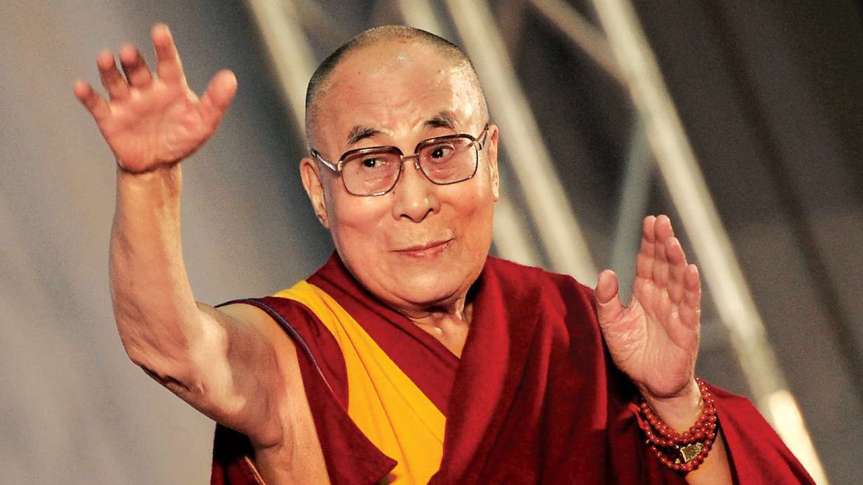
Tenzin Gyatso is the 14th and current Dalai Lama of Tibetan Buddhism. He was born on July 6, 1935, to a farming family located in Taktser, Amdo, north-eastern Tibet. He was recognized as the incarnation of the 13th Dalai Lama in 1937, and was thereafter enthroned as the 14th Dalai Lama in 1940. After China’s invasion of Tibet in 1950, His Holiness was vested with full political powers as head of state in Tibet. Using his political power, In 1954 he went to Beijing and met with Mao Zedong and other Chinese leaders to negotiate over China’s invasion of Tibet. Eventually, in 1959, following the brutal suppression of the Tibetan national uprising in Lhasa by Chinese troops, His Holiness was forced to escape into exile for fear of being kidnapped by the Chinese government. Since then, he has been living in Dharamshala, northern India.

The Dalai Lama set up a government-in-exile in Dharamshala, in the Himalayan Mountains. In 1989 he was awarded the Nobel Peace Prize for his non-violent struggle for the liberation of Tibet. He has consistently advocated policies of non-violence, even in the face of extreme aggression. He also became the first Nobel Laureate to be recognized for his concern for global environmental problems. Despite his past as a political leader, in 2011 he gave up his political powers and focused more on religious and ethical teaching.

The succession of the current Dalai Lama is under threat, due to his history of anti-Chinese resistance in Tibet, and the Chinese government has long worked to undermine the Dalai Lama’s authority. They have banned displaying a photo of the Dalai Lama and have launched re-education campaigns that force Tibetan dissenters to disown the Dalai Lama and embrace Chinese authority. In the first decade of the 21st century, the Dalai Lama suggested that his successor could be appointed by him rather than selected as his reincarnation, but this idea was rejected by the Chinese government. The Chinese government declared that the tradition of appointing a new Dalai Lama had to be upheld, as the title of ‘Dalai Lama’ itself is granted by China’s central government. Since 2011, after he stepped down as head of the Tibetan government-in-exile, he has written a number of books on Tibetan Buddhism and an autobiography.

The Future

The current Dalai Lama has gone on record to say that he may be the last Dalai Lama. He stated that the Dalai Lama institution will cease one day, and that there is no guarantee that some incompetent Dalai Lama won’t come next, who will disgrace himself or herself. So, it is much better that a centuries-old tradition should cease to exist at the time of a quite popular Dalai Lama.

Even if the institution continues, the Dalai Lama has stated that no recognition or acceptance should be given to a candidate chosen for political ends by anyone, including those in the People’s Republic of China. In other worlds, the Dalai Lama cannot be chosen as political puppet by anyone, especially China who would benefit from having a candidate that is submissive to their interest. Therefore, on 24 September 2011, clear guidelines for the recognition of the next Dalai Lama were published, leaving no room for doubt or deception.

As of today, the Dalai Lama has still not made his intentions clear, but has said that he will consult leading Lamas of Tibet’s Buddhist traditions, the Tibetan public, and other concerned people with an interest in Tibetan Buddhism to assess whether the institution of the Dalai Lama should continue after him. However, the Chinese government probably has their own plans too. This is an example of politics and religion being intertwined. As a historically political figure, the reincarnation of the Dalai Lama is not just a matter of theology and doctrine, it also has major implications on the future of the Tibetan people and the future of religious freedom rights in China.

Psychological Disorders Part 6

Introduction

In Psychological Disorders Part 5, Sleep Disorders were discussed. It is extremely important to consult a psychologist if you think you have any sleep disorders. This article will discuss Disruptive Disorders. These are all chronic disorders.

Disruptive Disorders

These are also known as impulse-control disorders, these are the disorders when a person is unable to resist a destructive urge. That is, an inability to control emotions and behaviours which end up in harm to self or others.

Kleptomania

Kleptomania is the inability to resist the urge to steal items that are generally not needed and have very little value. It is a rare yet very serious disorder as it holds the potential of causing emotional pain to the person and their loved ones. Symptoms for this are the inability to resist the urge to steal things of no need, feeling increased anxiety which leads to theft, feeling gratification while stealing, feeling shame after the theft, and the recurrence of the urge to steal. People with this disorder don’t steal for their gain, but because of the urge. The cause of this can be low levels of serotonin, addictive disorder because of the release of dopamine while stealing, and an imbalance in the brain’s opioid system which regulates the urges.

Pyromania

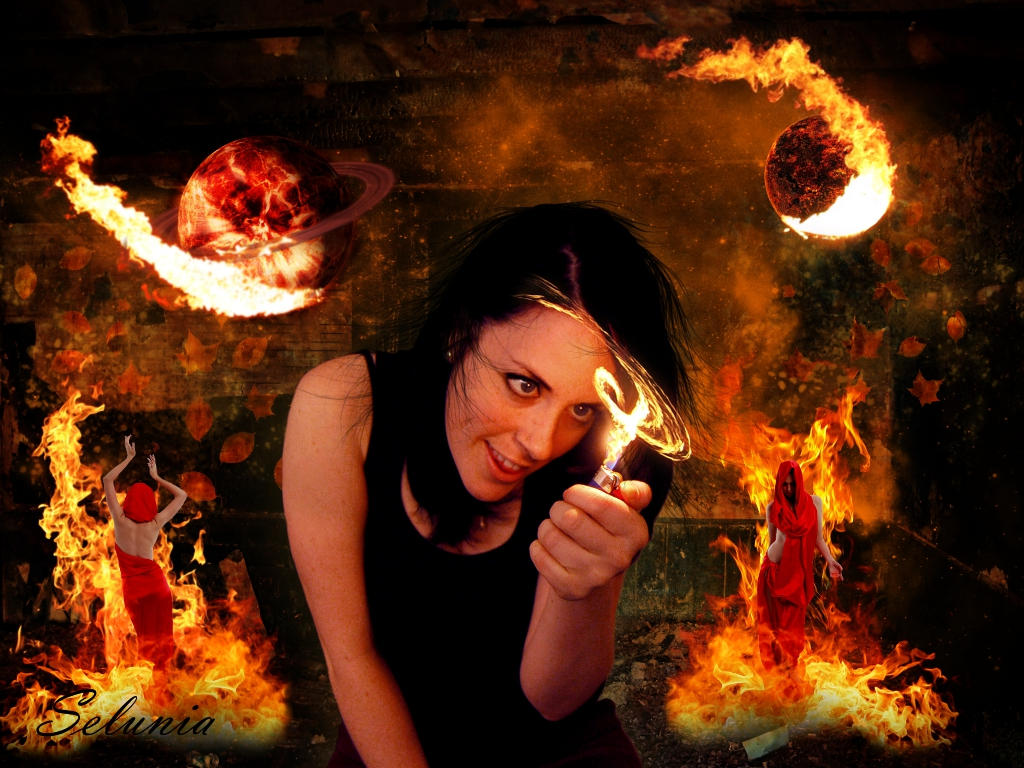
Pyromania is an impulse control disorder in which a person is unable to resist starting fires. People with this disorder know that it is harmful but it tends to be the only way they can get rid of the anxiety they get from the urge. Symptoms for this are setting a fire on purpose more than once, feeling tense before starting a fire, being obsessed with fire, and feeling gratification when setting a fire. This is an extremely rare disorder.

Intermittent Explosive Disorder involves repeated and sudden episodes of aggressive and violent behaviour, it can also include impulsive angry verbal outbursts. These outbursts are very out of proportion with the situation. These can cause a lot of distress and negatively impact the relationships of the person suffering. Some of the symptoms before an aggressive episode are rage, irritability, increased energy, tingling, palpitations, chest tightness, racing thoughts, and tremors. Some symptoms in case of explosive verbal and behavioural outbursts are heated arguments, property damage, assaulting people or animals, temper tantrums, shouting, slapping, physical fights, and tirades. This disorder can begin in childhood after the age of 6 years. Its possible causes are said to be the firstly, environment; if a child is exposed to such behaviour at their house, they are likely to have the same, secondly, genetics, it can be passed down from parents and lastly, it may be caused because of a difference in the structure and chemistry of the brain.

Conduct Disorder

Conduct Disorder is a serious emotional and behavioural disorder that can occur in children and teenagers. A child with this disorder may show a pattern of violent behaviour with problems in following rules. Symptoms of this are aggressive behaviour like fighting and bullying, destructive behaviour like the destruction of property and vandalism, deceitful behaviour like lying and shoplifting, and violation of rules like running away and skipping school. Children with this disorder have low self-esteem, temper tantrums, and often abuse drugs and alcohol. It is important to note that teenagers usually have behaviour related problems but this disorder only exists if the behaviour is long-lasting.

ODD

Oppositional Defiant Disorder (ODD) is a disorder in which a child or teenager has a pattern of anger, arguing, irritability, and defiance towards authority figures. Symptoms for an angry and irritable mood are easily losing temper, being easily annoyed by others, and is often angry and resentful. Symptoms for argumentative and defiant behaviour are often arguing with the person in authority, actively defying the adults, deliberately annoying people, and blaming others for their mistakes. Symptoms for vindictiveness are being spiteful and showing spiteful behaviour at least twice in six months. Its causes are genetic and environmental, the type of supervision from the parents.

Conclusion

These are the impulse-control disorders that disrupt the daily life of the person with the disorder as well as their loved ones. Although these disorders are chronic and there aren’t any permanent solutions to them, they can be controlled and monitored with the help of some medications and therapy. If you have any of the above-mentioned disorders are ashamed to come forward and seek therapy, please understand that it is not your fault and it is okay to seek help to protect yourself and your loved ones.

References

Note: this is just Part 6 of the Psychological Disorders series.

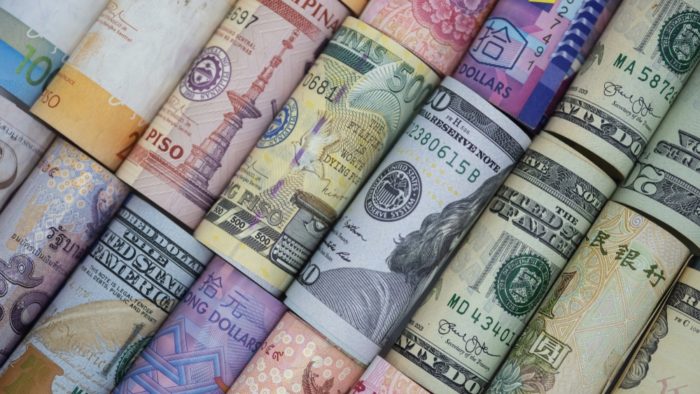
Expensive currencies

Thinking about currencies, Dollar, Euro, or Pound are the famous currencies that come up in our mind, but they are not known to be the powerful currencies in the 2021 currency power ranking, here we are talking about the most expensive currencies in the world.

Top five powerful currency 2021:

1.Kuwaiti Dinar (KWD)
The most expensive currency of 2021, currently its value is 3.31 USD, 2.77 EUR, and 245.92 in Indian Rupees, the reason behind this is that Kuwait has a very stable and strong economy because of its oil-rich land and industry. In Kuwait, you don’t have to pay any kind of tax.

2.Bahraini Dinar (BHD)
Securing the second position with its value of 2.66 USD,2.23 EUR, and 197.63 INR. The currency of an island nation in the gulf near Saudi Arabian Bahrini’s economy depends on exporting petroleum products been an oil-rich country in Arabian Gulf.


3.Omani Rial (OMR)
Oman has a developed economy all thanks to oil territory. Currently, its value is 2.60 USD, 2.18 EUR, and 193.17 in Indian rupees. The purchasing power of Oman is excessively high, the Omani government has to issue notes of half Omani Rial and one-fourth of Omani Rial.

4.Jordanian Dinar (JOD)
Currently, with the value of 1.41 USD, 1.18 EUR, and 104.76 INR, the reason behind it is hard to explain but many experts say that it is was of the government has fixed exchange rates of the currency.

5.British Pound Sterling (GBP)
With the value of 1.38 USD,1.16 EUR, and 102.53 INR, the British Pound sterling securing the fifth position, be the best currency in Europe, as a reason
for London being the financial capital of the world and involvement of Britain in many economical activities.

Infodemic

                   After the initial days of dalgona coffee and ludo king match nights, lockdown or rather the pandemic had a numbing effect on all of us. The ever growing numbers of cases and death tolls, all the first world nations under lockdown, the big retailers going bankrupt, everything seemed glee and survival at stake. Depression took its form, irrespective of whether they were spending whole day before a screen or in kitchen cooking, it was bound to have its effects on all. The rising number had an unending effect on all of us, no arguments, but have we ever paused to thing, is the rising numbers deducting the number of recovered patients or rather are they even publishing these numbers? Is our westernized outlook of everything make us only concentrate on the rising cases in America and death toll of Italy? Did we pause to check out the Bilwara model or how Goa or Kerala contained the pandemic? This exactly is Infodemic.

What is an infodemic?

 An Infodemic is an overabundance of information, some accurate and some not, occurring during an epidemic. It makes it hard for people to find trustworthy sources and reliable guidance when they need it. Even when people have access to high-quality information, there are still barriers they must overcome to take the recommended action. They make the readers feel overwhelmed or over burdened by whatever is happening around us. “We’re not just fighting an epidemic; we’re fighting an Infodemic,” said Tedros Adhanom Ghebreyesus, Director-General of the World Health Organization (WHO) at a gathering of foreign policy and security experts in Munich, Germany, in mid- February, referring to fake news that “spreads faster and more easily than this virus.” WHO explains that infodemics are an excessive amount of information about a problem, which makes it difficult to identify a solution. They can spread misinformation, disinformation and rumors during a health emergency. Infodemics can hamper an effective public health response and create confusion and distrust among people.

How to tackle this?

            To tackle this information a team of WHO “myth busters” are working with companies like Facebook, Google, Pinterest, Tencent, Twitter, TikTok, YouTube and others to counter the spread of rumors, which include misinformation like that the virus cannot survive in the hot weather, that taking a high dose of chloroquine medication can protect you, and that consuming large quantities of ginger and garlic can prevent the virus. These companies, according to news reports, are aggressively filtering out unfounded medical advice, hoaxes and other false information that they say could risk public health. In a rare move, Facebook and Twitter have taken down a post from a head of State that falsely stated that a drug was working everywhere against the coronavirus. (Inspired from an article published in Times of India.)

THE MAURYA EMPIRE

The Maurya Empire was a topographically broad Iron Age authentic force in old India, managed by the Maurya line from 322-185 BCE. Starting from the realm of Magadha in the Indo-Gangetic Plain (present day Bihar, eastern Uttar Pradesh) in the eastern side of the Indian subcontinent, the domain had its capital city at Pataliputra (current Patna). The domain was the biggest to have at any point existed in the Indian subcontinent, crossing more than 5 million square kilometers at its pinnacle under Ashoka.

The Empire was established in 322 BCE by Chandragupta Maurya, who had toppled the Nanda Dynasty, and quickly extended his power,with Chanakya’s assistance, toward the west across focal and western India. His extension exploited the interruptions of nearby powers in the wake of the withdrawal toward the west by Alexander the Great’s militaries. By 316 BCE, the domain had completely involved Northwestern India, crushing and vanquishing the satraps left by Alexander. Chandragupta then, at that point crushed the attack drove by Seleucus I, a Macedonian general from Alexander’s military, and acquired extra region west of the Indus River.

In now is the ideal time, the Maurya Empire was perhaps the biggest realm of the world. At its most prominent degree, the domain extended toward the north along the regular limits of the Himalayas, toward the east into Assam, toward the west into Balochistan (southwest Pakistan and southeast Iran) and into the Hindu Kush heaps of what is currently Afghanistan. The Empire was ventured into India’s focal and southern districts by the heads Chandragupta and Bindusara, however it prohibited a little segment of neglected ancestral and forested locales close to Kalinga (present day Odisha), until it was vanquished by Ashoka. It declined for around 50 years after Ashoka’s standard finished, and it disintegrated in 185 BCE with the establishment of the Shunga Dynasty in Magadha.

Victory of Magadha and establishment of the Maurya Empire (c. 321 BCE)

As indicated by a few legends, Chanakya ventured out to Magadha, a realm that was huge and militarily amazing and dreaded by its neighbors, however was offended by its ruler Dhana Nanda, of the Nanda Dynasty. Chanakya swore retribution and pledged to obliterate the Nanda Empire.

The Nanda Empire began from the district of Magadha in old India during the fourth century BCE, and went on until between 345-321 BCE. At its most noteworthy degree, the realm governed by the Nanda Dynasty reached out from Bengal in the east, to the Punjab district in the west, and as far south as the Vindhya Range. The leaders of this tradition were acclaimed for the incredible abundance that they gathered.

Chanakya empowered the youthful Chandragupta Maurya and his military to assume control over the seat of Magadha. Utilizing his insight organization, Chandragupta accumulated numerous youngsters from across Magadha and different regions, who were furious about the bad and harsh standard of King Dhana, just as the assets important for his military to battle a long series of fights. These men incorporated the previous general of Taxila, achieved understudies of Chanakya, the delegate of King Porus of Kakayee, his child Malayketu, and the leaders of little states.

Maurya formulated a system to attack Pataliputra, the capital of the Nanda Empire. A fight was declared and the Magadhan armed force was attracted from the city to a far off combat zone to draw in Maurya’s powers. In the interim, Maurya’s general and spies paid off the Nanda’s bad broad, and made a climate of common conflict in the realm, which finished in the demise of the beneficiary to the seat.

Upon the common turmoil in the realm, Nanda surrendered and vanished into oust. Chanakya reached the leader, Rakshasa, and persuaded him that his dedication was to Magadha, not to the Nanda Dynasty, and that he ought to stay in office. Chanakya repeated that deciding to oppose would begin a conflict that would seriously influence Magadha and obliterate the city. Rakshasa acknowledged Chanakya’s thinking, and Chandragupta Maurya was genuinely introduced as the new King of Magadha in 321 BCE, at 21 years old. Rakshasa turned into Chandragupta’s main consultant, and Chanakya took on the situation of a senior legislator.

Bedazzle – Book Review

Introduction

What boosts up your confidence in social media? Apparently, the amount of kindness and appreciation from the wonderful people here on our site boosts my confidence.

Bedazzle‘ by Shamoly Khera is an effective self help book that educates the readers about how confidence sprouts inside everyone, the author has given many instances to make the readers understand some crucial topics. The book is well researched and efficacious.

‘Our ‘weirdness’ is actually our uniqueness. Our only job in this world actually is to not be like anyone else, but be the best version of ourselves.

– From ‘Bedazzle’ by Shamoly Khera.

Interpretation

This book explores the idea of adapting yourself to the environment around you, coming out of your comfortable zone and the significance of perspectives. I loved how the author has elucidated about discerning our aspirations and drives, a lot of you would feel reluctant to take up a job/stream of education you really love, Shamoly Khera has given an interesting example of the different dispositions we watch in the ‘Friends’ series, if you’ve watched the show, then the way the author has drawn a parallel line will definitely fascinate you.

The mindset of an individual matters a lot, in order to become successful or achieve something you should have a clear mindset. The information about the ‘Fixed Mindset’ and ‘Growth Mindset’ is one of the best insights I’ve got from this book. I’ve added some of the best insights in my book journal as well.

This book offers you the beneficial information to boost your confidence, the amount of research and the plausible instances the author has given are really convincing. If you are looking for an insightful self help book, you can go for this one.