Why Silence is So Powerful

“Silence is a source of great strength” – Lao Tzu the founder of Taoism philosophy

Silence nourishes our mind and soul and makes us reflective as it is our internal necessity. Through silence we ingress into the imaginary world where we can expand our creativity beyond our boundaries. Silence makes us physically, mentally, emotionally, and morally strong.

  In today’s increasingly stressful and fast-moving world, we rarely apply wisdom while taking our decisions. Instead, we prefer the mechanics of quick problem-solving to get immediate outcomes. Decisions that are taken without thinking are mostly irrational and random. For making proper decisions, we need to use silence as a tool. It often provides us the opportunity to have sufficient time to think deeply and understand the matter before jumping to a random decision.

 When you are in silence, your mind and soul are deeply connected, and in this phase, your inspirations may bubble-up. You may find solutions suddenly for which you might have been struggling for a long time.

You all might have once heard these famous lines “At times silence can speak louder than voice.” Choosing silence is the best way to enhance conversations and strengthen your bonds as it’s a space between our feelings and response. When you keep silent, naturally, you would listen more in a conversation, and others would have the opportunity to speak and share more. Active listening is the key for trust-worthy and effective relationships. Silence helps us in thinking deeper, wakes us up, and increases our emotional regulation.

“Silence” is an explicit power that can either glorify or destroy your life, depending on your choice. Your engagement to its lighter or darker side would decide your transformation.

HMDA

The Hyderabad Metropolitan Development Authority(HMDA) is the urban planning agency of Hyderabad in the Indian state of Telangana.The HMDA administers the Hyderabad Metrolitan Region, spread over area of 7257 km2 and covers the districts of Hyderabad,Medchal, part of Rangareddy, Bhuvanagiri, Sangareddy, Medak and Siddipet.The purpose of planning, co-ordination, supervising, promoting and securing the planned development of the Hyderabad Metropolitan Region.

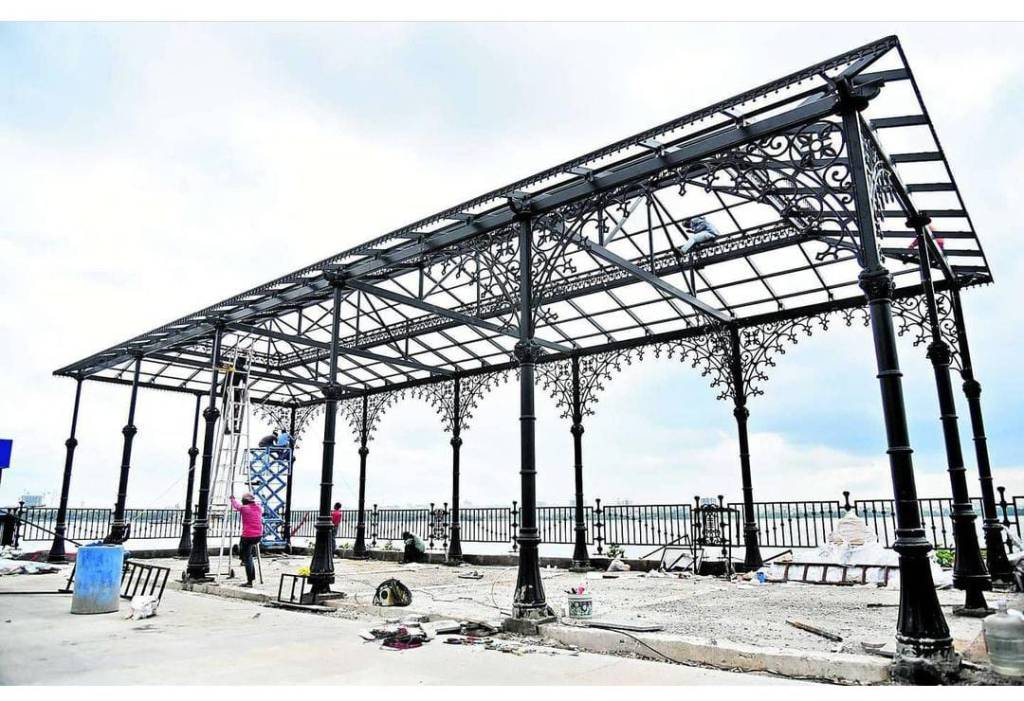
This work has taken up by the HMDA on the Tank Bund road, progressing at a brisk place.The intiative was taken up to elevate it’s look and create facilities for citizens.

Outer Ring Road

HMDA built the Outer Ring Road at a cost of 6696 crores. The project started in 2005 and was completed in May 2018.

Hyderabad Master Plan 2031

Area Covered

The Hyderabad Master Plan 2031 for Hyderabad Metropolitan Region covers an area of around 5965 Sq.Kms., which consists of:

  1. Extended area of HMDA of 5018 Sq.Kms.
  2. Areas covered by Outer Ring Road Growth Corridor i.e., 1 Km belt on either side of ORR (330 Sq.Kms) earlier notified vide G.O.Ms.No.470 MA dt:09.07.2008.
  3. Areas covered by Part of Erstwhile HUDA Area outside Outer Ring Road Growth Corridor (432 Sq.Kms) earlier notified vide G.O.Ms.No.288 MA dt:03.04.2008.
  4. Portions covered by Part Hyderabad Airport Development Authority Master Plan, outside Outer Ring Road Growth Corridor (185 Sq.Kms) earlier notified vide G.O.Ms.No.287 MA dt:03.04.2008.
  5. Areas covered by Master Plan for Bhongiri earlier notified vide G.O.Ms.No.242 MA dt:11.05.1989.
  6. Areas covered by Master Plan for Sangareddy earlier notified vide G.O.Ms.No.32 MA dt:12.01.1988.

The Hyderabad Master Plan 2031 (HMDA Master Plan 2031) envisages a population of 184 lakhs by 2031, work force of 65 lakhs, the present trends of developments, the Inner Ring Road, the Outer Ring road and radial roads.

The HMDA master plan 2031 of hyderabad has proposed a radial-concentric structure of development with new urban nodes and urban centers in all directions to promote balanced development in the Hyderabad Metropolitan Region with a Peri Urban Zone all along the urban area, hierarchy of circulation network to cater to the present and future travel needs of population and activities.

Nobel prize

Since 1901, the Nobel Prize has been honoring men and women from all corners of the globe for outstanding achievements in physics, chemistry, medicine, literature, and for work in peace. The foundations for the prize were laid in 1895 when Alfred Nobel wrote his last will , leaving much of his wealth to the establishment of the Nobel Prize. The Nobel Committee, in fact, a notoriously conservative body which among other things had a marked antipathy to pure sciences, especially to Mathematical Physics. Restrained by a clause in Alfred Nobel’s will that the prize should go to the person whose ‘ discovery or invention’ shall have conferred the greatest benefit to mankind, the committee initially ignored the great theoretical advances in Physics. Wracked, no doubt, by guilt that he had become a merchant of death through his invention of dynamite and smokeless powder and plagued by sadistic fantasies of destruction, the Swedish chemist, engineer and aspiring poet, Alfred Nobel, who has been described as Europe’s richest vagabond , left his colossal fortune to the cause of progress in human knowledge. Five prizes were installed, one each for literature (‘to the person who shall have produced in the field of literature, the most outstanding work of an idealistic tendency), Physics, Chemistry, medicine, and peace to the person who shall have done the most or the best work for fraternity among nations for abolition or reduction of armies, and for holding or promotion of peace ‘.

LET’S UNDERSTAND THE MEANING BEHIND THESE SLOKA FROM BHAGAVAD GEETA

  1. Gita dhyaanam – Meditation on the Gita

vasudeva sutam devam
kamsa chaanuura mardanam |
devakii paramaa nandam
krishnam vande jagat gurum ||

MEANING: I respect the son of Vasudeva, Devaki, the one who gave birth to such immoral child, the one who destroyed kamsa and who made this world. I salute to Lord Krishna.

  • Chapter 4, Verse 8

    paritraanaaya sadhuunaam vinaashaaya chadushkritaam |
    dharma samsthaapanaarthaaya sambhavaami yuge yuge ||

MEANING:  For the defence of good, for demolishing the evil and to entrench the dharma (righteousness). I (The Lord Krishna) took birth again and again.

  • Chapter 2, Verse 62

    dhyaayato vishayaanh pumsah sangasteshhupajaayate |
    sangaath samjaayate kaamah kaamaath krodho abhijaayate ||

When someone stay on sense object for long, the feeling of wanting that object is generated. This wants changes to desire, and this desire gives birth to anger.

  •  Chapter 2, Verse 63

    krodhaadbhavati sammohah sammohaatsmritivibhramah |
    smritibhramshaadbuddhinaasho buddhinaashaatpranashyati ||

    MEANING: From anger comes the false believe that conflict with reality; from false believe confuse memory is generated; from a confused memory the power or reason of ruin is created; from the reason of ruin, man finally destroys himself.
  • Chapter 6, Verse 5

    uddharedaatmanaatmaanam naatmaanamavasaadayeth |
    aatmaiva hyaatmano bandhuraatmaiva ripuraatmanah ||

MEANING: Efforts are the only thing that makes man to raise by its own. Let nobody not even you let degrade yourself.

Because a person’s best friend or his worst enemy is none other than his own self.

  • Chapter 4, Verse 7

    yadaa yadaa hi dharmasya glaanirbhavati bhaarata |
    abhyuktaanamadarmasya tadaatmaanam srijaamyahamh ||

MEANING: when the power of dharma (righteousness) is weaken and when there is increase in adharma (unrighteousness) ,I (Lord Krishna) born in this world.

  • Chapter 9, Verse 26

    patram pushhpam phalam toyam yo me bhaktyaa prayachchati |
    tadaham bhaktyupahritamashnaami prayataatmanah ||

MEANING: I welcome the offering of fruits, water, a flower as well as a leaf, when it is offered with affectionate loyalty.

  • Chapter 5, Verse 10

    brahmanyaadhaaya karmaani sangam tyaktvaa karoti yah |
    lipyate na sa paapena padmapatramivaambhasaa ||

MEANING: The one who devote and show loyalty toward god, without any attachment, remains distant from sin, just as leaf of lotus under the water.

  • Chapter 18, Verse 66

    sarvadharmaanparityajya maamekam sharanam vraja |
    aham tvaa sarvapaapebhyo mokshayishhyaami maa shuchah ||

MEANING: Leaving all path, come to me for shelter, no sorrow, I will release you from all sin.

  1. Chapter 3, Verse 37

    kaama eshha krodha eshha rajogunasamudbhavah |
    mahaashano mahaapaapma viddhyenamiha vairinamh ||

MEANING: Aspirations and anger are raised from affection are inappeasable and puta a man into a big sin and should be acknowledge as foe.

  1. Chapter 18, Verse 78

    yatra yogeshvarah krishhno yatra paartho dhanurdharah |
    tatra shriirvijayo bhuutirdhruvaa niitir matirmama ||

MEANING: Where there is Lord of protection, compassion and love, the Krishna and the world’s best archer Arjuna, there rule is a good fortune and will shower victory, prosperity, and justice. This is my strong believe.

As per the Bhagavad Gita these sloka are considered to be the most knowledgeable word to read.

The closeted souls

Meet Jay , a 19 year college student. Jay came out to their parents last year as queer. You must be wondering why did I use ” their ” for a single person, well the simple answer is- because they want to be called in that way. Because they recognise themselves in a way that might seem weird to you , but is completely normal and real.

How difficult is it to finally understand who you actually are , it takes a lot amount of courage to recognise oneself as someone ,who people don’t relate to. Sec 377 has been legally abrogated. And people have to understand that being themselves is neither wrong nor something to be embarrassed of.

Inclusive health care for the LGBTQ community | Norton Healthcare  Louisville, Ky.

LGBTQ community has been facing a lot of difficulties , from their families , and society as a whole. They are discriminated against, not given equal amount of opportunities, and have to face the brunt of the narrow mindedness of the society everyday. The number of hate crimes against the community are increasing day by day. Despite being a part of the society,they are made to feel as outsiders. Do you realise how difficult it is to understand oneself ,and even more difficult to explain it to others.

The worst part is when they have to look for validation, acceptance for who they are from their loved ones, and they don’t get that . It’s strange for someone to not look at you with the same feelings of love and respect anymore. Fighting for one’s rights has always been a tough battle. It also affects their mental health because the amount of stress and negativity they have to deal with.

Many people have not been able to come out of the closet, not able to accept themselves as who they are. It’s very suffocating for them to not be able to live their life as they want to. For some , it has been a beautiful journey with supportive family and friends, and for some , the journey is just not coming to an end.

 Platforms like Gaysi and Gaylaxy, and publishers like Queer Ink have helped carve out spaces for LGBT people to interact, share and collaborate. These platforms have helped people to share their experiences and help them to encourage others to accept who they are.

I just want to put it out their, that who you are, is something only you can know. Nobody has the right to decide that for you. And don’t ever give that right to anybody else. Loving yourself the way you are is the best thing you can do for you. It doesn’t matter if people don’t accept you , what matters the most if for you to accept yourself and be happy.

LATEST BUZZ

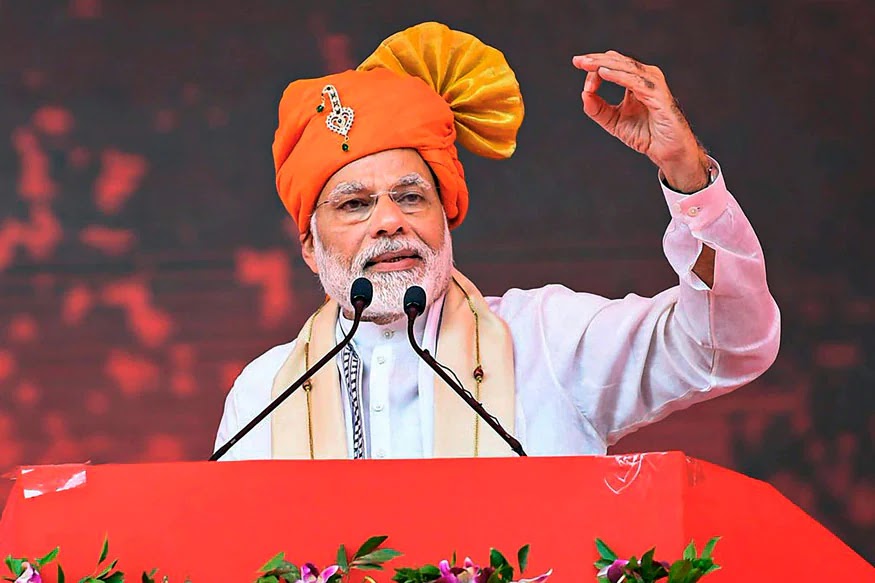
PM MODI dubs vaccinated people as BAHUBALI says over 40 crore vaccinated… Prime Minister Narendra Modi on Monday said the Government wants a “Disciplined” and ” Constructive ” dicussion over the Coronavirus pandemic during the Monsoon Session of the Parliament . Dubbing the vaccinated people in India as Bahubali , PM MODI on Monday said over 40crore people are have taken atleast one dose of covid-19 vaccine. Speaking to media ahead of the beginning of Monsoon session of parliament . so far more than 40 crore people become vaccinated have become Bahubali fight against coronavirus . ” We want that the pandemic be dicussed on priority and we get constructive suggestions from all MP’s so that the comes so fresh approach in fight against coronavirus and shortcomings be corrected so that everyone moves forward together in the flight , ” PM MODI said outside the Parliament . ” I would like to urge tall the MP’S and all the parties are ask the most difficult and sharpest questions in the houses but should also allow the government to respond , in a disciplined environment . This will boost the democracy , strengthen development” he added.

Visual Culture: How Visual is always contaminated by Non-Visual?

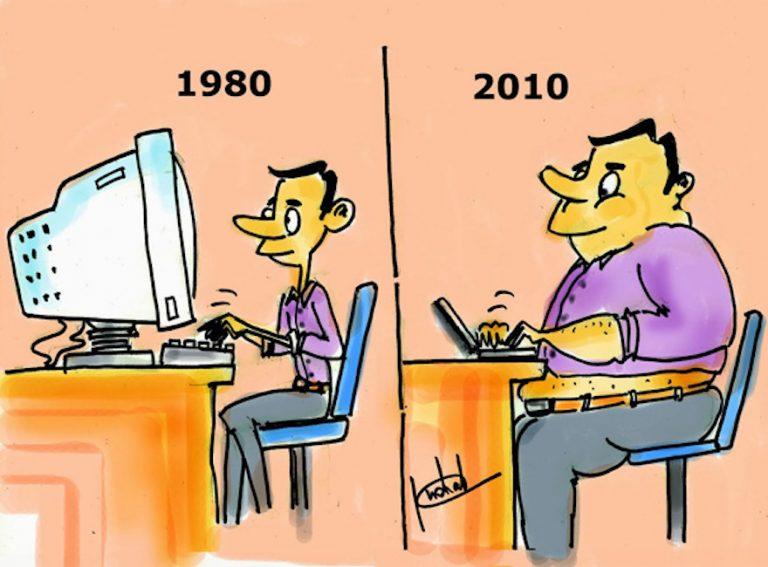
A creator may create an image but that single image can have multiple meanings for different individuals that may or may not go with what the creator was trying to convey. Such is the situation today where “visual” holds massive influence and power on the masses. The meaning of whatever we see around us is very subjective in nature, that is, it depends from person to person. And all the meanings that we derive from seeing something around us depends on our personal experiences and backgrounds we come from. The visuals can be decrypted by many according to their own thoughts.

https://whatzviral.com/wp-content/uploads/2019/01/19-2.jpg

In the above picture, the creator was trying to convey how over the time we have so much indulged ourselves in technology that we have forgot to give time to ourselves and stopped caring about our health. However different people may interpret the image in different ways using their own understandings and logics like some may think this image shows advancement of technology from heavy computers to light weight laptops, some may think this picture shows the same person who has grown old in these 30 years.

The visual has risen steadily in importance in our culture. The presence of visual images has progressed from the high art of painting through various media such as still photographs, play television, video games etc. The increasing availability of various technologies has led to a massive presence of visuals around us.

Reading an image is about interrogating and playing with the separate elements that compose it to provide some private meaning. If we consider an “image” to be a combination of characteristics, then each one of us reading an image would construct and combine those characteristics attached to it and analyse it in new and unique ways.

The act of reading an image produces myths. It assembles in our minds various characteristics of image, some of which may change on subsequent readings and some of which may be undesirable. When we try to study an image, the image is brought into the world of discourse and meanings are constructed from and through them. . Images can become valuable if they generate powerful connotative meanings or if they are manipulated easily. Images acting as signifiers can evoke different meanings and examination of these images introduce the discourse.

Another example could be:

JapaneseGP: electric mini bike race - YouTube

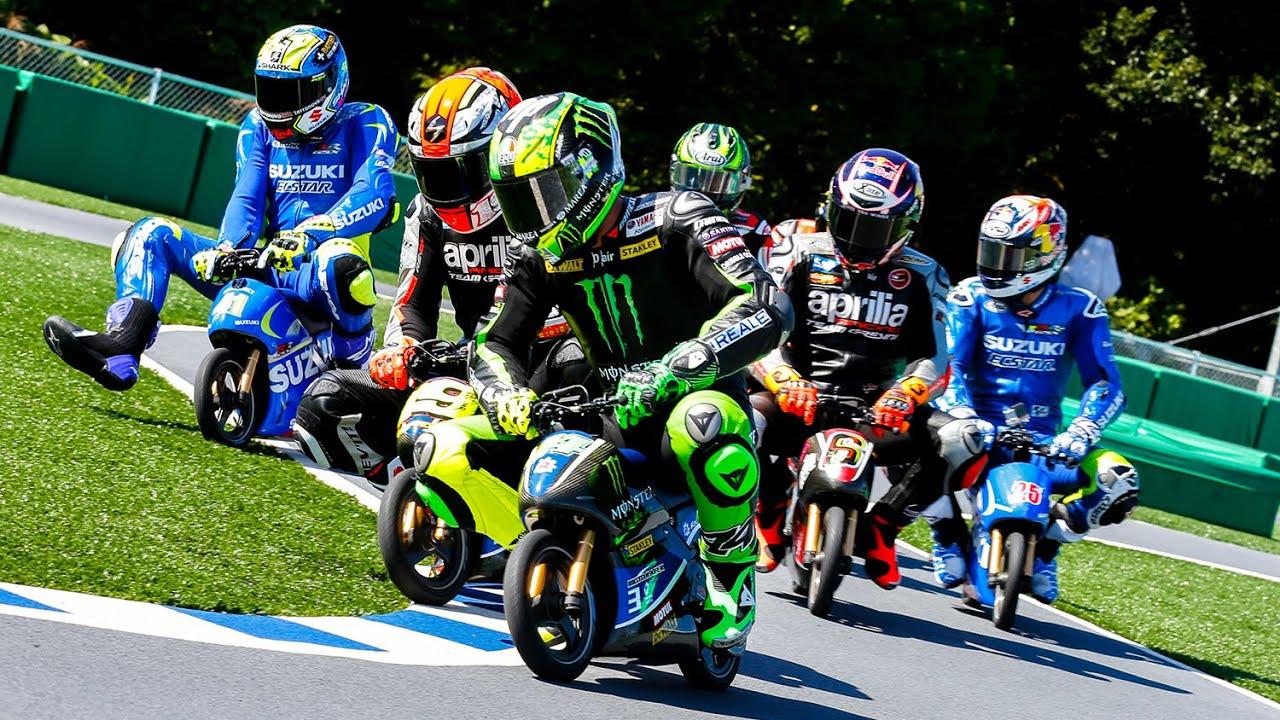
The above picture is from a mini bike race in Japan, in which the creator wanted to convey the “peculiarness” of the picture, that is, adults on mini bikes. Some may just focus on those mini bikes or some may just see it as a normal bike race or some may see how the one in the far right is going out of the lane or some may see all of the above mentioned and all of this depends upon the interests and thinking capacity of individuals.

Conclusion: Every picture says something and every picture is trying to convey us a message, even though a picture may not look thought provoking, it carries come thought or meaning in some or the other way. Several factors are involved in the evolution or what we can say is “contamination” or pollution of image or visuals. What a creator is trying to convey through a message can be completely different from how the viewer interprets and decrypts it. Every individual can have several different meanings about the same visual that can be positive, negative or both depending on his interests and background.

SUPERB SPEECH

A superb speech by MR . RATAN TATA given Yesterday at Symbiosis , Pune … Don’t just have a career or academic goals set goals to give you a balanced , successful life . Balanced means ensuring your health, relationships , mental peace are all in the good order . There is no point of getting a promotion on the day of your Breakup . There is no fun in Driving a car if your back hurts . Shopping is not enjoyable if your mind is full of tensions . Don’t take life seriously . Life is no mean to be taken seriously , as we are really temporary her. We are like a prepaid card with limited validity. If we are lucky, we may last another 50 years is just 2500 weekends . Do we really need to get so worked up? … It’s okay , Bunk few classes , score low in couple of papers , take a leave from work , fall in love , fight a little with your spouse …It’s okay we are people, not programmed devices …” Don’t be serious , enjoy Life as it comes.”

The Bosman Ruling – Football’s Landmark Moment

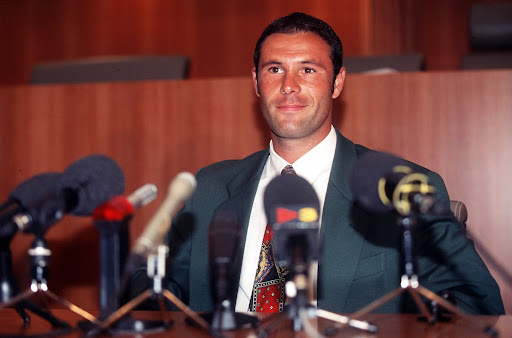
The Royal Belgian Football Association v Jean-Marc Bosman (1995) ( also known as the Bosman ruling) is a 1995 European Court of Justice decision concerning freedom of movement for wokers and association and direct effect of article 39. The case was an important decision on the free movement of labour and had a profound effect on the transfers of footballers, and by extension players of other professional sports.

Bosman’s Fight

In 1990, a 25-year-old Belgian midfielder Jean-Marc Bosman was coming to the end of his contract at Belgian side RFC Liege. His two-year stint had not worked out as he had first hoped, and he was offered an improved contract by French second division side Dunkirk. Before the Bosman ruling, a player could not leave at the end of their deal unless the parent club agreed to let him go on a free, or that club received a pre-agreed fee from a buying club. Liege demanded a fee which Dunkirk was not agreeing to and when the deal fell through, Bosman’s wages at Liege were cut by around 75 per cent.

Bosman then started a legal fight alongside lawyers Luc Misson and Jean-Louis Dupont, and brought the case to the European Court of Justice against the Belgian Football Association, RFC Liege and UEFA, citing the 1957 Treaty of Rome, which guaranteed the freedom of movement for players anywhere in Europe. Bosman was banned by the Belgian FA for refusing to sign the cut-price contract offered by Liege and only had brief spells at Saint Quentin and Saint Denis in France, along with several other lower league clubs, but ultimately he prevailed. Now the players, instead of the clubs had the power which gave rise to the player’s agents having power as well.

Bosman’s Victory

The ruling allowed a player to leave a club on a free transfer as soon as his contract expired, meaning they had the leverage to demand a huge signing-on bonus and salaries from new clubs to make up for the absent transfer fee with the club. Players coming to the end of their contract could also ask for more money from their current club, who would naturally fear losing that player on a free if his demands were not met.

The Players that benefited

There are many high profile players who have benefited from this ruling like Edgar Davids and Patrick Kluivert(Ajax to AC Milan, 1996 and 1997), Steve McManaman (Liverpool to Real Madrid, 1999), Sol Campbell(Tottenham Hotspur to Arsenal, 2001) and more recently Robert Lewandowski (Dortmund to Bayern, 2014), Andrea Pirlo (AC Milan to Juventus, 2011) and Michael Ballack (Bayern to Chelsea, 2006).

https://www.skysports.com/football/news/11096/10100134/how-the-bosman-rule-changed-football-20-years-on

The Flying Sikh

Very few people in the world possess extraordinary talent, the name of such an extraordinary talent is – Milkha Singh In fact, ‘Milkha Singh’ is not just a name, but a story of courage, struggle, and inspiration, which made India proud in childhood. Despite losing his entire family during the partition of Pakistan, he made his own path and touched the heights on the strength of his hard work.

Malkha Singh was born on 20 November 1929 in Gobindpura village of Muzaffargarh district of Punjab province. However, this place is located in Pakistan now. He had horrifying childhood as he saw his parents getting killed in front of his own eyes during the Indo-Pak partition. Milkha Singh was mere 12 years old when he ran for his life.

Failed thrice to get in the military he got success in the 4th time and trained during fatigue time. The first race he ever won was a cross-country race where he finished sixth among 500 runners.

He won gold medals in both the 200m and 400m events at the 1958 Asian Games. He won a gold medal in the 400m competition at the 1958 Cardiff Commonwealth Games.

At the 1960 Olympics in Rome, he finished second in all of his 400m races before the final. He lost the Bronze Medal in the 400m event at Rome Olympics Games 1960 by just 0.1 seconds.

In 1962, Milkha Singh defeated Pakistani runner Abdul Khaliq who was then Asia’s fastest runner.

Milkha Singh ran 80 races all over the world winning 77, He was awarded the Helms World Trophy in 1959 by the USA by virtue of being the best 400-meter runner in the world and broke the Olympic record in 1960 Rome Olympics.

Hard work, Willpower, and Dedication for a person with these qualities, the sky is the limit – Milkha Singh

Déjà vu

“Is déjà vu actually the specter of false timelines that never happened but did, casting their shadows upon reality?”
― Blake Crouch, Recursion

The mind may be a wonderful thing – there’s such a lot , which remains a mystery to the present day. Science is able to describe strange phenomena, but cannot account for their origins. We all have some experience of familiar feelings, which involves us occasionally, about what we are saying and do, what we all know and see, what we listen and listen to . When you walk into the house of a replacement friend, you realise something strange. The place looks familiar though you’ve got not been there and therefore the people look familiar though you’ve got not seen them.

You have been there before, but not exactly in person. A serious recollection causes you to realise that it had been during a dream, a dream that completely portrayed with every small detail the precise room you’re now standing in. Sounds familiar? This is an experience that’s not as rare as most of the people think. For many, these arbitrary feelings of extreme familiarity, known as déjà vu, come through dreams that some say predict the future. These reminder feelings are all of the dreams that we’ve each night that we cannot remember. You feel as if you’ve got already been there because you’ve got , in your dreams. The things that dreams show may not be significant, just a random moment proposed to happen somewhere in the near or far future. There have also been accounts where the dreamer claims they saw a catastrophic event occur before the incident actually happened. The frequency of reminder decreases with age and is commonest among people from 15 to 25 years old. High income and well educated people have more déjà vu experiences. Déjà vu appears to be related to stress and fatigue. Those who travel have more reminder experiences. Some people report that reminder experiences appear to repeat prior dreams.

In a nutshell,any person who has strong senses and clear mind can differentiate between past and present happenings efficiently and won’t feel reminder ever in life. Déjà vu is an interesting and unusual experience where something feels very familiar, but we know it should not feel as familiar as it does. The experience is vital because it shows us that remembering happens with a series of steps, a number of which may fail . Young people have reminder the foremost , and this might actually be a symbol that children are excellent at spotting when their brains start telling them that things are more familiar than they ought to feel. It is very hard to do experiments to make people have déjà vu and we still do not know what actually causes it, but this makes it a very interesting topic for scientists to investigate

Naphthalene balls

Naphthalene balls have been used for decades as household preservative of clothes and as deodorant tables for toilets, urinals etc. They are manufactured from naphthalene flakes by a tablet making machine having a ball shaped die. The product has wide market and the investment cost is low. The raw material is required for manufacturing Naphthalene Balls are Naphthalene flakes, camphor, phenol etc.

Moth balls over the sackcloth.

Dictionary meaning:

a white, crystalline, water-insoluble hydrocarbon, C10H8, usually obtained from coal tar: used in making dyes, as a moth repellant, etc.

Mothballs or Naphthalene balls are small balls containing smell of a deodorant and are used for storing clothing and articles susceptible to damage from mold or moth larvae. It is also used as a repellent to keep away mice, snakes, or other pests and for use as a stovepipe cleaner.1 Mothballs have been used by drag racers to enhance the octane rating of fuel, by dissolving the mothballs in some of the fuel and filtering out the remains with a filter paper. Generally mothballs are made from ingredients containing either naphthalene or para-dichloro benzene. Due to health risks of naphthalene and para-dichloro benzene, these chemicals have been prohibited for the use in mothballs. Nowadays, camphor is being used as a substitute for these chemicals.

Proper Use of Mothballs

Mothball labels typically direct users to place mothballs in a tightly closed container that will prevent the pesticide fumes from accumulating in living spaces where people and pets can breathe them in for long periods of time. Inside airtight containers, the vapors released by the mothballs build up and kill the clothes moths.

One common mistake is using mothballs in containers that aren’t airtight, allowing the toxic vapors to escape into the surrounding air. This can lead to long-term exposure, which may cause health problems.

Another common mistake is using mothballs in gardens or other outdoor locations to control insects, snakes or other wildlife. Using mothballs outside can harm children, pets and other animals. Mothballs used outdoors can also contaminate soil, plants and water. The information below contains additional resources for the proper use of mothballs and some alternative methods of controlling clothes moths.

Other places you may find naphthalene being used include:

  • Abrasives
  • Fuels
  • Agricultural chemicals, other than pesticides
  • Paint additives
  • Adhesives

Health Effects of Mothballs

Mothballs are nearly 100% active ingredient, and the active ingredient may be either naphthalene or paradichlorobenzene. Each active ingredient can cause different health effects if the exposure is high enough. Mothballs slowly turn from solids to toxic vapor. When you smell mothballs, you are inhaling the insecticide. Mothballs can also be dangerous if they are chewed or eaten. Children, pets and wildlife may mistake them for food or candy and eat them. One mothball can cause serious harm if eaten by a small child.

 Inhalation of naphthalene may cause skin and eye irritation; gastrointestinal symptoms, such as nausea, vomiting, abdominal cramps, and diarrhea; neurologic symptoms, such as confusion, excitement, and convulsions; renal problems, such as acute renal shutdown; and hematologic features, such as icterus and severe anemia.

Hanko San-Japanese Urban Legend

Legends about Hanko-san have achieved some popularity in Japanese schools, where children may challenge classmates to undertake to summon Hanko-san. The character has been depicted during a kind of media, including films, manga, anime, and video games.
Hanko-san, or Toire no Hanko-san may be a Japanese urban legend about the spirit of a lass named Hanko-san who haunts school toilets. Like many urban legends, the tiny print of the origins of the legend vary relying on the account; different versions of the story include that Hanko-san is that the ghost of a war II-era girl who was killed while playing hide-and-seek during an air raid , that she was murdered by a parent or stranger, or that she committed suicide in a school toilet.
According to legend, Hanko-san is that the spirit of a lass who haunts school toilets, and may be described as a yōkai or a yūrei. The details of her physical appearance vary across different sources, but she is usually described as having a bobbed haircut and as wearing a red skirt or dress. The details of Hanko-san’s origins also vary counting on the account; in some versions, Hanko-san was a toddler who was murdered by a stranger or an abusive parent in a school toilet; in other versions, she was a woman who committed suicide during a school toilet; in still other versions, she was a toddler who lived during war II, and who was killed during a n air attack while hiding in a school toilet during a game of hide-and-seek.
To summon Hanko-san, it’s often said that individuals must enter a girls’ toilet (usually on the third floor of a school), knock 3 times on the third stall, and ask if Hanko-san is present. If Hanko-san is there, she is going to reply with some variation of “Yes, I am.” counting on the story, the individual may then witness the looks of a bloody or ghostly hand;[4][5] the hand, or Hanko-san herself, may pull the individual into the rest room , which can cause Hell; or the individual could also be eaten by a three-headed lizard who claims that the individual was invading Hanko’s privacy.

BIOGRAPHY – NARENDRA MODI (PM OF INDIA)

            PM OF INDIA – Mr. NARENDRA DAMODARDAS MODI

Name: Narendra  Damodardas Modi
Born: 17 September, 1950
Place of Birth: Vadnagar, Mehsana (Gujarat)
Zodiac Sign: Virgo
Nationality: Indian
Father’s Name: Late Damodardas Mulchand Modi
Mother’s Name: Smt. Heeraben Damodardas Modi
Siblings: Soma Modi, Amrut Modi, Pankaj Modi, Prahlad Modi, Vasantiben Hasmukhlal Modi
Spouse Name: Smt. Jashodaben Modi
Education: SSC – 1967 from SSC board, Gujarat; BA  in Political Science a distance-education course from Delhi University, Delhi; PG MA – 1983 Gujarat University, Ahmedabad (acc. to the affidavit before Election Commission)
Political Party: Bharatiya Janta Party
Profession: Politician
Prime Minister of India: Since 26 May, 2014
Preceded by: Manmohan Singh
Favorite Leaders: Mohandas Karamchand Gandhi, Swami Vivekananda
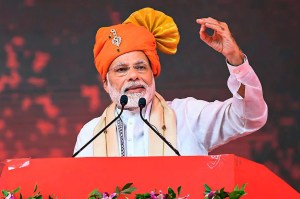


Narendra Modi’s inspiring life journey to the Office of Prime Minister began in the by-lanes of Vadnagar, a small town in North Gujarat’s Mehsana district. He was born on the 17th of September 1950; three years after India had gained its Independence. This makes him the first Prime Minister to be born in independent India. Mr. Modi is the third child born to Damodardas Modi and Hiraba Modi. Mr. Modi comes from a family of humble origins and modest means. The entire family lived in a small single store house which was approximately 40 feet by 12 feet.


Formative Years

Narendra Modi’s formative years taught him early tough lessons as he balanced his studies, non-academic life to spare time to work at the family owned Tea Stall as the family struggled to make ends meet. His school friends remember that as a child also he was very industrious and had an affinity for debates and a curiosity to read books. Schoolmates recollect how Mr. Modi used to spend many hours reading in the local Library. As a child he was also fond of swimming.

Mr. Modi’s thoughts and dreams as a child were quite removed from how most children of his age thought. Perhaps it was the influence of Vadnagar which once used to be a vibrant center of Buddhist learning and spirituality many centuries ago. As a child also he always felt a strong urge to make a difference to society. He was highly influenced by the works of Swami Vivekananda which laid the foundation of his journey towards spiritualism and which inspired him to pursue the mission to fulfill Swamiji’s dream of making India a Jagat Guru.

At the age of 17 he left home to travel across India. For two years he travelled across the expansive landscape of India exploring various cultures. When he returned home he was a changed man with a clear aim of what he wanted to achieve in life. He went to Ahmedabad and joined Rastriya Swayamsevak Sangh (RSS). RSS is a socio-cultural organization working towards the social and cultural regeneration of India. It was a tough routine for Narendra Modi in Ahmedabad since 1972 when he became a Pracharak for RSS. His day began at 5 am and went on till late night. Late 1970s also saw a young Narendra Modi join the movement to restore Democracy in India which was reeling under Emergency.

While continuing to shoulder different responsibilities within the Sangh during the 1980s Narendra Modi emerged as an Organizer exemplar with his organizing skills. In 1987 a different chapter began in the life of Mr. Modi when he started work as the General Secretary of the BJP in Gujarat. In his first task Mr. Modi won a victory for the BJP in Ahmedabad Municipal Corporation elections for the first time ever. He also ensured that the BJP was a close second to the Congress in the 1990 Gujarat Assembly elections. In the 1995 Assembly elections Mr. Modi’s organizational skills ensured the BJP’s vote share increased and the party won 121 seats in the Assembly.

Mr. Modi worked as the National Secretary of BJP from 1995 looking after party’s activities in Haryana and Himachal Pradesh. As BJP’s General Secretary Organization he worked to ensure the BJP won the 1998 Lok Sabha elections. It was in September 2001 that Mr. Modi received a phone call from then Prime Minister Vajpayee which opened a new chapter in his life taking him from the rough and tumble of Organizational Politics to the world of Governance. 


Years in Governance

Narendra Modi’s evolution from quintessential Organization Man of the BJP to one of India’s best known leaders recognized for his Good Governance over a span of a decade tells a story of grit, determination and Strong Leadership in the face of grave adversity. Narendra Modi’s transition from the world of Political Organizing to the realm of Administration and Governance neither had the luxury of time nor the benefit of training. Shri Modi had to learn the ropes of Administration while on the job right from Day One. Narendra Modi’s first 100 days in office offer a glimpse of not just how Shri Modi made that personal transition but these 100 days also offer a glimpse of how Shri Modi brought unconventional thinking and out of the box ideas to shake status-quo and reform Governance.

Narendra Modi’s life has been a journey of courage, compassion and constant hard work. At a very young age he had decided to devote his life in service of the people. He displayed his skills as a grass root level worker, an organizer and an administrator during his 13 year long stint as the Chief Minister of his home state of Gujarat, where he ushered a paradigm shift towards pro-people and pro-active good governance.


Narendra Modi’s path to creating a Vibrant Gujarat as a shining example of Development and Governance did not come easy. It was a path littered with adversities and challenges. Through the last decade if there is one constant trait of Narendra Modi that has stood out it is his Strong Leadership in the face of grave adversity. Shri Narendra Modi’s approach to governance has always been viewed as being above politics. Shri Modi never let political differences get in the way of pursuing solutions to developmental challenges. As Shri Narendra Modi prepares to assume Office as India’s next Prime Minister, his approach to Administration and Governance stands out for its convergent thinking. The finest manifestation of Shri Modi’s philosophy of “Minimum Government, Maximum Governance” is his Pancha-Amrut construct for convergent Governance.


His performance is reflected in the many Awards his government received from both National and International media. Shri Narendra Modi as India’s Prime Minister brings with him a rich and hands-on experience as one of India’s most successful Chief Ministers and one of its finest of Administrators. 


History was recorded in the plaza of Rashtrapati Bhawan on the evening of 26th May 2014 as Narendra Modi took oath as the Prime Minister of India after a historic mandate from the people of India. Narendra Modi has come out as a spirited, strong minded and development-oriented leader who have a ray of hope for the dreams and inclination of a bazillions Indians. His aim on enlargement, scrupulous  and attempts to initiate a qualitative difference in the lives of the poorest of the poor have made Narendra Modi a popular and respected leader across the length and breadth of India.

<

p style=”background-color: white;border: 0px;font-size: 16px;line-height: 22.4px;margin: 0px;padding: 0px 0px 15px;text-align: justify;vertical-align: baseline”>Narendra Modi’s life has been a journey of courage, compassion and constant hard work. At a very young age he had decided to devote his life in service of the people. He displayed his skills as a grass root level worker, an organizer and an administrator during his 13 year long stint as the Chief Minister of his home state of Gujarat, where he ushered a paradigm shift towards pro-people and pro-active good governance.



GOODS SERVICES AND TAX (GST)

GST is most likely to be introduced with effect from 1st April 2017 . With its introduction , the following 3 major Taxes will be abolished : Central Excise Duty , Service Tax , Value Added tax (VAT) Supply will become the taxable event rather than manufacture or sale . GST will comprise of the following 3 elements Central Goods & services Tax (CGST ) , State Goods & service Tax (SGST) GSTIN (Goods And Services Tax Identification Number ) has 15 digits number that is given in a certificate of registration to an applicant . This number is given once his application for the Grant of GST registration is approved . Furthermore, this number is made available to the applicant on the common portal once GST registration gets completed. The number is based on PAN or TAN. the number indicates 1. First 2 digits represents State Code for Telangana code is 36 , Andhra Pradesh is 37 , Tamil Nadu is 33 and more on. 2. Next 10 digits indicate PAN or TAN 3. Thirteenth Digit represents number of registrations under a single PAN 4. Fourteenth Digit Indicates The Nature of Business 5. Fifteenth Digit is a Check Code. ( i.e alphanumeric character is known as check code ) NO fees for registration under GST registration is free of cost. Further more , registration under GST is not tax specific . This means that a single registration is needed for CGST , SGST/UGST . additionally , business in multiple states need to take GSTIN state wise .