What caused the Great Depression

The Great Depression was the worst economic downturn in the history of the industrilaized world, lasting from the stock market crash of 1929 to 1939.

Throughout the 1920s, the U.S. economy expanded rapidly, and the nation’s total wealth more than doubled between 1920 and 1929. The New York Stock Exchange in Wall Street in New York City was a center for reckless speculation, where everyone from millionaire tycoons to cooks and janitors poured their savings into stocks. As a result, the stock market underwent rapid expansion, reaching the peak in August 1929.

By then, production had already declined and unemployment had risen, leaving stock prices much higher than their actual value. Additionally, wages at that time were low, consumer debt was multiplying, the agricultural sector of the economy was struggling due to drought and falling food prices and banks had an excess of large loans that could not beliquidated.

The American economy entered a mild recession during the summer of 1929, as consumer spending slowed and unsold goods began to pile up, which in turn slowed factory production. Nonetheless, stock prices continued to rise, and by the fall of that year had reached strotospheric levels that could not be justified by expected future earnings.On October 24, 1929,as nervous investors began selling overpriced shares en masse, the stock market crash that some had feared happened at last. A record 12.9 million shares were traded that day, known as “Black Thursday”.

Five days later, on October 29 or “Black Tuesday”, some 16 million shares were traded after another wave of panic swept Wall Street. Millions of shares ended up worthless, and those investorss who had bought stocks “on margin” (with borrowed money) were wiped out compleytely.

As consumer confidence vanished in the wake of the stock market crash, the downturn in spending and investment led factories and other businesses to slow down production and begin firing workers. For those who were lucky enough to remain employed, wages fell and buying power decreased. Many Americans forced to buy on credit fell into debt, and the number of foreclosures and repossessions climbed steadily. The global adherence to the gold standard, which joined countries around the world in a fixed currency exchange, helped spread evonomic woes from the United States throughout the world, especially Europe.

Estate Planning

In these unprecedented times, one thing we know for sure is that life is very unpredictable. One might think that they have years left to worry about ‘what happens to family when I’m gone?’ but everything could change in just seconds. Hence, it is important to plan before and be ready for any uncertainties.

Estate refers to all kinds of assets one owns. It includes financial assets, tangible personal assets (vehicles, art, collectibles), immovable property and intellectual property.

Estate planning refers to the process of transferring wealth from one generation to another. The most common ways of doing this is through Nomination and Joint ownership. However, both these methods are legally disputable. Let’s look at some effective Estate Planning tools-

Will

Will is a legally accepted document and allows one to make decision to transfer wealth after their demise. However, Will is public and controlled by court. Changing or modifying will becomes difficult with time, in case the owner becomes mentally or physically challenged with age. It can lead to rivalry between the beneficiaries.

Trust

Trust can be used in place of Will. It forms a legal relationship where one party holds property for the other. However, it can effectively help in avoiding probate process (validation of Will) and expenses. Trust can be public or private and is controlled by the family only. However, this implies that the Trustee can misuse assets of Trust.

It can also be used as a firewall or shield to separate assets. It implies that if the owner becomes bankrupt, lender cannot seize assets under the Trust. Moreover, it reduces estate tax on transfer of assets.

It is recommended to have a combination of Will and Trust as they nullify each other’s demerits. Using Trust, one can avoid probate process and expenses and keep things private and out of court. It also allows you to modify the terms at any time and all assets under the Trust are protected. However, one can also use Will to avoid misuse of assets by the Trustee.

Lifetime Gifts

Lifetime gifts refers to the wealth transferred during life to near and dear ones. It is exempted from tax within a limit. For transfer of immovable property, a gift deed has to be made.

Power of Attorney

It is a legal arrangement where one party authorises the other to act on their behalf. This can include two types- Financial and Medical. Financial POA lets your agent make decisions about your money and property. For example, your agent could pay your bills, make bank deposits, collect your retirement benefits, and sell or rent your real estate.

A medical POA (also called a healthcare POA) lets your agent make important healthcare decisions on your behalf. These decisions could be about your treatment options, medication, surgery, end-of-life care, and more. Without a medical POA, your loved ones could be left trying to guess what kind of care you want to receive. There’s also a possibility you’d receive different care than you would’ve chosen for yourself.

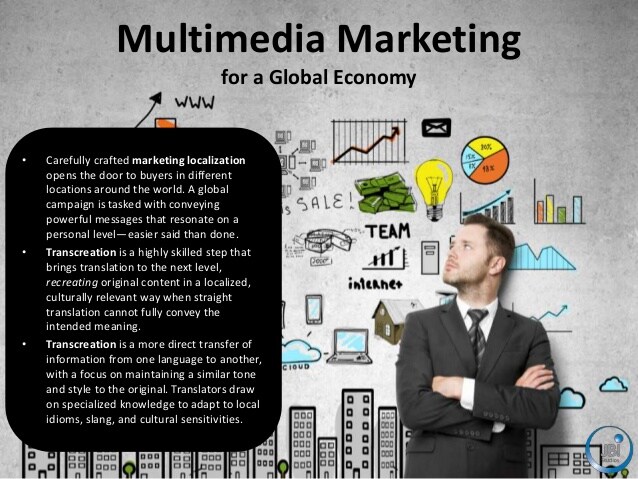
MULTIMIDEA IN MARKRETING

Services | Enforcer Web Solutions & Multimedia Marketing

Advertising has become very prevalent in our daily lives , so for a product to stand apart , it is very essential to present it in a dynamic , visually stimulating manner to grab the attention of consumers . The business world is slowly rejecting run of the mill tradition methods (such as placing ads in yellow pages , distributing pamphlets , etc.) and adopting solutions from the electronic era . Only companies with a nerve to radically change their marketing strategies for the new millennium will survive and be able to cater to ever- changing customer’s mindset . Applications of multimedia in the marketing field include the following :

  • Presentations for launching the products of a company . Reaching the target audience with necessary technical services or products requires clear communication stating the benefits and features , outlining its applications and any other product -related details , all presented in a well- designed and interactive manner so that the users can be familiarized faster . Multimedia presentations helps in motivating , informing and captivating audiences via PCs , laptops , plasma screens or kiosks delivered via CD-ROM or the Internet .
  • Multimedia is used to create interactive product catalogues , training tutorials , buyer guides and information directories with adequate search and navigation facilities to guide the user to easily trace the desired information . A buyer guide can list the nearly dealers , a comparison of the top brands , maps of the city and other helpful guest services .
  • E-mail advertising or placing banner ads on the internet is an extremely cost -effective method of launching a product , promoting an event or selling services . Effective use of multimedia in advertising can make potential clients sit up and make notice .
  • Multimedia applications help in building brand loyalty as well as improving sales .Brand loyalty will be improved as the users are provided a custom application which entertains ; informs or assists them .
  • Graphical elements , animations , as well as audio and video can be used to more effectively deliver sales instructional or marketing messages , thereby differentiating a firm from its competitors .

Cloud Computing

Cloud computing refers to any kind of hosted service delivered over the internet. These services often include servers, databases, software, networks, analytics and other computing functions that can be operated through the cloud.

Files and programs stored in the cloud can be accessed anywhere by users on the service, eliminating the need to always be near physical hardware. In the past, for example, user-created documents and spreadsheets had to be saved to a physical hard drive, USB drive or disk. Without some kind of hardware component, the files were completely inaccessible outside the computer they originated on. Thanks to the cloud, few people worry anymore about fried hard drives or lost or corrupted USB drives. Cloud computing makes the documents available everywhere because the data actually lives on a network of hosted servers that transmit data over the internet.

The need of Cloud Computing

  • One of the major reason why huge number of small scale and large scale business sectors from all over the world are using cloud today, is because of tremendous effect on cost saving. Yes, Cloud computing has made drastic change in the reduction of hardware and software cost and other server resources as well
  • We can run all our workload data of applications and processes online over the internet remotely instead of using physical hardware and software
  • Day to day issues related to server maintenance or installation of software/ hardware or whether it is renewal of license, all those factors are undertaken via cloud computing service providers
  • With the help of cloud we can access any data, applications whenever and wherever we want to, over the internet. 100 of pre-configured applications can be install and updated
  • Cloud not only handles data storage remotely but it also protects and recovers all crashed or loss data, so we don’t have to worry about crashed or loss of data, it gives you high security

Cloud Computing Service Types

Cloud computing services are broken down into three major categories: software-as-a-service (SaaS), platform-as-a-service (PaaS) and infrastructure-as-a-service (IaaS).

Software-as-a-Service

SaaS is the most common cloud service type. Many of us use it on a daily basis. The SaaS model makes software accessible through an app or web browser. Some SaaS programs are free, but many require a monthly or annual subscription to maintain the service. Requiring no hardware installation or management, SaaS solutions are a big hit in the business world.

Examples of SaaS: Microsoft Office 365, Salesforce, Cisco WebEx, Google Apps

Platform-as-a-Service

PaaS is a cloud environment supporting web application development and deployment. PaaS supports the full lifecycle of applications, helping users build, test, deploy, manage and update all in one place. The service also includes development tools, middleware and business intelligence solutions.

Notable examples include Windows Azure, AWS Elastic Beanstalk and Google App Engine.

Infrastructure-as-a-Service

IaaS provides users with basic computer infrastructure capabilities like data storage, servers and hardware — all in the cloud. IaaS gives businesses access to large platforms and applications without the need for large onsite physical infrastructures.

Notable examples of IaaS include DigitalOcean, Amazon EC2 and Google Compute Engine.

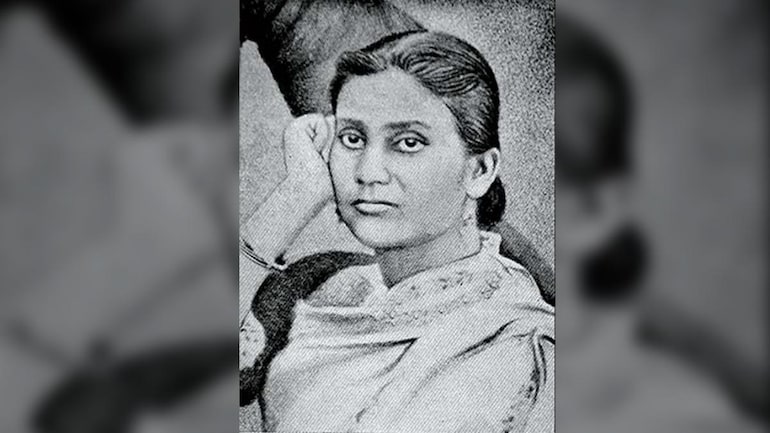
Kadambai Ganguly

On July 18, 1861, Kadambini Bose was born in Bhagalpur, British India (modern-day Bangladesh). She was born during the Bengali renaissance, a period of religious, social, and educational developments in the Bengal area from the nineteenth to the early twentieth centuries. This cultural revolution had a direct influence on Kadambini since her father was a prominent member of the Hindu reformation movement Brahmo Samaj, as well as co-founder of India’s first women’s rights group, Bhagalpur Mahila Samiti. And, despite the fact that educational options for Indian women were limited at the time, Kadambini’s father, the headmaster of Bhagalpur School, recognised the value of education and enabled Kadambini to attend.

Kadambini married Dwarkanath Ganguly, her mentor and instructor at Bethune College, after graduation. Dwarkanath, an outspoken advocate for women’s rights in India, urged his wife to seek a medical degree.Calcutta Medical College declined to enrol Kadambini, but the couple persisted, and she was finally admitted as the college’s first female medical student. Despite continuous opposition from instructors and staff, Kadambini received her Graduate of Bengal Medical College degree in Calcutta in 1886, becoming the first Indian-educated female doctor.(Anandi Gopal Joshi was the first female Indian doctor, although she received her education in America.)

Kadambini had only been practising medicine for a few months when a hardline Hindu news publication published an article questioning her doctorate credentials and referring to her in derogatory terms. Kadambini took the case to court, and after a lengthy legal struggle, the article’s editor was convicted to six months in jail for libel. Conservatives opposed to female emancipation could not stop her, and Kadambini chose to pursue the highest possible medical qualification; she flew to the United Kingdom in 1892 and obtained three additional doctorate certificates. She returned to India and worked as a gynaecologist at Lady Dufferin Hospital before opening her own private practise.

Kadambini’s hectic life as a doctor and mother of eight children did not prevent her from playing a part in India’s women’s rights movement. She was one of six delegates in the first female delegation to the Indian National Congress in 1889, and she helped organise the Women’s Conference in Calcutta in 1906. She was also quite involved in a number of other campaigns, such as one that sought to better working conditions for female Eastern Indian coal workers.

“Life is what happens when your cell phone is charging.”

A mobile phone ( also known as a wireless phone,cell phone, or cellular telephone) is a small portable radio telephone.

The mobile phone can be used to communicate over long distances without wires. It works by communicating with a nearby base station (“also called a cell site”) which connects it to the main phone network. When moving, if the mobile phone gets too far away from the cell it is connected to, that cell sends a message to another cell to tell the new cell to take over the call. This is called a “hand off,” and the call continues with the new cell the phone is connected to.

The hand off is done so well and carefully that the user will usually never even know that the call was transferred to another cell.

USE OF MOBILE PHONE

Mobile phones are used for a variety of purposes, such as keeping in touch with family members, for conducting business, and in order to have access to a telephone in the event of an emergency. Some people carry more than one mobile phone for different purposes, such as business and personal use.

Multiple SIM cards may be used to take advantage of the benefits of different calling plans. For example, a particular plan might provide for cheaper local calls, long distance calls, international calls, or roaming.

The mobile phone has been used in a variety of diverse contexts in society. For example:

* A study by Motorola found that one in ten mobile phone subscribes have a second phone that is often kept secret from other family members.

* Some organization assist victims of domestic violence by providing mobile phones for use I’m emergencies. These are often refurbished phones.

* Mobile telephony also facilities activism and citizen journalism.

* The advent of widespread text messaging has resulted in the cell phone novel, the first literary genre to emerge from the cellular age, via text messaging to a website that collects the novels as a whole.

* The TV industry has recently started using mobile phones to drive live TV viewing through mobile apps, advertising, social TV and mobile TV. It is estimated that 86% of Americans use their mobile phone while watching TV.

Personal Values: How to Know Who You Really Are

Throughout the previous few years, I’ve had a thought for an ironical self improvement article called, “The Productivity Secrets of Adolf Hitler.” The article would include all the famous self improvement sayings—objectives, perceptions, morning schedules—aside from communicated through the adventures of Hitler.

“Hitler begins his day at 5 AM every morning with a fast round of yoga and five minutes of journaling. With these methodologies, he’s ready to zero in his psyche on his exceptionally yearning objectives.”

“Hitler found his life reason in a lager corridor in his 20s and has since followed it persistently, hence imbuing his existence with energy and rousing great many others such as himself.”

“Adolf is a severe veggie lover, and makes a point to figure out time in his bustling timetable of massacre and global control to investigate his inventive side: he saves a couple of hours every week to pay attention to drama and paint his scenes.”

I realize that I would discover the article clever. However, that is on the grounds that I’m a wiped out, contorted fuck. In any case, eventually, I’ve never fully gathered the mental fortitude to compose the thing, for clear and clear reasons.

I’ve been doing this long enough to realize that a) a lot of individuals would get outraged and give themselves totally to destroying my week with irritating messages and web-based media tirades, b) the parody would fly right by a lot of people and they’d feel that I was really a Nazi, and c) some dreadful distribution some place would run the feature, “Smash hit writer outs himself as far right neo-Nazi” or some poop and my vocation would be finished.

Thus, I’ve never composed the article. Consider me a weakling. Be that as it may, it stays unwritten.

This bugs me a tad since I think parodying Hitler’s extraordinary efficiency and impact consummately encapsulates a point I’ve since quite a while ago made about the self improvement world: making progress in life isn’t close to as significant as our meaning of accomplishment. On the off chance that our meaning of achievement is awful—like, say, global control and butchering millions—then, at that point working more enthusiastically, laying out and accomplishing objectives, and training our brains all become something awful.

In the event that you eliminate the ethical abhorrences from Hitler, on paper, he’s perhaps the best independent individuals in world history. He went from being a poor, bombed craftsman, to laying hold of a whole nation and the most remarkable military on the planet in merely twenty years. He activated and propelled millions. He was resolute and smart and strongly centered around his objectives. He ostensibly impacted world history as much as any individual who has at any point lived.

In any case, the entirety of that work went toward psychotic, dangerous points. What’s more, a huge number of individuals kicked the bucket terribly because of his turned, misinformed values.

Individual qualities are the gauges by which we figure out what is an effective and significant life.

At the point when someone says, “I need to be acceptable,” that meaning of what is “acceptable” is an impression of what they esteem. Some will see “being acceptable” as achieving cash. Others will consider it to be building a family. Others will consider it to be having a great deal of energizing encounters. Whatever it will be, it is controlled by our own qualities.

Along these lines, you can’t discuss personal growth without likewise discussing values. It’s insufficient to just “develop” and become a “superior individual.” You should characterize what a superior individual is. You should choose in which course you wish to develop. Since, supposing that you don’t, indeed, we may all be in a bad way.

A many individuals don’t understand this. A many individuals fanatically center around being cheerful and feeling great constantly—not understanding that if their qualities suck, feeling kindness hurt them more than help them. In the event that your greatest worth on the planet is grunting Vicodin through a swirly straw, indeed, then, at that point feeling better is simply going to aggravate your life.

At the point when I composed my book, The Subtle Art of Not Giving a F*ck, practically the whole book was truly a slippery method to get individuals to consider their qualities all the more plainly. There are 1,000,000 self improvement guides out there that show you how to more readily accomplish your objectives, however few really question what objectives you ought to have in any case. My point was to compose a book that did exactly that.

In the book, I purposefully tried not to get excessively profound into what benefit/bad qualities are—what they resemble, and why they work or don’t work—part of the way since I would not like to push my own qualities onto the peruser. All things considered, the general purpose of your qualities is that you embrace them yourself, not on the grounds that some buddy with a repulsive orange book cover advised you to. However, truth be told, I additionally didn’t get excessively profound into characterizing values since it’s an extraordinarily troublesome point to expound on well.

Thus, this article is my endeavor to at last do that. To discuss values. What’s more, what they are as well as why they are. Why we discover certain things significant, what the results of that significance are, and how we can approach finding and changing what we find significant. It’s anything but a basic subject. Also, the article is very long. So enough of me gabbing, how about we continue ahead with it.

You Do What You Value

Each snapshot of consistently, if you understand it, you are settling on a choice of how to invest your time, of what to focus on, of where to coordinate your energy.

The present moment, you are deciding to peruse this article. There are a limitless number of things you could be doing, however this moment, you are deciding to be here. Perhaps in a moment, you choose you need to pee. Or on the other hand perhaps somebody messages you and you quit perusing. At the point when those things occur, you are making a basic, esteem loaded choice: your telephone (or your latrine) is more significant to you than this article. What’s more, your conduct follows that valuation appropriately.

Our qualities are continually reflected in the manner we decide to act.

This is basically significant—on the grounds that we as a whole have a couple of things that we think and say we esteem, however we never back them up with our activities. I can tell individuals (and myself) for what might seem like forever that I care about environmental change or the risks of online media, yet on the off chance that I go through my days cruising all over in an inefficient SUV, continually invigorating my newsfeeds, then, at that point my practices, my activities recount an alternate story.

Individual Values – individuals strolling

Activities don’t lie. We accept we need to land that position, yet all things considered, we’re generally sort of calmed that nobody got back to us so we can withdraw to our computer games once more. We advise our better half we truly need to see her, yet the moment our person companions call, our timetable mysteriously appears to open up like screwing Moses separating the Red Sea.

The Great Value Disconnect

A large number of us state esteems we wish we had as an approach to conceal the qualities we really have. Along these lines, yearning can regularly turn into another type of aversion. Rather than confronting who we truly are, we lose ourselves in who we wish to turn into.

Find Your Personal Values

I have a 50-page PDF guide clarifying individual qualities and how to create your own. It’s free. Simply fly in your email underneath to get it.

Email

Put another way: we lie to ourselves since we don’t care for our very own portion esteems, and we, along these lines, don’t care for a piece of ourselves. We would prefer not to concede we have certain qualities and that we wish we had different qualities, and it’s this inconsistency between self-insight and reality that typically gets us into a wide difficult situation.

That is on the grounds that our qualities are expansions of ourselves. They are what characterize us. When something great happens to a person or thing you esteem, you feel better. At the point when your mother gets another vehicle or your significant other gets a raise or your matches group dominates a title, you feel better—like these things happened to yourself.

The inverse is valid too. On the off chance that you don’t esteem something, you will feel great when something terrible happens to it. Individuals rampaged cheering when Osama Bin Laden was killed. Individuals arranged a gathering outside the jail where the chronic executioner Ted Bundy was executed. The annihilation of somebody saw as malevolent felt like some incredible good triumph in the hearts of millions.1

Thus, when we are separated from our own qualities—we esteem playing computer games the entire day yet accept we esteem aspiration and difficult work—our convictions and thoughts get detached from our activities and feelings. Furthermore, to connect that distinction, we should become silly, about both ourselves and about the world.2,3

Discretionary Gray Box of Doom: Why People Who Hate Themselves Hurt Themselves

Similarly as we either worth or debase anything in our lives, we can esteem or degrade ourselves. Also, similar as individuals celebrating when Ted Bundy got seared, in the event that we disdain ourselves however much individuals despised Ted Bundy, we will commend our own annihilation.

This is the thing that individuals who don’t detest themselves don’t comprehend about individuals who do: that implosion feels great in some profound, dull way. The individual who despises themselves feels that they are ethically mediocre, that they merit some dreadful thing to make up for their own awfulness. Furthermore, regardless of whether it’s through medications or liquor or self-hurt or in any event, hurting others, there’s a revolting piece of themselves that searches out this annihilation to legitimize the entirety of the torment and wretchedness they have felt.

A large part of crafted by the confidence development during the 70s and 80s was to take individuals from self-hatred to self-cherishing. Individuals who love themselves don’t get any fulfillment from hurting themselves. Maybe, they get fulfillment from dealing with themselves and working on themselves.

This adoration for self is urgently important.4 But it is additionally not adequate all by itself. Since, supposing that we just love ourselves, then, at that point we become self-ingested cunts and apathetic regarding the misery or issues of others.

Eventually, we as a whole need to esteem ourselves yet in addition something above ourselves.5 Whether it’s God or Allah or some ethical code or cause, we need to esteem something above ourselves to make our lives fe


The new price efficient Samsung Galaxy Chromebook Go.

The Galaxy Chromebook Go launched on Samsung’s website last month as a new cheap Chromebook from the company. There were still a lot of unknown facts regarding the 14-inch tablet, other than a few specifications and pictures. The notebook is now official and may be purchased.

While just the Wi-Fi variant will be available on Thursday, Samsung plans to release an LTE version in the following weeks, which could be a great bonus for on-the-go web browsing.

Galaxy Chromebook Go.

The low pricing of the Galaxy Chromebook Go appears to be reflected in its features. It has a 14-inch 1366 x 768 HD display, which is a significant downgrade from the Galaxy Chromebook 2’s 4K OLED panel. It also has an Intel Celeron N4500 CPU and 4GB of RAM, which won’t set the world on fire but should suffice for everyday Chrome use.

Two USB Type-C connectors, a USB 3.0 port, and a headphone-out/microphone-in combination port are included on the Galaxy Chromebook Go. The Chromebook boasts a military-grade construction and weighs only 3.2 pounds, according to Samsung (1.45kg). The island-style keyboard is spillproof and can withstand the odd drop. There are two 1.5W speakers included, as well as Wi-Fi 6 which is significantly quicker.

Samsung says that the Galaxy Chromebook Go’s 5480mAh battery would last 12 hours on a single charge, which is impressive compared to the Chromebook 2’s seven-hour battery life (in our tests) but is likely due to the changes in display and CPUs.

The Galaxy Chromebook Go is already available for purchase on Samsung’s website for $299. You may get it for as little as $129.99 if you have a device that can be traded in. An LTE version will be available shortly, according to Samsung.

Health care system in India

• NITI Aayog document – ‘Investment Opportunities in India’s Healthcare Sector’

 Promotes further privatisation of health care
 Explores the pandemic as business opportunity for the health “industry” to grow.
• Author – Importance of public health and an enhanced government role in
health delivery services.
• Story of 2 states (model) Kerala and Maharashtra comparison
 Both are big states – comparable state GDPs
 Kerala COVID mortality – 0.48%
 Maharashtra COVID mortality – 2%.
 Reasons
 Huge differences in the effectiveness of public health systems
 Kerala has more government doctors compared to Maharashtra
 Kerala also has a higher proportion of government hospital beds
 Kerala allocates over one and half times higher funds on public health every year in per capita terms compared to Maharashtra.
 Weak public health system has proved to be a critical deficiency
 Clear message: a neglect of public health systems means large-scale, avoidable losses of lives.

Lacunae in the health care system

  1. Resource allocation
  2. • Central vista project – ₹20,000 crores
  3. • Could be utilised for setting up oxygen plants,
    numerous lives would have been saved.
  4. • Paltry allocation for National Urban health
  5. • Last time allocation – Rs. 1000 crores (amounts to Rs 2 per individual per month)
  6. • Parliamentary Standing Committee – Suggested
    allocating ₹1.6 lakh crores for public health during the current year (almost doubling of the present central health Budget)

2.To regulate the private players in health sector

• High Pricing
 COVID-19 care often costs ₹1 lakh to ₹3 lakh per week in large private hospitals
 Massive hospital bills – untold distress even among the middle class.

• Unregulated drug use
 Eg. Drug Remidesvir was used in COVID patients without valid evidence on
efficacy
 Indiscriminate use of steroids culminated

  • Mucormycosis infections

• Effective implementation of Clinical Establishments (Registration and Regulation)
Act
 Only 11 states have implemented it
 Not effectively implemented due to a major
delay in notification of central minimum
standards, and failure to develop the central framework for regulation of rates.

• In essence : Need to regulate the private
hospitals. And invest more in the public health

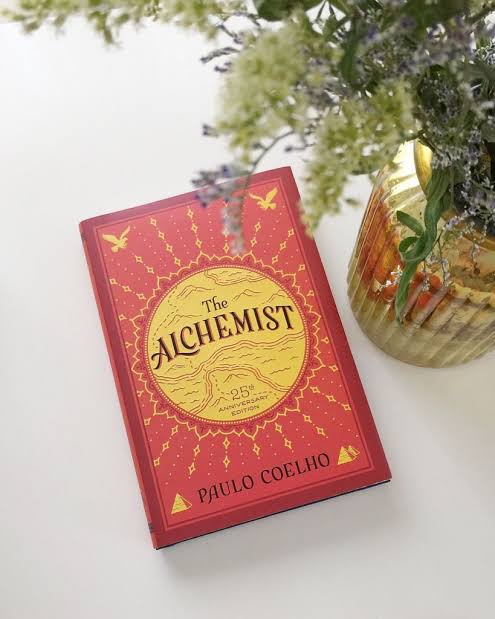
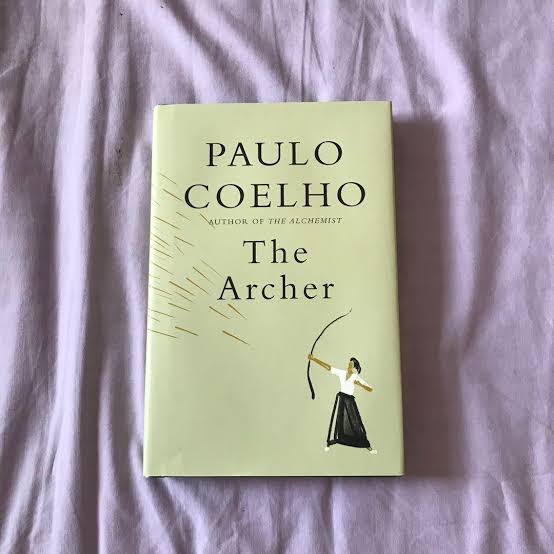
Two must-read books of Paulo Coelho

Book: The Alchemist

Book Plot:

A Sheppard boy who wandered most of the places in Andalusia with his flock of sheep. Once he was sleeping in an abandoned church, he dreamed of going to the pyramid. He already had that dream once before. So in a place Tarifa he accidentally met a gypsy lady and she told that there in Egypt he will find his treasure. The followed story is about the adventure taken by the Sheppard boy to reach his Destiny.

About the Book:

  • Through this book, the author motivates us to listen to our hearts while we pursue our dreams. a philosophical fiction and Paulo Coelho gave him at best.
  • The Sheppard boy’s name is Santiago. But, the author never mentions his name except in the first line of the story. We must learn that trick from Paulo Coelho.
  • Paulo Coelho always concentrates on his story. No puns, no scribbles, no long narrations, no heroic entries, and especially no circumlocution. Just a plot and beautiful words to make it a novel. That’s why he is one of my favorite authors.

Quotes:

It is not what enters men’s evil mouths that’s evil… It is what comes out of their mouth that is.

There is only one thing that makes a dream impossible to achieve: the fear of failure.

There is only one thing that makes a dream impossible to achieve: the fear of failure.

when you want something, all the universe conspires in helping you to achieve it.

Tell your heart that the fear of suffering is worse than the suffering itself

Book: The Archer

Book Plot:

Tetsuya, a man once famous for his prodigious gift with a bow and arrow but retired from public life. The boy who comes searching for him wants him to teach the way of the bow, and the archer illustrates the way of the bow and the tenets of life.

Quotes:

What is a master? I would say that he is not someone who teaches something, but someone who inspires the student to do his best to discover the knowledge he already has in his soul.

The bow is life: the source of all energy. The arrow will leave one day. The target is a long way off. But the bow will stay with you, and you must know how to look after it.

Elegance is not the most comfortable of postures, but it is the best posture if the shot is to be perfect.

Why you must read these books:

  • Paulo Coelho is an inspirational person who never disappoints us through his books, he suffered a lot and searched the way out of his hell through philosophy, religion, and faith.
  • I don’t know why Paulo Coelho’s books come under the genre of fiction? For real, it is a self-motivational book. His words are simple his books are the only books that I read in a single sitting.
  • If you are a person who fears failure, rejection, and humiliation… You must read these books. After reading these books you will do something you love to do or you will at least think about what do you love to do.

DEMOCRACY

Meaning of Democracy

Democracy is a system of government in which the supreme power is vested in the people of a country and people elect their representatives either directly or indirectly through fair and free elections, which are usually held periodically.

Definition

According to Mahatma Gandhi, “True democracy cannot be worked by twenty men sitting at the centre. It has to be worked from below by the people of every village”.

Salient Features of Democracy

✓Elected representatives of people and final decision-making power to the representatives.
✓Free and fair elections.
✓Voting right is with equal value to those who have attained the age of 18.
✓Fundamental rights and protection of individual freedom.

Evolution of Democracy

Democracy began 2,500 years ago in some of the city-states of ancient Greece. It is important to know that democratic institutions existed in India as early as the Vedic period. Chanakya’s Arthashastra tells us that in ancient India, an autonomous village community was the basic unit of the local government. During the later chola period ancient Tamil Nadu, Kudavolai system was a very notable and unique feature of the village administration of the Cholas. The evolution towards a democracy is represented by the following values: freedom, equality, fraternity, accountability, transparency and trust.

Forms of Democratic government

Types of Democracy

There are two types of democracies
✓Direct democracy
✓Indirect (representative) democracy

Direct Democracy

When the people themselves directly express their will on public affairs, the type of government is called pure or direct democracy.
Example: Ancient Greek city-states, Switzerland

Indirect Democracy

When the people express their will on public affairs, through their elected representatives, the type of government is called Indirect or representative democracy.

Democracy in India

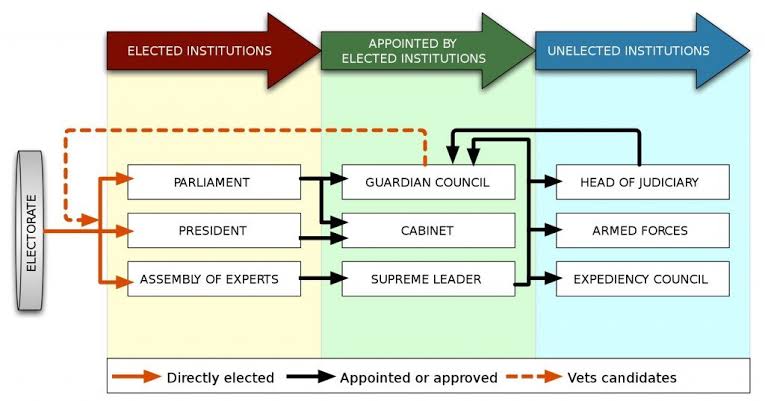
India has a parliamentary form of democracy. The Indian Parliament comprises the elected representatives of people and makes the laws for the country. The participation of people in the decision making and the consent of citizens are the two important elements of the parliamentary form of government in India.

India is the largest democratic country in the world. Democracy in India works on five basic principles. These are sovereign, socialist, secular, democratic, republic.

Election in India

India has a quasi-federal government, with elected representatives at the federal, state and local levels. The general elections are conducted by the Election Commission of India. At the national level, the president of India, appoints the Prime Minister, who enjoys majority in the Lok Sabha, the lower house of the Parliament of India.

The First Elections in Democratic India

General elections to the first Lok Sabha since independence were held in India between 25 October 1951 and 21 February 1952. The Indian National Congress emerged victorious by winning 364 of the 489 seats. Jawaharlal Nehru became the first democratically elected Prime Minister of the country.

WHAT MAKES 18 JULY A SIGNIFICANT DAY ?

18th July marks the birth of an iconic figure who vanquished South Africa’s apartheid system. The great personality who fought for human rights and was an international peacemaker. This person who played a very vital role in shaping the society and conserving the human rights was Nelson Rolihlahla Mandela.

 “It is easy to break down and destroy.
The heroes are those who make peace and build.” 

 – Nelson Mandela

ABOUT NELSON MANDELA

Nelson Rolihlahla Mandela (18 July 1918 – 5 December 2013) was a South African anti-apartheid revolutionary, who served as President of South Africa from 1994 to 1999. The main focus of his government was on knocking down the apartheid regime by fostering racial reconciliation and tackling institutionalized racism. Nelson Mandela is an iconic figure who was an human rights lawyer, a prisoner of conscience and an international peacemaker. He is that great personality who vanquished South Africa’s apartheid system and was the first democratically elected president of free South Africa. Nelson Mandela was born Nelson Rolihlahla Mandela in Transkei, South Africa on 18 July, 1918. His strategy was to bring change through Legal Revolution but not through actual violence. He began his journey towards by following the path of non-violence, later embracing violence, and then adopting a non-violent approach for negotiation and reconciliation.

ABOUT NELSON MANDELA INTERNATIONAL DAY

Nelson Mandela International Day (or Mandela Day) is celebrated in honor of Nelson Mandela, the former South African President, on his birthday, that is on 18 July. This day was declared officially by the United Nations in November 2009 and the first Mandela Day was thus held on 18 July 2010. There are many other groups who celebrated this day before 2010 also, that is from 18 July 2009.

The UN General Assembly (UNGA) declared 18th July as “Nelson Mandela International Day” for paying tribute and for recognizing his contributions for achieving and promoting peace and freedom. Mandela Day reminds us that “Each individual has the potential and power to bring a positive change, transform and ability to make an impact.”

MESSAGE OF MANDELA DAY CAMPAIGN

Nelson Mandela fought for peace and harmony. He fought for bringing social justice for over 67 years. This day urges the people of Mother Earth to fight poverty and promote peace, reconciliation and cultural diversity.

While establishing this international day, UNGA recognized the values and dedication of Nelson Mandela for serving the humanity. He constantly fought for democracy and for promoting cultural peace throughout the world. Some other values for which he fought are:

  1. Conflict Resolution
  2. Race Relations
  3. Promotion and Protection of Human Rights
  4. Reconciliation
  5. Gender Equality
  6. Rights of Children and other vulnerable groups
  7. Fight against Poverty
  8. Promotion of Social Justice

The contribution of Nelson Mandela to the society can never be measured and his works remind us that “Everyone has the ability and the responsibility to change the world for the better!” Mandela Day is one such occasion which urges all to take action and inspire change.

WHY DO WE CELEBRATE NELSON MANDELA DAY ?

Nelson Mandela International Day is celebrated every year to remember the legacy of a man who shaped the present with his fight for 67 years and provided a better world and society for the future generation. Nelson Mandela changed the 20th century and helped shape the 21st century and future of the world. This day exhorts us to renew the values and principles of Nelson Mandela and to take actions for building a better society.

FREEDOM FIGHTER RANI

Meetali soni


Rani Lakshmibai or Jhansi ki Rani, the queen of Jhansi. The birth anniversary of Rani Lakshmibai is 19 november 1828 in Manikarnika Tambe in Varanasi. It is is celebrated as Martyr’s Day in Jhansi. Rani Lakshmibai,is one of the famous warriors of India’s struggle for Independence. Rani Lakshmi Bai was a brave queen who fought battle with English people to save her country. She saved her name in battle field. she is a great symbol of strength of females of India. She was the wife of Maharaja Gangadhar Rao . He is the king of jhasi . She was one of the leading figures of the Indian Rebellion of 1857 and became a symbol of resistance to the British Raj for Indian nationalists. She died in the Rebellion, wounded and killed in a battle. She died on 18 June 1858. The Rebellion was suppressed by November that year. She was named Manikarnika Tambe and was nicknamed Manu. Her father was Moropant Tambe and her mother Bhagirathi Sapre (Bhagirathi Bai). Her parents came from Maharashtra. Her mother died when she was only four years old. Her father was the Commander of the war of Kalyanpranth. Her father worked for Peshwa Baji Rao II of Bithoor district. She was educated at home. She was able to read and write, She was more independent in her childhood than others of her age, her studies included shooting, horsemanship, archery. Rani Lakshmibai was very much interested to riding on horseback between the palace and the temple, sometimes she was carried in a palanquin. Her palace, the Rani Mahal, has now been converted into a museum. It houses a collection of archaeological remains of the period between the 9th and 12th centuries AD. Growing up with the boys in the peshwa’s court, she was trained in martial arts and became proficient in sword fighting and riding. She was widowed without bearing a surviving heir to the throne. She was widowed without bearing a surviving heir to the throne. Following established Hindu tradition, just before his death the maharaja adopted a boy as his heir. The 22-year-old queen refused to cede Jhansi to the British. Shortly after the beginning of the mutiny in 1857, which broke out in Meerut, Lakshmi Bai was proclaimed the regent of Jhansi, and she ruled on behalf of the minor heir. Joining the uprising against the British, she rapidly organized her troops and assumed charge of the rebels in the Bundelkhand region. In 1842, Lakshmi bai got married and got the name of Rani Lakshmibai. Few years after marriage, Manikarnika gave birth to a boy but he couldn’t survive and died after four months. Lakshmibai gave a great fight to the British as the siege of Jhansi lasted for about two weeks. After a the war, when the British army entered Jhansi, Rani Lakshmibai, tied her son Damodar Rao to her back and fought bravely using two swords in both her hands. She escaped to Kalpi and was accompanied by other rebellions. She then departed to Gwalior and a fierce battle was fought between the British and Lakshmibai’s army. Her body was cremated as per her wish, as she didn’t want it to be captured by the British.

The Marie Effect

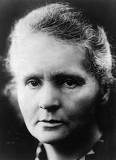
Maria Salomea Sktodowska was born on 7 November 1867 in Warsaw , Poland. She was the 5th child born to father Vladislav and Mother Bronislava sklodowska , who were both teachers. Because of bad investments, the family lost its savings and had to move to a private school where her mother taught.

Maria started her schooling in 1874, and she was the youngest and the smartest in her class. During that time, Warsaw was under Russian rule which banned polish dictums. Russian government forbade any polish women to attend university of Warsaw. So Marie and her older sister Bronya ,would pool their finances so that first her older sister ( Bronya ) could complete her education, and then Marie could attend University of Paris. Manya ( as Maria was also called) spent 6 years as governess and taught peasant children how to read and write.

She also attended secret meetings of “Floating University ” where they read scientific studies. By 1891,she had collected enough money to continue her studies in Paris. She moved there and lived with her sister and her husband and changed her name to Marie. She attended the Sorbonne University and then later moved to the student area , a tiny attic sized housing. In 1893,she earned her master’s degree in Physics, and then studied Mathematics on a scholarship.During this, she also got a job to study magnetism properties of various types of steel for French company.

She later met Pierre Curie and they got married in 1895 , and gave birth to daughter Irene the following year.

Later she decided to make French physicist Henri Becquerel and his discovery of mysterious Uranium rays in 1896 as her topic of physics doctorate. She began studying Uranium type rays radiated from other elements and found that Thorium also gave out such rays. Most of Uranium type rays given off by rocks called pitchblende- gave more radiation than she expected.

She announced in July,1898 that she found a new element and named it POLONIUM , after Poland and also invented the word ‘ radioactive ‘ , and later she also founded Radium.

To prove that she had indeed found those new elements, she had to produce pure radium. And finally on 21 july 1902 she reported the weight of 1 radium atom. In 1903, she became the first woman in Europe to receive doctorate in science. Radium began to be used for treating cancer cells, and the new treatment began to be called ‘ Curie treatment’. Marie and Pierre were awarded the Humphry Davy medal ; England’s highest award in chemistry.

The same year , she and her husband ,along with Henri Becquerel , were awarded the Nobel Prize in Physics .In 1906, Pierre died by falling off horse drawn wagon.

In 1911, Marie won Nobel Prize in chemistry for her work in radioactivity.

She died in 1934 of aplastic anaemia due to prolonged exposure to radiation .

Later, in 1935,Irene and her husband Fredrick, were awarded the Nobel Prize in chemistry .

Five feet apart

Introduction:
Five feet apart is directed by Justin Baldoni and written by Mikki Daughtry, Tobias Iaconis. This genre of drama and romance was released in 2019.
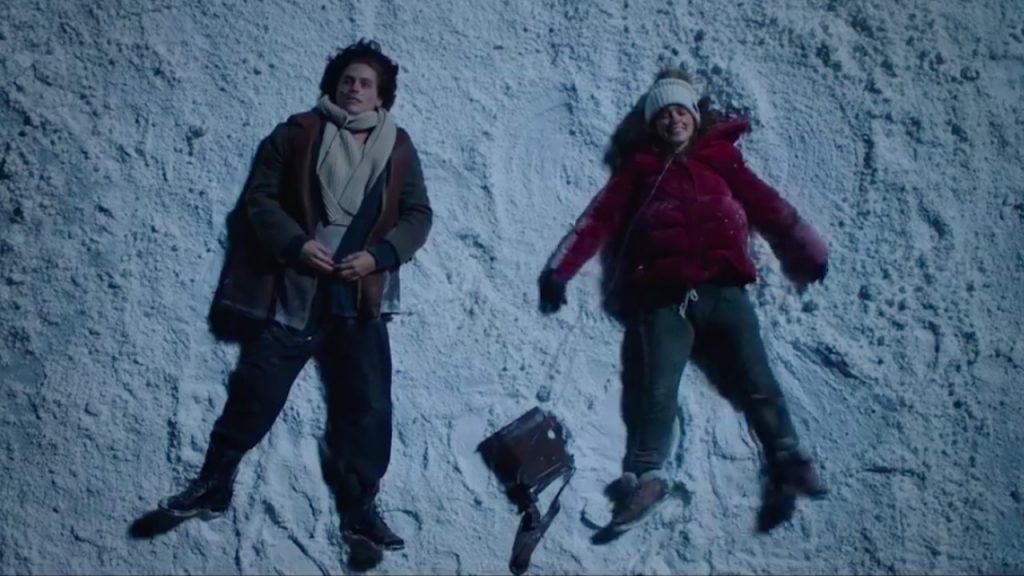
Stella Grant (Haley Lu Richardson) is a seventeen year old who is diagnosed with cystic fibrosis whose life is full of restrictions and boundaries but she doesn’t fail to amaze us with her lively nature and her love for life and all of her restrictions are put to test when she meets Will Newman ( Cole Sprouse) a handsome young man who is also a CF patient and therefore they’re supposed to be a safe distance from each other.


Their connection grows stronger which makes them want to break all the rules and be together. Will is a kind of person who doesn’t like following rules but after meeting Stella he is inspired to live life to the fullest and embrace every moment.
Eventually they fall in love and will realises that in order for Stella to be safe he needs to be away from her and therefore he is determined to leave her even though he loves her and Stella is only left with his memories.


Themes:
This movie explores the themes of life and death, being rebellious and love. These are the main themes as throughout the movie, we get to witness how they fought bravely for their lives, they even sacrificed themselves for each other and how they didn’t let their illness be a reason for them to be apart and tried to love each other and themselves even more each day and how they made each others life more meaningful and beautiful.
This entire movie was beautifully directed and the actors complemented each other. At, first when they meet, they realize that they’re of opposite personalities and there are misunderstandings but as time passes, they get to know each others circumstances and grow to understand and like one another. When they realize that they really are attracted to each other and even fall in love, it’s the distance they have to maintain but they still don’t give in to it as they truly love each other and thinking that even if they have very little time to be with eachother, they need to spend it wholeheartedly and by enjoying each others company. But that put their lives in danger.
The background musics are a good touch to the movie as they add to the emotions of the movie and they enhance our experience which gives it a sad but dramatic effect.


Conclusion:
This is a very good movie according to me as we get to see what people can do to save their loved ones and how sacrifice also plays an important role in love. This also shows us how having that one person by your side helps you to be stronger and happier.
This movie was “one of a kind” and I really enjoyed and appreciated all the themes and motifs of this movie. It was a very emotional and thoughtful movie, according to me. As I really enjoyed watching this, I’d rate it a 9/10.