Andhra Pradesh college gets permission to offer engineering in Telugu

The All India Council for Technical Education (AICTE) gave its consent for the NRI Institute of Technology, a private autonomous engineering college in Krishna district, to introduce the programme in Telugu.

It is the only institution in Andhra Pradesh and Telangana to get the permission for BTech Telugu medium with a 60-student intake into the computer science engineering stream.

In all, the AICTE allowed 14 engineering colleges across the country to offer the engineering programmes in Hindi, Tamil, Telugu and other native languages from the 2021-22 academic year.

The move is expected to provide a level playing field for the students, particularly from the rural and tribal areas who have studied in their native languages since childhood.

One of the major recommendations of the National Education Policy 2020 is to promote regional languages in education.

While the NEET exam is currently being conducted in 11 languages, the Union Ministry of Education is holding the JEE (Main) in 13 languages.

Speaking to TOI, principal, NRI Institute of Technology, Dr C Naga Bhaskar, said that the AICTE has chosen the 14 autonomous and NAAC- and NBA-accredited colleges to give permission to offer engineering courses in native languages.

Students to have option of Telugu, Eng for exams

“The move would definitely improve the grasp, creativity, and comprehension levels of the students. Several advanced countries like Japan, Germany and China impart education in their mother tongue. Students would be given the option of writing exams in Telugu or English. The Board of Studies of our college will finalise the syllabus and other components of the programme,” said Dr Bhaskar.

Dr Bhaskar said that it is generally believed that the English medium students would be in an advantageous position compared to their Telugu counterparts. “But, several exams like NEET, JEE and UPSP are currently being conducted in various regional languages. It may be further extended to exams like the engineering services examination in the coming years. This would give an impetus to professional education in local languages,” said Dr Bhaskar.

In a recent Facebook post titled ‘Engineering courses in mother language – A step in the right direction’, posted in 11 Indian languages Vice-President M Venkaiah Naidu lauded the move of 14 engineering colleges across eight states to offer engineering courses in regional language. “It is my desire to see the day when all vocational and professional courses like engineering, medicine and law are taught in mother languages,” said the Vice-President in the post.

Rules of Happiness

Be silent in the heat of Anger.

As we all do, In anger we never think twice before saying anything and this is the main reason behind the poor relationship. We cause harm to both others and us both.

Avoid caring what people think.

Before doing anything we always think to much about others think if I do that. And this leads to unhappiness and doubt on ourselves.

Don’t waste time in explanation.

There is no need to explain yourself always. Sometimes we have to believe on our own capabilities and prove others that what I did is right decision for me.Time reveals Everything.

Privacy is Everything.

Never tell everyone, everything. Everyone is not happy with your success. Don’t reveal your path to anyone before you achieve something.

Don’t screw your present, thinking of past.

Start working for your success now. Past has gone it never come back but why we waste our present and future by thinking of past. We design our future by make use of present.You are responsible for everything that you do. So start working for your future.

Stop overthinking, Sometimes it’s okay to not know answers.

We just ruin our life by overthinking. What we overthink is never going to happen. So just relax and enjoy your life without thinking anything.

It’s okay to not be okay.

Everyone’s mental state is not same. And sometimes It’s okay to feel low. It’s okay to be sad. We just have to believe on ourselves. And do what we want. Its okay, everything will be alright soon…

Don’t compare own life with others.

Everyone is different. And if we compare ourselves with other then we just ignore our own capabilities. So believe in yourself,your capabilities.

Don’t let others to disrupt your inner peace.

Sometimes, some people come in our life just to pull us down. But we have to focus on our goals. If we disrupt our inner peace then they will succeed in their intentions. We have to focus more whenever we meet any problems in between our goals.

We are always unattractive in the eyes of society.

No matter what we do, society will never going to appreciate us. So don’t worry about the society and do whatever you want. We always worry about “Chaar log” but no one ever saw them.

Take a charge of your own happiness, we are only responsible for ours not others.

3D PRINTING – AN OVERVIEW

3D printing, also called Digital fabrication technology or Additive manufacturing is the process of making 3-dimensional solid structures or models from the geometric representation by successive addition of materials. The layers of the printed object are a thinly sliced cross-section of the object. 3D printing is an emerging technology that enables us to produce objects with fewer materials than traditional manufacturing methods. 

The process of 3D printing involves 3 major steps.

  • MODELING AND SLICING

It is the first step in the process of 3D printing. Here, even the tiniest detail of the objects is given. The geometric representation of the object is created using software tools called slicing software. The process of building the structure using this software is called slicing as it slices the object to create many layers. The work of this software is to convert the geometry of the object into instructions for the 3D printer. It will tell the printer how to create the layers of the object. In addition, the instructions can also be provided through STL files. STL is a simple, portable object file that is used for designing computer-aided design CAD systems to model the solid geometry of the objects. These STL files are used as the input information for the 3D printers to produce the object. The object is produced by forming layers of the printing material as per the geometric measurements provided. The materials used differ for different technologies.

  • PRINTING

When the modeling and slicing get over, the 3D printer starts its work. Assuming that there is no error in the model, the printer begins to print. It dispenses the material layer-by-layer waiting for one layer to get dried so that it could add the next layers. The bottom-most layer is formed first followed by the next highest layers. The model is printed by adding hundreds and thousands of 2D prints on top of one another to make a 3D model. Although many materials are used for 3D printing, thermoplastic is the most widely used one. 

  • FINISHING

This is the final and post-printing step in manufacturing a 3D object or model. Once the object is printed and dried completely, a finishing touch is given to remove small damages that occur during the printing and refine the parts. It is done to give a smooth surface finish to the object. Solvents are added to remove the superficial imperfections in the model. There are various methods followed in finishing such as polishing, sanding, etc.

The time taken to complete printing may depend on the size, details, and quality of the object created as higher quality objects take more time comparatively. 3D printing can take some minutes or hours or weeks or even more. For example, it takes almost a few hours to create a simple model like boxes and balls and takes weeks to produce more large and complex structures with more details like buildings and houses. The larger the size and geometry of the object, the longer will be the time spent to create the object. So, 3D printing is useful at the same time, it is a time-consuming process.

HOW DID K-POP AND K-DRAMA BECOME SO POPULAR ?

Prior to going to that point we should concentrate some set of experiences about South Korea also called Republic of Korea. South Korea got it autonomy on 15 August 1947 same as India. However, why it grew so quick that now it is considered as evolved country. At the point when South Korea got it’s freedom around then it was extremely poor. The food that U.S.A used to supply was just sustenance around then for individuals. Pushing forward, in the year 1997 South Korea was confronting major financial emergency. It was such a lot of that individuals didn’t have anything to eat, they were losing their employment and were neglecting to accomplish considerably pitiful assets. Around then Korean government took a credit of 58 billion dollar from I.M.F which should be paid off by 24 August 2001. So without with nothing to do the entire nation comes right into it. They began giving their gold, cash to the public authority.

K-Drama Couples - Free Instagram Stories Template by @itsmariaalyssa |  Korean drama list, Korean drama tv, Kdrama

SETTING UP THE K-POP INDUSTRY

Yet at the same time in the wake of doing that much they had the option to gather just 8 billion dollar actually left with 50 billion dollars. To take care of the remainder of the cash, they set up Korean inventive substance agency(KOCCA)which objective was to put Korean melody on the map in other nation to bring in cash. They got going by playing a Korean show in a Hong Kong’s T.V station free of charge. This didn’t give cash however offered a brief look at Korean culture in western market which as a trade off benefits them. They before long passed a law in which they will give 1% of state financial plan in culture. Three major organizations accepted the open door and they made the Korean Music Industry.

12 Times K-Pop Groups Made History In The Last Decade | Soompi

Korean music doesn’t have any one performer, it comprises of numerous individuals actually like BTS has 7 individuals. To interface with more western crowd they keep their gathering name in English and they additionally have some English verses in their tunes. These gathering individuals are prepared for quite a long time in singing, rapping and dancing. They buckle down since youthful age to turn into a part in a K-Pop group. However, online media likewise assumed a significant part in accomplishment of K-Pop and K-Drama. Gangnam style was the primary Korean music to contact the worldwide crowd. It was the first run through when individuals paid attention to Korean music however bunches like BTS, BLACKPINK and EXO have mainstreamed it. Till now BTS has added 3.6 billion dollar to Korean economy. BTS has additionally started a mission with UNICEF called Love Myself mission and they likewise gave 1 million dollars to BLACK LIVES MATTER.

BTS are encouraging the world to #SpeakYourself in their UN speech

Isn’t it’s extraordinary that the music business which was framed to take care of the obligation turned into the greatest music industry on the planet. This is the primary driver of South Korea’s turn of events.

RESOURCES:

Gender Roles In The Indian Society .

The family is a significant foundation that assumes a focal part in the existences of most Indians. As a collectivistic culture, Indians frequently accentuate unwaveringness and association. The interests of the family normally take need over those of the individual, and choices influencing one’s very own life –, for example, marriage and profession ways – are by and large made in discussion with one’s family. Individuals will in general demonstration to the greatest advantage of their family’s standing, as the demonstration of an individual might affect the impression of the whole family by their local area.

Albeit most relatives are inside topographical nearness or part of the equivalent word related gatherings, the development of urbanization and relocation has seen more youthful ages testing these impression of family. Today, numerous individuals have broad family networks that are spread across a wide range of locales and hold various occupations. The connections an Indian individual keeps up with their more distant family abroad are regularly a lot nearer than those of a great many people in English-speaking Western social orders. Indians living abroad likewise keep up with close associations with their family staying in India through standard calls, sending settlements or visiting if conditions permit.

Family Structure

The idea of family stretches out past the normal atomic unit to include the more extensive family circle. These huge multigenerational families can likewise be fundamental to giving financial security to a person. They regularly give a wellspring of work in a family agrarian business or lead to promising circumstances in urban areas where connection ties and outsider presentations are critical for employment.

Individuals might be urged to have associations with their aunties and uncles that are similarly just about as solid as parental connections. In numerous pieces of India, it is entirely expected to discover three or four ages living respectively. The dad (or oldest child, if the dad is absent) is normally the patriarch while his better half might manage any girls or girls in-law that have moved into the family. More distant families will in general concede to the older and notice a reasonable pecking order among relatives. In more metropolitan regions, individuals will generally live in more modest family units yet keep up with solid connections to their more distant family.

Sexual orientation Roles

The disparity between the situation with men and women is very articulated in India. There are fluctuating traditions encompassing a training known as ‘pardah’ that requires the disengagement of women in specific circumstances. It is rehearsed generally in northern India and among traditionalist Hindu or Muslim families. As per pardah, females are by and large expected to leave the homegrown domain just when hidden and joined by a man. Subtleties in the custom fluctuate between identities, religions and social foundations. For instance, hitched Hindu women specifically parts of northern India might wear a ‘ghoonghat’ (a particular sort of shroud or headscarf) within the sight of more seasoned male family members on their significant other’s side.

How much sexual orientation imbalances endure is going through persistent change. For instance, a sibling and sister in India are presently liable to get equivalent tutoring and treatment in the instructive framework. Albeit still limited by many obliging cultural assumptions, instructed women in the public arena are turning out to be more engaged through employment openings and political portrayal. There are likewise governmental policy regarding minorities in society programs for women to assist with tending to underlying disparities.

Connections and Marriage

Organized relationships are normal all through India, however assumptions and practices of conjugal arrangements fluctuate contingent upon the district and religion. Relationships are commonly organized through a go between, two or three’s folks or some other confided in outsider. Dissimilar to in the past where people would not be educated about their future accomplice, it is presently more normal for the family to counsel the couple for assent before the wedding.

Organized relationships are almost consistently impacted by station contemplations. Along these lines, endogamous relationships stay a typical practice (restricted to individuals from a similar standing or, sometimes, religion). This is to some degree since organizing relationships is a family action that is helped out through prior organizations of a more extensive local area. Despite the fact that individuals will wed inside a similar rank, families keep away from marriage inside the equivalent subcaste. The establishments of masterminded marriage and position endogamy empower guardians to impact the fates of their children just as support the neighborhood and social design. Intercaste relationships are rarely orchestrated. Such relationships are known as ‘affection relationships’ and are turning out to be more normal. Notwithstanding how one discovers a companion, the family is almost consistently counseled in the marriage cycle.

Generally, weddings are directed in the towns of the families, whether or not the family dwells in their town or in a significant city. To be sure, it isn’t unexpected for families to keep their town home with the end goal of weddings or other significant family occasions. Weddings might length over various days and explicit practices change contingent upon the locale and the religion of the families.

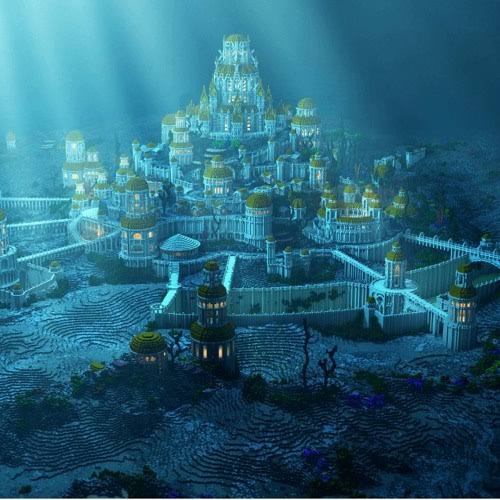
Atlantis : The lost City

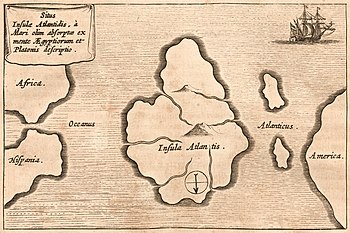
Atlantis is a fictional island mentioned in an allegory on the hubris of nations in Plato’s works Timaeus and Critias, wherein it represents the antagonist naval power that besieges “Ancient Athens”, the pseudo-historic embodiment of Plato’s ideal state in The Republic.In the story, Athens repels the Atlantean attack unlike any other nation of the known world, supposedly bearing witness to the superiority of Plato’s concept of a state.The story concludes with Atlantis falling out of favor with the deities and submerging into the Atlantic Ocean. While present-day philologists and classicists agree on the story’s fictional character,there is still debate on what served as its inspiration. Plato is known to have freely borrowed some of his allegories and metaphors from older traditions, as he did, for instance, with the story of Gyges.This led a number of scholars to investigate possible inspiration of Atlantis from Egyptian records of the Thera eruption,the Sea Peoples invasion, or the Trojan War. Others have rejected this chain of tradition as implausible and insist that Plato created an entirely fictional account, drawing loose inspiration from contemporary events such as the failed Athenian invasion of Sicily in 415–413 BC or the destruction of Helike in 373 BC.

Is this really the map of Atlantis!!!

PLATO’S DIALOGUES

The only primary sources for Atlantis are Plato’s dialogues Timaeus and Critias; all other mentions of the island are based on them. The dialogues claim to quote Solon, who visited Egypt between 590 and 580 BC; they state that he translated Egyptian records of Atlantis.Written in 360 BC, Plato introduced Atlantis in Timaeus. The four people appearing in those two dialogues are the politicians Critias and Hermocrates as well as the philosophers Socrates and Timaeus of Locri, although only Critias speaks of Atlantis. In his works Plato makes extensive use of the Socratic method in order to discuss contrary positions within the context of a supposition.

The Timaeus begins with an introduction, followed by an account of the creations and structure of the universe and ancient civilizations. In the introduction, Socrates muses about the perfect society, described in Plato’s Republic (c. 380 BC), and wonders if he and his guests might recollect a story which exemplifies such a society. Critias mentions a tale he considered to be historical, that would make the perfect example, and he then follows by describing Atlantis as is recorded in the Critias. In his account, ancient Athens seems to represent the “perfect society” and Atlantis its opponent, representing the very antithesis of the “perfect” traits described in the Republic.

Location Hypothesis

In or near the Mediterranean Sea
Most of the historically proposed locations are in or near the Mediterranean Sea: islands such as Sardinia,Crete, Santorini (Thera), Sicily, Cyprus, and Malta; land-based cities or states such as Troy, Tartessos, and Tantalis (in the province of Manisa, Turkey); Israel-Sinai or Canaan;and northwestern Africa.

The Thera eruption, dated to the seventeenth or sixteenth century BC, caused a large tsunami that some experts hypothesize devastated the Minoan civilization on the nearby island of Crete, further leading some to believe that this may have been the catastrophe that inspired the story.In the area of the Black Sea the following locations have been proposed: Bosporus and Ancomah (a legendary place near Trabzon).

Others have noted that, before the sixth century BC, the mountains on either side of the Gulf of Laconia were called the “Pillars of Hercules”,and they could be the geographical location being described in ancient reports upon which Plato was basing his story. The mountains stood at either side of the southernmost gulf in Greece, the largest in the Peloponnese, and that gulf opens onto the Mediterranean Sea. If from the beginning of discussions, misinterpretation of Gibraltar as the location rather than being at the Gulf of Laconia, would lend itself to many erroneous concepts regarding the location of Atlantis. Plato may have not been aware of the difference. The Laconian pillars open to the south toward Crete and beyond which is Egypt. The Thera eruption and the Late Bronze Age collapse affected that area and might have been the devastation to which the sources used by Plato referred. Significant events such as these would have been likely material for tales passed from one generation to another for almost a thousand years.

In the Atlantic Ocean
The location of Atlantis in the Atlantic Ocean has a certain appeal given the closely related names. Popular culture often places Atlantis there, perpetuating the original Platonic setting as they understand it. The Canary Islands and Madeira Islands have been identified as a possible location, west of the Straits of Gibraltar, but in relative proximity to the Mediterranean Sea. Detailed studies of their geomorphology and geology have demonstrated, however, that they have been steadily uplifted, without any significant periods of subsidence, over the last four million years, by geologic processes such as erosional unloading, gravitational unloading, lithospheric flexure induced by adjacent islands, and volcanic underplating.

Various islands or island groups in the Atlantic were also identified as possible locations, notably the Azores.Similarly, cores of sediment covering the ocean bottom surrounding the Azores and other evidence demonstrate that it has been an undersea plateau for millions of years.The area is known for its volcanism however, which is associated with rifting along the Azores Triple Junction. The spread of the crust along the existing faults and fractures has produced many volcanic and seismic events. The area is supported by a buoyant upwelling in the deeper mantle, which some associate with an Azores hotspot. Most of the volcanic activity has occurred primarily along the Terceira Rift. From the beginning of the islands’ settlement, around the 15th century, there have been about 30 volcanic eruptions (terrestrial and submarine) as well as numerous, powerful earthquakes.The island of São Miguel in the Azores is the site of the Sete Cidades volcano and caldera, which are the byproducts of historical volcanic activity in the Azores.

The submerged island of Spartel near the Strait of Gibraltar has also been suggested.

Ireland
In 2004, Swedish physiographist Ulf Erlingssonproposed that the legend of Atlantis was based on Stone Age Ireland. He later stated that he does not believe that Atlantis ever existed but maintained that his hypothesis that its description matches Ireland’s geography has a 99.8% probability. The director of the National Museum of Ireland commented that there was no archaeology supporting this.

THE LAND OF LOST

The fact that Atlantis is a lost land has made of it a metaphor for something no longer attainable. For the American poet Edith Willis Linn Forbes (1865-1945), “The Lost Atlantis” stands for idealisation of the past; the present moment can only be treasured once that is realised.[132] Ella Wheeler Wilcox finds the location of “The Lost Land” (1910) in one’s carefree youthful past.[133] Similarly, for the Irish poet Eavan Boland in “Atlantis, a lost sonnet” (2007), the idea was defined when “the old fable-makers searched hard for a word/ to convey that what is gone is gone forever”.

For some male poets too, the idea of Atlantis is constructed from what cannot be obtained. Charles Bewley in his Newdigate Prize poem (1910) thinks it grows from dissatisfaction with one’s condition,

And, because life is partly sweet
And ever girt about with pain,
We take the sweetness, and are fain
To set it free from grief’s alloy
in a dream of Atlantis. Similarly for the Australian Gary Catalano in a 1982 prose poem, it is “a vision that sank under the weight of its own perfection”.W. H. Auden, however, suggests a way out of such frustration through the metaphor of journeying toward Atlantis in his poem of 1941.While travelling, he advises the one setting out, you will meet with many definitions of the goal in view, only realising at the end that the way has all the time led inward.

Epic narratives
A few late-19th century verse narratives complement the genre fiction that was beginning to be written at the same period. Two of them report the disaster that overtook the continent as related by long-lived survivors. In Frederick Tennyson’s Atlantis (1888), an ancient Greek mariner sails west and discovers an inhabited island which is all that remains of the former kingdom. He learns of its end and views the shattered remnant of its former glory, from which a few had escaped to set up the Mediterranean civilisations.In the second, Mona, Queen of Lost Atlantis: An Idyllic Re-embodiment of Long Forgotten History (Los Angeles CA 1925) by James Logue Dryden (1840–1925), the story is told in a series of visions. A Seer is taken to Mona’s burial chamber in the ruins of Atlantis, where she revives and describes the catastrophe. There follows a survey of the lost civilisations of Hyperborea and Lemuria as well as Atlantis, accompanied by much spiritualist lore.
William Walton Hoskins (1856–1919) admits to the readers of his Atlantis and other poems (Cleveland OH, 1881), that he is only 24. Its melodramatic plot concerns the poisoning of the descendant of god-born kings. The usurping poisoner is poisoned in his turn, following which the continent is swallowed in the waves. Asian gods people the landscape of The Lost Island (Ottawa 1889) by Edward Taylor Fletcher (1816–97). An angel foresees impending catastrophe and that the people will be allowed to escape if their semi-divine rulers will sacrifice themselves. A final example, Edward N. Beecher’s The Lost Atlantis or The Great Deluge of All (Cleveland OH, 1898) is just a doggerel vehicle for its author’s opinions: that the continent was the location of the Garden of Eden; that Darwin’s theory of evolution is correct, as are Donnelly’s views.

Atlantis was to become a theme in Russia following the 1890s, taken up in unfinished poems by Valery Bryusov and Konstantin Balmont, as well as in a drama by the schoolgirl Larisa Reisner.One other long narrative poem was published in New York by George V. Golokhvastoff. His 250-page The Fall of Atlantis (1938) records how a high priest, distressed by the prevailing degeneracy of the ruling classes, seeks to create an androgynous being from royal twins as a means to overcome this polarity. When he is unable to control the forces unleashed by his occult ceremony, the continent is destroyed

The Transgender Rights.

Transsexual individuals come from varying backgrounds, and HRC Foundation has assessed that there are multiple million of us across the United States. We are guardians, kin, and children. We are your collaborators, your neighbors, and your companions. We are 7-year-old children and 70-year-old grandparents. We are a different local area, addressing all racial and ethnic foundations, just as all confidence customs.

“Transsexual” – or trans – is an umbrella term for individuals whose sexual orientation character is not quite the same as the sex allocated to us upon entering the world. Albeit “transsexual” and our cutting edge meaning of it just came into utilization in the late twentieth century, individuals who might fit under this definition have existed in each culture all through written history.

Close by the expanded perceivability of trans big names like Laverne Cox, Jazz Jennings or the stars of the hit Netflix series “Posture,” three out of each ten grown-ups in the U.S. actually knows somebody who is trans. As trans individuals become more noticeable, we mean to expand comprehension of our local area among our companions, families, and society.

What’s the significance here to be trans?

The trans local area is staggeringly different. Some trans individuals distinguish as trans men or trans women, while others might depict themselves as non-twofold, genderqueer, sexual orientation non-adjusting, agender, bigender or different characters that mirror their own insight. A few of us take chemicals or have a medical procedure as a feature of our progress, while others might change our pronouns or appearance. About 3/4 of trans youth that reacted to a HRC Foundation and University of Connecticut overview related to terms other than stringently “kid” or “young lady.” This recommends that a bigger segment of this present age’s childhood are recognizing some place on the expansive trans range.

What difficulties do trans individuals confront?

While trans individuals are progressively apparent in both mainstream society and in every day life, we actually face serious segregation, shame and fundamental imbalance. A portion of the particular issues confronting the trans local area are:

Absence of lawful assurance Trans individuals face a general set of laws that regularly doesn’t shield us from separation dependent on our sexual orientation character. Regardless of a new U.S. High Court Decision that clarifies that trans individuals are lawfully shielded from segregation in the working environment, there is still no complete government non-separation law that incorporates sex character – which implies trans individuals might in any case need response on the off chance that we face separation when we’re looking for lodging or eating in an eatery. Besides, state assemblies the nation over are discussing – and sometimes passing – enactment explicitly intended to deny trans individuals from getting to public restrooms that compare with our sexual orientation personality, or making exclusions dependent on strict convictions that would permit oppression LGBTQ individuals.

Destitution Trans individuals live in neediness at raised rates, and for trans minorities, these rates are much higher. Around 29% of trans grown-ups live in destitution, also 39% of Black trans grown-ups, 48% of Latinx trans grown-ups and 35% of Alaska Native, Asian, Native Americans and Native Hawaiian or Pacific Islander trans grown-ups.

Shame, Harassment and Discrimination – About a large portion of 10 years prior, just one-fourth of individuals in the United States upheld trans rights, and backing expanded to 62% continuously 2019. Regardless of this advancement, the trans local area actually faces extensive shame due to over a hundred years of being described as mentally sick, socially degenerate and physically savage. While these bigoted perspectives have blurred lately for lesbians and gay men, trans individuals are regularly still criticized by a general public that doesn’t get us. This disgrace works out in an assortment of settings – from administrators who influence hostile to trans shame to score modest political focuses; to family, companions or associates who reject trans individuals after finding out about our trans characters; and to individuals who pester, menace and submit genuine brutality against trans individuals. This incorporates disgrace that keeps them from getting to fundamental administrations for their endurance and prosperity. Just 30% of women’s havens will house trans women. While ongoing lawful advancement has been made, 27% of trans individuals have been terminated, not recruited or denied an advancement because of their trans personality. Time after time, harassment has driven trans individuals to try not to practice their most essential rights to cast a ballot. HRC Foundation’s exploration shows that 49% of trans grown-ups, and 55% of trans grown-ups of shading said they couldn’t cast a ballot in something like one political decision in their life due to dread of or encountering separation at the surveys.

Savagery Against Trans People–Trans individuals experience viciousness at rates far more noteworthy than the normal individual. More than a larger part (54%) of trans individuals have encountered some type of cozy accomplice brutality, 47% have been physically attacked in the course of their life and almost one of every ten were actually attacked in the middle 2014 and 2015. This sort of viciousness can be lethal. No less than 27 trans and sexual orientation non-adjusting individuals have been viciously killed in 2020 hitherto, similar number of fatalities saw in 2019.

A TREATMENT TO YOUR HEART

We all have pain and happiness in our life. But Don’t lock yourself in a room thinking that life will take us in harsh places only . Believe that there is a lot of wonderful moments to see in your life too . The following are the important words that is to be remembered .

  1. You are worthable to live an incredible life .. You are special there is no one like you. You are worthable for doing something great and creditable.Think this quote always when you feel stressed.
  2. Do see around …There are people who can’t able to study and they are living in streets.God has given us the basic necessities like home, family , friends etc..this itself a major blessings. Don’t desire much . Accept the life offers to you and be happy. Maybe someone out there in this world are desperately wishing to live your life.
  3. Do use your blessings to help the people those who are in streets. Don’t be selfish . Always remember that doing for your self dies with you. Doing for someone will be remembered through ages eg.mother terasa.
  4. Praise others . It will make better about your self . Thinking good things and doing good things will heal and gives life your heart .
  5. Be mature. Every one and Every thing is temporary ( money, age, friends etc…)Sooner or later it will go one day. Accept this reality.Even us are temporary. So avoid being jealous, doing bad things,hurting others etc..as it will destroys heart liveliness and makes it unworthy of it working inside you.
  6. Make your thinking appropriate and logical. “Everyone in this world are fake” actually it’s a lie. Is your mom and dad love fake ?? . Are you fake ?? No right !!!! they why you are running around saying that everyone is fake. The truth is that this thought of yours is fake . You have an evidence that good and true people exists within your family circle itself .
  7. Always trust your energy and feelings. Sometimes we will know that this person is fake . Immediately withdraw that person from your Life. But after that don’t make up your mind that everyone is like that only. Believe that true persons also there. As I said not all are evil .

Gender Inequality in Education.

In the current presence, there have been plan of measures and projects that equivalent rights and openings ought to be made accessible to the young ladies. Previously, people had this perspective that male individuals from the family ought to be instructed. When the guys would gain schooling, they would deliver a huge commitment in advancing generosity and prosperity of their families through attainment of employment openings. However, in the current presence, in metropolitan just as in provincial networks, people and networks have achieved changes in their perspectives and viewpoints and are empowering young ladies also towards securing of training. Young ladies and women too can deliver a viable commitment in advancing government assistance of their families and networks. At the point when they acquire support from their folks, then, at that point they can achieve great quality training. Variables Causing Gender Inequality in EducationThere are presence of numerous and different associations between sexual orientation correspondence and fulfillment of the fundamental right to schooling. The women and young ladies are encountering refusal of common freedom to instruction in India, yet in different nations of the world also (Gender Discrimination in Education, 2012). The elements causing sex disparity in instruction have been expressed as follows: Conditions of Poverty When people are dwelling in the states of neediness, then, at that point they experience number of issues and difficulties in making a decent living. Now and again, they even experience issues in gathering their every day healthful requirements. The people and families, who are dwelling in the states of destitution have the essential goal of creating adequate pay to support their everyday environments agreeably. They generally don’t have monetary assets to meet the costs, engaged with the compatibility of training. In any event, when schooling is given liberated from cost, they actually need to meet different costs, involvedin instruction. These are, fixed things, books, sacks, outfits, transportation costs, etc. The destitution stricken people experience issues in gathering these costs. The destitution stricken people have this perspective that procurement of training is of most extreme importance in supporting one’s day to day environments. Consequently, they seek to get their

children joined up with schools. They have this perspective that instruction ought to be given to the children, so they can get occupied with great employment openings in future. Though, young ladies are prepared as far as execution of family duties and minor tasks to procure some pay to help their families. For example, when guardians are occupied with creation of things, then, at that point they empower their children, both young men and young ladies to help them underway and deals. The young men are needed to land occupied with this position after school hours. The young ladies are normally deterred from securing of instruction, because of restricted monetary resources.Their male kin show them, what they have realized in schools, principally to improve their essential proficiency abilities of perusing, composing and numeracy. Commonness of Traditional Viewpoints The people and networks generally had customary perspectives with respect to the schooling of young ladies. Especially, when they had restricted monetary assets, then, at that point theybelieved that these assets ought to be put something aside for marriage of their young ladies and ought not be spent on training. Another perspective was that in conjugal homes, young ladies would not have the option to use their instructive abilities and would fundamentally need to implement the family obligations. Thinking about this angle, from the underlying stage, they train their young ladies in regards to the implementation of family obligations. In the past period, young ladies and women were only kept to their homes and not permitted to take an interest in any friendly capacities or occasions. They were not permitted to communicate their perspectives and viewpoints in the dynamic issue. They basically supported their day to day environments on the pay procured by men and were intended to comply with the choices and rules detailed by them. Henceforth, because of the predominance of customary perspectives, they were oppressed and were denied of specific rights and openings. The procurement of training of young ladies, is generally influenced by conventional practices related with youthfulness. In some rustic networks, pervasiveness of certain customary practices end up being obstacles inside the course of obtaining of training with respect to the young ladies (Linda, 2014). Because of the pervasiveness of customary perspectives and viewpoints, girlsare denied from obtaining of instruction, yet in addition in accomplishing self-freedom. All in all, these are boundaries inside the course of attainment of empowerment openings. Accordingly, for achieving empowerment openings among women and young ladies, it is important to achieve changes in customary perspectives and offer equivalent rights and chances to women and young ladies.

Article 21 of Constitution of India: Protection of Life and Personal Liberty

‘Everybody has the option to life, freedom and the security of individual.’ The right to life is without a doubt the most fundamental, all things considered. Any remaining rights add quality to the life being referred to and rely upon the pre-presence of life itself for their activity. As basic freedoms can just append to living creatures, one may anticipate that the right should life itself to be in some sense essential, since none of different rights would have any worth or utility without it. There would have been no Fundamental Rights worth focusing on if Article 21 had been deciphered in its unique sense. This Section will inspect the right to life as deciphered and applied by the Supreme Court of India.

Article 21 of the Constitution of India, 1950 gives that, “No individual will be denied of his life or individual freedom besides as indicated by strategy set up by law.” ‘Life’ in Article 21 of the Constitution isn’t just the actual demonstration of relaxing. It doesn’t hint simple creature presence or proceeded with drudgery through life. It has a lot more extensive significance which incorporates right to live with human respect, right to work, right to wellbeing, right to contamination free air, and so forth

Right to life is fundamental to our very presence without which we can’t live as an individual and incorporates every one of those parts of life, which go to make a man’s life significant, complete, and worth living. It is the lone article in the Constitution that has gotten the most stretched out conceivable translation. Under the covering of Article 21, so numerous rights have discovered asylum, development, and nourishment. In this manner, the minimum essentials, least and fundamental requirements that are fundamental and unavoidable for an individual is the center idea of the right to life.

On account of Kharak Singh v. Province of Uttar Pradesh[i], the Supreme Court cited and held that:

By the expression “life” as here utilized something more is implied than simple creature presence. The hindrance against its hardship reaches out to every one of those appendages and resources by which life is appreciated. The arrangement similarly restricts the mutilation of the body by removal of a shielded leg or the pulling out of an eye, or the annihilation of some other organ of the body through which the spirit speaks with the external world.

In Sunil Batra v. Delhi Administration[ii], the Supreme Court repeated with the endorsement the above perceptions and held that the “right to life” incorporated the option to have a solid existence in order to partake in all resources of the human body thriving conditions. It would even incorporate the right to security of an individual’s practice, culture, legacy and all that offers importance to a man’s life. It incorporates the right to live in harmony, to rest in harmony and the option to rest and wellbeing.

Right To Live With Human Dignity

In Maneka Gandhi v. Association of India[iii], the Supreme Court gave another dimension to Art. 21 and held that the option to live isn’t simply an actual right yet incorporates inside its ambit the right to live with human pride. Elaborating a similar view, the Court in Francis Coralie v. Association Territory of Delhi[iv], saw that:

“The option to live incorporates the right to live with human poise and all that accompanies it, viz., the minimum essentials of life like satisfactory nourishment, dress and asylum over the head and offices for understanding composition and communicating one’s thoughts in assorted structures, uninhibitedly moving about and blending and blending with individual people and should incorporate the right to fundamental necessities the fundamental necessities of life and furthermore the option to continue capacities and exercises as establish the absolute minimum articulation of human self.”

Another expansive definition of the subject of life to nobility is to be found in Bandhua Mukti Morcha v. Association of India[v]. Describing Art. 21 as the core of fundamental rights, the Court gave it an extended understanding. Bhagwati J. noticed:

“It is the fundamental right of everybody in this nation… to live with human poise liberated from misuse. This right to live with human nobility cherished in Article 21 gets its life breath from the Directive Principles of State Policy and especially provisions (e) and (f) of Article 39 and Articles 41 and 42 and in any event, consequently, it should incorporate security of the wellbeing and strength of laborers, men and women, and of the young period of children against misuse, openings and offices for children to create in a solid way and in states of opportunity and pride, instructive offices, just and compassionate states of work and maternity help.

“These are the base requirements which should exist to empower an individual to live with human nobility and no State neither the Central Government nor any State Government-has the privilege to make any move which will deny an individual of the enjoyment of these fundamental things.”

Following the above-expressed cases, the Supreme Court in Peoples Union for Democratic Rights v. Association of India[vi], held that non-payment of least wages to the specialists utilized in different Asiad Projects in Delhi was a refusal to them of their right to live with essential human pride and violative of Article 21 of the Constitution.

Bhagwati J. held that rights and advantages presented on workmen utilized by a worker for hire under different labor laws are plainly proposed to guarantee fundamental human nobility to workmen. He held that the non-implementation by the private workers for hire drew in for developing a structure for holding Asian Games in Delhi, and non-enforcement of these laws by the State Authorities of the arrangements of these laws was held to be violative of the fundamental right of laborers to live with human pride contained in Art. 21.

In Chandra Raja Kumar v. Police Commissioner Hyderabad, it has been held that the right to everyday routine incorporates right to experience with human pride and goodness and, consequently, holding of excellence challenge is repulsive to respect or respectability of women and irritates Article 21 of the Constitution in particular if the equivalent is horribly revolting, profane, disgusting or expected for coercing. The government is engaged to forbid the challenge as questionable execution under Section 3 of the Andhra Pradesh Objectionable Performances Prohibition Act, 1956.

In State of Maharashtra v. Chandrabhan, the Court struck down an arrangement of Bombay Civil Service Rules, 1959, which given to payment of just an ostensible resource stipend of Re. 1 every month to a suspended Government Servant upon his conviction during the pendency of his allure as illegal on the ground that it was violative of Article 21 of the Constitution.


The Right To Education.

The Right of Children to Free and Compulsory Education Act or Right to Education Act (RTE), is an Act of the Parliament of India authorized on 4 August 2009, which portrays the modalities of the significance of free and obligatory schooling for children somewhere in the range of 6 and 14 in India under Article 21a of the Indian Constitution. India became one of 135 nations to make training a fundamental right of each child when the Act came into power on 1 April 2010.

The Act makes instruction a fundamental right of each child between the ages of 6 and 14 and determines least standards in elementary schools. It requires all non-public schools to save 25% of seats to children (to be repaid by the state as a component of the public-private organization plan). Children are conceded in to tuition based schools dependent on monetary status or rank based reservations. It likewise restricts all unnoticed schools from training, and makes arrangements for no gift or capitation expenses and no meeting of the child or parent for affirmation. The Act likewise gives that no child will be kept down, removed, or needed to breeze through a board assessment until the culmination of elementary schooling. There is likewise an arrangement for uncommon preparing of school quitters to carry them acceptable with understudies of a similar age.

The RTE Act requires overviews that will screen all areas, distinguish children requiring instruction, and set up offices for giving it. The World Bank instruction expert for India, Sam Carlson, has noticed: “The RTE Act is the principal enactment on the planet that puts the obligation of guaranteeing enrolment, participation and fruition on the Government. It is the guardians’ duty to send the children to schools in the US and different nations.”

The Right to Education of people with handicaps until 18 years old is set down under a different enactment – the Persons with Disabilities Act. Various different arrangements with respect to improvement of school framework, instructor understudy proportion and personnel are made in the Act.

Training in the Indian constitution is a simultaneous issue and both focus and states can administer on the issue. The Act sets down explicit obligations regarding the middle, state and neighborhood bodies for its implementation. The states have been clamoring that they need monetary ability to convey instruction of suitable norm in all the schools required for all inclusive training. In this manner plainly the focal government (which gathers the greater part of the income) will be needed to sponsor the states.

A board set up to contemplate the assets requirement and subsidizing at first assessed that INR 1710 billion or 1.71 trillion (US$38.2 billion) across five years was needed to implement the Act, and in April 2010 the focal government consented to sharing the financing for implementing the law in the proportion of 65 to 35 between the middle and the states, and a proportion of 90 to 10 for the north-eastern states. Be that as it may, in mid 2010, this figure was moved up to INR 2310 billion, and the middle consented to raise its offer to 68%. There is some disarray on this, with different media reports expressing that the a lot of the implementation costs would now be 70%. At that rate, most states should not have to expand their schooling financial plans generously.

A basic development in 2011 has been the choice taken on a basic level to stretch out the right to schooling till Class X (age 16) and into the preschool age range. The CABE board is currently investigating the ramifications of rolling out these improvements.

The Ministry of HRD set up an undeniable level, 14-part National Advisory Council (NAC) for implementation of the Act. The individuals included Kiran Karnik, previous leader of NASSCOM; Krishna Kumar, previous overseer of the NCERT; Mrinal Miri, previous bad habit chancellor of North-East Hill University; Yogendra Yadav – social researcher. India

Sajit Krishnan Kutty, Secretary of The Educators Assisting Children’s Hopes (TEACH) India; Annie Namala, an extremist and head of Center for Social Equity and Inclusion; and Aboobacker Ahmad, VP of Muslim Education Society, Kerala.

A report on the situation with implementation of the Act was delivered by the Ministry of Human Resource Development on the one year commemoration of the Act. The report concedes that 8.1 million children in the age bunch six-14 stay out of school and there’s a deficiency of 508,000 instructors country-wide. A shadow report by the RTE Forum addressing the main schooling networks in the nation, nonetheless, testing the discoveries bringing up that few key lawful commitments are falling behind the timetable. The Supreme Court of India has likewise mediated to request implementation of the Act in the Northeast. It has likewise given the lawful premise to guaranteeing pay equality between educators in government and government helped schools. Haryana Government has relegated the obligations and duties to Block Elementary Education Officers–cum–Block Resource Coordinators (BEEOs-cum-BRCs) for viable implementation and persistent checking of implementation of Right to Education Act in the State.

It has been called attention to that the RTE act isn’t new. Widespread grown-up establishment in the demonstration was gone against since the majority of the populace was unskilled. Article 45 in the Constitution of India was set up as a demonstration: The State will attempt to give, inside a time of a long time from the commencement of this Constitution, free of charge and necessary schooling for all children until they complete the age of fourteen years.

As that cutoff time was going to be passed numerous many years prior, the instruction serve at that point, MC Chagla, notably said: “Our Constitution fathers didn’t mean that we just set up cabins, put understudies there, give undeveloped instructors, give them terrible course readings, no jungle gyms, and say, we have consented to Article 45 and essential training is growing… They implied that genuine training ought to be given to our children between the ages of 6 and 14” – (MC Chagla, 1964).

During the 1990s, the World Bank subsidized various measures to set up schools inside simple reach of provincial ommunities. This work was solidified in the Sarva Shiksha Abhiyan model during the 1990s. RTE takes the interaction further, and makes the enrolment of children in schools a state right.

MONOPOLY

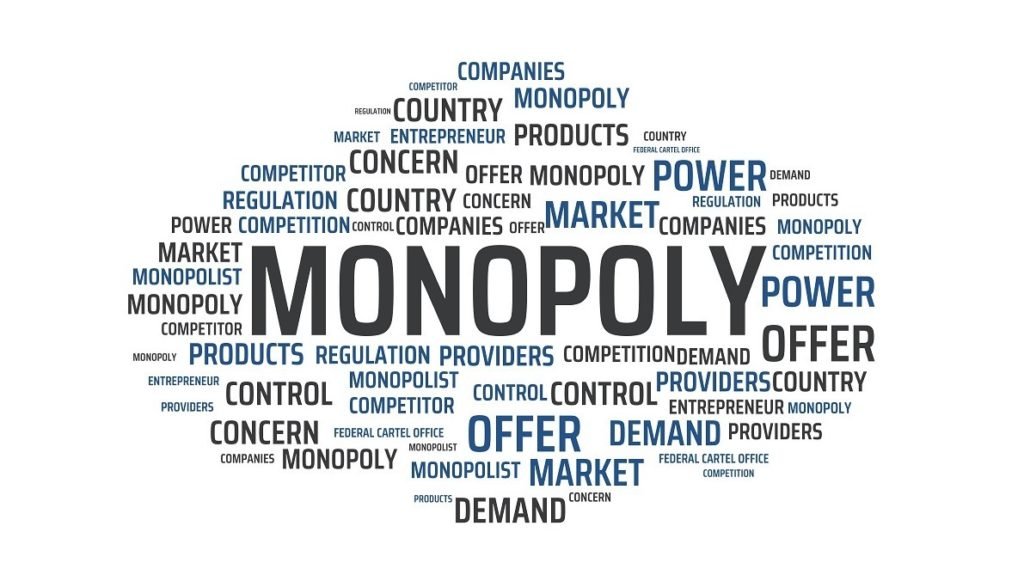
The Sherman Antitrust Act was the first federal act that outlawed monopolistic business practices. In the US Sec 2 of Sherman act, 1890 makes it unlawful for a company to achieve monopoly power, and Sec 7 of Clayton act 1914 prevents mergers of companies that will lessen competition or lead to a monopoly. The Federal Trade Commission protects consumers from any kind of unfair practices taking place in the market places. Similarly in India, the Competition Commission of India has the responsibility to ensure fair and healthy competition in economic activities, to eliminate practices adversely affecting competition. All over the world, similar government agencies are constantly developing regulations and laws to keep the marketplace clean and just.

Big tech companies are now under the intense scrutiny of competition watchdogs around the world. In the US antitrust charges are filed against Google and are accused of protecting the monopoly, bipartisan lawsuits filed against it say Google search engine and play store is anticompetitive. French completion watchdog fined google $268 million for abusing its dominant position and asked it to pay for news to the publishers. Australia too directed google to pay for news content.

In India, big techs are at loggerheads with the government over the new IT rules. Both have different perceptions regarding certain aspects. The new IT rules make it mandatory for companies having a users base of more than 50 lakhs(5 million) to appoint a chief compliance officer, nodal officer, and grievance officer in the country all residents of India. Also in India, data protection laws are at a very nascent stage and are underdeveloped and incapable of protecting its citizens’ data from any kind of misuse.

Developed nations are now recognizing the unquestionable power big companies enjoyed so long. Recently G7 countries agreed on a 15% global minimum corporate tax which they say aims to discourage large corporates from avoiding tax by shifting bases.

So basically nations arround the world are conserned about tax evasion, unfair business practices, and lack of rules and regulations to restrict powers of monopolistic companies.While it is legal for companies to adopt strategies for reducing taxable income, tax evasion tactics by using it dominance is unacceptable.There is difference between gainging monopoly and afterwards using it for sustaining monopoly. I am of the option that if companies are providing quality products and services and gaining monopoly it’s fine but sustained hold of monopoly for long period can make them all too powerful, and that is why we need dynamic regulations in place to check their power.

No Saul or Chiesa – but can Liverpool afford to ignore need for midfield and forward signings this summer?

It is that time of year again, as far as Liverpool fans are concerned.

Transfer season. Where hope springs eternal and imaginations run wild.

And where fear, frustration and downright anger – in some cases – have increasingly become stock emotions.

The Reds have so far added only Ibrahima Konate to their squad, but at least two more arrivals are needed at Anfield before the window closes

Pollution

Introduction:
Pollution is a major issue or concern I today’s times. Pollution is when the natural environment gets contaminated by contaminants which in turn cause great damage to the environment. Pollution comes in many different substances such as noise, heat or light. It could be natural or which is created due to human activity like trash or factories. Pollution comes with the cost. It could affect our health as a whole and it will also cost a lot to the society clean it up. In this article I am mainly going to talk about the types of pollution such as water pollution, noise pollution, air pollution and plastic pollution.


• Water pollution:
Water pollution is the contamination of water and water bodies with either physical, chemical or biological properties of water due to the discharge of industrial elements or any substance like liquid, solid or gas into water. It could be dangerous for public health as consuming this contaminated water could lead to diseases and unsafe health conditions. It could also affect agriculture. It’s also possible to harm the marine life, the living organisms in water such as fishes, corals etc. The main way to prevent water pollution is if people and industries don’t throw waste and toxic discharge into the water.


• Noise pollution:
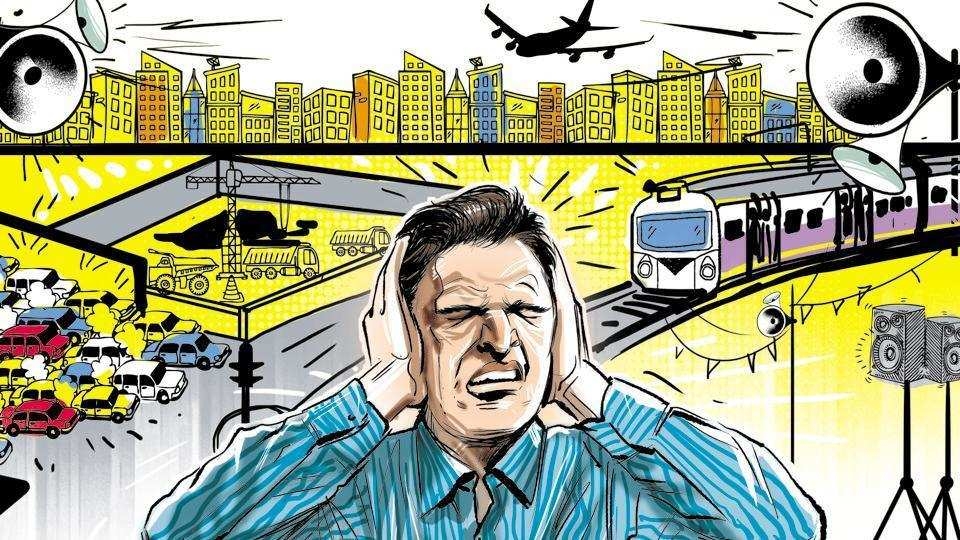
One of the most prominent types of pollution is the existence of noise pollution. It refers to the presence of excessive or loud sound or noise in the environment. It might not sound too dangerous but it could be dangerous for human and animal health. There can be many ways noise pollution can be created, some are from big vehicles, large industries or even during constructions, the constant noise can be very inconvenient and uncomfortable for many. Another reason could be due to loud speakers during festivals, concerts etc. Even listening to music at a loud volume could damage our hearing. Some ways to avoid damaging your ears would be to listen to volume at an acceptable volume and try to avoid any festival which use big, huge speakers.


• Air pollution:
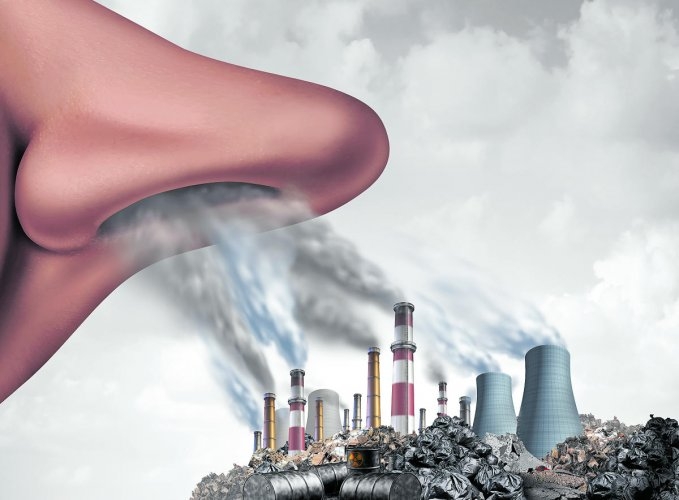
Air pollution is something that happens when there is pollutant present in the atmosphere. It needs to be high in concentration to cause harm to humans, animals and plants. Anything which contaminates or harms the air or makes it dirty and not comfortable to breathe is called air pollution. Air pollution could cause great damage as it’s what we breathe every day and even if we can’t see effects immediately, it could affect us later in life. It affects every form of being, anything which breathes and needs oxygen to survive.


• Plastic pollution:
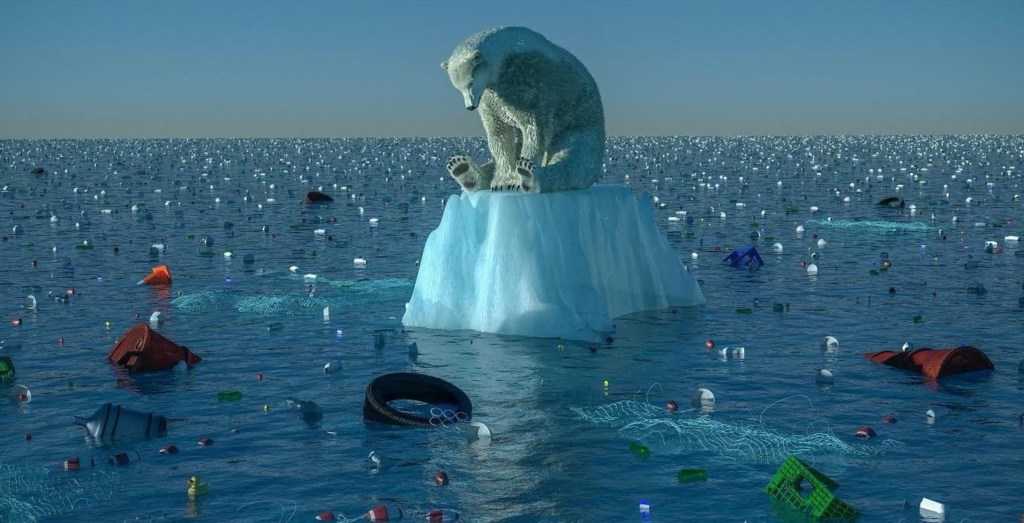
Plastic pollution mainly refers to the fact that the environment is getting contaminated by plastic and products made of plastic. Plastic products such as milk packets, plastic straws, plastic bags etc are all causes for the pollution. The only way to prevent this it is by making sure to not use plastic bags and even if you do, don’t throw it away especially into the ocean.


Conclusion:
It is very important to preserve our earth and contamination is not the way to do it. We must make sure that the planet we live in is safe for everyone, including ourselves. As global warming is increasing, we need to look back on our actions and help overcome this setback.

https://www.britannica.com/science/water-pollution

https://www.britannica.com/science/noise-pollution

https://www.nrdc.org/stories/air-pollution-everything-you-need-know

https://www.britannica.com/science/plastic-pollution

Hairline Fracture

Hairline or stress fractures are tiny cracks on a bone that often develop in the foot or lower leg. It is common for hairline fractures to occur as a result of sports that involve repetitive jumping or running. Hairline fractures usually develop gradually as a result of overuse, as opposed to larger bone fractures or breaks that are mostly caused by acute traumas, such as a fall. While hairline fractures may heal with sufficient rest, they can be painful and last several weeks. The most common treatment approach is rest.

Certain factors are associated with an elevated risk of developing hairline fractures, these include:

  • Gender: Hairline fractures are more common in women, particularly those with irregular menstrual cycles.
  • Anatomical abnormalities: Some abnormalities can intensify the strain on particular bones, such as having flat feet or high arches. This can also be exasperated by low quality or worn out footwear.
  • Bone problems: Conditions that weaken bones, such as osteoporosis
  • Previous hairline fractures: A hairline fracture causes the bone to be more susceptible to fractures reoccurring
  • Diet imbalances: Weakened bones can develop from diets that lack nutrients essential to bone health, such as calcium or vitamin D, increasing the risk of hairline fractures occurring.

Hairline fractures are easily dealt with, but medical attention should be sought immediately to prevent the injury from worsening. Ignoring a hairline fracture can lead to a more serious fracture or break occurring, which is more difficult to treat.