RTI ACT- Every Citizen’s right!

Right to Information (RTI) is an act of the Parliament of India which sets out the rules and procedures regarding citizens’ right to information. This particular act was passed as an independent act by the Indian Parliament in the year 2005.

The RTI act has been useful in getting to know our personal grievances, making our politicians and elected representatives accountable.

The RTI act empowers common public in India by indirectly involving them in decision making and in other important public affairs. Every citizen in India through this act got the privilege of right to be informed.

RTI ACT: Controversial, yet beneficial.

Very recently, an RTI application was filed by a group of individuals seeking to know about source of a particular line in NCERT History textbook of grade 7th which said “Temples were rebuilt after they were destroyed by the Mughals”. The individuals wanted to know about the source of information regarding the text to which the response was “Source of information is unknown”.

In such a case, one may argue that RTI act doesn’t mandate an authorised body to respond “according to the query” (meaning, they just have to respond, it does not matter what the response is) that is, an authorised body doesn’t necessarily have to respond, they can just pass the query off by saying “no source of information available.”

But at the same time, RTI ACT as mentioned earlier is a powerful tool for citizens through which commoners in the country can keep an eye on the government and its activities. For example, in 2016, when Demonetisation was announced by the Government of India, Mr. Venkatesh Nayak filed an RTI application which revealed that RBI did not agree with Government of India’s justification that the decision would curb corruption in India.

Another example could be the Commonwealth Games Scam, in which an RTI application was filed by a non-profit organisation which revealed that Delhi Government had diverted Rs. 744 crores from funds which were kept only for Dalits to Commonwealth Games.

A very successful case was also found in Bangalore where a bundle of corruptions and dereliction of duties in allowing encroachment of government land of 12,000 square feet without the permission from the respective authorities by New Cambridge School Trust. The Assistant Executive Engineer who was supposed to actions against the encroachment of land which was worth Rs. 6 crores was found protecting the illegal encroachment of land. These irregularities came out when an RTI application was filed before the Executive Engineer Division in Bangalore.

Denouement:

RTI act from the beginning has been into controversies for being chaotic and problematic in many cases. But in my view, these instances of chaos are again because of the same loopholes we have in our democratic system and legal system we strive to fight against via the help of RTI act. Nonetheless, the act has enabled the citizens to become more aware and hold the government accountable when required. This is evident from the fact that India ranked 4th best in the world for RTI laws. The recent amendment of act in 2019 is however criticised as many feel, it would give Central Government more power.

Story of the Man Behind OYO Rooms

OYO Rooms was started as Oravel in 2011 by the then 18-year-old Ritesh Agarwal. After graduating from the Peter Thiel Fellowship program, Oravel pivoted to Oyo Rooms – a chain of branded budget hotels across several cities in India. OYO Rooms is the country’s largest budget hotel chain with about 1 million rooms in 23,000 hotels all over India.The company is backed by investors like the Softbank Group, Greenoaks Capital, Sequoia Capital, and Lightspeed India and is one of the leading startup unicorns in the hotel industry.

The teenage boy – Ritesh Agarwal is the young Founder & CEO of OYO Rooms – the fastest-growing branded network of hotels offline & online. A college dropout, who once wanted to sit for an engineering exam, Ritesh today heads among the most valuable start-up by a person who never studied beyond school. The journey of our hero began rather early than normal!

Born to a humble family in Cuttack, his journey of becoming a successful entrepreneur wasn’t a very smooth one. In fact, in the era of start-ups, he had to face certain difficulties in trying to battle it out to make his unconventional idea work.

To pursue his passion for becoming an entrepreneur, he enrolled in the Indian School of Business & Finance, Delhi but left college mid-way to start his own company. He was hesitant about his decision but from the beginning, he was very clear about what he wanted to do and took some tough choices to accomplish his dreams.

Ritesh was born to a business class family in Bissam Cuttack in Orissa and attended the Sacred Heart School in Rayagada, Orissa. During the growing up days in Rayagada, Odisha, it was all about fun and learning for him but his ways were rather unconventional from those of other kids. His fun elements included screwing around with the computer and trying hard to find opportunities to make mistakes so that he could learn new stuff. And doing that he gained a keen interest in software!

This started with the idea of it, moved on to know about it and then the hunger just went on increasing. To quench his thirst, he borrowed his elder brother’s books for programming. Some of the basic languages like Basic and Pascal were taught in the school itself and the rest he managed to learn from Google. He even sold sim cards to survive, afraid his family would end his entrepreneurial dreams and summon him back home to Odisha if they knew of his struggles.

In Kota(Rajasthan), where he was ostensibly preparing for his IIT entrance exams, Ritesh says he couldn’t wait every weekend to slip out to Delhi and meet those doing their own thing. This 19-year-old had traveled for months staying at budget hotels, attended customer calls every day, and immersed himself in every possible experience to learn about budget hotel customers and their expectations. That was the kind of on-the-ground learning that helped him pivot Oravel to Oyo.

He has traveled all over the country and during such travels, discovered the problem with budget hotels. At the age of 17, he launched Oravel travels, modeled after Airbnb, which later branched out to become OYO rooms. Soon he discovered that the problem with budget hotels was bigger than just availability, so, to counter other issues, he launched OYO.

In 2014; the company raised Rs. 4 Cr from Lightspeed Venture Partners (LSVP) and DSG Consumer Partners, at a pre-money valuation (valuation of a company before investment or financing) of Rs 14 Cr. What motivated Ritesh, even more, was that by now the company was clocking gross bookings of more than Rs.1 Cr. per month.

Since then; OYO Rooms has gone on to become India’s first technology-driven network of standardized branded budget hotels and has also widely expanded its presence to 20,000+ hotels and more than 1 million rooms in 337 cities like Delhi, Gurgaon, Noida, Bangalore, Mumbai, Pune, Goa, Jaipur, Hyderabad, etc.

Additionally, their OYO Rooms mobile app has been downloaded more than 10 million times and more than 5 million bookings have been made so far. The app ranks amongst the best-rated apps on Google Play Store and has also been listed as one of the top three apps in the ‘Travel & Local’ category.

The company has also raised another $25 Million from Lightspeed, Sequoia and others. In the latest news, OYO’s founder Ritesh Agarwal has purchased $2 billion in shares from venture capital firms Sequoia Capital and Lightspeed venture partners.

GOODS AND SERVICE TAX.

Goods and service tax is indirect tax or consumption tax that are employed on goods and services in India the goods and service tax is imposed on every step in the production process it is collected from point of conception and not the point of origin like previous taxes it is comprehensive multistage and destination based tax. The tax rates rules and regulations are governed by the GST council which consists of the financial ministers of the central government and all the states. GST are divided into 0% 5% 12% 18% 28% rate of taxes. There is a special rate of 0.25 percent On rough precious and semi precious stone and 3% on gold. Pre GST the statutory tax rate for most goods where about 26.5% post GST most of the goods are expected to be in the rate of 18% tax range.

The GST replaced existing multiple taxes live it by the central and state government positive outcome of the GST includes the travel time in interstate moment drop by 20% because of disbanding of interstate check post. The Asim Pargupta committee which was put in place back end technologies and logistics later came to be known as GST network. Later came or for rolling out a uniform taxation regime in the country. The GST was strongly opposed by the opposition Indian National Congress it is one of the few sessions that have been held by the parliament where a panel of federal and state financial ministers decided to revise GST rates on 28 goods and 53 services the party’s reported that they found virtually no differences between the GST and existing taxation system they argued that the GST would increase existing rate on commodities like daily goods while reducing rates on luxury items and also affected for the middle lower middle and four income groups importantly. The reverse charge mechanism is where the GST liable fish on the receiver a tax on the behalf of unregistered smaller materials and services suppliers. And the goods get the eligibility of income taxes which are not enjoyed by the under jasta dealers.

Alcohol for human consumption petrol and petroleum products like petroleum Crude high speed Diesel motor spirit natural gas aviation turbine fuel and no GST applicability. Revenue distribution that are earned from GST were equally shared in interstate seller and buyer on 50-50 basis between the central and respective state governments. The GST council is the governing body of 33 members consisting of two members from Central and 31 members from 28 states and three union territories with legislature the GST council is an Apex member committee to modify reconcile or to procure any law or regulation based on the contacts of GST tax in India. The GST council is responsible for any revision or a enactment of rules aur any rate changes of the goods and services. The gstn software air is developed by the the Infosys technology and information technology network that provides the computer resources is maintained by NIC, goods and service tax network (GSTN) economic profit organisation formed for creating a a sophisticated network accessible to stakeholders government and taxpayers to access information from single source portal. The value addition in case of manufacturers make biscuits by sugar flour another for materials for manufacturing of biscuits the manufacturer then sells the biscuits to the warehouse and then the process continues till the biscuits reaches the final stage the GST is lived on the value addition such as the monetary value added at its States to achieve the final sale to the end customer.

Since the GST tax is the point of conception centre tax revenue will go to the the Karnataka not to Maharashtra. The advantage of goods and service tax are details to remove the cascading effect to tax higher threshold for goods and service tax registration composition scheme for small business simple online facility for GST compliance increased efficiency in logistics helps in single price reduction some of the disadvantage of goods and service tax are increase in cost of software adapting to a complete online access in system GST will mean an increase in operational cost. Some of the indirect taxes are Central excise duty cess state VAT Central sales tax purchase tax luxury tax entertainment tax and taxes on advertisement

Water Pollution: A threat to humans and the environment!

Talking about our most crucial resource “Water”, our rivers, lakes, seas are flooding with chemicals, waste, plastic, and other pollutants. Every living being’s life has become nothing but a threat. Yet we trash water anyway. A British poet named W.H Auden once said “Thousands have lived without love, not one without water.” Polluted water takes away more life than any war/form of violence. With access to less than 1℅ of freshwater resources, it is estimated that by 2050 demand for freshwater will increase by 1/3 than it is today.

In this article, you’ll know:-

★What is water pollution?

★What are the causes?

★What are the ways to prevent water pollution?

What is water pollution?

Water pollution is caused when water bodies are contaminated with chemicals, wastes, or microorganisms, that end up turning water bodies toxic to humans and the environment.

Causes of Water Pollution:-

Water is a Universal Solvent, and it can dissolve more substances than any other liquid on earth. That’s why water is easily polluted. Toxic Substances from factories, farms, and towns mix with it and make it polluted. 

I) Groundwater Pollution- Groundwater gets polluted when pollutants like pesticides, fertilizer runoff, waste are leached from the trash yard and septic systems.

II) Surface Water Pollution- Surface water gets polluted by fertilizer runoff, farm waste, municipal and industrial waste, dumping garbage directly, etc.

III) Ocean water Pollution- Chemicals, nutrients, and many toxic substances from farms, industries, cities are carried by streams and rivers to the sea. Hence, ocean water gets polluted. It is also polluted because of oil spills and leaks.

IV) Radioactive Pollution- Radio Active wastes are generated by uranium mining, nuclear power plants, and by universities and hospitals using radioactive material for research. Unknowingly released or improper disposal of these pollutants can threaten groundwater, surface water, and marine resources. 

What are the ways to prevent water pollution?

The ways by which one can prevent water pollution are:-

I)  Reduce, reuse and recycle plastic.

II) Maintenance of vehicles(especially checking oil leakage or coolant leakage. 

III) Proper disposal of chemicals, factory waste, oils, and non-biodegradable substance. 

IV) By avoiding the usage of pesticides and herbicides.

V) By considering landscaping to reduce runoff.

VI) By spreading awareness. 

SWOT ANALYSIS OF UDAAN

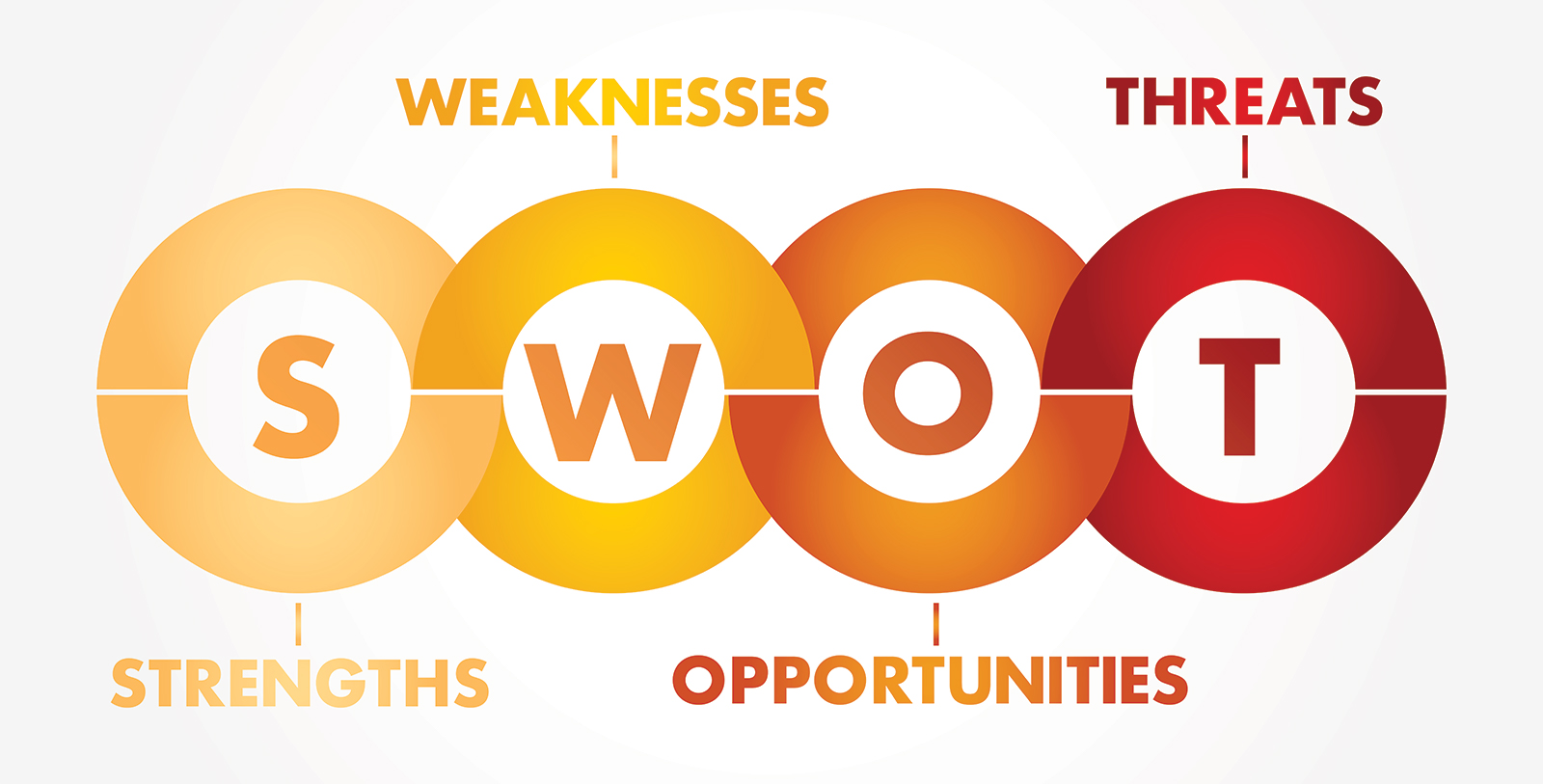
SWOT Analysis is a framework used to evaluate a company’s competitive position and to develop strategic planning. It helps in assessing internal and external factors, as well as current and future potential.

A SWOT analysis is designed to facilitate a realistic, fact-based, data-driven look at the strengths and weaknesses of an organization, initiatives, or within its industry. The organization needs to keep the analysis accurate by avoiding pre-conceived beliefs or gray areas and instead focusing on real-life contexts. Companies should use it as a guide and not necessarily as a prescription.

Meaning of SWOT

Strengths- S stands for Strength. It refers to the areas of expertise or any other unique factor that can act as a asset in growth of an organization and provides with an upper edge over its competitors.

Weaknesses- W stands for Weaknesses. It refers to the drawbacks and areas in which an organization needs to work upon to face the competition in the market.

Opportunities- O stands for Opportunities. It refers to the favorable conditions or occasions that can act beneficial in growth of the organization.

Threats- T stands for Threats. These are the unexpected and unfavorable conditions or occasions that can act as a barrier in growth and working of an organization

Why you need to conduct a personal SWOT analysis | Marriage-Stanley &  Associates %

STRENGTHS OF UDAAN

1.Strong Foundation Team:- The founding members of the company already had the required knowledge and experience after working at Flipkart. Due to this, many other Flipkart employees also joined the startup, which helped them in increasing their efficiency and productivity. It enabled the engineers to work on their creativity, which is encouraged at Udaan.

2.Innovative Idea:- The company emerged with a new idea of providing online services to retailers and wholesalers. It provided with a platform for B2B Commerce that can help them in effectively competing with the big retailers and the big branded stores and websites. This helped them to enlarge their customer base.

3.Large and Satisfied Customer Base:- The company has around 1,50,000 sellers on its platform that is increasing each day with increase in downloads and website visits.

WEAKNESS OF UDAAN

1.Unable to manage its Expenses- The expenditures of the company increases with increase in revenue amount but the hike in expenditure is more than the proportion of revenue

2.Supply Chain Issues- The company often struggles in finding potential suppliers to meet the requirements in different geographical areas and deliver the product on time.

3.Requirement of Internet- There are still some areas that don’t have internet facility. These people stay deprived acting as a barrier in covering all geographical areas.

OPPORTUNITIES FOR UDAAN

1.B2C – The company should develop a platform that deals B2C i.e. Business to Customers along with its current department. This will help in increasing the customer base and revenue sources of the organisation.

2.Management Consulting- The company should consult a consultant. This will help the company to manage their resources in a better manner.

3.Setting up of Outlets- The company is currently dealing through online platform. Investing in setting up offline outlets in different geographic area can help in boosting customer base.

THREATS FOR UDAAN

1.Cost:- In an ecosystem where company has to face a lot of competition to survive in the market. Many a times the company has to offer its products and services at a higher price as compared to market due to high amount of cost incurred in the process that can compel its customers to switch to another company.

2.Economic Factors:- The company has invested a handsome amount of money as capital. A small change in economic factors can have a huge impact on the company.

3.Decreasing Profits:- The company though increasing its revenue each year is not able to boost the profits too. The profits are decreasing each year which is a major threat and needs a quick action.

What Is Creativity In Business?

“Your smile is your logo. Your personality is your business card. How you leave others feeling after an experience with you is your trademark.”

Jay Danzie

Salut! Let us first discuss the evolution of a perfect company. It starts with the owner’s hard earned money (through different sources of course 😉 ) singlehandedly. With growth in sales, the owner feels the need to have assistants to help him out which encourages him to hire a few eligible ones. They are so eligible and proficient that the company keeps experiencing surplus which fetches high amount of customers until it becomes a reputed brand to generate regular customers. However, the owner realizes that apart from his regular customers, the new ones weren’t bothering to choose his brand. Then, he shapes his services in a way that distinguished his company from the competitors. What do you think did he do?

He used ‘Creativity’ which is so essential in business if you wish have an edge over the others. He creatively increased the convenience in his services thereby attracting larger audience.

KFC or Kentucky Fried Chicken for instance, originally dealt with the sale of chicken and now surprisingly includes burgers, softies, cold drinks, and other finger licking attractions. Why do you think did they need to evolve? KFC originally was started by Colonel Harland Sanders on a small scale but as his popularity increased, he transformed to a brand which is so high in demand today. Customers make a brand. However, to get a variety of customers apart from the regular chicken friendly ones, they decided to assign variations into their services which includes burgers, soft drinks, softies, mousses and what not!

Creativity in business demands cooking up interesting services from the existing ones. In short, coming up with variety from a single theme! For instance, the above example where an eatery for chicken evolved into multiple scrummylicious items!

Convenient services avail more benefits for customers. That is where creativity comes into the picture. How well can you craft convenience in your services without imitating your competitor? How well can you observe the convenience policy and services of your competitors and frame an entirely unique service which could fetch great surplus? Which services would have a greater demand and how will it be unique from the competition? If you master the above questions by coming up with a suitable answer, then your business is fully secured and benefits are awaiting you!

Why do you need to be unique though when people are more attracted to the common services? People normally think that common services send Express posts to customers thereby inviting them faster than usual but they fail to contemplate over the fact that they aren’t alone in the market and that their competitors are like sharks who won’t let them survive!

That’s exactly why, we yearn for creativity. Everybody wants to go for a unique idea that would have no competitors because attacking or imitating the services of your competitors will only damage relations and may make matters worse! In a fit of rage, your competitors may not allow customers to reach out to you and may act as hitchhikers in the way by showing your customers directions towards their company instead of yours! They may badmouth your services and show your weak side to the mob. The extent of enmity can’t be predicted because nobody likes a “Copy Cat”.

Thus, one can conclude stating that Creativity is all about understanding the changing desires of the mob or the market trends and to subtly begin including a variety in your services or fine tune the existing ones with amazing facilities that offer whole lot of conveniences!

Thank You For Reading!

DISABILITY ETIQUETTES

Disability Etiquette - United Spinal Association

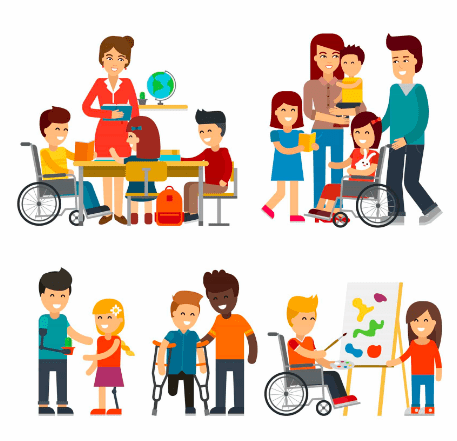
Disability etiquette is a set of guidelines dealing specifically with how to approach persons with disabilities . Before knowing about disability etiquettes , it is essential to understand certain basic things such as if someone has a disability don’t assume he/she needs help . In fact , adults with disabilities wants to be treated as an independent persons , So offer help only if the person with disability seems to need it . Physical contact should be avoided . Always speak directly to the person with a disability , not to his/her friend . Persons with disabilities are the best judge of what they can or can’t do .

General Disability Etiquettes

Disability Etiquette | OSU TOPS Program

The general disability etiquettes are stated below :

  • Always put the person first , i.e., say ‘person with disability ‘ rather than ‘disabled person’ . Always avoid the outdated words like handicapped , retarded , physically challenged or differently – abled . For example , refer to ‘person who are blind ‘ rather than ‘ blind person ‘.
  • In case of introduction to a person with a disability , it is appropriate to shake hands .
  • When you meet a person with a visual impairment , always identify yourself and others who may be with you .
  • Leaning or hanging on a person ‘s wheelchair should always be avoided because such act is generally considered annoying . In fact , the chair is the part of the personal body space of the person who uses it.
  • Always listen carefully as well as attentively when you are having conversations with a person who has difficulty in speaking . Have patience and wait for the person to finish rather than correcting or speaking for that person . Generally , ask short questions that require short time .
  • When talking with a person who is on a wheelchair or person who uses crutches , keep yourself at eye level in front of the person to facilitate the talk .
  • To get the attention of a person who is deaf or having hearing impairment , tap the person on the shoulder or wave your hand . You should look directly at the person and speak clearly .
  • Never patronize person who use wheelchairs by patting them on the head or shoulder .
  • Always introduce yourself to persons who are blind using your name .
  • Always avoid asking personal questions to an individual who is differently-abled .
  • Always give additional time to a person with any disability to do or to say something .
  • Always have conversation at a normal tone of voice . Don’t talk in high pitch to such individuals .
  • Don’t pretend to understand if you are facing problem in doing so .
  • If you need to leave a person who is blind , inform him that you are leaving and ask him if he needs anything before you leave .

Cybersecurity

Computer security, cybersecurity or data technology security is that the protection of pc systems and networks from data speech act, thieving of or injury to their hardware, software, or electronic information, moreover as from the disruption or misdirection of the services they supply.

OK

DATAINSIDER
Digital Guardian’s web log

Search Digital Guardian
Search the positioning
DATA PROTECTION a hundred and one
What is Cyber Security? Definition, Best Practices & additional
by Juliana Diamond State Groot on Monday Oct five, 2020

Learn about cyber security, why it is vital, and the way to urge started building a cyber security program during this installment of our information Protection a hundred and one series.

A DEFINITION OF CYBER SECURITY
Cyber security refers to the body of technologies, processes, and practices designed to shield networks, devices, programs, and information from attack, damage, or unauthorized access. Cyber security may additionally be named as data technology security.

THE IMPORTANCE OF CYBER SECURITY
Cyber security is very important as a result of government, military, corporate, financial, and medical organizations collect, process, and store unexampled amounts of information on computers and different devices. a major portion of that information will be sensitive data, whether or not that be holding, money information, personal data, or different forms of information that unauthorized access or exposure may have negative consequences. Organizations transmit sensitive information across networks and to different devices within the course of doing businesses, and cyber security describes the discipline dedicated to protective that data and therefore the systems accustomed method or store it. because the volume and class of cyber attacks grow, firms and organizations, particularly people who square measure tasked with safeguarding data concerning national security, health, or money records, ought to take steps to shield their sensitive business and personnel data. As early as March 2013, the nation’s prime intelligence officers cautioned that cyber attacks and digital spying square measure the highest threat to national security, eclipsing even terrorist act.

CHALLENGES OF CYBER SECURITY
For a good cyber security, a corporation has to coordinate its efforts throughout its entire data system. parts of cyber cover all of the following:

Network security: the method of protective the network from unwanted users, attacks and intrusions.
Application security: Apps need constant updates and testing to confirm these programs square measure secure from attacks.
Endpoint security: Remote access may be a necessary a part of business, however may be a liability for information. terminus security is that the method of protective remote access to a company’s network.
Data security: inside networks and applications is information. protective company and client data may be a separate layer of security.
Identity management: primarily, this can be a method of understanding the access each individual has in a corporation.
Database and infrastructure security: Everything in an exceedingly network involves databases and physical instrumentality. protective these devices is equally vital.
Cloud security: several files square measure in digital environments or “the cloud”. protective information in an exceedingly 100 percent on-line atmosphere presents an outsized quantity of challenges.
Mobile security: Cell phones and tablets involve nearly each variety of security challenge in and of themselves.
Disaster recovery/business continuity planning: within the event of a breach, natural disaster or different event information should be protected and business should persist. For this, you’ll would like a thought.End-user education: Users could also be staff accessing the network or customers work on to an organization app. Educating smart habits (password changes, 2-factor authentication, etc.) is a very important a part of cybersecurity

HISTORY OF ” THE KHOISAN TRIBE”

Khoisan people represent ‘earliest branch off human family tree. The Khoisan people of southern Africa have been recognised as one of the earliest formed distinct human genetic groups.Some 22,000 years ago, they were the largest group of humans on earth,the Khoisan, a tribe of hunter-gatherers in southern Africa. Today, only about 100,000 Khoisan, who are also known as Bushmen, remain.

The Khoisan people from Southern Africa maintained ancient lifestyles as hunter-gatherers or pastoralists up to modern times, though little else is known about their early history. Here we infer early demographic histories of modern humans using whole-genome sequences of five Khoisan individuals and one Bantu speaker. Coalescent analysis shows that the Khoisan and their ancestors have been the largest populations since their split with the non-Khoisan population ~100–150 k yr ago. In contrast, the ancestors of the non-Khoisan groups, including Bantu-speakers and non-Africans, experienced population declines after the split and lost more than half of their genetic diversity. Paleoclimate records indicate that the precipitation in southern Africa increased ~80–100 k yr ago while west-central Africa became drier.

ORIGIN OF KHOISAN TRIBE :

In around 2300 BP (Before Present), hunter-gatherers called the San acquired domestic stock in what is now modern day Botswana. Their population grew, and spread throughout the Western half of South Africa. They were the first pastoralists in southern Africa, and called themselves Khoikhoi (or Khoe), which means ‘men of men’ or ‘the real people’. This name was chosen to show pride in their past and culture. The Khoikhoi brought a new way of life to South Africa and to the San, who were hunter-gatherers as opposed to herders. This led to misunderstandings and subsequent conflict between the two groups.

The Khoikhoi were the first native people to come into contact with the Dutch settlers in the mid 17th century. As the Dutch took over land for farms, the Khoikhoi were dispossessed, exterminated, or enslaved and therefore their numbers dwindled. The Khoikhoi were called the ‘Hottentots’ by European settlers because the sound of their language was so different from any European language, and they could not pronounce many of the words and sounds.

The Khoikhoi used a word while dancing that sounded like ‘Hottentots’ and therefore settlers referred to the Khoikhoi by this name – however today this term is considered derogatory. The settlers used the term ‘Bushmen’ for the San, a term also considered derogatory today. Many of those whom the colonists called ‘Bushmen’ were in fact Khoikhoi or former Khoikhoi. For this reason, scholars sometimes find it convenient to refer to hunters and herders together as ‘Khoisan’.

When European settlement began, Khoikhoi groups called the Namaqua were settled in modern day Namibia and the north-eastern Cape; others, including the Korana, along the Orange River; and the Gonaqua, interspersed among the Xhosa in the Eastern Cape. But the largest concentration of Khoikhoi,numbering in the tens of thousands inhabited the well-watered pasture lands of the south-western Cape. These ‘Cape’ Khoikhoi would be the first African population to bear the brunt of White settlement.

NOMADIC HERITAGE :

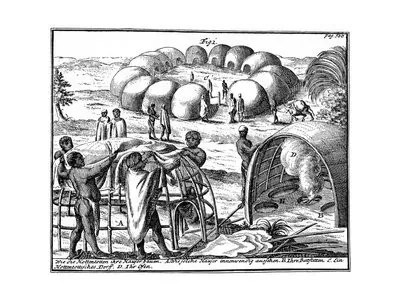
The Khoikhoi kept herds of animals such as goat, cattle and sheep and had to move around to find enough grazing land for their animals. They moved according to the seasons and only stayed in one place for a few weeks. This meant that they had to be able to carry all their belongings themselves, or load them onto the backs of their animals.

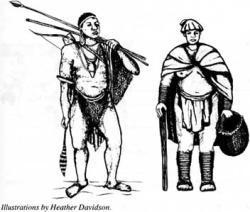
Houses had to be very light and easy to erect and take apart. For this reason they were made of thin poles covered with reed mats. Even pots and buckets were made of wood with small handles to make them easier to tie to animals’ backs. They also wore clothes made of leather, like the San.

The animals, especially cattle, were a sign of wealth and the Khoikhoi only ate cattle that had died or had been stolen from their enemies. They only killed their own animals for important occasions like funerals or weddings. The women milked the animals and gathered wild plants from the veld and the men killed game for everyday food. This shows that the Khoikhoi hunted and gathered, but also herded animals.

Hottentot (racial term) - Wikipedia

KHOIKHOI SOCIETY AND LANGUAGE :

Khoikhoi society consisted of both rich and poor, as animals – which were a sign of wealth – could belong to individuals. This is because animals provided food, clothes and transport. This was completely different from the San, who were all considered equal and shared everything. Wealthier Khoikhoi people would share their milk with poorer members of their group, but would still be considered more important. They would also rub animal fat over their bodies to show their wealth.

THE KORA :

The Korana or Kora were a nomadic Khoikhoi group that probably derived their name from a chief called Kora (or Gora), who was originally a leader of the Gorachouqua (`-qua’ meaning ‘people of’). This leader detached himself from this group with his followers and became the first great chief of the Korana.

Initially there were two main groups, the Great Korana and the Little Korana. Each of these broke into splinter groups that divided until there were many groups whose names have been slowly forgotten or were not recorded. Quarrels over water and grazing rights, or the ownership of women or livestock usually caused the divisions amongst groups. When parties split up they usually assumed the name of their leader. But sometimes they took the name of a place where they had stayed for a long time.

One such case was the name Hoogekraal (`High Kraal’), the original name for Pacaltsdorp, near George. Korana family names tended to signify a special characteristic or occupation such as the Towenaars (Sorcerers) and the Regshande (Right-handers). Where the first Chief Kora lived is unknown, but in early times, most Korana lived near the Gariep, Vaal and Harts rivers and others moved into the Overberg and the Karoo.

The last great Korana trek took place during the late 17th century, when they trekked from their chiefdoms in the south-western Cape to escape pressure from White settlers. These Korana trekkers travelled along the western trading routes as far north as the great river that they called Gariep, which means ‘river’. The early pioneers added ‘Groot’ (Great) to it, and after that, it was simply known as the Groot Rivier. A Dutch soldier of Scottish extraction, Robert Jacob Gordon, who was commander of the garrison at the Cape in 1777, renamed it the Orange after the Prince of Orange. However, many still referred to it as the Groot Rivier. After the 1994 change of government, it was given back its original name, Gariep.

For many centuries the early people lived along this river and its tributaries because game was able to graze in the vleie and the berry trees and bulbous plants grew in profusion. There, the Korana settled among the Nama herders and groups of San hunter-gatherers. By then, the Korana had become well-armed and some sources cite that they lived very much in the style of the ‘Wild West’. They knew how to ride horses, understood the value of keeping their mounts in prime condition, and frequently raided the farms south of the great river and the Baster communities.

They also settled in what is today the Free State, the district that became known as Koranaland (Gordonia). Many small conflicts over hunting and plundering took place between these groups and the Bantu-speaking peoples and White trekkers in the area. It is important to note however, that livestock raids were carried out by a minority group of Korana.

GROUPS IN TO RAIDERS :

The small conflicts over cattle and land raids came to a head in 1868, when the colonial government created a special magisterial district. The Northern Border Protection Act was passed to permit action against the Korana. A special border unit was stationed at Kenhardt, but the handful of police and burghers were too few to protect a 330 km stretch of land. This eventually led to the Korana wars of 1869 and 1878.

In 1869, the Frontier Armed and Mounted Police and a small detachment of the Royal Artillery arrived in the area – led by Sir Walter Currie. Later, a prolonged drought forced White settlers and Coloured farmers, as well as the Korana, to move closer to the Gariep River. Such a conglomeration of herds close made it easy for Korana ‘raider’ groups to prey on the herds, and their activities aroused the ire of the district.

Klaas Lukas, who was initially neutral, gathered together 1,000-armed men to defend their livestock. His supporters included the majority of the Korana. The Korana ‘raider’ groups were defeated and came under the control of the Cape Government. Those Korana who rejected a future under colonial rule trekked further into the Kalahari. The Cape Government settled the Basters near Upington to form a buffer between the Boers and the Korana. Today, the Korana have almost completely disappeared as a separate group through assimilation with the population in the area.‘Bastaards’ or ‘Baster’ was a derogatory referred to offspring of liaisons between Europeans, slaves and Khoikhoi. The term was also used to refer to subordinate Blacks who could speak Dutch, ride and shoot.

THE KORANA WERE THE “SOCIAL GLUE ” OF THE GHAAP:

There were often close and complex relationships between the Bushmen and the Korana. When the Korana made war on the Bushmen, they captured Bushman women and children – who were then integrated into the Korana community as wives. Bushmen would sometimes assist Korana in raiding parties, or as messengers and herdsmen. Korana groups traded dagga and tobacco for honey and the Bushmen’s honey and honey beer. Some Bushmen would pay reciprocal visits to Korana kraals.

The Bushmen are hunters and food-gatherers, the Hottentots are also herders. The latter work iron, which the Bushmen have never learned to do. The Bushmen, on the other hand, have a graphic art that stands out as one of the achievements of man- kind, while the Hottentots have no art at all.

​Some of the Korana clans also had close relationships with the Tswana. The Koranas called the Thlaping the “Briquas”, and exchanged products from them, such as tobacco and sibilo.  Of great importance is that several key Tswana chiefs took Kora wives. When the Tlhaping came to the Langberg in the 1770s, they, and some southern communities, developed close relationships with the Kora who were settled along the Orange. Maswe, the Tlhaping chief at this time, took a Kora wife.

THANK YOU !

What ‘Pride and Prejudice’ tells about life of women in early nineteenth century ?

Pride and Prejudice is a romantic novel by Jane Austen, was first published in 1813. It is a classic of English literature which centres on the relationship between Elizabeth Bennet, the daughter of a country gentleman and Fitzwilliam Darcy, a rich aristocratic landowner. The novel throws light on role of women in early nineteenth century Britain. The importance of marriage in the lives of Elizabeth Bennet and her sisters have been revealed which reflects on how hard it is to be in a unmarried state, where one needs to depend on others to support themselves financially.

Those days it was believed that marriage as a vital part in a women’s life who needed support inorder to lead their life. The men were allowed to pursue higher education, then job and were let to live independently whereas women were denied education and as a result only few of them got employed. This situation of women are represented through the story of Elizabeth Bennet and her sisters. The women of those period weren’t given choice of independent life and were left to relay on someone else. Although the daughters of the middle and upper class were sent to school still their education was in a restricted form. It created lesser academic knowledge in them and restricted them from pursuing in various fields. Education for women of that time was only gained through private tutors or private institutes thus higher education got restricted and even those who were able to complete their studies successfully were not able to choose the job of their choice. As these cases can be seen through the novel where Elizabeth Bennet being lively and inquisitive mind was able to further her education independently whereas her sisters needed a more elaborate and structured one. Another major cause for denial of women’s formal education was the less job opportunities. In turn these less job availability paved way for marriage as a unavoidable part of their life. The novel also clearly states how the inheritance of property moves only to the male heirs. In case of unmarried state they remained dependent upon their relatives, receiving small incomes. At the end women were left to depend on men to support themself financially. In order to live a independent life and to ensure it for everyone there was a need for structured form of education. The novel thus clearly portrays the life of women of early nineteenth century and also stands as a record which shows the changes the life of women had been through.

WHAT IF SOCIAL MEDIA DIE TOMORROW?

No social media for 2 years: Allahabad HC's bail condition | SabrangIndia
Image Source: google.com

Social media is a necessary piece for everyone. For many, lives without social media are unimaginable. But to the rest, it’s completely okay because they never managed to create an account on any social media platform. Social media like Instagram, Facebook, Snapchat etc are becoming popular day by day. Whether we know it or not, it is of no doubt that social media has a significant role in our life. Everybody spends an astounding amount of time on social media. It really paves a way to showcase your talent. Social media platforms like Twitter, Facebook, WhatsApp, and more help to connect people in a squint of an eye.

A ton of things can be expected if social media die tomorrow. It will help individuals to reconnect with the present reality. They will have more time to call, chat, examine numerous things, and so on. You don’t have to constantly compare yourself with people who only post things that they want others to see. They only post their happy moments on social media. So it unknowingly creates a sense of comparison in us. This is known as ‘upward social comparison’ in psychology. Bully/harassment is another common thing on social media. Getting bullied is truly horrendous, no matter if it is in person or via social media. If social media kicked the bucket tomorrow, you can be glad that you are no more a victim of online bullying.

 A few people behind their cover actually post unpleasant remarks, despite the fact that they know about the repercussions. It is much easier to unfriend or block in social media but not in actuality. Some people use social media to get to know people better. Whenever we want to know about the person, we surf through their social media profiles. It is true to an extent that what is portrayed on social media may not be completely real. But you can still get a glimpse of that person. So, without social media, you will only be able to know about them with your experience with them.

As an outcome, you may feel plenty of changes like pressure or tension to start with. We are so much concerned about what is there in our feed than about our peace of mind. However, it will just keep going for a couple of days.

You can face this beautifully. You can begin to live in the moment without bothering many unwanted things. You don’t have to worry about how you look, what you wear, or compare yourself with others. You will get a lot of time. So, you can contribute to many things. Yes, make better usage of time.

Social media has evolved communication to new heights. It can also affect your health in many ways like an obsession, stress, or emotional associations. It may also lead to depression for some. As there are two sides to anything, so does social media. But it all depends on the user at the end.

Mental Health and Psychology

Mental health includes our emotional, psychological, and social well-being. It affects how we think, feel, and act. It also helps determine how we handle stress, relate to others, and make choices. Mental health is important at every stage of life, from childhood and adolescence through adulthood.

Mental health therapists in the past dealt mostly with psychological diseases and the health issues that came from it. Their focus was less on individual factors like motivation, positive thinking, happiness, and emotional resilience, and more on the manifested symptoms of mental illness.

George Vaillant, a pioneer in the field of positive psychology, said that old literary works on psychiatry and mental health have a myriad of discussions on anxiety, depression, stress, anger, and fear, and almost nothing about affection, compassion, and forgiveness (Vaillant, 2009). But this is all a matter of the past now.

With the advent of the science of happiness, or positive psychology, a significant shift in the focus of mental health research and practice has been noticed. Positive psychology has opened a new way of looking into problems. It recognizes happiness and well-being as an ‘essential human skill’ (Davidson).

As a composite of clinical psychology, positive science helps in understanding how we can work on enhancing our internal capabilities and make the best of our present. Rather than focusing on symptomatic therapy and treatment, positive psychology centers around emotional stability, expectation management, and fruitful thinking, which is why it is referred to as the ‘study of ordinary strengths and virtues’ (APA, 2001).

Positive psychology goes hand in hand with traditional mental health interventions. In this article, we will explore the semblance and the association between positive psychology and mental health and discuss how the combination of both is essential for the successful outcome of any psychiatric disorder.

Incorporating neuroscience in mental health had numerous benefits —

• Neuroscience made it easier for therapists and professionals to dig into the root causes of the disorder.

• It helped in promoting mental well-being, happiness, and quality of life.

• Neuroscience paved the way for early diagnosis and a brighter prognosis of any psychological treatment plan.

• It helped in understanding the relationship between the mind and the body with more accuracy.

• Neuroscientific research made way for extending the areas of research on mental health and happiness.

A computer screen: the new classroom of the modern age?

The outbreak of COVID-19 affected all sections of society since the first case recorded in China in late 2019. People were asked to quarantine themselves in their homes to prevent the spread of this virus. Despite its negative effect on other sectors, the pandemic was a boon for a few viz online shopping sites and also a rapid increase was seen in e-learning as compared to the traditional classroom method of education.

Even before COVID-19, there was already a high growth and adoption in education technology, with investments in e-learning apps reaching a value of $18.66 billion in 2019 and the overall market for online education is projected to reach $350 billion by 2025. The pandemic however challenged the education system across the world and forced educators to shift to an online mode of teaching overnight. Many academic institutions that were earlier reluctant to change their traditional approach were left with no alternative option but to shift entirely to e–learning. Whether it was language learning apps, virtual tutors, tools for video conferencing or online learning software, all had a significant surge in its usage since the pandemic hit.

While some believe that the unplanned move to online learning – with no training and little preparation – will result in a poor user experience, others believe that a new hybrid model of education will emerge, with significant benefits. There have already been successful transitions amongst many universities. The Imperial College, London started offering a course on the science of coronavirus, which is now the most enrolled class launched in 2020 on the site coursera. The e-learning method offers teachers an efficient way to deliver lessons to students. Videos, PDFs, podcasts, can be used as a part of lesson plan. By extending the lesson beyond traditional textbooks to include online resources, teachers are becoming more efficient educators. The online learning system, with its range of options, can be personalized in many ways. Some students are visual learners, while some prefer to learn through audio. Similarly, some students thrive in the classroom, and others are solo learners. It is the best way to create a perfect learning environment suited to the needs of each student.

There are, however, challenges to overcome. Some students without reliable internet access and/or technology struggle to participate in digital learning; this gap is seen across countries and between income brackets within countries. While internet penetration has grown in leaps and bounds over the past few years, still in smaller cities, a consistent connection with decent speed is a problem. Without a consistent internet connection for students or teachers, there can be a lack of continuity in learning. This is detrimental to the education process. Online learning also requires teachers to have a good understanding of digital forms of learning. However, this is not the case. Very often, teachers have a very basic understanding of technology. To combat this, it is important for schools to invest in training teachers with the latest technology updates so that they can conduct their classes seamlessly.

Parents and students are also concerned about the health hazards of spending hours staring at a screen. This increase in screen time is one of the biggest disadvantages of online learning taking a toll on students ‘eyesight. Sometimes students also develop bad posture and other physical problems due to staying hunched in front of a screen.

Major world events are often an inflection point for rapid innovation – a clear example is the rise of e-commerce post the SARS pandemic (2002-2004). While we have yet to see whether this will apply to e-learning post-COVID-19, it is one of the few sectors where investment hasn’t dried up. What has been made clear through by this pandemic is the importance of disseminating knowledge across borders, companies, and all sections of society. If online learning technology can play a role here, it is incumbent upon all of us to explore its full potential. From chalks and blackboards to smart boards to laptops -the education sector has jumped the boundaries of a school wall…the journey has just begun.

SOCIAL MEDIA.

Social media is a very web based application that gives information publishing and sharing connecting to a community and searching within the community social media interactive technology that allow the creation or other forms of expressions via virtual well being. Community and network in social media are interactive web based application social media helps to develop online social network by connecting a user’s profile with those of other individuals or groups. Uses usually Axis social media services and engage with highly interactive platforms through which individuals communities and organisations cancer co create discuss participate and modify user generated content. Social media are used to document memories learn about explore things inform friendships along with a group of ideas from the creation of blocks procast videos and gaming. Social media differ from traditional media television radio newspaper since The dramatic expansion of the internet digital media can be used to represent or identify a culture.

Social media can help to improve individual sense of connected uses with real or online community and can be an effective communication tool for corporations entrepreneur nonprofit organisation advocacy group political parties and government. An important feature of social media is digital media data compression due to the impractically high memory and bandwidth requirements of an comprised media. Observes I’ve also seen that there has been a race in social movements using social media as a tool for communicating and organising in time of political unrest some social media site have the potential for content posted there to spread viral over social networks. In some cases posts containing popular content for fast breaking news have been rapidly shade and reshade by use number of users non profit organisation and activist may have similar interest in posting content on social media sites with the aim of going viral. According to statistics it is estimated that in 2020 there are around 3.6 billion people using social media around the globe social media is important because it allows you to reach nurture and engage with your target audience no matter their location social media helps you reach large audience as it’s a large or great opportunity for your business to reach a large pool of people that are interested in your product or service. It has direct connection with your audience when audience have better and you can deliver more valuable content to them they also provide better customer service advertisement as direct connection with your audience allows you to resolve issues a earlier. You can also gain valuable insight about customers you can also see how your audience look over your business you can also create organic content you can also build a brand.

Advantage of social media marketing is ability to build your brand you can also evaluate a performance as a social media marketing is your ability to access your performance.Social media platform make it easy for you to track your campaign you can create viral content as most unique the advantage of social media is the ability to get help from your followers and connectivity education information and updates awareness share anything with anyone promotion customer interaction the disadvantage aap social media is that you can receive negative feedback some can have a polar experience with your business social emotional connection decrease in quick skill cyber bullying acting causing distress to someone spelling addiction lack of family quality time present physically not mentally cheating and relationship issues. Social media marketing tu company e2 under locam packing for you while you run business you have to wait to see results you must be patient and wait a few days to see results the best thing you can do is to track the performance of year. Social media post Ashu force them to have them ready for compression once your camping in is running for same time.

Some of the benefits of social media includes bills relationship share your expert eyes increase your visibility e education yourself and the viewers connect anytime . A social media break is required and beneficial to improve your physical and mental health becoming a social media addiction can cause disruption in your lifestyle the pattern of work and sleep. I hope everybody would like to get the benefits derived from social media and no one would like to become a victim of it by continuosly addicting to it

Energy resources

Source: Ecologically man is only a part of energy flow in nature.Man requires energy for his daily needs.The major energy sources are fuel wood,fossils fuels such as coal, petroleum and natural gas.Apart from these,the other direct energy resources are sunlight, hydroelectric and wind power,tidal, geothermal and nuclear energy.

Energy requirement: During early stages of human civilization,the daily per capital need for energy was just 2000-4000 kilo calories.During the agricultural stage,the muscular energy of domestic animals was used for work.Today we need energy for agriculture,industry,transport, communication,comfort and defence.The per head energy consumption varies from country to country.

Depletion of fossil fuels

Today the world’s energy resources have reached critical stage.Most of the world’s human population uses fossil fuels(coal, petroleum and natural gas).The fossil fuel resources are being rapidly depleted.As a result these resources may last only another few centuries.Tge dwindling stocks of fuels has led to the search of alternate sources of energy.

Sources of energy

Some alternative sources of fuel are solar energy,hydro electric energy,Geo thermal energy,wind power,tidal energy, energy from garbage,dung energy and nuclear energy.They are generally called renewable or non-conventional sources of energy.

1)Solar energy

Sun is inexhaustible and pollution free source of energy.Solar equipments have been developed to harness sun rays to heat water,cook meals,light our houses and run certain machines.

2)Nuclear energy

It is generated by fusion of the atoms of certain elements such as Uranium-235.The processes results in the release of enormous amount of energy.Fission of 1 amu of Uranium-235 can generate energy equivalent to that obtainable from burning of 15 metric tons of coal or about 14 barrels of crude oil.

3)Wind power

It has been used for centuries to run the wind Mills for grinding grains and pump water in certain areas.But the wind does not blow with required intensity all the year round and in all areas.Therefore,wind power can be used only in certain areas and on certain days.

4)Dung energy

Cattle dung is widely used as fuel in rural areas of our country.This deprives our fields of valuable organic manure.Now cattle dung is used in biogas or gobar gas plant to produce an odourless,low pressure gas.This gas can be used for cooking and heating.The residue is used as manure.

5)Energy from garbage

The garbage of houses contains waste paper,plastics and several other materials.It can be used to produce organic manure.

6)Tidal energy

Tidal waves of the sea can be used to generate electricity.

7) Geothermal energy

In some places,the heated water comes to the earth’s surface as hot springs.It can be used for heating water and building and for generating electricity.

8)Hydro electric energy

It is produced from the kinetic energy of water falling from height.A number of power stations have been established on many rivers in our country.

Conservation of energy

The present critical energy position demands an organized effort at all levels from individual to international action.A considerable amount of energy can be saved by reducing wastage and using energy efficient devices.Following measures can help in this effort:

1) Development of technology for the use of solar energy in appliances and transport vehicles.

2) Development of efficient and smokeless chulhas or wood stoves.

3) Development of non conventional energy sources and less dependence on fossil fuels.

4)Planned programme for raising fuel wood,trees and shrubs under the control and maintenance of local communities especially in developing countries.

5) Effective use of agricultural and animal wastes to obtain biogas and manure.

6) Improvement of engine and pump designs to increase fuel efficiency.

7) Development of effective techniques to trap wind and tidal energy.