Bhagvad Gita

The Bhagavad Gita or the Song Celestial is one of the most sacred Scriptures in the world. It is a constant companion to men in every walk of life. It is a string of verses which were spoken by Bhagwan Krishna to Arjuna at the battlefield. It is a part of the epic Mahabharata.
The Bhagwad Gita is the most widely read and revered religious text of the world. The State of Haryana is proud of the fact that this legendary epic was orated by Lord Krishna at Jyotisar (Kurukshetra), which is located here.

Further, it was also compiled by Veda Vyasa on the bank of river Saraswati, which was once a perennial river of this State. Hence, the greatest philosophy of life is associated with Haryana because Lord Krishna had given the Supreme Sermon to Arjuna on this land.

This poem is long poem, which, in fact, describes the gist of life, karma and duties of an individual. Lord Krishna narrates to Arjuna how he should do his duty and become a part of the Ultimate Soul. This poem forms the sixteenth chapters (adhyayas) of the Mahabharata, written by Veda Vyasa. It is in the form of. Sanskrit hymns (Shlokas). Let us study, in brief, what The Bhagwad Gita tells every human form of the world.

People of modern generation are increasingly finding that in spite of the material comforts abundantly available, there is a void in their life which cries to be filled in. The crisis is psycho – spiritual and it exists whether we realize it if not. There is no other book like the holy Bhagavad Gita, which fills in the void. All the teachings are suited to the modern inquisitive mind.
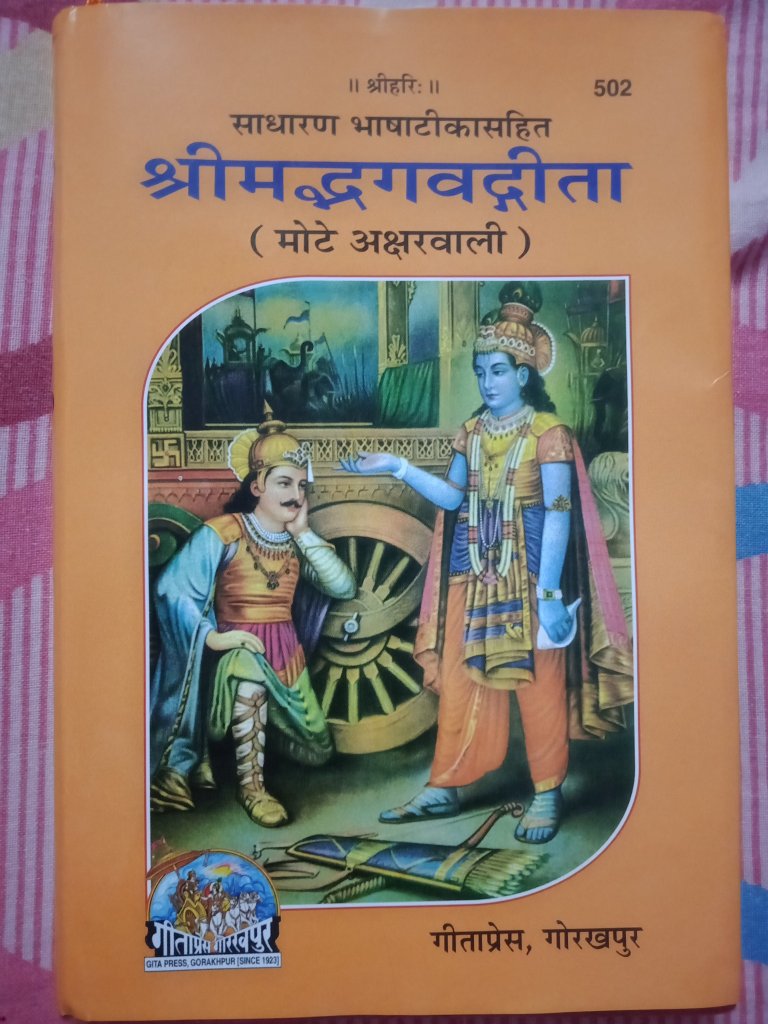
I also Read Gita whenever I get time

The Bhagavad Gita teaches socially oriented positive action. The theme is Lok Sangraha, which means integration, regulation, protection, and preservation of the society.

Gita is among the three main scriptures of Hindu Dharma, others being The Upanishads and The Bhrahmasutras. These three are together known as Prashthayanas. There are 18 chapters in the Gita, and it contains 700 verses. The Mahabharata contains a canto titled as Bhishma Parva and chapters from 25 to 42 of this Parva constitute the Gita. Gita Jayanti falls in the month of December ( Mrigashirsha ) . The Gita was spoken by Lord Krishna to Arjuna in Dwapar Yuga. And in the Hindu calendar, the Kali Era, the present era, is dated with reference to the day of Gitopadesha.

Krishna, presented in the poem as Vishnu in the flesh, is the spiritual teacher who recited the Gita. Most of The Bhagwad Gita consists of a dialogue between Krishna and Arjuna on the battlefield on Kurukshetra.

That is where the armies of the royal cousins, the Pandavas and the Kauravas, face each other for the decisive battle to end their feud. The Bhagwad Gita debates the right and wrong of conflict. It also discusses a person’s duty to himself, or herself, his or her fellow human and God.

It explores God’s relationship with humans. It shows how people can begin to understand God and thus, free themselves from the burden of Karma (deeds done in previous lives and in this present life).
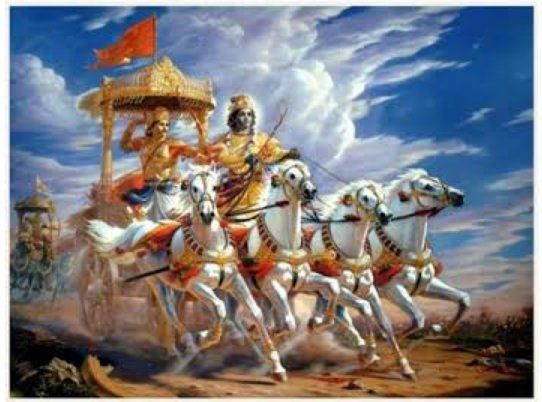
Krishna instructs Arjuna about three ways to have union with God. The first is Karma Yoga (the Way of Action). Every person should do his or her duty according to caste, without hope of personal benefit or ambition, but with faith in God. Those who go through the motions of performing rituals without care or interest, or do their work only for profit, will never be released from the cycle of birth, death and rebirth.
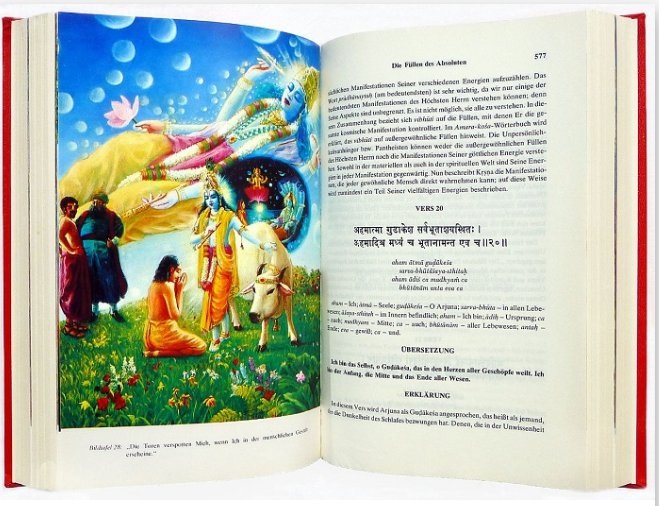
The Bhagavad Gita is the Crown-jewel of India’s spiritual wisdom.

The Bhagwad Gita provides a summary of the Hindu religious thought and practice; much of it is based on the Upanishads. These are part of the Vedas, the oldest sacred books of Hinduism. It gives a methodology for developing belief as well as for forging a personal relationship between the deity and his/her worshipper. It offers a new approach to the full perception of, and absorption in, Brahman.

The Bhagavad-gita is such an important scripture that it can help us to get out of the cycle of birth and death. Anyone who recites Bhagavad-gita with devotion will go to the spiritual world at the time of death. If one reads Bhagavad-gita sincerely the reaction of one’s past deeds will not act upon one.

According to me everyone should read Bhagvad Gita whenever you feel low and cannot find a reason to live. By reading Gita you will be able to see your life in a positive way. You’ll know about your soul needs and whatever situation you are facing today that is earned by your past life karma nobody else is responsible for that. If you focus on your karma and keep a check when you are creating negative karma it will save you from increasing your negative karma. By surrending to Bhagwan and focusing on your soul you can definately change your life for better.

Symbols in Absalom and Achitophel

Symbols Golden class as a symbol of misplaced veneration
In the biblical book of Exodus, the Israelite awaited Moses, their leader who had gone in search of enlightenment on Mount Sinai. During this time, without effective religious leadership, they made a golden idol in the shape of a graph and began to worship it. The golden calf was not an appropriate subject for the Israelites to worship. Dryden like in the English people’s veneration and an institution of government- a state that could be readily controlled by the people it governs- to the worship of golden calf, thereby indicating that such feeling of veneration was bad and inappropriate. The ideological notion that kings out to be constrained or limited by the government is represented as misguided.

Crown as a symbol of ruler Government and divinity appointed authorities
The text uses the word crown a decorative ornament associated with kings and rulers, to represent the kings, the government, and the legitimate authority as appointed by God. The use of the same word is to represent all these concepts lies in inviting the readers to assign to a government and to a human being the same authority they associate with their deity.

A flock of sheep as a symbol of people
The use of sheep represents a community of people with the leader as a wise shepherd, generally associated with Jesus leading his flock. It is used ironically here to tell an Old Testament story that is intended as an allegory for political events occurring in England. The Sheep represent the common English people. It suggests that people are easily swayed and led because they do not think for themselves.

Allegories rape as an allegory for rebellion
Dryden set forth a premise sometimes people cannot admit to wanting something rather, they prefer to be forced into it. Therefore, by forcing such an individual into a situation, he or she secretly desires is the person doing the forcing is doing the “victim” unnecessary and pleasing favor acting as a satirist Dryden exaggerates the argument into something so shocking it ends up supporting the opposite conclusion.

Bible story as an allegory for the exclusion crisis
The entire poem, which tells the story of Absalom and Achitophel’s rebellion against King David of Israel, is an allegory of the events that occurred in England in the late 17th century. Dryden uses biblical characters and events to comment upon the exclusion crisis and its major players ultimately supporting King Charles II in his right to the throne.

Modernism & Postmodernism – II

The 2nd half 20th Century – the socio cultural movements that effected people are merging and becoming more. Post Colonial literature became  popular, Ngugi wa thiongo a Kenyan thinker – Moving the Centre – The plurality of culture and literature, the shift from Eurocentric understanding of the world. Grand narratives centred around the Eurocentric understanding, and postcolonial works thus became a shift from these Grand Narratives. The way art aesthetics and literature were looking at the past and the grand narratives became problematic, because people felt a need to bring back the past, but simultaneously in every country there was this need to bring something new back. Every age becomes a response to a previous period and the previous period is a response to resistance. Literatureis not something that is just to entertain people, the position of literature is embedded in our social systems, part of your existence. To understand postmodernism, is to lie on modernism. France Fanon, Meena Kandasamy, examples of theoretical perception are taken forward with people of different discipline. Thiongo’s  work becomes important for the possibility of multiple centres and multiple meanings – a product of European imperialism and internal resistance as well. 

Mcluhan’s  Medium as message, depending on the medium the reachability is different and the access as well is differing. 

Susan Sontag – a revolt against  ‘the departure from modernism can be regarded as new sensibility, a revolt against canonised modernism’s avant-guard revolution’  – Critiquing the high culture of Modern Capitalist world, against the cannon. On one hand Modernism tried critiquing the Grand narratives and on the other it cerated a canon for itself. 

Modernism is adopting plurality like Postmodernism, but was lamenting fragmentation even though working through it, trying to work on a wholesome unity, they continued to believe that with lit or artistic expression we may achieve a ‘self’ while postmodernism are embracing fragmentation, praising dissent, rather celebrating fragmentation. 

Arnold Toynbee – birth of postmodernism, and questioning the tradition moral values and beliefs (grand narratives); and by questioning this he’s talking about the development of cultural modernists and the different understanding of the world, a better apparatus of understanding world and culture. Grand Narratives continue to be over – aching and totalising and replace or silence other narratives around us. And how mini-narratives can replace grand narratives by promoting plurality and heterogeneity as it becomes local. [Culture in modernism – a cultural innovation – development of new meanings.] Postmodernism is branching out to different ways, questioning the requirement and the need for plurality and heterogeneity.  

Modernism & Postmodernism – I

1922 – TS Elliot’s Wasteland & James Joyce’s Ulysses, Virginia Woolf – Jacob’s Room

1927 – Virginia Woolf – To the lighthouse.

1924 – Manifesto of the Surrealist Moment – Andre Bretel

1937 – Guernica – an anti-war painting. 

1914 – Stravinsky – Rise of Spring

Before Modernist was the Victorian Period, certain set of practices that was held sacrosanct up until the 1920’s, and everything that came out post 1920’s questioned everything. Linear chronological narrative was held sacrosanct for ages, and Elliot, James Joyce, Virginia Woolf were subservient to these narrative, alongside the impressionist, and the Credo of Modernism ‘make it new’ campaign by Ezra Pound; Modernist thinkers and philosophers stood for renovation and experiments, ‘Avant Garde’ ‘Sapere Aude’ (dare to know – courage to chart new territories) – after WWI. 

Theoretical justification form this break of the past ? Why ? The central image of modernism was a big large void that defined Modernism – Scepticism/disbelief/boredom/disillusionment/restrictive and that this is not ‘it’, and to replace it with something new; and everything that was held important started falling apart. The science that was to make everything better couldn’t hold, the centre was falling apart and one couldn’t make sense of it, here structuralism to poststructuralism – Derrida – meaning is differing. 

1990 – Virginia Woolf – Modern Fiction – in the pre-verbal or pre-literate thought your words are not linear, because it’s happening in your mind, therefore chronological pattern never works, it’s always in a flux, therefore she suggests “stream-of-consciousness” – a randomness of a narrative – no structure, a linear mode of storytelling – Virginia Woolf’s Mrs. Dalloway. 

Purist, Exclusivist/Universalist – to contain a single meaning – something that is questioned by Modernism. Meta Narratives/Grand Narratives that dictate the Euro – Centric understanding of the world, that make things/life better or easier – Marxism, Religion – Christianity – Redemption. 

Single Epistemology (the theory of knowledge) 

Post Colonial/Gender/Race came in complicating others. 

Moving the Centre by Ngugi wa thiongo, and Afrocentrism. 

Importance of cardio

Cardiovascular fitness is the ability to handle aerobically challenging situations of varying duration. The leading cause of death in the United States is heart disease. Improving cardiovascular fitness can reduce your risk of developing heart disease by increasing the efficiency of your heart, lungs, and blood vessels. The easier it is to pump blood through your body, the less taxing it is on your heart. Your heart’s contraction strength, the elasticity of your blood vessels, and the efficiency of your blood to carry oxygen all improve if cardiovascular training is effectively executed.
Cardiovascular exercise also aids in maintaining a healthy body composition. Aerobic and anaerobic exercise, especially at higher intensities, contributes to a healthy Caloric burn. The fat you store on your body is reserved for periods of prolonged or intense activity. Training the cardiovascular system through high intensity intervals increases the activity of certain hormones, such as testosterone and growth hormone, that stoke fat burning. While low-intensity, steady-state cardio burns a higher percentage of fat, high intensity exercise results in greater total Calories burned, and speeds up the enzymes associated with burning fat.
Finally, having greater cardiovascular fitness means you can confidently complete activities that have a cardiovascular demand, such as climbing stairs, hiking, biking, swimming, and even strength training. Being able to move through your day without feeling winded can make a huge difference in your confidence and quality of life. A good cardiovascular base allows you to train harder during strength sessions without feeling fatigued, as well!
It is very common to perform cardiovascular exercise as your ONLY form of exercise. For example, a typical marathon runner would have a very high level of cardiovascular fitness, but they may be muscularly weak due to a lack of strength training, and stiff due to repetitively working the same muscles on a single plane of motion.
Remember the four pillars of Fitness: Strength, Cardiovascular Fitness, Mobility, and Body Composition. In the example above, the marathon runner has developed their cardiovascular fitness, but neglected the other pillars. As a result, they are protected from diseases associated with the cardiovascular system, and can handle aerobically taxing situations, but are still susceptible to the consequences of having poor strength, mobility, and body composition. The lack of strength training, coupled with only moving the joints in one repetitive motion, can exacerbate joint degradation and lead to overuse injuries, poor posture, and immobility. If an individual could run a marathon, but was unable to confidently pick up 100 lbs off the floor, would you consider them physically fit? Could they complete a variety of physical demands, and come out uninjured? The runner may escape developing cardiovascular disease later in life, but their poor mobility and lack of strength may lead to needing a knee replacement, or they become more susceptible to falling due to a lack of muscle mass. It is crucial to understand that cardiovascular exercise is only one component of being a healthy, fit, and capable person!
Here are some tips for effectively training your cardiovascular fitness:
1. Vary your cardiovascular activity. Your body quickly adapts to the type of training you do, which makes it harder to achieve the same results. To continue reaping the benefits of cardiovascular training, change up the equipment and form of training. Biking, Swimming, Running, Sled Pushing, Circuit Training, Battle Ropes, and more can all be cycled on a weekly or even daily basis to keep your training challenging and effective.
2. Train at the appropriate intensities. A heart rate monitor is one of the best pieces of equipment you can buy for dialing in your cardiovascular training. Try to exercise within 60-80% of your maximum heart rate to achieve the optimal physiological results. If you don’t have a heart rate monitor, use the RPE method: On a scale of 6-20, with 6 being sitting on the couch, and 20 being running for your life from a wild animal, try to exercise around a 15-18.
3. Give yourself the appropriate rest intervals. Try to set your working intervals anywhere from 15-60 seconds, and have a work:rest ratio of 1:3 or 1:4. For example, do a sprint interval on a bike for 15 seconds, and rest for 60 seconds. Total workout duration can be anywhere from 10-30 minutes.
4. Progress! Whether you add seconds to your work intervals, take away seconds from your rest intervals, or increase the total number of intervals you perform in a given workout, always progress! Your body will adapt to your workouts quickly, so you must remember to strive for more challenging sessions over time.

Skincare

This is a topic that each one of us need to address, and over the years, there is definitely been a rise in discussions on but what has predominantly tampered these discussions are the issues of finance, because skincare isn’t just for the middle class or the elites, it’s is for everyone, even if the common consensus is not for the same. 

Undoubtedly, there are startups and other companies that cater to the lower side of budget scale, and even deliver a somewhat mediocre result, but it still isn’t cost effective for everyone. 

Next, the complicated process that is served to us, makes us blinded towards what our needs are or what our skin needs, we are normalised to ignore the nourishments our skin needs, the lil’ TLC we deserve, rather we are fished by companies, complicating the process and many celebrities add more to this complication, just because it suits their skin, it doesn’t necessarily suit yours, and these celebrities are more often than not are paid to promote a certain product, or are using products that are capable to leave a dent on your pockets.

So what’s the best line of action? Some R&D, dig through articles, figure what skin type you have, read what could suit your skin, what could benefit you, and is good for you — ingredient wise, and one that, start filtering what suits your budget, and what is easily available to you, read more about the products and the company, their ethical practices, and its cruel-free deliverance, and once you are satisfied with your choice, go for it, trust you gut, since its about self care, start loving yourself as well. 

And make sure, you always, ALWAYS, listen to your skin’s needs, they will speak to you and depending upon that go by your routine, nothing has to be rigid. 

Swearing and Masculinity

Swearing has always been a man’s thing to be manly, this doesn’t mean that woman’s don’t swear, they do, and to an extent it’s perfectly normal to use certain adjective, sometimes it’s unconsciously used in your lingo, sometimes you do it forcefully to seem cooler and more acceptable among your peers, but more often than not, the use of profanity is used to show off masculinity.

How so? Mens in their natural habitat — hanging out with their peers, start acting immaturely, and extend that immaturity into conversations and things escalate and you normalise using a very colourful vocabulary. 

Is it redundant to use this same argument? Possibly for some, but the fact-of-the-matter is that while just simply talking, you don’t need to get aggressive, don’t need to raise your tone, or anything like hat to get your point across, you do. 

Would you like to cutdown on it? You should, its not pleasant to have a potty mouth, nor is it flattering, and it could get you into situation within a professional set up and you would do something and can’t turn back again, thus it make a compelling argument that you need to throw off your male ego, you masculinity crutch of profanity and try being better, and if you have swearing as a crutch to feel masculine, then you have much bigger and intense problem about your identity than anything else. 

What next, clean up your act! Be human, be more vocal with your certifiably tremendous vocabulary, and if anytime you feel the ‘itch’ to use such words, breathe to it and try finding suitable replacements to it.

Fitness

Health can be defined as a holistic way of the growth of the human body and mind. A healthy person’s body is in complete harmony with his mind. We can practice the art of health and wellness by keeping in mind that our bodies are made from living tissues. Those tissues require nutrition to grow, and the food we eat is directly responsible for the nutrients that reach our tissues. Keeping that in mind, we must understand the importance of a balanced meal.
A meal is balanced when it has all the components like carbohydrates, starch, fat, protein, and vitamins in an equal proportion. If the balance is disturbed, we can eat a lot of the same type of food. Even if something is good for our health, eating too much can have a negative impact. For example, even if vitamins are beneficial to our health, eating a lot of vitamins can convert the excess quantity into toxic substances. The perfect sign of a healthy human body is resistant to diseases.
A healthy person can effectively fight off disease-causing germs. Immunity is provided by the WBC cells in our blood. These cells determine how strong a person’s immunity is. Immunity can be improved by eating foods rich in antioxidants like melons, citrus, guava, and strawberries.

Experience of online classes

The coronavirus pandemic has resulted in the closure of schools and colleges across the country. Education has changed dramatically during the lockdown period, with a considerable rise of e-learning, whereby teaching is executed remotely and on digital platforms.
Tens of thousands of students are glued to computers and smartphone screens as teachers and students enter a new world of virtual lectures, tutorials, and assessments. Though e-learning poses a challenge to both students and teachers over technology and access, it is keeping everyone busy with lectures, worksheets, and assignments.
Skill development and enhancement is key to career growth in the competitive times we live in. Various online education platforms have made it easy for students to develop new skills while continuing with a regular course at a college/university.
Since the virus outbreak forced educational institutes to adopt online classes, there is a considerable improvement in the attendance of students.
While there is no need to travel long distances for classes online learning materials are visually stimulating, concise, and more interactive combined with features like surveys or polls, quizzes,
etc.
As a result, online classes increase student engagement. However, there are some disadvantages of online classes also. Online classes affect the eyes of the students due to long hours in front of the blue screen.
Small children like the playschool and the primary grades must not have this type of class because they have low concentration power, and these small kids do not have the ability to sit for a longer time in front of the blue screen.
Lots of poor students do not have access to laptops and computers and they can not afford the high cost of these electronic items and internet charges.

The Golden Olden institution

Hello guys!

Jumping straight into the topic . Do you guys know how old the school you studied in ? Have you ever heard of an institution that might be established hundreds of years ago and present till know?

I asked that question because I recently got to know about an institution that is almost 479 years old and also is present till now . Fascinating isn’t it!

As the saying goes “Old is Gold” this 479 year old institution is also a “treasure”.

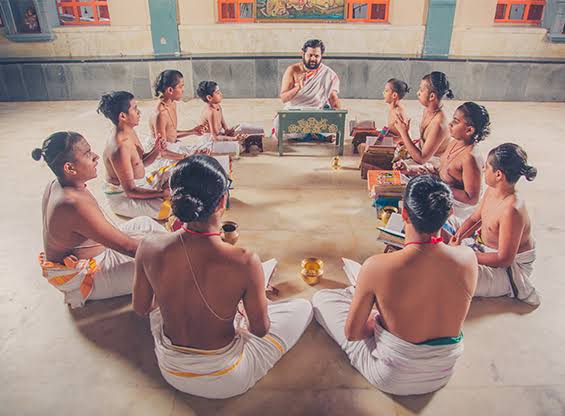
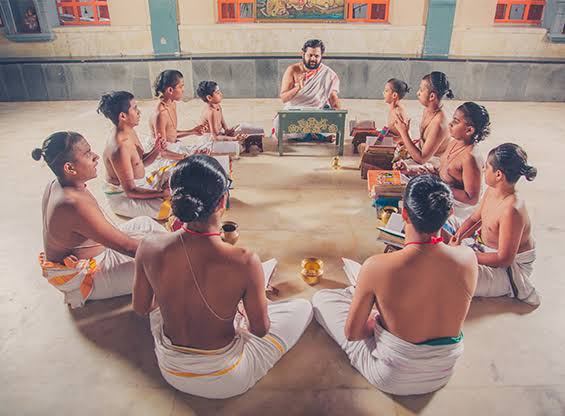
This 479 years old Educational Institution in India still continues the tradition of imparting knowledge

This institution is Raja Veda Kavya Patasala, established in 1542 AD. It is located in Kumbakonam,Tamilnadu,India.

Started by Govinda Dikshitar, the prime minister of Nayaka kings.
The Veda Patasala still runs in Kumbakonam today .

Source:Unkown

This patasala is providing vedic education for almost 5 centuries without any interruption adds another feather to it’s cap.

This institution is established on the southern banks of the river cauvery with prime aim of imparting the knowledge of Vedas and sastric studies.

From:veda patashala

It’s speciality is students here don’t use pen and paper to mug up the answers later ,they don’t carry heavy bags here everything is taught vocally and people also should remember which inturn increase the memory capacity of the students.

These are the institutions that still carry on the legacy of our Indian Vedic culture to our future generations.

These type of institutions are the backbone of our country’s vedic knowledge. They are the torch bearers for future generations.

Thankyou^^🙏

Being passive is not our default mode as human beings.

Action may not always bring happiness, but there is no happiness without action.

William James

Why is Motivation Important?

Why is it important to understand motivation? Why do we care about what people want and why they want it? How about because it can improve our lives.

Understanding motivation gives us many valuable insights into human nature. It explains why we set goals, strive for achievement and power, why we have desires for psychological intimacy and biological sex, why we experience emotions like fear, anger, and compassion.

Learning about motivation is valuable because it helps us understand where motivation comes from, why it changes, what increases and decreases it, what aspects of it can and cannot be changed, and helps us answer the question of why some types of motivation are more beneficial than others.

Motivation reflects something unique about each one of us and allows us to gain valued outcomes like improved performance, enhanced well-being, personal growth, or a sense of purpose. Motivation is a pathway to change our way of thinking, feeling, and behaving.

Benefits of Motivation

Finding ways to increase motivation is crucial because it allows us to change behavior, develop competencies, be creative, set goals, grow interests, make plans, develop talents, and boost engagement. Applying motivational science to everyday life helps us to motivate employees, coach athletes, raise children, counsel clients, and engage students.

The benefits of motivation are visible in how we live our lives. As we are constantly responding to changes in our environment, we need motivation to take corrective action in the face of fluctuating circumstances. Motivation is a vital resource that allows us to adapt, function productively, and maintain wellbeing in the face of a constantly changing stream of opportunities and threats.

I have learned from my mistakes, and I am sure I can repeat them exactly.

Peter Cook

There are many health benefits of increased motivation. Motivation as a psychological state is linked to our physiology. When our motivation is depleted, our functioning and wellbeing suffer.

Some studies show that when we feel helpless in exerting control for example, we tend to give up quickly when challenged (Peterson, Maier, & Seligman, 1993). Others have proven than when we find ourselves coerced, we lose access to our inner motivational resources (Deci, 1995).

High-quality motivation allows us to thrive, while its deficit causes us to flounder. Societal benefits of increased motivation are visible in greater student engagement, better job satisfaction in employees, flourishing relationships, and institutions.

But unhealthy fluctuations in motivation also explain addiction, gambling, risk-taking, and excessive internet usage. The motivation that underlies addictive behaviors shares the neurological underpinning associated with dopamine centric rewards system and tricky inner working of the pleasure cycle.

Sankranti festival

Sankranti is a harvest festival celebrated in India. Sankranti is derived from the word ‘Sankramana’, meaning a ‘change’. It is also called ‘Makara Sankranti’, as the Sun enters ‘Makara Rasi’ that day. It usually falls on 14th of January every year. The Sun starts its northward journey from the Tropic of Capricorn towards the Tropic of Cancer. This journey is called ‘Uttarayana’, meaning northward march. We, in India, are to the north of the equator. W rejoice on Sankranti Day, because the chilly cold winter comes to a close, and healthy sunny days are about to begin.
Sankranti is called ‘Pongal’ in Tamilnadu and ‘Pedda’ or ‘Peddala’ Panduga in some parts of Andhra Pradesh. ‘Pedda’ means big and ‘Panduga’ means a festival. It is a festival, when prayers and offerings are made to ancestors. It is celebrated in different ways in different parts of the country, as it is a harvest festival. It is a festival to thank God for giving a good harvest. By January the paddy, the pulses, the sugarcane and all other cereals would have been harvested. The farmers would be full of joy and happiness.
The Sankranti festival is a three day festival. The first day is ‘Bhogi’, the second day ‘Sankranti’ and the third day, ‘Kanumu’. On the first day ‘Bhogi’. people get up very early and bonfires are raised burning all old waste material to bid farewell to winter. The streets are swept clean and beautiful rangolis are drawn by women. Small cowdung cubes decorated with flowers are placed before each house, welcoming the Goddess of Wealth. In the evening, in some other parts ‘Bogipallu’ are poured on children for their health. In some other parts girls gather round and dance singing “Gobbiallo” in chorus.
The next day is Sankranti or Pongal. It is a day of feast. Sweet food is prepared with new rice, new jaggery, new vegetables, and fresh milk in new pots. The prepared pongal (sweet food) is offered to Sun God. Then offerings are made to forefathers. There are some special dishes
made for the occasion with pumpkins and greengram. All the people wear new clothes. Alms are given to the poor. It is a day of enjoyment. Cock fights, gambling etc., take place in the evening. In the north and even in Andhra Pradesh people take a dip in holy rivers and offer prayers. A dip in the Ganges on Makara Sankranti day is considered sacred.
The third day Kanumu is a day meant for cattle. All cattle are given a bath. They are dressed and decorated with flowers. Horns are painted. Cattle are fed with cooked sweet rice. Some worship cows. In the evening races are conducted for bulls to draw carts and to draw big stones. Heavy prize amounts are awarded to the victorious. Bull fights by young men are in vogue in some part., of the country. Sankranti is a festival of joy and happiness for all.

India’s Foreign Trade Policy

Foreign Trade Policy is a set of guidelines for the import and export of goods and services of the country. In India, it is formulated by the Directorate General of Foreign Trade (DGFT) under the Ministry of Commerce and Industry. DGFT is a body formed for promotion and facilitation of exports and imports. The policy is formulated every five years for the next five years.

India’s first foreign trade policy was formulated in the year 1985 with the aim of boosting exports (by finding opportunities and encouraging exporters by making industry-friendly policies), generating employment and improving competitiveness of the local market and the quality of the products. With 2020 coming to an end, it was announced that the 2015-2020 policy has been extended till September 2021. Let’s take a look at the highlights of 2015-2020 policy and the new 2021-2026 policy.

2015-2020 Highlights

  • Policies were simplified and new export incentives were introduced for the following categories- Merchandise Export of India (MEIS) and Service Export of India (SEIS). Under these schemes, countries have been categorized into 3 groups and the rewards vary from 2-5% under MEIS and 3-5% under SEIS.
  • Main focus was on Skill Development and Make in India to increase value-addition.
  • It encouraged ‘ease of doing business’ by promoting E-documentation and Digitalisation.
  • It facilitated and encouraged exports.
  • Export Obligation has been reduced to 75% under Export Promotion Capital Goods scheme (EPCG).
  • It also focused on giving a boost to Defence Exports- Tanks, Helicopters, Aircraft etc.
  • New duty exemptions on certain items.
  • Addressal of quality complaints and improvement.
  • Manufacturers labelled as “status holders” (certified by DGFT for their major contribution leading to growth of India’s exports) to self-certify their goods as a product originated from India. This helps them qualify for preferential treatment under various bilateral and regional trade agreements.
  • Construction of three additional ports (to improve connectivity) which is still in progress. These ports are being constructed in Kerala, Gujarat and Andhra Pradesh.
  • Introduction of duty-free schemes for reduction in tariffs
  • Development of additional export excellence zones. Moreover, fast track clearance facility, permitting inter unit transfer of goods and services and permitting warehouses set ups near ports for businesses located in 100% EOU (Export Oriented Units)/EHTP (Export Hardware Technology Park)/STPI (Software Technology Parks of India).

2021-2026 Highlights

Due to the ongoing pandemic, the new policy mainly revolves around ‘ease of doing business’ and digitalisation to promote and support export business in these tough times. It is an extension of 2015-2020 policy as it was extended till September 2021.

The main highlights of the 2021-2026 policy-

  • Digitalisation of business
  • Simplification of export-import procedures- Making documents accessible in digital form.
  • Ease of business by providing easy access to credit and self-certification.
  • Increasing Export awareness: Many exporters and manufacturers are not aware of the duty exemptions and schemes they can benefit from.
  • Help districts reach their potential as an Export Hub. Commerce department will ensure implementation with the help of the State Governments and Union Territories.
  • Improve infrastructure for domestic manufacturing sector to correct the trade imbalance.

360 Wander Writer

WELCOME TO WONDERS OF THE WORLD

Seven Wonders of the Ancient World

  • Great Pyramid of Giza, Egypt.
  • Hanging Gardens of Babylon.
  • Statue of Zeus at Olympia.
  • Temple of Artemis at Ephesus.
  • Mausoleum at Halicarnassus.
  • Colossus of Rhodes.
  • Lighthouse of Alexandria.

New Seven Wonders of the World

  • THE NAZCA LINES, PERU.
  • GREAT WILDEBEEST MIGRATION, TANZANIA AND KENYA.
  • ARCHES NATIONAL PARK, UTAH.
  • MOUNT FUJI, JAPAN.
  • LARGE HADRON COLLIDER, Switzerland.
  • AMAZON RAINFOREST, BRAZIL.
  • CALLANISH STONES, SCOTLAND.
  • MOSQUITO BAY, PUERTO RICO.

In 2000 a Swiss foundation launched a campaign to determine the New Seven Wonders of the World. Given that the original Seven Wonders list was compiled in the 2nd century BCE—and that only one entrant is still standing (the Pyramids of Giza)—it seemed time for an update. And people around the world apparently agreed, as more than 100 million votes were cast on the Internet or by text messaging. The final results, which were announced in 2007.

T

Great Wall of China

One of the world’s largest building-construction projects, the Great Wall of China is widely thought to be about 5,500 miles (8,850 km) long; a disputed Chinese study, however, claims the length is 13,170 miles (21,200 km). Work began in the 7th century BCE and continued for two millennia. Although called a “wall,” the structure actually features two parallel walls for lengthy stretches

Chichén Itzá

Chichén Itzá is a Mayan city on the Yucatán Peninsula in Mexico, which flourished in the 9th and 10th centuries CE. Under the Mayan tribe Itzá—who were strongly influenced by the Toltecs—a number of important monuments and temples were built. Among the most notable is the stepped pyramid El Castillo (“The Castle”), which rises 79 feet (24 meters) above the Main Plaza.

Petra

The ancient city of PetraJordan, is located in a remote valley, nestled among sandstone mountains and cliffs. It was purported to be one of the places where Moses struck a rock and water gushed forth. Later the Nabataeans, an Arab tribe, made it their capital, and during this time it flourished, becoming an important trade center, especially for spices. Noted carvers, the Nabataeans chiseled dwellings, temples, and tombs into the sandstone, which changed color with the shifting sun. In addition, they constructed a water system that allowed for lush gardens and farming

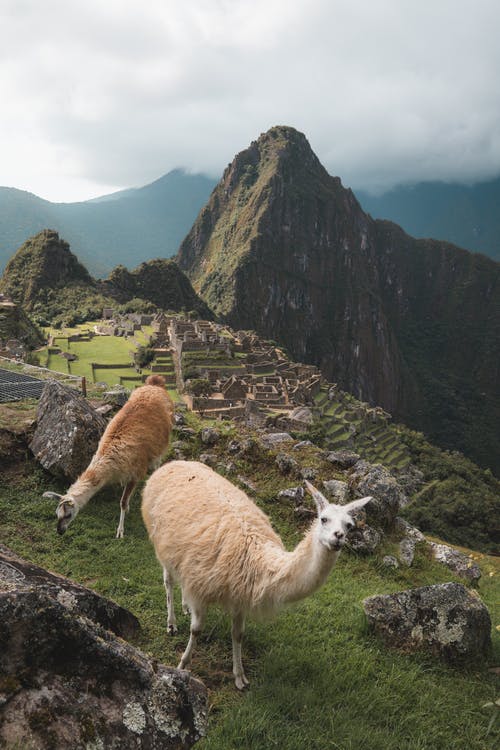
Machu Picchu

This Incan site near CuzcoPeru, was “discovered” in 1911 by Hiram Bingham, who believed it was Vilcabamba, a secret Incan stronghold used during the 16th-century rebellion against Spanish rule. Although that claim was later disproved, the purpose of Machu Picchu has confounded scholars. Bingham believed it was home to the “Virgins of the Sun,” women who lived in convents under a vow of chastity. Others think that it was likely a pilgrimage site, while some believe it was a royal retreat

Christ the Redeemer

Christ the Redeemer, a colossal statue of Jesus, stands atop Mount Corcovado in Rio de Janeiro. Its origins date to just after World War I, when some Brazilians feared a “tide of godlessness.” They proposed a statue, which was ultimately designed by Heitor da Silva Costa, Carlos Oswald, and Paul Landowski. Construction began in 1926 and was completed five years later. The resulting monument stands 98 feet (30 meters) tall—not including its base, which is about 26 feet (8 meters) high—and its outstretched arms span 92 feet (28 meters). It is the largest Art Deco sculpture in the world. Christ the Redeemer is made of reinforced concrete and is covered in approximately six million tiles. Somewhat disconcertingly, the statue has often been struck by lightning, and in 2014 the tip of Jesus’s right thumb was damaged during a storm.

Colosseum

The Colosseum in Rome was built in the first century by order of the Emperor Vespasian. A feat of engineering, the amphitheater measures 620 by 513 feet (189 by 156 meters) and features a complex system of vaults. It was capable of holding 50,000 spectators, who watched a variety of events. Perhaps most notable were gladiator fights, though men battling animals was also common. In addition, water was sometimes pumped into the Colosseum for mock naval engagements. However, the belief that Christians were martyred there—namely, by being thrown to lions—is debated. According to some estimates, about 500,000 people died in the Colosseum. Additionally, so many animals were captured and then killed there that certain species reportedly became extinct.

Taj Mahal

This mausoleum complex in AgraIndia, is regarded as one of the world’s most iconic monuments and is perhaps the finest example of Mughal architecture. It was built by Emperor Shah Jahān (reigned 1628–58) to honor his wife Mumtāz Maḥal (“Chosen One of the Palace”), who died in 1631 giving birth to their 14th child. It took about 22 years and 20,000 workers to construct the complex, which includes an immense garden with a reflecting pool. The mausoleum is made of white marble that features semiprecious stones in geometric and floral patterns. Its majestic central dome is surrounded by four smaller domes. According to some reports, Shah Jahān wished to have his own mausoleum made out of black marble. However, he was deposed by one of his sons before any work began.

Irani chai

Despite the fast-developing chai scene in Hyderabad, some places stand the test of time; and Hotel Rumaan in Tolichowki is one of them, with its almost perfect formula for retaining patronage that spans generations.
From streets away, you cannot miss the unmistakable smell of chai spices melded with hot butter. The unmissable signage beckons invitingly to loyal patrons. If you are a stranger to Rumaan’s helm, make sure you initiate yourself by having a couple of chais served in their cups stamped with Rumaan.
Hotel Rumaan is a destination, not just a stop-along-the-way. The popular array of biryanis speak for themselves, constantly being well-received by consumers across the city, whether you are health-minded or indiscriminate towards it. Most importantly, the chai is not compromised upon; each cup is an excuse for a good old kick-back; the perfect balance of sweet, spicy and milky all holding the promise of Irani heritage.
The unity of consumers across the city at Rumaan is something worth immersing yourself in; entrepreneurs, politicians, construction workers and artists — all under the same roof — engage in a fascinating interaction over the cups of chai and mountainous plates of food makes for an ideal story-telling setting.
Dedicated hospitality and pocket-friendly prices formulate the secret to running an establishment that has kept Hyderabadis returning ever since it was established. In the battlefield of getting your chai and biryani, everyone is an equal; the notion of ‘special service’ is thrust aside. But keep in mind; Rumaan attracts a male-dominated customer base, so be sure to go there as a group. The pride of Rumaan is evident in the staff, conveyed through arduous workflows, as well as the joyous and defeaning ways they communicate with each other.
Additionally in the overwhelming chaos of Tolichowki, Rumaan’s location could not be better, encouraging the bustling passers-by to slow down and indulge. Some explain that Rumaan is the crux of Tolichowki, retaining the flavours of old Hyderabad while being a window for the liveliness of the city.