If you cannot lose weight= Mistakes

If you are trying to lose weight and have been doing all sort of things to get to that aim you have made that is being fit. But you cannot do that because of many hidden reasons which you might have not known because they are playing hide -hide game with you since a long time but no more.

Now I am going to tell you about something very very important. Which you will be happy to know.

Well have you been trying to lose weight since a very long time? And have lost about few kilo grams of weight but wait after some time your weight bounces back again to its more ‘weight normal’.

Everything has science in itself and weight loss and being healthy is a science of it self’s.

If you want to lose weight, then the tips are or the mistakes to avoid are: –
  1. You are not eating enough.

The most common mistake that people do to lose weight is that you think you will lose weight if you start eating less than required.

 Calory intake < Caloy outtake

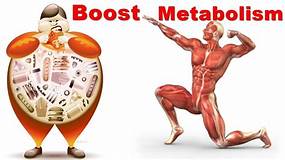
Starving yourself is not good, in fact starvation crashes one’s metabolism.

Metabolism is just a process which breaks down our food into energy. That is required by our body to function thus when you starve yourself that metabolism crashes.

Results in you having less BMR= Basal metabolism rate

Even when you are at rest, your body needs energy for all its “hidden” functions, such as breathing, circulating blood, adjusting hormone levels, and growing and repairing cells. The number of calories your body uses to carry out these basic functions is known as your basal metabolic rate — what you might call metabolism.

  • Eating more

When people tend to lose weight, they either start starving themselves or try to burn more calories that intake by exercising more.

Once you start doing too much of exercise then your body requires much more energy because at that time.  Calory intake < Calory outtake

So you started eating too much of food even that will result in more weight gain. So even by trying to being more active you should not eat more. Eat little more so that energy is there in your body to function.

When you exercise more you start losing your muscle mass and bone density instead of doing extreme exercises do little less that you body did not lose your body’s muscle mass and bone density. Which further kills your metabolism.

In order to Maine, your metabolism you should do

  • Resistance training (If you can’t go to the gym try with resistance bands at home , to carry your own weight)
  • Eat more protein to build lean muscles that will burn more fat.
  • Do aerobic exercises.
  • Do any sort of exercises like which you love dancing, cycling, stair climbing etc.
  • If you are unable, you lose weight do not stress yourself because stressing is bad.
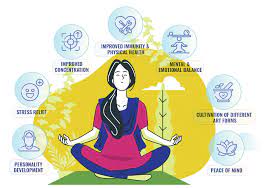
  • DO Yoga

So go try these and avoid these mistakes results will take time but it will show.

Recommended books

https://www.healthline.com/nutrition/10-ways-to-boost-metabolism

Life the biggest motivator

Life the biggest motivator itself describes it’s meaning. We as a human have to suffer from a lots of problems in our day to day life and sometimes we even want to leave everything and just want to leave this world but believe me this is not the solution of your problems the solution is you just need a motivation to again start where you have left and when we are talking about motivation we can’t be completed without our life.

I am not to old but just 16 and have a great experience and knowledge about world and people leaving here. Because I have to suffer or you can say fight with so many problems now you are thinking about that what problems a boy of 16 year have . So Dear let me tell you we all have problems but the thing is they differ people to people and the solution is we need to just take a rest and again start with your work.

Life this small word gives us a lots of lesson to everyone in his life but the difference is some understand it and many not. When ever you are feeling low ,tensed just look at your life that how much you suffer to come now many will say I am not anywhere I am just a child or boy so let me tell you will will also give you some motivation to achieve great thing’s in your life think when you were born how many times you fall when you learning to walk but after you all you have learnt na so this is the thing nothing is impossible here here we as a human are many to make impossible things possible.

So after all I just want to say don’t be sad at what you have because atleast you have and you have achieved it with lots of hardwork and dedication .

Keep this line in your mind whenever you are doing something “Try try but don’t cry”.

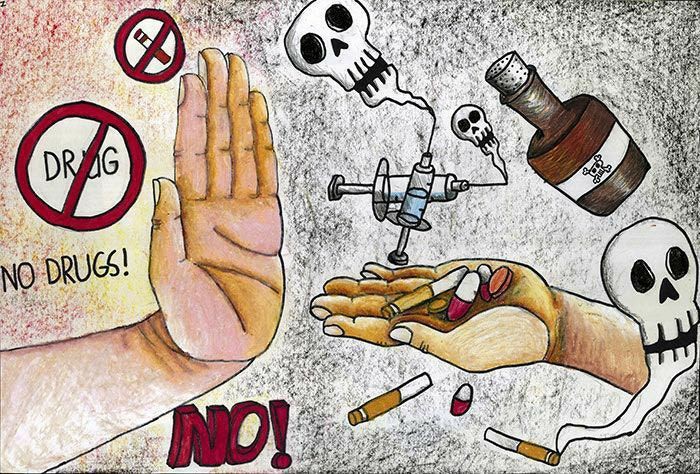
Drugs : you choose , you loose .

Addiction is just a way of trying to get at something else. Something bigger. Call it transcendence if you want, but it’s a rat in a maze. We all want the same thing. We all have this hole. The thing you want offers relief, but it’s a trap.

DRUGS ” A five letter word that is destroying human race. A word that could get you to the cloud nine and than kick you from the top.

What do you think it is ?

Is it a pleasure or a pain ?

Some says ‘it gives you wings ‘, others says ‘it makes you insane ‘ . What would you do , if someone is taking drugs ? Well , I would fly (its a joke ).

Ok , Let’s just get over with the topic .

Introduction

All the suffering, stress, and addiction comes from not realizing you already are what you are looking for.

– Jon Kabat-Zinn

Drugs are substances that change a person’s mental or physical state. They can affect the way your brain works, how you feel and behave, your understanding and your senses. This makes them unpredictable and dangerous, especially for young people.

Drug addiction is a chronic brain disease. It causes a person to take drugs repeatedly, despite the harm they cause. Repeated drug use can change the brain and lead to addiction. That can destroy one’s life .

Signs that shows someone has a drug problem

  • Changing friends a lot .
  • Spending a lot of time alone.
  • Losing interest in favorite things.
  • Not taking care of themselves – for example, not taking showers, changing clothes, or brushing their teeth.
  • Being really tired and sad.
  • Eating more or eating less than usual.
  • Being very energetic, talking fast, or saying things that don’t make sense.
  • Being in a bad mood.
  • Quickly changing between feeling bad and feeling good.
  • Sleeping at strange hours.
  • Missing important appointments.
  • Having problems at work or at school.
  • Having problems in personal or family relationships.

If a person shows these signs than he / she is using drugs . But it’s not , it’s a probability . The person may or may not be using drugs . For the assurance you have to ask the person (well they can lie ) . Take them for the blood test . It will show if the person is taking drugs or not . It’s a simple procedure .

Why can’t people stop using drugs on their own?


Repeated drug use changes the brain, including parts of the brain that give a person self-control. These and other changes can be seen clearly in brain imaging studies of people with a drug addiction. These brain changes explain why quitting is so difficult, even when an addicted person feels ready.

Many people are compelled to enter treatment by the pressure of their family, friends, or a court system. People of all ages with substance use disorders live in fear of what will happen if their drugs are taken away.

Due to the addiction , they experience a variety of physical and emotional withdrawal symptoms, including depression, anxiety, and other mood disorders; restlessness, and sleeplessness . It may lead you to the death bed .

Treatment :

Counseling and other behavioral therapies are the most commonly used forms of treatment. Medications are often an important part of treatment, especially when combined with behavioral therapies. Treatment plans must be reviewed often and modified to fit the patient’s changing needs.

  • Rational Emotive Behavior Therapy.
  • Cognitive Behavioral Therapy.
  • Detoxification.
  • Treatment with Medication.
  • 12-Step Facilitation.

One of the hardest things was learning that I was worth recovery.

Link

Dr. A. P. J Abdul kalam

A.P.J. Abdul Kalam, in full Avul Pakir Jainulabdeen Abdul Kalam, (born October 15, 1931, Rameswaram, India—died July 27, 2015, Shillong), Indian scientist and politician who played a leading role in the development of India’s missile and nuclear weapons  programs. He was president of India from 2002 to 2007.

Kalam earned the degree of aeronautical engineering in madras Institute of technology and in 1958 joined the Defence Research and Development Organisation (DRDO). In 1969 he moved to the IndianSpace Research Organisation, where he was project director of the SLV-III, the first satellite launch vehicle that was both designed and produced in India. Rejoining DRDO in 1982, Kalam planned the program that produced a number of successful missiles, which helped earn him the nickname “Missile Man.” Among those successes was Agni, India’s first intermediate-range ballistic missilewhich incorporated aspects of the SLV-III and was launched in 1989.

From 1992 to 1997 Kalam was scientific adviser to the defense minister, and he later served as principal scientific adviser (1999–2001) to the government with the rank of cabinet minister. His prominent role in the country’s 1998 nuclear weapons tests solidified India as a nuclear power and established Kalam as a national hero, although the tests caused great concern in the international community In 1998 Kalam put forward a countrywide plan called Technology Vision 2020, which he described as a road map for transforming India from a less-developed to a developed society in 20 years. The plan called for, among other measures, increasing agricultural productivity, emphasizing technology as a vehicle for economic growth, and widening access to health care and education.

In 2002 India’s ruling National Democratic Alliance (NDA) put forward Kalam to succeed outgoing President Kocheril Raman Narayanan. Kalam was nominated by the Hindu nationalist (Hindutva) NDA even though he was Muslim, and his stature and popular appeal were such that even the main opposition party, the Indian National Congress, also proposed his candidacy. Kalam easily won the election and was sworn in as India’s 11th president, a largely ceremonial post, in July 2002. He left office at the end of his term in 2007 and was succeeded by Pratibha Patil, the country’s first woman president.

Upon returning to civilian life, Kalam remained committed to using science and technology to transform India into a developed country and served as a lecturer at several universities. On July 27, 2015, he collapsed while delivering a lecture at the Indian Institute of Management Shillong and was pronounced dead from cardiac arrest soon afterward.

Kalam wrote several books, including an autobiography, Wings of Fire (1999). Among his numerous awards were two of the country’s highest honours, the Padma Vibhushan (1990) and the Bharat Ratna (1997).

Marxism

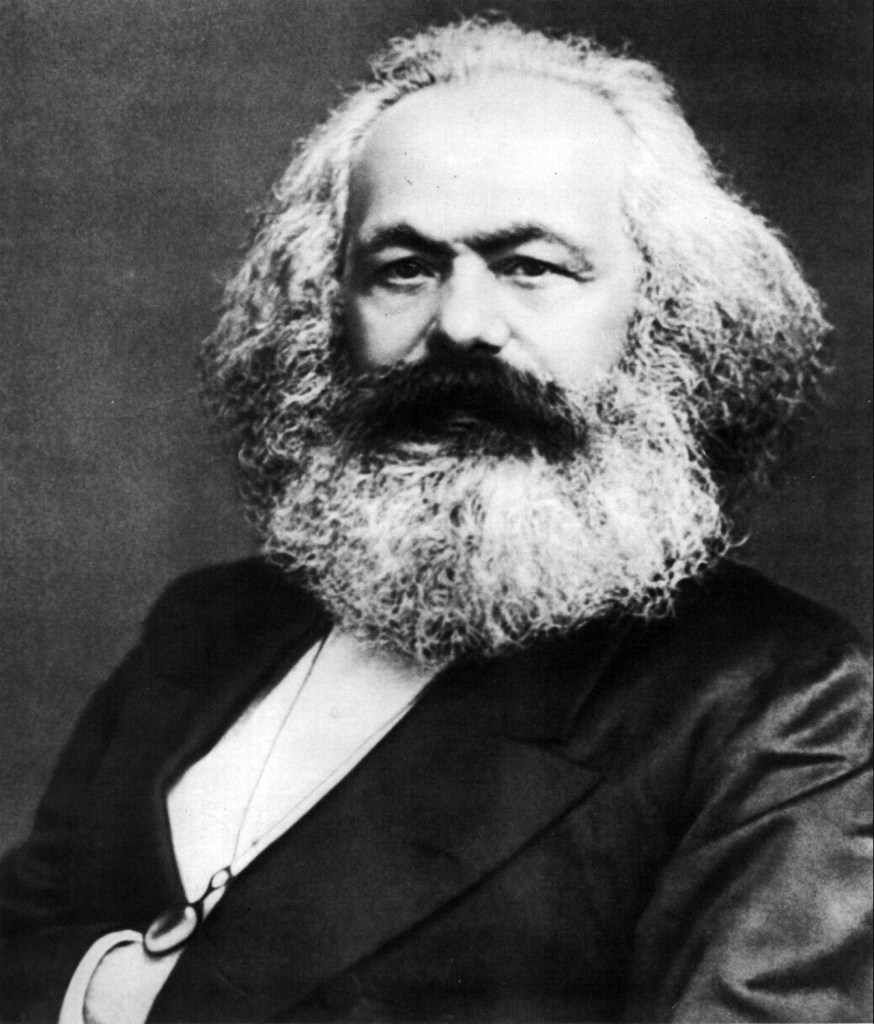
Marxism, also referred to as communism, is a political ideology,philosophy and a body of doctrine which was developed by Karl Marx and Freidrich Engels. Major contributor to the philosophy of Marxism, Karl Marx, was born in Trier, Rhine province, Prussia in 1818. He was born to a Jewish family, which later converted to Christianity. Marx was awarded a Doctorate of Philosophy for his essay on materialism of the Epicurus, a famous Greek Philosopher. He joined as an Assistant Editor at the Rhenish Times and was promoted to the position of Chief Editor. He left this job due to differences between him and the owner. In 1843, he moved to France. He became the editor of the Franco-German Yearbook and continued until it went out of business. Here, he became acquainted to French and German extremists like Proudhon, Mazzini, and Engels. The Communist Manifesto was jointly released by Karl Marx and Friedrich Engels in 1848. Marx published the first volume of Das Capital in 1867 and the remaining volumes were published posthumously by his friend Friedrich Engels. He spent his final years in exile and poverty in London

Marxism uses historical materialism to explain class relations and social conflict. The philosophy of Marxism was greatly influenced by Friedrich Engels who was an idealist. This led to the the concept of dialectical materialism. According to dialectical materialism, the prominent ideas that originate in the human mind at a particular point in time are called the thesis. Certain ideas, then, emerge as a response to these prominent ideas which are called as the anti-thesis. Ultimately, there is a conflict between thesis and anti-thesis, which leads to the formation of the synthesis. For example, the synthesis of the thesis of importance of capital and anti-thesis of importance of labour is class war. 

According to materialistic interpretation of History, throughout history a man pursues his material needs, which in turn creates history, and only after fulfilling his material needs he shifts his focus to higher goals. Using this interpretation, Marx classifies history into four stages based on modes of production. The first one is the Primitive Communist Stage. In this stage, the factors of production were meagre and were shared among the people of the community. The next stage is the ancient stage. The class structures had developed during this period. Slaves were owned by certain masters and these people controlled the factors of production. Being the master, their needs were fulfilled and possessed a surplus and denied benefits to workers. In a similar manner, the feudal lords exploited the landless serfs in the feudal stage and capitalist exploit the workers in the industrial stage.

Another important principle of Marxism is the theory of surplus value. According to this theory, the value of a commodity is equated to the wages paid to the labourer. Any value above the commodity value is regarded as surplus value, which is both needless and exploitative. According to this philosophy, the surplus value results in the exploitation of the labourer as the producer extracts illegitimate profits. The next principle is the theory of class war. According to Marx, two classes of people exist in all stages of history – the bourgeoise and the proletariat. The bourgeoise refers to people who are in control of the factors of production and pay for the labour of other people. The proletariat refers to people who are workers and do not own any or control any factors of production. History is nothing but a clash between these two classes where the former has always exploited the latter – master-slave, landlord-serf, capitalist-worker. The interests of these two classes are, au fond, in conflict with each other. This results in a continuous conflict called class war.

By exploiting the labour of the proletariat, the rich manage to build vast amounts of wealth. The concentration of wealth in their hands increases and the poor become poorer. This enlarges the gulf between the rich and the poor. Only a few people end up controlling most of the resources. This is called concentration of capital. The continuous exploitation of the proletariat by the bourgeoise forces them to rebel against the controllers of production. Therefore, revolution by the proletariat against the bourgeoise becomes inevitable. 

According to Marx, after the revolution by the proletariat, the capitalists will be removed from the position of power and the dictatorship of the proletariat will be established. The proletariats after the revolution will wipe out the capitalists. This is the dictatorship of the proletariat. This will lead to the formation of a classless society where there is no conflict between people. In a classless society, there is no more any need for the state to maintain order and harmony amongst people. This is the end goal of communism. According to Karl Marx, religion is the opium of the people. It makes people sway to sentiments and is used as a tool of exploitation by the capitalists. However, Karl Marx did not advocate the abolition of religion. Socialism, which is considered peaceful and evolutionary, was a prelude to Marxism, which is violent and revolutionary. Marxism took hold of Russia during the World War 11. After the fall of the Soviet Union, the popularity and influence of Marxism has waned.

The Legal Practitioner’s (Women) Act, 1923.

The Legal Practitioner’s (Women) Act was passed in the year 1923. it was only in 1846 that all duly qualified irrespective of nationality or religion were able to enter into the legal profession. Women were still excluded from the profession at this stage, to be thereafter admitted through the Legal Practitioner’s (Women) Act, III of 1923. The act regarding practising law profession still excluded women from entering the profession as it did not make any reference to women in the act. The Legal Practitioner’s (Women) Act formally allowed women entry into the profession. It abolished the bar on women from practising law. The Indian women were granted the right to choose legal profession and practice as Advocates in the Courts of Law. This fight was pioneered by Cornelia Sorabji. Prior to this, women due to their illiteracy and ignorance were easily duped by the legal people or their touts. Their reserve nature was inculcated and strengthened by customs and culture. They were not able to exercise their right over their own properties. Though initially only a handful of women joined the profession as Advocates this reformative measure ignited the spirit of pleading for the cause of another before the Courts. That the laws could be utilised for obtaining social justice and repressive laws could be overthrown for further development, and that women could do it for themselves and others as well was an eye-opener to the Indian society of pre-independence times. 

The challenge before women to enter into legal profession was significant and made a case for their entry to heal Indian women. They wanted to represent the Indian women. In many cases, judges opined that women were not ‘persons’ for the purpose of entering the legal profession. Regina Guha’s case was the first woman’s case. After obtaining a Bachelor of Law degree, Guha applied for admission to be enrolled as pleader in the Alipore district court. The application was examined by the court. Regina contended that since under the General Clauses Act, “words importing the masculine gender shall be taken to include female”, the rules under the Legal Practitioners Act, although referring in terms to men, would include women.In response, barrister Eardley Norton, a civil rights advocate, the bench responded that at the time the Legal Practitioners Act was passed, “there had never been a case of a lady being allowed to practice in the Indian courts”. The Legal Practitioners Act made no reference to women. In another case, Hazra applied to Calcutta University, seeking permission to appear as a private candidate in the preliminary examination of law.  Calcutta University transferred her application to Patna University. Her application was refused on the ground that she had not attended regular law lectures.Calcutta University finally granted her permission to appear as a private candidate in the preliminary law examination. In 1921, after obtaining a Bachelor of Law degree from Calcutta University, she applied to be enrolled as a pleader in the Patna district court.  The Patna high court judges delivered upholding the position in Regina Guha that in spite of the provisions of the General Clauses Act of 1868 and 1897, a woman, although fully qualified, was not entitled to a certificate under the Legal Practitioners’ Act to act as a pleader because of her sex. She was not a ‘person’.

By this time, the Sex Disqualification (Removal) Act 1919 was passed in England that allowed women to enter the legal profession.  At the same time, the Allahabad high court allowed Cornelia Sorabji to be enrolled as a vakil. With the Patna high court judgment, a concerted campaign to amend the Legal Practitioners’ Act began. In 1922, Narayan Malhar Joshi moved a resolution proposing amendment of the Legislative Assembly Electoral Rules to remove sex disqualification in the matter of registration on the electoral roll, Gour introduced a resolution to remove sex-based disqualification in the legal profession as an amendment to Joshi’s resolution.The Legal Practitioners (Women) Act was finally passed in 1923, removing the disqualification affirming that “no woman shall, by reason only of her sex, be disqualified from being admitted or enrolled as a legal practitioner or from practising as such”. 

5G Networking Technology

What is 5G Network?

In Telecommunications, 5G is the fifth generation technology standard for broadband cellular networks, which cellular phone companies began deploying worldwide in 2019, and is the planned successor to the 4G networks which provide connectivity to most current cell phones. 5G networks are predicted to have more than 1.7 billion subscribers worldwide by 2025, according to the GSM Association. Like its predecessors, 5G networks are cellular networks, in which the service area is divided into small geographical areas called cells. All 5G wireless devices in a cell are connected to the Internet and telephone network by radio waves through a local antenna in the cell.

In telecommunications, 5G is the fifth generation technology standard for broadband cellular networks, which cellular phone companies began deploying worldwide in 2019, and is the planned successor to the 4G networks which provide connectivity to most current cell phones. 5G networks are predicted to have more than 1.7 billion subscribers worldwide by 2025, according to the GSM Association. Like its predecessors, 5G networks are cellular networks, in which the service area is divided into small geographical areas called cells. All 5G wireless devices in a cell are connected to the Internet and telephone network by radio waves through a local antenna in the cell.

HOW DOES 5G WORK?

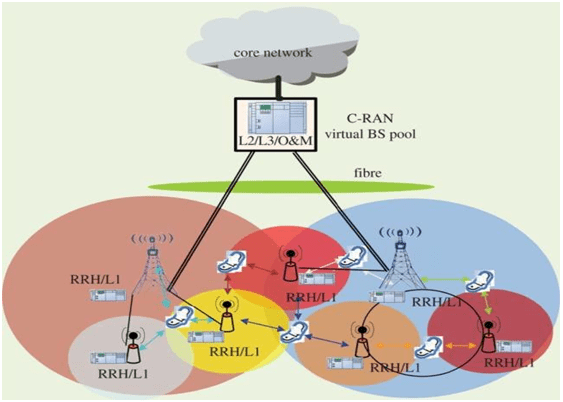
5G network architecture illustrating 5G and 4G working together, with central and local servers providing faster content to users and low latency applications.

A mobile network has two main components, the ‘Radio Access Network’ and the ‘Core Network’.

The Radio Access Network – consists of various types of facilities including small cells, towers, masts and dedicated in-building and home systems that connect mobile users and wireless devices to the main core network.

Small cells will be a major feature of 5G networks particularly at the new millimetre wave (mmWave) frequencies where the connection range is very short. To provide a continuous connection, small cells will be distributed in clusters depending on where users require connection which will complement the macro network that provides wide-area coverage.

5G Macro Cells will use MIMO (multiple input, multiple output) antennas that have multiple elements or connections to send and receive more data simultaneously. The benefit to users is that more people can simultaneously connect to the network and maintain high throughput.  Where MIMO antennas use very large numbers of antenna elements they are often referred to as ‘massive MIMO’, however, the physical size is similar to existing 3G and 4G base station antennas.

The Core Network – is the mobile exchange and data network that manages all of the mobile voice, data and internet connections. For 5G, the ‘core network’ is being redesigned to better integrate with the internet and cloud based services and also includes distributed servers across the network improving response times (reducing latency).

Many of the advanced features of 5G including network function virtualization and network slicing for different applications and services, will be managed in the core. The following illustration shows examples of local cloud servers providing faster content to users (movie streaming) and low latency applications for vehicle collision avoidance systems.

Example of a local server in a 5G network providing faster connection and lower response times

Network Slicing – enables a smart way to segment the network for a particular industry, business or application. For example emergency services could operate on a network slice independently from other users.

Network Function Virtualization (NVF) – is the ability to instantiate network functions in real time at any desired location within the operator’s cloud platform. Network functions that used to run on dedicated hardware for example a firewall and encryption at business premises can now operate on software on a virtual machine. NVF is crucial to enable the speed efficiency and agility to support new business applications and is an important technology for a 5G ready core.

When a 5G connection is established, the User Equipment (or device) will connect to both the 4G network to provide the control signalling and to the 5G network to help provide the fast data connection by adding to the existing 4G capacity.


Where there is limited 5G coverage, the data is carried on the 4G network providing the continuous connection. Essentially with this design, the 5G network is complementing the existing 4G network

5G Configuration:-

Advantages of 5G Networking:-

High resolution and bi-directional large bandwidth shaping.

Technology to gather all networks on one platform.

More effective and efficient.

Technology to facilitate subscriber supervision tools for the quick action.

Most likely, will provide a huge broadcasting data (in Gigabit), which will support more than 60,000 connections.

Easily manageable with the previous generations.

Technological sound to support heterogeneous services (including private network).

Possible to provide uniform, uninterrupted, and consistent connectivity across the world.

Disadvantages of 5G Networking:-

Technology is still under process and research on its viability is going on.

The speed, this technology is claiming seems difficult to achieve (in future, it might be) because of the incompetent technological support in most parts of the world.

Many of the old devices would not be competent to 5G, hence, all of them need to be replaced with new one expensive deal.

Developing infrastructure needs high cost.

Security and privacy issue yet to be solved.

Conclusion

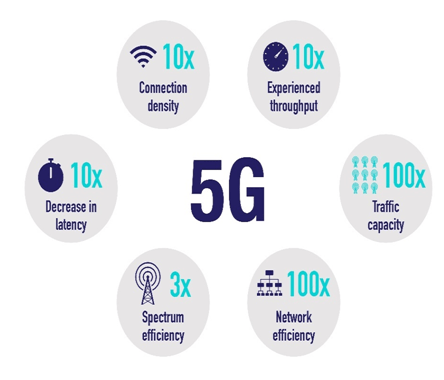
5G will be able to sustainably satisfy the requirement of the 1000-time traffic growth. 5G will provide users with fiber-like access data rate and “zero” latency user experience. 5G will be capable of connecting 100 billion devices.

Indian art during Maurya period

The Mauryan contribution to art and architecture was significant. Ashoka is known to
have built 84,000 stupas to commemorate various events of Buddha’s life. According to
Megasthenes, Pataliputra’s grandeur matched that of the cities of Persia.
Ashokan edicts were inscribed on stone pillars that were made of single columns of polished
sandstone and had capitals on their top. The best preserved of all Ashokan edicts stands
at Lauriya Nandangarh (Bihar). This thirty-two feet tall column has an almost fifty ton
seated lion capital placed on its top, an engineering feat worth admiring. The bull capital
from Rampura is also another fine example of Mauryan sculpture. The most famous capital
is the one at Sarnath, which shows four lions and the Dharmachakra. You must be familiar
with this as this has been adopted as the national emblem of the Republic of India.
Besides pillars, few Mauryan figures have also come to light. The most well known of
these is the Yakshi from Didarganj. The beauty of these figures lies in the exactness of their
workmanship and in the fact that they. appear to be made from one single stone. Like the
pillars, these figures are polished with a unique surface gloss (now called Mauryan polish).
You will be amazed to know that despite all these centuries this gloss has not lost its shine.
Besides the language that has been used in nearly all the inscriptions and Prakrit which
appears to have become the lingua franca of the country and in the Brahmi script the
earliest known Indian script.

Another noteworthy aspect of Mauryan architecture is the rock cut caves. The Lomash
Rishi (with its impressive entrance) and the Sudama caves are examples of such architecture.
These caves cut from solid rock were provided by Ashoka for non-Buddhist monks.
These caves marked the beginning of the rock cut architecture which was patronised by
later rulers too. His rock edicts were inscribed in the local language and the local script

Youth suicide

Every hour one student commits suicide in India, with about 28 such suicides reported every day, according to data compiled by the National Crime Records Bureau ( NCRB ). The NCRB data shows that 10,159 students died by suicide in 2018, an increase from 9,905 in 2017, and 9,478 in 2016 . As per reports from the National Crime Records Bureau(NCRB) between 2014 and 2016; 26,476 students committed suicide in India. Of these around 7,500 committed suicide due to failure in various examinations .

This is shocking right ? no one ever thought about this while everyone is talking about cancelling NEET a student is committing suicide, a family is loosing their daughter or son . Do we ever taught what would be the reason behind a suicide. No , we just frame a story ourselves But reality is kept unknown. Most of the students commit suicide because of stress of getting good marks , getting into a good college . We still live in a society where marks are important than knowledge even though time as proved it wrong

Now – a – days students enter into a examination hall like they are entering into a life or death situation there is nothing wrong with a teenager going with such a mindset but it is responsibility to make them realize its just a assessment parents , teachers and school management .

But the reality between each and every suicide is there parents who refuse to see there is a better future for their son/daughter beyond this marks and teacher who just wants to give 100 % just to get an increment and management who wants to provide 100% results to get more admission but is it really worth a young life ???

There are many organisations really working hard to avoid this kind of situation and they saved many lives but we all are seeing this situation from a wrong perspective its not student who need to be educated or motivated its their parents and educational institution .

Once Dr.A.P.J abdul kalam said “If you fail, never give up because FAIL means “First Attempt In Learning”. “Failure will never overtake me if my determination to succeed is strong enough.” “All of us do not have equal talent. But , all of us have an equal opportunity to develop our talents.”

I still strongly believe in his words that this nation lies in the hands of youth . So , I am not trying to say that education is not important all i am trying to say is we a life is more important.

Lets hope our society does better in this year..

Ambedkar and Buddhism

In his article entitled “What Way Emancipation” Ambedkar declared that “I solemnly assure you that I will not die a Hindu”, at Yeola, District of Nasik, Maharastra, on 13th October 1935 in front of ten thousand people, where
he went for a depressed class conference. Ambedkar as the president of the conference reminded his audience of their failure to secure elementary rights or equal status in Hindu society through any of the movements. According to him, the concept of sympathy is absent in the Hindu religion. The Hindus have no sense of brotherhood among themselves. The Untouchables are treated worse than foreigners. The Caste Hindus have no sympathy towards the untouchables. They are not brother to each other. They are two opposite castes. Society is based on class or varna, the association of an individual to a group is considered paramount. Even the family is not treated as a unit of society. According to Hindus, though all men are created by God, they are not created equal. They believe that God created different classes of men from different parts of his divine body. There is a section in “Purusha Sukta” of the Rig Veda which says that the Brahaman varna was born from the mouth of God, Kshatriya varna from his arms, the Vaishya from his thighs, and the Shudra from his feet. This they classify as Hindu social order but the views of Ambedkar on free social order
contradict the above sayings. He believed that an individual is an end in himself and the objective of the society is to support the growth of the individual, to develop his personality. The relationship between members of society is based on the principles of liberty, equality, and fraternity. According to him, Hindu social order is based on the principles of graded inequality, fixed occupations for each class, and its continuance by heredity, the fixation of people within their respective classes. According to him, the Varna-vyavastha had developed into a social order of exploitation and oppression. Society must be based on reason, and not on atrocious traditions of the caste system. He found education, inter-caste marriage, and inter-dine as methods that may eliminate caste and patriarchy.

On 14th October 1956, Dr. Ambedkar renounced Hinduism and embraced Buddhism. On 15th October 1956, he delivered his speech in Marathi relating to embraced Buddhism. He said there are so many problems after conversion to Buddhism. He hoped that he will get political rights. According to Dr. Ambedkar, religion is for man and not man for religion and that is why he choose to convert himself to a buddisht as this religion respect and gives a scope of development to people and their thoughts.

Antikythera-The Modern Invention in the Past.

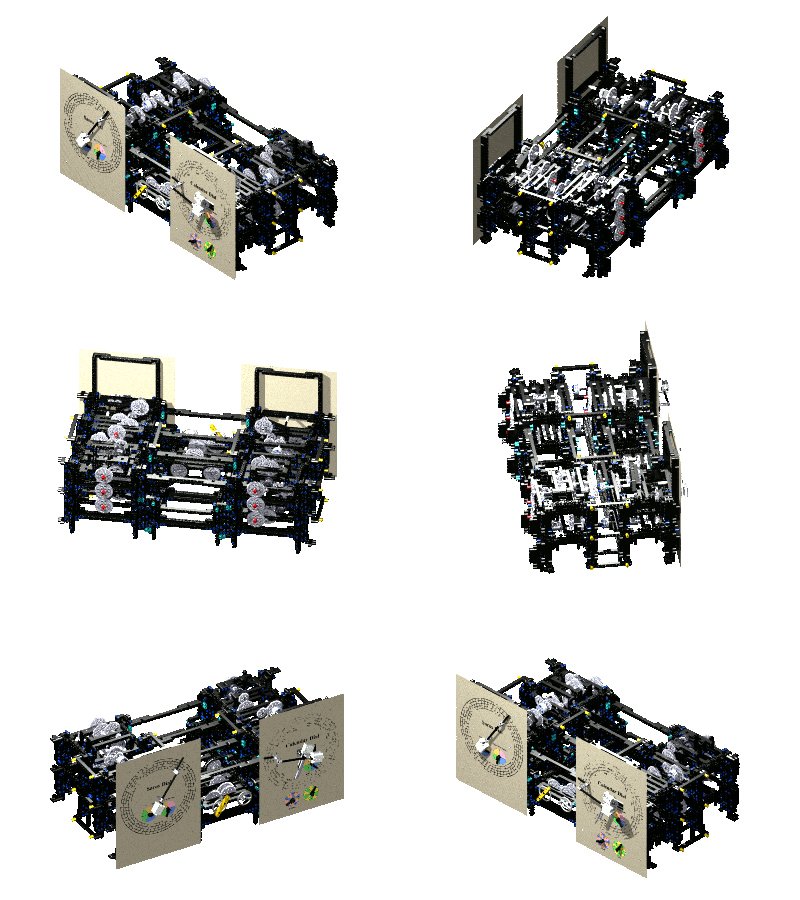
After 2,000 years under thesea, three flat, misshapen pieces of bronze at the National Archaeological Museum in Athens are all shades of green, from emerald to forest. From a distance, they look like rocks with patches of mold. Get closer, though, and the sight is stunning. Crammed inside, obscured by corrosion, are traces of technology that appear utterly modern: gears with neat triangular teeth (just like the inside of a clock) and a ring divided into degrees (like the protractor you used in school). Nothing else like this has ever been discovered from antiquity. Nothing as sophisticated, or even close, appears again for more than a thousand years.

For decades after divers retrieved these scraps from the Antikythera wreck from 1900 to 1901, scholars were unable to make sense of them. X-ray imaging in the 1970s and 1990s revealed that the device must have replicated the motions of the heavens. Holding it in your hands, you could track the paths of the Sun, Moon and planets with impressive accuracy. One investigator dubbed it “an ancient Greek computer.” But the X-ray images were difficult to interpret, so mainstream historians ignored the artifact even as it was championed by fringe writers such as Erich von Däniken, who claimed it came from an alien spaceship. It wasn’t until 2006 that the Antikythera mechanism captured broader attention. That year, Mike Edmunds of Cardiff University in Wales and his team published CT scans of the fragments, revealing more details of the inner workings, as well as hidden inscriptions—and triggering a burst of scholarly research. 

The Antikythera mechanism was similar in size to a mantel clock, and bits of wood found on the fragments suggest it was housed in a wooden case. Like a clock, the case would’ve had a large circular face with rotating hands. There was a knob or handle on the side, for winding the mechanism forward or backward. And as the knob turned, trains of interlocking gearwheels drove at least seven hands at various speeds. Instead of hours and minutes, the hands displayed celestial time: one hand for the Sun, one for the Moon and one for each of the five planets visible to the naked eye—Mercury, Venus, Mars, Jupiter and Saturn. A rotating black and silver ball showed the phase of the Moon. Inscriptions explained which stars rose and set on any particular date. There were also two dial systems on the back of the case, each with a pin that followed its own spiral groove, like the needle on a record player. One of these dials was a calendar. The other showed the timing of lunar and solar eclipses.

Experts have been working to decipher inscriptions hidden inside the mechanism, in particular to understand the mechanism’s missing pieces, some destroyed, some probably still at the bottom of the sea. Though the pointers on the front face don’t survive, Alexander Jones, a historian at the Institute for the Study of the Ancient World in New York, says an inscription reveals that they carried colored balls: fiery red for Mars, gold for the Sun. 

Also missing are the parts that drove the planetary pointers, leading to debate about exactly how they moved. Because planets orbit the Sun, when viewed from Earth they appear to wander back and forth in the sky. The Greeks explained this motion with “epicycles”: small circles superimposed on a larger orbit. According to Michael Wright, a former curator at London’s Science Museum who has studied the mechanism longer than anyone, it modeled epicycles with trains of small gears riding around larger ones. Though some experts have dismissed this as beyond the Greeks’ abilities, Jones says he will publish evidence supporting the idea later this year.

Other inscriptions hint at where the mechanism was made. Paul Iversen, a classicist at Case Western Reserve University in Cleveland, reports that the calendar includes month names used in Corinth and its colonies in northwest Greece. A dial that displayed the timing of major athletic festivals, including the Olympics, lists Naa, a festival held in northwest Greece, and Halieia, held to the south on the island of Rhodes. Perhaps the mechanism hailed from Rhodes and was being shipped north. The ancient philosopher Posidonius had a workshop in Rhodes that could have been the source; according to Cicero, Posidonius made a similar model of the heavens in the first century B.C.

The tradition of making such mechanisms could be much older. Cicero wrote of a bronze device made by Archimedes in the third century B.C. And James Evans, a historian of astronomy at the University of Puget Sound in Tacoma, Washington, thinks that the eclipse cycle represented is Babylonian in origin and begins in 205 B.C. Maybe it was Hipparchus, an astronomer in Rhodes around that time, who worked out the math behind the device. He is known for having blended the arithmetic-based predictions of Babylonians with geometric theories favored by the Greeks. 

Regardless, the Antikythera mechanism proves that the ancient Greeks used complex arrangements of precisely cut wheels to represent the latest in scientific understanding. It’s also a window into how the Greeks saw their universe. They came to believe that nature worked according to predefined rules, like a machine—an approach that forms the basis of our modern scientific views. Edmunds argues that this “mechanical philosophy” must have developed as a two-way process. The ancient mechanics who captured the cosmos in bronze weren’t just modeling astronomical theories but were also inspiring them.

FEB15_J03_Antikythera.jpg

Smart farming in India- Reality or Dream

Introduction

      No life is without food, the need of the food and the need of the farmers are keep on increasing in our day to day life. The farmers are following many pathways for the production of the nutrient rich food for us but somehow they are facing lot of troubles sowing to marketing. The government is also taking up steps to minimize these problems. Smart farming is one of the way to overcome the crises. So, in this essay let us discuss in short about Smart farming in India is a dream or a reality.

                      ‘The best culture in this world is AGRICULTURE’

Farming in India

      The backbone of India is former as the saying goes, many forming methods have been following throughout the country. The forming method depends upon the climatic condition, the type of the land (soil), based on the availability of water, and of course based on the condition of the environment.

    At present due to the poor natural conditions like poor climate, delay of rainfall, windy, over heat, at times drought, and of course of different insects effect which are caused due to the modern era, it created the fact that bringing out the crop with product is a challenge. So sure we need a smart farming method to overcome these types of problems.

                                       ‘Modern problems needs modern solution’

Smart farming

          The survey says that the demand of food will increase nearly to the 70 percentage of world food production, so it is important and basic need to be fulfilled in the future. This can be achieved only by the smart farming that through with the technology. It is more over like predicting the weather, proper supply of water, sensing the amount of nutrient content in the soil for the plant growth, protecting the plants and crops from the insects and other that affecting the plant.

         This all can be brought by watching every activity of the plant growth and providing them with the things they lack. For example the automatic irrigating system this will help to maintain the moisture that needed by the plant and turn off automatically when they get enough water, then noticing the plant growth and its needs through the sensors, identifying the insects entry and keeping them away and by tracing the animals.

       Then the storage is one of the foremost important thing and it can be brought by maintaining the temperature, air flow, humidity etc., 

                        “To get her(food) we need to work to-get-her(together)”

Dream or reality

      In country like India it is really difficult task to implant all over the states, but it can be achieved with the help of the government and the funding agencies. The coast of smart farming is really huge and it cannot be set up by the individual farmers who are poor. But it can be brought by the students who create a smart farming individually by his education and love towards the farming.

     Even we can say smart farming is achieved in some places, where the person step out individually and created the impact over the farming by inventing new machinery and equipments.  

      The awareness can be created among the people by explain bought the need of farming and its importance in the future world. Thus it motivates the people to do smart farming and that will help in the betterment of farming.

                                         “Reality are once dreams”

Conclusion

      No person is island as the saying goes that holds true for farming also because everything in this world is depends upon one another, so the smart farming can be achieved through the team work, and every reality is once a dream so it can be achieved one day for sure. Let us hope for the best and great future.

            “The only culture to be cultured in the world is Agriculture”.

OSTEOARTHRITIS


Arthritis is joint inflammation ,which is most common in older adults .There are 2 types of Arthritis which are most common in adults (1) Osteoarthritis (2) rheumatoid arthritis. Osteoarthritis (OA) is the most frequent cause of disability among older adults. According to UN ,by 2050 around 130 million people around the world will suffer from OA and around 40 million will be severely disabled by this disease. Osteoarthritis is related to ageing but there are other factors like obesity ,lack of exercise ,gender etc which effect the condition.The best way to trackle with such diesease is by taking care of yourself take health diet,do yoga , meditation ,and avoid stress .

Stress Management Through Sahaja Yoga Meditation

Introduction

Stress is unavoidable in the current scenario, where the entire world is facing the Corona virus pandemic. With the toll of deaths and positive cases of Corona virus on rise, every person in this world is under stress and anxiety. Higher levels of stress adversely affect the physical as well as psychological health of the individuals concerned. Therefore, it becomes highly essential to manage stress at initial stages, so as to avoid severe consequences of high stress on health. The present article focuses on the management of stress through a unique form of meditation, i.e, ‘Sahaja Yoga’. Sahaja Yoga is a scientifically proven technique of meditation which involves the awakening of the dormant primordial energy- the Kundalini, and integrating it with the all-pervading cosmic energy. Regular practice of Sahaja Yoga meditation leads to the inner transformation of an individual, whereby one becomes more moral, integrated, balanced and healthy.

What is Stress?

Stress refers both to the circumstances that place physical or psychological demands on an individual and to the emotional reactions experienced in these situations. It leads to severe effects on the physical as well as psychological health of the individuals concerned such as frequent headaches, heart disease, myocardial infarction, cardiovascular disease, musculoskeletal disorders, diabetes, high anxiety, depression, post-traumatic stress disorder and so on. Since, stress is a psychological phenomenon, its management can be best realised by treatment focused at the mental level. Thus, the present article aims at spreading awareness about the stress management technique called ‘Sahaja Yoga’ and highlighting its significance in the improvement of overall health, especially, psychological health.
Sahaja Yoga Meditation

What is Sahaja Yoga?

The word ‘Sahaja’ means ‘spontaneous’ and ‘Yoga’ means ‘union with the self’
Sahaja Yoga was founded in 1970 by Mrs. Nirmala Srivastava, more widely known as ‘Shri Mataji Nirmala Devi’. Shri Mataji was spiritually enlightened since birth and granted en-masse realisation to people free of any materialistic consideration. For 40 years since 1970, she travelled tirelessly across the globe to teach Sahaja Yoga meditation world-wide at her own expenses 

Human Subtle System

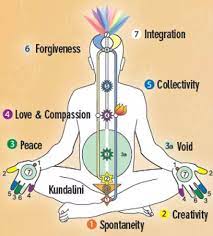
The process of Sahaja Yoga meditation works through the subtle system which comprises of three energy channels (nadis) and seven energy centres (chakras). At the root of this system lies a protective power – Kundalini. Amongst the three channels (Nadis), the left channel called Ida Nadi represents our desires (Ichha shakti); the right channel called Pingla Nadi represents our working ability (Kriya shakti); and the central channel called Sushumna Nadi represents our assent. The seven energy centres in the body correspond to the seven nerve plexuses: the pelvic plexus (Mooladhara Chakra), the aortic plexus (Swadhistana Chakra), the solar plexus
(Nabhi Chakra), the cardiac plexus (Heart Chakra), the cervical plexus (Vishuddhi Chakra), the optic chiasma (Agnya Chakra) and the limbic area of the brain (Sahasrara Chakra). These energy centres are responsible for maintaining their surrounding physical organs in the body.
When Kundalini rises it crosses all the six energy centres and emits from the seventh centre (Sahasrara Chakra) and unites the individual consciousness with universal consciousness. An individual rise above the three channels of the subtle system and reaches a timeless state beyond the past, present and future – a state of thoughtless awareness. This process is referred to as Self-realisation. As an evidence of self-realisation, an individual feels cool breeze of vibrations on the head and palms of hands .

How Sahaja Yoga Meditation Helps in Stress Management?

It is imperative to understand how stress arises and how is it managed through Sahaja Yoga meditation. The central channel (Sushumna Nadi) is the path of rising Kundalini and a channel of balance. An individual having too many desires and always thinking about the past deviates from the central channel and puts his left channel under pressure. On the other hand a workaholic person, always working and planning for the future puts his right channel under pressure. The left-sided individuals become highly emotional, conditioned and day dreamers while right-sided people become highly egoistic and harsh on others. Stress is the result of such an imbalance between the two energy channels and deviation from the central channel.
Therefore, one should always keep his attention on the central channel and remain in the balanced state in order to be stress-free. Thus, Sahaja Yoga helps in managing stress effectively by attaining and maintaining the balanced state through regular meditation, since by focussing on the central channel one remains in present rather than thinking about past or future events.


Sahaja Yoga in the present Coronavirus Scenario

As many as 200,000 people across 60 countries have attended online meditation sessions since 16 March 2020 with the commencement of lockdown, according to the information published nation-wide from H.H. Shri Mataji Nirmala Devi Sahaja Yoga Trust (National Trust). The Youtube channel – Pratisthan, Pune of the Trust has seen around 2 million views with 7.31 lakh watch hours and over 13.2 million impressions in the lockdown period. Each viewer attended an average of 8.6 session and spent average of 23 minutes per visit, which is substantial as people look towards meditation to overcome anxiety during COVID19 lockdown.

Conclusion

Sahaja Yoga meditation activates and nourishes the parasympathetic nervous system which relaxes both body functions and the brain by reducing thinking functions Thus, regular meditation everyday cleanses the subtle system, relaxes body and mind, and gradually one starts experiencing physical, mental and emotional benefits also, apart from gaining stress relief Thus, the Indian government should focus on building resilient citizens which can adjust with the pressures of the present stressful scenario.