Morality in Rule of Law

                                                            (Photo: Thought and action)

Rule of Law is the fundamental principle which ensures good governance as well as individual rights and liberties. It says no one is above the law and every person living in a particular society is subject to the law of that society. All other notions associated with the rule of law must also be considered alongside it. It is a mechanism that encourage the equality of all citizens before the law. It also secures a non-arbitrary form of government, and specifically prevents the arbitrary use of power. In general, the rule of law implies that the creation of laws, their enforcement, and the relationships among legal rules are themselves legally regulated, so that no one including the most highly placed official is above the law.

Moralityis a concept that distinguishes right from wrong. It also talks about conduct that is considered acceptable or unacceptable in a particular society. The source of morality is usually considered to be natural law and God’s instructions through sacred documents.

Morals provide a basis for the development of law by virtue of justice, equity, good faith, and conscience. Morality plays an important role in making of law and its interpretation. Morals are an intrinsic part of the laws. In the ancient time morals and laws were considered as one and the same. In the current period though law and morality have several distinctions yet the same are not completely different or distinct. A relationship can be established between morality and law on three grounds: –

1)     morals as the basis of law

2)      morals as test of positive law

3)      morals as the end of law.

According to Stammer “jurisprudence depends much upon moral ideas as just law has a need of ethical doctrine for its complete realization. Positive law and just law correspond to positive morality and rationally grounded ethics. There’s no difference and if any, it is only the difference of manner in which the desire for justice present itself”.

H.L.A Hart believes that there are several relations between law and morals. He was of the view that a legal system must exhibit some specific conformity with morality or justice or must rest on a widely diffused conviction that there is a moral obligation to obey it.

Ronald Dworkin has argued that both laws and constitutions are unavoidably rooted in political and moral principles. The law is not derived logically from accepted true moral principles. Rather, it is established by legislatures that come to agreement on public rules that are shaped by a political consensus about right and wrong.

Rule of law prioritizes the supremacy of law whereas morality prioritizes the moral values and consciences of the subjects of the state. For instance, a man is under no duty to help a beggar or the distressed and can neglect his sick and old parents without the fear of any legal or penal consequences, but morality does not allow a person to do so as it amounted to undesirable conduct condemned by morals and ethics. There is a close relation between the rule of law and morality.  Morality complements the rule of law. But it is a casual relationship, as laws are not made out of moral principles, rather, they are established and shaped by a “legal consensus of right and wrong”. Even though morality is ultimately involved in making and modifying the law, it is never legally binding and does not have constitutional value.  Laws have a marginal origin from the morals and ethics derived in the society which initially monitored the conduct of people, but morality solely cannot be the basis on which law has been derived. An acceptable statement is that both morality as well as rule of law have adapted to the development of society. Sometimes what seems right from the morality point of view may be contrary when viewed from the point of rule of law.  For instance, when a person tries to feed a needy person, by means of theft solely for the purpose of feeding that needy person, morally the act may be justified yet the same may not be the case under rule of law. Because under the concept of rule of law, a person has committed. Therefore, morality has a marginal presence in rule of law whereas it is highly contradictory of the same.

Morality in Rule of Law with reference to H.L.A. Hart theory

Professor Herbert Lionel Adolphus Hart (H.L.A. Hart) is an influential legal professor. Hart revolutionized the methods of jurisprudence and the philosophy of law. He authored ‘The Concept of Law’ and made major contributions to political philosophy. Law can be analyzed in terms of rules which is largely based on Hart’s theory of law. According to him, rules are concerned not with what happens but with what is to be done. Rules are imperative or prescriptive rather than indicative or descriptive. Rules have a certain independence or self-legitimating character. Rules are different from commands. Commands normally call for one unique performance whereas rules have a general application and demands repeated activity. According to Hart, ‘Law consists of rules which are of broad application and non-optional character, but which are at the same time amenable to formalization, legislation and adjudication. According to Hart the law consists of primary and secondary rules. Primary rules are duty imposing rules on the citizens and have a legal sanction. Secondary rules are power conferring laws that describe how laws should be recognized, adjudicated or changed. Hart says these rules form the heart of the legal system.

Hart’s version of natural law is empirical. His position is based on a theory of human nature which believes in certain truisms. For example, Hart believes that one truism of human nature is that the overwhelming majority of human beings wish to survive. It means they would rather live than die. If one wish to survive, it is imperative that a society be developed which will help ensure survival. Hart believes there are five features of the human condition which sometimes work against survival, and the legal system must take these into account.  Hart believes that: –

  •      there is the feature of human vulnerability.
  • .     there is the Hobbesian notion of approximate equality.
  • .      human beings possess at best a limited altruism.
  • .      the concept of limited resources governs our actions.
  • .     the idea of limited understanding and strength of will is important to any society.

     Conclusion
    The fundamental principle which ensures good governance as well as individual rights and liberties is the rule of law under which no one is above the law and every person living in a particular society is subject to the law of that society.  Morality, on the other hand, is concept that distinguishes right from wrong and may refer to conduct that is considered acceptable or unacceptable in a particular society.  Coercion and sanction may be important considerations but not the basic elements to make law work. The law is meant to facilitate. It is mechanism that resolves conflicts of interest among individuals. This idea of law brings us to the concept of rule of law which aims to treat every individual equally, irrespective of social status. Under the rule of law, individuals are protected from the element of coercion. Another element of the rule of law is equality, which is often confused with generality. Laws are based on generality and bind everyone, not any singular group. But equality here means that every individual is subject to the same law and procedures and has the same rights. A close relation exists between the rule of law and morality, since morality complements the rule of law. But it should still be considered a casual relationship, as laws are not made out of moral principles, rather, they are established and shaped by a “legal consensus of right and wrong”

Communicable Diseases

These are the diseases that may pass or carry from one human or animal to other. Communicable diseases are illnesses caused by grams such as bacteria, viruses, and spread by an infected person, animal, or object to other person.

Viral Diseases: The virus is parasitic which causes several diseases like:

(1) Bird Flu (H5 N1)- Bird Flu (Avian influenza) is a disease caused by an influenza virus-A, that primarily affects birds. The following persons who may be at higher risk for developing the bird flu are—

• Travellers, visiting affected countries.

• Farmers and others, who work with poultry.

• Those who have touched an infected bird.

• Those who eat raw or undercooked poultry meat, eggs, from infected birds.

Symptoms- Fever, cough, sore throat, muscle aches, and eye infection (conjunctivitis).

Treatment- Treatment with the anti-viral medication oseltamivir (Tamiflu), or zanamivir (Relena) may make the disease less severe. Oseltamivir may also be prescribed for persons, who live in the same house as those diagnosed with Avian flu.

Severe Acute Respiratory Syndrome (SARS): It is a serious form of pneumonia. It is caused by a virus that was first identified in 2003. Infection with the SARS virus causes acute respiratory distress( severe breathing difficulty) and sometimes death.

Symptoms- Cough usually starts 2-3 days after other symptoms like fever, headache, and muscle aches.

Treatment- Antibiotics to treat bacteria that cause pneumonia. Anti-viral medications. High dose of steroids to reduce swelling in the lungs. Oxygen, breathing support (mechanical ventilation), or cheat therapy.

Hepatitis: Hepatitis is swelling and inflammation of the liver. It is not a condition but is often used to refer to a viral infection of the liver. Hepatitis can be caused by—

• Immune cells in the body attacking the liver and causing autoimmune hepatitis. Infections from viruses such as hepatitis A, B, or C, bacteria, or parasites. Liver damage from alcohol, poisonous mushrooms, or other poisons.

• Medication such as an overdose of acetaminophen can cause harm or even death.

Symptoms- Abdominal pain or distention. Breasts development in males. Dark urine and pale or clay-colored stools. Fatigue, general itching, fever, usually low-grade jaundice(yellowing of the skin or eyes), and loss of appetite, nausea, vomiting, and weight loss.

(2) AIDS: Acquired Immuno Deficiency Syndrome(AIDS) is a disease of the human immune system caused by the Human Immunodeficiency Virus (HIV). AIDS was first recognized by the Centers for Disease Control and Prevention(CDC) in 1981.

HIV Infection: AIDS is a condition caused by HIV infection. The condition gradually destroys the immune system, which makes it harder for the body to fight infections.

Transmission- HIV can be spread by the following :

• Through sexual contact i.e. oral, vaginal, and anal sex.

• Through blood transfusions, accidental needle sticks, or needle sharing.

• From mother to child: A pregnant woman can transmit the virus to her fetus through their shared blood circulation or a nursing mother can pass it to her baby through breastfeeding.

Test for AIDS-

• Enzyme-Linked Immunosorbent Assay/ Enzyme Immuno Assay (ELISA/EIA).

• Radio Immuno Precipitation Assay/ Indirect Fluorescent Antibody Assay (RIP/IFA).

• Polymerase Chain Reaction(PCR)

• Western Bolt Confirmatory Test.

Generation Gap

Generation Gap is a term given to the gap or age difference between two sets of people; the young people and their elders, especially between children and their parents. Everything is influenced with the change of time- the age, the culture, mannerism and morality. This change affects every one. Generation gap is an endless social phenomenon. Every generation lives at a particular time under certain circumstances and conditions. So, all generations have their own set of values and views. Every generation wants to uphold the principles they believe . This is a problem that has continued for ages.
People born in several time periods under different conditions have their own views supported the circumstances they need been through. The patterns of life are changing continuously consistent with time. Everyone wants to measure and behave in his own way and nobody wants to compromise together with his or her values and views. There has always been a difference in attitude or lack of understanding between the younger and older generations. This attitude has augmented the generation gap and it’s becoming wider day-by-day. This gap now has started impacting our lives during a wrong way.
It is always good to possess a good range of ideas, views and opinions. It indicates how we are developing and advancing but sometimes this becomes worrisome when the views and concepts aren’t accepted by both the generations. Parents create a particular image in minds for his or her children. They want to mention their children with values that they need been mentioned with and expect their children to follow an equivalent . Parents want children to act in accordance with their values, as they believe, it’s for his or her benefit and would had best to them.
Children on the opposite hand have broader outlook and refuse to simply accept the normal ways. They want to try to to things in their own ways and don’t like going by any rulebook. Mostly, children experience conflict during their adolescence. They are desperately searching for self-identity. Parents sometimes fail to know the stress of this fast paced world. Ultimately, despite love and affection for every other both are drained out of energy and unable to grasp the opposite . Consequently there’s a scarcity of communication and abandoning on relationships.
Nothing are often as beautiful as a parent-child relationship within the world. It should be nurtured very delicately then it’s important to bridge the gap between the 2 generations. It is time to understand that neither is totally right nor wrong. Both the generations need to develop more understanding and acceptance for every other. Having a dialogue with one another calmly, with the thought of checking out conflict amicably in ideas, changing their mindset for every other and coming to a middle ground can be the foremost helpful instrument in bridging the gap between the 2 generations.
Spending longer with one another like family outings, vacations, picnics, shopping, watching movies together might be some effective ways to create up a robust bond with one another . Both the generations need to study the ways of the society during their growing period and have mutual respect for it. To reduce the friction between the 2 generations, both parents and youngsters need to give space to every other and define certain boundaries that the latter should respect an equivalent .
Generation gap occurs because society is constantly changing. It is the responsibility of both the generations to fill this gap amorously , affection and trust. Both the generations should have mutual respect for the views and opinions that they uphold and advance cautiously with the event of the society.
In order to shrink the generation gap, we must be open minded about learning from other generations. There is often a stigma within each generation that older or younger generations are wrong because their opinions and values are different. … there’s always room to grow and learn.

Education and literacy 

Source- Google scholar

Review of journal

Date of issue

Vol.1, 7October ,2013(IJRSML)ISSN;2321-2853

Author-Dr. Navichandra R. shah Assistant professor Dept. of Economics, Saurashtra university, Gujarat

Reference 

Literacy Rate in India

Link: http://www.raijmr.com

Key point

  • Statistics of literacy in India.
  • Importance of literacy at individual and society level.
  • Census from 1991 to 2018.
  • Literacy in British Rule after independence. 
  • Government policies to accelerate literacy.

Introduction 

India’s demographic occupied 2nd rank among the world’s populated countries. 

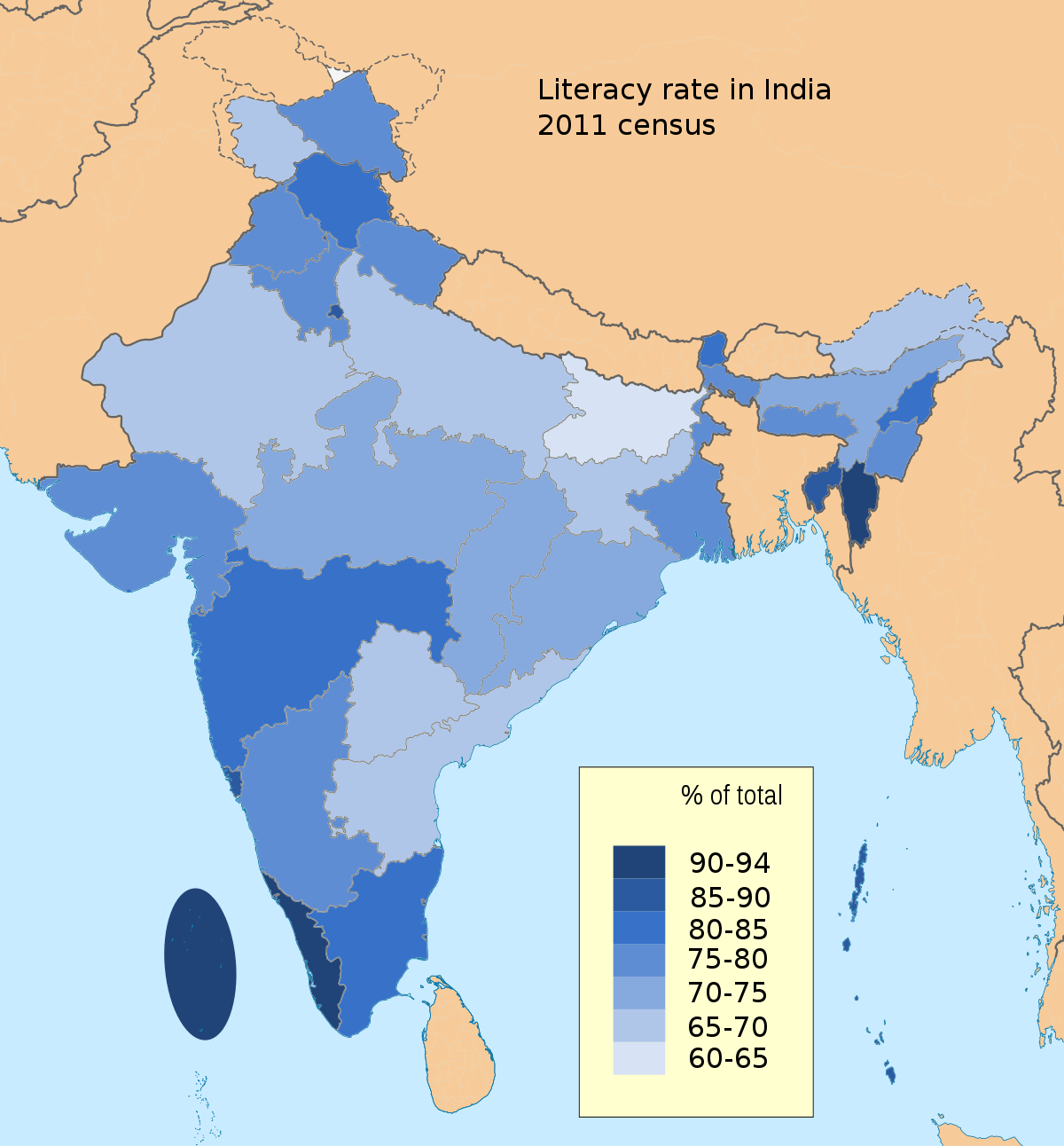
As census 2011 shows the percentage of population of India, there is a huge percentage of young age. The literacy rate of India was 74.04%. It might look good as the statistics, but the truth is behind the numbers. The numbers vary from state to state.

In this journal a significant relationship shows between literacy and economics.  Development is the main aspect of a nation to progress. Literacy is not only important for individuals, it’s also important at community level. 

At earliest, literacy refers solely to the ability to read and write; but the United Nations Educational scientific and cultural organization (UNESCO) define the literacy as the ability to identify, understand, interpret, create, communicate, compute and use printed and written materials associated with varying context. 

 Importance of literacy for an individual

The answer can be found in the following points:

  • Literacy involves a continuum process of learning.
  • To achieve their goal.
  • To interact in society and contribute to society.
  •  To develop their knowledge and potential.
  • Attainment of universal primary education is one of the Millennium development goals of the United Nations to be achieved by the year 2015.
  • Literacy level and educational attainment are vital indicators of development.

The numbers of literate and illiterate persons were 778,454 and 272,950,015 respectively (census 2011). In this census of 2011, children below age 5 are considered illiterates.

Censuses since 1991

The research paper shows the rate of literacy of India from 1901 to 2011. The data is very old, but it is to show the change in literacy rate. According to the research paper, the involvement of women is very less in compare of men. There could be many reasons. But as the time passed, involvement of women in education and literacy increased drastically. Whereas we can see that male education and literacy also increase. 

Literacy during British Rule

In the pre-colonial era, there were Gurukulss where education was  provided to the children. Between 1881-82 and 1946-47, the number of English schools grew from 82,916 to 134866. Literacy rate in accordance to British in India rose from 3.2% in1881 to 7.2% in1931 and 12.2%in 1947.

Literacy after independence

During independence the literacy rate was 12.2%. After independence, the current government had to plan the educational module, there was a huge number of people who were illiterate and the need for a quality education was a must. Since 1947, India has always worked actively in the education sector.

Step taken by the government in accelerating education planning in India

To accelerate the literacy, Indian Government take many initiates;

  • Universal Elementary Education for all.
  • Right to free and compulsory education, 2010
  • Sarav shiksha abhiyan, 2002
  •  Directive principle of state (article 45)
  • National Literacy Mission,1998
  • Manthan sampoorana vikas kender,2008

Key finding

  • The literacy gap between male and females.
  • Difference in the form of number between the after and before independence about literacy.
  • The numbers show that the fewer female participants are female in literacy. 
  • Interrelation between development, literacy and education.
  • Accelerating education by the step taken by the government.

Critic

The data is too old and the interrelation between literacy and development is not clear. The Reason behind the low literacy is not given. In The census of 2011, children below age 5 are considered illiterates but children are still learning how we can consider them illiterate, the author should use some different term for children below age 5.

Reflection 

The journal was written in 2013and the data used is old which couldn’t show the current situation of literacy and education. As I can read, in this paper the terms of literacy and education are similar, meanwhile there is a huge difference between the two terms.

The author tries to show the interrelation between literacy and economics. The author doesn’t give any specific term which can justify his statement.

Literacy can help to attain development. I agree, the more literate person can make a smooth environment. Their writing and reading capabilities can help them to save themselves from anti -social elements, but we are living in a web era where everything becomes online. During the pandemic, we are not going outside, that time our life fully depends on the web world.

While reading the article some questions hit me. I want to discuss over that 

  • Is literacy enough to attain the economic goal and development? If yes, why do we need degrees?
  • Can a literate person consider him/herself as educated? If yes, then what term should I use for a degree holder person? If not, then how can we motivate them to gain more knowledge and become educated?
  • What guidelines can help an individual to understand the difference between the literate and educated person?

We need to focus on the overall development of an individual because an individual is a building block of a society and nation.

Social Media Detox

People realize drug detox, but there’s also what’s referred to as social media and digital detox, and lots of feel it’s an important thing that folks got to do.
When you put the words SOCIAL MEDIA DETOX into Google, this definition pops up:
“A social media detox may be a conscious elimination of social media use and consumption for a group period of your time . Generally, most social media detoxes are 30 days, but some people do seven days or maybe a year-long social media detox.”
Then on the primary page are the questions, “How do I take an opportunity from social media?” “What happens once you hand over social media?” “Why going off social media is good?”
Well, we all know why it’s good to require an opportunity from social media, regardless of how long you are doing it. Too much social media are often toxic and depressing. Studies have shown that an excessive amount of social media are often bad for you, and an opportunity from it’s not a nasty idea.
It could also make an excellent new year’s resolution, because as Psychology Today reports, “The early months of the year are traditionally a time for abstinence, introspection, and renewal. Another emerging tradition has become referred to as a digital detox. This refers to self-initiated periods of abstinence from using digital devices, especially abstention from social media.”
As this report continues, “Research indicates a significant increase in the usage of social media in recent years. This has become especially intense among young people.” This report cited a study that claimed that over 20% of students are on social media for five hours a day or more, which is clearly a lot.
Social Media Detox and Mental Health
As far as social media and mental health, this story mentions that many studies will tell you that “low levels of social media usage are associated with better mental health.” Spending an excessive amount of time on social media can affect your physical health also . As this story explains, “One study indicated that heavy usage of social media and digital devices could negatively affect the standard of sleep,” and an excessive amount of social media time can cause headaches and vision problems.
Studies from everywhere have shown that spending an excessive amount of time on social media are often potentially hazardous to your psychological state , and breaks, even now then , are strongly advised. One of the most important reasons is that social media can show distorted views of reality that make people feel inferior, like their lives can’t qualify to some celebrity or influencer. This often couldn’t be beyond the reality , and that we might not realize the grass truly isn’t greener on the opposite side, but it’s certainly easy to be convinced otherwise.
A social media detox, regardless of the time you spend faraway from it, be it hours, days, weeks, or maybe months, are often very beneficial to your psychological state . If you’re not able to take an enormous step faraway from it, little steps are certainly recommended. See how you wish it initially , then see if you’ll enjoy longer faraway from it and if it truly benefits your life and psychological state .
There’s no denying that social media has become an enormous a part of modern life. Apps like Facebook, Instagram, and Twitter help us stay connected with loved ones, catch abreast of news, and find out both beautiful destinations and galvanizing people. Yet you’ll find that spending hours on end scrolling through various feeds can leave you feeling anxious, drained, or dissatisfied. So how does one know if you’re in need of a social media detox? “Reflect on your habits and evaluate how social media causes you to feel and the way it impacts your life,” says Catherine Price, author of the way to hack together with your Phone and founder of Screen/Life Balance. “Is it negatively impacting your mental wellness? How about your productivity and creativity? Is it taking time away from the activities that make you happy?”
It’s important to notice that there’s nothing inherently wrong with spending time on social media, consistent with Price. “The important thing is to use it with purpose and intention,” she says. If, upon reflection, you are able to spot any negative effects that the apps have had on your life, then it’s time for a social media break.

Ideas  that will help to disconnect a little and have a happier, healthier relationship with social media from now on.

Delete your social media apps.

Detox with a buddy.

Talk to your friends and family.

Set time limits on your apps.

Practice meditation.

Get a real alarm clock.

Give your phone a bedtime.

Think of your attention as a valuable resource.

Ideally, you’re completely eliminating social media use and consumption. This means deleting and removing all social media apps from your phone, and in some cases where it’s possible, temporarily disabling your social media accounts. 

Globalisation

Introduction

Globalisation is the process of international integration arising from the interchange of world views, products, ideas and other aspects of life. The vital element of globalisation is ‘worldwide interconnectedness’ that is created and sustained as a consequence of these constant flows. Globalisation is a multi-dimensional concept. It has political, economic and cultural manifestations and these must be adequately distinguished. The impact of globalisation is vastly uneven- it affects some societies more than others and some parts of some societies more than others and it is important to avoid drawing general conclusions about the impact of globalisation without paying sufficient attention to specific contexts.

Causes of Globalisation

  • There are many causes of it but technology affects it more than anything else. Invention of printing, integrated chip(IC), telephone, internet has revolutionized communication between people in different parts of the world.
  • Due to faster communication and transportation, ideas, commodities, capital move more easily to any part of the globe than ever. As people got the technology of better communication and transportation they recognise these mediums to connect rest of the world.
  • The Ebola virus is not confined to only African continent but it affects other nations too.
  • It has mainly 3 types of consequences:-
    1. Political : Globalisation results in discomfort in functionality and working of government. The increased role of MNC all over the world leads to reduction in the capacity of govt. to take decisions on their own. But at the same time globalisation does not always reduce state capacity. The importance of state continues to be unchallenged basis of political community. Indeed in some manner state capacity has recieved a boost as a consequence of globalisation. Due to advancement in technology available in state, it can collect information about its citizens. With this information, the state is better governed. State becomes powerful than earlier due to emergence of new technology.
    2. Economic : The economic globalisation involves greater economic flows or exchange of commodities among different countries of the world. The mention of economic globalisation draws our attention to the role of international institutions like IMF and WTO in determining economic policies across world. The restrictions imposed by different countries on capital across countries and allowing imports of other countries have been reduced. Capital across countries means that investors in prosperous countries can invest in other countries including developing countries where they might get good returns. There is less movement of people across the globe because developed countries have carefully guarded their borders with visa policies to ensure that citizens of other countries cannot take away the jobs of their own citizens.
    3. Cultural : It refers to impact of globalisation in what we eat, wear, drink, watch and think. The cultural effect of globalisation poses a threat to different cultures in the world other than western culture. There is a cultural homegenisation which means rise of uniform culture, as we notice the popularity of American things like McDonald’s, Pizza, KFC, GOOGLE, blue jeans and hollywood movies has spreaded across the globe. This is dangerous not only for the poor countries but for the whole of humanity because it leads to the shrinkage or extinction of the rich cultural heritage of the entire globe. But cultural consequences of globalisation is not always negative as sometimes external culture influences simply enlarge our choices and sometimes they modify our culture without overwhelming the tradition. The Maggi is no substitute for noodles, therefore, does not pose any real challenge. Globalisation leads to each culture becoming more distinctive and different. This phenomenon is called Cultural Hetergenisation. Those who are concerned about social justice are worried about the extent of state withdrawal caused by process of economic globalisation. They point out that it is likely to benefit only a small section of population while impovershing those who were dependent on govt. for jobs and welfare. They have emphasised the need to ensure institutional safeguards to minimise the negative effects of globalisation on those who are economically weak. Many movements all over the world feel that safety nets are insufficient or unworkable. They have called for a stopping to forced economic globalisation, for its results would lead to economic ruin for the weaker countries, especially for the poor within these countries. Some economists have described economic globalisation as re-colonisation of the world. Advocates of economic globalisation argue that it generates greater economic growth and well-being for larger sections of population when there is de-regulation. Greater trade among countries allows each economy to do what it does best. This would benefit the whole world. They also argue that economic globalisation is inevitable.

India and Globalisation

From the colonial period, India became an exporter of primary goods and raw materials and a consumer of finished goods. After independence, because of the experience with British, we decided to make things ourselves rather than depending on others. We also decided not to allow others to export to us so that our own producers could learn to make things. This step generated its own problem. India had a fairly sluggish rate of economic growth (due to ignoring other sectors such as health, housing, etc.). In 1991, responding to a financial crisis and to the desire for higher rates of economic growth, India began programme of economic reforms that opened doors for trade and FDI.

India and Resistance to Globalisation

Resistance to globalisation in India has come from political parties as well as through forums like the Indian Social Forum. Trade Unions of industrial workforce as well as those representing farmers interests have organised protests against the entry of multinationals. The patenting of certain plants like Neem by American and European firms has also generated considerable opposition.

Ahoms vs Mughals. What is the story behind defeating Mughals?

While the Mughals were an invincible force everywhere, they never succeeded in getting a foothold in the North East India.  The North East was an attractive proposition for the Mughals, rich Brahmaputra flowing through many countries and hence a great trade opportunity, and by controlling this region, one could control the trade route. The region was fertile and it meant great agricultural bounty.

The story of Ahom dynasty of Assam vs Mughals is incomplete without the story of Lachit Borphukan.  He was one of the five Patra Mantri (minister) in the Ahom Kingdom. He was the ruler of Lower Assam during that period.

From 1615 to 1682, the Mughals attacked North East 17 times. In 1667, the Ahoms lost Guwahati (Pragjyotishpur) to Mughals and had to pay a war indemnity of 3 lacs rupees and ninety elephants. Two Ahom princesses were taken as hostages by the Mughal Army.  King Chakradhwaj Singha selected Lachit Borphukan to lead the forces and get Guwahati back from Mughal captivity. Lachit raised the army and seized Guwahati from the Mughals.  He was sure that Mughals will be back soon, and hence immediately started preparing for the next battle.  .  He was right, Mughals came knocking at their doors with a much bigger and powerful army.

The Battle of Saraighat

The Mughals did not take this defeat lightly and came back with 30000 soldiers, 15000 archers, 18000 Turkish cavalry, 5000 gunmen and over 1000 canons. This was a mighty fleet and defeating them looked like an uphill task. Lachit was brave and a master mind. He forced the Mughal army to fight at the Brahmaputra River. Lachit had identified the weakest link in the Mughal force – their navy. The Ahom army built multiple mud embankments around Guwahati so that the Mughals were forced to attack them through Saraighat using their Navy.

For the Ahoms, the knowledge about the terrain was a big advantage. During the battle, there was a time when Lachit Borphukan fell terribly ill and the morale of the Ahom army started dwindling. His response to his team was very clear “If you want to flee, go ahead… the King has assigned a responsibility to me and I will do it well irrespective of my health. Let the Mughals take me away. You report to the king that his general fought well following his orders”. His soldiers rallied and a fiercely fought battle resulted in a victory over the mammoth Mughal army.  The general was not fighting for fame, religion or the King. He was fighting for his motherland and its people. Every year, 24th of November is celebrated as Lachit Diwas in Assam.

Ahoms and their Navy

Ahoms always had a war strategy in place and that was about keeping invaders west of the river. The paik system ensured that each family in the Brahmaputra valley had to depute the male members whenever there was a war or any other extraordinary situation.  This implied a backup of army men whenever the need arise.

The Ahoms made excellent use of the terrain and developed perhaps India’s only “river specific” navy! Inside-out knowledge of the terrain was what made the guerrilla warfare highly effective and they called it “Daga Yuddha”!  Even towards the end of Ahom dynasty, their navy had more than 7000 sailors. There were sophisticated docks for boat building. They also knew how to build bastions (Pani Garh) in the middle of the river without using any existing island.

The Ahom war boats were smaller in size, but made up of wood from a specific tree, which would not sink even if overloaded. Each boat had a life of more than 10 years and was equipped with guns and artillery. The small boats were easy to maneuver in the river as compared to the large boats used by the Mughals. The Ahom boat men were expert in steering the boats in the battle field (river).

The mystery of India’s ‘lake of skeletons’

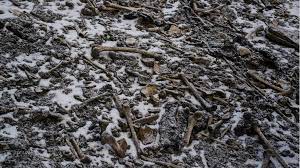
High in the Indian Himalayas, a remote lake nestled in a snowy valley is strewn with hundreds of human skeletons.

Roopkund Lake is located 5,029 metres (16,500ft) above sea level at the bottom of a steep slope on Trisul, one of India’s highest mountains, in the state of Uttarakhand.

The remains are strewn around and beneath the ice at the “lake of skeletons”, discovered by a patrolling British forest ranger in 1942.

Depending on the season and weather, the lake, which remains frozen for most of the year, expands and shrinks. Only when the snow melts are the skeletons visible, sometimes with flesh attached and well preserved. To date, the skeletal remains of an estimated 600-800 people have been found here. In tourism promotions, the local government describes it as a “mystery lake”.

For more than half-a-century anthropologists and scientists have studied the remains and puzzled over a host of questions.

Who were these people? When did they die? How did they die? Where did they come from?

One old theory associates the remains to an Indian king, his wife and their attendants, all of whom perished in a blizzard some 870 years ago.

Another suggests that some of the remains are of Indian soldiers who tried to invade Tibet in 1841, and were beaten back. More than 70 of them were then forced to find their way home over the Himalayas and died on the way.

Yet another assumes that this could have been a “cemetery” where victims of an epidemic were buried. In villages in the area, there’s a popular folk song that talks about how Goddess Nanda Devi created a hail storm “as hard as iron” which killed people winding their way past the lake. India’s second-highest mountain, Nanda Devi, is revered as a goddess.

Earlier studies of skeletons have found that most of the people who died were tall – “more than average stature”. Most of them were middle-aged adults, aged between 35 and 40. There were no babies or children. Some of them were elderly women. All were of reasonably good health.

Also, it was generally assumed that the skeletons were of a single group of people who died all at once in a single catastrophic incident during the 9th Century.

The latest five-year-long study, involving 28 co-authors from 16 institutions based in India, US and Germany, found all these assumptions may not be true.

Scientists genetically analysed and carbon-dated the remains of 38 bodies, including 15 women, found at the lake – some of them date back to around 1,200 years.

They found that the dead were both genetically diverse and their deaths were separated in time by as much as 1,000 years.

“It upends any explanations that involved a single catastrophic event that lead to their deaths,” Eadaoin Harney, the lead author of the study, and a doctoral student at Harvard University, told me. “It is still not clear what happened at Roopkund Lake, but we can now be certain that the deaths of these individuals cannot be explained by a single event.”

But more interestingly, the genetics study found the dead comprised a diverse people: one group of people had genetics similar to present-day people who live in South Asia, while the other “closely related” to people living in present-day Europe, particularly those living in the Greek island of Crete.

Also, the people who came from South Asia “do not appear to come from the same population”.

“Some of them have ancestry that would be more common in groups from the north of the subcontinent, while others have ancestry that would be more common from more southern groups,” says Ms Harney.

So did these diverse groups of people travel to the lake in smaller batches over a period of a few hundred years? Did some of them die during a single event?

No arms or weapons or trade goods were found at the site – the lake is not located on a trade route. Genetic studies found no evidence of the presence of any ancient bacterial pathogen that could provide disease as an explanation for the cause of deaths.

A pilgrimage that passes by the lake might explain why people were travelling in the area. Studies reveal that credible accounts of pilgrimage in the area do not appear until the late 19th Century, but inscriptions in local temples date between 8th and 10th Centuries, “suggesting potential earlier origins”.

So scientists believe that some of the bodies found at the site happened because of a “mass death during a pilgrimage event”.

But how did people from the eastern Mediterranean land up at a remote lake in India’s highest mountains?

It seems unlikely that people from Europe would have travelled all the way from Roopkund to participate in a Hindu pilgrimage.

Or was it a genetically isolated population of people from distant eastern Mediterranean ancestry that had been living in the region for many generations?

“We are still searching for answers,” says Ms Harney.

Split Personality Disorder

A multiple personality refers to dissociative identity disorder (DID), a mental disturbance where an individual has two or more distinct personalities. The thoughts, actions, and behaviors of every personality could also be completely different.
People with DID have two or more distinct personalities. They do not present as simple changes in traits or moods. A person with DID expresses significant differences between these alternate identities, which may even be mentioned as alters.
Trauma often causes this condition, particularly during childhood. While there’s no defined cure for DID, long-term treatment may help people combine their personalities into one.
Often, these personalities are completely different from one another . These fragmented personalities take hold of the person’s identity for a few time.
A person also maintains their primary or host identity, which is their original personality, and can answer to their first name . Their primary identity is usually more passiveTrusted Source, and that they could also be unaware of the opposite personalities.When a personality change happens, the new personality will have a definite history, a new identity, and different behaviors.

These split personalities, or alters, often have their own distinct:

  • name
  • age
  • gender
  • moods
  • memories
  • vocabulary

The exact explanation for DID isn’t fully understood. However, there’s a robust link between the condition and trauma. This may be particularly true for trauma or abuse during childhood. In Europe, the us , and Canada, 90% of individuals who experience DID are victims of severe trauma in childhood.
The condition represents someone who struggles to integrate and assimilate certain aspects of their own identity, which become disjointed over time.
When these other personalities take over, they often talk with a special vocabulary, and gesture differently. In some cases, one personality can also devour certain habits that the opposite doesn’t , like smoking, or becoming violent.
In the shift from one personality to a different , an individual may experience other symptoms. Some people can have anxiety, as they’ll be scared of the personality change. Some may become very angry or violent. Others might not notice or remember these transitions in the least , although another person may notice them.
Specific personalities may appear in response to certain situations. These symptoms can cause an individual significant distress, and disrupt their ability to measure their life normally.
A person with DID can also experience symptoms of other conditions, like self-harm. One study notes that quite 70%Trusted Source of individuals with DID have attempted suicide.
It takes time to diagnose DID. Misdiagnosis is common, and doctors got to observe a person’s symptoms, and dismiss other conditions.
To properly make a diagnosis, doctors got to see the various personalities and the way they affect the person.
Time is additionally a crucial think about seeing the complete scale of the symptoms. This is because people that seek help for DID commonly present with symptoms linked to other psychological state conditions.
Additionally, as DID often occurs alongside other disorders, doctors got to rule out the symptoms of other conditions before they create a diagnosis. As such, they’ll prescribe therapies or medications to treat these conditions first.
There is no specific cure for DID. However, many of us can help manage their symptoms and work to integrate their identities through regular psychotherapy. They can also ease the other symptoms with medication.

Is Online Classes a Mental Exhaustion rather than Knowledge?

Yes, Online Classes is a mental exhaustion rather than knowledge. Online Classes is a modern way of teaching consisting virtual classrooms. With educational institutes closed due to the COVID-19 pandemic, the government has been encouraging online education to achieve academic continuity. Most high-end private and public institutions have made the switch smoothly using online platforms such as Zoom, Google Classroom, Microsoft Teams etc., while many still find it a herculean task. The challenges of online education is multifaceted.

Using internet for entertainment is common, but for online lessons is a big challenge. Teachers may not be well-versed with creating digital content, and conveying it efeectively online. A sudden expectation from them to upgrade, and from students to adapt, is unfair. Body language and eye-contact which are important cues for the teacher are difficult to perceive in an online class. “I do not receive continual feedback in the form of student’s reaction during online session” says a college teacher in sub-urban Mumbai. How many students have paid attention in a class? These questions arise even in traditional classrooms, but they are harder to address in online classes. A parent of an 8 year old attending a private school in Gurgaon says, “There shouldn’t be online classes for such younf kids. Their concentration span is small and they do not pay attention after a while.”

Even the college students seem to value the in-class physical learning experience much more than a virtual one. Theoretical knowledge always seems to be boring without practicals. Students have to sit at one place and just have to study the theory. Their minds gets exhausted due to which they pay less attention to what has been taught. many acknowledge that phones can be very distracting. In addition, science and technology programs often include hands-on laboratory sessions, dissertation projects and field trips to complement theoretical studies.This aspect of learning is severely limited in online education.

Finally, education is not just about subject knowledge but also about developing social skills and sportsmanship among the students, which is built over years. Relying solely on education maay hinder the holistic develoment of children and many may under-perform later in their professional and personal lives. Students are not able to understand lessons which result in oncreasing stress among the students.

“In a class of 40 students, after two months of online classes, around 20 students regularly attend class with whatever device and connection they have. Around 5-8 students are completely absent till date and rest are fluctuating” says a school teacher in Ratnagiri in Maharashtra. A teacher in a government-aided school from the small town of Chamba in Himachal Pradesh says, “It is frustrating experience to engage students of lower classes in online mode . There are network issues on both teacher’s and student’s ends.”

We all know that some areas are prone to poor internet connectivity due to which some students are not able to attend classes and some join just for the sake of attendance. We Indians give more preference to marks and frades rather than knowledge, which results in less productivity of knowledge in students and more focus is given by students to get good marks.

THE LIFE PLANT : MORINGA

Moringa is derived from Latin word moringa oleifera. It is also known as subhanjana, sahajan, drumstick tree and life plant. It belongs to the family of Moringaceae. It is a handsome softwood tree, native of India, occurring wild in the sub Himalayan regions of Northern India and now grown worldwide in the tropics and sub-tropics. In India it is grown all over the subcontinent for its tender pods and also for its leaves and flowers.Flowering begins within the first six months after planting. In seasonally cool regions, flowering only occurs once a year in late Spring and early Summer (northern hemisphere between April and June, southern hemisphere between October and December). In more constant seasonal temperatures and with constant rainfall, flowering can happen twice or even all year-round. The pod of moringa is a very popular vegetable in South Indian cuisine and valued for their distinctly inviting flavour. The cultivation of moringa in India occurs mainly in the southern states of Tamil Nadu, Karnataka, Kerala, Andhra Pradesh as well as in central India also.
Moringa is considered to be a complete food in itself and is a nutritional powerhouse. It contains more than 92 nutrients and it is the one of the most important antioxidant on the earth. It has 46 types of Anti-Oxidants, 36 Anti-inflammatory and 18 Amino-acids 9 of which are essential Amino Acids. It is a natural Anti-ageing and said to cure about 300 diseases. It has all the vitamins such as vitamin A, B1, B3, B6, B7,C, D, E and K which are found in fruits and vegetables.
It is the most nutritious herb on earth.
It has:-
25 times more iron than spinach.
07 times more vitamin C than oranges.
15 times more potassium than bananas.
10 times more Vitamin A than carrots.
17 times more calcium than milk.
04 times more protein than eggs.

Benefits of Moringa 
1. Moringa is useful in reducing obesity and extra fats.
2. Moringa has high content of phosphorus in it which is beneficial for reducing extra calories.
3. Moringa helps in regulating metabolism.
4. It is beneficial for the problems related to digestion.
5. Moringa is beneficial in diseases like cholera, dysentery, jaundice,etc.
6. Intake of moringa provides relief in kidney and urinary bladder stones, by dissolving stones.
7. Moringa keeps the skin healthy and glowing. It purifies our blood because of which pimples do not come up on face.
8. Moringa keeps the hair healthy and prevents hair fall.
9. Moringa has high content of beta carotene, protein, amonio acids, iron, calcium, vitamin-B, and nutrients which prevents malnutrition.
10.Presence of calcium, copper and phosphorus in moringa helps in the treatment of diseases related to bones and teeth.
11.It helps to prevent anemia.
12. Moringa boost the immunity system which is effective in reducing the chances of having cold and flu.
13. Moringa regulates cholesterol and maintains sugar level.
14 .Moringa helps to give relief in heart related diseases, asthma, arthritis and infertility.
15 .Moringa is thought to be helpful in treating depression, anxiety, and fatigue.
Precautions
1.Pregnant women should not intake Moringa has it may lead to miscarriage. 
2.Likely unsafe for people with high blood pressure as Moringa makes blood thin.

Top 5 websites to start as a freelancer(Part 1)

Will talk about sites and apps where you can a head-start to learn and grown in the freelancing world.

Freelancer

A person who is self-employed and not always committed to a particular employer. Freelance workers are also few times represented by a company or a temporary agency that sells freelance labor to clients. Rest work independently or use professional associations, websites to get work.

Fields where freelancing exists:

Music, writing, acting, computer programming, web design, graphic design, translating and illustrating, film and video production, data handling, Data entry, transcription, Search Engine Optimization (SEO), blogging, logo design, social media handler, and more more.

The term freelancer is commonly attributed to Sir Walter Scott 

Fiverr

Fiverr is a marketplace that connects freelancers (sellers) with customers looking for small or large services (buyers). There are a variety of different categories. SInce, it will be you who is promoting your services, you have flexibilty to chooose many fields. . In order to make money, you have to create “gigs”, which are sales pitch that will bring in customers to buy your services.
You can earn extra cash by tips from customers, extra work or revisions.

Ups and downs:

The firstmost hurdle is your first gig; using right keywords, your work examples, reviews and their types affect your customer attraction. After landing upon your first customer, you need to put in your best and take time to create the work given. It takes time but build your profile.

The things you need to be aware about is that this platform takes 20% of your every service you give. The minimum price you can charge is $5 which ends up around $4. If you love what you do, want to experience and learn how to attract customers and how to deliver your work; work for longer hours with adequate pay, fiverr might be good for you.

The issue most people complain about is it takes a little longer in payment process. Just like any freelancing job or any job in focus, scammers exist. Let the payment process be within the freelancing core, do not take accept or pay outside Fiverr.

Upwork

Clients can post a job to hire or buy a predefined service from the project catalog. Also, freelancers can access the job board and offer a service to sell. As you can browse billions of jobs to find the one which you would like to offer, it is great for beginners. You get to know to build your profile and learn from others sellers how to display your projects.

Ups and downs:

 They do higher-paying projects, payment protection, credible clients, get jobs quickly after interviews to know legit clients. They have started to charge freelancers a small fee to submit proposals to projects, said to increase your chances of selection; fees can be troublesome, clients do offer smaller budget requests which you use to learn how to work on UpWork. It can be great place for you to learn about services and build up your confidence.

Simply Hired

Simply Hired is an employment website and mobile application and an online recruitment advertising network based in Sunnyvale, California. The site is a job search engine that collects job listings from thousands of websites and job boards. To find a job, simply type the search box with related keywords. You can also narrow down jobs of your interest by filling out your city, state, or ZIP code.

Ups and downs:

Integration with LinkedIn.com gives you better results to search and apply for your desired jobs.  Simply Hired price starts at $199 per user/month, making it a little more expensive. The platform has a salary calculator and a ‘quick apply’ feature.

Be aware about outdated jobs. Ensure by calling the companies and clear your doubts. There are hidden costs for training and such which makes it costly. Email and SMS confirmations, partnerships helps you get jobs soon. Plus, it is available in more than 24 countries and in 12 different languages.

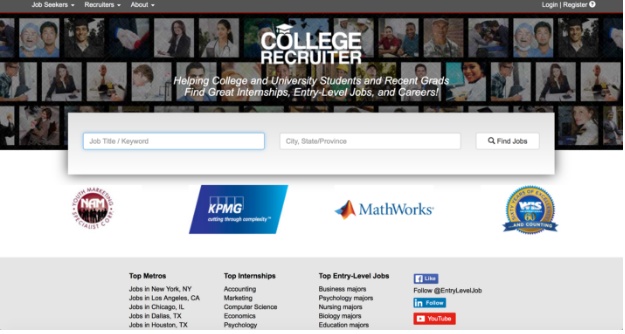
College Recruiter

College Recruiter is the leading, interactive, recruitment media company used by college students and recent graduates to find great careers. Our clients are primarily colleges, universities, and employers who want to recruit dozens, hundreds, or thousands of students and recent graduates per year.

Ups and downs:

College students who want to earn while studying, this site will provide them with many internships, part time jobs, entry level jobs and probably even get a permanent jobs. People find it easier to look for jobs in this site. Due to lack of complete job profile there can be issues with some jobs, lack of filters does make it hard to shortlist your choice of companies but it gives you lots of options, give your personal information scarcely since you might get unnecessary job invites; you can give a secondary email as well.

Aquent

Aquent is a leading talent services company, providing marketing and creative talent, managed services, extended workforce benefits, project management, and professional development. It is known as a staffing company specializing in placing temporary employees in marketing and creative industries. Aquent also has free online courses that provide training to hone one’s skills. You can search with keywords and a location, or browse all of the job openings in your nearby area.

Ups and downs:

Be aware of scammers, especially calls asking about personal information. There are chances of jobs ending early as well as there are chances of long term plans as well. Since the job can be short termed, if you will get to explore every fields you think you are fit for. The pay is decent.

Behavioral Economics

Behavioral economics studies how individuals behave, and how thinking and emotions affect individual decision making. By adding insights from psychology, behavioral economics tries to modify the conventional economic approach, and to analyze how people act in social contexts. It is the study of psychology as it relates to the economic decision making processes of individuals and institutions.  Rational choice theory states that when humans are presented with various options under the conditions of scarcity, they would choose the option that maximizes their individual satisfaction. It assumes that people, given their preferences and constraints, are capable of making rational decisions by effectively weighing the costs and benefits of each option available to them. The final decision made will be the best choice for that particular individual. The rational individual has self-control and is unmoved by emotions and external factors and, hence, knows what is best for himself. However, behavioral economics explains that sometimes humans are not rational and can’t make good decisions.

As humans are emotional and easily distracted beings, they make decisions that are not in their self-interest. For example, according to the rational choice theory, if an individual wants to lose weight and is equipped with information about the number of calories available in each edible product, he will opt only for the food products with minimal calories. Behavioral economics states that even if he wants to lose weight and sets his mind on eating healthy food going forward, his end behavior will be subject to cognitive bias, emotions, and social influences. Behavioral economics draws on psychology and economics to explore why people sometimes make irrational decisions, and why and how their behavior does not follow the predictions of economic models. It seeks to explain why an individual decided to go for choice A instead of choice B.

Companies are increasingly incorporating behavioral economics to increase sales of their products. As companies begin to understand that their consumers are irrational, an effective way to embed behavioral economics in the company’s decision-making policies that concern its internal and external stakeholders may prove to be worthwhile if done properly. For example, in 2007, Apple priced the first iPhone at $600 but then quickly reduced it to $400. However, If they had introduced the phone for $400, the initial reaction to the price in the smartphone market might have been negative as the phone might be thought to be too pricey. But by introducing the phone at a higher price and bringing it down to $400, consumers believed they were getting a pretty good deal and sales surged for Apple. This is how companies use behavioral economics.

LEARNING FROM THE CLEANEST CITY OF INDIA: INDORE

“A journey of a thousand miles begins with a single step. “

Indore has been awarded as the “Cleanest City” of India for fourth time in a row and the most important reason behind this success is the combined efforts of the public, public representatives, government officials and other stakeholders engaged in this process. The journey made by the city is inspiring and as of now there are many other cities of the country and globe who are following the strategies for becoming cleanest city.

INDIAN SCENARIO: TRASH EMERGENCY

According to the Annual Report of the Ministry of Housing and Urban Affairs, in year 2016-17, India generated approximately 1,50,000 tones of solid waste per day. According to World Bank by 2050, it is estimated that India will generate nearly 3.5 times (over 5,43,200 tones) of solid waste per day. It has also been estimated that local bodies collect nearly 90% of this waste, out of which nearly 80% is dumped in dumping sites or landfill site without getting treated. Under Article 21, it is provided that Clean Environment is (the) Fundamental Right of every citizen and it is the responsibility of the urban local bodies and the State to ensure that clean and hygienic environment is provided to the citizens which preserves their health. In case of Indian cities, it is very important to learn from the best practices and techniques applied in different urban areas for efficiently dealing with the solid wastes.

THE JOURNEY TO CLEANEST CITY

HOW IT STARTED

The journey of Indore for becoming the cleanest city started from 2016 and it faced many challenges.

Some of technical challenges were:

  1. Inefficient infrastructures, systems and processes for Municipal Waste Management.
  2. Absence of infrastructures for material recovery, transfer stations and processing unites and non – operational composting facilities.
  3. Inefficient door to door waste collection system with no scope of source segregation practice.
  4. Unorganized trenching grounds with nearly 13 lakh tons of waste which caused methane induced fire, bad odor and increased the chances of diseases.
  5. Unorganized and inefficient waste collection, transportation and dumping.

In addition to all these technical issues, there were various non – technical challenges like:

  1. Cooperation and support of citizens,
  2. Unorganized municipal workers
  3. Lack of mechanism to monitor and reviews all the processes being involved
  4. Inefficient citizen grievance redressal system.
  5. Lack of political awareness to achieve the cleanliness goals
  6. Lack of awareness about solid waste management process among citizens, local media, administrations and Resident Welfare Associations (RWA).

THE PROCESS

Indore had to implement many strategies in each and every step associated with solid waste management. Along with these strategies the Indore Municipal Corporation (IMC) had partnered with private bodies, NGOs etc. for boosting the entire [process and empowered the citizens regarding their roles and responsibilities as citizens of the city for making Indore a clean city.

Waste Collection, Segregation and Transportation :

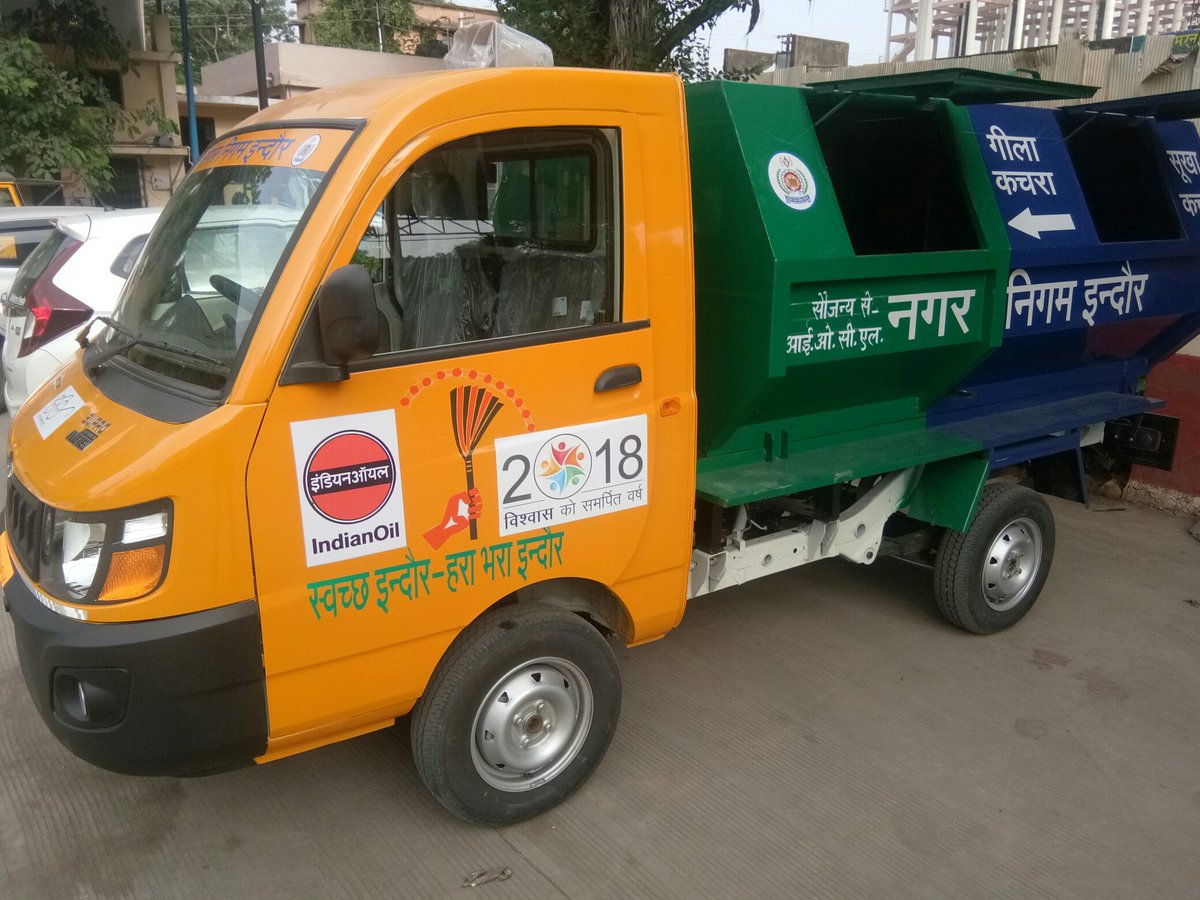
Vehicles having different compartments for waste collection

IMC started the process of waste collection from households on daily basis from 2016 and at the same time it also started asking and motivating the citizens to segregate their waste. Some of the strategies undertaken for increasing the efficiency of waste collection were :

  1. Collecting the wastes from household on regular basis and studying the lifestyle of different localities to finding the most suitable for waste collection.
  2. Explaining the people about the need of waste segregation and on repeated disposal of unsegregated wastes, households had to pay the fine as decided by the Supervisors of IMC.
  3. Tracking the routes of the garbage vans and vehicles that collect the wastes from door to door and monitoring it.

Some of the steps undertaken for creating awareness among citizens were :

  • Visiting of different localities and colonies by Municipal officials to persuade and create awareness among citizens regarding waste segregation.
  • Providing common platforms were religious leaders created awareness among people, on the basis of importance of cleanliness as mentioned in the religious texts, schools etc. and organizing oath taking ceremonies for children pledging a clean city and conduction of mass road sweeping exercise at different areas of the city.
  • Involving 850 Self Help Groups, comprising almost 8500 women for spreading awareness for waste segregation and conducting mass campaigns.
  • Campaigns for zero waste localities and markets.
  • Creating awareness regarding home composting, as a result of which nearly 50,000 households started doing home composting.

Involvement of Private Bodies and NGOs for Boosting the process

The IMC partnered with non-governmental organizations for creating awareness campaigns to change the attitude and behavior of citizens, to facilitate the functioning of solid waste management systems, use of proper technologies for increasing efficiency and improved capacity for ensuring proper implementation of all strategies and actions decided for being clean.

Waste Management System

The city adopted the strategy of processing the waste near the source. For example: All food outlets separate food waste and transport it to the small garden inside a traffic triangle at one end of the street. This strategy is more cheaper, hygienic and sustainable way for processing the wastes. The responsibility of waste composting is given to an NGO named Swaha and this organization uses a machine which simple and easy to handle. Most the waste generated from Indian cities contain higher proportion of organic wastes and are generally wet, which makes the waste more difficult to handle. These machines work efficiently even if the material is not organic with minimum spillage, minimum human contact with waste and has mechanism which can easily lift heavy trash cans.

Waste to Fuel

For processing of organic wastes, a Biomethanation facility is provided which converts the organic waste into methane. The city produces nearly 20 tones of waste everyday and this waste is converted into 750 – 800 kg of bio compressed natural gas (bioCNG). This task is assigned Mahindra Waste to Energy Solutions Ltd. The gas produced is used to run city buses, and sold as cooking fuel to hotels and the Indian Institute of Management, at a subsidized rate. Waste from the flower market is kept separately (1-2 tons a day), and mixed with slurry to produce compost.

Street Sweeping

For the purpose of street sweeping machines are used. Every night 800 km of main roads are swept using machines and water mist are used for cleaning footpaths and road dividers. For the cleanliness of roads nearly 400 liters of water is used every night and most of these are recycled water which are derived from the three sewage treatment plants. In case of internal roads which are 2200 km, the wastes are swept and are collected in gunny bags, collected by vans and transported to waste processing facility.

Clean Streets of Indore

CURRENT SCENARIO

Before and After images of Indore

As of now, 100% of household wastes are segregated at source and are processed. Ten ultra modern mechanized transfer stations are used for final processing and disposal. The city makes use of ICT based devices and Weighbridge mechanism for sustainable integrated solid waste management systems. For road sweeping purpose, Ultra modern mechanized road sweeping machines are used, which clean the bypasses, super corridors and bridges.

The city uses a collection and transportation app which is fully digital in nature for monitoring entire process, from door to door segregation to final disposal of waste. The wat wastes are processed and are used in public transports and today 15 city buses operate on this bioCNG gas. Similarly, construction and demolition wastes are reused for making non-structural concrete, paving blocks, lower layers of road pavements etc.

Through the process of bio-remediation, 100% of wastes has been remediated and 100 acres of land has been reclaimed. The dumping yard or landfill site had been converted into green belt. There is a proposal to develop this land into a golf course and city forest.

The entire journey of Indore has been based on more that 3Rs- reduce, reuse and recycle. These include Food Bank, disposable free events, Bartan Bank, art and crafts made out of wastes etc. All these initiative have ensured sustainability of the city.

Other than all these technical strategies, the city also took many social media initiatives and Information, Education and Communication (IEC) techniques for ensuring community Engagement. The song, “HO Halla” by Indian singer Shann became the Swachhta Anthem of the city in 2017 and motivated the citizens to keep doing their part of work towards this Swacchta mission. The song also has many new versions.

CONCLUSION

Since 2016, Indore went through a commendable journey for providing its citizen the urban environment which will protect their health. The IMC took strategies which are the most efficient and using them, it eliminated garbage dumps, 100% household waste collection and segregation, reusing all the wastes etc. The success of Indore’s solid waste management shows that other Indian cities can also clean the entire area and make it more hygienic and sanitized for the people by engaging NGOs, private bodies and citizens.

Thus, trust between all the stakeholders being involved in the process is the major pre-requisite for achieving the goal.

7 Foods For A Glowing Skin

Everyone’s dream is to have a radiant skin. A glowing skin free from acne and oiliness. Dry skin can make you look dull and tired. To look fresh and bright, proper care of skin should be taken. Products are available that can make you look your best but its temporary. Ayurveda claims that there healthy foods that can make you look long-lasting beautiful.

Nutritious diet is the secret to healthy skin. Unhealthy foods can affect your metabolism resulting in weight gain leading to certain health problems.

Here are a list of healthy foods to eat everyday for a glowing skin.

  1. Avocados

Avocados are extremely healthy to include in your everyday diet. Vitamin C is recommended to look after for a healthy skin. These days lack of Vitamin C has caused skin to turn dry and rough due to limited production of collagen that is the main protein required for right functioning of skin. Even, aging is stopped with proper intake of Vitamin C.

Usually, UV rays damage a healthy skin. These rays can cause early aging and wrinkles. To avoid premature aging of skin, avocados are the best option.

Vitamin E is equally essential for glowing skin. It is a good antioxidant that protects skin from excessive damage at an early age.

2. Broccoli

Skin requires right amount of vitamin A, vitamin C, minerals. Dryness and wrinkles are a common problem women suffer from. Eating broccoli can prevent these skin problems. The content in Broccoli protects skin from oxidative damage. Broccoli is effective in avoiding skin cancer issues as it contains sulforaphane. It also protects from sunburn.

3. Walnuts

Walnuts are a good source of fatty acids. Fatty acids are not made by body. In case of increased omega-3, fatty acids prevent inflammatory response to it. Walnuts provide antioxidants like vitamin E which is must for healthy skin. Walnuts are high in other nutrients as well that is needed for healthy function of skin.

4. Sunflower Seeds

Seeds are highly nutritious, especially for skin. Sunflower seeds are packed with vitamin C, vitamin E, zinc and proteins. These seeds are rich in nutrients that are essential for skin.

5. Green Tea

Green tea is a type of tea that is best among all the others. Sun damaging can severe as days go by. Green tea nourishes the damaged red skin and soothes body. Green tea is natural moisturizer to rough and dry skin. Green tea is a great option to ensure a healthy and radiant skin.

6. Tomato

Vitamin C is excessively provided by tomatoes, which becomes great protection to skin from wrinkles and aging. It contains carotenoids that maintains skin. Tomatoes can also applied to skin as a face mask for natural glowing skin.

7. Sweet Potatoes

Beta Carotene is a natural source that acts as a sunscreen. Sun makes your skin dry and rough causing cell damage. Sweet Potatoes contain beta carotene that efficiently protects your skin from UV rays. For a healthier skin, sweet potato is an excellent food choice.

Including the above foods in your diet will surely work a miracle on your skin. Glowing skin is now just few steps away with these amazing and affordable foods.