Book Review: ‘Murder at the Mushaira’ by Raza Mir

About the author

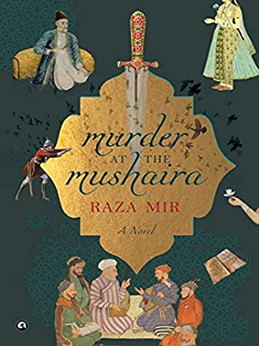
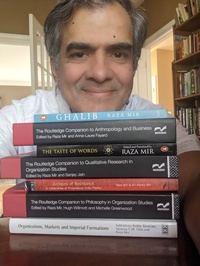
Raza Mir’s ‘Murder at the Mushaira’ is not his first book and the author is almost an expert in writing novels and various other books like Ghalib: A Thousand Desires, The Taste of Words: An Introduction to Urdu. But ‘Murder at the Mushaira’ is most certainly his ‘magnum opus. Each and every page of this novel is worth reading and re-reading. There is no denying or any dilemma in mind because we can see the years of effort and intense research that must have gone into this exquisite work of art by Raza Mir. The fact jumps out at the reader as one is compelled to halt, ponder, smile and sigh at the careful selection of words that create a vivid, elaborate and exuberant imagery of the then Shahjahanabad, amid the rising tensions, chaos and tumult of the 1857 Sepoy Mutiny.

So, the story of this historical fiction by Raza Mir, set against the backdrop of the revolt of 1857.. India stands on the brink of war. Everywhere in its cities, towns, and villages, rebels and revolutionaries are massing to overthrow the ruthless and corrupt British East India Company which has taken over the country and laid it to waste. In Delhi, the capital, even as the plot to get rid of the hated foreigners gathers intensity, the busy social life of the city hums along. Nautch girls entertain clients, nawabs host mushairas or poetry soirees in which the finest poets of the realm congregate to recite their latest verse and intrigue, the wealthy roister in magnificent havelis, and the drinking dens of the city continue to pack in customers.

One morning, Kallu, a retainer at a Delhi haveli, cleaning up after a grand mushaira, discovers a poet stabbed to death with a polished agate dagger. The poet was the nobleman. Gruesome as it is, the murder appears to be a fairly run of the mill crime until anxious officials of the East India Company make it a matter of the highest priority.

Instructions are issued for the murderer to be found and arrested immediately. But who is the killer? The dead man had many enemies, and the investigating officer Kirorimal Chainsukh soon discovers there are dozens of suspects, an equal number of motives, and waves of secrets and lies that threaten to overwhelm him. As the pressure on him to solve the crime increases, Chainsukh turns to Mirza Ghalib, poet laureate and amateur detective, for help.

Ghalib’s tools are his formidable intelligence, intimate knowledge of the machinations of Delhi high society, ferocious curiosity, and reliance on the new science of forensics that his friend the scientist Master Ramachandra has introduced him to. As Ghalib begins to collect evidence and dig into the case, he uncovers an ever-widening list of suspects, and a sinister conspiracy that involves many of Delhi’s most important men and women. By the time you think you have caught up to puzzle, it’s already fades away. The narrative of conspiracy entwines with myriads of secret and lies, entertaining and believable tale.  

Murder at the Mushaira is at once a brilliantly constructed murder mystery and the finest historical novel by an Indian author in recent times. One can judge the novel by its cover, a real pristine beauty so dramatic and mysterious at the same time. I genuinely suggest you to pick this phenomenal novel read it because it would be an intoxicating experience for you. I loved this book to eternity and beyond. Must Recommend!!!

How to Win Friends and Influence People Book Summary

Book Name : How to Win Friends and Influence People

Author Name : Dale Carnegie

Year of Publication : 1936

There is a famous proverb. “Tell me who your friend is, and I will tell you who you are.” Adding friends who can stand by us is an art. In 1936 Dale Carnegie, a famous public speaker, wrote a book on how to make such good friends. The title of the book is ” How to Win Friends and Influence People.” The book has sold nearly 30+ million copies since its publication. To date, the book has been ranked 19th on Times Magazine’s 100 Most Influence Books list.

We are going to know about such a famous book. It can be said that this book is the beginning of self development. This book has made a changes in the lives of many. 

You can learn an 8 things by reading this book. What they are,

1. Come out of present self and get new thoughts and visions

2. How to farm a team easily

3. Increase popularity

4. Become a great Influencer

5. Increase your influence level on others

6. Learn how to handle complaints and deal with conflicts

7. Learn how to have a better conversation with others

8. Influence other to work with you

You can achieve the above 8 things by reading this book. Not only this but there are a lot of things in this book.

This book has a total of 32 chapters. Author holds this as a 4 part. 

PART I – Fundamental Techniques in Handling People

As we learn what is being said in this part, we will begin to interact properly with others. When we interact like that, we develop a respect among the people.

PART II – Six Ways to Make People Like You

Author has said here a 6 things for others to like us or for others to look at us and be impressed in this part. Why is it said that First Impression is the Best Impression. Always a lot of people will think we are like this when they see us. So he has explained how to make us believe when others see us or how to create best impression on us when they see us.  

PART III – How to Win People to Your Way of Thinking

Author has clearly stated in this part how to bring others our way. Some of the important things that Arthur has said in this are that we can never win a debate. Because it’s not a problem if you are arguing for proof in a discussion. But to those who argue that what I am saying is right author says that it is difficult for us to win. And in this part he has said many things about how we are creating our enemies, how to avoid it, and how to make others like us.

PART IV – Be a Leader : How to Change People Without Giving Offense or Arousing Resentment

Author has told us how to be a leader and how to bring people our way in this part. Sometimes there will be some arguments between us and those who follow us. It explains how to say it without offending them. If you are a team leader or manager in a company, the steps mentioned in this part will be very helpful to make your team do what you think.

Author has said a lot about things like this in this book. That is, no one likes to accept someone’s order. So he has said very clearly about everything from how we indirectly command someone and how to get them to do the work we need for us.

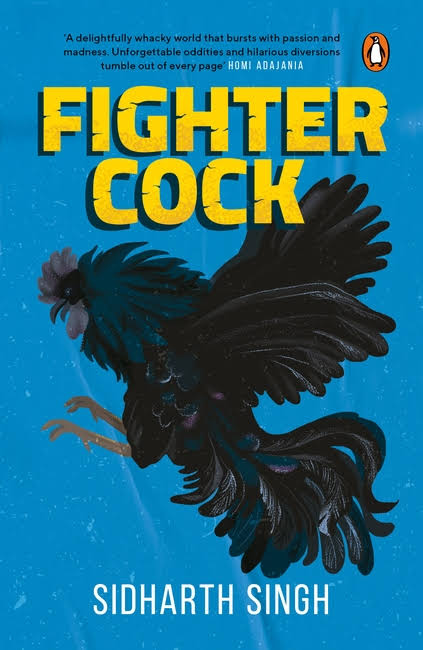
Book Review: Fighter Cock by Sidharth Singh

Title: Fighter Cock

Author: Sidharth Singh

Genre: Contemporary Fiction

Publisher: Penguin India

Pages: 256

Lines from the novel: ‘This is not livestock, Mr Suri. This is black cock, Karianath. As you can see in the painting above me, this black cock is everything to us here in Shikargarh. It is our identity, our culture and now it will also be our business.’

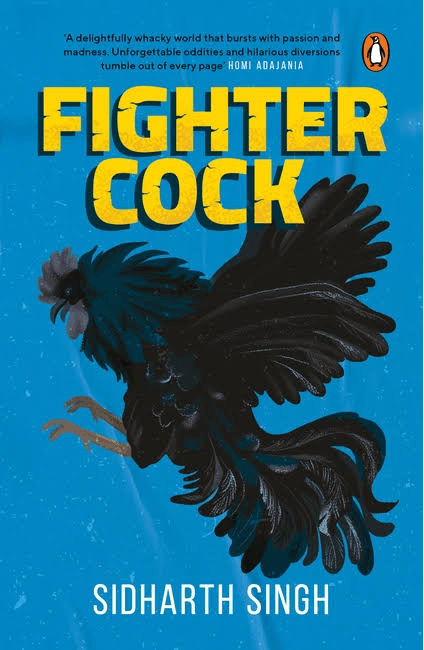
‘Fighter Cock by Sidharth Singh’ is a book that gives you the vision of the universe of petty politics, rivalry and obsession for sex, drugs, and cockfighting. Each character retains their flaws yet is absorbing and dramatic. Although, in the beginning, I am not into this type of genre as much, still this debut gave me enough reason to carry on with it. 

Fightercock is a story based on the life of Sher Shah aka Sheru, who has a dangerous past. In a search for a job, he enters this unusual world of royal heritages, patriarchal society, and vengeance. This story is set in Shikargarh, Central India. An untamed wilderness is ruled by Raja Rattan Shah with a passion of blood sport. As Kings always need a new territory to conquer, Raja sahib launches his dream project, the black cock poultry farm, which rears top- class Karianath.

‘Sheru glanced up again at the shabby painting of the Shikargarh coat of arms and inspected the black rooster, framed by two crossed swords below and a fortress above, trying to find meaning in its bizarre heraldry.’

As the story unfolds and discover, more characters come into the spotlight with the basic plotline, that is ─ The Raja’s Karianath fighter cocks are the undisputed champions of the area, but their reign is challenged by the new Aseel fighters imported by Teja, his bastard son, who also schemes to take his position the Aseels had taken the cockfights by storm and upset the status.

In the next few chapters, we have been getting introduced to Sheru’s past life and his connection with Bombay’s underworld.

In the story the author has also described sheru’s childhood he says- as a child our Sheru often asked his mother why she had given him the name Sher Shah. And her answer set the environment of this novel, ‘because you are a tiger, the king of the jungle. You don’t know that yet, but one day you will.’

Once he lost both his parents, he questioned his life journey ‘Why on earth had Anna (his guardian) sent him to Shikargarh, of all places, when he could have easily packed him off down south or even abroad? What was Anna’s real connection with Murugan (Raja Sahib’s Assitant)? How long would he be able to survive here knowing that Anna’s life may be in danger?

As in projects, you need to construct a flow chart into your mind, you need to do the same here to understand the story because there are not a couple of plots but subplots and various tales and references, it is a wild trip, characters do clash, worlds rebuild and it really demands the reader attention.

Personally, I think Fighter Cock is a political thriller that reveals the difficult world of poor Kairus, who were caught in an endless web of debt and delusion. This weekly spectator-sport extravaganza and sports like cockfight was the only form of public entertainment in the area and brought in substantial revenue from illegal gambling, mahua and ganja sales, whereas the raja took the lion’s share of the proceeds.

The only thing interrupted in this novel is the usage of superabundant characters. The prose is clear, and moving sentences. The author managed to captivate drama in right place. I liked the nuances between Sherub and Kanya. ‘If you stay in Shikargarh long enough, you will stop wearing one. Time moves slowly around here,’ she said and extended a delicate but firm hand towards him. ‘I am kanya’.

Fighter cock novel is a kind of political thriller that will keep you hooked with each and every page of the book, it is interesting as well as boring at the same time. But I would definitely suggest this book is not for children below 16years.

Handloom Day

It is observed on 7 August every year to honour the handloom weavers in the country. The National Handloom Day is celebrated to mark the 100th anniversary of the Swadeshi Movement, which started in 1905.The first National Handloom Day was organised by Prime Minister Narendra Modi in Chennai.This year 6th National Handloom Day is celebrated.Handloom sector is a symbol of the country’s glorious cultural heritage and an important source of livelihood in the country. The sector is key to women empowerment as over 70% of handloom weavers and allied workers are women. Lets respect, celebrate and encourage handloom sector thereby empowering our handloom weavers and workers financially and instilling pride in their exquisite craftsmanship in our Country.

What is the National Sport of India?

Every Indian School child is taught that the peacock is India’s National Bird, Tiger is the national Animal, Jana gana Mana is the national Anthem, and Hockey is the national sport.

But in India, the Ministry of Youth Affairs and Sports in 2012 cleared that no particular sport is recognised as India’s National Game.

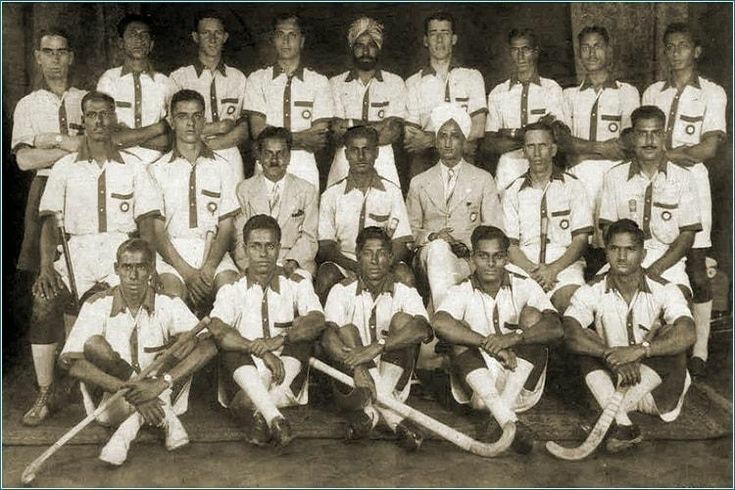
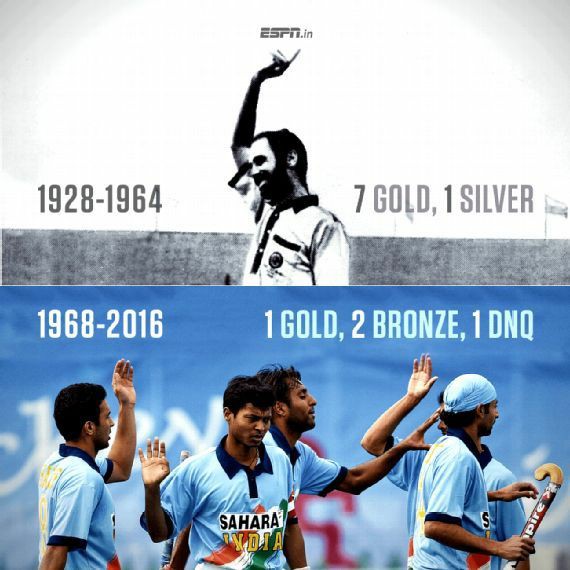
Some people called Hockey as the National Sport probably because of the international success that hockey gained since it’s Olympic debut in the early 20th century. In 1928, the Indian men’s hockey team made their debut at the Olympics, and won 6 gold medal between 1928-1956. Though their performance declined later.

Similarly, some people believe Kabaddi as the National Sport of India because Kabaddi too is most popularly played in India. Kabaddi is one of the Oldest sports in our country.

But the truth is that the national game of India is neither Hockey nor Kabaddi. There is no sport which has been declared or recognised as the National Sport of India till date.

Cancer may have started the fight, but I will finish it.

Cancer is a major burden of disease worldwide. Each year, tens of millions of people are diagnosed with cancer around the world, and more than half of the patients eventually die from it.

In many countries, cancer ranks the second most common cause of death following cardiovascular diseases. With significant improvement in treatment and prevention of cardiovascular diseases, cancer has or will soon become the number one killer in many parts of the world.

As elderly people are most susceptible to cancer and population aging continues in many countries, cancer will remain a major health problem around the globe.

In this review, we summarized published data to describe the severity of the burden. We also analyzed the GLOBOCAN 2002 database to evaluate the morbidity and mortality of cancer in various geographic regions around the world.

The GLOBOCAN 2002 database was put together using the huge amount of data available in the Descriptive Epidemiology Group of the International Agency of Research on Cancer (IARC), a World Health Organization agency in Lyon, France [1].

Incidence data are available from cancer registries. They cover either entire national populations or samples of such populations from selected regions. Cancer registries also provide statistics on cancer survival. Mortality data by cause are available for many countries through the registration of vital events.

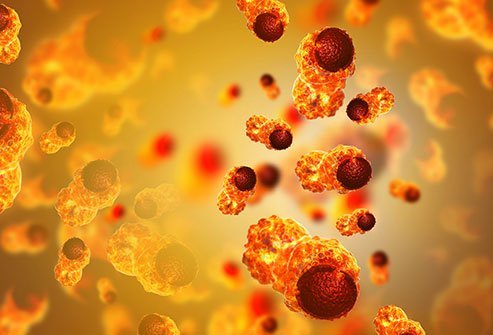
Cancer is a large group of diseases that can start in almost any organ or tissue of the body when abnormal cells grow uncontrollably, go beyond their usual boundaries to invade adjoining parts of the body and/or spread to other organs.

The latter process is called metastasizing and is a major cause of death from cancer. A neoplasm and malignant tumour are other common names for cancer.

Cancer is the second leading cause of death globally, accounting for an estimated 9.6 million deaths, or one in six deaths, in 2018.

Lung, prostate, colorectal, stomach and liver cancer are the most common types of cancer in men, while breast, colorectal, lung, cervical and thyroid cancer are the most common among women.

The cancer burden continues to grow globally, exerting tremendous physical, emotional and financial strain on individuals, families, communities and health systems.

Many health systems in low- and middle-income countries are least prepared to manage this burden, and large numbers of cancer patients globally do not have access to timely quality diagnosis and treatment.

In countries where health systems are strong, survival rates of many types of cancers are improving thanks to accessible early detection, quality treatment and survivorship care.

First Athletics Gold in Olympics

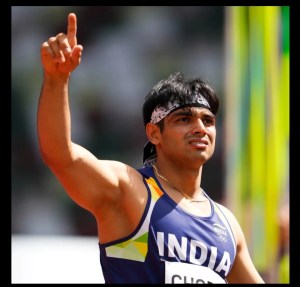
Neeraj Chopra won Gold in the men’s Javelin throw final with a throw of 87.58 to win the first gold medal in athletics for India and the second gold overall.

This is India’s 7th medal at Tokyo Olympic, the best ever medal haul for India at a single edition of the games.

The first Gold medalist in Olympics for India was Abhinav Bindra in shooting and Neeraj becomes the second Gold medalist for India in the history of Olympics.

So far, India won 1 gold, 2 silvers and 4 bronze at Tokyo Olympics.

NEERAJ CHOPRA

Neeraj Chopra VSM (born 24 December 1997) is an Indian javelin thrower. He is the first track and field athlete to win an Olympic Gold medal for India. He is the reigning Olympic champion with 87.58m winning throw on 7th August, 2021. Chopra hurled the javelin at 88.07m to break his own national record. His previous best was the 88.06m gold-medal winning throw at the 2018 Asian Games and 2018 Commonwealth Games. Chopra was also selected as the flag-bearer at the opening ceremony for India at the 2018 Asian Games, which marked his first Asian Games appearance. In his earlier career, he was the 2016 World U20 champion and set the world under-20 record of 86.48 m. He is the first Indian athlete to ever win a World title in Track and Field at U-20.


He won his first medal in Olympics in Sport Athletes, event – Men’s Javelin throw. His throw of 87.86m at his first competition after an elbow injury guaranteed a ticket to Tokyo. He then qualified in the qualification round with a throw of 86.65m and marched to the finals. He brought home the first Gold Medal in the 2020 Summer Olympics at Tokyo. Neeraj threw his first javelin round on a distance of 87.03 meter and again threw the best of finals that’s was 87.6 metres. He is the second person after Abhinav Bindra to win a gold medal in any individual games at the Olympics for India.

Neeraj Chopra is from Khandra village, Panipat district, Haryana. He was educated at DAV College, Chandigarh. In 2016, he was appointed a Junior Commissioned Officer in the Indian Army with the rank of Naib Subedar. On 31 March 2020, he donated Rs. 2 Lakh in PM Cares Fund for COVID-19 pandemic.

Neeraj won a gold medal in 2020 Summer Olympics on 7th August 2021 with the 87.58 m throw, which is the first Olympic medal in athletics won by an Indian. Neeraj Chopra is only the second Indian to win an individual Olympic gold medal. On 11 August 2008, Abhinav Bindra won the gold medal in the men’s 10 m air rifle in 2008 Summer Olympics.

Neeraj won a gold medal at the 2016 South Asian Games with a throw of 82.23 m, where he equalled the Indian national record.

He won a gold medal in 2016 IAAF World U20 Championships in Bydgoszcz, Poland. He also set a world junior record. Despite these performances, he failed to qualify for the 2016 Summer Olympics as the cut off date was 11 July. Neeraj won another gold medal in Asian Athletic championships 2017 with a throw of 85.23 meters.

Neeraj Chopra registered a season best effort of 86.47 meters in men’s javelin throw at 2018 Commonwealth Games (CWG). With that, Chopra not only joined an elite list of Indian athletes to win a gold medal on their Commonwealth Games debut, but also became the first Indian to triumph in Javelin Throw at CWG.

In May 2018, he again broke the national record at the Doha Diamond League with a throw of 87.43 meters.

The 22-year-old Chopra is the only track and field athlete to be recommended by the AFI for the country’s highest sports award in the year 2018. Neeraj Chopra has already been conferred with the Arjuna Award in 2018 after winning a gold in the Gold Coast Commonwealth.

He is currently being coached by German bio-mechanics expert Klaus Bartonietz. Previously, he has been coached by Gary Calvert, Werner Daniels and Uwe Hohn.

On 27 August 2018, Neeraj threw a distance of 88.06 m to win gold in the Men’s javelin throw at the 2018 Asian Games and set a new Indian national record, bettering his own previous record. He won the gold medal in Tokyo 2021 Olympics. On 5 March 2021, Neeraj Chopra again broke his past National Record setting the new at 88.07m, with a World Leading position in 2021.

Javelin thrower Neeraj Chopra opened his international season of 2021 with a throw of 83.18 metres that earned him javelin gold medal at an event in Lisbon, Portugal.

Climate change’s effect on monsoon

Climate scientists have spotted warning signs of the collapse of the Gulf Stream, also popularly known as our world’s crucial tipping point. Reported first by The Guardian, Potsdam Institute researchers have discovered a rather surprising loss of stability of the warm water currents over the previous century that they call ‘Atlantic Meridional Overturning Circulation or AMOC. The currents have been spotted at their slowest point in nearly 1,600 years and the most recent analysis revealed that this could be coming to a complete halt.

In case you were wondering if it’s a big deal — it is. It could severely disrupt the way rains function, especially in areas like India, South America and West Africa. It would also increase the frequency of storms while lowering temperatures in European nations while also resulting in the sea level off eastern North America to rise considerably. This would also affect the Amazonian rainforest as well as Antarctic ice sheets.

He warned stating that you know the kind of CO2 levels that would trigger an AMOC collapse, “So the only thing to do is keep emissions as low as possible. The likelihood of this extremely high-impact event happening increases with every gram of CO2 that we put into the atmosphere”.

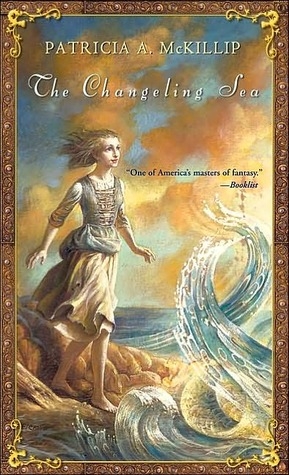
Book review of The Changeling Sea

Introduction:
The changeling sea is a fantasy novel for juvenile readers by Patricia McKillip. It is a slender book, but one written with lush and evocative prose that is as beautiful as it is simple. It is a fable about a changeling whose heart is tied to the sea. It is a book about yearning for something that no longer exists.


When Peri completes her hexes and casts them into the water, she includes an offering from the prince. To her surprise, her magic succeeds beyond expectations, disrupting the sea queen’s magic. A chained sea dragon appears, the wandering magician Lyo arrives in the village in response, and Kir’s sea-dreams grow even more tortured.


Peri’s efforts to help Kir eventually lead to her undertaking a strange journey into the depths, uncovering a tragic secret from the king’s past and the true identity of the sea dragon, and a dawning realization of her own power.


The sea drowned Peri’s father and even took away her mother through depression. Peri respected and saw an old wise woman as a caring figure gets taken away by the sea or when she suddenly disappears, she decides to hurt the sea or avenge the deaths of her loved ones. She decides to draw three hexes to curse the sea and somehow, her magic works beyond her expectations.
Peri was a hardworking young girl who worked at the inn, mopped floors, cleaned tables. After the death of her father, she could not care less about her appearance, she always looked untidy, her hair undone/unwashed. Her clothes were too tight or too loose, torn and not in a good shape. The only thing she really cared about was her revenge on the sea.


One night, she witnesses a man on a dark horse and the next afternoon realizes that it is none other than prince Kir. He was acquainted with the old woman. He too, notices Peri that night. The next day when he arrives at the sea, he asks her about the old woman and she is fascinated that he knows the old woman. He wants to visit the old woman as he was hoping for the wise woman’s aid in curing his own haunting obsession with the sea.


Kir has deep troubles of his own, also connected to the watery depths, and hopes that Peri can help him make his peace with the ocean that haunts his every waking moment. When Peri finishes her hexes and throws them deep into the great water, she also includes an offering from Kir hoping it would be of help to him.


A great sea dragon starts to appear amongst the fishermen’s boats on the sea, with an impossibly large gold chain around its neck. Then, a magician comes to town, promising that he will be able to remove the chain and give the gold to the villagers – for a price. And most importantly, Kir’s dreams of the sea grow more fevered and frantic, as his own unknown, hidden past catches up to him. And it is all up to Peri to set everything back to rights.


Conclusion:
I would recommend this book to those who have found their new interest in the genre fantasy and all in all it is a book which captures the attention of its readers from the beginning. I rate this book a 8.1/10.

Golfer Aditi Ashok

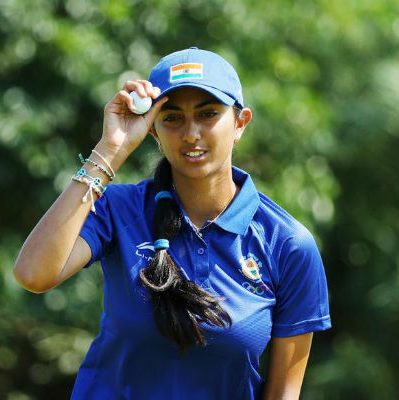
Aditi Ashok is a golf player. She is the news today in each and every corner of India due to her performance in 2021 Olympics for grabbing fourth place in golf. During Rio Olympics she was the youngest among all the participants in Riyo Olympics.

Aditi is from Bangalore, Karnataka she started playing golf at the age of 5 and she is 23 years old. When she started playing golf there were only three golf courses in Bangalore. Due to her interest in golf, her father joined her to the Karnataka Golf Association driving range.

Today she lost the bronze medal in her last shot. Even though she didn’t win the game today she made us to remember that even Indian’s play golf. This is the unbelievable truth that many people had no knowledge about golf till today. She is influencing and motivating younger generation to play golf through her achievement in 2021 Olympics.

Aditi says support from her school teacher, coach, parents and golf union has made her to come this far. Lets congratulate Aditi for securing 4th place in golf. She made us feel proud today.

>>Stay connected for more updates 🙂

Sixth medal for India at Tokyo Olympic

Bajrang Punia became the sixth ever Indian wrestler to win an Olympic medal, and the second wrestler from India to win a medal at Tokyo Olympics.

Indian wrestler Bajrang Punia defeated Kazakhstan’s Daulet Niyazbekov to win the bronze medal in men’s freestyle 65kg wrestling at Tokyo Olympics.

Punia won the 6th medal for India at the games this year, and the 4th bronze for the nation.

Now India is eyeing it’s highest Olympic medal haul in an Olympic campaign (as India equals best ever Olympics medals haul of 6 medals now.)

The legacy of Indian hockey

One of the most ancient games in the world — a crude form of the sport was played in Egypt some 4,000 years ago — the history of hockey can be traced back to 1527 in Scotland. Back then, it was called ‘hokie’ – where players hit around a small ball with sticks.However, the first version of modern-day field hockey was developed by the British sometime between the late 18th and early 19th century. It was introduced as a popular school game then and made its way to the Indian army during British rule in the 1850s.In the next few decades, national competitions like the Beighton Cup in Calcutta and Aga Khan tournament in Bombay (now Mumbai) popularised the sport further, especially in erstwhile provinces of Bombay and Punjab.

Ask any sportsperson, the pinnacle of sporting success for them is to stand on the Olympic podium and see their country’s national flag rise in that hallowed arena. It is that dream that pushes them into making sacrifices as they chase Olympic glory.The London Olympics saw India finally take steps towards realising its true potential at the Olympics. Abhinav Bindra had raised the bar in Beijing with a first ever individual Gold medal.Just one individual Gold in a country of a billion plus people. Even the six medals at London 2012 were nowhere close to the tally India should be aspiring for. But at least it was a start.

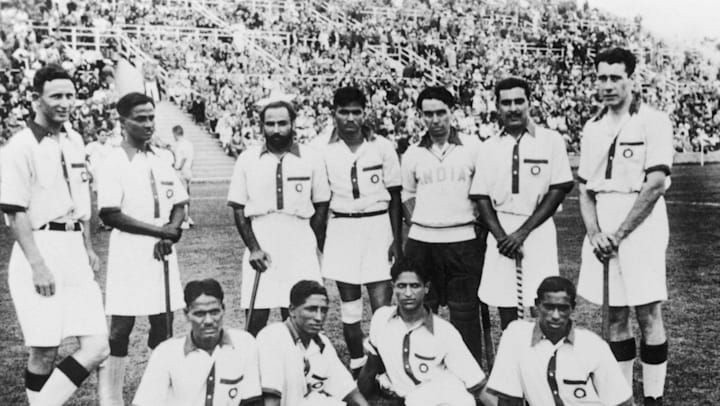
However no story of Indian sport is complete without a look back at a rich legacy. The Champions of today are inspired by past generations who have coveted Olympic glory. Only a handful have managed to attain the ultimate glory in world sport, an Olympic medal.Yet the story of India at the Olympics begins with Hockey. Very rarely has a sport been as synonymous with a country than India and Hockey. It is a rich legacy, 8 gold medals, six of those consecutive wins across four decades.

Dominance in the world of hockey

After a rocky relationship with the Olympic Games until 1924 — hockey was only played in 1908 and 1920 and dropped for the other editions — the presence of a global sports body (FIH) ensured that hockey gained permanent Olympic status starting Amsterdam 1928. The Indian Hockey Federation applied and earned an FIH membership in 1927, thus ensuring that the Indian hockey team would play its first Olympics in 1928.It was the beginning of a legacy – decorated with eight gold medals – a record till today.

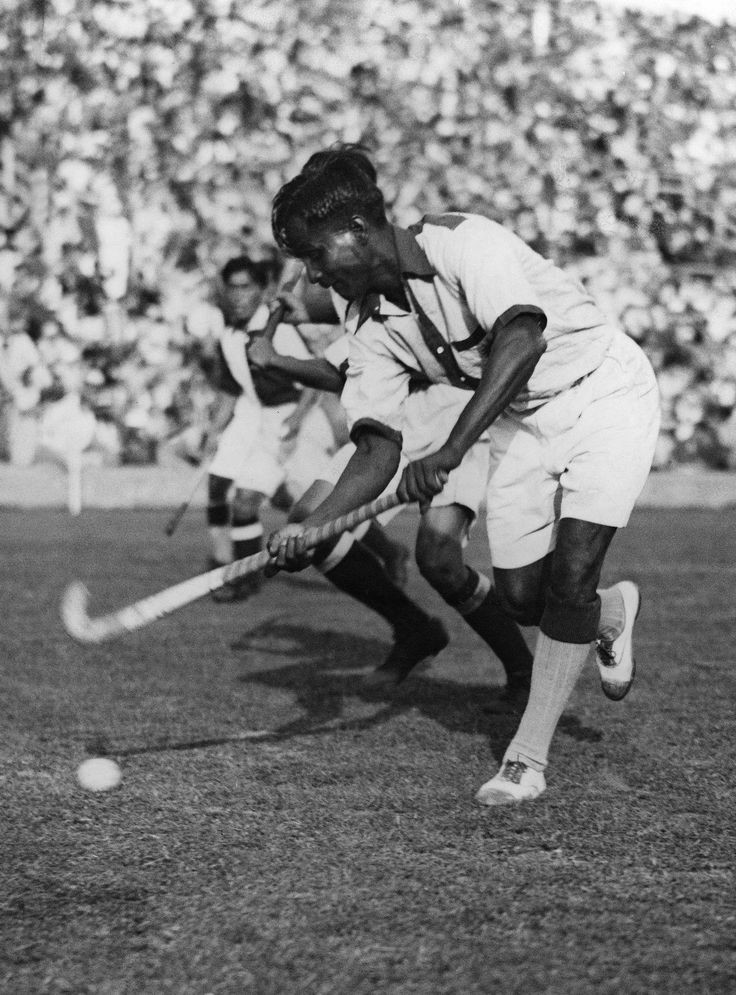
The Indian hockey team clinched the Olympic gold medal in its first attempt in 1928. India played five matches, scoring 29 goals and conceding none, with Dhyan Chand scoring 14 of them.The hockey wizard became the cornerstone of the Indian hockey team as it won two more gold medals in 1932 and 1936, completing a hat-trick of Olympic hockey golds. Dhyan Chand was made captain in 1936 in what would prove to be his final Olympic Games.

Unfortunately there were no Olympics in 1940 and 1944 due to the Second World War and that was the last the Olympics saw of Dhyan Chand. In 1948 a newly independent India had to battle not just strong teams but also cope with the exodus of players to Pakistan.When the Olympics returned after World War II in 1948, India found a new genius in the legendary Balbir Singh Sr. as he steered them to a second hat-trick of Olympic gold medals in 1948, 1952, and 1956, this time as an independent nation. The period was one of the most significant in the history of hockey in India. While Pakistan halted the gold run in the final at the 1960 Rome Olympics, India would ascend to the top step at Tokyo 1964. However, it was apparent that India’s domination of the sport was weakening. The Indian hockey team had won silver at the 1958 and 1962 Asian Games, before finally winning gold in the 1966 edition. However, India only managed a bronze at Mexico 1968, in what was then their lowest finish in the Olympics.

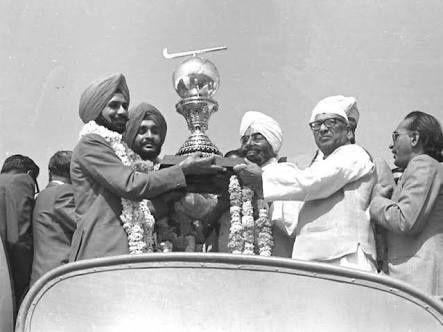
In 1968 and 1972 the team returned with a Bronze medal while Montreal saw the team draw a blank, unable to adjust to a change from grass to artificial turf. The pain of those campaigns is expressed by 3-time medallist Harbinder Singh, Ashok Kumar, Aslam Sher Khan and Dr Vece Paes. Hockey expanded its reach beyond the Olympics with the first Hockey World Cup held in 1971 in Spain. Though Pakistan beat Spain to win the title and India finished third, the sport was steadily gaining popularity in Europe, and innovations were underway.

While India’s representation in global hockey was largely restricted to the men, the women’s team made its first appearance in international competition at the inaugural women’s Hockey World Cup in 1974, finishing a creditable fourth.There seemed to be an upturn when the men’s team won its only World Cup title in 1975.

1980s-2008: A period of declination of performance

The 1980s actually began well for the Indian hockey teams.The men’s team took advantage of a depleted field to win their eighth Olympic gold at Moscow 1980 while the women’s team finished fourth in what was the first edition of women’s hockey at the Olympics.At the 1982 Asian Games in New Delhi, where women’s hockey was played for the first time, the women’s Indian hockey team clinched a historic gold at home while the men’s team won silver.

The introduction of hockey at the Commonwealth Games in 1998 provided another platform for global hockey. The Indian men’s and women’s teams finished fourth in the inaugural edition.The decline of Indian hockey hit rock bottom in 2008 when the men’s team, for the first time since 1928, failed to qualify for the Beijing Olympics.

Revival of Indian hockey

After the disappointment of 2008, the men’s Indian hockey team responded by returning to the podium at the 2010 Commonwealth Games, winning silver and the 2010 Asian Games, where they won bronze.The men’s Indian hockey team qualified for the 2012 London Olympics. Though India ended last, it represented a small bit of progress.

In the years since, Indian hockey seems to have found its feet again.The women’s team, led by Rani Rampal, won silver at the 2018 Asian Games, achieving their best ranking of ninth in the world the same year and qualified for a second-consecutive Olympics in Tokyo the following year.The men’s Indian hockey team has imbibed an attacking philosophy under new head coach Graham Reid and young captain Manpreet Singh.India played their first FIH Pro League campaign in 2020, winning games against the best in the world like Belgium, Australia and the Netherlands and rising to fourth in the world rankings, their best in history.

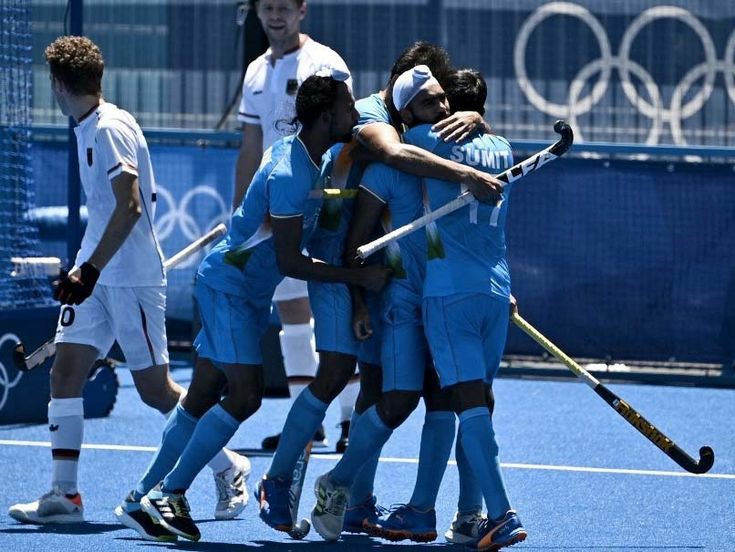
Indian men’s hockey team today displayed a great game of counter-attacking play as it won defeated Germany 5-4 in the bronze medal play-offs at the Tokyo Olympics today. Indian men’s hockey team won an Olympic medal after a gap of 41 years. India’s last of the eight Olympic golds came way back in the 1980 Moscow Games.The eight-time former gold-winners, who battled a heartbreaking slump in the last four decades, made the resurgence of the last couple of years count in the best way possible with an Olympic medal.

The Covid-19 Survivor

                                                               (Photo: Shutterstock)

They have been to the edge and back. Some survived, some died, and some struggled with isolation. This Covid-19 has messed up with everyone’s mind. The best thing that you can do is don’t let it take over your mind because if your mind gives up, then your body will give up too.

This story is of a guy named Danish Akhtar, 24 years old, from a district named Koderma in Jharkhand, who tested covid positive a month back. He never ever dreamt of getting covid positive. It was like a nightmare for him. He used to cough so much that his throat and chest would literally burn. He got the virus from his friend who in turn tested positive. His friend got infected from his father who condition was very critical. With so much things happening around, Danish was too shocked. His mental state has also deteriorated. A cool and fun- loving guy like him would be in such a state, this itself was shocking for his family and friends. Having reported chronic cough and fever, he was taken to the local -government hospital and was there for 14 days. He was only let out once he tested negative for the virus. His friends and family supported him a lot. Initially, he was blank but his inner will help him a lot to recover. “And yet I would turn away”, says Danish.

After he got back from hospital, the destiny had something else in store for him. The very next day his father started having symptoms of the virus (fever, body ache, loss of smell, etc.). Danish started blaming himself for his father’s condition. The guilt was clearly visible in his eyes. But he didn’t give up. He used to stay awake and took great care of his father. Days passed, taking care and praying to Allah for his father’s recovery. At last, after 14 days, he took his father to the hospital for the covid test and to everyone’s happiness, he tested negative. Danish was exhausted, delirious, ecstatic, sleepless but also grateful to Allah.

Now all Danish wants to do is put the whole ordeal behind him as just one bad dream. His advice to those currently infected is, “Be prepared for a tough battle. Don’t let covid mess up with your mind. No matter what, don’t give up.”

WORLD’S RAREST ANIMALS…fewer than 100.

Humans, with their 7.7 billion population, represent just 0.01% of all living things. Despite this, humanity has wiped out 83 % of all wild creatures and half of all vegetation. And we do not appear to be learning. Due to rampant human intervention, the below-mentioned rare animals are in jeopardy, with their numbers dwindling to as little as 100.

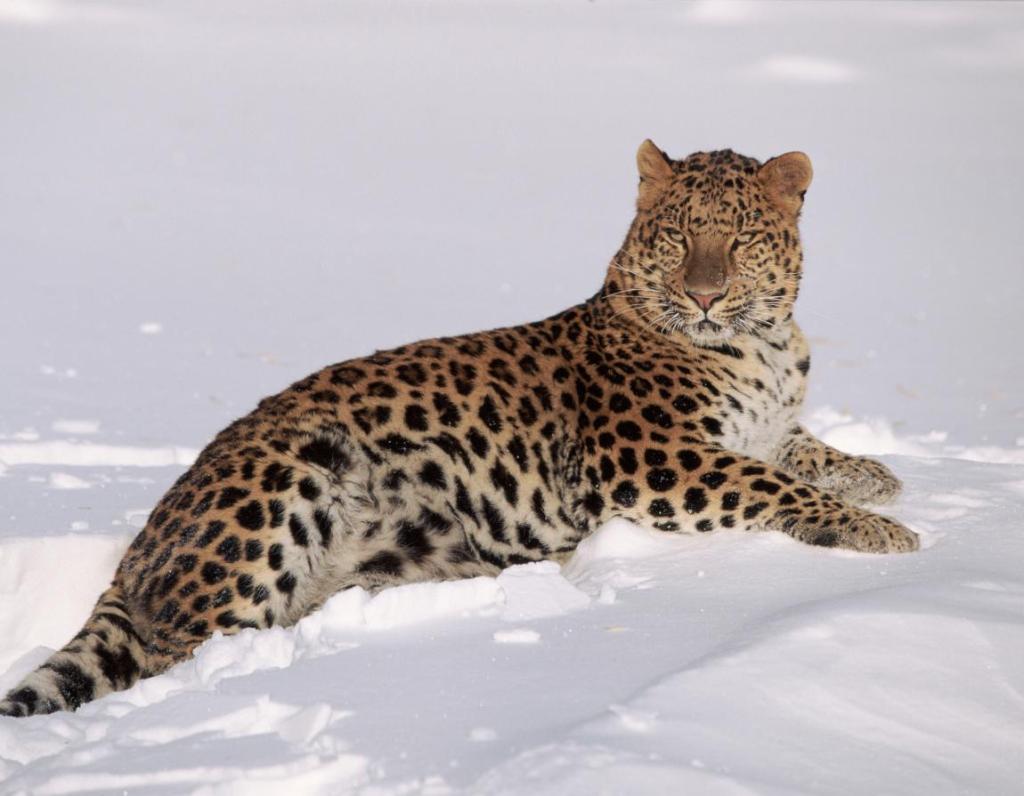
Amur leopard

Owing primarily to habitat loss and excessive poaching, there are only around 100 Amur leopards left in the wild. But, The heartening half of this data is thanks to conservation measures-their statistics have begun to soar in the recent decade. Despite this, this exquisite creature is critically endangered, making it the rarest big cat to spot in the wild.

Amur leopards are located primarily in Russia’s southwest Primorye region, with a tiny population in northeast China’s Jilin Province. Named after the Amur River, which flows along both countries’ borders, they have acclimated admirably to their difficult surroundings. In the freezing cold, their silky, thick fur keeps them warm, and their huge paws act as snowshoes, allowing them to travel on snow without sinking.

It is one of the most stunning leopards, with a magnificent speckled pelt of black splotches and flecks that lays it apart from other leopards. Despite being smaller than its African cousins, the Amur leopard can attain remarkable speeds of 37 mph and horizontal leaps of up to 19 feet.

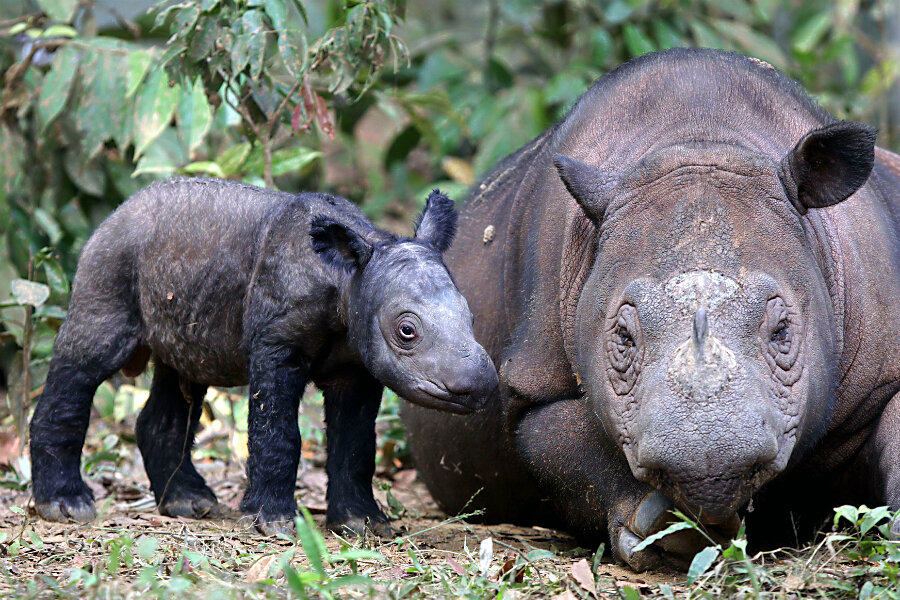
Sumatran rhino

The Sumatran rhinoceros is the most endangered of all rhinoceros species, with fewer than 80 left. In the last two decades, poaching has reduced their population by more than 70%, with Indonesia now harboring the only surviving populations. In 2015, the species was reported extinct in the wild on the Malaysian mainland, and in 2019 on Malaysian Borneo.

This species is an opportunistic eater, consuming a wide range of plants, possibly over 100. These solitary animals favor lower altitudes, particularly secondary forests with plentiful low-growing plants. Albeit they prefer densely forested areas, their habitat varies from lowland marshes to montane forests.

Because Sumatran rhinos are so rare, experts now feel that isolation is the primary obstacle to the species’ survival. It is because cysts and fibroids can form in the reproductive systems of females of this species who do not mate for a long time.

The smallest rhinoceroses on the planet, Sumatran rhinoceroses are the only Asian rhinoceroses with two horns. The front horn is bigger, ranging from 10 to 31 inches in length, while the second horn is smaller, typically less than 3 inches in length. They are more closely linked to extinct woolly rhinos than any other living rhino species.

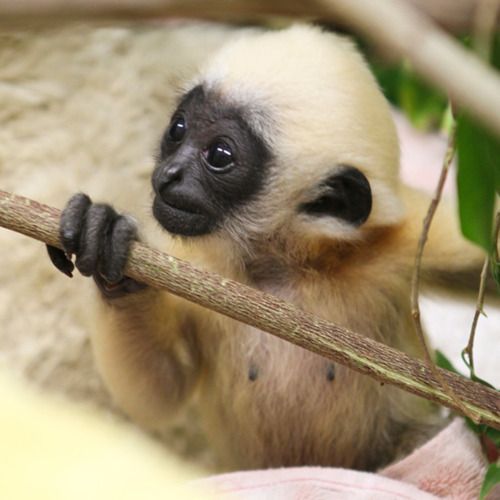
Hainan gibbon

Only about 30 Hainan gibbons remain in the wild, making it the world’s rarest ape, monkey, and possibly mammal species. Previously numbering over 2,000 individuals in the 1950s, their numbers plummeted in the late twentieth century as a result of habitat degradation and poaching. Endemic to Hainan Island, it is found exclusively in the Hainan Bawangling National Nature Reserve.

Adult males are jet black & sport a distinct crest on the crown of their head, whilst adult females are golden yellow and have a black patch on the crown of their heads that fades to the back of the neck. Hainan gibbons are entirely frugivorous (fruit eaters), with a preference for figs and lychee fruits. An alpha male, two mature females, and their children make up typical gibbon families. Hainan gibbons are categorized as a “diurnal species” since they are active during the day. They spend this time foraging, eating, grooming, and playing; they take a mid-day siesta and sleep at dusk.

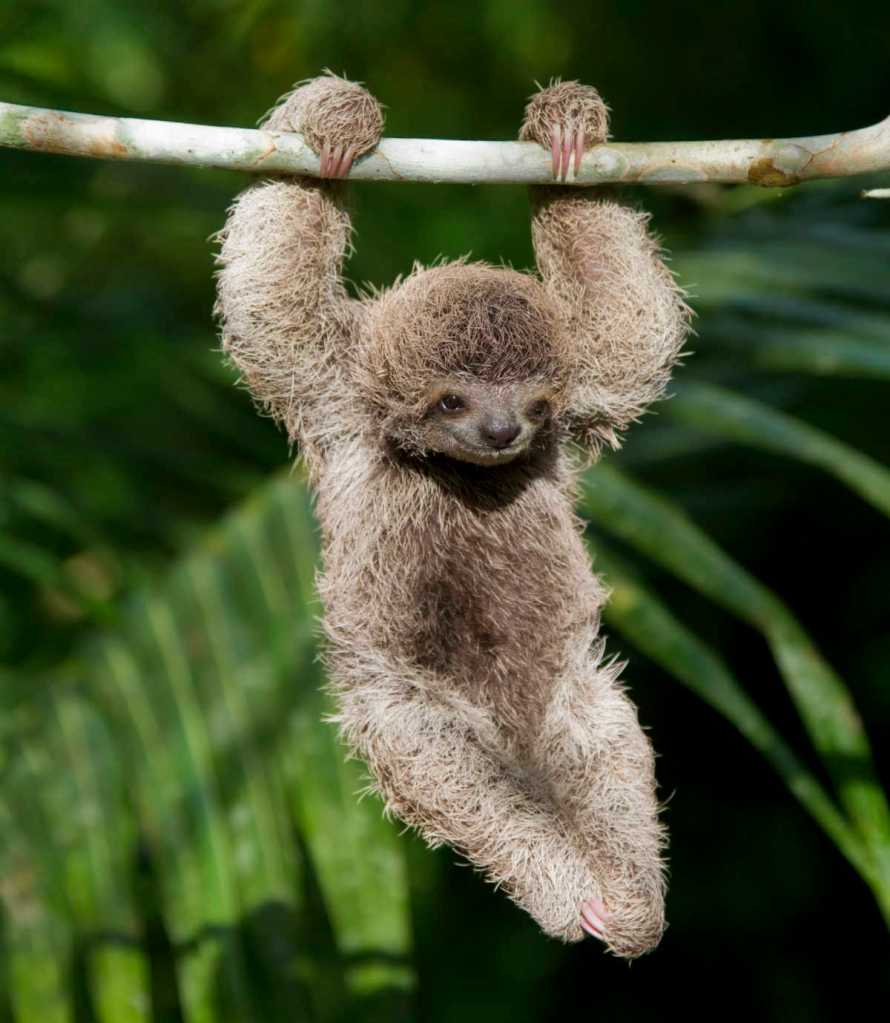
The Pygmy Three-Toed Sloth

With fewer than 100 individuals remaining in the wild, the pygmy three-toed sloth, endemic to the island of Escudo de Veragua, off Panama’s Caribbean coast, is on the verge of extinction. It is the world’s slowest mammal, with algae growing on its fuzzy coat owing to its inactive lifestyle. It gets its greenish tint from the plant, which helps it blend in with the trees in its Central and South American rainforest habitat.

A mature pygmy three-toed sloth can weigh anywhere between 5.5 and 7.7 pounds and grow 19 to 21 inches tall, making it substantially smaller than other sloth species. The population of pygmy three-toed sloths has declined dramatically due to habitat degradation and fragmentation, exploitation for food, the invasion of feral cats, and a lack of adequate legislative protection for pygmy three-toed sloths and their habitat.

Sloths sleep a lot, about 15 to 20 hours per day, and spend nearly all of their time in the air, clinging to branches with their strong claws. They even mate and have babies while suspended in the air. They eat tree leaves, shoots, and fruit at night, and acquire practically all of their water from juicy plants.

The Seychelles Sheath-Tailed Bat

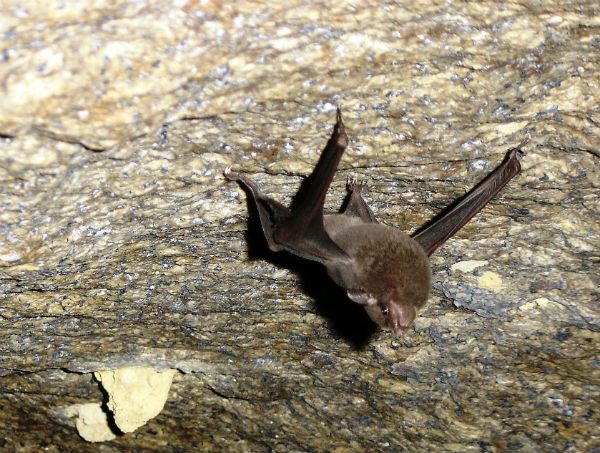
The Seychelles sheath-tailed bat, so named for its long, membranous cape-like skin that can be stretched or shortened for flying assistance, is Critically Endangered, with less than 100 left. It is endemic to the Seychelles Islands. The clearing of their lowland forest habitat for cultivation is the most serious threat they experience. Predation by barn owls, roost disruption, and decreases in insect abundance owing to pesticide use are all plausible causes of its decline. It navigates and recognizes targets using echolocation.