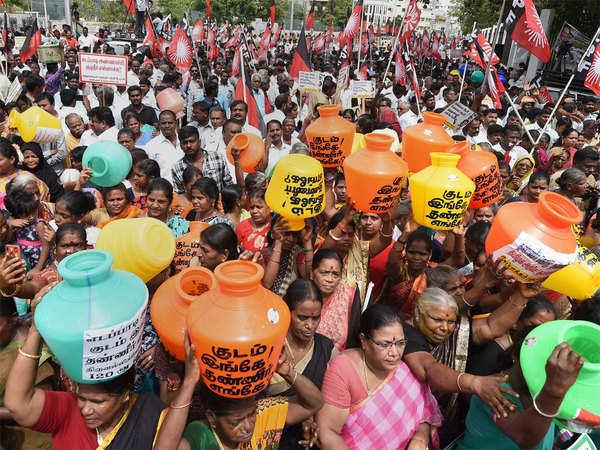
The Indian Constitution: Indian Republic’s Sacred Book

The Indian Constitution is regarded as the most extensive evidence and cumbersome Constitution worldwide. It is a document that contains the structure of the Indian political system, rights, responsibilities, framework and confinements of the government, that are required to be followed by the government. The fundamental rights and duties of the citizens of India are also demonstrated. It is the absolute law i.e. lex loci in India, including the legislative, executive and the judiciary acquiring powers from it.  The Constitutional document holds objects, rights or obligations sacred in nature.

It consists of 395 articles in 22 parts and 8 Schedules. It also consists of a preamble which is the soul of the Constitution. The Preamble marks India as a secular country and it is governed and run by the Indians solely.

Individual freedom: The freedom of an individual was the result of constant political and sophisticated pursuit for over centuries. The demand for the freedom of press continued all round the British colonialism. The freedom of expression is considered as an essential element in the Constitution, while once basic denied in the Rowlatt Act.

Social Justice: The social justice was always linked to liberalism, as the reservation provisions for the Scheduled Tribes mentioned in the Constitution. It was believed that barely providing rights to equality and voting rights were not adequate. Thus, special provisions such as seat reservation in political and public offices were introduced in order to preserve the Sheduled Tribe’s interests.

Respect for diversity and minority rights: The Constitution makers found this a big challenge to encourage liberalism between communities and promoting equality in the then situation of conflict and order of pecking. Thus, in order to make sure that all the communities are at peace without any domination, it was obligatory to acknowledge rights on the basis of communities. As a result, a right such as right to religion was included in the Constitution.

Securalism: Although the term ‘secular’ was not mentioned in the Constitution but the Indian Constitution has been always secular. Securalism refers to mutual separation between an individual’s state and religion in order to preserve the morals such as rights to citizenship and freedom. The western conception of secularism proposed that the state should not interfere in the religious matter strictly. However, the then conditions of India was different, thus the Constitution makers had to form some other adequate measure. As a result, the makers introduced State’s Intervention power and rights of religious groups.

Universal Franchise: During the non-formal way of seeking the Indian constitutional drafting, it was declared by the author that any individual born in India had the authority to enter public offices and participate in nation’s affairs. Therefore, universal franchise was regarded as a beneficiary instrument to express nation’s will.

Federalism: The Constitution had formed a powerful central government but there were significant differences of constitutional origin between the status of law and various sub units under the same federation. Under Article 371, special provisions beneficial to various States were accorded. The Indian Constitution believed that there is nothing wrong in providing distinctive treatment.

National Identity: The Indian Constitution continues to fortify a common national identity. In the past, India endeavoured to hold on to religious identities along with national. Thus, the Indian Constitution has tried to maintain the balance among different identities but common identities were considered beneficial. The aim of the Constitution is to develop fraternity not unity evolved by force.

Thus, it can be concluded from the historical study of the Indian Constitution that the political parties are recurring but the Constitution remains persistent and the Constitution is considered as the Indian Republic’s sacred book.

Battle of nerves: Indian students in Ukraine pushed into a corner

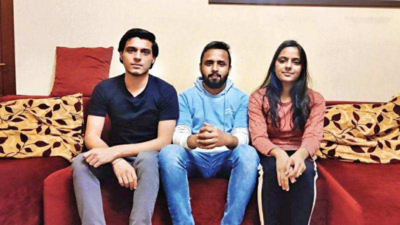
(From left) Rahul Dhankar, Naveen Shukla and Muskan Dabas in their flat in Ukraine

Shreya Singh, a medical student at Bogomolets National Medical University in Kyiv, woke up Thursday to the sound of explosions. “An orange haze hung over the city. We later heard the news Russia had destroyed Ukraine

‘s airbases. We are panicking as I had booked a flight to India for March 2, but I think it will be cancelled. We are waiting for updates on evacuation from the Indian embassy,” Singh, who is from Lucknow, told Priyangi Agarwal over phone.

Another medical student, Gargi Gupta, said, “We can hear the sound of military aircraft. We have been advised if an 11-minute-long siren is sounded, we should run for the bunkers (bomb shelters)”.

Most of the buildings, including student hostels, the subway and underground metro stations, in Ukraine have bunkers. “We are packing necessary items and documents so that we can leave immediately when the evacuation process begins,” said Gargi, a third-year medical student from Kanpur. 

Her friend, Mohammand Shafiuddin, said he had never imagined that such a situation could arise. A third-year student of Bogomolets National Medical University, Shafiuddin, who is from Hyderabad, stays with 11 friends at a rented house. “As most of my housemates are already in India, I had asked some other friends to stay with me as we are in a state of panic. Our landlord has provided basic facilities like water at the bunkers below our house,” he said. Most of the supermarkets in the city have run out of stocks, said Shafiuddin, and he, along with his friends, is planning to go to the outskirts to purchase groceries. Though he had booked a flight to India for March 12, his flight has been cancelled.

For the Indian medical students stuck in Ukraine, it’s a double whammy. Their studies have been disrupted and now they are worried about their exit route. Arvind Gehlawat of Rohtak, a second-year student at Kharkiv National Medical University, said, “From Thursday morning to noon, we have heard the sound of five explosions and we feel we are at risk. Our classes have been cancelled till Monday and we are confined to our hostel as we have been asked to go out of hostel only if it is necessary.”

Requesting the Indian government to ensure their safe evacuation soon, Sukas Pahal, who is from Panipat and studies in the same university, said, “The situation is tense and our scared parents are calling us repeatedly. I tried to convert Indian rupees to the Ukrainian currency, hryvnia, but it seems that the facility has been stopped.”

A third-year student at Bogomolets National Medical University, Rahul Dhankhar, who lives in a flat with his friends at Kyiv, is regretting his decision of not returning to India earlier. The student from Rohtak says he that thought the situation will get normalised. “We have now been told to make arrangements for ready-to-eat food for a week. There is a long queue outside ATMs and the supermarkets are flooded with people,” he said.

Some students who reached the Boryspil International Airport on Thursday were evacuated after Ukrainian authorities closed the airspace. A student from Gujarat, Vishwa Mehta, a first-year MBBS student at Bukovinian State Medical University, said, “A group of eight students reached the airport around midnight as we had a flight for India around 9.15 am Ukrainian time. However, at 4.30-5 am, we heard an explosion and the airport authorities vacated the entire airport. We were taken out to a safe place in a bus in Kyiv. Our university is around 580 kms from there, and hence, we are now going to the Indian Embassy on the advice of our seniors,” she told TOI on Thursday morning.

The uncertainty is unnerving for Gorakhpur’s Naveen Shukla. “We had no idea that bombing would happen so soon. We don’t know what will happen in the next few hours,” he said

Source Toi

An Overview of Optimism

Being optimistic about one’s endeavors is a highly underappreciated quality. In a perpetual marathon, dubbed as “life” your positive outlook can turn the tables for any obstacle, living or not. Today, your grades can only take you so far on the success scale, whereas it’s the demeanor of a candidate which gets them shortlisted for prosperity. The opportunity to practice this buoyancy props up several times in a person’s life, but utilizing it to the full potential is where most people fail. Can optimism trigger audacity for introverts? Can it figure out tranquility for the ever-agitated? Can it find hope for the gloomy? The answer, well you can only find out once you try.

A ray of hope can be found anywhere

So how does optimism work?

Becoming an optimist isn’t something that can be mastered overnight. It is a process, that accompanies you in your life. It grows with you and basically embodies you. Many research has been carried out about the effectiveness of optimism as a psychological phenomenon. Optimism seems to have an indispensable role when it comes to mediating between depressing thoughts and suicidal idealization. Often, the key to becoming an optimist is to draw lines with the pessimists. Don’t rue it, don’t pity them, because you were once one of them. Now you are on the journey to self-development, and one day so will they. All it takes is changing your perspective.

How a single person can transform the room

Benefits of being optimistic

A principal benefit of being optimistic is finding the smallest silver lining in a grey cloud hanging over your head. Having a positive mindset has been scientifically proven to motivate you towards achieving your goals. Optimists view failures as new beginnings and work upon themselves accordingly. When things go bad, our world gets shaken up, which requires us to grow, see new things, and start afresh. Take the pandemic for example. The arduous times we confronted couldn’t have been conquered without the moral support of you, yourself.

A principal benefit of being optimistic is finding the smallest silver lining in a grey cloud hanging over your head. Having a positive mindset has been scientifically proven to motivate you towards achieving your goals. Optimists view failures as new beginnings and work upon themselves accordingly. When things go bad, our world gets shaken up, which requires us to grow, see new things, and start afresh. Take the pandemic for example. The arduous times we confronted couldn’t have been conquered without the moral support of you, yourself.

But, optimism doesn’t just have neurological benefits. In a study conducted by researchers at the University of Illinois, a survey of 5100 subjects showed that 76 percent of them are more likely to have health scores in an ideal range. Not only this, optimists showed significantly sounder blood sugar and cholesterol levels, worked out more, had a healthier body mass index, and were less likely to smoke.

One of the many advantages of having optimistic peers is that this quality is contagious, and spreads like wildfire in the grimmest of situations one may find themselves in. The institution Gallup conducted a survey and found that more than 65 percent of all 9 to 5 American managers don’t put their heart and soul into their jobs. This costs the decorum of the entire company, making the employees lethargic which further costs the US economy more than 77 billion USD every year. All of this can be avoided because it takes only one person the fuel the atmosphere.

Optimism-the need of the hour

Today, the world is not in a position to accommodate pessimists. With the onslaught of a new wave of coronavirus, the Ukraine-Russia tensions, and whatnot, optimism is the need of the hour. People are inspired by what they see, and every little show of enthusiasm can make society a better place. We more often learn from our experiences, than our mistakes. Let’s focus on making every single experience a joyful one, by being optimistic

Great Women Who Fought For Our Freedom

The road to freedom was a lengthy and messy affair for India. The number of people who fought for our country’s independence from the British Raj is countless. We celebrate the efforts and sacrifices made by the most prominent of them. Here are 7 of some of the great women who stood their ground against the British and fought for india’s independence:

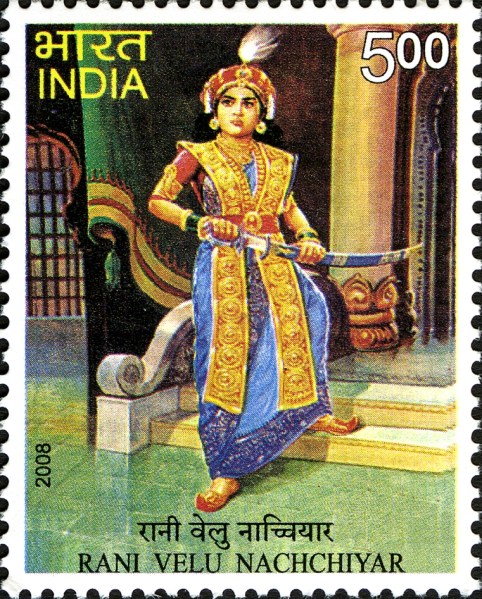
Rani Velu Nachiyar

Rani Velu Nachiyar was the first queen in India to fight against the East India Company. She was the queen of the Sivaganga estate. Her husband was killed by British forces on 25 June 1772 which forced her to become a fugitive. After 8 years of planning and help from many feudal lords, she fought against the British and reclaimed her husband’s kingdom, and proceeded to rule it for 10 more years. The people of Tamil Nadu call her  Veeramangai (brave woman) in respect. The Indian Government released a commemorative postage stamp in her name in 2008.

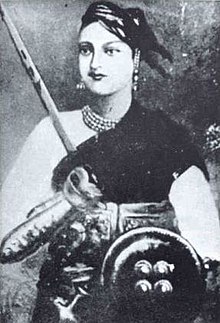
Rani Lakshmibai

Rani Lakshmibai is well-known among the young and old in India for her brave fight against the British who sieged her kingdom. She was named Manikarnika and took up the name Lakshmibai after her marriage to the Maharaja of Jhansi, Gangadhar Rao Newalker in May 1842. Rani of Jhansi was a leading figure in the Rebellion against British Raj in 1857. A proficient horse-rider and fencer, she fought in the battle on horseback, with her adopted son tied to her back. She fought valiantly, resisting the British for 7 days with her small army and until her last breath.

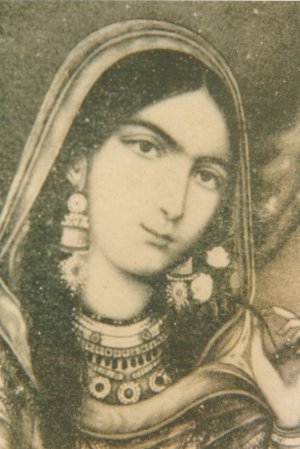
Begum Hazrat Mahal

Begum Hazrat Mahal was another important character in the Indian Rebellion of 1857. After her husband, Nawab of Awadh Wajid Ali Shah was exiled to Calcutta by the British and the Indian Rebellion began, her army of supporters rebelled against the British Forces under the leadership of Raja Jalal Singh and seized control of Lucknow. She became the regent of Awadh from 1857-1858, taking power as the guardian of her minor son, whom she had declared as the ruler of Awadh. Later, she was forced to retreat and found asylum in Nepal, where she died in 1979.

Madam Bhikaji Cama

Born in a Parsi Zoroastrian family, Madam Bhikaji Cama was an important figure in the Indian freedom struggle. Living in Paris, she co-founded the Paris Indian Society in 1905. She wrote, published, and distributed revolutionary literature for the Indian Independence movement in Netherlands and Switzerland. She presented the “Indian Flag of Independence” at the second Socialist Congress at Stuttgart, Germany on 22 August 1907, in her appeal for human rights, equality, and autonomy from Great Britain. This flag which was co-designed by Cama and Vinayak Damodar Savarkar would serve as the template from which the current national flag was designed.

Umabai Kundapur

Umabai Kundapur was a teacher and fearless political activist from Karnataka. She led the “Tilak Kanya Shala”, a school for girls started by her father-in-law Ananda Rao. She took part in protests and campaigns against the British and founded “Bhagini Samaj”, an NGO for women. She also led the women’s wing of the Hindustani Seva Dal and encouraged girls and women across the country to join the freedom movement. She provided a safe house for freedom fighters from the British. A selfless personality, she rejected several honors and awards given to her, living her life silently after independence.

Kamaladevi Chattopadhyay

Kamaladevi Chattopadhyay was a freedom activist who was a part of the seven-member lead team in the Salt Satyagraha. She was a social reformer who is most known for her efforts in encouraging the growth of Indian handicrafts, handlooms, and theatre in independent India. She was the first woman in India to contest in elections in the Madras constituency, even though she lost the elections. Post-independence, she set up the National School of Drama and also headed the Sangeet Nataka Akademi. She has been awarded both the Padma Bhushan (1955) and the Padma Vibhushan (1987) as well as the Ramon Magsaysay Award (1966).

Sarojini Naidu

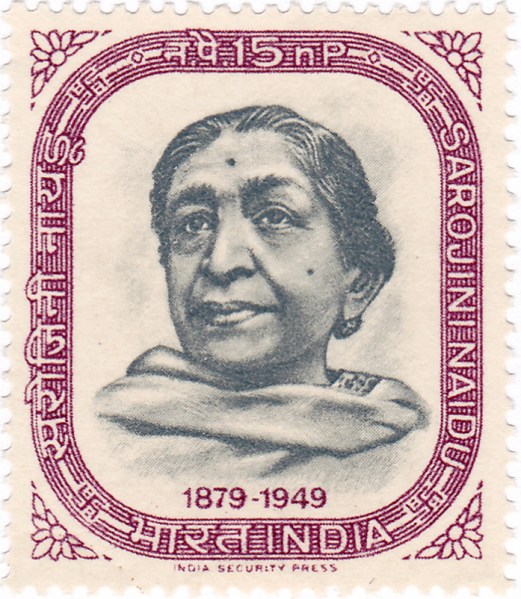
Sarojini Naidu was known as “the nightingale of India”, a nickname coined by Mahatma Gandhi for her work in poetry. She was an important political activist who took part in the Indian Nationalist Movement. Having close ties with personalities like Rabindranath Tagore, Mahatma Gandhi, and Gopal Krishna Gokhale, she participated in both the satyagraha movement and the Non-cooperation movement. She was appointed the President of the Indian National Congress in 1925 and later became the first woman to hold the office of Governor in the Union of India, as the Governor of the United Provinces in 1947.

Can Ozone layer be repaired?

Imagine that one day our Ozone layer was disappeared. What will happen? How long can we survive without it?  The Ozone layer is a region of Earth’s atmosphere that contains a high concentration of Ozone (O3). Ozone is a highly reactive gas composed of three oxygen atoms. It is found in the lower portion of Earth’s atmosphere. It absorbs 97 to 99 percent of the Sun’s ultraviolet rays. Direct exposure to UV rays can cause serious skin problems including sun burn, skin cancer, premature ageing of the skin, solar elastosis. It can also cause eye problems and can ruin our immune system.

  The depletion of ozone layer was first observed by a Dutch chemist Paul crutzen. He described the Ozone depletion by demonstrating the reaction of nitrogen oxide with oxygen atoms which slowing the creation of Ozone (O3). Later in 1974, American chemists Mario Molina and F. Sherwood Rowland observed that chlorofluorocarbon (CFC) molecules emitted by man-made machines like refrigerators, air conditioners and airplanes could be the major source of chlorine in the atmosphere. One chorine atom can destroy 100,000 ozone molecules. Not all chlorine molecules contribute to ozone layer depletion; chlorine from swimming pool, sea salt, industrial plants, and volcanoes does not reach the stratosphere. The ozone hole in Antarctica is one of the largest and deepest depletion which was discovered by the British scientists. This became worldwide headlines after that. According to NASA scientist Paul Newman, if this depletion continues in this rate our ozone layer can be likely disappeared in 2065. If that happens UV rays from sun directly reach earth and cause severe health issues, Humans can last 3 months and plants may die in 2 weeks because of heavy UV radiation. Thus Earth will become inhabitable.

 Fortunately in 1987, Montreal protocol was made that bans chlorofluorocarbon and other chemicals that cause ozone depletion. Surprisingly it works, researches made in 2018tells that the ozone layer is repairing itself at a rate of 1% to 3% per decade since 2000. Still it will take at least 50 years for complete recovery. The greenhouse effect allows the short wave radiation of sunlight to pass through the atmosphere to earth’s surface but makes it difficult for heat in the form of long wave radiation to escape. This effect blankets the earth and keeps our planet at a reasonable temperature to support life. Earth radiated energy, of which about 90 percent is absorbed by atmospheric gases like water vapor, carbon dioxide, ozone, methane, nitrous oxide, and others. Absorbed energy is radiated back to the surface and warms earth’s lower atmosphere.

The gases have come to be called greenhouse gases because they hold in light and heat, just as a greenhouse does for the sake of the plants inside. Greenhouse gases are essential to life, not only at an appropriate balance point. These gases increased during the 20t century due to industrial activity and fossil fuel emissions. For example, the concentration of carbon dioxide I the atmosphere have recently been growing by about 1.4 percent annually. This increase in greenhouse gases is one of the contributors to be observed patterns of global warming. On September 16thworld ozone day, we can celebrate our success. But we must all push to keep hold of these gains, in particular by remaining vigilant and tackling any illegal sources of ozone depleting substances as they arise, says UN ozonesecretariat. So without the Montreal protocol, life on earth could be a question mark, so keep working hard. “OZONE FOR LIFE”.

The History of Electric cars – Tesla cars.

In 1834, Robert Anderson of Scotland created the first electric car carriage. The following year, a small electric car was built by the team of professor Stratingh of Groningen, Holland and his assistant, Christopher Becker. More practical electric vehicles were brought onto the road by both American Thomas davenport and Scotsman Robert Davidson in 1842. Both of these inventors introduced non rechargeable electric cells in the electric car. The Parisian engineer Charles Jentaud fitted a carriage with an electric motor in 1881. William Edward Ayrton and John Perry, professors at the London’s city and guilds institute, began road trails with an electrical tricycle in 1882; Three years later a battery-driven electric cab serviced Brighton.

Around 1900, internal combustion engines were only one of three competing technologies for propelling cars. Steam engines were used, while electric vehicles were clean, quiet, and did not smell. In the United States, electric cabs dominated in major cities for several years. The electric vehicle did not fail because of the limited range of batteries or their weight. Historian Michel Schiffer and others maintain, rather, that failed business strategies were more important. Thus, most moor cars in the twentieth century relied on internal combustion, except for niche applications such as urban deliveries. At the end of the century, after several efforts from small manufactures, general motors’ made available on all electric vehicle called EV1 from 1996 to 2003. In the late 1990s, Toyota and Honda introduced hybrid vehicles combining internal combustion engines and batteries.

Entrepreneur Elon Musk is the man behind many modern innovations. It includes the digital payment service PayPal, the independent space travel company SpaceX, and the electric car company tesla motors. Tesla moors is named after Nikola Tesla, a Serbian American inventor who contributed to the development f alternating current electricity. In 2003 two Silicon Valley engineers, Martin Eberhard and Marc Tarpenning sold their eBook business for 187 million dollars and started Tesla to build a greener car. Elon musk joined as an early investor leading the series finance and taking on several other roles as well. Tesla’s plan was simple but potentially genius. They focused on lithium-ion batteries which they expected to get cheaper and more powerful for many years. They planned to start their journey with a high margin, high performance sports car. Tesla also planned to integrate energy generation and storage in the home and develop other emerging technologies like autonomous vehicles.

With this plan set, the company was ready to build a high performance low volume sports car, the roadster. Finally in 2008 Tesla motors released its first car, the completely electric roadster. In 2008, martin and marc left the company, and eventually Elon Musk took over as CEO. He made drastic changes, raising 40 million of debt financing and borrowed 465 million from the US government. In 2012 tesla started focusing on two new cars, model S and model X. beginning in 2012, tesla built stations called supercharges in the United States and Europe, designed for charging batteries quickly and at no extra cost to tesla owners. These two models were poised for success but the high cost of lithium ion batteries made it a luxury item. To compensate this, in 2013, tesla began building large factories called Gigafactories to produce lithium ion batteries and cars n large scale. It made tesla cars ultimately cheaper than gas powered vehicles. Then tesla gave autopilot system for its model S which gives semi autonomous capacities. By the end of 2017 tesla passed ford in market value. Tesla released another crossover he model Y, in 2020. The model Y was smaller and less expensive than the model X and shared many parts with the model 3. Tesla announced several models to be released in the future, including a second version of the Roadster, a Semi trailer truck, a Pick-up truck and the Cybertruck.


How deadly are Hydrogen bombs?

At 8:15 on the morning of the 6th august 1945, all people saw was a blinding light followed by complete darkness and destruction. It was the most powerful weapon ever created by mankind. It unleashed energy and radiation that killed a hundred and forty thousand people in the industrial city of Hiroshima, Japan. Today we have thermonuclear weapons, also called as the hydrogen bomb. Edward Teller, a Hungarian physicist, worked on the Manhattan project to produce the first atomic bomb based uranium fission, teller had long been interested in a hydrogen fusion bomb, but secrecy and the lack of access to computers contributed to slow progress. Stanislaw Ulam, a polish mathematician realized that a fission bomb could be used as a trigger for a fusion reaction. It is believed that teller seized on this for what became, in 1951, the “Teller-Ulam” design. Most sources agree that the H-bomb works in a series of stages, occurring in microseconds, one after the other. A narrow metal case houses two nuclear devices separated by polystyrene foam. One is ball shaped, the other is cylindrical. The ball is essentially a standard atomic fission bomb. When this is detonated, high energy radiation rushes out ahead of the blast.

How a hydrogen bomb works?

The first hydrogen bomb released the energy equivalent of 10 million tons of TNT. While the atomic bomb works on the principle of releasing energy through splitting of atoms called fission, a hydrogen bomb works by fusion of atoms together and it produce more energy than the atom bomb. Fusion is more powerful than fission. It is the same process that powers our sun. And when fission is combined with fusion in hydrogen, it creates energy orders of magnitude higher than fission alone which makes the hydrogen bomb hundreds to thousands of times more powerful than atomic bombs. The fusion portion of the bomb creates energy by combining two isotopes of hydrogen called deuterium and tritium to create helium. Unlike a natural hydrogen atom that is made of one electron orbiting around one proton, these isotopes have extra neutrons in the nuclei. A large amount of energy is released when these two isotopes fuse together to form helium, because a helium atom has much than these two isotopes combined. This excess energy is released. One of the main problems with creating the hydrogen bomb was obtaining the tritium. Scientists found that they can generate this inside the hydrogen bomb with a compound combining lithium and deuterium.

Scientist chose hydrogen for fusion, because it has only one proton and thus would have less electrical charge than atoms with multiple protons in their nuclei. It is possible to combine nuclei when the temperature is increased. Temperatures needed are astronomically higher than ever that at the center of our sun – 100 million degree Celsius. The center of the sun is 15 million degrees.  At this temperature the isotopes become a form of matter called plasma. Now the electrons orbiting are stripped away from the nucleus. At this temperature the nuclei combined with each other and form a helium nucleus and a free neutron. But how is a temperature of 100 million degrees achieved? This is where the fission or atomic bomb is inside the hydrogen bomb enclosures comes into play. This fission provides the energy needed to heat up the fusion reaction. A hydrogen bomb is actually three bombs in one. It contains an ordinary chemical bomb, a fission bomb and the fusion bomb. The chemical bomb initiates the fission bomb, which initiates the fusion bomb. All these events happens in only about 600 billionths of a second, 550 billionths of a second for the fission bomb implosion, and 50 billionths of a second for the fusion bomb. The result is an immense explosion with a 10 million ton yield, 700 times more powerful than an atom bomb. Only six countries have such bombs, china, France, India, Russia, the United Kingdom, and the United States. The world now has over 10,000 such bombs capable of easily destroying every single person on earth many times over.

“I don’t know what weapons countries might use to fight world war III, but wars after that will be fought with sticks and stones”. – Albert Einstein

Mrityunjay: One who conquers death

Review of book

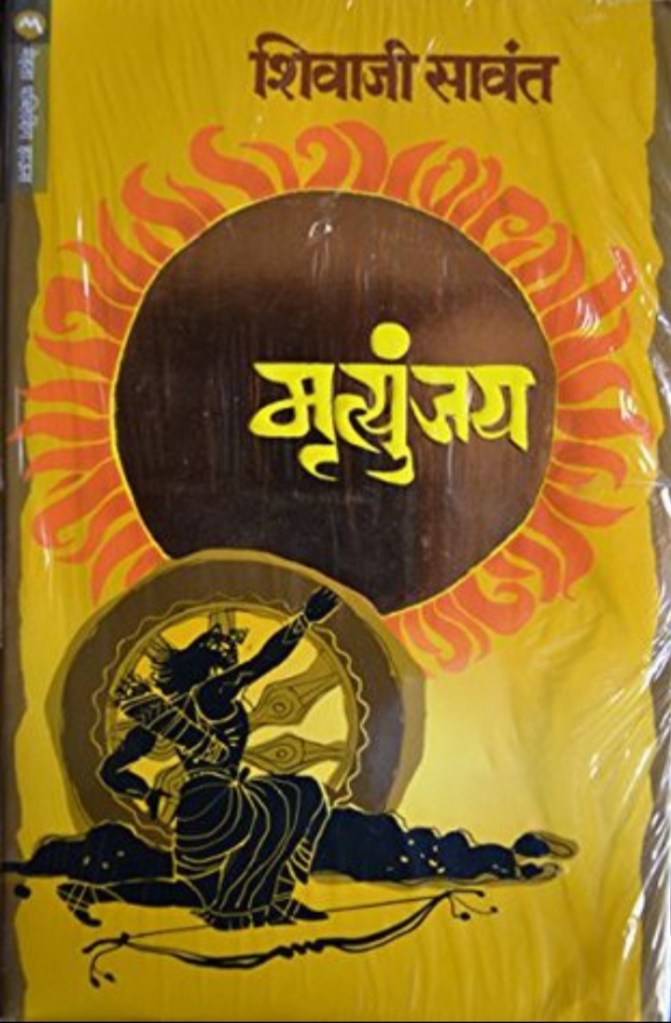
Mrityunjaya is the autobiography of Karna. Indian novelist Shivaji Sawant provides a deep exploration of Karna’s life in this novel. Due to this novel, he is also known as Mrutyunjaykaar.

There is the Sun on the cover of the novel. The chariot wheel of a heroic warrior is stuck in the golden rays of that glorious sun. That warrior is Karna. This cover depicts the curse that Karna received when he was studying at Parashuram.

The short complementary of the author is written on the back cover. And the image of murtidevi award which was received in 1996 for this book is printed.

Mrityunjay is the novel of the autobiography of Karna who is also known as Suryaputra, Sutputra, Radhey, Kauntey, and many more names. Mrityunjaya means the one who conquers death. This name seems beautiful to Karna. He was the only brave warrior who donated despite being on the verge of death. Lord Krishna blessed him that a generous warrior like you has never happened before and will not happen again.

cover page

In this book, along with Suryaputra Karna, the life of his friend that is Yuvraj Duryodhana, Rajmata Kunti, Lord Krishna, brother Shona and dear wife Vrushali who practiced Pativrata Dharma is also briefly narrated.

When Rajmata Kunti was vergin, sage Durvas saw her devotion and gave her the Devahuti mantra. The power by which she recites the mantra, power will stand as a slave in human form and produce a son like him. One morning she looked at the sun and recited a mantra. And Karna was born a few days later. Kunti and her maid Dhatri put him in a box and released him into the river Ganges. While washing horses, that box got to Adhiratha, the charioteer of Dhritarashtra in Hastinapur. And later, Adhirath and his wife Radha took care of Karna.

He did not get maternal happiness even after birth. He had to endure endless hardships and sufferings. He expressed a wish to Krishna that his last rites should be performed by Krishna in the virgin land so that others like him would not suffer.

Many in the world may have donated, but he knew how to make such a thrilling, lofty, devoted, unparalleled donation alone at the door of death. The first Pandava, the eldest Kaunteya, the son of the sun…

When Lord Indra came in the guise of a Brahmin and asked him to donate his armor. Karna gave it without hesitation. Even knowing that it will cause his death‼!

In modern times, no one pays attention to sad people. The poor are getting poorer and the rich are getting richer. We should try to solve the grief of the miserable people in our society. Shivaji Sawant has tried to give justice to the Karna who have not received justice in the past.

We should donate in our own way. Sawant has written this novel in the hope of trying to understand the grief of the bereaved.

Nothing Ventured: The Book Review

Cover of Jeffrey Archer’s Nothing Ventured (2019)

Introduction

Nothing Ventured heralds the start of a brand-new series in the style of Jeffrey Archer’s New York Times bestselling Clifton Chronicles: introducing Detective William Warwick. But this is not a detective story, this is a story about the making of a detective. The novel was originally published on 3rd September,2019.

About the Author

Jeffrey Howard Archer is an English novelist, life peer and former politician. His work includes novels and short stories such as Kane and Abel & A prisoner of Birth. He is the only author ever to have been a number one bestseller in fiction, short stories, and non-fiction.

Jeffery Archer

Storyline of The Novel

Jeffery Archer starts a new series of books that entails the story of a detective choirboy who fights the city crime against all odds. This new series introduces William Warwick, a family man and a detective who will battle throughout his career against a powerful criminal nemesis. Through twists, triumph and tragedy, this series will show that William Warwick is destined to become one of Jeffrey Archer’s most enduring legacies.

William Warwick has always wanted to be a detective, and decides, much to his father’s dismay, that rather than become a lawyer like his father, Sir Julian Warwick QC, and his sister Grace, he will join London’s Metropolitan Police Force. William Warwick after graduation from Kings’ college reveal to his father, sir Julian Warwick, that he wants to be a copper and has no intention to serve Her Majesty’s court. Under the attentive mentorship of Fred Yates, William begins his life on the beat. After some eighteen months on the beat, William becomes a neophyte detective in Scotland Yard’s Arts and Antiquities squad where one of his cases involves the hunt for a Rembrandt painting stolen some seven years earlier from the Fitzmoleon Museum. His career, both with the Met and with Scotland Yard, will define his life. On his journey to Scotland yard’s William is assigned tasks of Investigating the theft of Rembrandt painting. During his chase of the Rembrandt, he meets the love of his life and the Fitzmolean Museum’s gallery assistant Beth Rainsford. While putting the clues together he comes across a self-styled farmer and suave art collector Miles Faulkner, his friend and lawyer Booth Watson, and Christina (Miles’s wife). Along with the story Christina befriends William and Beth but on whose side is she on, remains a suspense.  

Nothing Ventured (2019)

Analysis of The Storyline

The book starts with William revealing to his father that he’ll not be working in his chambers instead he’s interested in becoming a cop and would like to pursue the same. The author carves the character of William as honest, loyal, and hardworking. We fellow him from his childhood to becoming a successful & ambitions cop. He joins the beat at Scotland yard under the mentorship of Fred Yates who with his oft-repeated pearls of wisdom taught valuable lessons which were far more useful than MET’s handbook. Soon William was assigned to the task of finding a precious/expensive painting on his journey. The book takes you through various twists in the plot which keeps the readers on the edge of their seats. Through the story, each character grows both in their personal and professional lives as well. The end of the book is the lead into its next part “Hidden in Plain Sight”, after a series of twist and turn in the story the Rembrandt finally hangs in Fitzmolean with another prestigious painting named Rubens. The author leaves the reader with a bit of a surprise when the conman Miles invites Constable Warwick to his New York’s apartment “Should you ever find yourself in New York, do give me a call because I would like to invite you round to my apartment to show you the Originals”.
Criticism of The Storyline

Serving as the inaugural book for a new series, “Nothing Ventured” is a genial introduction to William Warwick. With likable characters and some interesting twists in the plot, the narrative keeps the reader’s interest. Throughout the telling of the tale, William grows, both in his career and in his personal life. And then there’s the ending that, while certainly designed to serve as a lead-in to the next book in the series, is sure to leave readers wondering why, given the circumstances, Miles Faulkner would ever voluntarily make such a comment to William. It seems completely out of character for a suave, clever, resourceful man.

Conclusion

The book takes us through the story of a detective, Courtroom, Museum and Conman. The storyline is well rounded with good narratives and less paragraph chunks. Any reader of The Clifton Chronicles will remember Harry Clifton’s work as an author and creator of William Warwick, now Archer has brought Warwick and those books to life by writing them.

Russia attacks Ukraine: Is this World War III?

Amid threats of the Russian invasion, netizens took to Twitter to share their fears that the Russia-Ukraine crisis might trigger a World War 3 like situation.

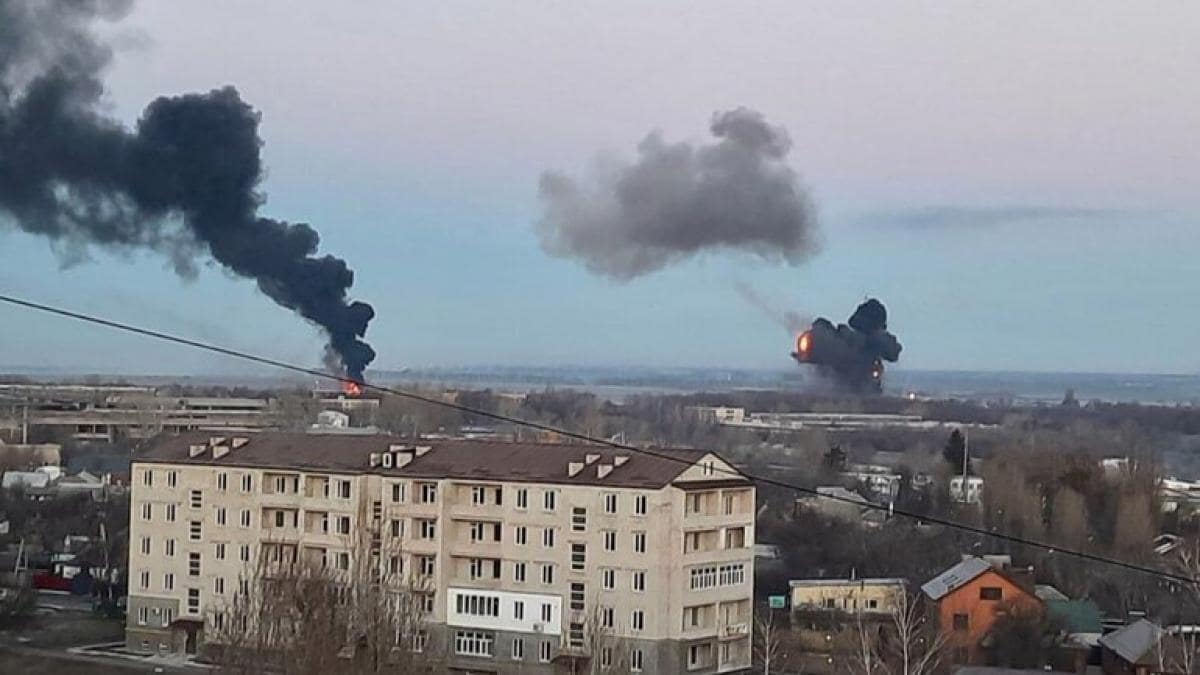
Russia-Ukraine war: Smoke rises in Kharkiv, the northeastern city of Ukraine (Twitter/@ahmermkhan)

Russia’s declaration of war on Ukraine has prompted outrage from across the world with nations and people alike condemning President Vladimir Putin’s act. 

While he has claimed that it’s a military action in Ukraine, explosions could be heard soon after in the capital Kyiv and other parts of the country. Putin also called on Ukrainian service members to “lay down their arms and go home”, adding that the special military action was meant for “demilitarisation and denazification” of Ukraine. 

As his statement comes amid Ukraine facing threats of the Russian invasion, netizens also took to Twitter to share their fears that the Russia-Ukraine crisis might trigger a World War 3 like situation.     While several shared a serious concern of Russia’s attack on Ukraine, others posted funny memes, trying to make light of the ensuing situation. null

The Russia-Ukraine crisis 

Russia declared war on Ukraine on Thursday, February 24 with Russian President Vladimir Putin calling it a military operation.

Putin has also warned other nations not to interfere with the Russian action as it would result in “consequences they have never seen”. Soon after his announcement, big explosions were witnessed in Ukraine’s Kyiv, Kharkiv and other regions.

Later, air sirens also went off in Kyiv, indicating that the capital is under attack. Meanwhile, Ukraine has closed its air space for civilian flights due to a “high risk” to safety amid Russia’s declaration of war on the country. Besides, The United Nations Security Council held an emergency meeting at the request of Ukraine on Wednesday night. 

On February 21, Russia recognised the independence of two separatist regions in eastern Ukraine after President Vladimir Putin signed decrees to recognise Ukraine’s regions of “Luhansk and Donetsk People’s Republics” as “independent”.  

The move escalated tensions in the region, heightening fears of Russia’s invasion of Ukraine. Putin also ordered Russian soldiers into eastern Ukraine in what the Kremlin termed a “peacekeeping” mission in the Moscow-backed regions.

Source: Google

SECRET OF HEALTHY LIFE

Importance of Exersice and meditation

MEDITATION

All of us want a healthy and happy life. but how to get it? Regular exercise for the body and meditation for the mind are mood boosters. It is very helpful for a happy life. and all of us want it. let’s start with exercise,

Physical exercise means the exercise of our limbs. this exercise is essential for a good personality and healthy life. To enjoy every moment of life and make our mind happy our health is important. because mind and body are complementary to each other. A healthy mind grows only in a healthy body. so it is said that HEALTH IS WEALTH.

EXERCISE

Exercise is of different kinds. walking, swimming, rowing, riding, and playing games also. the asanas and yoga are also good for youngsters. walking is the simple and the best form of exercise. it is good for old and diseased people. Exercise helps us to digest our food and the blood to circulate. A man who takes regular exercise enjoys good health. Good health keeps a man cheerful. Cheerfulness is necessary for the proper concentration of mind. morning and evening time is best for exercise.

Meditation is used to develop an awareness of the present moment. It is done to sharpen focus and attention, connect to the body and develop acceptance of difficult emotions and even alter consciousness. It has a number of physical and psychological benefits like stress reduction and improved immunity. It is a habitual process. It is to increase awareness of yourself and your surrounding. Meditation develops a positive mood, discipline yourself, healthy sleep patterns,s and promotes good emotional health.

physical exercise is essential for a healthy body while meditation strengthens our mind. so regularly 30 min exercise gives healthy and happy life. It’s the secret. A beggar with good health is happier and luckier than a king with poor health.

Mental Health in India

Over the last two years in India, some of the most significant changes in thought and opinion, both positive and negative, were seen on the issue of mental health. Mental health refers to a person’s psychological, emotional, and social well-being. As individuals, we tend to be more focused on our physical well-being. But it is important to maintain a healthy body and a healthy mind as well.

When the COVID-19 pandemic hit the world, there was fear, panic, and a lot of confusion. People’s mental health took a heavy toll. The situation in India was not different either. According to a study by Lancet in 2020, there was an increase of 35% in the number of anxiety and depression cases reported in the country. Covid-19 patients often suffer from depression, anxiety, and post-traumatic stress related to the disease. Front-line workers and people in the healthcare system also face issues of stress and insomnia and may face a lot of stigma from their communities. The situation has obviously relaxed these days, but the lockdown days were definitely a difficult period for everyone. The general population also suffered from issues such as stress, anxiety, depression, and loneliness. Spending time in isolation or quarantine led to increased concerns regarding suicidal thoughts and suicidal ideation, particularly among the youth. There was increased alcohol consumption and drug use, even as many cases of people suffering from severe withdrawal symptoms were reported due to the sudden unavailability of alcohol and other addictive substances during the lockdown.

While there has been a lot of distress, the lockdown has been beneficial for a fraction of people too. For some, it gave them the opportunity to spend previously unavailable time at home with their family, with work and studies going online.

In India, mental illness has long had a perceived sense of judgment attached to it. Mental disorders are usually not considered a real problem that requires proper medical care and treatment. There is a lot of stigma regarding it in our society. While timely diagnosis, professional help, and therapy can be very helpful for patients with mental illnesses, many are not usually ready to seek the required help. They feel a sense of shame and embarrassment in having to seek medical help. Lack of awareness and education also makes it difficult for people to properly express their emotional distress in such cases. Many are not aware of disorders like PTSD, behavioral and eating disorders. Mental health services may also not be easily available or affordable for everyone. There is a major portion of the population whose mental issues go untreated.

Regardless, the pandemic period has evidently brought a change in the mentality of people regarding this topic. With more people talking openly about their mental health struggles, the conversation around this topic has become more mainstream. Many now understand the importance of opening up and seeking help for their mental issues. They also understand the Importance of supporting those who require help. In a study conducted by LiveLoveLaugh in 2020, 92% of those surveyed said that they would seek treatment and support those who seek treatment for mental illness. This is a definite increase from the 54% who were of this opinion in the same survey conducted in 2018.

The central and state governments have also done work in increasing the general awareness about mental health and improving the country’s mental health services. The Government of India has initiated two major programs to tackle this problem. The National Mental Health Program (NMHP) was launched by the Government in 1982 with the following objectives:

  • To ensure the availability and accessibility of minimum mental healthcare for all in the foreseeable future, particularly to the most vulnerable and underprivileged sections of the population
  • To encourage the application of mental health knowledge in general healthcare and in social development
  • To promote community participation in the mental health service development and to stimulate efforts towards self-help in the community.

Under NMPH, the District Mental Health Program (DMHP) was launched in 1996 which also concentrated on improving public awareness, providing training to professionals, and ensuring early detection and treatment of mental illnesses.

During the lockdown period, the three central mental health institutions- National Institute of Mental Health and Neuro-Sciences (NIMHANS), Central Institute of Psychiatry (CIP), and Lokopriya Gopinath Bordoloi Regional Institute of Mental Health (LGBRIMH), under the direction of Central Ministry of Health and Family Welfare, started a national helpline with the aim of supporting people with mental health concerns that arose out of the COVID-19 pandemic.

It is essential that such efforts and meaningful conversations regarding the topic of mental health take place in our society. Everyone should be educated and made aware of such issues, including children. They need to accept that mental health issues are normal. The important thing is to take action and reach out for professional help. A person seeking help for their mental health issues is not inferior or weird, and they require all the support they can get.

Water Crisis in India: The Present and The Future

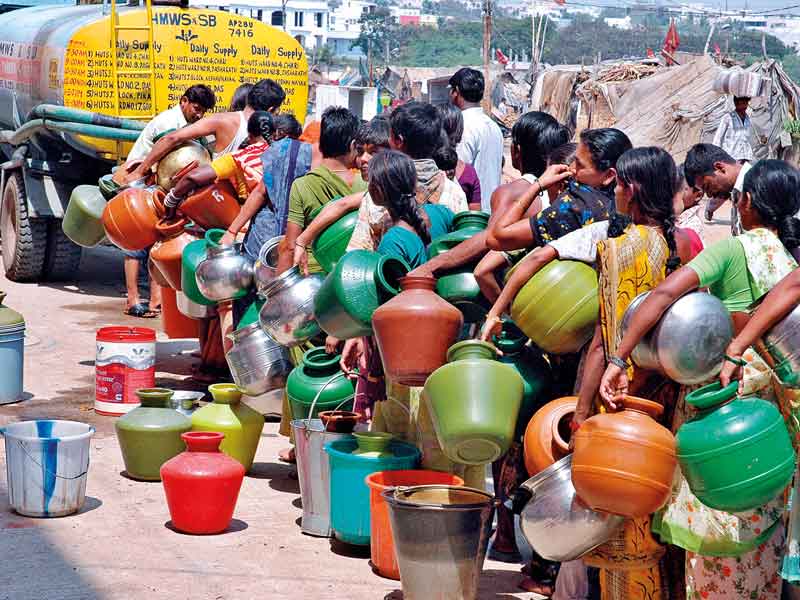
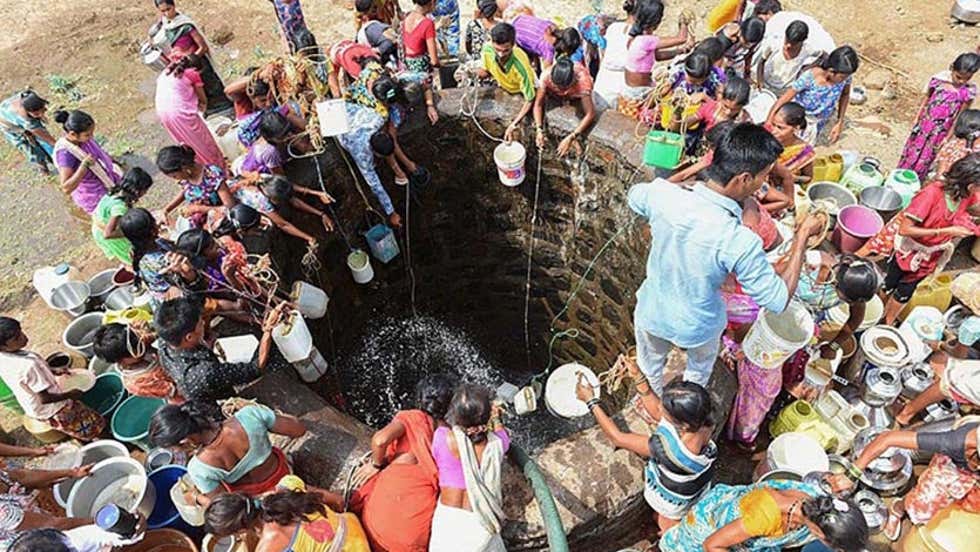
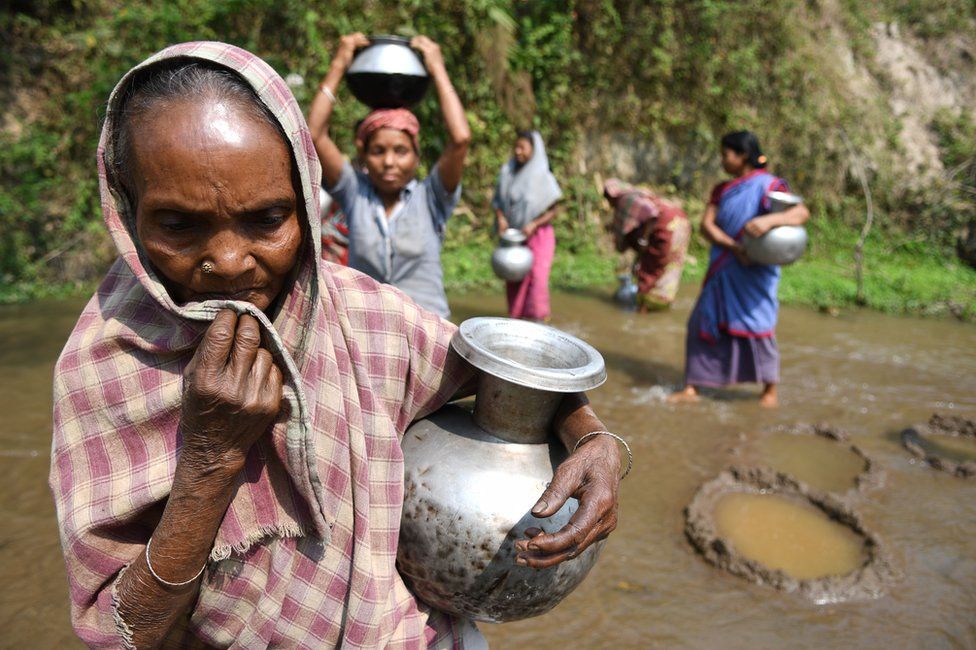
Queue for daily water collection

Introduction

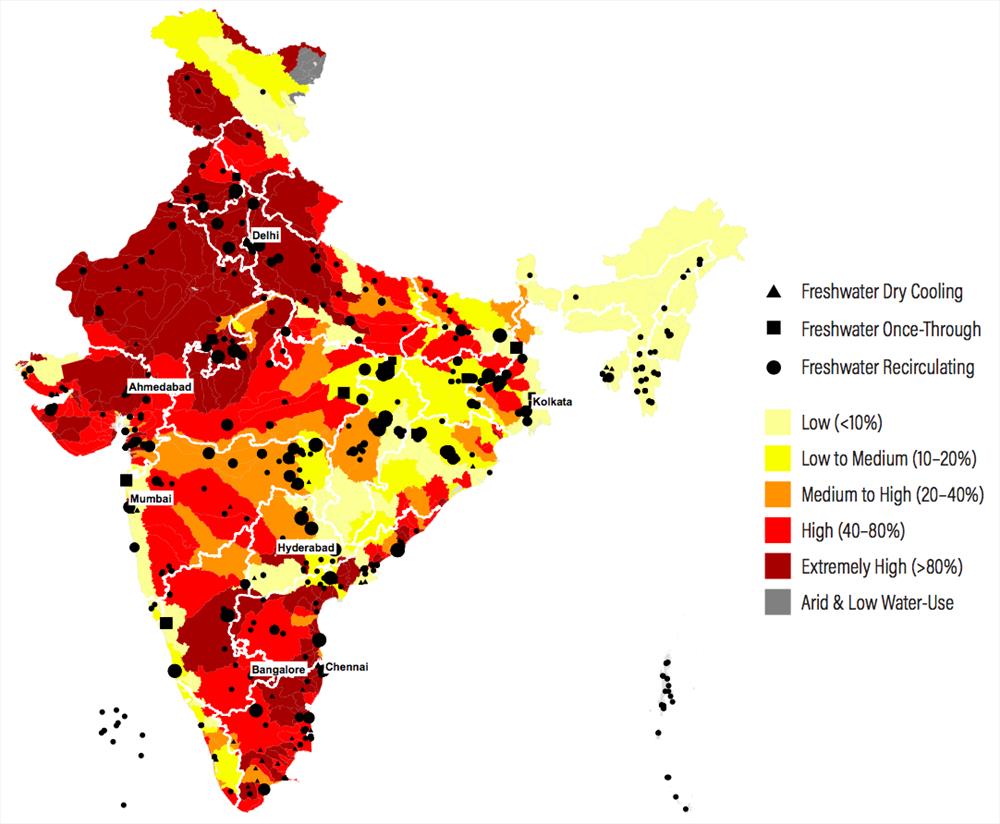
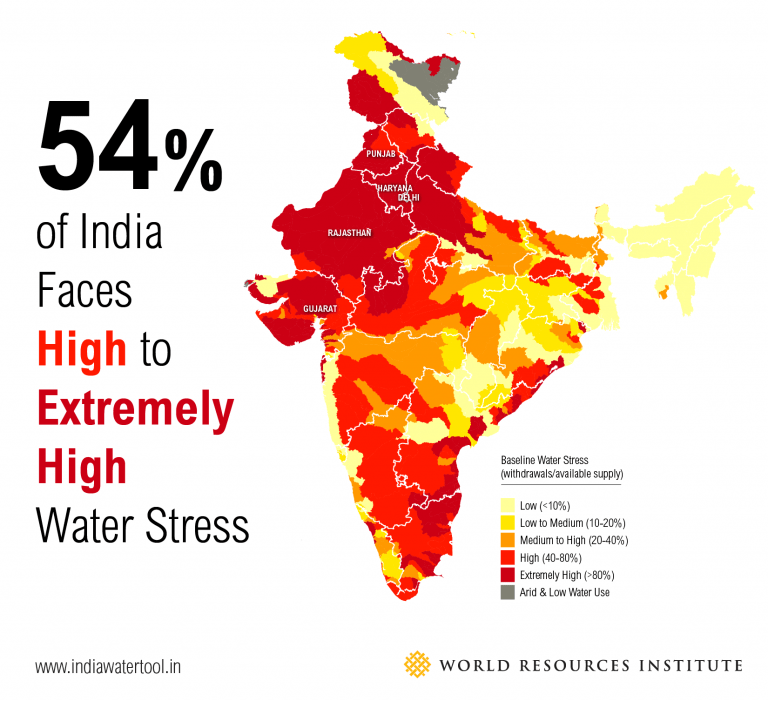
Water is the most essential element of life and livelihood. And India is having a hard time, coping up with the severe crisis of water. India constitutes 16 per cent of the world’s population, but the country has only four per cent of the world’s freshwater resources. With the changing weather patterns and recurring droughts, India is now declared as “water stressed”.

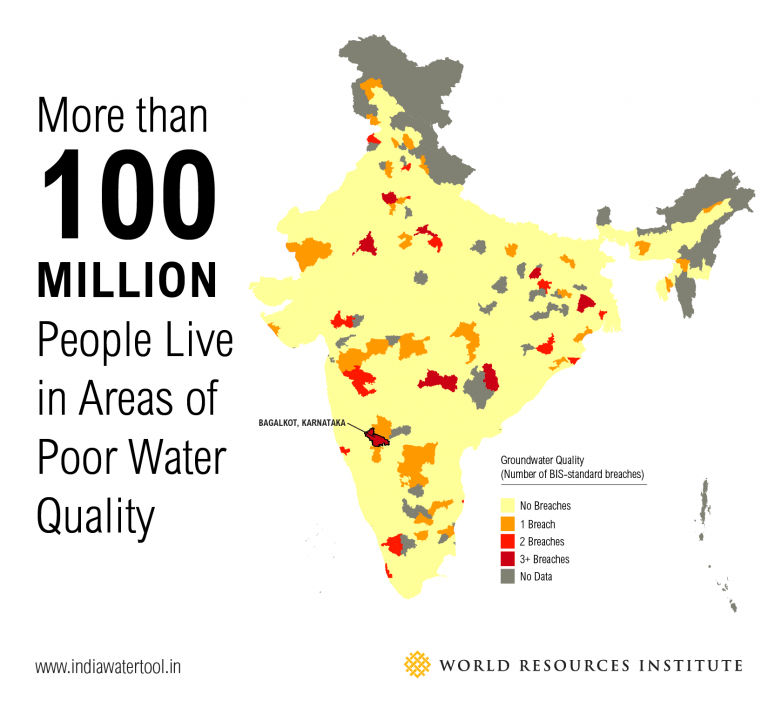
Statistical representation of India‘s Water Crisis

Background

Archaeological researchers had assumed the fall of Great Indus Civilisation was due to a catastrophic water scarcity caused either by shifting rivers or by drastic climate change that forced people to abandon city settlements. And history seems to repeat for present day India again. According to a NITI Aayog report in 2018, about 600 million people, or nearly half of India’s population, are facing extreme scarcity of water. The three-fourths of India’s rural households do not have stable running water supply and rely on sources that can cause serious health risks. The report also stated that India has become the world’s largest extractor of groundwater, accounting for 25% of the total. Moreover, 70% of the water sources were labelled as contaminated .And the conclusion of the report was ‘India is suffering from its worst water crisis in its history.’ It also pointed out 21 Indian cities to be run out of groundwater by 2020.

Reasons behind Water Crisis in India

1. Climate Change : The North-East monsoon is responsible for 10%-20% rainfall of the total rainfall in India, while the South-West monsoon provides approximately 80% of rainfall. In 2018, the North-East monsoon decreased by 44% and the South-West monsoon was deficient by 10%, causing the total rainfall in the area to decrease by 36 percent in comparison to the 50-year average. Because of the lower rainfall, water levels in reservoirs across the country decreased and led to extreme shortages of water in many major cities of India

. 2. Ground Water Extraction: Groundwater meets more than half of the country’s need of water supply and nearly 89% of the groundwater extracted in India is used for irrigation purposes. The traditional techniques of irrigation are also to blame for the water crisis as they result in a majority of water loss and evaporation during the irrigation process.

3. Pollutions in Our Rivers: Due to the lack of long term water management plans, most of the country’s rivers either run dry or have remained polluted over decades. The national river of Ganges is also the one that is most severely polluted, which is mainly resulted from untreated sewage of densely populated cities, industrial waste as well as due to religious ceremonies in and around the river.

4. Wastage of Unmanaged Water : According to the Central Water Commission, even though climate change has resulted in a reduction in rainfall and lack in underground water reservoirs, the country still receives enough rainfall to meet the needs of over 1 billion people. However, India only catches only 8 percent of its annual rainfall due to poor rainwater harvesting. Also for lacking the treatment of wastewater reuse, approximately 80% of domestic wastewater is drained out as waste and ends up flowing into salt water bodies.

Struggle for daily water collection in water-stressed areas of India

Effects of Water Crisis in India: Where We Stand Today

As many as 256 of 700 districts have reported ‘critical’ or ‘over exploited’ groundwater levels, according to a data from the Central Ground Water Board (2017). Fetching water in India has been perceived as a women’s job for centuries, especially in the rural areas. As groundwater resources come under increasing pressure due to over-reliance and unsustainable consumption, wells, ponds drying out fast, escalating the water crisis and placing even greater burden of accessing water on women. A rural woman in Rajasthan walks over 2.5 kilometres to reach a water source, according to a report by the National Commission for Women. Moreover, according to a non-profit named Water, women around the world spend a collective 200 million hours fetching water for their family. In addition to the time spent collecting water, millions may also spend significant amounts of time finding a place to go to relieve themselves. This makes up an additional 266 million hours lost each day. The acute crisis has even led to polygamy in one drought-prone village of Maharashtra. This involves having more than one spouse to collect water. The arrangement is termed as ‘water wives’.

The struggle for women

The Solution to the Crisis: Future Stands

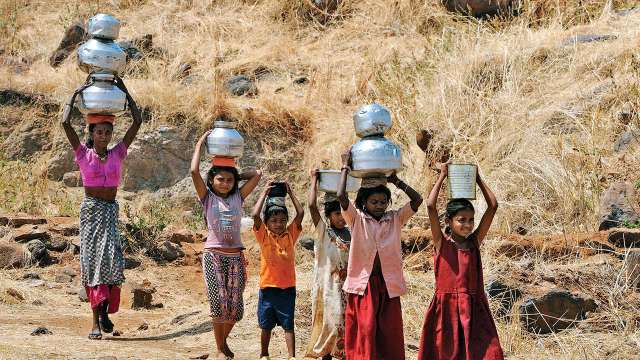
Children also becoming victims of Water Crisis

The Government has taken up the most important role to eradicate the crisis by forming the Ministry of Jal Shakti and launching “Jal Jeevan mission”- Rural in 2019 to promote “Har Ghar Jal” by 2024. Goa and Telengana have achieved the first two Indian states to reach “Har Ghar Jal“, while Andaman & Nicobar Islands and Puducherry became first Indian Union Territories to reach the milestone. In 2021, “Jal Jeevan mission”-Urban was launched to complement the project. “Jal Shakti Abhiyan-Catch the rain” is also introduced to capture and reuse of rain water at the grassroot level as a Jan Andolan. Along with this, for the cleaning and filtration of Ganges river “Namami Gange” had been rolled out as a national flagship mission. Coastal Reservoirs, Desalination of sea water and improved irrigation techniques are now been adopted to address the crisis.

Conclusion

Along with time, active participation from every layer of society in solving the water crisis of India is being witnessed. The youth has come forward with an appealing message to properly addresses the crisis and solve the drawbacks together. Now, the emerging awareness spreading among masses India can hope for a better future to handle the crisis more effectively.

Punaura Dham included under PRASHAD Scheme of the Ministry of Tourism

 As per the request received from the State Government of Bihar, Ministry of Tourism has included Punaura Dham in the Ramayana circuit of Swadesh Darshan Scheme.  The destination of Punaura Dham has been recently included under PRASHAD Scheme of the Ministry of Tourism. 

Details of the projects approved under Swadesh Darshan Scheme for the State of Bihar is given below:

  • Development of Thirthankar Circuit in Vaishali- Arrah- Masad- Patna- Rajgir- Pawapuri- Champapuri under Jain theme, approved in the year 2016-17 at the cost of Rs. 37.20 Cr.  A amount of Rs. 26.11 Cr. has been released till date.
  • Integrated Development of Spiritual Circuit at Sultanganj – Dharmshala – Deoghar under Spiritual theme, approved in the year 2016-17 at the cost of Rs. 44.76 Cr.  A amount of Rs. 42.52 Cr. has been released till date.
  • Development of Buddhist circuit – Construction of Convention Centre at Bodhgaya approved in the year 2016-17 at the cost of Rs. 98.73 Cr.  A amount of Rs. 93.22 Cr. has been released till date.
  • Development of Gandhi Circuit: Bhitiharwa – Chandrahia – Turkaulia under Rural theme approved in the year 2017-18 at the cost of Rs. 44.65 Cr.  An amount of Rs. 35.72 Cr. has been released till date.
  • Development of Pilgrimage Circuit in Mandar Hill & Ang Pradesh under Spiritual theme approved in the year 2017-18 at the cost of Rs. 47.53 crore. A amount of Rs. 38.02 Cr. has been released till date.

Why we need Space exploration? It it a waste of money?

Poverty still rising all over the world, COVID-19 pandemic made it even worse. About 1.89 billion people, or nearly 36% of the world’s population, lived in extreme poverty. Nearly half the population in developing countries lived on less than $1.25 a day. Why should we spend money on space exploration when we already have so many problems here on Earth? Is it really that important? It’s like What if our ancestors thought that it would be a waste of time to figure out agriculture while we can do hunting? Or why should we spend so much time on exploring new lands while we have so many problems in our land? Each year, space exploration contributes to a lot of innovations on earth. It gave answers to many fundamental questions about our existence, and a lot of questions there to be answered if only we could increase our investment on space exploration.

Benefits of space exploration

    Improves our day to day life

       Since 1969, Neil Armstrong became the first human to ever set foot on moon, our interest in science and technology has improved a lot. In 22nd February 1978, US space agency launched the first satellite for its program of global positioning system (GPS). Currently there are 31 global positioning system (GPS) satellites orbiting the earth.Space exploration helped us to create many inventions like television, camera phones, internet, laptops, LED’s, wireless gadgets, purifying system of water and many more that we are using in our day to day life. There are nearly 3,372 active satellites providing information on navigation, business & finance, weather, climate and environmental monitoring, communication and safety.

   Improving health care

       The international space station plays a vital role in health and medical advancements. The Astronauts who works on the ISS able to do experiments that aren’t possible on earth due to the difference in the gravity. The project of Exomedicine – the study of medicine and microgravity, gravity has an effect on a molecular level so working in an environment where it can be eliminated from the equation allows discoveries that would otherwise be impossible. Medical advancements due to space exploration include,

  • Diagnosis, treatment, and prevention of cardiovascular diseases
  • Treatment of chronic metabolic disorders
  • Better understanding of osteoporosis
  • Improvements in Breast cancer detection
  • Programmable pacemakers
  • Laser angioplasty
  • NASA’s device with Space technology for Asthma
  • ISS plays vital role in vaccine development
  • Early detection of immune changes prevents shingles
  • Development of MRIs and CT or CAT Scans
  • And invention of ear thermometers.

Need for space colonization

       Overpopulation is one of the major crises in our planet. Currently we have 7.8 billion people alive on earth. Experts predict that there will be 9.7 billion people by 2050 and 11 billion by 2100, our earth can carry only 9 billion to 12 billion people with the limited food and freshwater resources. That means we have to find an exoplanet with suitable conditions soon. We already went to moon 6 times, we already sent a rover to Mars. Robotic missions are cost efficient, but if one is considering the future of human race we have to go there ourselves. Elon Musk announced that SpaceX is going to send people to Mars I 2022. NASA planned to make a colony on Mars by 2030. These missions are not something we need at this moment. But it may play an important role on our future. Proxima Centauri b is an exoplanet which is 4.24 light years away from us. With our current technology, it is impossible to reach it in our lifetime. But we should make it as an aim for interstellar travel over the next 200 to 500 years. Stephen hawking said that the human race has existed as a separate species for about 2 million years. Civilization began about 10,000 years ago, and the rate of development has been steadily increasing. If the human race is to continue for another million years, we will have to boldly go where no one has gone before.

The day we stop exploring is the day we commit ourselves to live in a stagnant world, devoid of curiosity, empty of dreams. –Neil deGrasse Tyson