Development of Unani Medicine System

 Ministry of Minority Affairs has supported Central Council of Research in Unani Medicine (CCRUM) and National Institute of Unani Medicine (NIUM) Bengaluru, under the Ministry of Ayush, for the promotion and upgradation of Unani Medicine facilities in India. Ministry of Minority Affairs has approved a grant of Rs. 45.34 Crores under Pradhan Mantri Jan Vikas Karyakram (PMJVK), a centrally sponsored scheme (CSS). This will support the upgradation of Unani Medicine facilities at Hyderabad, Chennai, Lucknow, Silchar and Bengaluru.

Ministry of Minority Affairs has sanctioned a total amount of Rs. 35.52 crores to CCRUM and Rs. 9.81 crores to NIUM. Ministry of Ayush appreciates the leadership of Union Minister MoMA Smt. Smriti Irani, under her able guidance, MoMA has granted funds for development and upgradation of Unani medicine facilities under MoA.

The grant has been approved for establishing various facilities of Unani Medicine at Hyderabad, Chennai, Lucknow, Silchar and Bengaluru locations. Central Council for Research in Unani Medicine (CCRUM) has been sanctioned a total amount of Rs. 35.52 crores and National Institute of Unani Medicine (NIUM), Bengaluru has been sanctioned Rs. 9.81 crores.

A centre for fundamental research in Unani Medicine at National Research Institute of Unani Medicine for Skin Disorders, Hyderabad will be established at a cost of Rs. 16.05 crores. Ministry has proposed cost of Rs. 8.15 crores for a preclinical laboratory facility at Regional Research Institute of Unani Medicine, Chennai, Rs. 8.55 crores for a centre of Ilaj bit Tadbeer (regimenal therapy) for musculoskeletal disorders at Central Research Institute of Unani Medicine, Lucknow, and Rs. 2.75 crores for a centre of Ilaj bit Tadbeer (regimenal therapy) for skin and lifestyle disorders at Regional Research Institute of Unani Medicine, Silchar.

NIUM, Bengaluru will get Rs. 5.55 Crores for establishing a Vishram Girah for patients’ attendants and Rs. 4.26 Crores for a skill centre of model Unani cosmetic care, a small-scale Unani pharmacy and Unani crude drug storage.

The proposals were considered by the Empowered Committee of the Ministry of Minority Affairs in its meeting held on March 02, 2023 and Rs. 4.86 Crores has already been released to the CCRUM as the first instalment (25%) of total sanctioned cost of its three projects at Chennai, Lucknow and Silchar. The grant of CCRUM project for Hyderabad and the projects of NIUM, Bengaluru would be released once their DPRs are approved and other technicalities finalized. PMJVK is an area development programme under which community infrastructure and basic amenities are being created in the identified areas.

******

Vande Bharat Express from Dehradun to Delhi

Governor of Uttarakhand Shri Gurmeet Singh ji, popular Chief Minister of Uttarakhand Shri Pushkar Singh Dhami, Railway Minister Ashwini Vaishnaw, Ministers of Uttarakhand Government, various MPs, MLAs, Mayors, Zilla Parishad members, other dignitaries, and my dear brothers and sisters of Uttarakhand! Many congratulations to all the people of Uttarakhand for the Vande Bharat Express train.

This train between Delhi and Dehradun will connect the country’s capital with Devbhoomi at a faster speed. Now the journey time between Delhi-Dehradun will also be reduced considerably due to this Vande Bharat train. The speed of this train is in its place, however, the facilities are also going to make the journey enjoyable.

Friends,

I have just returned from a trip to three countries a few hours ago. Today the whole world is looking at India with great expectations. The way Indians have strengthened our economy, the way we are fighting poverty, it has instilled the confidence of the whole world in us. Together we succeeded in meeting the challenge of the Corona, whereas many major countries continue to grapple with it. We launched the world’s largest vaccination campaign. Today India is being discussed all over the world. People from across the world want to come to India to see and understand India. In such a situation, this is a great opportunity for beautiful states like Uttarakhand. This Vande Bharat train is also going to help Uttarakhand in taking full advantage of this opportunity.

Friends,

Uttarakhand is Devbhoomi. I remember when I went to visit Baba Kedar, I muttered something spontaneously. These were in the form of Baba Kedar’s blessings and I had then said that this decade would be the decade of Uttarakhand. The manner, in which Uttarakhand is carrying forward the campaign of development, while keeping law and order paramount, is commendable. It is also important to preserve the identity of this Devbhoomi. And I believe that this Devbhoomi will become the center of attraction for the spiritual consciousness of the whole world in the near future. We have to develop Uttarakhand according to this potential as well.

The number of pilgrims visiting Char Dham Yatra every year is breaking all the previous records and setting new records. Right now, we can see devotees thronging to have darshan of Baba Kedar. Crores of devotees from all over the world come to the Kumbh and Ardh Kumbh held in Haridwar. Lakhs of people reach Uttarakhand during the Kanwar Yatra held every year. There are very few states in the country which attract such a large number of devotees. This number of devotees is also a gift and handling such a large number is also a herculean task. The double engine government is working with double the speed and with double the power to make this herculean task easy.

The BJP government is laying special emphasis on the Navratnas of development. The first is the reconstruction of Kedarnath-Badrinath Dham with an estimated cost of Rs 1300 crore, the second is the ropeway work of Gaurikund-Kedarnath and Govindghat-Hemkunt Sahib at a cost of Rs 2500 crore, the third is the Manaskhand Mandir Mala Mission to make the mythological temples of Kumaon grand, the fourth is promotion of home stays in the entire state. I am told that more than 4000 home stays have been registered in the state. The fifth is the development of 16 eco-tourism destinations, the sixth is the expansion of health services in Uttarakhand. A satellite center of AIIMS is also being built in Udham Singh Nagar.  The seventh is the Tehri Lake Development Project costing about Rs 2000 crore, the eighth is the development of Rishikesh-Haridwar as the capital of adventure tourism and Yoga and the ninth is the Tanakpur-Bageshwar Rail Line. Work on this railway line will also start soon. You must have heard a saying – icing on the cake. Therefore, Dhami ji’s government has given new impetus to the infrastructure projects here to string the garland of these Navratnas. Work on the Rs. 12,000 crore Char Dham mega project is going on at a rapid pace. With the completion of the Delhi-Dehradun Expressway, the journey between Dehradun and Delhi will become easier. Along with road connectivity, ropeway connectivity is also being developed in a big way in Uttarakhand. The Parvat Mala Yojana is going to change the fate of Uttarakhand in the near future. For this, our government is ending the wait of the people of Uttarakhand for this connectivity for years.

The Rishikesh-Karnprayag rail project will be completed in two-three years. More than 16,000 crore rupees are being spent on this project. After the completion of the Rishikesh Karnprayag Rail Project, a large part of Uttarakhand will become accessible to the people of the state and tourists. As a result, new opportunities for investment, development of industries and employment will be created here. And in the midst of this grand campaign of development of Devbhoomi, this Vande Bharat train will also prove to be a grand gift for the people of Uttarakhand.

Friends,

Today Uttarakhand is fast emerging as a tourism hub, adventure tourism hub, film shooting destination and wedding destination with the efforts of the state government. Today new places and tourist hubs of Uttarakhand are attracting tourists from India and abroad. They will also get a lot of help from the Vande Bharat train. Now Vande Bharat trains have started running in every corner of the country. Trains are the first choice of people wishing to travel long distances with family. In such a situation, Vande Bharat is now becoming the first choice of ordinary families of India.

Brothers and sisters,

The 21st century India can develop more rapidly by modernizing its infrastructure. Earlier, the parties which were in power for a long time never understood this need of the country. The focus of those parties was on scams and corruption. They were confined to nepotism. They did not have the strength to come out of nepotism. The previous governments also made lofty claims regarding high speed trains in India. Many years have passed since they made these claims. Leave aside the high speed trains; they could not even remove unmanned level crossings from the rail network. The situation of railway electrification was even worse. By 2014, only one-third of the country’s rail network had been electrified. In such a situation, it was impossible to even think of running a fast train. We started all-round work to transform the Railways after 2014. On the one hand, we started implementing the dream of the country’s first high speed train, on the other hand, we started preparing the whole country for semi-high speed trains. When, on an average, 600 km of rail lines were electrified every year before 2014, now 6,000 kilometers of railway lines are being electrified every year. See the difference between 600 kms and 6000 kms. As a result, more than 90 percent of the country’s railway network has been electrified. In Uttarakhand, 100 percent electrification of the entire rail network has been achieved.

Brothers and sisters,

This has been made possible because today there is the right intention for development, policy and trust. The increase in the railway budget in comparison to 2014 has directly benefited Uttarakhand as well. In the five years before 2014, on an average, less than Rs 200 crore was allocated for Uttarakhand. And just now Ashwini ji explained about it in detail. Less than 200 crore rupees for such a remote hilly area and lack of railways! The rail budget of Uttarakhand is 5,000 crore rupees this year. It is a 25-fold increase. This is the reason that today the railway is expanding to new areas of Uttarakhand. Not only railways, but modern highways are also expanding unprecedentedly in Uttarakhand. We understand how important this connectivity is for a hilly state like Uttarakhand. We understand the pain of how villages became deserted in the past due to lack of connectivity. We want to save the coming generation from that suffering. We are working hard today so that employment opportunities are created in Uttarakhand itself through tourism, agriculture and industries. This modern connectivity will also be very useful for easy access to our borders and convenience for our soldiers engaged in the defence of the nation.

Brothers and sisters,

Our double engine government is committed to the development of Uttarakhand. The rapid development of Uttarakhand will also help in the rapid development of India. And the country is not going to stop now as it has now gathered its momentum. The whole country is moving ahead at the speed of Vande Bharat and will continue to move ahead. Once again, many congratulations and best wishes to all of you for the first Vande Bharat Express train of Uttarakhand. And nowadays, people from all over the country are visiting Baba Kedar, Badri Vishal, Yamunotri and Gangotri. The launch of the Vande Bharat Express at the same time will be a very pleasant experience for them too. I once again bow down at the feet of Baba Kedar and greet the Devbhoomi and wish you all the very best. Thank you!


DISCLAIMER: This is the approximate translation of PM’s speech. Original speech was delivered in Hindi.

***

Assam Rozgar Mela

 Addressing the gathering, the Prime Minister congratulated the youth and their families who were recruited for government jobs in the Government of Assam. He recalled his visit to the state last month on the occasion of Bihu and said that the memory of the grand event which was a symbol of the glorification of Assamese culture, is still fresh in his mind. He noted that today’s Rozgar Mela is a reflection of the seriousness towards the future of the youth in Assam. Even before this, the Prime Minister said, more than 40 thousand youths have been given government jobs through the Rozgar Mela in Assam. He informed that appointment letters have been handed over to about 45 thousand youths today and wished a bright future for the youth.

“Assam is witnessing a new era of peace and development and this pace of development has spread positivity and inspiration in Assam.”, the Prime Minister said. Reflecting on the processes initiated by the Government of Assam to make government recruitment more transparent, the Prime Minister touched upon the ‘Assam Direct Recruitment Commission’ that has been formed to carry out the recruitment process in various departments. He mentioned that many recruitments could not be completed on time due to the earlier process where each department had different rules and the candidates had to appear for different examinations for different departments. He stated that all these processes have now been made very easy, and congratulated the Assam Government for this feat.

“All of us have taken a pledge to make our country a developed nation in the Azadi Ka Amrit Kaal”, the Prime Minister remarked as he stressed that the next 25 years of Amrit Kaal are as important as Seva Kaal. Underlining the importance of the appointees’ behavior, thinking, approach to work, and impact on the public, the Prime Minister emphasized that the new appointees will be the face of the Assam Government for every common citizen. He mentioned that society is becoming aspirational and no citizen wants to wait for development. “In this era of Twenty20 cricket, the people of the country want quick results”, Shri Modi said as he highlighted the need for government systems to transform themselves accordingly. He underlined the responsibilities of  Government employees in fulfilling the aspirations of the citizens of the country. The Prime Minister urged the appointees to move forward with the same dedication that brought them here and stressed that they can contribute to improving society and the system by being open to learning new things.

The Prime Minister underlined that lakhs of crores of rupees are being spent on modernizing India’s infrastructure at a very fast pace and gave examples of new highways and expressways, railway lines, ports, airports and waterways, these projects. He mentioned that employment and self-employment opportunities are getting a boost in every sector with every new infrastructure project. He gave the example of the requirement of engineers, technicians, accountants, laborers, and various types of equipment, steel and cement for the development of an airport. He also mentioned that employment opportunities are being created by the expansion of railway lines and their electrification. He touched upon the emphasis towards ease of living and stated that since 2014, the government has constructed about 4 crore pucca houses with facilities like toilets, gas connections, tapped water supply and electricity, and handed them to the poor. He lauded the contributions of the manufacturing sector, logistics, skilled workers and laborers who put effort into building these houses and arranging these facilities. The Prime Minister also highlighted the role played by Ayushman Bharat Yojana in employment generation and mentioned that many new hospitals and clinics have been established in the country. Shri Modi also recalled the privilege of dedicating AIIMS Guwahati and 3 Medical Colleges a few weeks ago. Dental colleges have also expanded in Assam in the last few years, he added.  Due to this, the Prime Minister said, employment opportunities have been created for the youth associated with the medical profession.

“Today, youth are moving forward in many such sectors which no one could have imagined ten years ago”, the Prime Minister said as he highlighted the startup ecosystem that has helped in creating lakhs of direct and indirect jobs in the country. He also mentioned the growing demand for drones in agriculture, social events, survey and defence sectors and said that it has created new opportunities for the youth.  The Prime Minister also touched upon the Atmanirbhar Bharat campaign which is contributing towards India’s growth by manufacturing crores of mobile phones in India.  Referring to the expanding broadband connectivity that is reaching every village, the Prime Minister said that it has encouraged employment and self-employment on a large scale. Shri Modi underlined that just one plan or one decision can impact the lives of people.

Crediting the policies of the present government, the Prime Minister underlined that a large number of youths from the North East are coming into the mainstream of development. “The Government is committed to fulfilling the dreams of the youth by giving new opportunities for employment and self-employment. We are also taking rapid steps towards building a new India”, the Prime Minister concluded.

*****

DS/TS


CONFERENCE ORGANIZED BY THE UNION MINISTRY OF TRIBAL AFFAIRS AT KHUNTI


 The President of India, Smt Droupadi Murmu graced and addressed  a Women Conference organized by the Union Ministry of Tribal Affairs at Khunti, Jharkhand today (May 25, 2023). 

Addressing the gathering, the President said that being a woman or being born in a tribal society is not a disadvantage. She shared that there are countless inspiring examples of the contribution of women in our country and that women have made invaluable contributions in social reform, politics, economy, education, science and research, business, sports and military forces and many other fields.  She said that for becoming successful in any field, it is very important that they recognize their talent and do not judge themselves on the scale of others. She urged women to awaken the infinite power that is within them.

The President said that both the social and economic aspects of women empowerment are equally important. She said that hardworking sisters and daughters of Jharkhand are capable of making a significant contribution to the economy of the state as well as the economic development of the country. She urged them to recognize their talent, and move ahead with confidence.

The President said that women power provides energy to the rural economy of Jharkhand. Therefore, it is very important to connect more and more women with self-help groups in Jharkhand and provide employment by their skill development. She expressed confidence that through this Conference, women would become more aware of their rights and various schemes run by the government in their interest.

The President said that the tribal society presents ideal examples in many fields. One of these is the non-prevalence of the dowry system in the tribal society. She pointed out that many people in our society, even the well-educated ones, have not been able to give up the dowry system till date.

Click Here for President’s Speech

*****

2ND CONVOCATION OF IIIT RANCHI

 The President of India, Smt Droupadi Murmu graced and addressed the 2nd convocation of Indian Institute of Information Technology (IIIT) Ranchi at Namkum, Ranchi today (May 25, 2023).

Speaking on the occasion, the President said that today India is moving towards entrepreneurial culture by strengthening the start-up eco-system and promoting self-reliance. In this context, scientific research and innovation has become an even more important topic in the country’s development discourse. It is only through research that new processes, products and designs can be developed that can help find innovative and sustainable solutions to emerging issues. She expressed confidence that higher educational institutions in India would enhance their research capabilities and produce talented students who would be technologically proficient and work for the welfare of citizens through innovations. She emphasized that technology should be used as an instrument of social justice.

The President said that India has the third largest tech start-up ecosystem in the world. We are already using smart devices that have made our lives easier. But such equipment and systems should be accessible to common people and should be in line with overall sustainability. This is where the role of the technologists becomes more challenging. For this they need to adopt a holistic approach in their thinking and work.

The President said that in the era of artificial intelligence, it is the responsibility of bright minds like students of IIIT Ranchi to increase efficiency by making best use of it. By saving time and resources, they can focus more on creative and sensitive tasks that require empathy and human touch. She urged them to think about how to use artificial intelligence to help divyangjan, senior citizens or other needy sections.

The President said that youth have immense potential to change the society and nation. Our youth can make a big contribution in making a conscious and developed nation. It is the duty of all of us to show the right direction to the youth and encourage them towards working for the progress of the country and society.

The President was happy to note that in just a few years of its inception, the faculty and students of IIIT Ranchi have underlined the importance of knowledge creation, and they are contributing through original research papers and publications in the reputed national and international publications. She also noted that IIIT Ranchi is making students future-ready through state-of-the-art laboratories and Research and Development Cells related to areas such as data science, bio-informatics, artificial intelligence and quantum computing. She expressed confidence that IIIT Ranchi would make its mark as a hub of research and innovation in the times to come.

The President urged IIIT Ranchi to collaborate with national and international organizations and industry and prepare the students for the upcoming challenges at personal and professional level. She said that apart from being technically skilled and educated, our youth should also be socially, mentally, emotionally and physically fit.

Click here to see full speech

********

Urban Climate Film Festival

 The first-ever Urban Climate Film Festival, that aspires to employ the powerful medium of  film to enlighten audiences about the environmental, social and economic impacts of climate change on urban settlements, is going to take place in New Town, Kolkata from 3rd to 5th June 2023.

16 films from 12 countries are scheduled to be screened, along with Q&A sessions with filmmakers in order to spark conversations about building climate-resilient cities and invite inputs from the public; further encouraging the citizens to undertake ‘environmentally responsible behavior’ in line with the U20   priority areas and the Hon. Prime Minister’s clarion call through the LiFE Mission.

Launched in New Delhi in March 2023, the film festival is being organised by National Institute of Urban Affairs, through the CITIIS program under the engagement events of U20 (the urban track of G20). The festival is supported by the Ministry of Housing and Urban Affairs, the French Development Agency (AFD), the European Union and the New Town Kolkata Green Smart City Corporation Limited.

The global call for entries for the festival had received an overwhelming response with 150 films submitted from 20 countries. These were evaluated by a jury that comprised:

  • Dr Surbhi Dahiya (Professor, Indian Institute of Mass Communication)

  • Dr Pranab Patar (Chief Executive, Global Foundation for Advancement of Environment)

  • Mr Sabyesachi Bharti (Deputy Director, CMS Vatavaran)

The festival will also celebrate World Environment Day on 5th June with a special closing ceremony, which will be graced by Mr. Didier Talpain, Consul General of France in Kolkata; Mr. Debashis Sen, Managing Director, West Bengal Housing Infrastructure Development Corporation; Mr. Hitesh Vaidya, Director, National Institute of Urban Affairs; Mrs. Meghna Pal, CEO, NKGSCCL; and Mr. Naim Keruwala, Program Director, CITIIS.

Entry to the Urban Climate Film Festival is free and open for all.

Attendees can view the screening schedule and register themselves for the festival here: https://citiis.niua.in/event/urbanclimatefilmfestival


Background:

The Urban Climate Film Festival was launched on 24th March at Alliance Française in New Delhi. After a successful run in Delhi, the festival travelled to Mumbai, where it was hosted at Alliance Française de Bombay. The festival in Delhi and Mumbai showcased a curated selection of films by a diverse pool of filmmakers from countries like India, France, Iran, and the USA. The screenings were complemented by panel discussions and special sessions where audiences interacted with filmmakers.

*********************

Creating a Pandemic-proof Infrastructure

During the last few years, the world saw a crisis that shook every aspect of human life. A crisis that comes once in many decades. Almost every country experienced a complete lockdown at some point in time. Many countries with previously thought-to-be world-class health-care systems have also been tried, pushed to the limit, and in some respects found wanting. The pandemic took all countries by surprise and the discussion on appropriate national and global strategies is very diverse. The COVID-19 epidemic has demonstrated what is at risk, upending the lives of families worldwide. Millions of people have died, and a generation of kids has experienced a learning catastrophe.

The two years of the pandemic highlighted the current inadequacies of our healthcare delivery system and the need for urgent improvisation. The two years have seen us go through harrowing times—patients died for want of hospital beds and oxygen; the ventilator supply ran dry; high infections led to a severe manpower crunch at hospitals; there were not enough vaccines available then. Our healthcare system had crumbled under pressure, and our frontline workers, both in public and private hospitals, had burned themselves out. And now with cases rising, there is fear of a return to the past among healthcare workers.

Although the pandemic has eased, the virus is still alive and mutating and more pandemics are expected to follow. In the wake of this scenario, it is important for the world community to better equip ourselves to tackle such situations in the future. It is the moment that we realise the importance and need to strengthen healthcare infrastructure globally. It is time to work on making a pandemic-proof healthcare system for the future. Below are the areas that need to be focused on:

  • ·         Curative services – there is a need for the expansion of telemedicine from triage, diagnosis, and follow-up services covering all conditions (acute to chronic). Making institutions adapt and become centres of knowledge dissemination- telemedicine and all possibilities of e- and m-health and provide knowledge to people at home, on what symptoms to look out for, where to test, how to self-care, etc for not only Covid-19 but for other conditions too.
  • ·         Improve primary health care – Better primary health care will help us protect against future pandemics. Improving primary health care includes recruiting, training, and prioritising healthcare workers, and establishing effective surveillance and response systems, building confidence in health services through community outreach.
  • ·         Improve logistics and supply – There are a lot of logistics that are needed in a healthcare system. Some examples include masks, gloves, PPEs, disinfectants, etc. Apart from there’s also the supply of syringes and the cold chain storage that’s been necessary to make sure that the vaccines are stored at the proper temperature and don’t go to waste.  Increased investments in this type of infrastructure will assist to guarantee that communities obtain the immunizations they require while also protecting them from future outbreaks.
  • ·         Promotive and preventive healthcare services – The pandemic has demonstrated that having an underlying condition like diabetes, hypertension or obesity predisposes one to complications, long hospital stays, and mortality. Because of all these reasons, COVID-19 has been categorised as a syndemic rather than a pandemic. It is necessary to provide preventive and promotive health services like boosting one’s immune system through diet, exercise, and supplements, in different formats, online, face-to-face, or through home visits.
  • ·         Mental health services – Mental health issues during the pandemic are threatening to become the next pandemic. Stress and mental health issues related to lockdowns affect everyone but tend to affect the weaker segments of society more severely. It is necessary to create awareness about mental health and make mental health services available, accessible, and affordable to all.

It is true that we need to build pandemic-proof health infrastructure. But does Covid-19 expose our health sector only or show us the reality of other aspects also? Working only on health will not be sufficient. We also need to improve our social, educational and political infrastructure. The world saw a huge dropout of students because of online classes during pandemic. Some of the major reasons given for dropping are fairly obvious: technology problems, lack of support, poorly designed courses, and technologically inexperienced educators. This demands due consideration and commitment. The epidemic has impacted numerous nations’ governmental and political systems, resulting in declarations of emergency, suspensions of legislative activity, isolation or death of multiple lawmakers, and postponing of elections owing to worries of viral transmission.Furthermore, in certain areas, the epidemic has posed various problems to democracy, causing it to be weakened and harmed. Hence, building a pandemic-proof political infrastructure will not only ensure an efficient response to tackle the crisis but also provide basic institutional support to the nation and to the world as a whole.

This is a unique moment where we have an opportunity to learn from this pandemic and prevent others in the future. The legacy of COVID-19 mustn’t be one of disruption and disparity, but instead a moment of monumental change.

Creating a Pandemic-proof Infrastructure

During the last few years, the world saw a crisis that shook every aspect of human life. A crisis that comes once in many decades. Almost every country experienced a complete lockdown at some point in time. Many countries with previously thought-to-be world-class health-care systems have also been tried, pushed to the limit, and in some respects found wanting. The pandemic took all countries by surprise and the discussion on appropriate national and global strategies is very diverse. The COVID-19 epidemic has demonstrated what is at risk, upending the lives of families worldwide. Millions of people have died, and a generation of kids has experienced a learning catastrophe.

The two years of the pandemic highlighted the current inadequacies of our healthcare delivery system and the need for urgent improvisation. The two years have seen us go through harrowing times—patients died for want of hospital beds and oxygen; the ventilator supply ran dry; high infections led to a severe manpower crunch at hospitals; there were not enough vaccines available then. Our healthcare system had crumbled under pressure, and our frontline workers, both in public and private hospitals, had burned themselves out. And now with cases rising, there is fear of a return to the past among healthcare workers.

Although the pandemic has eased, the virus is still alive and mutating and more pandemics are expected to follow. In the wake of this scenario, it is important for the world community to better equip ourselves to tackle such situations in the future. It is the moment that we realise the importance and need to strengthen healthcare infrastructure globally. It is time to work on making a pandemic-proof healthcare system for the future. Below are the areas that need to be focused on:

  • ·         Curative services – there is a need for the expansion of telemedicine from triage, diagnosis, and follow-up services covering all conditions (acute to chronic). Making institutions adapt and become centres of knowledge dissemination- telemedicine and all possibilities of e- and m-health and provide knowledge to people at home, on what symptoms to look out for, where to test, how to self-care, etc for not only Covid-19 but for other conditions too.
  • ·         Improve primary health care – Better primary health care will help us protect against future pandemics. Improving primary health care includes recruiting, training, and prioritising healthcare workers, and establishing effective surveillance and response systems, building confidence in health services through community outreach.
  • ·         Improve logistics and supply – There are a lot of logistics that are needed in a healthcare system. Some examples include masks, gloves, PPEs, disinfectants, etc. Apart from there’s also the supply of syringes and the cold chain storage that’s been necessary to make sure that the vaccines are stored at the proper temperature and don’t go to waste.  Increased investments in this type of infrastructure will assist to guarantee that communities obtain the immunizations they require while also protecting them from future outbreaks.
  • ·         Promotive and preventive healthcare services – The pandemic has demonstrated that having an underlying condition like diabetes, hypertension or obesity predisposes one to complications, long hospital stays, and mortality. Because of all these reasons, COVID-19 has been categorised as a syndemic rather than a pandemic. It is necessary to provide preventive and promotive health services like boosting one’s immune system through diet, exercise, and supplements, in different formats, online, face-to-face, or through home visits.
  • ·         Mental health services – Mental health issues during the pandemic are threatening to become the next pandemic. Stress and mental health issues related to lockdowns affect everyone but tend to affect the weaker segments of society more severely. It is necessary to create awareness about mental health and make mental health services available, accessible, and affordable to all.

It is true that we need to build pandemic-proof health infrastructure. But does Covid-19 expose our health sector only or show us the reality of other aspects also? Working only on health will not be sufficient. We also need to improve our social, educational and political infrastructure. The world saw a huge dropout of students because of online classes during pandemic. Some of the major reasons given for dropping are fairly obvious: technology problems, lack of support, poorly designed courses, and technologically inexperienced educators. This demands due consideration and commitment. The epidemic has impacted numerous nations’ governmental and political systems, resulting in declarations of emergency, suspensions of legislative activity, isolation or death of multiple lawmakers, and postponing of elections owing to worries of viral transmission.Furthermore, in certain areas, the epidemic has posed various problems to democracy, causing it to be weakened and harmed. Hence, building a pandemic-proof political infrastructure will not only ensure an efficient response to tackle the crisis but also provide basic institutional support to the nation and to the world as a whole.

This is a unique moment where we have an opportunity to learn from this pandemic and prevent others in the future. The legacy of COVID-19 mustn’t be one of disruption and disparity, but instead a moment of monumental change.

Sengol

On December 10,2020 when PM Narendra Modi laid the foundation stone of the new parliament building, the deadline for the completion of the project was October 2022 which was shifted to March, 2023. The March deadline was also not met, but everybody knows that the project is near completion, and the inauguration date could be announced any time and as per expectations 28 May is decided as the date for the inauguration of the new Parliament.

It was not surprising that as soon as the announcement was made, many opposition parties started firing allegation towards government. What came as a surprise for many of us was the pacing of ‘Sengol’ in the new parliament building. Many questions hits in mind one by one. What is Sengol? Where was it all the time? Who made it? What does it signify? Where will it be placed? Don’t worry. Your mind will be free from question related to Sengol after reading this write up as it contains answers to all your question.

The historic ‘Sengol’ that is going to be installed in the new parliament building was received by the first PM of India Jawaharlal Nehru from the then Viceroy of India Lord Mountbatten on 14 August 1947 at around 10:45 PM at his residence in the presence of many other prominent leaders of the time. PM Nehru received this as the symbol of the transfer of power from British at his residence. When the decision of the independence of India was final, Lord Mountbatten was sent as the viceroy to complete the process of independence without hinderance. Mountbatten being unaware of rituals and customs of Indian culture he asked PM Nehru about the special ceremony to be organized for the transfer of power. Nehru discussed this with C. Rajagopalachari fondly known as Rajaji, and after extensive research of Indian culture Rajaji told Pandit Nehru about the tradition of transfer of power during Chola dynasty and how ‘Sengol’ was used to mark this.

The Sengol gets its name from the Tamil word ‘semmai’, meaning righteousness. The sceptre is a historical symbol of Independence as it signifies the transfer of power from the British to the Indians. “The Sengol signifies justice, integrity and unfailing good governance of the king who holds it,” said Mani Maran, a Tamil Pandit at Saraswathi Mahal Library in Thanjavur in an interview given to Times of India on Wednesday. “Tamil emperors like Cholas were usually holding a sceptre in their hands. After crowning the new king, his predecessor or the rajaguru handed over the sceptre during the ceremonial occasion. Thiruvalluvar mentions the sceptre while referring to the rule of law. Sangam works like the Silapathikaram mentions the superiority and importance of the sceptre,” he added. Union Home Minister Amit Shah addressing a press conference on Wednesday said, “The ‘sengol’ represents values of fair and equitable governance.”

The responsibility of arranging a sceptre was handed to Rajaji by Pandit Nehru. Rajaji reached out to Thiruvaduthurai Atheenam, a well-known mutt in Tamil Nadu’s Tanjore district for assistance and its leader commissioned the manufacturing of the Sengol to Chennai-based “Vummidi Bangaru Chetty” jewelers, as per the official document. It was crafted by two men namely, Vummidi Ethirajulu and Vummidi Sudhakar. It is made of silver with a coat of gold. The sceptre is five feet tall and has a ‘Nandi’ bull on top, symbolizing justice and goddess Laxmi is inscribed on it. It was made in 30 days. According to the official documents, the sceptre was handed to Lord Mountbatten by the Deputy high priest of the Adheenam and was taken back. It was then taken to Pandit Nehru’s house in procession and handed over to him. A special song was rendered, as specified by the high priest. The ceremonial sceptre was kept at the Allahabad Museum, along with several other historical objects associated with Jawaharlal Nehru, as part of the Nehru Gallery of the museum.

Now the Sengol has been moved to Delhi and would be placed near the Lok Sabha speaker’s chair in the new parliament building. Citing resources India Today reported that the Sengol will be ceremoniously transported to the House in a grand procession. The occasion is likely to be steeped in Tamil tradition. The Nadaswaram, would lead the procession with a group of musicians will be playing Tamil Nadu’s traditional instrument. Modi is expected to walk along with the procession. “Adheenams,” or priests from Shaivite mutts in Tamil Nadu, will be present in the Lok Sabha’s Well. The priests will sanctify the Sengol with holy water after Modi greets them at the well, India Today added. The “Oduvars,” or Tamil temple singers, will lyrically recite the “Kolaru Padhigam” in the background as the Nadaswaram musicians enchant with their soulful music. The Sengol will be presented to the prime minister after this revered ceremony and placed in a glass case next to the Speaker’s seat in the House.

After decades of anonymity, this holy sceptre will quadruple the magnificence of new parliament building. and always remind us of the hardship that our forefathers had while fighting for independence and will motivate us to defend this independence.

Sengol

On December 10,2020 when PM Narendra Modi laid the foundation stone of the new parliament building, the deadline for the completion of the project was October 2022 which was shifted to March, 2023. The March deadline was also not met, but everybody knows that the project is near completion, and the inauguration date could be announced any time and as per expectations 28 May is decided as the date for the inauguration of the new Parliament.

It was not surprising that as soon as the announcement was made, many opposition parties started firing allegation towards government. What came as a surprise for many of us was the pacing of ‘Sengol’ in the new parliament building. Many questions hits in mind one by one. What is Sengol? Where was it all the time? Who made it? What does it signify? Where will it be placed? Don’t worry. Your mind will be free from question related to Sengol after reading this write up as it contains answers to all your question.

The historic ‘Sengol’ that is going to be installed in the new parliament building was received by the first PM of India Jawaharlal Nehru from the then Viceroy of India Lord Mountbatten on 14 August 1947 at around 10:45 PM at his residence in the presence of many other prominent leaders of the time. PM Nehru received this as the symbol of the transfer of power from British at his residence. When the decision of the independence of India was final, Lord Mountbatten was sent as the viceroy to complete the process of independence without hinderance. Mountbatten being unaware of rituals and customs of Indian culture he asked PM Nehru about the special ceremony to be organized for the transfer of power. Nehru discussed this with C. Rajagopalachari fondly known as Rajaji, and after extensive research of Indian culture Rajaji told Pandit Nehru about the tradition of transfer of power during Chola dynasty and how ‘Sengol’ was used to mark this.

The Sengol gets its name from the Tamil word ‘semmai’, meaning righteousness. The sceptre is a historical symbol of Independence as it signifies the transfer of power from the British to the Indians. “The Sengol signifies justice, integrity and unfailing good governance of the king who holds it,” said Mani Maran, a Tamil Pandit at Saraswathi Mahal Library in Thanjavur in an interview given to Times of India on Wednesday. “Tamil emperors like Cholas were usually holding a sceptre in their hands. After crowning the new king, his predecessor or the rajaguru handed over the sceptre during the ceremonial occasion. Thiruvalluvar mentions the sceptre while referring to the rule of law. Sangam works like the Silapathikaram mentions the superiority and importance of the sceptre,” he added. Union Home Minister Amit Shah addressing a press conference on Wednesday said, “The ‘sengol’ represents values of fair and equitable governance.”

The responsibility of arranging a sceptre was handed to Rajaji by Pandit Nehru. Rajaji reached out to Thiruvaduthurai Atheenam, a well-known mutt in Tamil Nadu’s Tanjore district for assistance and its leader commissioned the manufacturing of the Sengol to Chennai-based “Vummidi Bangaru Chetty” jewelers, as per the official document. It was crafted by two men namely, Vummidi Ethirajulu and Vummidi Sudhakar. It is made of silver with a coat of gold. The sceptre is five feet tall and has a ‘Nandi’ bull on top, symbolizing justice and goddess Laxmi is inscribed on it. It was made in 30 days. According to the official documents, the sceptre was handed to Lord Mountbatten by the Deputy high priest of the Adheenam and was taken back. It was then taken to Pandit Nehru’s house in procession and handed over to him. A special song was rendered, as specified by the high priest. The ceremonial sceptre was kept at the Allahabad Museum, along with several other historical objects associated with Jawaharlal Nehru, as part of the Nehru Gallery of the museum.

Now the Sengol has been moved to Delhi and would be placed near the Lok Sabha speaker’s chair in the new parliament building. Citing resources India Today reported that the Sengol will be ceremoniously transported to the House in a grand procession. The occasion is likely to be steeped in Tamil tradition. The Nadaswaram, would lead the procession with a group of musicians will be playing Tamil Nadu’s traditional instrument. Modi is expected to walk along with the procession. “Adheenams,” or priests from Shaivite mutts in Tamil Nadu, will be present in the Lok Sabha’s Well. The priests will sanctify the Sengol with holy water after Modi greets them at the well, India Today added. The “Oduvars,” or Tamil temple singers, will lyrically recite the “Kolaru Padhigam” in the background as the Nadaswaram musicians enchant with their soulful music. The Sengol will be presented to the prime minister after this revered ceremony and placed in a glass case next to the Speaker’s seat in the House.

After decades of anonymity, this holy sceptre will quadruple the magnificence of new parliament building. and always remind us of the hardship that our forefathers had while fighting for independence and will motivate us to defend this independence.

76th World Health Assembly

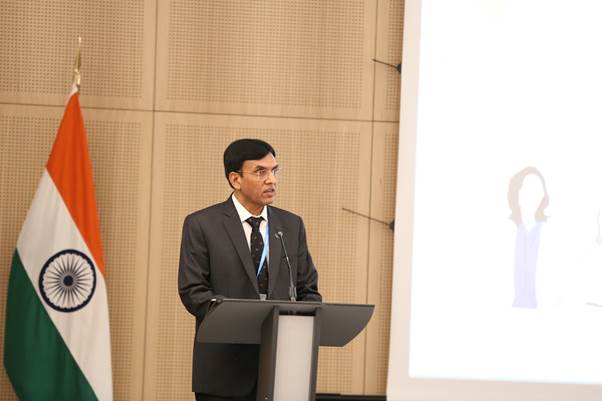
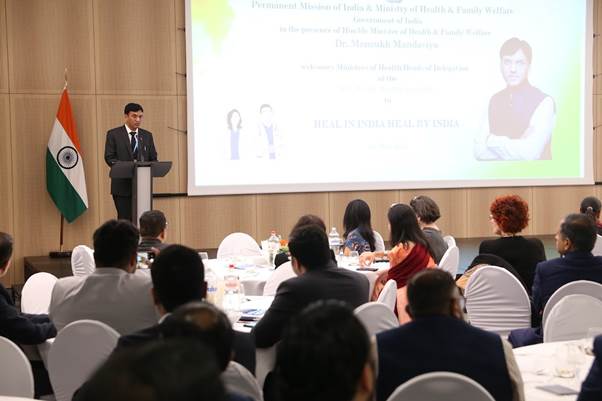
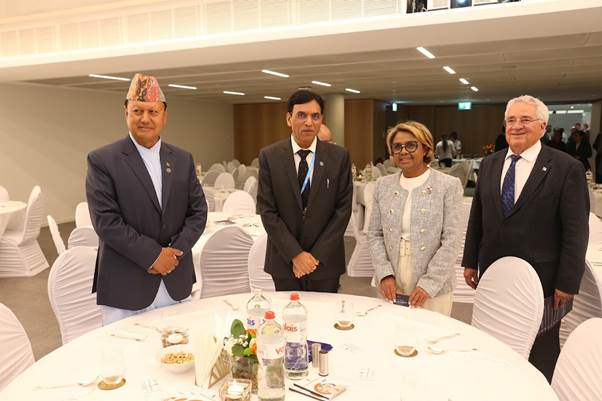
 Union Minister of Health and Family Welfare, Dr Mansukh Mandaviya delivered the keynote address at a side event session on “Heal in India & Heal by India” at the 76th World Health Assembly, in Geneva. He was joined by Shri S Gopalakrishnan, Special Secretary, Health Ministry.

Addressing the gathering, Dr Mandaviya noted that “with the vision of One Earth-One Health & to serve the global community, Govt of India has taken initiatives for value-based healthcare supported by Health Workforce Mobility & Patient Mobility under the visionary leadership of Hon’ble Prime Minister Shri Narendra Modi.” “The ‘Heal by India’ initiative is designed with an intent to increase health workforce mobility from India to different parts of the world to serve the world as per the Indian Philosophy of ‘Vasudhaiva Kutumbakam’ (The World is One Family), while the ‘Heal in India’ initiative seeks to provide “integrated and holistic treatment” to the world in India and enhance patient mobility for access to world class, affordable and quality healthcare services”, he stated.

Dr Mandaviya informed that “India is home to world’s oldest medical systems, Ayurveda. With its unique strengths coming to the fore, demand for AYUSH treatments like Ayurveda, Yoga, Siddha, Unani, and Homeopathy has increased across the world and the same is also promoted”.

Highlighting India’s G20 Presidency philosophy of “One Earth, One Family, One Future”, the Union Health Minister reiterated that “under the G20 Health Track, India has prioritized Health Emergencies, Prevention, Preparedness and Response with focus on One Health and Anti-Microbial Resistance (AMR); Strengthening cooperation within the Pharmaceutical Sector globally to improve access to safe, effective, quality and affordable Medical Countermeasures, that is, vaccines, therapeutics and diagnostics and  Digital Health innovations and solutions to aid Universal Health Coverage and improve Healthcare Service delivery at grassroots level”.

Emphasizing on the measures taken for strengthening healthcare ecosystem in India, Dr Mandaviya said that “India achieved an unimaginable pace of COVID vaccination & more than 2.20 billion doses have already been administered in India so far. Millions of vaccines were shared with the world through the ‘Vaccine Maitri’ initiative”.

The Union Health Minister stated that in order to create a resilient health care ecosystem, India has launched the Ayushman Bharat Initiative to cover all aspects of healthcare. “World’s largest Government funded health insurance scheme – Ayushman Bharat Pradhan Mantri Jan Arogya Yojana (AB PM- JAY) was launched in 2018. 1,50,000 Ayushman Bharat Health and Wellness Centres (AB-HWCs) are transforming the delivery of comprehensive primary health care services in India. Ayushman Bharat Digital Mission (ABDM) aims to bridge the gap amongst different stakeholders of the healthcare ecosystem through usage of technology. And PM-Ayushman Bharat Health Infrastructure Mission aims to build disease surveillance system, laboratory networks, building of infectious disease blocks across the country and augmenting research capacity with emphasis on One Health approach” he said.

Underscoring the impact of the COVID-19 pandemic on healthcare systems across the world, Dr Mandaviya stated that “the pandemic has demonstrated that health threats are not confined to national borders and requires a coordinated global response. It is in this context that India has been supporting in terms of capacity building of healthcare workers, coupled with harnessing digital technology as the way forward”.

Dr Mandaviya expressed deep gratitude to all the dignitaries for their participation in the meetingHe concluded his address by reiterating that “‘Healthcare for All’ is aligned with India’s guiding philosophy enunciated by our Hon’ble Prime Minister as “Sabka Sath, Sabka Vikas & Sabka Prayas”, meaning ”striving together, through collective efforts towards an inclusive growth”.

****

Khelo India University Games 2022 kicks off with kabaddi in Uttar Pradesh

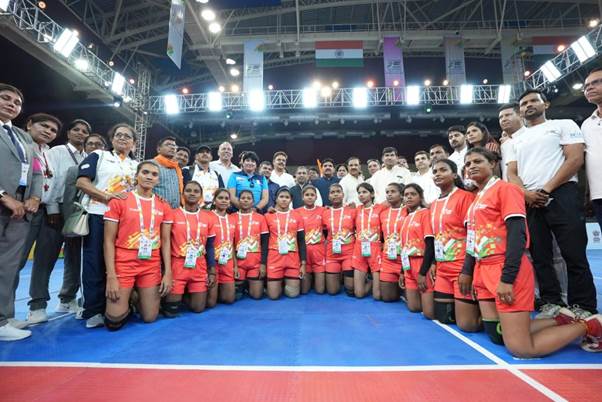
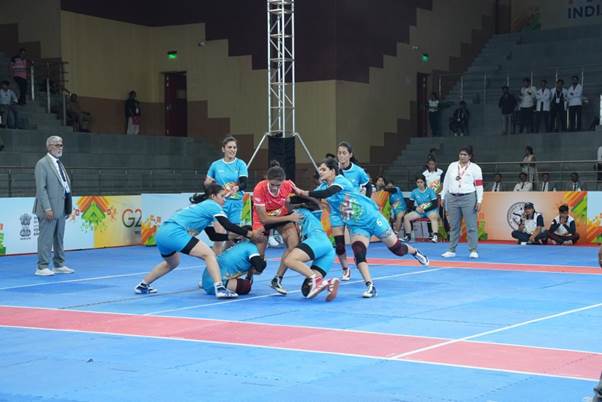
 Kabaddi kicked-off the first competitive day of the Khelo India University Games 2022 Uttar Pradesh (KIUG22UP) games amidst much fanfare at the SVSP Sports Complex, Gautam Buddha Nagar on 23rd May

The official opening ceremony of the Khelo India University Games 2022 Uttar Pradesh (KIUG22UP) will on 25th May 2023 and the  edition of the KIUG22UP will see over 4000 athletes representing over 200 Universities in 21 sporting disciplines.

The opening day of the competitive proceedings for Kabaddi at the SVSP Sports Complex was preceded by a small cultural program that included performances from school children from the region and was attended by the Chief Guest of the evening Shri Brijesh Singh, Minister of State, Govt. of Uttar Pradesh, Public Works Dept. & Minister Incharge, Gautam Buddha Nagar District.


Other dignitaries who attended the opening day of Kabaddi included, Dr. Mahesh Sharma, Member of Parliament, Gautam Buddha Nagar; Shri Surendra Nagar, MP Rajya Sabha; Shri Amit Chaudhary, Chairman, Zila Panchayat, Gautam Buddha Nagar; Shri Shrichand Sharma, MLC; Shri Manish Kumar Verma, District Magistrate, Gautam Buddha Nagar & Smt. Laxmi Singh, Commissioner of Police, Gautam Buddha Nagar.

The opening day was also attended by some prolific athletes that included Mr. Varun Bhati, Paralympian & Bronze Medalist, Ms. Babita Nagar, International Wrestler; Mr. Asish Nagar, & Mr. Ashu Singh, Pro Kabaddi Players from UP Yoddhas.

A total of four games began Kabaddi’s competitive rounds at the SVSP Sports Complex today. The day began with a heartbreak for Atal Bihari Vajpayee Vishwavidyalaya University (ABVVU), Bilaspur as they lost 28-41 to Chaudhary Ranbir Singh University, Jind in their opening league match of the women’s category at the Noida’s Shaheed Vijay Singh Pathik Indoor Sports Complex.

For ABVVU, Sanju Devi did most of the work for her team in the initial stages of the preliminary round match however her hardwork couldn’t help her snatch a victory for her team as they fell short of overall match strategy. On the other hand ABVVU’s opponents from Jind changed their strategy to check Sanju Devi and were successful as both teams were neck to neck with three minutes left on board. At this crucial juncture, the team from Jind shifted gears to tighten their grip over the match and raced ahead to 41-28 win.

“Bilaspur team had one good player (Sanju Devi) in the team, while we (Jind) combined well in the closing stages to win our first match of the day,” Rampal, Jind University team coach said in the post-match interaction. 

In the second match in the women’s category, HP University, Shimla beat HCY University, Durg 51–29. Shimla University pressed hard from the start and raced to a 29-11 lead in the first half of the match. Shimla team added another 22 points in the second half, while Durg side tried hard to close the gap but weren’t able to recover the lost ground.

In the men’s side, Adamas University Kolkata struggled hard against Guru Kashi University, Talwandi Sabo as two of its players got injured halfway through the first-round match. Kolkata lost 29-35. The final match of the evening saw Kota University walk away with an easy 28-23 win over SRM University, Chennai.

Day two of the Khelo India University Games 2022 Uttar Pradesh will see the start of Basketball at the Gautam Buddha University Indoor Stadium  and the second day of the Kabaddi competitions at the SVSP Sports Complex in Gautam Buddha Nagar while Lucknow will start the proceedings for Malkhambh, Volley Ball, Table Tennis, Rugby, Football (Boys and Girls), and Tennis.


****

Authorities in Constitutional positions must exemplify their conduct by high standards of propriety, dignity and decorum

 The Vice-President of India, Shri Jagdeep Dhankhar today stressed that disruption and disturbance in the temples of democracy cannot be weaponised as political strategy and appealed to Legislators and Presiding officers to urgently address this malaise.

Addressing the silver jubilee celebrations of Kerala Legislative Assembly building- Niyamasabha– in Thiruvananthapuram today, the Vice-President said that authorities in constitutional positions must exemplify their conduct by high standards of propriety, dignity and decorum.

Shri Dhankhar asked the legislatures to draw inspiration from the Constituent Assembly which dealt with many complex issues without any disruptions, and underlined that effective and productive legislature functioning is the safest guarantee to blossoming and preserving democratic values and holding executive accountable. He also called for stamping out the “worrisome trend of intolerance towards the other point of view”.

Stressing that in a democracy not all issues can be evaluated via partisan prism, the Vice-President urged everyone to rise above partisan stance, giving primacy to national interest. He also raised the question as to why “the wit, humour, and sarcasm- once hallmark of exchanges between stalwarts in the Parliament and Legislatures” are disappearing from public discourse, urging legislators to revive the same.

The Vice-President noted that the Constitution provides the privilege of freedom of speech within the precincts of the House, however he cautioned that this freedom should be utilized for a healthy debate to sustain a vibrant democratic tradition, and not for disruptive purposes. “Parliament and Legislatures are not platforms of free fall of unverified information,” he highlighted.

Emphasising that in any democracy, Parliamentary sovereignty is inviolable, the Vice-President said, “essence of democracy lies in the prevalence of the ordainment of the people reflected through legitimised platform- Parliament and the Legislatures.”

Congratulating the people of Kerala and their elected representatives on this milestone of the silver jubilee of their legislative building, the Vice-President underlined that such buildings are much beyond a work of brick and mortar. “The Kerala Legislative Assembly building represents the will of the people, spirit of democracy and essence of the Constitution,” he noted.

Stating that the state is known for its forward-thinking perspective and commitment to social justice, the Vice-President praised the Legislative Assembly of Kerala for enacting many progressive legislations worth noticing by other Legislatures. “As current legislators, you also inherit a shining legacy. It is your duty to make it lustrous,” he told the legislators.

Lauding the state for having one of the highest internet penetrations in the country and harnessing the potential of emerging technologies, the Vice-President expressed his hope that the State’s quality human resources combined with its progressive work culture will help in scripting new pathways in governance. He also commended the Keralite diaspora that has contributed immensely to the States Gross Domestic Product through their remittance.

Shri Arif Mohammad Khan, Governor of Kerala, Shri Pinarayi Vijayan, Chief Minister of Kerala, Shri A N Shamseer, Speaker of Kerala Legislative Assembly, Shri Chittayam Gopakumar, Deputy Speaker of Kerala Legislative Assembly, Shri V D Satheesan, Leader of Opposition of Kerala Legislative Assembly, Shri K Radhakrishnan, Minister in the Government of Kerala, and other dignitaries were also present on the occasion.

This is Shri Dhankhar’s maiden visit to Kerala since assuming the office of the Vice-President. Describing the state as the land of pristine natural beauty and rich culture, the VP said that he was delighted to be in ‘God’s Own Country’. During his address, he paid his salutations to the eminent personalities hailing from the State, and lauded their contributions.

On arrival in Kerala on May 21st, 2023, the Vice-President along with Dr Sudesh Dhankhar visited the renowned Sree Padmanabhaswamy Temple and prayed for the well-being and happiness of all.

***

G20 Tourism Working Group Meeting

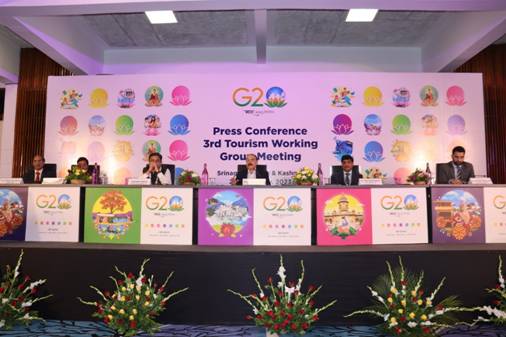
 The ‘Third G20 Tourism Working Group Meeting’, will be held from 22nd to 24th May 2023 in Srinagar, Jammu and Kashmir. This was informed by Secretary, Ministry of Tourism, Shri Arvind Singh while addressing a press conference at SKICC Srinagar today.

Giving details, Sh. Arvind Singh said, the stage is set for discussions and deliberations on final deliverables and there are two key deliverables of the Tourism Working Group, which include GOA Roadmap for Tourism as a vehicle for achieving sustainable development goals (SDGs) and G20 Tourism Ministers’ Declaration.

This is the only working group meeting taking place in Srinagar as part of G20 effort with excellent response from all the member countries, all the invited countries and the international organisations, having the highest participation registered compared to the first two Tourism Working Group Meetings at Rann of Kutch and Siliguri.

Sh. Arvind Singh further said, G20 member countries, invited countries, and international organizations will give valuable inputs and feedback on these two draft documents and after negotiations with G20 Member Countries on these drafts, final versions will be placed in the ‘Fourth Tourism Working Group Meeting’.

Sh. Singh informed, the ‘3rd Tourism Working Group Meeting’ will deliberate on the five key priority areas namely Green Tourism, Digitalization, Skills, MSMEs and Destination Management. These priorities are key building blocks for accelerating the transition of the tourism sector and achieve the targets for 2030 SDGs.

Shri Arvind Singh said that a side event on ‘Film Tourism for Economic Growth and Cultural Preservation’ will be organized on 22nd and 23rd May 2023, focusing on strategies to promote film tourism in J&K. The event will witness the participation of G20 member countries, invited countries, international organizations, and industry stakeholders. He also said that a draft ‘National Strategy on Film Tourism’ will be unveiled to provide a roadmap for harnessing the role of films in promoting tourist destinations.

Sh. Harsh VardhanShringla, Chief Coordinator G20 said, that it is the vision of Prime Minister Shri Narendra Modi that the message of India’s G20 Presidency is taken to the grassroot level through active Jan Bhagidari . Shri Shringla appreciated the efforts of Jammu and Kashmir Government to sensitise the people about goals and purpose of G20 through multiple public activities.

Chief Secretary J&K, Sh. Arun Mehta said, the change in J&K is evident on ground with the arrival of highest number of tourists (18.8 million) in 2022.

300 new tourist destinations will come  come up in Jammu and Kashmir seeing the influx of tourists with each destination providing enough to the tourists, said Sh. Mehta.

Sh. Mehta further said, the influx of highest number of foreign tourists to Jammu and Kashmir is a healthy sign for tourism in J&K.

During the 3rd Tourism Working Group meeting, the delegates will also visit the Art and Craft Bazaar organized by the State Government showcasing local handicrafts, work of artisans, signifying the importance of community participation. The delegates will also have ‘hands-on’ experience through DIY Activities at the Craft Bazaar.

During the press conference, it was also informed that the Ministry of Tourism is also promoting local products of Jammu and Kashmir by handing below souvenirs to delegates from ODOP like Paper Mache Box, Saffron from Pampore, Kawa Cups and Brass Spoon, Walnuts from Anantnag, Shopian and Kupwara.

This G20 Tourism Working Group meeting in Srinagar aims to strengthen economic growth, preserve cultural heritage, and promote sustainable development of the region.

The Ministry of Tourism, Government of India, welcomes the participation of delegates from G20 member countries, invited countries, and international organizations to collectively work towards advancing the tourism sector and achieving the UN sustainable development goals 2030.

The G20 event presents a unique opportunity to highlight the tourism potential and cultural richness of the region. A detailed presentation about the event was also made by Additional Secretary, Sh. Rakesh Verma, Additional Director General PIB Region, Sh. Rajinder Chaudhry and Secretary Tourism J&K, Syed Aabid Rasheed Shah were also present at the media briefing.


*****

G20 Tourism Meeting

 Ministry of Ports, Shipping and Waterways (MoPSW )embarkedupon  its much-anticipated 2 day Chintan Shivir at Munnar in Kerala. The Shivir was Chaired and inaugurated by Shri Sarbananda Sonowal, Union Minister of Ports, Shipping & Waterways and AYUSH in the august presence of  the Shri Shripad Naik, MoS, MoPSW and Tourism, Shri Shantanu Thakur, MoS, MoPSW, Shri Sudhansh Pant, Secretary, MoPSW and others including Chairpersons of all major ports, heads of the other organizations/PSU’s of the Ministry and senior officials.

Speaking on the occasion, Shri Sonowal lauded the commitment and hard work exhibited by MoPSW and each of the organizations in positioning India as a global leader in the maritime sector. Recognizing the significance of enhancing connectivity and fostering new business opportunities, he emphasized the Ministry’s goal to educate and create awareness among the common people too by highlighting the impact of the Maritime sector in simple language and  how it impatcs the lives of the common people.

“Under the dynamic leadership of our Hon’ble Prime Minister Narendra Modi, India has achieved a new reputation globally and the Ministry in coordination with all the major organizations are working to further boost and implement the vision of our PM towards making India Atmanirbhar.” the Minister added.

Shri Shripad Y Naik, MoS, MoPSW mentioned the excellent performance achieved during the FY-2022-23 in all aspects of port operations. He said, “The MIV 2030 launched under the leadership of PM Modi has led the blueprint of the actions that would lead us towards making India one of the leading blue economies of the world and we should try to achieve the determined targets”.

On this occasion Shri Shantanu Thakur, MoS, MoPSW stated,” India is one of the leading economies of the world and the considerable amount of work has been done towards infrastructure documentation in the Ports enhancing ease of doing business, increasing the share of renewable energy in the sectors and promoting ship building and ship repair”. He also added that now we should focus on making India a hub for Maritime training and strengthening Maritime institutions.

During the first day of the Chintan Shivir, the achievements and targets set during the previous Chintan Shivir were discussed. An exclusive session with the HoDs of the major ports, chaired by Shri Sarbananda Sonowal, focused on the innovative ideas of the ports. The other session focused on lighthouse tourism and how to become a global player in shipbuilding and enhance India’s tonnage.  Apart from this, the participants from various organisations shared valuable insights, paving its way for informed decision-making and effective implementation strategies.

The day two of the Chintan Shivir will focus on cargo handling by Major Ports, improving and optimizing port call procedures, digitalization and standardization, Inland waterways and coastal shipping enhancing cargo and good governance.


MJPS