South Asia’s Largest Maritime Thought Leadership Summit Begins, aims to foster Global Maritime Cooperation

Daily writing prompt
Do you or your family make any special dishes for the holidays?

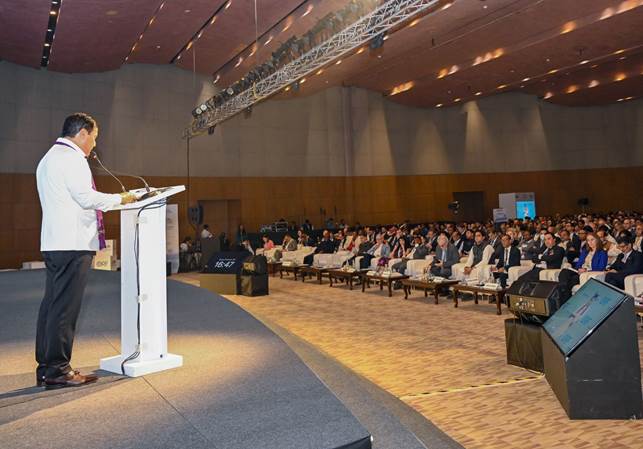
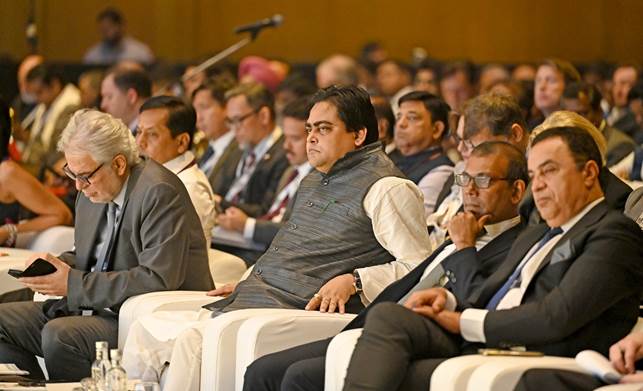
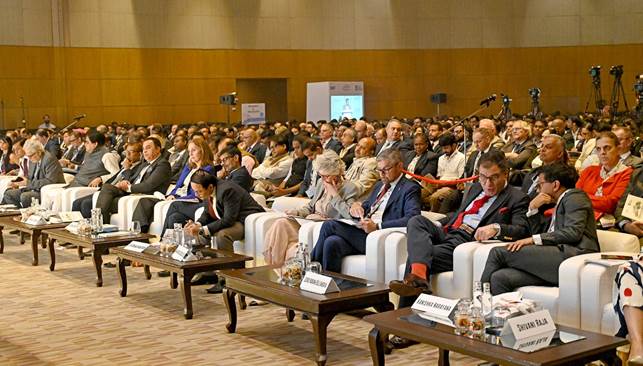
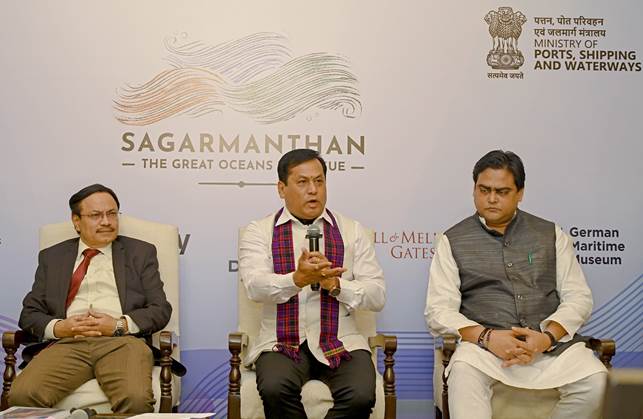
Sagarmanthan – The Great Oceans Dialogue, the South Asia’s largest Maritime Thought Leadership summit, began here today. The inaugural session was addressed by the Union Minister of Ports, Shipping & Waterways (MoPSW), Sarbananda Sonowal; the Minister of Maritime Affairs and Insular Policy, Greece, Christos Stylianides; the Minister of State for Fisheries and Ocean Resources, Maldives, Dr Amzath Ahmed; the National Representative for the Province of Rio Negro, Argentina, Ms Maria Lorena Villaverde; the Secretary of MoPSW, TK Ramachandran along with the President, Observer Research Foundation (ORF), Samir Saran in the presence of representatives from 61 countries along with hundreds of delegates from maritime sector.
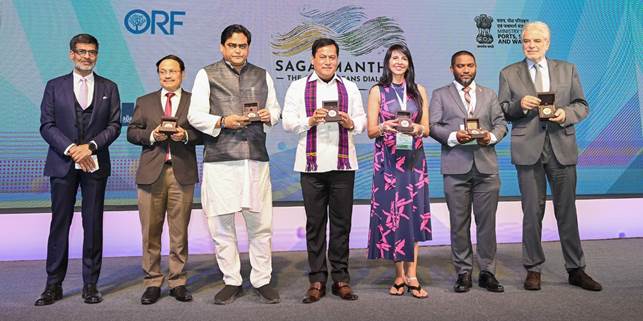
The Ministry of Ports, Shipping, and Waterways (MoPSW) of the Government of India, in collaboration with the Observer Research Foundation, is organising the two-day event, Sagar Manthan: The Great Oceans Dialogue. The initiative brings together global policymakers, maritime experts, industry leaders, and scholars to deliberate on advancing sustainable and innovative maritime practices.
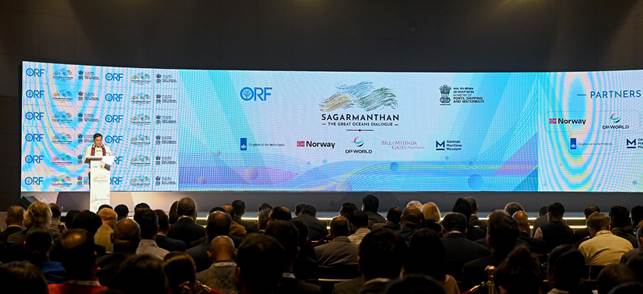
Speaking at the inaugural session, the Union Minister, Sarbananda Sonowal said, “India’s Maritime Vision 2047 is a roadmap to transform the maritime sector by fostering sustainability, enhancing connectivity, and leveraging technology. Under the visionary leadership of Prime Minister Narendra Modi ji, our ministry through initiatives like Sagarmala and the Maritime Amrit Kaal Vision is aiming at making India a leader in global maritime trade, achieving our goal of Viksit Bharat by 2047. Our vision aims to revolutionise India’s maritime sector with an investment of ₹80 lakh crores to enhance port capacity, shipping, ship building inland waterways. Key projects include the Vizhinjam International Seaport in Kerala, new mega ports at Vadhavan in Maharashtra, and Galathea Bay in Nicobar. By 2047, India targets a port handling capacity of 10,000 million metric tons per annum, leveraging strategic trade routes through initiatives like the India-Middle East-Europe Economic Corridor (IMEEC) and the International North-South Transport Corridor. Reviving its shipbuilding legacy, India is constructing the National Maritime Heritage Complex at Lothal while advancing clean-fuel shipbuilding to meet future sustainability goals.”
The dialogue underscores India’s strategic role in global trade, with a 7,500 kilometers coastline and strategic islands that bolster its maritime potential. The event also highlights the nation’s commitment to the decarbonisation of the maritime sector through green initiatives such as the Harit Sagar Guidelines and the National Green Hydrogen Mission. 
Setting the context for the mega deliberations and discussion, Sarbananda Sonowal further added, “Recognising India’s maritime potential and its significance for economic growth, our government has implemented crucial policy measures for the ‘Blue and Ocean-based Economy’ over the last decade. Our participation in initiatives like the India-Middle East-Europe Economic Corridor (IMEEC) and the International North-South Transport Corridor underscores our commitment to strengthening global trade partnerships. We are also preparing to build future ships that run on clean fuels like ammonia, hydrogen, and electric, capable of traversing brown, green, and blue waters. Our Amrit Kaal Maritime Vision 2047 has placed great emphasis on climate action and environmental sustainability.”
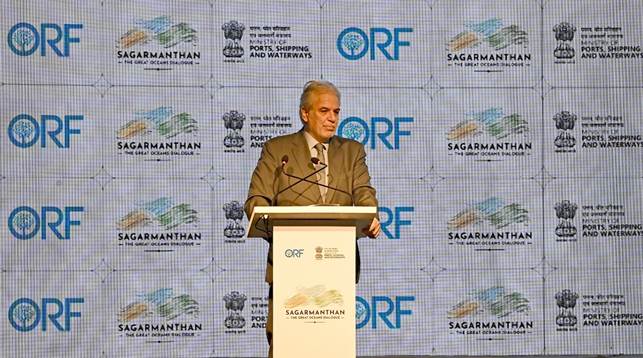
The Minister of Maritime Affairs and Insular Policy, Greece, Christos Stylianides, said, “For us policy makers, it is crucial to ensure a stable regulatory framework and a global level playing field for the industry. It is now time to set the foundations for forward-looking and realistic policies which will the current maritime challenges into opportunities. International transport systems with shipping at its core as an integral part, should serve the three pillars of sustainability: the environmental, the social and the economic one. This will be done by optimising efficiency in connectivity, minimising pollution and ensuring resilience across the entire maritime chain. What we need now is collaboration and the ‘Sagarmanthan: The Great Oceans Dialogue’ is a great example in this direction. It is in our hands, in a spirit of partnership, to make this happen.”
The Minister of State, MoPSW, Shantanu Thakur highlighted the socio-economic potential of coastal communities and the need for global partnerships. The Minister stated, “India’s economic growth is guided by the principle of Vasudhaiva Kutumbakam—‘The World is One Family.’ Our ports and shipping corridors are not just about commerce but about connectivity, collaboration, and care for coastal communities and the environment. The oceans must be a global priority, not just for economic development but for ecological preservation and energy innovation.”

Speaking about this maiden initiative – Sagarmanthan, the Member, Prime Minister’s Economic Advisory Council (PM-EAC), Sanjeev Sanyal said, “This should serve as a guiding principle for all of us to strengthen and grow our maritime cluster. Our goal is to position ourselves at the forefront of the maritime sector, and to achieve this, we must draw on the expertise of industry leaders who set benchmarks across various verticals. The seas and oceans, gifts of nature, are abundant with resources, energy, and potential. It is our responsibility to harness them wisely, combining knowledge and skill to achieve sustainable growth. Our commitment must ensure that both the economy and ecology thrive in harmony, fostering progress without compromise. We have the technology, the young workers, the trade volume, the steel and the coastline – all the ingredients. So we should aspire in 10 years to build 10-12 per cent of the world’s ships and own/flag 8 per cent.”

On the sidelines of Sagarmanthan, the Union Minister of Ports, Shipping & Waterways, Shri Sarbananda Sonowal participated in a bilateral meeting with the Minister of Maritime Affairs and Insular Policy go Greece, Christos Stylianides here today. The two leaders discussed an array of topics and agreed to deepen the maritime relationship between the two countries. Both the leaders agreed to expand trade from the existing US$ 1.94 billion to doubling it by focussing on broadening, increasing, and balancing by 2030.

Speaking after the meeting, the Union Minister, Shri Sarbananda Sonowal said, “It was a good meeting that we had here on the sidelines of Sagarmanthan here today. We discussed on collaboration and cooperation in multiple areas of maritime sector between the two countries. Under the dynamic leadership of Prime Minister Shri Narendra Modi ji, India further deepened its bilateral relationship into strategic relationship with Greece. With this platform, India is working with Greece to expand economic cooperation with the European Union market. Given the economic potential in the Indian market, I am also reaching out shipping industries of Greece to consider setting their operations here through His Excellency the Minister of Maritime Affairs and Insular Policy of Greece.”
The two maritime ministers also discussed underscored the importance of the Joint Working Group (JWG) on maritime and shipping issues as important bilateral institutional mechanisms for consolidating sector specific cooperation. Both the  leaders agreed to optimally use strategic maritime assets towards sustainable development. Given the rich heritage of both the nations, the ministers agreed to collaborate at the ongoing development of National Maritime Heritage Complex at Lothal, Gujarat by the Ministry of Ports, Shipping & Waterways, and Government of India. The talks also touched important subjects like renewable energy, cultural and educational cooperation in maritime studies and explore multiple areas of maritime infrastructure development and its potential.

The two day forum’s agenda includes sessions on maritime connectivity, sustainable development, technological innovation, and global maritime governance. The Ministry also showcased India’s advancements in port digitisation, renewable energy integration, and decarbonised shipping, reflecting the nation’s vision of becoming a global maritime hub. The Dialogue featured participants from 60 countries across the globe with more than 1700 participants including ministers, former heads of state and government, journalists, and experts.

*****

Periodic Labour Force Survey (PLFS) – Quarterly Bulletin [July – September 2024]

Daily writing prompt
Name your top three pet peeves.

Key findings

  • Labour Force Participation Rate (LFPR) in urban areas among persons of age 15 years and above has increased from 49.3% during July – September, 2023 to 50.4% in July – September, 2024.
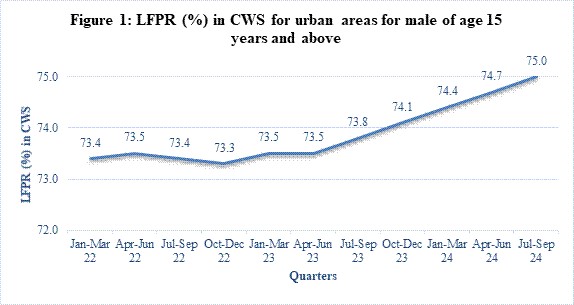
  • LFPR for male of age 15 years and above in urban areas increased from 73.8% during July – September, 2023 to 75.0% during July – September, 2024 reflecting overall increasing trend in male LFPR.
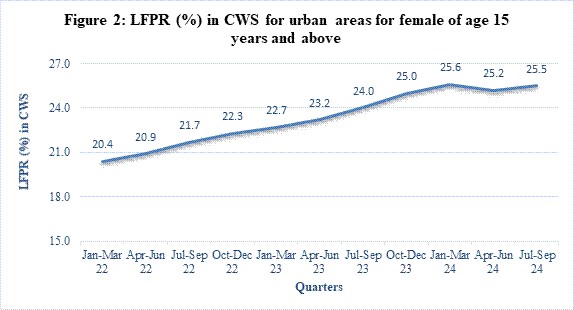
  • LFPR among female of age 15 years and above for urban areas increased from 24.0% during July – September, 2023 to 25.5% during July – September, 2024.
  • Worker Population Ratio (WPR) in urban areas among persons of age 15 years and above has increased from 46.0% during July – September, 2023 to 47.2% in July – September, 2024.
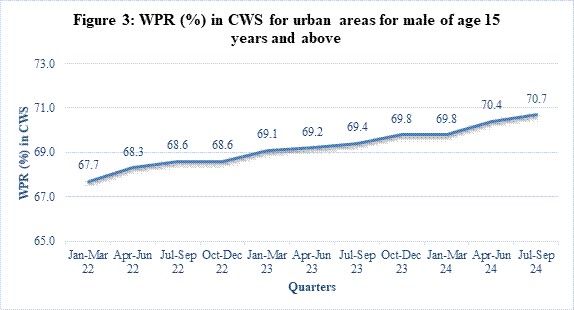
  • WPR for male of age 15 years and above for urban areas increased from 69.4% in July – September, 2023 to 70.7% during July – September, 2024 reflecting overall increasing trend in male WPR.
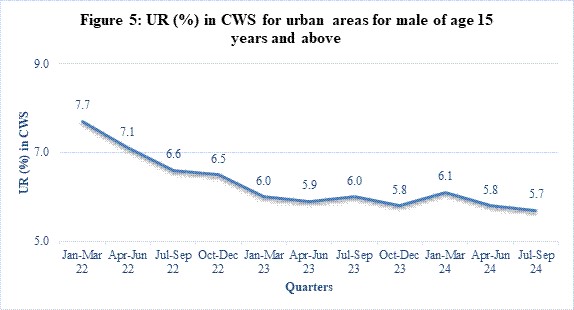
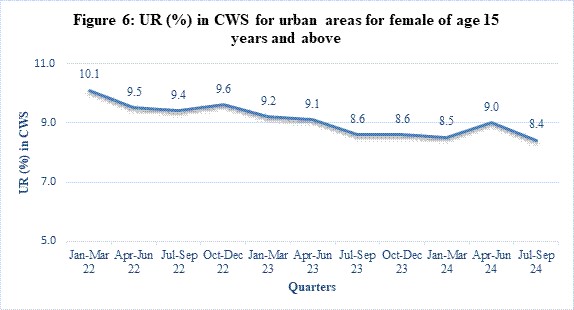
  • Unemployment Rate (UR) in urban areas among persons of age 15 years and above decreased from 6.6% during July – September, 2023 to 6.4% during July – September, 2024.
  • UR among males of age 15 years and above decreased from 6.0% during July – September, 2023 to 5.7% in July – September, 2024. UR among female of age 15 years and above decreased from 8.6% in July – September, 2023 to 8.4% in July – September, 2024.

A.         Introduction

Considering the importance of availability of labour force data at more frequent time intervals, National Statistics Office (NSO) launched Periodic Labour Force Survey (PLFS) in April 2017.

The objective of PLFS is primarily twofold:

  • to estimate the key employment and unemployment indicators (viz. Worker Population Ratio, Labour Force Participation Rate, Unemployment Rate) in the short time interval of three months for the urban areas only in the ‘Current Weekly Status’ (CWS).
  • to estimate employment and unemployment indicators in both ‘Usual Status’ (ps+ss) and CWS in both rural and urban areas annually.

Twenty-three Quarterly Bulletins of PLFS corresponding to the quarter ending December 2018 to quarter ending June 2024 have already been released. In these quarterly bulletins estimates of labour force indicators, viz., Labour Force Participation Rate (LFPR), Worker Population Ratio (WPR), Unemployment Rate (UR), distribution of workers by broad status in employment and industry of work in the Current Weekly Status (CWS) for urban areas have been presented.

The present Quarterly Bulletin is the twenty-fourth in the series for the quarter July – September, 2024.

PLFS fieldwork during the quarter July – September 2024

The fieldwork for collection of information in respect of all the samples allotted for the period July-September, 2024, were completed timely for the first visit as well as revisit samples, except for 15 first visit FSU[1]s (4 in Maharashtra, 3 each in Manipur and Madhya Pradesh, 2 in Kerala, 1 each in Odisha, Assam and Andaman and Nicobar Islands) and 5 revisit FSUs (2 in Maharashtra and 1 each in Gujarat, Meghalaya and Uttar Pradesh) which were treated as casualty.

These aspects may be kept in mind while using the estimates of PLFS for the concerned quarter.

B.         Sample Design of PLFS

A rotational panel sampling design has been used in urban areas. In this rotational panel scheme, each selected household in urban areas is visited four times, in the beginning with ‘First Visit Schedule’ and thrice periodically later with a ‘Revisit Schedule’. The scheme of rotation ensures that 75% of the first-stage sampling units (FSUs) are matched between two consecutive visits.

C.         Sample Size

At the all-India level, in the urban areas, a total number of 5,739 FSUs (urban sampling unit curved out from Urban Frame Survey) have been surveyed during the quarter July – September 2024. The number of urban households surveyed was 45,005 and number of persons surveyed was 1,70,598 in urban areas.

  1. Conceptual Framework of Key Employment and Unemployment Indicators for the Quarterly Bulletin: The Periodic Labour Force Survey (PLFS) gives estimates of key employment and unemployment Indicators like the Labour Force Participation Rate (LFPR), Worker Population Ratio (WPR), Unemployment Rate (UR), etc. These indicators, and ‘Current Weekly Status’ are defined as follows:
  1. Labour Force Participation Rate (LFPR): LFPR is defined as the percentage of persons in labour force (i.e. working or seeking or available for work) in the population.
  1. Worker Population Ratio (WPR): WPR is defined as the percentage of employed persons in the population.
  1. Unemployment Rate (UR): UR is defined as the percentage of persons unemployed among the persons in the labour force.
  1. Current Weekly Status (CWS): The activity status determined on the basis of a reference period of last 7 days preceding the date of survey is known as the current weekly status (CWS) of the person.
  1. The Quarterly Bulletin for the quarter July – September 2024 is available at the website of the Ministry (https://mospi.gov.in). The key results are given in the statements annexed.

Annexure

Key Findings of PLFS, Quarterly Bulletin (July – September 2024)

  1. Labour Force Participation Rate (LFPR) for persons of age 15 years and above

LFPR in urban areas was 50.4% in July – September 2024 for persons of age 15 years in above. While for male LFPR was 75.0% in July – September 2024, for female, LFPR was 25.5% during this period.

Statement 1:  LFPR (in per cent) in CWS in urban areas for persons of age 15 years and aboveall‑India
survey periodMaleFemalePerson
(1)(2)(3)(4)
July – September 202373.824.049.3
October – December 202374.125.049.9
January – March 202474.425.650.2
April – June 202474.725.250.1
July – September 202475.025.550.4
  1. Worker Population Ratio (WPR) for persons of age 15 years and above

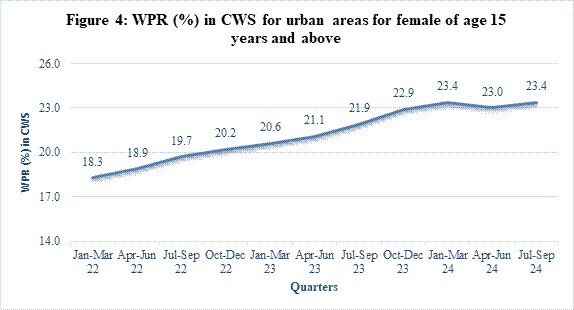
WPR in urban areas was 47.2% in July – September 2024 for persons of age 15 years in above. For male, it was 70.7% in July – September 2024, for female, it was 23.4% during this period.

Statement 2:  WPR (in per cent) in CWS in urban areas for persons of age 15 years and aboveall‑India
survey periodMaleFemalePerson
(1)(2)(3)(4)
July – September 202369.421.946.0
October – December 202369.822.946.6
January – March 202469.823.446.9
April – June 202470.423.046.8
July – September 202470.723.447.2
  1. Unemployment Rate (UR) for persons of age 15 years and above

Unemployment Rate in urban areas was 6.4% in July – September 2024 for persons of age 15 years in above. For male, Unemployment Rate was 5.7% in July – September 2024 and for female, UR was 8.4% during the same period.

Statement 3:  UR (in per cent) in CWS in urban areas for persons of age 15 years and aboveall‑India
survey periodMaleFemalePerson
(1)(2)(3)(4)
July – September 20236.08.66.6
October – December 20235.88.66.5
January – March 20246.18.56.7
April – June 20245.89.06.6
July – September 20245.78.46.4

E. Highlights of the Quarterly estimates of key Labour Market indicators

  1. Trend in Labour Force Participation Rate (LFPR) for persons of age 15 years and above since 2022

The trend in LFPR in urban areas since the quarter January – March, 2022 for male and female are presented in figure 1 and 2.

  1. Trend in Worker Population Ratio (WPR) for persons of age 15 years and above since 2022

The trend in WPR in urban areas since the quarter January – March, 2022 for male and female are presented in figure 3 and 4.

  1. Trend in Unemployment Rate (UR) for persons of age 15 years and above since 2022

The trend in UR in urban areas since the quarter January – March, 2022 for male and female are presented in figure 5 and 6.

*****

Bharat NCX 2024 Officially Inaugurated: Strengthening Cyber Defense and Strategic Decision-Making Across India

Daily writing prompt
Who are your current most favorite people?

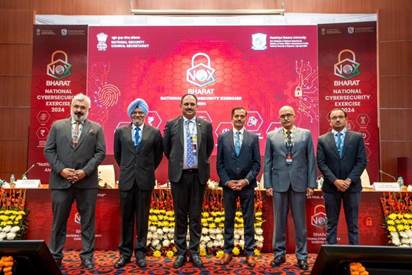
The Bharat National Cyber Security Exercise (Bharat NCX 2024), a landmark initiative to fortify India’s cybersecurity resilience, was inaugurated today at a high-profile ceremony organized by the National Security Council Secretariat (NSCS) in collaboration with Rashtriya Raksha University (RRU). The 12-day exercise is a critical step in preparing India’s cybersecurity professionals and leadership to tackle evolving threats with advanced cyber defense, incident response capabilities, and strategic decision-making.

In his Inaugural AddressLt Gen M. U. Nair, PVSM, AVSM, SM (Retd), the National Cyber Security Coordinator, stated, “Bharat NCX 2024 equips our nation’s cyber defenders and leaders with the skills to mitigate complex threats. From technical exercises to strategic decision-making, this initiative ensures our preparedness to manage crises at all levels.”

Prof. (Dr.) Bimal N. Patel, Vice Chancellor of RRU, delivered the Keynote Address, highlighting the integration of education, research, and innovation in addressing cybersecurity challenges. He remarked, “This exercise not only strengthens technical skills but also prepares leadership to navigate national-level cyber crises through informed decision-making.”

Key Features of Bharat NCX 2024: The exercise includes immersive training on cyber defense and incident response, live-fire simulations of cyberattacks on IT and OT systems, and collaborative platforms for government and industry stakeholders. A Strategic Decision-Making Exercise will bring together senior management from across sectors to simulate decision-making in a national-level cyber crisis, enhancing their ability to respond to high-pressure situations with strategic acumen. The CISO’s Conclave will feature Chief Information Security Officers from government, public, and private sectors sharing insights, participating in panel discussions, and exploring the latest trends and government initiatives in cybersecurity. On the sidelines, the Bharat Cybersecurity Startup Exhibition will showcase innovative solutions from Indian startups, emphasizing their role in enhancing the nation’s cybersecurity infrastructure. The exercise also highlights leadership engagement and capacity building, fostering a unified approach to emerging cyber challenges.

The event runs from November 18 to November 29, 2024, culminating in a comprehensive debrief to consolidate lessons learned and establish best practices in cybersecurity.

*****

NHRC, India organizes a three-day capacity building programme on human rights for the State Human Rights Commission, Arunachal Pradesh

Daily writing prompt
Who are your current most favorite people?

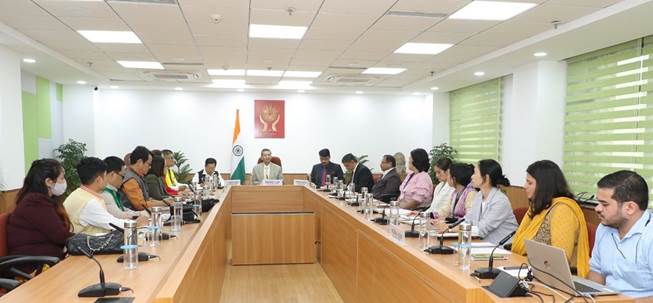
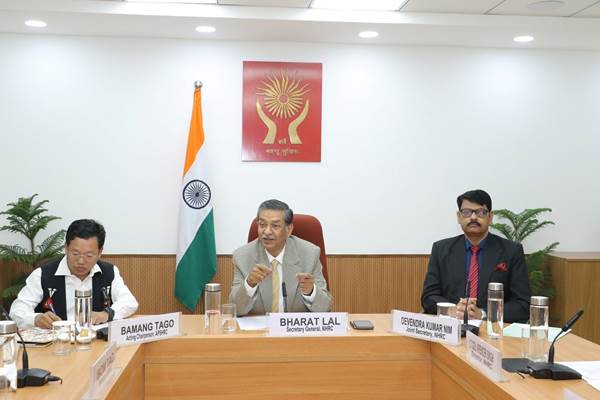
The National Human Rights Commission (NHRC), India is organizing a three-day Capacity Building Programme on human rights for the officials of State Human Rights Commission, Arunachal Pradesh, at New Delhi. The programme is a part of the ongoing initiative of the Commission to reach out and help in the capacity building of the State Human Rights Commissions (SHRCs) for protection and promotion of human rights of all. The NHRC works in tandem with SHRCs and other such bodies to protect and promote human rights in the country.

alt

In his opening remarks, Mr Bharat Lal, Secretary General, NHRC emphasized that sensitivity, promptness and responsiveness are important traits to dealing with human rights issues and violations. The NHRC and SHRCs are part of a framework in the country to ameliorate the cause of human rights. The programme has been designed for having interactive sessions.

alt

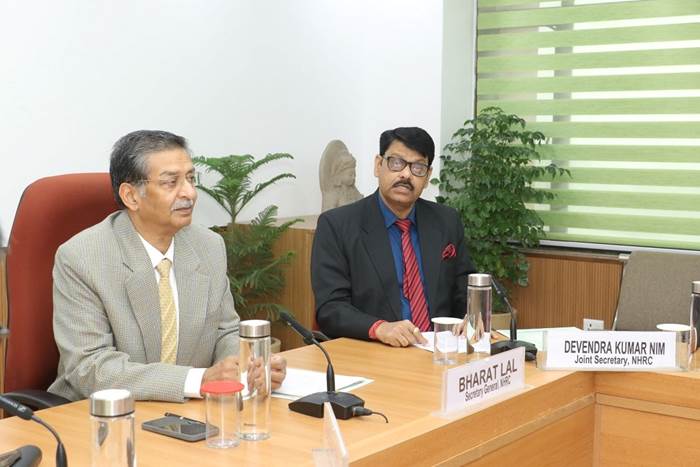
Mr Lal underscored the importance of proactive and speedy redressal of complaints to provide relief to the victims of human rights violations. This would help people to develop faith in the system. The three-day programme would enable the officers to understand how the system should be functioning. He expressed the hope that the exposure to the structured functioning of the NHRC, within the ambit of the Protection of Human Rights Act, 1993 would be useful for the officers of the APSHRC.

alt

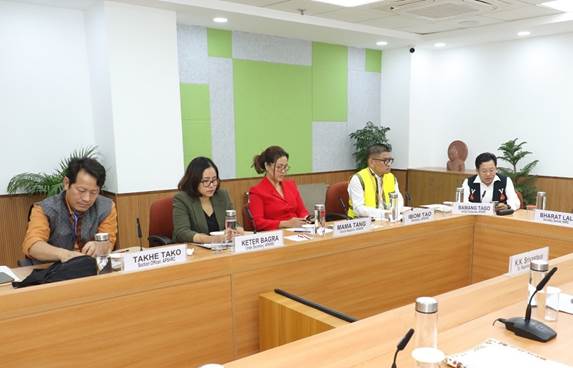
Earlier, the APSHRC Acting Chairperson, Mr Bamang Tago thanked the NHRC, India for organizing this programme. He said that the APSHRC is relatively a new SHRC, therefore, this capacity building programme is crucial for its officers, particularly in terms of learning the handling, registration and disposal of cases from the NHRC given its experience over the past three decades. He expressed the hope that the training would help not only the SHRC as an organization but also each participant individually in deepening their understanding of human values and the rights in the country.

alt

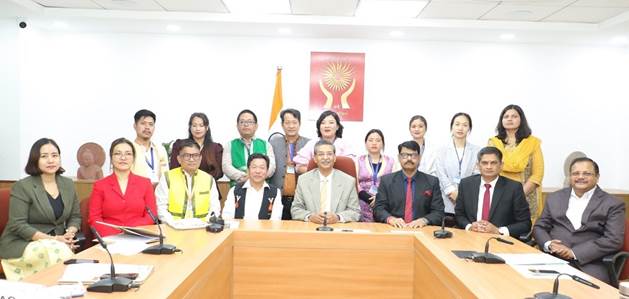
At the start of the 3-day programme, Shri Devendra Kumar Nim, Joint Secretary, NHRC said that it would equip the officers towards promoting and protecting the rights of the people. Their exposure to the functioning of the NHRC which inter alia includes registration and processing of complaints, enquiries, training, research, international mechanism, outreach activities, media and communication, publications, etc. may support them in carrying out their work more efficiently and effectively, to build a shared vision of protecting and promoting human rights in the country.

alt

*****

Grievance Redressal Assessment And Index (GRAI) 2023 Launched On 18 November 2024

Daily writing prompt
Who are your current most favorite people?

Union Minister of State (Independent Charge) Science & Technology; Minister of State (Independent Charge) Earth Sciences; MoS PMO, Personnel, Public Grievances, Pensions, Atomic Energy and Space, Dr Jitendra Singh has launched Grievance Redressal Assessment and Index (GRAI) 2023 in the presence of Shri V. Srinivas, Secretary, Department of Administrative Reforms and Public Grievances (DARPG), Govt. of India.

Grievance Redressal Assessment and Index (GRAI) was conceptualized and designed by the DARPG, Govt. of India based on the recommendation of Parliamentary Standing Committee of Ministry of Personnel, Public Grievances and Pensions with an objective to present organigation-wise comparative picture and provide valuable insights about strengths and areas of improvement regarding grievance redressal mechanism. The first edition of GRAI 2022 was released on 21 June 2023.

Eighty-nine Central Ministries and Departments were assessed and ranked based on a comprehensive index in the dimensions of (1) Efficiency, (2) Feedback, (3) Domain and (4) Organisational Commitment and corresponding 11 indicators. To compute the index, data between January and December 2023was used from the Centralised Public Grievance Redressal and Management System (CPGRAMS).

As part of GRAI, Ministries and Departments are grouped in three groups based on the number of grievances registered in calendar year 2023 at CPGRAMS viz.

GroupsRegistered Grievance RangeNo. of Ministries/Departments
Aregistered grievances > 10,00028
Bregistered grievances 2,000 to 9,99933
Cregistered grievances < 2,00028

Department of Agriculture and Farmers Welfare, O/o the Comptroller & Auditor General of India and Department of Investment & Public Asset Management have topped the rankings in Group A, B and C respectively. A detailed list with top three Ministries and Departments in composite and dimension-wise ranking is as follows:

#Rank 1Rank 2Rank 3
Group A:Grievances > 10,000CompositeDepartment of Agriculture and Farmers WelfareDepartment of PostsMinistry of Cooperation
EfficiencyMinistry of CooperationDepartment of TelecommunicationsMinistry of Labour and Employment
FeedbackDepartment of Agriculture and Farmers WelfareCentral Board of Direct Taxes (Income Tax)Department of Defence
DomainUnique Identification Authority of IndiaMinistry of Home AffairsMinistry of Cooperation
Organisational CommitmentDepartment of PostsDepartment of TelecommunicationsMinistry of Corporate Affairs
Group B:Grievances 2,000 – 9,999CompositeO/o the Comptroller & Auditor General of IndiaDepartment of Land ResourcesNITI Aayog
EfficiencyDepartment of Legal AffairsDepartment of Land ResourcesNITI Aayog
FeedbackO/o the Comptroller & Auditor General of IndiaDepartment of ExpenditureDepartment of Financial Services (Pension Reforms)
DomainDepartment of Land ResourcesMinistry of Parliamentary AffairsMinistry of Drinking Water and Sanitation
Organisational CommitmentDepartment of Empowerment of Persons with DisabilitiesDepartment of Land ResourcesMinistry of Ayush
Group C:Grievances < 2,000CompositeDepartment of Investment & Public Asset ManagementMinistry of Development of North Eastern RegionDepartment of Pharmaceuticals
EfficiencyDepartment of Investment & Public Asset ManagementMinistry of Development of North Eastern RegionMinistry of Mines
FeedbackDepartment of PharmaceuticalsDepartment of Public EnterprisesDepartment of Investment & Public Asset Management
DomainMinistry of Development of North Eastern RegionDepartment of Youth AffairsDepartment of Bio Technology
Organisational CommitmentDepartment of Official LanguageDepartment of Chemicals and PetrochemicalsLegislative Department

In the GRAI 2023report released by DARPG, detailed Root-Cause Analysis has been included with specific inputs on areas of further improvement. This report presents a two-dimensional (vertical and horizontal) analysis of the root causes of effective redressal of grievances of each Ministries and Departments in an easily discernible colour coded analysis. The report also presents brief description of technical partners DARPG has engaged to facilitate the Ministries and Departments to optimally utilize CPGRAMS as a means of effective grievance redressal media.

Over the years, CPGRAMS has become a key tool for enhancing government accountability and transparency by enabling citizens to file and track grievances online. The Commonwealth Secretariat has recognised CPGRAMSas a best practice in Commonwealth Secretaries of Public Service / Secretaries to Cabinet meeting in April 2024.

The GRAI 2023 report presents a clear roadmap with an advisory for the Ministries and Departments to leverage CPGRAMS and its features like IGMS 2.0, TreeDashboard, etc., to enhance grievance redressal. The roadmap for improvement emphasizes integrating advanced technologies like AI and ML for data analysis, predictive analytics and preventive measures while revising ATR formats for better reporting. Capacity building for GROs, enhancing accountability through audits and extending CPGRAMS integration to the third-tier of government are key recommendations.

***

ESCI Journals of Clarivate: An In-Depth Overview

Daily writing prompt
Do you or your family make any special dishes for the holidays?

ESCI stands for the Emerging Sources Citation Index, a research database managed by Clarivate, which is a global leader in research analytics. The ESCI was launched in 2015 as part of Web of Science, a platform that includes several well-known citation indices, such as the Science Citation Index (SCI), Social Sciences Citation Index (SSCI), and Arts & Humanities Citation Index (AHCI).

ESCI journals represent a category of scholarly journals that are in the process of being evaluated for inclusion in the more prestigious citation indices, such as SCI or SSCI. These journals are typically emerging or have demonstrated an increasing impact in their respective fields but have not yet achieved the citation levels or broad recognition necessary for inclusion in the more established indices.

In this article, we will dive into the following aspects of ESCI journals within Clarivate’s Web of Science:

  1. What is ESCI?
  2. Criteria for ESCI Journal Inclusion
  3. Differences Between ESCI and Other Citation Indices
  4. Importance of ESCI Journals
  5. How ESCI Affects Researchers and Authors
  6. How Journals Get Indexed in ESCI
  7. List of ESCI Journals and their Scope
  8. ESCI Journals and Academic Career Progression

1. What is ESCI?

The Emerging Sources Citation Index (ESCI) is an index introduced by Clarivate Analytics (formerly Thomson Reuters) to serve as a middle ground between unindexed journals and those included in well-established citation indices like the Science Citation Index (SCI) or the Social Sciences Citation Index (SSCI).

ESCI includes journals that may not yet meet the rigorous standards for the established indices but are still recognized as valuable sources of scholarly content. These journals often focus on emerging fields, new interdisciplinary research, or regional content that may not yet have global visibility but is still highly relevant to specific academic or scientific communities.

Inclusion in ESCI signals that a journal is considered to have academic merit and is on track to potentially gain recognition in broader academic circles. However, it does not yet have the citation impact that journals in SCI or SSCI indices typically do.

2. Criteria for ESCI Journal Inclusion

Clarivate has a set of standards for selecting journals for inclusion in the ESCI. While the specific criteria are not fully disclosed, the following factors are generally considered:

  • Academic Quality: Journals must demonstrate scholarly rigor in their editorial process, peer-review practices, and the quality of articles they publish. This includes having professional editorial boards, following international standards for peer review, and ensuring transparency in publishing practices.
  • Relevance: ESCI journals should have a subject focus that is emerging or growing, offering high relevance to a specific academic community or niche research area. These could include rapidly developing disciplines, innovative interdisciplinary research, or underrepresented geographical or linguistic regions.
  • Citation Potential: Journals are evaluated for their citation potential. Although ESCI journals may not have extensive citation data initially, they are expected to grow in influence and impact. This is a key distinction between ESCI journals and those indexed in more established indices, which typically have higher citation numbers and long-term academic impact.
  • Publication Frequency and Editorial Content: ESCI journals are expected to maintain a regular publication schedule, typically with a certain minimum number of issues published per year. The editorial content must align with scholarly communication practices, including original research articles, reviews, and other accepted types of scholarly work.
  • International Coverage: Clarivate typically prefers journals that have an international scope or appeal, but regional journals that demonstrate a strong impact within a particular academic or geographic community may also be included.

3. Differences Between ESCI and Other Citation Indices

Clarivate’s citation indices, like SCI, SSCI, and AHCI, are highly selective and include journals that have achieved a certain level of citation impact, which is typically a sign of broad recognition and influence within their respective disciplines. ESCI, on the other hand, includes journals that may not yet have reached these citation thresholds but show promise and potential for future growth. Here’s a comparison:

AspectESCISCI/SSCI/AHCI
Citation ImpactEmerging, but lower citation impact compared to SCI/SSCIEstablished journals with high citation counts
Journal SelectionBased on quality and potential for growthBased on long-term citation performance and prestige
ScopeNew or emerging fields, interdisciplinary, or regional journalsEstablished fields with broad global reach and historical significance
Indexing RequirementsJournals must show academic merit but have limited citation historyJournals must demonstrate sustained academic impact and citation frequency
AudienceNiche, emerging scholarly communitiesGlobal, well-established academic communities

4. Importance of ESCI Journals

While ESCI journals may not have the same level of global recognition as those indexed in SCI or SSCI, they play a vital role in the academic publishing ecosystem. Here are several reasons why ESCI journals are important:

  • Supporting Emerging Research: ESCI serves as a platform for emerging or niche research areas that may not yet have significant visibility but are rapidly growing or developing. These journals can contribute to advancing knowledge in areas such as new technologies, interdisciplinary fields, or research that is regionally important.
  • Increasing Journal Diversity: By including journals from different regions and less mainstream disciplines, ESCI helps diversify the global academic publishing landscape. It provides a voice for scholars working in underrepresented fields or regions.
  • Providing Access to Scholarly Work: ESCI journals offer access to high-quality research in emerging fields. This is particularly useful for researchers looking for cutting-edge topics or early-stage developments that haven’t yet been widely covered by established journals.
  • Facilitating Journal Growth: For journals indexed in ESCI, the index serves as a stepping stone to recognition in SCI or SSCI. ESCI inclusion increases a journal’s visibility, helping it attract higher-quality submissions and more citations over time.

5. How ESCI Affects Researchers and Authors

For researchers and authors, publishing in ESCI journals offers both opportunities and challenges:

Opportunities:

  • Early Career Exposure: Researchers, especially those working in emerging or niche fields, can gain early exposure by publishing in ESCI journals. These journals may provide a platform to showcase new and innovative ideas that may not yet fit into larger, more established journals.
  • Increased Visibility: Inclusion in ESCI provides visibility in Web of Science, a globally recognized academic database. Articles published in ESCI journals are discoverable and citable, providing researchers with the opportunity to gain recognition for their work.
  • Potential for Future Recognition: ESCI journals are often viewed as stepping stones to inclusion in more prestigious citation indices like SCI or SSCI. Authors can contribute to the growth and development of these journals, helping them eventually achieve broader recognition.

Challenges:

  • Limited Citation Impact: Due to the emerging nature of ESCI journals, articles published in these journals may not initially receive the same level of citation as those in more established journals. This could affect researchers looking to build their citation profiles early in their careers.
  • Recognition and Prestige: While ESCI inclusion is a positive step, some academic institutions or funding bodies may prioritize journals indexed in more prestigious indices. For authors aiming for high recognition, publishing in ESCI journals may not have the same weight as publishing in SCI or SSCI journals.

6. How Journals Get Indexed in ESCI

Journals that wish to be indexed in ESCI must undergo a thorough evaluation process conducted by Clarivate’s editorial team. This process includes:

  1. Submission of Application: Journals must submit a formal application to Clarivate for inclusion in the ESCI, providing detailed information about their editorial policies, peer-review process, citation practices, and impact potential.
  2. Evaluation: Clarivate evaluates the journal’s editorial content, citation metrics, publishing frequency, and overall quality. This involves an assessment of factors like editorial board composition, adherence to best publishing practices, and the journal’s relevance within its academic field.
  3. Decision and Inclusion: If the journal meets the necessary criteria, it is included in ESCI. Inclusion is based on the overall potential for the journal to grow in citation impact and academic influence.
  4. Ongoing Monitoring: Once a journal is included in ESCI, it is continuously monitored for performance. Clarivate reviews journals on an ongoing basis to ensure they continue to meet the necessary standards for inclusion.

7. List of ESCI Journals and Their Scope

The ESCI includes thousands of journals from various disciplines, including:

  • Sciences: Emerging areas in fields such as biotechnology, environmental science, materials science, and engineering.
  • Social Sciences: New research areas in sociology, anthropology, psychology, education, and business.
  • Arts and Humanities: Journals that focus on niche topics in literature, cultural studies, philosophy, and history.

A detailed list of ESCI journals can be found on the Web of Science platform, where journals are categorized by subject and scope.

8. ESCI Journals and Academic Career Progression

For academic researchers, publishing in ESCI journals can be an important step in their career progression, especially for early-career scholars. ESCI inclusion demonstrates that a journal has academic merit and is being taken seriously within the scholarly community.

Ghost Villages in Uttarakhand

Daily writing prompt
Do you trust your instincts?

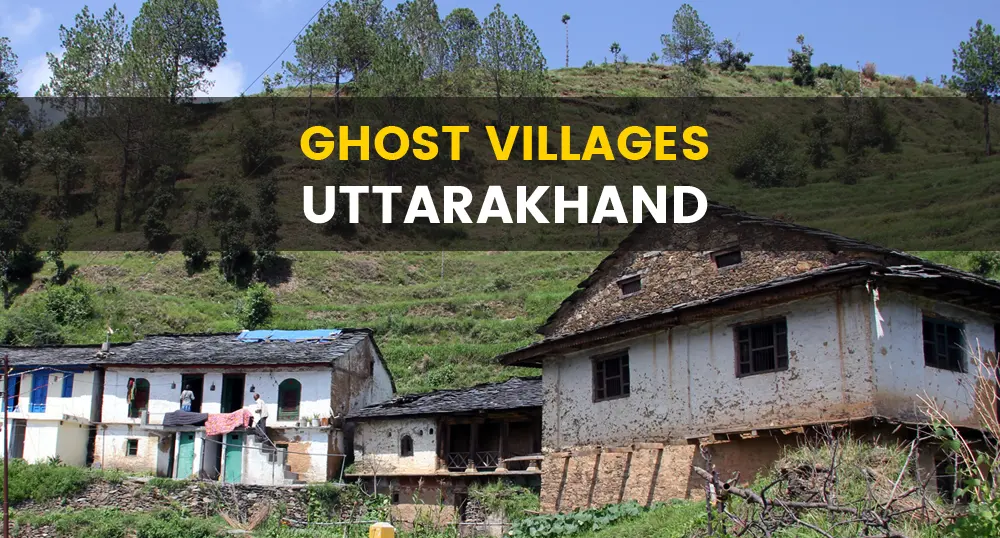
Migration from the hill areas of Uttarakhand is a concerned issue. Many people especially from far-flung rural areas migrate to nearest towns or cities within or outside the state in search of employment and better educational and health facilities. The continuous migration from some villages have resulted in the absolute desertion of those villages with no inhabiting population left behind. These un-inhabited villages are being termed as Ghost Villages.

As per 2011 Census, there are 1048 villages with zero population and another 44 villages have population less than 10 persons.

Browse the list of ghost villages in Uttarakhand by each districts. Pauri district in Garhwal region and Almora district in Kumaon region contain the most number of ghost villages in Uttarakhand.

DistrictGhost Villages
Almora105
Bageshwar73
Chamoli76
Champawat55
Dehradun17
Hardwar94
Nainital44
Pauri Garhwal331
Pithoragarh103
Rudraprayag35
Tehri Garhwal88
Udham Singh Nagar14
Uttarkashi13

Hira Devi


The film, inspired by Devi’s own life, tells the story of an elderly couple’s love. PITHORAGARH: Hira Devi, 80, is an unlikely film heroine from one of Uttarakhand’s ghost villages, Gadtir, which has several empty houses because of migration. Hira Devi, 80, is an unlikely film heroine from one of Uttarakhand’s ghost villages, Gadtir, which has several empty houses because of migration. The octogenarian, who is illiterate and has lived in the mountain village most of her life, recently got a chance to star in ‘Pyre’, a film inspired by a story similar to her own, which will have its world premiere on Tuesday (Nov 19) at the 28th Tallinn Black Nights International Film Festival in Estonia.

Top Schools in Singapore – World Class Education

Top Schools in Singapore: A Comprehensive Guide

Singapore is renowned for its world-class education system, which is often regarded as one of the best in the world. The city-state’s schools are recognized for their rigorous academic standards, comprehensive curriculum, and holistic development of students. Whether you are a local parent or an expatriate family considering relocation, finding the right school is crucial. Here’s a detailed guide to some of the top schools in Singapore, categorized by local public schools, international schools, and specialized institutions.

1. Local Public Schools

Singapore’s local public schools are known for their high academic standards, disciplined environment, and holistic approach to education. These schools are highly competitive, with a focus on core subjects like Mathematics, Science, English, and Mother Tongue languages.

a) Raffles Institution (RI)

Overview: Established in 1823, Raffles Institution is one of the oldest and most prestigious schools in Singapore. It offers a six-year Integrated Programme (IP) that allows students to skip the O-Level examinations and proceed directly to the A-Level exams.

Key Features:

Strong emphasis on academic excellence, leadership, and character development.

Extensive co-curricular activities (CCAs) such as robotics, debate, and sports.

Alumni network that includes prominent leaders, professionals, and public figures.

Location: Bishan, Singapore.

b) Hwa Chong Institution (HCI)

Overview: Known for its rigorous academic curriculum and vibrant school culture, Hwa Chong Institution is another top-tier school offering the Integrated Programme. It focuses on nurturing leaders with a strong sense of social responsibility.

Key Features:

Bilingual education in English and Chinese.

Renowned for its Science and Mathematics programs, including research opportunities.

State-of-the-art facilities, such as a science research center and sports complex.

Location: Bukit Timah, Singapore.

c) Nanyang Girls’ High School (NYGH)

Overview: As one of the top all-girls schools in Singapore, Nanyang Girls’ High School provides an IP that emphasizes both academic excellence and character development.

Key Features:

Bilingual curriculum, with a focus on Chinese culture and language.

Strong emphasis on STEM (Science, Technology, Engineering, Mathematics) subjects.

Comprehensive CCAs, including performing arts and community service.

Location: Bukit Timah, Singapore.

d) Anglo-Chinese School (Independent)

Overview: A Methodist school with a rich history, ACS (Independent) offers both the Integrated Programme and the International Baccalaureate (IB) Diploma Programme, making it a popular choice for both local and international students.

Key Features:

Holistic education approach, focusing on academic excellence, sports, and leadership.

Vibrant co-curricular life with a wide range of clubs, sports, and arts programs.

IB program known for producing high achievers.

Location: Dover Road, Singapore.

2. International Schools

For expatriate families, Singapore offers a range of high-quality international schools that follow various global curricula, including the International Baccalaureate (IB), American, and British systems.

a) Singapore American School (SAS)

Overview: SAS is one of the largest and most established international schools in Singapore, offering a comprehensive American-based curriculum from pre-kindergarten to Grade 12.

Key Features:

Emphasis on a broad-based education with a wide range of Advanced Placement (AP) courses.

State-of-the-art facilities, including a new high school building with modern learning spaces.

Strong focus on arts, sports, and extracurricular activities.

Location: Woodlands, Singapore.

b) United World College of South East Asia (UWCSEA)

Overview: Part of the global United World College network, UWCSEA is known for its diverse student body and rigorous IB curriculum. It offers the IB Primary Years Programme (PYP), Middle Years Programme (MYP), and Diploma Programme (DP).

Key Features:

Focus on holistic education, sustainability, and service learning.

Extensive co-curricular activities, including sports, arts, and outdoor education.

Two campuses with world-class facilities, including theaters, swimming pools, and sports fields.

Locations: Dover and East Coast, Singapore.

c) Tanglin Trust School

Overview: A British-based international school, Tanglin Trust offers a blend of the British National Curriculum and the IB Diploma Programme. It caters to students from nursery to pre-university levels.

Key Features:

Strong academic results in IGCSE and IB exams.

Emphasis on pastoral care and student well-being.

Wide range of extracurricular activities, including music, drama, and sports.

Location: Bukit Timah, Singapore.

d) Canadian International School (CIS)

Overview: CIS offers the IB curriculum with a focus on inquiry-based learning, catering to students from early years to high school.

Key Features:

Multilingual program with a strong emphasis on language acquisition.

Diverse and inclusive community with students from over 80 nationalities.

Two campuses with modern facilities, including makerspaces and design technology labs.

Locations: Lakeside and Tanjong Katong, Singapore.

3. Specialized Schools

For students with unique talents or specific learning needs, Singapore offers specialized schools that focus on arts, sports, or academic excellence.

a) School of the Arts (SOTA)

Overview: SOTA is Singapore’s first pre-tertiary specialized arts school, offering a six-year integrated arts and academic curriculum leading to the IB Diploma.

Key Features:

Focus on visual arts, music, theatre, dance, and literary arts.

Holistic education that balances academic rigor with artistic training.

Strong support for students’ creative and artistic pursuits.

Location: Dhoby Ghaut, Singapore.

b) Singapore Sports School

Overview: Established to nurture student-athletes, the Singapore Sports School offers a customized curriculum that balances academics with high-performance sports training.

Key Features:

Training in a wide range of sports, including swimming, badminton, and track & field.

Academic pathways include the O-Level, IB Diploma, and customized sports programs.

Access to specialized sports facilities and coaching.

Location: Woodlands, Singapore.

c) NUS High School of Math and Science

Overview: NUS High School is a specialized independent school that focuses on mathematics, science, and engineering education for gifted students.

Key Features:

Accelerated curriculum with advanced courses in math and science.

Research opportunities and collaborations with universities.

Strong emphasis on STEM education.

Location: Clementi, Singapore.

4. Admission Process & Tips

Singapore’s top schools are highly competitive, especially for expatriates seeking admission to international schools. Here are some tips to navigate the admission process:

Early Application: Apply as early as possible, as spaces are limited, especially in popular schools.

Entrance Exams & Interviews: Be prepared for entrance exams and interviews, particularly for prestigious schools like RI, HCI, and ACS.

Holistic Assessment: Schools often look for students with a strong academic record, as well as achievements in sports, arts, or community service.

Understand the Curriculum: Choose a school based on the curriculum that aligns with your child’s future education plans, whether it’s the IB, British, American, or local system.

Conclusion

Singapore offers a diverse range of schooling options, each with its unique strengths. Whether you’re looking for a school that excels in academics, arts, sports, or holistic development, there’s something for every family. The key is to understand your child’s needs and strengths and match them with the right school to ensure a rewarding educational journey.

FAQs

1. What is the best school in Singapore for academic excellence?

Schools like Raffles Institution, Hwa Chong Institution, and Nanyang Girls’ High are known for their rigorous academic programs.

2. Are international schools in Singapore expensive?

Yes, international schools like UWCSEA, SAS, and Tanglin Trust can be quite costly, with annual fees ranging from SGD 25,000 to over SGD 40,000.

3. Can expatriates enroll their children in local public schools?

Yes, but the admission process is competitive, and priority is often given to Singapore citizens and permanent residents.

By understanding the offerings of each school, you can make an informed decision that best fits your child’s educational aspirations and needs.

Creative and Artistic Activities for Seniors: Keeping the Mind Sharp

Daily writing prompt
What book are you reading right now?

Have you ever wondered how to keep your mind sharp as you age?

Engaging in creative and artistic activities can be a powerful way to stay mentally active, improve mood, and bring joy to daily life. Whether it’s painting, writing, or even gardening, these activities not only spark creativity but also help you stay connected to the world around you.

cognitive health with memory care in Kansas City

In this article, we’ll explore fun and simple ways for seniors to keep their minds vibrant and healthy through creative and artistic pursuits.

Painting or Drawing

Painting and drawing are great ways for seniors to express their creativity. They can use different mediums like pencils, charcoal, or paints to create art. These brain boosting art activities help improve focus and fine motor skills as they work on details and shading.

Starting with simple sketches or watercolors is a good option for beginners. More experienced artists may enjoy trying oils or acrylic paints. Creating art can be a relaxing activity that gives seniors a sense of accomplishment.

Crafting

Crafting includes activities like knitting, crocheting, and making jewelry. These activities help keep the hands and mind busy with creative projects. Seniors can create items that are both functional and decorative, such as scarves or bracelets.

Crafting can be a social activity when done with others. It also offers a way for seniors to express their personal style and preferences. The sense of completion from finishing a project can boost self-esteem and well-being.

Writing and Journaling

Writing is an excellent activity to keep the mind active. Seniors can write about their memories, stories, or poems. This allows them to reflect on their life and express their thoughts in words.

Journaling is a simple and helpful way to organize ideas. Writing about daily events or personal experiences helps with memory. It also encourages the practice of thinking critically and creatively.

Music and Dance

Learning to play an instrument can keep the mind sharp and focused. Seniors may also enjoy listening to music, which can bring back memories and boost mood. Music activates different parts of the brain and can be a source of relaxation.

Dance helps with physical coordination and balance. Seniors can enjoy simple movements to music or follow dance routines. It also provides an outlet for self-expression and can increase energy levels.

Puzzles and Brain Games

Puzzles and brain games like Sudoku or crossword puzzles help keep the brain active. These games can improve memory, logic, and problem-solving skills. Seniors can enjoy these activities alone or with friends, making them both fun and beneficial for cognitive health.

Engaging in regular brain exercises, such as puzzles, is a proven way to promote improved cognitive health with memory care in Kansas City. These activities support mental well-being by keeping the brain sharp and alert.

Unlock Your Potential With Creative and Artistic Activities for a Sharper Mind

Engaging in creative and artistic activities can improve the overall well-being of seniors. These activities help maintain mental sharpness and promote a sense of purpose. They also provide opportunities for self-expression and can bring joy to daily life.

By participating in these creative activities for the brain, seniors can stay active, improve their mood, and feel more connected to themselves and others. Creativity offers a powerful way to enhance quality of life.

Did you learn something new from this article? If so, be sure to check out our blog for more educational content.

How to Choose the Right Respite Center for Your Loved One

Daily writing prompt
What book are you reading right now?

Choosing the right respite center for your loved one is an important decision. It’s not just about finding a place for care-it’s about ensuring your family member feels safe, comfortable, and well cared for.

respite care services for seniors in Burlington

A good respite center can provide support when you need a break. In this post, we’ll share some helpful tips to guide you in choosing the best center for your loved one’s needs. Read on.

Understand Your Loved One’s Needs

Before choosing a respite center, take time to understand the needs of your loved one. Do they have specific health conditions or mobility challenges? Knowing these details will help you find a center that can offer the appropriate level of care.

Consider whether your loved one requires special needs care or medical attention. Some centers offer more comprehensive services, including medication management or support for those with dementia. Make sure to ask about the services available at each center.

Check for Accreditation and Licensing

When selecting a respite center, make sure it is properly accredited and licensed. Accreditation ensures that the center follows industry standards for care and safety. A licensed facility is required to meet specific regulations, so you can trust that your loved one will be in good hands.

You can also ask about the staff’s training and experience. It’s important that caregivers are trained to handle specific medical conditions or mobility issues. A well-trained team will provide the best care for your loved one.

Consider the Services Offered

When choosing a respite center, it’s important to consider the services offered. Some centers provide basic care, while others offer specialized services like memory care or physical therapy. You should make sure the center can meet your loved one’s specific health needs.

Look for centers that offer a variety of activities to keep your loved one engaged. This can include recreational programs, social activities, and even educational sessions. If you’re unsure about what’s available, check out these respite care services for seniors in Burlington if you’re looking for a well-regarded option in your area.

Know What’s Covered by Medicare

If your loved one qualifies, it’s important to understand what services are covered by Medicare respite. Some centers offer services that are eligible for Medicare respite benefits. This can help reduce the financial burden on your family while ensuring your loved one receives quality care.

Make sure to ask the center about their Medicare respite policies. If your loved one has special needs or chronic conditions, some centers may offer additional support that is covered by respite care Medicare. This could include personal care, nursing services, and more.

Ensuring Comfort and Care: Selecting the Right Respite Center

Choosing the right respite center is key to ensuring your loved one receives the best care. Take time to consider their needs, the services offered, and the center’s location. Look for a place that feels welcoming and safe.

Don’t forget to ask about Medicare respite options if applicable. With the right planning, you can find a respite center that gives both you and your loved one peace of mind.

Did this article help you? If so, take a look at some of our other blog posts for more informative reads.

Preparation for Board Exam

Preparing for Board Exams: A Comprehensive Guide
Board exams are a significant milestone in a student’s academic journey. The pressure to perform well can be overwhelming, but with proper preparation and a strategic approach, you can ace your exams. Here’s a comprehensive guide to help you prepare effectively:

  1. Understand the Syllabus and Exam Pattern:
  • Thorough Analysis: Break down the syllabus into smaller, manageable topics.
  • Identify Weak Areas: Pinpoint the areas where you need extra focus.
  • Practice Previous Year Papers: Understand the exam pattern, question types, and time management strategies.
  1. Create a Realistic Study Schedule:
  • Time Management: Allocate specific time slots for each subject.
  • Prioritize Topics: Focus on important and challenging topics first.
  • Consistent Study Habits: Develop a regular study routine and stick to it.
  1. Effective Study Techniques:
  • Active Learning: Engage with the material through techniques like summarizing, questioning, and explaining.
  • Mind Mapping: Visualize concepts and relationships between ideas.
  • Regular Revision: Reinforce your understanding by reviewing regularly.
  • Practice Tests: Simulate exam conditions to build confidence and identify knowledge gaps.
  1. Healthy Lifestyle and Stress Management:
  • Balanced Diet: Fuel your body with nutritious food to enhance concentration and energy levels.
  • Adequate Sleep: Prioritize sleep to ensure optimal cognitive function.
  • Regular Exercise: Physical activity reduces stress and improves focus.
  • Stress Management Techniques: Practice relaxation techniques like meditation and yoga.
  1. Tips for Exam Day:
  • Stay Calm: Manage anxiety through deep breathing and positive affirmations.
  • Read Instructions Carefully: Understand the question paper and time allotted for each section.
  • Time Management: Allocate time wisely to each question.
  • Write Neat and Legible: Present your answers clearly and concisely.
  • Review Your Answers: If time permits, check your work for errors.
    Additional Tips:
  • Join Study Groups: Collaborate with peers to discuss concepts and solve problems.
  • Seek Help When Needed: Don’t hesitate to ask teachers or tutors for clarification.
  • Stay Positive and Motivated: Believe in yourself and your abilities.
    Remember, consistent effort and smart study habits are key to success. By following these guidelines, you can approach your board exams with confidence and achieve your desired results.
    Would you like to delve deeper into a specific aspect of exam preparation, such as time management, stress relief, or study techniques?

Thanksgiving Celebration

Thanksgiving in the United States is a cherished holiday celebrated annually on the fourth Thursday of November. In 2024, Thanksgiving will fall on November 28th. This holiday is one of the most significant in the American calendar, deeply rooted in history, culture, and tradition. Below, we will explore the history, traditions, and modern-day celebrations associated with this special occasion.

Historical Background

The origins of Thanksgiving can be traced back to the early 17th century. The holiday commemorates a feast shared between the Pilgrims and the Wampanoag Native Americans in 1621, which is widely regarded as the first Thanksgiving.

The Pilgrims: A group of English Puritans, seeking religious freedom, sailed to the New World on the Mayflower and established the Plymouth Colony in present-day Massachusetts.

The Wampanoag Tribe: The indigenous people of the region who helped the struggling Pilgrims survive their first harsh winter by teaching them local agricultural practices.

The First Feast: In the fall of 1621, after a successful harvest, the Pilgrims held a three-day feast to thank God for their blessings and invited the Wampanoag people as guests. This feast included dishes like venison, wildfowl, corn, beans, and squash—quite different from today’s traditional Thanksgiving meal.

Though the Pilgrims’ feast in 1621 is considered the first Thanksgiving, it was not initially a national holiday. The concept of an annual Thanksgiving observance was promoted by various figures over the years.

Sarah Josepha Hale, a writer and editor, campaigned for a national Thanksgiving holiday for nearly 17 years. Her efforts culminated in 1863 when President Abraham Lincoln declared Thanksgiving a national holiday to be celebrated on the last Thursday of November, aiming to foster unity during the Civil War.

In 1941, President Franklin D. Roosevelt signed a bill officially designating the fourth Thursday in November as the national Thanksgiving holiday, which solidified its place in American culture.

Traditional Thanksgiving Customs

Thanksgiving is a time for family, gratitude, and reflection. The holiday brings together loved ones to share a special meal and give thanks for their blessings. Here are some of the most beloved traditions:

1. The Thanksgiving Feast

The centerpiece of Thanksgiving is the grand meal. Typical dishes include:

Roast Turkey: Often the star of the meal, turkey is usually roasted and stuffed with a mixture of bread, herbs, and other ingredients.

Stuffing (or Dressing): A savory blend of bread cubes, vegetables, herbs, and sometimes sausage, either cooked inside the turkey or separately.

Mashed Potatoes: Creamy and buttery mashed potatoes are a staple side dish.

Cranberry Sauce: A sweet and tangy sauce made from cranberries, adding a tart contrast to the savory flavors.

Gravy: Made from the turkey’s pan drippings, it is often poured over the turkey and mashed potatoes.

Green Bean Casserole: A popular side dish combining green beans, cream of mushroom soup, and crispy fried onions.

Sweet Potatoes (or Yams): Often baked with marshmallows or brown sugar for a sweet twist.

Pumpkin Pie: The quintessential Thanksgiving dessert, often spiced with cinnamon, nutmeg, and cloves.

2. Giving Thanks

Before the meal, families often take a moment to express gratitude for the year’s blessings. This tradition aligns with the original spirit of Thanksgiving, emphasizing the importance of gratitude, humility, and togetherness.

3. Parades

The Macy’s Thanksgiving Day Parade in New York City is one of the most famous Thanksgiving events. It features giant helium balloons shaped like popular characters, elaborate floats, marching bands, and performances by celebrities. The parade, broadcasted on television, has become a part of the holiday tradition for millions of viewers.

4. Football Games

Thanksgiving is synonymous with American football. The tradition of Thanksgiving Day football games dates back to the early 20th century. The National Football League (NFL) hosts several games on Thanksgiving, with teams like the Detroit Lions and the Dallas Cowboys traditionally playing on this day. Families and friends often gather around the TV to watch these games together.

5. Turkey Pardoning

The Presidential Turkey Pardon is a quirky modern tradition where the President of the United States “pardons” a live turkey, sparing it from becoming someone’s Thanksgiving dinner. This lighthearted ceremony, held at the White House, usually takes place a few days before the holiday.

Modern-Day Celebrations and Variations

While the traditional Thanksgiving customs are still widely observed, modern-day celebrations have evolved to include diverse cultural influences and personal family traditions.

1. Friendsgiving

An increasingly popular variation of Thanksgiving is Friendsgiving, where friends gather to celebrate, often before or after the official holiday. It’s a more casual affair and a great way for those who may not have family nearby to enjoy the spirit of Thanksgiving.

2. Volunteering and Charity

Many people use the Thanksgiving holiday as an opportunity to give back to the community. Volunteering at soup kitchens, organizing food drives, or donating to charities are common ways to help those in need during the holiday season.

3. Travel

Thanksgiving is one of the busiest travel times in the United States, as millions of people journey to reunite with family and friends. Airports, train stations, and highways are often packed with travelers in the days leading up to and following the holiday.

The Day After Thanksgiving: Black Friday

The day after Thanksgiving marks the start of the holiday shopping season, known as Black Friday. Retailers offer significant discounts, leading to a shopping frenzy as people hunt for the best deals on gifts and other items. Black Friday has grown into a global phenomenon, with some stores even opening on Thanksgiving night.

Fun Facts About Thanksgiving

Turkey Talk: According to the National Turkey Federation, about 46 million turkeys are consumed on Thanksgiving Day in the U.S.

Cranberry Connection: Cranberries, a staple of the Thanksgiving table, are one of only three commercially grown fruits native to North America (along with blueberries and Concord grapes).

Leftovers Galore: The day after Thanksgiving is sometimes called “Leftovers Day”, where families creatively use leftover turkey and sides in new dishes like turkey sandwiches, soups, and casseroles.

Conclusion

Thanksgiving is a unique blend of historical significance, heartfelt traditions, and modern adaptations, making it one of the most cherished holidays in the United States. It serves as a reminder to appreciate the simple joys of life, to spend quality time with loved ones, and to extend kindness and gratitude to others. Whether through a traditional feast, volunteering, or simply gathering with friends, Thanksgiving is a time to reflect on the past year’s blessings and celebrate the spirit of togetherness.

Children’s Day

Children’s Day: Celebrating the Spirit of Childhood

Children’s Day is a special occasion dedicated to honoring and celebrating the innocence, joy, and potential of children around the world. This day is marked by various events and activities aimed at promoting the well-being and rights of children, encouraging their growth, and fostering an environment that supports their dreams and aspirations. Celebrated in numerous countries on different dates, Children’s Day is an opportunity to recognize the importance of children in shaping the future of our societies.

In India, Children’s Day holds a special significance as it is celebrated on November 14th every year. This date was chosen to commemorate the birth anniversary of Pandit Jawaharlal Nehru, the first Prime Minister of independent India, who was known for his deep affection for children. His love and dedication to their education, welfare, and overall development earned him the affectionate nickname “Chacha Nehru” (Uncle Nehru). In this article, we will explore the history, significance, and ways in which Children’s Day is celebrated, especially in India.

History and Origin of Children’s Day

The concept of dedicating a day to celebrate children can be traced back to the early 20th century. The idea was first proposed by Reverend Dr. Charles Leonard, a pastor in Chelsea, Massachusetts, in 1857. He held a special service dedicated to and for children, which he called “Children’s Day.” This initiative was followed by similar celebrations in other countries, eventually leading to the establishment of official Children’s Days around the world.

However, the celebration of Children’s Day as we know it today began in 1954, when the United Nations recommended that all countries institute a Universal Children’s Day to promote international togetherness, awareness among children worldwide, and improving children’s welfare. The United Nations selected November 20th as Universal Children’s Day, as it coincides with the anniversary of the adoption of the Declaration of the Rights of the Child (1959) and the Convention on the Rights of the Child (1989).

Children’s Day in India: Why November 14th?

In India, the celebration of Children’s Day on November 14th is tied to Pandit Jawaharlal Nehru’s enduring legacy. He was a strong advocate for children’s rights and education. His vision was to provide children with an environment that encourages creativity, learning, and growth. Pandit Nehru believed that children were the future of the nation, and he emphasized the need for education and equal opportunities for every child. His fondness for children was well-known, and he often emphasized that they should be nurtured with love and care to become responsible citizens.

After his death in 1964, it was decided to commemorate his birth anniversary as Children’s Day in India, shifting the focus from the international celebration on November 20th to November 14th, making it a day to remember his contributions and love for children.

The Significance of Children’s Day

1. Promoting Awareness of Children’s Rights

Children’s Day is a platform to raise awareness about the rights of children. It is a day to reflect on the importance of creating a safe, nurturing, and inclusive environment where children can thrive. It draws attention to critical issues such as child labor, child abuse, lack of education, and exploitation, urging society to take action to protect children’s rights.

2. Fostering Love, Care, and Affection

The day emphasizes the value of love, care, and understanding in a child’s upbringing. It reminds parents, teachers, and caregivers of their responsibility to provide children with the support they need to grow into healthy and happy individuals.

3. Encouraging Education and Development

Children’s Day is a reminder of the importance of education in shaping a child’s future. It highlights the need for quality education, which is essential for a child’s intellectual and emotional development. Schools and educational institutions often organize special events, competitions, and programs to encourage students to express their talents and creativity.

4. Inspiring Hope and Joy

This day is filled with joy and celebration as children are given the opportunity to enjoy themselves through various fun-filled activities. It serves as a break from the usual routine, allowing children to engage in games, performances, and recreational activities.

How Children’s Day is Celebrated in India

Children’s Day in India is a vibrant and joyous occasion marked by numerous events, programs, and activities across the country. Here’s how the celebration typically unfolds:

1. School Events and Programs

Schools play a significant role in celebrating Children’s Day. Teachers and staff organize various events such as cultural performances, storytelling sessions, drawing and painting competitions, sports activities, and talent shows. It is a day where teachers often perform skits, dances, or songs to entertain the children, making the day special and memorable for them.

2. Gifts and Sweets Distribution

Children are often treated with sweets, chocolates, and small gifts on this day. Many schools distribute special treats to students, and parents may also give their children small presents to mark the occasion.

3. Special Initiatives and Campaigns

Children’s Day is also a time when organizations, NGOs, and government bodies launch special initiatives to promote the welfare of children. This may include awareness campaigns on child rights, health check-ups, educational workshops, and activities aimed at supporting underprivileged children.

4. Cultural and Recreational Activities

Many community centers, parks, and public spaces host cultural events, fairs, and exhibitions. These events are designed to engage children in various fun and educational activities, fostering a sense of community and togetherness.

5. Social Media and Digital Celebrations

In the digital age, Children’s Day is also celebrated online. Social media platforms are flooded with heartfelt messages, photos, and videos dedicated to children. Many educational and entertainment channels curate special content for kids, such as animated stories, educational games, and fun quizzes.

Famous Quotes About Children

To honor the spirit of Children’s Day, here are some timeless quotes that celebrate the essence of childhood:

“The best way to make children good is to make them happy.” — Oscar Wilde

“Children are like wet cement; whatever falls on them makes an impression.” — Haim Ginott

“Let us sacrifice our today so that our children can have a better tomorrow.” — A.P.J. Abdul Kalam

“Every child is an artist. The problem is how to remain an artist once we grow up.” — Pablo Picasso

“Children are the world’s most valuable resource and its best hope for the future.” — John F. Kennedy

Conclusion

Children’s Day is a reminder of the pivotal role children play in our lives and the importance of nurturing their potential. It is a celebration of childhood, a time to honor their innocence, dreams, and limitless possibilities. As we celebrate Children’s Day, let us renew our commitment to creating a world where every child is valued, loved, and given the opportunity to grow and flourish.

By investing in the education, health, and well-being of our children, we are investing in the future of our societies. Let us ensure that every child, regardless of their background, has the chance to live a life filled with love, happiness, and endless opportunities.

Happy Children’s Day!

President Election in USA

The election of the President in the United States is a complex process rooted in the Constitution, involving both the popular vote and a unique mechanism known as the Electoral College. Every four years, Americans go to the polls to select their President and Vice President, with the next election set to occur on November 5, 2024.

1. Primary Elections and Nominations

The presidential election process begins with primary elections and caucuses, which are organized by political parties across the 50 states. These elections determine each party’s nominee, allowing voters to select their preferred candidate within their party. Primaries may be closed (only registered party members can vote) or open (allowing any voter to participate). Candidates compete for delegates who will officially support them at the party’s national convention.

During the National Conventions, the chosen delegates from each party formally nominate their candidate for President. The candidate then selects a running mate for Vice President, and the party platform is finalized.

2. The General Election Campaign

After the conventions, the focus shifts to the general election campaign. Presidential candidates campaign nationwide, debating and addressing issues to appeal to a broad voter base. The general election campaign lasts several months and includes televised debates, town hall meetings, rallies, and advertisements.

3. The General Election and Popular Vote

On Election Day, citizens cast their ballots for their preferred candidate. While many people believe they are directly voting for the President, they are actually voting for a slate of electors pledged to their candidate. This vote, called the popular vote, determines which candidate will receive the electoral votes from each state.

4. The Electoral College

The Electoral College is a unique feature of the U.S. presidential election process. Established in the Constitution, it allocates a certain number of electors to each state, equal to its total number of senators and representatives in Congress (with Washington D.C. receiving three electors). In total, there are 538 electors, and a candidate needs at least 270 electoral votes to win the presidency.

In most states, the candidate who wins the popular vote receives all the state’s electoral votes. However, Maine and Nebraska use a district-based system, where two votes go to the statewide winner, and the remaining votes are awarded based on each congressional district’s results.

5. Electoral College Vote and Certification

After the general election, electors meet in their respective state capitals in December to cast their votes. These votes are then sent to Congress, where they are formally counted in early January. If a candidate receives at least 270 electoral votes, they are certified as the President-elect.

In rare cases, if no candidate achieves the required majority, the decision is made by the House of Representatives. The House elects the President from the top three candidates, with each state delegation having one vote, while the Senate elects the Vice President from the top two candidates.

6. Inauguration Day

The new President and Vice President are inaugurated on January 20, formally marking the transition of power. The President takes the oath of office administered by the Chief Justice of the United States, followed by an inaugural address, symbolizing the beginning of a new administration.

Conclusion

The U.S. presidential election process, involving both direct and indirect voting mechanisms, reflects a blend of democratic values and unique historical considerations. The system emphasizes both popular input through direct voting and federal principles through the Electoral College, providing a distinctive approach to electing the nation’s highest office.

Morse Code: A Comprehensive Guide

Daily writing prompt
What are your family’s top 3 favorite meals?

Morse Code is a method of encoding text characters as sequences of dots (.) and dashes (-) that can be transmitted using sound, light, or visual signals. Named after its inventor, Samuel Morse, this system revolutionized long-distance communication in the 19th century and laid the groundwork for modern telecommunications. Though largely superseded by advanced technologies, Morse Code remains a valuable skill and is still used in various specialized applications today.

History of Morse Code

  • Invention by Samuel Morse: In the early 1830s, Samuel Morse, an American artist and inventor, along with Alfred Vail, developed the first version of Morse Code. It was initially intended for use with the telegraph, an electrical device that sends signals over wires.
  • First Successful Transmission: On May 24, 1844, Morse sent the first official telegraph message, “What hath God wrought,” from Washington, D.C., to Baltimore, Maryland. This event marked the beginning of a new era in communication.
  • Evolution of the Code: The original version of Morse Code was not suitable for all languages. As a result, a modified version called International Morse Code was developed in 1851, which is still in use today. The differences mainly involve changes to certain letters and punctuation marks.

How Morse Code Works

Morse Code represents letters, numbers, and punctuation using sequences of dots (short signals) and dashes (long signals). Each letter and number has a unique combination, making it possible to communicate messages clearly and efficiently.

The Basic Components

  • Dot (·): Represents a short signal. Typically lasts for one unit of time.
  • Dash (−): Represents a long signal, which is three times the duration of a dot.
  • Space:
    • Between dots and dashes within a character: 1 unit of time.
    • Between characters within a word: 3 units of time.
    • Between words: 7 units of time.

Morse Code Alphabet and Numbers

Here is the complete International Morse Code chart:

LetterCodeLetterCodeNumberCode
A·−N−·1·−−−−
B−···O−−−2··−−−
C−·−·P·−−·3···−−
D−··Q−−·−4····−
E·R·−·5·····
F··−·S···6−····
G−−·T7−−···
H····U··−8−−−··
I··V···−9−−−−·
J·−−−W·−−0−−−−−
K−·−X−··−
L·−··Y−·−−
M−−Z−−··

Special Characters and Punctuation

  • Period (.): ·−·−·−
  • Comma (,): −−··−−
  • Question Mark (?): ··−−··
  • Apostrophe (‘): ·−−−−·
  • Exclamation Mark (!): −·−·−−
  • Slash (/): −··−·
  • Parentheses ( ): −·−−·−
  • Ampersand (&): ·−···
  • Colon (:): −−−···
  • Semicolon (;): −·−·−·
  • Equals Sign (=): −···−
  • Plus (+): ·−·−·
  • Hyphen (-): −····−
  • Underscore (_): ··−−·−
  • Quotation Mark (“): ·−··−·
  • Dollar Sign ($): ···−··−
  • At Sign (@): ·−−·−·

Practical Uses of Morse Code

Despite being an old technology, Morse Code still finds use in various fields due to its simplicity and effectiveness:

  1. Aviation and Maritime: Morse Code is still used in aviation (especially for navigation aids like VORs and NDBs) and maritime communication (like SOS signals).
  2. Emergency Situations: Morse Code can be used to send distress signals when other forms of communication fail. The SOS signal (· · · − − − · · ·) is universally recognized.
  3. Military: The military uses Morse Code for secure, covert communication, especially in special operations.
  4. Amateur Radio (Ham Radio): Many amateur radio enthusiasts still use Morse Code, particularly for long-distance communication due to its ability to be transmitted over low bandwidth and noisy channels.
  5. Assistive Technology: Morse Code can assist individuals with disabilities. For example, those with limited motor skills can use Morse Code inputs to communicate using specialized devices.

Learning Morse Code

Learning Morse Code may seem daunting, but with consistent practice, it becomes second nature. Here are some tips for beginners:

Tips and Techniques

  1. Start with the Basics: Begin by learning the most commonly used letters (E, T, A, O, N, etc.).
  2. Use Mnemonics: Associating Morse Code patterns with memorable phrases or rhythms can help retention.
  3. Practice Regularly: Use online resources, mobile apps, or flashcards to practice consistently.
  4. Listen to Morse Code: Hearing Morse Code regularly helps in recognizing patterns faster. There are plenty of apps and websites that play random sequences for practice.
  5. Join a Community: Engage with amateur radio operators or Morse Code enthusiasts who can provide support and additional resources.

Morse Code Mnemonics Example

  • A (·−): Think of the phrase “A sail” (short and long).
  • B (−···): The phrase “Be a good boy” (one long, three short).
  • C (−·−·): Think of “Coca-Cola” (alternating sounds).
  • O (−−−): “Oh!” (a long exclamation).

Technological Impact of Morse Code

Morse Code was a key driver in the development of modern communication systems:

  • Telegraph: The invention of the telegraph, which used Morse Code, was the first form of long-distance communication that did not rely on physical transportation of messages.
  • Radio Communication: Early radio transmissions relied heavily on Morse Code due to its simplicity and the fact that it could be transmitted over low-quality channels.
  • Digital Communication: The binary nature of Morse Code (dots and dashes) influenced the development of digital communication protocols and encoding schemes.

Conclusion

Morse Code may seem like a relic from the past, but its enduring legacy and continued relevance in specialized fields highlight its significance. From enabling the first real-time long-distance communication to serving as a reliable backup in emergency situations, Morse Code has stood the test of time. Whether you’re an enthusiast looking to explore the history of telecommunications or someone interested in learning a new skill, Morse Code remains a fascinating and valuable part of our technological heritage.

Resources for Learning Morse Code

  • Websites: Morse Code Translator, Learn Morse Code
  • Books: The Art and Skill of Radio-Telegraphy by William G. Pierpont, Morse Code for Dummies by James Anderson
  • Apps: Morse Code apps like Morse-It, Morse Code Trainer, and Gboard Morse Code Keyboard for mobile practice.

Fun Fact

Did you know that Morse Code is not only auditory but also visual? It can be communicated using light signals (like a flashlight), making it versatile in various scenarios, especially in emergency situations where sound-based communication is not feasible.