

At the end of April, a notable deal dropped in the edge AI space. Blaize and NeoTensr signed an agreement worth up to $50 million to deploy edge AI infrastructure across the Asia-Pacific region. This isn’t just another partnership announcement. It shows how fast edge AI is moving from concept to actual deployment, especially in Asia.
What the deal actually includes
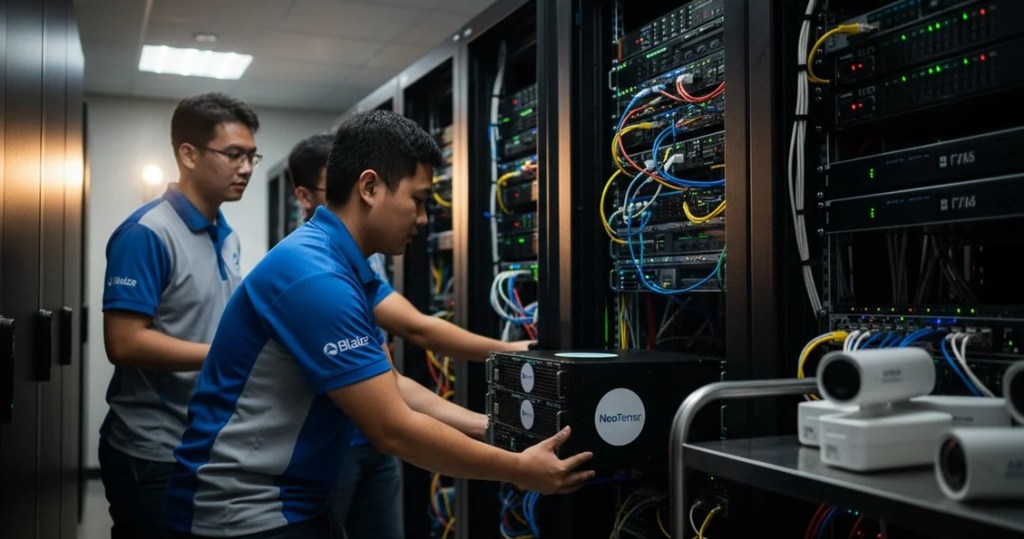
The agreement focuses on building a full-stack edge AI ecosystem rather than delivering isolated components. Instead of selling just chips or servers, the two companies are working on co-branded AI edge data centers that combine hardware optimized for inference, a software layer for deployment and orchestration, and real enterprise-facing AI services. The projected value reaches $50 million, and this comes after the two companies already generated over $20 million together in 2025. That makes it clear this is not an early-stage experiment, but a continuation of something that is already working.
Why this matters now
The key idea behind this move is simple: AI is shifting closer to where data is created. Instead of sending everything to the cloud, companies are deploying compute directly at the edge, which reduces latency and allows systems to react in real time. It also changes how data is handled, especially in environments where privacy or bandwidth is a concern. This direction is described well in edge AI for real-time analytics systems, where local processing becomes the default instead of the fallback option.
The hardware layer behind the trend
None of this works without the right hardware. Edge AI systems need chips that can handle multiple workloads at once, including computer vision and neural network inference, while staying power-efficient. That is why the industry is moving toward newer SoC designs, such as those discussed in next-generation Rockchip AI processors comparison, where architectures are built specifically for mixed AI workloads rather than general-purpose computing. This shift in silicon design is what makes large-scale edge deployments like the Blaize and NeoTensr project possible.
Why APAC is the focus
Asia-Pacific is not a случайный выбор. The region combines dense urban infrastructure, strong manufacturing capacity, and rapid adoption of smart systems across industries. This creates an environment where edge AI can be deployed at scale and tested in real-world conditions. In many cases, technologies that succeed in APAC later expand globally, which makes this rollout particularly important to watch.
The bigger picture
What makes this deal stand out is not just the size of the investment, but how it is structured. Instead of focusing on isolated pilots or limited experiments, the companies are building infrastructure from the ground up with real deployment in mind. The emphasis is clearly on enterprise use cases, and the solution itself combines hardware, software, and services into one integrated system. This approach reflects a broader shift in the AI industry, where value is no longer in individual components but in complete, deployable platforms.
Final takeaway
The Blaize and NeoTensr partnership is a clear signal that edge AI is entering a new phase. This is no longer about concepts or early prototypes. It is about infrastructure that is being built and deployed in real environments. If this $50 million rollout proves successful, it will likely accelerate similar projects across other regions and push the industry further toward distributed AI systems that operate closer to where data is generated.


You must be logged in to post a comment.