

Solar installations often produce the most when their owners need the least energy. The economics of storing surplus electricity depend on tariff structure and daily behavior. Start with an operating requirement that can be verified in the field. Procurement language is much more useful when engineers, owners and operators agree on the same boundary of responsibility.
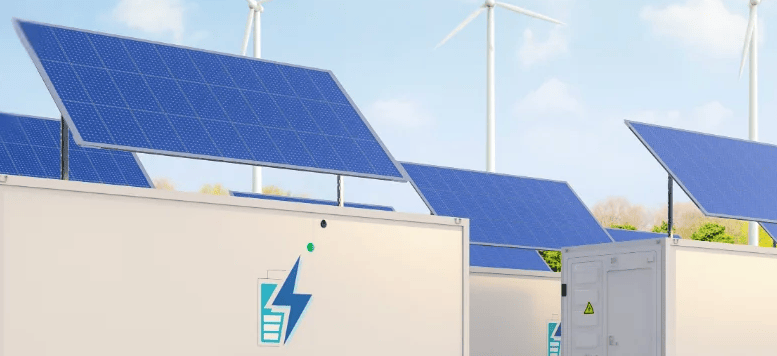
Commission More Than the Cabinet
Acceptance tests should include realistic power steps, protective trips, communications loss and recovery after shutdown. A successful first charge is only a basic function check. Site teams also need evidence that alarms reach the responsible operator and that isolation can be performed safely. Test records should connect each observed result to the agreed operating requirement.
Model Revenue Conservatively
Avoid combining every possible benefit at its maximum value. A battery cannot simultaneously dedicate the same capacity to energy shifting, demand reduction and emergency reserve. Work with mutually consistent dispatch scenarios, including low-utilization periods. The most persuasive financial model shows which benefits remain under less favorable prices, loads and weather.
A practical way to evaluate solar battery storage against the real constraints of this location, not the capabilities of an ideal test site. Calculate round-trip losses, usable capacity and seasonal PV output within one hourly energy model.
Protect the Energy Reserve
Fast support actions draw upon real available power and energy. State-of-charge management therefore affects the ability to meet performance obligations across the day. An operating strategy that maximizes trading revenue may leave insufficient headroom during a network event. Test schedules should include partially charged conditions, not just a fully available battery.
A battery sized only to maximize self-consumption may be poorly matched to resilience or demand reduction objectives.
Make Fault Isolation Clear
A storage plant can include multiple converter blocks, transformers, cables and shared auxiliary services. Operators need to know whether a disturbance should trip one section or the whole installation. Protection selectivity and access arrangements affect availability as much as individual component reliability. Emergency and maintenance procedures should follow the final electrical topology.
Price the Operating Obligation
The business case should distinguish contracted network services from hypothetical future revenue. Availability guarantees, response tests and permitted state-of-charge windows may limit commercial dispatch. A low purchase price offers little protection against penalties for unmet service commitments. Evaluators should compare offers against the same duty cycle and connection conditions.
The case for solar battery storage is best established through a measurable site-level outcome. Ask for a sensitivity analysis covering tariffs, cycling frequency and battery replacement assumptions.
Document Control Interfaces
Inverters, batteries, meters and generator controllers may come from different suppliers. Each interface requires agreed data points, timing and fallback behavior. Test communication loss as carefully as normal dispatch. Without clear ownership, operators can struggle to diagnose a problem that crosses two otherwise functioning devices.
A relevant product reference for solar battery storage can help frame the final acceptance tests. Supplier documentation still needs to match the selected configuration.
What’s something you’ve done that you never thought you could?
View all responses


You must be logged in to post a comment.