First Winter in a Rented Flat? Heating Know-How Every Student Should Have

Moving into a first rented flat teaches a long list of practical lessons that no lecture covers: how bin collection works, which bills are included and what to do when the heating stops. For many students and young renters, the first cold snap is the first time they have had to think about a boiler. This article collects the essentials so that you know what to check, who to call and what rights you have.

Modern boilers are generally reliable, but they do not always like being ignored. A system left off all summer and then switched on at the first frost can need a little attention. If the boiler will not start, this practical guide from Olia’s Plumbing & Heating explains the common reasons a boiler does not fire up and the checks that are safe for a non-specialist.

Student sitting on a sofa with a laptop beside a radiator in a rented flat during winter

Learn the basics on day one

On moving in, spend ten minutes finding out how the heating works. Ask the landlord or agent to show you:

  • where the boiler is and how to read its display;
  • where the pressure gauge is and what the normal range is;
  • how to set the timer or programmer and the room thermostat;
  • where the stopcock is, in case of a leak;
  • where the gas meter and the emergency control valve are;
  • where the instruction manual is kept.

Take photos of the boiler, its controls and any labels. They help if you need to describe a fault later.

Using the heating efficiently

Heating costs are a significant part of student budgets, particularly when bills are shared. A few habits help without leaving the house cold:

  • set the thermostat to a steady, comfortable temperature, often around 18 to 21 degrees Celsius, rather than switching between maximum and off;
  • use the timer so the heating comes on shortly before you are home;
  • close doors to keep heat in the rooms you use;
  • use thermostatic radiator valves, if fitted, to lower the temperature in rooms you rarely enter;
  • draw curtains at dusk and use draught excluders on doors.

Housemates should agree on a routine early to avoid disputes about the thermostat.
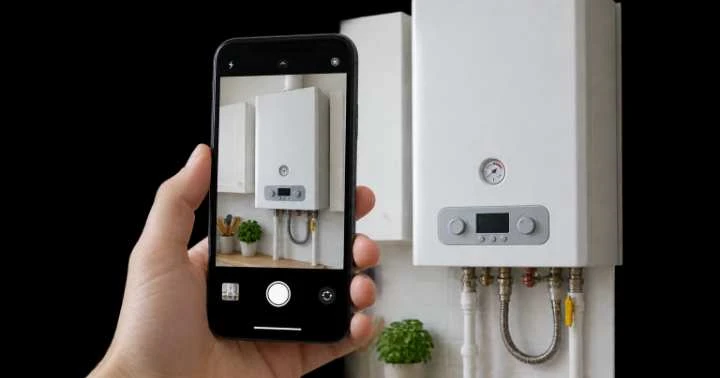
Tenant photographing the boiler pressure gauge and controls in a rented flat kitchen

If the boiler stops working

Start with simple checks:

  1. Is there power to the boiler? Look at the display and check whether a fuse has tripped.
  2. Is the programmer on, and is the thermostat set higher than the room temperature?
  3. What is the boiler pressure? If it is well below the normal range, tell the landlord, since a low-pressure lockout is common.
  4. Is there a fault code? Photograph it and look it up in the manual.
  5. Has the weather turned very cold? A frozen condensate pipe can shut a condensing boiler down.

Many boilers can be reset by pressing a button once. If the fault returns immediately, do not keep resetting it. Do not remove casings or tamper with the boiler. Tenants should report heating faults to the landlord or letting agent promptly, in writing, and keep a copy of the message.

Your rights as a tenant

In England, landlords are responsible for keeping gas appliances and the heating and hot water installation in repair. Landlords must also arrange an annual gas safety check by a Gas Safe registered engineer and give tenants a copy of the record. New tenants should receive the latest certificate before they move in. If you have not seen one, ask for it.

The housing charity Shelter England sets out who is responsible for heating and hot water repairs, and Citizens Advice publishes independent information on what to do when a landlord is slow to act and how to escalate a complaint. Keep records of every request, with dates and copies of messages. If you rent through a university or a private halls provider, the accommodation office is also a route for repairs.

Tenancy rules differ across the UK nations, so check the version that applies where you live.

Gas safety and carbon monoxide

Rented homes with gas appliances should have a working carbon monoxide alarm in rooms with fixed combustion appliances, and tenants should test alarms regularly using the button on the unit. The warning signs of carbon monoxide poisoning include headaches, dizziness, nausea and breathlessness, and they often ease when you leave the building. Never ignore these symptoms if more than one person in the flat is affected.

If you smell gas, do not use light switches or naked flames, open doors and windows, leave the property if the smell is strong and call the National Gas Emergency Service free on 0800 111 999.

You can also check that any engineer visiting your flat is on the Gas Safe Register, and ask to see their ID card. This is a reasonable request that no genuine engineer will mind.

What to avoid

Student flats are prone to a few risky habits during cold weather:

  • using a gas oven or hob to heat the room;
  • blocking ventilation or air bricks to stop draughts;
  • drying clothes directly on or over a radiator for long periods, which traps moisture and encourages mould;
  • covering a boiler or storing items in its cupboard against the manufacturer’s advice;
  • using portable heaters carelessly, particularly near beds, clothes and curtains.

Window condensation above a radiator in a rented flat bedroom on a cold winter morning

Damp and condensation

Cold weather and closed windows can lead to condensation and mould. Wipe condensation from windows in the morning, use extractor fans when cooking or showering, keep furniture a few centimetres from external walls and open windows briefly to let moisture out. If mould appears persistently, report it to the landlord, since it can indicate a ventilation, heating or damp problem that needs fixing.

Quick winter checklist for renters

  • Photograph the boiler display and gauge when you move in.
  • Ask for the current gas safety record.
  • Know where the stopcock and gas emergency valve are.
  • Agree a heating routine with housemates.
  • Report faults in writing, early.
  • Test your carbon monoxide alarm.
  • Save 0800 111 999 in your phone.

Summary

Winter in a rented home is far easier if you know a little about the heating before it fails. Learn the basics, use the system sensibly, report problems promptly and understand the rights and safety checks that protect you. When the boiler refuses to start, work through the simple checks, leave anything inside the appliance to a registered professional and keep records of everything you report.
CHAC CQC1 vs CQC6 AC Contactors: Current Ratings, Coils and Accessories

CHAC Electric manufactures CQC1 and CQC6 AC contactors for motor-control applications. The two series differ in current range, coil options and accessories. CHAC also offers engineering, branding and packaging services for importers, distributors and equipment manufacturers sourcing contactors under their own brand.

CQC1 has the wider current range: 9–800 A under AC-3 at 400 V. CQC6 covers 6–95 A under AC-3 at 380/400 V, including a 38 A model. Above 95 A at these conditions, CQC1 is the applicable range of the two. Where the current ranges overlap, the choice also depends on coil supply, auxiliary contacts, accessories and installation dimensions.

CHAC reports more than 30 years of low-voltage electrical manufacturing experience and over 1,100 employees. Its facilities include automated assembly, injection molding, stamping and testing. The company offers original equipment manufacturer (OEM) and original design manufacturer (ODM) services, including coil and auxiliary-contact configuration, logos, labels and packaging.

CQC1 vs CQC6 AC Contactors: Key Differences

Both series are listed in the CHAC AC contactor range. Some models have the same current rating, but their coils, accessory interfaces and dimensions are specified separately.

CHAC CQC1 and CQC6: series selection comparison

Selection pointCQC1CQC6Practical implication
Published AC-3 current range at 400 V9–800 A6–95 A, listed at 380/400 VCQC1 covers requirements above 95 A at this voltage and duty.
Intermediate model stepsIncludes 32 A and 40 A models at 400 V.Includes 32 A, 38 A and 40 A models at 380/400 V.CQC6 includes a 38 A step between 32 A and 40 A.
Published AC-4 dataSeparate current ratings are listed for 380/400 V and 660/690 V.The reviewed product table presents AC-3 ratings; an AC-4 current table is not provided.CQC1 provides published AC-4 ratings. CQC6 requires further data from CHAC for this duty.
Coil informationThe 09–95 A block lists AC and DC control-supply options.The technical table lists AC control-supply options at 50/60 Hz.Coil supply and main-circuit voltage are separate specifications.
Accessory informationLists F4 auxiliary blocks and S4/S5 delay accessories, with mounting arrangements dependent on frame size.Lists auxiliary blocks, interlocks, coil suppression and timer accessories with model-specific compatibility.Accessory compatibility depends on the series and frame.

CHAC’s CQC1 specifications and CQC6 specifications contain the model tables, dimensions and accessory information used in this comparison.

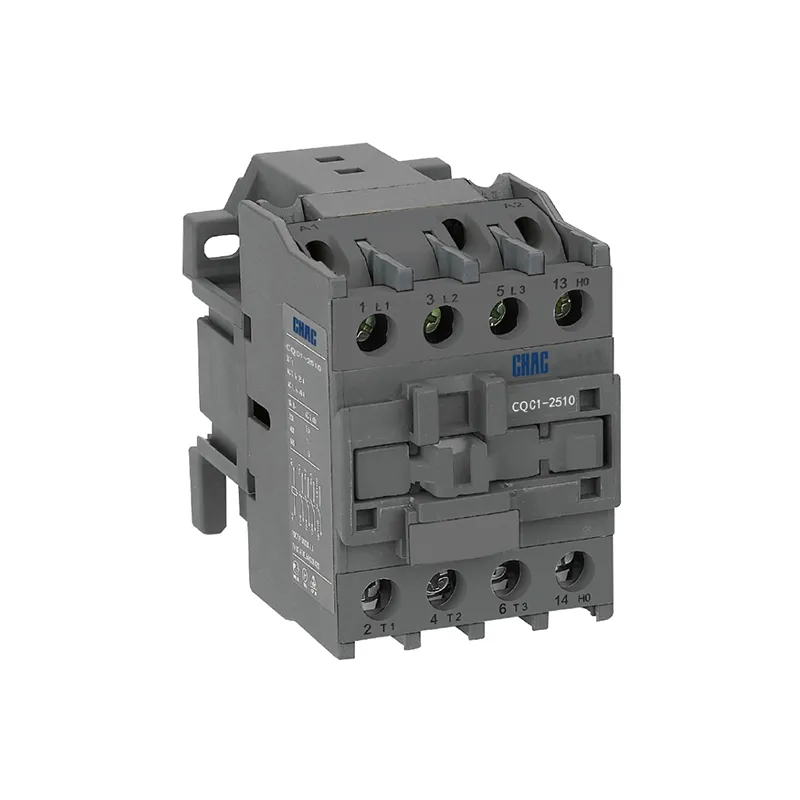
CHAC CQC1 AC contactor product view

CHAC CQC1 series AC contactor.

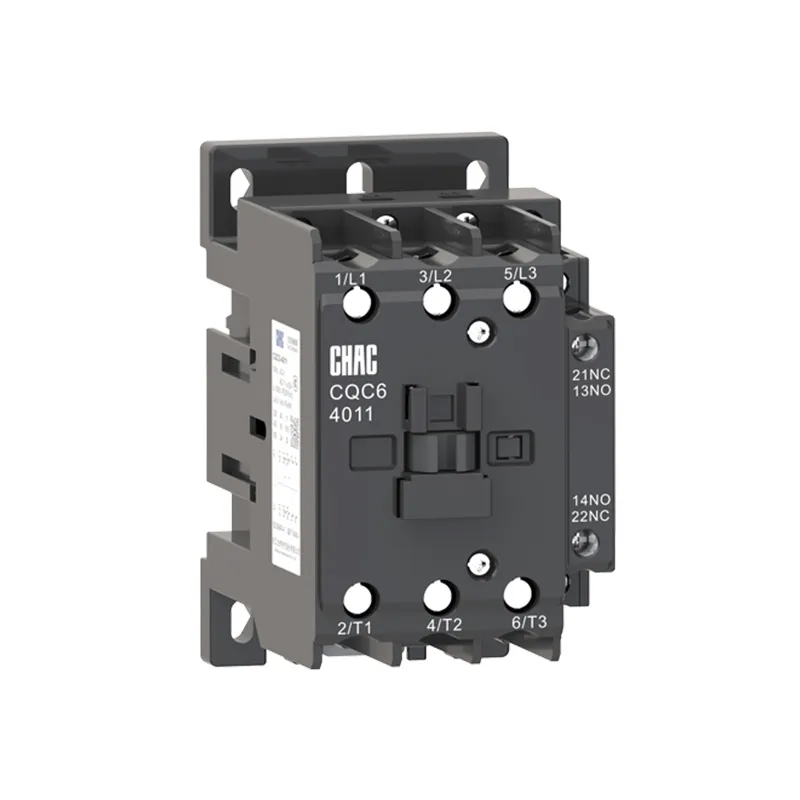
CHAC CQC6 AC contactor product view

CHAC CQC6 series AC contactor.

CQC1 and CQC6 Current Ratings at 400 V and 690 V

A contactor’s rated operational current, Ie, applies at a stated voltage and utilization category. Its rated insulation voltage, Ui, is a separate parameter. The current available for switching a load therefore comes from the relevant operational-rating row, not the insulation-voltage value.

For example, CQC6-38 is rated at 38 A under AC-3 at 380/400 V and 20.2 A at 660/690 V. CQC6-32 is also rated at 20.2 A in the higher-voltage row. The 38 A model offers more current at 400 V, but no increase over CQC6-32 at 690 V.

Selected AC-3 ratings from the published model tables

ModelIe at 400 VIe at 690 V
CQC1-3232 A21 A
CQC6-3232 A20.2 A
CQC6-3838 A20.2 A
CQC1-9595 A49 A
CQC6-9595 A49 A
CQC1-115115 A86 A

The CQC6 table groups its ratings under 380/400 V and 660/690 V; CQC1 uses 400 V and 690 V. The table above compares the common 400 V and 690 V points. Both 95 models are rated at 49 A under AC-3 at 690 V; this shared rating does not make them mechanically interchangeable.

For orders covering several operating voltages, CHAC needs the load requirement at each voltage. A model number alone leaves out the conditions behind its current rating.

AC-3 and AC-4 Ratings for CQC1 and CQC6 Contactors

CQC1-32 is rated at 32 A under AC-3 at 400 V. Its AC-4 rating is 12 A at 380/400 V. The same contactor therefore has different current limits for these two switching duties; the 32 A figure cannot be used for an AC-4 application.

CHAC publishes separate CQC1 AC-4 ratings at 380/400 V and 660/690 V. The reviewed CQC6 table provides AC-3 data without a separate AC-4 current table. An AC-4 enquiry for CQC6 needs additional ratings from CHAC.

CHAC’s engineers can assess a proposed application from the switching sequence, starts per hour and service conditions. Electrical endurance depends on the switching load; mechanical-life figures describe a different condition.

AC and DC Coil Options for CHAC Contactors

The main circuit carries the switched load, while the coil operates the mechanism. Coil voltage follows the control supply, identified as Us in the technical tables. A 400 V motor circuit may use a different control voltage, so both belong in the order specification.

CQC1’s 09–95 A technical block lists AC coils of 24, 36, 110, 220 and 380 V at 50/60 Hz, plus DC options of 24, 48, 110 and 220 V. These values apply to that block. The 115–800 A frames have separate coil data.

CQC6 lists AC coil voltages of 24, 36, 48, 110, 220, 230, 380, 400, 415 and 440 V at 50/60 Hz. Its reviewed table does not list a DC option. For a 24 V DC control circuit, CQC1’s 09–95 A block includes a published option; a CQC6 DC-coil enquiry requires confirmation from CHAC.

Coil demand also changes between pickup and holding. CQC6-9 is listed at 70 VA for pickup and 8 VA when sealed. A control supply sized only for 8 VA would leave out the higher pickup demand.

CHAC accepts coil-voltage customization enquiries. Availability depends on the frame and requested supply; the approved sample specification should identify the complete order code and coil marking.

Contactor Accessories: Auxiliary Contacts, Interlocks and Mounting

An auxiliary contact provides a separate control or indication function. Its required normally open (NO) and normally closed (NC) arrangement should be specified in addition to the main switching contacts.

For CQC1 models rated 32 A and below, “10” identifies one NO auxiliary contact and “01” identifies one NC contact. The 40–95 A group uses “11” for one NO plus one NC contact. CHAC’s model note describes the 115–800 A group as conventionally supplied without auxiliaries, so larger-frame orders need any required auxiliary blocks specified separately.

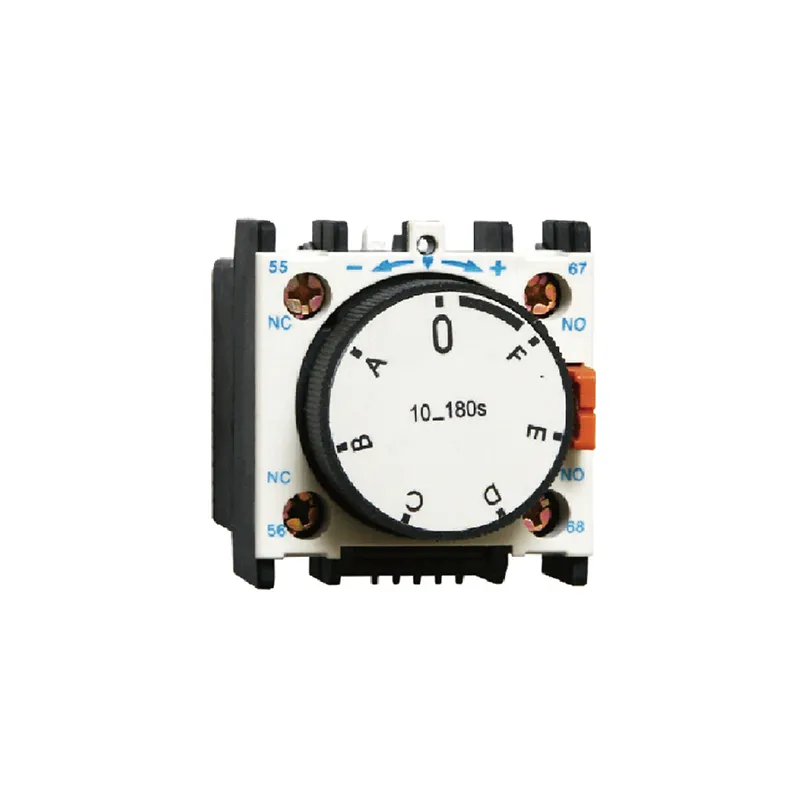
CQC6 accessories include top-mounted two- and four-contact blocks, side-mounted auxiliaries, timer heads and interlock kits. F2-LS1 mechanical interlocks are listed for CQC6-06–38; F2-LS2 is listed for CQC6-40–95.

Auxiliary blocks and timer heads add to the installed dimensions. CHAC offers configuration and drawing support for the assembled contactor, including the requested NO/NC contacts and accessories. The assembly drawing should show the space needed for terminal access and maintenance.

CHAC CQC1 series accessories shown on the official product page

Accessories shown on CHAC’s CQC1 product page.

AC Contactor Protection and Export Documentation

CQC6’s table includes gG-fuse values for Type 2 coordination under stated conditions and without an integral thermal overload relay. Those values apply to the stated arrangement. Other fuse, breaker and overload-relay combinations need their own coordination data.

The CQC6 making- and breaking-capacity data reference IEC 60947-4-1 and GB/T 14048.4. These references identify the standards used in the table, not approval for every destination market. CHAC accepts requests for datasheets, certificates and drawings; the documents supplied need to cover the ordered model and configuration.

Testing laboratory presented on CHAC Electric’s website

Testing facilities presented by CHAC Electric.

CHAC Contactor OEM/ODM: Coils, Contacts and Private Labels

CHAC’s industrial control OEM/ODM services cover coil voltage, auxiliary contacts, electrical parameters and engineering development. For private-label orders, the company offers logos, nameplates, product identification, cartons, labels and manuals.

A branding change and a technical modification involve different work. Logo and carton requirements can be specified alongside existing models. A nonstandard coil or contact arrangement may need engineering work, samples or further testing, with the requirements agreed before production.

For repeat orders, the approved drawing, coil code, accessory list and artwork provide the product reference. Inspection and test records can then be discussed against that configuration.

Automated assembly equipment presented on CHAC Electric’s website

Automated assembly facilities presented by CHAC Electric.

CHAC AC Contactor Purchasing FAQs

Can a CHAC Contactor Replace My Existing Model?

That depends on the existing contactor’s electrical ratings, coil, contacts, mounting dimensions and protection arrangement. CHAC needs its datasheet or nameplate details and a drawing to assess a replacement. Equal amperage alone is insufficient.

Can I Use CQC1 and CQC6 Accessories Interchangeably?

The published data do not establish cross-series interchangeability. Accessories are listed by series and frame. Even within CQC6, F2-LS1 and F2-LS2 mechanical interlocks serve different frame groups. CHAC needs the exact contactor model to confirm an accessory combination.

Which CHAC Series Lists a 24 V DC Coil?

CQC1’s 09–95 A technical block includes a 24 V DC coil option. The selected model still needs the required main-contact rating and mounting dimensions. The reviewed CQC6 table lists AC options, so a DC version needs confirmation from CHAC.

Can CHAC Supply Contactors With Our Logo and Packaging?

Yes. CHAC offers private-label logos, nameplates, labels, cartons and manuals. The enquiry needs the models, quantities by coil configuration, artwork and packaging requirements. The sample and product documents should reflect the version being ordered.

Does CHAC Provide Contactor Drawings and Technical Support?

Yes. CHAC offers technical-document enquiries and product selection and engineering support. Drawings and datasheets need to match the selected model, coil and accessories, including any modifications.

What Information Does CHAC Need for Contactor Selection?

The main inputs are load current, operating voltage, switching sequence, control supply, auxiliary contacts and mounting space. Interlock or timing requirements also affect the assembly. A complete model code is not necessary for the initial technical enquiry.

What Are the MOQ and Lead Time for Private-Label Contactors?

The minimum order quantity (MOQ) and delivery schedule are confirmed in the quotation. They depend on the model mix, quantities, customization and packaging. CHAC states that production lead time varies with order quantity and process complexity.

Request a CHAC AC Contactor Quotation

To request a technical review and quotation, send your contactor requirements to CHAC Electric. Include:

  • Electrical requirements: load current, operating voltage, duty, switching frequency and control supply.
  • Assembly requirements: candidate models, auxiliary contacts, interlocks, timers, mounting constraints and protection scheme.
  • Market and documents: destination country, required drawings, conformity documents and inspection or test records.
  • Order scope: quantity per configuration, branding, labels, manuals, carton requirements and requested delivery date.