EARTHQUAKE AND ITS MANAGEMENT

India is a large country. It ranks seventh in the world. Also, it is the second-most populous country in the world. It is home to large biodiversity and a large proportion of people live in the lap of nature. Indeed, nature has provided ways and means for the sustenance of life on earth. Alongside, it is also one of the biggest sources of destruction. It can be due to earthquakes, floods, droughts, landslides, and many more. These are termed natural hazards and can cause great damage to human habitations.

This article is concerned with the mechanism of Earthquakes and how to manage and sustain them in case one arrives in our vicinity.

What is an earthquake? – Sudden movements under the earth’s crust cause shaking or vibrations of a part of the earth’s surface. These vibrations are called earthquakes. The shaking movements sent out by an earthquake are called seismic waves and the study of this phenomenon is called seismology.

The place of origin of an earthquake is called its focus and the place which is directly above the focus on the surface of the earth is called the epicentre. The effect of an earthquake is usually felt the strongest near the epicentre and it is most likely that the major part of the damage will also be caused in the surrounding areas.

Near about a million earthquakes are experienced on the earth every year. Most of them are just minor tremors and go unnoticed. 

A natural question may arise that if we have so much information about earthquakes, don’t we need to devise a method to track the movement and damage of an earthquake?

Well, much effort isn’t needed because a sensitive device named a seismograph is used to detect the occurrence of an earthquake.

Seismograph explained – Seismic waves are the vibrations from earthquakes that travel through the earth. They are recorded on instruments called seismographs, which follow a zigzag trace that shows the varying amplitude of ground oscillations beneath the instrument. The sensor part of a seismograph is referred to as the seismometer, while the graphing capability was added as a later invention. Sensitive seismographs, which greatly magnify these ground motions, can detect strong earthquakes from sources anywhere in the world. The time, location, and magnitude of an earthquake can be determined from the data recorded by seismograph stations.

The intensity of an earthquake is measured using an instrument known as the Richter scale. The Richter magnitude scale was developed in 1935 by Charles F. Richter of the California Institute of Technology as a mathematical device to compare the size of earthquakes.

What to do in case of an earthquake? – As already mentioned, not all earthquakes are life-threatening. But it is important to safeguard ourselves and the people around us from such a disaster. Given below are steps that need to be kept in mind while dealing with an earthquake. 

1) Moving to an open area helps. In case of a high-intensity earthquake, the buildings may fall and cause hurt. It is best to find an open spot.

2) Basic first-aid functions need to be learned in case of injuries suffered to you or people around you.

3) In case you are trapped in a building, try remaining close to an interior wall and protect your head with your arms ( in case the ceiling may fall). Also, avoid using a lift.

4) If you are already outdoors, keep away from trees, signboards, poles, and electric wires.

5) Never take shelter inside a car or a bus.

These are methods that are simple and easy to follow. But if you panic in such situations, chances are you wouldn’t be able to recall them. Hence the key tip is to remain calm and composed and then follow the steps.
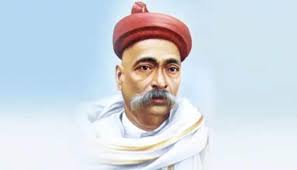
BALGANGADHAR TILAK

Independence has been a great achievement for our nation. But any great task requires sacrifice and hard work coupled with grit determination. Independence was much needed but this would not have been possible without our respectable freedom fighters.

Freedom fighters worked sweat blood to free the nation from the pangs of invaders. Some believed in peaceful protest and revolution such as the father of the nation Mahatma Gandhi while others like Khudiram Bose and Subash Chandra Bose believed in the supremacy of armed rebellion.

Among the many great warriors of India, one name holds a great and respectable position. The name is Bal Gangadhar Tilak, also called Lokmanya Tilak. It is very important that we know about the lives of our leaders and cherish their struggles because of whom we live freely.

Bal Gangadhar Tilak was born of 23rd July,1856. His real name was Keshav Gangadhar Tilak. He was a teacher and also an Indian nationalist and independent activist. He was born in a Marathi Hindu Brahmin family. His father, Gangadhar Tilak was a school teacher and Sanskrit scholar who died when Tilak was sixteen years old. After his father’s death, at the age of sixteen, he was married to Tapibai.

His educational qualifications included a Bachelor of Arts in first class in Mathematics from Deccan College of Pune in 1877 and L.L.B. degree from Government Law College in 1879.

Political Career– He had a long political career. Before the advent of Mahatama Gandhi, he was the most known political leader. Tilak was considered a radical nationalist but a social conservative. He joined the Indian National Congress in 1890. He opposed its moderate attitude, especially towards self-government. Tilak also played a key role in promoting the Swadeshi Movement and the Boycott Movement after the Partition of Bengal. Tilak opposed the moderate views of Gopal Krishna Gokhale and was supported by fellow Indian nationalists Bipin Chandra Pal in Bengal and Lala Lajpat Rai in Punjab. They were referred to as the Lal-Bal-Pal triumvirate. During his lifetime among other political cases, Tilak had been tried for sedition charges three times by the British Indian Government—in 1897, 1909, and 1916. In 1897, Tilak was sentenced to 18 months in prison for preaching disaffection against the Raj. In 1909, he was again charged with sedition and intensifying racial animosity between Indians and the British. The Bombay lawyer Muhammad Ali Jinnah appeared in Tilak’s defense but he was sentenced to six years in prison in Burma in a controversial judgment. In 1916 when for the third time Tilak was charged for sedition over his lectures on self-rule, Jinnah again was his lawyer and this time led him to acquittal in the case.

Tilak strictly opposed trends of liberal nature such as women’s rights, educating girls, and inter-caste marriage. He was particularly opposed to a form of marriage that involved a high caste girl and a boy of lower caste.

Also, Tilak started two weeklies Kesari ( in Marathi) and Mahratta in English. For this, he was recognized as the ‘awakener of India’. He appreciated the importance of identity issues in Modern India and motivated people to join the struggle for independence.

All in all, contributions made by Tilak were of significant importance and he is a leader to be remembered profoundly and a lot needs to be learned from him.

Sources- Wikipedia, Britannica, and Various News Articles

DEFAMATION AND RELATED DEFENSES

The reputation of a person is of utmost importance to him. It can be said to be his property, in some cases, more valuable than his property. It is not a very appreciable idea to injure the reputation of a person ( some exceptions).

Defamation is an injury to the reputation of a person. Defamation can be oral or written. For example, a person may defame another orally, in front of a large crowd, or through written ways using newspapers, magazines, or social media.

Defamation is a concept treated differently under English Law and Indian Law, with some similarities.

In English Law, the oral form or the form of words and gestures is called slander, and representations made in the written form are termed libel.  In English Criminal Law, only libel has been recognized as an offense. But in Indian law, both, libel and slander are criminal offenses under section 499 I.P.C.

But can any statement made concerning a person be termed as defamation?

No, that is not the case. Some prerequisites exist and they must be fulfilled for a statement to come under the ambit of defamation. Let us look into them

  1. The statement should be defamatory– As described earlier, a defamatory statement tends to injure the reputation of an individual. Whether a statement is defamatory or not depends on how the right-thinking members of society are likely to take it. The standard to be applied is that of a right-minded citizen, a man of fair intelligence.
  2. Statement in question must refer to the individual concerned – The statement must refer to the individual. I must be understood by right-thinking or reasonable-minded persons, as referring to the individual.
  3. The statement must be published– Published here does not refer to a newspaper or a book. It conveys that the statement must be communicated to some other person other than the individual himself.

What happens if someone files a case of defamation in a court of law against you or some family member of yours? Will you be liable and will you pay the damages for the same? Do you have some defenses at your hand that you can produce before the hon’ble court to set yourself free? Yes, sure some defenses can be used. Some of them are discussed below.

  1. Justification or truth – If it is somehow proved that the statement made is true, it serves as a good defense. But even ‘ truth’ is not a complete defense. It needs to be proved that the statement was made for the public good ( for example an article of a newspaper under inspection).
  2. Fair comment-  Making fair comments on matters of public interest is a defense to an act of defamation. But the following essentials are required for this defense to be used.

Firstly, it must be a comment; an assertion of opinion rather than fact. Secondly, the comment must be fair and thirdly, it must be made in the public interest.

3. Privileges- Absolute or Qualified- Some exceptions to cases of defamation exist. For example, absolute privilege is recognized in the Parliamentary Proceedings or Judicial Proceedings. That implies statements made here need no justification even though written or spoken maliciously. Qualified proceedings include matters like the publication of parliamentary proceedings or reports of parliamentary, judicial, or other public proceedings.

Defamation may seem an intricate topic, but it is not so. The phrase ‘choose your words wisely’ seems to apply very well in the case of defamation!

IMPORTANCE OF TREES

Everything is, in some way important in life. The trees that we usually pass by without giving much thought are an example. In our day-to-day life, we come across several trees. Some are long, some short, some may be bent. Some may have dried leaves or some may be home to different species of birds. Their importance is not realized and not much attention is given to them.

But they too are absolutely helpful when it comes to our survival. Sadly, a lot of trees have been struck down in the recent past for the construction of buildings and other developments.

Let us look at the importance and impact of trees in our life and realize how losing them may affect us.

  1. Greenery-  They provide a green environment for us. Many trees also have beautiful flowers growing on them, that form a serene environment around the place they are planted. Since many people use flowers to offer to Gods or use them during decorations, trees act as a helping hand.
  2. Home to birds- Many species of birds exist. Small and medium to large birds alike use trees as a shelter. It is home to many small, usually-not-noticed families!
  3. Balance in the ecosystem –   A balance in the ecosystem is maintained by the presence of trees. Since the world is technology-driven, pollution and diseases related to it are a common sight. Trees absorb the pollution and noxious gases emitted by vehicles and help us out from those diseases.
  4. Oxygen provider-   It is a well-known fact that trees take in carbon dioxide and release oxygen, which is a basis of survival for most of the creatures residing on earth.
  5. Important insects and microorganisms – Insects and microorganisms can be really important. Studies have shown that bacteria present on trees can act as fertilizers for them and increase their longevity of life.
  6. Prevention of soil erosion-  Soil erosions can prove to be disastrous. Trees help to prevent it because the roots are deep and hold the soil together. Also, the soil is important for the survival of many microorganisms that live deep in it, and hence trees are also helpful for them and in turn a better ecosystem.
  7. Food for animals and humans alike-  In big forests such as the Sunderbans or the Amazons, a lot of herbivores live. They feed on the leaves of these trees and this ensures their survival. What magical position trees hold not just in human habitations, but also deep woods!
  8. Medicinal and Herbal Purposes – Medicinal uses of trees are in continuance since time immemorial. A lot of trees, for example, the neem tree provide multiple benefits for the human body. They are either used directly or used in cosmetics and medicines.
  9. Ah, those juicy fruits!- Remember throwing stones at trees, waiting for the mango to fall so that we could have a taste of it? The fact that trees provide us with many fruits, juicy and tasty needs no elucidation as every one of us must have enjoyed the delicious taste at least once in our life.

In a nutshell, trees are important and they need to be preserved if we want to continue living a healthy and hearty lifestyle.

SURVIVING THE COMPETITIVE WORLD.STRESS-FREE.

‘Cutthroat competition’ is a phrase we all must have heard. Population in the country is increasing and so is the competition for survival, be it any aspect of life. Students are vying for a seat in some good government college and college pass outs for jobs. Not just this, people are migrating from their home towns to cities that have job prospects. 

This might sound like a great change, leading to a lot of growth not just of people but also of the nation, but in reality, things are a bit different.

Stress among people is becoming common and almost all people are being affected by it.

How does this stress develop? Let us take the example of students. In a class of 40 students, not all are bright and child prodigies. Some may be good at sports, some at arts and crafts, and some at literature. But the priority is always set on scoring high. Students who score better get to have the limelight. This puts undue pressure on the remaining students. The sad part is when parents compel their children to score high neglected their aptitude and their learning speed, which is required to ace exams that are taken with a defined syllabus to learn in a given time and the basis of the promotion to the next class is the amount of information that you can retain and write from that given set.

Such a procedure puts many students under a great deal of stress. They are not able to perform and in turn, get scolded by parents and teachers. No doubt, some students deliberately don’t study, but putting all students not being able to perform well under the same umbrella is not very appreciable.

Somewhat similar is the case with college dropouts or people who already are employed somewhere. 

The competition cannot be reduced and survival is also important. ‘Survival of the fittest’, as was rightly said by Charles Darwin. What we can do is cope with the stress and, if possible try not taking stress at all.

Here are a few pointers that you can use to your advantage.

  1. Follow your passion-  No stress is there if you are enjoying what you are doing. And if you are doing this enjoying thing for a living, no problems exist. Hurdles may come on your road to follow your passion. Some parents might not agree with what you are pursuing a living plus some other factors also exist. For that one tip- Stay Determined! Also, the profession you are willing to carry out must be a respectable and decent one!
  2. Share with friends and family- They are the closest to you. Share with them any problems you are facing or any stress you are having.
  3. Exercise! – Physical fitness and activity play an important role in relieving stress and making the already empowered brain stronger.
  4. Don’t put too much pressure on yourself- Everybody is different. Everyone has his own pace. There is no need to copy someone. Be at your speed. There have been people who have amassed huge amounts of money in the very late stages of their life.

Life is one. Make the best possible use of it and live it stress-free!

INFRASTRUCTURAL DEVELOPMENT IN VILLAGES,BUT AT WHAT COST?

Infrastructural development is on the rise. Cities and states are developing rapidly. Where once stood an under-constructed building or an open ground, now stands a grand mall or a fancy showroom. With all these developments going on, villages also want to get empowered and compete head-to-head with the cities in terms of infrastructure.
The very first step towards a good infrastructure is an easily accessible road. Since villages don’t have roads or the ones they have are not plain and smooth and full of puddles, smooth roads are being constructed nowadays.
For this, nearby jungles are being cleared to gather more space for the construction of a better connectivity-driven road.
A simple and subtle example that can be taken is of villages in Uttarakhand. It is a hilly area with narrow roads are jungles on both sides (this is the case in the villages and not in developed cities like Dehradun and Mussorie). Various animals reside in those forests. Along with deer, buffaloes, antelopes, and in some places bears, leopards too constitute a good fraction of the woods.
With the jungles being cleared at a rapid rate, the food cycle is being disturbed. This can be understood with a simple explanation. Forests are composed of trees, shrubs, and plants. The deer or the buffaloes in the area, being herbivores, survive on them. They thus, in turn, continue to reproduce offspring ensuring a continuous supply of food to the big cats. These cats eat, reproduce and die, making food for eagles, crows, and other meat-eating birds.
Therefore, a continuous supply of food, survival, and continuation of species is ensured within the forest premises and all live happily with no business with the outside world, where majorly the homo sapiens reside.
Since infrastructure is on the rise, jungles are being cleared and a lack of grass and trees is observed, deers and other herbivores are dying, blocking the supply of food to the big cats.
Some of these big cats are either dying or are wandering into human habitation in search of food. They often get into cattle houses or stables and consume the whole animal. There have been cases when people have seen leopards take away one full cow and they could not do anything but wait for him to leave. Such is the power of the mighty cat!
Upon human intervention, leopards do not hesitate to kill or injure the humans badly and mercilessly.
Not only this, another issue is deforestation. Since trees are being chopped down, the soil is left unattended giving rise to soil erosion. Since Uttarakhand consists of a good deal of forests and a lot is covered by them, the felling of trees is seen as a problem when heavy rains occur, resulting in landslides and loss of humans and animals alike.
Pollution is another issue related to the felling of trees. We know that trees convert carbon –dioxide to oxygen. Since trees are not there, pollution levels in villages, which once were tourist destinations or vacation spots for people are seeing low footfall and more pollution. This not only impacts humans but the economy and progress rate of the state too.
The fact that infrastructural development is important cannot and should not be ignored. But at what cost is this being done? How many people are left in the villages of the state? The statistics say it all.

THE FESTIVAL OF DIWALI AND HOW TO MAKE IT MEMORABLE FOR EVERYONE

India is a secular country. People of various religions reside here and all have different festivals to celebrate. All the festivals are celebrated with great joy and unity and people of some other religion celebrating festivals of another is not a rare sight.
One such festival is Diwali, also called Deepawali. It is a festival mainly celebrated among Hindus. It holds a good position in the list of important festivals for the people of the community. Not only adults, the children too wait eagerly all year round for the festival.
The celebrations not just start on the day of the festival but begin a couple of days before. People visit their relatives and neighbors and the exchange of sweets, utensils, and ornaments takes place. Dhanteras, Govardhan Puja, and Chotti Diwali are other small occasions that precede Diwali. People light up their homes, draw mesmerizing and colorful rangolis and decorate their houses. Children cannot wait to run outside and burst firecrackers with their friends after the puja. People dress up wearing new clothes and are all set to click pictures. A feast is prepared and people enjoy themselves to the fullest.
But what is the reason that these particular celebrations are made? Why not the occasion be celebrated some other way?
Well, there is a reason for that too. The festival of Diwali dates back to the time of Lord Rama. It is celebrated to mark the victory of good over evil. Also to celebrate the return of Lord Rama to Ayodhya after killing Ravana, to save his wife Sita. He then came back to Ayodhya to become an ideal king. For this, people spend the whole day decorating their homes and shops and colorful and sweets and chocolates are displayed outside shops.
Not only Lord Rama, but people also worship Goddess Lakshmi.
Over the years, Diwali has been celebrated with complete enthusiasm but a part of the celebration is causing harm to not just animals, but us also.
Firecrackers have been a big menace over the years. Cases of extreme burns and injuries can be seen in the news just a day after the festival.
Pollution is another problem. We already live in a highly polluted environment. Smokes from vehicles, less than the required number of trees are problems that are on the rise. On top of this, a lot of air pollution is added to the environment when firecrackers in such high numbers are burst. This pollution impacts the health of the kids and the elderly negatively.
Another issue which needs attention is the animals. Stray as well as pets. A lot of us have dogs at home or strays around us whom we love. Bursting of such high-sound firecrackers causes them stress. Some may even have heart attacks or are depressed for a long period. While pets can be soothed to some extent, it is the strays that suffer the most. Many of them get injured while wandering around a firecracker that has already been put on fire.
Wastage of money on these Chinese products is also one point. Most of the firecrackers are made in China and one should avoid using their products. Reasons are obvious and need no elucidation.
Diwali is an important festival, so why not make it enjoyable and memorable for everyone. Why not celebrate it safely to bring out the best memories possible of the festival!

IMPORTANCE OF TIME MANAGEMENT AND HOW TO DO IT

Life can sometimes be hotchpotch. With a lot of tasks to be completed and all of them urgent and not knowing where to start from; we all have been in this situation. Some would have been able to complete all the tasks, some partially and some would have given up even before starting, knowing very well their failed attempts at multi-tasking would not be of any help.

For all these three categories of people, managing time wisely would have been helpful. Some may argue that the first category of people completed all the tasks successfully. But has to be kept in mind that it was mere luck and in terms of quality, justice may not have been served to the tasks.

The task here does not mean only in the case of office goers or people working in companies. School-going children who have homework to be complete or have exams coming up or sportsperson, who have to do various kinds of warm-up exercises also count.

Managing time is indeed important, for it brings out the best work possible and creates minimum pressure on a person to complete the task in a hurry.

But how exactly to manage time? Given below are a few key pointers that may help – 

  1. Distinguishing between Important and Urgent – Understanding the difference between tasks that are ‘important’ and tasks that are ‘urgent’ is a necessary requisite for time management. While a task has to be completed in itself is evidence that the task holds some importance in your life. But a task may be ‘important’ but not urgent. Such as task has to be done, but not immediately. Other tasks need immediate attention (urgent). If one focuses on the important tasks first and later realizes that the time for the urgent ones is going out of hand, a ruckus is created. Hence, categorization of your tasks is important.
  2. Write them down– Writing them down helps. Pen down your tasks, either for a day or part of a day so that you do not have to remember them again and again. This will make life simpler and more smooth.
  3. Be determined– Time management isn’t a skill to learn in a day. It needs practice. And expertise will be achieved only if daily tasks that you pen down are completed. Order of the tasks may not be necessary to follow. The focus should be completing, rather completing every task mentioned. For this, one has to be determined and ready to put in the effort.
  4. Don’t forget to include sleep and exercise in the schedule!- No doubt tasks need attention, but so does your sleep and physical fitness, and exercise. Do not, under any circumstance, deprive yourself of sleep and exercise. Include them in the list too. Since a healthy mind resides inside a healthy body, ignoring these two and continuous hours of work is not advisable.

These are simple tips to lead a peaceful life by managing your time properly and be able to spend a quality life.

Cheers!

Should we visit zoos?

Visiting places is a great source of recreation. After all the work that you did in the last week, you deserve a vacation. People are different and so are their choices. Some may like to visit a park, to some, a monument might be a place for leisure. Others may go to a science exhibition or a museum. A commonplace that we all must have been at least once, is a zoo ( abbreviated form of Zoological Park).

A zoo is an enthralling place for it is home (artificial though) to a lot of animals. And it is the basic nature of an organism to be intrigued by a creature of another species. That is the reason we like going to zoos. Mostly, people visit the premises with their children. Children are the ones who enjoy the sight of animals the most. These children later become adults and take their children to zoos and the cycle continues.

But is it worth it going to a zoo? Rather the question should be that ‘Should we go to a zoo?’

I would say no. Reasons are less but carry weight and are mentioned below in as systematic a way as possible.

  1. It is not their natural habitat –  Ever saw a tiger inside a cage? How does it behave? Does he seem happy or is he angry and frustrated? No doubt, big cats like lions, jaguars, and tigers and provided a decent place to live, but is that adequate for them? These creatures and built to live in the open, hunt, run, and enjoy life. But here, in a zoo, they are enclosed within a designated area in the name of preservation and people enjoy their sight.

The same is the case with a chimp or a crocodile or several animals and birds present there. Rather all of them.

  1. Are they fed enough? –  On average, an adult tiger or lion requires about 6-12 kg of meat daily. So, is this consumption need of these cats being fulfilled at the zoo? Corruption in the funds for the food for the animals has been in news many times. Not only this, a normal prudent man can, just by looking at the physical appearance of the animals deduce that they aren’t well-fed and properly taken care of. 
  2. What are you throwing at them and why are jumping off?– People throwing stones, food items that are not even good for the animals is a rare sight. Imagine the number of damages the animals suffer due to this callous behavior of the visitors. And a drunk man jumping off the railing into a white tiger’s area is a story that needs no elucidation. The incident made evident the lack of security and careless behavior on part of the authorities to ‘protect’ the animals.
  3. Are they an item for viewing?- Don’t these animals that you and your family enjoy viewing have a right to live; that too freely? Are they items to be viewed and enjoyed?

A good, healthy thought needs to be given to this and if some sense knocks in, things will change for sure.

IMPORTANCE OF CHILDHOOD AND HOW TO MAKE IT MEMORABLE

Responsibilities constitute a major part of the life of an adult being. When a person starts to grow, responsibilities on his shoulders do too. But what about life before adulthood? How about responsibilities at that stage of life? Minimum. Hardly exist.
Childhood is a really fun part of life; not for all though. Unfortunately, some lose their childhood due to family situations which may include poverty or the death of the breadwinner.
But this article focuses on the positives of childhood. What are the impacts of a good childhood on an individual and how can one make the childhood of their near and dear ones the best phase of their life.
The beauty of childhood lies in the number of open choices we have and the carefree nature that we possess. As a child, we live in a world full of imagination. Everybody aspires to become ‘somebody’ but alas, only a few can pursue them as adults.
Also, as children, we share a special kind of bond with our parents. It is nowhere assumed that a special bond cannot be shared between adults and their parents but as we grow, so do responsibilities and we get more engrossed in our work and life. But as children we can wholly devote ourselves to spending time with parents and family; play video games, indoor games, and going out for picnics.
Stories of ghosts and snakes and rats that may take us with them are something we all must have heard. Though these are cherished later if not meted out properly, they may negatively impact the child even causing depression or them becoming anti-social.
All parents love their children and are always there to help. But this help should be careful for they may become dependent entities. Some children are helped to such an extent by their parents and they start believing that be any it any phase of life, someone will be there to assist them. This degrades the quality of their life. While helping out a child is a good and caring gesture, the child must also be taught to do things all by himself. Sure he will make mistakes but those must be corrected with affection and not harsh treatment such as giving them a beating or scolding. Doing this may develop anger issues and self-doubt in them resulting in a not-so-appreciable personality.
While caring is important, some people link the ‘healthiness’ of a child to the amount of bulk present. They keep on feeding them without any physical exercise which impacts the child both physically and mentally.
This indeed is a beautiful phase and must be made special and memorable for every child out there. Laws banning child labor and free education to all children coupled with necessary physical exercise must be incorporated in schools and institutions.
When we grow, we have a lot of tasks at hand. Sometimes we do not even care about our health and spend sleepless nights busy with work. It is these memories that we often remember and brings a smile. To bring this smile, everyone must have an amazing childhood, shouldn’t they?

VALUE OF SPORTS

Education and literacy are important. Rather inevitable. One who is not educated and learned is compared to an animal. But is education, academics, and studying throughout the day without any extracurricular a good pattern to follow? Is it good for your body and the amazing, powerful brain that you carry within? The answer is an obvious ‘no’.

The organs, bones, and tissues that the human body is composed of require at least amount of physical exercise for them to function properly.

Therefore, it can be rightly concluded that the role of sports, just like education and academics cannot be ignored.

Let us first delve into the value and importance of sports in life to get a better understanding of the topic.

  1. Health Purposes –   Indulging in some type of sports, prevents the fat from accumulating thereby resulting in the continuous and smooth working of the heart. Also, when a person plays some sport, he/she is physically toned and comes out as more confident. Alongside, physically active people are more healthy sexually at later stages of their lives.
  2. Pass-time –  Not only are sports beneficial for the health, but also they can prove to be a great pass time and a source of recreation. Just imagine the physical tension and stiffness after a long study session. Playing some sport releases this tension and makes one more active with a positive and solid mindset for later work. 
  3. Team spirit and generosity – If a person plays sports that involve multiple players or playing in a team such as football, basketball, cricket, and volleyball, he develops team spirit and a sense of unity. The formation of ever-lasting bonds takes place and generosity is developed.
  4. Concentration and focus –  These are key qualities required by a sportsperson. Even if you are a rookie to a sport, then albeit slowly, but you will develop concentration and focus which will prove to be helpful not just for that particular sport but also in other spheres of life.
  5. Discipline- Acting out in a proper and well-structured way is an essential requirement of every sport. One gets to learn and live a disciplined life when one indulges in the field of sports.

But what will you do if you have a busy schedule and are not able to take out time to go out for a game of football or the lawn tennis stadium is too far from your home?

Well, these are simple techniques to stay in shape despite any sort of hurdle that may come.

  1. Stretching –  If you have a desk job and spend a great amount of time on the computer or just sitting scrolling through files of different sorts, take out time to get up and stretch your limbs. For eyes, simply rub your hands until warm and put on your eyes, and experience the soothing effect that comes along.
  2. Walking up and down the stairs –  If the facility of stairs is available at your accommodation, take out time to walk up and down, for this is a great way to exercise your body and shed some weight.
  3. Walking; simple walking –  Taking simple walks at your terrace or a nearby park can also prove helpful and also be beneficial for the working of the heart.

MONSOON- A SEASON NOT SO CHERISHED BY THE STRAYS

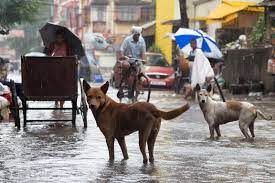
Putting an end to a long wait, surviving the hot humid weather for a great deal of time, monsoon has finally set foot in many parts of India. Albeit late than the scheduled date, it comes as a great relief for all. But the strays are badly affected by the monsoon since they don’t have a roof to cover them. Not everyone lives a life filled with luxuries. And sadly, stray dogs are among them. While a good amount of care is taken by pet parents during this weather, strays are often left to sustain on their own and not much heed is paid to them. They may have to sleep in muddy waters, walk through the puddles, and may have nothing to eat resulting in ticks, fleas, and maggots causing serious damages to their bodies. The maggots and ticks are a result of the moisture that favors their growth on the skin layer of the dogs.

Pneumonia is another danger many dogs suffer from due to frequent contact with dirty water which is home to a lot of bacteria during this weather. While the pet dogs get proper treatment, strays are devoid and suffer all alone.

Some dogs with an inappropriate immunity are exposed to a high fever which when not aided properly, can prove fatal for them.

While many help out the strays in these situations, others turn a blind eye to them. Some may try to help but due to feelings of obstruction and lack of resources, refrain from the same.

Here’s how one can help out the strays, using simple and easily doable techniques during the rains or the monsoon season altogether. 

  1. Keeping some fresh food or leftover food – Filling their stomachs is a big problem the strays face which is also the primary reason for territorial aggression. During rains, food is scarce and whatever food the strays come across is mostly spoilt. So, one can prepare a chapatti or two extra and some boiled rice or store the leftover food instead of throwing it in the bin.
  2. Clean water – Water during rainy days is contaminated with a lot of mud, silt, and bacteria. It is advisable to keep clean water for them so that the risk of infections and fever is significantly reduced.
  3. Keeping medicines available – Keep a check on the temperature and keep some general medicines that are favorable to all dogs handy in case of causality.
  4. Providing them shelter at your house – It is understandable that some people don’t like the presence of dogs around them. But, that’s how life goes. We help each other and stand by each other in trying times. If elders or someone in your house are against the idea, try convincing them and provide shelter to the strays. Keep old mattresses or newspapers for them to sleep on. 
  5. Building a shelter for them at a nearby park or unattended accommodation– Get in touch with the RWA of your area or the municipalities and pool in some money for the creation of shelters where the strays are safe during the monsoon months. This will be helpful and will be pocket-friendly too.

Mentioned above are simple steps that one can follow to help the strays. These are economically friendly and would not lead to consumption of your precious time and will also prove helpful to these friendly and loveable creatures.

CELL- THE BASIC UNIT OF LIFE

INTRODUCTION –  Human body is complex. It consists of several organs, nerves, blood vessels, all structured in a specific way, performing a defined work for the sustenance of the individual. The body can be compared to a building with multiple rooms, all intertwined, giving rise to a beautiful building. But even a building has a basic unit from which it is made. It is a brick. Several bricks together structured in a defined way pave way for the building. Similarly, in a human body, which is often compared to a building with God being its engineer, the basic unit is a Cell.

Never try to view Cells through naked eyes. Because it won’t be possible as cells are microscopic and can only be viewed with the help of high-power microscopes!

Number of Cells –  Is the number of cells in the body of an organism defined? Is it that a dog has ‘n’ number of cells and a cat has ‘x’ number of cells?

Cells are present in different organisms in different numbers and vary in shape and performance. As far as the number of cells in an organism is concerned, it runs in 

billions and trillions and it is nearly impossible to take an actual count of the cells.

Organisms made of more than one cell are called multicellular. Whereas, organisms that sustain with only a single cell are called unicellular organisms.

Shape of cells –   Generally, cells are round, spherical, and elongated in shape. Some are pointed at the ends and all these cells carry out different functions. Other shapes may also be present but that is totally dependent on the function of that specific cell.

 Cell Size –  How big are cells if they run into billions and trillions are still not visible without the help of a microscope?

Well, the size of cells in living organisms may be as small as a millionth of a meter or maybe as large as a few centimeters. The smallest cell is 0.1 to 0.5 micrometer in bacteria. The largest cell is that of an ostrich which measures 170mm*130mm.

Cell structure and function – As stated earlier, the human body is a complex structure made up of different organs. Each organ has a particular function to perform and is inevitable to an individual. The organ is made of tissues that are nothing but a group of similar cells performing a specific function.

Therefore cells combine together to form a tissue and tissues, in turn, combine to give rise to an organ. 

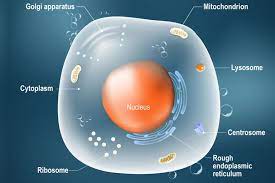
Parts of a cell –  Just like the body is made up of organs, organs form tissues and tissues form cells, similarly, a cell also has certain components from which it is made. Components that keep it safe and aid in its living among billions of other cells.

Let us look into some of the important parts of the cell.

a) CELL MEMBRANE – The other two important parts of a cell, the cytoplasm, and the nucleus are enclosed within this membrane. The membrane separates cells from one another and also the cell forms the surrounding medium to ensure its continuity. The membrane is porous and allows easy movement of substances or materials both inward and outward.

b)CYTOPLASM – It is the jelly-like substance present between the cell membrane and the nucleus. Various other components of the cell are safely enclosed in the cytoplasm.

c)NUCLEUS- It is an important component of the living cell. It is generally spherical and located in the centre of the cell. The nucleus is separated from the cytoplasm by the nuclear membrane. The nucleus, in addition to its role in inheritance, acts as the control centre of the activities of the cell. 

Conclusion-   Cell is indeed a wonderful creation. With a microscopic size and various functions to perform, carrying inside it so many components, it is definitely a wonder to read and know about it. 

Kanwar Yatra – An Open Invitation To The Third Wave?

Uttarakhand is also known as the ‘Devbhoomi’ or the land of God. Numerous religious processions, gatherings, and rituals are organized every year. One such gathering was the Kumbh Mela held in Haridwar in April; amidst the high positivity rate going on in the country at that time. The result was obvious.

Scores of devotees and naga babas with their forehead smeared with ashes took the ‘snan’ at Har Ki Pauri, providing a massive rise in the caseload.

Another such gathering, currently in news these days is the Kanwar Yatra. Let us first look at what the yatra is about.

The Kanwar Yatra – It is an annual pilgrimage of devotees of Shiva, known as Kanvarias(कावड़िया) or “Bhole” (भोले), to Hindu pilgrimage places of Haridwar, Gaumukh and Gangotri in Uttarakhand and Sultanganj in Bihar to fetch holy waters of Ganges River. Millions of participants gather sacred water from the Ganga and carry it across hundreds of miles to dispense as offerings in their local Shiva shrines, or specific temples such as Pura Mahadeva and Augharnath temple in Meerut, and Kashi Vishwanath, Baidyanath, and Deoghar in Jharkhand.

The yatra was suspended last year due to the pandemic. Even this year, the Tirath Singh Rawat ( who held office for over four months) had suspended the yatra, keeping in mind the disastrous effects of it.  

But UP CM Yogi Adityanath had been in talks with the newly appointed CM of Uttarakhand, Pushkar Singh Dhami, and requested the latter that kanwarias from the state be allowed to travel to the state to collect the holy water.

Pushkar Singh Dhami has taken a rather pragmatic approach to the issue and announced that Uttarakhand is only the host and that a good amount(crores) of people from states such as Haryana, Uttar Pradesh, Bihar will be a part of the gathering and has put the decision on a halt to constitute a meeting and then reach a decision which will favor the masses.

What experts have to say on the issue – 

The Kumbh Mela had a devastating effect on the already burdened caseload. Keeping in purview the disastrous effect it had on the Covid cases and also the general footfall of the Kanwar Yatra, which is about two to four crore; experts warn that allowing the Yatra to take place will be hazardous to the extreme and will serve as a ‘catalyst’ for the third wave. It’s just like giving an open invitation to the third wave.

Another point to be remembered is that people(patients as well as covid warriors), economy, health facilities, and every aspect playing a pivotal role in the Covid management is at a recuperating stage from the deadly couple of months that just passed. So, allowing such an enormous number of people to gather, travel and carry out rituals would not be an appreciable idea.

Conclusion –   India has already seen huge amounts of devastation. People have lost close kin, in many cases the sole breadwinners of the family. A good percentage of citizens haven’t yet taken the first dose of vaccine. In this situation, if the Kanwar Yatra is allowed to be held, it would be nothing but a knife stabbed in our abdomen, by ourselves, in complete consciousness.