Java Applets (Inshort)

What is an Applet?

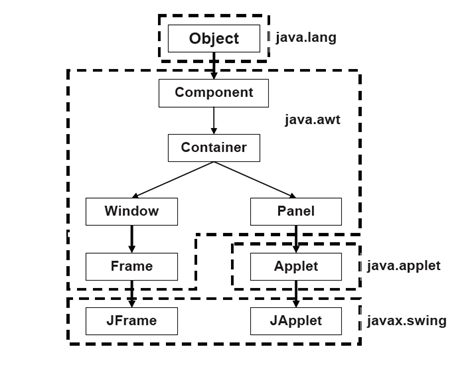
Applet is a small program which provides a Graphical User Interface (GUI) to user.Applet programs are executed with a special JDK tool- appletviewer. An applet is a Java program that runs in a Web browser. An applet can be a fully functional Java application because it has the entire Java API at its disposal.When a user views an HTML page that contains an applet, the code for the applet is downloaded to the user’s machine. A JVM is required to view an applet.

What is difference between Applet and Application?

Sr. No.ApplicationApplet
1.Applications are just like a Java programs that can be execute independently without using  web browser.Applets are small Java programs that are designed to be included with HTML web document. They require a Java-enabled web browser for execution.
2.Application program requires a main function for its execution.Applet does not require a main function for its execution.
3.Java application programs have the full access to the local file system  network.Applets don’t have local disk and network access.
4.Applications can access all kinds of resources available on the system.Applets can only access the browser specific services. They don’t have access to the local system.
5.Applications can executes the programs from the local system.Applets cannot execute programs from the local machine.
6.An application program is needed to perform some task directly for the user.An applet program is needed to perform small tasks or the part of it.

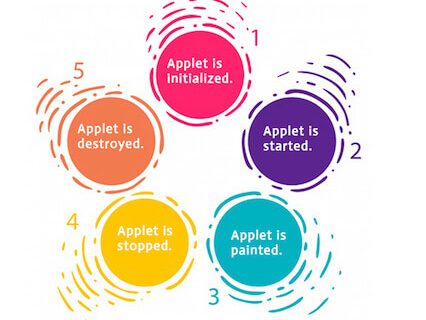
Applet Life Cycle

Applet Methods Sequence

Conclusion

As it operates on the client side, it requires much less response time. Any browser that has JVM operating in it can operate it. 

Calming Mother Nature

Spending time in nature can improve memory, lower stress hormones, and reduce feelings of depression or anxiety, among other perks. Being in nature can help clear your head and bring you into the present moment, and is a great way to de-stress and relax.

Being in nature, or even viewing scenes of nature, reduces anger, fear, and stress and increases pleasant feelings. Exposure to nature not only makes you feel better emotionally, it contributes to your physical well being, reducing blood pressure, heart rate, muscle tension, and the production of stress hormones.

Feel Better. If you’re able to, get back to nature to energize your mind and body. Depressed: If you’re feeling blue, try going outside to green, natural spaces. A stroll in the woods has been shown to help combat depression, and even just the view of the forest from a hospital room helps patients who are feeling down.

Spending time in nature has been found to help with mental health problems including anxiety and depression. For example, research into ecotherapy (a type of formal treatment which involves doing activities outside in nature) has shown it can help with mild to moderate depression.

The natural world is an incredible wonder that inspires us all. It underpins our economy, our society, indeed our very existence. Our forests, rivers, oceans and soils provide us with the food we eat, the air we breathe, the water we irrigate our crops with.

10 Amazing Tips For Terrace Gardening

Introduction

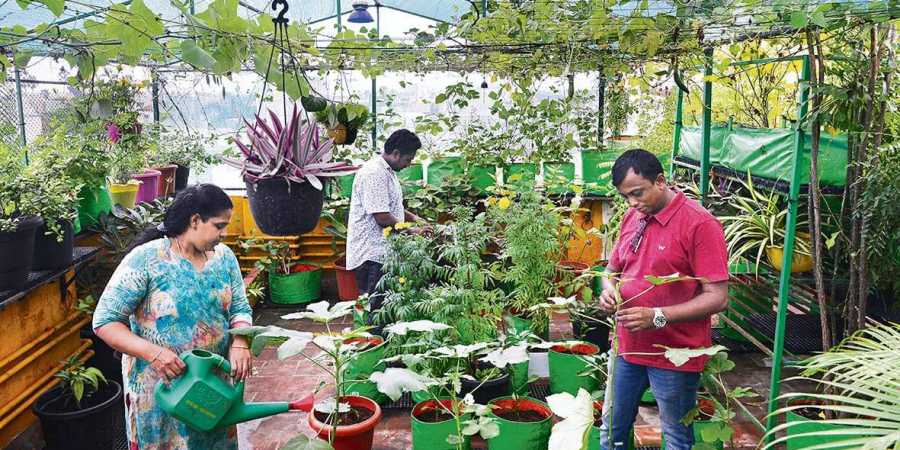
Even though the modern lifestyle hardly leaves us with any time, we all love to have soothing hobbies for those rare times. For some it’s reading and for others it’s gardening. Unlike some other hobbies, gardening requires a lot of time, effort and a lot of empty space. While most of us would love to have a huge garden filled with greenery, not all of us can. One of the drawbacks of living in metropolitan cities is that you can’t ever have enough space, especially for your dream garden. This is where terrace farming comes in handy. Whether it’s plants, herbs or vegetables, you can literally grow anything on your terrace itself. Here are some terrace gardening tips that will be useful for people living in small urban spaces. You can even try these home terrace farming techniques in your balconies!

1. Construct Shade

The terrace mostly receives a good amount of sunlight. However, depending on the plants that you want to grow, you will need to monitor the sunlight. On an average, your terrace should get at least 4 hours of direct sunlight. If you receive more than 6 hours of direct sunlight, make sure you arrange for some shade. Too much sun isn’t good for the plants either.

2. Selecting suitable pots and planters

They make your garden bigger: Growing plants in containers is a great way to expand your garden space. Pots can go anywhere: on pavement, a window sill, a deck, up a flight of steps. Allows you to control the soil your plants grow in. Your garden soil may not be the greatest but when you plant in a pot, you control the soil and can provide excellent growing conditions that the soil in your garden may not have.

3. Add Home Decor Elements

Gardening is sort of an extension of home decor. It adds to the beauty of the home and terrace too. This is why our next home gardening tip is to add aesthetic lighting and some garden furniture. If you are thinking about growing a beautiful terrace garden, you should be able to spend time there. Trust us, it will become the most popular spot of your home for hosting or otherwise. 

4. Don’t Keep Plants Too Close

This terrace gardening tip stands true for most types of farming and gardening. You don’t want to plant the seeds too close. They will compete for sunlight, water and other nutrients and thus, might not mature at an even rate. Also, for home terrace farming, you should opt for creepers since they are huge in volume and grow fast without much effort.

5. Choose Air Purifying Plants

This terrace gardening tip is a very useful one for people living in urban spaces. The air is filled with pollutants that affect our health in ways we don’t even know. While you’re at it, why not plant some air purifying plants. Generally, these plants are great for indoors but if you keep them away from harsh, direct sunlight, they will prosper even on your terrace. Most of them also release oxygen at night, which is an added bonus!

6.  Let Sunshine be Your Guide

Each plant thrives in different amounts of sunlight. While some prefer shade, others grow well in prolonged exposure to bright sunlight. In a terrace garden, you have to make sure your plants get both, especially shade. One tip to keep rotating the plant frequently so that all the branches will have buds growing on them. 

7. Prune The Infections Away

Prune (trim) the flowering plants regularly with a rust-free scissor/cutter to ensure bushy growth with lots of flowers. Also, cover the pruned tip of the stem with some soil to protect it from infections. Add some compost to the soil immediately after pruning to boost the growth of the plant.

8. Strength in Unity    

Plants must be grouped together, instead of isolating them from one another. In a terrace garden, it is easier how you want to group your plants as we use pots and planters. It is important to strategically cluster houseplants together, just as they do naturally in the wild, according to their growth requirements.

9. Unity in Diversity

A healthy garden must have a variety of plants. Biodiversity attracts essential pollinators. “For example, plant a few flowering plants in your vegetable garden to attract pollinators (insects that move pollen from the male anther of a flower to the female stigma of a flower).”

 10. Patience is The Key

Gardening needs patience. Do not rush your gardening activities. Patience is a virtue in many aspects of life, but particularly so in gardening. Plants take their own sweet time to bloom, to produce fruit, to become mature. So gardeners must be patient.

Conclusion

Patience is a virtue in many aspects of life, but particularly so in gardening. Plants take their own sweet time to bloom, to produce fruit, to become mature. So gardeners must be patient.

GUI in .Net

What is .net and .net framework?

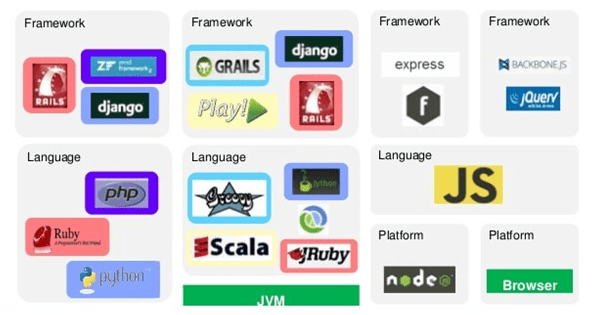
.NET is a software framework which is designed and developed by Microsoft.The first version of .Net framework was 1.0 which came in the year 2002.In easy words, it is a virtual machine for compiling and executing programs
written in different languages like C#, VB.Net etc.It is used to develop Form-based applications, Web-based applications, and Web services.There is a variety of programming languages available on the .Net platform,
VB.Net and C# being the most common ones.It is used to build applications for Windows, phone, web etc.It provides a lot of functionalities and also supports industry standards..NET Framework supports more than 60 programming languages in which 11 programming languages are designed and developed by Microsoft.The remaining Non-Microsoft Languages or Third Party Languages which are supported by .NET Framework but not designed and developed by Microsoft. Framework performs development, execution & deployment of an application. It support multiple languages, technologies & databases.

COMMON LANGUAGE RUNTIME – MICROSOFT LANGUAGES

  • C#.NET
  • VB.NET
  • C++.NET
  • J#.NET
  • F#.NET
  • JSCRIPT.NET
  • WINDOWS POWERSHELL
  • IRON RUBY
  • IRON PYTHON
  • C OMEGA
  • ASML(Abstract State Machine Language)

THIRD PARTY LANGUAGES – NON MICROSOFT LANGUAGES

  • APL
  • COBOL
  • Component Pascal
  • Hakell
  • Perl
  • Python
  • Smalltalk
  • Standard ML

TECHNOLOGY AND DATABASES SUPPORTED BY .NET FRAMEWORK

Technologies supported by .net framework

  • WinForms
  • Asp.net
  • ADO.net

Databases supported by .net framework

  • SQL sever
  • Oracle
  • Ms access

FEATURES OF .NET FRAMEWORK

  • Good design
  • Object Oriented Programming
  • Language independent
  • Platform independent
  • Flexible data access Dynamic web pages
  • Web services
  • Code security

An Overview to GUI

What is GUI?

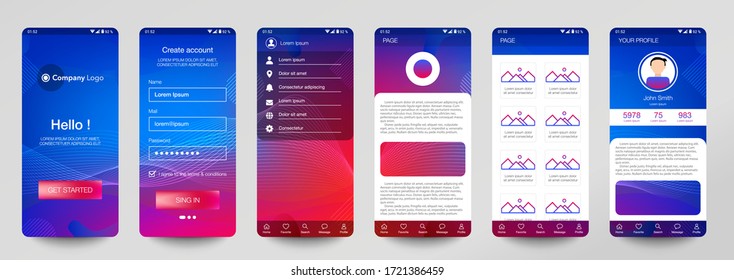
GUI is a Graphical Interface that is a visual representation of communication presented to the user for easy interaction with the machine. GUI means Graphical User Interface. It is the common user Interface that includes Graphical representation like buttons and icons, and communication can be performed by interacting with these icons rather than the usual text-based or command-based communication.

Example of GUI

Need of GUI

The graphical user interface (GUI; sometimes pronounced “gooey”) is used by most commercially popular computer operating systems and software programs today. It’s the kind of interface that allows users to manipulate elements on the screen using a mouse, a stylus, or even a finger. This kind of interface allows word processing or web design programs, for example, to offer WYSIWYG (what you see is what you get) options. Before GUI systems became popular, command line interface (CLI) systems were the norm. As you might imagine, GUI systems have made computers far more user-friendly than CLI systems.

How does it Works ?(InShort)

The graphical user interface is a form of user interface that allows users to interact with electronic devices through graphical icons and audio indicator such as primary notation, instead of text-based user interfaces, typed command labels or text navigation.

Advantages of GUI

  • User Friendly
  • Comprehensive
  • Attractiveness
  • Shortcut Keys
  • Multitasking

Disadvantages of GUI

  • Implementation not an easy process
  • Cost
  • GUI is slower
  • Time Consumption
  • Memory Usage

Applications of GUI

  • MP3 players
  • Portable media players
  • Gaming devices
  • Smartphones
  • Smaller household
  • Office and Industrial Controls

Database Management System: DBMS- InShort

What is a DBMS (Database Management System)?

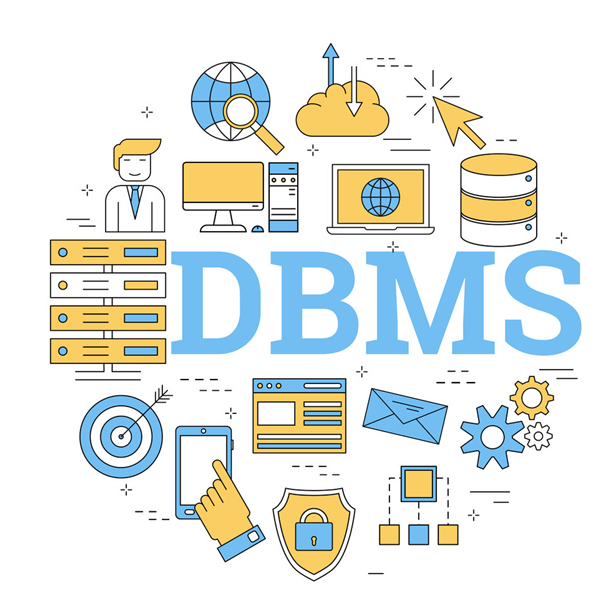
Database Management System (DBMS) is a software for storing and retrieving users’ data while considering appropriate security measures.In large systems, a DBMS helps users and other third-party software to store and retrieve data. DBMS allows users to create their own databases as per their requirement.The DBMS manages incoming data, organizes it, and provides ways for the data to be modified or extracted by users or other programs.

DBMS Softwares

  • MySQL
  • PostgreSQL
  • Microsoft Access
  • SQL Server
  • FileMaker
  • Oracle
  • RDBMS
  • dBASE
  • Clipper
  • FoxPro.

Types of Database Models

  1. Hierarchical Database Model

Hierarchical database model resembles a tree structure, similar to a folder architecture in your computer system. The relationships between records are pre-defined in a one to one manner, between ‘parent and child’ nodes. They require the user to pass a hierarchy in order to access needed data. Due to limitations, such databases may be confined to specific uses.

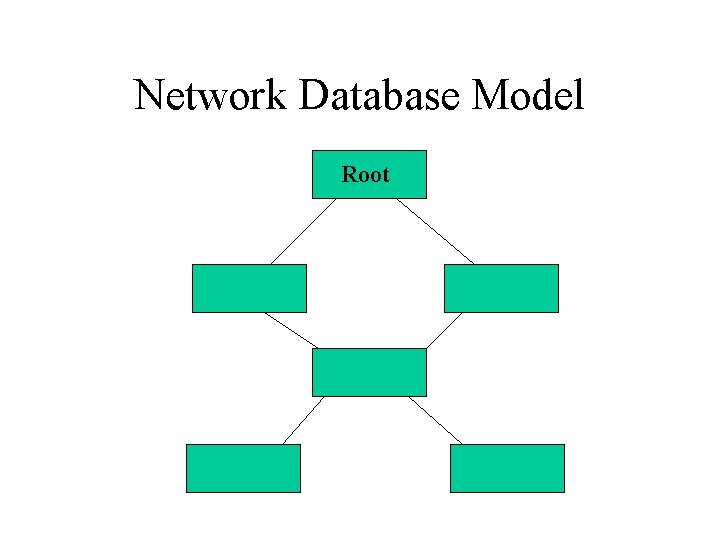
2. Network Database Model

Network database models also have a hierarchical structure. However, instead of using a single-parent tree hierarchy, this model supports many to many relationships, as child tables can have more than one parent. 

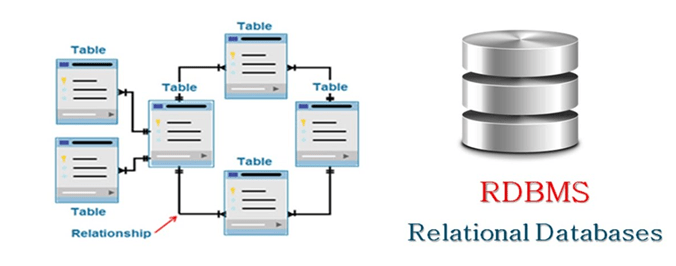
3. Relational Database Model

A relational database is a digital database based on the relational model of data, as proposed by E. F. Codd in 1970. A software system used to maintain relational databases is a relational database management system (RDBMS). Many relational database systems have an option of using the SQL (Structured Query Language) for querying and maintaining the database.

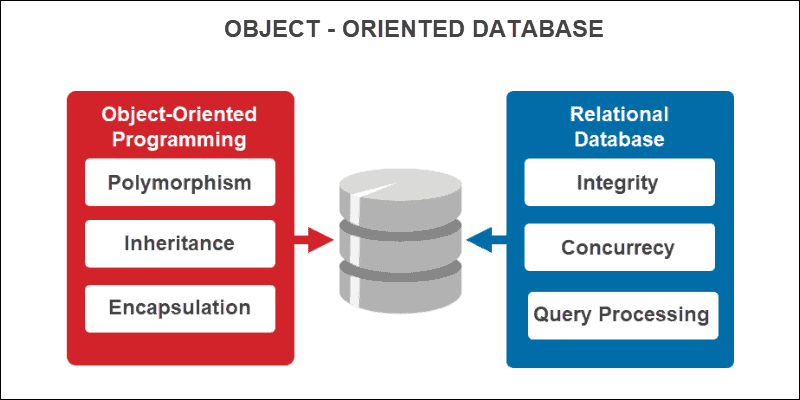
4. Object Oriented Database Model

Object-oriented databases, the information is represented as objects, with different types of relationships possible between two or more objects. Such databases use an object-oriented programming language for development.

Functions of DBMS

The DBMS performs several important functions that guarantee the integrity and consistency of data in the database. The current generation DBMS supports many functions, such as the following:

  • Stores the definitions of data and their relationships (metadata) in a data dictionary, any changes made are automatically recorded in the data dictionary.
  • Creates the complex structures required for data storage.
  • Transforms entered data to confirm to the data structures.
  • Creates a security system and enforces security within that system.
  • Allow multiple user access to the data within the computer network environment.
  • Performs backup and data recovery procedures to ensure data safety.
  • Promotes and enforces integrity rules to maintain data consistency.
  • Provides access to the data via utility programs and from programming languages interfaces.

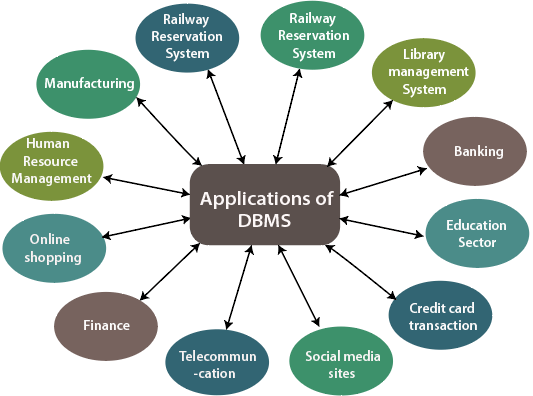
Applications of DBMS

  • Railway Reservation System
  • Library Management System
  • Banking
  • Universities and colleges
  • Credit card transactions
  • Social Media Sites
  • Telecommunications
  • Finance

Conclusion

Database implementation plan is essential for any organization that once to boost is sales or increase their customers experience, a good database implementation plan I supposed to have, all the factors and the significance value towards the organization, not forgetting the requirements that are needed. In my opinion, I could have recommended using a computerized, database management system. This is because it is faster to implement and also it requires less amount of time and finance to set up, the future of database lies on the power of the organization .and the funds that they can be able to set aside to implement new database management system.

Features Of OOP

Benefits Of OOP

  • OOP guarantees more reliability of data
  • OOP ensuring better maintainability
  • Modularity for easier troubleshooting
  • Reuse of code through inheritance
  • Flexibility through polymorphism
  • Effective problem solving
  • It also provides better readability
  • It is easier to visualize real–world objects
  • Software complexity can be easily managed
  • It simplifies the tasks of writing and debugging
  • It is easy to partition the work in a project based on objects
  • Object oriented systems can be easily upgraded from small to large systems

Applications Of OOP

  • Real Time Systems
  • Object Oriented Database
  • AI and Expert Systems
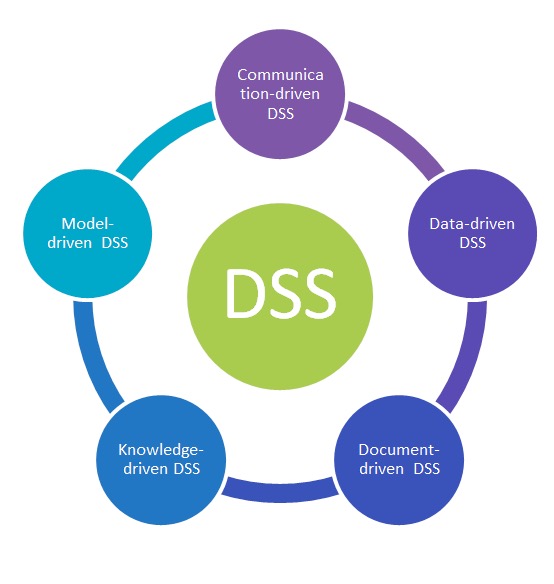
  • Decision Support System
  • Hyper Text and Hypermedia
  • Office Automation System
  • CAM/CAD systems
  • Simulation and modeling
  • Neural networks and parallel programming

OOP Languages

The Origin Of Vedic Civilization

Early Vedic Age

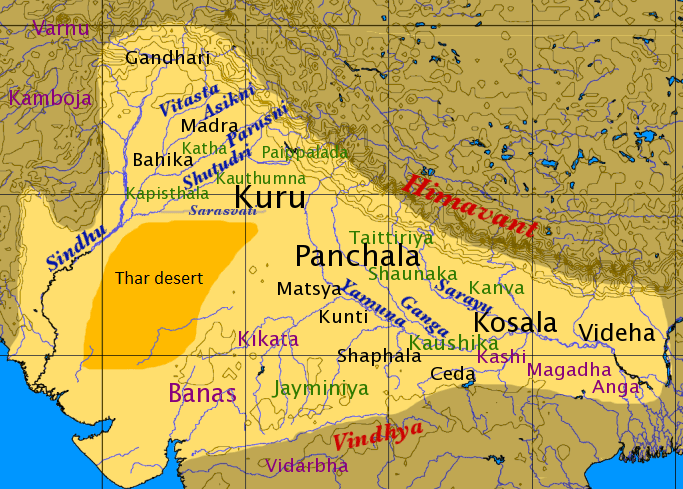
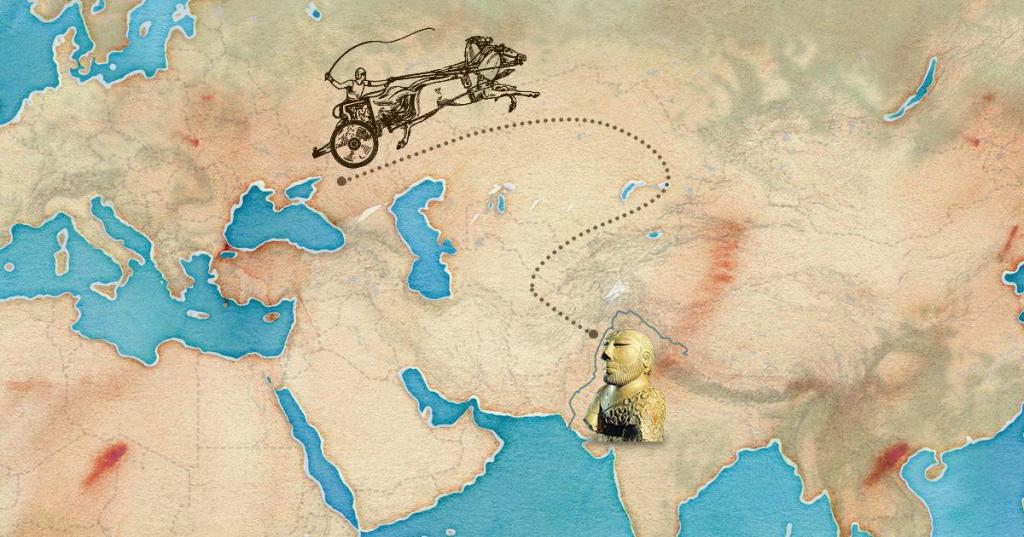
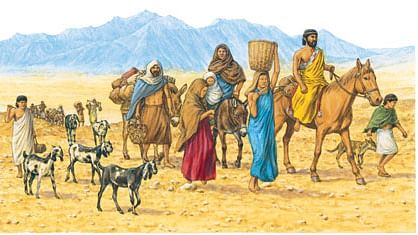
The early Vedic age is historically dated to the second half of the second millennium BCE. Historically, after the collapse of the Indus Valley Civilisation, which occurred around 1900 BCE, groups of Indo-Aryan peoplesmigrated into north-western India and started to inhabit the northern Indus Valley. The Indo-Aryans represented a sub-group that diverged from other Indo-Iranian tribes at the Andronovo horizon before the middle of the 2nd millennium BCE, The Indo-Iranians originated in the Sintashta culture, from which arose the subsequent Andronovo horizon. The Indo-Aryans migrated through the adjacent Bactria-Margiana area (present-day northern Afghanistan) to northwest India, , followed by the rise of the Iranian Yaz culture at c. 1500 BCE, and the Iranian migrations into Iran at c. 800 BCE.

The Indian Civilization an Unbroken Tradition

Indian writers and archaeologists have opposed the notion of a migration of Indo-Aryans into India, and argued for an indigenous origin of the Indo-Aryans. In this view, “the Indian civilization must be viewed as an unbroken tradition that goes back to the earliest period of the Sindhu-Sarasvati (or Indus) tradition (7000 or 8000 BCE).” Though popular in India, and reflecting Indian views on Indian history and religion,the idea of a purely indigenous origin of the Indo-Aryans is outside the academic mainstream.

The Aryans

The knowledge about the Aryans comes mostly from the Rigveda-samhita,i.e. the oldest layer of the Vedas, which was composed c. 1200–1000 BCE. They brought with them their distinctive religious traditions and practices. The Vedic beliefs and practices of the pre-classical era were closely related to the hypothesised Proto-Indo-European religion,and the Indo-Iranian religion. Funeral sacrifices from the Sintashta-culture show close parallels to the sacrificial funeral rites of the Rigveda, while, according to Anthony, the Old Indic religion probably emerged among Indo-European immigrants in the contact zone between the Zeravshan River (present-day Uzbekistan) and (present-day) Tajikistan.It was “a syncretic mixture of old Central Asian and new Indo-European elements”, which borrowed “distinctive religious beliefs and practices” from the Bactria–Margiana culture, including the god Indra and the ritual drink Soma.

Basic Concepts of Object Oriented Programming

What is Object Oriented Programming?

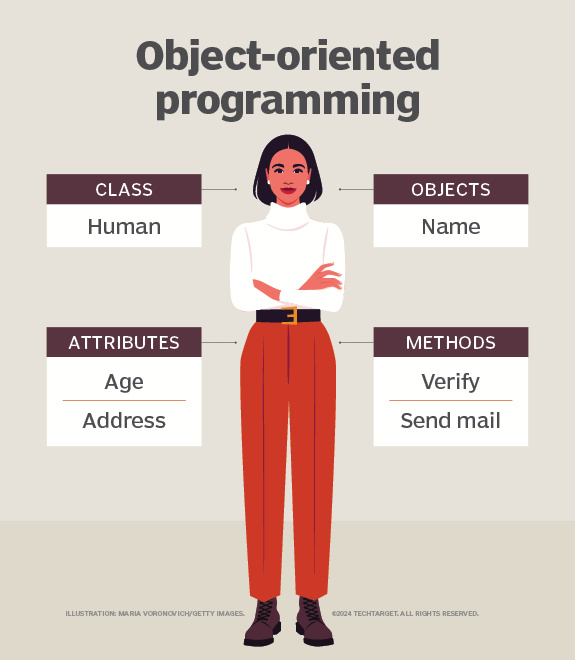
Object-oriented programming (OOP) is a fundamental programming paradigm used by nearly every developer at some point in their career. OOP is the most popular programming paradigm and is taught as the standard way to code for most of a programmers educational career. OOP focuses on the objects that developers want to manipulate rather than the logic required to manipulate them. This approach to programming is well-suited for programs that are large, complex and actively updated or maintained.

Example

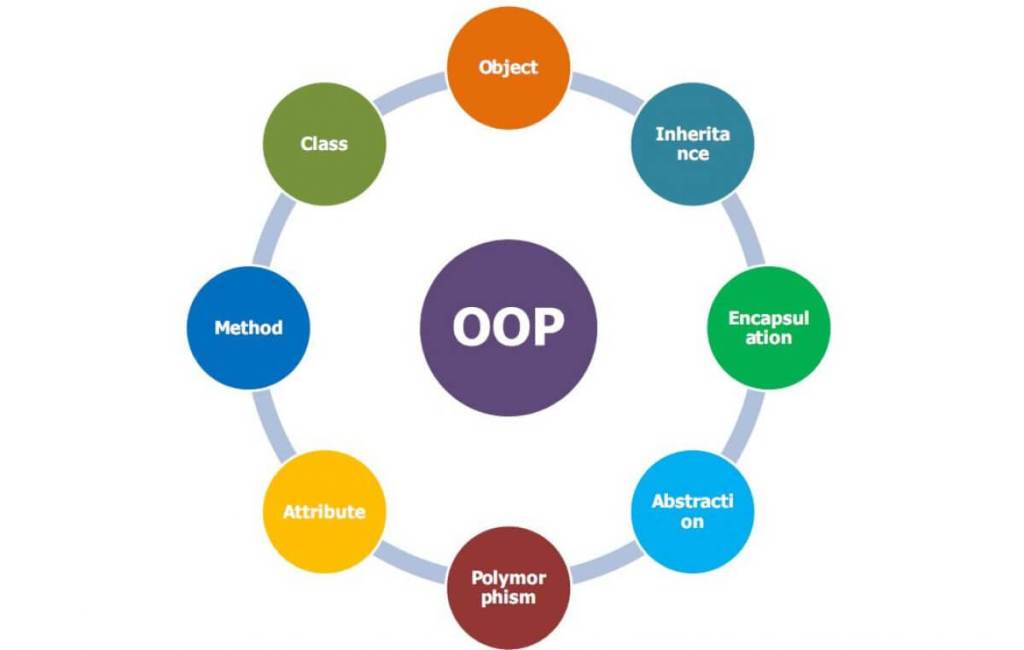
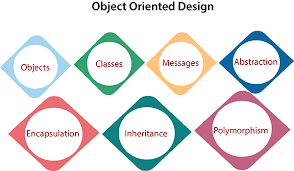
Following are the Basic Concepts Of OOP

  1. Objects
  2. Classes
  3. Data Encapsulation
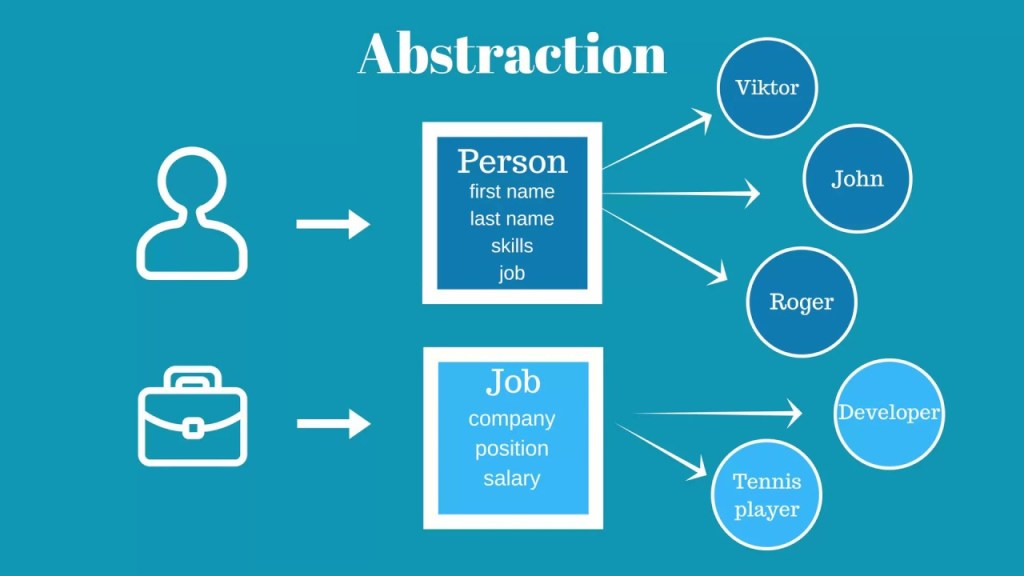
  4. Data Abstraction
  5. Inheritance
  6. Polymorphism
  7. Message Passing
  8. Dynamic Binding

1. Object

•Objects are the basic run-time entities in the object-oriented system.
•They may represent a person, a place, a bank account, a table of data etc.
•They may also represent user-defined data such as vectors, time and lists.
•Programming problem is analyzed in terms of objects and the nature of
communication between them.
•Objects take up space in the memory and have an associated address
•Each object contains data and code to manipulate the data

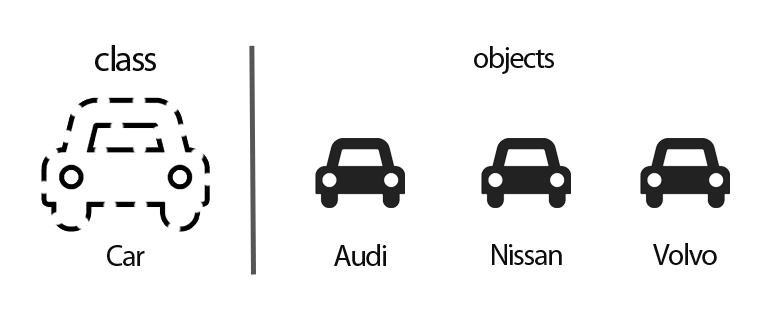
2. Class

•Class is defined as an abstract data type characterized by a set of properties
(attributes and functions) common to its objects
•Class is a user defined data type for object
•Objects are the variables of the type class
•Thus class is a group of objects of similar type
•e.g. Mango, apple, pineapple, orange are objects of class Fruit
•Class is defined first and then objects are created of the type class

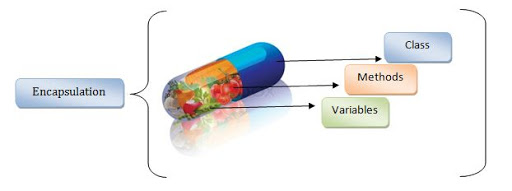
3. Data Encapsulation

•The fundamental idea behind OOP approach is to combine the data and
functions operate on that data, into a single unit
•The wrapping up of data and functions into a single unit (called class) is
known as encapsulation
•The data is not accessible to the outside world
•The encapsulation (protection) of Data from direct access by outside
functions in a program is called Data hiding or Information hiding

4. Data Abstraction

•Abstraction refers to the act of representing essential features without
details
•Abstraction is also defined as hiding an implementation details from user
•Classes use the concept of data abstraction and hence they are also known
as Abstract Data Types (ADT)
•Classes are defined as a list of abstract attributes such as size, weight, cost,
and function to operate on these attributes

5. Inheritance

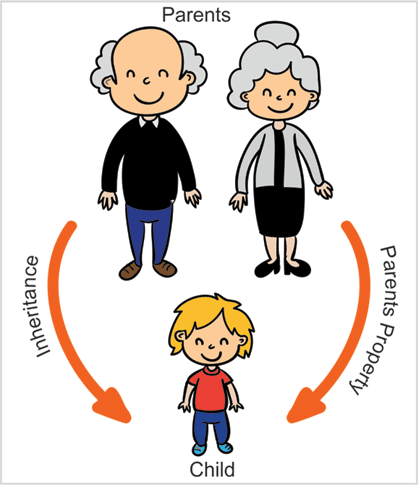
•Inheritance is the process by which objects of one class acquire the
properties of objects of another class
•In OOP, the concept of inheritance provides the idea of reusability
•Reusability allows to add additional features to an existing class without
modifying it
•It is possible by defining a new class from the existing class
•The new class will have combined features of both the classes
•The mechanism of deriving a new class from existing class is called as
Inheritance

6. Polymorphism

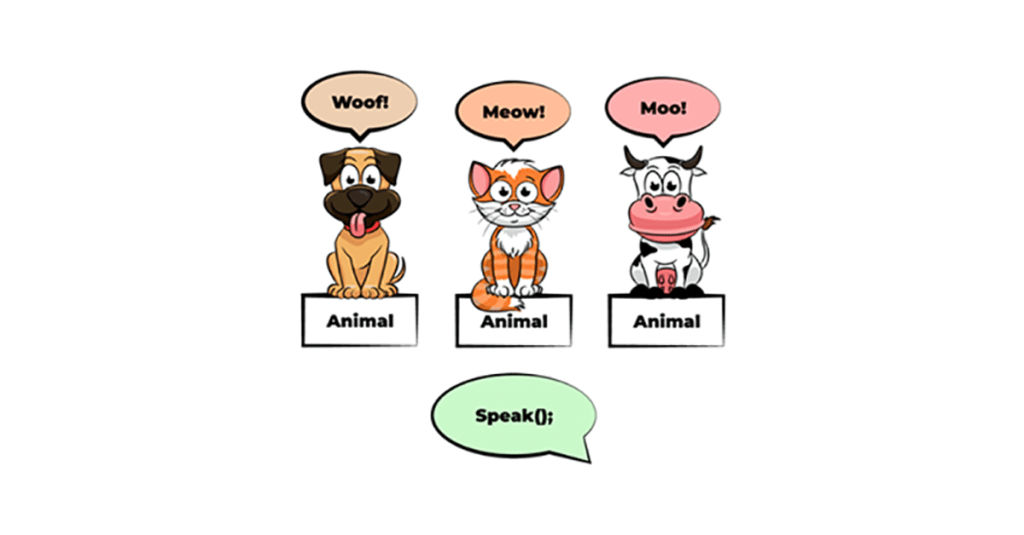
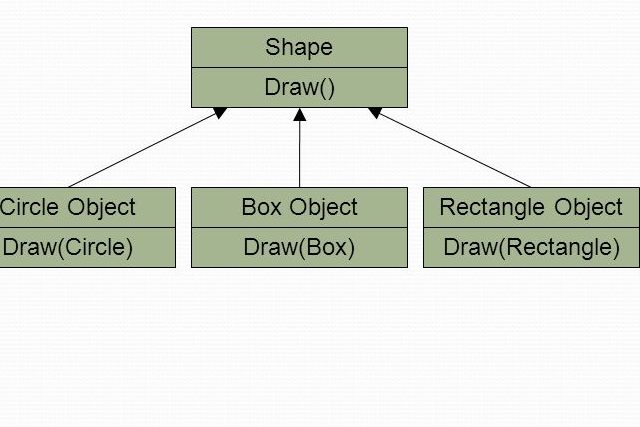
•Polymorphism means the ability to take more than one form
•An operation may exhibit different behavior in different instances and
this behavior depends upon the types of data used in the operation
•Polymorphism can be implemented using function overloading,
function overriding and operator overloading
•It allows the objects with different internal structures to share the
same external interface

In the above example all animals are performing the same task of speaking but it is different for every animal.

7. Message Passing

•The Objects communicate with one another by sending and receiving
information (Messages)
•A message for an object is a request for execution of a function
•Message passing involves specifying the name of the object, the name of
the function and the information to be sent

8. Dynamic Binding

•Dynamic binding means that the code associated with a given function
call is not known until run-time.
•The code to be executed is selected at the run-time
•The same function executes different code dynamically depending on
data entered at run-time
•It is associated with polymorphism and inheritance.
•A function call associated with a polymorphic reference depends on the
dynamic type of that reference.

Monsoon: An Upstanding and Suitable season to start gardening

Monsoon is on our doorsteps. Soon the great showers will come pouring down & within no time, the entire complexion of our surroundings will magically transform into an epic green stage. Our new gardening season also begins in the month of June, at the onset of monsoon. No matter how small or big your garden is, here are some key steps to make the best of this nature’s glory, & make your garden ‘monsoon ready’.

How Monsoon is suitable to start gardening?

The monsoon season in India is the best time to sit back and enjoy. The fresh smell of petrichor along with drizzling water gives a soothing effect to your mind and body after the hot summer days. The plants look greener than ever, the rainwater using its superpowers yield advantages to a plant that tap water cannot. As there is a significant fall in temperature, the sun is less hot and the rains add to the faster growth of plants. There are a variety of vegetables that loves the rainy season and grow magically during this time of the year. So it becomes really important to pick the right kind of vegetables also.

How to start Gardening in Monsoon?

  • Allow for good drainage: Water logging is a frequent problem in rainy season and restricts plant growth. When the problem is severe, roots do not have enough oxygen to respire and may eventually die. Therefore, prepare your garden with good drainage before the monsoon onsets. Some steps you can take to allow good drainage are use of grow bags, cocopeat or other potting mix that does not hold water.
  • Provide support to the plants: Plants often break or fall off during the strong monsoon winds. Provide support to your plants to withstand the monsoon winds.
  • Pruning and mulching: The first monsoon showers shoot up plant growth. Pruning, trimming and removing dead branches before the first showers arrive helps the plant to grow in the right direction. Mulching the garden before monsoon will help soil retain nutrients.
  • Vermicompost: It is well known that earth worms are farmer’s best friends. Take their aid during monsoon to improve soil fertility, texture and aeration.
  • Timely Weeding: Just like your veggies or flowering plants, weeds also thrive during monsoons. Weeding before the monsoon arrives will prevent weeds from absorbing vital nutrients from soil. Moreover, removing weeds when they are young is easier. However, weeding needs to be done regularly during monsoon season to protect your garden.
  • Harvest the rain-water: If you have the space and time to do so, rainwater harvesting is fun and beautifies your landscape. There are no complex mechanisms required for harvesting rainwater. Simply direct the rainwater to a spot in your garden or collect the rainwater in barrels. If you have enough space on your terrace, you can make a pond in one corner and plant flowers around it. This not only creates a lovely spot on your terrace but also attracts birds and improves bio-diversity.

  • Plant the right crops: Not all plants thrive in monsoons. Some plants require hot weather, some require cool weather and some require moist soil. Plants that thrive well in monsoons are typically cucumbers and gourds like ridge gourd and bottle gourd. Get your vegetable calendar ready before each season and become a pro at gardening. Also, eating seasonally grown fruits and veggies is best for your health. If you need guidance, check out our recommendations for Monsoon vegetables here.
  • Cover the plants: Sometimes plants get damaged beyond repaid when there are thunderstorms or hailstorms. Cover your plants appropriately to prevent that.

  • Fertilizers: Soil erosion is common during rainy seasons. The top layers of fertile soil gets washed away with rains. This more often happens if you do not use pots or grow bags in your garden. So apply necessary fertilizers like NPK, cow dung, neem extracts, compost etc to keep the soil fertilized.
  • Routinely check on the plants: Last but not the least, monsoons bring ample work for gardeners. Regularly check on your plants to identify broken branches, pests, infections, and water logging. Sometimes getting your hands dirty is worth it! Re-pot your plants, start new seeds and watch them grow!

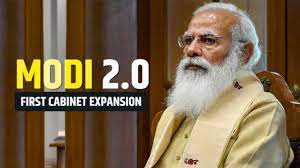
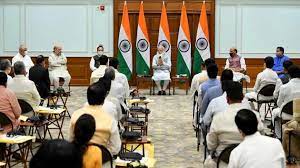
Modi 2.0 Cabinet Expansion 2021

PM Modi 2.0 Reshuffle Cabinet:

The Union Cabinet led by Prime Minister Narendra Modi yesterday expanded its council of ministers, the first such exercise in the third year of his second term. While the cabinet reshuffle was on the cards for a long time, the move comes at a time when the Modi government faces criticism over the alleged mishandling of the COVID-19 pandemic. The list of ministers also indicates that due attention has been given to upcoming assembly elections and the 2024 Lok Sabha elections. Day before yesterday, two major political developments took place which indicated that the BJP has started preparing for the polls besides appeasing its allies. In the first development, Thawar Chand Gehlot was appointed Governor of Karnataka to make more space for new ministers. Later in the day, a new ministry was created – the Ministry of Cooperation.

The focus has been on Uttar Pradesh, Madhya Pradesh, Odisha and West Bengal. Uttar Pradesh is the most crucial state for the BJP given the number of Lok Sabha seats. The inclusion of the allies like JD(U), Apna Dal etc. indicates that the Modi government is not willing to let go more of its allies since two of its major partners – Shiv Sena and Shiromani Akali Dal had already deserted the NDA over different issues. The move will boost the confidence of its allies and the same will prove beneficial for the saffron party in the coming polls.

Below is the full list of new ministers in Modi Cabinet:

Cabinet Ministers

  • Narayan Rane
  • Sarbananda Sonowal : Ports and Shipping, AYUSH Ministry.
  • Dr Virendra Kumar
  • Jyotiraditya Scindia : Civil Aviation.
  • Ramchandra Prasad Singh : Steel Ministry.
  • Ashwini Vaishnav : Railways, Communication & Electronics and Information Technology.
  • Pashu Pati Kumar Paras: Minister of Food Processing Industries.
  • Kiren Rijiju : Law and Justice Ministry.
  • Dharmendra Pradhan : Education Ministry.
  • Raj Kumar Singh : Power and Ministry of New and Renewable Energy.
  • Hardeep Singh Puri : Petroleum, Housing and Urban Development.

  • Mansukh Mandaviya : Chemicals and Fertilizers, Health Ministry.

  • Bhupender Yadav
  • Parshottam Rupala
  • G Kishen Reddy
  • Anurag Thakur : Information & Broadcasting and Sports.

Ministers of State

Pankaj Choudhary
Anupriya Singh Patel
Satya Pal Singh Baghel
Rajeev Chandrasekhar
Shobha Karandlaje
Bhanu Pratap Singh Verma
Darshana Vikram Jardosh
Meenakshi Lekhi
Annpurna Devi
A Narayanaswamy
Kaushal Kishore
Ajay Bhatt
BL Verma
Ajay Kumar
Chauhan Devusinh
Bhagwanth Khuba
Pratima Bhoumik
Subhas Sarkar
Bhagwat Kishanrao Karad
Rajkumar Ranjan Singh
Bharati Pravin Pawar
Bishweswar Tudu
Shantanu Thakur
Dr Munjapara Mahendrabhai
John Barla
Dr L Murugan
Nishith Pramanik

Kapil Moreshwar Patil

History of Java Programming Language

What is Java?

Java is a programming language and computing platform first released by Sun Micro systems in 1995. There are lots of applications and websites that will not work unless you have Java installed, and more are created every day. Java is fast, secure, and reliable. From laptops to data centers, game consoles to scientific supercomputers, cell phones to the Internet, Java is everywhere!

History of Java

The history of Java is very interesting. Java was originally designed for interactive television, but it was too advanced technology for the digital cable television industry at the time. The history of Java starts with the Green Team. Java team members (also known as Green Team), initiated this project to develop a language for digital devices such as set-top boxes, televisions, etc. However, it was best suited for internet programming. Later, Java technology was incorporated by Netscape.

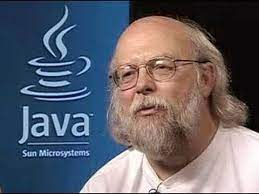
1) James Gosling, Mike Sheridan, and Patrick Naughton initiated the Java language project in June 1991. The small team of sun engineers called Green Team.

2) Initially it was designed for small, embedded systems in electronic appliances like set-top boxes.

3) Firstly, it was called “Greentalk” by James Gosling, and the file extension was .gt.

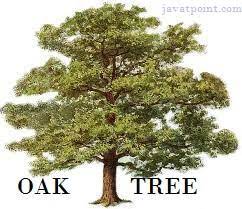
4) After that, it was called Oak and was developed as a part of the Green project.

5) Why Oak? Oak is a symbol of strength and chosen as a national tree of many countries like the U.S.A., France, Germany, Romania, etc.

6) In 1995, Oak was renamed as “Java” because it was already a trademark by Oak Technologies.

7) In 1995, Time Magazine called Java One of the Best Product of year 1995.

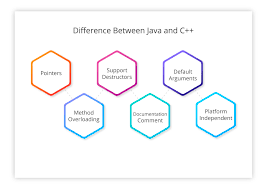
Difference between Java and C++

Global Variables are not present

Use of goto is not observed

Pointers are not included

Memory Allocation functions are not present

Unsafe Type Casting is not supported

Preprocessor Directives are not present

Separate Header Files are not included

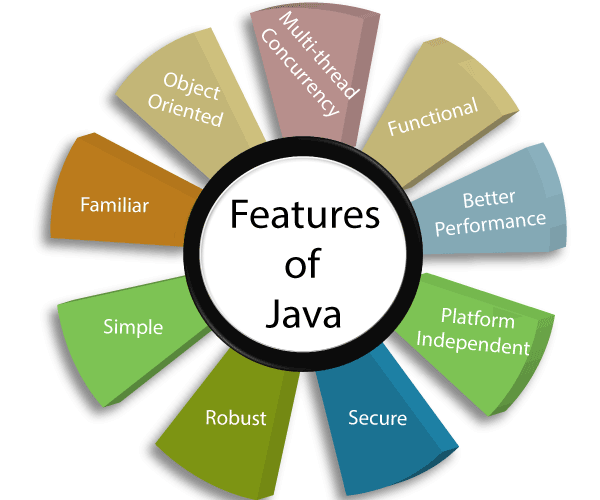
Java Features

Compiled and Interpreted

Platform Independent and Portable

Object Oriented

Robust and Secure

Dynamic

Distributed

Small, Simple and Familiar

Multithreaded

Conclusion

Java offers the real possibility that most programs can be written in a type-safe language. However, for Java to be broadly useful, it needs to have more expressive power than it does at present. This paper addresses one of the areas where more power is needed.

Course Description: Bachelor of Management Studies

Introduction

Bachelor of Management Studies or BMS is an undergraduate program for management studies offered by many universities throughout the world. The course allows you to obtain the knowledge and skills needed to assume management positions in a wide range of organizations. Management studies program provide students with a solid foundation in organizational behavior and human resource management while electives in labor-management relations, negotiation, conflict resolution, compensation systems and organizational development allow students to develop deeper knowledge in specific areas of interest. In addition to business management course, it will equip you to understand how organizations work, how they are managed, and how they interact with object oriented programming using c++ and data structures, national and international environments.

Course Structure

  • Core and Major Curriculum

This program enables students to develop advanced knowledge and skills in a range of business functions while setting them within the wider context of current business practice. In the first and second years, students have a variety of choices with an understanding of the role of the core business disciplines:

  • Accounting
  • Introduction to finance
  • Operations and Information management
  • Human resource management
  • Introduction to marketing
  • Micro Economics
  • Organizational Behavior
  • Business Law

In third year, students will study Organizational Strategy and they will have a choice of subjects from a list of options, based on their own interests and career aspirations. These options offer excellent opportunities to gain relevant work experience to prepare for their careers or add an international dimension to their undergraduate study.

Main Course Descriptions

  • What is Management?

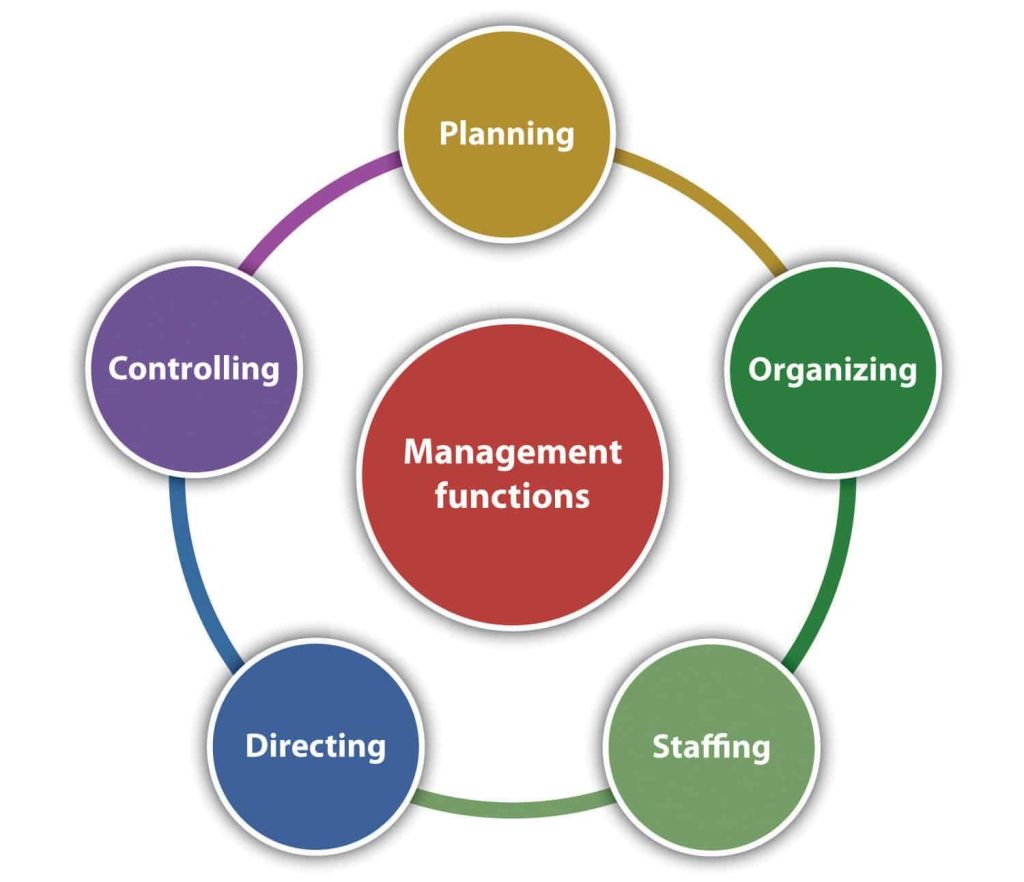
This course gives a brief introduction to the critical management skills involved in planning, structuring, controlling and leading an organization. It provides a framework to help students understand managing and being managed. Thus, leading them to become a more effective contributor to organizations that they join. Students can develop a system view of organizations through examining organizations as part of a context. It aims to train the learners to diagnose and suggest the suitable solutions to various managerial and organizational cases.

  • What is Human Resource Management

The focus of this course is to explore the principles of leading and managing people efficiently in today’s global enterprises. In this field, students access HR policy and practice in the areas of employment law, job analysis, employee relations and international HRM.

  • What is Organizational Behavior

This organizational behavior course combines classic arguments and contemporary empirical debates by discussing different elements of organizational structure. It introduces theoretical and empirical research on individual, interpersonal and group effectiveness at work. Course topics can be extended from decision making, motivation, leadership, teamwork to organizational culture. The learning method highly focuses on applying the essential tools of human side of management in role-play exercises and group projects in global organizations.

  • What is Economics for Management

The objective of the course is to show students how economics theory is related to the applications in managerial decision making and how resources are allocated and coordinated to achieve the organizations’ end goal. It emphasizes microeconomics ideas to solve problems and define the main concepts and models used in economic analysis. “Course topics covered include consumer theory, production, applications to the labor market, market structure, monopoly, oligopoly, product differentiation, pricing, decision analysis, bargaining, auctions, and asymmetric information.”

  • What is Law and Policy

The primary aim of the course is to make students aware of the basic legal concepts and implications affecting business transactions. It fosters a deeper practical sense of how to critically manage the important relationship between business and the natural environment 

  • What is Organizational Strategy

The first half of the course studies strategic situations and learn how to utilize the analytical tools to evaluate a firm’s position in the industry. Due to the modeling foundation of game theory, students will be tackled the real-world challenges and build the appropriate action plans .The second half of the course explores the evidence of different managerial styles and the impact on firm process, organizational change and corporate culture that constitute today’s collaborative business environments.

Optional Courses

The flexible management courses share a common first year before allowing you to focus on your chosen specialism to enhance your career prospects. The dissertation and optional modules allow students considerable opportunities to focus their studies on areas of special interest. Students are able to choose some elective modules (optional courses) from a selection list include:

  • Strategic management
  • Managerial Economics
  • Bank Strategy and Management
  • Entrepreneurship
  • Introduction to International Business
  • Leadership
  • Advanced Financial Accounting

Conclusion

Business management focuses on the organising, planning and analysing of business activities that are required to efficiently manage and run a business.You will learn what makes an organisation successful in a saturated global business environment and will gain the knowledge and skills required to work for businesses of all sizes – from multinational companies to start-ups. 

5G Networking Technology

What is 5G Network?

In Telecommunications, 5G is the fifth generation technology standard for broadband cellular networks, which cellular phone companies began deploying worldwide in 2019, and is the planned successor to the 4G networks which provide connectivity to most current cell phones. 5G networks are predicted to have more than 1.7 billion subscribers worldwide by 2025, according to the GSM Association. Like its predecessors, 5G networks are cellular networks, in which the service area is divided into small geographical areas called cells. All 5G wireless devices in a cell are connected to the Internet and telephone network by radio waves through a local antenna in the cell.

In telecommunications, 5G is the fifth generation technology standard for broadband cellular networks, which cellular phone companies began deploying worldwide in 2019, and is the planned successor to the 4G networks which provide connectivity to most current cell phones. 5G networks are predicted to have more than 1.7 billion subscribers worldwide by 2025, according to the GSM Association. Like its predecessors, 5G networks are cellular networks, in which the service area is divided into small geographical areas called cells. All 5G wireless devices in a cell are connected to the Internet and telephone network by radio waves through a local antenna in the cell.

HOW DOES 5G WORK?

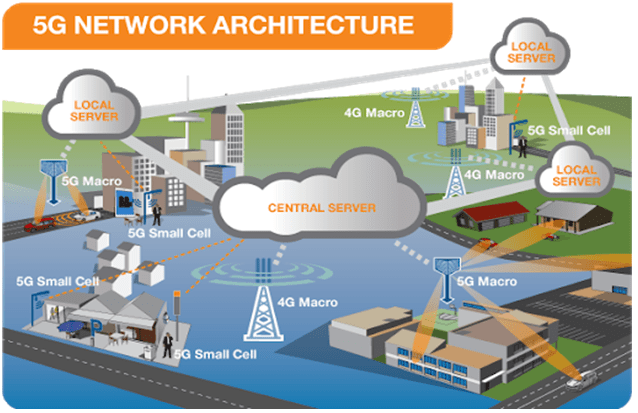
5G network architecture illustrating 5G and 4G working together, with central and local servers providing faster content to users and low latency applications.

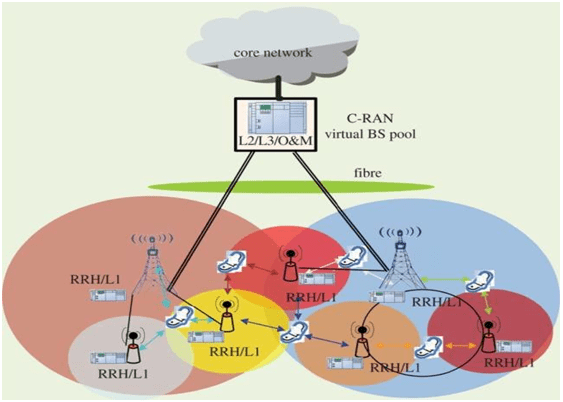
A mobile network has two main components, the ‘Radio Access Network’ and the ‘Core Network’.

The Radio Access Network – consists of various types of facilities including small cells, towers, masts and dedicated in-building and home systems that connect mobile users and wireless devices to the main core network.

Small cells will be a major feature of 5G networks particularly at the new millimetre wave (mmWave) frequencies where the connection range is very short. To provide a continuous connection, small cells will be distributed in clusters depending on where users require connection which will complement the macro network that provides wide-area coverage.

5G Macro Cells will use MIMO (multiple input, multiple output) antennas that have multiple elements or connections to send and receive more data simultaneously. The benefit to users is that more people can simultaneously connect to the network and maintain high throughput.  Where MIMO antennas use very large numbers of antenna elements they are often referred to as ‘massive MIMO’, however, the physical size is similar to existing 3G and 4G base station antennas.

The Core Network – is the mobile exchange and data network that manages all of the mobile voice, data and internet connections. For 5G, the ‘core network’ is being redesigned to better integrate with the internet and cloud based services and also includes distributed servers across the network improving response times (reducing latency).

Many of the advanced features of 5G including network function virtualization and network slicing for different applications and services, will be managed in the core. The following illustration shows examples of local cloud servers providing faster content to users (movie streaming) and low latency applications for vehicle collision avoidance systems.

Example of a local server in a 5G network providing faster connection and lower response times

Network Slicing – enables a smart way to segment the network for a particular industry, business or application. For example emergency services could operate on a network slice independently from other users.

Network Function Virtualization (NVF) – is the ability to instantiate network functions in real time at any desired location within the operator’s cloud platform. Network functions that used to run on dedicated hardware for example a firewall and encryption at business premises can now operate on software on a virtual machine. NVF is crucial to enable the speed efficiency and agility to support new business applications and is an important technology for a 5G ready core.

When a 5G connection is established, the User Equipment (or device) will connect to both the 4G network to provide the control signalling and to the 5G network to help provide the fast data connection by adding to the existing 4G capacity.


Where there is limited 5G coverage, the data is carried on the 4G network providing the continuous connection. Essentially with this design, the 5G network is complementing the existing 4G network

5G Configuration:-

Advantages of 5G Networking:-

High resolution and bi-directional large bandwidth shaping.

Technology to gather all networks on one platform.

More effective and efficient.

Technology to facilitate subscriber supervision tools for the quick action.

Most likely, will provide a huge broadcasting data (in Gigabit), which will support more than 60,000 connections.

Easily manageable with the previous generations.

Technological sound to support heterogeneous services (including private network).

Possible to provide uniform, uninterrupted, and consistent connectivity across the world.

Disadvantages of 5G Networking:-

Technology is still under process and research on its viability is going on.

The speed, this technology is claiming seems difficult to achieve (in future, it might be) because of the incompetent technological support in most parts of the world.

Many of the old devices would not be competent to 5G, hence, all of them need to be replaced with new one expensive deal.

Developing infrastructure needs high cost.

Security and privacy issue yet to be solved.

Conclusion

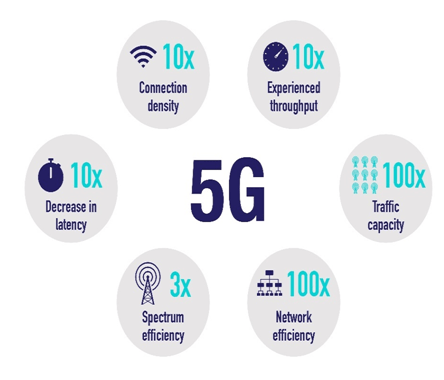
5G will be able to sustainably satisfy the requirement of the 1000-time traffic growth. 5G will provide users with fiber-like access data rate and “zero” latency user experience. 5G will be capable of connecting 100 billion devices.

Stress Management Through Sahaja Yoga Meditation

Introduction

Stress is unavoidable in the current scenario, where the entire world is facing the Corona virus pandemic. With the toll of deaths and positive cases of Corona virus on rise, every person in this world is under stress and anxiety. Higher levels of stress adversely affect the physical as well as psychological health of the individuals concerned. Therefore, it becomes highly essential to manage stress at initial stages, so as to avoid severe consequences of high stress on health. The present article focuses on the management of stress through a unique form of meditation, i.e, ‘Sahaja Yoga’. Sahaja Yoga is a scientifically proven technique of meditation which involves the awakening of the dormant primordial energy- the Kundalini, and integrating it with the all-pervading cosmic energy. Regular practice of Sahaja Yoga meditation leads to the inner transformation of an individual, whereby one becomes more moral, integrated, balanced and healthy.

What is Stress?

Stress refers both to the circumstances that place physical or psychological demands on an individual and to the emotional reactions experienced in these situations. It leads to severe effects on the physical as well as psychological health of the individuals concerned such as frequent headaches, heart disease, myocardial infarction, cardiovascular disease, musculoskeletal disorders, diabetes, high anxiety, depression, post-traumatic stress disorder and so on. Since, stress is a psychological phenomenon, its management can be best realised by treatment focused at the mental level. Thus, the present article aims at spreading awareness about the stress management technique called ‘Sahaja Yoga’ and highlighting its significance in the improvement of overall health, especially, psychological health.
Sahaja Yoga Meditation

What is Sahaja Yoga?

The word ‘Sahaja’ means ‘spontaneous’ and ‘Yoga’ means ‘union with the self’
Sahaja Yoga was founded in 1970 by Mrs. Nirmala Srivastava, more widely known as ‘Shri Mataji Nirmala Devi’. Shri Mataji was spiritually enlightened since birth and granted en-masse realisation to people free of any materialistic consideration. For 40 years since 1970, she travelled tirelessly across the globe to teach Sahaja Yoga meditation world-wide at her own expenses 

Human Subtle System

The process of Sahaja Yoga meditation works through the subtle system which comprises of three energy channels (nadis) and seven energy centres (chakras). At the root of this system lies a protective power – Kundalini. Amongst the three channels (Nadis), the left channel called Ida Nadi represents our desires (Ichha shakti); the right channel called Pingla Nadi represents our working ability (Kriya shakti); and the central channel called Sushumna Nadi represents our assent. The seven energy centres in the body correspond to the seven nerve plexuses: the pelvic plexus (Mooladhara Chakra), the aortic plexus (Swadhistana Chakra), the solar plexus
(Nabhi Chakra), the cardiac plexus (Heart Chakra), the cervical plexus (Vishuddhi Chakra), the optic chiasma (Agnya Chakra) and the limbic area of the brain (Sahasrara Chakra). These energy centres are responsible for maintaining their surrounding physical organs in the body.
When Kundalini rises it crosses all the six energy centres and emits from the seventh centre (Sahasrara Chakra) and unites the individual consciousness with universal consciousness. An individual rise above the three channels of the subtle system and reaches a timeless state beyond the past, present and future – a state of thoughtless awareness. This process is referred to as Self-realisation. As an evidence of self-realisation, an individual feels cool breeze of vibrations on the head and palms of hands .

How Sahaja Yoga Meditation Helps in Stress Management?

It is imperative to understand how stress arises and how is it managed through Sahaja Yoga meditation. The central channel (Sushumna Nadi) is the path of rising Kundalini and a channel of balance. An individual having too many desires and always thinking about the past deviates from the central channel and puts his left channel under pressure. On the other hand a workaholic person, always working and planning for the future puts his right channel under pressure. The left-sided individuals become highly emotional, conditioned and day dreamers while right-sided people become highly egoistic and harsh on others. Stress is the result of such an imbalance between the two energy channels and deviation from the central channel.
Therefore, one should always keep his attention on the central channel and remain in the balanced state in order to be stress-free. Thus, Sahaja Yoga helps in managing stress effectively by attaining and maintaining the balanced state through regular meditation, since by focussing on the central channel one remains in present rather than thinking about past or future events.


Sahaja Yoga in the present Coronavirus Scenario

As many as 200,000 people across 60 countries have attended online meditation sessions since 16 March 2020 with the commencement of lockdown, according to the information published nation-wide from H.H. Shri Mataji Nirmala Devi Sahaja Yoga Trust (National Trust). The Youtube channel – Pratisthan, Pune of the Trust has seen around 2 million views with 7.31 lakh watch hours and over 13.2 million impressions in the lockdown period. Each viewer attended an average of 8.6 session and spent average of 23 minutes per visit, which is substantial as people look towards meditation to overcome anxiety during COVID19 lockdown.

Conclusion

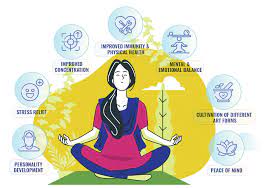
Sahaja Yoga meditation activates and nourishes the parasympathetic nervous system which relaxes both body functions and the brain by reducing thinking functions Thus, regular meditation everyday cleanses the subtle system, relaxes body and mind, and gradually one starts experiencing physical, mental and emotional benefits also, apart from gaining stress relief Thus, the Indian government should focus on building resilient citizens which can adjust with the pressures of the present stressful scenario.