EduPub (Edupedia Publications Pvt Ltd) is a company dedicated to the development of the education, learning, research and innovation in the field of the research and books publication. We are pioneer in providing wide range of services to educational institutions, government agencies, individuals and corporates in the field of training and education, research and development, research and innovation. research and publication.
Memes, the trending way to show yourself cool. If life makes you cry, make a meme on it, if something’s going wrong, make a meme.
Nowadays, the memes are also becoming the symbol of rebellion,of opposition. Some political parties & companies are hiring memers too. Well, it sounds cool, isn’t it?
But, do you really think that meme addiction is ok? Is it really ok to laugh on every unusual event ? Are memes really making you a well mannered & a risk taking human being..? Just think over it.
Well..I don’t think that meme addiction is cool. I’m not talking about facts, but about the personal experience. And obviously, no addiction is really cool.
So, let me tell you by a personal experience that how meme addiction can turn you into a negatively approached & inexorable person.
Let me share two incidents of my own related to this meme addiction ~
There, I was a meme addict, following a lot of meme pages two years ago. Of course, there were lot of memes which I never liked, but okk, I was still laughing on those too. And then at a point of time, I just realized that I was actually turning into a person full of hatred towards every shit thing/people. When, I analyzed the situation, I realized, it was the hate coming from the meme pages. I just unfollowed every single meme page. And yeh, this problem got solve.
So, after the first incident, I wasn’t really into memes. I used to see only the memes shared by my friends to me. But now, just coming to the present time, when I realized that memes are again causing negativity around me & has converted me into a person who just laughs on her problem. Ohh..Yes, laughing on your life problems isn’t always good.
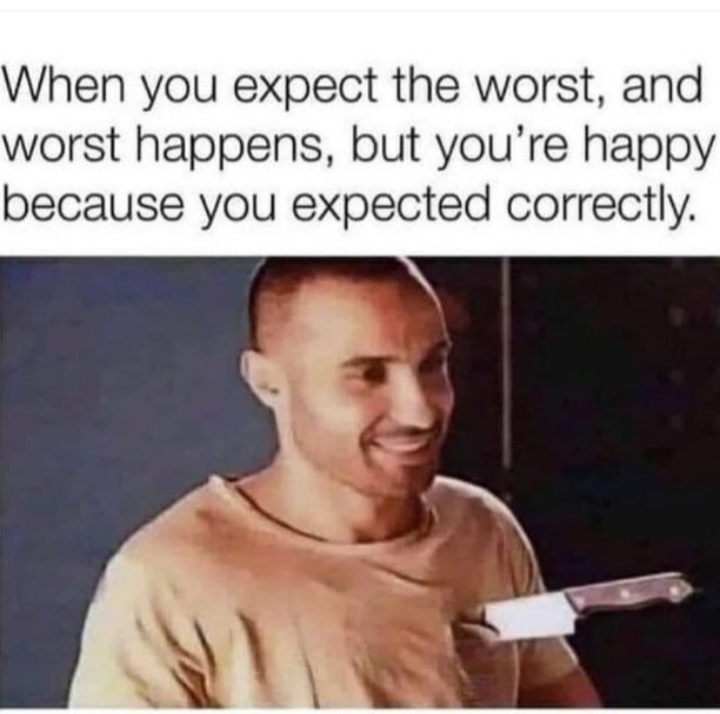
Memes, like the above one, give us excuses actually. Excuses to avoid the problem.
Okk, I am going through a trough in my life, then I see a meme which is justifying my condition by helding someone/something responsible & now I am actually happy seeing this, just forgot that I need to work hard to get out of this trough.
Ok, scientific studies show that laughing is the best therapy & some motivator type people quote that ~ “laugh at all your problems”. But, you just need to think over it, not everything is for laughing.
Sometimes all these laughing situations give us excuses & we start avoiding the problem. “Problems are to fight not to avoid.”
I’m not saying that every single meme is turning every single being into negative. But, I’m saying that just look around you & see if it’s because of memes that you’re turning into a negative being.
And, finally just avoid, every kind of addiction, be it’s meme addiction or some other addiction. Addictions can charge a positive being to the negative.
🕊️ May the peace prevail on our Earth. May the hope abide in our Hearts…🕊️
The world pharmacist day reminds the world to pay a special tribute to all those pharmacists who are rendering services with kindness and empathy.Pharmacists are the best group who are supporting the medical system with much kindness and tenderness. During the time of the pandemic, pharmacists have played a key role in supporting health care.
World pharmacist’s day is celebrated on the 25th of September. Every year, world pharmacist’s day is celebrated with great enthusiasts.The world is celebrating this day to thank those pharmacists who pay extra attention to the health care of the people. The theme of this year’s world pharmacist day is nothing other than “Pharmacy: Always trusted for your health”. The selection of the theme is done with extra care and concern. It is highly related to trust in the field of health care. Trust is the fundamental aspect of the health care field. Human relationships are built around the concept called trust. Trust can act as a vital part of health care. Health is a sensitive area. Health can be achieved through the trust of so many branches.The association between people belonging to the pharmacy field and the patients is very important.The helping hands of the pharmacists especially during the pandemic are worth mentioning. So, it is important to give respect and pay tribute to the selfless services of pharmacists across the world.
World Pharmacist Day: Significance
The IPF Council 2009 in Istanbul introduced the world pharmacist’s day celebration and demonstrated the importance of the world pharmacist day. The services of this particular group of people should be brought into the limelight. The world should know more about pharmacists. It is important to know the value of their services in the health care feels. The world pharmacist’s day celebration aims at promoting and recognizing the role of pharmacists in health care.The day is also a reminder to accept the pharmacists and their services with respect. It helps to promote the importance of pharmacists. The world should understand the pivotal role of pharmacists. World Pharmacists Day encourages people to identify the pharmacists in all nooks and corners of the world. It helps people across the globe to identify the pharmacists among the crowd. It is important to know more about the selfless activities of pharmacists. They are providing the best possible services for the people in the best way in the field of medical care.
What is the International Pharmaceutical Federation (IPF)?
The International Pharmaceutical Federation (IPF) is the founder of World Pharmacists Day. This organization aims at providing possible recognition to pharmacists across the world. The global body represents everything related to the field of pharmacy. The IPF is the main source for pharmaceutical education, pharmaceutical sciences and other aspects related to the sector of pharmacy. It is the selfless service of the pharmacists that can bring about a smile in the face of the patients who are suffering from various diseases. The services rendered by this group should be put in the limelight and should be treated with extra importance.
The world should promote the services and accept the helping hands extended by this group of people. Health care is an important aspect of life and it is important to understand the better services of pharmacists across the globe. The IPF represents trillions of pharmacists across the globe. The IPF has 144 branches and through the national organizations, they are trying to bring forth the importance of pharmacists across the globe. The academic institutional members, representatives and individual members of the particular body can stand as the representatives working in this sector. The pharmaceutical scientists, pharmaceutical educators, pharmacists and representatives around the world. IPF has its office in the Netherlands. This is a non-governmental organization that can help pharmacists across the world to cope up with situations.
The IPF can support the pharmacists to develop their resources and extending their services. The IPF works to ensure the completeness of the services rendered by pharmacists across the globe. The selfless services are appreciated and coordinated by the IPF. Scientific inventions and practices are possible through this. It is an attempt to meet the health care of the world. It is an effort to meet the expectations and the necessity of the people depending on the pharmaceuticals’ is worth noting that 78% of Pharmacy Technicians are Females. There are a total of 4 million pharmacists can be identified across the globe. It is important to serve and respect them in the right way. The revenue of the pharmaceutical market is around 1204.8 billion USD. They are the most accessible healthcare professionals available in the health care field. They are the valuable assets of the health care sector.
They are the group of experts who are providing the best treatment advice, medicine usage advice and many more things to do while taking the medicines. Health care is safe within their hands. The world can witness the kindness and empathy of the pharmacist’s people. World pharmacist’s day is celebrated on September 25th 2021 this year. It is the selfless activity of pharmacists across the world irrespective of age and gender in the medical world. The IPF was established in the year 1912 on September 25. This is the reason why the Turkish members have suggested the celebration of the day on 25th September.
The term “startup” refers to a company in the first stages of operations. Startups are founded by one or more entrepreneurs who want to develop a product or service for which they believe there is demand. These companies generally start with high costs and limited revenue, which is why they look for capital from a variety of sources such as venture capitalists.
KEY TAKEAWAYS
A startup is a company that’s in the initial stages of business.
Until the business gets off the ground, a startup is often financed by its founders and may attempt to attract outside investment.
The many funding sources for startups include family and friends, venture capitalists, crowdfunding, and loans.
Startups must also consider where they’ll do business and their legal structure.
Startups come with high risk as failure is very possible but they can also be very unique places to work with great benefits, a focus on innovation, and great opportunities to learn.
Understanding Startups
Startups are companies or ventures that are focused on a single product or service that the founders want to bring to market. These companies typically don’t have a fully developed business model and, more crucially, lack adequate capital to move onto the next phase of business. Most of these companies are initially funded by their founders.
Many startups turn to others for more funding: family, friends, and venture capitalists. Silicon Valley is known for its strong venture capitalist community and is a popular destination for startups, but is also widely considered the most demanding arena.
Startups can useseed capitalto invest in research and to develop their business plans. Market research helps determine the demand for a product or service, while a comprehensive business plan outlines the company’smission statement, vision, and goals, as well as management and marketing strategies.
Examples of Startups
Dotcoms were a common startup in the 1990s. Venture capital was extremely easy to obtain during this time due to a frenzy among investors to speculate on the emergence of these new businesses. Unfortunately, most of these Internet startups eventually went bust due to major flaws in their business plans, such as lacking a path to sustainable revenue. However, a handful of companies survived when the dotcom bubble burst. Both Amazon (AMZN) and eBay (EBAY) are examples.
The first few years are very important for startups—a period during which entrepreneurs should concentrate on raising capital and developing a business model.
Many startups fail within the first few years. That’s why this initial period is important. Entrepreneurs need to find money, create a business model and business plan, hire key personnel, work out intricate details such as equity stakes for partners and investors, and plan for the long run. Many of today’s most successful companies—Microsoft (MSFT), Apple (AAPL), and Facebook (FB), to name a few—began as startups and ended up becoming publicly traded companies.
Dance wether zumba, hip-hop, Kathak, bhangra, garba, dandiya, shuffle, house, chicago or freestyle is a way to express our thoughts and feelings without the need of words or expression.
It’s an art that let’s your creativity being expressed through the medium of your hands, legs and body. It does not have any specific way to do it, it is unique to everyone’s own creativity. It is just expressing your heart out. It need not be in front of everyone to show-off your skills in dance, it is actually to free yourself and dance the way you want, maybe in a closed room in front of a camera of mirror.
The actually essence of dance is being what you are, doing what you like, just for yourself and nobody else. It is like a stress buster, which helps you to take all your worries, frustration, anger, happiness out and makes you feel a relaxed. And if you dance happily it even have positive effect on your body, helps you to stay fit. It helps to develop your personality.
If you are really want to dance you can join a dance club or group, which helps you to interact with new people, expand you world from just home to school, college or office. You find like minded people it motivates you to be more expressive in your life.
And ultimately I want to say, you want to join a club or not it’s your decision, it actually doesn’t matter, the thing matter is just ‘Dance Your Heart Out’ that’s it, no matter in club, stage or just in a room.
Past decade has handed over much benefit to human kind and the one to suffer is environment exposing environmental degradation that costs…….. per year worldwide.
“While the overall policy focus should be on meeting basic needs and expanding opportunities for growth, they should not be on the expense of unsustainable environmental degradation.”-muthukmara mani(senior environmental economist).
Using natural resources as fuel to the economic development many have curbed themselves over the poverty, it providing employability and many new opportunities to individuals. With excess greed and overuse of all these resources there has been excruciating effects on environment overall degrading forests, scarring natural resources these are overall affecting the economy in return.
Poverty remains cause of either of both consequence and cause of environmental degradation. Needless mining and overuse of resources that are on first hand limited to us which is quiet evident over degrading agriculture yields per hectare as livestock is overgrazed grassland and forest deplete for human settlements.
The question that arises is our economic benefit so crucial that it costs us worsened environmental quality, depleted resources, extinct habitats and other impacts?
Something that emerges out is environmental stability, low emission resource efficient greening of the economy should be possible at costs of terms less to that of GDP of each country, valuing the available natural resources and taking policy decision accordingly.
To avail this issue the natural environmental growth be necessary, affordable, desirable, and measurable.
If not now it’s going to be a challenge to turn the pages around to covert the damages done to nature with hefty economical costs in future and also proving deadly not only to the flora-fauna but eventually to humans too, hence it’s necessary to avail it at the very moment.
Policies such as environmental taxes can positively help minimize the cost and pressure over governments hence making it affordable to all.
With so many diversifies ecologies and habitat all over the globe the policies and laws needs to be designed such that it preserves and nourishes these natural gems.
What can be done?
Particulate emission reduction can effectively help decrease GDP modestly even reducing 10%.
Making more tractable efficient commitments and following them religiously, look through the environments vision and then make other end decision regarding the communities, societies, business and governments. Science can be at its most use when it’s accessible to every person who wishes to use it. Every person taking this as a personal responsibility the awareness would make it up to history pages. We need to turn around the current situation and consider it as a need of an hour if we wish out economy our trades our families to thrive in peace without draining our economies.
“To be ‘feminist’ in any authentic sense of the term is to want for all people, female and male, liberation from sexist role patterns, domination, and oppression.” bell hooks made this clear and powerful statement in her 1981 study of sexism, racism, and the feminist and civil rights movements Ain’t I a Woman: Black Women and Feminism. Almost 40 years on, the world is still reckoning with pervasive and inexcusable gender inequality underpinned by bias and sexism, and research and health care are no exception. Today, The Lancet publishes a theme issue on advancing women in science, medicine, and global health, with the aim of showcasing research, commentary, and analysis that provide new explanations and evidence for action towards gender equity. This theme issue is the result of a call for papers that led to over 300 submissions from more than 40 countries. The overwhelming conclusion from this collection of work is that, to achieve meaningful change, actions must be directed at transforming the systems that women work within—making approaches informed by feminist analyses essential.
It is well established that women are under-represented in positions of power and leadership, undervalued, and experience discrimination and gender-based violence in scientific and health disciplines across the world. Intersectional approaches have provided insights into how other categories of difference such as ethnicity, class, geography, disability, and sexuality interact with gender to compound inequalities. Most submissions to this theme issue came from high-income countries, highlighting the need to support scholarship from the Global South. Geordan Shannon and colleagues provide a global overview of gender inequality in science, medicine, and global health, and discuss the evidence for the substantial health, social, and economic gains that could be achieved by addressing this inequality. Indeed, some studies, including one in this issue by Cassidy Sugimoto and colleagues, show that more diverse and inclusive teams lead to better science and more successful organizations.
Despite decades of recognition, these problems have proved stubbornly persistent. It is now commonplace for organizations to make public statements valuing diversity, hire diversity officers, and implement programmed to advance women’s careers. Yet, all too often, such programmers locate the source of the problem, and hence the solution, within women and their own behavior. Thus, although actions such as mentoring and skills training might be well intentioned and advantageous to a degree, they often fail to engage with broader features of systems that disproportionately privilege men. For instance, Holly Wittman and colleagues show, using data from a federal funder, how gender bias disadvantages women applying for grant funding.
Reflecting on these biases can be difficult for professions like science and medicine that are grounded in beliefs of their own objectivity and evidence-driven thinking. A trio of papers in this issue demonstrates the value of critical perspectives in this regard. Malika Sharma explains how the “historical gendering of medicine prioritizes particular types of knowledge (and ways of producing that knowledge), and creates barriers for critical, and specifically feminist, research and practice”. Feminist and other critical perspectives enable researchers to question the underlying assumptions that produce and maintain social hierarchies, and in doing so, imagine ways to transform fields and practices to make them more equitable and inclusive. Likewise, Sara Davies and colleagues argue that a feminist research agenda is key to advancing gender equality in global health, and Kopano Ratele and colleagues explain why efforts to engage men in advancing gender equality must be grounded in an appreciation of theories of masculinity.
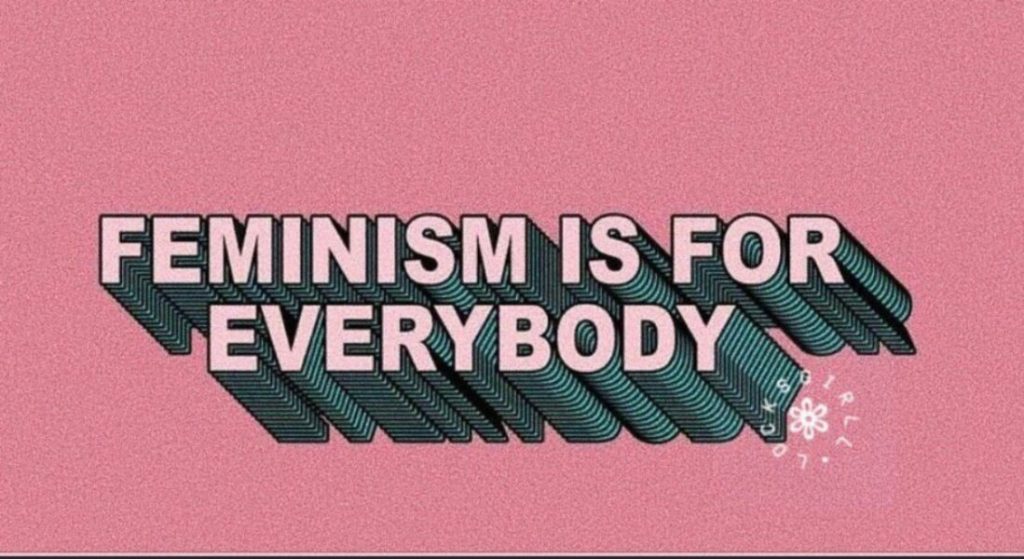
For actions to have lasting and far-reaching consequences, they must therefore be directed at creating institutional-level change. Several pieces in this theme issue discuss such approaches, with a Review by Imogen Coe and colleagues providing a toolbox of organizational best practices towards gender equality in science and medicine. The Lancet’s commitments to addressing gender bias in publishing are detailed in a Comment. Gender equity is not only a matter of justice and rights, it is crucial for producing the best research and providing the best care to patients. If the fields of science, medicine, and global health are to hope to work towards improving human lives, they must be representative of the societies they serve. The fight for gender equity is everyone’s responsibility, and this means that feminism, too, is for everybody—for men and women, researchers, clinicians, funders, institutional leaders, and, yes, even for medical journals.
A group of cognitive psychologists, curriculum theorists and instructional researchers, and testing and assessment specialists published in 2001 a revision of Bloom’s Taxonomy with the title A Taxonomy for Teaching, Learning, and Assessment. This title draws attention away from the somewhat static notion of “educational objectives” (in Bloom’s original title) and points to a more dynamic conception of classification.
The authors of the revised taxonomy underscore this dynamism, using verbs and gerunds to label their categories and subcategories (rather than the nouns of the original taxonomy). These “action words” describe the cognitive processes by which thinkers encounter and work with knowledge.
A statement of a learning objective contains a verb (an action) and an object (usually a noun).
The verb generally refers to [actions associated with] the intended cognitive process.
The object generally describes the knowledge students are expected to acquire or construct. (Anderson and Krathwohl, 2001, pp. 4–5)
The cognitive process dimension represents a continuum of increasing cognitive complexity—from remember to create. Anderson and Krathwohl identify 19 specific cognitive processes that further clarify the bounds of the six categories.
The Cognitive Process Dimension – categories, cognitive processes (and alternative names)
The knowledge dimension represents a range from concrete (factual) to abstract (metacognitive) (Table 2). Representation of the knowledge dimension as a number of discrete steps can be a bit misleading. For example, all procedural knowledge may not be more abstract than all conceptual knowledge. And metacognitive knowledge is a special case. In this model, “metacognitive knowledge is knowledge of [one’s own] cognition and about oneself in relation to various subject matters . . . ” (Anderson and Krathwohl)
The Knowledge Dimension
Factual
knowledge of terminology
knowledge of specific details and elements
Conceptual
knowledge of classifications and categories
knowledge of principles and generalizations
knowledge of theories, models, and structures
Procedural
knowledge of subject-specific skills and algorithms
knowledge of subject-specific techniques and methods
knowledge of criteria for determining when to use appropriate procedures
Metacognitive
strategic knowledge
knowledge about cognitive tasks, including appropriate contextual and conditional knowledge
self-knowledge
Bloom’s Revised Taxonomy Model
Note: These are learning objectives – not learning activities. It may be useful to think of preceding each objective with something like, “students will be able to…:
The Knowledge Dimension
Factual
The basic elements a student must know to be acquainted with a discipline or solve problems in it.
The Knowledge Dimension
Conceptual
The interrelationships among the basic elements within a larger structure that enable them to function together.
The Knowledge Dimension
Procedural
How to do something, methods of inquiry, and criteria for using skills, algorithms, techniques, and methods.
The Knowledge Dimension
Metacognitive
Knowledge of cognition in general as well as awareness and knowledge of one’s own cognition
The Cognitive Process Dimension
Remember
Retrieve relevant knowledge from long-term memory.
Remember + Factual
List primary and secondary colors.
Remember + Conceptual
Recognize symptoms of exhaustion.
Remember + Procedural
Recall how to perform CPR.
Remember + Metacognitive
Identify strategies for retaining information.
The Cognitive Process Dimension
Understand
Construct meaning from instructional messages, including oral, written and graphic communication.
Understand + Factual
Summarize features of a new product.
Understand + Conceptual
Classify adhesives by toxicity.
Understand + Procedural
Clarify assembly instructions.
Understand + Metacognitive
Predict one’s response to culture shock.
The Cognitive Process Dimension
Apply
Carry out or use a procedure in a given situation.
Apply + Factual
Respond to frequently asked questions.
Apply + Conceptual
Provide advice to novices.
Apply + Procedural
Carry out pH tests of water samples.
Apply + Metacognitive
Use techniques that match one’s strengths.
The Cognitive Process Dimension
Analyze
Carry out or use a procedure in a given situation.
Analyze + Factual
Select the most complete list of activities.
Analyze + Conceptual
Differentiate high and low culture.
Analyze + Procedural
Integrate compliance with regulations.
Analyze + Metacognitive
Deconstruct one’s biases.
The Cognitive Process Dimension
Evaluate
Make judgments based on criteria and standards.
Evaluate + Factual
Select the most complete list of activities.
Evaluate + Conceptual
Determine relevance of results.
Evaluate + Procedural
Judge efficiency of sampling techniques.
Evaluate + Metacognitive
Reflect on one’s progress.
The Cognitive Process Dimension
Create
Put elements together to form a coherent whole; reorganize into a new pattern or structure.
The Power Of Your Subconscious Mind is a spiritual self-help book, which teaches you how to use visualization and other suggestion techniques to adapt your unconscious behavior in positive ways.
Understanding your subconscious mind as a photographic mechanism removes the emotion and struggle from changing your life, because if it is simply a matter of replacing existing mental images with new ones, you begin to see the ease with which you may change.
‘The law of your mind is the law of belief itself,’ Murphy says. What we believe makes us who we are. William James observed that whatever people expect to be true, will be so, irrespective of whether the object of their belief exists in fact. In the West we have made ‘the truth’ our highest value; this motivation, while important, is weak next to the actual power of belief in shaping our lives.
1. You Receive Answers To Prayer Because Of Mental Acceptance About What You Pray
Murphy proposes that your religious affiliation is not what makes prayer effective. Rather, it is based on your ability and willingness to accept what you pray.
It makes sense that whatever you can and do accept on a conscious level has to be accepted by your subconscious as well.
Another statement that expands on this idea is this one: “the subconscious mind is subject to the conscious mind.” What Murphy is saying is that you can train your subconscious mind to believe what you can accept on a conscious level.
2. Your Subconscious Mind Has The Answer To All Your Problems
This statement makes perfect sense if you don’t have any problems with the idea that your subconscious mind = God.
Even if not for that, though, it speaks to the power of the subconscious mind. You don’t need to go looking outside for the answers you seek – Murphy is saying – you can look inside, and pose questions to your subconscious.
The answers may not come immediately, but your mind is always working on problems you submit to it even when you’re doing other things, and it will eventually present to you a workable solution.
3. Faith Is The Only Universal Healing Principle Operating Through Everybody
I believe the implication here is that faith is created by accessing and harnessing the power of our subconscious minds. Illness, physical ailments, and even traumatic experiences can be healed by repeatedly submitting thoughts of healing to our subconscious minds.
Can we be healed by any other means? According to Murphy, no. Faith is the universal healing principle. Of course, I don’t think he would discount the importance of medicine and other orthodox cures, but I have to guess that in this case he is referring to instances of healing that have occurred in so-called “healing services”, churches, or religious gatherings.
4. If A Prayer Is Answered, It Is Answered Scientifically
What Murphy is suggesting is that there is a formula to prayers that are answered. He explains that “science” means knowledge that is coordinated, arranged and systematized, so the idea here is that we can cooperate with our subconscious minds to see more of our prayers answered.
If anything, the entire book sheds light on how little attention and thought we give to our subconscious minds, and what fantastic tools they are in helping us achieve ends that we desire to see in our lives.
5. Don’t Compel Your Subconscious Mind To Accept Your Idea By Willpower
Although Murphy does talk about presenting positive thoughts and images to our subconscious minds, he is also quick to caution us that we can’t force things. Our willpower is limited, and it continues to decrease and diminish throughout the day. Can you imagine how tiring it would be to force yourself to think the same things and visualize the same images all day long?
I think the idea is that we can plant seeds and nurture them, but we shouldn’t be constantly uncovering the soil to see how our seeds are doing. We must keep pulling the weeds and watering the seed, and while that may require a daily investment, it shouldn’t take more than a couple of minutes.
6. The World You Live In Is Determined By What Goes In Your Mind
Regardless of whether you subscribe to Murphy’s theology, I think this is something we can all agree on. What goes into your mind is hugely important. If you choose poorly, you’ll assimilate bad attitudes, behaviors, and thoughts. If you choose well, you’ll begin to see positive changes within yourself.
What world do you want to live in? Have you thought about it? If you aren’t sure what you want to achieve in your lifetime, it makes it much harder to select input that will assist you on your journey. If you are fully in alignment with your objectives, choosing the right input becomes much easier.
7. Man Punishes Himself With His False Concepts Of God
We create our own misery. No one else does it for us. I think I know exactly what Murphy was saying here. I can attest to the fact that my false concepts of God led me down a path of misery.
In 2014, I went through a period of depression. Up until that point, I had felt that there was a clear path laid out ahead of me. Suddenly, that path disappeared and I could no longer see what was ahead. I cried out to God, but to no avail. My prayers kept hitting the ceiling. And, in retrospect, I feel it was my false ideas of the divine that were responsible for my bouts of depression.
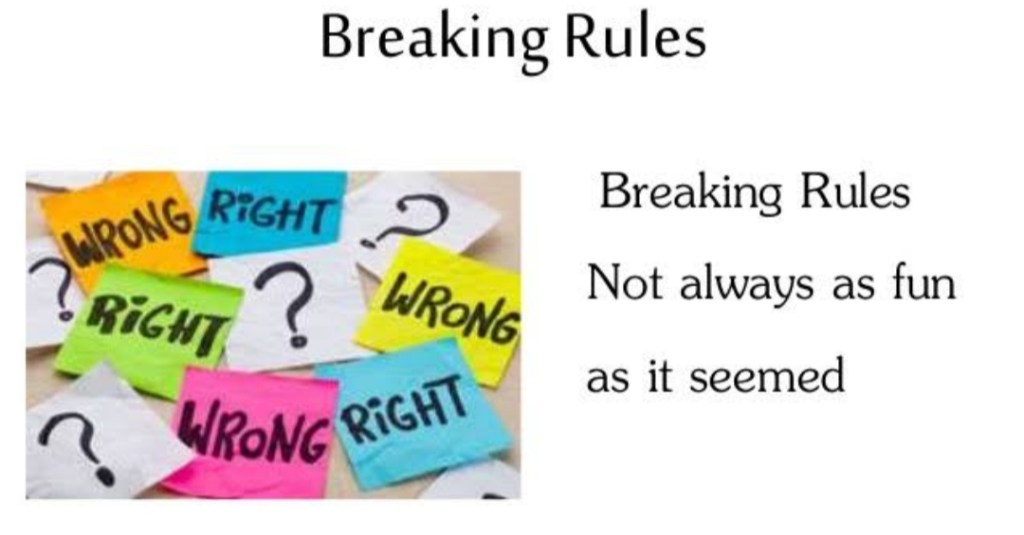
Mysticism is the belief that something outside you controls your life. Recognizing that you are in control and you can rely upon your subconscious mind for the answers you seek is empowering. Right or wrong is not something you can check against a book. Right or wrong is embedded deep within you already, and to try to fit yourself into someone else’s ideas is to try to put a square peg in a round hole.
Be willing to see the unchangeable change.
Give yourself permission to be successful.
Don’t allow other people’s fears to cast shadows of doubt.
Surround yourself with positive reinforcement.
Speak your success as a present fact, not a future plan.
Using smart techniques like vertical farming, censors, potential land requirements,etc.
Agriculture of today is faced with many problems. The lack of availability of farm lands, limited access to water, climate change, and overpopulation all jeopardize the overall sustainability of farm production. In aiming to produce enough food for the growing population, farmers are forced to increase crop productivity per field unit. So here is the big question that every struggling farmer is faced with: How this can be achieved? Luckily, there is one possible and quite simple solution: the introduction and use of modern technologies in modern farming. New modern technologies not only bring revolutionary changes into farming but also revolutionize the way in which farmers work.
Modern farm management relies on many different factors, including sensing methodologies, farm equipment, enhanced seeds, and farm software which facilitates the tracking of a complete farm production from one central location. Modern technology helps farmers obtain accurate information of crop, soil, climate, and environmental conditions.
Sensors are important tools in modern agriculture management. They are used either to control variable rate application in real-time or to generate field maps of particular soil properties, in conjunction with GPS.
According to variation in soil characteristics that influence the yield, sensors can measure:
There are two main types of sensors available to farmers for measuring of various soil characteristics. These are:
1. On-the-go sensors
On-the go sensors are sensors attached to a tractor or to its implement which measure various soil characteristics with or without entering the soil. As a tractor with GPS receiver moves across the field, measured data is generated on a soil map. This map can serve as an information for application rate of fertilizers, pesticides or enhancement of soil properties.
2. Real-time sensors
Real-time sensors are sensors attached to a tractor or to its implement which record the real-time changes in the soil, such as nitrogen amount or weed presence. The changes are automatically registered by a central computer which coordinates the application of a fertilizer or herbicide. In this case, a product is applied only where it is needed.
Real-time sensors are generally used for variable-rate application where pesticides, fertilizers, and seeds are applied according to measured soil’s or crop’s characteristics.
Sensors for soil mapping are mainly vehicle-based but can also be made by drones. Soil data is captured on-the-go and instantaneously converted into distribution maps. Based on analyzed data, farmers know which part of the field lacks a certain crop nutrient or need to manage its characteristic. This helps minimize the need for farm inputs use and lower financial cost while increasing crop yield.
Technology is increasingly taking over the agriculture sector. Farmers are not dummy village people anymore, they are becoming technologically educated and proud to participate in eradication of world hunger. Be one of them and reduce the hunger by using modern farm technology.
Stress is a normal reaction the body has when changes occur, resulting in physical, emotional and intellectual responses. Stress management training can help you deal with changes in a healthier way.
What is stress?
Stress is a normal human reaction that happens to everyone. In fact, the human body is designed to experience stress and react to it. When you experience changes or challenges (stressors), your body produces physical and mental responses. That’s stress.
Stress responses help your body adjust to new situations. Stress can be positive, keeping us alert, motivated and ready to avoid danger. For example, if you have an important test coming up, a stress response might help your body work harder and stay awake longer. But stress becomes a problem when stressors continue without relief or periods of relaxation.
What happens to the body during stress?
The body’s autonomic nervous system controls your heart rate, breathing, vision changes and more. Its built-in stress response, the “fight-or-flight response,” helps the body face stressful situations.
When a person has long-term (chronic) stress, continued activation of the stress response causes wear and tear on the body. Physical, emotional and behavioral symptoms develop.
Physical symptoms of stress include:
Aches and pains.
Chest pain or a feeling like your heart is racing.
Exhaustion or trouble sleeping.
Headaches, dizziness or shaking.
High blood pressure.
Muscle tension or jaw clenching.
Stomach or digestive problems.
Trouble having sex.
Weak immune system.
Stress can lead to emotional and mental symptoms like:
Anxiety or irritability.
Depression.
Panic attacks.
Sadness.
Often, people with chronic stress try to manage it with unhealthy behaviors, including:
Drinking alcohol too much or too often.
Gambling.
Overeating or developing an eating disorder.
Participating compulsively in sex, shopping or internet browsing.
Smoking.
Using drugs.
How is stress diagnosed?
Stress is subjective — not measurable with tests. Only the person experiencing it can determine whether it’s present and how severe it feels. A healthcare provider may use questionnaires to understand your stress and how it affects your life.
If you have chronic stress, your healthcare provider can evaluate symptoms that result from stress. For example, high blood pressure can be diagnosed and treated.
What are some strategies for stress relief?
You can’t avoid stress, but you can stop it from becoming overwhelming by practicing some daily strategies:
Exercise when you feel symptoms of stress coming on. Even a short walk can boost your mood.
At the end of each day, take a moment to think about what you’ve accomplished — not what you didn’t get done.
Set goals for your day, week and month. Narrowing your view will help you feel more in control of the moment and long-term tasks.
Consider talking to a therapist or your healthcare provider about your worries.
What are some ways to prevent stress?
Many daily strategies can help you keep stress at bay:
Try relaxation activities, such as meditation, yoga, tai chi, breathing exercises and muscle relaxation. Programs are available online, in smartphone apps, and at many gyms and community centers.
Take good care of your body each day. Eating right, exercising and getting enough sleep help your body handle stress much better.
Stay positive and practice gratitude, acknowledging the good parts of your day or life.
Accept that you can’t control everything. Find ways to let go of worry about situations you cannot change.
Learn to say “no” to additional responsibilities when you are too busy or stressed.
Stay connected with people who keep you calm, make you happy, provide emotional support and help you with practical things. A friend, family member or neighbor can become a good listener or share responsibilities so that stress doesn’t become overwhelming.
How long does stress last?
Stress can be a short-term issue or a long-term problem, depending on what changes in your life. Regularly using stress management techniques can help you avoid most physical, emotional and behavioral symptoms of stress.
When should I talk to a doctor about stress?
You should seek medical attention if you feel overwhelmed, if you are using drugs or alcohol to cope, or if you have thoughts about hurting yourself. Your primary care provider can help by offering advice, prescribing medicine or referring you to a therapist.
A note from Cleveland Clinic
It’s natural and normal to be stressed sometimes. But long-term stress can cause physical symptoms, emotional symptoms and unhealthy behaviors. Try relieving and managing stress using a few simple strategies. But if you feel overwhelmed, talk to your doctor.
GOOD SAY OR BAD ADOPTING COPING STRATEGIES OR HOBBIES ARE THE THING ON WHICH NOBODY HAS A CONTROL OVER DURING THE LOCKDOWN.
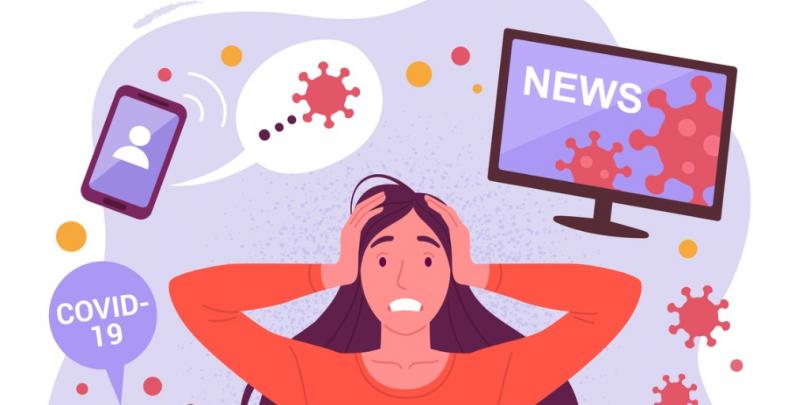
The COVID-19 pandemic and ensuing lockdown measures have created unprecedented circumstances that increase stress and anxiety, thus leading individuals experiencing home confinement to adopt various coping strategies that contribute to building resilience. Given the novelty and recency of the COVID-19 lockdown, factors of coping and resilience in this specific context of home confinement remain undefined. Some put this time in effective routine to get good result but there were some who waste their time with some bad coping strategies.
SOME COPING STRATEGIES WERE-
COOKING– people have learnt to cook for them-self. People who live alone and deprived from the food delivery option have taken up the ladle, some who have no choice and some who see this as a opportunity to learn or put their confined time to some effective work or activity.
DUSTING AND CLEANING- people have to take this activity without any choice as with this lockdown and without any house help their hands were tied or say only their hands were the one left to do the job. Some saw this as an opportunity to cover their missed fitness routine and some did because they didn’t have any choice but to keep their house clean.
READING- This is one of the good coping strategies people have taken up in this lockdown. Prior to this covid-19 lockdown, people with their busy and anxious schedule and working hours with no time left to give to literature or reading has taken this opportunity for an mind relaxing time with reading .
SCREEN TIME – This is the most adopted and with too much used time, it’s seen as and become a bad coping strategy and habit especially during this lockdown. Most people coped this confined and with too much time on digital screen with movies, shows and net etc, under these most people are kids and students with no school and colleges.
YOGA – Yoga during this lockdown has replaced the gym for fitness routine and mental health also. Some has adopted it to replace the gym but some ha adopted it to relax their mind from this anxious and confined situation. And surprisingly during lockdown it has become a big hit among all age of people from kids to adult and old people also.
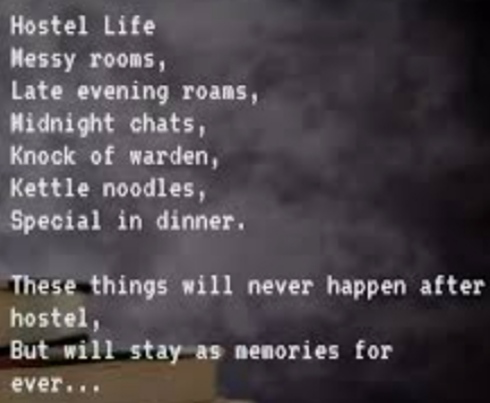
Hostel Life is the main charm of college life.In fact, hostel life is true world of fun and freedom. The students who live in homes envy hostel students. They do not have the parental check.Hostel life is so charming that some students,in spite of having homes in the same city like to live in hostels.College life is generally regarded as the best part of a student’s life. A college is dreamland of a student’s life. It is a beautiful panorama of enjoyment, freedom and friendship. Sweet memories and pleasure of college life are simply amazing. The first and the last day, a group of friends holidays , functions ,other activities and hostel life make college life the most memorable part of students life. In short, it is true that the joys and freedom that seem a dream in school become a reality in college.Hostel life offers many attractions. The main charm is that of freedom. There is no parental observation and restriction. Hostel students have their timetables for come and go,study and play and sleep and wake. In short, they do as and what they wish to do. They may study at night and sleep in the day.They may or may not attend classes. They may go to the cinema whenever they like. So, they have their own lifestyles.
” Freedom is the hallmark of Hostel Life”
Hostel life has the attraction to spend money freely.A hostel student feels free to demand and spend money. Some boys become extravagant in their expenditure. They wear the latest fashion dresses.They can have their rooms very well furnished and they can also attend and arrange parties. They can also adopt expensive hobbies. They feel free to live and spend.Hostel life plays an important role in developing the personality of a student. The students who live in hostel are confident, self-dependent and active. Hostel life helps them to develop a sense of responsibility . Freedom also helps them to grow in a better way. They get good training in practical life. They also feel relax and safe from domestic disturbance. So, every should be given a chance to benefit from hostel life.
There are also some dangers of hostel freedom is misused . Lack of check and restrictions becomes a means of immoral activities. Some boys adpot bad habits like smoking, gambling, and drinking. Vidence also becomes a part of their personality. Generally , they ignore their studies ,waste their time and so fail in the examination. They develop the habit of fraud and lie. They demand more money from their parents on false pretexts. They hesitate to talk about studies and show fake result cards. Fashions become a part of their daily life.In view of the above discussion ,it can be said that hostel life is a mixed blessing. Whether histel life should be praised or cursed depends on the student. In a hostel , a student can achieve all his targets and come out as a complete man. He can also turn into an angry young man. Overall, we say that hostel life is a worth – enjoying experience for every student.
Hostel life makes a student regular in studies and games.The time for studies and games is usually fixed, and their teachers or supervisor watch students. The atmosphere of good hostel is such that it makes a student interested in his regular activities. He likes to move ahead and to do better than others. If he falls behind the senior students ,the teachers can help him to improve himself. Thus, he finds himself engaged in a happy competition .Not only in studies and sports , in other matters like student management of the hostel dining hall, Library,common room,indoor games, and debating and other clubs he can work and gain valuable experience. In any case, a student learns to live independently in a hostel . He cannot get his parents or elders help as he can at home in practically every matter. Sometimes he has to take decisions independently ,for example , whether to go on a trip organised by the college or to particular in a college function. He chooses his friends and companions himself and decides what he may do in his free time. Later, in practical life ,he can adjust himself in changing conditions and circumstances rather easily.
The pleasure of enjoyments of hostel life are many . We can have friends to our liking . We can play different games in the college lawns or in the common room.Without the experiences of hostel life , in our opinion , the life of a student remains incomplete in several ways.A student remembers his hostel life forever . His experiences there bring him rich reward in real life.












 Eduindex
You must be logged in to post a comment.