EduPub (Edupedia Publications Pvt Ltd) is a company dedicated to the development of the education, learning, research and innovation in the field of the research and books publication. We are pioneer in providing wide range of services to educational institutions, government agencies, individuals and corporates in the field of training and education, research and development, research and innovation. research and publication.
“Music gives a soul to the universe, wings to the mind, flight to the imagination and life to everything.” said Plato. The music industry strives to live up to this quote, and many new music creators are coming up with new content every day. Lo-fi is the newest trend and looks like it’s here to stay. Read on to know why.
What is lo-fi?
According to its creator Eric Matthews, lo-fi is short for “low fidelity”, which is a term used to define the music that contains elements that are conventionally regarded as imperfections or flawed. This type of sound recording has technical flaws that make them sound different from the live sound that gets recorded by adding distortion, hums, background noise and low-frequency response. Music producers now make these flaws as calculated aesthetic decisions and we have a plethora of our favorite songs in this new version. And guess what? It is a hit with the youth.
Why is Lo-fi trending?
The world today has started to acknowledge the fact that it is OK to be imperfect and individuals are starting to embrace their flaws with self-love and grace. This can be one of the reasons why the youth is vibing to this genre of raw music. Also, Lo-fi being passive in nature does not reach out or try to be more it can be a Calming secondary presence rather than a full-on concert you want to perform when you listen to a Bollywood number. Some of the good Lo-fi songs today are cut, rearranged and extended to create a vintage or retro vibe. So, the same song hit different and brings a sense of nostalgia to the listener. When listening to lo-fi, what remains in our head is not a memory of the lyrics, but a lasting state of mind. As the pandemic has made us think about the good old times a lot, this genre is the current vibe.
Lo-fi for work /study
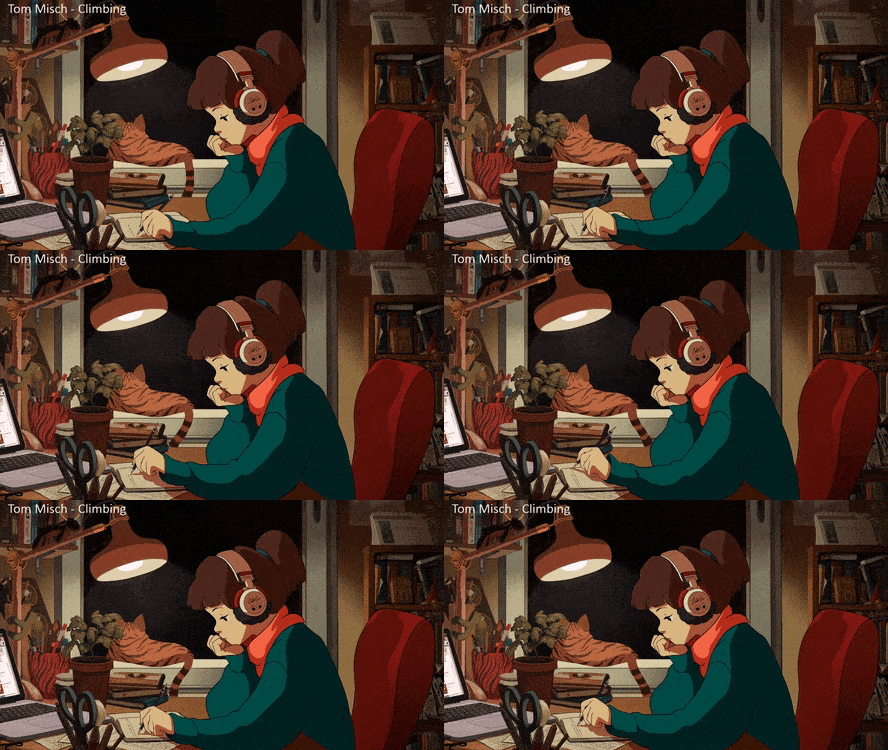
The Lo-Fi Girl (Youtube Channel)
One of the major changes that the world has experienced in the new normal is the WFH(Work From Home) culture and, college life now is just you, your laptop and the water bottle against the world. Many students find it difficult to focus on their work when there is a TV running in the next room or the family being loud at times. Sounds relatable, isn’t it? Worry not! Lo-fi is here to put you in a phase of focus when you can concentrate on the work at hand and get a lot of things ticked off on your checklist. While many music critics looked down on the Mellow and monotonous nature of this genre, scientists and audiophiles (like me) insist that blandness is the key point. Lo-fi really does put you in a productive trance. Just search ‘lo-fi beats for chill and study’ and let the YouTube algorithm wind you up in a new cocoon of focus vibe and nostalgia. But if you are one of those who would want absolute silence while working, lo-fi may not be your cup of tea. Well, You can always try new stuff, it would be a win-win anyway!
To sum it all, Lo-Fi music accompany you in the day to day question and get you through your day. It is relatable and casual, putting people at ease and making them put it on loop in return. Go ahead and try a session of lo-fi Beats to study or chill. You won’t be disappointed!
Here are some recommendations to start with. Happy Vibing!
This is a playlist for some Bollywood Lo-fi music:
This is the link for a 1-hour session of Lo-fi beats to Study/Chill
That brisk strut with billowing robes behind. That almost sneering smirk under his hooked nose. That voice lashes out at people in the most subtle way possible. That is Severus Tobias Snape, Potion Master at Hogwarts School of Witchcraft and Wizarding, the dour ’bat’ of the dungeons. But my hero-worship for this misunderstood man has made me reflect on one of the important lessons for life-The Choice Factor.
Although Snape’s passion for the Dark Arts and the Dark Mark on his arm, along with his air of intimidation and sharp tongue attributes to his ‘villain’ aura, the choices that he made speak differently about his true character. The choices that he made say it all. It is not so surprising how similarly Snape and Voldemort are portrayed throughout the series. Both men had strikingly similar parentage; with muggle fathers and pureblood mothers and a miserable childhood. They also shared a common passion for the Dark Arts and even went on to pursue the same goals as adults, with Snape joining Voldemort’s Death Eaters in their ironic quest to establish a pureblood society.
Snape’s core differs immensely from his exterior. Real character is ultimately determined by one’s core traits, not by surface actions or attitudes. When Snape realized that the woman he loved was in danger, his alliance shifted for good and he became a spy for the Light. This was where he strayed from the path that Voldemort had taken and he had been tentatively travelling on; He chose Love over Power, Light over Dark, and Good over Evil. He thereon became one of the most critical parts of Dumbledore’s master plan to bring down Voldemort. His love for Lily Evans enabled him to see clearly through the dangerous path he was treading on, which gave the entire anti-Voldemort movement an edge over their enemies, even at the cost of his own life.
Thus we can say that Snape’s choices throughout his life redeem his character at the end of the series. The converse can also be true, as it takes a strong character and spirit to take such important decisions in life.
Choices define who we are as a person; it shows our character to the world. To enhance the probability of making better choices and surviving bad ones, personal character and inner spirit play important roles. Essentially, there is a thin line dividing any two paths or choices in life. We need to turn the thin line into a sturdy barrier. We need our consciousness and discriminating sense create these barriers to keep us centered on making better choices. Now, no one is perfect; we all make mistakes or bad choices. But how we handle the adversity, again lies in one’s willpower and character.
Choices define who we are as a person; it shows our character to the world.
Next time when you make a choice try asking these questions to yourselves:
1. What type of person do I want to be?
2. How can I be a better person by making a particular choice?
Below is a quote from a poem that has influenced me a lot. I leave you to ponder upon its meaning, at your own choice, Of course!
“Two roads diverged in a wood and I- I took the one less travelled by, and that has made all the difference.”
As of today, there are 154 candidate vaccines in pre-clinical trials, 21 in Phase-1 trials (Small-scalesafety trials), 12 in Phase-2 trials (Expanded safety-trials) and 11 in the path of approval across the globe. Not to forget, Russia’s first registered vaccine against the virus – Sputnik V. Even India has over a dozen of companies working on the vaccines out of which Covaxin developed by Bharat Biotech in collaboration with ICMR, is in its final stages and is highly anticipated. With so many possibilities, pharmaceutical manufacturers and distributors need to ensure continuity in vaccine development and delivery to meet the market demand. The following table talks about the potential vaccines being manufactured in India.
2. Availability and Affordability
Once the vaccine is launched, availability and affordability will be a key challenge. We must consider the possibility of a private-public partnership to move this further, like in the case of polio vaccines. There could be possible problems of irregular access to the vaccines, shortage in the supply, theft and robbery, spike in pricing etc. which must be thought of beforehand. The vaccines must be suitably and fairly priced for the lower income groups to be able to afford.
3. Manufacture and Production outreach
India has an upper hand in this criterion, since it has been manufacturing and exporting a significant amount of vaccines and medicines of different kinds, globally. However, on the arrival of a potential vaccine, manufacture and production has to be given a clear priority and must be upscaled, in order to be prepared for the challenges of shortages like in the case of N95 masks.
4. Education and Outreach
Although vaccines are primarily important, it is not vital that everyone must be vaccinated at one time. People with good immunity, free of ailments and high resilience are not particularly required to be vaccinated. Healthcare workers, Senior citizens, people with health problems like diabetes, asthma, coronary diseases etc. must be given first priority over the healthy population of the country, which can be vaccinated at a later stage, if necessary.
The neo-classical age place the epic at the top of the hierarchy of various poetic compositions. This leads the poets of the late 17th and early 18th century to attempt to write Epic poetry. Dryden instead chooses a mock-heroic trend as a means of representing and satirizing especially different socio-political ages. A mock-epic or the mock-heroic imitates the elaborate form and ceremonious style of the epic genre but usually applies them to a commonplace or trivial subject matter.
Poetic style
Dryden wrote this poem in an eloquent flexible, cogent yet controversial poem. According to David Daiches Dryden build on the ‘Reform of our members’ the perfect wase poetic style. Dr. Johnson Heiled Dryden and said that Dryden was the founder of the “new verification” and with him, it is apparent that English poetry has did not tend to revert to its former savageness. Johnson also remarked that before Dryden no poetical diction, no refined use of words was appropriated to arts. Critics have stated that it was in Dryden’s prologue and epilogue two places that he achieved that great strength. He could be Ironic, satirical, critical, humorous, or indent in a variety of ways. Absalom and Achitophel is a famous example of Dryden’s clear summative statement and the greatest achievement of his argumentative verse. The style of poem is essentially heroic which means that the plot, the character, the wit, the passion, and the description are all amplified above the level of common conversation. The style is best adapted to the biblical allegory and a narrative of great political evils during 17th century England.
Polish plot
Charles II had no legitimate son after him his brother James was supposed to sit on the throne. The plot was made to exclude him from the throne and create the atmosphere to make the Duke of Monmouth sit on the throne, this controversy was called the Popish plot by Titus Oatis.
Absalom and achitophel was published in 1681. Absalom and Achitophel was a contribution to the debate on public affairs in the form of verse satire. Dryden’s reason and intents were all on the side of legitimate and settled government so that the whig agitation to exclude from the succession. Charles II heir and his brother James on the ground that he was a Roman Catholic. And to encourage Charles’s legitimate son the Duke of Monument to assert his claim found Dryden on the Jory side. Supporting legality and the true succession protectants whig agitation in favor of exclusion of James from the succession was led by Earl of Shaftesbury and the Duke of Buckingham. Dryden took the biblical story of the rebellion of Absalom against his father King David and applied it to the contemporary situation with Charles II.
The year 2020, has been an exceptionally unusual year for India, particularly from the economic point of view. From the extended lockdowns due to the global pandemic, the departure and disturbing plight of the migrant laborers, the agitated protests by the healthcare workers over the non-payment of salaries, laying off employed workers in the workplace and to the recent protests over agricultural bills passed by the government; all these upheavals have led to a high economic distress and a spike in the rates of unemployment within the country. I dare say that, the pandemic will be remembered more for its financial distress, rather than the morbidity rate. COVID -19 has left over 1 lakh dead in India, and several others with elaborate hospital bills. With the possibility of a prospective vaccine, expected at the end of this year or the early beginning of next year, another imperative challenge that India is yet to face is, the manufacture and supply of affordable vaccines to its 1.3 billion citizens.
To meet the global demand of urgency in the production of vaccines, countries including India must encourage self-reliance in order to decrease the production costs. Governments must ensure proper planning and implementation to meet the suitable needs of their citizens. With the decrease in the surfacing of the daily cases and an increase in the recovery rate, we still have a long way to go, but we are in the right direction of approach.
It may seem that there’s nothing you can do about your stress level. The bills aren’t going to stop coming, there will never be more hours in the day for all your errands, and your career or family responsibilities will always be demanding. But you have a lot more control than you might think. In fact, the simple realization that you’re in control of your life is the foundation of stress management. Managing stress is all about taking charge: taking charge of your thoughts, your emotions, your schedule, your environment, and the way you deal with problems. The ultimate goal is a balanced life, with time for work, relationships, relaxation, and fun – plus the resilience to hold up under pressure and meet challenges head on.
Identify the sources of stress in your life: Stress management starts with identifying the sources of stress in your life. This isn’t as easy as it sounds. Your true sources of stress aren’t always obvious, and it’s all too easy to overlook your own stress-inducing thoughts, feelings, and behaviors. Sure, you may know that you’re constantly worried about work deadlines. But maybe it’s your procrastination, rather than the actual job demands, that leads to deadline stress. Think about the ways you currently manage and cope with stress in your life. Your stress journal can help you identify them. Are your coping strategies healthy or unhealthy, helpful or unproductive? Unfortunately, many people cope with stress in ways that compound the problem. Unhealthy ways of coping with stress: These coping strategies may temporarily reduce stress, but they cause more damage in the long run: • Smoking • Drinking too much • Overeating or undereating • Zoning out for hours in front of the TV or computer • Withdrawing from friends, family, and activities • Using pills or drugs to relax • Sleeping too much • Procrastinating • Filling up every minute of the day to avoid facing problems • Taking out your stress on others (lashing out, angry outbursts, physical violence)
Learning healthier ways to manage stress: If your methods of coping with stress aren’t contributing to your greater emotional and physical health, it’s time to find healthier ones. There are many healthy ways to manage and cope with stress, but they all require change. You can either change the situation or change your reaction. When deciding which option to choose, it’s helpful to think of the four As: avoid, alter, adapt, or accept. Since everyone has a unique response to stress, there is no “one size fits all” solution to managing it. No single method works for everyone or in every situation, so experiment with different techniques and strategies. Focus on what makes you feel calm and in control. Not all stress can be avoided, and it’s not healthy to avoid a situation that needs to be addressed. You may be surprised, however, by the number of stressors in your life that you can eliminate. ●Learn how to say “no” – Know your limits and stick to them. Whether in your personal or professional life, refuse to accept added responsibilities when you’re close to reaching them. Taking on more than you can handle is a surefire recipe for stress. ●Avoid people who stress you out – If someone consistently causes stress in your life and you can’t turn the relationship around, limit the amount of time you spend with that person or end the relationship entirely. ●Take control of your environment – If the evening news makes you anxious, turn the TV off. If traffic’s got you tense, take a longer but less-traveled route. If going to the market is an unpleasant chore, do your grocery shopping online. ●Avoid hot-button topics – If you get upset over religion or politics, cross them off your conversation list. If you repeatedly argue about the same subject with the same people, stop bringing it up or excuse yourself when it’s the topic of discussion. ●Pare down your to-do list – Analyze your schedule, responsibilities, and daily tasks. If you’ve got too much on your plate, distinguish between the “shoulds” and the “musts.” Drop tasks that aren’t truly necessary to the bottom of the list or eliminate them entirely. ●Express your feelings instead of bottling them up. If something or someone is bothering you, communicate your concerns in an open and respectful way. If you don’t voice your feelings, resentment will build and the situation will likely remain the same. ●Be willing to compromise. When you ask someone to change their behavior, be willing to do the same. If you both are willing to bend at least a little, you’ll have a good chance of finding a happy middle ground. ●Be more assertive. Don’t take a backseat in your own life. Deal with problems head on, doing your best to anticipate and prevent them. If you’ve got an exam to study for and your chatty roommate just got home, say up front that you only have five minutes to talk. ●Manage your time better. Poor time management can cause a lot of stress. When you’re stretched too thin and running behind, it’s hard to stay calm and focused. But if you plan ahead and make sure you don’t overextend yourself, you can alter the amount of stress you’re under. ●Focus on the positive. When stress is getting you down, take a moment to reflect on all the things you appreciate in your life, including your own positive qualities and gifts. This simple strategy can help you keep things in perspective. ●Set aside relaxation time. Include rest and relaxation in your daily schedule. Don’t allow other obligations to encroach. This is your time to take a break from all responsibilities and recharge your batteries. ●Connect with others. Spend time with positive people who enhance your life. A strong support system will buffer you from the negative effects of stress. ●Do something you enjoy every day. Make time for leisure activities that bring you joy, whether it be stargazing, playing the piano, or working on your bike. ●Keep your sense of humor. This includes the ability to laugh at yourself. The act of laughing helps your body fight stress in a number of ways.
Learn the relaxation response: You can control your stress levels with relaxation techniques that evoke the body’s relaxation response, a state of restfulness that is the opposite of the stress response. Regularly practicing these techniques will build your physical and emotional resilience, heal your body, and boost your overall feelings of joy and equanimity.
To study language in an analytical and systematic way , linguists have categorised the subject matter of linguistics under the following heads : sound, grammar and meaning.
1.SOUND LEVEL
Sounds can always be studied from two different angles. Phonetic and phonological .Phonetics studies language at the level of sounds .The study focuses on how sounds are articulated by human speech mechanism and received by the auditory mechanism ,and how sounds can be distinguished and characterized by the manner in which they are produced. In other words phonetics is the study of the way human beings make ,transmit and receive speech sounds. It studies all possible sounds that human speech organs can make . It describes sounds without restricting its attention to any particular language.
Phonology studies the combination of sounds into organized units of speech ,the formation of syllables and larger units. It describes the sound system of a particular language and the combination and distribution of sounds ,which occur in that language . Classification is made on the basis of the phoneme, which is the minimal distinctive , sound segment eg,/m ,p, l/. The selection and organization of sounds in a particular language constitute the phonology of that language. Phonology studies only those contrasts in sound , which make differences of meaning with in a language.
2.GRAMMATICAL LEVEL
Morphology and syntax are concerned with the grammar of language. Morphology studies the patterns of word formation by the combination of sounds into minimal , distinctive units of meaning called morphemes. A morpheme cannot be broken up because if it is broken up , it will not make sense. For example, the morpheme bat is made up of three sounds :/b/, /ae/,/t/.This combination makes up the single morpheme bat and if broken up it will no longer carry the meaning of bat. Words can be made up of a single morpheme such as bat or combinations of morphemes such as bats. Bats is made up of two morphemes bat and s. Morphology deals with the rules of combination of morphemes to form words. It studies the changes that take place in the structure of words .For instance , the morpheme take changes to took and taken; these changes signify changes in tense forms .
Syntax is the study of how words are arranged into higher units like phrases and sentences in “principled ways “.It deals with the rules and principles governing the arrangement of words into such higher linguistic units. Hence syntax is the grammar of sentences.
3.MEANING -LEVEL
Semantics deals with the level of meaning in language . It tries to give an account of the meaning of both words and sentences. It also deals with how language is organized in order to be meaningful.
It may seem that there’s nothing you can do about your stress level. The bills aren’t going to stop coming, there will never be more hours in the day for all your errands, and your career or family responsibilities will always be demanding. But you have a lot more control than you might think. In fact, the simple realization that you’re in control of your life is the foundation of stress management.
Managing stress is all about taking charge: taking charge of your thoughts, your emotions, your schedule, your environment, and the way you deal with problems. The ultimate goal is a balanced life, with time for work, relationships, relaxation, and fun – plus the resilience to hold up under pressure and meet challenges head on.
Identify the sources of stress in your life-
Stress management starts with identifying the sources of stress in your life. This isn’t as easy as it sounds. Your true sources of stress aren’t always obvious, and it’s all too easy to overlook your own stress-inducing thoughts, feelings, and behaviors. Sure, you may know that you’re constantly worried about work deadlines. But maybe it’s your procrastination, rather than the actual job demands, that leads to deadline stress.
To identify your true sources of stress, look closely at your habits, attitude, and excuses:
Do you explain away stress as temporary (“I just have a million things going on right now”) even though you can’t remember the last time you took a breather?
Do you define stress as an integral part of your work or home life (“Things are always crazy around here”) or as a part of your personality (“I have a lot of nervous energy, that’s all”).
Do you blame your stress on other people or outside events, or view it as entirely normal and unexceptional?
Until you accept responsibility for the role you play in creating or maintaining it, your stress level will remain outside your control.
Start a stress journal-
A stress journal can help you identify the regular stressors in your life and the way you deal with them. Each time you feel stressed, keep track of it in your journal. As you keep a daily log, you will begin to see patterns and common themes. Write down:
What caused your stress (make a guess if you’re unsure).
How you felt, both physically and emotionally.
How you acted in response.
What you did to make yourself feel better.
Look at how you currently cope with stress-
Think about the ways you currently manage and cope with stress in your life. Your stress journal can help you identify them. Are your coping strategies healthy or unhealthy, helpful or unproductive? Unfortunately, many people cope with stress in ways that compound the problem.
Unhealthy ways of coping with stress-
These coping strategies may temporarily reduce stress, but they cause more damage in the long run:
• Smoking • Drinking too much • Overeating or undereating • Zoning out for hours in front of the TV or computer • Withdrawing from friends, family, and activities • Using pills or drugs to relax • Sleeping too much • Procrastinating • Filling up every minute of the day to avoid facing problems • Taking out your stress on others (lashing out, angry outbursts, physical violence)
Learning healthier ways to manage stress-
If your methods of coping with stress aren’t contributing to your greater emotional and physical health, it’s time to find healthier ones. There are many healthy ways to manage and cope with stress, but they all require change. You can either change the situation or change your reaction. When deciding which option to choose, it’s helpful to think of the four As: avoid, alter, adapt, or accept.
Since everyone has a unique response to stress, there is no “one size fits all” solution to managing it. No single method works for everyone or in every situation, so experiment with different techniques and strategies. Focus on what makes you feel calm and in control.
Not all stress can be avoided, and it’s not healthy to avoid a situation that needs to be addressed. You may be surprised, however, by the number of stressors in your life that you can eliminate.
Learn how to say “no” – Know your limits and stick to them. Whether in your personal or professional life, refuse to accept added responsibilities when you’re close to reaching them. Taking on more than you can handle is a surefire recipe for stress.
Avoid people who stress you out – If someone consistently causes stress in your life and you can’t turn the relationship around, limit the amount of time you spend with that person or end the relationship entirely.
Take control of your environment – If the evening news makes you anxious, turn the TV off. If traffic’s got you tense, take a longer but less-traveled route. If going to the market is an unpleasant chore, do your grocery shopping online.
Avoid hot-button topics – If you get upset over religion or politics, cross them off your conversation list. If you repeatedly argue about the same subject with the same people, stop bringing it up or excuse yourself when it’s the topic of discussion.
Pare down your to-do list – Analyze your schedule, responsibilities, and daily tasks. If you’ve got too much on your plate, distinguish between the “shoulds” and the “musts.” Drop tasks that aren’t truly necessary to the bottom of the list or eliminate them entirely.
Stress management strategy #2: Alter the situation-
If you can’t avoid a stressful situation, try to alter it. Figure out what you can do to change things so the problem doesn’t present itself in the future. Often, this involves changing the way you communicate and operate in your daily life.
Express your feelings instead of bottling them up. If something or someone is bothering you, communicate your concerns in an open and respectful way. If you don’t voice your feelings, resentment will build and the situation will likely remain the same.
Be willing to compromise. When you ask someone to change their behavior, be willing to do the same. If you both are willing to bend at least a little, you’ll have a good chance of finding a happy middle ground.
Be more assertive. Don’t take a backseat in your own life. Deal with problems head on, doing your best to anticipate and prevent them. If you’ve got an exam to study for and your chatty roommate just got home, say up front that you only have five minutes to talk.
Manage your time better. Poor time management can cause a lot of stress. When you’re stretched too thin and running behind, it’s hard to stay calm and focused. But if you plan ahead and make sure you don’t overextend yourself, you can alter the amount of stress you’re under.
Stress management strategy #3: Adapt to the stressor-
If you can’t change the stressor, change yourself. You can adapt to stressful situations and regain your sense of control by changing your expectations and attitude.
Reframe problems. Try to view stressful situations from a more positive perspective. Rather than fuming about a traffic jam, look at it as an opportunity to pause and regroup, listen to your favorite radio station, or enjoy some alone time.
Look at the big picture. Take perspective of the stressful situation. Ask yourself how important it will be in the long run. Will it matter in a month? A year? Is it really worth getting upset over? If the answer is no, focus your time and energy elsewhere.
Adjust your standards. Perfectionism is a major source of avoidable stress. Stop setting yourself up for failure by demanding perfection. Set reasonable standards for yourself and others, and learn to be okay with “good enough.”
Focus on the positive. When stress is getting you down, take a moment to reflect on all the things you appreciate in your life, including your own positive qualities and gifts. This simple strategy can help you keep things in perspective.
Stress management strategy #4: Accept the things you can’t change-
Some sources of stress are unavoidable. You can’t prevent or change stressors such as the death of a loved one, a serious illness, or a national recession. In such cases, the best way to cope with stress is to accept things as they are. Acceptance may be difficult, but in the long run, it’s easier than railing against a situation you can’t change.
Don’t try to control the uncontrollable. Many things in life are beyond our control— particularly the behavior of other people. Rather than stressing out over them, focus on the things you can control such as the way you choose to react to problems.
Look for the upside. As the saying goes, “What doesn’t kill us makes us stronger.” When facing major challenges, try to look at them as opportunities for personal growth. If your own poor choices contributed to a stressful situation, reflect on them and learn from your mistakes.
Share your feelings. Talk to a trusted friend or make an appointment with a therapist. Expressing what you’re going through can be very cathartic, even if there’s nothing you can do to alter the stressful situation.
Learn to forgive. Accept the fact that we live in an imperfect world and that people make mistakes. Let go of anger and resentments. Free yourself from negative energy by forgiving and moving on.
Stress management strategy #5: Make time for fun and relaxation-
Beyond a take-charge approach and a positive attitude, you can reduce stress in your life by nurturing yourself. If you regularly make time for fun and relaxation, you’ll be in a better place to handle life’s stressors when they inevitably come.
Healthy ways to relax and recharge
Go for a walk.
Spend time in nature.
Call a good friend.
Sweat out tension with a good workout.
Write in your journal.
Take a long bath.
Light scented candles
Savor a warm cup of coffee or tea.
Play with a pet.
Work in your garden.
Get a massage.
Curl up with a good book.
Listen to music.
Watch a comedy
Don’t get so caught up in the hustle and bustle of life that you forget to take care of your own needs. Nurturing yourself is a necessity, not a luxury.
Set aside relaxation time. Include rest and relaxation in your daily schedule. Don’t allow other obligations to encroach. This is your time to take a break from all responsibilities and recharge your batteries.
Connect with others. Spend time with positive people who enhance your life. A strong support system will buffer you from the negative effects of stress.
Do something you enjoy every day. Make time for leisure activities that bring you joy, whether it be stargazing, playing the piano, or working on your bike.
Keep your sense of humor. This includes the ability to laugh at yourself. The act of laughing helps your body fight stress in a number of ways.
Learn the relaxation response
You can control your stress levels with relaxation techniques that evoke the body’s relaxation response, a state of restfulness that is the opposite of the stress response. Regularly practicing these techniques will build your physical and emotional resilience, heal your body, and boost your overall feelings of joy and equanimity.
Deforestation is the huge destruction of trees in the forest. Trees are usually cleared to make place for farmland, roads and urban growth. Deforestation refers to the decrease in forest areas across the world that are lost for other uses such as agricultural croplands,urbanization,or mining activties.The construction of human infrastructures has also been driving to deforestation.The populational shift that is leading from rural to urban areas is also contributing to deforestation. Deforestation also has serious environmental impacts. Although forests still make up 30% of the Earth, deforestation activities are losing an estimated 18 million acres of land each year. It has caused the degradation of land and soil while displacing animals and plants that depend on forests
WHY ARE FORESTS IMPORTANT ?
Forests battle climate change by removing greenhouse gases and act as a carbon storehouse.
They are the source offresh oxygen,Medicine,clean water etc.
In forest areas, the large mass of trees combats soil erosion by providing the soil with mechanical support.
Forests are home to more than 50% of all species on the planet.
Forests play an important role in the water cycle. They work to add water through the transpiration process to the atmosphere.
They are also a source of raw materials for many commercially important products such as paper, wood and fabric.
They account for more than 80% of land-based biodiversity. Forests provide home to various flora and fauna worldwide.
CAUSES FOR DEFORESTATION:
Deforestation is caused by either human actions or natural. Natural disasters like natural forest fires or parasite related diseases can lead to deforestation. However, human activities are important causes of deforestation. According to the Food and Agriculture Organization (FAO), almost 80%of deforestation has been caused by agricultural expansion. Some of the main causes are as follows:
AGRICULTURE:
Agriculture is the main cause of deforestation and responsible for almost 80% of deforestation. In developed countries,33% of the deforestation caused by agriculture results from subsistence agriculture, such as local peasant agriculture.About 40% of forest destruction is caused by commercial or industrial agriculture searching space for fruit, fiber or biofuel production like beef, maize, cotton, soybeans, palm oil, and sugar cane. It is also interesting to note that about 14% of global deforestation is assumed to be caused by livestock. The key reasons they have to do with broad areas include raising livestock and growing their food.
FOREST FIRES :
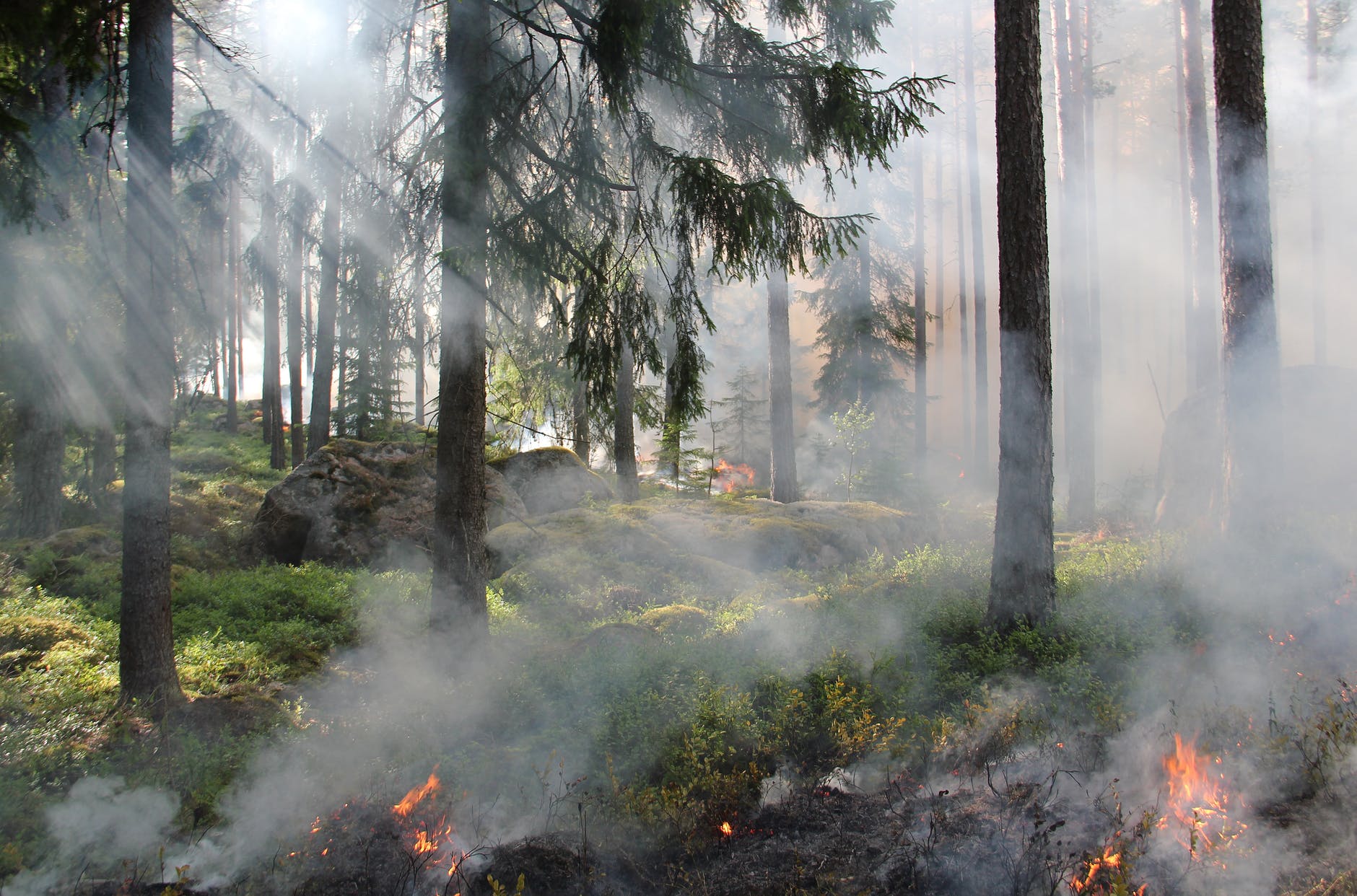
Fires burn million of hectares of forest worldwide each year. Fires are a part of nature, but forests that are degraded are mostly vulnerable. These involve heavily logged rainforests, peat forests, or forest fires that have been suppressed for years, causing unnatural vegetation that makes the fire burn more intensely.
MINING :
Due to rising demand and high mineral prices, the effect of mining on tropical forests is increasing. Significant building, such as bridges, railway lines and power stations, also follows mining projects, placing more strain on forests and freshwater habitats.
CLIMATE CHANGES:
The destruction of forests is both a cause and a consequence of climate change. For example, by drying out tropical rain forests and growing fire damage in boreal forests, climate change will damage forests. Climate change is already affecting biodiversity in the forest, a danger which is likely to rise.
EFFECTS OF DEFORESTATION :
It has many effects on natural resources and ecosystems and creates serious problems for the adaptability of the planet. Some of the main effects of deforestation are as follows:
SOIL EROSIN :
Trees are also important to our local water cycles, as they keep returning water vapor to the atmosphere. The soil stays moist as the rainwater flows through the soil. The fertile soil of several layers of trees is kept in place by complex root systems. The land is directly exposed to the sun with the clearing of tree cover, making it dry. Without trees, erosion also happens, sweeps the land into surrounding rivers and streams. Forests function as natural water purification plants. Soil erosion causes soil to be exposed to pollutants that spill into the water system, which damages our drinking water quality.
ACID RAINS :
The oceans become more acidic by increasing carbon dioxide levels in the atmosphere due to deforestation and the burning of fossil fuels. Beaches are now 30% more acidic after the Industrial Revolution, that have ocean organisms and their habitats at extreme risk.Acid rains damage forests,especially those at higher elevations.The acid properties rub the soil of essential minerals such as calcium and cause aluminium to be released in the soil,which makes it hard for trees to take up water.
INCREASE IN GLOBAL WARMING :
Trees perform an important role in controlling global warming. The trees use greenhouse gases to maintain the balance of the environment. With the continuous deforestation, the ratio of greenhouse gases has increased in the atmosphere that increases global warming problems.Global Warming the gradual heating of earth’s surface,ocean and atmosphere,is caused by human activity.As the earth’s surface temperature becomes hotter the sealevel becomes higher.It is also partly because warm temperatures makes glaciers and ice caps to melt.
PREVENTIVE MEASURES FOR DEFORESTATION :
REFORESTATION :
For certain purposes, reforestation is a process of planting trees in a forest region where the trees have been cut. To save the world, we all need to realize the value of reforestation and enforce it. Tree planting will reduce the various causes and impacts of deforestation, global warming, pollution, greenhouse effects, etc.Afforestation is a proces where new forests are planted across land without trees.As a forest grows,naturally removes co2 from atmosphere and stores it in its trees.
USE OF RENEWABLE FOREST RESOURCES :
We can grow plants as a source of wood from secondary forest growth. The use of renewable local wood and charcoal resources for cooking or heating is an excellent alternative to fossil fuels.Renewable resources include biomass energy,hydro power,geothermal energy,wind energy and solar energy.Biomass refers to organic material from plants and animals.These resources are capable of Regeneration.These are renewed along with exploitation and hence,availble for use.The regeneration of these sources involves some ecological process on a time scale.
EDUCATIONAL CAMPAIGNS:
Deforestation can be fought via awareness. Educational campaigns can only be a clear example of deforestation awareeness.By educating people on the importance of our environment and sustainable logging practices,deforestation may begin to slow down.Hence,Educational programmes and campaigns are so important-they increase public awareeness,teachers critical thinking and enchances an individual’s problem-solving skills.
Udaipur also is known as the city of lakes is a city in the state of Rajasthan. it is the historical capital of the King of Mewar. The city was founded by Uday Singh || in 1558 when he shifted his capital from the city of Chittor to Udaipur. It remained as the capital of the city till 1818 when it became a British princely state and then after Mewar province became part of Rajasthan when India gained independence in 1947.
There are various places to visit in Udaipur. The city even has offbeat places to visit like Sahara a Pratap statue, a vintage car museum, etc. The city has a rich history and so are the historical monuments in the City.
Sajjangarh Monsoon Palace The palace is located on Hill Top overlooking Fatehsagar Lake. It is named Sajjan Garh after Maharana Sajjan Singh the palace offers a view of cities lake palaces and surrounding countryside. It was built to watch monsoon clouds hence appropriately it is popular as monsoon Palace. Previously owned by Mewar royal family is now under the control of the forest department of the Government of Rajasthan and has recently open to the public. Its builder Maharana Sajjan Singh originally planned to make it a five-story Centre the plan was canceled due to the premature death of the King. It was then turned into a monsoon Palace and hunting lodge. The best veg restaurant in Udaipur is Millets of Mewar, Jhumar restaurant. Udaipur city palace It is a palace complex situated in the city of Udaipur. It was built nearly 400 years ago with contributions from several rulers of the Mewar dynasty. Construction began in 1553 started by Maharana Udai Singh II member Sisodiya Rajput family. The City Palace Udaipur was built in flamboyant style and is considered the largest of its type in the state of Rajasthan. Rajasthani and Mughal architectural style providing a paranormal view of the city it is surrounding. The best place to eat with the family. Jagmandir It is a Grand Heritage Palace which was built in the 17th century redeveloped as a complete destination with an all-day Cafe stylish dining restaurants bars par corporate and luxurious Travelers celebrities from all over the world for home ceremonies parties and mega-events are shamelessly organized here. The palace continues to be in glamour for the exclusive regal experience. The best budget-friendly restaurant in Udaipur is Chirag rooftop restaurant, Khamma Ghani, etc.
At the present trend digital marketing is playing a very important and vital role in the fast growing economy. When we refer to the meaning of Digital Marketing it is the process or the nature of advertising which are being delivered and communicated through digital channel such as search engine, website, social media, E-mail and other mobile application.
This digital marketing is one of the key to all top and growing companies which endorse goods and services and their brand to the customer end more effectively and that stays in the minds of the people for a long term duration. When we look on the nature and mind set of present consumer behaviour all the consumers and customers rely on the digital means to select,acquire and sell the products. The modern day digital marketing show enormous system of channel of distribution in which the product reaches to the customer or consumer directly from the manufacturer by eliminating the middleman agent or the brokers.
In order to onboard this brand advertising online is more complex than the channels alone. The companies in order to gain the customers and achieve the true potential of digital marketing marketers have to dig deep into today’s vast and intricate cross channel to discover strategies that make an impact through engagement marketing.
By engaging customers in a digital landscape you build brand awareness and set standards to your industry thought leaders and place your business at the front when the customer is render and in need to buy the product. When we compare to the physical marketing and the digital marketing it is clear that for the up coming generation their will be only 20% of physical market operations as the digital marketing according to customer are more reliable,faster,easier and convenient.
As digital marketing is the component of marketing that uses internet,data and online based technologies such as desktop, computer,mobile,phone and other digital media platforms to promote the product and services. As digital platform became increasingly incorporated into marketing plans and everyday life use of digital devices instead of visiting physical shop digital marketing campaigns have become prevalent, digital touch point with customer interaction as increased day to day with many times a day
In order to utilise there channels you need to have the basic knowledge about Paid Search, Search Engine Optimization, Content Marketing, Social Media Marketing, Email Marketing, Mobile Marketing and Marketing Automation.
For a marketer to start digital marketing you should create a online presence,know the latest trends,use online your creativity, create a winning resume,get out there and network,learn about analytics and say Yes to anything.
The main objective of digital marketing is enhancing brand awareness as B2B marketers now believe improving them which directs at increasing sales.
The top digital marketing course with certification are Udemy Digital Marketing course,Simplilearm Digital Marketing course, Specialist Digital Marketing course,Copy Blogger Online marketing course,Udalitu Digital Marketing course.
Digital marketing is one of the most needed skills of today’s time and a career of digital marketing is highly lucrative if you play your cards right.
As the generation grows technology also grows vice versa.
Despite having a frightful reputation during the colonial period, Andaman and Nicobar island is famous for its composed white Sandy beaches with glassy blue water. There are numerous untouched and unvisited places when it comes to nature’s beauty and Andaman and Nicobar is a perfect place for a nature lover.
Havelock island One of the primary places to visit is Havelock Island. This is a beautiful and soothing shooting place. Because of its beauty and popularity, there are luxurious tourist resorts to pamper the guests who are living in the lap of nature. The Radhanagar beach which is on Havelock island is the most coveted destination in the world.
Rose and Smith beach Rose and Smith’s beach is famous for lush vegetation greenish-blue water bodies with various beach activities. Lakshmanpur beach is famous as honeymooners beach because of its quietness. Couples are often seen beach strolling and sunbathing. On the other hand, we have lalaji Bay beach which is best for people traveling with children as it provides various beach activities. A perfect holiday destination with family.
Viper island Viper island is one of the major attractions of tourists as it has various ancient buildings, hilltops, gallows. The cellular jail one of the major attractions as it stands as heritage and even as a reminder of the Independence struggle of India is on viper island.
Willing for a break from the hectic schedule of urban lifestyle then one should visit Andaman and Nicobar island for recreation. It is a pack of amusement, thrill, historical monuments.
Linguistics is the systematic study of language. Its focus is on language, in general , not on any individual language. The word linguistics is derived from Latin lingua meaning tongue and istics meaning knowledge or science. It studies language as a universal and recognizable part of human behavior . It investigates how the language is constructed, how it varies through space , how it is used, and how it is related to other languages. Hence the linguist studies the origin , organization ,nature and development of language descriptively ,historically , comparatively and explicitly and formulates general rules related to language . The linguist is one who studies language objectively , observing it scientifically , recording facts about language objectively , observing it scientifically , recording facts about language and deriving general principles for them. First study the language and second it tries to describe the language apply those theory in language .
The facts about language that interest a linguist are its sounds ,forms of words and the arrangement of words to form meaningful utterances. There are various approaches to the study of linguistics : historical, descriptive and comparative.
HISTORICAL LINGUISTICS :-
It studies the facts about a language for the purpose of describing the development of the language for a period of time. It traces language change and the causes and results of such changes that occurred from time to time.
DESCRIPTIVE LINGUISTICS:-
It deals with the description and analysis of the ways in which a language operates and is used by a given set of speakers at a given time. it is based on a structural approach to language.
COMPARATIVE LINGUISTICS:-
It is concerned with comparing two or more languages .It traces the evolution of language and by comparing one with another , establishes the relationship between them .
Linguistics may be considered as science . Like any other branch of science it has a well – defined subject matter called language. It makes use of methods like observation , recording and analysis of the various phenomena related to the study of language.
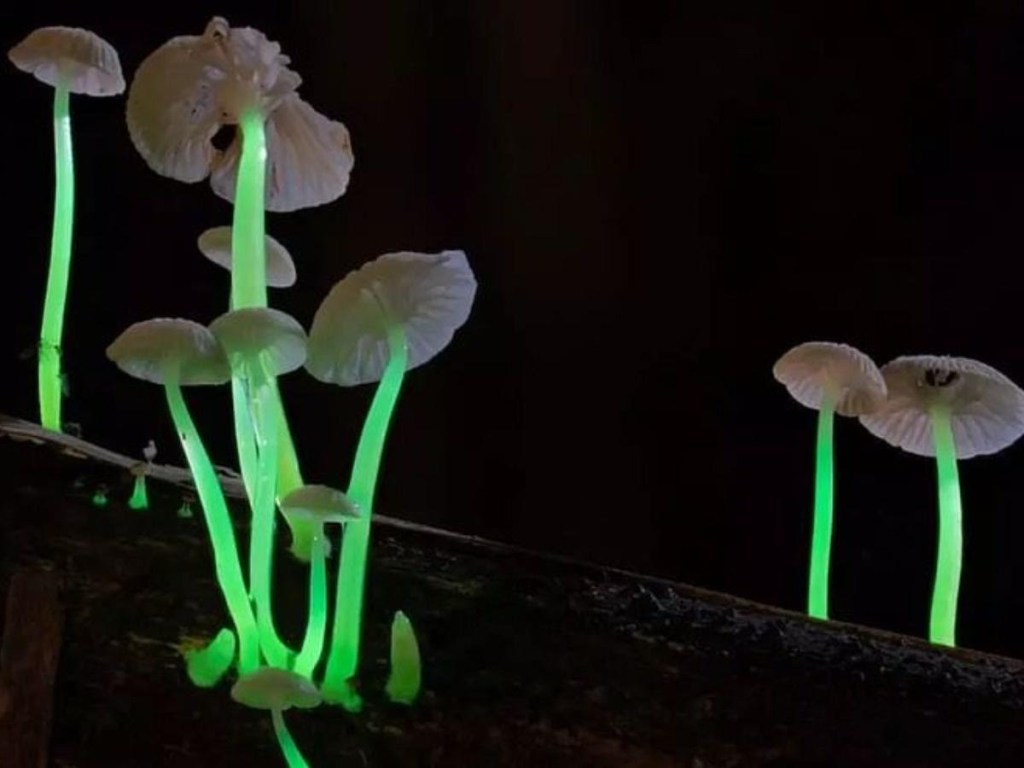
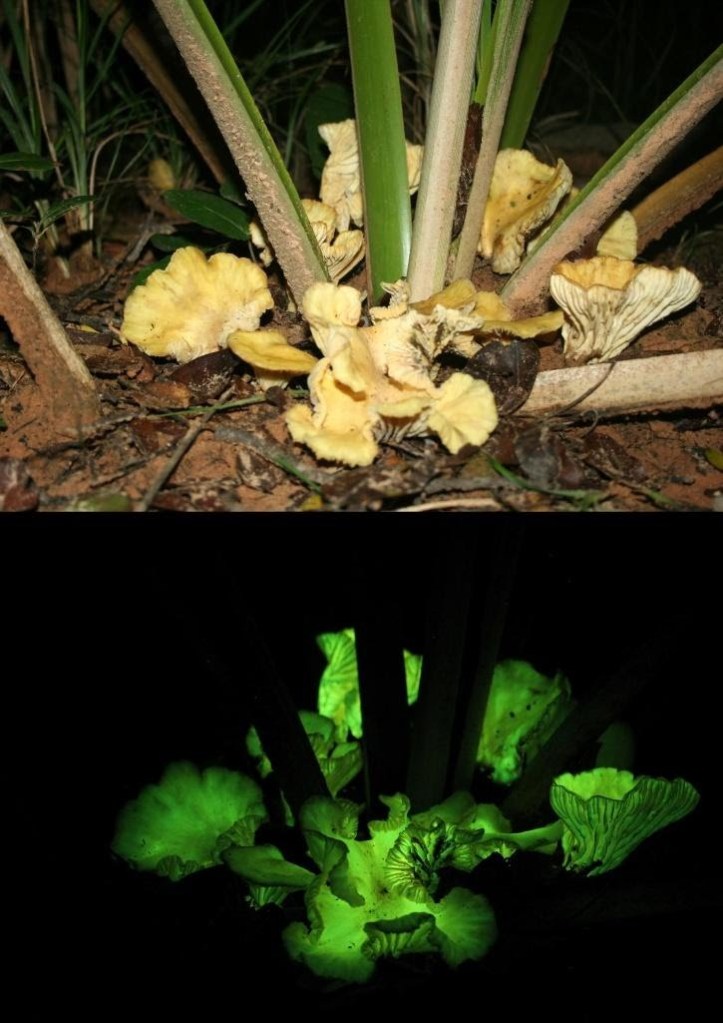
When was the last time you came across wild mushrooms? Oh wait! Scratch that. Have you ever heard of glowing mushrooms? Yes, you read absolutely right. Don’t worry, in this article you’ll get to know everything about this miraculous mushroom.
It sounds like a psychedelic riddle, but believe me when I say that bioluminescent mushrooms are a reality.
There are about 120,000 known species of fungi, and amongst them only around 100 are known to be bioluminescent or in simple words, capable of emitting light. Before we dive in deeper let us first take a look at the story behind these fascinating and mind-blowing exotic species.
The story behind the discovery
Scientists were amazed on the discovery of the glowing mushrooms, used by locals as natural torches. During the monsoon season, a team of scientists from India and China embarked on a fungal foray in Assam. After hearing reports from the locals about the ‘electric mushrooms’, out of curiosity they headed to West Jaintia Hills District in Meghalaya.
It was drizzling that night and the team was guided by a local to the bamboo forest. Then the local asked them to switch off their torches.
The team was bedazzled by what they saw: amidst the darkness an eerie green glow emerged from a dead bamboo sticks that were covered with mushrooms.
The new species
The new species- named Roridomyces phyllostachydis- was first sighted near a stream in Meghalaya’s Mawlynnong in East Khasi Hills District. This mushroom was found only on the dead bamboo plants.
What does bioluminescent fungi means?
Bioluminescence is a property exhibited by living creatures to produce and emit light. The colour of the light emitted by the organism depends on their chemical properties.
In fungi, the luminescence comes from the enzyme, luciferase. The green light is emitted from the fungi when luciferans is catalysed by the enzyme luciferase, in the presence of oxygen. Luciferans give fireflies and the bioluminescent underwater creatures their characteristic glow as well. The mushrooms glow 24 hours and are not reactive.
Other bioluminescent mushrooms in India
Numerous glowing fungi have been reported in other parts of India as well. Two have been reported from the Western Ghats, one from the Eastern Ghats, and one in the state of Kerala, among others. Some have been spotted in Maharashtra and Goa as well, but they were not scientifically reported.
“Animals, plants, fungi and bacteria show bioluminescence. Bioluminescent organisms are usually found in the ocean environments, but they are also found on terrestrial environments. The colour of the light emitted by the organism depends on their chemical properties,” Samantha Karunarathna, mycologist from the Kunming Institute of Botany, Chinese Academy of Sciences, who was part of the team that discovered the mushroom, told East Mojo.
July 1 is celebrated as ‘National Doctor’s Day by the Indian Medical Association (IMA). commemorating the iconic and internationally renowned medical practitioner, Dr Bidhan Chandra Roy who served as a physician, a freedom fighter, an educationist, and a politician. Amidst the pandemic, while India is still battling with the deadly virus, our Frontline Warriors are too fighting to save our life, and one of those heroes are our doctors. There’s no better day than today, National Doctor’s day to express our gratitude for our medical saviours. This pandemic has made us realize how important doctors are for a country. everyone who has survived corona is due to these frontline warriors who saved lives without even worrying for their own lives and their families.
This day was first celebrated in 1991 to honour the chief minister of Bengal, dr BC Roy. He played a great role in establishing medical institutions like Jadavpur T.B. Hospital, Chittaranjan Seva Sadan, Kamala Nehru Memorial Hospital, Victoria Institution (college), Chittaranjan Cancer Hospital and the Chittaranjan Seva Sadan for women and children. He was also referred to as the first medical consultant in the subcontinent of India who was more successful and dedicated than his contemporaries in several fields by British Medical journal.
We celebrated this day to express our gratitude towards all the doctors who work endlessly to keep our country and families healthy.
























 Eduindex
You must be logged in to post a comment.