Photography 101: Equipment

Photos are memories that you can visit every time you look at them. It could be on your phone, in a frame, or on your camera itself. With the advance in technology, we are able to take photos in mobiles at par with traditional DSLRs. The technology doesn’t stop evolving and it is amazing to see the quality of photos improve over time. But you want to take photos better, better composition and with a better angle. So what kind of equipment can enhance your photography to the next level?

1: A Camera

Of course, you cannot buy camera gear if you don’t have a camera. You don’t need to invest heavily into the camera but don’t cheap out on it either. Instead, buy a decent camera that you can use without worrying about the price. A camera is great around the house with family or with friends when out on a trip. It captures various memories for you to relish after your trips. It is an investment for your hobby. Of course, don’t buy a camera that is too advanced because it will be expensive as well as very hard to handle.

Click here to check out Beginner Cameras! 

2:  Tripod

Now a tripod is an investment. You need a sturdy tripod to shoot clear and sharp pictures. It also helps you with taking photos of places if you can’t hold it steady. If you want to improve your photography level, a tripod helps a lot. If you want to shoot a cinematic scene or take a long time lapse of sunrise/sunset/full moon nights or any shot that requires a long time for the camera to be held steady, a tripod enhances the stillness. There are many tripods in the market and Amazon also became one of the tripod sellers with their own brand.

Different Tripod sizes

3:  Memory Cards

Buying a memory card is essential for a DSLR camera. The camera uses the memory card to load photos onto. This memory card holds your memories until you pass it onto your computer. It is the delivery guy for your treasure. Due to its petite size, hold it carefully and store it with caution. You get memory card boxes for a few bucks that hold them carefully for you to transfer.

Now you know your way around your camera. You can switch from different modes and know when to change your ISO, shutter speed and also your aperture. You take beautiful shots and amazing photos but you want to improve your video shots and take them with more precision and cinematically. 

4: Lens

You keep taking photos but you don’t feel the spark or the connection you had with your shots, you have reached the end with your current lens. No matter how many shots you can take with your kit lens ( The lens that comes with the camera), there’s only so much you can do. It’s time to take a new lens to explore more with your camera. Your lens has more to do with the shots you want to take than with which lens you have to purchase. As a beginner, it’s always appreciated to ask your mentor or a friend who has been in photography a long time for advice on new lenses.

 Check this page out for more information on lenses

5: Basic Accessories

Now, you have all the equipment but if you don’t have the basic accessories, then how do you move the equipment from your home to the different places? Checklist these all items with the above ones so you don’t damage your equipment and carry them safely without any worries.

  • Camera Bag: You can purchase the camera bag while purchasing your camera and it’s pretty standard. You can carry your camera with your kit lens and it’s a nice place to hold your memory cards too.
  • Lens Cleaner: A lens cleaner is an absolute necessity if you are carrying around multiple lenses. It includes a lens cleaning liquid, a microfiber cloth and a small brush. Clean the dust with the brush, then apply the liquid and finish it up with the microfiber cloth
  • Sensor Cleaner: A sensor cleaner is also needed because you will be changing lenses on the camera when you are out and about. If the sensor has dust on, use the sensor cleaner to clean it and get it ready for the next shot.

Congratulations! You have the basic camera gear and the necessary skills to improve your Photography and Videography game! Remember, you don’t become the best instantly. Keep taking photos, keep taking shots, they may not always work but you will improve over time. Take your time, and don’t stop clicking!

How to be emotionally strong and independent

Hello friends, today we are going to tell you about How to be emotionally strong and independent. If you want to be mentally strong then this information is going to be very useful for you.

Recently people become mentally weak due to many different reasons and they get to see many bad consequences of this, in such a situation everyone wants that they remain mentally fit and for this people also make many different efforts. We are going to tell you a very special and useful way in this article about How to be emotionally strong and independent, by which you can become mentally strong in a very short time.

How to be emotionally strong and independent


how to be emotionally strong and independent


If you want to become mentally strong, then for this you have to work very hard and you have to adopt the right method, only then you can stay mentally fit, there are many different ways that you can adopt, we will give you that Will tell all the ways which can make you emotionally strong in a short time, for this you can adopt these methods.

Never feel weak

Often a person’s mental weakness starts from there when he starts to consider himself weak, if you want to become mentally strong then you have to practice it yourself and if you consider yourself weak then from today Stop thinking that you are weak, rather think that you are physically and mentally fitter than many people.

Often people come under such negative feelings in their mind, they come under their emotions and even after everything is right, they see a lot of flaws in themselves, sometimes it is related to feelings only, so in this situation, you have to take care of yourself. It is very important to change your thinking and sometimes you make a mistake, then think that every person makes a mistake and in return for that mistake, you will see everyone doing a lot less.

Always be happy

You should be happy in every situation, often there are many good and hard situations in a person’s life, due to which there are changes like the person etc. If you learn to be happy, then it directly affects your mental state and you start getting mentally fit due to being happy, so, first of all, you have to make a habit of being happy always, if there is any problem then this is Think that that problem is not forever and very soon that problem will also go away, in this way you will be able to keep yourself happy.

Be prepared for a bad situation

Often many people have this flaw that they are always preparing for a good situation, while they never think about the bad situation, but if you are doing any work etc. then you have to give yourself both good and bad situation. It should be prepared so that whenever the result is contrary to your thinking and you get to see its bad results, you can always be ready for it and you do not have to be mentally disturbed because of it.

Learn to change according to the situation

Recently, you get to see a lot of changes happening in everything and a lot changes with time, in such a situation, it is very important to make changes over time to stay mentally fit, if you change your behaviour with time. And if you bring a change in thinking, then it will make you feel very good mentally and with time, you also remain mentally fit, so you need to make changes time.

Overcome your fear

Many times a person becomes very weak mentally due to the fear of his mind and if you have any kind of fear etc. After that, you will feel very active and your stress will also go away from it, along with removing the fear inside you, you get to see many benefits and you will start feeling very fit and good mentally as well.

Become independent

As long as you are on the support of others, you will never be able to keep yourself mentally fit and for this, you will have to learn to depend on yourself and the more self-reliant you are, the better person you will become mentally, often many people Like to be self-reliant to keep himself mentally fit and strong.

You can take any decision by yourself by becoming self-reliant and can think about it, along with this you can live your life according to your rules, due to this you will start feeling very good and strong mentally.

Keep learning something

A person should never stop the process of learning in his life and it is very important to always keep learning something new for those who want to be mentally strong.

It is important that the more you learn, the better it will prove to be for you and you can achieve the same great success in your life, if you get to learn anything good from anywhere, then always keep your focus on learning that thing. And whatever you learn can prove to be very useful in your life.

Forget the old

Often the past a person has gone through many different incidents, many times a person gets into a lot of stress about old things in his life even if he does not want to, and due to this you can become very weak mentally and you may become mentally weak. To be strong, it is very important to forget the old things, if you keep on forgetting the old things, then only you can stay mentally fit, and if you keep getting lost in the old things, then you will never be able to be happy in your life. Nor will you be able to become mentally strong.

Conclusion – In this article, we have given you information about How to be emotionally strong and independent, we hope that you have found the information given by us useful, if you like the information, then do share it on social media and want to ask any kind of question-related to it. So you can tell us through comments etc.

How to become a graphic designer in India ?

Hello friends, today we are telling you about How to become a graphic designer, if you want to become a graphic designer, then what will you have to do for this and what are the things you have to do in this article, we will tell you about all this. You can become a graphic designer very easily and fulfil your dream.

Recently, if you want to make a better career, then the field of a graphic design can be very useful for you because the scope in this field is increasing every day, due to which we can expect great employment in it and if you want to become a graphic designer then For this, it is very important for you to have information about How to become a graphic designer, for information about it, you should read our article carefully.

How to become a graphic designer ?

How to become a graphic designer


If you have to do something new in the world of creativity and you are interested in work related to graphics, then the work of a graphic designer can prove to be very good for you and to become a graphic designer, you need to know some essential information about it. It is an art and with the help of Creativity and Software Tools, any type of design is prepared.

In today’s time, there is a need for graphic designers in every field and from the company’s logo to make their banners and posters etc., the work is also done by them and there are many different ways to earn money in this work. By adopting a graphic designer, one can earn up to lakhs of rupees.


Qualifications to become a Graphic Designer


If you want to become a Graphic Designer, then for this you must have at least passed out from any recognized school, only then you can become a Graphic Designer.

Courses to become a Graphic Designer


To become a Graphic Designer, you need to do this course after graduation and for this, there are many different types of courses that you can do and after doing these courses you can become a Graphic Designer.

  • B.Sc in multimedia
  • Certificate in 3D animation
  • advertising and visual communication
  • Applied Arts and Digital Arts
  • Graduate Diploma in Design
  • Diploma in Graphic Designing
  • Post Graduate Diploma in Design
  • Bachelor in Fine Arts
  • visual communication design

All these courses are related to graphic designing, you can do any of these courses as per your choice and when your course is completed, after that you can make a career as a graphic designer.

graphic designer course fees


Often many people want to know how much fee we have to pay to become a graphic designer, then for this, there may be different fees in all colleges or institutes, in this course the fee can be from 25 thousand rupees to 1 lakh rupees. You can get the correct information about fees only after contacting the respective college and according to which course you choose, the fees may be different.

Post Graphic Designer Jobs


If you want to become a graphic designer, then you need to know that if you become a graphic designer, then from which field you can earn money in it, we are talking to you about some ways by which you will be able to earn money.

  1. You can work as a graphic designer for a newspaper company and can get a job in this post.
  2. You can create a visual brand for any small, big company or organization etc.
  3. You can easily get a job in an advertising agency.
  4. You can also make a career in digital filmmaking.
  5. You can easily get a job in any book publishing house.
  6. You can get a job in the field related to the packing of products etc.
  7. You can start your graphic design work.
  8. You can provide online graphic designing services.
  9. You can get opportunities to get employment in the following different sectors, depending on your working experience and your talent, how big a company you can get a job for.

Other ways to become a Graphic Designer


If you want to become a graphic designer and you are not able to do its course, then you also have some other options which you can adopt and you can follow these methods for fulfilling your dream of becoming a graphic designer.

Online class – Recently you will get many types of online classes which make you do this course and the fees of online classes are also very less if you can join an online class then you can prepare for it by taking an online class.

Through YouTube – If you do not want to spend money, then you can take the help of youtube, in this you get many tutorials related to graphics, by which you can learn the work of graphic designer

And you can become a graphic designer.

Apart from doing this course to become a graphic designer, there are two ways by which you can do this course and become a graphic designer.

college for graphic designing


If you want to do the course of Graphic Designer and want the best college for it, then we are talking about the best college in India which is as follows

  • IIT, Guwahati
  • IIT, Mumbai
  • Arch College of Design, Jaipur
  • International Institute of Fine Arts, Modinagar
  • Arena Animation, Bangalore
  • National Institute of Design, Ahmedabad
  • Pearl Academy, Delhi
  • Maya Academy, Pune
  • Symbiosis Institute of Design, Pune

This is the best college in all of India and you have to give an entrance exam to take admission in it, if you clear it then after that you can get admission in these colleges and you can do your course from here.

Salary after becoming a Graphic Designer


Often every person wants to know how much salary can be given to him after becoming a graphic designer, then let us tell you that in this you can be given a salary ranging from Rs 15,000 to Rs 50,000, how much salary you will get, it depends on your work. It depends on the above, if you do your own business or provide online service, then you can earn more from it.

Conclusion – In this article, we have given you information about how to become a graphic designer , we hope that you have found the information given by us useful, if you like the information, then do share it with your friends and ask any kind of question-related to it. If you want, you can also tell us through a comment.

Child Labour in India.

Child labor is the deprivation of children’s childhood, affecting their ability to attend regular school and exploiting them through all forms of work that are mentally, physically, socially and morally harmful.

After gaining independence from colonial rule, India enacted many constitutional protections and child labor laws. The Constitution of India in the principles of basic rights and public policy prohibits child labor under the age of 14 in factories, mines, castles or other dangerous occupations (Article 24). The Constitution also stipulated that by 1960 India would provide all children aged 6 to 14 with the infrastructure and resources for compulsory free of charge education . (Articles 21-A and 45).
In 2011, the Indian Census found that of the 259.64 million children in this age group, the total number of child laborers [ages 5-14] was 10.1 million. The problem of child labor is not unique to India. Approximately 217 million children work worldwide, many of whom work full-time.

In India child labour is defined as the involvement of children under the age of 17 in economically productive activities, with or without compensation and wages . Such participation can be physical, mental, or both. This work includes part-time or unpaid work on farms, family businesses, or other economic activities such as cultivation or milk production for sale or personal consumption. The Government of India divides child labor into two groups. The main workers are those who work more than 6 months a year. And marginal child laborers are workers who work all year round, but less than six months a year. In 1979, the Government of India established the Gurupadswamy Commission to learn about child labor and how to fight it. The Child Labor Probation and Regulation Act was enacted in 1986 on the recommendation of the Commission. A national child labor policy was developed in 1987 focusing on the rehabilitation of children working in dangerous professions. Since 1988, the Ministry of Labor and Employment has established approximately 100 industry-specific national child labor projects to rehabilitate child laborers.

The Government of India has enacted numerous laws, organizations and institutions to combat the issue of child labor. Some initiatives include child labor bans and regulations, laws prohibiting the employment of children in certain occupation and regulating the working conditions of children. The National Child Labor Policy attempts to take a sequential approach with a primary focus on the rehabilitation of children working in dangerous professions and processes of works. The Ministry of Labor and Employment is responsible for providing and supervising a range of child labor policies in India. In addition, as Osment reported, NGOs such as Care India, Child Rights and You, and Global March Against Child Labor were implemented to tackle child labor through access to education and resources. However, these efforts were of little success.

Non-governmental organisations:
Bachpan Bachao Andolan, Child Rights and You, ChildFund, CARE India, GoodWeave India,Talaash Association, Global March for Child Labor, and many other NGOs are campaigning to eliminate child labor in India. increase.

India-Vietnam Partnership

India and Vietnam are marking 50 years of the establishment of bilateral diplomatic relations. Rajnath Singh held bilateral talks with Vietnam’s Minister of National Defence, General Phan Van Giang, in Hanoi on June 8, 2022. A ‘Joint Vision Statement’ was signed between India and Vietnam to enhance defence partnership between the two countries.

Earlier, India and Vietnam signed a Letter of Intent (LOI) to collaborate in the field of digital media, paving the way for further strengthening the partnership between the two countries. It promoted sharing of information and experience, cooperation to implement projects in Human Resource Development and also promoted enhanced cooperation of postal designated operators and service providers of both the countries.

Key highlights of the visit :

• India-Vietnam Defence Partnership towards 2030: Both the Defence Ministers signed the ‘Joint Vision Statement on India-Vietnam Defence Partnership towards 2030’ to bolster bilateral defence cooperation.

• Defence Line of Credit: The two ministers agreed on the finalisation of the USD 500 million Defence Line of Credit extended to Vietnam with implementation of the projects under it adding substantially to Vietnam’s defence capabilities and furthering the government’s vision of ‘Make in India, Make for the World.’

• Mutual Logistics Support: Both inked a Memorandum of Understanding (MoU) on Mutual Logistics Support.This is a major step towards simplifying procedures for mutually beneficial logistic support and is the first such major agreement which Vietnam has signed with any country.

• Simulators and a Monetary Grant: India will gift two simulators and a monetary grant towards setting up of Language and IT (Information Technology) Lab at the Air Force Officers Training School for capacity building of the Vietnamese Armed Forces.

India-Vietnam relations :

India had established the Consul General’s office in Hanoi as early as 1956.Vietnam established its diplomatic mission in 1972.
• India had stood by Vietnam in opposing US intervention in that country at the cost of embittering Indo-US relations.
• The relationship was further strengthened when India, in the early 1990s, initiated its Look East Policy with the specific objective of economic integration and political cooperation with Southeast Asia and East Asia.
• India and Vietnam agreed to strengthen their strategic partnership in line with India’s Indo-Pacific Oceans Initiative (IPOI) and the ASEAN’s Outlook on Indo-Pacific to achieve shared security, prosperity and growth for all in the region.
• India realises that Vietnam is a potential regional power in South East Asia with great political stability and substantial economic growth.
• India is investing in development and capacity assistance for Vietnam through quick impact projects (QIP), proposals in the area of water resource management in Vietnam’s Mekong Delta regionSustainable Development Goals (SDGs)anddigital connectivity.
Vietnam is interested in India’s Akash surface-to-air systemsand Dhruv advanced light helicopters and Brahmos missiles.
Indian Naval Ship INS Kiltan undertook a visit to Ho Chi Minh City in 2020 to deliver flood relief materials for the people of Central Vietnam (Mission Sagar III).It also participated in the PASSEX Exercise with the Vietnam People’s Navy.
• The China factor also weighs heavily in the respective strategic calculus of India and Vietnam.Both countries had fought wars with China and both have border problems with that country. China aggressively continues to encroach in the territories of the two countries.Hence, it is natural for both the countries to come closer with a view to restrain China from its aggressive actions.
• India and Vietnam closely cooperate in various regional forums such as East Asia Summit, Mekong Ganga Cooperation, Asia Europe Meeting (ASEM).

In 2016, the first time in 15 years, an Indian Prime Minister visited Vietnam signaling India is no longer hesitant to expand its presence in China’s periphery. India’s foreign policy envisages India to play an anchor for peace, prosperity and stability in Asia and Africa, deepening ties with Vietnam will only strengthen this narrative. As India and Vietnam geographically lie at the heart of the emerging Indo-Pacific construct, both would play a major role in this strategic space which is becoming a core theatre for competition for power and influence amongst the major powers. Strengthening ties with Vietnam will eventually lead a step towards the realisation of SAGAR (Security and Growth all in the region) initiative as hailed by the Indian PM. India and Vietnam both can mutually benefit each other in the arena of Blue Economy and ocean security.

Sources : The Hindu, Drishti IAS and The Indian Express.

What is Disaster Management?

We have always seen disasters taking many shapes. Human-made disaster results from human mistakes and incorporates modern blasts or design disappointments. Catastrophic events result from actual peculiarities and include quakes and dry seasons. Calamities delegated complexes can contain pestilence or outfitted clashes.

In any structure, disaster disrupts communities and can negatively affect individuals, property, economies, and the climate. They frequently stretch a local area’s ability to adapt. Debacle the executives in the course of successfully for and answering to disaster. It includes decisively arranging assets to decrease the mischief that calamities cause. It likewise consists of an orderly way to deal with the obligations of the calamity: counteraction, readiness, reaction, and recovery.

Figuring Out Risks in Disaster Management

Frequently, issues, for example, an effectively kept up with levee framework or other carelessness, can demolish the result of a calamity. State-run administration and associations can endure disaster by tending to conceded framework upkeep and other casual elements. A few communities are more powerless than others. For instance, more unfortunate networks have fewer assets to set themselves up for a cyclone or return quickly from flood harm. Disaster management likewise includes breaking down openness to misfortune. For instance, homes worked underneath the ocean level might confront more apparent vulnerability to flooding if a storm hits them.

The Scope of Disaster Management

Disaster management has a vast degree. To comprehend disaster management, it is helpful to concentrate on counteraction, readiness, reaction, and recuperation.

Counteraction

Moderation and avoidance endeavours expect to lessen the possible harm and experiencing that calamity can cause. While calamity the executives can’t forrestal disaster, it can keep them from becoming compounded because of dismissing casual elements and sensible dangers. Moderation explicitly alludes to activities that can reduce the seriousness of a debacle’s effect. Putting resources into measures that breakpoint dangers can significantly lessen the weight of calamities.

Systems that Disaster management the executives’ experts carry out to safeguard weak networks and restrict risks incorporate the accompanying:

  1. Bringing issues to light about expected dangers and how to address them
  2. Teaching people in general about how to get ready for various kinds of calamity appropriately
  3. Introducing and fortifying forecast and cautioning frameworks

Overseeing perils and dangers implies wanting to limit a local area’s weakness to fiascos. This can include:

  1. Empowering people group individuals to purchase suitable protection to safeguard their properties and effects
  2. Teaching families and organisations the best way to make viable fiasco plans
  3. Advancing the utilisation of fire-retardant materials in the development
  4. Supporting capital works drives, like the development and upkeep of levees
  5. Building organisations among areas and offices at the government, state, and nearby levels to team up on relief projects

Disaster management executives’ experts working on relief endeavours likewise centre around the accompanying:

Land Use and Building Codes

Building schools, medical clinics, and neighbourhoods in flood-inclined regions expand their openness to fiascos. Disaster management highlights these dangers and presents thoughts to involve land in more secure ways.

For instance, instead of building homes in floodplains, local area organisers can assign those regions as spots for outside diversion, natural life attractions, or climbing trails. They can likewise encourage individuals to stay away from these areas during flood season. These actions make inhabitants and their homes less defenceless against hurt.

Moreover, alleviation endeavours can do the accompanying:

Address ways of designing scaffolds to support tremors
Authorise building regulations that protect structures during tropical storms

Basic Infrastructure

Safeguarding a basic foundation during a debacle can mean distinguishing between life and demise. Basic foundation, which contains the frameworks and resources indispensable to a local area’s economy, security, and general wellbeing, merits special consideration for catastrophe the board relief.

Drawing up defensive estimates that line harm to water and wastewater frameworks or atomic plants, for instance, can forestall serious repercussions.
For instance, Japan experienced wrecking physical and mental results after a 2011 seismic tremor set off a tidal wave. The immersion of water sliced off the power supply to the cooling framework for Fukushima Daiichi reactors, prompting an enormous atomic mishap.
Readiness
Very much organised reactions to fiascos expect earlier preparation. This guarantees quick, mighty reaction endeavours and cut-off points copied endeavours.

Disaster readiness plans:

  1. Distinguish hierarchical assets
  2. Assign jobs and obligations
  3. Make strategies and approaches
  4. Arrange exercises that further develop calamity preparation

Expecting the necessities of networks that catastrophes influence works on the nature of the reaction endeavours. Building the limits of workers, faculty, and calamity supervisory groups to answer fiascos also makes the reaction attempts more successful.

Plans might incorporate the accompanying:

  1. Crisis cover locales
  2. Departure courses
  3. Crisis energy and water sources

They may likewise address:

  1. Levels of leadership
  2. Preparing programs
  3. Correspondence strategies
  4. Crisis supply conveyance
  5. Reserve needs

Reconstructing
revamping their lives after injury. This includes longer-term endeavours to re-establish:

  1. Lodging
  2. Economies
  3. Foundation frameworks
  4. Individual and local area wellbeing

Government offices and supporting associations assist networks with critical thinking and finding assets as they redevelop and rejuvenate.

Recuperation help might incorporate the accompanying:

  1. Joblessness help
  2. Lodging help
  3. Legitimate administrations
  4. Emotional wellbeing directing
  5. Calamity case, the executives
    Assam witnesses an annual flood, and the 2022 flood has affected lakhs of people while 1.08 lakh hectares of crops have been destroyed. Though we cannot entirely avoid disasters, we can prepare for and address them.

Avoidance endeavours and facilitated responses to disasters save lives and decrease their effect on communities. Experts in disaster management play a critical part in forestalling enduring, safeguarding individuals’ jobs, and assisting networks with recuperating. Now the question arises about what is disaster management? To address the inquiry, you ought to inspect how these experts manage disaster previously, during, and after it strikes.

Safeguard Communities by Launching a Career in Disaster Management

What is Disaster Management? It is a far-reaching way to deal with forestalling, planning, answering, and supporting crisis recuperation endeavours. Whether leading crises or the executives for human-made or cataclysmic events, experts in the field assume priceless parts in saving lives and lessening languishing.

SOCIAL EMPOWERMENT

Process of developing a sense of autonomy and self-confidence among Individual ,that allows them to act individually and collectively to have a say in social relationships and the institutions and discourses that exclude them,

The principle of personal and social empowerment is described as a process in which individuals or social groups come to acquire the skills necessary for taking control of their own lives. It is important for supporting and reinforcing the personal empowerment of other members of their group or community as well.

Social empowerment is understood as the process of developing a sense of autonomy and self-confidence. It also involves acting individually and collectively to change social relationships and the institutions and discourses that exclude poor people and lead to an increase in poverty.

Individual empowerment is influenced by individual assets like land, house, and savings along with social factors like health and education. Also, concepts of choice, liberty, agency, capacity, contribution, self-sufficiency and increased resources are all crucial to societal empowerment.

Social empowerment has both individual and community aspects related to it. Individual factors like self-esteem. Self-confidence, imagination, and aspirations all influence social full-fillment. People’s collective assets and capabilities such as voice, organisation, representation and identity also sway the social responsibility.

It is important that socially and economically backward classes of people get involved in local associations and inter-community cooperation mechanisms can contribute to social empowerment by improving their skills, knowledge, and self-perception.

Social Empowerment means all the sections of society in India, have equal control over their lives, are able to take important decisions in their lives and have equal opportunities. Without empowering all sections of society equally, a nation can never have a good growth trajectory.The government has been trying to empower different sections of our society by adopting a multi pronged strategy.

Social Empowerment – Women Empowerment

In the words of the current Prime Minister “empowering women means empowering the entire family.” In a country like India, a girl child faces challenges right from the time of her birth or one

can say a girl child has to fight even for her birth. Hence the Government of India has given a big focus on empowering women through various government sponsored schemes. Some of the important schemes are mentioned below.

  • Beti Bachao Beti Padhao –

Beti Bachao, Beti Padhao (BBBP) scheme was launched on 22 January 2015 by Prime Minister Narendra Modi. It aims to address the issue of the declining child sex ratio image (CSR) and is a

national initiative jointly run by the Ministry of Women and Child Development, the Ministry of Health and Family Welfare and the Ministry of Human Resource Development. It initially focused multi-sector action in 100 districts throughout the country where there was a low CSR.

Pradhan Mantri Vandana Yojana

It is a maternity benefit program run by the Government of India. It was introduced in 2017 and is implemented by the Ministry of Women and Child Development. It is a conditional cash transfer scheme for pregnant and lactating women of 19 years of age or above for the first live birth. It provides a partial wage compensation to women for wage-loss during childbirth and childcare and to provide conditions for safe delivery and good nutrition and feeding practices.

Sukanya Samriddhi Yojana

It is a Government of India backed saving scheme targeted at the parents of girl children. The scheme encourages parents to build a fund for the future education and marriage expenses for

their female child. The scheme was launched by Prime Minister Narendra Modi on 22 January 2015 as a part of the Beti Bachao, Beti Padhao campaign. The scheme currently provides high interest rates and tax benefits. The account can be opened at any India Post office or branch of authorized commercial banks.

Social Empowerment – Poor and Marginalized Sections

Marginalised sections of society are people belonging to Scheduled Castes (SC), Scheduled Tribes (ST), and Other Backward Classes  (OBC). For poor and marginalised sections, empowerment means access to basic education, livelihood, and equal opportunities for growth. Some of the Government measures to address this section of society are mentioned below.

  • Pradhan Mantri Jan Dhan Yojana

It is a financial inclusion program of the Government of India open to Indian citizens (minors of age 10 and older can also open an account with a guardian to manage it), that aims to expand affordable access to financial services such as bank accounts, remittances, credit, insurance pensions. This financial inclusion campaign was launched on 28 August 2014. Under this scheme 15 million bank accounts were opened on inauguration day.

  • Pradhan Mantri MUDRA Yojana

Any Indian Citizen who has a business plan for a non-farm sector income generating activity such as manufacturing, processing, trading or service sector and whose credit need is less than Rs 10 lakh can approach either a Bank, MFI, or NBFC for availing of Micro Units Development & Refinance Agency Ltd. (MUDRA) loans under Pradhan Mantri Mudra Yojana (PMMY).

Skill India

Skill India campaign was launched by Prime Minister Narendra Modi on 15 July 2015 to train over 40 crore people in India in different skills by 2022.It is managed by the National Skills Development Corporation of India. United Kingdom (U.K), Japan, Oracle have collaborated with India for the Skill India Programme. One of the prominent initiatives under it is Pradhan Mantri Kaushal Vikas Yojana (PMKVY). The aim of the PMKVY scheme is to encourage aptitude towards employable skills and to increase working efficiency of probable and existing daily wage earners, by giving monetary awards and rewards and by providing quality training to them. The

The scheme has a target to train 1 crore Indian youth from 2016-20.

Scholarship Schemes for Education

To meet its goal of educational empowerment of the SC population, a large portion of the budget of the Department of Social Justice and Empowerment is directed to scholarships and there has been considerable success in its distribution within the target group. Post-Matric Scholarship (PMS – SC) for SC students has been in operation since 1944 and is the single largest intervention by the Government of India for the educational empowerment of scheduled caste students. It covers approximately 55 lakh students per year, studying at the post matriculation or post-secondary stage, right up to PhD. It has had positive outcomes on literacy level of the target groups, on dropout rates, participation in higher education, and finally in achievement of excellence and building human capital for the service of the nation. Other scholarship schemes for SC students are the Pre-Matric Scholarship, Top Class Education Scheme for studying in premier educational institutions and the National Fellowship Scheme run in conjunction with UGC.

It focuses on integrated development of SC majority villages. The programme is being taken up in villages which have more than 50% SC population.

Social Empowerment – Senior Citizens

Many senior citizens feel neglected and unwanted in the twilight years of their life. Government has taken measures to enable them to lead a respectable life with economic self-sufficiency. Some of the schemes for senior citizens are listed below.

Atal Pension Yojana

It is a government-backed pension scheme in India, primarily targeted at the unorganised sector. All subscribing workers below the age of 40 are eligible for pension of up to ₹5,000 per month on attainment of 60 years of age.

Rashtriya Vayoshri Yojana

It is a scheme for providing Physical Aids and Assisted-living Devices for Senior citizens belonging to BPL category. This is a Scheme, fully funded by the Central Government. The expenditure for implementation of the scheme will be met from the “Senior Citizens’ Welfare Fund”. The Scheme will be implemented through the sole implementing agency – Artificial Limbs Manufacturing Corporation (ALIMCO), a PSU under the Ministry of Social Justice and

Empowerment.

Pradhan Mantri Vaya Vandana Yojana

This is a pension scheme for senior citizens.This to enable old age income security and welfare of Senior Citizens.

Social Empowerment – Disabled Group

For the differently able, their disability often makes them feel that they are a burden on society. Their requirements for empowerment are very different thereby requiring programmes customised to suit their needs. Some of the schemes to help them lead quality life are

mentioned below.

1. Deendayal Disabled Rehabilitation schemes

2. Accessible India campaign

Social Empowerment – Scheduled Tribes

National mainstream policies and compulsions result in the tribal communities feeling either isolated from the mainstream or losing their identity. Government has taken initiatives to handle the issues faced by the Scheduled Tribes which are listed below.

1. Forest Rights Act

2. Minimum Support Price (MSP) for Minor Forest Produce.

3. Schemes for Vocational Training

Shortage in Indias Power Supply.

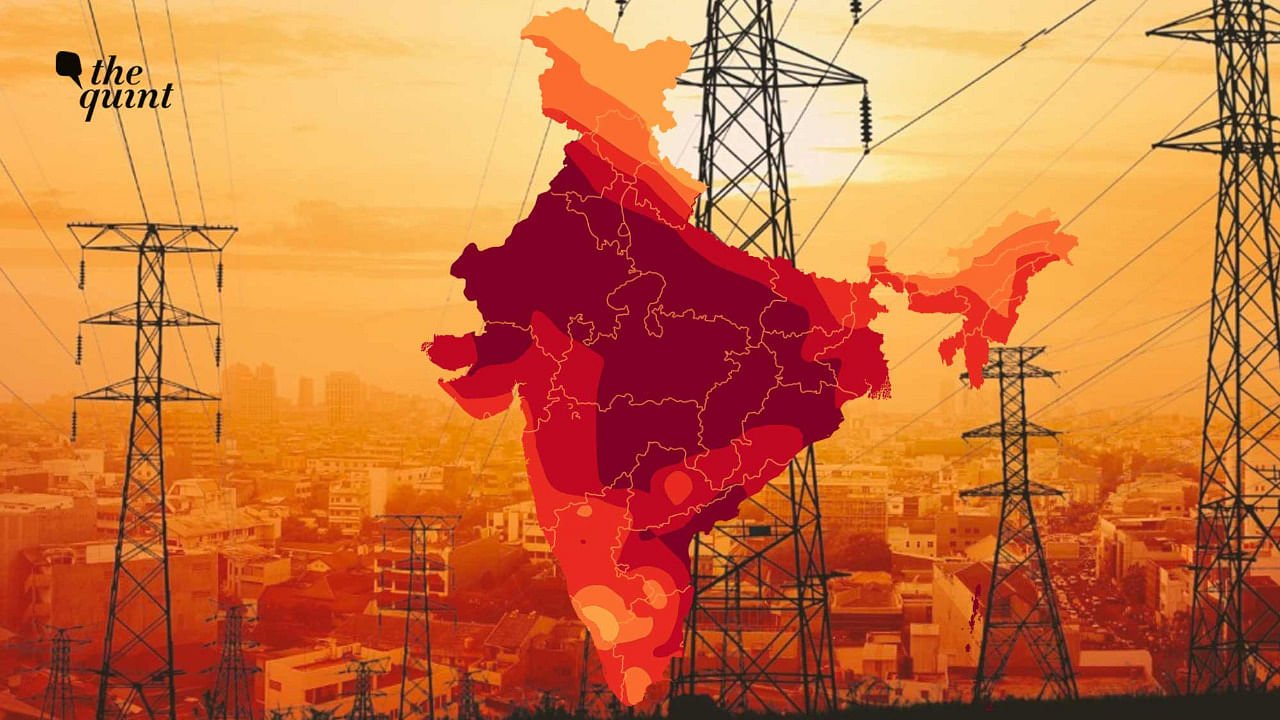
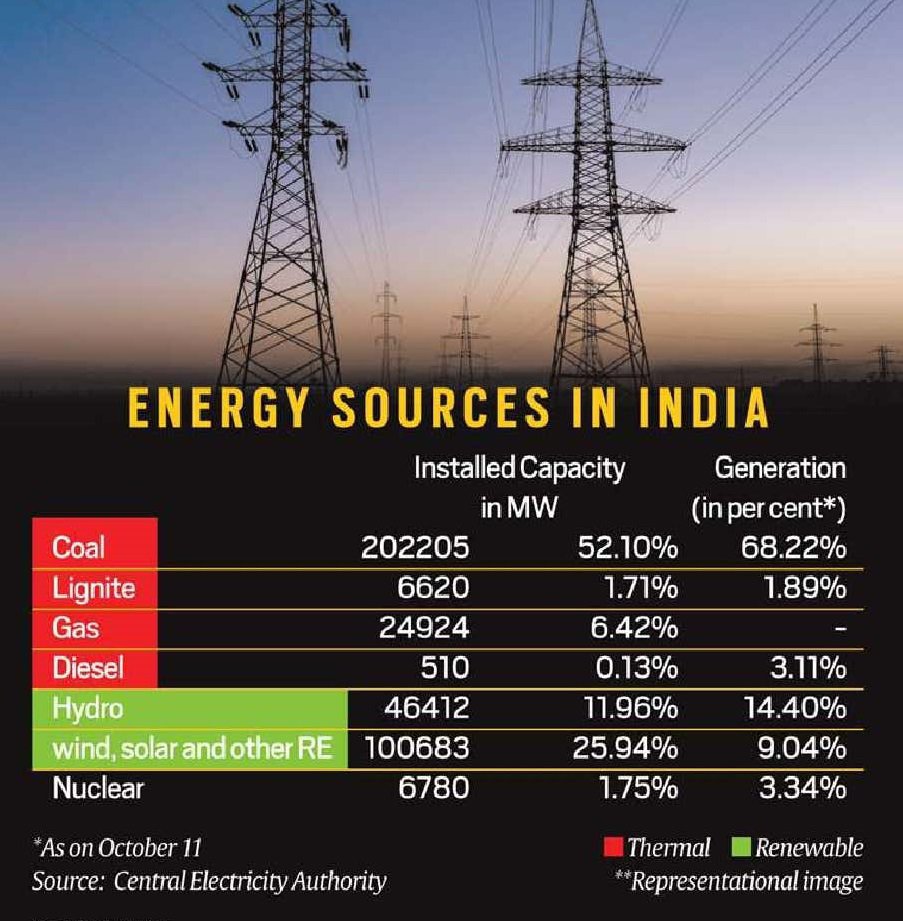
India has the fourth largest coal deposit in the world. It is the second largest fossil fuel producer after China and is home to Coal India, the world’s largest coal mining mine, which accounts for 80% of domestic production. Already allocated coal block mining capacity exceeds expected demand in 2030 by approximately 15% to 20%.


So why are India’s power plants facing coal shortages each year, leading to widespread power outages, exposing parts of the country to darkness and endangering industry?
There are several factors. India has a long time policy of minimizing coal imports. In February 2020, Coal Minister Pralhad Joshi announced that the country would stop importing steam coal from 2023 to 2024.
Mr Joshi said the Ministry of Coal will work with the Ministry of Railways and the Ministry of Shipping to allow Coal India, prisoners and commercial miners to discharge more coal from their supply by 2030. And the coal supply at power plants is running out at an alarming rate. The Department of Energy is currently blaming the decline in coal imports due to the current crisis. In 2018-19, 21.4 million tonnes of coal were imported for mixing, down to 23.8 million tonnes in 2019-20 and 8.3 million tonnes in 2021-22.


Power plant coal inventories have fallen by about 13% since April, reaching pre-summer lows. And for the first time since 2015, Coal India will import fuels used by state-owned and private power companies. The Ministry of Energy said almost all states showed that multiple state bids for coal imports would cause confusion and that the decision was made after calling for centralized procurement by Coal India.
Imported coal costs five times as much as domestic mining, so the center is being pushed back by the state.
Recently, the government has also pressured utilities to increase imports to mix with local coal. Last year, after a two-year break, three tranches of coal auctions were held and nine blocks were successfully awarded.

In September 2021, the Ministry of Coal issued a strict warning to owners of confined coal blocks, stating that their mines should increase production or face restrictions on coal supply by the CIL.
The ministry has discovered that these mines are producing below target.

Of the 43 coal mines outsourced to private companies in the energy, steel and metals sectors, none have met their annual production targets.
On May 6, Coal India announced that it would provide the private sector with 20 closed and abandoned underground coal mines and reopen and operate its revenue sharing model.

According to journalist Shreya Jai the current power supply chain does not seem ready to handle periods of high growth and state discos cannot pay gencos, but the power supply chain starts with state discos and needs repairs. Railroads, on the other hand, are struggling to align the thermal power industry’s demands for faster coal supply with those from other industries. Rakes must be prepared to meet the growing demand for almost all other bulk commodities, from cement and steel to sand and edible grains. By strengthening the value chain of the electric power sector, it is possible to resolve the coal supply-demand mismatch in the long run.

Xiaomi Looking To Supercharge Displays In Its Mid-Range Phones.

According to a new report, Xiaomi is planning to supercharge displays in its mid-range Android phones. The company is looking to bring LTPO displays that go down to 1Hz to its mid-range smartphones.

Xiaomi is planning to supercharge displays in its mid-range smartphones
This will, of course, help with power consumption. Those displays can dynamically raise or lower their refresh rates, from 1Hz to the max they offer, usually 120Hz. Pretty much all LTPO panels we’ve seen go all the way up to 120Hz.

This information comes from Digital Chat Station, a well-known tipster. Xiaomi is seemingly testing such a display in one of its mid-range smartphones. That display supports a 120Hz refresh rate, can go down to 1Hz, and it also offers DC dimming.

Xiaomi has been offering 120Hz displays in its mid-range smartphones for a while now. That includes Redmi and POCO phones as well. So, this move is not surprising, LTPO panels were expected to be offered in some mid-range devices sooner or later.

Xiaomi is a company that tends to offer really well-specced phones for reasonable price tags, so this is their forte. It remains to be seen what phone will break the ice, though.

LTPO displays have been around for quite some time now, and they keep evolving
LTPO displays have been around for quite some time now, and we’re seeing the third-gen of this tech in flagship smartphones these days. Not all LTPO displays can go way down to 1Hz, though, keep that in mind.

Many people value great displays, high refresh rates, and certainly displays that require less power to run at the same time. Some OEMs are still way behind in that regard, but Xiaomi is not one of them.

We also don’t know when will the first mid-range Xiaomi smartphone with such a display see the light of day, nor how much will it cost. Such a phone is now in testing, so it may take Xiaomi a bit of time to deliver it.

The difference between Epidemic and Pandemic

EPIDEMIC

The word epidemic is derived from Greek word ‘epi’ meaning upon or above and ‘demos’ meaning people. The term is used to describe a situation where a disease spreads rapidly to a large number of people in a given population over a short time period. When the term epidemic is used in connection with infectious disease, it is due to the sudden rise in cases usually resulting from a new infectious agent or a change in an existing agent. Epidemic can follow predictable patterns and these trends are often used to monitor, predict and control the spread of the infection. A typical example of this is “seasonal flu”.

PANDEMIC

The word pandemic is derived from Greek word ‘pan’ meaning all and ‘demos’ meaning people. The term is used to describe the rapid spread of a transmissible infection or communicable disease worldwide. Once an epidemic becomes global and affects a large percent of the population, it becomes known as Pandemic.

The terms pandemic and epidemic are used to describe the rate and distance of the spread of the disease and not the severity of the disease.

Significant features of Pandemic:

  • Affects a wider geographical area, often global.
  • Infects a very large number of people.
  • Often caused by a new virus or a new star in of a virus that has been dormant for many years.
  • Spreads quickly in humans as there is little to no existing immunity.
  • It causes high number of deaths.
  • Due to the need to control the spread of the disease, there is often social disruption, unrest and economic loss.

Stages of Pandemic:

The WHO has identified six phases that it follows before declaring a pandemic.

  • Phase I: A virus is seen I animals but has not been showing infections in humans.
  • Phase II: A known animal virus has caused an infection in humans.
  • Phase III: Scattered or isolated incidents of cases or small clusters of the disease occurs in humans; possible cases of human to human transmission is seen, but not at a level to cause community level outbreaks.
  • Phase IV: Human to human transmission starts at a rate that causes an outbreak in communities.
  • Phase V: The spread of the disease between humans is evident in more than one country.
  • Phase VI: Community level outbreaks are in at least one additional county other than the one seen in phase V.

Once phase VI is reached preparation is then made for a global pandemic. The most recent example of a pandemic is Covid 19.

Photo by Edward Jenner on Pexels.com

HUSTLE CULTURE A TREND OR TRENDING PROBLEM FOR THE YOUTH?

Image courtesy : thesolmag.com
http://thesolmag.com

The youth are more affected by this culture & it’s making their life miserable and the most important thing is they just don’t know how to stop worrying enough about it. 

The Orthodox or popular opinion of becoming successful and achieving it all very fast ; the ultimate respect status that comes with being the all achiever is Hustle culture, driven by the desire for more. 

We are compelled to believe that time is running out and that we must do more, achieve more in less time. The most essential goal in your life should be to prioritise achievement over anything else. It shouldn’t be a big deal to sacrifice your mental and physical health for your life satisfaction. As a consequence, the youth begins to believe. We are constantly seeking more from ourselves, others, and our life. Hustle culture arose from this constant desire for more. It’s also on the upswing.

Now wanting more isn’t necessarily a bad thing, but when it becomes excessive, it’s time to act.

Signs that you are a hustler :

1. You never stop overthinking –
Overanalyzing your life and ambitions lead you to constantly put self-limiting beliefs on yourself. Resulting in dread of the judgement, and assumption of the consequences which makes it worse.


2. You want to accomplish everything in one day – Being impatient with your goals and believing that completing more tasks more quickly than others will give you greater recognition and popularity.

3.You want to attain long-term goals in the short term- You focus on making the big leap instead of comprehending that it takes time, patience, and efforts to accomplish anything. Trying to skip the intermediate phases but fail and are left feeling unmotivated.


4. Trying to do all and more at once – You multitask all the time and put your work and aspirations before your needs for rest, sleep, and self-care.


5. Validation is what matters most to you – when people appreciate your achievements and proficiencies, your desire is stoked, but when it doesn’t, you spiral into self-doubt.

6.You are a materialistic life seeker – Quality of life and ideas don’t interest you & latest trends do. You are leading a typical life because you don’t know how to live otherwise

7.You feel guilty for not being productive enough– Often you feel terrible for putting comfort before your goals. Exhausting yourself completely is part of the process towards success.

8. Being ignorant about you mental health– As you pursue a career-oriented lifestyle, believing that this is the only way to gain respect and prestige, you start comparing yourself to others who are ahead of you and the seeds of self-doubt begin to grown in you.

9.You don’t put your health first – Your health is your most valuable asset and should always be prioritised above all else. Unfortunately, people frequently disregard this and endanger it in pursuit of mediocre accomplishments.

If you think you’re hustler, it’s time to take a moment and reflect. Hope you found this helpful.

CHALLENGES OF CORRUPTION

Corruption is a global phenomenon and it’s everywhere. Corruption has increased progressively and is now spreading more and more in our society. Corruption around the world is believed to be endemic and is universal and is a important contributor to slow economic growth, to restrain investment, to inhibit the provision of public services and to increase inequality to such an extent that international organisations like the World Bank have identified corruption as ‘The single greatest obstacle to economic and social development’. Theorists believe that ”corruption is most prevalent during the most intense phase of modernization of a country and tends to decline with institutionalisation of advanced democracy”. Basically, Corruption is offence on the part of an authority or powerful party through means that are not legitimate, immoral, or not compatible with ethical standards.

In a broader sense, Corruption is not just the bad behaviour of government officials stealing off money for their own benefit. It also includes cases where the systems do not work efficiently , and ordinary people are left in a dilemma, needing to give a bribe to get a work done. The economy of the state also plays an important role in increasing corruption. Inequality of wealth distribution, exploitation by employers, and low wages and salaries provide ideal breeding ground for corruption. Corruption also violates human rights, challenges the rule of law, distorts the development process, and dis-empowers the Indian state. Corruption is a hindrance in the process of fulfilling civil, political, economic, social and cultural rights.

FORMS OF CORRUPTION

  • Embezzlement: The theft of resources by people itself who are put to administer it. It happens When unfaithful employees steal from their employers. This is a serious offence where a public officials is misappropriating public resources, when a state official steals from the public institution in which he or she is employed and from resources he is supposed to administer on behalf of the public.
  • Nepotism: Nepotism is typical favouritism, in which an officer prefers his proper kinfolk and family members. Many unrestricted presidents have tried to secure their power position by nominating family members to key political, economic and military/security positions in the state apparatus.
  • Favouritism: Favouritism is a tool of power abuse implying “privatisation” and a highly improper distribution of state resources, no matter how these resources have been accumulated in the first place. Favouritism is the natural human tendency to favour friends, family. Favouritism is closely related to corruption so far as it implies a corrupted distribution of resources. It can be said that this is the other side of the coin where corruption is the accumulation of resources.
  • Fraud: Fraud is a financial crime that involves some kind of deception or deceit. Fraud involves a manipulation or distortion of information, facts and expertise, by public officials positioned between politicians and inhabitants, who seek to draw a private profit. Fraud is when a public official, who is responsible for carrying out the orders or tasks assigned by his superiors , manipulates the flow of information to his private profit.
  • Bribery: This form of corruption is the payment that is given or taken in a corrupt relationship. A bribe is a fixed sum, a certain percentage of a contract, or any other favour in money of kind, usually paid to a state official who can make contracts on behalf of the state or otherwise distribute benefits to companies or individuals, businessmen and clients.

Characteristics of Corruption

  1. It is a gap between group and their individual interest.
  2. It is between two or more parties since one can hardly be corrupt with one’s own self.
  3. Consenting adults that have a common understanding.
  4. It is Beneficial in future.
  5. The Existence of power that could be grabbed, entrusted or otherwise available.
  6. The misuse of the power that often drives a wedge between intended and stated positions, for benefits that is unintended.

Corruption in India is a consequence of the nexus between bureaucracy, politics and criminals. It has been observed that in cities and villages throughout India, there is “mafia raj” consisting of municipal and government officials, elected politicians, judicial officers, real estate developers and law enforcement officials, who acquire, develop and sell land in illegal ways. Many state-funded construction activities in India, such as constructing roads, flyovers, are dominated by the construction mafia, which are groupings of corrupt public works officials, materials suppliers, politicians and construction contractors.

It is now well recognized that the State is mainly responsible for both formulating and enforcing policies relating to good governance and human rights. Good governance is a key factor. The good governance agenda includes protection and promotion of human rights and rule of law. Both these functions will not be fully accomplished if corruption is widespread in government. Major challenge is that Corruption is a strong violator of human rights, particularly the economic and social rights of individuals as well as those of the State. It not only weakens development and growth, it also hinders efforts aimed at poverty eradication, socio-economic transformation and creation of an egalitarian society in accordance with the Directive Principles of the State Policy.

CAPITALISM

Capitalism is a political and economic system where a country’s trade and industry are controlled by private owners and not by the state. It is basically a system where there is private ownership of property. Capitalistic ownership means owners control the factors of production and derive their income from their ownership. That gives them the ability to operate their companies efficiently. It works for profit maximisation rather than public benefit. Capitalism needs a free market to work efficiently and succeed.   In a capitalist society, the distribution of goods and services is according to the laws of demand and supply. According to the law of demand, when the demand for a particular product increases then it also leads to an increase in its price. In a capitalist society there are a number of competitors. When these competitors realise that they can make a higher profit since the demand is high then, they increase production . The greater supply reduces prices to a level where only the best competitors remain.

EMERGENCE OF CAPITALISM

Capitalism emerged during the 16th century and expanded during the Industrial Revolution, pushed forward by colonialism, the nascent factory system, and the Atlantic Slave Trade. This system generated wealth and prestige for owners, but also exploited people who had very little or no power like the workers in the factory and people indigenous to Africa and the Americas. The expansion of Capitalism in America in the 19th-century relied on economic growth and was generated through the labour of enslaved people on land that were forcefully taken from Native Americans.

The United States is one example of capitalism. The other examples of capitalist countries are: Singapore, New Zealand, Australia, Switzerland, Ireland , United Kingdom, Canada, Denmark etc.

HOW CAPITALISM WORKS

In a capitalist society the owner of supply competes against each other to earn the highest profit by selling the goods at the highest possible price while keeping their costs as low as possible. Competition keeps prices moderate and production efficient, although it can also lead to worker exploitation and poor labour conditions. As there are a number of options for the consumer in the market due to competition then the consumer has a lot of choices.

Another component of capitalism is the free operation of the capital markets. The laws of supply and demand set fair prices for stocks, bonds, derivatives, currency, and commodities. Capital markets also  allow the companies to raise funds to expand.

According to the  economic theory Laissez- faire it argues that the government should take a hands-off approach to capitalism and should only intervene to maintain a level playing field. The government’s role is to protect the free market. It should prevent the unfair advantages obtained by monopolies or oligarchies. It ought to prevent the manipulation of information, making sure it is distributed equitably.

ADVANTAGES OF CAPITALISM

  • It creates healthy competition in the market.
  • Due to the number of companies and products in the market consumers have more choices.
  • Since the consumer’s demands are high and they will pay more for what they want, Capitalism results in the best products for the best prices.
  • It results in efficient production. In a capitalist system, firms have incentives to be productively efficient by cutting costs to improve competitiveness and productivity. If firms don’t remain productive and efficient they will run out of business.
  • Capitalism encourages trade between different nations and different people which is a mechanism for overcoming discrimination and bringing people together.
  • It raises the standard of living.
  • As the capitalist economy is dependent on the push factor of individuals, there is no limit to the level of wealth an individual can accumulate through progression within the economy.
  • Through capitalism, firms and companies are inclined to produce with greater efficiency, by cutting cost and improving efficiency. This is done with an aim to prevent losses in an industry where competition is high, bettering the economy as a whole.

DISADVANTAGES OF CAPITALISM

  • Private ownership of capital enables firms to gain a monopoly power in product and labour markets. Firms with monopoly power can exploit their position to charge higher prices.
  • Social benefit is ignored, as the owner cares about profit maximisation, public good is ignored, the poor people who cannot afford expensive products have no option.
  • A capitalist society argues it is good if people can earn more leading to income and wealth inequality. However, this ignores the diminishing marginal utility of wealth.
  • In a capitalist system where the means of production and distribution of goods and services are owned by just a few members of the society, the wealth of an entire nation could be controlled by just a few wealthy individuals and families and hence there is unequal distribution of wealth.
  • Due to the market being profit and demand driven, negative externalities such as pollution are generally ignored until they become a serious issue within the economy.
  • Socialists and communists are people who do not support capitalism. They say it hurts workers, because businesses make more money by selling things than they pay the workers who make the things. Business owners become rich while workers remain poor and exploited. 

Source: https://www.thebalance.com/capitalism-characteristics-examples

Integration of Indian States of Independent India.

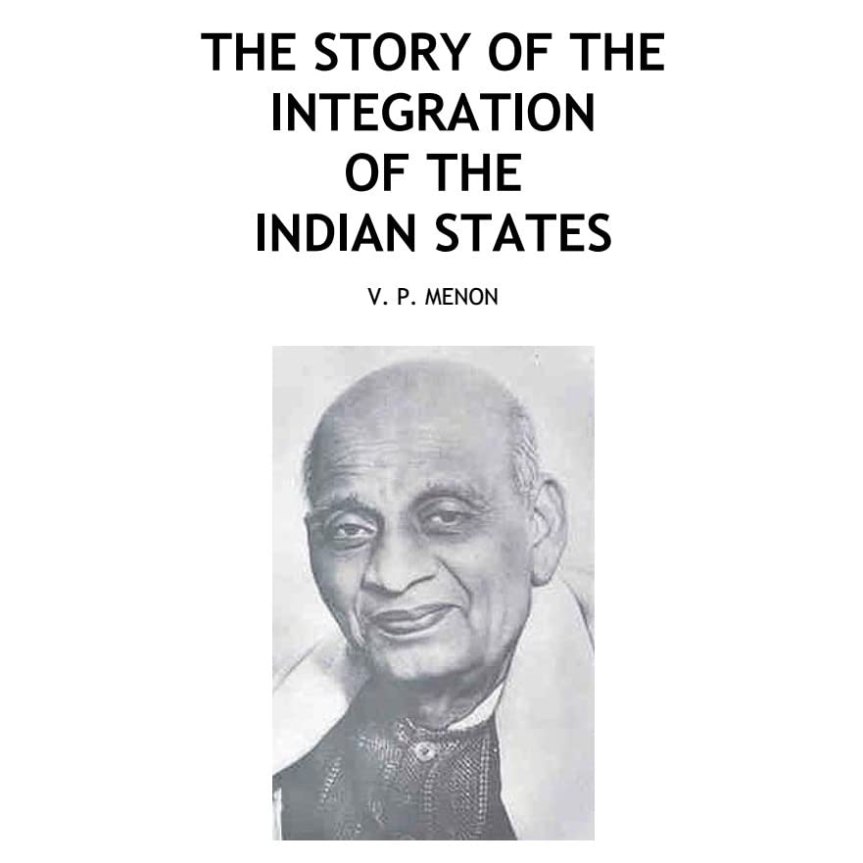
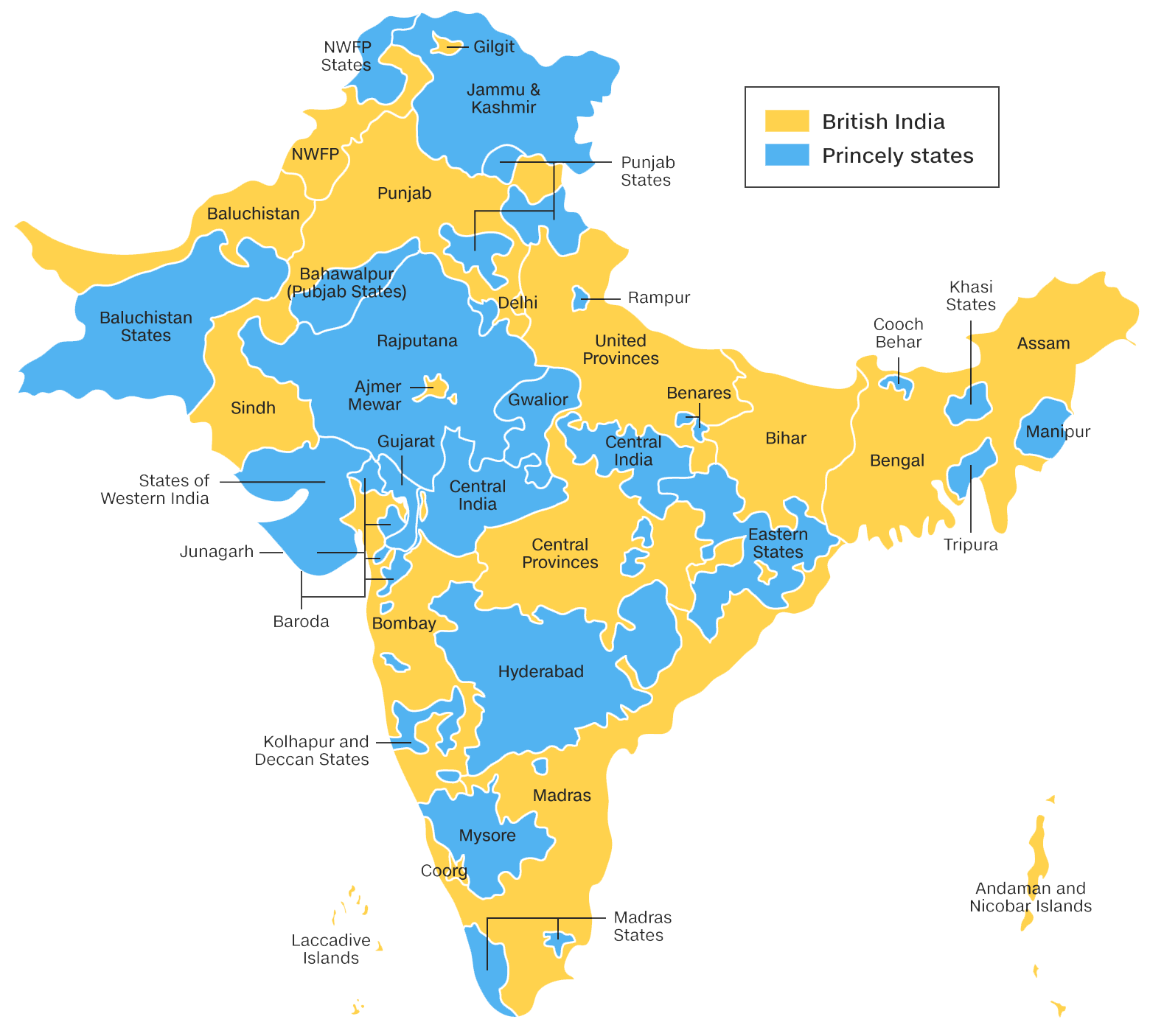
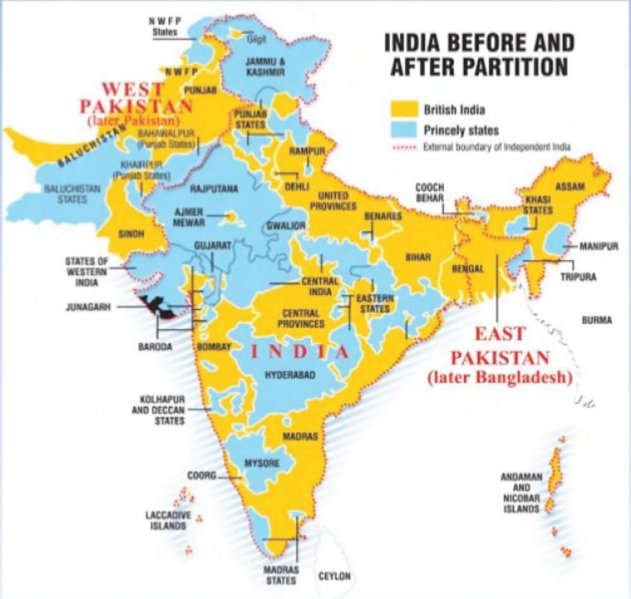
Sardar Vallabhbhai Patel played an important role in the integration of the princely state into the Dominion of India. This achievement laid the foundation for Patel’s popularity in the post-independence era. He is still remembered as the man who united India today. In this respect he is compared to Otto von Bismarck, who united many German states in 1871. The June 3 plan gave more than 565 princely states the option of joining India or Pakistan or choosing independence. Most Indian nationalists and the masses were afraid that most people and territories would be fragmented without the participation of these states. Parliament and British officials considered Patel to be the best man on a mission to secure the conquest of the princely state from Indian rule. According to Gandhi only Patel could solve this problem. Patel had practical insight and determination to accomplish monumental work. Patel asked V.P. Menon, a senior official involved in the division of India, to become his right-hand man as Principal Secretary of State. Patel used a social gathering and informal setting to involve most monarchs and invite them to their home in Delhi for lunch and tea. At these meetings, Patel stated that there was no essential conflict between Congress and the prince’s order. Patel aroused the patriotism of the Indian monarchs and urged them to embrace the independence of their country and act as responsible rulers who care for their people’s future. He persuaded the rulers of 565 states about the impossibility of independence from the Republic of India, especially in the face of rising opposition from their subject. He proposed favorable conditions for the merger, including the creation of a secret purse for the descendants of the ruler. Patel encouraged the rulers to act patrioticly, and to thought about his states people and their futur, but he did not rule out violence. He emphasized the need for the princes to join India in good faith and gave them to sign the membership certificate until August 15, 1947. All but three states were willing to join the Indian Union. Only Jammu and Kashmir, Junagad and Hyderabad were States which were tough to brought under Indian Dominion.


Junagadh being situated in Gujrat it was very important for Patel to bring it under Indian’s dominion. This was also important because there was the super-rich Somnath Temple (a temple where different stones were their including emeralds, diamonds, and gold which were looted by Mohd. Ghazni) in the Kathiawar district. Bieng under the pressure from Sir Shah Nawas Bhutto, a Nawab who joined Pakistan. However, it was far from Pakistan, with 80% of its state population being Hindus.Patel combining diplomacy and power, Pakistan invalidated Pakistan’s accession and demanded that Nawab join India. Patel sent troops to occupy the three principalities of Junagadh to show his determination. After widespread protests and the formation of the civilian government, or Aarzi Hukumat, both Bhutto and Nawab fled to Karachi, and under Patel’s orders, Indian troops and police forces invaded the state. A later organized referendum resulted in 99.5% of the votes in favor of the merger with India. After taking over, Patel, who spoke at the University of Bahauddin in Junagad, emphasized his sense of urgency regarding Hyderabad. He believes this is more important to India than Kashmir.


Hyderabad was the largest of the princely states and which included States parts of which are now Telangana, Arndra Pradesh, Karnataka and Maharashtra. Its ruler, Nizam Osman Ali Khan, was Muslim, but more than 80% of the population of state was Hindu. Nizam called for independence or accession to Pakistan. Under Kasim Razvi, an army of Nizam-faithful Islamic troops called Razakar urged Nizam to confront India and at the same time organize an attack on the people of India’s soil. The standstill agreement was signed by Lord Mountbatten’s in desperate efforts to avoid the war, but Nizam refused to trade and changed his position. At a cabinet meeting in September 1948, Patel emphasized that India should stop speaking and reconciled Nehru and Governor Chakravarti Rajgoparachari with military action. After preparation, Patel ordered the Indian troops to invade Hyderabad (in his position on behalf of the Prime Minister) when Nehru traveled to Europe. This action, called Operation Polo, in which thousands of Razakar troops were killed , but Hyderabad was secured and integrated into the Republic of India. Mountbatten and Nehru’s main goal was to avoid forced annexation to prevent the outbreak of Hindu and Muslim violence. Patel argued that if Hyderabad was allowed to survive as an independent state surrounded by India, the government’s fame would decline and neither Hindus nor Muslims would feel reassured in their empire. After defeating the Nizam, Patel held him as the head of state of the ritual and met with him. India had 562 princely states after addition of Junagarh, Heydrabad and Jammu& Kashmir.

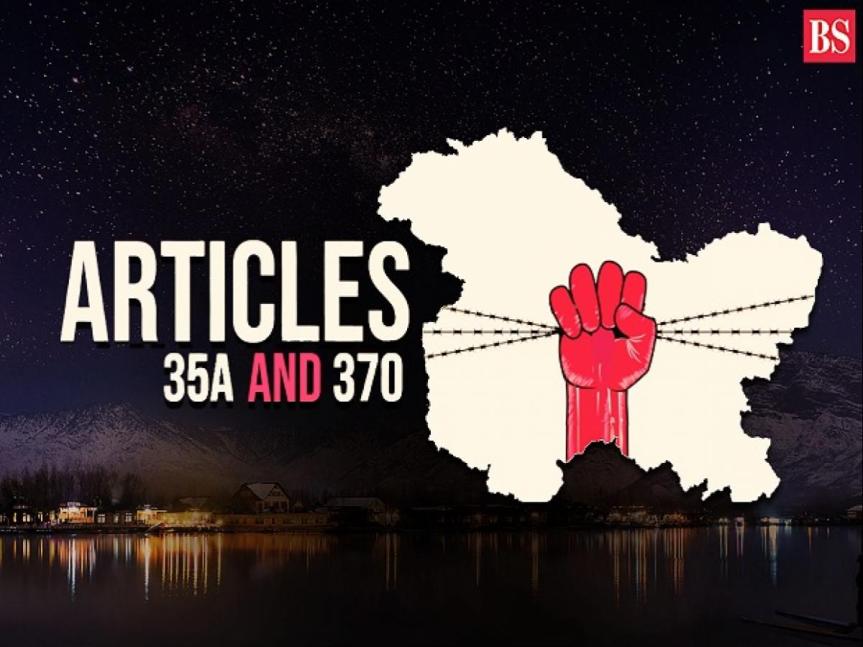
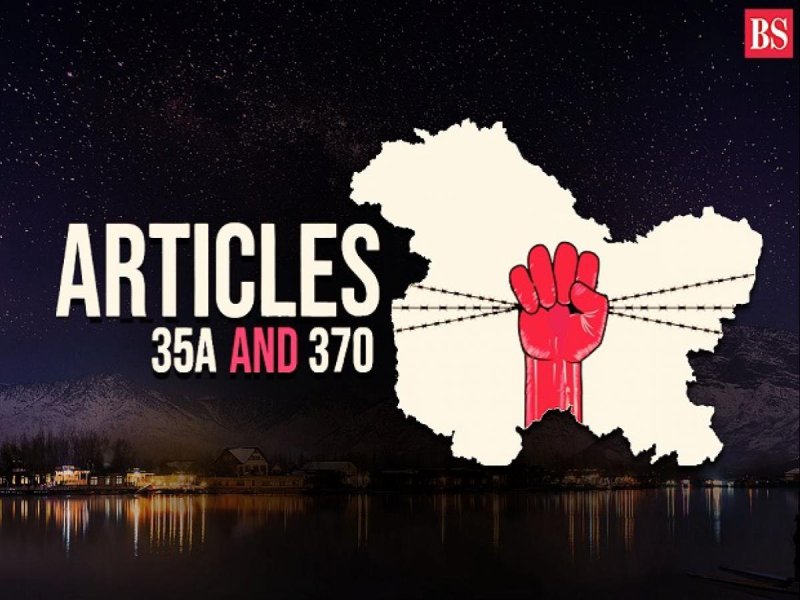
Article 370 & Article 35A

Article 370
The first accession of Jammu and Kashmir, like all other princely states, involved three issues: defense, diplomacy, and communications. All princely states were invited to send representatives to the Constitutional Parliament, which drafted the Constitution across India. They were also encouraged to establish a constituent parliament for their own state. Most states were unable to establish a parliament in time, but some states, especially Saurashtra Union, Travancore-Cochin, and Mysore. The State Department had drafted a model state constitution, but on May 19, 1949, the governors and Chief ministers of each state met in the presence of the State Department and agreed that no separate state constitution was needed. They accepted the Indian Constitution as their own constitution. The state in which the elected constituent council proposed some changes that were accepted. Therefore, the status of all states has been placed on par with the status of ordinary Indian states. In particular, this meant that the subjects available for legislation by central and state governments were consistent and same throughout India.

In the case of Jammu and Kashmir, state politicians have decided to establish a separate constitutional council for the state. Representatives of the Indian Constitutional Assembly applied only the provisions of the Indian Constitution corresponding to the original accession documents to the state, and demanded that the state Constitutional Assembly decide on other matters. The Government of India agreed to the request shortly before its meeting with the other states on 19 May. Therefore, Article 370 was included in the Constitution of India, which provided that other provisions of the Constitution empowering the central government would apply to Jammu and Kashmir only with the approval of the State Constitutional Assembly.This was a “provisional provision” because it was applicable until the State Constitution was enacted and adopted. However, the State Constitutional Assembly was dissolved on January 25, 1957, and did not recommend the abolition or amendment of Article 370. This article was considered an integral part of the Indian Constitution, as confirmed by various recent April 2018 rulings by the Supreme Court of India and the Supreme Court of Jammu & Kashmir.

Article 35A
Article 35A of the Constitution of India was a provision authorized by state to define the “permanent residents” of Jammu and Kashmir State and to give them special rights and privileges. It was added to the Constitution by an Executive Order, the 1954 Constitutional Order (application to Jammu and Kashmir). It was issued by the President of India under Article 370. Jammu & Kashmir has these privileges, the ability to acquire land and real estate, vote and participate in elections, pursue government employment, and receive the benefits of other governments such as higher education and medical expenses. Defined to include. Non-permanent residents of the state were not eligible for these “privileges”, even if they were Indian citizens.