Mauryan Empire

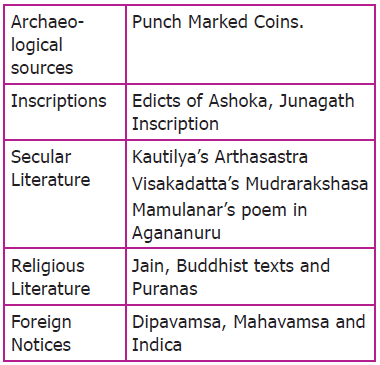
Sources

Mauryan Empire – India’s First Empire
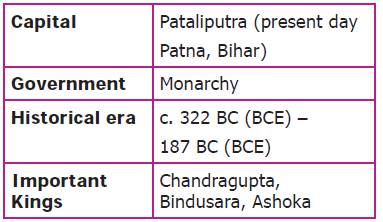
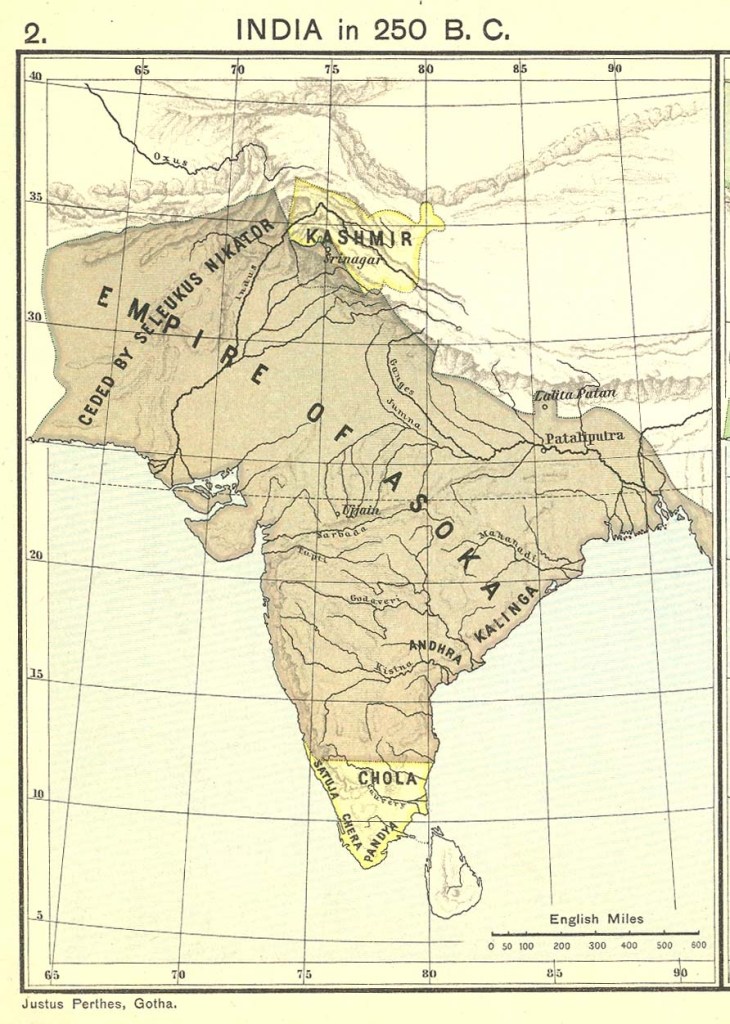
Chandragupta Maurya

The Mauryan Empire was the first largest empire in India.Chandragupta Maurya established the empire in Magadha.
Bhadrabahu,a Jain monk,took Chandragupta Maurya to the southern India
Chandragupta performed Sallekhana(Jaina ritulas in which a person fasts unto his death) in Sravanbelgola (Karnataka).

Bindusara
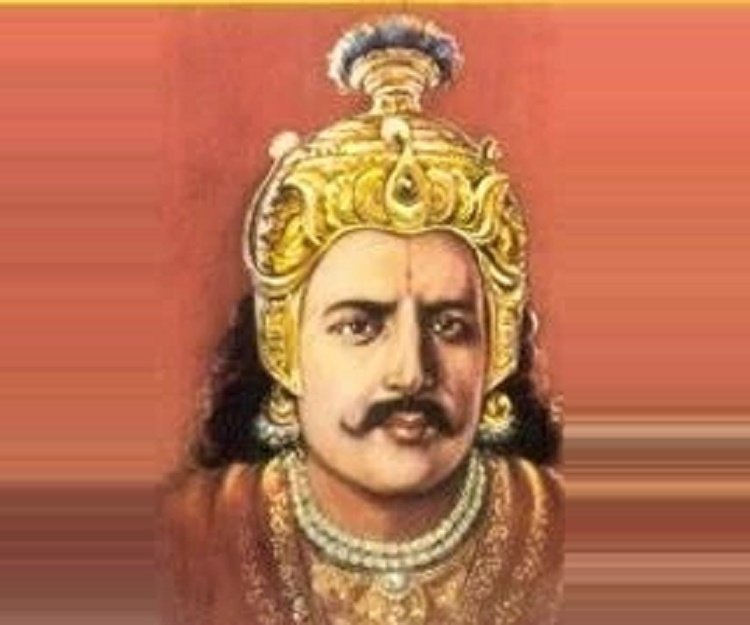
Real name of Bindusara was Simhasena.He was the son of Chandragupta Maurya.Greeks called Bindusara as Amitragatha, meaning`slayer of enemies ′.During Bindusara’s reign Mauryan Empire spread over large parts of India.He appointed his son Ashoka as a governor of Ujjain.After his death , Ashoka ascended the throne of Magadha.

Ashoka

Ashoka was the most famous of the Mauryan kings.He was known as ‘Devanam piya’ meaning’beloved of the gods’.

Ashoka fought the Kalinga war in 261 BC (BCE).He won the war and captured Kalinga.
The horror of war was described by the king himself in the Rock Edict XIII.

Lion capital of Ashoka

The Emblem of the Indian Republic has been adopted from the Lion capital of one of Ashokas pillars located at Sarnath.The wheel from the circular base,the Ashoka chakra is a part of the National Flag.

Chandasoka (Ashoka,the wicked) to Dhammasoka (Ashoka the ringteous)

After the battle of Kalinga,Ashoka became a Buddhist.He undertook tours ( Dharmayatras) to different parts of the country instructing people on policy of Dhamma.The meaning of Dhamma is explained in Ashoka’s – pillar Edict II
It contained the noblest ideas of humanism,forming the essence of all religions.He laid stress on

  • Compassion
  • Charity
  • Purity
  • Saintliness
  • Self-control
  • Truthfulness
  • Obedience and respect for parents, preceptors and elders.

Ashoka sent his son Mahinda and Sanghamitta to Srilanka to propagate Buddhism.He also sent missionaries to west Asia, Egypt and Eastern Europe to spread the message of Dhamma.The Dhamma – mahamattas were a new cadre of officials created by Ashoka.Their job was to spread dhamma all over the empire.Ashoka held the third Buddhist council at his capital Pataliputra.

Edicts of Ashoka
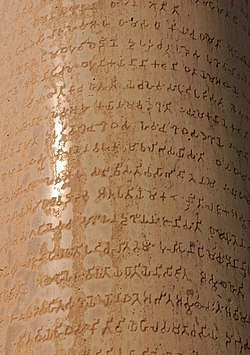
The 33 Edicts on the pillars as well as boulders and cave walls made by the Emperor Ashoka, describe in detail Ashoka’s belief in peace, righteousness, justice and his concern for the welfare of his people.The Rock Edicts II and XIII of Ashoka refer to the names of the three dynasties namely Pandyas,Cholas ,the Keralaputras and the Sathyaputras.

Mauryan Administration

Centralized administration King

  • The king was the supreme and sovereign authority of the Mauryan Empire.
  • Council of ministers known as mantriparishad assisted the King.Assembly of ministers included a Purohit,a senapathi,a Maha mantri and the Yuvaraja.
  • King had an excellent spy system.

Revenue system

  • The land was the most important source of revenue for the state.Ashokan inscription at Lumbini mentions bali and bagha as taxes collected from people.The land tax(bhaga) collected was 1/6 of the total produce.
  • Revenue from taxes on forests,mines,salt and irrigation provided additional revenue to the government.
  • Much of the state revenue was spent on paying the army,the officials of the royal government,on charities and on different public,road construction etc.

Judical system

  • The king was the head of the Judiciary.He was the highest court of appeal.
  • King appointed many judges subordinate to him.The punishments were harsh.

Military Administration

The king was the supreme commander of the army.A board of 30 members divided into six committees with five members on each,monitored

  • Navy
  • Armoury (transport and supply)
  • Infantry
  • Cavalry
  • The war chariots
  • The war elephants

Municipal Administration (cities and Towns)

  • Board of 30 members divided into six committees.Each had 5 members to manage the administration of the city.
  • Town administration was under Nagarika.He was assisted by Sthanika and Gopa.

Currency

Money was not only used for trade; even the government paid its officers in cash.
The punch marked silver coins (panas) which carry the symbols of the peacock,and the hill and crescent copper coins called Mashakas formed the imperial currency.

Trade and Urbanization

Trade flourished particularly with Greece (Hellenic) Malaya, Ceylon and Burma.The Arthashastra refers to the regions producing specialized textiles-kasi (Benares), Vanga(Bengal),Kamarupa (Assam) and Madurai in Tamilnadu
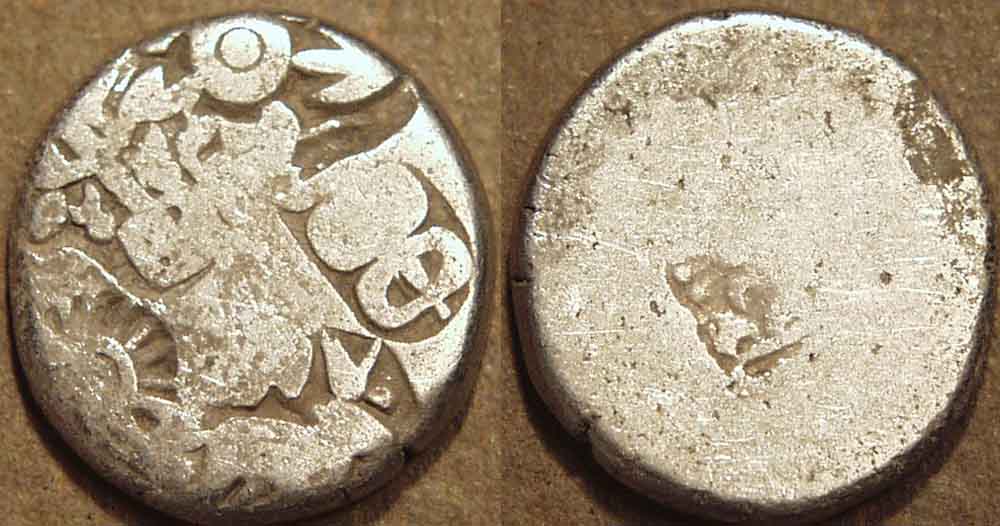
Mauryan coins

Mauryan Art and Architecture

Mauryan Art can be divided into two

Indigenous Art – statues of Yakshas and Yakshis
Royal Art. – palaces and public buildings
– Monolithic pillars
– Rock cut Architecture
– Stupas

Stupas
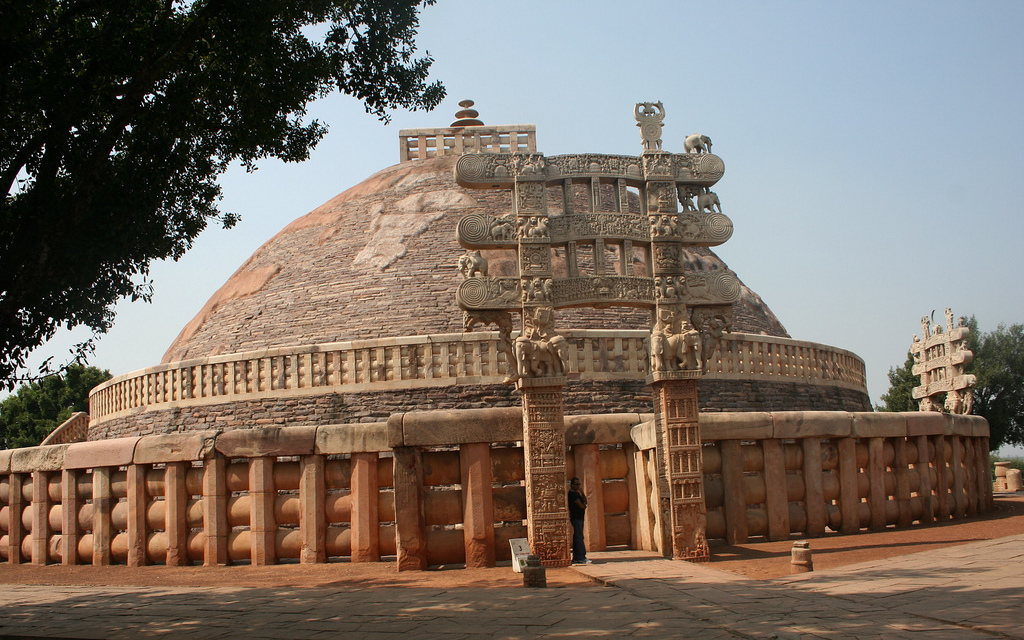
Sanchi near Bhopal, MP

A stupa is a semi- spherical dome like structure constructed on brick or stone.The Buddha’s relics were placed in the centre of the dome.

Monolithic pillar – Sarnath

The crowning element in this pillar is Dharma Chakra.
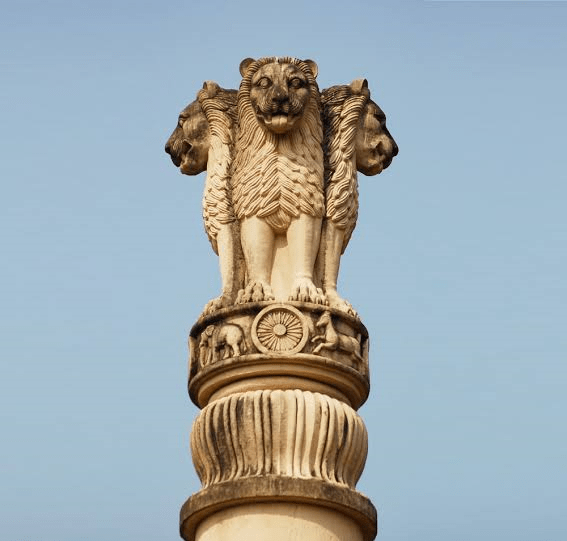
Monolithic pillar – Sarnath

Beginning of Rock cut Architecture

Rock – cut caves of Barabar and Nagarjuna Hills.
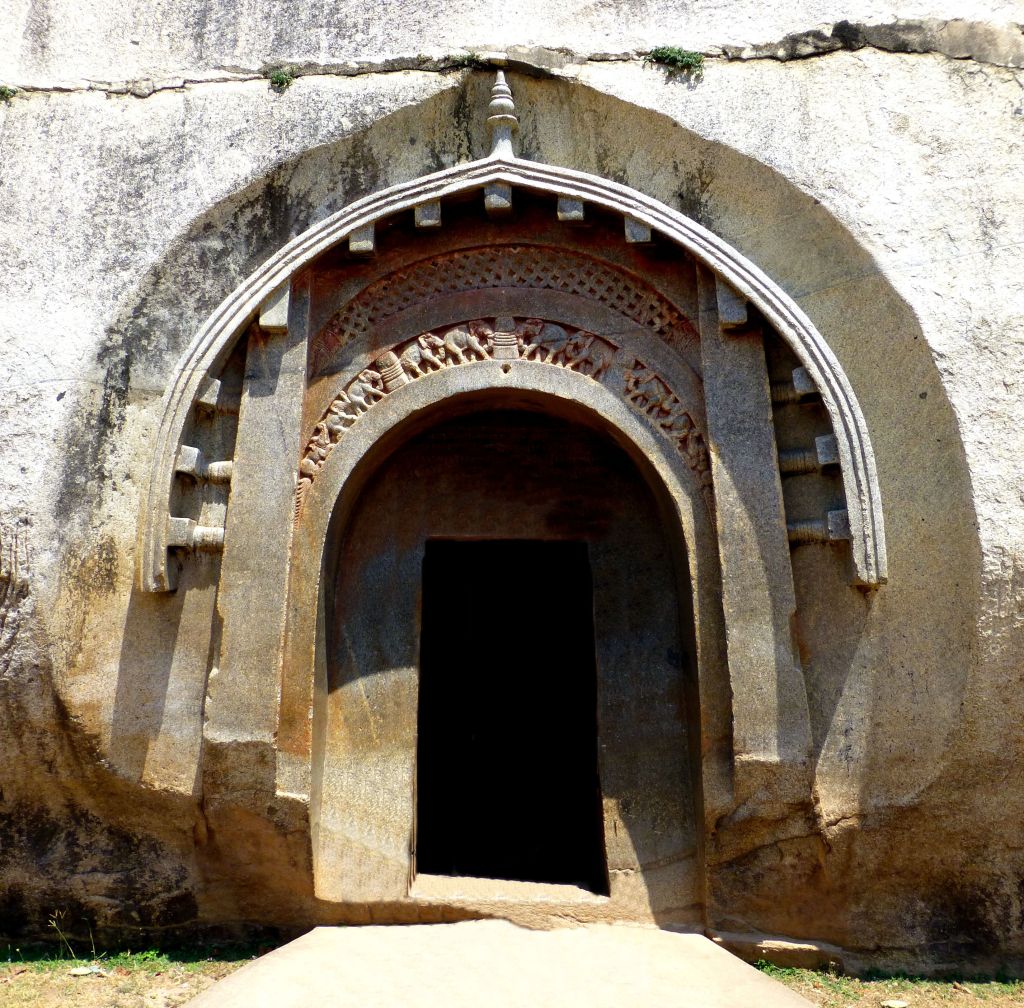
Lomas Rishi cave, Barabar

There are several caves to the north of Both Gaya.Three caves in Barabar hills have dedicative inscription of Ashoka. and three in Nagarjuna hills have inscriptions of Dasharaths Maurya ( grand son of Ashoka)

Reasons for the Decline of the Mauryan Empire

  • Ashoka’s successors were very weak
  • Continuous revolts in different parts of the empire.
  • Invasion by the Bactrian Greeks weakened the empire.
  • Invasion by the Bactrian Greeks weakened the empire.
  • Last Maurya ruler Brihadratha was killed by his commander Pushyamitra Sungha who established Sungha dynasty.


SAVING LIVES OR SAVING THE ECONOMY ?

A strong economy is the source of national strength .

In an economy , the production & consumption of goods & services are used to fulfill the needs of those living & operating within. In short an economy is an area of the production , distribution & trade , as well as consumption of goods & services by agents & these agents are not someone other but are we only. These agents are individuals , businesses , organizations, or government.

Till here we can conclude that people makes up an economy.

Now lets jump on the topic which is saving lives or saving economy . In this situation of pandemic i.e., COVID 19 , lakhs of people have lost their lives , their livelihood , their families . For controlling this situation , which can be controlled only by not coming in contact with an affected person & by maintaining social distancing & self consciousness , government has laid many rules & one such rule is ” lockdown” . Never before we have heard of this word of this word but in past 2 years each one pf us has experienced it . It is a situation where every one is restricted to move out of their houses , factories were shut , many people last their jobs , because of which employment rate decreased , those who have lost their jobs migrated to their villages, All & all we can say that lockdown had the most drastic effect on the economy . lockdown is one among the reason for falling of the economy.

But lockdown was not applied to do so , rather it was meant to protect people , so that we could break the chain of Corona virus . Because of this rule of lockdown , people avoided gathering & because of this lockdown only we are able to defeat & break the chain of COVID 19 . Government took this step though knowing that this will have negative impact on the economy but we all know that it is ‘we’ who makes up an economy , & if we are safe the economy will improve for sure . Because for production you need people , for consumption you need people, for trade you need people , & for distribution you need people. So if people are safe economy is safe .

So this pandemic taught us the importance of lives , we all should thank the all mighty & our health workers for saving many lives & according to me saving lives is more important than saving economy but this doesn’t mean ignoring economy & economic development . Saving lives with holding economy & adopting every measure to save it , will leads to development of both , because both the factors are directly proportional to each other & fall in one will leads to fall in other. Hence saving lives will improve economy because at the end we all know people makes up an economy.

Media Law in India

Communication is considered to be a procedure, which people use to exchange information on a daily basis by various methods which are present and media is known to be the medium or an instrument of communicating or storing information. ‘Media’ is the popular term which is used as ‘Press’ which denotes the electronic and print information carriers – all the newspapers and all the magazines, television and radio and presently it includes the Internet as new form of Media. It is hailed as the “Fourth Pillar” of the democracy, media is considered to be the watchdog of all the public affairs in the country, informing the people, it mainly acts as a forum to advocate the opinions and views of the society as a whole to the people who are at the helm of the public affairs of the country. Media Law is not considered to be a conception which is primarily used to touch upon a uniform or an integrated body of law of crimes or the law of contracts. It is known to be an amalgamation of a variety of media laws and ethics that are regarded as the most crucial for media industry and a working journalist.  Media law is known to envelope a part of law which largely involves media of all types like Movies, Television, publishing, music, advertisements and also the new media which is the internet and etc.  and it covers over many legal fields, including but not only limited to finance, corporate or any intellectual property, privacy and publicity. Media law is considered to be a law field that is referred to the following: broadcasting, advertising contempt, censorship, copyright, confidentiality, defamation, corporate law, freedom of information, entertainment, information technology, privacy, internet and telecommunication. on one hand the media law regulates principles of the media goods and on the other hand is regulates the formatting and the content of all the media goods which might confer as business. It is due to the technology advances and the emerging and present status of the new media content distribution strategies which are present, the broadcasting and media industry sector in the country is growing on a fast space each day. Media is considered to help and initiate a lot for carrying out many emerging and existing businesses and guarantees various business opportunities to individuals. It contributes in publicizing the business ideas and views and also check the smooth functioning of the same. It largely attracts various investors and it tries to find that the same can be maintained or not. The paper is used to mainly deal with the new business opportunities which are present and so provided by the media to many Start up projects or other different investors. Thus, the Media plays a very active role in various corporate affairs and does thereby help in the growing of the many new businesses and makes strong the existing businesses. Thereby it can be concluded that the media laws in India have its relevance in the business opportunities.

The Fault In Our Stars: An unforeseen expedition from novel to screen

_Aditi Raj

This is a romantic novel by John Green which was published on January 10,2012. A love story which was crazily liked by the teens. A story of joy along with devastating loss. It will make you laugh and rejoice and with fill you with gratitude at the same time. Also it will forever change the way you hear the word “okay” and yeah you will cry reading the novel. If you are one of the millions of people who have read the masterpiece ,you know this already. And still if you haven’t read this already prepare yourself-once you start reading this you couldn’t stop yourself until you complete this book, or this film unaltered. okay? okay.

It’s September 2013 on a bright afternoon in Pittsburgh, a city in Pennsylvania, and Shailene Woodley, who plays 16 year old Hazel Grace Lancaster, stands in a simple blue dress the colors of cornflowers and adjusts cannula tubes in her nostrils. Hazel is a jeans-and-tee-shirt girl. No makeup, no fuss. She also has thyroid that has spread to her lungs, so is connected to a portable oxygen tank to breathe. Not too long ago she met a boy named Augustus “Gus” Waters played by Ansel Elgort in a cancer support group. Hazel is forced by her parents to attend a support group where she later falls in love with Augustus Waters. This novel has a beautiful beginning but an unexpected and sad ending where Augustus dies.

Along with an American film adaption which was released on June06,2014 this novel was also released on Hindi feature film adaptation of the film titled” Dil Bechara” which was released on July 24,2020.Both the novel and its American and Indian film adaption were met with strong critical and commercial success.

CIVIL SERVICES EXAMINATION

Nowadays, exams become the thing that brings us fear, anxiety, etc., Especially during this pandemic all our academic and studies has been changed from live classes to online classes. For some online classes can be a flex but not for all. Speaking of exams, we all know about competitive exams which has been conducted all over the world to students to get into some point and also it is set as an start for their higher studies and career. Exams like Civil services examination, Indian Economic Services examination, GATE etc.

WHAT IS CIVIL SERVICES EXAMINATION? :

Civil services examination is one among the top most competitive examinations conducted by Union Public Service Commission for recruitment to various civil services for the Government of India. There are around 24 services which come under civil service categories such as IAS, IPS, IFS, IRS etc.

NAME OF THE RECRUITING BODY:

Union Public Service Commission (UPSC)

TYPES OF SERVICES:

IAS, IPS, IFS and more than 20 services with 712 vacancies which also include 22 vacancies for benchmark disablility persons

CANDIDATES ELIGIBLITY:

The person who is taking up the exam should be 21 to 32 years old.

EDUCATION:

A degree holder (recognized by UGC/AICTE) of any major is a eligible person to take up the exam.

AGE LIMIT AND NO. OF ATTEMPTS:

The total no of attempts and age limit of exam are based on community which differ from one to one.

PROCESS OF EXAMINATION:

The eligible persons first level exam will be Preliminary exam with two papers total of 400 marks. The qualified person can move on to next level which is main exams with 9 papers total of 1750 marks. The last level will be the interview (oral) for 275 marks.

HOW TO PURSUE:

To pursue civil service and Defence service as a carrer the individual should deserve some reputation or achievement because civil service and defence service does not merely offer them another job for earning livelihood, it provides a great opportunity to realize their potentials. The person should enjoy every assignment, activity to really purse his/her job. They should have the satisfaction of serving the country, and eventually lead the country.

HOW A EXAM CAN FULFILL THE DREAMS OF SEVERAL GENERATIONS? :

In the recent years Civl services and other services have fulfilled dreams among several generations in India. Civil services have attracted a wider pool of talents. A large number of professionals led by Engineers, IT and Management professionals, doctors, lawyers and other meritorious students who could have got lucrative jobs with the corporate sector have started appearing in the civil service exams. The main reason of their attraction is the balanced combination of class, status and power. It is well known that all the civil services Examination through its various stages, tests a canfldidate’s suitability to top rank position of Indian bureaucracy.

REAL AIM OF AN CIVIL SERVICES EXAMINATION:

The exams aim is not only to provide them job by testing his/her subject knowledge but also his understanding and interpretation. The preparation of the exam entails much more than the academic grasp of the subject. An ideal candidate beside acquiring depth knowledge of the subject but also have to work upon building his logical reasoning. They should alsna work upon problem solving and writing skills along with developing cheerful and optimistic outlook towards life.

All these are secondary, first the person should be confident about themselve. They have to face more struggles than they could think about. The fear of rejection can make you to not to try. So first face that fear then face the problems.

The Rise of Digital Marketing in the Modern Era

Digital marketing, as the term implies, involves using digital media to promote products and services. The COVID-19 pandemic has significantly accelerated the growth of digital marketing, as people turned to online platforms for their needs. Today, digital marketing spans a vast range of products, from everyday items like pens to large purchases like cars. Numerous shopping websites offer products at competitive prices, delivering them right to customers’ doorsteps.

Digital Marketing in Education

Digital marketing isn’t limited to shopping; it’s also revolutionizing education. With the shift to online learning, students attend classes and access educational materials digitally. Numerous platforms have emerged to meet this demand, although the challenge remains to ensure the right information reaches the right audience. This is where digital marketing shines.

The Power of Data in Digital Marketing

Through data mining, marketers can effectively target the right audience with relevant advertisements. This precision in targeting not only boosts sales but also enhances the overall efficiency of marketing campaigns. Various tools help analyze and optimize marketing strategies, making it easier for sellers to connect with potential customers.

Embracing the Digital Future

As we move towards an increasingly online world, it’s essential to develop digital skills and knowledge. The internet has transformed our lives, enabling us to shop, book tickets, pay bills, and perform numerous other tasks with just a phone or laptop. With around 80% of shoppers conducting online research before making a purchase, digital marketing has become crucial for businesses.

Understanding Digital Marketing

Digital marketing involves promoting goods and services through digital channels. This includes the internet, computers, mobile phones, websites, and various applications. Although attempts to establish digital marketing began in the 1980s, it truly gained momentum in the late 1990s.

Digital marketing allows businesses to reach new customers quickly and efficiently. It provides insights into customer behaviors and trends, helping marketers tailor their strategies accordingly. In essence, digital marketing leverages digital technology to connect with customers.

The Future of Digital Marketing

Change is inevitable, and the internet age has brought significant transformations. The widespread use of the internet makes it easier to connect businesses with their customers. The demand for digital marketing is growing, as it enables merchants to directly reach consumers. Platforms like Google, Facebook, and YouTube have become vital tools for showcasing products.

Digital marketing has made shopping convenient for consumers and streamlined advertising for businesses. The shift from traditional advertising methods to digital platforms has fostered trust and convenience, benefiting both traders and consumers. The adage “What you see is what sells” aptly describes the impact of digital marketing.

Conclusion

Digital marketing is an ever-evolving field that plays a crucial role in today’s interconnected world. As everything moves online, embracing digital marketing strategies is essential for businesses to thrive. By harnessing the power of data and digital tools, companies can effectively reach and engage their target audiences, driving growth and innovation in the digital age. Be part of the change and make a difference in this dynamic landscape.

Memories – The unforgettable demons

Memories are reminders of what you have lost. They remind you of a good time in a bad way. They are out there challenging you to face them, to remember them and to be devastated by them. They hurt you sometimes and sometimes they don’t. You can’t control them. Nobody can. They break your heart, they hurt you in a way nobody does and probably nobody can and you don’t even know it. They remind you of what you can’t have anymore. They make you suffer. They remind you of what happened. Or they silently accuse you of what you did to lose it all. They cover you in so much guilt that you can never get out of it. They hurt you in more ways than you can imagine. They attract you with the hope of remembering everything in a beautiful way. Instead they set you up for hurt, for betrayal, for lies. Lies you didn’t know were not true. And you fall into their trap, thinking there is still hope for something good.

Photo by KoolShooters on Pexels.com

They make you addicted to them in such a way that you can’t stay away from them ever. They bind you with such a strong rope of expectations that maybe someday you can have it all back, even if it is all in your head. For a long time or maybe forever, they haunt you, they never leave your back, never let you go off them. You are forever bound to them whether you know it or not, whether you like it or not. You always come looking back for them, for more good times, for happy moments, even if you suffer even more. They make you believe that maybe you can live with the idea of what could have happened.

Memories are the unforgettable demons living in our minds. They don’t go away. They eat you alive and let your mind rot. They are like the uninvited guest in your house. They live rent free in your mind and create chaos to remind you of everything. They clog your mind with the thoughts of the past and that hinders your thinking for the future. They don’t let you live in the moment, in the present. Memories force you to regret your bad deeds when all you want is to let them go. When you try to move on from something, memories come back rushing and fill your mind. Don’t let them overpower you. Don’t let them control your thoughts. Control yourself from walking straight into their trap hole. They will suck you right into the past and will hold on to you for eternity. You don’t hold onto memories instead the memories hold onto you. You want to let go but they have such a strong hold on you that you can’t find the strength to run away from them.

They will always and forever be with you no matter what. But this is not in a good way. They will never let you out of that hole you fell in. Sometimes they will not let you live in the present or think about your future, without having to deal with your past. Just don’t let them ruin you. Try to take control of yourself as much as you can.

TEA CONNOISSEUR

Tea is not a word but an emotion for Indians. Be it masala chai, black tea, green tea or even kashmiri kahwa. A hot cup of tea suit’s every season and emotion. Happy? It will add up to your mood. Anxious? It will calm you down. Sleepy? It will keep you awake. Insomnia? It will help you relax and sleep.
So now you might be wondering, how does one tea provide so many services where most of them contradict one another?

To answer that, the quality and benefits of the tea depends on its Level of Oxidation. The four major types of tea i.e. WHITE TEA, GREEN TEA, OOLONG TEA and BLACK TEA, comes from the same plant called Camellia sinensis. However, they are differentiated by the level of oxidation they undergo. This adds to its level of flavour, aroma and health properties.

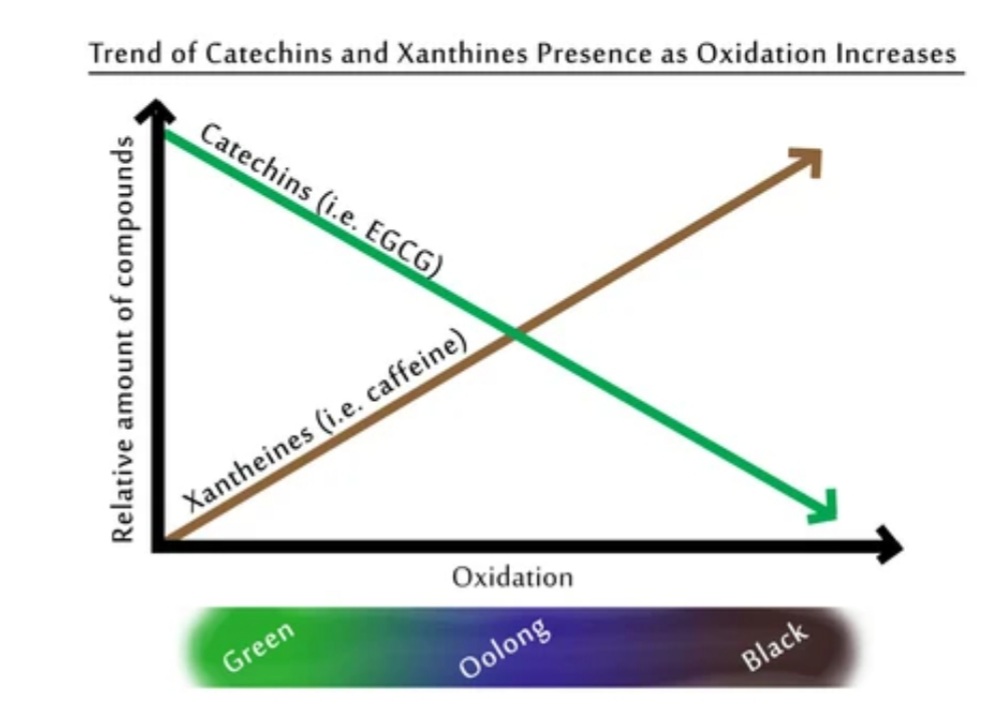
The two major compounds in tea are Catechins and Xantheines. Catechins is present in the form of ECGC which are naturally occurring antioxidants that reduces the oxidative cellular damage in the body and Xantheines in the form of caffeine that provides a gentle energy boost without the harmful side-effects of coffee. The presence of these compounds depends on the oxidisation of the tea leaves. Higher oxidisation leads to more of Xantheine and less of Catechins, where’s lower oxidized leaves contain higher Catechines and less Xantheine.

White Tea is most delicate of all the tea’s as it’s uncured and unfermented. Famous for it’s floral, fruity and naturally sweet flavour, it contains the highest amount of antioxidants as is least oxidized (So it has most of it’s natural Catechins). Hence, it possesses major health benefits because of the absence of caffeine. It’s known for its anti-aging and most potent anti-cancer properties.

Green Tea is the most famous health tea for the past few decades. It is darker compared to White tea as it is slightly more oxidized, however it contains high number of antioxidants that is beneficial for promoting good metabolism and weight-loss. Some of the numerous health benefits of green tea include growth of bladder, stomach, pancreas, lungs; reduced risks of neurological disease like Alzheimer’s; lower blood pressure; prevent cancer; lowers cholesterol levels; prevents tooth decay and many more.

Oolong Tea comes after green tea in terms of its antioxidant content as it’s more oxidized compared to the latter. Its properties depend upon the level of oxidation which is mostly between 30% -70%. It is aromatic and highly fragrant. It is known to lower bad cholesterol levels (LDL) and increase the production of good cholesterol (HDL). It has higher amount of caffeine hence it is known to increase mental alertness and increases concentration

Black Tea is rich, hearty and bold. It’s over 80 % oxidized and hence contain highest levels of caffeine compared to all the others. Hence, this makes it best for an instant energy boost. It is known to protect the skin against excess UV radiation exposure, boost immunity, protect lungs, improve heart health and lower the risk of kidney stones.

Hence, who wouldn’t want to enjoy a hot cup of tea on a pleasant evening (Specially, if it’s good for your health as well as taste buds).

Messi to sign new five-year Barcelona contract

The six-time Ballon d’Or winner is set to commit to fresh terms at Camp Nou after months of speculation over his future.

Lionel Messi will sign a new five-year contract at Barcelona and take an incredible 50 per cent wage cut.

Messi has spent his entire career to date on Barca’s books, having initially made his debut for the club as a teenager in 2004, but dropped into the free agency pool at the start of July after reaching the end of his contract.

The Argentine won’t be embarking on a new challenge away from Camp Nou anytime soon, though, with the Blaugrana set to announce that they have tied the six-time Ballon d’Or winner down to a fresh long-term deal.

Walt Disney

Walter Elias Disney  December 5, 1901 – December 15, 1966) was an American entrepreneur, animator, writer, voice actor, and film producer. A pioneer of the American animation industry, he introduced several developments in the production of cartoons. As a film producer, he holds the record for most Academy Awards earned by an individual, having won 22 Oscars from 59 nominations. He was presented with two Golden Globe Special Achievement Awards and an Emmy Award, among other honors. Several of his films are included in the National Film Registry by the Library of Congress.

Today, Disney is an entertainment giant of nearly unfathomable scale. It holds hundreds of properties, including Marvel Studios and the Star Wars franchise, and continues producing record-setting films and operating theme parks around the globe. Behind the initial company was the innovative, imaginative genius of Walt Disney himself. While many people recognize his earliest successful films, few know the difficulties he faced prior to making them. Disney’s first animation studio was dissolved, and Disney could not afford to pay his rent. Even after the successful premiere of Snow White, many of Disney’s early movies–classics like Pinocchio and Fantasia–were financial failures.

The strength of an idea cannot be objectively measured by its relative success or failure. Most of Disney’s earliest films are considered masterpieces, even though commercially, they were objective failures. Even Disney’s first studio, which went under, likely produced some amazingly high-quality work.

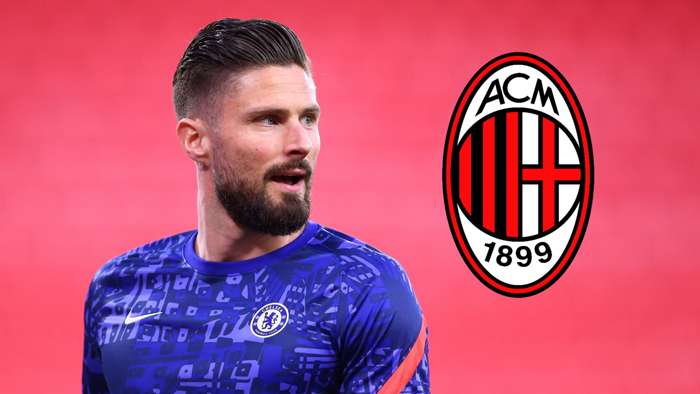
Chelsea striker Giroud set for AC Milan move

AC Milan technical director Paulo Maldini has confirmed Olivier Giroud will complete a move to the club on Thursday.

The Serie A side reached an agreement with Chelsea over a €2 million deal for the French striker last week.

The 34-year-old will travel to Milan to undergo a medical and will be confirmed as the San Siro side’s latest signing.

The director is confident the 34-year-old will add some much-needed experience to their young squad.

WATER BODIES AREN'T BINS.

Would you value something, you would die without?

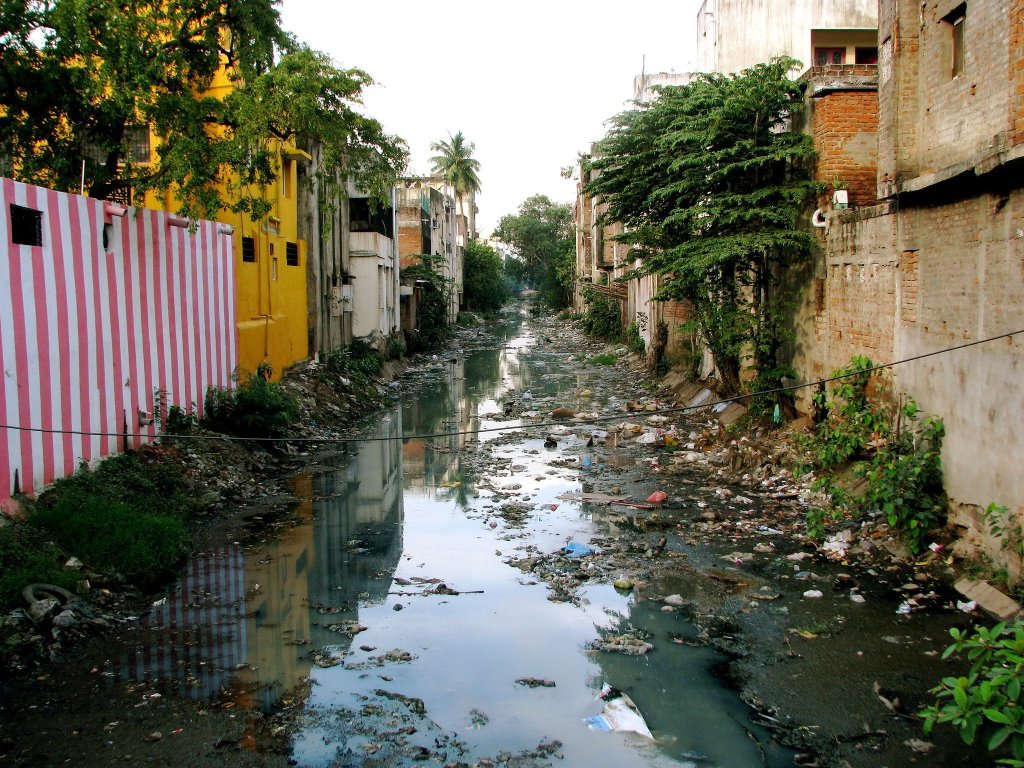
Image source

Well looking at the picture above I think, Indians doesn’t seem to be having this thinking. Such disregard of Water, the thing which makes our life possible definitely has to be one of the most irresponsible thing done by humans. Especially, Indians who worship these seas and rivers themselves are the one’s polluting it the most. The holy river of GANGES, which is generally called the most pure river in the whole country itself is the most polluted one. Severly polluted Ganges river which provides water to 40% of India’s population in total of 11 states serving an estimated population of 500 million people, is the fifth most polluted river in the WORLD. Sewage discharge from cities, towns and some villages is the most prevalent cause of water pollution in India. Major cities of India produce 38,354 million litres per day (MLD) of sewage, but the urban sewage treatment capacity is only 11,786 MLD. The scientific analysis of water samples from 1995 to 2008 indicates that the organic and bacterial contamination is severe in water bodies of India. This severity is increased at an even more rapid rate until 2020. According to A reliable source, Around 80% of India’s water is severely polluted because people dump raw sewage, silt and garbage into the country’s rivers and lakes. This has lead to high scarcity of drinkable water. Experts predict that 40% of people may not have a connection to a clean water source by 2030. Then how come are we yet not sincere about not just saving water but Ourselves? As urban areas households get more and more facilities of 24*7 running water taps and availability of drinking water, lesser is the value of the latter. Around 70% of wastewater from household, industries, etc. goes untreated and each day, more than 40 million liters of wastewater flows directly into India’s lakes, rivers and ocean. This waste while travelling from small to big waterbodies, go on contaminating all of it along with the organisms living within. Lakhs of fishes and other underwater living organisms die as they eat or get caught in this waste. This waste even covers the inner and outer surface area of the water at times and thus disbalancing the oxygen levels in the water, due to which the organisms die in huge quantities. This water also enters the groundwater and makes it polluted and undrinkable as well.

Further, this water when reaches to households it immensely affects the health of individuals especially, children. Each year, more than 1.5 million Indian children die from diarrhea. It affects the irrigation systems in fields as this water doesn’t allows the crops to grow properly due to it’s I’ll properties, infectious and diseased bacteria into it. Because of the poor infrastructure and absence of sewage control, 38 million Indians suffer from waterborne diseases like typhoid, cholera and hepatitis every year. Worldwide, waterborne diseases cause more deaths than AIDS, tuberculosis and measles combined in children under 5-years-old. This severity of pollution affects humans and other organisms, plus our food security and the GDP growth of nation. As the diseases spread, the more people get ill and cease work which decreases productivity of companies, crops damage reduces the agricultural revenue too. Hence proved, that this problem is not as small as we think of it. Be it socially or economically it has a bad effect on the country as a whole. It is necessary for all the people to get educated regarding the same as soon as possible and start contributing their part in preventing water pollution and wastage.

Steps taken..

India is taking several steps to rebalance the quality of its water source, from flocculation and reuse of industrial water to the contributions that local Indian startups are making. In Chennai, a city in Eastern India, industrial water reuse rose from 36,000 to 80,000 cubic meters in 3 years, from 2016 to 2019. VA Tech Wabag, a water company quartered in Chennai, also built numerous water reuse plants all across India. As of 2020, VA Tech Wabag contributed immensely to the production of more than 18 million cubic meters of clean water every day, which has positively impacted almost 100 million people globally. In Gujarat, a state of more than 70 million citizens, the government launched its Reuse of Treated Waste Water Policy, which aims to drastically decrease the use of the Narmada River. It will install 161 sewage treatment plants all across Gujarat in order for industrial and construction sectors to use the treated water. Evaluations offer that in 2015, the Indian government installed almost 16,000 reverse osmosis systems in Karnataka and 281 solar electrolytic defluoridation plants in Madhya Pradesh.

But the most important part is we all have to remember that only Government officials and workers alone couldn’t sort this situation for the whole country. Ech and every individual has to do their part to ‘save water and save future’.

F1: Alfa Romeo Renews Deal With Sauber Till 2024

Alfa Romeo was the first constructor to win the Formula One world championship but currently lags behind in P7.

Alfa Romeo has renewed its association with Sauber which involved the Alfa Romeo brand retaining naming rights over the Sauber F1 team till 2024. The association began in 2018 when then FCA CEO, Sergio Marchionne engineered a deal where Alfa Romeo was the lead sponsor of the team but then in 2019 that deal evolved to the rebranding of the team. Now with the cost cap in place, new ground effects aerodynamics returning to the sport providing a more level playing field, Alfa Romeo has decided to continue the deal till the end of 2024, which is just before F1 deploys a new engine formula. 

“As a historic Italian automotive brand, Alfa Romeo was born on the race track today we are proud to continue honouring that racing DNA by placing it at the heart of the future of our brand. We are driven by passion and excellence. F1 represents a cutting-edge laboratory for the future electrification of our range, fully coherent with our vision for the coming years. Furthermore, motorsport brings the incomparable global exposure we wish to leverage for a successful future,” said Alfa CEO Jean-Philippe Imparato.

The deal was being negotiated for months and the changes in the regulations have been the key motivators behind the renewal of the deal. For Sauber, this was critical as Alfa Romeo provides much needed financial support. It also helps that Alfa Romeo is the sister brand of its close partner Ferrari. Ferrari used to be part of the FCA which both were controlled by the Agnelli family. Now with the formation of Stellantis, and Ferrari going public, the Angelli family still controls both brands through its majority stake in Stellantis and controlling stake in Ferrari via its holding company Exor which is run by Agnelli family scion John Elkann. 

Alfa Romeo has a great dependence on Ferrari for its engine and its drivers. Antonio Gionvinazzi is from the Ferrari Driver Academy. Its reserve driver Callum Illott is also from the Ferrari Driver Academy, while Kimi Raikkonen switched to Alfa Romeo from Ferrari while Charles Leclerc got his seat at the Prancing Horse.

Why Indians are Shorter on Average

Indians are among the shortest people in the world on average. Despite impressive rates of economic growth in India over the past decade or two, India remains one of the worst performing countries worldwide in terms of height, among both children and adults. This is unusual because data and research has shown that over time people become progressively taller as living standards improve. There has, however, been an increase in average height in India itself as the standards of living have increased. Between 1914 and 2014, the average height of Indian men increased by about 3cm to become 165 cm, while women grew taller by about 5cm to become 153 cm. Also, it seems that children in India today are much taller than their parents were at their age, according to studies conducted into the matter. But why are Indians still shorter than the global average while Most countries have shown an increase in height over the past century or so?

Some Factors

Genes contribute to only a small portion of a person’s height, and so most scholars around the world have disregarded the hypothesis that genetic factors are of prime importance in explaining the small stature among Indians relative to international standards. Instead, it has been identified that environmental factors such as the mother’s health, infant and child nutrition, sanitation and environmental pollution are the major reasons for smaller heights in India. Nutrition here not only implies that there is malnutrition in the country, but also the fact that India has a very large vegetarian population. This means that many people are not gaining nutrition from a very good source: meat. Protein obtained through meat is great for growing height. Though vegetarians can get protein from dal or soybean, they are not nearly as good sources of protein, and the best quality of protein comes from animal sources. Apart from this, the low status of women in Indian society, high rates of gastro-intestinal infections spread by the widespread practice of open defecation (especially in rural areas), and certain eating habits are said to contribute to height.

Furthermore, research has shown that forward caste men are the tallest in India, and scheduled caste and scheduled tribe men are the shortest. This is proof of the fact that better living conditions and nutrition helps in height growth. Thus, there is decreased importance of genetic factors in explaining the disappointing growth performance of Indians, and it is more of the socioeconomic and environmental factors prevailing in India. This is evidenced by the fact that ethnic Indian adults in England are much taller than in India, because of their standard of living and environment.

Conclusion

Today in India, children are definitely much healthier and better-fed than they used to be, and adults are gradually getting taller than their previous generation. However, Indians are still much shorter than Americans or Europeans, and it is estimated that the height difference will take around 250 years to eliminate at the British growth rate. And the reason behind all this is not Indian genetics, but rather things like malnutrition and poverty in the country. Today, nearly 40 percent of Indian kids today are short enough to be classed as stunted by international standards. Furthermore, it is mostly Indian men that we see gradually growing in height to meet the international average, while women are growing taller at less than a third of the rate at which Indian men are growing taller. This matches the pattern of discrimination that we often see in India, which is a mostly patriarchal country. Hence, we will only be able to increase in average height if we are able to raise the standard of living for everyone in the country and aim for equitable treatment of all.

GENDER INEQUALITY

Gender is one of the major sources of inequality in the world today. Girls are usually deprived of their rights and are likely to suffer from abuse and violence.

Discrimination based on gender gives rise to food insecurity, health risks, and exclusion from several opportunities. The United Nations (UN) estimates that 70% of the 1.3 billion people in poverty globally are women. According to World Food Program USA, more than 60% of the world’s hungry are women and girls, in nearly 2/3rd of countries, women are more likely than men to report food insecurity and one in three women with anemia are left untreated.

In a lot of countries women are not allowed to pursue higher education and they are married off early. In addition, domestic violence is a major problem in many countries including India. The women get beaten up by their husbands as men think they are superior to their wife and many women stay in abusive relationships and don’t speak up because of the fear of society.

Sometimes women face discrimation even at work, women who do actually work get paid less than their male counterparts and are disproportionately impacted by poverty. It is just unfair to pay someone less for the same work because of their sex. Therefore, we see how women empowerment is the need of the hour. We need women empowerment so that these women can speak up for their rights and never be a victim of injustice.

Women have suffered a lot at the hands of men. In earlier times, women were treated as non-existent and as if all the rights belonged to men. With the passage of time, women realised their power and began the revolution for women empowerment. Women’s empowerment can be defined as empowering the women to make their own choices, to instil a sense of self-worth and to influence social change for themselves and others.

Promoting women’s empowerment has emerged as a major global movement and has been continuously gaining momentum. While the western countries are still making progress, third world countries still fall behind in empowering the women.  While there has been progress with the passage of time, even then women continue to face discrimination and exploitation in every part of the world.

Women can be empowered through government schemes as well as on an individual basis. The people of the society and government must both come together to make it happen.  At the societal level, we should start respecting women and encourage them to take up jobs, higher education,etc. Women should get equal opportunity in every field, irrespective of their gender. Various programs or schemes must be made available for women so they can be learn skills to fend for themselves in case they face financial crisis.

Today, more than ever, women enjoy their rights. However, there are many women who are still fighting to come out of the cluthes of patriarchy and there is a long way to go.