Scientists from JNCASR of DSTstabilize gold in non-cubic lattice, unfurling efficient catalytic properties of the metal

Gold has been a fascinating metal for use in jewelry and well as industrial applications because of its high resistance against conventional oxidizing environments. The unique property of Au is mainly dictated by its atomic arrangement in the crystal structure, technically called face-centered cubic (fcc) lattice.

Scientists have introduced new catalytic properties in gold by altering the most stable fcc lattice, converting it into a new avatar that can trigger gold-based catalysis for industry.

Tuning of crystal structures and shapes of micro-sized noble metals or micro-crystallites have revealed fascinating catalytic, optical, electrical, and magnetic properties that enable developments of environmentally friendly and durable nano-technological applications.

Scientists from Jawaharlal Nehru Centre for Advanced Scientific Research (JNCASR), an autonomous institute of the Department of Science & Technology (DST), Government of India, have stabilized gold in non-cubic lattice, unfurling efficient catalytic properties of the metal.

The team guided by Prof. G.U Kulkarni from JNCASR has stabilized Au in mixed lattices consisting of lower symmetry lattices in the form of micro-crystallites, induced by geometrical constraints. In contrast to conventional bulk fcc gold, these micro-crystallites are more efficient in their catalytic activity. Besides, the crystallites behave nobler than the conventional fcc Au in mercury and aqua regia. Thus, these Au crystallites behave quite differently from our day to day used ones, and the credit goes to the underlying unconventional lattices.

This research published in the journal ACS Nano’wassupported by the Department of Science & Technology, Government of India (DST) provided within the framework of the India@Desy collaboration and Nano Mission and the technical support from the EU-Horizon2020 research and innovation program of Nanoscience Foundries and Fine Analysis (NFFA).

In this work, JNCASR team joined by Prof. M.K Sanyal from SINP, Kolkata used scanning X-ray diffraction microscopy (SXDM) technique with nano-beam at DeutschesElektronen-Synchrotron(DESY), PETRA III, Germany, which revealed location of the spatial distribution of the different lattices in the crystallite volume without using any slicing techniques.

The study disclosed many surprises. The central part of the crystallite is rich in lower symmetry lattices while being capped by the fcc rich tips, which explains their unique behavior in aqua regia. Besides, co-presence of compression and expansion to the extent of approximately 5% (compared with conventional fcc Au) in the micrometer-sized crystallite helps the crystallites remain ambient stable for years. Such study of the spatial distribution of the different phases can allow exploration of new properties in a much better way.
Union Home Minister Shri Amit Shah paid floral tributes to Pandit Deen Dayal Upadhyaya on his birth anniversary

Union Home Minister Shri Amit Shah paid floral tributes to Pandit Deen Dayal Upadhyaya on his birth anniversary today. Shri Amit Shah said, “My humble tributes to the heroic son of Mother India, an epitome of simplicity and the pioneer of progressive politics in the country, Pandit Deendayal Upadhyaya ji, on his birth anniversary.”

“For the last 6 years, Prime Minister Shri Narendra Modi has been carrying forward the poor welfare policy of ‘Antyodaya’ based on Pandit Deen Dayal Upadhyaya’s vision. Under this policy, Modi Government is providing cooking gas, electricity, toilets, houses and health facilities to 60 crore poor households.”

Shri Amit Shah said, “Pt. Deen Dayal Upadhyaya ji gave birth to a new ideology soon after Independence, at a time when policies were being framed and the nation had begun its journey.  Instead of blindly emulating the West, his thought was deeply rooted in Indian ethos.”

Foundation Day of Deen Dayal Upadhyaya Grameen Kaushalya Yojana (DDU-GKY) celebrated as “Kaushal Se Kal Badlenge”

Ministry of Rural Development, Government of India, celebrated Foundation Day of Deen Dayal Upadhyaya Grameen Kaushalya Yojana (DDU-GKY) on the occasion of Antyodaya Diwas today. Shri Narendra Singh Tomar, Union Minister of Rural Development, Agriculture & Farmers Welfare, Panchayati Raj and Food Processing Industries graced the occasion along with Sadhvi Niranjan Jyoti, Union Minister of State for Rural Development.

Shri Narendra Singh Tomar congratulated all the stakeholders of DDU- GKY on the occasion of Antyodaya Diwas for setting a benchmark in implementation of the program. He exhorted rural youth for getting skilled as no degrees can fetch a job if youth is not skilled and that only skill can lead to a better future. He also emphasized on importance of self-employment and designing one’s own future. The Minister expressed his happiness over the fact that under DDU-GKY, 10.51 lakh rural youth have been trained and 6.65 lakh successfully placed so far. He highlighted the importance of skilling in making India a prosperous country.

On this occasion, Shri Tomar inaugurated Agripreneurship Program and released the following during this program:

  1. Guidelines regarding Captive Employment under DDU- GKY
  2. Guidelines for Promotion of Integrated Farming Cluster (IFC)
  3. Compendium of success stories of DDU- GKY placed candidates

An MoU was also signed between MoRD, ICAR (KVK) & RCRC (NGOs Coalition) for capacity building of Farmer Producer Organisations (FPOs)/StartUps and providing incubation support in rural areas.

Sadhvi Niranjan Jyoti, Union Minister of State for Rural Development congratulated all the stakeholders for organizing this program, ” Kaushal Se Kal Badlenge”. She mentioned that sharing of the story of successful candidates shall be motivational for other rural youths to join this program. She impressed upon the importance of rural development in the context of ‘Aatmanirbhar Bharat through skilling’. She stressed to all stakeholders regarding the need to bring other interested rural youths under DDU-GKY to become independent and a change agent in the society.

The Union Ministers interacted with some placed candidates and employers from 4 different locations, Coimbatore, Bengaluru, Gurugram &Hyderabad. The candidates who got skilled and are now successfully placed today with different employers, shared their unique life experiences.

Secretary (Rural Development) Shri Nagendra Nath Sinha highlighted the achievements of DDU-GKY during the last 6 years of implementation. He also talked about importance of DDU-GKY and integrated farming initiative for rural development across the country. He sincerely hoped that DDU-GKY would achieve greater success in skilling and placing the rural youth in times to come. 

This program was virtually attended by State Skill Missions, State Rural Livelihoods missions, Rural Development Department of States/UTs, Project Implementing Agencies, Employers and rural youths from all over the country.

BIHAR ELECTIONS TO START FROM 28TH OCT, RESULT ON 10TH NOV


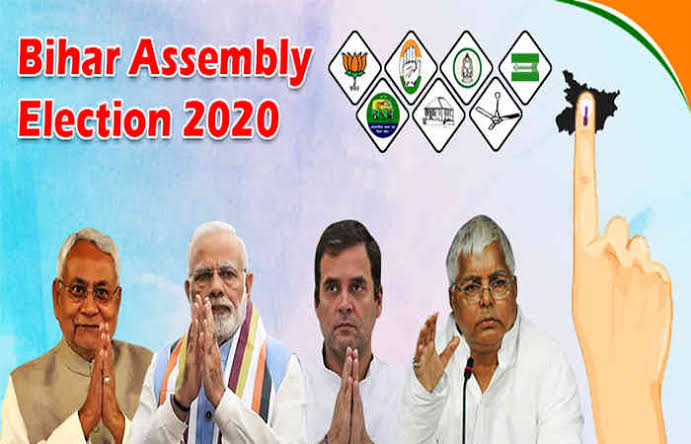
The Election Commission of India (ECI) on Friday announced the schedule for Bihar Assembly polls 2020. Voting for Bihar assembly elections will be held in three phases — first on October 28, second on November 3 and the third on November 7 — while counting of all votes will take place on November 10, the Election Commission announced on Friday.

Announcing the three-phase election, Chief Election Commissioner Sunil Arora called it a “leap of faith”, pointing out that medical and engineering exams JEE and NEET took place recently and a large number of students sat for them. “COVID doesn’t show any sign of going down. Some way had to be found to choose representatives and protect the health of people. Life has to go on,” he told reporters.

“The world has changed significantly since the last elections, which were held for the Delhi assembly. The COVID-19 pandemic has forced a new normal in every aspect of our life,” Mr Arora said.


As soon as the dates are announced, the Model Code of Conduct will be enforced in the state. Bihar has to elect a new 243-member assembly by November 29. The Election Commission has decided not to hold 65 pending by-elections to fill vacancies in various assemblies and one in Lok Sabha simultaneously with the Bihar elections. The bypolls were already deferred due to excessive rains and the pandemic.

Amid the pandemic, several measures have been taken for campaigning and polling to ensure safety of leaders and voters. Polling has been extended by one hour from 7 am to 6 pm. The last hour will be reserved for those with Covid-19 and who are quarantined.

Several countries have held elections amid the pandemic. However, CEC Arora said the Bihar polls are likely to be the largest elections conducted during the pandemic given there are with 72.9 million electors in the state.

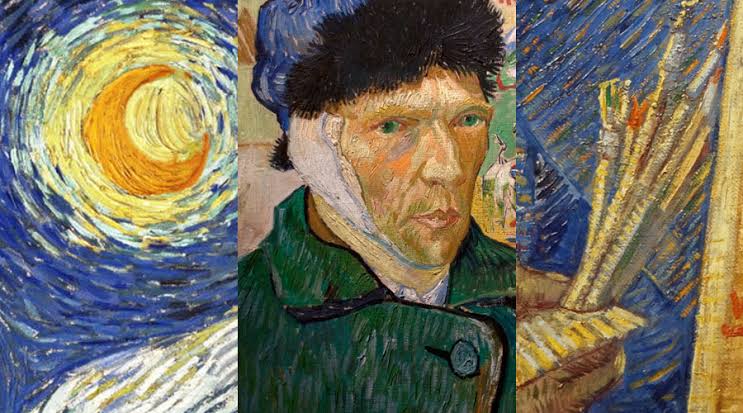
Van Gogh : Suicide or Murder?

Van Gogh was born in Groot-Zundert in Holland on March 30th 1853 to a pastor father and was brought up in a highly religious and cultured environment.


Whilst he showed an aptitude for drawing from an early age, the young man didn’t choose to become an artist until his late twenties instead beginning his career working for an art dealer travelling between The Hague, London and Paris.

In 1886, Van Gogh moved to Paris where his younger brother Theo, with whom he was close, lived. Theo, an art dealer, supported his brother financially and introduced him to a number of artists, including Paul Gauguin, Camille Pisarro and Georges Seurat. Influenced by these and other painters, Van Gogh’s own artistic style lightened up and he began using more color.

In 1888, Van Gogh rented a house in Arles in the south of France, where he hoped to found an artists’ colony and be less of a burden to his brother. However, tensions developed and on December 23, in a fit of dementia, Van Gogh threatened his friend with a knife before turning it on himself and chopping his ear lobe off.

Afterward, he allegedly wrapped up the ear and gave it to a prostitute at a nearby brothel. Following that incident, Van Gogh was hospitalized in Arles and then checked himself into a mental institution in Saint-Remy for a year. During his stay in Saint-Remy, he fluctuated between periods of madness and intense creativity, in which he produced some of his best and most well-known works, including Starry Night and Irises.

By 1890 his condition had improved and he moved to Auvers-sur-Oise under the supervision of his consultant Dr Gauchet. Here the open air and vistas of wheat fields inspired van Gogh to produce his greatest works; though even at this point of better health he was still incapacitated by his fits of madness which stopped him working for long periods. Two months later he had committed suicide by shooting himself in the fields where he painted and died in his bed from his gun-shot wound.

This was the accepted truth until writers Naifeh and Smith produced a biography in 2011 citing that there is evidence to suggest that van Gogh was shot accidentally by a teenager whom he did not wish to take the blame.

Rene Secretan at the time was a young man of about 18 who dressed as a cowboy and loved guns.

Their logic calls forth the trajectory of the bullet which was at an angle and not straight as a self inflicted wound would be.
Van Gogh had mentioned in previous correspondence with others of his distaste for suicide labeling it immoral and a sin.

So why would van Gogh protect this youngster who according to locals had been tormenting the artist? Perhaps he felt that he had been done a favour – having not the ethics to have committed suicide himself, he may have welcomed the accident as an end to his suffering.

Experts have said that it would have been impossible for van Gogh to have walked the mile or so from the field where he said the shooting took place back to his lodgings and so the incident must have taken place closer; could he have used this as a rouse to protect his killer?

Van Gogh experts all over the world have different opinions many accepting that his death was by suicide citing his history of mental health. Medical experts today have put his conditions down to a brain lesion he was born with which caused him to have epileptic fits; this coupled with his excessive consumption of absinthe (a kind of liquor) would have made the condition worse.

Periods of extreme dedication to his religion and later in producing artwork followed by deep states of depression and melancholy would today be diagnosed as a bi-polar disorder.

Service to humanity and nation has been the tradition of our value system: President Kovind

Service to humanity and nation has been the tradition of our value system. It has its roots in our tradition where it has been stated that it is difficult to understand and gauge the implications of service motive, President Ram Nath Kovind said in his address on the occasion of conferring National Service Scheme awards at New Delhi today (24th September, 2020).

Citing the example of Mahatma Gandhi, President Kovind said that service should not be just towards humans but also towards the nature. Reiterating that the National Service Scheme was launched in 1969 on the 100th birth anniversary of Mahatma Gandhi, he said that the Scheme continues to be of immense relevance even today. He appreciated the presentation of awards even in testing times of COVID pandemic and applauded the efforts of the Ministry of Youth Affairs and Sports.

Talking about the NSS, President Kovind observed that it encourages youth to volunteer for community service through various measures true to its motto of “Not me, but you”. The fact that 40 lakh students of various educational institutions are associated with this noble scheme was an encouraging development and also assures that the future of our country is in safe hands, he said.

Emphasizing on the activities conducted by the youth volunteers, the President said that the volunteers were instrumental in creating awareness about social distancing and the proper usage of masks in times of COVID 19. These volunteers were also helpful in providing the quarantined and isolated patients with food and other useful products required during these times. Besides, these volunteers have always whole heartedly helped in providing relief and rehabilitation to floods and earthquake victims, he added.

President Kovind also appreciated that 14 girls in the 42 awardees was reassuring and encouraging. The women of our country are abiding to the tradition of Savitribai Phule, Kasturba Gandhi and Mother Teresa in rendering service to the nation.

A National Webinar in Alternative Models of Education under ShikshaParv

The National Webinar to discuss the implications of the National Education Policy for developing Alternative Models of Education in the country was held on 22 September 2020. The webinar was hosted by the National Institute of Open Schooling. Eminent educationists Prof. N K Ambasht, Former Chairman, NIOS and Prof. GirishwarMisra, Former VC, Mahatma Gandhi Hindi AntarrashtriyaVishwavidyalaya, Wardha were the panelists of the webinar. The webinar was moderated by NIOS, Chairman,Prof.ShridharSrivastavaand Director (Academic), NIOSDr Rajiv Kumar Singh.

Prof. Srivastava expressed concern on the issue of school drop outs as children and youth are being deprived of the fundamental right to education due to issues of access, poor quality and high cost of education. The formal system of schooling is not apt to provide suitable responses to these challenges, while through its inherent flexibility, open schooling caters to a range of learner needs. While the country has struggled to build schools and train teachers, both of which are necessary to achieve universal primary education, the limited primary infrastructures and inadequate economic resources and lack of quality teaching learning mechanisms to provide a quality secondary schooling are serious challenges that are being faced by policy makers. Therefore, there is a basic necessity of serious thinking and strategic planning to develop a mechanism for appropriate, economic and effective alternative systems of education to face the challenge of education at school level.

Prof. Srivastava outlined that the objectives of the webinar were to-

  • discuss the provisions for alternative models of education in the NEP;
  •  explore alternative schooling models in India;
  • suggest alternative pathways to formal education system;
  • promote awareness and acceptance of alternative schooling models; and to
  • mobilize existing resources in an effective manner.

Prof. Srivastava also mentioned that NIOS has taken the lead in empowering out-of-school children (OOSC) across the country, assisting millions of learners in completing their education in its three decades of its existence. He mentioned that some alumni of NIOS would also share their experiences of studying in NIOS.

Prof. Ambasht elaborated on the need for outcome based education today as he spoke of his experience of working with street children in Delhi earlier. He emphasized that children need ample opportunity to study at their own pace and could have better outcomes with experiential learning. Prof. Ambashtmentioned the need to understand the difference between curriculum and syllabus and that learning is long lasting when it is child centric and local centric. He also shared his concern for developing a system of evaluation that is diagnostic rather than declarative of pass or fail. Out of this was born the On-demand exam system of NIOS. He further discussed the role of teacher- as a Facilitator allowing construction of knowledge; He also discussed peer group study; online discussion forums. He emphasized the use of ICTs- Open educational resources and MOOCs. He also deliberated the requirement of reforms in assessment and evaluation- student autonomy in taking exams when ready; on-demand exams; online exams; assessment of values and aptitudes.

Prof. Misra emphasized that the process of evaluation should be a part of the teaching learning process rather than the end towards which the education process is aimed. Prof. Misra reiterated that the open schooling system should not be viewed as the only alternative to formal schooling- there are other systems such asgurukuls, pathshalas, madrassas, and homeschooling and open schooling should initiate a dialogue with them and interact with them to see how the process of certification can be linked with these systems.  The open schooling system should not be just a supplement to formal schools which many has limitations. The mandate of open schooling should be broadened to nurture talent in different areas such as music, dance, sports; NIOS needs to initiate research to understand the changes taking place. Prof. Misra talked of multiple intelligence and the various ways in which people can be talented and achieve great heights- NIOS needs to become more efficacious to nurture this talent. He also mentioned the vocational education programme of NIOS and said that this is the need of the hour. 

Dr Rajiv Kumar Singh emphasized the urgency to bring two crore out of school children back into the mainstream. Speaking of the provisions in the NEP 2020, he said that it calls for restructuring of school education emphasising on the need to provide equitable and quality school education for all children upto 18 years. It also allows for alternative models of education such as gurukuls, pathshalas, madrassas, and homeschooling to operate through multiple pathways including non-formal and open schooling by national or state institutes of open schooling. He further reiterated that the alternative models of education through it’s multiple pathways especially Open and distance learning system could ensure reaching education to the last unreached in the country.

Prof. R Jagannathan, former vice chancellor Middle East University, United Arab Emirateshared his joy at discovering that NIOS permitted him to study Biology at 65 years of age so that he could then go on to study medicine; Ms. Niranjana, a Chennai based ventriloquist and a child prodigy shared how open schooling afforded her an opportunity to continue with her studies along with her professional life; Ms. Sarita Singh shared how she set up her own training center for sewing in a rural area after doing a vocational course at NIOS; and Ms. Seema Pathak informed the audience that she had become a Yoga instructor after undergoing the NIOS Yoga Teacher’s Training course and is financially independent now.

President of India Shri Ram Nath Kovind virtually conferred the National Service Scheme (NSS) Awards for the year 2018-19 today

The President of India Shri Ram Nath Kovindvirtually conferred the National Service Scheme (NSS) Awards for the year 2018-19 on 24th September, 2020 from Rashtrapati Bhawan, New Delhi today. UnionMinister of Youth Affairs and SportsShri Kiren Rijijuattended the ceremony from Vigyan Bhavan, New Delhi. The National Service Scheme (NSS) Award for the year 2018-19 was given to 42 awardees in 3 different categories like University/ +2 Council, NSS Units and their Programme Officers and NSS Volunteers. Secretary of Department of Youth Affairs Ms. Usha Sharma and other dignitaries were also present on this occasion.

Speaking on the occasion the President of India Shri Ram Nath Kovind said that service to humanity and nation has been the tradition of our value system. President added that it has its roots in our tradition where it has been stated that it is difficult to understand and gauge the implications of service motive.

iting the example of Mahatma Gandhi, President Kovind said that service should not be just towards humans but also towards the nature. Reiterating that the National Service Scheme was launched in 1969 on the 100th birth anniversary of Mahatma Gandhi, he said that the Scheme continues to be of immense relevance even today. He appreciated the presentation of awards even in testing times of COVID pandemic and applauded the efforts of the Ministry of Youth Affairs and Sports.

Emphasizing on the activities conducted by the youth volunteers, the President said that the volunteers were instrumental in creating awareness about social distancing and the proper usage of masks in times of COVID 19. These volunteers were also helpful in providing the quarantined and isolated patients with food and other useful products required during these times. Besides, these volunteers have always whole heartedly helped in providing relief and rehabilitation to floods and earthquake victims, he added.

President Kovind also appreciated that 14 girls in the 42 awardees was reassuring and encouraging. The women of our country are abiding to the tradition of Savitribai Phule, Kasturba Gandhi and Mother Teresa in rendering service to the nation.

Foundation Stone of ‘Centre for Disability Sports at Gwalior’to be Laid on 26 September, 2020

The foundation stone of ‘Centre for Disability Sports at Gwalior,Madhya Pradesh’ will be laid at a function organized by DEPwD, Ministry of Social Justice and Empowerment through video conferencing  on 26 September, 2020. Shri Shivraj Singh Chauhan, Chief Minister of Madhya Pradesh will be the Chief Guest and Shri ThaawarchandGehlot, Union Minister for Social Justice and Empowerment will preside over the function, Shri Narendra Singh Tomar, Union Minister for Agriculture, Rural Development, Panchayati Raj and Food Processing Industries will be the Special Guest of Honour. Live Link of Video Conference:-http://webcast.gov.in/msje.

Setting up of a Centre for Disability Sports at Gwalior, Madhya Pradesh was approved by the Cabinet on 28 February, 2019. Total estimated cost to set up the Centre is Rs.170.99 crore. The Centre will be registered under the Societies Registration Act, 1860. For overall superintendence and supervision of the Centre, Governing Body under the Chairpersonship of Secretary, DEPwD has been constituted.For monitoring the implementation of the project, a Project Monitoring Committee under the Chairpersonship of Secretary, DEPwD has been formed.

At present no training facilities are available in the country for sports person with disabilities. The proposed Centre will make available the specialized training facilities for Persons with Disabilities. The setting up of this Centre will develop a sense of belonging in Divangjan to facilitate their integration in the society.

The Centre will provide facilities of international standards to sportspersons with disabilities to compete at international level and bring laurels for the country. It will have an Outdoor Athletic Stadium, Indoor Sports Complex, Basement Parking Facility; Aquatic Centre having 2 Swimming Pools, one covered Pool and an Outdoor Pool; High Performance Centre with classrooms; medical facilities; Sports Science Centre; hostel facilities for athletes, support facilities including accessible lockers, dining, recreational amenities and Administrative Block.

The Centre will have provision for training, selection, sports academics and research, medical support, spectator galleries and suitable for holding national/international events.Sports identified for training are Badminton, Basketball, Table Tennis, Volleyball, Judo, Taekwondo, Fencing and Rugby Boccia, Goalball, Football 5 a side, Para Dance Sport and Para Power Lifting, Athletics, Archery, Football 7 a side and Tennis and Swimming.

AYUSH Ministry supports a novel e-marathon as part of the “Ayush for Immunity” Campaign

The Ministry of AYUSH has joined hands with Rajagiri College of Social Sciences and Rajagiri Business School, Kochi to organise a novel e-marathon, as a part of the Ministry’s three-month campaign called “Ayush for Immunity”, focussing on desirable health-promotive and disease preventive steps. Combining technology, physical run, charity and wellness programs, this e-event is expected to add positivity and good health to the lives of the participants.

This e-marathon is being conducted for the cause of supporting the education of COVID affected children and to enhance the well-being of the participants during the current pandemic crisis. The theme of the e-marathon is “Recharge Mental Health: During and beyond the Covid-19 Pandemic”.

The Rajagiri e-marathon is designed to promote physical and mental well-being of the people of all age-groups, across geographies. The participants of e-marathon can take part in the event in timings of their choice and at safer places. They also have a long duration of 10 days at their disposal to complete the running challenges. A wellness app will integrate the individual running reading of the participants to a central server (computer) so that all participants will be connected via the centralised software application.

Participants are required to register their name through emarathon.rajagiri.eduwebsite and they will be directed through e-mails on how to go forward. Though the participants need not buy any fitness app for this event, they will need to carry a smartphone or to wear a fitness band while participating in the race.

The event will be open from 28th September 2020 to 10th October 2020 (15 days). The conclusion of the event will coincide with the “Vihara” focus of the “Ayush for Immunity” campaign, which will be spread over the month of October, 2020.

This event aims to enhance the social nearness of people while observing physical distance.  The event incorporates an entire wellness campaign with yoga, meditation, webinars and entertainment.

The organisers have announced that the entire registration fees will be donated to 50 children in Mumbai, who lost their parents to Covid-19. Childline India Foundation will facilitate this charity to procure learning devices. Around 8000 participants from India and abroad are expected to join this novel event.

India urges Nations to put Nature at the heart of recovery plan post COVID19

Minister for Environment, Forest and Climate Change, Shri Prakash Javadekar urged nations to join hands at the start of the “UN Decade of Action and Delivery for Sustainable Development” to put nature at the heart of our recovery plan and realize the vision of “living in harmony with nature”. Shri Javadekar represented India at the virtual Ministerial Roundtable Dialogue on Biodiversity Beyond 2020: Building a Shared Future for All Life on Earth.

The ministerial was hosted by China, one week ahead of the upcoming United Nation Summit on Biodiversity, to exchange views on biodiversity conservation and sustainable development.   Around 15 ministerial representatives from countries with adequate regional representation, as well as the heads from relevant international organizations participatedin the event.

Addressing on the occasion, Shri Prakash Javadekar stated that COVID-19 pandemic has emphasized the fact that un-regulated exploitation of natural resources coupled with un-sustainable food habits and consumption patterns lead to destruction of systems that support human life.

Foundation day of Deen Dayal Upadhyaya Grameen Kaushalya Yojana (DDU-GKY) being celebrated tomorrow on the occasion of Antyodaya Diwas – “Kaushal Se Kal Badlenge ”

25th September, 2014 was declared the ‘Antyodaya Diwas’ in honour of Pandit Deen Dayal Upadhyaya’s 98th Birth Anniversary. It was the same day when the Ministry of Rural Development (MoRD) revamped it’s existing skill development program called Aajeevika Skills as Deen Dayal Upadhyaya Grameen Kaushalya Yojana (DDU-GKY) which emphasized on greater access, coverage and quality. In doing so, MoRD has used its knowledge gained over 15 years in implementing skill training programs. DDU-GKY is now a demand driven placement-linked skilling initiative which seeks to enable rural poor youth to benefit from national and international employment opportunities.

The spirit of Antyodaya Mission lies in ‘reaching out to the last person’. Ministry of Rural Development is also working towards this motto through reaching to all eligible rural youths of India. Over the period of time, DDU GKY has proven to be an effective rural development initiative for rural youths by providing both market linked skilling and sustainable wage employment opportunities.

Therefore working towards this motto and to commemorate Antyodaya Diwas 2020, MoRD is celebrating this day for Deen Dayal Upadhyaya Grameen Kaushalya Yojana (DDU-GKY) with their skilled and enthusiastic beneficiaries and other stakeholders spread across the country. During this pandemic time, MoRD is virtually celebrating this auspicious day with all States/UTs, Project Implementing Agencies, Employers and rural youths from all over the country.

Union Minister of Rural Development & Panchayati Raj and Agriculture & Farmers Welfare Shri Narendra Singh Tomar and Minister of State of Rural Development, Sadhvi Niranjan Jyoti will grace the occasion along with the senior officers of the State governments, State Mission Directors of SRLM and Skill Missions. All are requested to join this celebration of the wonderful journey of DDU GKY.

Webinar with Israel on Defence Industry Global Outreach for Collaborative Partnership: Webinar and Expo held on 24 Sep 2020

A webinar between India and Israel was held on 24/09/2020. The Theme of webinar was “Indian Defence Industry Global Outreach for Collaborative Partnership: Webinar and Expo”.  It was organized under the aegis of Department of Defence Production, Ministry of Defence through SIDM.

This webinar is the first in the series of webinars which will be organized with friendly foreign countries in order to boost defence exports and achieve defence export target of $5 billion in the next five years.

Defence Secretaries and other senior MoD officials from both the countries participated in the webinar and spoke about enhancing the defence cooperation between both the nations.

Creation of Sub Working Group (SWG) on Defence Industrial Cooperation between India and Israel was announced in the webinar. The main objective of the SWG will be Transfer of Technology, Co-development & Co-production, Artificial Intelligence, Innovation and Joint Export to friendly foreign countries.

A MoU was also signed between Kalyani Group and Rafael Advanced Defence Systems during the webinar.

A Knowledge paper by SIDM-KPMG was released by Dr Ajay Kumar, Defence Secretary on the occasion.

The webinar was attended by more than 300 delegates and 90 virtual exhibition stalls have been set up for the Expo.

670 new electric buses and 241 charging stations sanctioned under FAME scheme

The Department of Heavy Industries (DHI) under Ministry of Heavy Industries and Public Enterprises, is administering the Faster Adoption and Manufacturing of (Hybrid &) Electric Vehicles in India (FAME India) Scheme since April, 2015 to promote adoption of electric/ hybrid vehicles (xEVs) in India . In the First Phase of the Scheme upto 31st March 2019, about 2,80,987 hybrid and electric vehicles were supported by way of demand incentive, amounting to about Rs 359 crore.  Further, DHI sanctioned 425 electric and hybrid buses to various cities in the country with total cost of about Rs. 280 Crores.  The Department of Heavy Industry had also sanctioned 520 Charging Stations for Rs. 43 Crore (approx.) in cities like Bangalore, Chandigarh, Jaipur and NCR of Delhi under Phase-I of FAME-India Scheme.  At present, Phase-II of FAME India Scheme is being implemented for a period of 3 years w.e.f. 01st April, 2019 with a total budgetary support of Rs. 10,000 crore. This phase focuses on supporting electrification of public & shared transportation and aims to support, through subsidies, approximately 7000 e-Buses, 5 lakh e-3 Wheelers, 55000 e-4 Wheeler Passenger Cars and 10 lakh e-2 Wheelers.  In addition, creation of charging infrastructure is also supported to address the anxiety among users of electric vehicles.

TARIQ ANWAR AT KPCC HEADQUARTERS


All India Congress committees newly appointed General Secretary, Tariq Anwar, in-charge of Kerela and lakshwadeep, addressed the media at the Kerela Pradesh Congress committee headquarters and raised his voice against the bills passed by the NDA government.


He said, “Large number of farmers and agricultural workers are protesting against these bills and they are being suppressed by the government.”


He also added that in Rajya Sabha, the opposition wanted division on this particular bill but the deputy chairman rejected it and then the bill was passed without voting .


The Congress leadership has now decided to launch a series of nationwide protest for the agitating farmers against these anti farmers bills, which will start from 26th of September.


The series of the events will include as follows:


• 26th September – ‘Speak for farmers’, An online protest will be conducted. Where all the party members will be requested to join through social media platforms.


• 28th September – A March will be organised where the party members will submit a memorandum to the governor, addressing the President of India on the agricultural bills.


• 2nd October – On The birth anniversary of Mahatma Gandhi And Lal Bahadur Shastri, the Congress will observe, the ‘majdoor bachao diwas’.


• 10th October – ‘Kisan Sammelan’, Will be organised at state level.


• 2nd-31st October – Signature campaign will be organised where the party members will take signature from 2crore farmers, agricultural workers and mandi workers.


• 14th November – the Memorandum with 2crore signatures will be submitted to the Honourable President.


In th end Tariq Anwar said, “This time we will compel the central government that they should not play with the future of the farmers.”