Self first.

The negative stigma towards ‘selfishness’ has somewhat blurred the lines between selfishness and self-preservation. These blurred lines can cause feelings of guilt and pressure to always try to be selfless. 

What if before we make a decision that others may perceive to be ‘selfish’ we check in with ourselves. Ask yourself, what is my motive behind this decision? Am I doing this because I don’t care about others and their feelings, or am I in fact putting myself first because I need to look after my own mental health and physical well-being? 

You see, the difference between selfishness and self-preservation is your motive. If you truly care about others but also understand your need to put yourself first sometimes, your making a self-preserving decision. However, if you blatantly have no regard for others and you are perhaps making decisions based purely on what suits you best, then that could be considered as a selfish decision.

Society sees being selfish as not caring about other people. As if by caring for yourself you are hurting someone else, or costing them their happiness. 

You are branded egotistical – as if you value yourself over all others. How dare you put so much value you in your own desires?

But is that such a bad thing? Who’s going to do this, if not you?

There is a trend now towards ‘self-care’ which bucks against the idea of ‘being selfish’. It calls on us to put on our oxygen mask before we help anyone else with theirs.

This can become useful if it is seen as more than taking an hour on a Sunday evening to have a hot bath and indulge in a face mask.

Instead if we see self-care as a way of accepting when it is appropriate for you and others to put yourself at the top of your own priority list. 

We often sacrifice self-care because we’re too busy trying to save everyone else. But people have to learn their own lessons in life, however painful that is. Who are you to decide that you know what is right for them? Now that is selfish, as it’s based on your own desires for them, which may not truly be in their best interests.

The way we can really help is to focus on ourselves and stop trying to run others’ lives. While we think we’re caring by “rescuing” them from unpleasant experiences in their lives, we are denying them the opportunity to face their own challenges, and grow stronger or learn a lesson from doing so.

That doesn’t mean we should never help people, but there is a difference between providing support for somebody who asks and taking it upon ourselves to save somebody and make their life turn out in a way that we think it should.

We teach people how to treat us by our own actions and attitude toward ourselves. By putting signs out there that you are a rescuer and will sacrifice yourself to help others, you attract the sort of people who want to be rescued and for whom it has to be all about them—not a balanced relationship.

Then, you have made it a self-fulfilling prophecy, by effectively bringing about what you always complain that you attract: people who take advantage of your good nature.

Self-care is essential for us all, but looks different from person to person. We are all individuals with different preferences. Listen to your inner voice to find out what makes you content. Sometimes we can’t even hear our own inner voice because we are so busy anticipating the needs of those we care about, so you might have to listen carefully at first.

Myths about Birthmarks.

Birthmarks have significance both good and bad; as a result, they are inferred both as Angel kisses and Marks of the Devil. It seems like these marks have several interpretations influenced by cultural beliefs, color, size and location on our body like every other thing around us. Some of them being extremely weird and insidious.

Where a few believe them to be lucky omens; throughout history, birthmarks were feared by superstitious, paranoid and religious fanatics.

80% of the human beings are born with random markings on their body known to be Birthmarks. These are found in different shapes and sizes, in various parts of our body.

One of the more common birthmark myth is that birthmarks on babies during birth are a reflection of either their mothers’ food consumption or food craving when pregnant.

“If you eat many strawberries during your pregnancy, your baby may be born with a strawberry mark.” – infantile haemangioma birthmark myth

These are said to be reflected in the shape and colour of the birthmark. For example, an infantile haemangioma, which is a bright red lump made up of a group of blood vessels that grow together, is often said to be a reflection of the baby’s mother eating strawberries during pregnancy.

In Japan, it is a common practice for pregnant women to be forbidden to look at fire or to look into flames. It is said that doing this will cause a “burn mark” on her baby’s skin.
Also, if a pregnant mother is startled and touches her face, the baby’s blood vessels would also get startled and all gather at the exact same spot the mother has touched, causing a vascular birthmark to form.

This is a very popular belief worldwide, particularly that birthmarks are a sign of how a person died in his or her past life before being reincarnated.
The position, shape and colour of the birthmarks are often used to connect them with fatal wounds, like sharp marks indicating stab wounds, circular marks indicating bullet shots, and flame or burn-like marks indicating death by fire.

According to Chinese culture, if you have a birthmark on your right foot, it means you are adventurous, and if it’s on your left foot, you are extremely intelligent. If you have a birthmark on your tummy, it means that you are greedy!

In the 17th to 19th centuries, birthmarks were used as proof of royal blood
Anne Boleyn, the second wife of King Henry VIII, was considered a witch because of the strawberry mark on her neck

It is believed that location of the birthmark on a child can pinpoint its different character traits. A mark on the right hand denotes success and prosperity where one on the left indicates poverty and lack. One on the abdomen signifies hunger. A birthmark on the back says that the person is open-minded.

The Iranian lore says that if a pregnant woman touches her belly during a solar eclipse, consequently her baby will be born with a birthmark.

A lot more interpretations are covering almost all the body parts, yet no one knows if these analyses hold true. These superstitions are unproven, and there still are numerous individuals with similar marks on similar locations with different traits.

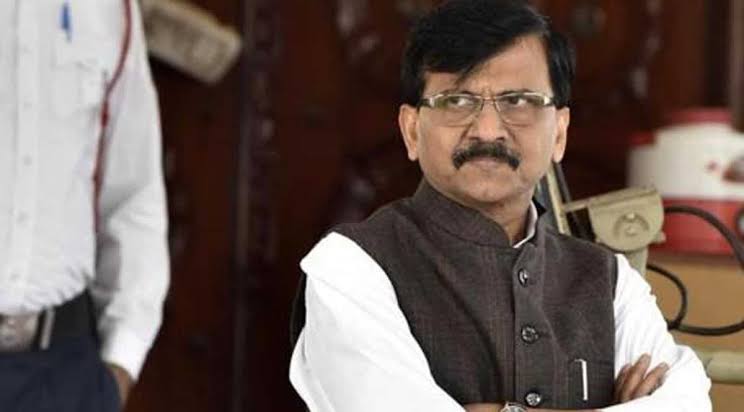
“Issues from Mumbai can be sent as parcel to Bihar” – Sanjay Raut

Sanjay Raut

A day after the Election Commission of India announced the schedule of Bihar elections to be held in three phases on October 28, November 3 and 7, Shiv Sena leader Sanjay Raut said if Bihar doesn’t have enough issues, Mumbai can parcel some. His jibe came in the backdrop of allegations that the death of Bollywood actor Sushant Singh Rajput, who hailed from Bihar, is being used as an election issue in Bihar.

“Elections in Bihar should be fought on the issues of development, law and order, and good governance, but if these issues have exhausted, then issues from Mumbai can be sent as parcel,” the Shiv Sena leader said.

The state police departments of Bihar and Maharashtra locked horns over the investigation into the death of Rajput who was found dead on June 14 at his Mumbai residence. Former Bihar DGP Gupteshwar Pandey accused Maharashtra Police of not co-operating with them. It is also being speculated that Pandey may join politics after he took a VRS.

The Shiv Sena may contest in the Bihar polls, Raut hinted. “Chief Minister Uddhav Thackeray will take a call on Shiv Sena contesting the Bihar elections in coming 2-3 days. The election in Bihar is held on caste and other things. Labour laws or farmers bills will not be an issue in Bihar elections,” Raut said on Friday.

The Shiv Sena leader has been made a party in the case pertaining to the demolition of Bollywood actor Kangana Ranaut’s office.
The MP has recently criticised the questioning of several Bollywood personalities by the Narcotics Control of Bureau in a drug case related to Sushant Singh Rajput’s death.

An interview with Dr. M.J Khan (IMPAR): Agenda, Future


Dr. M.J.Khan, President of Indian Muslims for Progress and Reforms (IMPAR) did an interview, where he discussed IMPAR’s agenda, political connections and future goals.

Indian Muslims for Progress and Reforms (IMPAR) where more than 200 prominent Muslims of India came together to create a national think tank and an apex coordination body to put forward the voice of progressive and modern Muslims and to collectively express their constructive views to the media and the nation.

IMPAR was made in a very hostile situation, there was a fear of existential crisis, If the lockdown had not been imposed, 10,000 to 15,000 Muslims would have been killed in the situation that was persistent in India in mid March.

When asked about how they succeeded as a organisation in such less time. Dr. Khan said that innovative and Broad thinking and welcomed constructive criticism were the major reasons for the Success of the organisation.

Dr Khan also addressed the issue of the Tablighi Jamaat and mentioned that, help from everywhere was needed and who indeed helped were very much appreciated.

He also clarified the Flying Rumours about the organisations inclination towards BJP. In his explanation he said that “ BJP is the central government and without talking to them our Point of View wouldn’t be heard and the agenda of IMPAR cannot be fulfilled.”

The ultimate approach of IMPAR is objective and business-like, which means that the approach that will benefit the community the most will be followed.

“It is very important for the Muslim community to reform and for that we need to be economically empowered.” Dr. M.J Khan said.
He also added, “We need to reach out to the corporate sector for guidance, and ultimately to mainstreaming the Muslims as it holds 96% of the jobs in the country and the rest is held by the government.”

The interview with Dr. M.J Khan was very fruitful and he in very simple words explained the agenda and ultimate goal of IMPAR. He also focused on the point that IMPAR has a long term plan and will do the best to for their community.

Present is important.

“The past is gone, the future is not yet here, and if we do not go back to ourselves in the present moment, we cannot be in touch with life.” Thich Nhat Hanh

Our minds are constantly racing towards multiple thoughts. From waking up to snugging back into the sheets, anger for someone, regret for a mistake, worry for the future or fear of taking some actions keep lingering in the mind. But amidst all these thoughts, we simply forget to embrace what we have now.

Children are such wonderful teachers. If we want to remember ourselves, and what life is all about, we just need to observe a child for a few minutes. It won’t be long before we appreciate the joy, simplicity and presence that the child exudes, and perhaps we may even wonder, “How can I be more like her?”

The quality of being able to enjoy life’s simple moments is not far away. In fact, it is our natural state to do so. Children in their innocence and purity are powerful mirrors that show us what is innately within, and what we long to reconnect to—a presence that has never left us. They help us release a familiar spark from within that says, this is who I am, and always have been, deep inside.

We have spent a lifetime learning to sublimate our spirit, living in our heads, and disconnected from the NOW. Obsessing about the past and future has become our natural way of living. It has become habit, and the unnatural has become naturalized. What is hard has sadly become the norm, so much so that we have forgotten that the present moment even exists.

Remember, when you worry for your future, you may be anticipating unrealistic things that may not even come into your life. Moreover, controlling future circumstances is never the right concept. Whereas when you are stressing over the past, you are trying to mould things that will never be changed. And how to live in the moment?

Choosing to live in the past or in the future not only robs us of enjoyment today, but it also robs us of a true living. The only important moment is the present moment. With that goal in mind, we should start living our life in the present. That is, we need to live more in the moment.

They say that the present moment is all we have, and while our past and future are very real concepts, they are just other aspects of this now. Feeling fear and anxiety toward our future comes from neglecting our present and holding onto our past—so in order to enjoy our future, we must first learn to enjoy our present!

You are exactly who you need to be and where you need to be in this moment. Wishing or trying to be someone else or somewhere else only creates resistance to the present.

So allow yourself time to accept your past, feel openly and freely, and practice mindfulness—and know that by doing so, you’re not only living presently, you’re also creating the best possible future for yourself.

Covid-19 vaccine trial begins at Mumbai hospital today

The first dose of Covid-19 vaccine candidate developed by the Oxford University and AstraZeneca will on Saturday be administered to three volunteers at the King Edward Memorial (KEM) Hospital in Mumbai while 10 more volunteers have been selected for the clinical trial.

Another Mumbai hospital BYL Nair will commence the process of clinical trials from Monday.
Volunteers given the vaccine dose at the KEM hospital will be checked regularly and within 29 days a second dose will be given to them.
Here’s everything you need to know about Covid-19 vaccine trial


–All three volunteers who will get the shot today have been screened to rule out any underlying health issues, KEM Hospital officials said. They also underwent RT-PCR and antibody testing. “The three participants have been screened after their consent and they don’t have any comorbidity. As per randomisation, out of every four participants, one will receive placebo (false drug),” said Dr Hemant Deshmukh, Dean, KEM Hospital.


–According to Indian Council of Medical Research (ICMR) guidelines, each of the volunteers has been covered with Rs 1crore life insurance in case of death due to any side effects during the trial. They have also been covered under Rs 50lakh medical insurance if they develop any adverse effect from the vaccine.

–“We will administer the first dose of Covid-19 vaccine to the three volunteers on Saturday” Suresh Kakani, additional municipal commissioner, Brihanmumbai Municipal Corporation (BMC) said. He added that 10 more people will be screened on Saturday which will take the number of volunteers to 23. “We will check how they respond after the inoculation and test them for antibodies,” he said.

–After the volunteers are given the shot, they will have to stay at the hospital for two hours to check if they are having any complications,

–The vaccine induces a strong immune response. It provokes a T cell (white blood cells that can attack cells infected with the coronavirus) response within 14 days of the dose, and an antibody response within 28 days.

NEET 2020 ANSWER KEY RELEASED

Amid strict precautions, the National Testing Agency conducted the medical entrance exam NEET on September 13 across the country. The 
NEET answer key
 2020 has been released by the NTA on its portal on Saturday i.e., September 26.


Candidates who appeared for the exam can visit the official website of NTA NEET — ntaneet.nic.in — to check and obtain the 
NEET 2020
 answer key. Candidates can obtain the 
NEET 2020 answer key
 from the link given below.


The National Testing Agency has now uploaded the advance answer keys for candidates for all the sets (E1- E6, F1- F6, G1-G6, H1-H6) for their information. The candidates are advised to go through the same and keep themselves ready for challenges of the draft answer keys which will be published shortly.

Candidates should note that the notice inviting challenge of the keys will be released later. The official notice released regarding the answer key reads “Please note that this public notice is not for inviting challenge of the keys which will be done later on, and for that proper notice will be issued. Therefore, kindly do not email your responses or clarification regarding the Keys and please wait for the process of raising challenges for the same.

Nearly 15 lakh students appeared for the three-hour-long exam held at over 3,900 centres. In view of the COVID-19 pandemic, the exam was conducted with stringent checks and protocols like students queuing up as per their designated time slots, adhering to social distancing norms, etc.

Although the exam commenced at 2 pm, the entry to exam centres started at 11 am. Different slots were allotted to students for the entry to ensure the staggered movement and maintain social distancing. The exam originally scheduled for May 3, has been deferred twice due to pandemic, first, it was postponed to July 26, and then to September 13.

NFDC Film Bazaar Online 2020 postponed to 16 – 21 January 2021, alongside the 51st IFFI

The 14th edition of NFDC Film Bazaar Online 2020 which was scheduled to be held on November 20-24, alongside the International Film Festival of India (IFFI) 2020 has been postponed to 16th – 21st January, 2021.

The change in dates has been made in line with the postponement of 51st edition of the International Film Festival of India (IFFI) to 16 to 24 January 2021 which was scheduled to be held from 20 to 28 November in Goa. This NFDC Film Bazaar will be held in a hybrid format which will be both offline and online.

The Film Bazaar will be held virtually but it will include all sections usually held in previous editions.

Joint Secretary, M/o Information & Broadcastingand Managing Director, NFDC, Smt T.C.A. Kalyani said that, “NFDC Film Bazaar online 2020 has been postponed to January 16th – 21st, 2021. The market will be held alongside IFFI 2020 which has also been postponed to January keeping in mind the COVID-19 situation.”

This will be a step up for Film Bazaar as it will be more inclusive and its reach will be global. We are hoping the virtual edition will see more people as the fabric of Film Bazaar is intact”, she added. 

The call for entries is open for Submissions for Co-Production Market, WIP Lab (Fiction only) and Viewing Room (Fiction/Documentary/Animation/Shorts). Feature length fiction films in the rough cut are eligible to apply to both WIP Lab and Viewing Room.

For more details visit: www.filmbazaarindia.com

For queries, write to: info@filmbazaarindia.com

About Film Bazaar

Film Bazaar is the largest South Asian film market. It encourages creative and financial collaboration between the South Asian and International film communities.

Created and organized by the National Film Development Corporation (NFDC), Film Bazaar has evolved into South Asia’s Global Film Market from its humble beginnings in 2007. Every edition witnesses increased national and international participation. Over the years, films such as Lunch Box, Margarita With A Straw, Chauthi Koot, Qissa, Ship of Theseus, Titli, Court, Anhe Ghode Da Daan, Miss Lovely, Dum Lagake Haisha, Liar’s Dice, Thithi, Bombay Rose, Soni, In the Shadows, The Gold Laden Sheep and the Sacred Mountain, Moothon, Eeb Alley Oo, Amis, Laila aur satt Geet  and many more have been through one or more programmes of the Bazaar.

Over the course of five days, Film Bazaar becomes a converging point for film buyers and sellers from all over the world. The focus is on discovering, supporting and showcasing South Asian content and talent in filmmaking, production and distribution. The Bazaar also facilitates the sales of world cinema in the South Asian region.

Film Bazaar is held every year at the Marriott Resort, Goa, India, between 20th and 24th November. In light of the COVID-19 pandemic, NFDC Film Bazaar 2020 will be held online from January 16-21st, 2021

About NFDC

National Film Development Corporation of India is the central agency established to encourage the good cinema movement in the country. The primary goal of the NFDC is to plan, promote and organize an integrated and efficient development of the Indian film industry and foster excellence in cinema. Over the years NFDC has provided a wide range of services essential to the growth of Indian cinema. The NFDC (and its predecessor the Film Finance Corporation) has so far funded / produced over 300 films. These films, in various Indian languages, have been widely acclaimed and have won many national and international awards.

Every friendship is unique.

Comparison is a dangerous vice that occurs all too often in our life. And sadly, it seems to be a common stumbling block to hundreds of other young people as well. It’s poisonous influence seeps into a many aspects of our life and our friendships are no exception.

We are blessed to realize that we have some real friends in our lives and love many different types of friends that we have met at every step along the way. We have dear childhood friends, cherished friends from our days in high school, long-distance friendships that formed as a result of summer endeavors and new beloved college pals. And that list is far from exhaustive.

But amidst all the joy that goes along with having such wonderful people in life, it is frighteningly easy for us to compare these relationships to each other.

It looks a little something like this…

“Wow, I had such a good time playing games today with Friend A. But yesterday I had coffee and talked about life’s deepest questions with Friend B. But last week I was in tears laughing with Friend C!”

Our mind starts running at 100 miles per hour, wondering why we don’t talk about Karl Marx’s theory with Friend A, or why Friend C and I never watch thriller movies together, or why Friend B doesn’t make me laugh until my sides hurt.

But this is such an unhealthy approach to our friendships.

Instead of appreciating the elements that make each of our relationships so unique, we focus on what we are supposedly lacking. Our critical mind chooses to pick apart our friendships and become worried when we perceive a flaw anywhere.

By comparing Friendship A with Friendship B, we do each of my friends a serious disservice. We would even go as far as to say that we dishonor them. This ugly habit of comparison causes us to completely disregard the invaluable bonds that drew us to each of those friends in the first place.

Why would we want our friendships to all look the same anyway? How boring!

I sometimes like to think of my friendships as being a tree. Without trying to sound arrogant, I am the metaphorical trunk, and the branches are my friendships. While all the branches look similar because they are attached to the same trunk (me!), they each spread in different directions and have varying shapes and sizes of buds or leaves scattered all over. And in my opinion, if all the branches were the same size, grew in the same direction, and had the same pattern of leaves, it wouldn’t look like a tree at all; at least not a healthy tree.

You may notice that your friendships change from year-to-year — the best friend you had last year may not even be in your inner circle anymore. It happens more often than you may think, and studies have been done that prove the theory that the older you get, the fewer friends you have.

So let’s encourage each other to stop this vicious habit of comparing bonds, relations and friendships.

A popular quote by Theodore Roosevelt is “Comparison is the thief of joy.”  And while the quote is somewhat overused, it is unquestionably true.

So let those branches grow in all kinds of crazy directions! Step back and admire your beautiful, unique tree. And keep the pruning tool of comparison far, far away.

As you can see, friendships evolve over time for all kinds of reasons. The important thing is to focus on the friends you do have and make sure the friendships are reciprocal, so no resentment builds on anyone’s end.

National Webinar on Credit Mechanism, Mobility and Academic Bank of Credit under ShikshakParv

The Ministry of Education is celebrating “ShikshakParv” during 8thto 25thSeptember, 2020 by conducting various National Webinars on the newly announced National Education Policy 2020. As part of this initiative, a National Webinar on ‘Credit Mechanism, Mobility and Academic Bank of Credit’’ was organized on 25thSeptember, 2020 wherein Prof. BhushanPatwardhan, Vice-Chairman, UGC, Prof. R.P. Tiwari, Member UGC & Vice-Chancellor, Central University of Punjab, Prof. SandeepSancheti, Vice-Chancellor, SRM Institute of Science and Technology, Prof. (Dr.) S.P. Thyagarajan, Former Vice-Chancellor of Madras University were invited as Speakers. Dr. (Mrs.) PankajMittal, Secretary General, Association of Indian Universities, New Delhi was invited as Speaker and Moderator in the Webinar. Dr. Surender Singh, JS, UGC coordinated the webinar.

The webinar was initiated by Dr. PankajMittalby highlighting the importance of ShikshakParv and the concept behind the Webinar on Credit Mechanism, Mobility and Academic Bank of Credit asenvisaged in the NEP 2020. She mentioned that the NEP 2020 is a much needed, forward looking & innovative, student centric policy where the student is the king having all kinds of freedom like multiple entry and exit options, choice of subjects, choice of duration, choice of earning credits from various higher education institutions and freedom of speed. All these freedoms and choices will come to the students through Academic Credit Bank (ABC).

Prof. SandeepSanchetimentioned that ABC will promote the flexibility, multiple entries and multiple exits, life-long learning and freedom to the students in choosing the subjects and will enable them to design their own degrees as they will be able to choose their own bouquet of courses. He appreciated the concept of examination on demand and explained in detail the building blocks of ABC.

Prof. R.P.Tiwari talked about the role of ABC for creating a life-long learning society and various benefits it will accrue to the students. He emphasized that the main objectives of the ABC are to promote student centric higher education system and enable students to select courses and institutions; allow them to choose a pace for their studies to complete their degrees as per their choice. He also mentioned that ABC will promote access, equity, quality, flexibility, collaboration and transparency to improve the competitiveness and efficiency in India’s higher education system.

Prof. BhushanPatwardhan appreciatedthe attempts made by UGC in line with the NEP recommendations to liberate the Indian higher education from a slew of regulations and regulators. Academic Bank of Credits shall facilitate the integration of the campuses and distributed learning system, by creating student mobility within inter and intra university system. He also emphasized that the ABC may help in seamlessly integrating skills and experiences into a credit based formal system by providing a credit recognition mechanism.

Prof. Thyagarajan during his course referred to the tradition knowledge system of India and felt that 64 Kalas and 14 Vidyas imparted in the ancient time are beingreintroduced in ABC. The ABC will lead to life-long learning by promoting learning and relearning cycles multiple times. He felt that through this concept higher education space will move from rigidity to flexibility, make students knowledge creators instead of users of knowledge and their holistic development and make them job creators rather than job seekers. The integration of skill education with the academic stream will improve the employability and lead to global citizen education.

Pre-bid Meeting conducted regarding CSMT Railway Station redevelopment project

CEO, NitiAayog and Chairman& CEO, Railway Boardchaired the Pre-bid meeting of CSMT project todayvia digital platform. Member (Infrastructure), Railway Board, GM, Central Railway and GM, Northern Railways also attended.  Redevelopment of railway stations across India is a priority agenda of Ministry of Railways, Government of India. This agenda is being driven with full force by the Government with the participation of private players as a part of PPP. The Pre-bid meeting held today received huge response from the industry and developers&fund houses seemingly are very much interested in this investment opportunity.

The Pre-bid meeting was attended by about 43 prospective bidders, including developers namely Adani Group, Tata Projects Ltd., Eldeco, GMR Group, JKB Infrastructure Pvt. Ltd, SNCF Hubs & Connexions, I Squared Capital, Kalpataru Power Transmission Ltd., Ace Urban developers, GR Infrastructure, Essel Group,Larsen & Toubro; architects namely BDP Singapore, Hafeez Contractor, AECOM; Fund houses namely Anchorage Infrastructure Investment Holdings Ltd., Brookfield and consultancy firms namely JLL, Boston Consultancy Group, KPMG, PwC India, EY and embassies namely British High Commission. Invest India set up by DPIIT which is the National Investment Promotion and Facilitation Agency that helps investors looking for investment opportunities and options in India also attended.

CSMT is a historic and UNESCO World Heritage site located in the heart of Mumbai city. The redevelopment plan encapsulates integration of various modes to make this railway station a multimodal transport hub as per the vision of Hon’ble PM of India. It will include segregation of arrival and departure, divyang friendly station, better level of services for passengers, energy efficient building and restoring the heritage site as per its 1930 levels. The CSMT railway station will function like a city centre rail mall where in addition to a passenger’s transportation needs, his daily needs are also fulfilled, like- Retail, F&B, Entertainment, Souvenir shopping. The aim is that most of his daily needs are catered to by visiting the railway station thus avoiding unnecessary travel within the city.

The infrastructure at the redeveloped station is envisaged in such a manner that it promotes seamless integration from one mode to another mode. Upon redevelopment, it will provide multiple access points to passengers for easy commute and also a direct linkage between suburban railway, harbour line, long distance, Metro rail and commercial development. This will help in reducing the congestion while enjoying the enhanced heritage structure. Efforts would also be made to integrate the last mile connectivity so that passengers can be provided end-to-end solutions.

Request for Qualification (RFQ) for redevelopment of ChhatrapatiShivajiMaharaj Terminus (Mumbai) on PPP has been invited by IRSDC vide NIT published on 20.08.2020. The RFQ document can be accessed on: http://irsdc.enivida.com/. The Applications due date is 22.10.2020.

During the Pre-bid meeting, it was highlighted that at the RFQ stage the applicants would need to fulfil only the financial criteria that is minimum net worth (for developers) or minimum ACI (for funds) and the technical eligibility criteria has been dispensed with.

The CSMT project cost is of Rs. 1642 croreand the cost of Real estate is Rs. 1433 crores. The total real estate BUA is 25 lac sq. ft. at CSMT, WadiBunder and Byculla. The construction period is of 4 years. The selected bidder at the RFP stage shall take up the redevelopment of the Railway station and commercial development of the surrounding railway land on leasehold basis for 60 years for commercial development and upto 99 years for residential development on selected plots, along with operation and maintenance of the station for 60 years on concession basis.

NHSRCL opens Technical bids for 28 Steel bridges and 88 km of viaduct between Vadodara and Ahmedabad for MAHSR corridor

NHSRCL opens Technical bids for 28 Steel bridges and 88 km of viaduct between Vadodara and Ahmedabad for MAHSR corridor.

Demand of 70,000 MT of Steel to boost Steel industries.

National High Speed Rail Corporation opens technical bids for two packages today for Mumbai Ahmedabad High Speed Rail Corridor (1) Procurement and Fabrication of 28 steel bridges for crossing over railway lines, rivers, highways, road crossings and other structures (P-4) (2) Design and Construction of 88 km (Approx) of viaduct between Vadodara and Ahmedabad in Gujarat including construction of elevated HSR station at Anand/Nadiad.(C-6), 5 Bridges and 25 crossings.

Following bidders participated in the tender process:

Bidders for Procurement and Fabrication of 28 steel bridges (Package P-4):

1)         Tata Projects Ltd.

2)         Afcons Infrastructure Ltd.

3)         Braithwaite & Co. Ltd.Consortium

4)         Bridge & Roof Co. (India) Ltd.

5)         NCC Ltd.

6)         JMC Projects(India) Ltd. &RaheeInfratech Ltd.

7)         ISGEC Heavy Engineering Ltd. – M & B Engineering Ltd. Consortium

8)         Larsen & Toubro – IHI Infrastructure Systems Consortium

Out of these, sr.no. 1 to 7 are Indian companies and Sr. no. 8 is a consortium between Indian and Japanese company.

Bidders for Design and Construction of 88 Kms viaduct and Anand/Nadiad station (Package C-6):

1: Afcons Infrastructure Limited – IRCON International Limited – JMC Projects India Ltd- Consortium

2: NCC Limited – Tata Project Ltd.- J. Kumar Infra Projects Ltd. – HSR Consortium

3: Larsen & Toubro Ltd.

All three bidders are Indian.

It is estimated that about 70,000 MT of Steel will be used for the fabrication of 28 steel bridges. NHSRCL has already sensitized the steel industries to cater such a huge demand for the India’s first High Speed Rail corridor.

With the opening of these bids, the technical bids covering 64% (325 km out of 508 km) of the total MAHSR alignment including five (5) HSR stations (Vapi, Billimora, Surat, Bharuch and Anand/Nadiad) out of 12 stations and one Train depot at Surat are under consideration. Earlier this week, NHSRCL has opened the technical bids for 237 km of viaduct between Vapi and Vadodara in Gujarat including 4 elevated HSR stations and one Train depot at Surat where all the three bidders comprising seven (7) leading Indian infrastructure companies had participated.

The Indian Steel and Cement industries and their allied supply chains will get a big boost from these tenders.

Bilateral Maritime Exercise Between Japan and India (JIMEX 20) to Commence off West Coast of India

The 4th edition of India – Japan Maritime bilateral exercise JIMEX, which is conducted biennially between the Indian Navy and Japanese Maritime Self-Defense Force (JMSDF) will be held in North Arabian Sea from 26 to 28 September 2020. JIMEX series of exercises commenced in January 2012 with special focus on maritime security cooperation. The last edition of JIMEX was conducted in October 2018 off Visakhapatnam, India.

Naval cooperation between India and Japan has increased in scope and complexity over the years. Advanced level of operations and exercises planned during JIMEX-20 are indicative of the continued upswing in Indo-Japanese defence relations and continued efforts by both Governments to work closely for a more secure, open and inclusive global commons, in accordance with international regulations.

JIMEX 20 will showcase high degree of inter-operability and joint operational skills through conduct of a multitude of advanced exercises, across the spectrum of maritime operations. Multi-faceted tactical exercises involving weapon firings, cross deck helicopter operations and complex surface, anti-submarine and air warfare drills will consolidate coordination developed by the two navies.

JIMEX 20 will be spread over three days and is being conducted in a ‘non-contact at-sea-only format’, in view of COVID-19 restrictions.

Indigenously built stealth destroyer ChennaiTeg Class stealth frigate Tarkash and Fleet Tanker Deepak, under the command of Rear Admiral Krishna Swaminathan, Flag Officer Commanding Western Fleet, will represent the Indian Navy. The Japanese Maritime Self-Defense Force will be represented by JMSDF Ships Kaga, an Izumo Class Helicopter Destroyer and Ikazuchi, a Guided Missile Destroyer, led by Rear Admiral Konno Yasushige, Commander Escort Flotilla – 2 (CCF – 2). In addition to ships, P8I Long Range Maritime Patrol Aircraft, integral helicopters and fighter aircraft will also participate in the exercise.

JIMEX 20 will further enhance the cooperation and mutual confidence between the two navies and fortify the long standing bond of friendship between the two countries.

New finding on Blazars—the brightest jets in the universe could provide clues to processes close to black holes

The short term optical flux stability detected in some of the brightest jets in the universe could provide clues to the processes close to black holes.

Blazars are one of the most luminous and energetic objects in the universe powered by material falling onto a super-massive black hole at the center of the host galaxy – the luminosity being because of their a jet composed of ionized matter traveling at nearly the speed of light towards an observer (the Earth).

Six scientists spanning over three countries— India, Serbia, and the USA studied some of the brightest blazers called TeV (Tera-electron Volt) blazars and found that they stand out as a semblance of stability of brightness among the blazar family in the short duration. While their brightness varies in the long duration, they maintain their brightness levels in short duration.

Blazars are among one of the most favourite astronomical transient objects, and their study could provide clues to the processes happening close to the black hole, not visible through direct imaging.

The scientists, including researchers from Aryabhatta Research Institute of Observational Sciences (ARIES), Nainital, an autonomous institute of the Department of Science and Technology (DST), Government of India, took 1741 image frames during 2013 – 2019  by using two (1.04 m and 1.3 m) telescopes, in ARIES, India and two (0.6 m and 1.4 m) telescopes in Serbia. A detailed study of the optical flux and spectral variability of three extreme TeV (Tera-electron Volt, i.e., 1012 eV) gamma-ray emitting blazars, namely 1ES 0229+200, 1ES 0414+009, 1ES 2344+514 was carried out by this team.

In the study by Dr. Ashwani Pandey and Dr. Alok C. Gupta, published in Monthly Notices of the Royal Astronomical Society Journal, a detailed study of the flux, color, and spectral index variations of the three extreme TeV blazars was carried out on diverse timescales — as short as within a day, and as well as on months to years timescales. The study also explained the physical processes responsible for such variations. 

According to the team, in TeV emitting blazars, peak of spectral energy distribution lies in the UV/X-ray range. Thus in optical bands, magnetic fields and electrons energies are less, causing short term optical flux stability or low amplitude variability. Variations on months to years timescales can most likely be explained by the propagation of shocks along with the jet, due to which the electrons at the shock front get accelerated to very high energies. These high energy electrons are then cooled via different emission processes while leaving the shock front. Other possible explanations for months to years timescale variations include a change of the magnetic field and/or change in the Doppler factor caused by either helical motion of the emitting region within the jet or wiggling of jets or helical jets.

In this age of multi-wavelength (MW) time-domain astronomy in which the transient astronomical sources are of great interest due to their rapid change in flux, simultaneous MW observation of a particular transient source on an extended period of time is important for understanding the emission mechanism in different electromagnetic (EM) bands.   

Scientists of JNCASR of DST develop a new low cost method of upscaling most conductive material‘graphene’ while preserving its single layered properties

Graphene, the one-atom-thick sheet of carbon atoms, which is a boon for energy storage, coatings, sensors as well as superconductivity, is difficult to produce while retaining its single layered properties.

A new low-cost method of upscaling production of graphene while preserving its single layered properties, developed by Indian scientists, may reduce the cost of producing this thinnest, strongest and most conductive material in the world.

Researchers from Jawaharlal Nehru Centre for Advanced Scientific Research (JNCASR) an autonomous institute under the Department of Science & Technology, Government of India through their recent research work have upscaled graphene production while retaining its thin layered properties. This was made possible by a simple, affordable method wherein naphthalene coated nickel foil was heated for a few minutes in an ordinary vacuum by joule heating and was cooled to get twisted layers of graphene. Careful study using electronic diffraction and Raman scattering showed that the 2D single-crystal nature of the atomic lattice of the graphene is retained even in the multilayer stack. The twisted multilayer graphene that results is also highly conducting.

In the research by Nikita Gupta (Ph.D. student, JNCASR) and Prof. G.U. Kulkarni (corresponding author ) published in the ‘Journal of Physical Chemistry Letters’, the scientists have also defined a formula to quantify how much single layer like behaviour exists in such a system. The twisted system has multiple layers, each behaving like a single layer, allows variation in the experimental data within one sample, thus making quantification possible to achieve. The derived formula provides an insight into any twisted hexagonal multilayer system and may be used to tune superconductivity.

The researchers used a combination of two techniques to understand and quantify how much single layer like behaviour exists in the graphene system. Raman spectroscopy—a technique to understand whether a graphene species has single layer like behaviour arising because of no interlayer interaction and electron diffraction–a technique to study the morphology of the given twisted system.

Observing fascinating properties of twisted multilayer graphene such as visible absorption band, efficient corrosion resistance, temperature-dependent transport, influencing the crystalline orientation of source material, helped the JNCASR team to understand the landscape of the given twisted multilayer graphene system. 

Recent publication in the journal ‘Nature’ by James M. Tour, an eminent peer on this research discovery (https://doi.org/10.1038/s41586-020-1938-0), confirms the upper limit of relative Raman intensity predicted by this work, experimentally. The present understanding of twisted multilayer graphene will help in understanding any twisted hexagonal system. It gives an upper limit of relative Raman intensity which can exist in a particular multilayer graphene system.